
Fallen Giants, 2003/04
Manager: Peter Reid
Eddie Gray
Top scorer: Mark Viduka (12)
Premier League: 19th (relegated)
FA Cup: 3rd Round
League Cup: 3rd Round
League Record: 8 wins, 9 draws, 21 losses, 40 goals scored, 79 goals conceded
Transfers: £+9 million
Transfers in: £0
Jody Morris – Chelsea, 19 July 2003, free
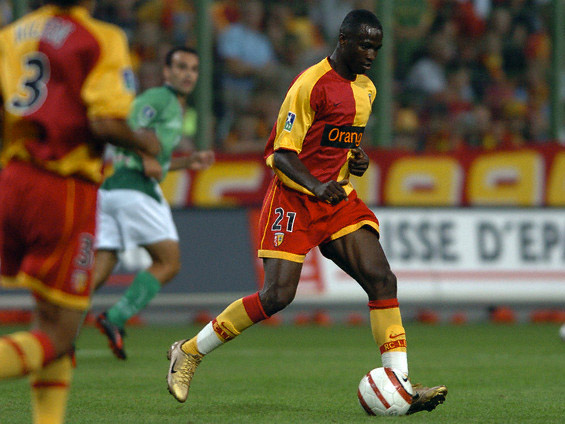
Zoumana Camara – Lens, season-long loan, 22 July 2003
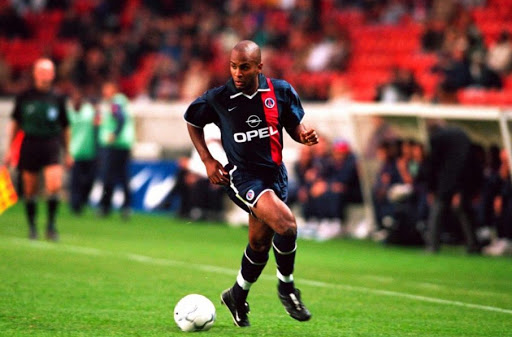
Didier Domi – Paris Saint-Germain, season-long loan, 5 August 2003
Lamine Sakho – Marseille, season-long loan, 12 August 2003
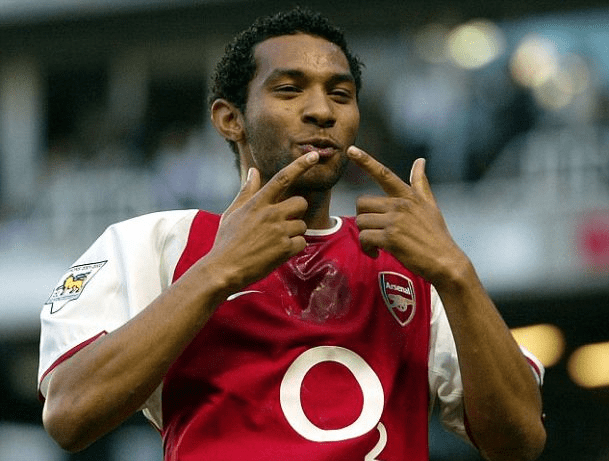
Jermaine Pennant – Arsenal, two-month loan (extended to season-long), 20 August 2003
Salomon Olembé – Marseille, season-long loan, 31 August 2003
Roque Júnior – A.C. Milan, season-long loan, 1 September 2003
Cyril Chapuis – Marseille, season-long loan, 1 September 2003
Steven Caldwell – Newcastle United, four-month loan, 2 February 2004
Transfers out: £9 million
Shane Cansdell-Sherriff – AGF Aarhus, 27 June 2003, free
Jacob Burns – 30 June 2003, released
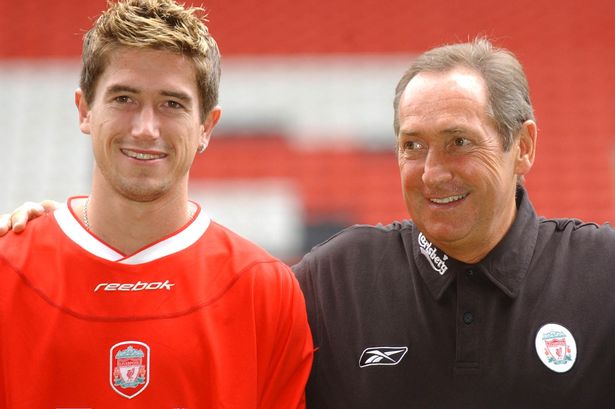
Harry Kewell – Liverpool, 9 July 2003, £5,000,000
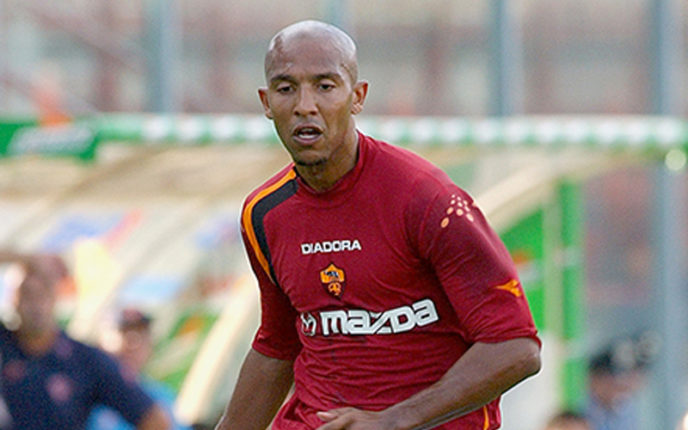
Olivier Dacourt – Roma, 10 July 2003, £3,500,000
Harpal Singh – Bury, 31 July 2003, loan
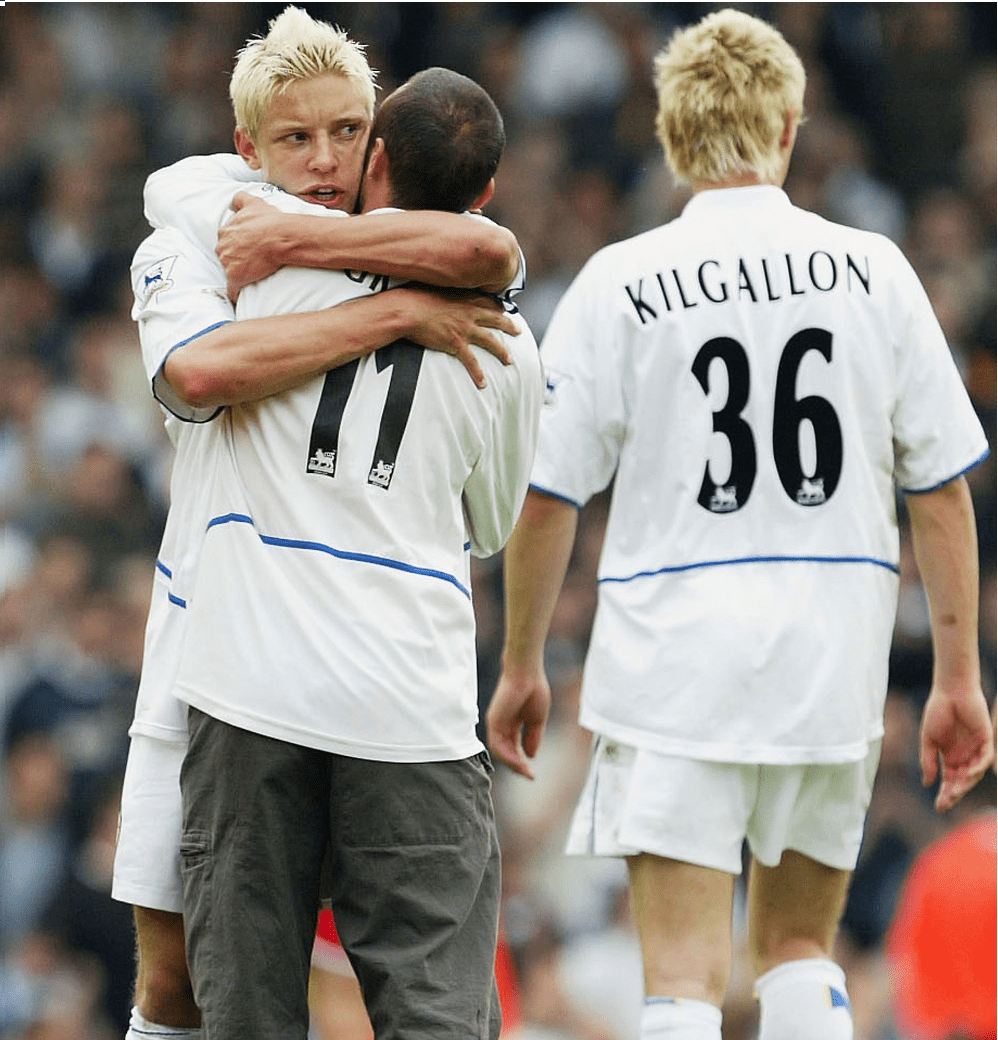
Matthew Kilgallon – West Ham United, 21 August 2003, loan
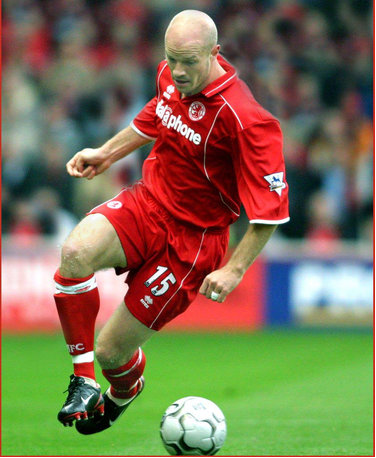
Danny Mills – Middlesbrough, season-long loan, 24 August 2003
Stephen McPhail – Nottingham Forest, 26 August 2003, loan
Paul Okon – Vicenza 30 August 2003, free
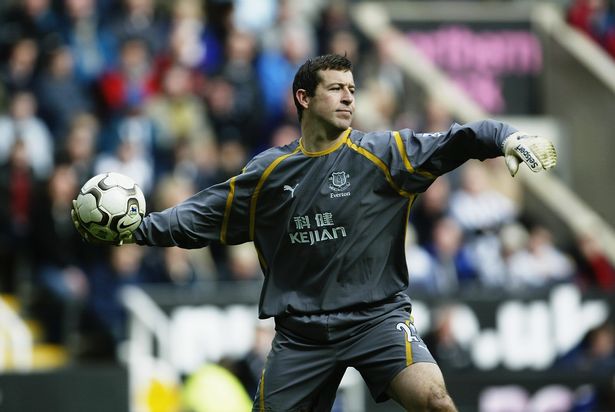
Nigel Martyn – Everton, 1 September 2003, £500,000
James Milner – Swindon Town, 3 September 2003
Danny Milosevic – 30 September 2003, released
Paul Keegan – Scunthorpe United, 21 October 2003
Shaun Allaway – Walsall, 24 October 2003
Frazer Richardson – Stoke City, 7 November 2003
Simon Johnson – Blackpool, 13 December 2003
Jamie McMaster – Chesterfield, 7 January 2004
Michael Bridges – Newcastle United, 2 February 2004
Nick Barmby – Nottingham Forest, 27 February 2004
Jody Morris – Rotherham United, 13 March 2004, free
Knowing their financial situation, Leeds United knew that they could not afford to spend heavily on players going into the 2003-04 season. The more likely situation involved big players leaving the club, in order to generate funds. The transfer bloodletting began at the end of June 2003. Young defender Shane Cansdell-Sherriff was sold to Danish side AGF Aarhus on a free transfer. Cansdell-Sherriff had not played a single minute of football for Leeds since signing his professional papers in 1999, having spent the previous season on loan at Rochdale. Next, Australian midfielder Jacob Burns was released from his contract. Since signing from Parramatta Power in 2000, Burns had only played in 11 matches for the club. He would later be picked up by Barnsley, where he would find greater success, including the club captaincy. Two quiet departures to begin Leeds summer transfer dealings.
On 9th and 10th July, the major departures began. On 9th July, Harry Kewell, one of the club’s best and most important players during their rise to the top, was sold to Liverpool for £5 million. Another 1997 FA Youth Cup winner had left. After making his debut in 1995, Kewell had made 242 appearances, either on the left wing or as a striker, scoring 63 goals in all competitions and providing 57 total goal assists. Kewell had become a star at Leeds, breaking through in the 1997-98 season under George Graham, scoring 8 goals in 35 appearances and had become an essential member of the team in the resulting seasons, a player Leeds would find hard to replace. The next day, Champions League semi-finalist Olivier Dacourt would be sold to AS Roma for £3.5 million. Dacourt had found his chances limited under Terry Venables and had joined Roma on loan in March 2003. He left Leeds with 82 total appearances in midfield, scoring 2 goals.
Leeds would begin their buying with the signing of Jody Morris from Chelsea on a free transfer. The 25-year-old Morris had made 173 appearances in Chelsea’s midfield since making his senior debut for the club in 1996. He became Chelsea’s youngest-ever Premier League player in February 1996, making his debut at 17 years and 43 days at Stamford Bridge in a match against Middlesbrough. He had been a regular in Chelsea’s starting line-up until the late 1990’s, but had found playing opportunities hard to come by after the team signed Emmanuel Petit in 2000. After Morris, Leeds began the first of many loan signings, with French centre-back Zoumana Camara joining on loan from Lens. Camara had struggled for game-time at Lens after signing from Marseille one year earlier. He would be joined by left-back Didier Domi from PSG and Lamine Sakho from Marseille. Later in the window, a young winger called Jermaine Pennant would sign on loan from Arsenal. Pennant had progressed through Arsenal’s academy and had become their youngest ever first-team player, making his debut aged 16 years and 319 days in 1999. He made his league debut for the Gunners in August 2002. Most recently, he had scored a hat-trick on his first Premier League start in a 6-2 victory over Southampton on 7th May 2003. Something for Leeds fans to get excited about.
A day later, young defender Matthew Kilgallon was loaned out to recently-relegated West Ham United. Another day later, England international and Champions League semi-finalist Danny Mills was loaned out to Middlesbrough, leaving Leeds after 141 appearances, never to play another game for the club. The further departure of Paul Okon to Vincenza would be followed by three further loan signings on transfer deadline day. Salomon Olembe, a veteran winger and a Cameroon international, and striker Cyril Chapuis would both join from Marseille. However, the big news for Leeds on deadline would come in the signing of World Cup-winning defender Roque Junior from AC Milan. Roque was one-third of the back three that started most of Brazil’s 2002 World Cup campaign alongside Lucio and Edmilson. He had most recently played in the 2003 Champions League Final, appearing as substitute for AC Milan. He went on to play 54 minutes, including extra time. After picking up an injury, Roque tried to persevere but had to pull out, leaving AC Milan to finish the match with 10 men, a match they would eventually win on penalties. However, with fresh hope comes crushing disappointment, the disappointment being the departure of Nigel Martyn to Everton on 1st September for £500,000. After being an ever-present after signing from Crystal Palace in 1996, Martyn had not played a single minute of the previous campaign after falling out with Terry Venables. He would leave Leeds after 273 appearances to finish his career at Everton, leaving as a club legend.
Leeds began their Premier League campaign with a home match against high-flying Newcastle United. Among the Newcastle starting line-up was a certain player called Lee Bowyer. Bowyer had left Leeds for West Ham United the previous January after nearly 6 years with the club, making 265 appearances and scoring 55 goals from midfield. He had been one of Leeds’s key men during their rise to the top, including the Champions League campaign during the 2000-01 season. However, his decision to leave the club while the team was in decline only to join West Ham, another club that would ultimately get relegated instead of Leeds did not sit well with the Elland Road faithful. He would be treated to a hostile reaction every time he touched the ball during the 2-2 draw on 18th August in a Newcastle side that also included Jonathan Woodgate. Leeds would go behind to an Alan Shearer penalty after Lucas Radebe had brought down Kieron Dyer. Four minutes later, Leeds would respond through Mark Viduka after a knockdown from new signing Lamine Sakho. After going into the break level, Leeds would take the lead after Alan Smith capitalised on an errant back pass from Olivier Bernard. Leeds would spend the final 33 minutes of the match defending wave after wave of Newcastle attacks. Jermaine Jenas would even have a goal ruled out for offside. The pressure would soon tell as Shearer would soon score his second and Newcastle’s equaliser with two minutes remaining to keep the honours even. This result, despite losing the chance of victory in the final minutes, was a positive result. Newcastle had finished 3rd the previous season and was edging for a Champions League place while Leeds were struggling to keep their head above water, so a 2-2 draw would not have been the result expected by many pundits before the first whistle.
After a loss to Tottenham and a draw with Southampton, Leeds would finally get their first win of the season in their 4th match in a close 3-2 away win over a Middlesbrough team featuring Danny Mills. Leeds would take the lead after 16 minutes through Lamine Sakho. They would hold the lead until half-time and until halfway through the second half before Boro would respond. Two quick goals would see the tides turn in the home side’s favour as a Szilárd Németh goal just after the hour mark closely followed by a second from Juninho three minutes later would make the score 2-1 in favour of the Teessiders. Leeds were looking at the possibility of losing their first four matches of the season, but a second new signing would come to the rescue, defender Zoumana Camara. After 77 minutes, Camara converted Jermaine Pennant’s cross to score Leeds’s equaliser. Despite the equaliser, the visitors were still looking at a winless August. An old hand would soon save the day for Leeds with one minute remaining. In the 89th minute, Mark Viduka would lob Boro goalkeeper Mark Schwarzer to score his 50th Premier League goal for Leeds United and earn them their first three points of the season.
It would take Leeds another month to score their second Premier League victory. Three consecutive losses to Leicester City, Birmingham City and 4-0 defeat to Everton in September would see Leeds drop into the relegation zone and needing a win at home to Blackburn in their next match. Leeds would beat Blackburn 2-1 on 4th October with both home goals coming from an unlikely place. Seth Johnson who had only scored once for Leeds in 29 Premier League appearances prior to this match, would more than double his tally scoring twice against the Rovers. The first goal after 11 minutes, would see the ex-Derby man capitalise on a spilled ball from Brad Friedel, while his second would occur after only 27 minutes. Despite many missed chances to extend their lead and a late goal from Rovers striker Dino Baggio causing many nerves to be shredded, Leeds would hold to score their first home victory of the season.
Leeds would be rewarded for their home victory of the season with three punishing fixtures one after another. A home match against Manchester United on 18th October would be followed by a trip to Anfield one week later to face Liverpool before inviting unbeaten Arsenal to Elland Road on 1st November. Unsurprisingly, Leeds would lose all three matches, dropping back into the relegation zone once again. The first match would see Leeds execute an 80-minute rearguard effort against the Premier League champions before succumbing to a Roy Keane header. The following week, Leeds would travel to Anfield only to come home empty-handed after goals from Michael Owen, Danny Murphy and Florent Sinama Pongolle would see the Reds victorious. One week more and unbeaten Arsenal would leave Elland Road with four goals and three points after goals from Robert Pires, Gilberto Silva and a brace from Thierry Henry.
On 8th November, a 6-1 drubbing at the hands of newly-promoted Portsmouth would see the end of Peter Reid as Leeds manager. After 7 months in the job, Reid left Leeds United with a record of 6 wins, 4 draws and 12 defeats from 22 matches, with a win ratio of 27.2%. Reid’s sacking would see club legend Eddie Gray take the reins just months after he had been relieved of his duties by the higher-ups. Gray had been associated with Leeds in some form for 38 years after arriving as a youth player in 1965. A speedy winger, Gray would become an integral part of the great Leeds sides of the late 1960’s and early 1970’s, winning the FA Cup and First Division Title under manager Don Revie. He would stay with Leeds through thick and thin until retiring in 1983, from the highs of the European Cup Final in 1975 to the depths of relegation in 1982. Gray would take over as player-manager following relegation. After rebuilding the team through usage of the youth academy, Gray would spent the next three seasons pushing for promotion from the Second Division. Two top-half finishes would be followed by an agonising final-day defeat to Birmingham City in 1985 which would see Leeds miss out on promotion to the top-flight. Gray would resign not long afterwards, ending his then-20 year association with the club.
He would return to Leeds in the 1990’s as a youth team coach and played a key role in Leeds’s rise to the top, nurturing the talents of Harry Kewell, Jonathan Woodgate, Ian Harte and Alan Smith. In 1998 after the departure of George Graham, he would become the assistant manager to David O’Leary, increasing his role in Leeds’s success during the late 1990’s and early 2000’s. He would be replaced by Brian Kidd in 2001, much to the chagrin of Leeds supporters. He would leave the club for a second time in 2003. Now, Eddie Gray had returned to the club he loved so much for a third time. This time, his task was simple: keep Leeds United in the Premier League. His first match in charge would see a 2-0 loss to Bolton, which would move Leeds rock bottom of the Premier League after five consecutive losses and 9 defeats from 13 matches. To add to this, Leeds had only gained 8 points out of a possible 39 thus far.

Leeds would follow that five-match losing streak with a five-match unbeaten streak heading into Christmas. A 1-0 win away at Charlton on 29th November thanks to a James Milner goal would be followed up by a draw with high-flying Chelsea one week later. Jermaine Pennant would put Leeds ahead before Damien Duff would equalise for Chelsea after 70 minutes. Leeds would gain just their 4th win of the season after edging out Fulham 3-2 at Elland Road on 14th December. Centre back Michael Duberry would score his second-ever Leeds goal after 41 minutes but not without a bit of luck as an Ian Harte free kick would be parried by Fulham goalkeeper Edwin van der Sar only to ricochet off the knees of Duberry into the net. A fizzing shot by Mark Viduka one minute after the break would double Leeds’s advantage only for Louis Saha to pull one back for the Cottagers. With four minutes left, Saha would score again to level the match but a late header from Leeds captain Dominic Matteo would see Leeds claim a dramatic victory.
Two further draws with Manchester City and Aston Villa on Boxing Day would seal Leeds run of 9 points from a possible 15. The run would be ended by a 2-1 loss to Wolves to end a difficult 2003 for Leeds United. Despite the recent run of form heading into Christmas, Leeds would still end the year in the relegation zone, sitting in 19th place. At the halfway point of the season, Leeds’s record stood at 4 wins, 5 draws and 10 defeats from 19 matches, gaining 17 points out of a possible 57.
The January transfer window would see no major signings arriving or leaving Elland Road. The only player to come in would be Newcastle defender Steven Caldwell on a four-month loan until the end of the season with Michael Bridges heading in the other direction. In addition, youngster Jamie McMaster would be loaned to Second Division Chesterfield and Nick Barmby would go to Nottingham Forest until the season’s end. Leeds would start 2004 the way they ended 2003, losing and in the Premier League relegation zone. The defeat to Wolves on 28th December would be the first in a 6-match losing streak lasting until the beginning of February, as Leeds would suffer losses at the hands of Newcastle, Tottenham, Southampton, Middlesbrough and Aston Villa. The streak would once again see Leeds rock bottom, having now gained 17 points from a possible 72 after 24 matches.
Leeds were now staring down the barrel of relegation and would need a surge in form to possibly escape their certain fate. Leeds would stop the rot with a real show of what the team was capable of, thrashing Wolves 4-1 at Elland Road on 10th February 2004, with goals from Alan Smith, Dominic Matteo, James Milner and Mark Viduka. Successive draws with Manchester United (1-1) and Liverpool (2-2) would soon follow, moving Leeds past the 20 point mark and giving encouragement to the side in their relegation fight with 11 matches remaining. A 2-0 defeat to Fulham would resume normal service the following week, but three further wins against Manchester City (2-1), Leicester City (3-2) and Blackburn Rovers (2-1), followed by a draw against Everton (1-1) on 13th April left Leeds with 32 points and a chance at surviving. Five matches would remain for Leeds, beginning with a daunting to trip to Highbury to face the still-unbeaten league leaders Arsenal, followed by matches against mid-tablers Portsmouth and Bolton, 7th-placed Charlton and a final-day visit to high-flying Chelsea. Three wins from five would be enough to keep Leeds in the Premier League despite their financial issues.
How did it all work out? Leeds began the final run-in with a 5-0 defeat at the hands of Arsenal, with Robert Pires and four-goal Thierry Henry providing the wounds. A loss that was to be expected, now on to Portsmouth and Bolton, two must-win matches. Leeds did not win these matches. Goals from Yakubu and Lomana Lua Lua would give Pompey a 2-1 victory at Elland Road despite Ian Harte’s late penalty, while a heavy 4-1 defeat to Bolton at the Reebok Stadium sunk Leeds even further with Mark Viduka’s red card doing nothing to help matters. Leeds were now all but relegated, lying six points from safety with two matches remaining and with a terrible goal difference compared to the teams above them.
Leeds would need a miracle and a huge goal swing in their last two matches to even stand a chance of staying up. Their fate would be sealed the following week in an entertaining 3-3 draw with Charlton at Elland Road. Charlton captain Matt Holland would open the scoring after 11 minutes, putting Leeds immediately on the back foot in a match they had to win and win well. Young defender Matthew Kilgallon would equalise 8 minutes later. Leeds would even take the lead four minutes before half-time with a goal from Jermaine Pennant. The score would become 3-1 when Alan Smith converted a 69th-minute penalty after Michael Duberry had been brought down in the Charlton penalty area. However, the Charlton response arrived in the form of Jason Euell, who would save the match for the Addicks. Euell would convert his own penalty after 76 minutes after Duberry had tripped the Jamaican international. Three minutes afterwards, Euell would score his second as Duberry, once again at fault, would clear the ball into the path of Euell who would equalise.
The streak was over. After 14 consecutive seasons in the top division, a league title, five straight top-five finishes and a Champions League final it was all over. Leeds had been relegated to the Championship, with one match remaining. A 1-0 defeat to Chelsea on the final day would end the suffering, with Leeds joining Wolves and Leicester City in dropping down to the second-tier of English football. Leeds’s final Premier League starting XI would be: GK-Scott Carson, DF-Frazer Richardson, Michael Duberry, Lucas Radebe, Ian Harte MF- Gary Kelly, Dominic Matteo, Solomon Olembe, Jason Wilcox, James Milner FW- Alan Smith. 3 years after a Champions League semi-final with Valencia, Leeds could now look forward to facing Gillingham, Plymouth Argyle and Rotherham United on a weekly basis.
Leeds would play a total of 41 matches during the 2003-04 season. 38 were league matches, with the other three occurring in cup competitions. In total, Leeds would win 9, draw 9 and lose 23, a 22% win record. In these matches, Leeds would score 43 goals (1.04 goals per match) and concede 88 (2.14 per match). In the Premier League, Leeds would win 8, draw 8 and lose 21, scoring 38 (1.00 per match) and concede 79 (2.08 goals per match), meaning Leeds had the Premier League’s worst defence during the 2003-04 season. Leeds conceded 3 or more goals in a match on 11 different occasions, losing 10 and drawing 1. 20 of the 38 goals that Leeds would score during the season would come from front two Mark Viduka, who would have his worst scoring season for Leeds with 11 goals, and Alan Smith (9). After these two, Leeds’s 3rd-highest scorer was central defender Michael Duberry with 3 goals. Of Leeds’s 38 goals, only 8 would come from the midfield, with no single midfielder scoring more than 2 across the whole campaign.
It was clear that with both Peter Reid and Eddie Gray, neither manager knew what his strongest team was. 30 players would turn out for Leeds during the 2003-04 season, either as a starter or as a substitute. Seven Leeds players would make 30 or more Premier League appearances: goalkeeper Paul Robinson (36), Gary Kelly (37), captain Dominic Matteo (33), Jermaine Pennant (36), James Milner (30) and starting strikers Mark Viduka (30) and Alan Smith (35). By comparison, 21 of the 30 players would make fewer than 20 appearances during the season. For example, 11 different defenders were used by Leeds during this season. As mentioned earlier, only Gary Kelly and Dominic Matteo (who also made appearances in midfield during the season) were close to being ever-presents and left-back Ian Harte (23) was the only other defender to make over 20 appearances. Long-serving players Lucas Radebe and Michael Duberry made 14 and 19 appearances at centre-back respectively, while Matteo, Gary Caldwell (13), Roque Junior (5) and Zoumana Camara (13) would also line up at the heart of a Leeds defence that conceded 79 goals in 38 matches. Similarly in midfield, 11 players would start in Leeds’s midfield across the season, with wingers Jermaine Pennant and James Milner being the only regulars. Seth Johnson would be the only other player to make over 20 appearances in midfield, while long-serving players Jason Wilcox (6), David Batty (12), Stephen McPhail (12) and Eirik Bakke (10) would be one of many who would be cycled in and out during the 2003-04 season. An unsettled team led to a lack of momentum.
From looking at these appearances, it was clear to see that Leeds’s summer signings did not work overall, Jermaine Pennant aside. Zoumana Camara and Didier Domi would struggle to establish a place in the Leeds’s defence. Salomon Olembe would only make 12 appearances in the Leeds midfield, as would Jody Morris, who was signed in July as a potential replacement for Harry Kewell, only to be sold to Rotherham in March 2004. Up front, Cyril Chapuis would only make one single substitute appearance in the Premier League and Lamine Sakho would only find the net once in 17 appearances.
The biggest and most famous failure of Leeds’s summer signings, a signing that has gone down as one of the worst in the history of Leeds United is that of Roque Junior. It was brought up earlier that Roque Junior was a World Cup winner having started for Brazil in the 2002 World Cup Final and played for AC Milan in their Champions League final victory the following year. What could Leeds expect from this defender who had won the two biggest prizes in club and international football over the previous 2 years? After being signed in September, Roque Junior would make 7 appearances for Leeds in all competitions, starting in all 7 matches. The problem? Leeds would lose 6 of those matches, conceding 25 goals. Roque Junior would make his Leeds United debut starting in a 4-0 Premier League defeat to Leicester City on 15th September 2003. Five days earlier, he had started alongside Lucio, Cafu and Roberto Carlos in Brazil’s 1-0 victory over Ecuador. In his second Leeds appearance, Junior would be sent off on his Elland Road debut, a 2-0 defeat to Birmingham City on 20th September 2003. On his return to the side eight days later, Leeds would lose again, this time a 4-0 defeat to Everton, with Steve Watson scoring a hat-trick. Junior would get his first and last goals for the club in a Carling Cup match against Manchester United on 28th October 2003, in a match that also featured goals from notable United players David Bellion, Diego Forlan and an extra-time winner by Eric Djemba-Djemba. Based on this performance presumably, Roque Junior would start his 4th Premier League match against unbeaten Arsenal. Leeds would lose 4-1. A week later, Leeds would lose 6-1 to Portsmouth and Roque Junior was gone, never to be seen in English football again.
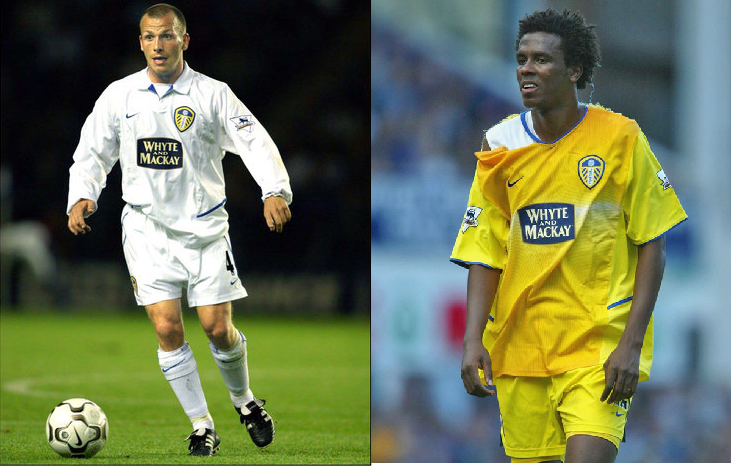
The season would also see boardroom changes at Elland Road. On 15th December, Professor John McKenzie would resign as Leeds chairman after 9 months at the helm in order to potentially prepare a bid to buy Leeds as part of a consortium. According to a Guardian article from the time, McKenzie had cut £20m from Leeds’s debts during his time in charge.[1] He would be replaced by Trevor Birch, who had previously served as CEO for both Leeds and Chelsea before Roman Abramovich’s arrival in 2003. Birch’s tenure as chairman would last just three months, as Leeds would be the subject of a takeover by a local consortium for £30m on 19th March 2004. The head of the consortium Gerald Krasner would take over as chairman the very same day.
The main positive for Leeds, as in previous seasons, would come in the shape of youth. After his record-setting debut the previous season, James Milner would continue to showcase his potential, making 27 starts for Leeds after a brief loan spell at Swindon Town earlier in the season. He would more than double his Premier League goal tally, scoring 3 goals throughout the season in matches against Charlton (1-0), Wolves (4-1) and Everton (1-1) to increase his overall goal tally to 5. After making their debuts the previous season, Simon Johnson (1+4), Frazer Richardson (2+2) and Matthew Kilgallon (7+1) would all make starts for the first team this year.
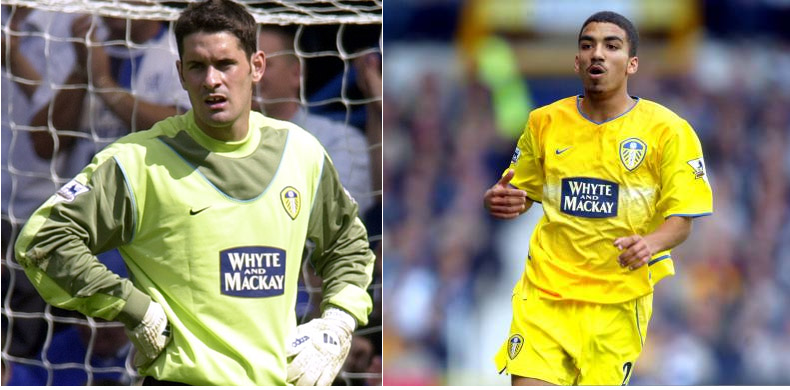
In addition, two future England internationals would make their Leeds United debuts this season. Teenage goalkeeper Scott Carson would debut in a 3-0 defeat to Middlesbrough on 31st January, coming on for 10-man Leeds to replace the red-carded Paul Robinson. He would later start in the 1-1 draw with Manchester United on 21st February and the final-day defeat to Chelsea after relegation had already been confirmed. The other new debutant would be winger Aaron Lennon. Like Milner the previous season, Lennon would make Premier League history on his debut. He would become the youngest player in Premier League history at 16 years and 129 days, appearing as a substitute in Leeds 2-1 defeat to Tottenham on 23rd August 2003. He would make 11 substitute appearances throughout the season but would be unable to start ahead of Jermaine Pennant and Gary Kelly on the right wing. If there is one thing that Leeds could take solace from this terrible relegation season, it was that the future was bright. If they could keep these youngsters together, it might not be long before Leeds could potentially return to the Premier League sooner rather than later.
Would Leeds make an immediate return to the Premier League? It remains to be seen.
[1] ‘McKenzie steps down at Leeds’ The Guardian (15th December 2003) https://www.theguardian.com/football/2003/dec/15/newsstory.sport2?INTCMP=ILCNETTXT3487
 the-score-board.co.uk