
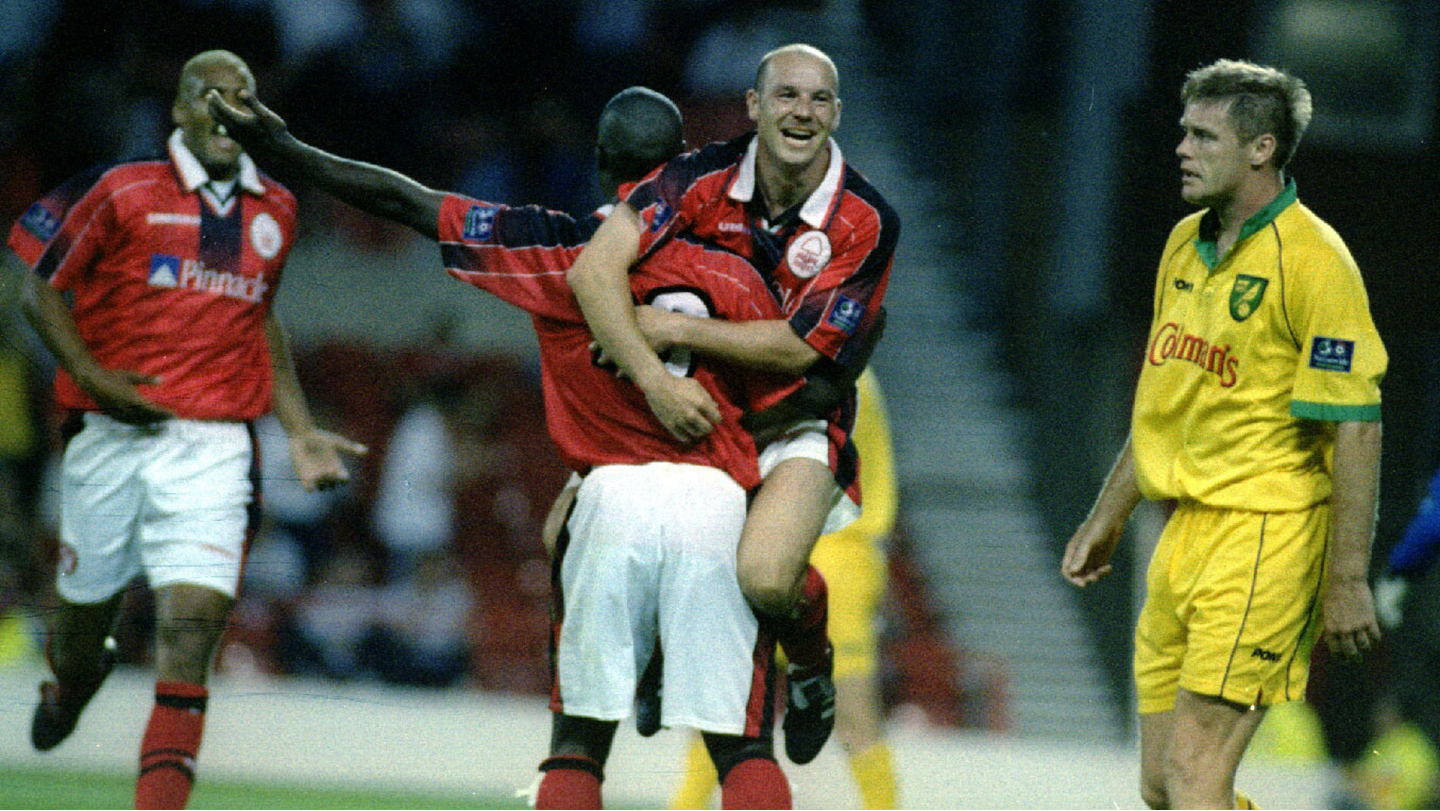
1997/98 season
Manager: Dave Bassett
Top Scorer: Pierre van Hooijdonk (34)
First Division: 1st (promoted as champions)
FA Cup: 3rd Round
League Cup: 2nd Round
League record: 28 wins, 10 draws, 8 defeats, 82 goals scored, 42 goals conceded
Transfers: £-5.33 million
Transfers in: £5.85 million
| Date | Position | Player | From | Fee |
|---|---|---|---|---|
| 2nd July | MF | Andy Johnson | Norwich | £2.2 million |
| 3rd July | DF | Alan Rogers | Tranmere Rovers | £2 million |
| 9th July | MF | Geoff Thomas | Wolves | Free |
| 1st August | DF | Thierry Bonalair | Neuchatel Xamax | Free |
| 1st August | DF | Chris Doig | Queen of the South | Free |
| 1st August | GK | Marco Pascolo | Cagliari | £750,000 |
| 4th August | DF | Jon Olav Hjelde | Rosenborg | £600,000 |
| 21st August | GK | Dave Beasant | Southampton | Loan |
| 3rd November | GK | Dave Beasant | Southampton | Undisclosed |
| 28th January | MF | Damien Johnson | Blackburn | Four-month loan |
| 18th February | MF | Glyn Hodges | Hull City | Free |
| 26th March | DF | Christian Edwards | Swansea | £300,000 |
Transfers out: £3.74 million
| Date | Position | Player | To | Fee |
|---|---|---|---|---|
| 28th May | FW | Jason Lee | Watford | £200,000 |
| 12th June | DF/MF | Alf-Inge Haaland | Leeds | £1.6 million |
| 27th June | FW | Bryan Roy | Hertha Berlin | £1.5 million |
| 1st July | FW | Richard Irving | Macclesfield | Free |
| 1st August | DF | Steve Blatherwick | Burnley | £125,000 |
| 1st August | DF | Stuart Pearce | Newcastle | Free |
| 1st August | DF | Nikola Jerkan | Rapid Vienna | Season-long loan |
| 10th September | GK | Alan Fettis | Blackburn | £300,000 |
| 6th November | DF | Vance Warner | Rotherham | Undisclosed |
| 14th November | DF/MF | David Phillips | Huddersfield | Free |
| 24th November | FW | Andrea Silenzi | Reggiana | Free |
| 28th November | MF | Chris Allen | Luton | Loan |
| 2nd December | FW | Dean Saunders | Sheffield United | Free |
| 19th December | MF | Paul Smith | Lincoln | £20,000 |
| 20th February | GK | Mark Crossley | Millwall | Loan |
| 18th March | FW | Steve Guinan | Crewe | Loan |
| 26th March | MF | John Finnigan | Lincoln | Loan |
Pre-season
The first piece of admin Nottingham Forest completed during pre-season was an obvious one. As soon as the previous season was completed, Dave Bassett would be announced as the new Nottingham Forest manager. Bassett had joined the club in March under the position of ‘general manager’, taking some of the responsibilities away from caretaker player-manager Stuart Pearce. Now that Forest had been relegated, and with uncertainty regarding Pearce’s playing career at the City Ground, it just made sense to give Bassett full-time charge of the first team. Bassett had extensive experience of achieving promotion during his managerial career, famously taking Wimbledon from the Fourth Division to the First Division between 1981 and 1986. He would later almost repeat the trick with Sheffield United, taking the Blades from the Third Division to the top flight after back-to-back promotions between 1989 and 1991. Therefore, Nottingham Forest could find few better candidates than Dave Bassett for a club requiring a manager that could immediately achieve First Division promotion.
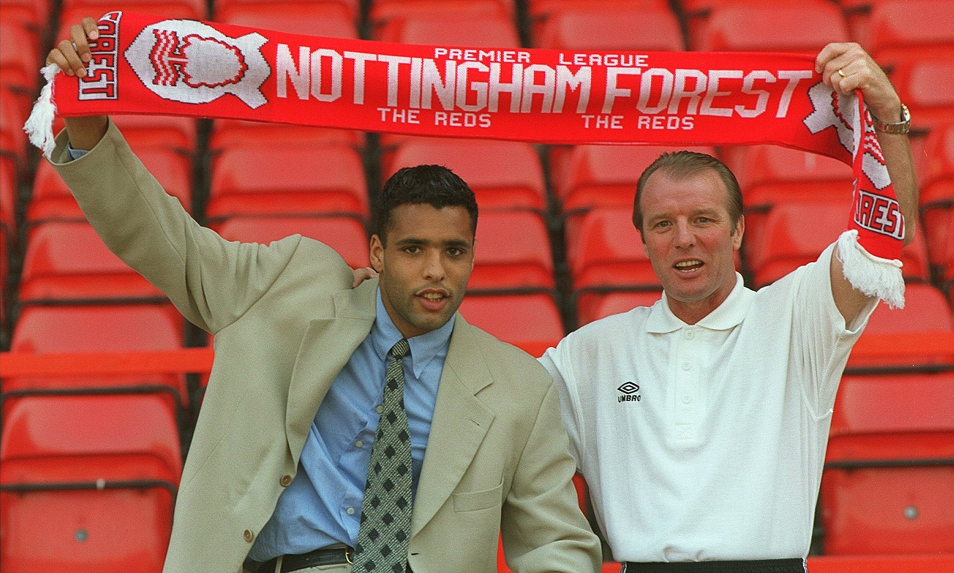
However, in the wake of Premiership relegation, Nottingham Forest would lose three of its most recognisable stars of the past few seasons. First to go was Jason Lee, who would join Second Division Watford for £200,000 three weeks after Forest’s relegation. Lee had been a semi-regular starter during his three-year stay at Nottingham Forest, only really getting his opportunity to start once Stan Collymore had left the club. His partnership with Bryan Roy did produce his best return of 8 goals in 35 matches during the 1995-96 season, during which Nottingham Forest finished 9th. However, following the departure of Frank Clark as manager, plus the arrivals of Pierre van Hooijdonk and Kevin Campbell, Lee would be loaned out for the rest of the 1996-97 season for short spells at Charlton Athletic (8 games, 3 goals) and Grimsby Town (7 games, 2 goals). Now, with van Hooijdonk and Campbell set to be Forest’s striking partnership going forward, Jason Lee would choose to leave Nottingham Forest after 14 goals in 76 matches.
Two of Nottingham Forest’s key players would be sold for relatively big money in June. On 12th June, Alf-Inge Haaland, Forest’s best midfielder of recent times, would get bought by Leeds United for £1.6 million. Even though his overall record only amounted to 93 matches and 7 goals, Haaland had been an excellent utility player for Forest, able to play in the centre of midfield or on the right side of the defence. At first, Haaland competed with fellow Norwegian Lars Bohinen for a spot in the Forest midfield. However, once Bohinen had left for Blackburn, Erling’s dad would become a near ever-present for the Reds. He would, of course, leave his most eye-catching season for last, missing only three matches in the Premiership and contributing 6 goals from midfield, making him Forest’s joint-top scorer for the whole season. Leeds United manager George Graham would spot the 25-year-old Norwegian’s performances, choosing to make him the latest member of his young Leeds midfield that also contained Lee Bowyer, Lee Sharpe and Stephen McPhail.
Five days later, Bryan Roy would leave Nottingham Forest for the Bundesliga, joining Hertha Berlin for £1.5 million. During the 1994-95 season, Roy had formed a lethal partnership with Stan Collymore when newly-promoted Forest had shockingly finished 3rd in the Premiership. Roy would score 13 goals and contribute 13 assists in 37 games during his debut season. Even when Collymore left, Roy was still used as Forest’s main striker, forming new partnerships with Jason Lee and Kevin Campbell, becoming the team’s top scorer in the 1995-96 campaign with 8 goals in 28 matches. However, his final season had been affected by a mix of injuries and poor form, and Roy soon found himself behind newer signings Dean Saunders and fellow Dutchman Pierre van Hooijdonk in the pecking order. With those two men still in situ at the City Ground and still aged only 27 himself, Bryan Roy decided to back himself by moving to Hertha BSC, who had just been promoted to the Bundesliga.
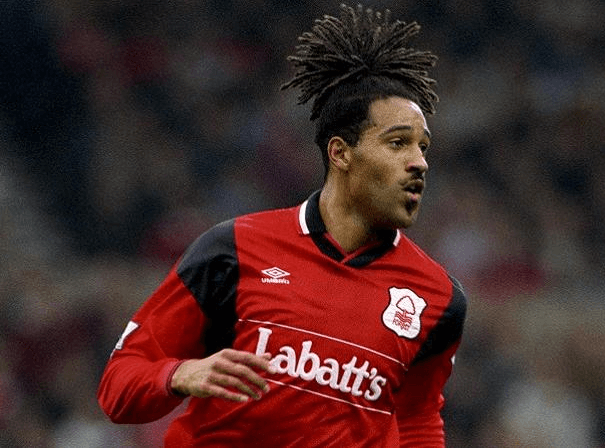
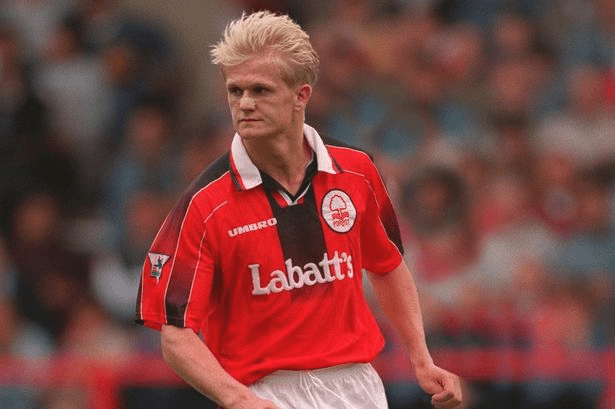
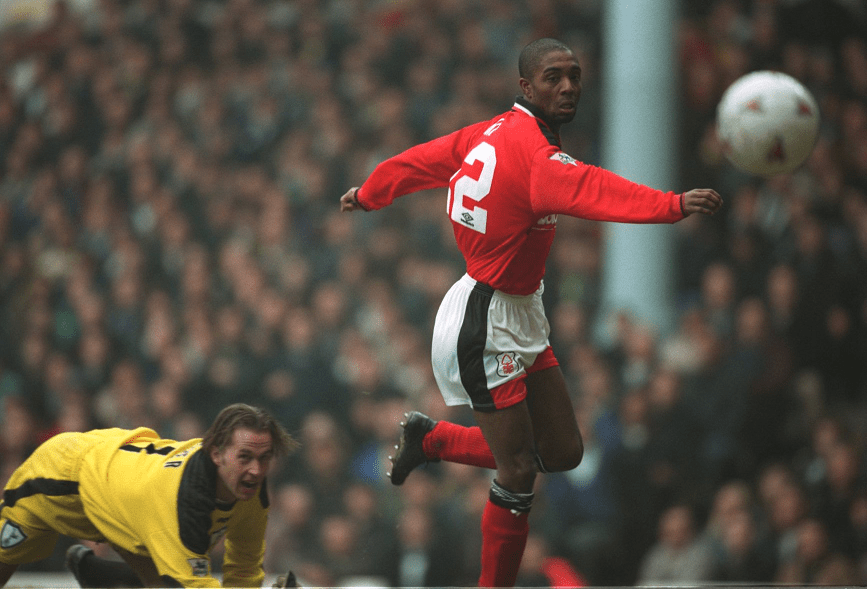
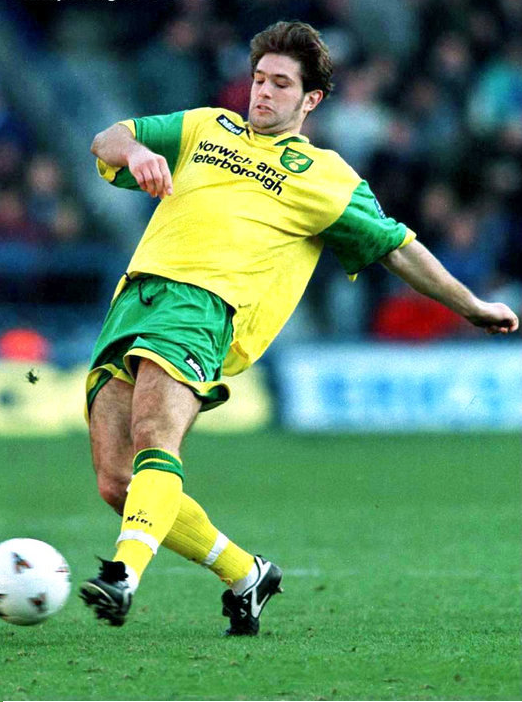
After losing those three names, Nottingham Forest would bring in their first three summer arrivals in early July. First in through the door was Norwich City midfielder Andy Johnson for £2.2 million on 2nd July. Johnson was a Norwich academy graduate, making his professional debut at 17 years old in a 2-0 defeat to Sheffield Wednesday in April 1992. His appearances were restricted while Norwich was in the Premiership, playing no more than single figures between 1992 and 1995. After the Canaries were relegated from the top flight, Johnson started to receive more regular first-team football, playing 53 matches and scoring 13 goals in the past two seasons. These statistics made him more than an able replacement for the outgoing Alf-Inge Haaland.
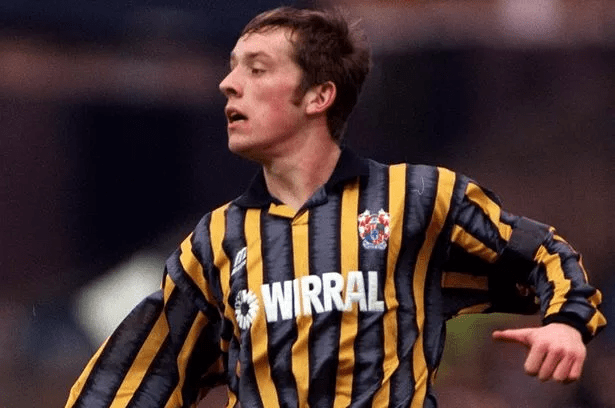
One day later, Dave Bassett would boost his full-back options for the future by signing Tranmere Rovers’ 20-year-old left-back Alan Rogers for £2 million. Due to an impending exit, Nottingham Forest would soon have an open spot at left-back, and Bassett clearly thought that Rogers was the right choice to fill that role, potentially for years to come. Such was the Nottingham Forest’s manager’s confidence he would even give the young left-back the vacant No.3 shirt for the coming season. Luckily for Forest, Alan Rogers had plenty of First Division experience, making 57 appearances for Tranmere since making his professional debut in 1995.
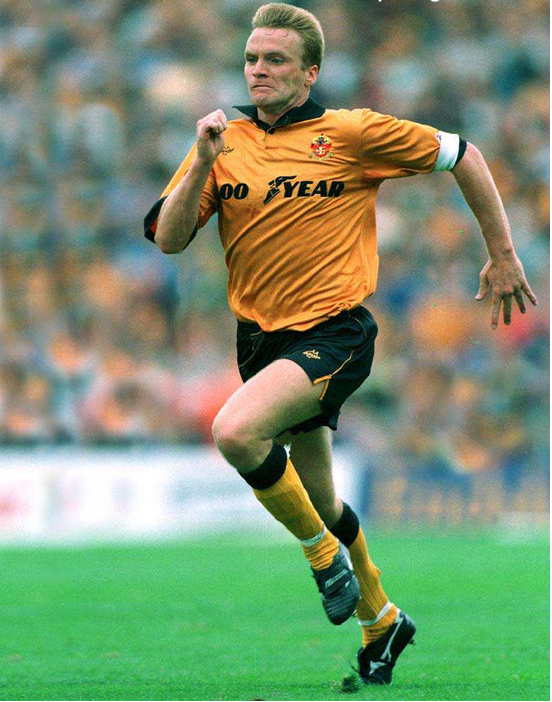
The final member of the first wave of Nottingham Forest’s summer signings was slightly further along in his career. At 32 years old, Geoff Thomas was heading towards the twilight of his career but would bring 455 first-team appearances in midfield across 15 years for Rochdale, Crewe, Crystal Palace and Wigan to the City Ground. From the last two clubs, Thomas brought plenty of experience playing in the First Division and the Premiership and successfully achieving promotion to the top flight. Thomas also brought plenty of leadership qualities, having captained both Wolves and Crystal Palace, including leading the latter in the 1990 FA Cup Final. However, Geoff Thomas’s recent career had been plagued by injury, limiting him to just 56 appearances across four seasons at Molineux. It was for this reason that Nottingham Forest was able to obtain his services on a free transfer following the expiry of his Wolves contract. Dave Bassett would hope he could get enough out of Thomas for this signing to be considered worthwhile.
August
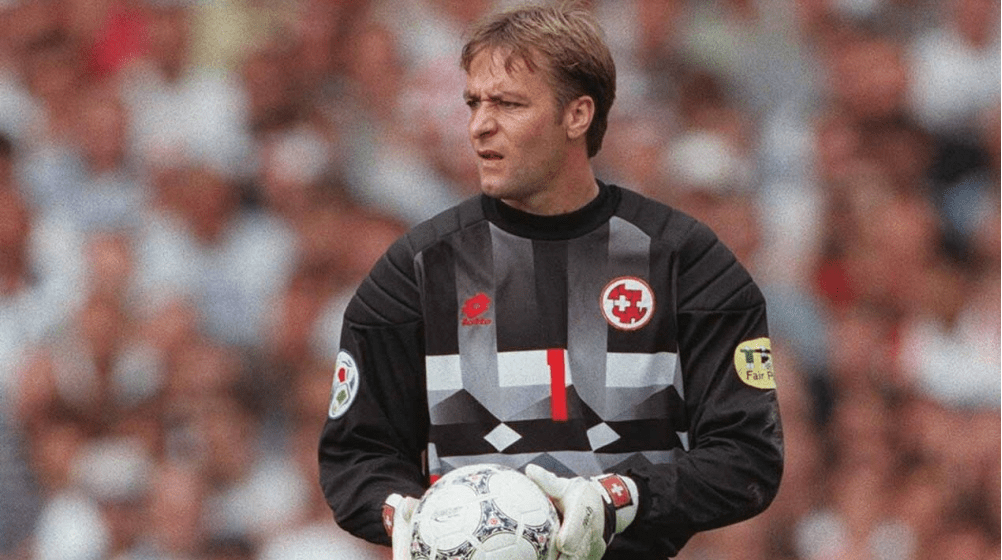
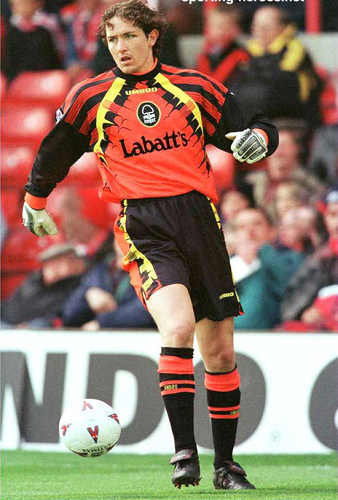
The 1st of August would be a busy day for Nottingham Forest transfer business. On this day, two players would join the club, and three players would leave the City ground for pastures new. First, arriving at Nottingham Forest were Swiss goalkeeper Marco Pascolo and French full-back Thierry Bonalair. Marco Pascolo would aim to prove stern competition to Mark Crossley and the rest of Nottingham Forest’s goalkeeping division. The 30-year-old was a 44-cap Switzerland international, starting all of Switzerland’s games at the 1994 FIFA World Cup and Euro 1996. However, Pascolo, who had played almost his entire career in his home country, had recently lost his international place after moving to Cagliari in Serie A. Pascolo would start the 1996-97 season as Cagliari’s No.1 but would drop to the bench after conceding 25 goals in the first 15 games for a side that would end up suffering relegation from Serie A after losing a play-off match. Now, after leaving Italy for £750,000, Pascolo wanted to prove himself at Nottingham Forest and recapture the form that made him invaluable to his country for so many years.
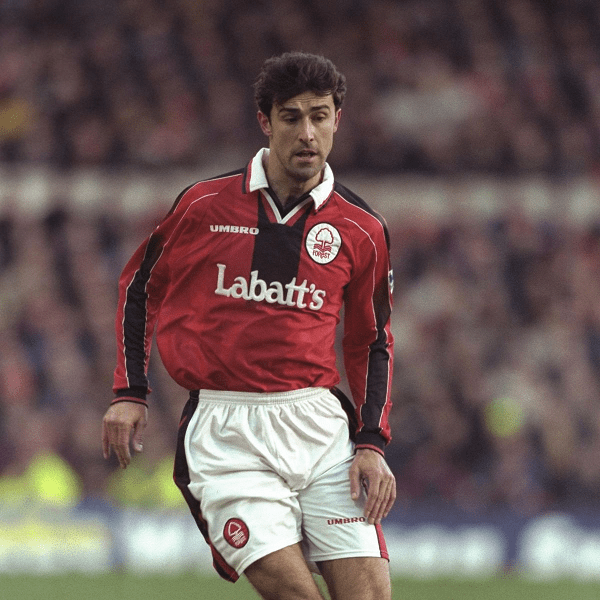
Another new signing, Thierry Bonalair had been a near ever-present at nearly every club he had represented. During his eight years playing in the French First Division with Nantes, Auxerre and Lille, the fullback had made over 240 appearances. He had then gone on to perform at the same level for Neuchâtel Xamax in Switzerland, making 67 appearances in two seasons. Now 31, Bonalair had plenty of experience to bring to Nottingham Forest’s promotion push and was sure to serve as a challenger to the right-back spot held by Des Lyttle for the previous four seasons.
In slightly smaller news, Nottingham Forest would add 16-year-old centre-back Chris Doig to their youth academy from Queen of the South. However, despite his age, Doig had already played league football, having turned out four times for the Queens in the third tier of Scottish football. However, Forest still saw him as a future prospect.
While Marco Pascolo and Thierry Bonalair were getting ready to join their Nottingham Forest teammates, two of Nottingham Forest’s current defenders were finding new employment away from City Ground. One was leaving temporarily, the other permanently. Firstly, centre-back Nikola Jerkan had decided to spend the coming season on loan with Austrian title-chasers Rapid Vienna following Nottingham Forest’s Premiership relegation. After his move from Real Oviedo, Jerkan had struggled to find a place in the Nottingham Forest starting line-up, making 14 appearances across the season, most coming before Christmas. He would hope for better fortunes in the Austrian Bundesliga.
At the same time, Steve Blatherwick would move down a division to join Second Division Burnley for £150,000. An 18-year-old Blatherwick had joined Forest from cross-city rivals Notts County in 1992 as one of the final signings made by Brian Clough. Over the following five years, Blatherwick failed to find anything resembling regular game time at the City Ground. Overall, the centre-back had made 15 appearances in all competitions for Nottingham Forest while being frequently loaned out to gain experience at Wycombe Wanderers, Hereford United and Reading. In fact, Steve Blatherwick’s most successful season with Forest had been the most recent one, with Blatherwick making 10 appearances in all competitions between August 1996 and January 1997 before spending the rest of the season with Reading. Now aged 23, the time had come for Steve Blatherwick to assess his future options with Nottingham Forest, and the defender had found that the best choice for his future was to move away from the East Midlands. There, he would find increased game time.
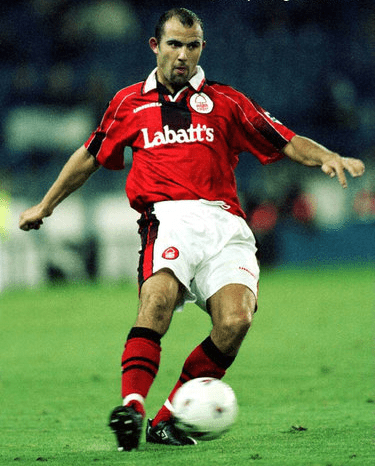
However, the most significant piece of business associated with Nottingham Forest on 1st August saw the club’s best player of recent times depart Forest after a 12-year stay. On this day, Stuart Pearce decided to stay in the Premiership and join Newcastle United on a free transfer. Pearce was still a regular part of the England squad and wanted to keep his place by continuing to play for a Premiership club and boost his chances of appearing at the 1998 FIFA World Cup, something he would have been unable to do by sticking with Forest by staying with Forest. At 35, Pearce knew his days in international football were numbered, and dropping down to the First Division when younger guys like Graeme Le Saux were also in his position would be equal to accepting retirement.
Stuart Pearce would leave Nottingham Forest after making 522 appearances for the club and scoring 88 goals. Signed as a 23-year-old from Coventry by Brian Clough in June 1985, Pearce would play in 402 out of Forest’s 486 league matches during his time at the club. Clough was so impressed by the left-back’s performances that Pearce was awarded the club captaincy when Ian Bowyer left to join Hereford United in 1987. Over the next decade, Pearce had led Forest to three 3rd-placed finishes in the top flight, two League Cups, two Full Members’ Cups and an FA Cup Final. He had even played a vital role in the team’s remarkable recent rise under Frank Clark, leading them from the second tier to the UEFA Cup quarter-finals in two years. Now, Stuart Pearce would leave Nottingham Forest as a certified club legend.
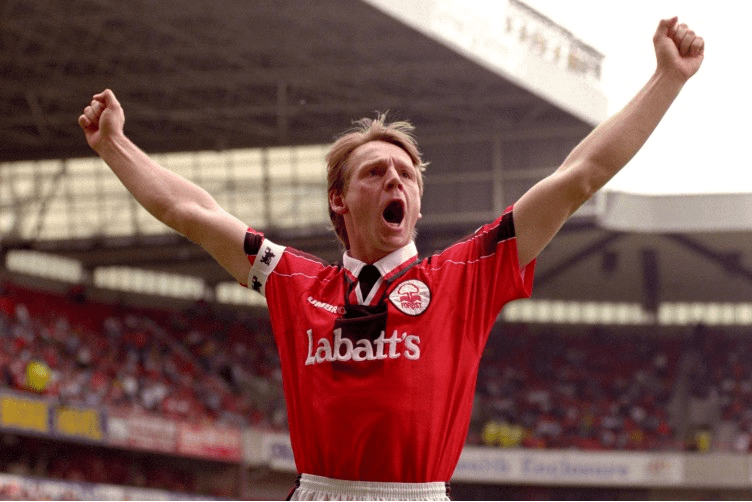
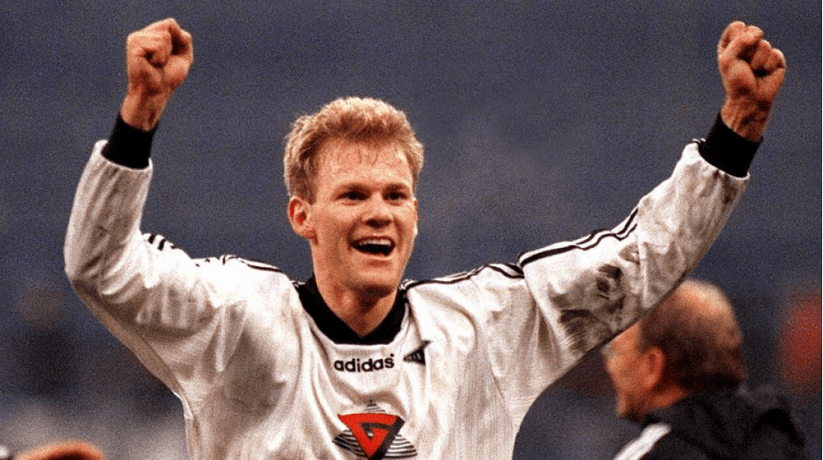
Having let centre-backs Steve Blatherwick and Nikola Jerkan leave, Nottingham Forest Dave Bassett decided to refresh the heart of his defence by bringing in Jon Olav Hjelde from Norwegian champions Rosenborg. Hjelde had won the Norwegian league in all three seasons with Rosenborg but had spent his time playing backup to regular starters Erik Hoftun and Bjørn Otto Bragstad. In his entire time at Rosenborg, Hjelde would make only 25 league appearances. However, the 25-year-old had been given his most significant exposure in the previous season’s UEFA Champions League. Hjlede would start 4 out of Rosenborg’s 8 matches as the Norwegian side reached the quarter-finals, playing the full 90 minutes in famous group-stage wins over IFK Göteborg and AC Milan and both legs of the quarter-final against Juventus. A defender with that experience for the price of £600,000 was an excellent choice to challenge the long-established pairing of club captain Colin Cooper and club stalwart Steve Chettle.
August
Nottingham Forest would begin their return to First Division football away to Port Vale on 9th August 1997. The starting XI picked by Dave Bassett to start this match contained only three from the team that had lost 5-0 to Newcastle United on the final day of the previous Premiership season. While Steve Chettle, Des Lyttle and Kevin Campbell kept their places, Bassett would hand debuts to new signings Marco Pascolo, Jon Olav Hjelde, Thierry Bonalair, Alan Rogers, Geoff Thomas and Andy Johnson. With this new-look side, Nottingham Forest would begin the season with a 1-0 away win. The breakthrough would come in the 39th minute when Pierre van Hooijdonk flicked on a Steve Stone cross, and his strike partner Kevin Campbell headed the ball into the net to score in a second consecutive opening-day league win for Nottingham Forest.
Two days later, Forest would begin another competition when they took on Third Division Doncaster Rovers in the first of a two-legged tie in the opening round of the League Cup. The difference in quality caused by the difference in divisions was on show at Doncaster’s Belle Vue Stadium as Nottingham Forest ran riot. Geoff Thomas would open the scoring for Forest in the 11th minute, side-footing in Pierre van Hooijdonk’s pass for his first Nottingham Forest goal. Four minutes later, Dean Saunders would net from two yards after the Dons goalkeeper could only parry Alan Rogers’ header. The Welshman had scored his first goal since March to double the Reds’ lead. New signing Jon Olav Hjlede would break his Forest duck for 3-0 after heading in from a corner before Pierre van Hooijdonk made it four with a stroked finish two minutes after half-time. Second goals for Hjelde, Saunders and van Hooijdonk would then bring up a magnificent seven before substitute Chris Allen finished off Dean Saunders’ cross late to complete an 8-0 rout. Even though there was still a second leg to play two weeks later, it was already clear who was heading through to the second round of the League Cup and who was heading out.
On 15th August, Norwich City would travel up to the East Midlands for Nottingham Forest’s first home game. Forest had won only 3 out of 19 matches at the City Ground during the previous Premiership season. However, the Reds would start this season’s home campaign with aplomb, coming from behind to defeat the Canaries 4-1. Norwich would take an early 7th-minute lead when Forest failed to clear their lines, and Keith O’Neill sent a first-time effort back beyond Marco Pascolo. Nottingham Forest would almost equalise when Steve Stone sent a header over the Norwich defensive line, and Pierre van Hooijdonk hit a volley that needed to be turned past the post by Andy Marshall. Another Marshall save would actually lead to a goal for the Dutch striker. The goalkeeper would stop a powerful shot by Thierry Bonalair, but the force of the hit would only direct the ball to van Hooijdonk, who would easily head the ball into the net. The game would remain tied until the 57th minute when three goals in five minutes ultimately settled the match. First, van Hooijdonk and Kevin Campbell would combine to give Geoff Thomas a tap-in at the back post to give Nottingham Forest a 2-1 lead. Two minutes later, a long ball over the top would find Kevin Campbell, who fired the ball across the goalkeeper for 3-1. Then, three minutes later, Thomas would get his second of the night, finding the bottom corner from 25 yards out. It may have been only the second game of the season, but Nottingham Forest had laid down a marker for the rest of the First Division. The 4-1 win had also given Forest their first home league victory since a 2-1 win over Tottenham on 19th January.

Despite Nottingham Forest conceding only one goal in their first two league matches, Dave Bassett would decide to bring in an experienced goalkeeper on loan. Bassett would sign a goalkeeper he knew very well, 38-year-old Southampton goalkeeper Dave Beasant. Bassett had previously signed Beasant for Wimbledon in 1981, beginning the goalkeeper’s legendary career as part of the ‘Crazy Gang’. Beasant would goal-tend for Bassett’s Wimbledon during the club’s rise from the Third Division in 1981 to a 6th-placed finish in the First Division in 1987 before Bassett left the club. Now Dave Bassett was bringing in a Dave Beasant with 592 professional appearances to his name and experience of achieving promotion to the top flight and 106 Premiership appearances with Chelsea and Southampton. Dave Beasant was initially signed on a three-month loan lasting until the end of November but would later be signed permanently for an undisclosed sum on 3rd November.
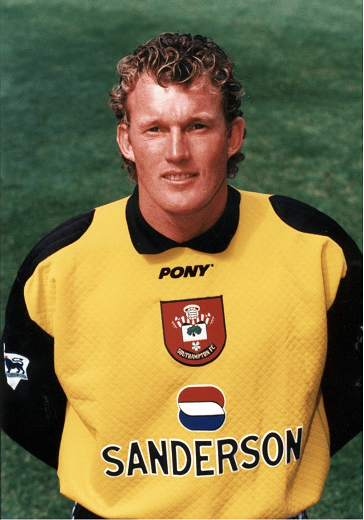
Two days later, Beasant would make his Nottingham Forest debut away at Oxford United. The 38-year-old would mark his first Forest appearance with a clean sheet. At the other end, Chris Bart-Williams’ sliding effort after 71 minutes was enough to continue Nottingham Forest’s winning start with another 1-0 win. Then, on 26th August, Forest would finish off Doncaster Rovers in the second leg of their League Cup first-round tie. Goals from Steve Guinan and Pierre van Hooijdonk would secure a 2-1 home win on the night and a mammoth 10-1 win on aggregate.
Then, to continue a recent pattern, the Reds would follow up a 1-0 away league win by scoring four goals at home on 30th August. This time, Queens Park Rangers were the victims of Pierre van Hooijdonk’s first hat trick in English football. The Dutchman would open the scoring a minute before half-time, connecting with Geoff Thomas’s flick-on to half-volley the ball into the bottom corner. Van Hooijdonk would double his and Forest’s account five minutes after the break, heading in Dean Saunders’ measured cross to the back stick. Saunders would then score Forest’s third, latching on to another Geoff Thomas flick-on from a corner before directing the ball into the net for his first goal since March. Then, finally, van Hooijdonk would complete his treble two minutes from time, finishing another Dean Saunders centre. Nottingham Forest would end the opening month of the season with their 4th win from 4 matches and 6 wins from 6 in all competitions.
| Position | Team | Played | Wins | Draws | Losses | GF | GA | GD | Points |
|---|---|---|---|---|---|---|---|---|---|
| 1st | Nottingham Forest | 4 | 4 | 0 | 0 | 10 | 1 | +9 | 12 |
| 2nd | Bradford City | 4 | 3 | 1 | 0 | 7 | 2 | +5 | 10 |
| 3rd | Swindon Town | 4 | 3 | 1 | 0 | 6 | 2 | +4 | 10 |
| 4th | West Brom | 4 | 3 | 1 | 0 | 7 | 4 | +3 | 10 |
| 5th | Sheffield United | 4 | 2 | 2 | 0 | 4 | 1 | +3 | 8 |
September
September would begin with Nottingham Forest losing their unbeaten start to Manchester City. A Ged Brannan brace plus another by Paul Dickov would see Frank Clark earn some bragging rights over the team he had led to UEFA Cup qualification two years earlier. Brannan would open the scoring by finishing Giorgi Kinkladze’s centred ball after 20 minutes. Brannan’s second goal would be more spectacular, the midfielder first finding his momentum stopped by Marco Pascolo outside his box, only for Brannan to send the rebound high into the air before the ball eventually landed in the net in the 71st minute. Kevin Campbell’s close-range header would make things interesting 10 minutes later by bringing the score back to 2-1. However, substitute Dickov would seal the three-goal victory two minutes from time by hitting the ball into the goal from two yards. The 3-1 result was not only Forest’s first defeat of the season but also Manchester City’s first win following a difficult start.

Four days after the Man City loss, Nottingham Forest would draw 0-0 against Swindon Town in a match neither team will likely want to remember in a hurry. Staying on the road, the Reds would fail to defeat Sheffield United at Bramall Lane. Forest would have numerous chances to score throughout the game, but a combination of great defending and stellar goalkeeping from Simon Tracey would repeatedly deny them. Geoff Thomas would find a goalbound header saved by Tracey, and Kevin Campbell would find himself clean through on goal only for a heavy first touch to take him too far around the goalkeeper, with his eventual shot hitting the side-netting. Eventually, something had to give. In the 79th minute, midfielder Gareth Taylor blasted a shot from the edge of the box past a stranded Dave Beasant as Sheffield United gained an unlikely 1-0 victory, and Dave Bassett ended up on the losing side against one of the clubs he used to manage. Nottingham Forest would now enter a League Cup tie against Second Division Walsall off the back of three matches without a win which had seen the Reds slip from the top spot in Football League Division One.
As Dave Beasant started to make himself comfortable between the posts of the Nottingham Forest net, Alan Fettis decided to take his leave of the club. After joining from Second Division Hull City in January 1996, Fettis had struggled to force his way into the starting goalkeeper’s jersey. Unable to dislodge Mark Crossley, Marco Pascolo or Dave Beasant, Fettis had made a total of just 6 appearances in all competitions for Nottingham Forest, with four of those coming in the league. However, despite his lack of action, the 26-year-old Fettis would be signed by Premiership side Blackburn Rovers for £300,000, presumably to back up starting goalkeeper Tim Flowers.
Looking to the League Cup as a break from their recent league slump, Nottingham Forest would instead carry their current form into the competition, ultimately suffering a shock first-leg defeat in their second-round tie against Walsall. Midfielder Justin Skinner, on loan from Bristol City until the end of 1997, would score the winner for the Saddlers as the Second Division club took a one-goal advantage back to the West Midlands.
Before the second leg against Walsall, Nottingham Forest would finally earn its first win of the month by beating Portsmouth 1-0 at home. Pierre van Hooijdonk would score the only goal in the 54th minute, playing a one-two with Dean Saunders on the edge of the box before confidently striking the ball into the net for Forest’s first goal in four matches. After moving back to the top of the league standings, Forest would travel to Walsall for the League Cup second-round second leg. A 2-0 victory was the minimum that the First Division leaders required to avoid embarrassment. However, the Saddlers would once again match up to Forest in front of their own fans at the Bescot Stadium. Forest’s man in form, Pierre van Hooijdonk, would put his team in front on the night, looping a header over the goalkeeper into the far corner. The Dutchman would almost give Forest the aggregate lead with a spectacular effort later in the second half. Spotting Jimmy Walker off his line, van Hooijdonk would attempt to lob the keeper from the halfway line. His effort would ultimately bounce off the crossbar. Neither Nottingham Forest nor Millwall would manage to find the net for the rest of the 90 minutes, meaning that extra time was now required to decide this tie.
Nottingham Forest would take the aggregate lead in extra time, albeit with a bit of luck. Craig Armstrong’s corner kick was so perfectly placed that it would beat Jimmy Walker at his near post. A goal like that would typically cause heads to droop. However, Walsall would come back and challenge their bigger-name opponents. First, striker Andy Watson would pull the Saddlers back into the tie, levelling the aggregate score at 2-2. Then, a mix-up at the back between Marco Pascolo and Des Lyttle would allow striker Watson to poke the ball in at the back post and score the winner for Jan Sorensen’s side. Home fans would invade the pitch to celebrate this second goal, knowing their team had just knocked out one of the League Cup’s most successful sides. The Second Division team that had won just 2 of its first 8 matches of the season had caused one of the shocking results of the season so far. Dave Bassett and his Nottingham Forest players would now have to wait for the FA Cup to start in January before they could think about potential cup glory again.
Despite their League Cup exit, Nottingham Forest would return to winning ways to end September, earning their fourth 1-0 win of the campaign so far against Portsmouth. The deadlock would remain unbroken until the 67th minute when Kevin Campbell eventually scored the crucial goal. Pierre van Hooijdonk would occupy two defenders before sending a cross into the centre of the goal, where Kevin Campbell would score with a textbook header. The win meant that despite a month that saw the team exit the League Cup to a lower-ranked side and win 2 out of 5 league matches, Nottingham Forest would end September with a one-point lead over West Brom at the top of the First Division.
| Position | Team | Played | Wins | Draws | Losses | GF | GA | GD | Points |
|---|---|---|---|---|---|---|---|---|---|
| 1st | Nottingham Forest | 9 | 6 | 1 | 2 | 13 | 5 | +8 | 19 |
| 2nd | West Brom | 9 | 5 | 3 | 1 | 11 | 7 | +4 | 18 |
| 3rd | Queens Park Rangers | 9 | 5 | 1 | 3 | 11 | 12 | -1 | 16 |
| 4th | Sheffield United | 7 | 4 | 3 | 0 | 9 | 3 | +6 | 15 |
| 5th | Bradford City | 9 | 4 | 3 | 2 | 12 | 13 | -1 | 15 |
October
October would begin with a trip to West Yorkshire to face the First Division’s bottom side Huddersfield Town. The game would mark the first league match between Nottingham Forest and Huddersfield since a 1-1 draw in a Second Division match in March 1973. The Terriers were yet to win in the league this season, and after this match at the John Smith’s Stadium, their winless record would remain unblemished as Nottingham Forest won 2-0. Second-half goals from Colin Cooper and Dean Saunders would do the trick for Dave Bassett’s side. Following a scramble in the penalty area in the 67th minute, the ball would spill out to Colin Cooper, and the Nottingham Forest captain would send a daisy-cutter through the bodies into the far corner of the net. Six minutes later, Pierre van Hooijdonk would flick a corner into the heart of the penalty area, and Dean Saunders would squeeze the ball past the goalkeeper at the second attempt.
After an international break, Nottingham Forest would return to action with a 2-2 draw against Tranmere Rovers on 18th October. Striker Lee Jones would put Rovers in front inside five minutes, stroking a first-time effort past Dave Beasant from the edge of the penalty area. Pierre van Hooijdonk would equalise for Forest in the 19th minute before Scot Gemmill scored his first goal of the season to give the Reds the lead four minutes before half-time. However, the points would ultimately be shared when Tranmere equalised in style in the 59th minute. Andy Thompson would pick the ball up on the left-hand side, and the fullback would send a stunning long-range effort into the top corner from 25 yards.
Three days later, Kevin Campbell would score the only goal in a 1-0 win in a top-of-the-table clash over West Brom. Forest would have numerous opportunities throughout the match to take the lead, only to repeatedly fluff their lines. Scot Gemmill would have a long-range chip turned over the crossbar, while Kevin Campbell and Colin Cooper would miss the target entirely. However, in the 79th minute, Campbell and van Hooijdonk would play a neat one-two in the box with Campbell before the former hit a shot that went into the net off goalkeeper Alan Miller. Nottingham Forest would keep their place atop the First Division while West Brom lost ground.
October would end with a thrilling 3-3 draw between Nottingham Forest and Reading at Elm Park. Pierre van Hooijdonk would score the first half’s only goal, but what a goal. The Dutch striker would manage to find pace and accuracy as he sent a free-kick over the defensive wall and into the bottom corner out of the goalkeeper’s reaches from 30 yards. Van Hooijdonk would double Forest’s lead from the penalty spot three minutes after half-time following a handball. However, things would turn in the 57th minute when Forest goalkeeper Dave Beasant brought down Martin Williams in the penalty area, giving away a penalty and receiving a red card from referee John Brandwood. Williams would dust himself off to send the ball beyond stand-in goalkeeper Steve Chettle. Kevin Campbell would re-establish the Reds’ two-goal with a perfect striker’s goal in the 65th minute, but Reading were not finished. Two goals in five minutes would complete the Royals’ comeback. First, Jamie Lambert would expertly dribble through four Forest defenders before finishing with aplomb to make it 3-2. Then, five minutes later, Linvoy Primus would rise highest at a corner to earn a deserved point for Terry Bullivant’s side.
Following an unbeaten month of two wins and two draws that saw them extend their unbeaten run to six matches, Nottingham Forest would still end October sitting 2nd in the First Division standings, one point below Swindon Town, albeit having played two games fewer than the Robins. However, November would be a packed month of action, featuring 7 matches in 28 days, a severe test of Nottingham Forest’s promotion ambitions.
| Position | Team | Played | Wins | Draws | Losses | GF | GA | GD | Points |
|---|---|---|---|---|---|---|---|---|---|
| 1st | Swindon Town | 15 | 8 | 4 | 3 | 19 | 17 | +2 | 28 |
| 2nd | Nottingham Forest | 13 | 8 | 3 | 2 | 21 | 10 | +11 | 27 |
| 3rd | Middlesbrough | 12 | 7 | 3 | 2 | 23 | 12 | +11 | 24 |
| 4th | West Brom | 13 | 7 | 3 | 3 | 17 | 12 | +5 | 24 |
| 5th | Bradford City | 13 | 6 | 5 | 2 | 16 | 14 | +2 | 23 |
November
A long November would begin with Nottingham Forest extending their unbeaten run to seven matches following a 3-1 home win over Crewe Alexandra. The game would belong to Forest’s now-established strike partnership of Kevin Campbell and Pierre van Hooijdonk, who would provide all three of the Reds’ goals. The pair would link up to set Campbell free in the 10th minute, the Englishman lifting the ball over Jason Kearton to give Forest the lead. Crewe would equalise five minutes later through Colin Little after Alexandra stretched the Forest defence hither and yon. Forest would then enjoy the better chances to score on either side of half-time, one of which would eventually go in the net in the 53rd minute. Pierre van Hooijdonk would send an excellent free-kick over the wall from 25 yards to give Forest the lead again. A similar free-kick from van Hooijdonk would then give Dave Bassett’s team the victory late on as the Dutch striker crossed doubled figures for goals.
The day before Bonfire Night 1997, Nottingham Forest would lose their seven-match unbeaten run to Bury in a 2-0 defeat. Left-back Peter Swan would put The Shakers in front in the 16th minute, and David Johnson would score the second three minutes past the hour. Bury would earn just their 4th win of the season, while Nottingham Forest was lucky that their two-point lead at the top of the First Divison standings remained intact due to Swindon and West Brom dropping points.
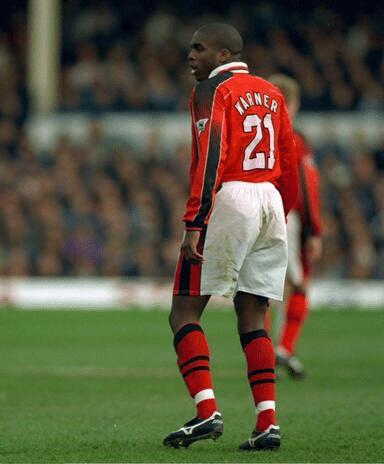
On 6th November, Vance Warner would become the latest defender to leave the City Ground during this season. Like Steve Blatherwick before him, Warner was another graduate of the Nottingham Forest academy who never managed to break through into being a senior player for the club and subsequently spent most of his career with Forest on loan at other clubs. Vance Warner was signed as a 17-year-old trainee in 1991 and was touted as the long-term replacement for Des Walker. He would receive his professional contract in 1993 but would not make his professional debut until starting in a 1-0 win over Crystal Palace in February 1995. He would then play a further 6 times over the next two years. He would spend the second half of the 1995-96 season on loan at Grimsby Town before returning to the Nottingham Forest reserves. In August of this season, Vance Warner was sent on loan to fellow First Divison side Rotherham United. After a successful loan spell, Nottingham Forest agreed to sell Warner to Rotherham permanently.
Nottingham Forest would then complete three games in a week to start November by drawing 1-1 away at Sunderland. Kevin Phillips would put the Black Cats in front, leaping above his marker to put away a deep cross into the box. Forest would have chances to equalise, but home goalkeeper Lionel Perez was equal to them. The Frenchman would swat away Kevin Campbell’s shot towards the top corner before smothering a Pierre van Hooijdonk free-kick. He would also stop Steve Stone’s arcing shot towards goal. However, Perez would finally be beaten at his near post by Jon Olav Hjelde. Hjelde would get in front of his marker and rush to the near post to poke in Des Lyttle’s corner to ensure a point for the Reds.
During this busy November, David Phillips would leave Nottingham Forest for Huddersfield Town on a free transfer. Phillips had been one of Forest’s most consistent players over the past four years. Brought in by Frank Clark after Nottingham Forest’s Premiership relegation in 1993, Phillips had been a primary figure as Forest achieved immediate promotion back to the top flight. Even when Forest was in the top flight, the veteran midfielder had been a reliable hand able to play across the midfield and even deputise at right-back.
All in all, Phillips had made over 153 appearances for Nottingham Forest in all competitions. However, Phillips had made just two appearances under Dave Bassett during this 1997-98 season, both of which had come in the League Cup. With Bassett now bringing in his own midfielders, the 34-year-old was deemed surplus to requirements. However, for all that he did for Nottingham Forest, David Phillips was £500,000 well spent.
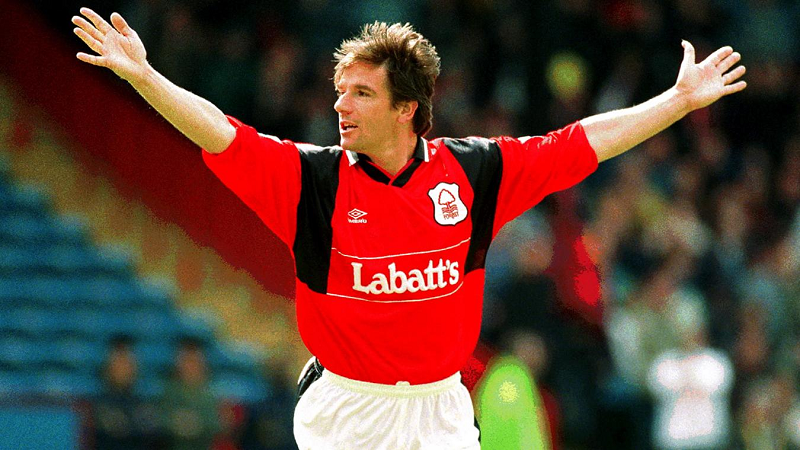
On 15th November, Kevin Campbell would score the only goal in a 1-0 home win over Birmingham City. Steve Stone would slip a through-ball to the striker, who would slide the ball into the net while falling over. Seven days later, Nottingham Forest would defeat Charlton Athletic at home in a more impressive fashion. Pierre van Hooijdonk would open the scoring in the 21st minute, firing a powerful shot that curled outwards into the far corner. That would give Forest a 1-0 half-time lead in a first half they had dominated. However, the results of all their hard work would all come out in the second 45 minutes. In the 50th minute, van Hooijdonk would score his, and Forest’s, second goal. Reading the path of a long throw-in into the centre of the pitch, van Hooijdonk would set himself up before hitting a spectacular half-volley into the bottom corner from 25 yards. Six minutes later, the Dutchman would complete his hat-trick, sliding in a rebound after Kevin Campbell had seen his shot saved. Charlton would get some hope of a comeback when Bradley Allen scored from a tight angle two minutes after van Hooijdonk’s treblemaker. However, Ian Woan would quickly stamp out this hope by scoring Nottingham Forest’s fourth goal in the 74th minute. It was Woan’s first goal of a difficult campaign, where he had been consigned to just four matches so far this season. Woan was so on form after scoring his goal that he ended up scoring in his own net five minutes later, the ball grazing his head from a defensive corner and going past Dave Beasant to gift Charlton a consolation goal. However, Forest would still have the last word when Kevin Campbell headed in a corner in the 85th minute and capped off a 5-2 victory for the First Division league leaders.
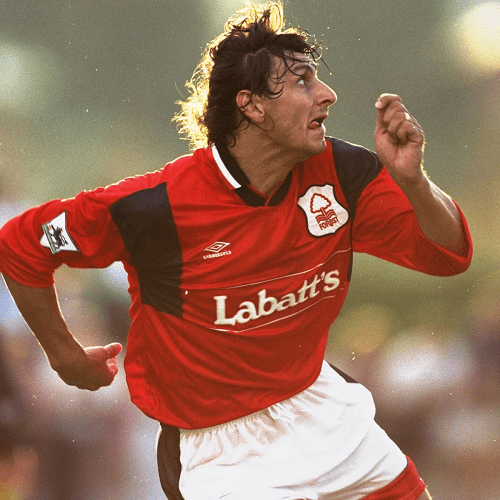
On 24th November, Andrea Silenzi would bring a merciful end to his time with Nottingham Forest, joining his former club Reggiana on a free transfer. Silenzi had been a big deal when he signed for Forest for £1.8 million in the summer of 1995, becoming the first Italian to ever play in the Premiership. He arrived with a decent reputation, scoring 22 goals in 41 for Torino during the 1993-94 season, helping I Granata finish 8th in Serie A. However, when he showed up at the City Ground, Andrea Silenzi would turn out to be a colossal flop.
It would take until his 7th match for Silenzi to receive his first start, in a UEFA Cup last 16 tie against Lyon; such was the immediate lack of faith that Frank Clark had in the Italian to actually do his job. In his first season, Silenzi would make 15 appearances in all competitions, scoring 2 goals. For the first Italian to ever play in the Premiership, Silenzi would score 0 in 10 during his first season. He would only start three of these matches due to the much better performances of Kevin Campbell and Bryan Roy. The two goals that Andrea Silenzi did score during his debut season came in the domestic cups, one in a 2-2 League Cup second-round, second-leg draw with Bradford in October, which saw Forest eliminated on goal difference, and the other in a 3-0 FA Cup 4th-round replay win over Oxford United in February. By season two, Silenzi would make two appearances for Forest before being loaned out to Venezia, where he would score only 4 goals in 26 Serie B matches. After failing to return to Nottingham Forest following this loan, Dave Bassett and the club would rip up Silenzi’s contract, having given up on the tall Italian striker.
Four days later, midfielder Chris Allen was sent out on loan to Second Division Luton Town for three months. Despite making 22 appearances in the Premiership for Forest the previous season, Allen was yet to take to the field for the Reds this season. Wanting regular game-time, Allen was allowed to move down a division to Luton. During his three-month stay at Kenilworth Road, Allen would play 17 matches for the Hatters, scoring once.
The month would end with two narrow results away from home that only served to keep Nottingham Forest at the top of the First Division. On the 26th of November, Forest would play out a goalless draw with 2nd-placed Middlesbrough before beating Ipswich Town 1-0 three days later. As had been the case with nearly all of their 1-0 wins this season, the only goal would be scored by Kevin Campbell. Nottingham Forest would end November with a three-point lead at the First Division summit ahead of Middlesbrough, with West Brom, Sheffield United and Swindon also nearby.
| Position | Team | Played | Wins | Draws | Losses | GF | GA | GD | Points |
|---|---|---|---|---|---|---|---|---|---|
| 1st | Nottingham Forest | 20 | 12 | 5 | 3 | 32 | 16 | +16 | 41 |
| 2nd | Middlesbrough | 19 | 11 | 5 | 3 | 33 | 16 | +17 | 38 |
| 3rd | West Brom | 19 | 11 | 4 | 4 | 22 | 14 | +8 | 37 |
| 4th | Sheffield United | 18 | 9 | 8 | 1 | 26 | 14 | +12 | 35 |
| 5th | Swindon Town | 20 | 10 | 4 | 6 | 26 | 27 | -1 | 34 |
December
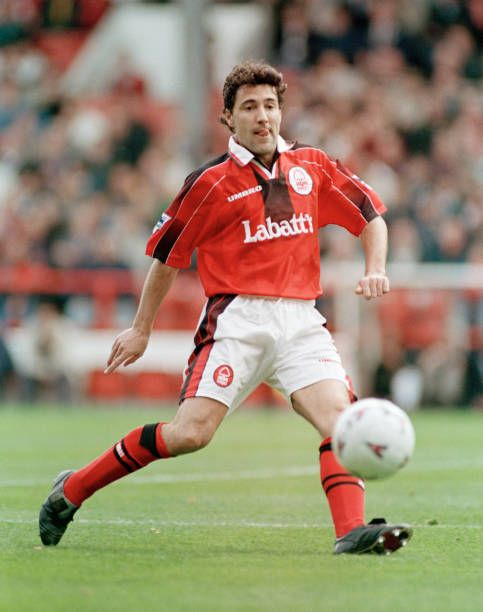
December would start with Dean Saunders leaving Nottingham Forest on a free transfer for another First Division side Sheffield United. Saunders had been one of Forest’s significant signings ahead of the 1996-97 Premiership season. Saunders had been given plenty of match-time during his year-and-half with Forest, playing 51 matches in all competitions, including 33 out of 38 games during the previous Premiership season. However, despite linking up well occasionally with Kevin Campbell, Saunders was found lacking in the goal department, scoring only 9 goals during those 51 matches, with that record equating to 5 in 43 games in the league. With Nottingham Forest scoring only 31 goals during their relegation campaign and the team’s strikers only contributing 15 goals throughout the season, Dave Bassett needed to re-assess his striking options for the team’s First Division promotion campaign. After scoring 2 goals in 10 league games so far this season, the decision was made to let Dean Saunders go and end this underwhelming run.
Nottingham Forest would begin the final month of 1997 by letting a two-goal lead slip at Bradford City. Goals from Colin Cooper and Thierry Bonalair would put Nottingham Forest 2-0 up after 63 minutes. However, Robert Steiner would pull a goal back in the 72nd minute, and Nigel Pepper would equalise in stoppage time. For the opening goal, Cooper could wander from midfield into the Bradford penalty area without anyone noticing before Kevin Campbell found him with a pass, and Cooper finished with aplomb. A similar thing would happen for Bonalair’s debut Nottingham Forest goal, the full-back easing down the left-hand side past a compact Bradford defence before collecting Steve Stone’s through-ball and finishing from a tight angle into the far corner. Forest would gift Robert Steiner his goal, the striker stroking the ball into the net after a defensive mix-up. Then, Pepper would flick an in-swinging free-kick past Dave Beasant from close range.
Eight days later, Wolverhampton Wanderers would become only the 4th team to earn a win over Nottingham Forest in 22 league matches when they beat Dave Bassett’s team at Molineux. Wolves’ opening goal would have an element of luck. Steve Froggatt’s shot from outside the box was heading wide only to reach Dougie Freedman, who would redirect the ball past Marco Pascolo for 1-0. Midway through the second half, the Forest defence would fail to deal with Paul Simpson’s cross, allowing Steve Robinson to finish from close range for 2-0. Andy Johnson’s first Nottingham Forest goal would bring the score back to 2-1. However, this would be a mere consolation as Wolves defeated Forest one match after doing the same to fellow high-flyers Middlesbrough. Forest would now need to beat Stockport County on 20th December to ensure that they went into Christmas top of the First Division table.
Nottingham Forest would give its fans an early Christmas present by defeating Stockport County 2-1 at the City Ground. However, for a long time in this match, it looked like 8th-placed Stockport was set to take the three points back to Greater Manchester thanks to a goal-of-the-season contender from striker Alun Armstrong. In the 14th minute, Armstrong caught a flicked header on his right foot before sending a volley over Marco Pascolo with his left. It was a sight to see. Forest would end up leaving their eventual turnaround until late in the game. In the 81st minute, Colin Copper was brought down in the penalty area, and Pierre van Hoiijdonk stepped up to fire his 14th goal of the season into the bottom corner. Then, four minutes later, Steve Stone would play a one-two before drifting a shot across the goalkeeper into the far corner for his 1st of the campaign. While Nottingham Forest wouldn’t spend Christmas at the top of the First Division, the Reds would spend it level on points with leaders Middlesbrough, albeit with a lesser goal difference.
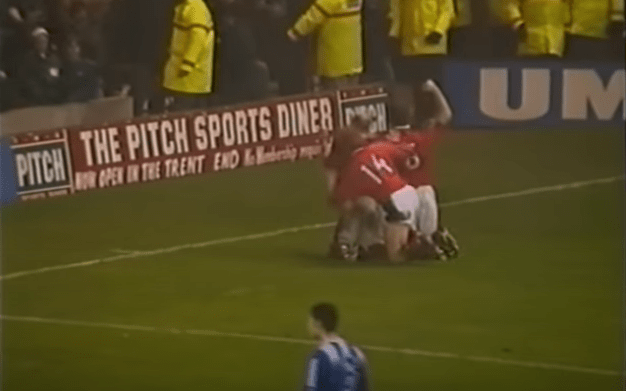
Following the Christmas celebrations, Nottingham Forest would serve up a Boxing Day bonanza of a victory over Swindon Town, who had slipped away from the promotion pack after recent poor form. The Robins’ poor form would continue as Forest won 3-0 at the City Ground. All three goals would come within the first half-hour as Dave Bassett’s team wrapped up victory by half-time. Ian Woan would set up Kevin Campbell for the opening goal inside 10 minutes, the striker opening up his body to side-foot the ball inside the far corner. Campbell would get a second goal a dozen minutes later. Scot Gemmill would carry the ball from the halfway line before sending a ball through to Campbell while taking out three Swindon defenders. Campbell would take the ball around Fraser Digby before finishing with aplomb. Andy Johnson would complete Forest’s incredible first half by meeting Pierre van Hooijdonk’s header across the goal with one of his own to send the ball into the net. Three goals inside 30 minutes for three more much-needed points.
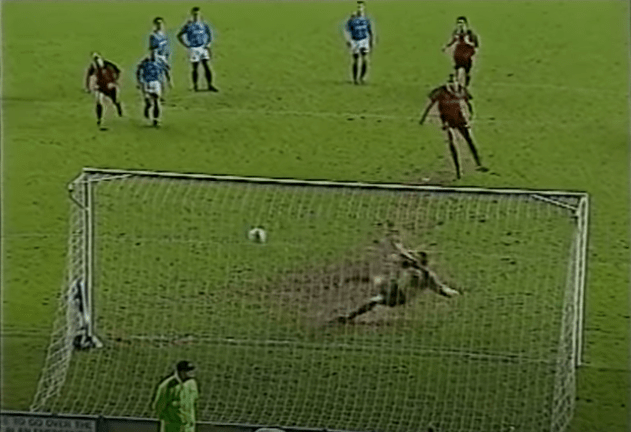
Two days later, Nottingham Forest travelled up to face Manchester City, the team responsible for their only home defeat of the season, a 3-1 loss in early September. This return fixture in late December would produce a similar scoreline but a more see-saw encounter. All but one of the goals in this game would come in the second half, with Nottingham Forest taking a 1-0 lead into the half-time break. The opening goal would come from the penalty spot after half an hour. Andy Johnson had almost given Forest the lead early, only for a last-ditch save by former Reds goalkeeper Tommy Wright to keep the ball out. However, when Steve Stone was needlessly brought down in the penalty area, Pierre van Hooijdonk blasted the ball high beyond Wright to score his 15th goal of the season. Five minutes into the second half, a failure by the Manchester City defence to clear Des Lyttle’s cross would set up Kevin Campbell to score Forest’s second. Then, Forest would be awarded another penalty three minutes after that. Kevin Campbell would chase down a long ball downfield only to be scythed down by Tommy Wright inside the penalty area. Once again, Pierre van Hooijdonk would find the roof of the net with his penalty kick, and Nottingham Forest now led Manchester City 3-0 early in the second half and were threatening to run away with this game. However, Manchester City would quickly turn the match. In the 56th minute, three minutes after Forest’s third, Muratz Shelia’s header would give Manchester City a lifeline at 3-1. Then, Paul Dickov would score a second in the 77th minute as City were now looking to secure an unlikely draw. However, that final goal would not come, and Nottingham Forest would finish 1997 with three consecutive wins.
At the end of 1997, Nottingham Forest sat level on points with Middlesbrough at the top of the Football League First Division. However, Boro would take the top spot from Dave Bassett’s side heading into 1998, having conceded three fewer goals. Behind these two leaders, a five-point gap separated them from third-placed Sheffield United and the rest of the chasing pack.
| Position | Team | Played | Wins | Draws | Losses | GF | GA | GD | Points |
|---|---|---|---|---|---|---|---|---|---|
| 1st | Middlesbrough | 25 | 15 | 6 | 4 | 43 | 20 | +23 | 51 |
| 2nd | Nottingham Forest | 25 | 15 | 6 | 4 | 43 | 23 | +20 | 51 |
| 3rd | Sheffield United | 25 | 12 | 10 | 3 | 40 | 25 | +15 | 46 |
| 4th | Charlton Athletic | 25 | 13 | 5 | 7 | 46 | 34 | +12 | 44 |
| 5th | Sunderland | 24 | 12 | 7 | 5 | 38 | 22 | +16 | 43 |
January
1998 would begin as it traditionally did, with the FA Cup 3rd round. In this third round, Nottingham Forest had been handed a tricky draw against Charlton Athletic, who currently sat 4th in the First Division standings. The last time these two had met in the league, Forest had thrashed the Addicks 5-2 at the City Ground, with Pierre van Hooijdonk scoring a hat-trick. However, only seven points now separated Charlton and Nottingham Forest in the league, and Alan Curbishley’s team were out for vengeance at The Valley.
The first goal would come when Alan Rogers failed to effectively clear an incoming cross, inadvertently setting up John Robinson to finish from point-blank range and put Charlton ahead. Then, Dave Beasant would choose to punch rather than catch a corner kick but would only knock the ball as far as Steve Brown, who would send the ball back beyond Pascolo at his near post. Forest would pull a goal back early in the second half through Pierre van Hooijodnk’s diving header, but any hope of the Reds getting back in this tie was fleeting. More goalkeeping troubles aw Beasant flap at Shaun Newton’s cross while colliding with another Charlton player, allowing Carl Leaburn to score Charlton’s third goal. Then, the Addicks’ top scorer Clive Mendonca would complete an impressive 4-1 victory with a well-taken shot to send Nottingham Forest out of the FA Cup at the first attempt. Now, Nottingham Forest’s sole focus would be Premiership promotion.
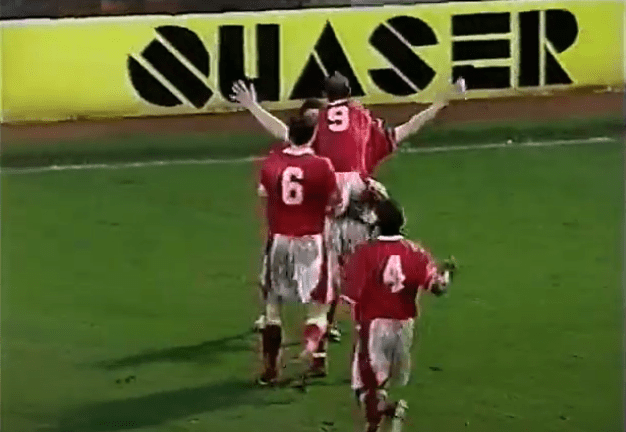
With no other competitions distracting them, Nottingham Forest would return to First Division action with a 2-1 win over Port Vale. In the reverse fixture from the season’s opening day, Pierre van Hooijdonk would score a brace for the second league match in succession in a 2-1 win. However, Nottingham Forest’s recent defensive troubles would lead to Port Vale taking a 16th-minute lead. Alan Rogers would fail to head the ball away, and Lee Mills would strike the ball past Dave Beasant into the far corner. However, Forest would not wilt like they did against Charlton in the Cup and would equalise against the team sitting two points above the relegation zone within 11 minutes. Steve Stone would be fouled 25 yards from goal, and Pierre van Hooijdonk would send a trademark free-kick over the wall into the top corner for 1-1. Colin Cooper would almost give Forest the lead in the second half, but his head would narrowly miss the far post with the goalkeeper beaten. However, van Hooijdonk would make no mistake late on, burying the ball into the roof of the net following great work on the wing from Steve Stone to take Nottingham Forest ahead of Middlesbrough at the top of the First Division.
Over the next two weeks, Nottingham Forest would be involved in 1-0 scorelines away from home. However, the Reds would find themselves on both ends of this scoreline against Norwich City and Queens Park Rangers. First, on 17th January, Iwan Roberts’ goal seconds into the second half would see Norwich beat Forest at Carrow Road, undoing the 4-1 defeat from earlier in the season. On 24th January, Nottingham Forest would defeat QPR by the same scoreline at Loftus Road. It would take until the 84th minute for Colin Cooper to finally break the deadlock by heading in Ian Woan’s free-kick.
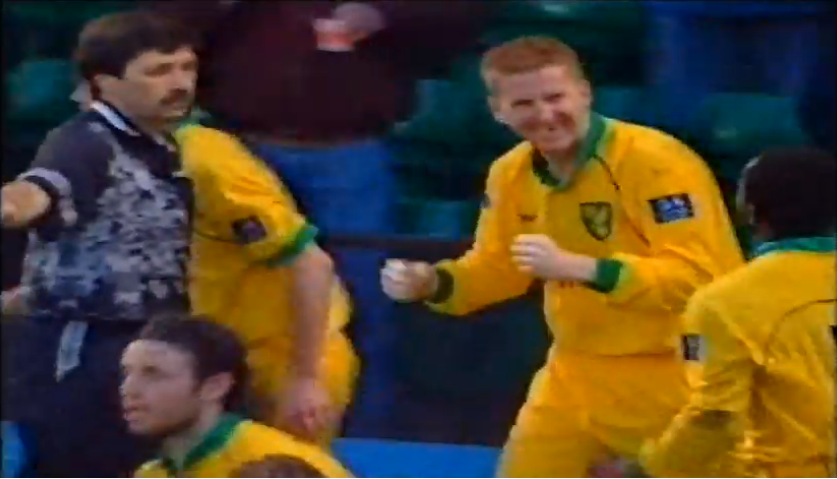

On 28th January, Blackburn Rovers youngster Damien Johnson would join Nottingham Forest on loan until the end of the season. Blackburn had signed the teenage midfielder from Portadown at the start of the season. However, apart from making his debut in a League Cup second-leg defeat as part of a much-changed Blackburn team back in September, he had spent his time playing in the Rovers reserves. With Blackburn riding high in the Premiership (2nd), playing opportunities were hard currently hard to come by. Therefore, Roy Hodgson agreed to send out the 19-year-old Johnson to gain experience playing for a team at the top of the First Division. Three days after his signing, Damien Johnson would be selected in the starting line-up for Forest’s match against Charlton on 31st January.
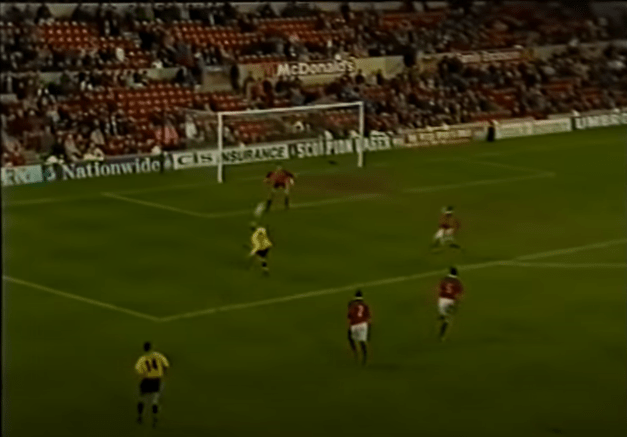
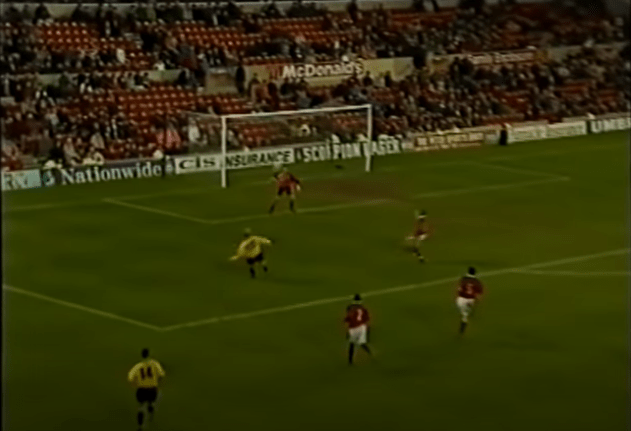
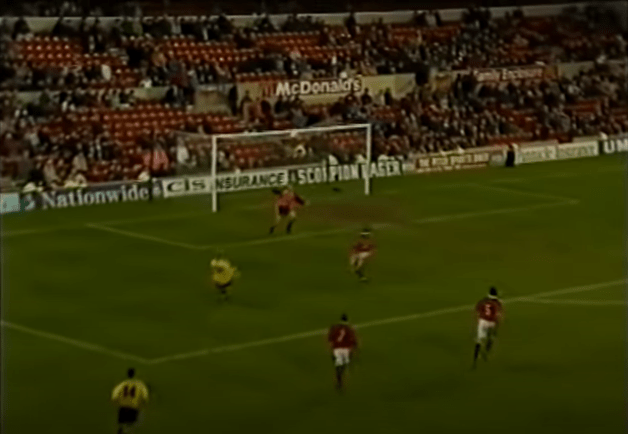
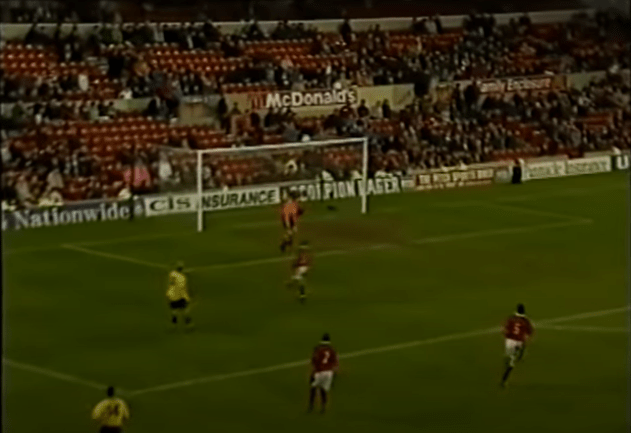
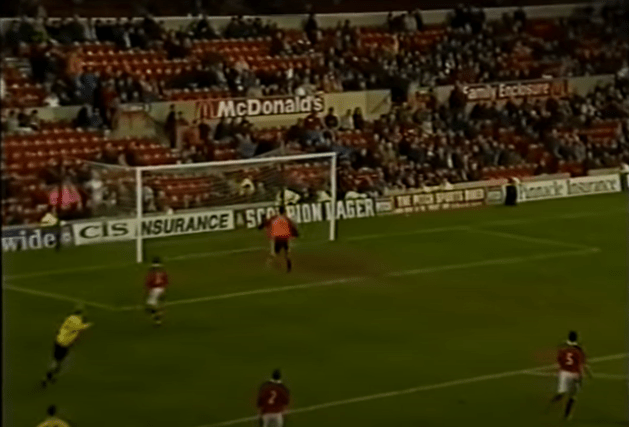
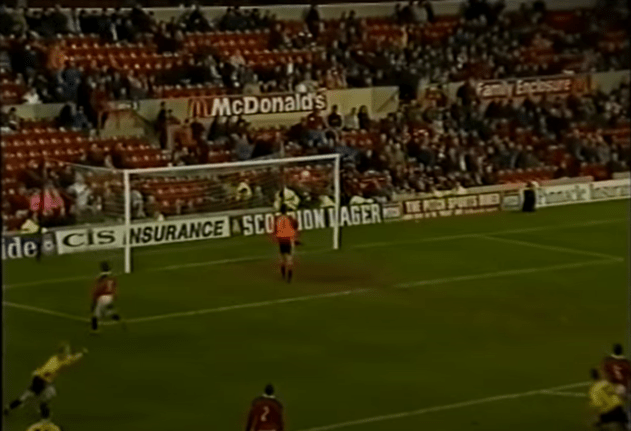
Nottingham Forest would manage to bookend January 1998 with convincing defeats. On the final day of the month, 18th-placed Oxford United would defeat the Reds 3-1 at the City Ground, giving Forest just their second home defeat of the campaign. Joey Beauchamp would provide the visitors with an 8th-minute lead, running past a lazy Thierry Bonalair before exceptionally side-footing the ball inside the far corner from a tight angle. Pierre van Hooijdonk would equalise from the penalty spot to level the scores at half-time. However, Beauchamp would re-establish Oxford’s head four minutes after half-time with another fantastic finish across goal. Simon Weatherstone would then complete a hat-trick of unbelievable Oxford goals in stoppage time, chasing down a long ball downfield before sending a half-volley over Dave Beasant. Oxford’s new permanent manager, Malcolm Shotton, could not have asked for a better result.
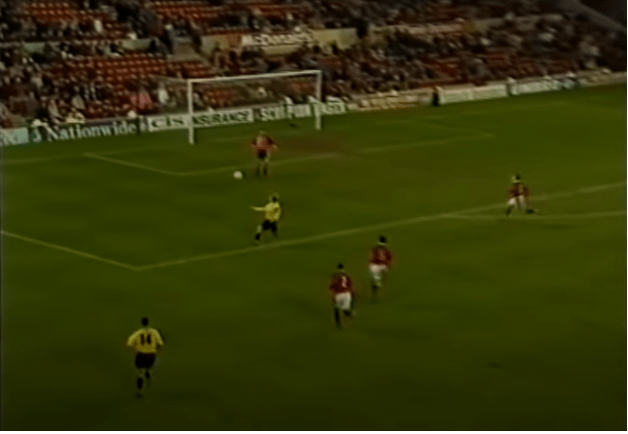
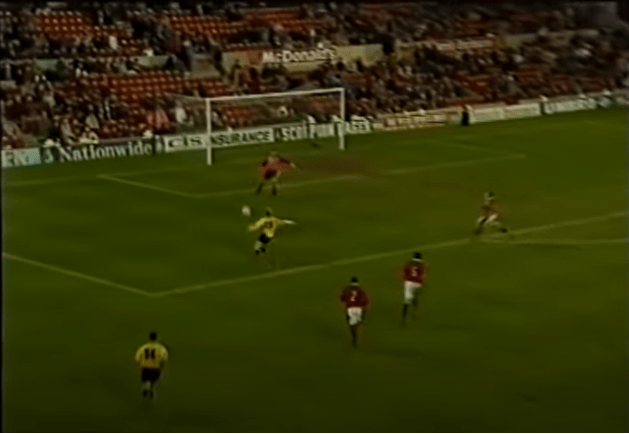
Despite losing two out of four league matches and exiting the FA Cup at the earliest possible stage, January was a successful month for Nottingham Forest. After starting the month behind Middlesbrough on goal difference in the league standings, Forest ended the month with a five-point lead at the top of the First Division. However, the Reds had played two more matches than Boro due to cup involvements, meaning that Bryan Robson’s team could regain their spot at the summit with maximum points from those two matches.
| Position | Team | Played | Wins | Draws | Losses | GF | GA | GD | Points |
|---|---|---|---|---|---|---|---|---|---|
| 1st | Nottingham Forest | 29 | 17 | 6 | 6 | 47 | 28 | +19 | 57 |
| 2nd | Sunderland | 28 | 15 | 7 | 6 | 48 | 28 | +20 | 52 |
| 3rd | Middlesbrough | 27 | 15 | 7 | 5 | 44 | 24 | +20 | 52 |
| 4th | Charlton Athletic | 29 | 15 | 7 | 7 | 53 | 37 | +16 | 52 |
| 5th | Sheffield United | 29 | 13 | 12 | 4 | 45 | 31 | +14 | 51 |
February
February would begin with a rare occurrence for Nottingham Forest: a Steve Chettle goal. The long-serving central defender would score the winning goal in Forest’s 1-0 win over Portsmouth. The goal was just the 8th that Steve Chettle had scored in 356 league appearances for Nottingham Forest over nearly 12 years. Chettle had not scored for the Reds since the UEFA Cup quarter-final first-leg defeat to Bayern Munich in May 1996 but had not scored a league goal since a 3-2 win over Bolton in March 1994, the last time Forest was in the First Division. On this day, as had been the case in 1994, Chettle would contribute a Nottingham Forest win.
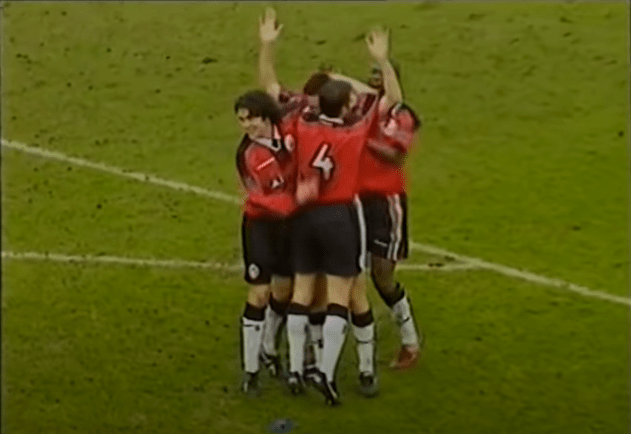
Following an international break, another Pierre van Hooijdonk brace plus a goal from Thierry Bonalair would produce a 3-0 win over Huddersfield Town, who entered the match sitting 3 points above the First Division relegation zone. Pierre van Hooijdonk’s first goal would be his 20th league goal of the season. After his cross into the box was cleared, the ball would return to the Dutchman, who would arrow a shot inside the far corner from the left-hand side. The second goal would come thanks to a helping hand from the Huddersfield defence. Recent Forest departure David Phillips would attempt to clear Pierre van Hooijdonk’s early cross, only to kick the ball into his own body, and the ball would spill to Bonalair to finish quite easily. Huddersfield struggled to deal with balls from deep, which was further epitomised in van Hooijdonk’s second goal. Colin Cooper’s hopeful ball forward would send the Dutch striker clear of the visitors’ defence, and no one was going to stop van Hooijdonk from lifting the ball over an upright Steve Harper into the net. The Dutchman would celebrate by using the corner flag as an archer’s bow. With the form he was on, you could understand the celebration.
During this good run of form, Dave Bassett would bring in another veteran player from his days managing Wimbledon in the 1980s. On 18th February, 34-year-old midfielder Glyn Hodges would join from fourth-tier, Third Division Hull City on a free transfer. Bassett and Hodges had worked together a lot during each other’s respective careers. Hodges was 18 years old but had yet to make his professional debut for Wimbledon when Dave Bassett became the new manager at Plough Lane on New Year’s Day 1981. Bassett would then give Hodges his professional debut one month later. Afterwards, Glyn Hodges would play in 273 of Dave Bassett’s 303 matches in charge of Wimbledon as the team rapidly rose up through English football. When Dave Bassett resigned as Dons manager to take control of Watford in June 1987, it wouldn’t be long before Glyn Hodges joined him at Vicarage Road following a short three-month spell with Newcastle United.
Following poor results, Dave Bassett was sacked as Watford’s manager in January 1988, taking charge of Sheffield United soon afterwards. Hodges would continue to represent Watford until the summer of 1990, making 102 appearances in all competitions as the Hornets slowly dropped down the Second Division. Noticing this decline, Hodges would move for big money (£410,000) for six months with Crystal Palace before eventually reuniting with Dave Bassett at Sheffield United in the First Division in early 1991. With Bassett coaching him again, Hodges would become a regular for Sheffield United in the First Division and the Premiership, playing 173 matches for the Blades between 1991 and 1996. While Dave Bassett had left for Crystal Palace in December 1995, Glyn Hodges would leave Bramall Lane, eventually taking in short runs with Derby County and Hull City. Now, despite being six months into his stay with Hull City and being a regular starter in the side, Hull would allow Glyn Hodges to join Nottingham Forest and join Dave Bassett for a fourth time when his former manager came calling.
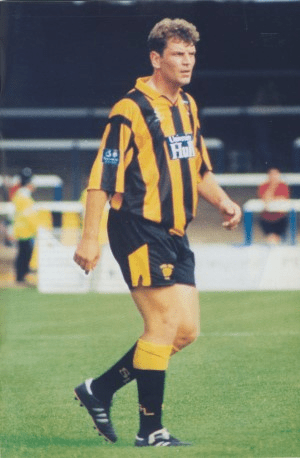
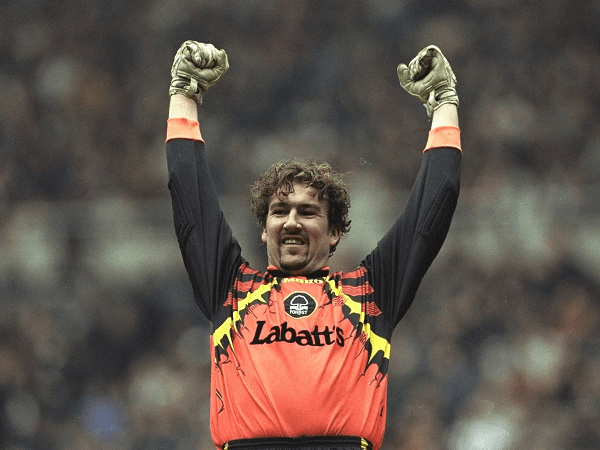
On 20th February, Dave Bassett would loan out Mark Crossley to Millwall for the remainder of the 1997-98 season. Despite being Nottingham Forest’s first-choice goalkeeper since the beginning of the 1990-91 season and having missed just 25 out of 286 league matches since then, Mark Crossley had not seen a single minute of action during this current season under Dave Bassett. Instead, Bassett had brought in Marco Pascolo and Dave Beasant and placed them ahead of the Welsh international, putting Crossley down into the reserves. Not happy with twiddling his thumbs on the sidelines, Crossley would accept an offer to help out Millwall in their quest to achieve Second Division survival. It was quite the drop for Crossley, having spent the previous campaign keeping goal in the Premiership.
Nottingham Forest would then have to play two away games in four days to end February against Stoke City and Tranmere Rovers. Both matches would end in draws as the Reds recorded their first unbeaten month in the league since October. The game against Stoke would almost end in defeat as Forest struggled to find a response to Dean Crowe’s opener. However, in his first start of the season, Ian Thomas-Moore would pop up three minutes from time to flick the ball into the net and salvage a draw for Dave Bassett’s team. Three days later, Forest would draw 0-0 with Tranmere Rovers, equalling the draw at the City Ground earlier in the season.
Nottingham Forest would go through February unbeaten, with two wins and two draws. However, these results would see Dave Bassett’s team finish the month 2nd in the First Division table, three points behind Middlesbrough. With Sunderland sitting three points behind Forest in 3rd and Charlton a further three points back in 4th, Nottingham Forest would have to remain honest with 13 matches remaining as Premiership promotion was still a long way away.
| Position | Team | Played | Wins | Draws | Losses | GF | GA | GD | Points |
|---|---|---|---|---|---|---|---|---|---|
| 1st | Middlesbrough | 33 | 20 | 8 | 5 | 55 | 27 | +28 | 68 |
| 2nd | Nottingham Forest | 33 | 19 | 8 | 6 | 52 | 29 | +23 | 65 |
| 3rd | Sunderland | 33 | 18 | 8 | 7 | 59 | 36 | +23 | 62 |
| 4th | Charlton Athletic | 34 | 17 | 8 | 9 | 57 | 43 | +14 | 59 |
| 5th | Sheffield United | 33 | 15 | 13 | 5 | 50 | 36 | +14 | 58 |
March
On the first day of the month, the top two teams in the First Division, Nottingham Forest and Middlesbrough, would meet at the City Ground. A win for Forest would see Dave Bassett’s team go level on points with Boro and potentially go top on goal difference. In contrast, victory for Bryan Robson’s team would open up a six-point lead, marking a huge step in the Teessiders’ promotion push. The reverse fixture had ended goalless in late November. The match at the City Ground would end up with a much more one-sided scoreline.
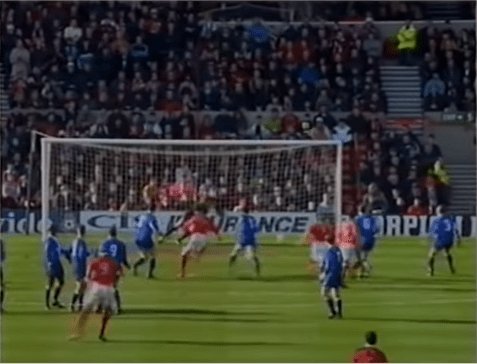
Forest’s first significant chance would fall to Kevin Campbell, the striker latching onto an unfortunate defensive flick-on before forcing a save out of Andy Dibble. Dibble would also get down to his right to stop Stan Collymore’s 35-yard free-kick. Steve Stone would even come off his wing to fire a volley wide of the post as Forest couldn’t find the goal to match their dominance in this game. The deadlock would finally be broken in the 53rd minute when Pierre van Hooijdonk, having had another free-kick saved by Andy Dibble, got lucky the third time around, sending a 35-yard effort wide of the wall and past the goalkeeper at his near post. Two minutes later, Kevin Campbell would exchange passes with Steve Stone before bearing down on goal and stroking the ball under Dibble for 2-0. The third goal would come when a series of ricochets in the box ended with Colin Cooper heading the ball into the net for 3-0. This shocking rout was completed five minutes from time when Steve Stone was scythed down in the box. Pierre van Hooijdonk would step up to score his 4th penalty of the season as Nottingham Forest scored a massive victory over their promotion rivals. Next was a match against Sunderland, another team gunning for the top flight.
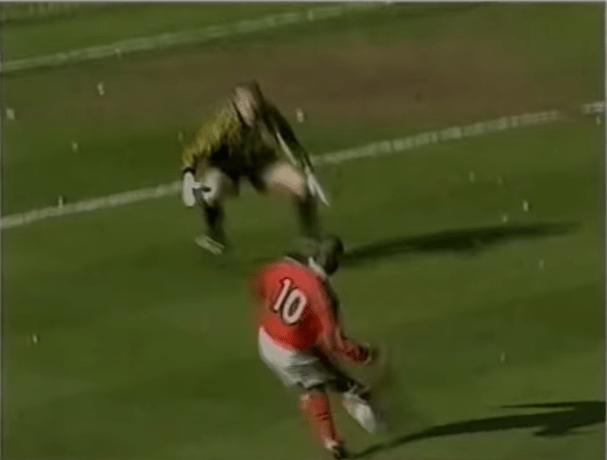
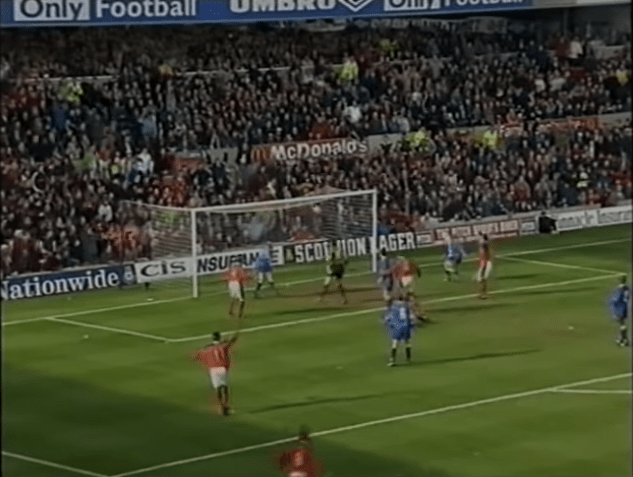

Three days after dominating Middlesbrough at home, Forest would be wholly outplayed by Sunderland at the City Ground. Midfielder Gavin Rae would put the Black Cats in front by heading in at the back post. The second goal would come when Alan Rogers could only scramble the ball away as far as Allan Johnston, who would lift the ball over the sea of Forest players and Dave Beasant into the net for 2-0. Finally, Kevin Phillips would deal the third and final blow with his 19th goal of the season. With this victory, Sunderland would move up to 3rd in the league standings, three points behind Nottingham Forest but with a game in hand. This title race was truly hotting up in its latter stages.
Nottingham Forest would only have another three days to recover from the Sunderland loss before they faced Crewe Alexandra away from home. Dave Bassett’s players would quickly put their last performance behind them by putting four goals past the Railwaymen. The first goal after 10 minutes would see Chris Bart-Williams break his goalscoring duck for the season. After much havoc in the penalty area following a corner, the ball would fall to Bart-Williams, who would turn and finish into the bottom corner. The second goal would come soon afterwards when Kevin Campbell finished first time from Alan Rogers’ cross. Forest was not wasting their chances as Campbell would net his second and Forest’s third in the 25th minute, running onto a through-ball and lifting the ball over the advancing goalkeeper. This match was being played at a sprint as Crewe Alexandra would pull a goal in the 29th minute when striker Colin Little beat Dave Beasant at his near post with a well-taken header. However, less than a minute later, Geoff Thomas would send a long ball forward for Campbell to complete a 15-minute hat-trick and make the score 4-1 to Nottingham Forest after half an hour of play. After such a wild start, the remaining 60 minutes at Gresty Road would remain goalless. Forest would win 4-1 to end a truly crazy week.
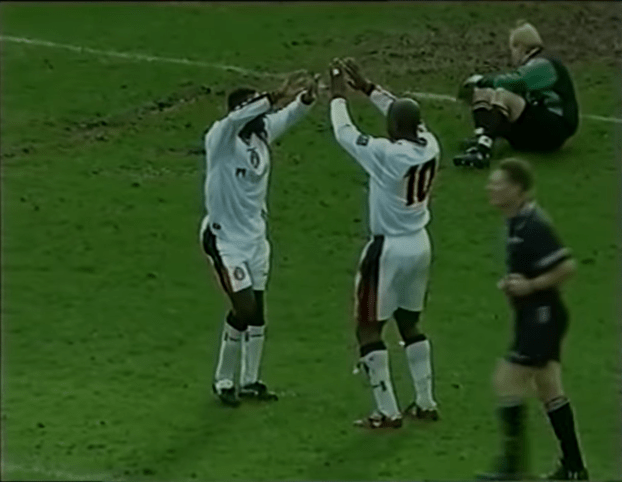
After a much-needed week’s break, Forest would continue their run of high-scoring games by beating Bury 3-0 at home on 14th March. After a goalless first half, Bury would gift Forest the opening goal when defender Chris Lucketti headed Thierry Bonalair’s cross into his own net after 63 minutes. Bonalair would also have a crucial role in Forest’s second goal six minutes later, running past Bury defenders before reaching the by-line and sending a perfectly weighted ball across the box for Pierre van Hooijdonk to send an excellent finish into the net from close range. Then, van Hooijdonk and Kevin Campbell would set up full-back Alan Rogers for his first goal in Forest colours, the full-back having dared to venture into the box.
Forest’s next match against Birmingham City would be another where all three goals came in the second half. A minute past the hour mark, Peter Ndlovu would put the hosts in front at St Andrew’s from the penalty spot after sending Dave Beasant the wrong way. However, after Blues defender Michael Johnson was sent off for two bookable offences, the Reds’ key man would strike twice late on to secure three more points for Dave Bassett. Pierre van Hooijdonk would again be on target with a free-kick, finding the left-hand corner from the edge of the box after 84 minutes. Then, van Hooijdonk would score his second goal from further out, finding the other corner of the net from 25 yards to take his tally in the league to 26 goals.
On 26th March, Dave Bassett signed centre-back cover while also having an eye on the future when he bought Swansea City’s Christian Edwards for £275,000. Edwards had been with Swansea since a youth and had successfully come through the academy to immediately go straight into the starting XI. After making his professional debut early in the 1994-95 season for Second Division Swansea, Edwards would quickly become almost irreplaceable at the heart of the Swans’ defence. In three-and-half seasons in south-west Wales, Christian Edwards had made 133 appearances in all competitions, with all but 3 coming from the start. In the league, he had featured in 114 of the 176 matches played by Swansea following his first-team debut, scoring 4 goals. Edwards’ performances for Swansea had even earnt him international hours, the centre-back debuting for Wales in a 2-0 defeat to Switzerland in April 1996. All this while still aged only 22 years old. Edwars’ performances were enough to perk the attention of Dave Bassett, who was looking for a long-term replacement for the incumbent centre-back pairing of club captain Colin Cooper, 31, and Steve Chettle, 29. While Edwards’ playing experience had come in the bottom two divisions of English league football, he was still young enough that he could be developed to eventually become a starter for Nottingham Forest.
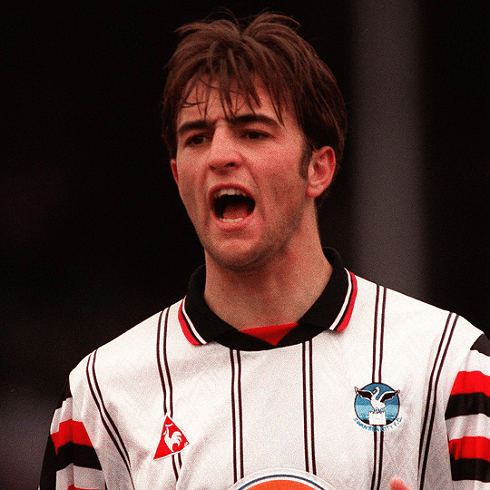
The win over Birmingham City would give Nottingham Forest a four-point lead over Sunderland at the top of the First Division. That lead would quickly be cut down to one point after Charlton Athletic put four goals past Dave Beasant for the second time in three months. After beating Forest 4-1 in the FA Cup third round back in January, Alan Curbishley’s 4th-placed Addicks would defeat Nottingham Forest 4-2 in the First Division in late March. Once again, the demolition would occur at The Valley, with Forest not learning their lessons from their previous visit to southeast London. At least Kevin Campbell scored twice. Veteran striker Mark Bright would put Charlton in front after 14 minutes with a point-blank header from an indirect free-kick, but Kevin Campbell would equalise with a header of his own two minutes later. The game would remain tied until the hour mark when Paul Mortimer dribbled past two defenders before finishing to re-establish Chalrton’s lead. The Addicks would then seal victory late on with two goals in the final minutes of play. Clive Mendonca would double Charlton’s winning margin with a penalty in the 89th minute before Mark Kinsella rounded Dave Beasant for goal number four. Kevin Campbell would give Forest the last word with a late consolation, but Charlton would again have the Reds’ number, paying back the 4-1 league defeat they had suffered earlier in the season.
Nottingham Forest would end March at the top of the First Division table, but two points now separated them from 3rd-placed Middlesbrough. Two points was now the difference between automatic promotion and a play-off position with seven games remaining. Boro had a game in hand on both Forest and Sunderland, and victory would see them leapfrog both teams onto the league summit. Dave Bassett knew his side could ill-afford too many slip-ups between now and the end of the season if they wanted to keep Premiership promotion in their hands under such pressure from the chasing pack.
| Position | Team | Played | Wins | Draws | Losses | GF | GA | GD | Points |
|---|---|---|---|---|---|---|---|---|---|
| 1st | Nottingham Forest | 39 | 23 | 8 | 8 | 67 | 38 | +29 | 77 |
| 2nd | Sunderland | 39 | 22 | 10 | 7 | 72 | 41 | +31 | 76 |
| 3rd | Middlesbrough | 38 | 22 | 11 | 5 | 64 | 36 | +28 | 75 |
| 4th | Charlton Athletic | 39 | 20 | 9 | 10 | 71 | 49 | +22 | 69 |
| 5th | Ipswich Town | 39 | 18 | 13 | 8 | 64 | 38 | +26 | 67 |
April
Nottingham Forest would begin their end-of-season run-in by hosting 6th-placed Sheffield United. Despite being on its third manager of the campaign, the Blades still occupied the final play-off spot by three points and had proven difficult to beat throughout the season. Fourteen of United’s games had ended in draws, and the Steel City giants had lost fewer matches than any other First Division team, with six. However, on 1st April, Nottingham Forest would make fools out of Sheffield United at the City Ground with a comprehensive 3-0 win.
After sending a long-range shot over the bar early on, Geoff Thomas would latch on to Thierry Bonalair’s cross to open the scoring after 20 minutes. Six minutes later, Forest would take a short corner, and Bonalair would pick out Kevin Campbell at the near post to score Forest’s second goal. The Reds would then have numerous chances to add to their lead throughout the rest of the game. Pierre van Hooijdonk and Steve Stone would get themselves into good positions before missing the goal entirely with their attempted shots. Kevin Campbell would even have a header pushed away by goalkeeper Simon Tracey. However, Campbell would eventually get his side’s third goal late on. Pierre van Hooijdonk would find his goalbound header blocked on the line, only for the ball to spill to Campbell to poke the ball home from a yard out to score his 20th league goal of the season.
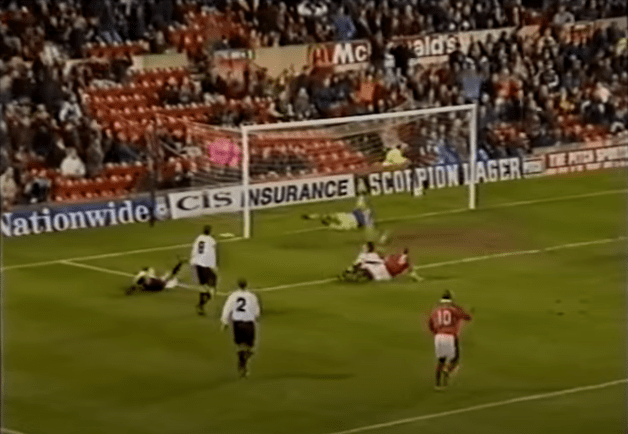
In Forest’s next match against play-off chasers Ipswich Town, all the goals would come within 12 second-half minutes. After a goalless first 45 minutes, Ipswich would start quickly, scoring within seconds of the game restarting. A cross into the box would be flicked on, and James Scowcroft would poke the ball beyond Dave Beasant to give Ipswich the lead. However, Forest would equalise in the 53rd minute when Richard Wright could only parry Pierre van Hooijdonk’s free-kick into the path of Colin Cooper. Then, in the 58th minute, Kevin Campbell would dispossess a young Kieron Dyer in midfield, and Forest would counterattack quickly, resulting in van Hooijdonk skipping out of a tackle before lifting the ball over the prone Wright into the far corner of the net to secure a 2-1 Forest win.
In mid-April, Nottingham Forest would have to play two matches in just three days, a prime place to slip up and drop points. However, despite the quick turnaround, both games would end in Nottingham Forest’s most popular recent scoreline: 3-0. On Saturday 11th April, Nottingham Forest would win 3-0 away at Bradford City. Kevin Campbell would open the scoring minutes before half-time before Scot Gemmill and Chris Bart-Williams scored their 2nd and 3rd league goals of the season in the second half to get the three points. The following Monday against Wolves, a Nottingham Forest side featuring just one change from the previous match, Jon Olav Hjelde coming in for Colin Cooper, would show no signs of tiredness. A penalty appeal inside the area would distract Wolves defenders long enough for Andy Johnson to knock the ball beyond Hans Segers for 1-0. Pierre van Hooijdonk would then double Forest’s lead before half-time before Kevin Campbell scored the third goal in stoppage time, the striker’s sixth goal in his last five games. These two victories would take Nottingham Forest eight points clear at the top of the First Division with three games left to play. The Reds had played one more game than their closest rivals, but now anything other than a late-stage collapse would stop Nottingham Forest from achieving promotion.
On 18th April, Forest would face a Stockport County side with nothing left to play for other than league position. Stockport had now missed out on a play-off place on points. However, Gary Megson’s team would manage to frustrate Nottingham Forest in a 2-2 draw at Edgeley Park, as Forest missed out on a chance to get within one win of securing promotion. The four goals came in two brief chunks of time, one in each half. One team would take the advantage before their opponent immediately pegged them back with an equaliser. Nottingham Forest would take the lead in the 26th minute with a quick free-kick that took Stockport by surprise. Thierry Bonalair would quickly pass the ball into the middle of the box, where Pierre van Hooijdonk would strike the ball first time into the bottom corner. However, Brett Angell’s near-post header from a corner would bring Stockport back level three minutes later. Then, in the second half, momentum in this game would swing within a single minute. A long throw-in into the box would be flicked on, and Angell would head in his second goal of the game to put the hosts in front after 67 minutes. However, less than a minute later, a slick passing move would end with Andy Johnson equalising for Forest with his 4th goal of the season. The draw would take Forest six points clear at the top of the league standings. However, both Middlesbrough and Sunderland had played fewer games, and both could conceivably overtake the Reds to take the two automatic promotion slots. Therefore, this draw with Stockport could cost Dave Bassett’s side in the long run.
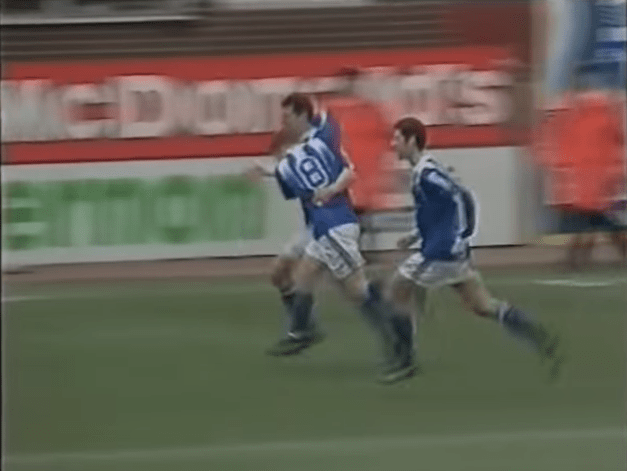
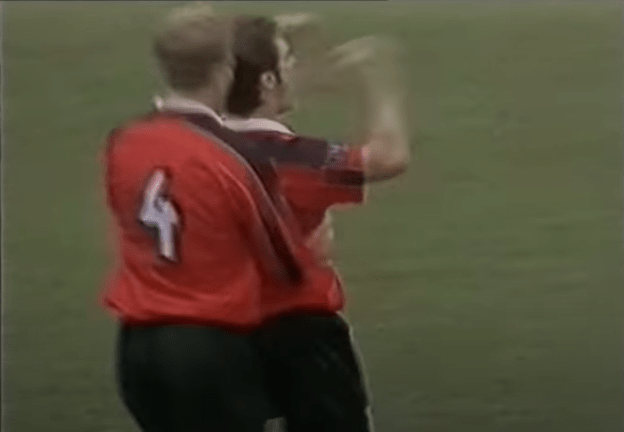
On 26th April, Nottingham Forest would host the First Division’s bottom side Reading, at the City Ground for the Reds’ final home game of the season. The visiting Royals were battling relegation, and a win for the visitors would give them hope of potentially surviving. A defeat at the City Ground would relegate Reading immediately. For Forest, a win would all but confirm promotion to the Premiership. The night before, Sunderland and Middlesbrough had both won their matches to move within three points of Dave Bassett’s side. Anything other than a win in front of a home crowd ready to party would leave anyone associated with Nottingham Forest looking anxiously over their shoulder.
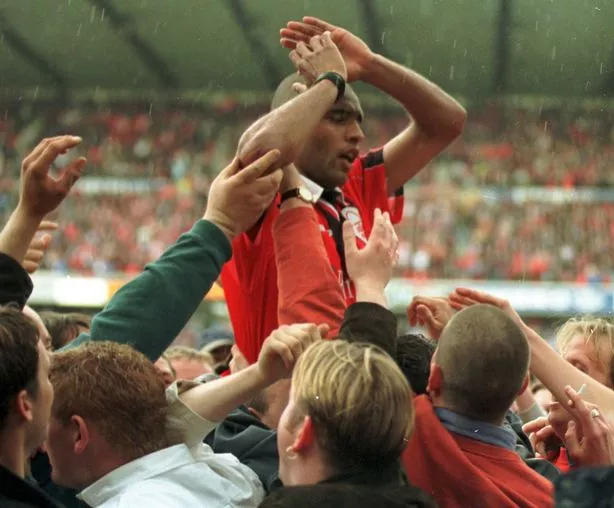
In the end, Forest would leave it late to secure victory. A free-kick into the area would fall to Chris Bart-Williams, and the midfielder-turned-emergency striker for the second half (following an injury to Kevin Campbell) would receive the ball with his right foot and turn his marker before firing the ball into the far corner with his left in the 87th minute. It was enough to secure a 1-0 victory while relegating Reading. Job done. At the final whistle, home fans would invade the pitch, lifting Pierre van Hooijdonk onto their shoulders, the defining hero of this successful promotion push. The 1-0 win would give Forest a six-point margin down to 3rd-placed Middlesbrough. The only thing that could stop Nottingham Forest from achieving automatic promotion was two wins for Boro plus an 8-goal swing in goal difference.
In midweek, Middlesbrough and Sunderland would play their games in hand over Nottingham Forest. On 28th April, Sunderland would lose 2-0 to Ipswich Town. One day later, Middlesbrough would draw 1-1 with Wolves. The draw would love Boro ahead of the Black Cats into 2nd place, but the results of both matches would confirm two things. With both sides failing to win, Nottingham Forest’s winning margin at the top of the First Division now stood at five points with one match remaining. Not only had Nottingham Forest’s automatic promotion back to the Premiership been confirmed, but it also meant that they would be returning to the top flight of English football as First Division champions, regardless of the result of Forest’s final match against West Brom.
| Position | Team | Played | Wins | Draws | Losses | GF | GA | GD | Points |
|---|---|---|---|---|---|---|---|---|---|
| 1st | Nottingham Forest | 45 | 28 | 9 | 8 | 81 | 41 | +40 | 93 |
| 2nd | Middlesbrough | 45 | 26 | 10 | 9 | 73 | 40 | +33 | 88 |
| 3rd | Sunderland | 45 | 25 | 12 | 8 | 84 | 49 | +35 | 87 |
| 4th | Charlton Athletic | 45 | 26 | 9 | 10 | 80 | 49 | +31 | 87 |
| 5th | Ipswich Town | 45 | 22 | 14 | 9 | 74 | 41 | +33 | 80 |
May
Nottingham Forest would receive a champions’ welcome when they arrived at The Hawthorns on 3rd May 1998. A crowd of away fans waiting to greet them off the team bus. A standing ovation from all four corners of The Hawthorns when the team led by Colin Cooper exited the players’ tunnel. A guard of honour from the West Brom players as a salute to the new champions. After all this ceremony, it was time to play, not that the result mattered to either team other than bragging rights. Kevin Campbell would miss this final match through injury, so Dave Bassett would hand a first-team debut to 18-year-old Marlon Harewood. Harewood had come through the club’s youth academy after joining Nottingham Forest in 1996. He had spent the season on loan in Finland at FC Haka, scoring 3 goals in 18 appearances to help Haka win the Finnish league and cup ‘double’. Now, Harewood was returning to his parent club to debut in English football, partnering up with Pierre van Hooijdonk in a title-winning Nottingham Forest team. Harewood for Campbell would be the only change to a settled Nottingham Forest team.
In the match, Nottingham Forest would take the lead through one of their hardest-working players. In the 18th minute, Steve Stone received the ball from Scot Gemmill and laid the ball off to Pierre van Hooijdonk before running into the box to receive the ball back from the Dutchman before beating goalkeeper Paul Crichton at his near post. However, Forest would be denied a final-day victory when West Brom were awarded a penalty two minutes from the end. Striker Lee Hughes would send Dave Beasant the wrong way to secure a draw for the Baggies, meaning both sides ended the season with a point. Nottingham Forest would end the First Division season with a seven-match unbeaten streak, with their final defeat being the 4-2 defeat to Charlton Athletic in late March. Forest would finish atop the league standings, four points ahead of Middlesbrough, who had edged Sunderland out of automatic promotion by a point.
| Position | Team | Played | Wins | Draws | Losses | GF | GA | GD | Points |
|---|---|---|---|---|---|---|---|---|---|
| 1st | Nottingham Forest | 46 | 28 | 10 | 8 | 82 | 42 | +40 | 94 |
| 2nd | Middlesbrough | 46 | 27 | 10 | 9 | 77 | 41 | +36 | 91 |
| 3rd | Sunderland | 46 | 26 | 12 | 8 | 86 | 50 | +36 | 90 |
| 4th | Charlton Athletic | 46 | 26 | 10 | 10 | 80 | 49 | +31 | 88 |
| 5th | Ipswich Town | 46 | 23 | 14 | 9 | 77 | 43 | +34 | 83 |
Statistics
During the 1997-98 season, Nottingham Forest would play 51 matches, finishing with a record of 30 wins, 11 draws and 10 defeats, scoring 95 goals and conceding 51. In 46 First Division matches, Forest would win 28 (60.9%), draw 10 (21.7%) and lose 8 (17.4%), finishing with a goal difference of +40 after scoring 82 goals (1.78 goals per game) and conceding 42 (0.91 goals per game). The team would also keep 22 clean sheets, an average of one every 2 league matches. Conversely, there were only 7 matches where Nottingham Forest would fail to score, such was the quality of the Reds’ attack.
Nottingham Forest’s home record had fallen apart during the Premiership relegation campaign in 1996-97, winning only three out of 19 matches and scoring just 15 goals. During the 1997-98 promotion campaign, Nottingham Forest would only lose 3 out of 23 home matches, accumulating 56 out of a possible 69 points. The Reds would also score 52 goals at the City Ground, an average of 2 goals every home game. In 10 matches, Nottingham Forest would score three or more goals at home, such was the fortress they had created. Standout victories included the 4-1 win over Norwich City in August, the 5-2 win over Charlton in November (which the Addicks would later pay back in kind) and the shocking 4-0 win over Middlesbrough in a top-of-the-table clash at the start of March.
Nottingham Forest-1997/98 First Division home record
| Matches | Wins | Draws | Losses | Goals for | Goals against | Goal difference | Points |
|---|---|---|---|---|---|---|---|
| 23 | 18 | 2 | 3 | 52 | 20 | +32 | 56 |
While Forest was dominant and free-scoring at home, the Reds were tight and difficult to beat away from the City Ground. This defensive tightness was summed in the stat that 8 of Forest’s 23 away matches would end in draws. Of the five away matches that Forest did lose, only two were lost by a margin of more than one goal. Plus, there were only six matches where the home team managed to score more than one goal past the Nottingham Forest defence, including the 3-3 draw with Reading, the 3-2 win of Manchester City and the 4-2 defeat to Charlton, which was one of the few heavy defeats that Forest would suffer all season. At the other end, despite winning only 10 out of 23 away matches, Nottingham Forest would still manage to net 30 goals away from home, an average of 1.3 goals per game.
Nottingham Forest-1997/98 First Division away record
| Matches | Wins | Draws | Losses | Goals for | Goals against | Goal difference | Points |
|---|---|---|---|---|---|---|---|
| 23 | 10 | 8 | 5 | 30 | 22 | +8 | 38 |
Nottingham Forest would score 82 goals during their successful First Division promotion campaign. Of these goals, 52 goals were scored by Forest’s central striking partnership of Pierre van Hooijdonk (29 goals in 42 matches) and Kevin Campbell (23 in 39 games). These two goal tallies would be the two top tallies recorded during this First Division season. Pierre van Hooijdonk would tie for the Golden Boot with Sunderland’s Kevin Phillips, while Campbell would tie for 3rd with Charlton’s Clive Mendonca, both of whom would also lead their teams to Premiership promotion. For a team whose strikers had struggled to score goals since the departure of Stan Collymore, to suddenly have two strikers record their best-ever goalscoring seasons at the same time was a breath of fresh air for Nottingham Forest fans.
The goals of Pierre van Hooijdonk and Kevin Campbell would account for nearly two-thirds (63.7%) of Nottingham Forest’s league goals during the 1997-98 season. The remaining 30 league goals would come from 12 players, with club captain Colin Cooper leading the best of the rest with five goals from defence and midfield.
Every Nottingham Forest goalscorer during the 1997-98 season
| Player | Goals (League) |
|---|---|
| Pierre van Hooijdonk | 34 (29) |
| Kevin Campbell | 23 (23) |
| Colin Cooper | 5 (5) |
| Chris Bart-Williams | 4 (4) |
| Andy Johnson | 4 (4) |
| Geoff Thomas | 4 (3) |
| Dean Saunders | 4 (2) |
| Jon Olav Hjelde | 3 (1) |
| Thierry Bonalair | 2 (2) |
| Scot Gemmill | 2 (2) |
| Ian Woan | 1 (1) |
| Steve Chettle | 1 (1) |
| Ian Thomas-Moore | 1 (1) |
| Alan Rogers | 1 (1) |
| Steve Guinan | 1 (0) |
| Chris Allen | 1 (0) |
| Craig Armstrong | 1 (0) |
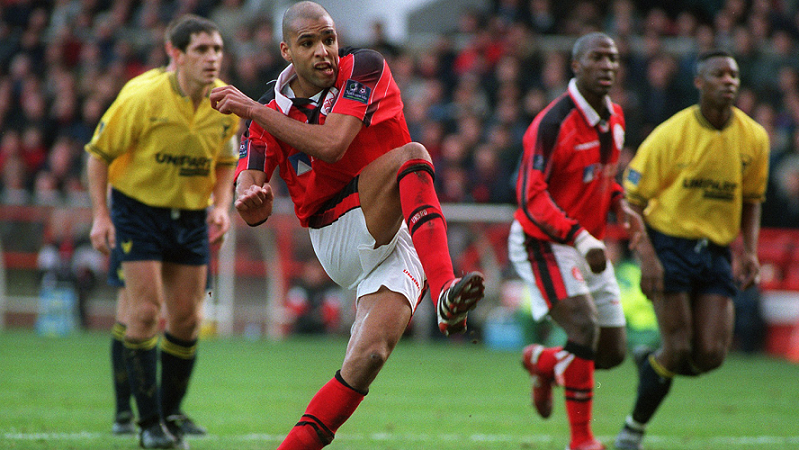
Aside from the undeniable van Hooijdonk and Campbell leading the attacking line, the 1997-98 season would be a season of slight transition in Nottingham Forest’s starting line-up. While the season saw long-time first-team regulars Stuart Pearce, David Phillips, Bryan Roy and Alf-Inge Haaland leave the club, Forest’s starting XI’s still featured Colin Cooper and Steve Chettle in the centre of defence and Scot Gemmill, Ian Woan and Steve Stone in midfield. However, this promotion side would feature a bunch of new signings that ultimately paid off. Dave Beasant would defy his 38 years to become an impenetrable force in goal, conceding 28 goals in 38 matches and keeping 21 clean sheets, setting a new club record. Thierry Bonalair would have a great battle with Des Lyttle for the right-back berth, with both men playing over 30 league matches this season. On the other side of the defence, Alan Rogers was unopposed at left-back, appearing in every one of Nottingham Forest’s matches, showing that he had the chops to serve as the long-term successor to Stuart Pearce. Andy Johnson would stand out the most in midfield, proving an excellent box-to-box midfielder that could pop with a goal when necessary, scoring 4 in 34 league appearances. Geoff Thomas would also prove a decent hand in midfield, although injuries would restrict him to 21 appearances in all competitions.
| Position | Player | Appearances (league) |
|---|---|---|
| GK | Dave Beasant | 44 (38) |
| Mark Crossley | 0 | |
| Alan Fettis | 1 (0) | |
| Mark Goodlad | 0 | |
| Marco Pascolo | 6 (5) | |
| DF | Des Lyttle | 40 (35) |
| Colin Cooper | 37 (35) | |
| Steve Chettle | 49 (44) | |
| Gareth Edds | 0 | |
| Chris Doig | 0 | |
| Christian Edwards | 0 | |
| Andy Dawson | 0 | |
| Alan Rogers | 51 (46) | |
| Thierry Bonalair | 33 (31) | |
| Stuart Thom | 1 (0) | |
| Nikola Jerkan | 0 | |
| Vance Warner | 1 (0) | |
| MF | Chris Bart-Williams | 36 (33) |
| Scot Gemmill | 47 (43) | |
| Steve Stone | 29 (29) | |
| Ian Woan | 21 (20) | |
| Justin Walker | 0 | |
| Paul Smith | 0 | |
| John Burns | 0 | |
| Steve Melton | 0 | |
| David Phillips | 3 (1) | |
| Richard Cooper | 0 | |
| Craig Armstrong | 23 (18) | |
| Glyn Hodges | 0 | |
| Andy Johnson | 37 (34) | |
| Damien Johnson | 6 (6) | |
| Bobby Howe | 1 (0) | |
| Geoff Thomas | 21 (20) | |
| Chris Allen | 3 (1) | |
| Ian Woan | 21 (21) | |
| Andy Todd | 0 | |
| John Finnigan | 0 | |
| Richard Hodgson | 0 | |
| FW | Dean Saunders | 11 (8) |
| Kevin Campbell | 45 (42) | |
| Pierre van Hooijdonk | 47 (42) | |
| Paul McGregor | 0 | |
| Marlon Harewood | 1 (1) | |
| Steve Guinan | 3 (2) | |
| David Freeman | 0 | |
| Ian Thomas-Moore | 13 (10) | |
| Carlos Merino | 0 |
Long story short, Nottingham Forest had achieved their goal for the campaign. Premiership promotion had been secured at the first attempt and without much fuss. Forest hadn’t been out of the automatic promotion places all season, and the run to the First Division title had been compelling. Now, Dave Bassett, Pierre van Hooijdonk and the rest of the Nottingham Forest players could again prepare for top-flight football returning to the City Ground beginning in August 1998.
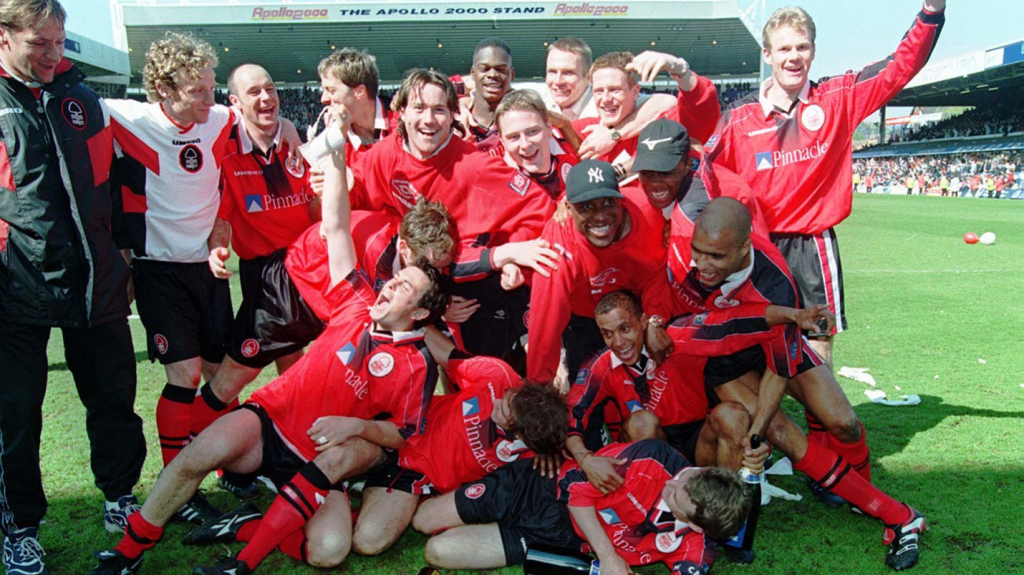
 the-score-board.co.uk