
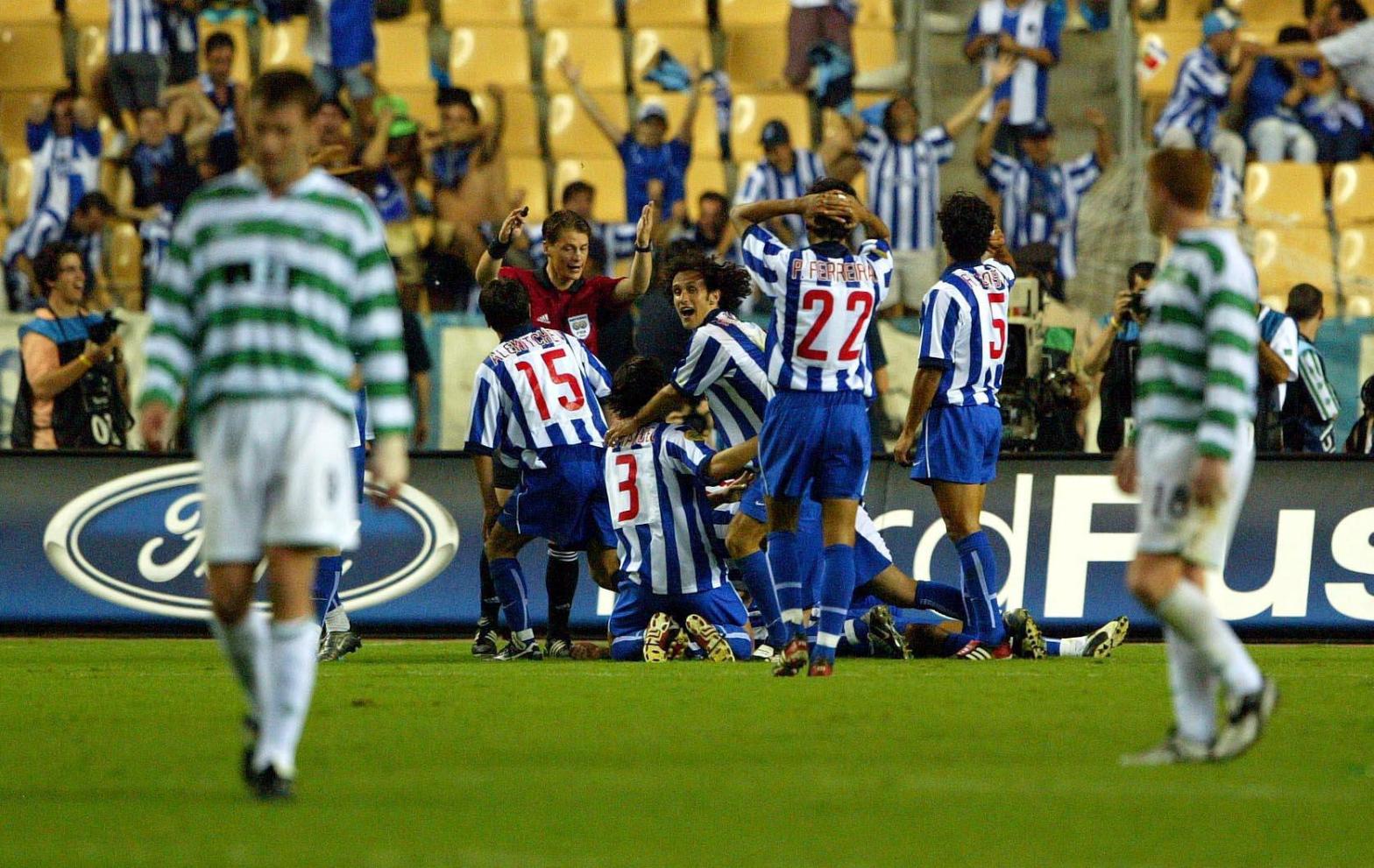
The final that marked the rise of one of football’s greatest and most controversial managers…
Love him or hate him, José Mourinho is one of the most successful club managers in football history. In a coaching career spanning three decades, the man who began his time in the dugout as a long-time assistant to Bobby Robson and later Louis van Gaal has won 24 major trophies in his time. Mourinho has won three of the ‘Big Five’ European leagues- the Premier League, La Liga and Serie A, and is the only man to have won all three of Europe’s active continental cup competitions in the UEFA Conference League, the Europa League (formerly the UEFA Cup) and the Champions League. He is also among five managers to win the Champions League with two different teams, achieving his two medals with FC Porto in 2004 and Inter Milan in 2010.
José Mourinho’s shock Champions League triumph with Porto in 2004, a campaign which saw the Dragons knockout reigning English champions Manchester United and French champions Lyon before earning their second European Cup trophy with a comfortable 3-0 win over fellow surprise finalists Monaco in Gelsenkirchen, was a star-making moment for the Portuguese manager. It subsequently landed him a job with rising English club Chelsea, leading to the famous press conference where Mourinho called himself ‘a special one’, and the rest is history. However, the remarkable thing about José Mourinho and Porto’s 2004 UEFA Champions League victory is that it came one year after the same team made of mostly the same players had won the UEFA Cup in dramatic fashion against Scottish champions Celtic to win just their third European trophy in their history. If not for the Portuguese Dragons’ extra-time victory over the Bhoys in Seville on 21st May 2003, then the scenes in Gelsenkirchen twelve months later might not have occurred, and José Mourinho might not have had the prominent and successful managerial career he would later go on to achieve. Or maybe that’s just hyperbole.
The 2003 UEFA Cup Final between Celtic and Porto was bound to be historic. No Scottish or Portuguese club had lifted the vase-shaped trophy in the competition’s 32-year lifespan. A victory for either side would end continental trophy droughts and bring back grand European memories of days before. One team entered hoping to complete a historic treble, while the other aimed to end a season of near-misses with some form of silverware.
Route to the Final
Celtic
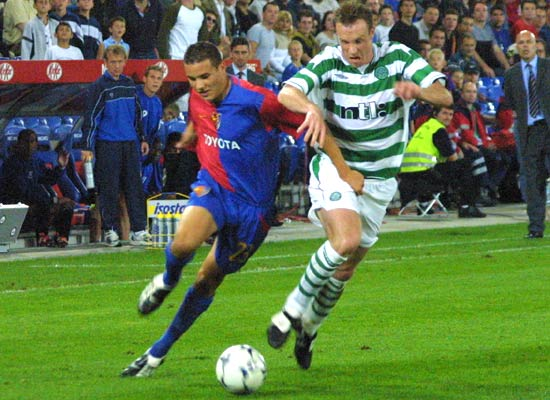
The 2001-02 Scottish Premier League season would end with Celtic becoming league champions for the 38th time. Martin O’Neill’s team would win their second title in a row in a landslide, beating cross-city rivals Rangers by a final margin of 18 points. As the champions of Scotland, Celtic would enter the 2002-03 UEFA Champions League at the final qualifying round due to Scotland’s recent lack of success in European club competitions ultimately causing the country to slip down UEFA’s coefficient rankings. In this final qualifying round, Celtic would face FC Basel, the champions of Switzerland, over two legs for the right to enter the Champions League group stages.
The first leg in Glasgow would go the way of the Bhoys. However, Celtic would have to come from behind at Parkhead after Julio Rossi put the Swiss champions in front after 83 seconds. Celtic would quickly get back on level terms from the penalty spot in the 4th minute, with Henrik Larsson scoring after Stiliyan Petrov was brought down in the Basel box. In a fairly even encounter, a flick of the foot from Chris Sutton was enough to divert Neil Lennon’s long-range effort past the goalkeeper to give Celtic the lead. Then, in the 88th minute, winger Momo Sylla would give Martin O’Neill’s side a two-goal cushion heading into the return leg after a well-taken volley. However, despite Celtic holding a 3-1 aggregate lead, Basel had an away goal in their back pocket due to that 2nd-minute opener from Julio Rossi.
That Rossi away goal would become even more important in the return leg as two early strikes would decide this qualifying tie at Basel’s St-Jakob Park. In the 8th minute, a sumptuous reverse pass from attacking midfielder Hakan Yakin would split the Celtic defence, and striker Christian Giménez sprinted through and slid the ball under goalkeeper Rab Douglas to open the scoring after 8 minutes. Then, in the 22nd minute, Murat Yakin would jump highest at a corner to head the ball past Douglas for 2-0 and a goal that would level the aggregate score to 3-3, with Basel now advancing to the Champions League on ‘away goals’. The rest of the game would see Celtic trying to find the goal to qualify them for the Champions League group stage, with John Hartson, Henrik Larsson, Chris Sutton and Bobo Balde all having great chances to score. However, try they as they might, Celtic could not find the breakthrough, and the second leg would end 2-0 to Basel. The Swiss champions would advance to the UEFA Champions League, while a disappointed Celtic would instead drop down into the UEFA Cup, where they would enter at the first round.
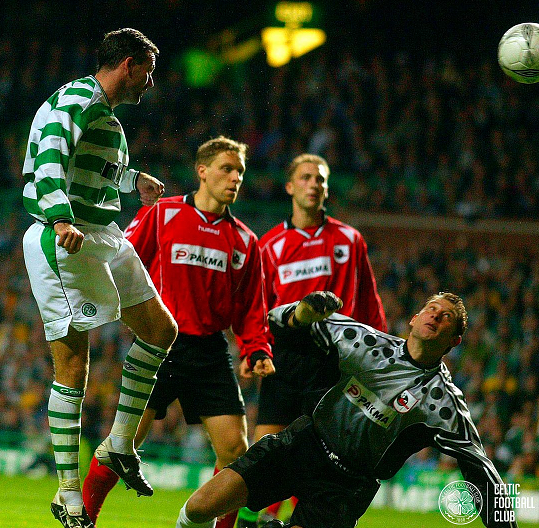
Celtic’s UEFA Cup journey would begin with a first-round tie against Lithuanian club FK Sūduva. Sūduva did not earn its UEFA Cup spot through its position in the Lithuanian top division. Instead, the team from Marijampolė had earned its spot in the qualifying round after reaching the final of the Lithuanian Cup. In that final, Sūduva lost 3-1 to FBK Kaunas. However, because Kaunas entered the Champions League qualifying rounds as league champions, their spot for winning the Lithuanian Cup would instead go to runners-up Sūduva. However, Sūduva would soon show that it was not there to make up the numbers in UEFA Cup qualifying, beating Austrian side SK Brann 6-4 over two legs to begin a historic first-ever campaign in European competition.
Celtic would steamroll over their less-experienced Lithuanian opponents in this first-round tie. An 8-1 victory at Celtic Park would decide this tie after the first leg. Henrik Larsson would score a 14-minute hat-trick while Stiliyan Petrov and Chris Sutton would also find the net as Celtic scored five goals in the first 45 minutes of play. Then, in the second half, Paul Lambert, John Hartson and Joos Valgaeren would also get in on the scoring act, as Martin O’Neill’s team humiliated their opponents, who could only offer a 90th-minute consolation away goal. Two weeks later, in Marijampolė, a second-string side would win 2-0 in front of a crowd of 1,200, with Alan Thompson and David Fernandez scoring first-half goals to see Celtic advance to the second round with a dominant 10-1 aggregate win. The Bhoys would face tougher challenges ahead.
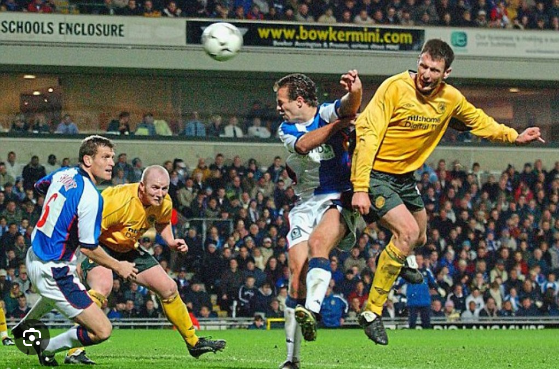
In round two, Celtic would meet Premier League side Blackburn Rovers, who had earned their UEFA Cup spot by winning the 2002 League Cup and had prepared for their European adventure by signing Turkish international Hakan Ünsal (who had been on the wrong end of some Rivaldo play-acting at the 2002 World Cup) and reuniting a Champions League-winning strike force by reuniting Dwight Yorke with Andy Cole. Blackburn would enter their match against Celtic sitting 8th in the Premier League but would give Celtic more than a challenge over the two legs.
The first leg at Parkhead would be dominated by Blackburn, who would have several chances to take the lead. David Thompson would opt for position rather than power as Rab Douglas pushed his shot to the left. Then, Thompson would set up Dwight Yorke, but the Manchester United treble-winner would delay his shot long enough for home defenders to block his effort. As time passed, it became increasingly evident that one goal would ultimately decide the winner of this leg. That goal would come for Celtic in the 88th minute. From a corner, substitute John Hartson would find his header blocked on the line by David Thompson. However, Henrik Larsson would bury the rebound to win the match for Celtic and see the Bhoys take a 1-0 advantage into the return leg in Lancashire.
Blackburn had been the better side in Glasgow, but the second leg would instead see Celtic control the state of play and two goals, including one from a former Blackburn player, would see the Scottish champions win the day. In the 15th minute, Chris Sutton stroked the ball towards John Hartson, but both the Celtic striker and his marker Craig Short slipped, with the ball moving into the path of Henrik Larsson, who would run on and lift the ball over Brad Friedel for 1-0. Then in the 67th minute, Celtic would strike the killer blow. From a corner, Chris Sutton would beat his marker to the near post and direct the ball past Friedel for a second goal and a now-unassailable 3-0 aggregate lead. Sutton, who helped Blackburn win the Premier League title during a five-year stay at Ewood Park, had now helped Celtic knock his former club out of the UEFA Cup.
Celtic’s next opponents would be the similarly-named Spanish side Celta Vigo. The third-round tie against Celta Vigo would provide a much sterner test than the matches against Blackburn. To beat Celta, Celtic would have to end a run of seven previous defeats against Spanish opposition in European competition. The first leg at Celtic Park would almost see a goal after 20 seconds. A mistake from home defender Joos Valgaeren would allow Sylvinho to reach the by-line and send in a cross with which striker Gustavo Lopez didn’t get the best contact, allowing Rab Douglas to make the save. After that, Celtic would employ the same tactics that saw them to victory over Blackburn. Celtic would again rely on Henrik Larsson to provide the breakthrough. In the 51st minute, the Swedish striker would head in a Bobo Balde flick-on at a corner to net his 5th goal of the UEFA Cup campaign. Defensive lapses would allow Celta Vigo chances to equalise, but a solid defence would see Celtic win the first leg 1-0.
In the return leg, Celtic would have the fast start, with Didier Agathe cutting the ball back for Chris Sutton, only for Sutton to hit his shot at the legs of a covering defender. Soon, Celta Vigo would wake up and hammer on the door of Celtic’s goal. Vigo’s strike partnership of Benni McCarthy and Jesuli proved an effective force, and the pair would combine for the night’s first goal. McCarthy would receive a throw and flick the ball to Jesuli, who would cut inside his marker before sending a deflected left-foot shot into the net to draw Celta Vigo level on aggregate at 1-1. Now looking to take the lead in this tie, Vigo would continue their attacks, but Celtic would stand firm and soon reverse the pressure onto the hosts. In the 36th minute, John Hartson used his strength to hold off his marker before smashing the ball past Pinto for a crucial away goal. Celtic were back in the lead on aggregate, and Vigo now needed to score twice to beat the Scottish champions. Knowing this, the Spanish side would return to their attacking rhythm after the break. The Celtic defence allowed Gustavo Lopez time and space to send a cross into the danger area, and Benni McCarthy would flick the ball past Rab Douglas for the second goal. With one goal required for Vigo, the home side would continue laying siege to the visiting defence, with Celtic having to continually hold out. However, the breakthrough would not come for Vigo, and the referee’s final whistle saw Celtic fans breathe a sigh of relief. John Hartson’s away goal had been enough to see Celtic into the round of 16 after a 2-2 aggregate score.
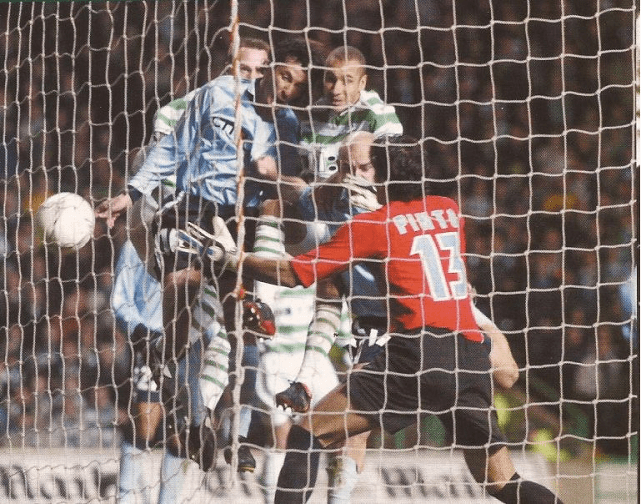
Celtic were now enjoying their best European campaign for 23 years. Bundesliga side VfB Stuttgart would try to stop it. Celtic’s fourth-round tie against Stuttgart would produce two legs of thrilling yet nerve-wracking football matches.
The first leg at Parkhead would see a flurry of goals decide the match before half-time. Stuttgart would produce the better football in this first half but would be set back when centre-back Marcelo Bordon was sent off for a professional foul on Stiliyan Petrov. However, the man disadvantage would not phase Felix Magath’s men, and the visitors would take the lead in the 27th minute when striker Kevin Kuranyi headed past Rab Douglas from 10 yards. Going behind would stir Celtic into action, and they would equalise within 10 minutes. Shaun Maloney would control Alan Thompson’s cross into the path of Paul Lambert for the veteran midfielder to send a first-time effort into the bottom corner. A minute before half-time, Celtic would take the lead as Fernando Meira’s clearance only found Shaun Maloney. The young midfielder would then manage to bundle the ball under the advancing Timo Hildebrand from close range. Celtic would continue to dominate proceedings after the break, inevitably producing a third goal. In the 68th minute, Paul Lambert would turn provider, feeding a through-ball into the path of Stiliyan Petrov, who would catch out Timo Hildebrand at his near post from the tightest of angles. Celtic would win the first leg 3-1 and take a two-goal aggregate to Germany. However, Stuttgart’s away goal could still prove crucial in this tie.
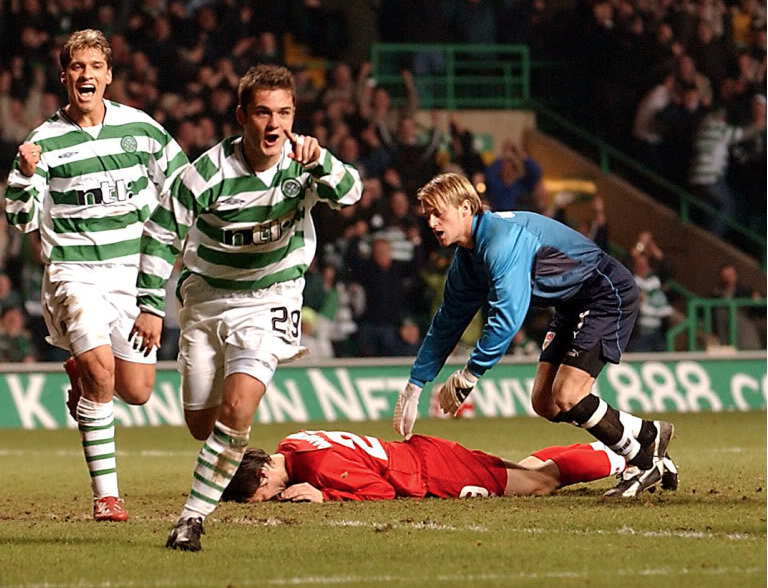
Celtic would strike early in Stuttgart to effectively kill off the tie as a contest. Nine minutes in, Alan Thompson would finish off good work from Didier Agathe and John Hartson to send a header into the far corner. Then, less than two minutes later, Agathe would reach the by-line before cutting the ball back for Chris Sutton to tap in another ‘away goal’ and increase Celtic’s aggregate lead to 5-1. A stunned Stuttgart would need five goals in 79 minutes to progress to the quarter-finals. Christian Tiffert would start them on their journey six minutes before half-time with a diving header. The hosts would then spend much on the second half inside the Celtic half as Martin O’Neill’s team, knowing the size of their lead, allowed the German side to have a shot at them. Stuttgart would take until the 76th minute to find the second goal. Alex Hleb would play a neat one-two before sending a drive past Rab Douglas to equalise on the night (2-2) and bring the aggregate score back to 5-3. Hleb’s team would now need three goals in less than 20 minutes. A third goal would come two minutes from time when Michael Mutzel pounced on Hleb’s ball for 5-4. However, it wasn’t enough. Stuttgart would win the second leg 3-2 but lose the tie 5-4 as Celtic now geared up for a bumper quarter-final with Liverpool.
As with any European clash between an English and a Scottish team was billed as a ‘Battle of Britain’. However, the UEFA Cup quarter-final between Celtic and Liverpool in 2003 felt like a major occasion due to both teams’ European legacies. Plus, whoever won this clash would probably start being considered as potential UEFA Cup winners. Liverpool would enter this tie as favourites, having dropped down to the UEFA Cup following a group-stage elimination in the Champions League. However, Celtic would certainly give them a fight across both legs.
Two early goals would settle the first leg at Celtic Park. The home side would start fast as John Hartson sent a dipping volley crashing against the crossbar. Soon afterwards, Alan Thompson would hit Hartson’s drag-back towards goal, only for Henrik Larsson to stick out a knee and divert the ball into the net for his 25th goal in European club competitions. Hartson would then send a shot narrowly wide as Celtic tried to press home their early advantage with more goals. However, Liverpool would soon hit back with an equaliser when Emile Heskey collected John Arne Riise’s pass and sent a low shot past Rab Douglas. It was 1-1 after 17 minutes, a fast and furious start to this high-intensity game. However, the pace would soon drop as both defences eventually got on top. Plenty of crunching tackles were on display, but not many clear-cut goalscoring chances were being produced. Michael Owen and Henrik Larsson would both find their chances stopped by defensive blocks early in the second half, and Emile Heskey would struggle to make the right contact with El-Hadji Diouf’s low ball across the middle. Michael Owen would have the best chance to give Liverpool the aggregate lead late on, but he would send a snatched shot wide at the Celtic’s back post. In the end, 1-1 was a fair result from this first match as both teams essentially cancelled each other out. This quarter-final would be settled at Anfield.
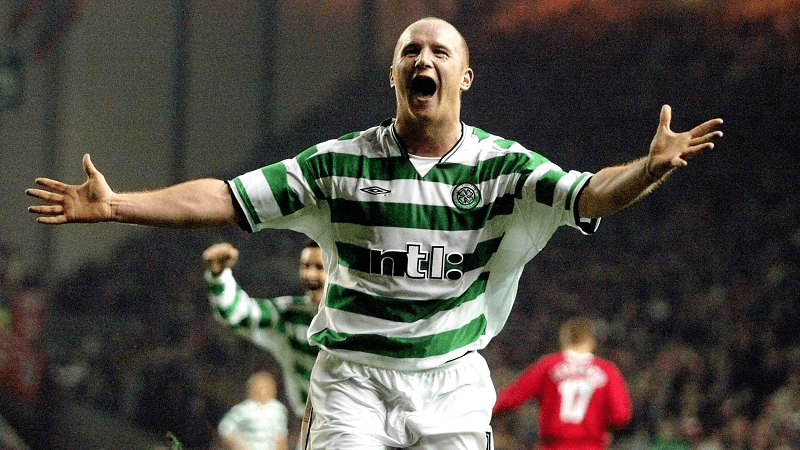
Anfield has a history of being a difficult place to go on European nights, so Celtic knew they needed to quickly silence the home crowd in this second leg. The Bhoys would enjoy better chances throughout the first half without managing to open the scoring. However, Celtic would finally get their goal on the verge of half-time. From a 30-yard free-kick on the inside right, Alan Thompson would send a low but powerful shot under the defensive wall and past Jerzy Dudek into the net. The goal would take the sting out of Liverpool, and the second half would be filled with the Reds failing to finish opportunities due to Celtic’s defence or poor composure. Finally, in the 82nd minute, Celtic would put Gerard Houllier’s side out of their misery. John Hartson would play a one-two with strike partner Larsson before firing the ball into the top corner from 25 yards. It was no less that Celtic deserved for their display. Martin O’Neill’s team had won the battle of Britain to reach the UEFA Cup semi-finals as 3-1 aggregate winners. Celtic had reached the semi-finals of a European competition for the first time since 1974.
Having got Liverpool out of the way, Celtic was two legs away from a first European final since 1970. Standing in their way was Boavista, who had followed a similar path to Celtic, dropping down to the UEFA Cup after exiting the Champions League at the final qualifying round. The Portuguese side was suffering mixed form domestically and had needed away goals to get past Paris St-Germain and Hertha Berlin before scraping past Málaga on penalties in the quarter-finals. However, for those expecting Celtic to enter this semi-final as favourites, Boavista had been Portuguese champions two years earlier.
Throughout the first leg, the story would see Celtic, who had the lion’s share of possession, struggling to break down a disciplined Boavista defence. The visitors’ back four would drop deep, limiting the space available to Henrik Larsson and John Hartson. Celtic and their fans would also get repeatedly frustrated by referee Frank De Bleeckere, who many felt ignored two clear penalties for Boavista players handling the ball inside the penalty area. However, as the first period progressed, the Portuguese side would start to get forward more and threaten Rab Douglas’s goal. Three minutes after the break, they would take the lead. Bhoys defender Joos Valgaeren would cut across an attacker to block an incoming cross, only for his sliding clearance to nestle in the back of his own net. It was a gift for Boavista, but Celtic would take less than two minutes to respond. Thirty-five seconds after the restart, Chris Sutton knocked down Paul Lambert’s cross, and Henrik Larsson stroked the ball home. Fifteen minutes from time, Larsson would have the chance to put Celtic ahead from the penalty spot. However, Boavista’s goalkeeper Ricardo would guess correctly and dive to his right to keep out the Swede, and the first leg would finish as a draw. Celtic would now need to get the job done in Portugal.
Two weeks later, Henrik Larsson would redeem himself by scoring the only goal in the semi-final’s second leg. In a tense game where clear-cut chances were few and far between, it would take until the 79th minute for the deadlock to be broken in Oporto. Larsson had earlier managed to completely miss the target when facing the goal. However, when a failed pass to John Hartson took out three defenders, the ball would return to Larsson, and the Swedish striker would prod the ball past Ricardo for his 10th European goal of the season to send Celtic into their first European final since 1970.
FC Porto
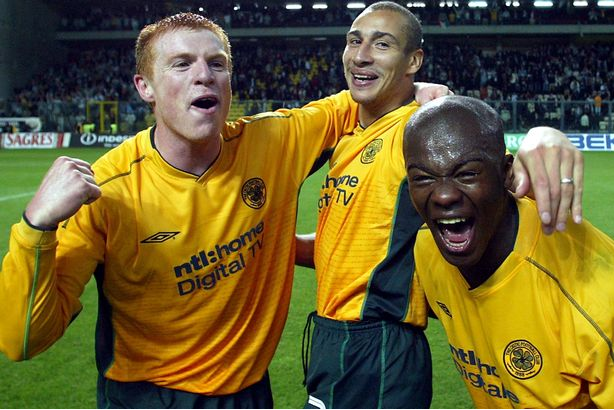
Unlike Celtic, FC Porto had qualified for the UEFA Cup due to their league position. Porto had recovered from a bad season to finish 3rd in the Portuguese Primeira Liga, appointing Jose Mourinho as manager when the club was sitting 10th in the division. However, UEFA Cup football would be a scant reward to the Dragons’ worst league finish in 20 years.
Porto would begin their UEFA Cup campaign with a first-round draw against Polonia Warsaw. Polonia had needed to beat Sliema Wanderers of Malta in the final qualifying round to reach the main draw. However, Polonia’s next opponent would take a marked step up in quality in the shape of Porto. Porto would beat Polonia Warsaw 6-2 over the two legs, with the first leg ending 6-0 to Jose Mourinho’s side. In the home leg, Edgaras Jankauskas and Helder Postiga would both score braces, while Derlei and Maniche would also score to complete the rout. Jose Mourinho was so confident of his side’s progress that he would send a second-string side out for the return leg in Warsaw. Polonia Warsaw would score two consolation goals to win the second leg 2-0 but ultimately lose the tie 6-2.
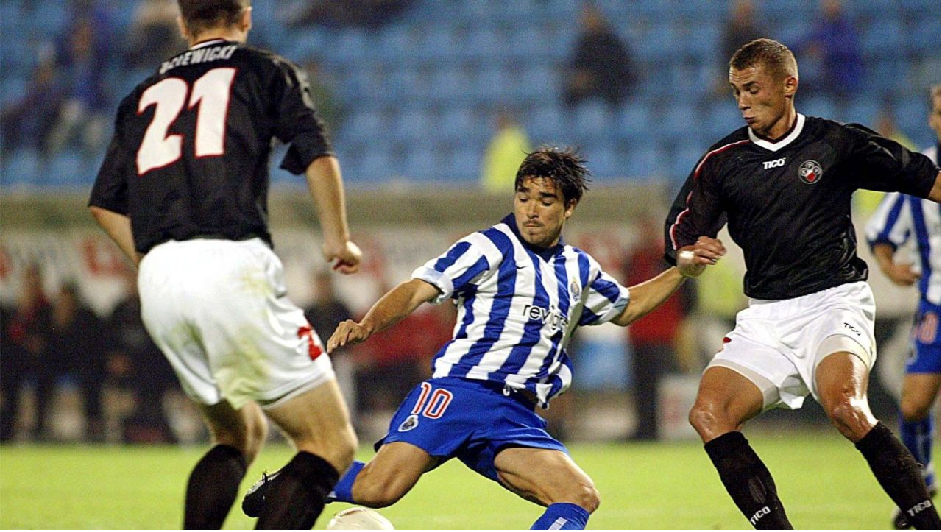
Porto’s next opponents would be Austrian league leaders Austria Wien. The first leg would see Dragões return to the Ernst-Happel Stadion in Vienna, where Porto had won the European Cup in 1987. Seemingly with the spirit of that team running in their veins, Jose Mourinho’s team would dominate against their hosts. However, despite all their possession, Porto could not find their goals to match their aggression. With Austria Wien offering little in response, Porto would finally get the goal they wanted after 79 minutes when Clayton’s in-swinging cross to the far post beat goalkeeper Thomas Mandl, and Derlei was there to knock the ball in. Porto had the win and the away goal they needed for the return leg at home. However, they would have to hope that Austria Wien wouldn’t make them pay for their profligacy in this first leg by beating them in the second leg.
The second leg would see Austria Wien try to hit back on the aggregate scoreline. However, despite a freekick that missed the target by centimetres, the Austrian league leaders struggled to challenge Porto’s goalkeeper Vítor Baía properly. At the other end of the pitch, Porto were more professional in their attacks, and this approach paid off. In the 29th minute, Clayton would cross into the area, and Helder Postiga would head into the net to open the scoring on the night. Porto would then seal their place in the UEFA Cup third round when Derlei, who had missed several opportunities to score all night, would finally slot the ball home in the 86th minute to secure a 3-0 aggregate victory over Austria Wien and a third-round draw against RC Lens, who had dropped down from the Champions League.
RC Lens had done well to finish 3rd in a difficult Champions League group with AC Milan, Bayern Munich and Deportivo La Coruna. The French side had finished with an inconsistent record of 2 wins, 2 draws and 2 losses, which included a famous victory over eventual champions AC Milan and a draw against Bayern Munich. However, despite this record, Lens would drop down into the UEFA Cup and get comfortably defeated by FC Porto. The first leg at the Estádio das Antas would see Porto dominate their French opponents from start to finish. With Deco pulling the strings in attacking midfield, the Portuguese league leaders would go ahead in the 36th minute when Helder Postiga escaped the Lens defence before sending a powerful shot through the hands of Guillaume Warmuz. Jose Mourinho’s men would then double their advantage on the stroke of half-time when Derlei scored for the 3rd European match in succession. Porto would take a sizeable aggregate lead into the second leg when Edgaras Jankauskas added a third goal in the 87th minute. In the second leg, RC Lens would need to recapture some of the spirit that helped them beat AC Milan if they hoped to avoid crashing out of the UEFA Cup as soon as they entered it.

RC Lens would win the second leg over Porto. However, a 1-0 win in northern France was insufficient to overhaul Porto’s lead. Rigobert Song would open the scoring in the 28th minute, but the centre-back’s goal would inspire his team to score more, and Porto would claim a Champions League scalp as they continued into the 4th round after another comfortable aggregate victory.
Porto’s fourth-round opponents, Denizlispor, had caused an upset when they knocked out French league champions Lyon with a narrow 1-0 aggregate scoreline. For the first 45 minutes of the first leg of this tie in Porto, the Turkish side would hold out the hosts with a well-drilled defence. The visitors would almost go into half-time ahead, but striker Ersen Martin would send a header over the crossbar. In the second half, Denizlispor’s defences would crumble. Once Capucho put Porto ahead in the 48th minute by heading in Deco’s corner, it was almost entirely one-way traffic. Derlei, Ricardo Costa, Edgaras Jankauskas, Deco and Dmitri Alenichev would put their names on the scoresheet as Porto racked up an enormous 6-1 first-leg victory to effectively end the tie. All Denizlispor could cling to was a 78th-minute goal by Roman Kratochvíl to make the score 5-1, which still counted as an away goal. A minimum 5-0 win would send the Turkish side through.
Despite any chance of a Denizlispor victory now being unlikely, the second leg in Denizli would still be an exciting match. When Derlei opened the scoring just before half-time to make the aggregate score 7-1, Denizlispor was quickly playing for pride. With the pressure off, two goals in six second-half minutes by Ersen Martin (52′) and Mustafa Özkan (58′) would put the hosts ahead and give hope of a consolation victory. However, Clayton would deprive Denizlispor of their victory with a superb backheel with six minutes left to play to end this second leg in a 2-2 draw. Another tie, another dominant victory that further elevated Porto’s reputation as potential UEFA Cup winners. Next up for Jose Mourinho’s men was a quarter-final against Greek giants Panathinaikos.
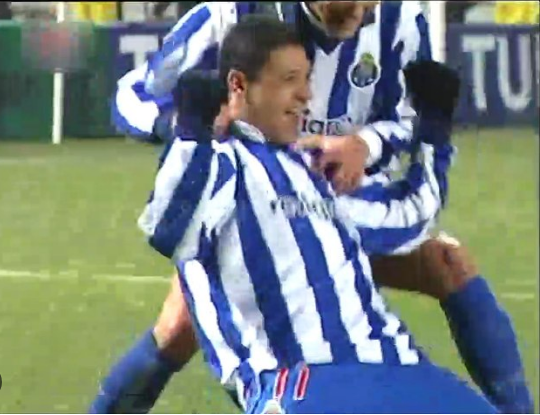
Panathinaikos had reached the Champions League quarter-finals the previous season and even won the first leg over Barcelona before coming unstuck at the Nou Camp. The Greek side had been unable to replicate that run this season as a third-placed league finish only gained the team UEFA Cup qualification. In the UEFA Cup, the Greens had won most of their ties by a one-goal margin, contrasting Porto’s dominant performances. However, when Jose Mourinho’s team faced Panathinaikos in the UEFA Cup quarter-finals, the Greek side would give Porto their biggest test of the competition.
In a battle between the two teams leading the Portuguese and Greek league tables, the latter would edge the first leg. Nikos Liberopoulos would almost give Panathinaikos an early lead, but Porto keeper Vítor Baía would parry the shot before quickly re-adjusting to block a follow-up effort from Joonas Kolkka. However, Porto would soon become the main chance creators and had several chances to take the lead at home. However, poor shot execution would continually let them down. Capucho would find himself with only the goalkeeper to beat, only to fire his shot into the side-netting. Deco would use his skills to manufacture a strong shooting position, only to send his shot wide. He would even set up César Peixoto, only for the striker to get his bearings wrong. Eventually, something had to give for Porto. Something did, but not for them. In the 73rd minute, Emmanuel Olisadebe would head in Joonas Kolkka’s cross to punish Porto. Porto would eventually find the net in the final minute of play, but Helder Postiga’s equaliser was ruled out for offside. Panathinaikos would hold on to win 1-0 at the Estádio das Antas, issuing Porto their first home defeat of the season and a 1-0 aggregate deficit.
Porto travelled to Greece needing two goals to keep their UEFA Cup dream alive. In the 15th minute, Derlei would provide the goal that drew Porto level on aggregate, curling the ball into the bottom corner from the edge of the area. With the score now tied, the rest of the game saw both teams attempting to find the goal to send them to the semi-finals. Deco, Derlei and Helder Postiga would all have half-chances for Jose Mourinho’s side without success, while Joonas Kolkka and Nikos Liberopoulos did the same for Panathinaikos. Liberopoulos would attempt to turn and volley the ball past Vitor Baia, only to send his volley over the crossbar, while Derlei sliced wide for Porto to end a promising break. As 90 minutes hit, full-time would come with the two teams tied, requiring extra time to find a winner. In the 103rd minute, Derlei would use his strength to ignore the attentions of backtracking defenders before knocking the ball under the goalkeeper to put FC Porto ahead 2-1 on aggregate and ultimately win the tie.
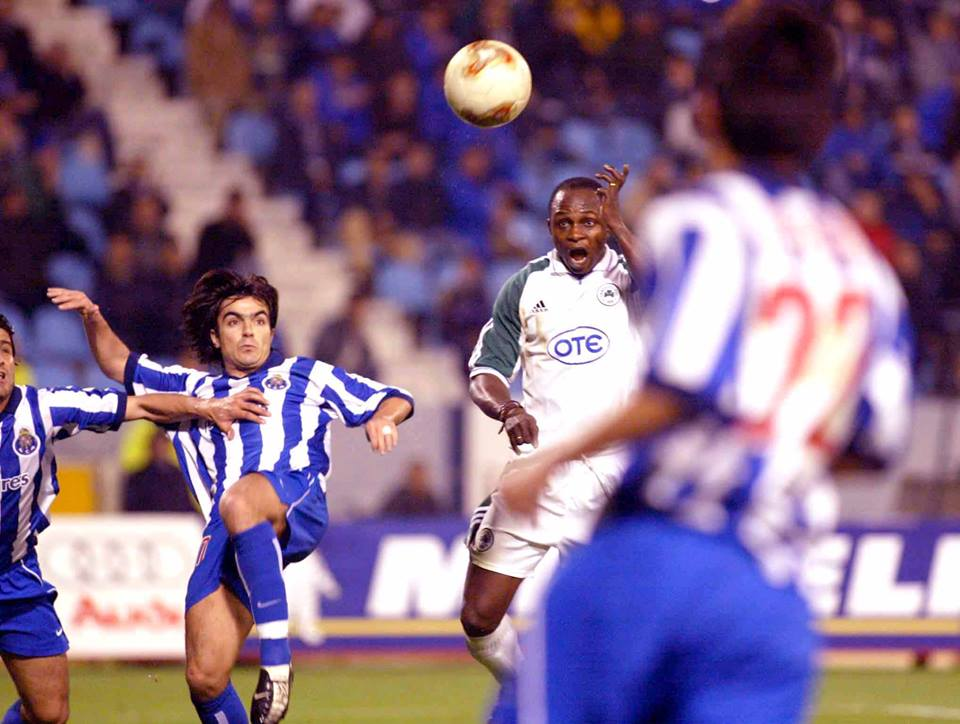
Now, only a semi-final with Lazio stood between FC Porto and a first European final in 15 years. Lazio sat 4th in Serie A, and despite losing the likes of Alessandro Nesta and Hernan Crespo due to financial problems, still possessed a high-quality squad full of internationals, including Diego Simeone, Jaap Stam, Dino Baggio, Siniša Mihajlović and Simone Inzaghi. The Eagles had also lost the fewest matches in Serie A and had conceded 29 goals in 27 games. Lazio was sure to pose a difficult test to Porto across both legs of this semi-final. However, Porto would shock Lazio by beating Roberto Mancini’s team 4-1 in the first leg.
Despite the final scoreline, the start of the game would be fast and frenetic. In the 6th minute, Giuseppe Favalli would reach the by-line before dragging the ball back for Claudio Lopez to put Lazio 1-0 up and gain a crucial away goal. However, Porto would draw level four minutes later when Maniche curled the ball in from 25 yards. From this point on, Porto were on top. Derlei would put an unopposed header past goalkeeper Angelo Peruzzi for 2-1 after 28 minutes and complete his brace five minutes into the second half, capitalising on Peruzzi spilling a shot for 3-1. Then, in the 56th minute, Helder Postiga scored Porto’s fourth by firing a shot in off the near post. To be fair, Porto could have scored more past Lazio if not for the efforts of goalkeeper Angelo Peruzzi, such was the shift in momentum towards Jose Mourinho’s side after the first 10 minutes.
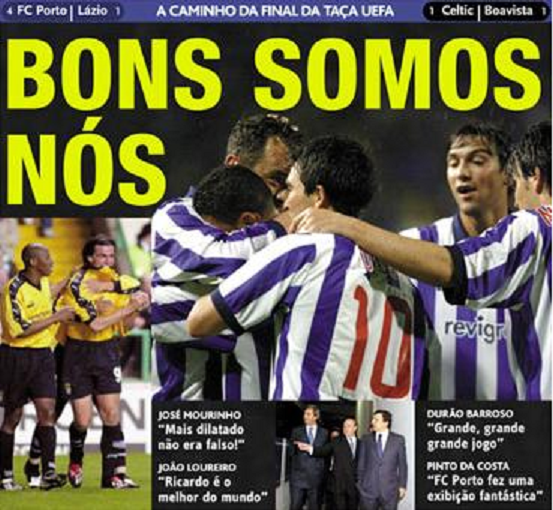
Porto could not have hoped for a better first leg of the semi-final. Now, they had to avoid a minimum 3-0 defeat away in Rome, and they were into the UEFA Cup Final. With Lazio needing to score those goals, the return leg at the Stadio Olimpico saw the hosts dominate possession while Porto defended bravely. Jorge Costa’s defensive header would stop Simone Izaghi from putting Lazio ahead after half an hour, and Vitor Baia would need to perform acrobatics to stop Claudio Lopez’s overhit cross from ending up in the net five minutes later. The passion was on display from both sides, as Helder Postiga and Lazio defender César were shown yellow cards and later red cards for clashes off-the-ball. In the 57th minute, Lazio would win a penalty after Jorge Costa bundled over Inzaghi. However, Vitor Baia would dive to his right to stop the striker from returning the aggregate score to 4-2. After that, Lazio would become desperate in their search for goals, inadvertently allowing Porto to counter-attack and create their own chances. However, this second leg would end goalless, and Porto would progress to meet Celtic in the 2003 UEFA Cup Final in Seville.
The Final

52,972 spectators would crowd into Seville’s Estadio Olímpico de Sevilla (now Estadio La Cartuja) for the 2003 UEFA Cup Final. Both teams were looking to end their respective European trophy droughts. FC Porto was looking for its first silverware since winning the European Cup in 1987, while Celtic fans were hoping that Martin O’Neill’s team could emulate the 1967 European Cup-winning ‘Lisbon Lions’ team by winning the 2003 UEFA Cup and becoming ‘The Bhoys of Seville’.
Starting Line-Ups
| Celtic | FC Porto | ||
|---|---|---|---|
| (3-1-4-2) | (4-3-1-2) | ||
| Rab Douglas | GK 20 | GK 99 | Vítor Baía |
| Johan Mjällby | RCB 35 | RB 22 | Paulo Ferreira |
| Bobo Baldé | CB 6 | CB 2 | Jorge Costa (capt.) |
| Joos Valgaeren | LCB 5 | CB 4 | Ricardo Carvalho |
| Paul Lambert (capt.) | DM 14 | LB 8 | Nuno Valente |
| Didier Agathe | RM 17 | RCM 10 | Deco |
| Stiliyan Petrov | CM 19 | CM 6 | Costinha |
| Neil Lennon | CM 18 | LCM 18 | Maniche |
| Alan Thompson | LM 8 | AM 15 | Dmitri Alenichev |
| Henrik Larsson | CF 7 | CF 21 | Capucho |
| Chris Sutton | CF 9 | CF 11 | Derlei |
| Subs | Subs | ||
| Magnus Hedman | GK 21 | GK 13 | Nuno |
| Jackie McNamara | DF 4 | DF 3 | Pedro Emanuel |
| Ulrik Laursen | DF 16 | DF 5 | Ricardo Costa |
| Momo Sylla | MF 3 | DF 14 | César Peixoto |
| Jamie Smith | MF 39 | MF 28 | Clayton |
| David Fernández | FW 12 | FW 66 | Tiago |
| Shaun Maloney | FW 29 | FW 78 | Marco Ferreira |
| Martin O’Neill | Manager | Manager | José Mourinho |
The Match
First half
The early stages of the final would be quite slow, with few exciting chances for either fanbase to cheer. The first shot in anger would come from Maniche, whose daisy-cutter from a free-kick after 2 minutes would be easily saved by Rab Douglas. Celtic’s first real chance would come from their main goalscorer, Henrik Larsson, firing a low free-kick straight at Vitor Baia in the 22nd minute. As the first half progressed, Porto would start to take control, even if their shots on target left something to be desired. Capucho and Derlei would combine effectively, only for the latter’s shot to lack power. Four minutes before half-time, Deco flicked and dribbled past three Celtic players before attempting to slide the ball under Rab Douglas. However, Douglas would use his legs to deflect the shot out for a corner. After all these attacks, Porto would find the breakthrough in first-half stoppage time. Deco would ping the ball to Dmitri Alenichev, and the Russian midfielder would hit a powerful shot across goal that Rab Douglas could only parry. The ball would spill out to Derlei, who would steal in at the back post to knock the ball into the net. Porto had struck the first blow right before half-time, changing the respective team talks of the two managers instantly.
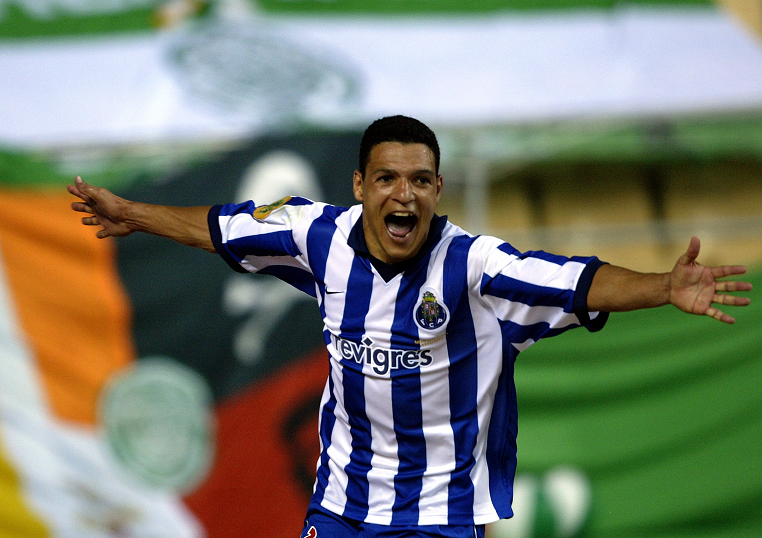
HT: Celtic 0 FC Porto 1
Second half
Celtic came out for the second half with a fire lit under them by Martin O’Neill. Within two minutes of the restart, the Bhoys were level. Didier Agathe would stand off his marker before sending a pinpoint cross to the far post. Henrik Larsson would meet the cross and head the ball back across Vitor Baia, managing to generate enough power and swerve to knock the ball past the stranded keeper into the bottom-right corner for 1-1. Larsson’s 200th Celtic goal could not have come at a more important time. However, Celtic were not level for long. Seven minutes would pass before Deco tiptoed through a broken Celtic backline before playing a blind through-ball to the left that Dmitri Alenichev ran onto and slid past the advancing Rab Douglas to put Porto back in front at 2-1. After a mostly goalless first half, the goals in this final were coming thick and fast as Celtic took just three minutes to equalise for the second time. Jorge Costa would head the ball behind for a corner without much threat. From the set piece, Henrik Larsson would escape his marker and hit a textbook header into the other bottom corner to score this final’s third goal in ten second-half minutes.
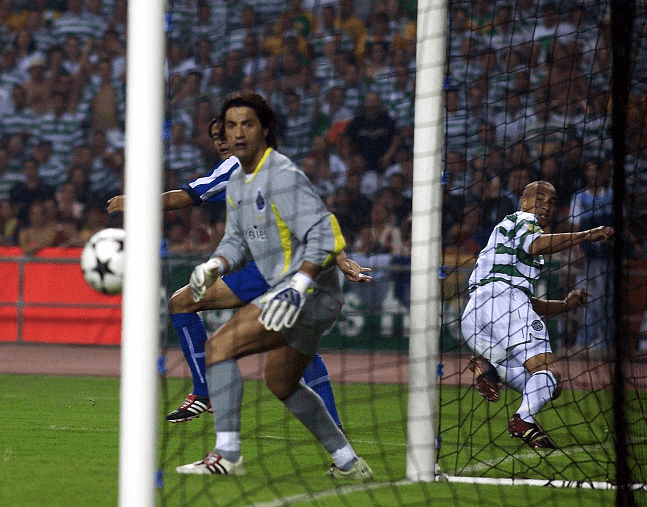
After that, the game would settle down slightly, aside from Deco sending a vicious shot whipping past the post. Dmitri Alenichev would also attempt an effort from long-range, which sailed wide as Porto finished the second half stronger. In the 3rd minute of stoppage time, Alenichev would even intercept a loose Celtic pass before sending another shot high and wide. That would be the final act of normal time as this UEFA Cup Final headed to extra time.
FT: Celtic 2 FC Porto 2
Extra-time (1st period)
Extra time would operate under the silver goal rule. If one team was leading at the end of the first period of extra time, the match would end without the second period being played. The first significant moment of extra time would see Celtic reduced to 10 men. Defender Bobo Balde would tackle Derlei late, and referee Ľuboš Micheľ would send off the centre-back for a second bookable offence. With players tiring, the first significant chance of extra time would see Chris Sutton try a speculative shot from 35 yards, which would miss the goal by inches. Sutton would also send a hopeful header over the bar from a free-kick, and that was all the significant action from the first half of extra time as the silver goal rule was nullified.
Extra-time (2nd period)
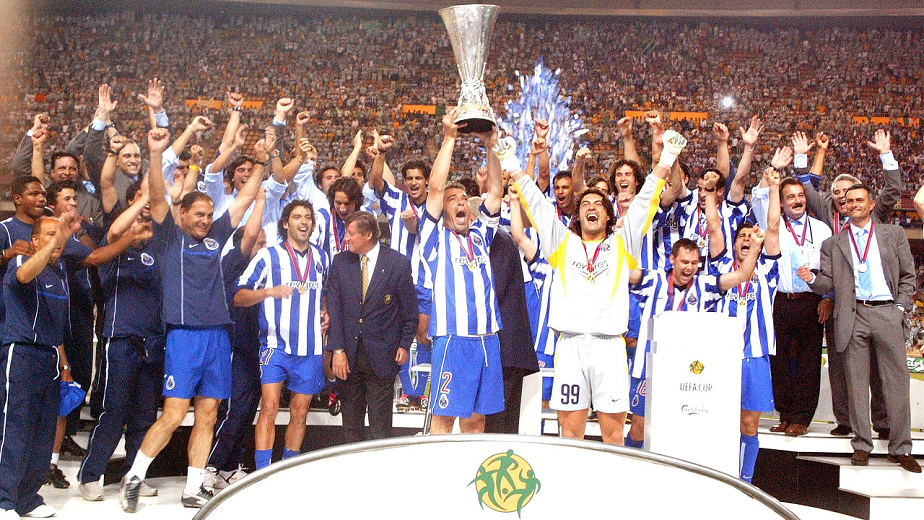
Celtic would continue to make more forays forward, but Porto’s defence was there to stop and shot from hitting the target. In the 115th minute, Porto would have their chance to win it. Rab Douglas would come out of his goal to block an attempted effort from Marco Ferreira, but Douglas’s block would only move the ball to Derlei, who would escape the tackle of one Celtic defender before firing the ball through the goalkeeper’s arms into the net. Porto players would flood on top of the Brazilian striker as Celtic’s players held heads in hands.
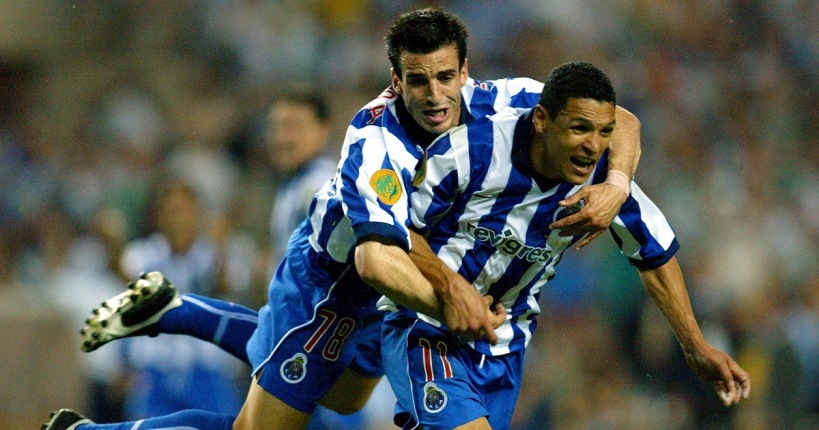
The remaining minutes would see a wave of Celtic free-kicks flung into the Porto penalty area without success. Left-back Nuno Valente would even receive a second yellow card for fouling Chris Sutton outside the box. However, it wasn’t enough, and when Ľuboš Micheľ blew the final whistle, Porto players and staff would rush the field to celebrate winning their first European trophy in 16 years. For a team that only just scraped UEFA Cup qualification the season before, this trophy was sweet nectar to Jose Mourinho and his players. The UEFA Cup would complete a treble of trophies for Porto during the 2002-03 season, along with the Primeira Liga and the Taça de Portugal. Meanwhile, for Celtic, the defeat was gutting. Twice coming back to equalise only to get undone in extra time. For a season that had seen Celtic lose the league and the Scottish League Cup to Rangers, the UEFA Cup would have meant so much to the team from Celtic Park. However, this crushing defeat would result in a rare trophyless campaign for Celtic. The only positive the Scottish club could take from this loss was the performance of its fans. At the end of the season, Celtic’s travelling supporters would receive the FIFA Fair Play Award due to their exemplary performances supporting Celtic both home and away in the UEFA Cup during this season.
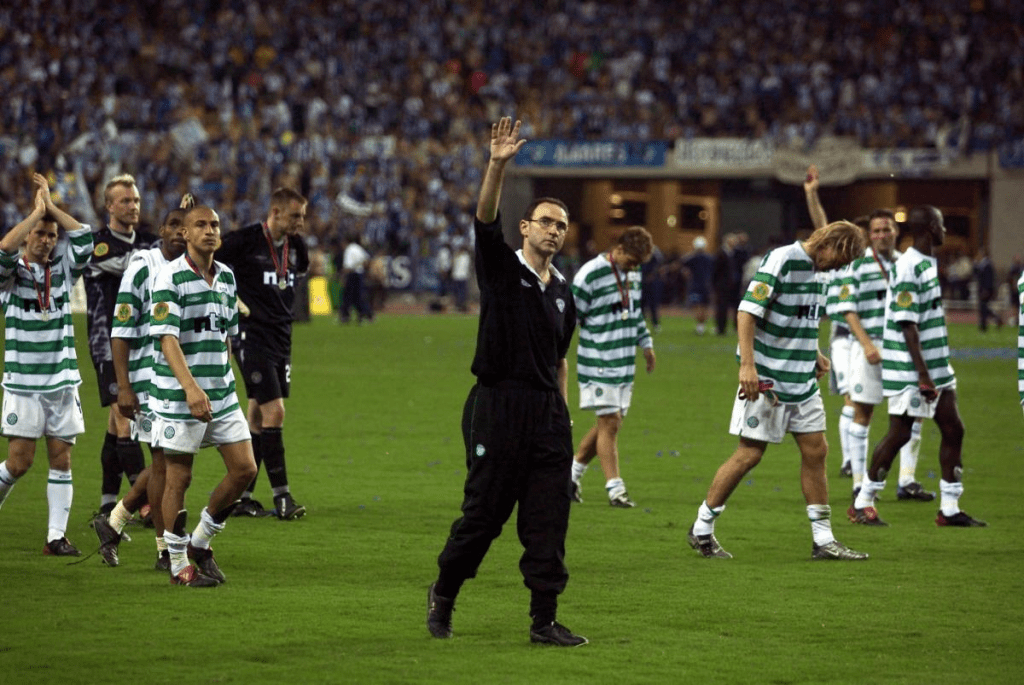
AET: Celtic 2 FC Porto 3
When Jose Mourinho lifted the UEFA Cup, little did he know how many honours would come his way over the next 20 years. Or maybe he did know. He did refer to himself as a ‘Special One’ not long after this victory.
Aftermath
The season following this UEFA Cup Final, Celtic and Porto would compete in the Champions League group stages. After requiring two qualifying rounds to reach the main draw, Celtic would finish 3rd in a group with Lyon, Bayern Munich and Anderlecht after 2 wins, 1 draw and three defeats. The Bhoys would earn a 2-0 win over French champions Lyon in week two and share a goalless draw with Bayern, both at Celtic Park, but their results were only enough the see Celtic drop down into the UEFA Cup. However, Celtic’s UEFA campaign would only go as far as the quarter-finals this time. Martin O’Neill’s men would knock out Barcelona in round three but eventually came unstuck against Villarreal, losing 3-1 on aggregate.
Meanwhile, Porto would predictably finish 2nd in their Champions League group behind Real Madrid. However, Jose Mourinho’s charges would upset the applecart in the knockout stages. First, Porto would defeat Premier League champions Manchester United in the round of 16, a result which created a memorable Jose Mourinho touchline celebration. In the quarter-finals, Lyon would be put to the sword with a 4-2 scoreline before a single Derlei penalty was enough to see off Deportivo La Coruna in the semis. Finally, Porto would reach their first European Cup final since 1987 and face fellow surprise finalists Monaco in Gelsenkirchen. However, the 2004 UEFA Champions League Final would turn out remarkably one-sided as Porto, featuring two changes from the team that beat Celtic 12 months earlier, won 3-0 after goals from Carlos Alberto, Deco and Dmitri Alenichev to become kings of Europe for the second time.
As soon as the dust had settled on Porto’s Champions League victory, Jose Mourinho moved to Chelsea and took Paulo Ferreira and Ricardo Carvalho with him. Thus would begin Mourinho’s long, controversial, yet hugely successful time as one of the greatest yet divisive managers that club football has ever had. However, Mourinho could not have reached this level of notoriety without his success with FC Porto, which began with a UEFA Cup Final victory over Celtic in 2003.
 the-score-board.co.uk