
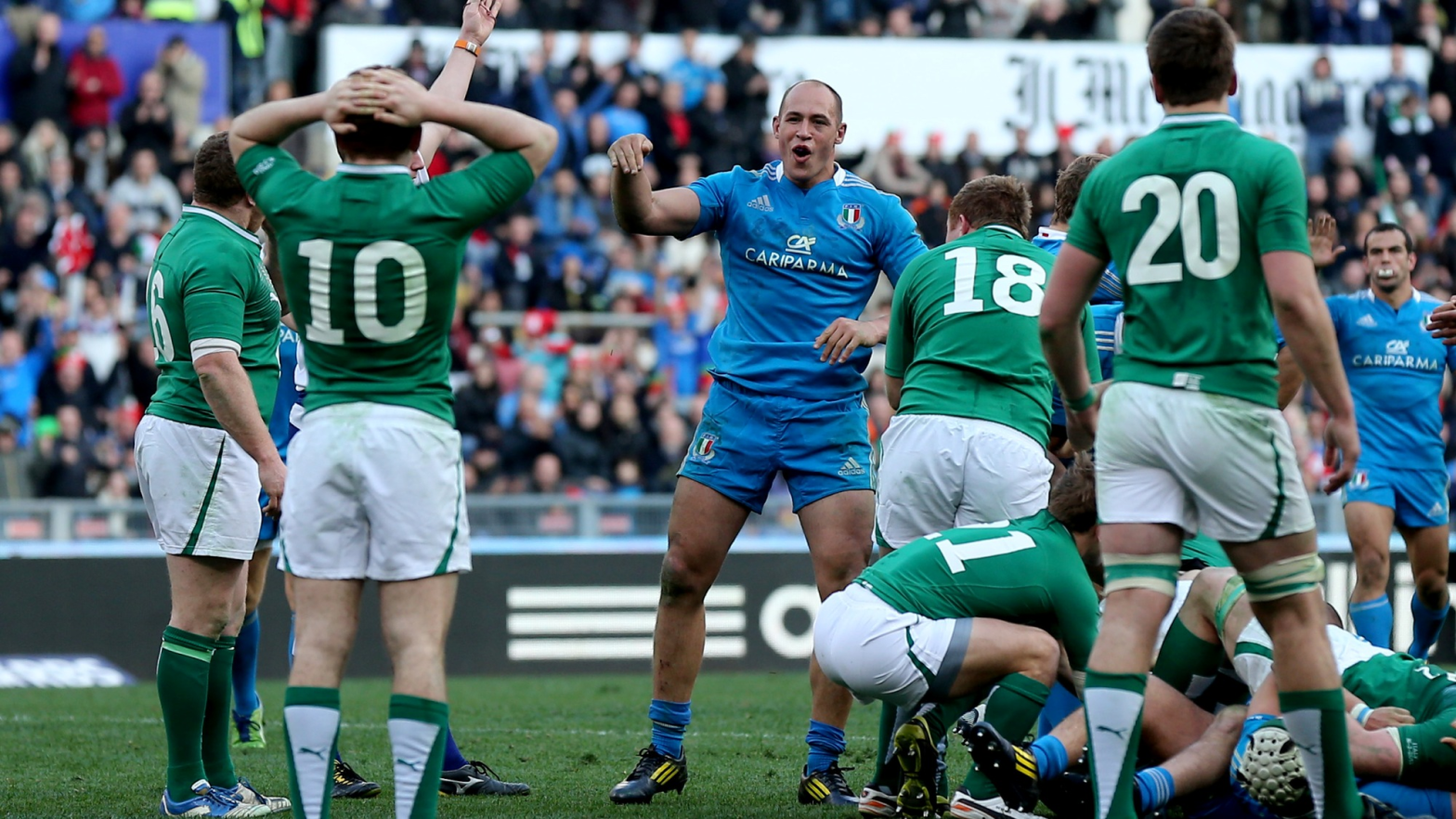
Italy ruins Brian O’Driscoll’s Six Nations swansong with a historic victory over the Irish in Rome…
In 2023, Ireland would win all five matches in the Six Nations Championship to claim the Grand Slam. The Grand Slam victory, which cemented Ireland’s place as the No.1 team in international rugby, was the country’s second Grand Slam in five years (after 2018) and the team’s fourth Six Nations title in the previous 10 years, after non-Grand Slam victories in 2014 and 2015. During this period, Ireland had never finished in the bottom half of the Six Nations table under the management of Joe Schmidt and his successor Andy Farrell. However, all this success would emerge from the team’s worst form of the 21st century, including an all-time low performance in the Six Nations.
The 2013 edition of the Six Nations is a weird tournament to look back on. An increasingly erratic France claimed their first wooden spoon since 1957, two years after reaching the World Cup final, a marker of swift decline under the incomprehensible management of Philippe Saint-Andre. Ireland suffered their worst finish since Warren Gatland was in charge (1999), despite beating Gatland’s Wales in the opening round. England was on course to claim their first Grand Slam since 2003, only to lose their final match to a resurgent Wales 30-3, a points margin so large that Wales ended up taking the title on points difference from Stuart Lancaster’s side. Finally, this championship marked the last time Italy won more than one of their five Six Nations matches. One of those two victories in 2013 would come on the final day of the competition (Super Saturday) against Ireland, a historic first victory for Italy in the Six Nations, but how did we get to that point? Let’s find out.
Build-up
Heading into the 2013 Six Nations, Italy had ended up with the dreaded ‘Wooden Spoon’ in 4 of the last 5 tournaments, winning 4 out of 25 previous matches. On only one occasion had Italy ended a Six Nations Championship with more than one win, with two wins over Scotland and Wales giving Italy a 4th-placed finish in 2007.
For the 2013 Championship, Italy coach Jacques Brunel (who took charge after the 2011 World Cup) would select an experienced 30-man squad with an average age of 28.7 and an average of 32.9 international caps. Ten players were aged 30 or over, and seven (Andrea Lo Cicero, Martin Castrogiovanni, Mauro Bergamasco, Alessandro Zanni, Gonzalo Canale, Andrea Masi and captain Sergio Parisse) started the championship with over 50 caps in the Azzurri blue.
Italy would begin the 2013 Six Nations with a shock 23-18 victory over France in Rome. A try in each half from captain Sergio Parisse and Martin Castrogiovanni, 10 points from the boot of fly-half Luciano Orquera (2 conversions, 1 penalty, 1 drop goal), plus a drop goal from his replacement Kris Burton saw Gli Azzurri defeat the 2011 World Cup finalists for the second time in two years and just the third time ever. This victory also marked only the second time that Italy had won their opening match in the Six Nations, with the only other time coming in their debut match against Scotland in 2000.
However, Italy would fail to follow the France performance with a second win. The Azzurri had been competitive for the first halves of their match against both Scotland and Wales until falling away in the second halves and ultimately losing 34-10 and 26-9, respectively. Jacques Brunel’s side even gave Grand Slam chasers England a scare at Twickenham in an 18-11 loss. Compared to past tournaments, Italy was not being blown away by their opponents, as Italy teams of old may have done. They were competitive and could have won those three lost matches on a different day. Therefore, Italy would not be fazed by Ireland coming to Rome on Super Saturday, even though they were yet to defeat them in the Six Nations.
Heading into their final-round match against Italy in Rome, Ireland sought to salvage a Six Nations that had fallen away from them after a brilliant start. Declan Kidney’s side had kicked off the 2013 Six Nations Championship in style, winning a thrilling encounter with Wales 30-22 in Cardiff. The match was notable for a remarkable team try finished by prop Cian Healy in the 23rd minute, where wing Simon Zebo had used his left foot to flick a low Jamie Heaslip pass up into his hands without losing momentum. As that clip went viral, that flick would become the most celebrated thing Ireland did during this championship. The team had not won since then, losing at home to England for the first time in a decade (12-6), losing to Scotland for the first time in three years (12-8) and drawing 13-13 with France. However, both of Ireland’s defeats had been by less than a converted score, and Ireland was still expected to beat Italy in Rome, with Ireland unbeaten against Italy since 1997. However, if Declan Kidney and his side weren’t careful, complacency could cost them in the Italian capital.

The main talking point before the match in Rome revolved around one man: Brian O’Driscoll. Far and away the best Irishman to ever pick up a rugby ball (and one of the best players in rugby union’s history), O’Driscoll had served his country well over 14 years of international experience. After making his debut in the run-up to the 1999 Rugby World Cup, the outside centre had done it all with Ireland (except win the World Cup). 125 international caps (including a world record 83 matches as captain), a national record 47 tries scored and an all-time Six Nations record of 26 tries, three-time Six Nations Player of the Tournament, three-time World Player of the Year nominee, four Triple Crowns, one Six Nations Championship and one Grand Slam. However, the 34-year-old was considering calling time on his Ireland career after the 2013 Six Nations before hopefully being selected for a 4th and final British and Irish Lions tour in the summer to officially bring the curtain down.
Selection-wise, Italy would name its strongest starting XV against Ireland. The only enforced change for Jacques Brunel came in the front row as Lorenzo Cittadini replaced the injured and influential Martin Castrogiovanni at tight-head prop. On the other side, Ireland entered the match without starters Jonathan Sexton, Paul O’Connell, Gordon D’Arcy, Fergus McFadden, Simon Zebo and Eoin Reddan due to injury. Declan Kidney would have to name the uncapped pairing of Stephen Archer (prop) and Luke Marshall (scrum-half) on the bench to fill the gaps.
| Italy | Ireland | ||
|---|---|---|---|
| Andrea Masi | 15 Fullback | 15 Fullback | Rob Kearney |
| Giovanbattista Venditti | 14 Wing | 14 Wing | Craig Gilroy |
| Gonzalo Canale | 13 Outside centre | 13 Outside centre | Brian O’Driscoll |
| Gonzalo Garcia | 12 Inside centre | 12 Inside centre | Luke Marshall |
| Luke McLean | 11 Wing | 11 Wing | Keith Earls |
| Luciano Orquera | 10 Fly-half | 10 Fly-half | Paddy Jackson |
| Edoardo Gori | 9 Scrum-half | 9 Scrum-half | Conor Murray |
| Andrea Lo Cicero | 1 Loose-head prop | 1 Loose-head prop | Cian Healy |
| Leonardo Ghiraldini | 2 Hooker | 2 Hooker | Rory Best |
| Lorenzo Cittadini | 3 Tight-head prop | 3 Tight-head prop | Mike Ross |
| Quintin Geldenhuys | 4 Lock | 4 Lock | Mike McCarthy |
| Josh Furno | 5 Lock | 5 Lock | Donnacha Ryan |
| Alessandro Zanni | 6 Blindside flanker | 6 Blindside flanker | Peter O’Mahony |
| Simone Favaro | 7 Openside flanker | 7 Openside flanker | Seán O’Brien |
| Sergio Parisse (capt.) | 8 Number 8 | 8 Number 8 | Jamie Heaslip (capt.) |
| Replacements | Replacements | ||
| Davide Giazzon | 16 Hooker | 16 Hooker | Seán Cronin |
| Michele Rizzo | 17 Prop | 17 Prop | David Kilcoyne |
| Alberto de Marchi | 18 Prop | 18 Prop | Stephen Archer |
| Antonio Pavanello | 19 Lock | 19 Lock | Devin Toner |
| Francesco Minto | 20 Lock | 20 Flanker | Iain Henderson |
| Paul Derbyshire | 21 Flanker | 21 Scrum-half | Paul Marshall |
| Tobias Botes | 22 Scrum-half | 22 Fly-half | Ian Madigan |
| Tommaso Benvenuti | 23 Centre | 23 Wing | Luke Fitzgerald |
| Jacques Brunel | Coach | Coach | Declan Kidney |
The Match
First Half
After the kick-off, Ireland would enjoy some early possession inside the Italian half and receive a penalty inside three minutes after prop Lorenzo Cittadini was penalised for not rolling away following a tackle. Ireland’s fly-half Paddy Jackson would stroke over the easy penalty kick from 25m to give Ireland the game’s first points. However, Italy would soon show quality with the ball in hand, forcing Ireland to defend deep into their own half. In the 13th minute, Italy would complete a line-out and form a devastating maul, rolling up to the five-metre line before captain Sergio Parisse launched an attack off the back. He would be stopped short of the try-line, but flanker Peter O’Mahony would concede the penalty from the resulting ruck. Italy’s 10 Luciano Orquera would also take the easy three to level the score at 3-3.
Italy would continue to look strong after levelling and earn another kickable penalty soon afterwards. Oquera would miss the chance to give Italy the lead but would be presented with another opportunity to score soon thereafter. From an Ireland grubber, Orquera would spread the ball wide to Luke McLean on his left. The Australian-born wing would reach halfway before finding his captain Parisse, who would make 15 metres before two Irish players could bring him down. A side entry into the resulting ruck from flanker Seán O’Brien would force referee Wayne Barnes to blow his whistle in Italy’s favour. Orquera would send a banana kick through the uprights to give Italy the lead after 22 minutes.
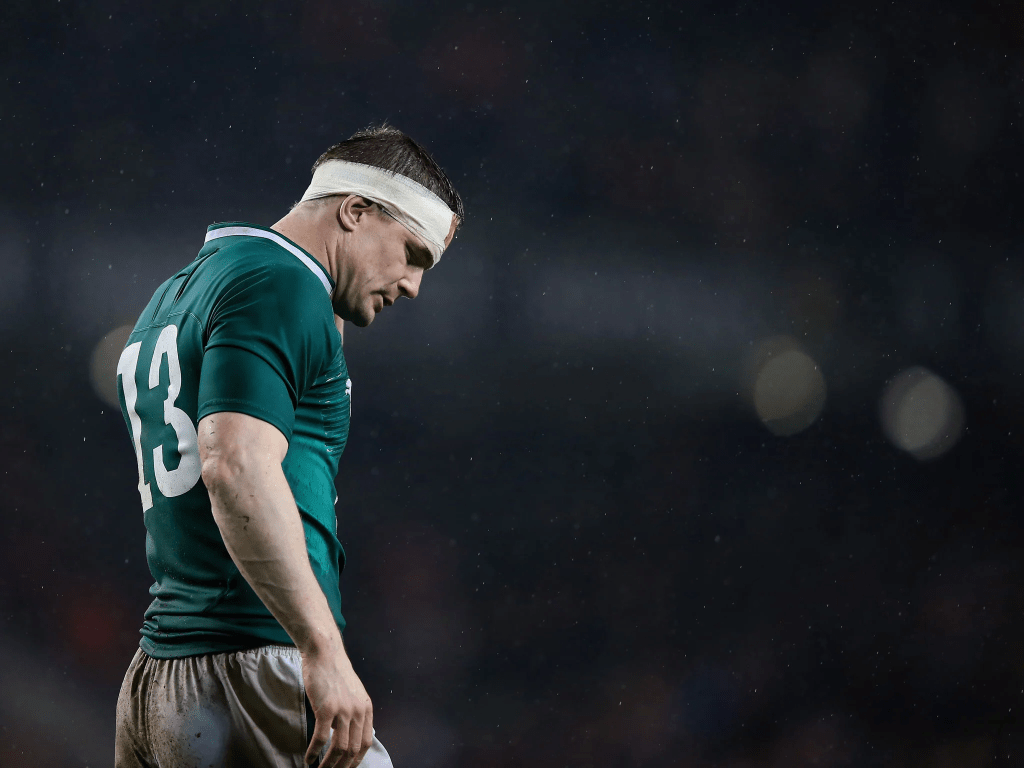
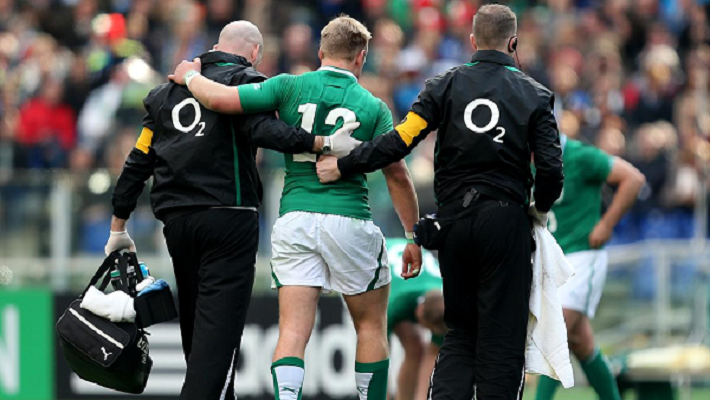
Italy was posing a challenge for Ireland in this first half, leading to frustration from the men in green. After Paddy Jackson missed a penalty that would have tied the match at 6-6, this frustration would result in a moment of madness from the player you would least expect around the half-hour mark. On the Italian 10-metre line, Ireland would run a switch play, with Paddy Jackson passing the ball to Jamie Heaslip before wrapping around him to receive the ball back. The phase would end with replacement centre Ian Madigan taking the ball into contact. Madigan’s centre partner Brian O’Driscoll would attempt to enter the ruck before being knocked away by an Italian defender. Getting to his feet, O’Driscoll would spot an Italian flanker Simone Favaro trapped in the bottom of the ruck and stamp on his abdomen quickly enough that those watching on TV would wonder whether they had seen what they had just witnessed. At first, Wayne Barnes wouldn’t notice, awarding a penalty to Ireland for the Italians (including Favaro) not rolling away. However, the touch judge on the nearby touch-line would bring the stamp to his attention. Based on the recommendation of his touch judge, Wayne Barnes would issue Brian O’Driscoll a yellow card. In his final Ireland cap, Brian O’Driscoll would be spending 10 minutes of it in the sin bin. For a man known for his class and composure, such a rash challenge was unexpected for a player like Brian O’Driscoll.
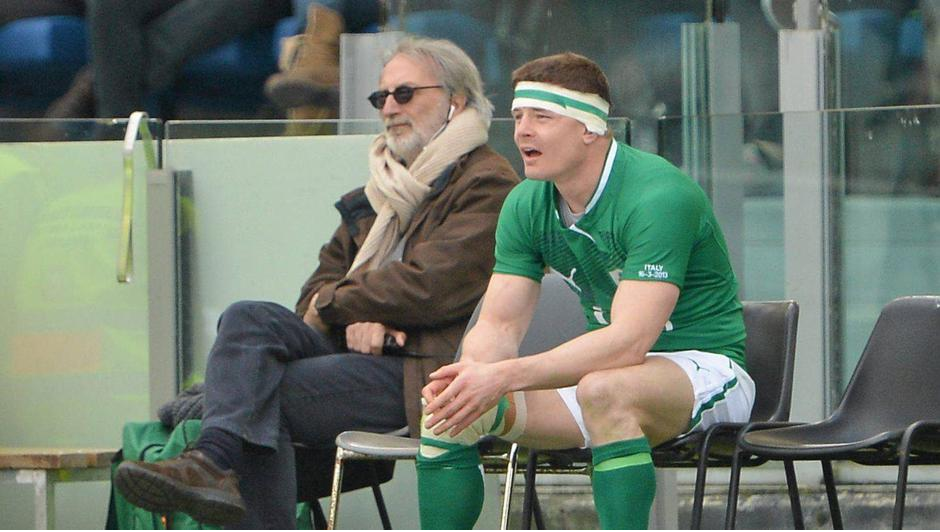
While Brian Driscoll watched from the sidelines, Italy would extend their lead. The Azzurri would earn a penalty from an attacking scrum inside the Ireland half. Instead of kicking to the corner, Sergio Parisse would aim for the posts. Considering the near 50-metre range, kicking duties for this penalty kick would go not to Lucian Orquera but to centre Gonzalo Garcia. Stepping up to the tee, Garcia would hit a powerful effort that appeared to be drifting wide before sneaking back inside the posts. Five minutes before half-time, Italy led 9-3. However, Ireland would halve Italy’s lead just before the break. With O’Driscoll returning to the field, Italy would be penalised at the breakdown, and Paddy Jackson would nail the kick to send the two teams into half-time with Italy narrowly leading 9-6.
It was a first half that Italy had bested, both on the scoreboard and in general play. For those who had expected a routine win for Ireland, they were now chewing their fingernails at Italy were threatening to cause an upset here. Ireland’s injury woes, which had beset the squad throughout the championship, had even haunted them in this first half, with coach Declan Kidney being forced into three early changes. Wing Keith Earls was replaced by Luke Fitzgerald in the 24th minute. Inside-centre Luke Marshall would be forced off three minutes later, with replacement fly-half Ian Madigan filling his spot alongside Brian O’Driscoll. To further compound matters, Luke Fitzgerald’s game would last 12 minutes before he would leave the field with an injury. With only an uncapped scrum-half among his back replacements, Declan Kidney would instead bring on replacement flanker Iain Henderson for the winger, with starting blindside flanker Peter O’Mahony spending the rest of this match as an emergency back.
HT: Italy 9 Ireland 6
Second Half
Italy would begin the second half as impressively as they had performed in the first. In the 48th minute, Jacques Brunel’s side would finally assert their dominance with a try. Reaching Ireland’s five-metre line, hooker Leonardo Ghiraldini and right winger Giovanbattista Venditti would carry well to edge the team closer to the try-line. Italy would receive a penalty advantage from Wayne Barnes, giving them a free play with the ball. After scrum-half Edoardo Gori had been stopped inches short, Venditti would carry again, forcing himself over the line to score the try. Luciano Orquera would convert, and Italy led 16-6 early in the second half.
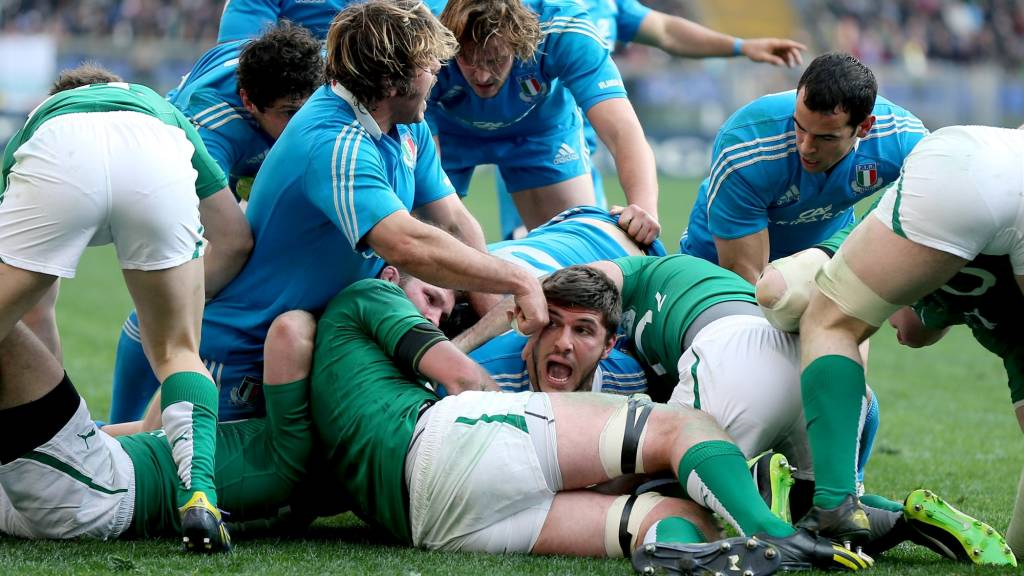
However, Italy’s most influential player would soon find himself on the wrong side of Wayne Barnes. Ireland had started to attack with increased urgency and was beginning to make ground inside the Italian half. During one phase, Ian Madigan would go past Sergio Parisse, and the Italian captain would leave his right leg out there for the replacement to fall over. Barnes was in the correct position to see it and would immediately send the No.8 to the sin bin. With Italy now without their captain for the next 10 minutes, Paddy Jackson would land the penalty kick right in front of the posts to reduce the score to 16-9 in the 53rd minute. Another Italian infringement five minutes later, Jackson would add three more points to his tally to reduce the gap to Italy to four points.
During Parisse’s sin-bin period, Jacques Brunel would change his forward pack, replacing Josh Furno for Francesco Minto at lock and Paul Derbyshire for Simone Favaro at openside flanker. Around this point, Ireland was starting to utilise the man advantage to cause Italy all sorts of defensive problems. Even once Parisse was back on the field, Ireland was still in the ascendancy. Ireland would launch an impressive 20-phase attack that would bring them within metres of the Italian try-line. Peter O’Mahony would break the gain line, and four Italian players would eventually bring him down two metres short. One of those tacklers, lock Quintin Geldenhuys, would get to his feet quickly, only for prop Cian Healy to run directly into him. Geldenhuys was in an offside position when he tackled Healy, causing the awarding of another Ireland penalty close to the posts. Jackson would do the honours, and his three penalty kicks in 11 minutes had brought Ireland to within one point of Italy at 16-15 with 17 minutes left to play. This game was in the balance.
The next few minutes would be dominated by substitutions as both coaches tried to find the formula to give them the edge in this final quarter. Jacques Brunel would take off lock Quintin Geldenhuys and fullback Andrea Masi for Antonio Pavanello and Tommaso Benvenuti. In an emotional moment, the 64th minute would see prop Andrea Lo Cicero come off for the final time in his Italy career. The 36-year-old, who had debuted in Italy’s first-ever Six Nations campaign in 2000, had announced he would retire after this match, regardless of this result. Earlier in the tournament, Lo Cicero had overtaken the great Alessandro Troncon to become Italy’s most-capped player. This match against Ireland was Lo Cicero’s 103rd international cap. As he walked off the field to be replaced by Michele Rizzo, the Italian fans would give a visibly emotional Lo Cicero a standing ovation as recognition of his service to the Italian side over the past 13 years.
Meanwhile, Declan Kidney, having already used up three changes in the first half, would use up his remaining forward replacements, bringing off his entire front row of Cian Healy, Rory Best and Mike Ross for David Kilcoyne, Seán Cronin and the debuting Stephen Archer in addition to swapping Mike McCarthy for Devin Toner in the second row.
At the end of this period, Italy would end Ireland’s run of scoring. Gonzalo Garcia would have another go at kicking from range but would miss his mark this time. Then in the 69th minute, Italy would run a set play off a line-out, with Edoardo Gori spreading the ball out to replacement flanker Francesco Minto. Minto would break a tackle before the Irish defence attempted to hold him up. Five Italian players would soon form a maul behind Minto, allowing him to gain further ground. The power generated by this quintet would force the tackler, Stephen Archer, to fall backwards and collapse the maul, leading to an Italian penalty. In addition, Ireland would again be reduced to 14 men after Wayne Barnes pulled out the yellow card for Donnacha Ryan after the lock hit Gori with a dangerous late tackle in that previous attack. From 40 metres out, Luciano Orquera would extend Italy’s lead to four points with less than 10 minutes remaining. However, Italy would enter this final 10 minutes with a man advantage.
As time decreased, this match became hard to watch for home fans inside the Stadio Olimpico as Italy clung to their four-point lead. However, Ireland could find no way to eat into this score, and those Italian fans could start to uncover their faces. If there was one moment which confirmed the inevitable, it was scrum-half Conor Murray becoming the third Ireland player to be sent to the sin bin for tripping an Italian player on the run in the 79th minute. With Donnacha Ryan set to return to the field after his time on the sidelines, Declan Kidney would replace the lock with another scrum-half, sending on Paul Marshall for the worst kind of international debut. With less than a minute remaining, an Italian maul inside Ireland’s 22 would finish with replacement hooker Davide Giazzon breaking off the front before being tackled by Ian Madigan. However, Madigan would flop over the top of the ruck, leaving no clear release for the ball, and Wayne Barnes would award the penalty right in front of the posts. Italian fans could now celebrate, regardless of whether Luciano Orquera converted this kick.
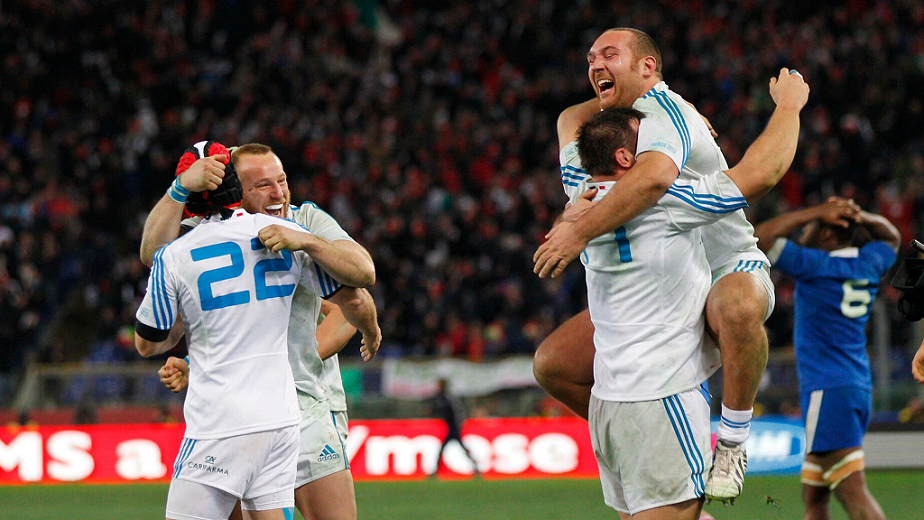
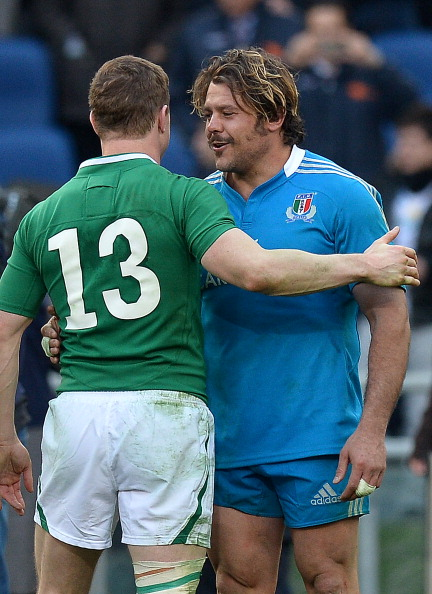
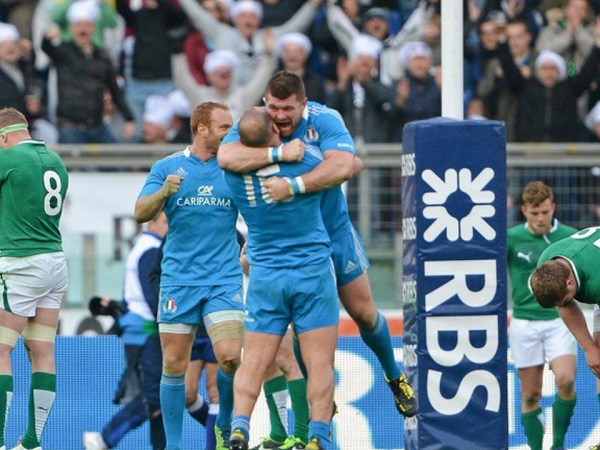
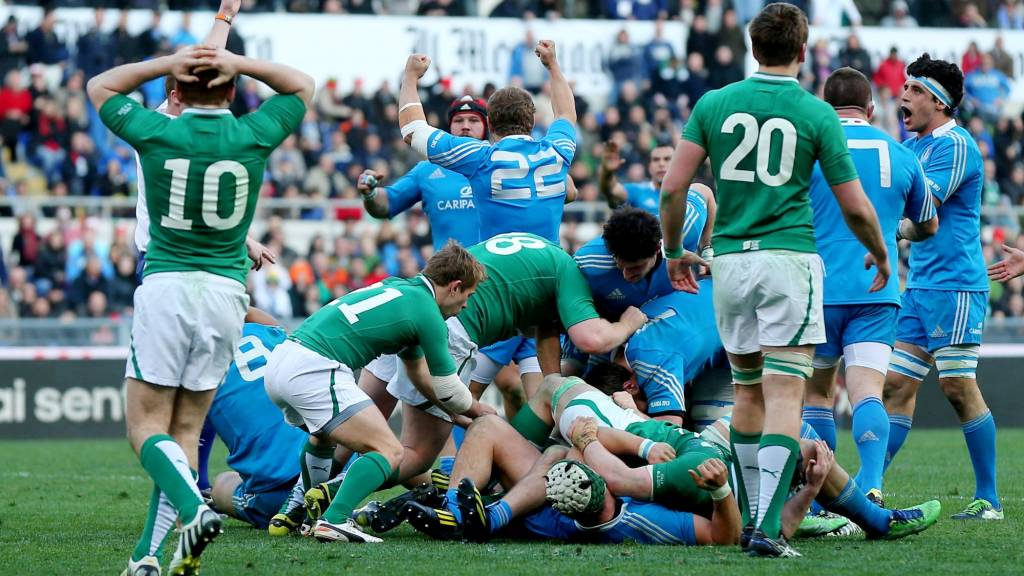
Orquera would nail the kick, Wayne Barnes would blow the final whistle, and the Stadio Olimpico would explode in celebration. Jacques Brunel, who had come down to the sidelines, would hold both fists aloft, having achieved the most significant win in Italian rugby history. Italy had beaten Ireland for the first time in their Six Nations tenure with a 22-15 victory. This result also marked Italy’s first win over Ireland in any context since 1997 and a first home victory since 1995.
FT: Italy 22 Ireland 15
The victory also meant that Italy finished a Six Nations campaign with two wins for just the second time, meaning the Azzurri equalled their best result in the competition with a 4th-placed finish. On the other side of the coin, this defeat to Italy meant that Ireland suffered their worst-ever Six Nations result and worst finish in any form of the Nations Championship since the 1998 Five Nations when they received the Wooden Spoon. The only thing that stopped Ireland from earning another Wooden Spoon was the sheer abysmal form of France under Philippe Saint-Andre. The Italy defeat would also drop Ireland to 9th in the IRB World Rankings, the lowest the country had ever been since the rankings were introduced in 2003.
Final 2013 Six Nations Championship Table
| Position | Team | Matches | Wins | Draws | Losses | Points For | Points Against | Points Difference | Points |
|---|---|---|---|---|---|---|---|---|---|
| 1 | Wales | 5 | 4 | 0 | 1 | 122 | 66 | +66 | 8 |
| 2 | England | 5 | 4 | 0 | 1 | 94 | 78 | +18 | 8 |
| 3 | Scotland | 5 | 2 | 0 | 3 | 98 | 107 | -9 | 4 |
| 4 | Italy | 5 | 2 | 0 | 3 | 75 | 111 | -36 | 4 |
| 5 | Ireland | 5 | 1 | 1 | 3 | 72 | 81 | -9 | 3 |
| 6 | France | 5 | 1 | 1 | 3 | 72 | 91 | -19 | 3 |
Aftermath
A month after this game, the Ireland Rugby Football Union (IRFU) announced that they would not be offering Declan Kidney a new contract when it was set to expire in June and that Kidney would be immediately leaving his position as the national team’s coach. Defence coach Les Kiss would take over as interim head coach for the team’s upcoming summer tour of North America. Kiss would take a less-experienced squad to the other side of the Atlantic Ocean for a tight 15-12 win over the USA and a more comfortable 40-14 victory over Canada. After this tour, Leinster coach Joe Schmidt would become the Ireland coach for the rest of the World Cup cycle. Eight months after losing to Italy in Rome, Ireland would lead New Zealand 19-0 at home and was seconds away from a first-ever victory over the All Blacks until they conceded an overtime try to heartbreakingly lose the match 24-22.
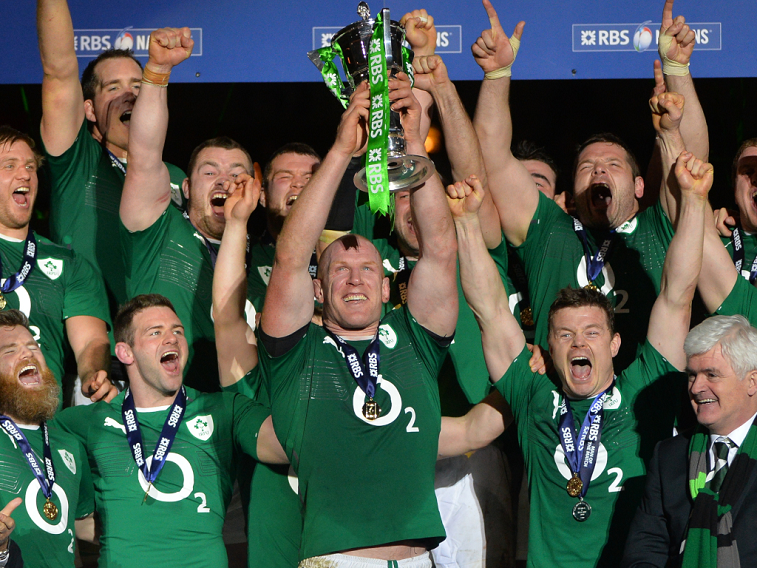
The year after their worst-ever Six Nations performance, Ireland would win the first of two consecutive Six Nations Championships, finishing top of the standings after four wins from five matches. One of these victories came against Italy in Dublin on 8th March 2014. A stark contrast from a year earlier, Ireland would blow away Italy 46-7, scoring seven tries to Italy’s one. Starting this match would be Brian O’Driscoll, who had decided not to end his Ireland career following his sin-binning in Rome the previous year. Instead, the great man had decided to end his international career on a more positive note, and it would. Brian O’Driscoll would end his Ireland career after Ireland’s championship-clinching 22-20 win over France in Paris, ending with a world record 141 international caps (and a record 133 caps for Ireland) and a second Six Nations Championship medal.
Following their historic first victory over Ireland and 4th-placed finish in the 2013 Six Nations, Italy would go on a horrific run of form over the next two years. In the summer tour following the Six Nations, Italy would lose all three matches, comfortably to South Africa (10-44) and Samoa (10-39) and narrowly to Scotland (29-30). Italy would then finish the year with a competitive 37-31 win over Fiji, either side of defeats to Australia (20-50) and Argentina (14-19). As the 2014 Six Nations began, Italy had lost all the momentum it had gained from the previous year. The Azzurri would lose all five matches in the 2014 tournament, finishing bottom of the table and winning the Wooden Spoon for the first time since 2011. Among these five losses were home defeats to Scotland (20-21) and England (11-52). Since the team’s victory over Ireland on that fateful day in 2013, Italy has not won another home match in the Six Nations, a record now extending to 25 games without a win as of March 2023.
Italy’s win over Ireland in the 2013 Six Nations came at a fascinating point in both teams’ development. The current Italian generation led by Sergio Parisse, Martin Castrogiovanni, Andrea Masi and Gonzalo Canale would reach their peak in this championship before quickly falling into decline as the team aged and newer players failed to reach that same talent level. Two years after this victory, Italy would begin their seven-year Six Nations losing streak, leading many critics to question their place in the competition. In 2013, Ireland’s loss to Italy would signal the team hitting ‘rock bottom’. The side had been slowly declining under Declan Kidney since the iconic Grand Slam victory in 2009, and the team’s performance in the 2013 Six Nations showed the IRFU needed a change. The changes they would make would send Ireland down the path that would eventually lead to Six Nations Championships in 2014 and 2015, a first-time-ever victory over New Zealand in 2016, a Six Nations Grand Slam in 2018, reaching World No.1 in 2019, becoming the first time to win a series in New Zealand in 2022 and eventually becoming the unbeatable No.1 team in world rugby. You can trace all of Ireland’s success over the past decade back to a 22-15 loss to Italy inside the Stadio Olimpico in the 2013 Six Nations Championship. Andy Farrell certainly has a lot to thank Giovanbattista Venditti for.
 the-score-board.co.uk