
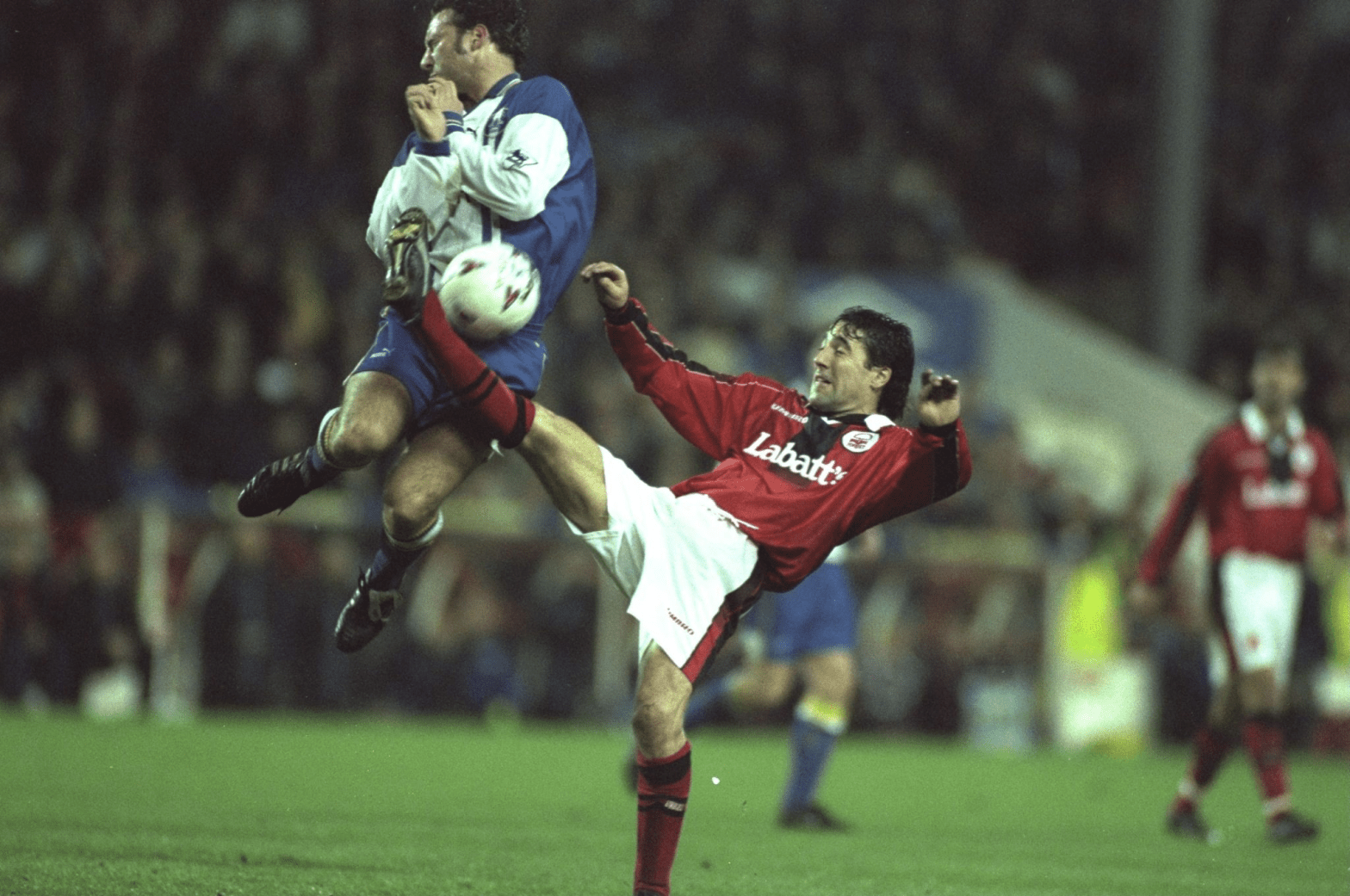
1996/97: The Fall
Manager: Frank Clark, Stuart Pearce (player-manager), Dave Bassett
Top Scorer: Kevin Campbell, Alf-Inge Håland (6)
Premier League: 20th (relegated)
FA Cup: 5th round
League Cup: 3rd round
League record: 6 wins, 16 draws, 16 defeats, 31 goals scored, 59 goals conceded
Transfers: £-7.825 million
Transfers in: £8.5 million
| Date | Player | From | Fee |
|---|---|---|---|
| 3rd July | Chris Allen | Oxford United | £500,000 |
| 16th July | Dean Saunders | Galatasaray | £1.5 million |
| 26th July | Nikola Jerkan | Real Oviedo | £1 million |
| 20th December | Nigel Clough | Manchester City | Four-month loan |
| 10th March | Pierre van Hooijdonk | Celtic | £4.5 million |
| 15th March | Ian Thomas-Moore | Tranmere Rovers | £1 million |
| 21st March | Brian O’Neil | Celtic | Three-month loan |
Transfers out: £675,000
| Date | Player | To | Fee |
|---|---|---|---|
| 16th July | Kingsley Black | Grimsby Town | £25,000 |
| 16th August | Neil Webb | Grimsby Town | Free |
| 22nd August | Darren Watkins | Berwick Rangers | Undisclosed |
| 1st October | Andrea Silenzi | Venezia | Season-long loan |
| 18th October | Craig Armstrong | Grimsby Town | Two-month loan |
| 17th January | Bobby Howe | Ipswich Town | One-month loan |
| 24th January | Craig Armstrong | Watford | Four-month loan |
| 6th February | Jason Lee | Charlton Athletic | One-month loan |
| 4th March | Tommy Wright | Manchester City | £450,000 |
| 27th March | Jason Lee | Grimsby Town | Two-month loan |
| 9th May | Justin Walker | Scunthorpe United | Undisclosed |
Pre-season
After being the Premiership’s most consistently inconsistent team the previous season (15 wins, 13 draws, 10 losses) and missing out on UEFA Cup qualification by five points, Frank Clark would try to keep the core of his Nottingham Forest squad while adding some new names that could hopefully push the team up the standings.
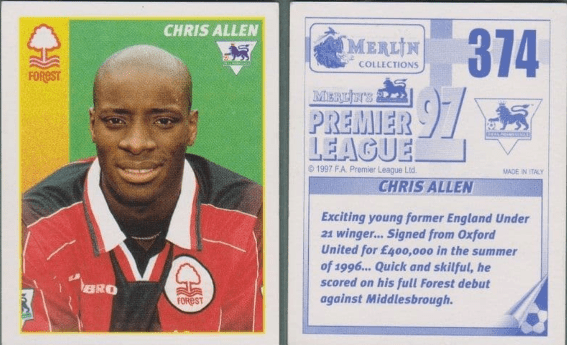
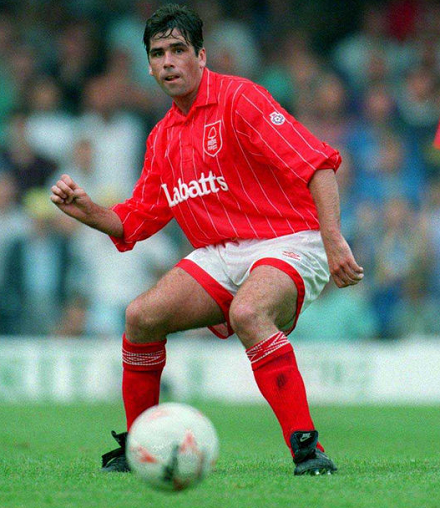
To start with, Clark would begin his transfer business for the season by turning a loan deal into a permanent deal. On 3rd July 1996, young midfielder Chris Allen signed for Forest from Oxford United for £400,000. Allen had joined in February 1996 on a three-month-loan, and the left winger had done enough in his three appearances for the Reds for Frank Clark to sign him permanently.
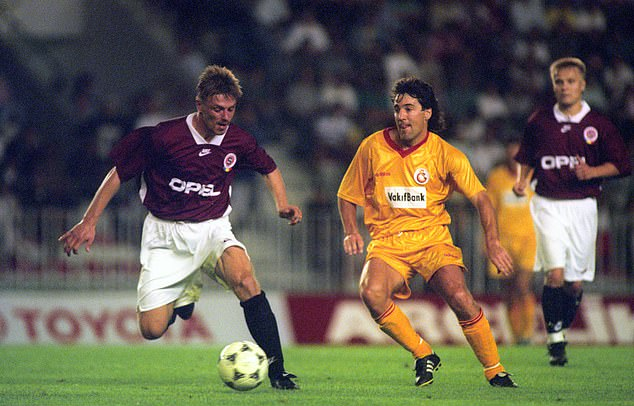
After popping the cork with Chris Allen, Nottingham Forest’s transfer business would soon begin flowing, with three players moving in and out of the City Ground. On 16th July, one player would arrive in Nottingham while another would take his leave. Firstly, Frank Clark would improve the profile of his attacking players by signing Wales international striker Dean Saunders from Turkish giants Galatasaray for £1.5 million. After leaving Aston Villa to jump to Turkey the previous summer, Saunders had impressed for Graeme Souness’s side, scoring 21 goals in 30 appearances across all competitions and winning the Turkish Cup for his efforts. However, after none of Nottingham Forest’s strikers had failed to breach double figures for goals the previous season, Frank Clark wanted an experienced top-flight goalscorer to aid his line, with the 32-year-old Saunders bringing with him a record of 90 goals in 290 top-flight appearances for Liverpool, Aston Villa, Derby County and Oxford United.
Midfielder Kingsley Black would end his five-year spell at the City Ground on the same day. Black was signed by Brian Clough from Luton Town in September 1991. The Northern Irishman would become a regular part of the Nottingham Forest midfield over the next three years, even starting the 1992 League Cup Final loss to Manchester United. When the Reds suffered relegation to the First Division, Black would make 35 appearances as the team immediately achieved promotion back to the top light. However, once the Reds were back in the Premiership, Kingsley Black would find his minutes limited, with Frank Clark favouring David Phillips and Lars Bohinen in his position. Instead, Black would be loaned out to Millwall and Sheffield United before returning to the Forest bench. Now aged 29, Black wanted first-team football. First Division side Grimsby Town would offer him that, and the Northern Irishman would leave Nottingham Forest for £25,000 after 125 matches and 20 goals.
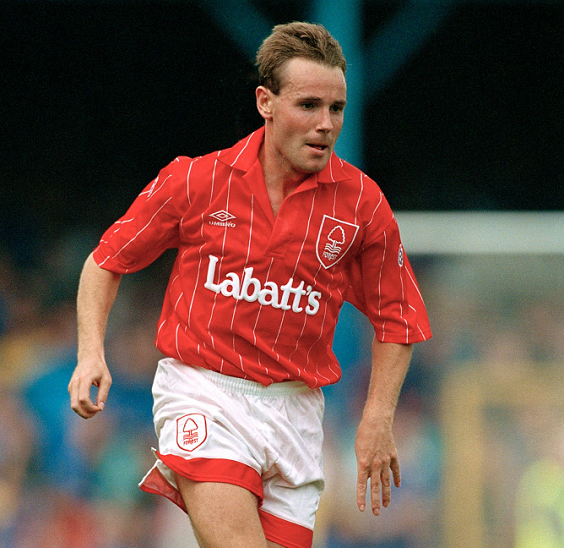
With Nottingham Forest’s squad containing three players of non-British nationality (1 Dutchman, one Norwegian, one Italian), Frank Clark would add some more international flavour to his team and his defence with the signing of Croatian centre-back Nikola Jerkan on 26th July. Jerkan had recently represented his country at Euro 1996, starting on the left side of a three-man defence as the former Yugoslav state made the quarter-finals of their tournament debut. Jerkan had spent the past six years plying his trade for Real Oviedo in La Liga. In that time, he had racked up over 200 appearances in central defence and had become regarded as one of the best defenders in Spain. In his first season, he helped Oviedo qualify for European football for the first time in its history, with a 6th-place finish in La Liga. Jerkan’s recent experiences with Real Oviedo and Croatia made him seem a shrewd summer signing for Nottingham Forest, providing decent competition for the club’s established defence. Nikola Jerkan would turn out to be the final player signed by Nottingham Forest during pre-season. However, the club’s transfer business was not complete.
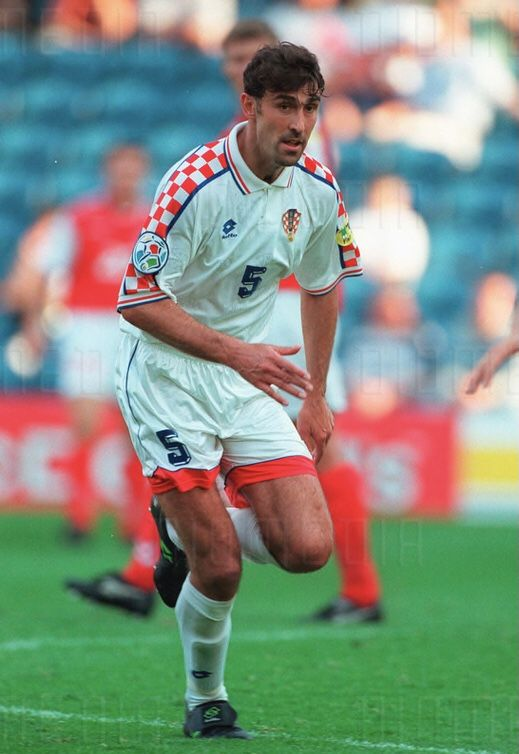
The day before Nottingham Forest kicked off the 1996-97 season, the club would allow Neil Webb to follow his teammate Kingsley Black to First Division Grimsby Town. It was fair to say that the midfielder’s second four-year spell at Forest (44 matches, 6 goals) had not been as successful as his first between 1985 and 1989 (186 games, 57 goals), which saw him win the League Cup and be selected for the England squad at the 1988 European Championships. After re-signing for Brian Clough and the Reds in November 1992 after four fruitful years with Manchester United, Neil Webb would feature nine times as Forest was relegated from the Premiership. With Brian Clough’s retirement and Frank Clark’s arrival, Webb would feature prominently during Forest’s successful promotion campaign back to the top flight in the 1993-94 season, making 21 appearances in the league. However, Webb had not played a single game for Nottingham Forest since that 1993-94 season. He had instead spent time on loan with First Division Swindon Town and, weirdly, Hong Kong team Instant-Dict. However, when Neil Webb left Nottingham Forest on 16th August 1994, many a Reds fan would have been forgiven for forgetting he had remained under contract for the previous two seasons.
August
Nottingham Forest would start their 1996-97 season with a match against Coventry City, who had avoided Premiership relegation on goal difference the previous campaign. For the third year in a row, Nottingham Forest would open a league campaign with an away victory. Following wins over Ipswich Town (1-0) and Southampton (4-3) the previous two years, Forest would begin this new season with a 3-0 win at Highfield Road. In a match that saw Nikola Jerkan and Dean Saunders make their Nottingham Forest debuts, the day would belong to Kevin Campbell, who would provide all three goals in his first hat-trick in Forest colours and his third Premiership hat-trick in total. The first would come in the 13th minute, as Campbell would receive Colin Cooper’s long pass forward and play a one-two with Dean Saunders before flicking the ball over an advancing Steve Ogrizovic. Saunders and Campbell would combine again before half-time, with the Welshman pouncing on a loose pass and sending a first-time diagonal ball across to Campbell, who would fire home his second before being tackled by a Coventry defender. Campbell would then complete his treble two minutes after half-time, collecting a Paul McGregor’s knockdown on his knee before using his following two touches to flick the ball past two defenders before side-footing the ball into the bottom-right corner.
The 3-0 win over Coventry would see Nottingham Forest end the first weekend of the new season at the top of the Carling Premiership standings.
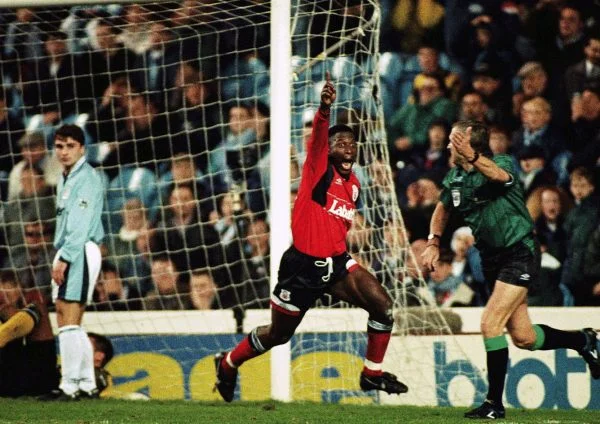
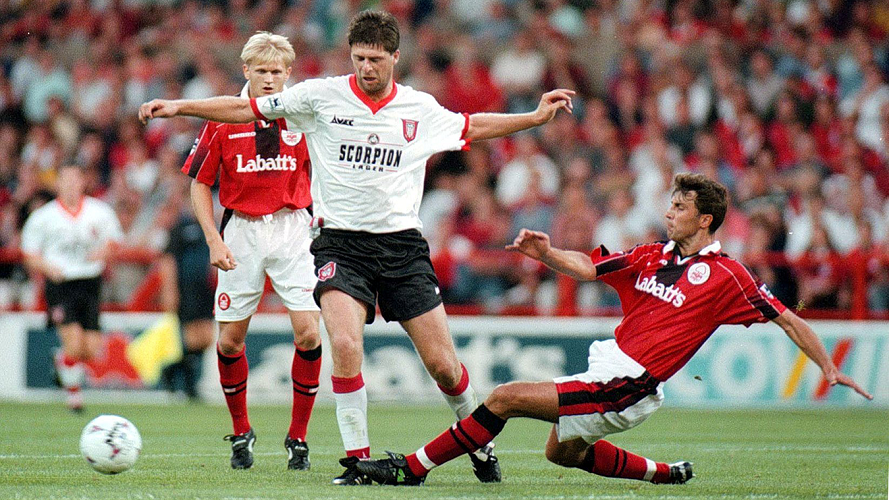
After a performance like that, very few spectators would have expected anything other than a home win when Nottingham Forest invited newly-promoted Sunderland to the City Ground on 21st August. Sunderland had been promoted as First Division champions the previous year and had invested heavily in their squad, including signing Niall Quinn from Manchester City for £1.3 million. Quinn would score his first goals for the Black Cats at the City Ground as Sunderland would shock Nottingham Forest in front of their own fans. Peter Reid’s side would win 4-1, with all five goals coming in the first 45 minutes.
Eight minutes in, Ian Woan’s pass was picked off in midfield, and the resulting Sunderland attack would finish with defender Michael Gray scoring Sunderland’s first Premiership goal with a shot that swerved inside the far post from 25 yards. Nine minutes later, Steve Chettle would fail to divert a Michael Gray pass over the top, and a combination of midfielder Kevin Ball and Forest keeper Mark Crossley would knock the ball back to Niall Quinn, who would shift his body for the ball to deflect off him and into the net for his first Sunderland goal. Alf-Inge Haaland would seemingly calm things down in the 27th minute, heading in the rebound after Stuart Pearce’s long-range effort bounced off the crossbar. However, Quinn would re-establish Sunderland’s two-goal advantage just four minutes later with his second of the game. Then, two minutes before half-time, Richard Ord would head home a corner to score a remarkable fourth for the Black Cats and stun the home crowd at the City Ground.
After the break, Nottingham Forest would manage to stop Sunderland from scoring any more goals, but the damage had already been done. Forest had conceded four goals in the first half, which would see the Black Cats walk away with a shocking three points.
After such a shock, Nottingham Forest would end August with a 1-1 draw against Middlesbrough. Boro’s new Brazilian midfielder Juninho would put the visitors ahead just after half-time. However, Stuart Pearce’s first goal of the season would ensure the points were shared, and Forest avoided suffering back-to-back losses.
Nottingham Forest had run the gamut of results in their first three matches of the new Premiership season. A great 3-0 away win to start things off, followed by a surprising and heavy defeat to Sunderland and finally a more settled draw with another promoted team. One each of a win, draw, and loss would put Frank Clark’s team 10th in the early Premiership standings. With 5 goals scored and 5 conceded across the three games, Forest would end the first month of the new season with a goal difference of zero.
| Position | Team | Played | Wins | Draws | Losses | GF | GA | GD | Points |
|---|---|---|---|---|---|---|---|---|---|
| 8th | Everton | 3 | 1 | 2 | 0 | 4 | 2 | 2 | 5 |
| 9th | Tottenham | 3 | 1 | 2 | 0 | 3 | 1 | 2 | 5 |
| 10th | Nottingham Forest | 3 | 1 | 1 | 1 | 5 | 5 | 0 | 4 |
| 11th | Leeds United | 3 | 1 | 1 | 1 | 4 | 5 | -1 | 4 |
| 12th | West Ham | 3 | 1 | 1 | 1 | 3 | 4 | -1 | 4 |
September
Nottingham Forest would begin September 1996 with two draws in four days. The first came away at Southampton on 4th September. Forest would have a great start at The Dell, with two goals inside the first 25 minutes. Kevin Campbell would put the visitors ahead inside three minutes, and Dean Saunders would double his new team’s lead with his first Nottingham Forest goal in the 23rd minute. However, after carrying a two-goal lead into half-time, Forest had lost it by the final whistle. Richard Dryden’s header would halve the visitors’ advantage, and Matt Le Tissier’s 89th-minute equaliser would cost Nottingham Forest their second away win of the season.
Three days later, Nottingham Forest would host newly-promoted Leicester City at the City Ground for the first Midlands derby of the season. However, those expecting an exciting game would be disappointed, as the match would end in a goalless draw, Forest’s third tie in as many matches.
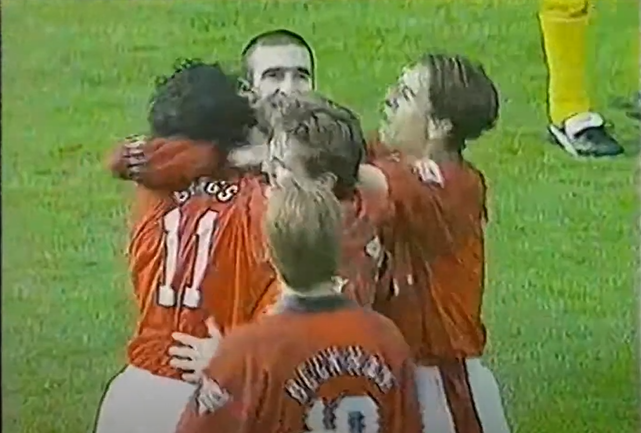
On 14th September, Nottingham Forest would end their run of three consecutive draws. They would do this by suffering their second 4-1 defeat of the season at the hands of reigning Premiership champions Manchester United. Four minutes in, Forest, dressed in their yellow away kit, would take the lead through Alf-Inge Haaland stroking home Jason Lee’s sideways pass. However, after that, it was all United. This match would mark the first Premiership start of Manchester’s summer signing Ole Gunnar Solskjaer. In the 22nd minute, the Norwegian striker would equalise for his new club, capitalising on Stuart Pearce’s failed clearance to score his second goal for the Red Devils. Ryan Giggs would then ensure that Alex Ferguson’s men entered the break ahead by heading in Karel Poborsky’s cross at the far post. In the second half, Nottingham Forest would have their chances to draw level, with Ian Woan forcing a save from Peter Schmeichel with a shot from range. The visitors would even get the ball into the Manchester United net, but Dean Saunders’s goal would be ruled out for offside. Then, a late masterclass from Eric Cantona would give United the victory. First, Ryan Giggs would play a free-kick sideways to Cantona, and the United captain would send a daisy-cutter past Mark Crossley. Then, in the 90th minute, a Cantona penalty would continue the champions’ unbeaten start to the season. The 4-1 victory would send Manchester United to the top of the Premiership table, while Nottingham Forest would drop to 14th.
After some rough recent results in the Premiership, the League Cup would offer a well-timed midweek break for Frank Clark’s team. Nottingham Forest would enter the competition in the two-legged second round, drawn against Second Division Wycombe Wanderers. In the days before managers fielded weaker teams against lower-league sides, Frank Clark would send a full-strength starting XI out in front of a paltry 6,482 spectators at the City Ground. Those spectators watching would see Forest earn a narrow 1-0 win against third-tier opponents, with Bryan Roy scoring the winner three minutes after half-time. Considering that the second leg was away from home, 1-0 was a dangerous lead for Forest to carry to Wycombe the following week, especially if they wanted to avoid a potential upset.
Before they travelled to Wycombe, Nottingham Forest would return to Premiership action with a 2-0 home defeat to West Ham. Like Forest, West Ham entered the match with one league win to their name thus far. However, Harry Redknapp’s team would end the day doubling their victory tally. Mark Bowen would break the deadlock in first-half stoppage time, nodding in at the back stick after Stan Lazaridis’s cross had evaded everyone. Then, in the 52nd minute, West Ham would find themselves down a man after Marc Rieper received a second yellow card for dragging back Bryan Roy. However, despite the man disadvantage, it was 10-man West Ham who took advantage two minutes later, counter-attacking from the free-kick Forest earned from Rieper’s red card, ending with Michael Hughes blasting the ball into the back of Mark Crossley’s net. West Ham would move above Nottingham Forest with a 2-0 win, but Frank Clark’s team was now without a win in five league matches.
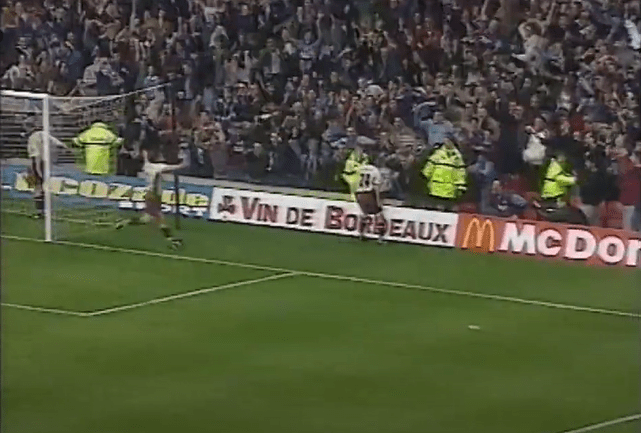
After that disappointment, Nottingham Forest would travel down to Wycombe for their League Cup second leg to get some joy out of a difficult month. The Reds would manage to prevail over their lower-league hosts, but it would require extra time to get the job done. Wanderers centre-back Paul McCarthy would force the extra 30 additional minutes with a well-taken finish in the 38th minute. However, despite an amped-up crowd at Adamd Park urging their team on, Jason Lee would break Chairboys’ hearts with the winning goal in the 102nd minute of play. Frank Clark’s team had progressed to the League Cup 3rd round with a 2-1 aggregate win but had made hard work of this tie. The Reds would not be afforded the same leeway by West Ham United when the two teams met in the 3rd round in late October.
To end the month, Nottingham Forest would again require the services of Jason Lee to get the team out of trouble against Chelsea. Chelsea’s Italian striker Gianluca Vialli had put the hosts in front with his 3rd goal of the season six minutes after the break. However, in stoppage time, Lee would pop up with a strike into the bottom corner to stop Forest from suffering a third consecutive Premiership defeat.
September had been a rough month for Nottingham Forest fans. The team had failed to win any of its five league matches, earning three draws and suffering two losses, including a heavy one against Manchester United. The only positive to come from this month had been in the League Cup, but even there, Forest had sometimes struggled against second Division Wycombe. After ending the first weekend top of the Premiership standings, Forest had dropped to 16th place one month later after one win from their first eight matches. The team’s difficult start left them three points above the relegation zone. If results did not turn around soon, that’s where the team would quickly end up.
| Position | Team | Played | Wins | Draws | Losses | GF | GA | GD | Points |
|---|---|---|---|---|---|---|---|---|---|
| 14th | Tottenham | 8 | 2 | 2 | 4 | 6 | 8 | -2 | 8 |
| 15th | West Ham | 8 | 2 | 2 | 4 | 7 | 12 | -5 | 8 |
| 16th | Nottingham Forest | 8 | 1 | 4 | 3 | 9 | 14 | -5 | 7 |
| 17th | Leeds United | 8 | 2 | 1 | 5 | 6 | 13 | -7 | 7 |
| 18th | Southampton | 8 | 1 | 2 | 5 | 10 | 12 | -2 | 5 |
October
October would start with Frank Clark loaning Andrea Silenzi to Italian Serie B club Venezia. Despite the hype surrounding his signing, the Premiership’s first Italian signing had failed to deliver, scoring 2 goals in 20 appearances. Neither of these goals had come in the league, and Silenzi had quickly found himself on the substitutes’ bench after some underwhelming performances. This season, Silenzi had been confined to two appearances as a sub in Forest’s recent League Cup outings with Wycombe. It is fair to say that Nottingham Forest fans would not be mourning his loss for the rest of this campaign.
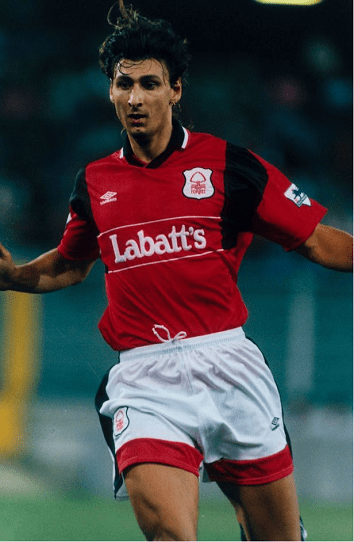
October would begin with an international break. If Nottingham Forest fans hoped that two weeks off would benefit their struggling team, they would quickly be proven wrong. Returning to action on 12th October, the Reds would lose 2-0 to the team directly below them in the Premiership table, Leeds United. Rod Wallace’s first two goals of the season would do the trick for Howard Wilkinson’s side. The best chances of a goalless first half would be Jason Lee’s back-post header being kept out at close range by Nigel Martyn and Lee Sharpe’s free-kick drifting wide to the right at the other end. However, less than a minute into the second half, Wallace would run onto a knockdown in the Nottingham Forest penalty area and drill the ball past Mark Crossley. Forest would almost equalise through Ian Woan, but the winger’s shot would roll agonisingly wide of the far post with Nigel Martyn beaten. However, in the 89th minute, Wallace would score his second, turning inside Mark Crossley and firing the ball into an empty net. Nottingham Forest was now winless in their last eight Premiership matches since that opening-day victory over Coventry City.
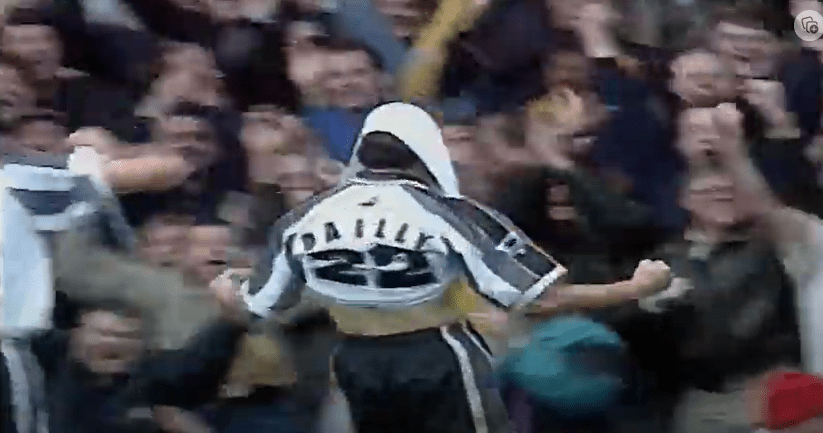
One week later, Nottingham Forest would play their second home East Midlands derby of the season against Derby County. However, like the earlier encounter against Leicester City, the ‘Brian Clough derby’ would end without a winner. Dean Saunders would get the home side off to an incredible start by scoring after two minutes. A Scot Gemmill tackle would simultaneously stop an early Derby attack and launch a Nottingham Forest counter-attack. Chris Bart-Williams would pass the ball forward to Ian Woan, and the midfielder would play a one-two with Dean Saunders before hitting the ball out to Stuart Pearce on the flank. Pearce would centre the ball for Saunders, who would knock the ball past Russell Hoult for his second goal of the season. In the 57th minute, Derby would equalise through Christian Dailly. Ron Willems’ header would knock the ball back to his strike partner Ashley Ward. Steve Chettle would stick a leg in but only move the ball over to Dailly to stroke the ball into the bottom corner. After equalising, Derby would have several chances to take the lead through Willems and Ward, but aside from hitting the post and forcing Mark Crossley, couldn’t stop this derby from ending in a tie. While Nottingham Forest had avoided defeat against their regional rivals, the draw would send them into the Premiership’s relegation zone.
Forest’s attentions would now turn to the League Cup and a 3rd-round match with West Ham. The Hammers had won the league match a month earlier. Could Forest get their win back in the cup? The answer is No. A big, fat No. In fact, Nottingham Forest would suffer its third 4-1 defeat of the season in just the thirteenth match they’d played.
In the 16th minute, the front two of Hugo Porfirio and Iain Dowie would combine effectively, with the former setting up the latter to put West Ham one up after 16 minutes. Forest would equalise from a free kick in the 29th minute. David Phillips would send a disguised pass to Bryan Roy, whose touch would lead to Dean Saunders sending a shot-turned-cross across the goal for Colin Cooper to head in. After half-time, Ian Bishop would intercept Scot Gemmill’s attempted flick pass, and Porfirio would slide a ball into Dowie to score his second of the night. Around 10 minutes later, Porfirio would get a goal of his own, receiving the ball on the edge of the box and playing a delightful one-two with Dowie (with Dowie hitting a backheel) before finishing with aplomb to make it 3-1. Then, in the 73rd minute, West Ham received a penalty when Alf-Inge Haaland impeded Stan Lazaridis. The ever-reliable Julian Dicks would send Mark Crossley the wrong way for the Hammers’ fourth to confirm West Ham’s place in the League Cup 4th round and complete another miserable night for Nottingham Forest.
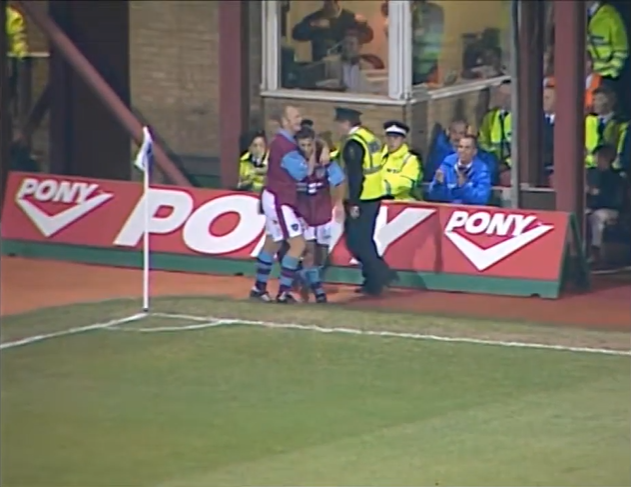
After living through another nightmare, it would take five minutes for Everton to defeat Nottingham Forest on 28th October. Craig Short would head Andy Hinchcliffe’s corner past Mark Crossley, and Frank Clark’s team were now winless in 10 league matches.
October had been a nightmare month for Nottingham Forest. A winless month which had brought nothing to cheer in either the league or the cup. The Reds found themselves out of the League Cup and in the Premiership relegation zone after 1 win from 11 games. The team wasn’t struggling to score goals, netting 10 in 11 so far, but crucially, they weren’t keeping them out at the other end. November would be a crucial month for Nottingham Forest if the club didn’t want this season to become a hard slog.
| Position | Team | Played | Wins | Draws | Losses | GF | GA | GD | Points |
|---|---|---|---|---|---|---|---|---|---|
| 16th | Derby County | 11 | 2 | 5 | 4 | 10 | 14 | -4 | 11 |
| 17th | Leeds United | 11 | 3 | 1 | 6 | 8 | 18 | -10 | 10 |
| 18th | Nottingham Forest | 11 | 1 | 5 | 5 | 10 | 18 | -8 | 8 |
| 19th | Coventry City | 11 | 1 | 5 | 5 | 4 | 14 | -10 | 8 |
| 20th | Blackburn Rovers | 11 | 0 | 4 | 7 | 7 | 16 | -9 | 4 |
November
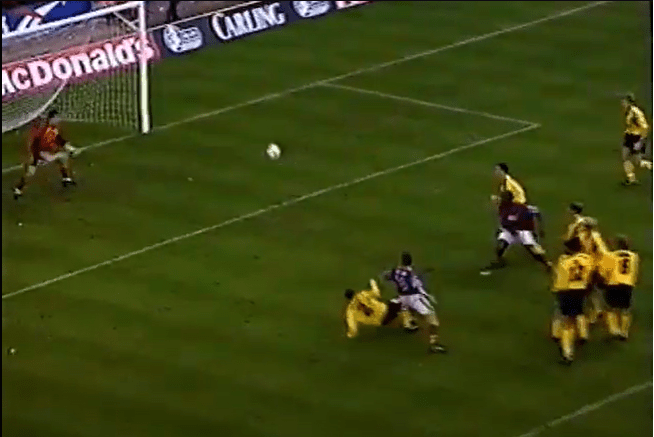
November would begin the way that October had finished, with a defeat. On the 2nd, the past would come back to haunt Frank Clark in a 2-0 loss to Aston Villa. Forest would start the game well, with Jason Lee twice having chances to get an early score, only to be denied by the Villa defence. After Dwight Yorke somehow managed to miss the goal from three yards, Aston Villa would take the lead after 20 minutes through a former Nottingham Forest player. After the Forest wall did its job to block a Yorke free kick, the ball fell to Carl Tiler, who would hit a first-time shot past Mark Crossley to score his first Aston Villa goal. In the second half, Jason Lee would again be denied by a valiant effort from Villa defender Fernando Nelson at one end, while Andy Townsend’s dipping half-volley required Mark Crossley to tip the ball over the bar at the other end. In the 65th minute, though, Dwight Yorke would get his goal. Mark Crossley would make a hash of collecting a corner, and Yorke would hit a low bicycle kick past three Forest defenders into the net to seal the game for Villa.
After another international break, Nottingham Forest would fall to another 2-0 defeat, this time at the hands of Sheffield Wednesday. Dutch midfielder Orlando Trustfull would give the Owls the lead from a corner in the 63rd minute, sweeping home at the far post. Then, five minutes from time, Benito Carbone would let the ball run across his body before hitting a rocket into the bottom corner. This loss to Sheffield Wednesday meant four things for Nottingham Forest: 1) The team’s Premiership winless streak now stood at 12 matches; 2) The Reds had lost three league matches in a row for the first time this season; 3) The team had now gone three league matches without scoring and 4) The defeat saw Nottingham Forest drop to the bottom of the Premiership table, the first time they’d been in this position since returning to the Premiership back in 1994.
On 25th November, Nottingham Forest would face the team sitting directly above them in the relegation spots, Blackburn Rovers, who had become Premiership champions 18 months earlier. After losing Alan Shearer in the summer, the team had won one match all season. Ray Harford had even lost his job as his club’s manager, with Tony Parkes taking over as caretaker until further notice. At the City Ground, two of the teams that had made up the Premiership’s top three at the end of the 1994-95 season that now occupied the bottom two places in the league standings would play out a result that neither team desired. At the end of a goalless first half, Nottingham Forest would receive a penalty and captain Stuart Pearce would finish effectively. After the break, Blackburn would turn the tide with two goals in five minutes. Kevin Gallacher’s near-post flick would serve as Rovers’ equaliser in the 53rd minute before Jason Wilcox pounced on a Mark Crossley parry to put his team ahead in the 57th minute. However, as it seemed that Nottingham Forest would sink to a 4th defeat in succession, Colin Cooper would scramble the ball home in the 90th minute to somewhat save his team’s blushes. However, Cooper could not stop the winless record from extending to an unlucky thirteen.
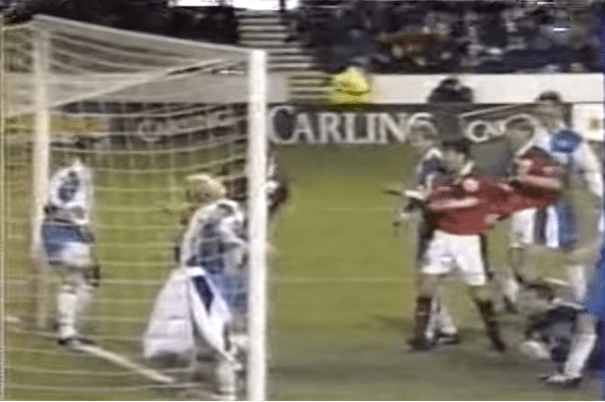
For the second month in a row, Nottingham Forest would cap off a winless month in the league with a 1-0 defeat. On 30th November, a Robbie Earle goal would see 4th-placed Wimbledon take all three points at Selhurst Park.
Now more than a third of the way into the season, Nottingham Forest’s situation looked dire. One win from fifteen Premiership matches, with that sole win coming on the first day of the season, with the resulting winless streak now standing at fourteen games. Forest was now the only team in the top flight yet to reach double figures for points. Two goals scored across four matches was not good enough, with the Reds’ goal difference now standing at -13. It was still a fixable situation, but that fix would have to come soon.
| Position | Team | Played | Wins | Draws | Losses | GF | GA | GD | Points |
|---|---|---|---|---|---|---|---|---|---|
| 16th | Middlesbrough | 15 | 3 | 5 | 7 | 20 | 26 | -6 | 14 |
| 17th | Southampton | 15 | 3 | 4 | 8 | 23 | 28 | -5 | 13 |
| 18th | Blackburn Rovers | 15 | 2 | 6 | 7 | 15 | 20 | -5 | 12 |
| 19th | Coventry City | 15 | 1 | 7 | 7 | 9 | 21 | -12 | 10 |
| 20th | Nottingham Forest | 15 | 1 | 6 | 8 | 12 | 25 | -13 | 9 |
December
Nottingham Forest would begin December, typically the busiest month of the season, with a goalless home draw against Newcastle United. It may not have been a win, but to keep out Kevin Keegan’s Premiership title contenders was something for Frank Clark to celebrate. The goalless draw would lift Forest off the Premiership’s bottom spot, even if only for a week.
Eight days later, Nottingham Forest would face another title contender in Roy Evans’ Liverpool away at Anfield. In the corresponding fixture the previous season, Forest had rushed into a surprise 2-0 lead only for Robbie Fowler and Stan Collymore to launch a successful comeback, scoring 4 goals without reply in a 4-2 Liverpool win. The meeting between the two teams on 17th December 1996 would also end in an entertaining 4-2 win for Liverpool, but the match pattern would be different this time.
After Robbie Fowler had lifted the ball over the bar early on, Stan Collymore would open the scoring after six minutes, beating Mark Crossley to a long ball and rolling the ball into the empty net he had vacated. About 20 minutes later, it was Fowler’s turn. After again missing the target following an excellent counter-attack, another long ball over the top would find Stan Collymore. Collymore would centre the ball for Fowler to nod in for 2-0. Kevin Campbell would halve Liverpool’s deficit before half-time with a scrambled effort from a corner. Another rushed act from a Nottingham Forest player would lead to Liverpool going 3-1 ahead soon after half-time. Vance Warner beat Fowler to a low Jason McAteer cross, but the ball would then loop up into the air towards the goal. The only Forest defender near the ball, Des Lyttle, would attempt to clear the ball out for a corner but would instead misjudge his header, helping the ball into the net with greater power. However, Nottingham Forest was still not out of the game, as Stuart Pearce would drill a free-kick low into the bottom corner on the hour for 3-2. Three minutes later, though, Collymore would successfully top and tail the scoring by poking home Patrik Berger’s cross to send Liverpool up to 2nd and his former team Nottingham Forest back to the bottom.
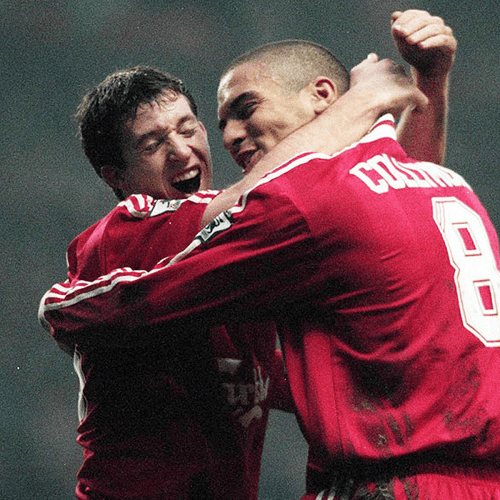
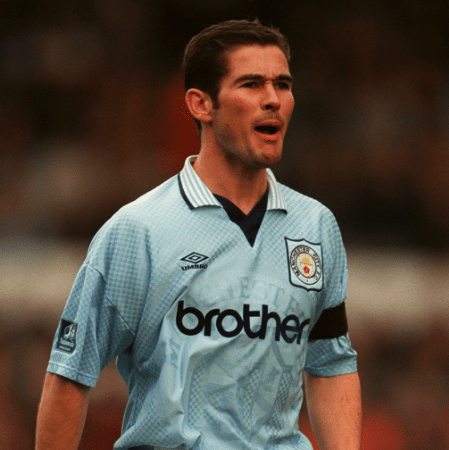
By mid-December, Nottingham Forest’s strikers had scored 7 goals in 17 league matches. Kevin Campbell had opened a hat trick on the opening day of the season but had scored once since then and was without a goal since September. Dean Saunders had not missed a match so far but only had two goals to his name, while Jason Lee had one. To improve the team’s goalscoring abilities, Nottingham Forest would call upon a former player to return on a temporary basis. On 20th December, Nigel Clough, the son of Brian Clough, who had previously scored 130 goals in 395 appearances between 1984 and 1993, would return to Nottingham Forest on loan until the following March. Nigel Clough left Nottingham Forest in the same summer his father did, after accepting a big-money move to Liverpool. However, after quickly finding himself playing second fiddle to Robbie Fowler, Clough moved to Manchester City in early 1996. However, Clough could not stop City from suffering Premiership relegation. Since then, Clough had been warming the bench in the First Division, hoping for a Premiership club to come calling. Now, three years after he left, Nigel Clough was back at Nottingham Forest.
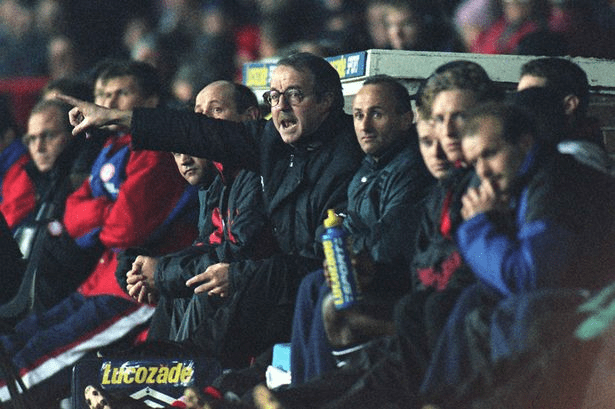
On the same day that Nigel Clough returned to Nottingham Forest, Frank Clark would be sacked as the club’s manager, ending three years in charge. After being the man to take over following the end of Brian Clough’s 18-year reign and Nottingham Forest’s Premiership relegation, Clark managed to keep that squad’s core together while adding shrewd signings like Colin Cooper, Des Lyttle and Stan Collymore. These decisions had resulted in Forest getting promoted back to the top flight and the first time of asking. Then, beyond all belief, Clark had led newly-promoted Forest to 3rd place and UEFA Cup qualification the following year, a competition in which the Reds would ultimately reach the quarter-finals. Clark had led Nottingham Forest to successive top-10 finishes following their Premiership promotion, but 16 league matches without a win was the kind of form that was unlikely to sustain many managers. Therefore, it was with a heavy heart that the Nottingham Forest board bid farewell to Frank Clark.
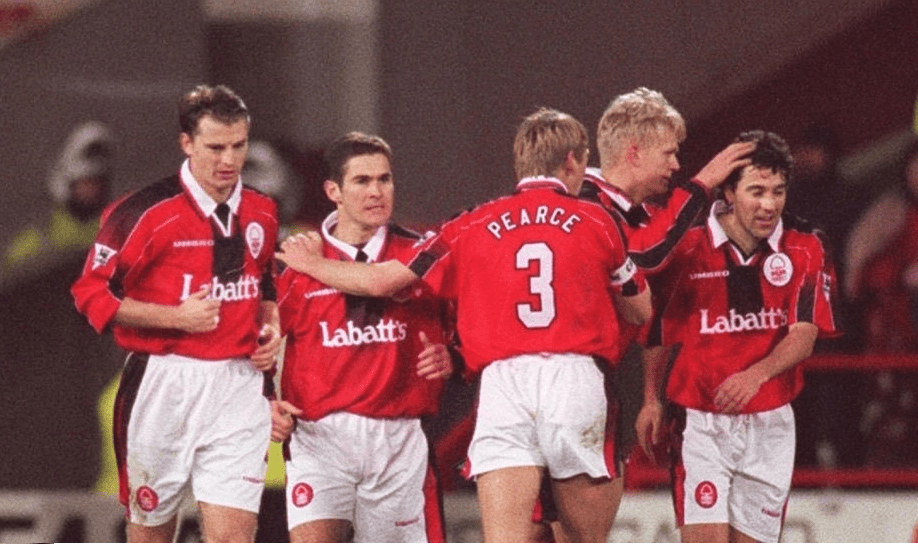
Until the club could find Clark’s replacement, the board would not look to an assistant manager or first-team coach. Following the prevailing trend of the time, the board would ask 34-year-old club captain Stuart Pearce to serve as caretaker player-manager until further notice. Pearce would agree and unintentionally begin his journey as a football manager. The man famously nicknamed ‘Psycho’ was now in charge of Nottingham Forest.
Stuart Pearce’s first game as caretaker player-manager could not have presented a more difficult task, as league leaders Arsenal would travel to Nottingham Forest on 21st December, the final match before Christmas. The Gunners had lost just twice all season under the management of relative unknown Arsene Wenger, and those defeats were against Liverpool and Manchester United. In his first selection, Pearce would bring Forest’s two big international signings, Nikola Jerkan and Bryan Roy, back into the side, with Nigel Clough starting on the subs bench. However, the man with Haaland written on the back of his shirt would be Nottingham Forest’s key player on this day.
Unsurprisingly, Arsenal would start the better of the two teams, using short, incisive passes to tear through a tightly-packed Nottingham Forest defence. If Ian Wright, David Platt and Martin Keown had managed to seriously trouble Mark Crossley, the Gunners could have had a deserved early lead. Later in the first period, Paul Merson would sting the gloves of the Forest goalkeeper with a shot from distance as the league leaders continued to dominate without finding the net. At half-time, the score was goalless. After the break, Arsenal would continue to dominate, and in the 62nd minute, they would get their reward, albeit with help. Mark Crossley would attempt to claim Nigel Winterburn’s high-angle cross into the box only to spill the ball forward to Martin Keown. The ball would reach Ian Wright, who would accept the invitation and smash the ball into the top corner for his 14th goal of the campaign. Following the goal, Nigel Clough would make his second Nottingham Forest debut, coming on for Bryan Roy. Three minutes later, Nottingham Forest was level. An Arsenal clearance would find Dean Saunders on the right flank, and the Welshman would take on the Arsenal defence before crossing the ball into the box. The cross would find Alf-Inge Haaland, who would twist his body to hit the ball first-time into the far corner while also falling over. After being behind for less than three minutes, Forest was back level at 1-1.
Despite the equaliser, Stuart Pearce would ask his teammates to keep their heads. One man on the pitch who wasn’t keeping his was Ian Wright, who was becoming increasingly frustrated with the treatment he was receiving from the Nottingham Forest defence. In the 70th minute, after feeling he was impeded by Nikola Jerkan, Wright would run up to the Croatian defender away from play and bodycheck him. While the referee and TV cameras missed it, the assistant ref would not and alerted Stephen Lodge to the incident. Seconds later, Ian Wright was receiving his marching orders and a straight red card from referee Stephen Lodge. An early Christmas gift for Nottingham Forest. Another gift would come with two minutes of the match remaining. A Stuart Pearce ball into the penalty area would cause trouble for the Gunners, and the ball would spill out to Alf-Inge Haaland to swing a second goal past John Lukic. Forest was ahead, with little time left for the league leaders to respond. Could the unbelievable be happening?
When Stephen Lodge blew the final whistle, the City Ground erupted in loud celebration. For the first time since the opening day of the season, Nottingham Forest had won a game in the Premiership, and it had come against the league leaders Arsenal. The 2-1 triumph was the Reds’ first home win of the campaign and ended a run of eight matches at the City Ground without victory dating back to the 3-0 win over Queens Parks Rangers on the final day of the previous season. More importantly, the victory over Arsenal had ended the longest winless streak in Premiership history at 16 matches. The Arsenal win wasn’t enough to stop Nottingham Forest from spending Christmas at the bottom of the Premiership table. However, on this night, Stuart Pearce had won his first match as player-manager thanks to Alf-Inge Haaland. Could this be the start of the team’s revival? Future results would only prove that to be true or false.
After ending their record winless streak, Stuart Pearce’s baptism of fire as Nottingham Forest’s player-manager would continue when Premiership champions Manchester United visited the City Ground on Boxing Day. The Red Devils had comfortably won 4-1 back at Old Trafford in September, but following the Arsenal win, could Stuart Pearce inspire his team to another victory over one of the Premiership’s top sides? Unfortunately not. Instead of losing 4-1 this time, Nottingham Forest would lose 4-0 to Manchester United. David Beckham would give his team the lead after 24 minutes, gracefully sending Ole Gunnar Solskjaer’s cross into the top corner with a pinpoint shot from the edge of the box. A minute before half-time, Nicky Butt would blast a shot past Mark Crossley for United’s second. Solskjaer would add a third with a rebound after Eric Cantona’s requisite lob had somehow hit the crossbar. Finally, Cantona would intentionally set up Andy Cole to make it 4-0, the sub twisting and turning himself into space before scoring his 1st goal of the season. So much for that Nottingham Forest revival, eh?
Following two days of recovery, Nottingham Forest would finish the month and the year 1996 with the second East Midlands derby with Leicester City. While the encounter earlier in the campaign ended up as a dull goalless draw, this return fixture at Filbert Street would prove more exciting fare in a 2-2 draw. Emile Heskey would put the Foxes ahead inside five minutes, but Nigel Clough would equalise with his first Nottingham Forest goal in three years. It seemed like Muzzy Izzet had sent Martin O’Neill’s team away with the bragging rights and the three points after his 63rd-minute finish. However, Colin Cooper would make sure the points were shared with a header three minutes from time.
December had been a turbulent month for Nottingham Forest, to say the least.
| Position | Team | Played | Wins | Draws | Losses | GF | GA | GD | Points |
|---|---|---|---|---|---|---|---|---|---|
| 16th | West Ham | 19 | 5 | 6 | 8 | 18 | 25 | -7 | 21 |
| 17th | Middlesbrough | 20 | 4 | 6 | 10 | 25 | 38 | -13 | 18 |
| 18th | Blackburn Rovers | 19 | 3 | 8 | 8 | 17 | 22 | -5 | 17 |
| 19th | Southampton | 20 | 4 | 4 | 12 | 28 | 37 | -9 | 16 |
| 20th | Nottingham Forest | 20 | 2 | 8 | 10 | 18 | 36 | -18 | 14 |
January
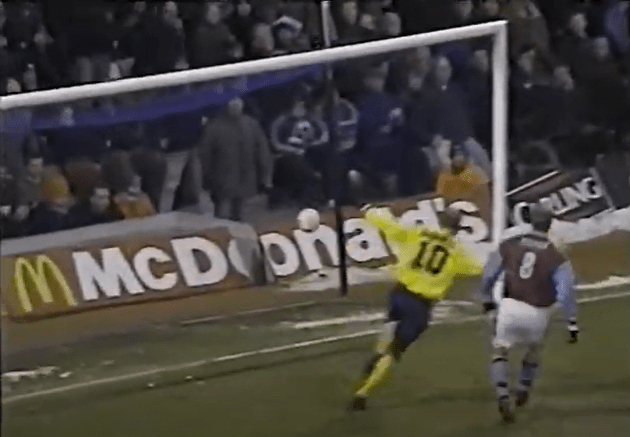
On New Year’s Day, Nottingham Forest would travel to Upton Park to face West Ham, who had won both previous encounters this season. The last meeting between Forest and West Ham had been the 4-1 win for Harry Redknapp’s side that knocked Forest out of the League Cup in late October. Avoiding a heavy defeat would be an improvement this time around. However, not only would Nottingham Forest defeat West Ham for their second away victory of the season (and third win in total), but they would also keep a clean sheet at Upton Park. In the end, Kevin Campbell would score the all-important goal after 38 minutes, chasing down and beating Marc Rieper to a long ball and attempting a flick that Luděk Mikloško was too close to stop from hitting the back of the net. With this victory, Stuart Pearce now had double the wins in 4 league matches that Frank Clark had managed in the preceding 17.
The win over West Ham would give Nottingham Forest a much-needed lift before attention turned to the FA Cup three days later. On 4th January, First Division Ipswich Town would travel up to the East Midlands. Although having an inconsistent season that placed them midway in the First Division standings, Ipswich had already proven its mettle in cup competitions. Seventeen days after this match, the Tractor Boys would face Leicester City in the 5th round of the League Cup, having already dispatched Bournemouth, Fulham, Crystal Palace and Gillingham. Therefore, this game against George Burley’s men represented a potential banana skin that Nottingham Forest would be wise not to slip on. Recognising the danger, Stuart Pearce would only make one change from the team that beat West Ham, replacing Nigel Clough with Chris Allen. The move to stay strong proved effective, as Nottingham defeated Ipswich Town 3-0 in front of a half-full City Ground (14, 681). Dean Saunders would put the Premiership strugglers ahead in the 19th minute, and Chris Allen would double that lead nine minutes later. Then, midway through the second half, Saunders would score his second and Nottingham Forest’s third to complete a routine victory for the Reds.
Returning to league action, Ruud Gullit’s 7th-placed Chelsea would arrive at the City Ground for a battle between the two Premiership teams with player-managers. On this day, the defender would defeat the striker. Gullit would watch from the touchline as Stuart Pearce gave Nottingham Forest a 39th-minute lead. The legendary Dutchman would also have a watching brief as Chris Bart-Williams scored his first goal of the campaign early in the second half to ultimately seal a 2-0 win for Nottingham Forest and back-to-back league victories for the first time since April 1996. This Chelsea victory also meant that Forest had doubled their league wins for the entire season in their last two games. Being coached by their teammate and captain was undoubtedly having a positive effect on Nottingham Forest’s form.
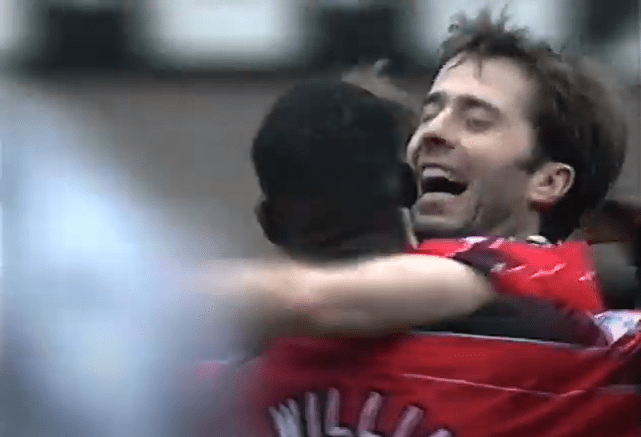
Eight days later, the good times would continue in the red half of Nottingham as Forest defeated Tottenham 2-1 for another home victory. It did not seem to be heading that way when Andy Sinton bundled the ball into the net inside two minutes. However, Forest’s fortunes would be turned around by Bryan Roy, who had not been having a particularly stellar season to this point. Two minutes after half-time, the Dutch forward would get the deftest of touches on a low cross into the area to score his first goal since the final day of the previous season, ending an eight-month drought. A quarter of an hour later, Roy would double his goal tally for the 96-97 season, rolling the ball home after Ian Walker could only divert a Kevin Campbell shot into his path. Another three points on the board, and Nottingham Forest was on its best run of league form since October 1995. Three wins in a row had moved Forest out of the Premiership relegation zone for the first time since October 1996, with the team now level on points with 16th-placed Coventry, the Reds’ next opponents.
Before all that, Forest would have the chance to earn their fifth consecutive win in all competitions with a win in the FA Cup 4th round on 26th January. However, to do that would mean beating Newcastle (4th in the Premiership) at St James’s Park, where the Magpies had only lost twice all season. Newcastle had recently gained Kenny Dalglish as their manager following the resignation of Kevin Keegan earlier in the month. Dalglish’s first match in charge had ended in a 2-2 draw away against Southampton the previous week. For his first game at St James’s Park, Nottingham Forest would ensure it ended in defeat as Stuart Pearce led his men to a shock 2-1 victory in the North East.
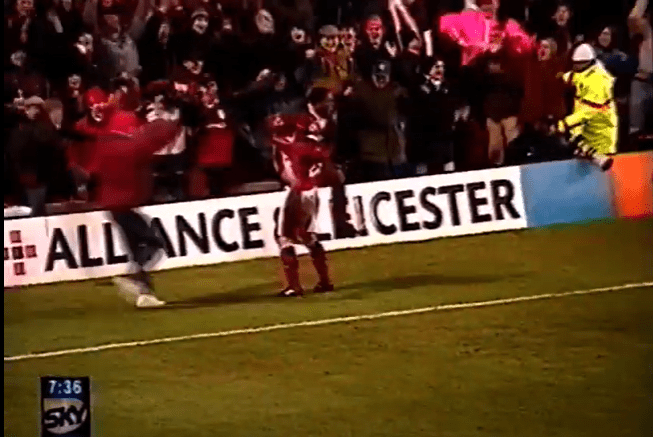
After a goalless first 45 minutes, this 4th-round tie would spark into life over the course of 20 second-half minutes. On the hour, Warren Barton would deliver a deep cross, and Les Ferdinand would rise unopposed to put the host 1-0 up. However, Forest would not let Kenny Dalglish get an easy victory in his first Newcastle home match. In the 76th minute, Ian Woan received the ball 25 yards from goal and hit a deflected effort that would outfox Shaka Hislop and nestle in the bottom corner. Four minutes later, the winger would strike again. Warren Barton would attempt to clear the ball out for a throw-in only to send the ball out to Woan. Woan would read the bouncing ball before hitting a spectacular half-volley into the far corner. Similar to Bryan Roy in the previous game, Ian Woan was yet to score before this FA Cup tie but had now got two goals in one game. In addition, Forest was now on a five-match winning run in all competitions and was in the hat for the FA Cup 5th round. Their opponents would end up as Second Division Chesterfield, who had upset Championship Bolton Wanderers 3-2 at Burnden Park.
To put it simply, Nottingham Forest was on a roll. Unbeaten so far during the month of January, you could forgive those around the club being a little confident about the team’s chances against Coventry City, the team one place above Forest in the Premiership standings. The reverse fixture was the 3-0 away win for Forest on the opening day of the season, the one that had been followed by the 16-match winless run. On 29th January, Coventry City would end Nottingham Forest’s recent winning run with a narrow 1-0 win at the City Ground. A Darren Huckerby goal in the 51st minute was all that was needed to secure a Sky Blues victory and put a dampener on Forest’s best month of the season.
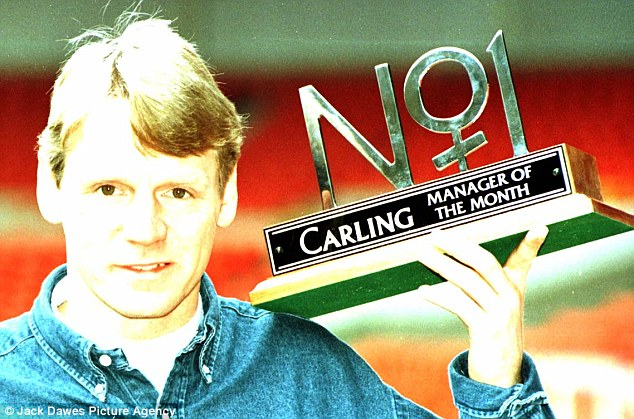
Despite the Coventry defeat, 3 wins from 4 for Nottingham Forest in the month of January led to Stuart Pearce being awarded the Carling Premiership Manager of the Month Award, a true reflection of how impressive Nottingham Forest had been. Two wins over teams in the top half, plus a pair of FA Cup victories, had given the Reds something they had not had all season: momentum. Stuart Pearce would have to hope the Coventry defeat did not lead to worse results in February.
| Position | Team | Played | Wins | Draws | Losses | GF | GA | GD | Points |
|---|---|---|---|---|---|---|---|---|---|
| 16th | Blackburn Rovers | 23 | 5 | 9 | 9 | 24 | 24 | 0 | 24 |
| 17th | Nottingham Forest | 24 | 5 | 8 | 11 | 23 | 38 | -15 | 23 |
| 18th | West Ham | 23 | 5 | 7 | 11 | 19 | 30 | -11 | 22 |
| 19th | Southampton | 22 | 5 | 5 | 12 | 31 | 39 | -8 | 20 |
| 20th | Middlesbrough | 22 | 5 | 6 | 12 | 29 | 43 | -14 | 18 |
February
Instead of returning to winning ways, Nottingham Forest would follow up the Coventry City loss with a 2-0 defeat at Everton on 1st February. Duncan Ferguson would round Mark Crossley to score the first goal minutes after half-time, and Nick Barmby would slide from close range to score the second in the 67th minute. Not the best preparation for an FA Cup match.
The day after Valentine’s Day, Nottingham Forest would travel across the East Midlands to Chesterfield’s iconic Saltergate stadium for the 5th round of the FA Cup. Thirty-three league placings separated the two teams before kick-off, with Chesterfield entering the match 6th in the Second Division, occupying the 3rd of 4 playoff spots. Stuart Pearce would watch from the touchline on this day while serving an on-field suspension, but the Nottingham Forest player-manager would still select a strong side to face the Spireites. However, the lower league side would have the first significant goalscoring chance. Striker Kevin Davies would excellently bring the ball down, turn and cross into the Forest box, where strike partner John Howard executed a diving header that forced Mark Crossley into a reaction save from point-blank range.
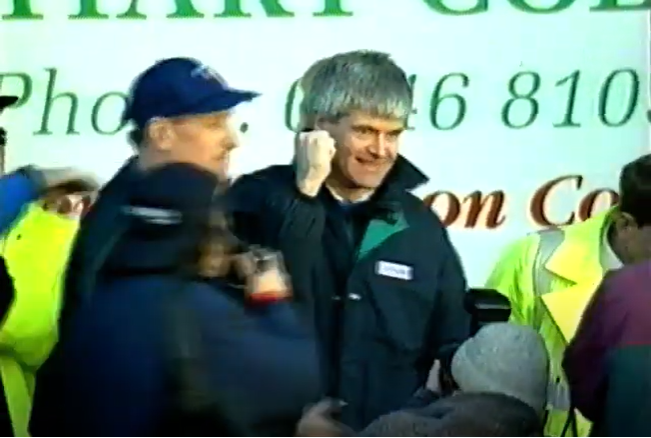
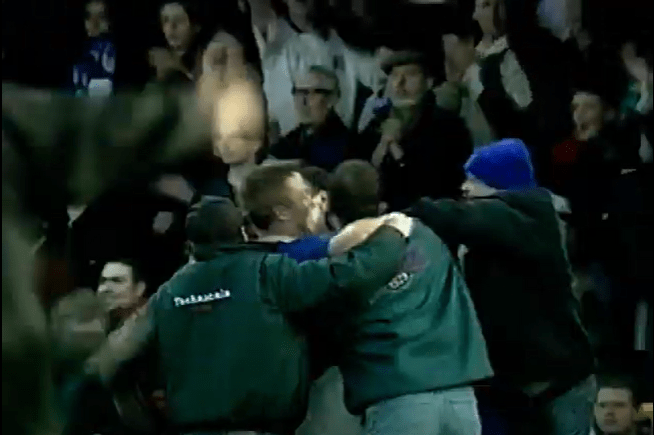
In the second half, Chesterfield would continue providing the better football, with John Howard consistently threatening the Forest defence. In the 58th minute, Howard would find himself through on goal with only Mark Crossley in his way. The striker would attempt to go around the goalkeeper, only for Crossley to bring him down, forcing a Chesterfield penalty kick. For his tackle, Crossley would receive a straight red card, leaving Nottingham Forest with 10 men for the rest of the game. Midfielder Tom Curtis would step up to take the spot kick, with Alan Fettis being brought on to take the vacant spot between the sticks. Against a fresh keeper, Curtis would send Fettis the wrong way and give Second Division Chesterfield the lead over Premiership Nottingham Forest, a deserved lead. Darren Carr would almost score a second goal minutes later with a powerful header, but Kevin Campbell would stop it on the goal-line with Alan Fettis beaten. Chesterfield had 10-man Forest on the ropes, and the lower-league side threatened to put this game out of sight. John Howard should have scored a second after chasing down a long ball forward and knocking it past an advancing Fettis but would bungle his finishing touch, allowing the defence to clear. However, it did not matter, as Chesterfield would see out the game to knock Nottingham Forest out of the FA Cup, claim their first Premiership scalp and reach the quarter-finals for the first time ever.
Nottingham Forest had been upset by Chesterfield, being wholly outclassed in a game they were heavy favourites to win. Now out of the FA Cup, Forest could now only focus on the Premiership and survival, beginning with a home game against Aston Villa the following week. In that match, Forest and Villa would play out a goalless draw. After winning 5 out of games in January, Nottingham Forest returned to winless ways in February, with two defeats and a draw. Stuart Pearce was now beginning to experience the difficulties of managing a team near the bottom of the Premiership. However, Nottingham Forest’s board had an idea to help out the 34-year-old.
| Position | Team | Played | Wins | Draws | Losses | GF | GA | GD | Points |
|---|---|---|---|---|---|---|---|---|---|
| 16th | Coventry City | 27 | 6 | 10 | 11 | 24 | 35 | -11 | 28 |
| 17th | West Ham | 26 | 6 | 7 | 13 | 24 | 36 | -12 | 25 |
| 18th | Nottingham Forest | 26 | 5 | 9 | 12 | 23 | 40 | -17 | 24 |
| 19th | Southampton | 25 | 5 | 6 | 14 | 34 | 44 | -10 | 21 |
| 20th | Middlesbrough | 25 | 5 | 7 | 13 | 30 | 45 | -15 | 19 |
March
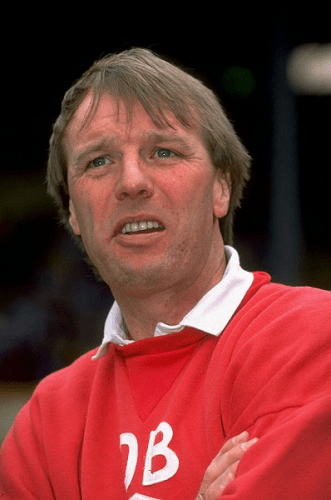
After returning to regular form in February, Nottingham Forest would begin March positively with a 1-0 over Tottenham at White Hart Lane. Dean Saunders would score the winning goal in the 17th minute, the Welsh striker celebrating St Stephen’s Day with his first Premiership goal since October. However, the more significant news from Nottingham Forest on 1st March would concern the club’s future management. On this day, Dave Bassett would shockingly resign as Crystal Palace manager and announce that he was joining Nottingham Forest as the club’s new ‘general manager’. Bassett had only been in charge at Selhurst Park for little more than a year and would leave the Eagles 6th in the First Division. Dave Bassett was famous for having taken Wimbledon from the Fourth Division of English football in 1982 to the top division in 1986. He later achieved something similar with Sheffield United, taking the Blades from the Third Division to the top half of the First Division in two years. However, he was also in charge when Sheffield United was relegated from the Premier League in 1995. Keeping Nottingham Forest in the top flight would allow Bassett to exorcise those demons.
As general manager, Dave Bassett would assist caretaker player-manager Stuart Pearce until the end of the season, taking many responsibilities off the defender’s shoulders and allowing him to focus on his playing duties while remaining in charge.
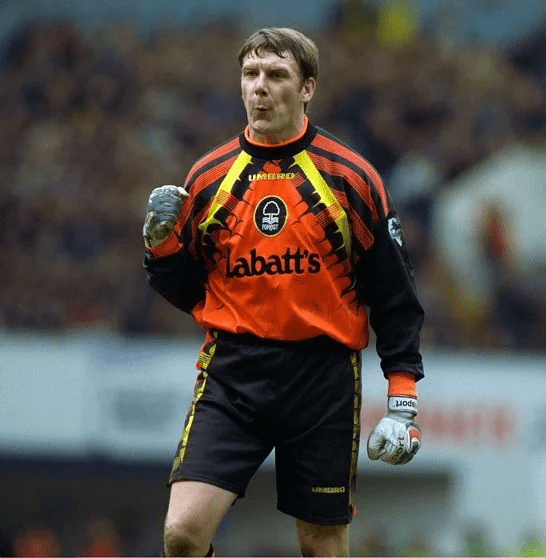
One of Bassett’s first acts as general manager would see the departure of backup goalkeeper Tommy Wright to Manchester City for £450,000. After arriving during the 1993-94 promotion campaign, Wright challenged Mark Crossley at first and even replaced him in goal for a period. However, Crossley would eventually come back more robust, and Wright would soon find himself warming the bench for the rest of his spell at the City Ground, aside from the odd game. In total, Tommy Wright had played 13 matches across three-and-a-half seasons with Nottingham Forest.
One day later, the Dave Bassett era at Nottingham Forest would begin with a 3-0 defeat at home to Sheffield Wednesday. David Pleat’s Owls were on an incredible run of form, having lost 1 of their previous 18 matches and sat 8th in the Premiership standings. Wednesday would continue this impressive form against Nottingham Forest. However, Forest would gift the Owls the opening goal, as Des Lyttle’s attempted backpass would only let in Benito Carbone, who would go around Mark Crossley and flick the ball past him. Four minutes later, Andy Booth would reach the by-line and deliver a ball across the face of goal that Regi Blinker would finish for 2-0. Booth and Carbone would have chances to score a third goal only to just miss the target. However, another mistake would produce the third goal, with a Forest player being dispossessed in the centre circle. Eventually, Mark Crossley would parry the resulting shot from Ritchie Humphreys, only for Carbone to fire the rebound beyond him to complete a one-sided victory for Sheffield Wednesday.
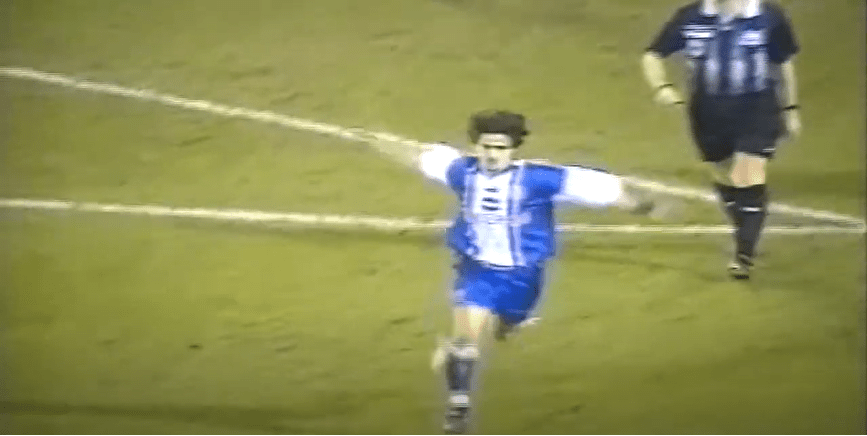
Three days later, another brace from a centre-forward would see Nottingham Forest fall 2-0 to Arsenal. The reverse fixture had produced the famous 2-1 win that had ended Forest’s 16-match winless streak in December. However, Arsenal would not allow the same thing to happen again in March. Dennis Bergkamp would break the deadlock five minutes after half-time to put the Gunners ahead and score his second from the penalty spot in the 78th minute. In the seven days following their 1-0 victory over Spurs, Nottingham Forest had twice been comfortably beaten, both home and away.
In early March, Nigel Clough would end his four-month loan spell at Nottingham Forest, returning to Manchester City after 13 games and 1 goal. With Nottingham Forest’s strikers still struggling to score consistently, Dave Bassett would open the club’s chequebook to sign one of the most prolific strikers in Britain. On 10th March, Pierre van Hooijdonk would be signed from Celtic for £4.5 million. Over the past two years, van Hooijdonk had been one of the top scorers in the Scottish Premier Division, grabbing the Golden Boot with 26 goals in 34 matches the previous season. The Dutchman had hit 56 in 92 for Celtic, carrying over the form that had made him stand out at NAC Breda in the Eredivisie. Now, Dave Bassett would hope that Pierre van Hooijdonk could be the man to replace the goals that had been missing since the departure of Stan Collymore in 1995.
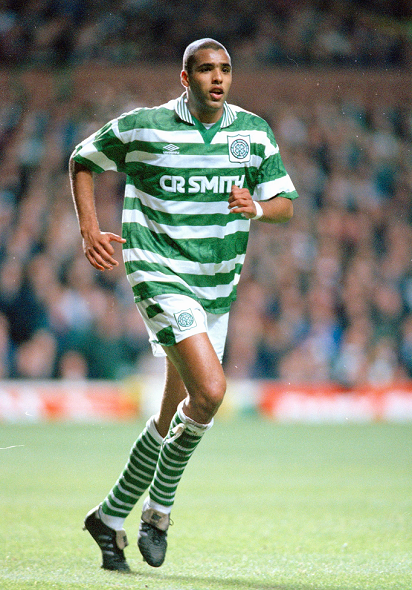
The day after the arrival of Pierre van Hooijdonk, the Dutchman would make his debut alongside countryman Bryan Roy for Nottingham Forest’s match against Blackburn Rovers. After struggling for so long earlier in the season, Blackburn had turned their form around, losing 2 of its last 16 games to rise to 13th in the table, 7 points above the relegation zone. However, like the earlier match between Rovers and Forest in December, there would be no winner at Ewood Park. Alf-Inge Haaland would give Nottingham Forest the lead in the 18th minute, but Kevin Gallacher would equalise for Tony Parkes’ team midway through the second half, resulting in a 1-1 draw.
The draw with Blackburn Rovers would be the first of four consecutive 1-1 draws for Nottingham Forest that would last until the end of March. On 15th March, Forest would impressively draw with 2nd-placed Liverpool. Ian Woan would cancel out Robbie Fowler’s early goal as Liverpool fell three points behind Manchester United. However, the result would see Nottingham Forest fall back into the relegation zone after West Ham’s win over Chelsea. While the draws against Blackburn and Liverpool were somewhat impressive, the other 1-1 draws would come against teams that Forest would have hoped to beat if they wanted to beat the drop. Over the space of three days (a consequence of games being rearranged due to FA Cup ties), Nottingham Forest would draw 1-1 with Sunderland (15th) and Middlesbrough (17th).
During this run of draws, Dave Bassett would add two players to the Nottingham Forest squad to help with the club’s Premiership survival bid. On 15th March, Dave Bassett would further bolster his attacking options by signing Tranmere forward Ian Thomas-Moore for £1 million. The 20-year-old Thomas-Moore was seen as an exciting prospect, having been regularly capped for the England U21s despite not playing for a team in the First Division. Since making his senior debut for Tranmere in 1994, Ian Thomas-Moore had made 66 appearances on the wing, scoring 12 goals. These numbers and his performances were enough for Dave Bassett to spend that much money on the youngster.
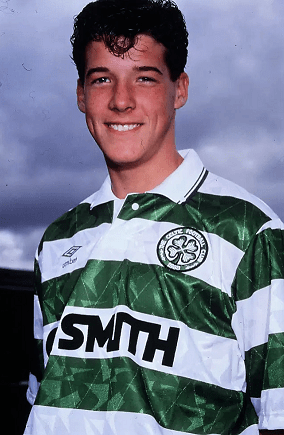
Six days later, Bassett dived into the loan market, returning to Celtic to bring in midfielder Brian O’Neil until the end of the season. Until recently, O’Neil had been a regular in Celtic’s starting line-up since debuting as a 19-year-old in 1991, having made over 122 appearances. However, since starting in the Bhoys’ 3-1 Old Firm derby defeat to Rangers on 2nd January, O’Neil had not featured for Celtic. The arrival of David Hannah from Aberdeen in December had limited his game time, and Bhoys manager Tommy Burns was willing to let the 24-year-old get game time elsewhere to help continue his development away from Celtic Park.
A packed March had begun positively for Nottingham Forest with the victory over Spurs and the arrival of Dave Bassett as general manager. However, the club would end March on a six-game winless run after consecutive defeats and four successive 1-1 draws. The result of all those draws? Nottingham Forest would end the month of March 18th in the Premiership. The Reds were one point below Middlesbrough in 17th but had played more games than all the other teams around them. The club’s goal difference of -21 didn’t help, being far inferior to their relegation rivals. These two factors put Nottingham Forest in a difficult position heading into the season’s final two months, with only five matches left to save their Premiership status.
| Position | Team | Played | Wins | Draws | Losses | GF | GA | GD | Points |
|---|---|---|---|---|---|---|---|---|---|
| 16th | Sunderland | 32 | 8 | 9 | 15 | 29 | 48 | -19 | 33 |
| 17th | Middlesbrough | 31 | 9 | 8 | 14 | 44 | 52 | -8 | 32 |
| 18th | Nottingham Forest | 33 | 6 | 13 | 14 | 28 | 49 | -21 | 31 |
| 19th | Coventry City | 32 | 6 | 12 | 14 | 27 | 46 | -19 | 30 |
| 20th | Southampton | 31 | 6 | 9 | 16 | 39 | 51 | -12 | 27 |
April
Nottingham Forest would commence April knowing they had five games to avoid relegation. The club’s five ‘cup finals’ would begin on 5th April against bottom-placed Southampton, who had won 2 of 11 matches since the turn of the year. However, the Saints had defeated Newcastle at the start of March, so this Graeme Souness team was not to be underestimated. The match against Southampton would end Nottingham Forest’s run of 1-1 raws. However, this run would end with a 3-1 home defeat. This game would feature both early and late drama. Jim Magilton would give Southampton an early lead after eight minutes, hitting a shot from outside the area that left Mark Crossley stumped as the ball flew past him. Then, the match would end with three goals in the final five minutes. Substitute Mickey Evans would double Southampton’s lead in the 85th minute, chasing down Stuart Pearce’s weak header before sliding the ball into the net for his first Southampton goal. Pearce would have the chance to make amends and give Nottingham Forest hope when Pierre van Hooijdonk was fouled in the area, and the referee would award Forest the penalty. Pearce would deliver his usual powerful effort to halve the deficit and 2-1 with two minutes to go. However, less than a minute later, Mickey Evans would run through to score his second of the day to confirm an important victory for Southampton in their fight for Premiership survival.
Two weeks later, Leeds United would pose the next obstacle to Nottingham Forest’s survival chances. In that two-week break, Forest’s relegation rivals had played some of the games they had in hand. The results of these matches had dropped Nottingham Forest to the bottom of the Premiership standings, three points from safety with four games left to play. However, after losing to Southampton in their last match, Forest felt something wasn’t quite right, something that needed to be atoned. Therefore, the Reds would draw 1-1 with Leeds at the City Ground, the team’s 5th 1-1 draw in 6 games. Pierre van Hooijdonk would score his first goal since joining from Celtic to give Forest a six-minute lead, but Brian Deane would equalise for the Whites midway through the second half.
Forest’s final East Midlands derby of the season away to Derby County was a match that Forest had to win. Derby was safely slotted in mid-table, seven points clear of the drop in 12th place. Therefore, they had no issues drawing 0-0 with their nearest rivals on 23rd April. At the same time, wins for Southampton and West Ham saw the gap between Stuart Pearce’s side and Premiership safety increase to five points, meaning that survival was out of Nottingham Forest’s hands. Only maximum points from the season’s final two games in May would be enough, along with results elsewhere going their way. However, those last two games were at home to Wimbledon (8th) and away to Newcastle (4th).
| Position | Team | Played | Wins | Draws | Losses | GF | GA | GD | Points |
|---|---|---|---|---|---|---|---|---|---|
| 16th | West Ham | 35 | 9 | 11 | 15 | 34 | 45 | -11 | 38 |
| 17th | Coventry City | 36 | 8 | 14 | 14 | 35 | 51 | -16 | 38 |
| 18th | Sunderland | 36 | 9 | 10 | 17 | 32 | 52 | -20 | 37 |
| 19th | Middlesbrough | 34 | 9 | 9 | 16 | 44 | 54 | -10 | 33 |
| 20th | Nottingham Forest | 36 | 6 | 15 | 15 | 30 | 53 | -23 | 33 |
May
On 3rd May, Nottingham Forest would play their final home game of the 1996/97 Premiership season against Wimbledon. Two years earlier, the Reds were celebrating clinching an inexplicable 3rd-placed finish and UEFA Cup qualification. Today, anything less than a win against the Dons would mean relegation from the top flight with one match left to play. Forest would almost take the lead early, but Neil Sullivan would deny Dean Saunders from point-blank range, and Alf-Inge Haaland would get the rebound stuck under his foot. Then, at the other end, Forest would fail to clear a Wimbledon attack, and Øyvind Leonhardsen would blast the ball past Alan Fettis to give the visitors the lead in the 15th minute. Coupled with conceding that goal, Stuart Pearce would have to exit proceedings with an injury. He would be replaced by David Phillips as the Forest captain took up his managerial duties for the rest of the game.
At half-time, Forest was still losing 1-0 and staring relegation in the face. In the 56th minute, Stuart Pearce would replace Alf-Inge Haaland with Bryan Roy to add some attacking impetus to the team. This change would immediately pay dividends, as Roy would head in Nottingham Forest’s equaliser four minutes after coming on. One more goal and Nottingham Forest’s stay in the Premiership would extend into the following week. The Reds were now playing with more urgency. Pierre van Hooijdonk would have a free-kick saved by Neil Sullivan as the minutes ticked away. Pearce would even throw on Kevin Campbell in the 82nd minute to give his side any hope of scoring a second goal. However, it would not be enough. The match would end in another 1-1 draw for Nottingham Forest, a 6th in 7 games. However, this one would hurt more than the others, as this tie meant that Nottingham Forest’s three-season stay in the Premiership had ended with one match remaining.
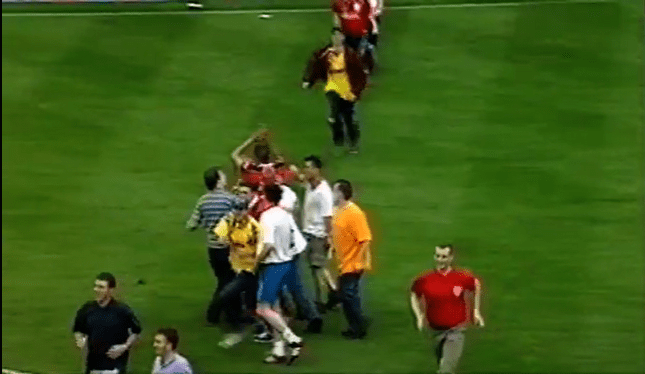
With Premiership relegation now confirmed, there was little for Nottingham Forest fans to get excited about as they travelled up to Newcastle for the final game of the 1996-97 season. Forest was all but confirmed to finish bottom of the Carling Premiership standings, while Newcastle needed a win to leapfrog Liverpool and claim 2nd and a Champions League qualification place.
The importance of this match to both teams was reflected in its scoreline as Newcastle ran out 5-0 victors to end another successful season on Tyneside. Newcastle’s Colombian midfielder Faustino Asprilla would get the ball rolling in the 20th minute before Les Ferdinand netted a quickfire double (23′, 27′) to make it 3-0. Alan Shearer would confirm his position as the Premiership’s Golden Boot winner for a third successive season by scoring his 25th goal of the campaign in the 36th minute. A 4-0 deficit at half-time saw Nottingham Forest fans fearing the worst in the second half. However, only one more goal would arrive as left wing-back Robbie Elliott got in on the goalscoring act in the 77th minute to end a final-day masterclass from Kenny Dalglish’s Magpies. The 5-0 defeat would also confirm that Nottingham Forest ended the Premiership season on an 11-match winless run, having not won since 5th March. Ultimately, caretaker player-manager Stuart Pearce could not save his team from relegation to the First Division. The team would finish five points adrift at the bottom of the final Premiership table, seven points from safety.
| Position | Team | Played | Wins | Draws | Losses | GF | GA | GD | Points |
|---|---|---|---|---|---|---|---|---|---|
| 16th | Southampton | 38 | 10 | 11 | 17 | 50 | 56 | -6 | 41 |
| 17th | Coventry City | 38 | 9 | 14 | 15 | 38 | 54 | -16 | 41 |
| 18th (R) | Sunderland | 38 | 10 | 10 | 18 | 35 | 53 | -18 | 40 |
| 19th (R) | Middlesbrough | 38 | 10 | 12 | 16 | 51 | 60 | -9 | 39 |
| 20th (R) | Nottingham Forest | 38 | 6 | 16 | 16 | 31 | 59 | -28 | 34 |
Statistics
Over the course of the 1996-97 football season, Nottingham Forest would play a total of 44 matches, winning 9 (20.45%), drawing 17 (38.63%) and losing 18 (40.9%). In the league, this would translate to 6 wins, 16 draws and 16 losses from 38 matches. In these games, Forest would score 31 goals and concede 59.
Ultimately, those 16 draws killed Nottingham Forest’s Premiership hopes. While the Reds had the fewest wins of any Premiership team, three other sides would lose more matches than Forest’s 16. No team would come close to the 16 games that Forest would tie. The Reds would even draw seven of its nine games to end the season, including the four 1-1 draws in March. Considering that Nottingham Forest eventually finished five points away from Premiership safety, turning just two of these draws into victories would have kept them in the top flight of English football for another season.
In recent seasons, Nottingham Forest could count on an impressive home record to bolster their results even when they struggled to win away matches. However, Forest would end up having the worst home record of any Premiership team during the 1996-97 campaign, earning 18 points from 67 after 3 wins, 9 draws and 7 defeats. The East Midland club would end up with a similar away record of 3 wins, 7 draws and 9 losses, claiming fewer points (16). At least the Reds could count their lucky stars that four other teams fared worse away from their home fortresses this season.
Nottingham Forest 1996/97 Premiership Home Record
| Rank | Matches | Wins | Draws | Losses | GF | GA | GD | Points |
|---|---|---|---|---|---|---|---|---|
| 20th | 19 | 3 | 9 | 7 | 15 | 27 | -12 | 18 |
Nottingham Forest 1996/97 Premiership Away Record
| Rank | Matches | Wins | Draws | Losses | GF | GA | GD | Points |
|---|---|---|---|---|---|---|---|---|
| 16th | 19 | 3 | 7 | 9 | 16 | 32 | -16 | 16 |
Whether the team was playing home or away, Nottingham Forest struggled to score goals during this Premiership season. A lack of goals is a problem that you find with many relegated Premier League teams, and Nottingham Forest was no different. The team’s 31 goals were only beaten by 11th-placed Leeds United in the GS rankings. There were also 16 matches where Nottingham Forest failed to find the net.
Twelve players would score for Forest during the 1996-97 campaign. Not one would hit double figures, with Kevin Campbell and Alf-Inge Håland topping the Forest tree with six goals each. Considering that half of Campbell’s goals came in a hat-trick scored on the opening day of the season, and Alf-Inge Håland split his time between defensive midfield and defence throughout the campaign, these figures do not make for great reading. Going down the list, Stuart Pearce is third with five goals, with the left back’s numbers being bolstered by free-kicks and penalties, followed by forward Dean Saunders with three. Of the 31 goals scored by Nottingham Forest in the league, 14 would come from the team’s strikers. To be fair, Pierre van Hooijdonk was signed in March and needed time to adapt to the Premiership, so his one-goal return can be forgiven. However, the Forest strikeforce of Kevin Campbell (6 goals in 17 games), Dean Saunders (3 in 34), Bryan Roy (3 in 19), Jason Lee and Nigel Clough (both 1 in 13) all struggled to find the net consistently. For the second year in a row, Forest was missing a Stan Collymore, who had scored goals for fun when wearing the red shirt. Without a man to score 15 or 20 goals and carry the load, Forest struggled to win football matches.
Every Nottingham Forest goalscorer during the 1996-97 season
| Player | Total Goals (league goals) |
|---|---|
| Kevin Campbell | 6 (6) |
| Alf-Inge Håland | 6 (6) |
| Stuart Pearce | 5 (5) |
| Dean Saunders | 5 (3) |
| Bryan Roy | 4 (3) |
| Colin Cooper | 3 (2) |
| Ian Woan | 3 (1) |
| Jason Lee | 2 (1) |
| Chris Bart-Williams | 1 (1) |
| Des Lyttle | 1 (1) |
| Pierre van Hooijdonk | 1 (1) |
| Nigel Clough | 1 (1) |
| Chris Allen | 1 (0) |
An easy to look at how Nottingham Forest performed during the 1996-97 season is by looking at the team’s performance under its two managers, Frank Clark (who was sacked in December) and Stuart Pearce (who took over as caretaker player-manager afterwards). Give or take a couple of matches, Clark and Pearce each took about half of Forest’s season. Clark, unfortunately, oversaw the team’s record 16-match winless streak, which led to his firing and Nottingham Forest dropping to the bottom of the Premiership. Stuart Pearce was put in temporary charge to salvage the club’s season, attempting but ultimately failing to prevent top-flight relegation. Despite managing four more matches, Stuart Pearce’s reign would be better in nearly every metric (wins, draws, defeats, clean sheets, points, goals conceded). However, Nottingham Forest’s goal difference under Pearce was only marginally better than it had been under Frank Clark. Under Clark, Forest scored 14 goals and conceded 29 in 17 games for a GD of -15. Under Pearce, Forest scored 17 and shipped 30 across 21 games for a GD of -13.
A major factor in Nottingham Forest’s relegation was its goal difference of -28, 10 goal differentials worse than any other team’s (Sunderland’s -18). If you look at the goal statistics for both managers, Nottingham Forest scored fewer goals per game under Stuart Pearce than Frank Clark (0.8 to 0.82). In addition, Forest’s defence only got marginally better under Pearce, conceding 1.42 goals a game compared to 1.7 beforehand. So, while Nottingham Forest’s form did improve under Stuart Pearce, it wasn’t as big as an improvement from Frank Clark to get Nottingham Forest to Premiership survival.
| Frank Clark (August-December) | Stuart Pearce (December-May) | |
|---|---|---|
| Matches | 17 | 21 |
| Wins | 1 (5.8%) | 5 (23.8%) |
| Draws | 7 | 9 |
| Losses | 9 | 7 |
| Clean sheets | 3 | 5 |
| Goals scored | 14 (0.82 goals per game) | 17 (0.8 goals per game) |
| Goals conceded | 29 (1.7 goals per game) | 30 (1.42 goals per game) |
| Goal difference | -15 | -13 |
| Points | 10 (0.58 points per game) | 24 (1.14 points per game) |
In May 1997, Nottingham Forest had suffered Premiership relegation for the second time in five years and now had to go through the process of achieving promotion from the First Division as quickly as possible. However, they had a decision to make about the club’s manager. When Stuart Pearce was named the club’s caretaker player-manager in mid-December, it was a job to take him until the end of the season. When Dave Bassett became Nottingham Forest’s general manager in March, his job was to support Pearce in his duties. However, now that the season was over, and Nottingham Forest needed to prepare the team for a First Division promotion campaign, would the club offer 34-year-old Stuart Pearce the chance to be the permanent player-manager or full-time manager? Or would the Forest board turn to Dave Bassett, who had experience leading teams to the top flight, as shown by his time managing Wimbledon and Sheffield United? That’s all before the playing squad had to be taken into account. The summer of 1997 would be an interesting one inside the doors of Nottingham Forest Football Club.
| Position | No. | Player | Total Appearances (league apps) |
|---|---|---|---|
| GK | 1 | Mark Crossley | 39 (33) |
| 13 | Alan Fettis | 4 (4) | |
| 23 | Tommy Wright | 1 (1) | |
| 30 | Richard Clark | 0 | |
| 31 | David Henry | 0 | |
| DF | 2 | Des Lyttle | 37 (32) |
| 3 | Stuart Pearce | 37 (33) | |
| 4 | Colin Cooper | 41 (36) | |
| 5 | Steve Chettle | 36 (32) | |
| 16 | Nikola Jerkan | 14 (14) | |
| 18 | Alf-Inge Håland | 41 (35) | |
| 19 | Bobby Howe | 1 | |
| 21 | Vance Warner | 3 | |
| 25 | Steve Blatherwick | 10 (6) | |
| 26 | Craig Armstrong | 0 | |
| MF | 6 | Chris Bart-Williams | 21 (16) |
| 7 | David Phillips | 32 (27) | |
| 8 | Scot Gemmill | 29 (25) | |
| 11 | Steve Stone | 5 | |
| 14 | Ian Woan | 38 (32) | |
| 17 | Chris Allen | 25 (22) | |
| 24 | Brian O’Neil | 5 | |
| 27 | Justin Walker | 0 | |
| 29 | Paul Smith | 0 | |
| 32 | John Burns | 0 | |
| FW | 9 | Dean Saunders | 39 (34) |
| 10 | Kevin Campbell | 20 (17) | |
| 12 | Jason Lee | 17 (13) | |
| 15 | Pierre van Hooijdonk | 8 | |
| 15 | Andrea Silenzi | 2 (0) | |
| 20 | Paul McGregor | 6 (5) | |
| 22 | Bryan Roy | 26 (19) | |
| 23 | Ian Thomas-Moore | 5 | |
| 24 | Richard Irving | 0 | |
| 28 | Steve Guinan | 2 (1) | |
| 29 | Nigel Clough | 13 |
 the-score-board.co.uk