
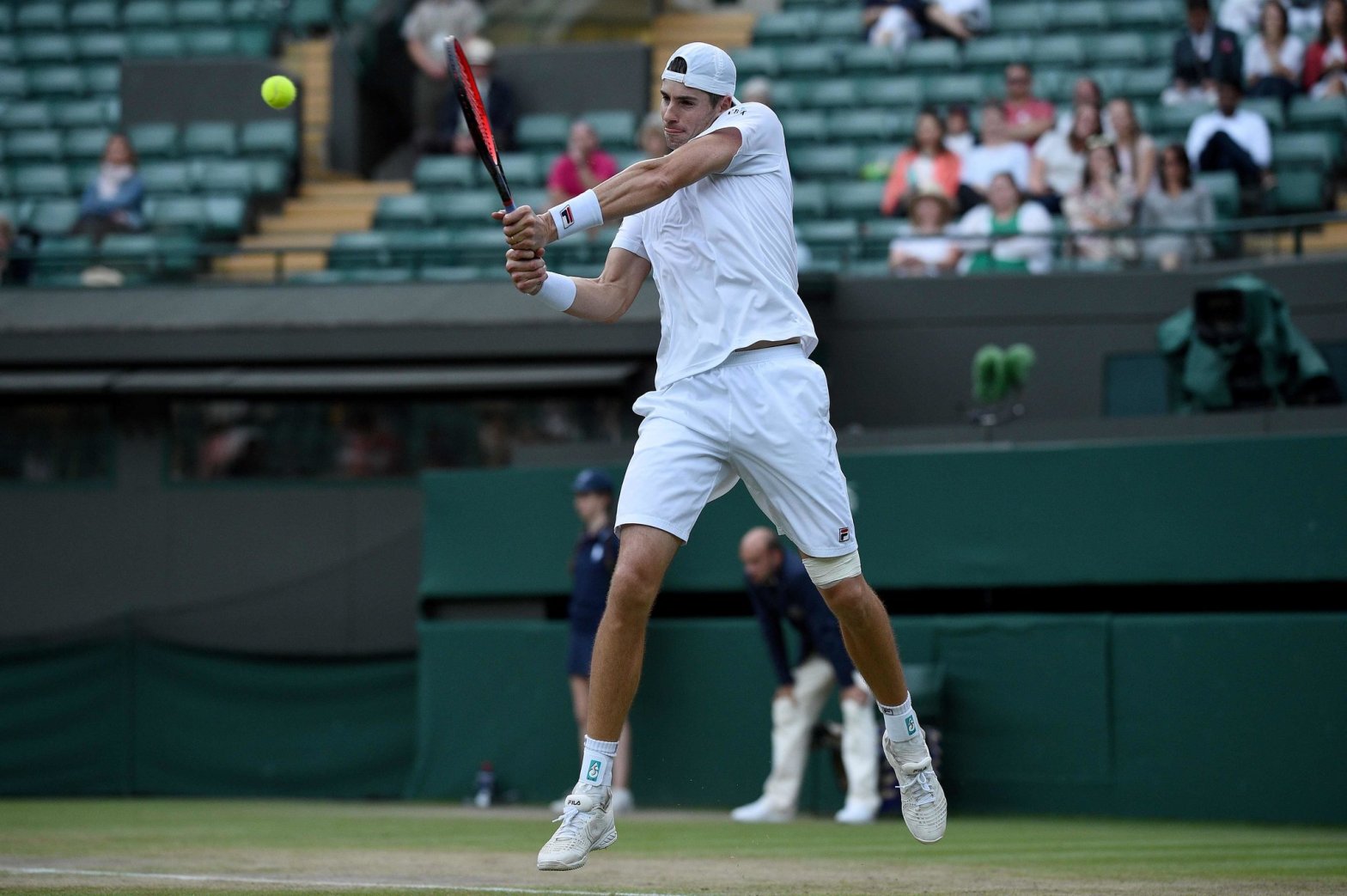
This tall American from Dallas, Texas is partly responsible for some of the longest matches in the history of tennis…
John Isner seems to be a man who was made to rank highly in the tennis record books. Standing at 210cm (6 foot 10 inches) tall, Isner is the 3rd-tallest man ever to play tennis professionally, beaten only by Reilly Opelka and Ivo Karlovic (both 6’11). In tennis, the taller players typically possess the strength to produce a large number of aces (unreturned serves). Isner does rank highly in this category, having made the most aces in the history of the ATP Tour with over 14,039 (at the time of writing). However, there is another category where the man from Dallas, Texas does top the standings: match length.
John Isner currently holds the world record for the longest professional tennis match in history, which will be discussed later. He also has the record for the 4th-longest match in history (3rd-longest singles match), which will also be discussed later. As unintentional as his record is, John Isner knows how to keep tennis fans on the edge of their seats. By looking at some notable examples, this article will analyse how John Isner went from ‘talented tall man’ to become tennis’s ‘marathon man’.
Before the records
John Isner was born on 26th April 1985 in Dallas, Texas. He began playing tennis in earnest at 11 and would continue playing the sport through high school and college. While he was set to start studying at the University of Georgia, an 18-year-old John Isner would make his Grand Slam debut. In August 2003, Isner and his doubles partner Pramod Dabir were given a wildcard spot at the US Open. The pair had earned the invite after winning the USTA Boys 18s National Championships earlier in the year. Making their senior debuts at Flushing Meadows on 28th August 2003, the two teenagers would lose 7-6 (7-6), 6-2 to the Spanish pairing of Álex López Morón and Félix Mantilla.
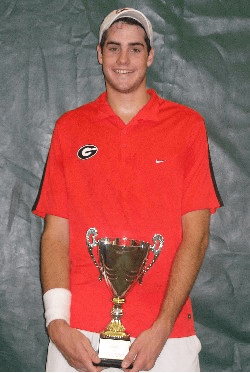
After that senior Grand Slam debut, Isner would return to his college degree. However, at the beginning of 2007, Isner, now in his senior year at the University of Georgia, joined the ATP Tour. In his first appearance on the ATP Rankings, the 21-year-old John Isner would start as World No. 844. Such was Isner’s talent that the final ATP Rankings of 2007 would place him at No. 106. At the start of the year, the young man from Dallas appeared in the Futures Series, the lowest rung of men’s tennis, in addition to competing on the second-tier ATP Challenger Tour. After spending the first half of 2007 outside the world’s top 800, John Isner would win the first notable tournament of his career on 1st July, winning the USA F14 Futures event in California to earn himself $15,000 in prize money. Later that same month, Isner would win his first Challenger event, triumphing over countryman Brian Wilson in Lexington, Kentucky on 23rd July. This pair of tournament victories would lift Isner up to No. 416 in the world rankings. Then, the day after his Challenger victory, John Isner would find himself standing across the court from six-time Grand Slam semi-finalist Tim Henman.
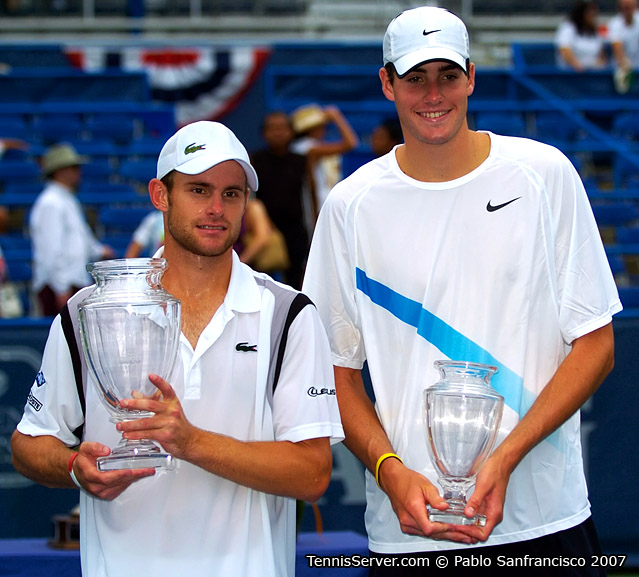
After a late withdrawal, John Isner was given a wildcard to compete at the Leggs Mason Tennis Classic in Washington, D.C in July 2007. His opponent in the first round would be former World No.4 Tim Henman. Despite his relative inexperience on the pro tour, Isner would best the former British number one 4-6, 6-4, 7-6 (7-4), claiming the first big scalp of his young career. This win would set up a match with the tournament’s eighth seed Benjamin Becker, who had reached the fourth round of the previous year’s US Open. However, Isner would recover from a slow start to knock out Becker 3-6, 7-5, 7-6 (8-6). The young American would beat qualifier Wayne Odesnik in round three, setting up a fourth-round encounter with second seed and world No. 12 Tommy Haas. Despite the considerable gap in ranking points, Isner would hold his nerve against the three-time Grand Slam semi-finalist, winning the first set 6-4. The German would require a tiebreak to level the match, and a second tiebreak would decide the all-important third set. Isner would win this 7-5, knocking out the former Olympic silver medalist to reach the semi-finals. His semi-final opponent would be 9th seed and French maverick Gaël Monfils. This semi-final would be composed entirely of tiebreaks, with neither man managing to get the better of his opponent’s serve. Monfils would triumph 7-4 in the first. However, a maturity beyond his years would see Isner win the next two 7-1 and 7-2 to knock out his third seed of the tournament. The player who had needed wildcards to compete in Futures events at the start of the year and needed one to enter this tournament was now in his first ATP Tour final. His opponent would be the top seed, U.S. No.1 and World No.5 Andy Roddick.
Unlike the rest of the matches that John Isner played during the Leggs Mason Tennis Classic, the final against Andy Roddick would end in straight sets. However, John Isner’s miraculous run to the final would end in defeat, although he would still put out a good showing. Roddick would win the first set 6-4, but Isner would improve in the second, taking the former World No.1 to a tie-break, where Roddick would win 7-4 to claim the Washington Open title. However, despite Roddick’s victory in front of his home crowd, the attention of the local media would be on the man he defeated, the unknown 22-year-old John Isner.
John Isner’s performance in the U.S. capital would move him up into the top 200 of the ATP rankings, with the tall 22-year-old now sitting at 193. It would also lead to Isner receiving a wildcard for the 2007 US Open, with Isner making his singles debut at Flushing Meadows four years after his doubles debut with Pramod Dabir. His first-round opponent would be 26th seed Jarkko Nieminen, a former US Open quarter-finalist. After losing the first set to the Finn on a tiebreak, John Isner would win the next two similarly. Then, the big-serving youngster would upset Nieminen, winning the fourth set 6-4 and claiming another scalp in his first year on tour. In the second round, Isner would face South African qualifier Rik de Voest, who was ranked higher than him. Despite this numerical difference, Isner would dispatch de Voest in straight sets. Isner’s reward for such an impressive victory? A third-round draw against three-time defending champion and World No.1 Roger Federer. The match would also see John Isner’s debut inside the Arthur Ashe Stadium. Most experts would have predicted a straight-sets victory for Federer. However, John Isner would stun the crowd by winning the first set with a 7-4 tiebreak victory. Following that surprise, Federer would fully engage himself, ruthlessly winning the following three sets 6-2, 6-4 and 6-2 to progress to the second week and end Isner’s impressive Grand Slam debut.

John Isner had been humbled by the world’s best, but his run at Flushing Meadows and his performance in Washington had completed a very impressive debut year for the youngster. However, despite his US Open success, John Isner would still be playing on the ATP Challenger Tour to close out 2007.
The 2008 season would see John Isner debut at the Australian Open, French Open and Wimbledon. All three debuts would end in first-round defeats, as would his return to the US Open later that year. His French Open exit against World No.42 Juan Ignacio Chela was particularly heartbreaking. Isner had won the first two sets quite decisively with scores of 6-2 and 6-3. However, the Argentine would respond, winning a close-fought third set 7-5 before running away with the final two sets 6-3 and 6-4. However, this year would see John Isner enter the ATP top 100 for the first time, peaking at 82 in mid-May before falling back to 144 by the year’s end. His only singles title would come in a Challenger event in Lubbock, Texas on 28th September, with the hometown boy defeating Canadian Frank Dancevic to claim the trophy. However, John Isner would win his first ATP Tour title in 2008, teaming up with countryman Mardy Fish to win the Hall of Fame Open doubles tournament in July.
After the holding year of 2008, 2009 would continue John Isner’s rise as one of the rising stars of men’s tennis. After starting the year ranked 144 in the ATP World Rankings, Isner would end it at No. 34. This rise was categorised by two impressive performances on home soil at two of the ATP’s biggest tournaments. First, Isner would reach the 4th round at the Indian Wells Masters. Receiving a wildcard for the event, he would beat the unseeded Christophe Rochus in round one (6-1, 6-4) before meeting World No.9 Gaël Monfils. Isner already had one victory over the charismatic Frenchman. He would make that two with a convincing 6-7 (5-7), 6-1, 6-4 victory. John Isner would follow up this performance with a straight sets victory over former World No.1 and two-time Grand Slam winner Marat Safin. Unfazed by the World No.23 standing across the net, the big server would triumph 6-4 6-4 to reach round four. In round four, Isner would come unstuck against 6th seed Juan Martin Del Potro but would go down valiantly after suffering a straight sets defeat featuring two tiebreaks.
The second eye-catching John Isner performance from 2009 would again come at the US Open. After reaching the 3rd round on his debut in 2007, Isner would go one better this time around. Entering unseeded, Isner would begin with a straight sets victory over 28th seed Victor Hănescu, winning the latter two sets through tiebreaks. The second-set tiebreak was notable as it ended 16-14 for the young American. After claiming this big victory, John Isner would earn another straight-sets win over qualifier Marsel İlhan (6-3, 6-4, 7-6 (7-1)). Round three would see John Isner come face-to-face with Andy Roddick once again. Their previous meeting had ended in a convincing victory for Roddick. However, this rematch would go down to the wire. With both men known for their serving abilities, the first set would go to a tiebreak, with Isner winning 7-3. He would further shock the home crowd by winning the second set 6-3, putting the 2003 US Open champion in serious trouble. Roddick would claim the third set 6-3 and just edge the fourth 7-5 to set up a deciding fifth set. As with the first, the set went to a tiebreak. As with the first, John Isner would win that tiebreak to knock out the World No.5 and claim his most significant career win. Isner would then continue his excellent form by winning the first set of his fourth-round match against Fernando Verdasco 6-4. However, the 10th seed would come back to win the next three by the same scoreline to eliminate Isner. Yet, John Isner had impressed, and good things seemed to be on the horizon for the 24-year-old.
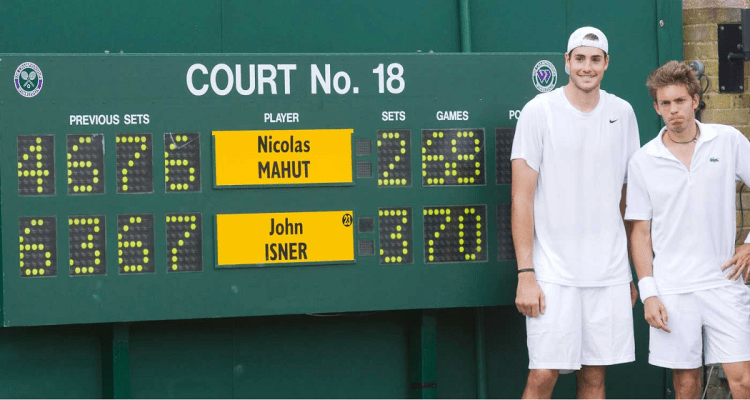
6-4, 3-6, 6-7 (7-9), 7-6 (7-3), 70-68 vs Nicholas Mahut, Wimbledon Men’s Singles First Round, 22nd June 2010
By the time John Isner stepped onto Wimbledon’s Court 18 on 22nd June 2010, the year had already been one to celebrate. He reached the finals of three ATP Tour events and won his first ATP Tour title. In January, Isner defeated Arnaud Clément 6-3, 5-7, 7-6 (7-2) to win the Auckland Open. He had then reached the finals of the US National Tennis Championships in February and the Serbia Open in May, losing on both occasions to fellow American Sam Querrey. He also teamed up with Querrey to win the doubles title at the former event. Isner also made the 4th round at the Australian Open and Indian Wells. Entering his first Grand Slam as a seeded player, Isner would hand defeat to the unseeded Andreas Seppi, Louk Sorensen, and Gaël Monfils (again) before exiting at the hands of eventual runner-up Andy Murray in round four. At Indian Wells, John Isner was given a bye into round two where, in a future echo, he would defeat qualifier Kevin Anderson 6-3, 7-5. He would then get the better of doubles partner Sam Querrey in round three to face Rafael Nadal in round four. After losing the first set to Nadal 7-5, Isner would win the second 6-3. However, the ruthless Spaniard would then claim the all-decisive third set 6-3 to claim the predictable victory.
By the time Wimbledon rolled around, John Isner had risen to 19th in the ATP World Rankings, completing a remarkable three-year rise for the 25-year-old. He would enter Wimbledon as the 23rd seed but would be given a favourable draw in the first round, where he would face qualifier Nicolas Mahut. Mahut had been a pro since the year 2000. He had reached a career-high ranking of 45 in 2007 but had since fallen back to 148 by the time of his match with Isner. Isner was making just his second appearance in Wimbledon’s main draw, his previous appearance ending in the first round in 2008. Mahut had progressed beyond Wimbledon’s first round on two occasions, with his best performance being a third-round exit to Roger Federer in 2006. However, the Frenchman had been an inconsistent presence at the Grand Slams since 2008, often requiring a wildcard or qualifying to reach the main draw. However, Nicolas Mahut did hold a victory over Isner in their sole previous meeting. At the 2008 Queens Club Championships, Mahut would defeat Isner 6-4, 7-5 to advance to the tournament’s third round. This rematch would be far from straightforward for either player.

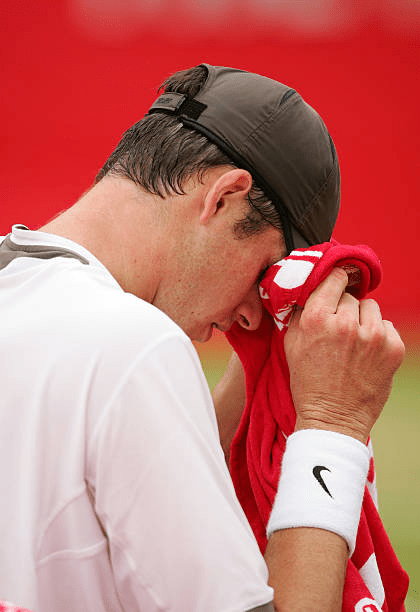
John Isner and Nicolas Mahut would step out onto Wimbledon’s Court 18, the smallest of Wimbledon’s ‘show courts’, at 6:13pm on Tuesday 22nd June. Due to the start time, this first-round encounter would presumably be the last match of the day, with about three hours left before play finished on the courts outside Centre Court for the day. However, if this match was decided in three or four sets, it was likely that Isner and Mahut could have their match completed by the end of Tuesday.
Nicolas Mahut would serve first and go 1-0 up without conceding a point. In his first service game, John Isner conceded the first point on his own serve but would also score his first ace to level it up at 1-1. Mahut would then score his first ace before going 0-30 up on Isner’s serve before the American would recover to level the match at 2-2 with two more aces. Then, Isner would get 15-30 on Mahut’s serve before the Frenchman would hold to win his third game. The first set would then go to serve, with both players looking pretty comfortable. However, in the ninth service game of the third set, with the scores level at 4-4, John Isner would get the match’s first break point. After Mahut had gone 40-15 on his own serve, a double fault would help Isner take the game to deuce. A second double fault would give the advantage to Isner, and then the American would then break his opponent to go 5-4 ahead. Isner would hold his serve to win the first 6-4 after 32 minutes. A fairly even first set that required only one break to decide it in John Isner’s favour.
After losing the first set, Nicolas Mahut responded quickly. After winning his first service game, Mahut would break John Isner’s serve, holding the American to love to go 2-0 up and then holding his own serve to lead 3-0. Mahut would even threaten a second break, leading 0-30 on Isner’s serve before the 23rd seed would win his first game of the second set with four points in a row. After this early wobble for Isner, the rest of the second set would go entirely on serve, with both men looking assured, aside from a couple of double faults. Isner would even land three aces to bring the score to 5-3 after being tied at 30-30 on his own serve. However, this set had been decided early in Nicolas Mahut’s favour, and the world no. 148 would take six points to take a 29-minute second set 6-3. At this point, the two men had been on court 18 for 61 minutes. Even though this match was tied at one set apiece, the two men were making quick work of it as the clock read 7:11 in the evening.
The third set would go entirely on serve, and it was unsurprising that it would be decided by a tiebreak. The match’s first two sets had been decided by a single break point. Aside from Nicolas Mahut’s excellent start to the second set and some 0-30 situations, Mahut and John Isner had been relatively untroubled in their own service games. This fact would become more evident in this third set. Out of the twelve service games, only 13 out of 61 points played would be won by the man returning. Two of these points were double faults. The closest thing that either man came to breaking their opponent’s serve would come in the final regular service game of the set. After Mahut had gone 30-0 up on his own serve, Isner would peg him to 30-30. However, Mahut would soon land two points to take the set to extra innings.
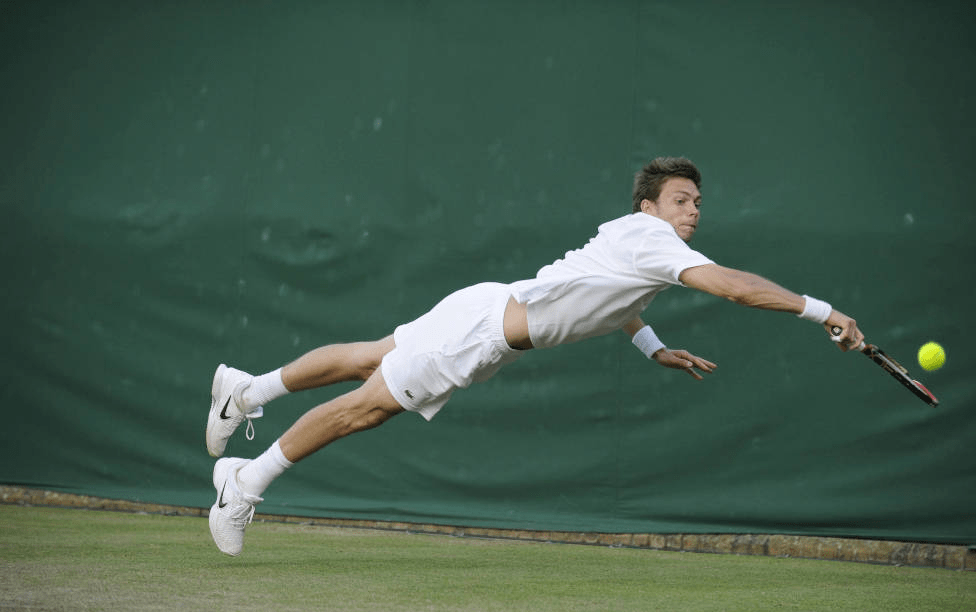
Once in the tiebreak, Mahut would race to a 3-0 lead, but Isner would soon recover this deficit to level the scores at 4-4 with an ace. Isner would then hit another unreturned serve to move 5-4 ahead and within two points of taking the third set. However, it was Mahut’s turn to hit an ace and level the tiebreak. The Frenchman would get a set point at 6-5 before two points in a row would hand the set point over to Isner at 7-6. However, Isner could not capitalise, and Mahut would win three successive points to win the tiebreak 9-7 and the third set 7-6. After a 49-minute third set, Nicolas Mahut now led John Isner two sets to one in this Wimbledon first-round encounter. The two men had spent 1 hour and 50 minutes on Court 18, with the clock striking 8pm as the 4th set got underway.
As had been the case with the third set, the fourth set would again feature no breaks of serve and would eventually be decided by a tiebreak. This fourth set would feature a combined 19 aces, and all but two of the service games would feature an ace from either John Isner or Nicolas Mahut. Mahut would even land three aces in his first service game to take an easy 1-0 advantage. Isner would then hit two of his own to level the scores. In a set which featured no breaks of serve, Isner would come the closer of the two players to achieving one. In the 5th game of the set, John Isner would earn seven break points on his opponent’s serve but would fail to win any of them in a game that featured seven deuces and ended with a Mahut hold. Isner would then earn another break point in Mahut’s next service game, only for the Frenchman to again take the score to deuce before holding serve to lead 4-3. On the other side of the net, Mahut would get 0-30 and 30-30 on Isner’s serve but would not come close to earning a single break point. However, both men would stand firm, taking the fourth set to another tiebreak. Nicolas Mahut would take advantage of an Isner double fault in the tiebreak to lead 3-1. However, on this occasion, John Isner would win six successive points, including two Mahut double faults, to win the tiebreak 7-3 and take the fourth set 7-6, levelling the match. After the longest set of the match, one lasting 64 minutes, John Isner and Nicolas Mahut were heading to a deciding fifth set after 2 hours and 54 minutes of play.
The fourth set would finish at 9:05pm. With the sun starting to set around SW19, Court 18 lacking significant floodlighting, and with no knowledge of how much longer this match could continue, the decision was made to halt this match before the start of the fifth and final set and finish the match the following afternoon. At 2:05pm the next day, John Isner and Nicolas Mahut would return to Court 18 to begin the final set of their first-round match. For a match that had gone to five sets, the first four had only lasted 2 hours and 54 minutes. At that rate, somewhere between 3.5 to 4 hours wouldn’t be a bad shout for the match length. However, with the previous sets being decided by tiebreaks and the final set not containing one, the fifth set would go as long as possible until one man had a two-game advantage over his opponent. When Isner and Mahut began their final set, nobody on Court 18 knew how long this match would go. With a full line-up of matches set to follow them and the winner’s second-round match scheduled for the following day, nobody expected what would happen next.
John Isner would begin the fifth set. He would serve three aces to win his first service game pretty quickly, with Mahut only taking one point. The American would then go up 15-30 on Mahut’s serve, only for the Frenchman to recover to win three points in a row to level the set 1-1. After this would begin the set that made this match legendary. Service game after service game, Isner and Mahut would manage to hold their nerve and hold serve, meaning the set would continue. The pair would sail past 6-6, meaning that this final set would undoubtedly have been decided by a very long tiebreak if fifth-set tiebreaks existed back in 2010. The first chance either player would have to win the match would come when Nicolas Mahut was serving 9-10 behind. Mahut would begin the game with an ace and lead 30-15. However, consecutive double-faults would gift Isner his first match point. Yet, Mahut would serve another ace to take the game to deuce before winning two more rallies to level the set at 10-10. Isner would almost force a deuce on Mahut’s next serve, but again the World #148 would remain resolute. At one point, Mahut would serve a perfect game, hitting four aces to increase the score to 18-18. When this happened, Wimbledon officials tried re-arranging the day’s match card and court placements around this ongoing encounter on Court 18.
John Isner had the easier job of winning this match between the two men. Isner had to hold serve before attempting to break Nicolas Mahut, while Mahut had to break his opponent’s serve before winning the match on his terms. Isner was attaining more points on his opponent’s serve than Mahut was gaining on his, and the tall American looked more likely to achieve a match point. However, both men would soon have to expend quite a bit of energy to win their service games back-to-back. At 23-23, Isner would serve two aces to go up 40-15, but Mahut would take the game to a deuce at 40-40. A third ace would give Isner the advantage, but Mahut would force a second deuce which Isner would eventually win. Then, on Mahut’s serve, Isner would lead 0-30 and force a deuce after Mahut had recovered to lead 40-30. Mahut would gain an advantage, but a double fault would force a second deuce. Isner would force a third deuce before his French opponent successfully held his serve. After that pair of scares, the two men on Court 18 would more confidently hold their serve as the summer sun moved around the sky.
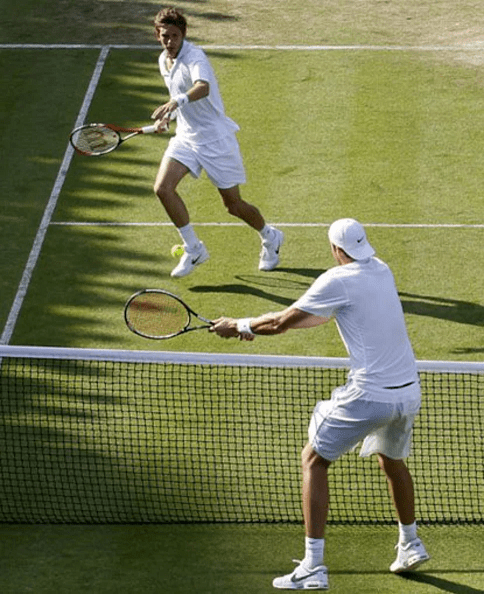
Isner would gain two more match points on Mahut’s serve when leading at 33-32. Mahut had scored the first points to lead 15-0, but Isner had soon won three rallies to go up 40-15 and threaten to end this 5th set in its 66th service game. Yet, despite facing two match points, the 28-year-old Frenchman would show resolve to score four points in a row to extend this set a little longer at 33-33. Mahut would soon threaten Isner’s serve with two break points at 35-35 but could not convert them. He would also force deuce at 39-39, with the Frenchman growing in confidence as the day progressed. However, the match would soon return to both men safely holding serve, with neither managing to get more than 40-30 in their opponent’s service game. The match would soon go so long that the scoreboard inside Court 18 stopped working after 47-47, having not been programmed to go that high. The crowd inside the court were asked to follow the online score available on the Wimbledon website.
As afternoon turned into evening and the fifth set passed 100 games, Mahut would gain two more break points on Isner’s serve. With the set at 50-50, Mahut would win three straight points to lead 40-15. However, the World No. 19 would respond by landing four consecutive points to take a 51-50 advantage. It would soon get to the stage where this first-round match would have to be stopped for oncoming darkness for a second straight day unless either man could find a way to win. That would almost come deep into the late evening. At 9:05pm, with John Isner leading 59-58, Mahut needed to hold to take this match into a third day. The Frenchman would begin the game with an ace but follow up with a double fault to bring Isner in at 15-15. Mahut would win the subsequent two rallies to lead 40-15, priming him for the service hold, but Isner would manage to take the game to deuce. A second double fault from Mahut would hand Isner a fourth match point of the day. However, Mahut’s 95th ace of the match would force a second deuce, and he would win the following two points to hold his serve. At this point, Wimbledon officials were forced to halt the match due to low lighting, with the 5th set tied at 59-59 and no apparent end to this match. The crowd inside Court 18 were so enthralled with the outstanding performances of these two marathon men that the players exited the court among chants of “We want more!” Ten hours played, with more set to come the next day.
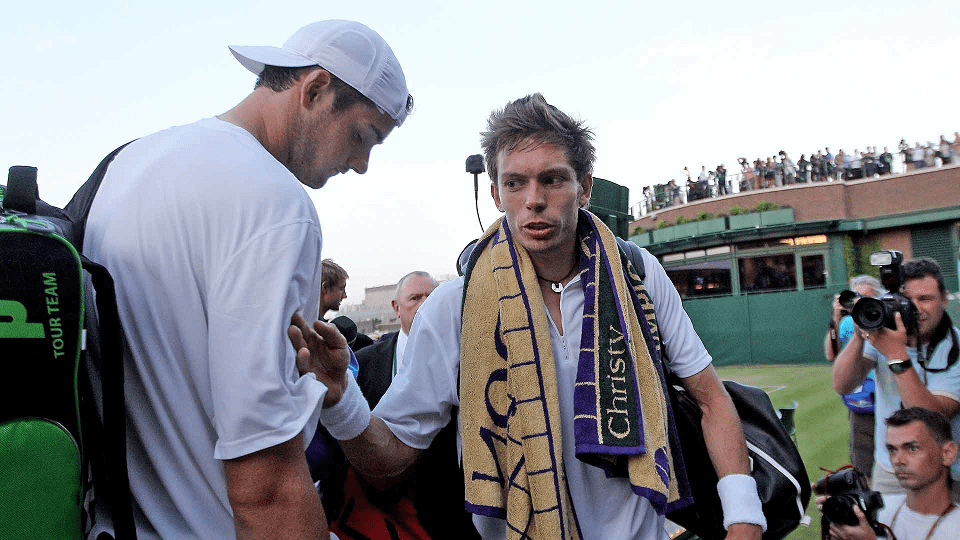
On the afternoon of Thursday, 24th June 2010, the day on which both John Isner and Nicolas Mahut would have been initially scheduled to play their second-round match of the Men’s Singles competition, the two exhausted men would return to a jam-packed Court 18 to continue playing their 1st-round match with the match tied at 59-59 in the fifth and final set. By this point, news of their exploits had gone around the world, and the pair needed an escort to get onto the court. Court 18 was now the hottest ticket at Wimbledon.
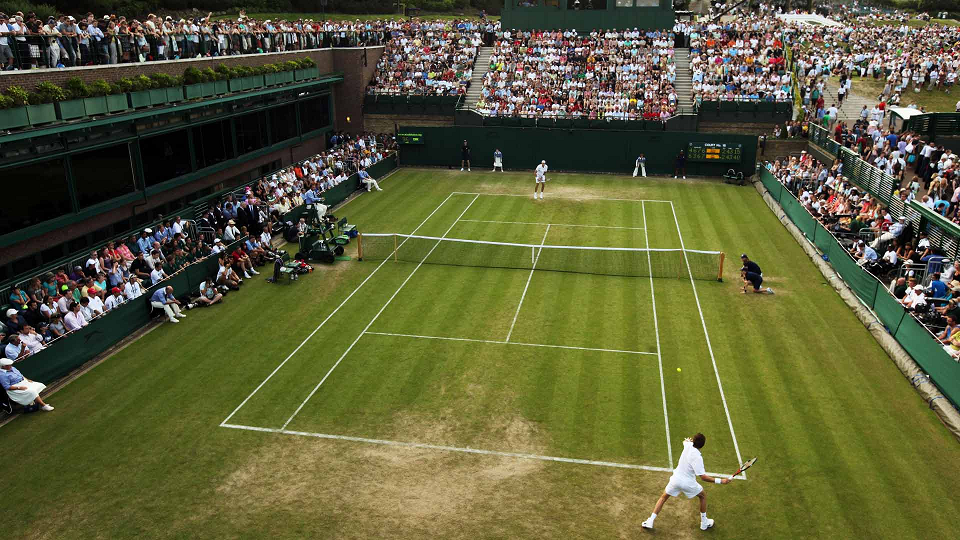
On the first service game of the day, played at 3:30pm, John Isner would begin with a double fault. He would then win two points, including an ace, to lead 40-15. However, Mahut would quickly take the game to 40-40 and deuce. A second ace would give Isner the advantage point, and another won rally would see him lead 60-59. After this early scare, the two men again began to dominate their service games, with the match moving swiftly. This match would not run for much longer. After an hour of play, John Isner would serve to hold at 68-68. Mahut would surprise Isner by winning the first two points to lead 0-30, potentially threatening a break. However, two straight aces would level the game at 30-30. He would then score the following two points to hold serve and lead 69-68. Now, it was Mahut’s turn to hold serve for the 69th time in succession.
The two players would trade points for 15-15. However, with Isner stranded at the back of the court, Mahut would make an unforced error, hitting a drop shot which would have put him up 30-15 into the net, giving the lead to his opponent. Mahut would recover to 30-30. However, in the next rally, Isner would hit an inside-out forehand that Frenchman could not reach to earn his 5th match point. Then, after 67 minutes of action on the 3rd day, John Isner would hit a backhand down the line to win this game, breaking Nicolas Mahut’s serve and finally winning this 1st-round match after 11 hours and 5 minutes with a final scorecard of 6-4, 3-6, 6-7 (7-9), 7-6 (7-3), 70-68. John Isner would fall to the ground, his legs high in the air as Court 18 erupted like he’d just won the final. He would run to hug the defeated Mahut at the net as both players received a deserved standing ovation. For their herculean efforts, John Isner and Nicolas Mahut would receive crystal bowls and champagne flutes on court from British tennis legends Tim Henman and Ann Haydon Jones.
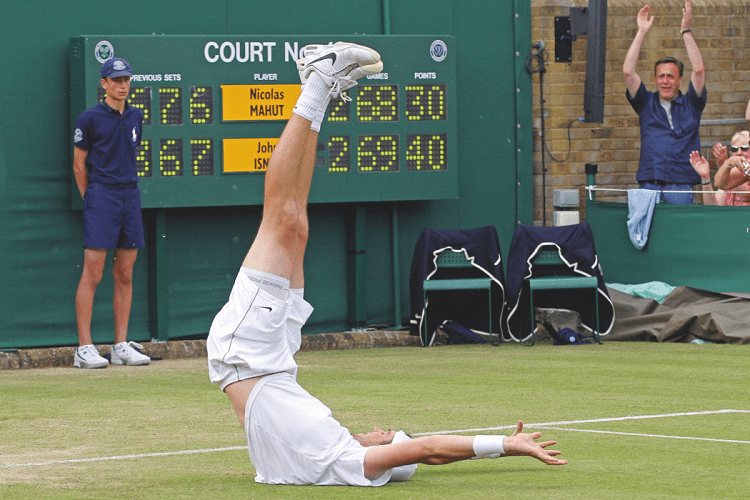
Interviewed on the court by the BBC, Isner would say of Mahut, “What more can you say? The guy’s an absolute warrior. You know it stinks someone had to lose, but to share this day with him was an absolute honour. I wish him nothing but the best, and maybe I’ll see him somewhere down the road, and it won’t go 70-68.”
Mahut would say: “John deserved the win and just served unbelievab[ly). I don’t know how many aces he did, but he’s a champion. Like he said, it was an honour to play the greatest match ever at the greatest place to play tennis, Wimbledon. It’s the greatest tournament, and we just played the greatest match ever.”

The match between John Isner and Nicolas Mahut would break numerous tennis records. With an on-court time of 11 hours and 5 minutes spread across three days, the match would set a new record for the longest match in tennis history. It would completely obliterate the previous time set by the first-round match between Fabrice Santoro and Arnaud Clément at the 2004 French Open, which lasted 6 hours and 36 minutes. The fifth set alone between Isner and Mahut lasted 8 hours and 11 minutes, making it the longest set in tennis history. With their record time of 11 hours and 5 minutes, Isner and Mahut would spend more time on the court in one match than the total time spent on the court by Serena Williams in seven matches en route to winning the Ladies’ Singles title.
Tennis records set by the John Isner-Nicolas Mahut match at the 2010 Wimbledon Championships
| Record | Statistic |
|---|---|
| The longest match in tennis history (time) | 11hrs 5mins |
| Longest set in tennis history (time) | 8hrs 11mins |
| Longest on-court time on a single day | 7hrs 4mins |
| Most games in a single match | 183 |
| Most games in a single set | 138 (5th set) |
| Most aces in a match by one player | 113 (Isner) |
| Total aces in a single match (both players) | 216 |
| Consecutive service games in a singles match | 168 |
| Most games won by a winning player in a single match | 92 (Isner) |
| Most games won by a losing player in a single match | 91 (Mahut) |
| Most points won in a single match | 502 (Mahut) |
| Most points in a single match | 980 |
After solidly playing tennis for three days and making tennis history in the process, you would forget that John Isner still had more matches to play at Wimbledon in 2010. Isner’s reward for his historic first-round victory over Nicolas Mahut was a second-round draw against the unseeded Dutchman Thiemo de Bakker. De Bakker had needed five sets to win his first-round match against Santiago Giraldo, including winning the fifth and final set 16-14 to end a match that lasted 5 hours and 23 minutes. However, de Bakker had competed on the court for half the time of Isner and benefitted from a day’s rest. It, therefore, came as little surprise that the Dutchman would dispatch a visibly exhausted John Isner 6-0, 6-3, 6-2, knocking out the 23rd seed in quick order. After taking 11 hours and 5 minutes to win his first-round match, Isner would lose his second-round match in 1 hour and 14 minutes. However, while John Isner may have been disappointed with a second-round exit at Wimbledon, he still managed to ensure a place in the tournament’s and tennis’s long history.
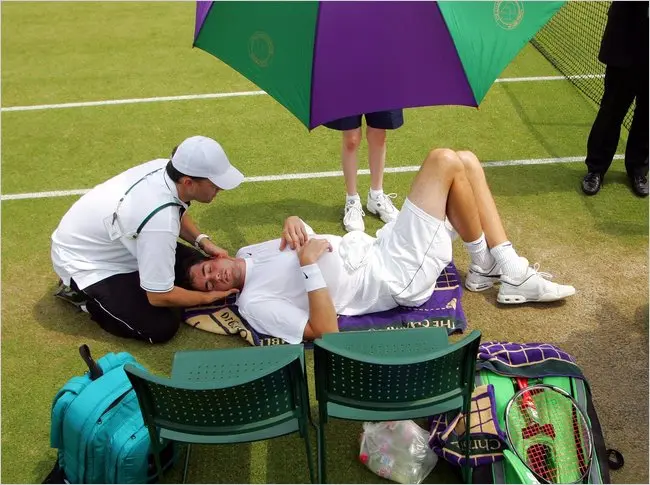
At the 2010 ESPY Awards, John Isner and Nicolas Mahut were awarded the “Best Record-Breaking Performance”, beating Usain Bolt and Roger Federer to the prize. These two players, who were mainly unknown before they stepped onto Court 18 on 22nd June 2010, had become the talk of the sporting world, and their efforts had now been recognised.
The year after their history-making match, John Isner and Nicolas Mahut would meet again in the first round of the 2011 Wimbledon Championships. John Isner would also be the victor on this occasion. However, this time, it would only take him 2 hours and 3 minutes to beat Mahut 7-6, 6-2, 7-6.
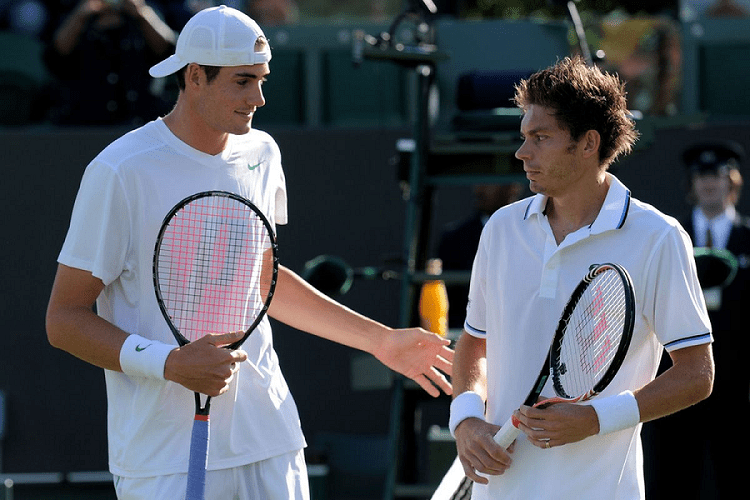
4-6, 6-3, 2-6, 7-6 (7-5), 10-8 vs David Nalbandian, Australian Open Second Round, 18th January 2012 (4hr 41mins)
Two years would pass before another John Isner match attracted significant tennis coverage. This second match would be a second-round encounter with the former World No.3 David Nalbandian at the 2012 Australian Open. In the time between his history-making match with Nicolas Mahut and this one with Nalbandian, Isner had gone through a slump between the end of 2010 and the summer of 2011, with his ATP ranking dropping from 19 to 47. However, he would eventually recover by winning his second ATP Tour title, the Hall of Fame Open, in July 2011. The following month, he would reach the final of the Atlanta Open, losing to Mardy Fish, before winning his third title at the Winston-Salem Open. After this impressive run in the hard court season, John Isner would produce his best Grand Slam result, making the quarter-finals of the 2011 US Open. Entering as the 28th seed, Isner would defeat the unseeded Marcos Baghdatis, Robby Ginepri and Alex Bogomolov Jr before facing 12th seed Gilles Simon in the fourth round. Isner would win three tiebreaks to knock out the Frenchman in four sets and set up a quarter-final clash with 4th seed Andy Murray. Murray would take the first two sets 6-4 and 7-5 and look on his way to a straight sets victory. However, Isner would take the third set 6-3 and the fourth to a tiebreak. Still, Murray would use his Grand Slam experience to dominate this tiebreak, winning 7-2 to end home hopes. John Isner would then end 2011 by reaching the semi-finals at the Paris Masters.
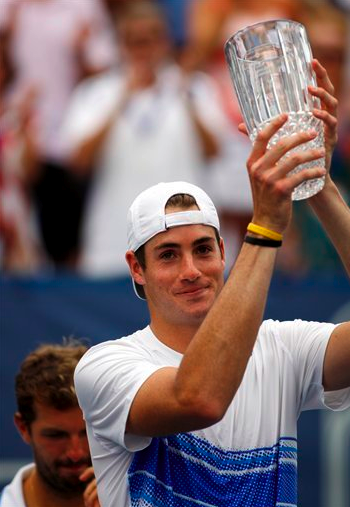
John Isner would enter the 2012 Australian Open as the 16th seed. Before facing David Nalbandian, he would begin his tournament by defeating home wildcard Benjamin Mitchell 6-4, 6-4, 7-6 (7-1). Meanwhile, Nalbandian had received a walkover as his first-round opponent Jarkko Nieminen would retire midway through the second set. Nalbandian had plenty of experience competing in the latter stages of Grand Slams, having made the semi-finals or better at all four of them, including reaching the Wimbledon final in 2002. He also had multiple career victories over Roger Federer (7) and Rafael Nadal (2), including winning the 2005 ATP Tour Finals and the 2007 Madrid and Paris Masters. From 2003 to 2009, Nalbandian spent 232 weeks inside the top 10 of the ATP World Rankings. However, David Nalbandian had slipped to 87 in those same standings when he faced John Isner in Melbourne. Based on their rankings and respective form, Isner would be expected to win this match. However, Nalbandian would be a tricky customer who had the experience to eliminate the 16th seed.
John Isner would serve first, but Nalbandian would break the American’s strong serve to lead 4-3 in the first set. In the next game, Isner would get a break point on Nalbandian’s serve, but the Argentine would force a second deuce and win the game to lead 5-3. Isner would serve three aces to hold serve at 5-4. However, Nalbandian would then hold his service game to love to take the first set 6-4 after 47 minutes.
Isner would then find his serve broken again in the first game of the second set. Nalbandian would go up 40-15 and successfully convert two break points when he came to the net to divert Isner’s forehand across the court away from the American. However, this time Isner would successfully break back on Nalbandian’s serve to tie the second set 1-1. Isner would then successfully hold serve to take a 2-1 advantage, finishing with an ace. He would later earn another break point on Nalbandian’s serve at 3-2, but this time the veteran would hold on to level the set at 3-3. However, a few minutes later, he would dominate the Argentine, breaking his serve to love to lead 5-3, finishing with a beautiful forehand down the tramline. The tall American would then hold his next service game to take the second set 6-3 after 39 minutes and level the match at one set apiece.
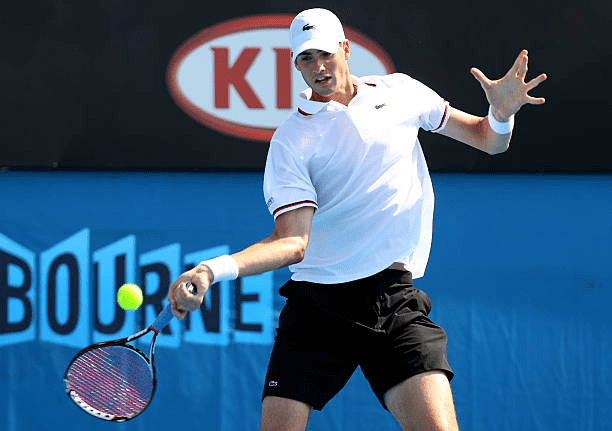
The third set would begin with four successful service holds. However, John Isner would soon find his serve under threat in the fifth game when behind 3-2. David Nalbandian’s variety of shots would keep Isner guessing, and the Argentine would lead 0-40, earning three break points on the American’s serve. Isner would save the first two, a stretched forehand would go long, and Nalbandian would break Isner’s serve to lead 4-2. Isner would manage to get Nalbandian to 40-30 on his serve, but a fantastic rally would end with the Argentine holding serve at 5-2, forcing Isner to stay in the set on his own serve or risk losing the third set. Excellent work at the net would give Nalbandian 0-30, and the South American would eventually get two set points at 15-40. Isner would send his next serve wide to the left, but the World No.16 would then send his next shot into the net to hand the third set to David Nalbandian 6-2 in 38 minutes, the shortest set of the match so far.
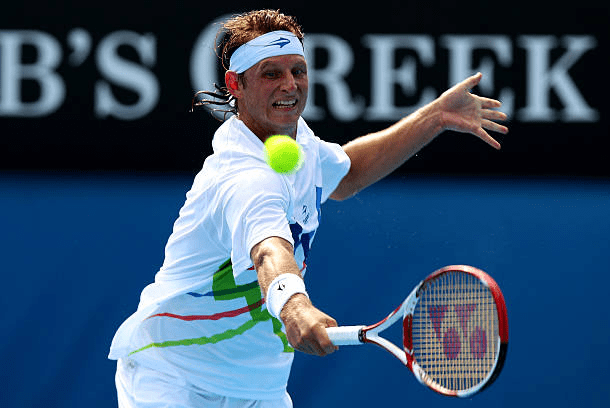
The fourth set would necessitate a tie-break after both men successfully held their nerve to bring the fourth set to a 6-6 score. Isner would take Nalbandian to deuce at 3-3, but the former World No.3 would get out of trouble to lead 4-3. In the tie-break, the two players would trade the first eleven points on serve. However, with the score 6-5 in favour of Isner, the American No.1 would force Nalbandian to set up an easy smash for him to take the fourth set 7-6 (7-5), with the fiery Argentine throwing his racket away in frustration.
The fourth set lasted two minutes short of an hour, taking the match time two minutes beyond three hours. The fifth and final set between John Isner and David Nalbandian would add two more hours to that total. The set would begin with two service holds. However, John Isner would be pressed into saving two break points from Nalbandian at 15-40 with the score at 1-1. Two aces and a strong forehand would bring the game to deuce, and another ace would secure the game for Isner. He would then be forced to do the same thing in his next service game to tie the set at 3-3. However, Isner would manage to do the same to Nalbandian on his serve, forcing a deuce at 4-3 and then gaining a break point. However, Nalbandian’s experience would produce three consecutive points and a successful hold at 4-4.
The final set would continue on serve up to 8-8, as there was no final-set tiebreak. By this point, John Isner could be seen limping as he suffered from a cramp in his right leg. On Isner’s serve at 8-8, David Nalbandian would earn a break point at 30-40. Isner would bring it back to deuce, but Nalbandian would get the advantage to gain a second break point. A 12-shot rally would end with Nalbandian sending a cross-court two-handed backhand just too far to the left, and a third deuce was called. Two more deuces would follow, including another break point for Nalbandian. Isner would send a serve down the middle that was called ‘out’ by a line judge, but umpire Kader Nouni would overrule the call, registering the shot as an ace and another deuce. Not knowing the call had been overruled, Nalbandian would try to challenge it and send it to HawkEye for a second look. However, Nouni would refuse the challenge as coming too late. Nalbandian would try to remonstrate with the official, including telling him to “shut up”, but the umpire would only encourage a frustrated Nalbandian to play on. One deuce later, Isner would finally seal the game at 9-8. Now, it was Nalbandian’s turn to stay in the match. Was his head right?
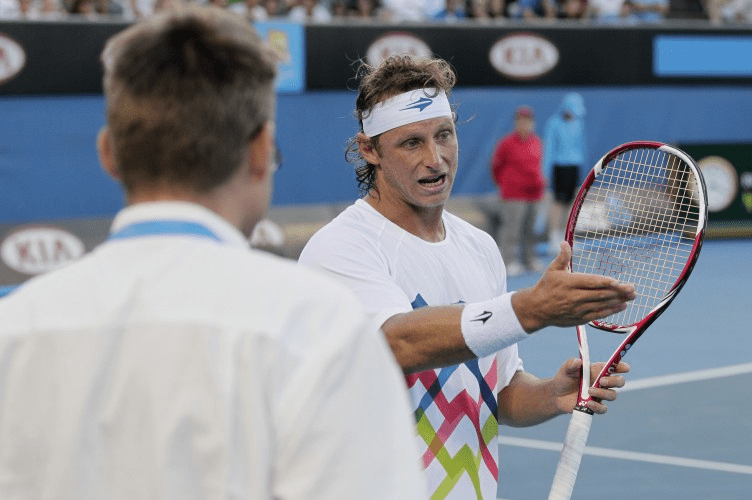
In his next service game, Isner’s forehand down the line would give him match point at 30-40, greeted with a roar from the Melbourne crowd. On the next rally, the rally would turn into a battle at the net, ending with Nalbandian sending his shot too low and awarding the match to Isner 4-6, 6-3, 2-6, 7-6 (7-5), 10-8 after 5 hours and 8 minutes of play. The home crowd would again roar in approval of a fantastic match. The only match that would go longer than this one at the 2012 Australian Open would be the final between Novak Djokovic and Rafael Nadal, which lasted 5 hours and 56 minutes.
After the match, headlines were not about Isner’s win but the controversial umpire call. David Nalbandian would criticise Kader Nouni, saying it was “ridiculous playing this kind of tournament with this kind of umpires”. In his frustration o the court, Nalbandian had also thrown water at another staff member, earning him an $8,000 fine from the tournament organisers.
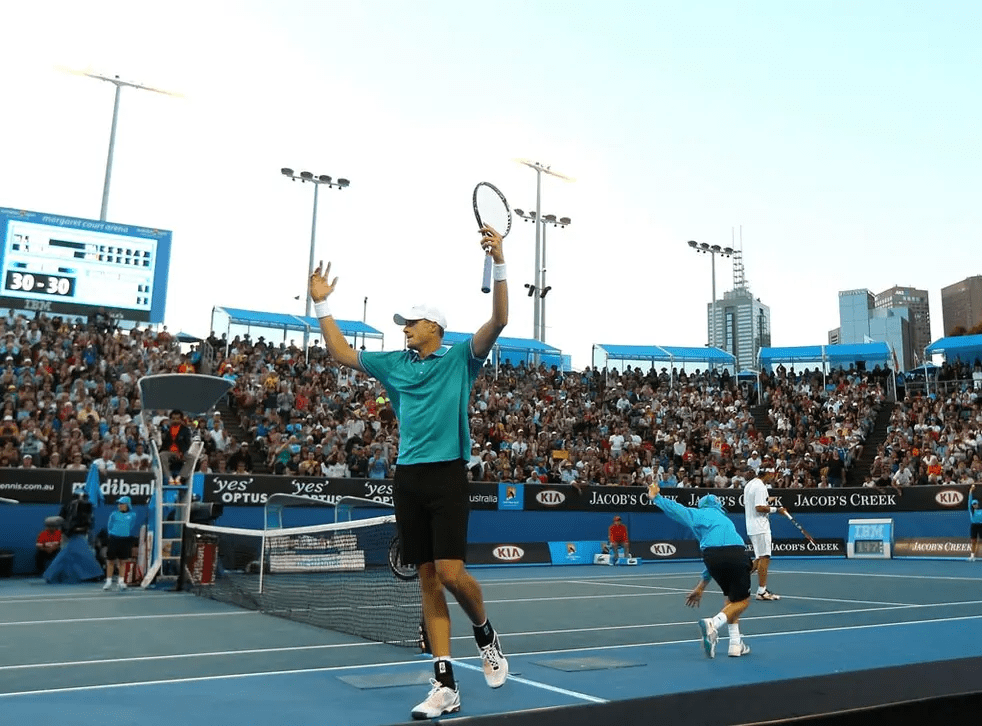
While the controversy of his match against David Nalbandian made the headlines for days afterwards, John Isner would follow up one five-set match with another five-set match. This time, Isner would go the distance with 18th seed Feliciano López. In a tit-for-tat encounter, one reflective of the pair’s closeness in the ATP World Rankings, López would win the first set 6-3 before Isner would win the second in a tiebreak. The Spaniard would claim the third set 6-4, but the American would once again level the tie in a tiebreak, winning the extra game 7-0 after neither man had been able to break the other’s serve. However, when it came to the decisive final set, the much fresher López (who had won his previous two matches in straight sets) would triumph with a dominant 6-1 display to reach the fourth round and set up a match with Rafael Nadal.
A couple of months after the Australian Open, John Isner would produce the best tennis of his career to reach the finals of the Indian Wells Masters. Fred Gil, Juan Mónaco, Matthew Ebden and Gilles Simon would fall by the wayside for John Isner to face world No.1 and Australian Open champion Novak Djokovic in the semi-finals. Once again, tiebreaks would come to John Isner’s aid. A 9-7 tiebreak would decide the first set in Isner’s favour, but Djokovic would respond effectively to win the second 6-3. With Djokovic unable to handle Isner’s height, serving power, and accuracy, and the American unable to deal with the Serb’s speed and agility, another tiebreak would be required to decide this match. However, instead of Djokovic claiming the predictable victory, Isner would win the tiebreak 7-5 to reach the final against Roger Federer and claim the biggest scalp of his tennis career. Once in the final, Isner would fall to the Swiss icon 6-7 (7-9), 3-6. However, John Isner once again proved that he could go stroke for stroke with the best in the world.
Following this performance, John Isner would fail to improve upon his third-round Australian Open performance at any of the remaining three Grand Slams. However, he would end the year with two ATP Tour tournament victories. He had triumphed in both tournaments, with Isner beating Lleyton Hewitt to win the Hall of Fame Open in July and 2nd seed Tomáš Berdych to win the Winston-Salem Open in August.
6-7 (6-8), 7-6 (7-5), 7-6 (11-9), 4-6, 24-26 vs Kevin Anderson, Wimbledon Men’s Singles Semi-Final, 13th July 2018 (6hr 36mins)
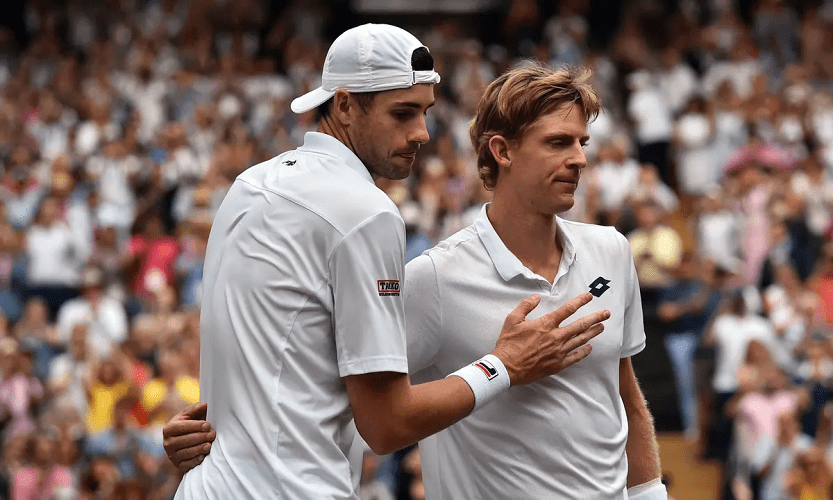
By 2018, John Isner had finally established himself as one of the best male tennis players. In the six years following his Australian Open epic against David Nalbandian, Isner had won 10 ATP Tour titles, with most victories coming on the home courts of Atlanta, Houston, Miami and Newport, Rhode Island. However, these performances, combined with wins over Novak Djokovic (2012), Roger Federer (2015) and Rafael Nadal (2017) and other top-10 players, would eventually result in Isner cracking the ATP top 10 himself in March 2018. He would remain there heading into the 2018 Wimbledon Championships, where Isner would be seeded 9th.
John Isner would begin his championships with a straight-sets victory over Belgian qualifier Yannick Maden. The second round would see John Isner face another Belgian qualifier in Ruben Bemelmans. However, this match would go the distance, with the World No. 104 threatening to cause a huge upset. Isner seemed to be sailing towards a relatively comfortable victory after winning the first two sets 6-1 and 6-4. However, Bemelmans would soon start to turn the tide, managing to hold his service games better than before. This change would see Bemelmans win the following two sets in tiebreak situations to take this second-round match to an unlikely 5th set. This final set would also be closely fought. However, Isner avoided a third tiebreak, winning 7-5 to advance to the third round. The third round would be more straightforward, with a 6-3, 6-3, 6-4 victory over the unseeded Moldovan Radyu Albot. However, John Isner’s fourth-round opponent would be a lot spikier, as he would face a young 19-year-old called Stefanos Tsitsipas. In this fourth-round encounter, Isner would eventually beat Tsitsipas in three sets. However, the young Greek prodigy would hold his own against Isner’s fast serves, recovering from a 6-4 first-set loss to take the next two to tiebreaks. Both of these would fall in Isner’s favour with scores of 10-8 and 7-4. However, Tsitsipas always threatened to steal a set, a sign of things coming from the 19-year-old. On the other side of the net, John Isner could celebrate making his second-ever Grand Slam quarter-final.
John Isner’s second-ever Grand Slam quarter-final would see him match up with another tall, big-serving player. Even though Isner had 5 inches in height on his opponent Milos Raonic, Raonic had the experience of reaching a Grand Slam final, having finished runner-up to Andy Murray in the 2016 Wimbledon final. The power of both men’s ace-heavy service games would match up equally in the first two sets, with both being settled by tiebreaks. Raonic would take the first 7-2 before Isner would level the match by winning a more hotly-contested second 9-7. After this evenly-matched pair of sets, Isner would become the one to break the deadlock in this match, taking the following two sets 6-4 and 6-3 to reach his first-ever Grand Slam semi-final.
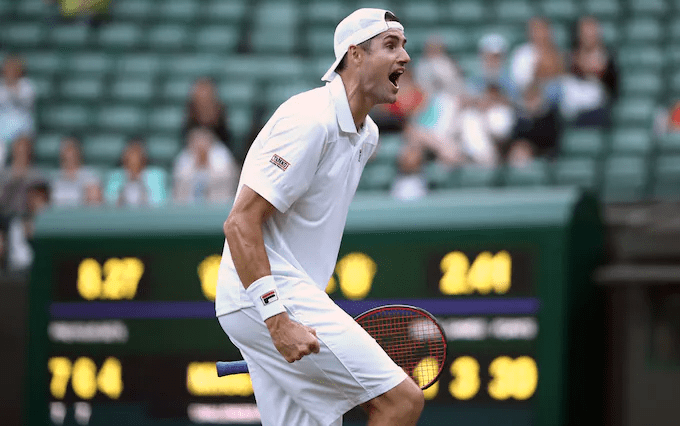
John Isner’s Wimbledon semi-final opponent would be a former Grand Slam runner-up in Kevin Anderson. The previous year, Anderson (who had only reached one previous Grand Slam quarter-final) would take advantage of a favourable draw to reach the final of the 2017 US Open. In the final, Anderson would lose pretty handily to Rafael Nadal (3-6, 3-6, 4-6). Still, this final appearance would move Anderson from 32 to 15 in the world rankings, immediately making him a player to watch. By the time of Wimbledon, Anderson had risen into the ATP’s top 10, beginning Wimbledon as the 8th seed. After defeating Norbert Gombos, Andreas Seppi, Philipp Kohlschreiber (25th seed) and Gaël Monfils to reach the quarter-finals, Kevin Anderson produced the shock of the tournament by knocking out top seed and 8-time Wimbledon champion Roger Federer. After losing the first two sets 6-2 and 7-6 (7-5), it seemed like a routine victory for Federer. However, the big South African would turn the match on its head, winning the following two sets 7-5 and 6-4 to take the defending champion to a fifth set. With the crowd on Court One firmly against him, Anderson would hold for eleven consecutive service games before finally breaking Federer to go 12-11 up. Then, Anderson would keep his nerve to win the final set 13-11, dethroning the king to reach his second Grand Slam semi-final and set up a match against John Isner.
The John Isner-Kevin Anderson semi-final was expected to be the first of two men’s semi-finals on Centre Court on Friday, 13th July 2018, an early afternoon starter ahead of a mouth-watering second semi-final between eternal rivals Rafael Nadal and Novak Djokovic. Even if the match went five sets, it was expected to finish around teatime, with the other match lighting up the Friday evening. The Nadal-Djokovic match was expected to produce the eventual winner of Wimbledon 2018, while the winner of Isner vs Anderson would serve as the runner-up in the final.
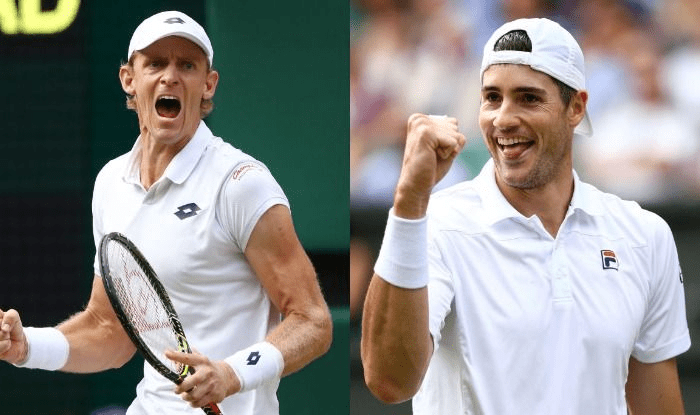
The first semi-final of Wimbledon 2018 would start at 1:10pm, with Kevin Anderson serving first. The South African would begin the semi-final with a double fault, handing the first points to John Isner at 0-15. However, Anderson would hit two aces, including one of 210 km/h, to claim the following three points and the first service game. Anderson would then get 0-15 on Isner’s first service following a passing forehand, but two aces from the American would level the set at 1-1. Isner would then force Kevin Anderson to a deuce on his second service game and earn the first break point of the match after Anderson sent a backhand long. Anderson would recover, only for Isner to get a second break point. Anderson would save that and gain an advantage, only for Isner to force a 4th deuce, showing the threat the American posed at this early stage. Anderson would then have to save a third Isner break point. Eventually, this 13-minute service game would end with Isner sending a forehand long to give the game to Kevin Anderson, with the South African No.1 holding serve for 2-1. A gripping game.
After this exciting start, most of the first set would end with both men successfully holding their serve. At 5-4, John Isner would serve to stay in the first set. Isner and Aderson would trade points until a double fault before the Grand Slam semi-final debutant gave Anderson his first break point and set point at 30-40. However, the big-serving American would use said serve to get himself out of trouble, claiming the last three points of the game (including two aces) to level the score at 5-5. Anderson would serve to love for 6-5 before Isner held serve with another ace to take the first set to a tiebreak at 6-6. Both players would win their first service points in the tiebreak, but Isner would break Anderson’s serve for 3-1. However, Anderson would then break back for 4-3 hitting a forehand pass out of Isner’s reach. The following four points would go to serve, with an ace by Isner bringing up the American’s first set point at 6-5. The pressure was now on for Anderson to hold his serve and claim a set point. An overhead shot would bring him back level, and Isner’s backhand into the net would give him his set point. Kevin Anderson would then pressure John Isner’s serve, eventually winning the first set tiebreak 8-6 after Isner’s forehand hit the top of the net. The first set went to Kevin Anderson 7-6 (8-6) after 1 hours and 4 minutes of play.
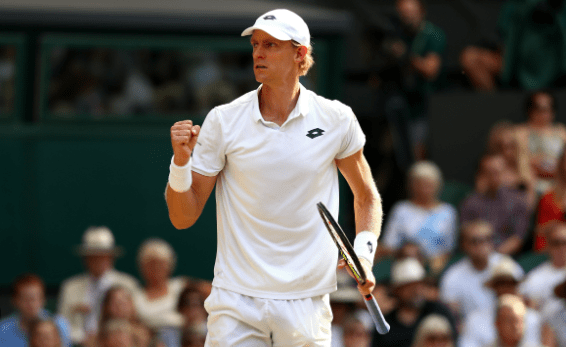
John Isner would start the second set off by serving to love, showing that he was not affected by losing the first set. Anderson would respond by only dropping one point en route to 1-1 before Isner again served to love to bring up 2-1 in 8 minutes. Following a medical timeout for a blister on his hand, John Isner would soon find his serve frequently under pressure from Kevin Anderson. Facing with break points at 2-2, 4-4 and 5-5, Isner would have to pull out some big serves and some excellent work at the net to keep himself in the the second set. The third time of asking would send this set to 6-5, forcing Kevin Anderson to hold serve for 6-6 and send this second set to a tiebreak. In this tiebreak, Isner would get two mini-breaks on Anderson, building up a 5-0 lead. Anderson would finally manage to get points on his serve before breaking Isner’s serve to get back to 5-3, but Isner would soon bring up three set points at 6-3 following an ace. Anderson would save the first two but could do nothing about the third, as John Isner would hit another ace to take the second set tiebreak 7-5 and the second set 7-6, levelling this semifinal at one set apiece after 1hr 59 mins of action. Barring a change in momentum, this match would take a while.
The third set would begin with Kevin Anderson serving to love, following John Isner’s example from the previous set. This third set would soon follow the example of the last two, with both men holding their serve without much threat of being broken by their opponent. What else would you expect from a match between the 8th and 9th seeds? However, at 4-3 with John Isner serving, Kevin Anderson’s forehand would bring up two break points on the American’s serve at 15-40. A missed Isner volley at the net and Kevin Anderson had scored the first service break of the match to lead 5-3 in the third set. The South African would now serve for the third set. However, it was now Isner turn to bring up a break point on Anderson’s serve at 30-40 after a long forehand. Another forehand error from Anderson would see Isner break back and bring the set back on serve at 5-4. The 9th seed would then hold to level the set at 5-5. Two further holds from both men would bring up a third consecutive set tiebreak. John Isner would begin this third-set tiebreak by getting a mini-break on Anderson’s serve to lead 2-0, but Anderson would bite back with a mini-break of his own for 2-2. The tiebreak would continue on serve until Isner got a series of set point at 6-5. Anderson was able to save these points at 6-5 and 7-6. However, when Isner got a third set point at 10-9, the South African No.1 could not stop it, as a wide forehand would see the American No.1 claim the third set 7-6 (11-9) as the match was about to pass the three-hour mark.
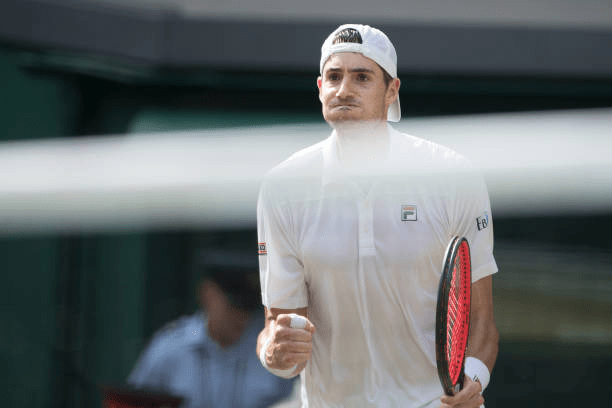
Even though John Isner was now leading this semi-final two sets to one, you would have been a fool to write off Kevin Anderson yet. The first four service games of set four would see secure holds from both players, but at 2-2, Anderson would come from 40-15 down to take Isner to deuce. Isner would fire a serve out wide to stretch Anderson, but Anderson would pull off a fantastic forehand return to bring up the break point. He would then do it again, forcing Isner into a poor volley to get the service break and lead the 4th set 3-2. However, John Isner would undo the break on Kevin Anderson’s serve in the next game. A long backhand slice would bring up break point for Isner at 30-40, and a tremendous passing shot from the man measured at 6ft 10in would see the 4th set levelled at 3-3. Both men would then hold serve for 4-4 before Kevin Anderson again brought up a break point on John Isner’s serve. At 30-40, Isner would come to the net and attempt a serve-and-volley, but Anderson would nail a backhand passing shot to earn a second break, lead 5-4 and have the chance to serve for the fourth set. In all his previous break points in this match, Kevin Anderson had failed to hold on to his advantage, with Isner breaking back at a later point. However, on this occasion, he would quickly bring up three set points on his own serve at 40-0. Isner would save all three to bring the game to deuce. An inside forehand would produce a fourth set point for Kevin Anderson, and this time he would succeed, hitting a big serve that Isner could only return into the net. Kevin Anderson would take the fourth set of the incredible Wimbledon semi-final 6-4 to level the match at two sets apiece, with a deciding fifth to follow. Three-and-a-half hours of great tennis gone, and with no more tiebreaks to come, the endpoint of this match was not inevitable.
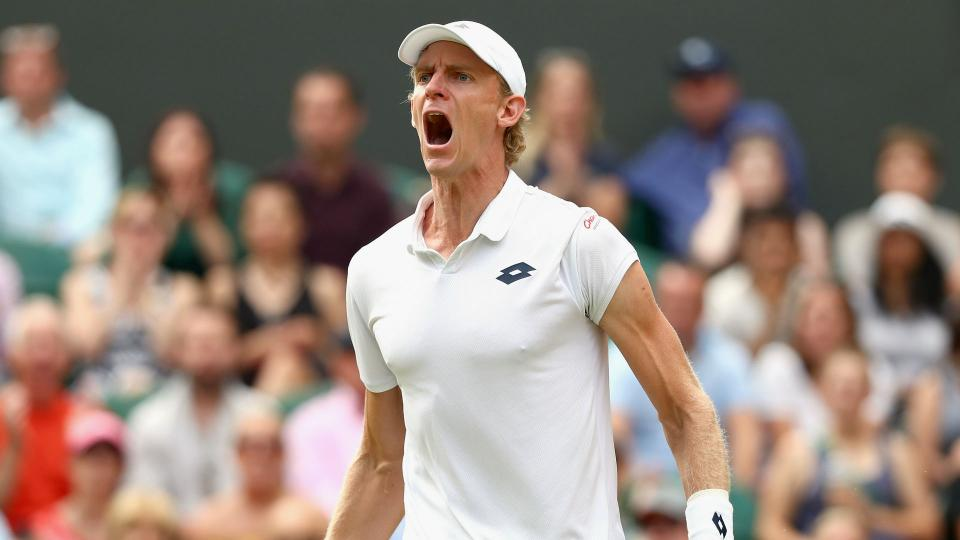
The fifth and final set of the Wimbledon semi-final between John Isner and Kevin Anderson would begin at 4:52pm British Standard Time. Another set like the previous one, and Novak Djokovic and Rafael Nadal would be on the court by 6pm. Another like the three before that, who knew. John Isner would begin the final set by serving three aces to take a 1-0 lead. Kevin Anderson would double-fault once but also hold to draw at 1-1. After nearly four hours on the court, you would think that one of Isner and Anderson would start to falter on their own serve. However, the length of time only seemed to have strengthened their resolve as both men quickly racked up the games without many dropped points as the clock ticked on. By 5:18, 26 minutes into the set, Isner led 5-4, with all nine games going to the server. If the American could break Kevin Anderson’s serve next, he would win a concise fifth set 6-4 and be in the shower before 6pm. However, Anderson was not ready to go home yet and would level at 5-5 four minutes later. This is how the endgame of this match would quickly unfold: Isner holds to take a one-game lead and put pressure on Anderson’s serve, but Anderson holds pretty comfortably to level the score.
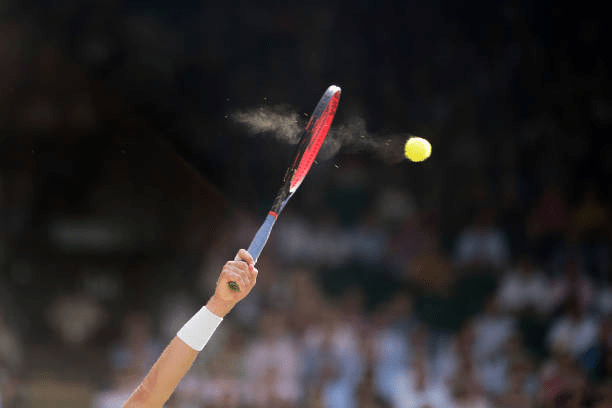
At 7-7, Kevin Anderson would earn the first break point in this final set, leading 0-30 and then 30-40. With four hours and 30 minutes played, a successful break followed by a hold would claim the match for Anderson. However, Isner would land three straight aces to take the game at 8-7. Two games later, it was John Isner’s turn to worry about Kevin Anderson’s serve, except in this case, the prize on offer was match point, not break point. Anderson seemed comfortable as he built up a 40-15 advantage, but great work from Isner would cause a deuce. Anderson would dust himself down and land the 75th ace of the semi-final to level at 9-9. At 6:04pm, the two Wimbledon semi-final debutants would ring up 10-10 in the fifth set. Anderson would earn another break point on Isner’s serve at 10-10, but three points in a row would close that down quickly. By the time Kevin Anderson started serving at 6:10, this semi-final had lasted 5 hours and was still ongoing. By this point, those who had bought tickets to see Novak Djokovic and Rafael Nadal would start to wonder whether they would actually get to see them at all on this Friday evening. by the time Anderson levelled the match at 13-13, this semi-final was now among the top 25 longest matches tennis history. There was more tennis still to come. Still, the match would continue as these two tall men would find energy reserves that few others could.
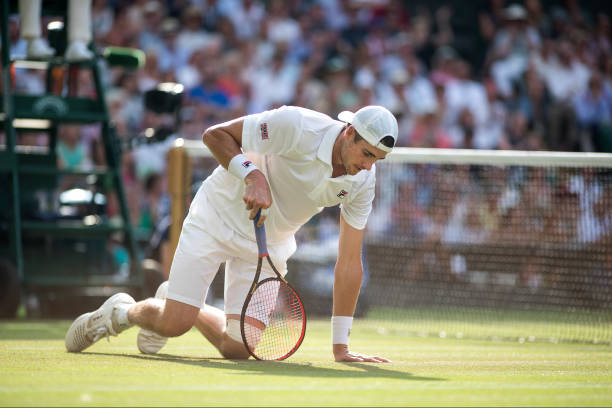
By 6:41pm, John Isner and Kevin Anderson had brought 30 games in this fifth and final set after 5hrs 30 minutes of tennis. Either man who won this match would be exhausted come the Wimbledon final on Sunday, even with a day’s rest. By the time Kevin Anderson levelled the set at 17-17, this fifth set had lasted 2 hours and now accounted for 1/3 of the semi-final’s entire length. However, on John Isner’s 18th service game of the match, Kevin Anderson would bring up the first break points since 7-7. Two long, tired forehands from Isner would put Anderson up 40-15. However, two aces would bring it back to deuce. After getting the 90th ace of the match and his 213th of the 2018 Wimbledon Championships (a new record), Isner would get the advantage with another huge serve that Anderson returned into the net. A backhand pass would save the match at 18-17 three minutes before 7pm. At 7:10pm, with the score at 20-19 to Isner in the fifth set, the semi-final would pass 6 hours, making it the second-longest match in Wimbledon history, beaten only by Isner’s match with Nicolas Mahut eight years earlier. Two minutes later, Kevin Anderson would complete the 40th match of this final set at 20-20. By 7:15pm, the semi-final had become the 7th longest-match in tennis history.
As exciting and enthralling as this match was, the crowd on Centre Court was starting to get seriously restless. Each held game was beginning to bring a mix of cheers and groans from a crowd who wanted to see the second semi-final between Djokovic and Nadal, the more significant match. However, the likelihood of the match even getting started on Friday was diminishing as this match continued into the summer evening. On the court, Kevin Anderson would force a deuce on Isner’s serve at 21-21, but Isner would hold on again. As the clock ticked onto 7:30pm, the decision was being relayed to broadcasters that the Novak Djoovic-Rafael Nadal semi-final would instead be played the following morning before the women’s singles final between Angelique Kerber and Serena Williams. After sitting in the locker room for hours trying to keep busy, the two tennis legends would have to return the next day.
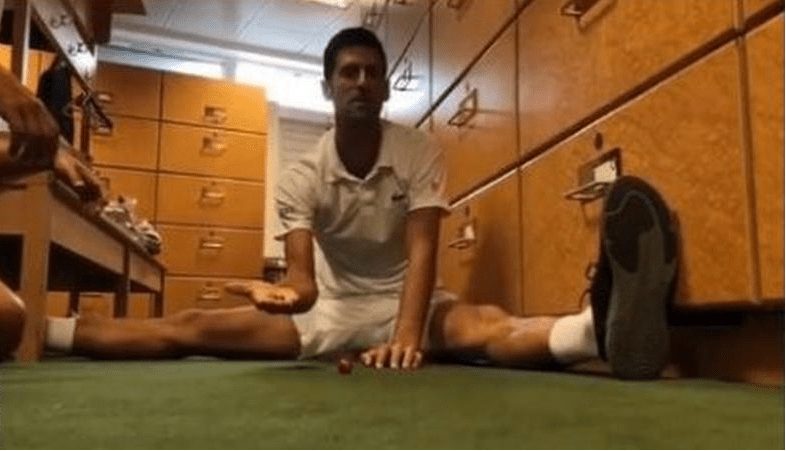
At 7:36pm, John Isner would again hold from 0-30 down on his own serve to lead 24-23 as this match became the 4th-longest in tennis history. Kevin Anderson would then hold for 24-24 and quickly go up 0-40 on a tired John Isner’s serve, earning three break points. Would he be successful this time? Isner would save one, but a backhand into the net would finally give Kevin Anderson the break of serve he needed at 25-24. All he needed to do now was serve for a place in the Wimbledon final. Isner would go up 0-15, but two aces would bring up two match points for Kevin Anderson as the crowd got excited again. Anderson would send a serve out wide, and a lazy return from John Isner would miss the sideline, ending this unbelievable Grand Slam semi-final and tennis match.
After 6 hours and 36 minutes on Centre Court, Kevin Anderson had beaten John Isner in five sets 7-6 (8-6), 6-7 (5-7), 6-7 (9-11), 6-4, 26-24, with the last set alone lasting three minutes short of three hours. In total, both players would combine for 102 aces (53 Isner, 49 Anderson), 247 winners (129 Isner, 118 Anderson) and 568 total points won (297 Anderson, 271 Isner). Isner and Anderson would play 99 games of tennis (including tiebreaks), with 50 of those coming in the final set.
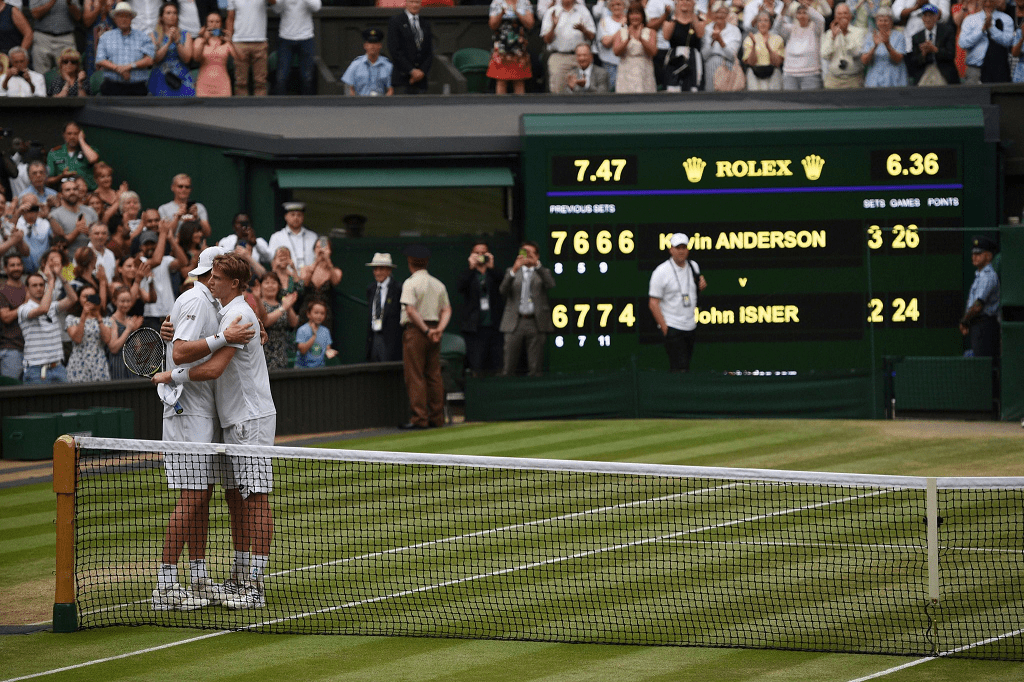
Due to the length of this mammoth, record-breaking Wimbledon semi-final, there was no time left on this Friday to play the second semi-final between Novak Djokovic and Rafael Nadal. With many expecting a potential five-setter between two of the world’s best and with little time to move the match to Court One, the decision was made to move the Djokovic-Nadal semi-final to the following morning. This would mean that the second semi-final of the men’s singles competition would occur on a Saturday morning just before the final of the women’s singles competition between Serena Williams and Angelique Kerber. That second semi-final between Nadal and Djokovic would produce a terrific match, a five-setter that Djokovic would eventually win 6-4, 3-6, 7-6 (11-9), 3-6, 10-8 to reach his 5th Wimbledon final. However, when it came to the final against Kevin Anderson, Djokovic would prove to be the far superior athlete. Despite having one fewer day of rest, the superb Serb would defeat the still exhausted South African 6-2, 6-2, 7-6 (7-3) to claim his 4th Wimbledon title.
Two weeks after his Wimbledon epic, John Isner would defeat fellow American Ryan Harrison in three sets to win the Atlanta Open for the fifth time. The following month, he would almost equal his Wimbledon heroics, reaching the quarter-finals of the US Open for the second time. After defeating Milos Raonic in a back-and-forth, five-set encounter, Isner would eventually fall to eventual runner-up Juan Martín del Potro in the last eight. Then, for the first time and only time in his career, John Isner’s 2018 season would end with the ATP World Tour Finals. Entering as the lowest-ranked player, Isner would exit at the round-robin stage after three successive defeats against Novak Djokovic, Mischa Zverev and Marin Čilić.
The John Isner-Kevin Anderson semi-final at Wimbledon 2018 would raise questions about longer matches at Grand Slams and the welfare of the players who compete in them. Beginning in 2019, to ensure that no other player would have to play for that length of time, tennis’s governing body would introduce a tiebreak into the deciding set of a match. If two players got to 12-12 in a deciding set, they would enter a tiebreak to determine the winner. The following year, the Wimbledon’s Men’s Singles Final between Novak Djokovic and Roger Federer would require this 5th-set tiebreak. Djokovic would win this tiebreak 7-3 to win the final set 13-12 and end the longest-ever Wimbledon final at 4 hours and 57 minutes with his 5th Wimbledon title. With further rule changes in 2022 lowering the final-set tiebreaker threshold to 10-10, the Isner-Anderson semi-final will likely remain untouched as one of the longest tennis matches in history.
6-7 (7-9), 6-7 (22-24) vs Reilly Opelka, ATP Dallas Open Semi-Final, 12th February 2022
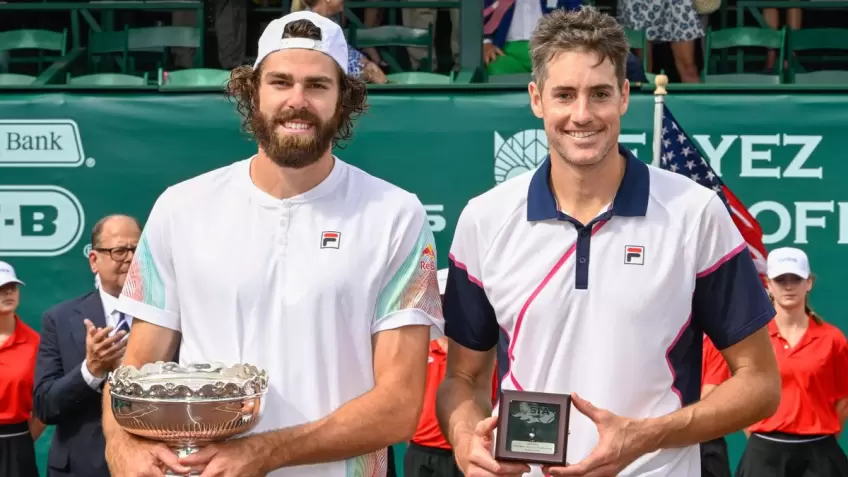
The most recent record-breaking tennis match involving John Isner would arrive in February 2022. The match would take place in the semi-finals of the Dallas Open. This competition was only the second ATP World Tour event to take place in Dallas (after a previous attempt in 1983) following the decision to move the New York Open to Texas. For whom all but two of his 16 ATP Tour titles had been won on home soil, John Isner would fancy himself to become the first-ever winner of this new ATP event. Entering the competition as the 3rd seed, John Isner would receive a bye into the second round, facing Kevin Anderson, who had bested him at Wimbledon four years earlier. However, on this occasion, Isner would get the better of his South African opponent, beating him in a full three sets, with all three being decided by tiebreaks. After beating qualifier Vasek Pospisil in the quarter-finals, Isner would face fellow American and second seed Reilly Opelka in the semi-finals.
One of only two players on tour that could boast a height advantage over John Isner, Reilly Opelka would turn pro in the summer of 2015 after winning the boys’ singles title at Wimbledon. He would make his senior ATP Tour debut in the spring of 2016, ranked as the world no. 899, bettering his ranking to 205 by the end of his rookie year. By the end of 2018, Opelka had cracked the top 100. Then, the 6ft 11in American would break through in 2019. Beginning the year ranked 102, Opelka would win his first senior ATP Tour title in February 2019, winning the New York Open. On his Wimbledon debut, he would knock out three-time Grand Slam champion Stan Wawrinka before exiting in the 3rd round. Semi-final appearances at ATP tour events in Atlanta, Tokyo and Basel would result in Opelka ending the year ranked 36th in the world. He would win his second ATP Tour title at the Del Ray Open in February 2020 while also reaching the quarter-finals of the Cincinnati Masters that same year. In 2021, Opelka would lose the final of the Canadian Open, reach the Italian Open semi-finals and make the 4th round of the US Open. By the time he faced John Isner in the semi-finals of the Dallas Open in February 2022, he had most recently reached the 3rd round of the Australian Open and now sat 23rd in the ATP World Rankings.
With John Isner holding 12 years in age over his 24-year-old opponent, this match was a case of two tall, ace-heavy, power-serving American tennis players. One was in the twilight of his career, and the other was a star on the rise, still yet to reach his career peak. Heading into this match, Reilly Opelka held a 3-1 head-to-head record against John Isner. The pair would first meet in the semi-finals of the 2016 Atlanta Open, where top seed Isner would need the complete three sets to defeat the wildcard Opelka. The rematch would come in the first round of the 2019 Australian Open, where Opelka would upset the 10th-ranked Isner in four sets, with all four going to tiebreaks, another future echo. A month later, Opelka would again beat Isner in the semi-finals of the New York Open. In another match decided entirely by tiebreaks, including a 16-14 second-set decider, the young man would win this best-of-three encounter en route to winning the tournament. The same scenario would play out in the second round of the Atlanta Open in July 2019.
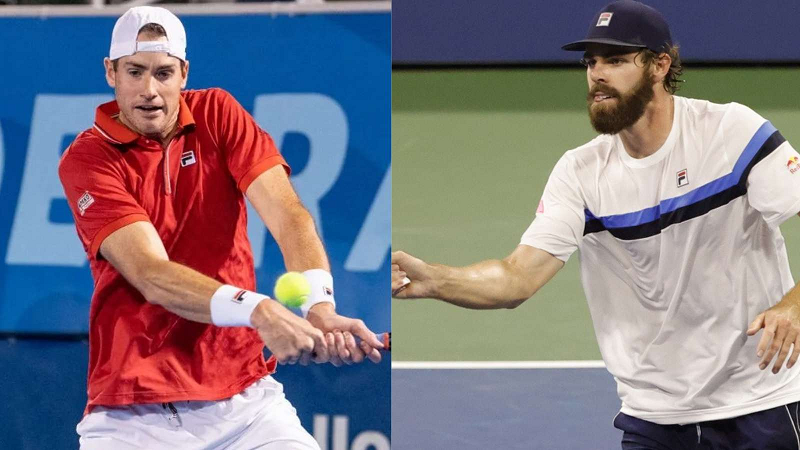
In their 2022 Dallas Open semi-final, the first set would go entirely to serve, forcing a tie-break at 6-6. The serve was the strength of both men’s games, and the crowd in Dallas would see plenty of aces in this match. At 4-3 in the first set, Opelka would even serve a perfect game of four unreturned serves. In the first set tiebreak, both John Isner and Reilly Opelka would continue to serve resolutely, with the first 15 points going to the server. However, with Isner serving 8-7 behind, Opelka’s return would send Isner out wide, with Opelka getting the decisive tiebreaking point with an easy backhand down the tramline to take the first set 7-6 (9-7).
The second set would follow the same pattern as the first set, with both men getting individual points but not winning entire games on their opponent’s serve. After 12 service games had ended without a single successful break point, the second set would also head to a tie-break. Little did anybody know how long this particular tiebreak would last. Reilly Opelk would serve first, leading to a 19-shot rally that would end with the younger man forcing Isner into a lunging forehand out wide before getting the first point with a backhand into the space he’d left behind. John Isner would then serve two aces to take a 2-1 lead. He would then break Opelka’s serve, forcing his bearded opponent to send a deep backhand into the net for 3-1. Opelka would recover to win the following three points, including two on Isner’s serve following an excellent cross-court forehand and a powerful down-the-line backhand to turn the tiebreak into a 4-3 lead for himself. However, an Isner cross-court forehand with gusto would see him win his second point on Opelka’s serve to draw at 4-4. Opelka would then win his second serve point for 5-4. A pair of aces would quickly turn the score 6-5 in Isner’s favour. Opelka would do precisely the same on his serve for 7-6, as would Isner for 8-7, giving the 37-year-old a set point. An ace from Reilly would save that set point for 8-8, but an Isner backhand fizzing past Opelka as he approached the net would give a second set point to the veteran at 9-8. However, while serving on set point, John Isner would attempt a serve and volley, only for Reilly Opelka to send a powerful backhand past him to level the tiebreak at 9-9.
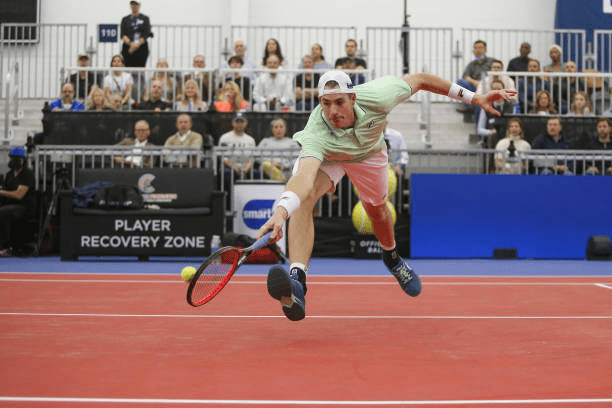
Aces from either man would bring both into double figures at 10-10 in this tiebreak, and both John Isner and Reilly Opelka would proceed to hold their serve for the following twelve points, bringing up a score of 16-16. However, Opelka’s next serve point would be taken to the net, finishing with Isner sending a shot into the net to give Opelka a 17-16 lead and match point. Isner would save this point with an ace before landing another to lead 18-17. Opelka would hold serve to gain another match point at 19-18. However, another ace and some old-school serve-and-volley from the 37-year-old John Isner would see him turn that match point into another set point at 20-19. That second point on serve on Isner would mean that this second-set tiebreak had now lasted longer than any seen in a Grand Slam tennis match (38 points). John Isner and Reilly Opelka were now five points off equalling the ATP tiebreak record set by Aki Rahunen and Peter Nyborg in qualifying for the 1992 Copenhagen Open, which Rahunen had won 24-22.
In 2022, Reilly Opelka would force John Isner to send two shots into the net to lead 21-20 and gain another match point. However, an Isner ace followed by a perfectly weighted drop shot would switch the score to 22-21 and make this tiebreak the second-longest in tennis history. With a 10th set point from Isner, Opelka would hit two aces to earn his eighth match point of this second set, with the score now at 23-22 to the 24-year-old. Then, on the 46th-and record-tying-point of this tiebreak, a six-shot rally on Isner’s serve would end with Opelka coming to the net with a low two-handed backhand past John Isner to win a record-tying tiebreak 24-22 and this Dallas Open semi-final 76 (9-7), 7-6 (24-22).
Following his record-breaking win over John Isner, Reilly Opelka would beat fellow American Jenson Brooksby 7-6 (7-5), 7-6 (7-3) in the Dallas Open Final to win his third ATP tournament.
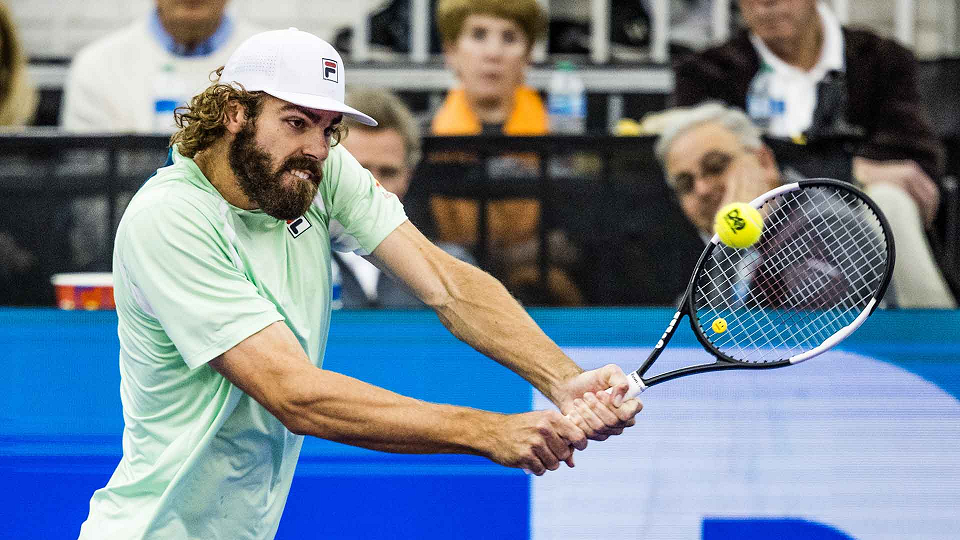
Following their record-breaking tiebreaking encounter, John Isner and Reilly Opelka would meet again in the final of the U.S. Men’s Clay Court Championships in April 2022 in Houston, Texas. However, on this occasion, only one tiebreak was required for Opelka to register his fifth victory over Isner. The 24-year-old would win the first set 6-3 before the 36-year-old Isner would force the second set to go the distance at 6-6. This tiebreak would come close to breaking any records, but Opelka would only need to win 9-7 to win the final and his 4th ATP Tour title.
Conclusion
It will be a long time before tennis discovers another player like John Isner. Now in the twilight of his career (at the time of writing), Isner is likely to finish his time on the court without the Grand Slam he would have dreamed about. At the time of writing, his best finish is expected to be his historic semi-final at Wimbledon in 2018. Isner has never managed to equal his heroes Pete Sampras, Andre Agassi or Andy Roddick in winning a major or becoming World No.1. Still, the man has undoubtedly left an indelible legacy on the history of tennis.
John Isner is responsible for two of the three longest matches in the sport’s history, two match lengths that are unlikely to ever be beaten. He also shares the record for the longest tiebreak in tennis history. Having played in those two marathon encounters with Nicolas Mahut and Kevin Anderson, it’s a surprise that Isner has managed to continue playing into his late 30s and not have his body and career shortened by those experiences. Through those matches, he showed his resiliency, resolve, ability to handle pressure and will to win. These qualities have allowed him to be more than just another beanpole with a big serve and endeared him to millions of fans worldwide. Through his marathon matches, he has also brought change to the tennis rulebook in the last-set tiebreak, which will positively impact the sport and the welfare of the people who play it. Even though this rule means we are unlikely to ever see another Isner-Mahut or Isner-Anderson, that’s not necessarily bad. Players will not have to put their bodies to the limit just to win one tennis match. Also, we get to protect the legacies of those groundbreaking moments.
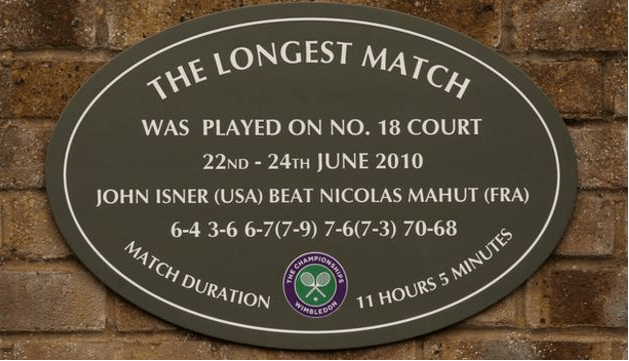
The year after the historic John Isner-Nicolas Mahut match in 2010, the All England Lawn Tennis Club (AELTC), which organises the Wimbledon Championships every year, would unveil a plaque outside Court 18 commemorating the match’s first anniversary. The plaque reads, “The Longest Match Was Played On No.18 Court,22nd-24th June 2010, John Isner (USA) Beat Nicolas Mahut (FRA) 6-4, 3-6, 6-7 (7-9), 7-6 (7-3), 70-68. Match Duration: 11 Hours 5 Minutes”. A fitting tribute to the efforts of Nicolas Mahut and especially his opponent John Isner, tennis’s ‘marathon man’.
 the-score-board.co.uk