

1995/96: A Rounded Affair
Manager: Frank Clark
Top Scorer: Ian Woan (12) (all competitions)
Premier League: 9th
FA Cup: Quarter-Finals
League Cup: 2nd round
UEFA Cup: Quarter-Finals
League record: 15 wins, 13 draws, 10 defeats, 50 goals scored, 54 goals conceded
Transfers: £+2.575 million
Transfers in: £7.425 million
| Date | Position | Player | From | Fee |
|---|---|---|---|---|
| 1st July | MF | Chris Bart-Williams | Sheffield Wednesday | £2.5 million |
| 1st July | FW | Kevin Campbell | Arsenal | £2.8 million |
| 19th July | FW | Richard Irving | Manchester United | £75,000 |
| 1st August | GK | Lutz Pfannenstiel | Wimbledon | Undisclosed |
| 16th August | FW | Andrea Silenzi | Torino | £1.8 million |
| 19th August | GK | Simon Tracey | Sheffield United | Two-month loan |
| 13th January | GK | Alan Fettis | Hull City | £250,000 |
| 24th February | MF | Chris Allen | Oxford United | Three-month loan |
Transfers out: £10 million
| Date | Position | Player | To | Fee |
|---|---|---|---|---|
| 1st July | FW | Stan Collymore | Liverpool | £8,500,000 |
| 2nd August | DF | Gary Bowyer | Rotherham United | Free |
| 29th September | MF | Kingsley Black | Millwall | Season-long loan |
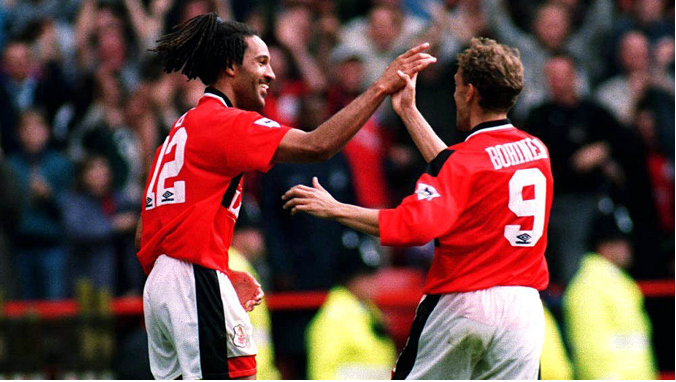
| 14th October | MF | Lars Bohinen | Blackburn Rovers | £750,000 |
| 28th October | DF | Carl Tiler | Aston Villa | £750,000 |
| 1st December | FW | Steve Guinan | Darlington | One-month loan |
| 29th December | FW | Gary Bull | Birmingham City | Free |
| 1st January | DF | Craig Armstrong | Bristol Rovers | Four-month loan |
| 2nd February | DF | Vance Warner | Grimsby Town | Three-month loan |
| 28th February | DF | Danny Hinshelwood | Portsmouth | Free |
Pre-season
Transfers
With the 1995-96 season seeing Nottingham Forest compete in Europe for the first time since 1984, Forest manager Frank Clark would look to bolster his squad during the summer of 1995. In between their Division One promotion and Premier League return, Nottingham Forest had only signed one player, Bryan Roy. However, before the team played their first match of the 1995-96 season, Frank Clark had already signed five players and sold two.
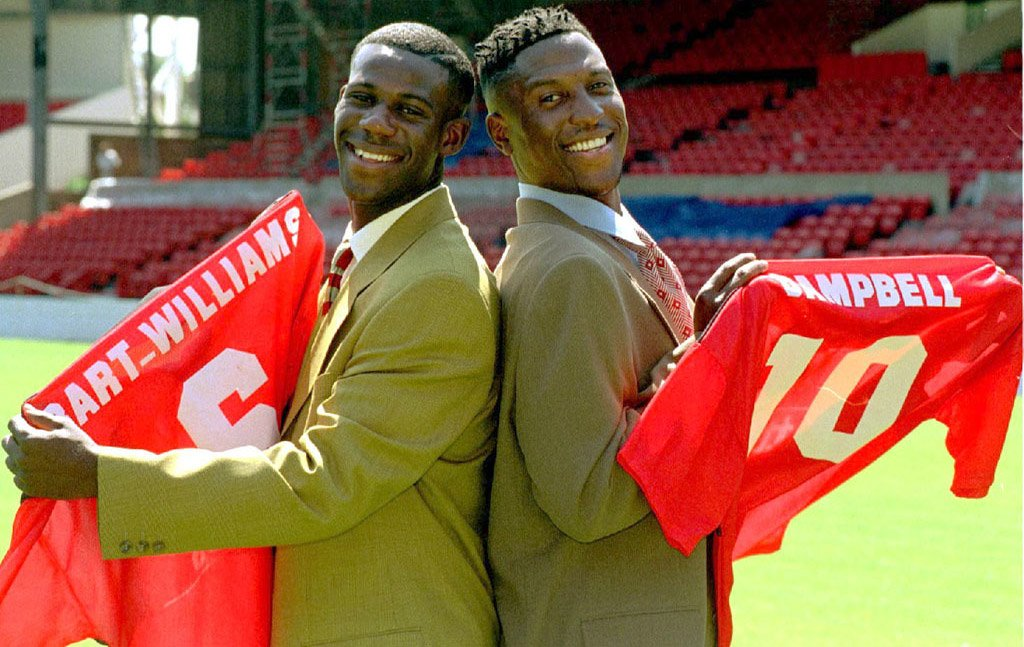
Nottingham Forest’s summer transfer business would begin with a bang on 1st July 1995, as two big-money players would arrive at the City Ground and a high-profile Forest regular would leave the East Midlands for big money. Coming into the club would be the double signing of Sheffield Wednesday midfielder Chris Bart-Williams and Arsenal striker Kevin Campbell, two men who had appeared on opposing sides in the 1993 FA Cup Final. Despite being under 25 years old, Bart-Williams and Campbell had plenty of top-flight experience.
Chris Bart-Williams could play in both defence and midfield, operating similarly to Alf-Inge Håland. Despite having just turned 21, Bart-Williams had already played 156 matches for Sheffield Wednesday after joining the Owls as a 17-year-old in late 1991. Since the dawn of the Premiership, Bart-Williams had played in 109 of Wednesday’s 126 league games. Bart-Williams was quite the prospect, having worked his way through England’s national youth teams at the U-18, U-19, and now, U-21 levels. The man born in Sierra Leone would be an exciting new addition to Nottingham Forest’s midfield, competing with Lars Bohinen, Scot Gemmill and Alf-Inge Håland for a spot in the middle of the park.
Before joining Nottingham Forest, Kevin Campbell had become part of the furniture at Arsenal, being one of the Gunners’ main strikers during the team’s recent trophy-rich period. Joining Arsenal as a schoolboy aged 15, Campbell proceeded through the academy before making his senior debut under George Graham in 1988. He would eventually make 228 first-team appearances over the next seven seasons, scoring 59 goals. He would start in Arsenal’s victories in the 1993 League Cup and FA Cup Finals and the 1994 European Cup Winners’ Cup over Parma. He would often compete with Ian Wright and Alan Smith for a starting spot in George Graham’s side but would have impressive goalscoring seasons, netting 14 goals in 35 games during the 1991/92 season and 19 in 45 in the 1993/94 campaign. However, despite these figures, Graham’s recent signings of John Hartson and Dennis Bergkamp had seen Campbell fall down the pecking order, and the 25-year-old would not wait to find out the next match he would start. Frank Clark also had first-hand knowledge of Kevin Campbell, having signed a 19-year-old Campbell on loan from Arsenal in 1989. Campbell had scored 9 goals in 16 games for Clark’s Leyton Orient in Division Three during the 1989-90 season. However, despite Frank Clark wanting to keep the young striker permanently, Campbell would return to Arsenal.
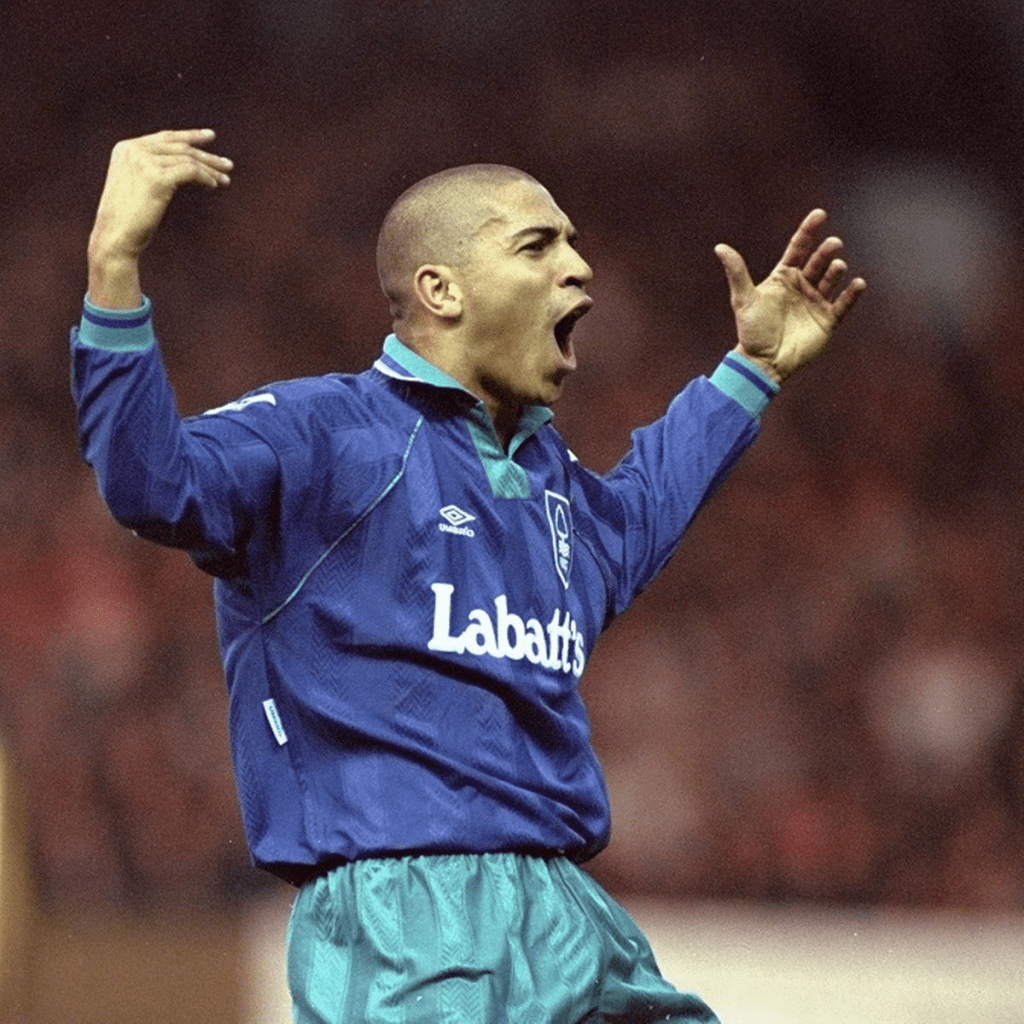
However, as one talented striker arrived at the Nottingham Forest training ground, the club’s most prolific goalscorer would make his exit. On 1st July 1995, Stan Collymore left Nottingham Forest and joined Liverpool for a new British transfer record fee of £8.5 million. Collymore’s time at the City Ground was short, lasting only two seasons, but ‘Stan the Man’ had already turned himself into a club legend. He had twice finished as Nottingham Forest’s top scorer during the club’s rise to Division One promotion and UEFA Cup qualification, scoring 50 goals in 77 games. However, stats that good will always draw attention from clubs higher up the totem pole. League Cup holders Liverpool now wanted to challenge for the Premiership title, and manager Roy Evans thought Collymore could add a different dimension to a forward line that already included Robbie Fowler, Ian Rush and Nigel Clough. When the Reds offered Nottingham Forest £8.5 million for their most prized possession, it was too high for the East Midlands club to turn down. Now, Forest would enter their second Premiership season without the player who had contributed 28% (41 out of 146) of their league goals over the previous two campaigns.
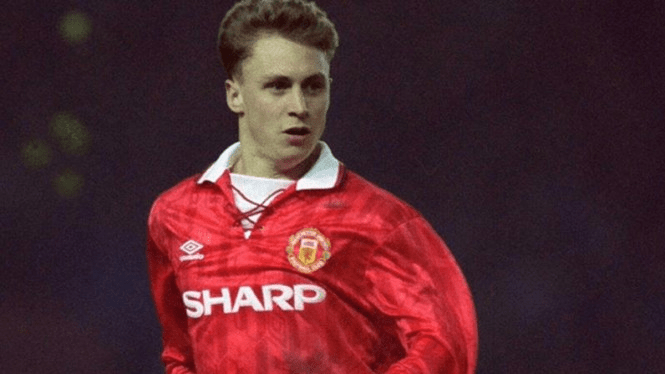
After that business was taken care of, Nottingham Forest’s subsequent summer signing would come in their forward line. On 19th July, Forest would spend £75,000 to buy 19-year-old striker Richard Irving from Manchester United. Irving had joined Manchester United as a schoolboy at 14 years old and would progress through the club’s youth system, becoming part of the team that finished runners-up in the 1993 FA Youth Cup. He had signed a professional contract afterwards but would leave Old Trafford for the East Midlands, still waiting for his senior debut.
After buying two players and selling one at the start of July, Forest manager Frank Clark would begin August with a one-in/one-out policy. On 1st August, Wimbledon goalkeeper Lutz Pfannenstiel would be the one to arrive, the 22-year-old making Nottingham Forest the 4th club of his four-year senior career in an undisclosed deal. Pfannenstiel would start his footballing career with Bavaria-based 1 FC Bad Kötzting in the sixth tier of German football. After 68 league matches over two seasons, Lutz would spend a year in Malaysia, appearing a dozen times for Penang FC before joining Wimbledon in 1994. Before joining Forest, Pfannenstiel had backed up Hans Segers, failing to make a single Premiership appearance. Now, Lutz Pfannenstiel would become the latest to attempt to replace Mark Crossley as Nottingham Forest’s first-choice goalkeeper.
One day after Lutz Pfannenstiel became the ‘one in’ at Forest, defender Gary Bowyer would become the ‘one out’. Bowyer had joined Forest in 1990 after showing promise as a teenager at 4th-division Hereford United. However, the young full-back had never been high up the pecking order at the City Ground, with Gary Charles, Brian Laws, Des Lyttle and Stuart Pearce always being preferred. Now aged 24 and still without a significant appearance for Nottingham Forest, Bowyer would join Second Division Rotherham United on a free transfer.
While the signings of Richard Irving and Lutz Pfannenstiel were more likely to fill out Nottingham Forest’s squad depth, Frank Clark would make his third significant signing of the summer transfer window just three days before the 1995-96 season opener against Southampton. For the third time, Clark would choose to expand his forward options, but as he had done with Bryan Roy the previous year, he would try to find another goalscoring success story by searching outside the boundaries of English football. His search would bring him to Italy and the mid-table of Serie A. The league had produced Bryan Roy from Foggia the previous year. Clark now hoped that Torino striker Andrea Silenzi would prove to be just as effective as the Dutchman.
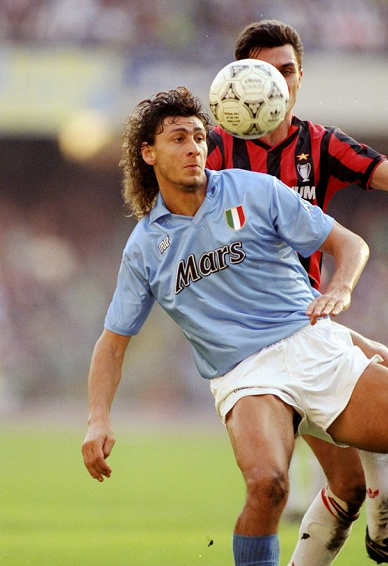
The 29-year-old Andrea Silenzi had already experienced quite the career. Starting his career in Series C1 and C2 with Lodigiani and Arezzo, Silenzi’s talents truly emerged after joining Reggiana in 1988. His goals helped the team earn promotion to Serie B in his first season and a 7th-placed finish the following year. Silenzi’s 23 goals in 36 games would impress Napoli manager Alberto Bigon, and the 6ft 3 forward would soon find himself playing alongside Careca, Gianfranco Zola and the world’s best player Diego Maradona. Napoli was defending Serie A champions when Silenzi joined in 1990. However, the club would soon slip to 8th and 4th-placed finishes over the next two seasons. In addition, Silenzi’s goal return of 9 goals in 50 appearances didn’t impress, and new manager Claudio Ranieri would sell Silenzi to top-four rivals Torino in 1992. In his first season in Turin, Silenzi would help Toro win the Coppa Italia, scoring twice in the final to help the team defeat Roma via away goals. Then, in the 1993-94 season, he netted 17 goals in 31 matches, finishing joint-3rd with Roberto Baggio in the Italian Golden Boot race. His most recent season had seen Andrea Silenzi finish with 5 goals in 28 games, a more paltry return as Torino finished 11th in the league. However, Silenzi’s previous pedigree was enough for Frank Clark to pay Torino £1.8 million and make the one-cap international the Premiership’s first Italian player.
Finally, on the same day that Nottingham Forest played Southampton on the opening day of the 1995-96 Carling Premiership season, Frank Clark would complete his final piece of pre-season transfer business by signing Sheffield United goalkeeper Simon Tracey on a two-month loan. After serving as the Blades’ first-choice between the sticks between 1988 and 1992 as the club rose up to the Premiership, Tracey’s appearances had been limited in recent seasons due to the form of incumbent Alan Kelly. The loan to Forest constituted Tracey’s third in many seasons, following brief, unsuccessful spells at Manchester City and Norwich. Like Lutz Pfannenstiel, he would join Malcolm Rigby and Tommy Wright in trying to get any time on the pitch ahead of Mark Crossley.
August
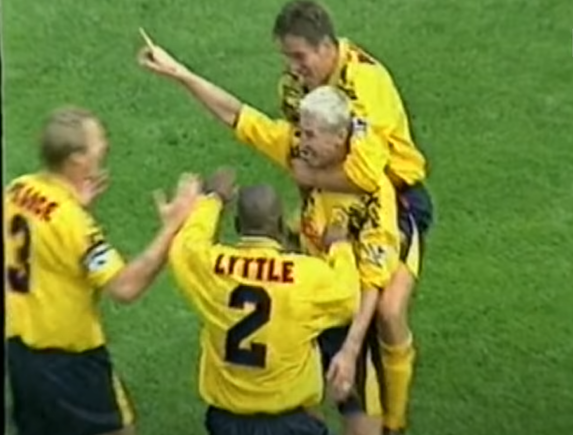
Nottingham Forst would kick off their 1995-96 Carling Premiership campaign with a classic away-day victory over Southampton on 19th August 1995. Fans at The Dell were treated to a seven-goal thriller to start the new season. Eight minutes in, a peroxide blonde-haired Colin Cooper would send a 30-yard free-kick sailing into the net to give Forest the lead. However, Matt Le Tissier would draw Southampton level from the penalty spot two minutes later after he was fouled by David Phillips. Then, two goals in six minutes would give Forest a 3-1 half-time advantage. In the 36th minute, Ian Woan fired the ball inside the near post following a failed clearance. Then, six minutes later, Woan would set up Bryan Roy inside the box for the Dutchman to open his account for the season and double the visitors’ winning margin.
Midway through the second half, a second successful Matt Le Tissier penalty would halve Forest’s advantage at 3-2. However, an excellent sequence of one-touch passes 10 minutes later would end with another Ian Woan lay-off allowing Bryan Roy to score his second of the game. Yet, two minutes later, Matt Le Tissier would complete his hat-trick with a well-taken free-kick to put some nervous faces on Forest players. However, Frank Clark’s men would hold on to win their opening match of the new Premiership season 4-3.
Following their opening-day win, Nottingham Forest would begin a run of four consecutive draws in the league to end August and last into September. The Reds’ first home match of the season would end in a 0-0 draw with Chelsea on 23rd August before the team drew 1-1 with West Ham at the City Ground three days later. A Stuart Pearce penalty for Forest would cancel out Martin Allen’s opener for the Hammers, with both goals occurring in the first half. Frank Clark’s men would then complete three drawn matches in six days, with a 1-1 draw away at Arsenal on 29th August. David Platt would put Bruce Rioch’s men ahead four minutes before half-time, but Kevin Campbell, who had left Arsenal in the summer, would equalise for his new club Nottingham Forest to ensure the points were shared.
Nottingham Forest would begin the 1995-96 Premiership season with a mixed start. Fortunately, the team had not lost any of their first four league matches. However, one win and three draws from those games were only enough to put Forest 9th in the early Premiership standings. September would bring four new matches and the team’s entry into the League Cup. Could Nottingham Forest continue their unbeaten start to the new season? The club’s results in September would soon find this out.
| Position | Team | Played | Wins | Draws | Losses | GF | GA | GD | Points |
|---|---|---|---|---|---|---|---|---|---|
| 7th | Everton | 4 | 2 | 1 | 1 | 4 | 2 | +2 | 7 |
| 8th | Arsenal | 4 | 1 | 3 | 0 | 4 | 2 | +2 | 6 |
| 9th | Nottingham Forest | 4 | 1 | 3 | 0 | 6 | 5 | +1 | 6 |
| 10th | Coventry City | 4 | 1 | 2 | 1 | 4 | 6 | -2 | 5 |
| 11th | Middlesbrough | 3 | 1 | 1 | 1 | 3 | 2 | +1 | 4 |
September
Nottingham Forest would begin September the way they had ended August, with a 1-1 draw in the league away from home. Two goals in four minutes would decide the ‘Midlands derby’ between Forest and Coventry City. Dion Dublin would give the Sky Blues the advantage after 19 minutes. Still, Bryan Roy’s equaliser in the 23rd minute would ensure a fourth successive draw (and third successive 1-1 draw) for Nottingham Forest in the Premiership. However, the team would now divert their attention to the continent for the beginning of the team’s UEFA Cup campaign.
On 12th September, Nottingham Forest would travel to Sweden for the 1st leg of their UEFA Cup first-round tie with Malmö. In their first European match since 1984, Nottingham Forest would take the lead after 36 minutes. A counter-attack started by David Phillips in his own half would finish with Bryan Roy selflessly setting up Ian Woan to hit the ball through the legs of goalkeeper Jonnie Fedel from six yards out. However, despite taking the lead, Nottingham Forest’s visit to Sweden would not end happily. On the hour mark, Joakim Persson stroked finish would bring Malmö level before midfielder Anders Andersson picked the ball from out of his toes to hit the ball beyond Mark Crossley in the 72nd minute and give the Swedish side a 2-1 lead heading into the return leg at the City Ground two weeks later.
After that European defeat, Nottingham Forest would return to league action with an entertaining 3-2 home win over Everton to end their run of draws. After Everton defender Dave Watson had cleared Des Lyttle’s cross, a quickly fired-in rebound cross from the Forest left-back would hit Watson’s outstretched leg as he attempted to claim the ball and hit the net. Four minutes later, Neville Southall would save Steve Stone’s shot only for Jason Lee to reach the loose ball and double Forest’s lead. Paul Rideout would pull a goal back for Everton in the 61st minute, but Ian Woan would smash the ball into the far corner from 25 yards to re-establish his team’s two-goal lead three minutes later. Rideout would again halve the deficit later on, but Forest would secure their first win in the league since the opening day.
On 19th September, Forest would face Second Division Bradford City in the first round of the League Cup. Despite selecting a solid team for the first leg, Frank Clark and his men would suffer a shock 3-2 defeat to the Bantams. Lars Bohinen would put the Premiership team in front after 18 minutes, but winger Paul Showler would equalise for the home side eight minutes later. In the 56th minute, centre-back Eddie Youds would give Bradford the surprise lead, and striker Ian Ormondroyd would score a third goal in the 69th minute. Bohinen would then book-end the scoring with a goal in the 90th minute to narrow the winning margin to one, but Bradford would claim a shock 3-2 first-leg victory over Nottingham Forest at Valley Parade. Frank Clark’s men would have to perform better in the return match at the City Ground two weeks later to avoid a shock first-round exit from the League Cup.
Following their League Cup exploits, Nottingham Forest would draw 1-1 with Aton Villa in the Premiership, the team’s fourth 1-1 draw of the season. Then in midweek, the Reds would invite Malmö to the City Ground for the second leg of the two teams’ UEFA Cup first-round tie. The Swedish side held a 2-1 aggregate lead from the home leg, but Ian Woan’s finish in that match had given Forest an away goal. Despite losing the first leg, the Reds only required a 1-0 scoreline to progress to the second round of the UEFA Cup via the away goals rule. That is precisely the result that Nottingham Forest would end up getting. In the 70th minute, Mark Crossley would send a goal kick downfield. An inadvertent flick-on from a Malmö defender would knock the ball forward to Bryan Roy. The Dutch forward would run to the edge of the box before firing the ball past a helpless Jonnie Fedel into the top-left corner, cue celebrations not seen in a European match at the City ground since 1984. Nottingham Forest would win the second leg 1-0 and the tie 2-2 on aggregate on away goals, knocking Malmö out of the UEFA Cup and progressing to the second round at their expense.
Buoyed by their midweek performance, Nottingham Forest would end a mostly-successful September with another home win. This home win came in the league against bottom side Manchester City on 30th September. A Jason Lee brace either side of half-time and a third added by Steve Stone late on would give Reds fans a 3-0 win to celebrate over the 10-man Blues.
Nottingham Forest would have plenty to celebrate during September. Primarily, the team’s triumphant return to European competition with their away-goals victory over Malmö in the UEFA Cup first round would receive the most praise. However, the Reds had gone through the entire month unbeaten in the league after wins over Everton and Manchester City and draws with Coventry and Aston Villa. These results saw Nottingham Forest sitting 8th in the Carling Premiership table after eight matches. Adding in their results from August, Forest was one of the few remaining unbeaten teams left in the Premiership after 3 wins and 5 draws. Far too many draws for Frank Clark’s liking, but an unbeaten record nonetheless.
| Position | Team | Played | Wins | Draws | Losses | GF | GA | GD | Points |
|---|---|---|---|---|---|---|---|---|---|
| 6th | Arsenal | 8 | 4 | 3 | 1 | 10 | 5 | +5 | 15 |
| 7th | Middlesbrough | 8 | 4 | 3 | 1 | 9 | 4 | +5 | 15 |
| 8th | Nottingham Forest | 8 | 3 | 5 | 0 | 14 | 9 | +5 | 14 |
| 9th | Tottenham | 8 | 4 | 2 | 2 | 14 | 11 | +3 | 14 |
| 10th | Chelsea | 8 | 3 | 3 | 2 | 9 | 7 | +2 | 12 |
October
October would begin with Nottingham Forest’s League Cup 2nd round 2nd leg against Bradford City. The Second Division side held a surprising 3-2 aggregate lead from two weeks earlier, and Nottingham Forest would be hoping to change that scoreline in their favour by the end of the 90 minutes. They would begin by taking the lead after 19 minutes, as captain Stuart Pearce scrambled home from Scot Gemmill’s corner to tie the aggregate score. However, Paul Showler would score his second goal of the tie, equalising for Bradford with a close-range header in the 62nd minute to give the lead back to the Bantams. However, Forest’s summer signing Andrea Silenzi would quickly silence those away fans by scoring his goal for the club with a diving header less than a minute after Showler’s equaliser. As the clock ticked down, the aggregate score stood at 4-4, and extra time was on the cards, something that Nottingham Forest did not want. Only another goal would give Forest the lead in the tie. However, Bradford was not through yet. In the 88th minute, Ian Ormondroyd would send the Bantams fans inside the City Ground loopy after his downward header levelled the match at 2-2- and settled the tie in favour of Bradford at 5-4. The final whistle would start joyous celebrations for the Bantams in unfamiliar blue and their fans in the stands. Nottingham Forest was unbeaten in the Premiership and competing in the UEFA Cup but had now exited the League Cup in the first round.
After 10 days left to stew over that Bradford defeat with no chance to exorcise those demons, Nottingham Forest would return to action on 14th October with a league visit to Tottenham. In the end, a Steve Stone goal after 64 minutes would give Nottingham Forest the three points with a 1-0 away win.
On the same day as that Spurs victory, Nottingham Forest would, for the second time that season, find their hand forced into selling one of its first-team regulars to a bigger club. On this day, Lars Bohinen would be sold to reigning Premiership champions Blackburn Rovers for £750,000. When Bohinen joined Forest from Young Boys in November 1993, he had a clause written into his contract that if another club met a buyout fee of £700,000, Bohinen would be allowed to talk to that club about a transfer. In the 23 months since the contract was signed, Bohinen had become one of Nottingham Forest’s key players, especially in their First Division promotion campaign and the club’s qualification for the UEFA Cup. Bohinen’s performances in a team punching above its weight had attracted Blackburn Rovers, who wanted some stability in their midfield following a difficult start to their Premiership title defence. After being notified of the clause in Bohinen’s contract, Blackburn would offer £750,000 to sign the Norwegian international. As had been the case with Stan Collymore during the summer, Nottingham Forest could provide nothing to Bohinen to keep him at the City Ground, with the midfielder having aspirations of playing in the Champions League. Therefore, on 14th October, Lars Bohinen departed Nottingham Forest after 68 appearances and 8 goals.
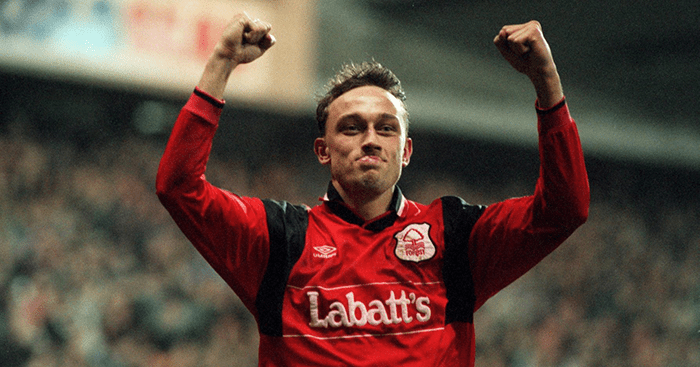
Now without Lars Bohinen in their squad, Nottingham Forest would travel to Central France to face Auxerre in the opening leg of the UEFA Cup second round. For the second time in four days, Steve Stone would score the only goal to secure a 1-0 win for Nottingham Forest. In the 23rd minute, Stone would run onto Colin Cooper’s long ball over the Auxerre defence before sending an audacious lob over the onrushing Fabien Cool from the edge of the area into the net. Nottingham Forest would take this slender 1-0 lead into the return leg at home on Halloween night 1995.
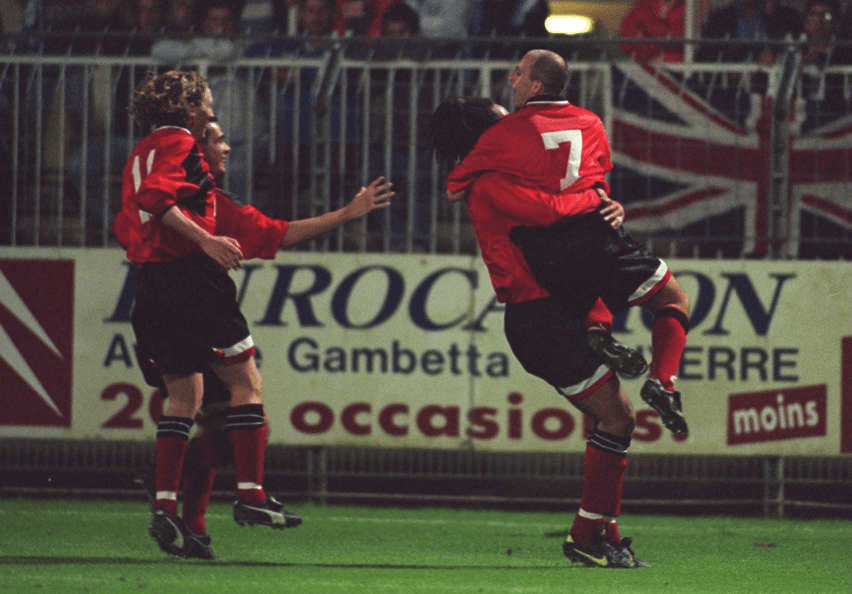
On 21st October, Steve Stone would not be on the scoresheet, but Nottingham Forest would still end up the winners, coming from behind to beat Bolton 3-2 at home. Bolton would take the lead in the 22nd minute when Richard Sneekes’ speculative effort was mishandled by Mark Crossley, ending up in the back of the net. Forest would equalise five minutes later as Bryan Roy diverted a shot past Keith Branagan for his 4th league goal of the season. Midway through the second half, Roy’s strike partner Jason Lee would grab his 4th of the campaign with a close-range finish following a drag-back to give Forest a 2-1 lead. However, the Reds would soon let their opponents back into the game. Another howler from Crossley saw the goalkeeper play a pass directly to substitute Fabian de Freitas, who would round him and score Bolton’s equaliser. With the game heading towards a draw, Colin Cooper would have all the time in the world to direct a header into the net from an unmarked position to give Forest the win in the 90th minute.
One week later, Nottingham Forest would complete an unbeaten October with a 1-1 draw against Queens Park Rangers, the team’s fifth of the campaign. Jason Lee would get Forest’s goal on the day. On the same day as the match against Queens Park Rangers, Forest centre-back Carl Tiler would join Aston Villa for £750,000. Tiler had been a starter under Brian Clough during his first two seasons at the City Ground after joining the club from Barnsley in 1991. However, a severe ankle injury suffered towards the end of the 1992-93 season would see him play no part in Forest’s Premiership relegation and rule him out of most of the club’s First Division promotion campaign the following year. Once Tiler returned to action at the end of the 1993-94 season, he found his place in central defence taken by new signing Colin Cooper. Following his injury return, Carl Tiler would play 10 further matches for the club in all competitions and was briefly sent out on loan to Swindon Town during the 1994-95 season. However, despite his lack of top-level action, Aston Villa manager Brian Little saw something in the 25-year-old Tiler and signed him up, even though the centre-back was yet to play a single match this season.

The Reds would end October with the second leg of their UEFA Cup second-round tie with Auxerre. Forest held a 1-0 aggregate lead against a team currently sitting near the top of the French league and a team that would be looking to upset Nottingham Forest in front of their fans. However, in a game played on Halloween night, there would be no scare for Frank Clark and his players. After 90 minutes, the second leg at the City Ground would end goalless, meaning that Nottingham Forest would progress to the 3rd round of the UEFA Cup with a 1-0 aggregate scoreline.
After beginning the month with a shock League Cup exit to Bradford City, Nottingham Forest would recover and have another mostly successful month in the league and Europe. Even considering the League Cup second-leg score, Forest had not lost once during October. The team had seen off Auxerre in the UEFA Cup, and two wins and a draw in the league had taken the Reds up to 5th in the Carling Premiership standings. After 11 matches, Nottingham Forest was now the only unbeaten team in the top flight after 5 wins and 6 draws. Forest was now only out of the UEFA Cup placings on goal difference. Nottingham Forest’s unbeaten record during October would see Frank Clark earn his second Premiership Manager of the Month award, receiving his first in September 1994.
| Position | Team | Played | Wins | Draws | Losses | GF | GA | GD | Points |
|---|---|---|---|---|---|---|---|---|---|
| 1st | Newcastle United | 11 | 9 | 1 | 1 | 27 | 8 | +19 | 28 |
| 2nd | Manchester United | 11 | 8 | 2 | 1 | 23 | 11 | +12 | 26 |
| 3rd | Liverpool | 11 | 7 | 2 | 2 | 24 | 8 | +16 | 23 |
| 4th | Arsenal | 11 | 6 | 3 | 2 | 15 | 6 | +9 | 21 |
| 5th | Nottingham Forest | 11 | 5 | 6 | 0 | 19 | 12 | +7 | 21 |
November
Nottingham Forest would begin November in style with a 4-1 win over Wimbledon. Forest would take an early lead when Scot Gemmill got the better of Øyvind Leonhardsen down the right flank before finding Bryan Roy in the penalty area. With no defender near him, the Dutchman would flick the ball with his right foot behind his left foot into the bottom-left corner beyond a stationary Simon Tracey, whose loan spell at Nottingham Forest had only recently come to an end. Wimbledon would equalise three minutes later, with Dons captain Vinnie Jones knocking the ball in from a corner. In the 21st minute, Nottingham Forest received a free-kick right on the edge of the Wimbledon box. Reds captain Stuart Pearce would lay the ball off to Scot Gemmill before getting it back and smashing the ball into the goal for Forest’s second of the game.
After that second goal, Wimbledon would find themselves down to 10 men before the end of the first half after Jones received a second yellow card for bodychecking Bryan Roy. Two minutes after half-time, Nottingham Forest would score their third goal of the match. Following early pressure, Jason Lee would get his leg to an Ian Woan corner to net his 6th goal of the season. Bryan Roy would then put the ball into the net for a second time, only for the linesman’s flag to rule it out. However, Nottingham Forest would finish with a 4th goal. In the 87th minute, Scott Gemmill would cap off an excellent performance, heading in Steve Stone’s cross after sustained Nottingham Forest possession.
The 4-1 win over Wimbledon would see Nottingham Forest rise to 3rd in the Premiership table, now unbeaten after 12 league matches.
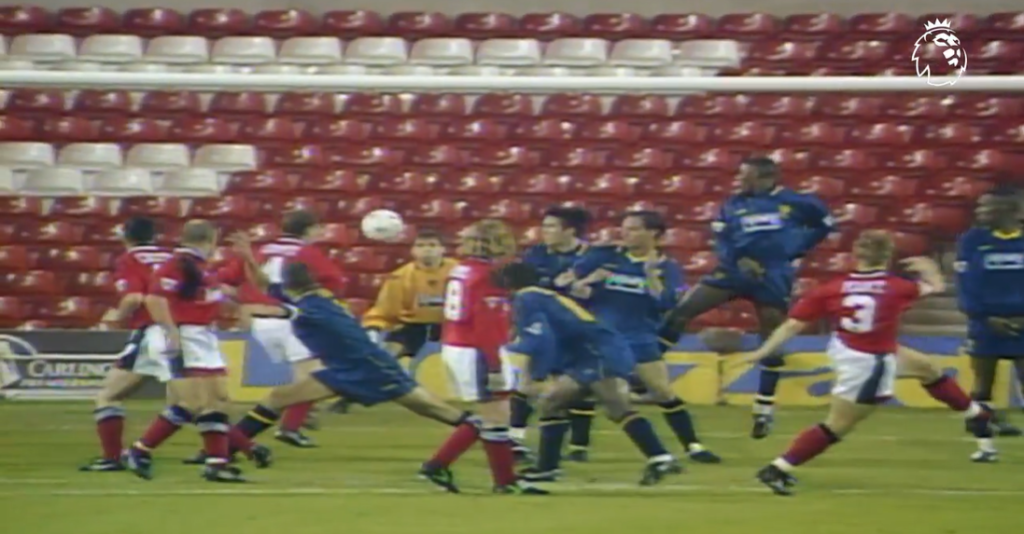
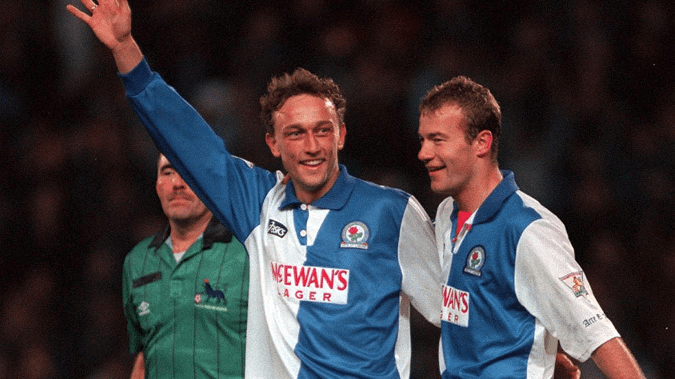
Returning from an international break, Nottingham Forest would follow up their big win over Wimbledon by suffering an even more significant defeat to reigning Premiership champions Blackburn Rovers. The match would see Lars Bohinen line up against his former club for the first time since departing in October. The Norwegian international would score twice for his new club in a 7-0 home win for the champions, the biggest home win for any team during the 1995-96 Premiership season. The Premiership’s best striker, Alan Shearer, would get things started in the 20th minute, striking home from Mike Newell’s header across the box. Eight minutes later, Lars Bohinen would score against his former club, flicking the ball around a retreating Scot Gemmill and firing past Mark Crossley after being set up by Shearer. Blackburn would lead Nottingham Forest 2-0 at half-time. However, the floodgates would truly open after the break.
In the 57th minute, Alan Shearer would score his second goal of the match (and 12th of the season), heading in Stuart Ripley’s corner. Nottingham Forest would then lose a key man as centre-back Steve Chettle received a second yellow card from referee Jeff Winter. Shearer would then complete his treble by blasting a free-kick into the bottom corner from 25 yards. Bohinen would then score his second of the match, hitting a powerful half-volley from the edge of the area. Mike Newell would get in on the act with a tap-in from a Shearer Cross in the 82nd minute for Blackburn’s sixth before Graeme Le Saux added a magnificent seventh with a pinpoint 25-yard effort into the top corner.
Blackburn Rovers had done a number on Nottingham Forest, giving the performance of Premiership champions that they had often lacked during the season thus far. For Forest, their unbeaten start to the campaign had ended in style. Now, they had to get back to winning ways the following week.
Following such a heavy defeat, the last thing Nottingham Forest would have wanted was a UEFA Cup first leg with Lyon three days later. The match appeared to be heading towards a goalless draw. However, in the 83rd minute, a shot from Forest substitute Paul McGregor was deliberately diverted away from goal by the hand of defender Florent Laville. Laville would receive a second yellow card for his indiscretion, and Nottingham Forest would receive a crucial penalty kick. Forest captain Stuart Pearce would step to the spot, only for goalkeeper Pascal Olmeta to save the shot to his left. However, the ball would run loose, and Paul McGregor would score the rebound to put his team 1-0 up. The goal was McGregor’s first for Nottingham Forest. The 20-year-old was making just his third appearance of the 1995-96 season, with all three coming as a substitute. However, the academy product had now earned his way into the hearts of the Forest faithful with a goal that would give the team a 1-0 aggregate lead in their UEFA Cup third-round tie with Lyon.
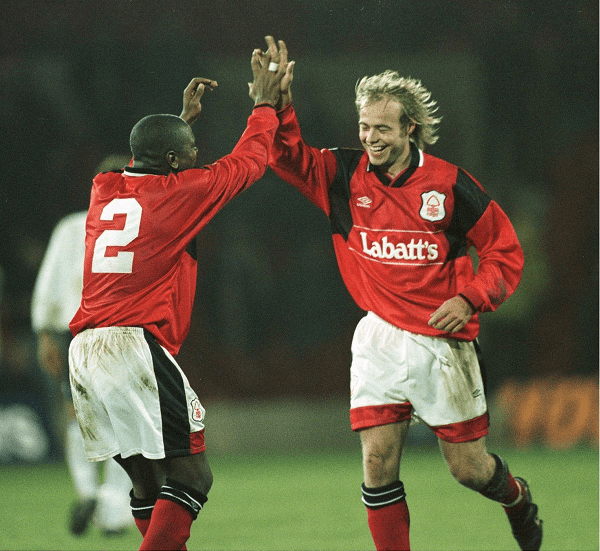
Instead of returning to winning ways in the Premiership following the 7-0 defeat to Blackburn and the win over Lyon in midweek, Nottingham Forest would, for the second time already this season, begin a run of four successive 1-1 draws in the league. The first would come, impressively, against Manchester United at home. Paul McGregor would be rewarded for his European heroics with a first start of the season. He would immediately repay manager Frank Clark’s faith in him by giving Nottingham Forest the lead after 19 minutes. Bobby Howe’s attempted shot would inadvertently become a pass following a defensive block, and McGregor would side-foot the ball past Peter Schmeichel for his first-ever Premiership goal. In a match that saw both sides hit the woodwork, Manchester United would enjoy the better goalscoring chances, with Forest often having to scramble to keep the ball out of danger. However, Alex Ferguson’s men would receive a penalty kick in the 67th minute after Steve Chettle tripped Eric Cantona. Cantona would dust himself down and send Mark Crossley the wrong way to score Manchester United’s deserved equaliser. Both sides would also come close to scoring a winner, but Scot Gemmill’s header would go wide, and Andy Cole would see his shot saved by Mark Crossley.
The draw with Manchester United would see Nottingham Forest end November 7th in the Carling Premiership table with 25 points. The league results had been mixed, with a big win followed by a heavy defeat to the champions ending with a draw against one of the league’s top sides. On the positive side, the Reds had won another match in the UEFA Cup against a top European side in Lyon and had only lost once in the league. Frank Clark’s team would begin December two points off the European places with a game in hand on the teams above them. Some positive results in December could lead to a merry Christmas for the East Midlands side.
| Position | Team | Played | Wins | Draws | Losses | GF | GA | GD | Points |
|---|---|---|---|---|---|---|---|---|---|
| 5th | Tottenham | 15 | 7 | 5 | 3 | 22 | 17 | +5 | 26 |
| 6th | Middlesbrough | 15 | 7 | 5 | 3 | 14 | 9 | +5 | 26 |
| 7th | Nottingham Forest | 14 | 6 | 7 | 1 | 24 | 21 | +3 | 25 |
| 8th | Liverpool | 15 | 7 | 3 | 5 | 27 | 14 | +13 | 24 |
| 9th | Leeds United | 14 | 7 | 3 | 4 | 20 | 16 | +4 | 24 |
December
December would start the way November ended, with a 1-1 draw in the league. On 2nd December, Nottingham Forest would draw 1-1 with the Premiership’s bottom side Bolton away from home. Six weeks after their entertaining 3-2 reverse fixture, the last two scorers from that match would score again here, almost in the exact period of the game. In the 67th minute, Fabian De Freitas would out-pace Colin Cooper down the left wing before cutting into the box and hitting the ball into the far corner of the net to put Bolton ahead. However, in the 90th minute, Cooper would equalise for Forest with his third goal of the season to avoid his team losing to the team bottom of the Premiership table.
Nottingham Forest would carry their recent record of drawing matches into the UEFA Cup. However, this drawn match was more favourable for Forest, as the Reds required a draw to see off Lyon and reach the quarter-finals. At the Stade Gerland on 5th December, Frank Clark’s team would hold Lyon to a goalless draw in the second leg of their third-round match-up, preserving the 1-0 aggregate lead carried over from the first leg. At the end of 90 minutes, Forest would knock Lyon out of the UEFA Cup while progressing to the quarter-finals of a European competition for the first time since 1984. However, when the UEFA Cup resumed in March 1996, Nottingham Forest faced the daunting task of meeting Bayern Munich over two legs.
Back to league action, and Nottingham Forest would continue drawing matches 1-1. On 10th December, 4th would meet 7th in the league as Aston Villa travelled across the Midlands to the City Ground. With two points separating the teams beforehand, a draw seemed like a fair result. That is exactly what would occur. The visitors would take the lead early in the second half as strike partners Savo Milosevic and Dwight Yorke would combine, with the Trinidadian scoring his seventh league goal. However, Steve Stone would equalise for Forest in the 83rd minute with a cracking long-distance effort. Eight days later, Nottingham Forest was at it again, tying with 16th-placed Manchester City. At Maine Road in front of the Monday Night Football cameras, Uwe Rosler would open the scoring after 17 minutes, giving the hosts a half-time lead. However, Kevin Campbell would mark his return from injury by equalising for Forest after 70 minutes. For the fourth league game in succession, Nottingham Forest had come away with a point but had also dropped points in those matches, ultimately losing ground on the European places.
Two days before Christmas, Nottingham Forest would travel to league leaders Newcastle United. Before the game, Newcastle held a 100% winning record at St James’s Park from 9 Premiership matches. Kevin Keegan’s ‘Entertainers’ would make it a perfect 10 with a 3-1 win over Frank Clark’s men. In the 11th minute, David Ginola would dribble infield, occupying three Nottingham Forest players before laying the ball off to Rob Lee. Lee would stride onto the ball and hit a powerful shot past Mark Crossley from 25 yards. It would take four minutes for Nottingham Forest to equalise, as Ian Woan would dribble through the heart of the Newcastle defence before sliding the ball into the far corner. However, in the 25th minute, David Ginola carried the ball to the edge of the penalty area before lifting the ball into the bottom-right corner. Then, Rob Lee would book-end the scoring in the 74th minute, playing a one-two with Les Ferdinand before finishing confidently. Newcastle would enter Christmas 10 points clear at the top of the Premiership standings, while Nottingham Forest sat 17 points adrift in 8th.
After a problematic December (aside from the UEFA Cup), Nottingham Forest would end their six-match winless run in the Premiership with a pair of 1-0 victories to end 1995 on a high. On Boxing Day, Jason Lee’s 7th goal of the season after 6 minutes of play would be enough to defeat Sheffield Wednesday at home. Then, four days later, another early goal would see off 6th-placed Middlesbrough. A Stuart Pearce penalty after eight minutes would see Nottingham Forest overhaul their opponents to take their place in the Premiership standings at the end of 1995.
In the middle of a busy run of games for the club during the festive period, Nottingham Forest would allow striker Gary Bull to leave the club on a free transfer on 29th December. In the two years he had spent at the City Ground, Bull had never been a first choice for Frank Clark, often warming the substitutes’ bench while Stan Collymore, Jason Lee and Bryan Roy got the on-field glory. With such limited action, Bull had twice been loaned out by Forest, first to First Division Birmingham City in 1994 and then to Second Division Brighton earlier in the season. In fact, Forest had recalled Bull from Brighton on 28th December because Birmingham wanted to sign the striker permanently, Bull having scored 6 goals in 10 appearances for the Blues the previous season. Gary Bull would agree to make a move across the Midlands, where he was guaranteed more first-team action. In total, Gary Bull had played 14 matches for Nottingham Forest, scoring once.
December was a month that produced both negatives and positives for Nottingham Forest. The club had failed to win 5 out of the 7 matches they had played during the month (4 of 6 in the league). However, a goalless draw on the 5th had seen the team progress to the last eight of the UEFA Cup. Also, while struggling to win matches, Forest only lost once during December, the 3-1 defeat to Newcastle before Christmas. Two wins and three draws had seen Frank Clark’s team earn 12 out of a possible 18 points for the final month of 1995. Frustration at the time had, in fact, led to satisfaction in the long run. Therefore, despite failing to win four matches in a row in December, Nottingham Forest would end 1995 (and the first half of the Premiership season) sitting 6th in the league standings after 8 wins, 10 draws and just 2 losses. However, Frank Clark knew that his Reds would need to turn more ties into wins if they wanted to continue challenging for European qualification. The team sat one point off 4th-placed Tottenham in the final European spot as 1995 turned into 1996.
| Position | Team | Played | Wins | Draws | Losses | GF | GA | GD | Points |
|---|---|---|---|---|---|---|---|---|---|
| 4th | Tottenham | 21 | 9 | 8 | 4 | 27 | 21 | +6 | 35 |
| 5th | Arsenal | 21 | 9 | 7 | 5 | 28 | 18 | +10 | 34 |
| 6th | Nottingham Forest | 20 | 8 | 10 | 2 | 30 | 27 | +3 | 34 |
| 7th | Middlesbrough | 21 | 9 | 6 | 6 | 23 | 19 | +4 | 33 |
| 8th | Aston Villa | 19 | 9 | 5 | 5 | 25 | 15 | +10 | 32 |
January
Nottingham Forest would begin 1996 by playing out a thrilling encounter with Liverpool away at Anfield on New Year’s Day. Before the match, Forest would announce that defender Craig Armstrong had been shipped out to Bristol Rovers for the rest of the season. The 20-year-old left-back was unlikely to displace captain Stuart Pearce in the Forest defence, as evidenced by the fact that he was yet to make a league appearance for the Reds since graduating from the club’s academy in 1992. A move down to the third tier of English football would give him a chance to start some senior matches.
The Nottingham Forest-Liverpool match would mark the first time Stan Collymore had lined up against the team he helped to Premiership promotion and UEFA Cup qualification over the previous two seasons. Unfortunately for Stan, his former employers would take the lead in the 13th minute. Nottingham Forest’s wingers would combine during broken play, with Ian Woan sending Steve Stone through a gap. Stone would hit the ball past the advancing David James to put the visitors 1-0 up. Five minutes later, Ian Woan would silence Anfield by tapping in Paul McGregor’s cross. However, that Anfield silence was only temporary, as a Robbie Fowler brace would soon get the stadium rocking again. Three minutes after Forest’s second goal, Michael Thomas would send the ball out to Stan Collymore on the wing, and he would find the head of Fowler to halve Forest’s lead. Ten minutes later, the same thing would happen again, with Fowler heading in a Collymore cross to level the score at 2-2 and end an entertaining opening half-hour.
In the second half, Liverpool would continue to dominate ball possession, and Stan Collymore would almost score a spectacular third for the Reds before half-time, only for his 30-yard rocket to just miss the top-right corner. However, Stan would end up scoring against his former club, beating Mark Crossley to a diagonal ball into the box before knocking the ball past the stranded keeper to put Liverpool 3-2 ahead in the 67th minute. Mark Crossley would then be required to keep out Steve McManaman, and Robbie Fowler as Forest held on to any hope of scoring a third goal. However, Liverpool would cap a brilliant comeback performance when Colin Cooper turned Collymore’s dangerous cross into his own net for a fourth goal for the home team. After being 2-0 down after 21 minutes, Liverpool recovered to win 4-2 and keep pace with the Premiership front-runners. Nottingham Forest would slip down the table to 8th, four points off the European places, with a game in hand, heading into the FA Cup break.
The first Saturday of the New Year meant FA Cup 3rd round time. At this stage, Nottingham Forest would play Stoke City, who sat near the top of the First Division. Heading into December 1995, the Potters had been on a seven-match unbeaten streak but had lost their way over Christmas, failing to win their previous four games. An exciting time to play Nottingham Forest, who had won 2 of their last 9 Premiership matches.
The home side would have the better of the first half at the Victoria Ground. Des Lyttle would even have to clear a header off the line. Potters striker Martin Carruthers would then trouble the Forest defence with a couple of teasing shots. The dominance of the First Division side would pay off on the verge of half-time when Stoke’s other striker Simon Sturridge, swept the ball into the net to finish off a fluid counter-attack, sending the home crowd wild. After the break, Steve Stone would send a shot just north of the crossbar for Nottingham Forest’s closest attempt yet. At the other end, Stoke would look more likely to add to their lead, with the team in yellow having to keep on guard to withstand a flurry of chances. At one stage, only the body of Mark Crossley would deny Simon Sturridge a second goal. Even future Chelsea manager Graham Potter would hit the post with Crossley beaten. However, in the 82nd minute, a Des Lyttle cross would pass through a crowd in the Stoke box to the feet of Stuart Pearce, and the Nottingham Forest captain would hit a first-time shot off the post and into the net to level the game entirely against the run of play. After this goal, Martin Carruthers would have one more chance to cause an upset for Stoke, but his under-powered shot would miss to the right of the target. With that chance gone, the match would end 1-1, necessitating a replay.
Eleven days later, Stoke would travel down to the East Midlands for the FA Cup 3rd-round replay. In the intervening league fixtures, both teams would win their matches 1-0. Colin Copper’s 4th league goal of the season was enough for Forest to defeat Southampton on 13th January. On the same day, Stoke had beaten Forest’s East Midlands rivals Leicester City 1-0, with top scorer Mike Sheron netting the only goal. For this FA Cup replay, Frank Clark would select the same starting XI that started the first game, putting the onus on them to get a result. At the City Ground, the Premiership side would have a much easier time of things against The Potters. Kevin Campbell would put Nottingham Forest ahead in the 16th minute. Then, in the second half, Stuart Pearce would score from the penalty spot to ensure that Nottingham Forest’s name was in the hat for the 4th round after a 2-0 win.
As well as the Southampton win, 13th January would also bring the arrival of new signing Alan Fettis from Hull City. Fettis had been an ever-present in the Hull goal since joining from Glentoran in 1991, making over 135 league appearances for the third-tier club. Hull valued Fettis enough that they sometimes used him as an emergency striker during injury crises, leading to the goalkeeper netting a couple of goals for the Tigers. During his time at Hull, Alan Fettis had also earned 11 international caps for Northern Ireland, starting matches against Denmark, Mexico and Germany. Alan Fettis would become the latest goalkeeper signed by Frank Clark to compete with the ever-present Mark Crossley in the Nottingham Forest net.
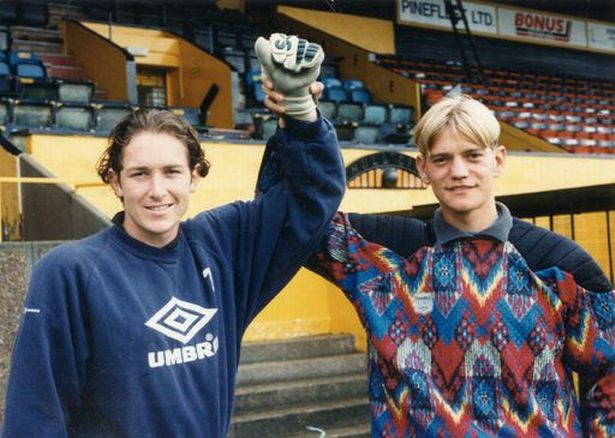
Returning to the Premiership on 20th January, John Spencer would score the only goal as Chelsea defeated Nottingham Forest 1-0 at Stamford Bridge. Spencer had also scored the winning goal in the previous season’s corresponding fixture, which Chelsea also won 1-0. On this occasion, Spencer would drill in a shot from Dan Petrescu’s cross in the 55th minute, a deserved goal in a match Chelsea had dominated.
Eleven days later, Nottingham Forest would hit double figures in league victories for the season with a 2-1 win over Leeds United. This game was Nottingham Forest’s game in hand, which they held over their rivals for European qualification. The crucial goals on the night would come from Forest’s two main strikers, Kevin Campbell and Bryan Roy. Campbell would break the deadlock in the 38th minute, but Carlton Palmer would equalise for Leeds in the 54th minute. However, Bryan Roy would put Forest ahead once more four minutes later, and this goal would prove to be the winner.
This Leeds victory to end January would move Nottingham Forest up the table to 5th, 1 point off Tottenham in 4th and European qualification. Whether Forest could keep up with the pace-setters in February would depend on the team getting positive results from matches against West Ham, Arsenal and Everton, all of whom were below Frank Clark’s team in the standings.
| Position | Team | Played | Wins | Draws | Losses | GF | GA | GD | Points |
|---|---|---|---|---|---|---|---|---|---|
| 1st | Newcastle United | 23 | 17 | 3 | 3 | 45 | 19 | +26 | 54 |
| 2nd | Liverpool | 24 | 13 | 6 | 5 | 48 | 21 | +27 | 45 |
| 3rd | Manchester United | 24 | 13 | 6 | 5 | 42 | 27 | +15 | 45 |
| 4th | Tottenham | 24 | 11 | 8 | 5 | 33 | 24 | +9 | 41 |
| 5th | Nottingham Forest | 24 | 10 | 10 | 4 | 35 | 33 | +2 | 40 |
February
February would begin with young centre-back Vance Warner being loaned out to First Division Grimsby Town until the end of the season. The 21-year-old, once touted as ‘the new Des Walker’ during his youth, had so far struggled to make an impact as a senior, having played 3 matches in all competitions for Nottingham Forest since leaving the academy in 1993. Frank Clark would hope that a temporary move to second-tier Grimsby Town, coached by former Forest defender Brian Laws, would give Warner the seasoning he needed to compete at a higher level.
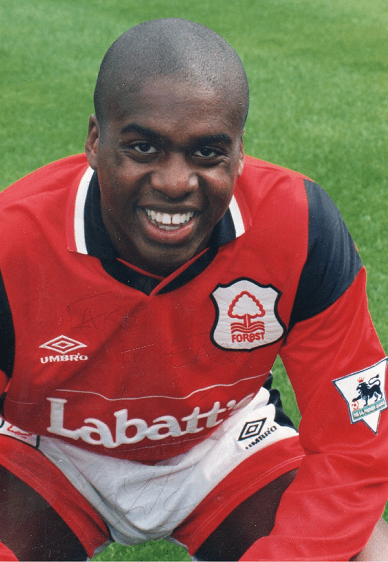
One day later, Nottingham Forest would lose 1-0 away from home to 14th-placed West Ham United. The Hammers’ Australian midfielder Robbie Slater would get the only goal of the game in the 19th minute, picking the ball up on the right flank before driving infield and passing the ball to Ian Bishop. Slater would then continue his run into the box before collecting the ball, turning and shooting into the far corner after Steve Chettle had made a hash of Julian Dicks’ ball into the area. The defeat to West Ham extended Nottingham Forest’s winless run away from home to eight Premiership matches.
On 7th February, Nottingham Forest would host Second Division Oxford United in the 4th round of the FA Cup. As in the tie against Stoke City, Nottingham Forest, who entered the match 7th in the Premiership, would struggle to put away the lower-ranked side. Kevin Campbell would break the deadlock for Forest in the 54th minute, latching onto Bryan Roy’s ball to counter-attack down the pitch and break clear of the Oxford defence before calmly slotting the ball under the body of goalkeeper Phil Whitehead. However, such an individual effort would not be the winner as Forest hoped. With two minutes left on the clock, midfielder Stuart Massey would nod in a corner at the back post to send the away end at the City Ground into raptures and send this tie to a replay at the Manor Ground the following week.
Six days later, Nottingham Forest would travel down to the Manor Ground for the 4th-round replay and their 4th game in 11 days. In the interim between the two games, Frank Clark’s team had lost their first home match of the entire season with a 1-0 defeat to Arsenal. Dennis Bergkamp would score the only goal in a game that saw Nottingham Forest finish with 10 men after Jason Lee’s 85th-minute red card for two bookable offences. In this FA Cup replay, Forest would have a better time against an amped-up Oxford away from home. Steve Chettle’s first goal of the season would open the scoring five minutes before half-time, finishing from an Ian Woan corner. Forest would continue to hold a single-goal lead until late in the game when two goals in five minutes would seal the game for the visitors. Ian Woan would score from the penalty spot to double Nottingham Forest’s lead in the 80th minute before Andrea Silenzi would secure the victory with just his second goal since arriving in the summer. Once again, Nottingham Forest had survived a scare against a lower-league team to reach the 5th round of the FA Cup.
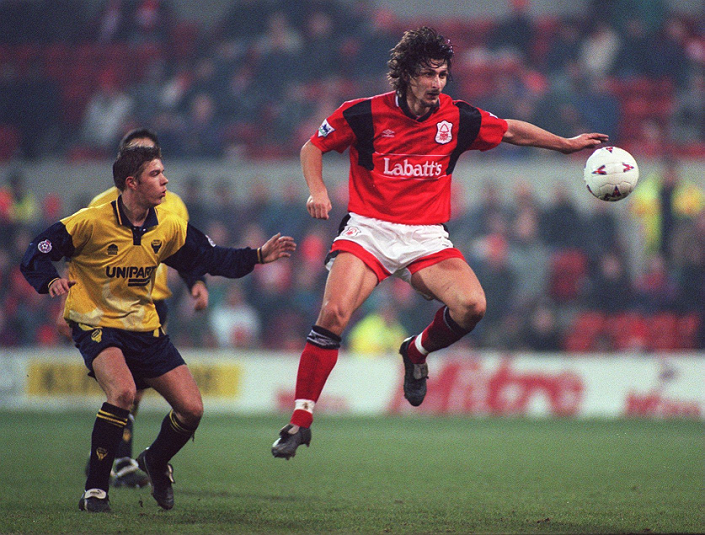
After winning their FA Cup replay 3-0, Forest would lose the next league match 3-0 to Everton on 24th February. Three goals in eight second-half minutes would decide the game for Joe Royle’s men. After a goalless first half, Andrei Kanchelskis would cut inside off his wing and drill in a shot from the edge of the box after 52 minutes. Four minutes later, Dave Watson, who had scored the own goal in Forest’s win earlier in the season, would find the correct net this time to make the score 2-0. Another four minutes later, Kanchelskis’s chipped cross would be met by the head of Duncan Ferguson to complete the Toffees’ eight-minute trifecta and condemn Forest to a 5th consecutive away defeat. The loss meant that Forest had lost all three Premiership matches in February and 5 out of their 7 league games in 1996.
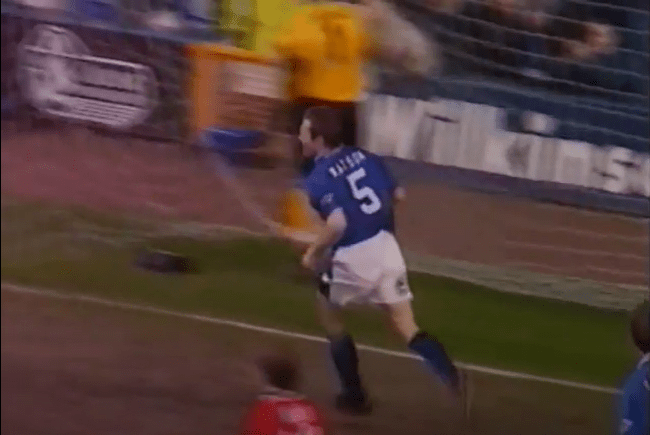
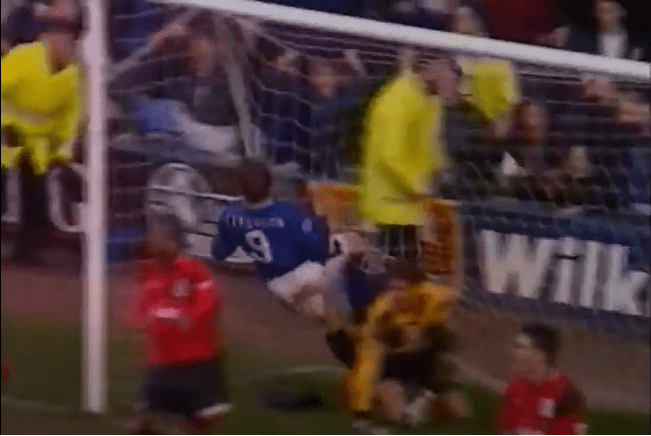
On the same day as the Everton game, Frank Clark confirmed that Nottingham Forest had signed Oxford United midfielder Chris Allen on loan until the end of the season. Aged 23, Allen had already made 150 league appearances for Oxford after graduating from the club’s academy in 1991. Allen had been a strong performer for the U’s during a tumultuous time that included relegation and promotion to and from the First Division. He had even received two England u-21 caps, participating in the 1995 Toulon Tournament. Allen had clearly impressed Frank Clark with his performance in Oxford’s 1-1 draw with Nottingham Forest in the FA Cup 4th round earlier in the month, and the Forest manager wanted to give the young midfielder a chance to play at the highest level, at least until the end of the season. When Forest came calling for his signature, Chris Allen had made 24 appearances during Oxford’s push for promotion to the First Division. Eight days after moving northwards to Nottingham, Allen would make his Reds debut in the club’s next Premiership match against Sheffield Wednesday.
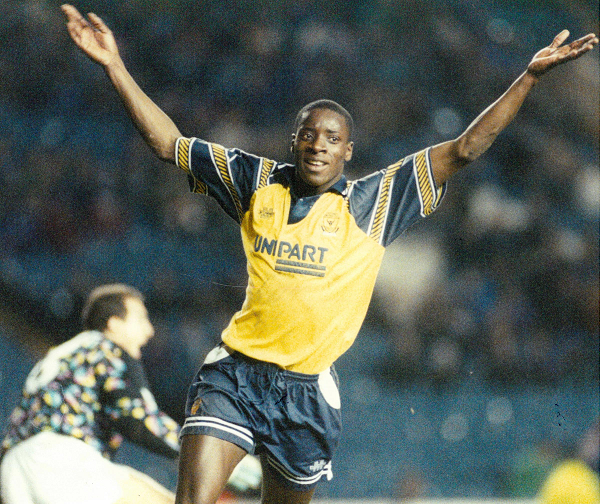
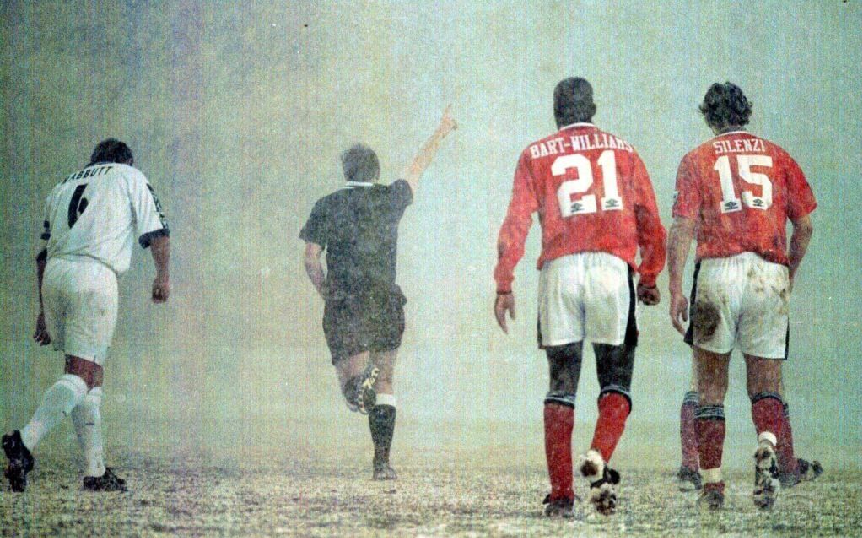
February would end with Nottingham Forest taking on Tottenham in an all-Premiership tie in the 5th round of the FA Cup. Aside from the result, the most notable fact about the match at the City Ground was that at least part of it was played during a snowstorm so thick that visibility was difficult at pitch level. Aside from the weather conditions, the game was pretty entertaining. Forest’s first attack after the kick-off would result in Bryan Roy hitting a first-time shot a little to the left of Ian Walker’s goal. However, Forest would underline their fast start when Ian Woan blasted a free-kick between the wall and inside the near post, taking the lead inside 4 minutes. Soon afterwards, another free-kick would result in Chris Armstrong heading the ball past Mark Crossley for Spurs’ equaliser in the 9th minute of play. After equalising, Spurs would begin to take control of the match, with Ronny Rosenthal and Armstrong coming close with shots on goal. Tottenham’s persistence would pay in the 28th minute when Armstrong grabbed his second of the night, tapping in after Mark Crossley had spilt Ruel Fox’s cross. Showing they weren’t being paid by the hour, Spurs would almost score a third before half-time, only for Teddy Sheringham’s downward header to be stopped on the line by Scot Gemmill. Forest would also have a chance to equalise before the break, but Steve Stone would blaze his shot wide after pouncing on some defensive timidity.
In the second half, It was Nottingham Forest’s turn to turn up the pressure, raining shots and crosses on Ian Walker’s goal without success. Bryan Roy would again come close, forcing Ian Walker into a reaction save and a clearance from Kevin Campbell’s attempted rebound. In the 72nd minute, they would get their reward with a unique goal. Ronny Rosenthal would bring down Steve Stone on the right-hand edge of the Tottenham penalty area. With plenty to aim for and a harsh angle against him, Ian Woan would instead try his luck, hitting a swerving shot into the top-left corner of the Spurs net out of the reach of Walker. An excellent finish and a deserved equaliser to bring the game level with less than 20 minutes remaining. It was now anybody’s game. At one end, Teddy Sheringham would send an attempted lob just the wrong side of the far post. At the other end, Nottingham Forest would claim a penalty after Ian Woan’s flick hit the hand of Sol Campbell, but referee Gary Willard would take no notice. The final whistle would end a very entertaining match in a 2-2 draw. This meant the two teams would have to do it all again at White Hart Lane on 9th March, adding another match to what was already a packed March for Nottingham Forest.
Aside from the replay win over Oxford United, February had been a month to forget for Frank Clark and his team. The Reds had won 1 out of 6 matches across two competitions, with the only win coming against a team two divisions below them. More significantly, Forest had lost all three Premiership matches during February, the first time that had happened all season. After beginning the month 5th and one point off the European places, Nottingham Forest had fallen to 10th in the league standings (albeit with a game in hand) and nine points adrift of 4th place.
Speaking of European football, March would be a packed month for Forest, featuring seven matches across three competitions. This included an FA Cup replay against Tottenham, which, if successful, would add an 8th game to the fixture list, and a two-legged UEFA Cup quarter-final clash with European giants Bayern Munich. Nottingham Forest could not afford a bad March, or the club’s season could start to peter out.
| Position | Team | Played | Wins | Draws | Losses | GF | GA | GD | Points |
|---|---|---|---|---|---|---|---|---|---|
| 8th | Chelsea | 28 | 11 | 9 | 8 | 34 | 30 | +4 | 42 |
| 9th | Blackburn Rovers | 28 | 12 | 5 | 11 | 42 | 33 | +9 | 41 |
| 10th | Nottingham Forest | 27 | 10 | 10 | 7 | 35 | 38 | -3 | 40 |
| 11th | West Ham | 28 | 11 | 5 | 12 | 31 | 37 | -6 | 38 |
| 12th | Leeds United | 25 | 10 | 5 | 10 | 31 | 37 | -6 | 35 |
March
Knowing what lay ahead, Nottingham Forest would get March off to the best possible start with a 3-1 win against Sheffield Wednesday. The good times would begin when Bobby Howe ran onto Kevin Campbell’s knock-down to volley the ball past Chris Woods for his first-ever Nottingham Forest goal. It was a big moment for the 22-year-old academy product, as Howe had only made his senior debut for the club the previous November. One minute after half-time, another Forest academy graduate scored as Paul McGregor executed an acrobatic scissors kick to power the ball in from a corner for his third goal for the club. Four minutes later, Darko Kovacevic would halve Forest’s lead with a far post-tap-in, bringing Sheffield Wednesday back into the match. However, Bryan Roy would bag the three points for Nottingham Forest in the 80th minute, knocking in a cross from the debuting Chris Allen. Not only had Forest won their first league match in four attempts, but they had also won away from home for the first time in 10 games, ending a rut dating back to mid-October. This win would also serve as good preparation for Forest’s next match in midweek.
Nottingham Forest would enter their two-legged UEFA Cup quarter-final with Bayern Munich as massive underdogs. Forest entered the tie 9th in the Premiership, with their last European quarter-final taking place 12 years earlier. Bayern Munich entered the first leg sitting 2nd in the Bundesliga and had reached the Champions League semi-finals the previous campaign. If Forest could pull off a victory against Bayern, it would rank as one of the greatest in the club’s history. The first leg would take place inside Munich’s Olympiastadion. Bayern Munich would line up with Oliver Kahn between the goalposts, Lothar Matthaus as a sweeper, Mehmet Scholl and Christian Ziege in the midfield and Jurgen Klinsmann up front. These were some imposing players.
However, despite what was facing them, Nottingham Forest would not allow themselves to be bullied by the better team. When Jurgen Klinsmann opened the scoring with a header in the 16th minute, some Forest fans feared the worst. However, one minute later, they were back in it. Ian Woan would send in a teasing free-kick, and Steve Chettle would beat Oliver Kahn with a header at the back post for one of the biggest goals of his career. Eighteen minutes gone, with the score tied at 1-1, it seemed all to play for in this first leg. The game would remain tied until one minute before half-time when Ciriaco Fiorza was played through the middle. The Swiss midfielder would attack the Forest defence before allowing Mehmet Scholl to stab the ball into the net. Bayern now led 2-1 as the two teams entered half-time. However, in the second half, the German giants would fail to add to their lead, and the first leg of this quarter-final would end 2-1. Any Nottingham Forest fan would have taken that score before kick-off. The single-goal advantage gave Forest something to play for back at the City Ground later in the month, and Steve Chettle’s away goal meant that a 1-0 would be enough to see Frank Clark’s team through.
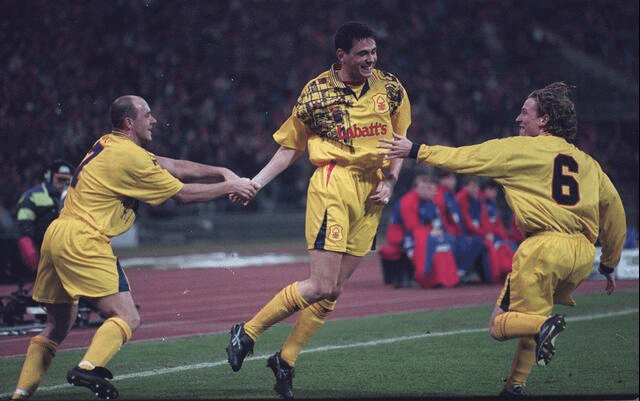
From one cup competition to another, Nottingham Forest’s attentions now turned to their FA Cup 5th-round replay against Tottenham on 9th March. The visiting Forest would take an early lead at White Hart Lane four days after their European travels. Ian Woan would lift the ball over the Spurs’ back four, leaving Bryan Roy alone to knock the ball over Ian Walker and into the far corner. However, just the half-hour, Teddy Sheringham would send a direct free-kick sailing into the top corner from 18 yards to equalise for the hosts. To put a long story short, the match would remain tied for the rest of the 90 minutes, leading to extra time. When 30 minutes of extra time still could not separate the two top-flight sides, a penalty shoot-out would decide who faced Aston Villa in the quarter-finals.
Nottingham Forest’s captain Stuart Pearce would step up first and blast the ball to the other side of Ian Walker. 1-0 Forest. Defender Clive Wilson would take Tottenham’s first spot-kick, but Mark Crossley would guess correctly and save his weak effort. Bryan Roy would have the chance to put Forest 2-0 up, but his effort would only hit Ian Walker. Ronny Rosenthal would have the opportunity to level the score after two rounds, but his swing of the ball would be saved by Crossley down to his left. Forest’s third penalty would be taken by Ian Woan, and the winger would hit his shot down the middle, making the score 2-0 to the visitors. Ruel Fox would need to score to keep his side involved, and he would score, putting Spurs on the board at 2-1. Steve Chettle, who had scored in Munich four days earlier, would also hit the target in North London, sending Walker the wrong way to increase Forest’s lead to 3-1. It was up to Spurs’ fifth penalty taker, Teddy Sheringham, to keep his team in the tie. However, his side-footed effort would be palmed away by Mark Crossley to hand the victory and the FA Cup quarter-final spot to Nottingham Forest. With three penalty saves on the night, Crossley was Forest’s hero, but he and his teammates would have four days to celebrate before that quarter-final with Aston Villa.
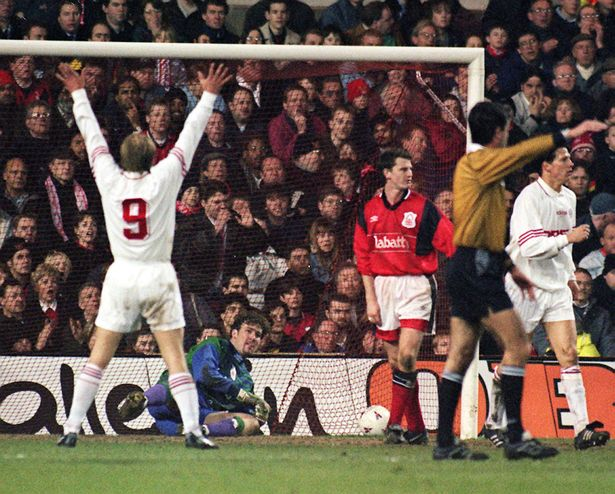
The FA Cup quarter-final with Aston Villa would mark Nottingham Forest’s 4th match in 11 days and 7th FA Cup match of this season. Frank Clark’s team would put in a valiant effort at home but ultimately fall to a narrow 1-0 defeat. Villa would dominate early possession, and Mark Crossley would need to get down low to stop Savo Milosevic from opening the scoring from close range. Minutes later, Villa captain Ugo Ehiogu would hit the bar from a corner. Dwight Yorke would also force a save out of Crossley within the first 25 minutes. In the 26th minute, however, Ian Taylor would play a pass from deep. Midfield partner Mark Draper would dummy the ball, and Franz Carr would reach the ball before Steve Chettle. Carr’s first touch would take him past Chettle, and the attacking midfielder would set himself up before hitting a shot into the top corner. It was the least that Aston Villa deserved.
In the second half, Nottingham Forest would push for an equaliser as Des Lyttle would send a shot fizzing wide left from 25 yards. Later, a cleared corner would only go as far as Ian Woan, and the winger’s volley would need to be cleared off the line by full-back Alan Wright. Scot Gemmill would have a chance, chasing down a long ball which Villa keeper Mark Bosnich would fail to claim, but his lifted effort would bounce wide. Forest was laying siege to the Aston Villa goal but could not find a way through. Late on, Mark Crossley would come up to attack a corner. However, that would ultimately come to nothing, and Aston Villa would hold on for the 1-0 win and a place in the FA Cup semi-finals. Nottingham Forest’s 37-year journey for a second FA Cup would carry on for another season.
After what must have felt like a long time but was only two weeks, Nottingham Forest would finally return to Premiership action with a game against Middlesbrough on 16th March. Due to FA Cup commitments, Nottingham Forest had fallen to 10th in the league standings with two games in hand. A win in both games could take the team as high as 5th and closer to those UEFA Cup places. However, the team first needed to win their other matches, starting away at Middlesbrough. Nottingham Forest would not beat Middlesbrough, recording their 10th 1-1 draw of the 1995-96 season. Carl Allen would score his first Nottingham Forest goal to break the deadlock in the 57th minute. However, midfielder Robbie Mustoe would level the scores less than a minute later.
That quick dip back into league football now over, Nottingham Forest had to prepare to host Bayern Munich at the City Ground for the second leg of the UEFA Cup quarter-final. Even though a 1-0 home win would see the Reds upset the Bavarian giants and progress to the semi-finals, Frank Clark’s team were still massive underdogs despite the 2-1 aggregate scoreline. Plus, this game marked Nottingham Forest’s 6th game in 17 days. For this second game, Bayern Munich had added Markus Babbel in defence and former Ballon D’or winner Jean-Pierre Papin to partner Jurgen Klinsmann in attack to make the team even more threatening on paper.
If the floodgates hadn’t opened in Munich, they certainly did in Nottingham. After no score for the first half-hour, Bayern Munich received a free-kick 30 yards from the goal. Christian Ziege, known for his free-kick-taking abilities, would send the ball over the defensive wall and into the bottom corner, with Mark Crossley beaten. Bayern Munich was ahead on the night and had extended their aggregate lead to two goals. Forest would need to score next, or this tie could quickly get away from them. However, two minutes before half-time, Andreas Herzog sent a corner out to Thomas Strunz on the edge of the penalty area. Strunz knocked the ball onto his right foot before sending a deflected effort into the far corner. At half-time, Bayern Munich would lead Nottingham Forest 2-0 on the night and 4-1 on aggregate. Barring a miracle, it looked like one team was heading to the semi-finals.
Luckily for Forest, Bayern would not score for the first 20 minutes of the second period. However, Otto Rehhagel’s side would then net three goals in 14 minutes to effectively kill the game off as a contest. On 65 minutes, Colin Cooper would head Jurgen Klinsmann’s header off the line, only for the ball to rebound to the striker, with which he would acrobatically volley the ball into the net. Eight minutes later, substitute full-back Dieter Frey would send a chipped cross into the area, and Jean-Pierre Papin would leap in front of Colin Cooper to score Bayern’s 4th of the night. Then, in the 79th minute, a Bayern counter-attack from their own penalty area would finish with Mehmet Scholl sending a deep through-ball into Klinsmann, and the Germany captain would go around Mark Crossley and finish with aplomb for his second, and Bayern’s fifth of the night. However, despite the drubbing they had received, Nottingham Forest would have the last word on the night. In the 85th minute, Steve Stone would play a one-two with substitute Jason Lee before deftly finishing past Oliver Kahn for the least consoling of consolation goals. At the end of 90 minutes, Bayern Munich would run out 5-1 winners at the City Ground, advancing to the UEFA Cup semi-finals with a 7-2 winning aggregate scoreline. In the end, Frank Clark’s team had been taught a footballing lesson by a much, much better side.
After suffering two crushing quarter-final exits in one week, you would forgive Nottingham Forest for dreading a home game against 3rd-placed Liverpool on 23rd March. However, in a match dominated by Liverpool, Frank Clark’s men would step up to the mark against Roy Evans’ title-chasers and win. Three minutes before half-time at the City Ground, Stuart Pearce would attempt a shot from range. David James would fail to hang on to Pearce’s effort, and Colin Cooper would whip the ball across the goal for Steve Stone to score his 5th league goal of the season. After netting the least important goal in Munich four days earlier, Stone would score the most important one on this day, costing Liverpool ground in the Premiership title race.
On 30th March, Nottingham Forest would end a packed month of 8 games in 28 days with a 1-0 defeat away at Wimbledon. Dean Holdsworth’s 10th goal of the season with 9 minutes remaining would end up separating the two sides. Nottingham Forest had now lost 6 of their last 8 Premiership away matches.
March had been a punishing month for Nottingham Forest, featuring 8 games over 28 days in three competitions. The Reds had started off well enough with the win over Sheffield Wednesday, a one-goal loss in Munich and an FA Cup shoot-out win over Tottenham. However, after that, the number of games in such a short time eventually caught up with the team, leading to two quarter-final exits from cup competitions and two wins from four in the league. With two months of the league season remaining, Nottingham Forest sat 9th in the Carling Premiership table, nine points adrift of the top four. The team would play their two games in hand in April. If successful, the Reds would move within three points of the final UEFA Cup place. Anything less, and their chance would be gone.
| Position | Team | Played | Wins | Draws | Losses | GF | GA | GD | Points |
|---|---|---|---|---|---|---|---|---|---|
| 7th | Everton | 33 | 14 | 9 | 10 | 53 | 38 | +15 | 51 |
| 8th | Blackburn Rovers | 32 | 14 | 6 | 12 | 47 | 39 | +8 | 48 |
| 9th | Nottingham Forest | 31 | 12 | 11 | 8 | 40 | 41 | -1 | 47 |
| 10th | Chelsea | 32 | 11 | 12 | 9 | 37 | 35 | +2 | 45 |
| 11th | West Ham | 32 | 13 | 6 | 13 | 39 | 44 | -5 | 45 |
April
April would begin with Nottingham Forest playing two matches in three days. The first would come against 6th-placed Tottenham on 6th April. Nottingham Forest had the edge in the FA Cup and the reverse league fixture earlier in the season. As had been the case in that earlier league match, one goal would separate the two teams at the end. Steve Stone would tap in in the opener five minutes before half-time, and Chris Bart-Williams would set up Ian Woan to score Forest’s second two minutes after the hour mark. Chris Armstrong would pull a goal back for Spurs in the 80th minute to make things interesting, but Forest would take the three points back to the East Midlands.
Two days later, Forest would have to come from behind to get the result they wanted against Leeds United. Ten minutes into the match, David Wetherall would head in at the back post to get the home fans excited. However, a corner at the other end would end with Colin Cooper sticking out a leg to knock in an equaliser eight minutes later. Forest would then take the lead at the half-hour mark with Steve Stone playing through Jason Lee to score his first goal since Boxing Day. Ian Woan would seal the victory in the 66th minute, playing a one-two with Kevin Campbell before striking the ball into the bottom-right corner. A 3-1 win, three points in the bag, and Nottingham Forest had secured back-to-back league victories for the first time in 1996. Next was a home match against Blackburn Rovers, the team who thrashed Forest 7-0 back in mid-November. A draw or a win this time would mark an improvement.
Five months after losing 7-0 away to Blackburn Rovers, Nottingham Forest would lose 5-1 at home to Blackburn Rovers. Forest went into the game one place higher and two points better off than the soon-to-be-former Premiership champions. However, once the goals started going in, you wouldn’t think Blackburn began this game in 9th place. Alan Shearer would open the scoring, as he had in the reverse fixture, counter-attacking quickly and finishing low into the far corner after 27 minutes. Billy McKinlay would double Blackburn’s lead four minutes later, receiving Jason Wilcox’s pass before letting it fly from 20 yards. Unlike in the reverse fixture, Nottingham Forest would manage to score a goal in this game. Four minutes before half-time, Ian Woan would chase Chris Bart-Williams’s ball behind the defence before firing the ball across the goal into the far corner. However, Jason Wilcox would re-establish Blackburn’s two-goal margin in first-half stoppage-time, stooping to head Alan Shearer’s cross past Mark Crossley to give Rovers a 3-1 lead at the break. Then, in the 68th minute, Alan Shearer would leave a Graham Fenton pass across the box, and Wilcox would slide in his second of the match to make it 4-1. Finally, Fenton would turn goalscorer, chasing Shearer’s knock-down before rounding Mark Crossley and sending a scuffed shot into the back of the net to complete the 5-1 rout with seven minutes remaining. It was a tough one to take for Nottingham Forest’s second home defeat of the Premiership season.
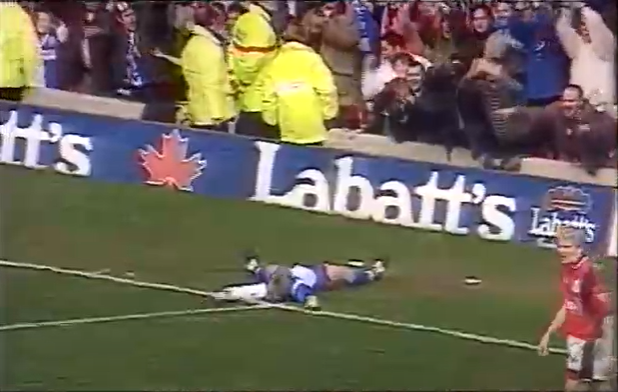
On 17th April, Forest would play the first of their two games in hand against a Coventry City team just outside the Premiership relegation zone. Needing a win to put pressure on the teams above them, Forest would instead be held to a goalless draw at home by the Sky Blues. Ron Atkinson’s team would have the best chance to break the deadlock when Noel Whelan hit the far post with Mark Crossley beaten. Crossley also had to parry away a shot from Kevin Richardson minutes later. Dion Dublin would also call the Forest keeper into action, Crossley having to dive low to his left to prevent a downward header from crossing the goal line. However, the 26-year-old goalkeeper would stave off this barrage, and the match would end goalless, causing both teams to lose ground on the teams above them. The draw with Coventry would only be the second goalless draw involving Nottingham Forest during the 1995-96 Premiership season.
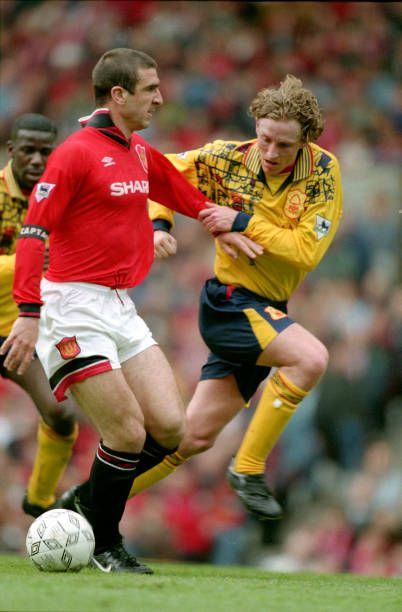
After a couple of hiccups, Nottingham Forest would travel to Old Trafford for their final away game of the season to face league leaders Manchester United. For the second time in as many weeks (and for the fourth time all season), Forest would concede five or more goals in a match. It seemed like the first half would end goalless. Stuart Pearce would fire straight at Peter Schmeichel and one end, while Lee Sharpe would miss with a diving header and force a save with a terrific volley at the other end. However, three minutes before half-time, Ryan Giggs would beat Alf-Inge Haaland down the wing before dragging the ball back for Paul Scholes to finish from six yards. Two minutes later, David Beckham would give the Red Devils a 2-0 half-time advantage. After his free-kick was parried away by Mark Crossley, the 20-year-old midfielder headed in from Eric Cantona’s cross back into the danger area. Beckham would then score his second 10 minutes into the second half, collecting Denis Irwin’s pass and shooting low into the far corner. Forest would have a chance to pull a goal back soon afterwards, but Peter Schmeichel would save Ian Woan’s shot at point-blank range. After that, Manchester United would stamp their authority on this match. Ryan Giggs would score his 10th league goal of the campaign, hitting a pass-turned-shot that would find its way into the bottom corner of Mark Crossley’s net. Then, United captain Eric Cantona would put the cherry on top of this dominant performance in the 90th minute, inadvertently assisting himself when his attempted pass flicked off a defender’s leg into the air, and he would chest down and finish with aplomb.
April had started positively with two encouraging victories over Spurs and Leeds in a matter of days. After that, the month had turned into a nightmare, with two five-goal defeats on either side of a goalless draw with a team in relegation trouble. These results had ended Nottingham Forest’s fading hopes of UEFA Cup qualification. Now, the team would enter their final two league matches with nothing on the line except to get a pair of victories in front of home fans.
| Position | Team | Played | Wins | Draws | Losses | GF | GA | GD | Points |
|---|---|---|---|---|---|---|---|---|---|
| 7th | Blackburn Rovers | 37 | 17 | 7 | 13 | 58 | 45 | +13 | 58 |
| 8th | Tottenham | 36 | 15 | 12 | 9 | 46 | 36 | +10 | 57 |
| 9th | Nottingham Forest | 36 | 14 | 12 | 10 | 46 | 53 | -7 | 54 |
| 10th | Chelsea | 37 | 12 | 14 | 11 | 44 | 41 | +3 | 50 |
| 11th | West Ham | 37 | 14 | 8 | 15 | 42 | 51 | -9 | 50 |
May
May would open with the penultimate game of Nottingham Forest’s season and their final game in hand. Now being able to finish no higher than 9th and no lower than 11th in the Carling Premiership league table, the result of this game did not matter too much in the context of Forest’s season. However, Frank Clark would want his men motivated to face Newcastle United at home. Newcastle, who had beaten Forest two days before Christmas to take a 10-point lead at the top of the Premiership, now entered this match needing a win to draw level on points with Manchester United before the final game of the season three days later. However, the Magpies would come unstuck at the City Ground.
Things appeared to be going well when Newcastle captain Peter Beardsley expertly dribbled around four Nottingham Forest players and fired high into the roof of the net to his team ahead in the 32nd minute. In the second half, Les Ferdinand’s header would cannon off the crossbar as Kevin Keegan’s team pushed for a second goal. However, in the 75th minute, Ian Woan picked up a loose ball on the halfway line and carried it deep into the Newcastle half before letting it fly from 25 yards, grazing the post as it hit the top corner. However, not long after equalising, Forest would almost gift Newcastle a winner as Steve Stone’s backpass only let in Philippe Albert to score. Mark Crossley would parry the first shot and flick his left hand out to stop a potential rebound as Forest briefly played with fire. However, the match would end with points shared as Newcastle lost ground on Manchester United, effectively ending their Premiership title hopes. With nothing left to play for, Nottingham Forest would only look forward to the final day of the season and a home match against Queens Park Rangers.
On the final day of the 1995-96 Carling Premiership season, Nottingham Forest would score three goals past an already-relegated Queens Park Rangers. The party at the City Ground would begin one minute before half-time when Steve Stone collected the ball in the box, avoided a challenge and curled a shot into the bottom-right corner of the net. Stone and Ian Woan would set up Bryan Roy for Forest’s second three minutes past the hour. Woan’s shot from long range would be parried by Juergen Sommer, only for Steve Stone to pounce upon the loose ball and whip it across the face of the goal for Roy to score his 8th league goal of the campaign, drawing him level with Woan and Jason Lee as Nottingham Forest’s top scorer in the league. Bobby Howe would then complete the scoring in the 77th minute, latching onto Steve Stone’s through-ball before scoring his second-ever Premiership goal. At the end of a mixed season for the club, Nottingham Forest would give their fans something to cheer with a 3-0 victory on the last day of the season.
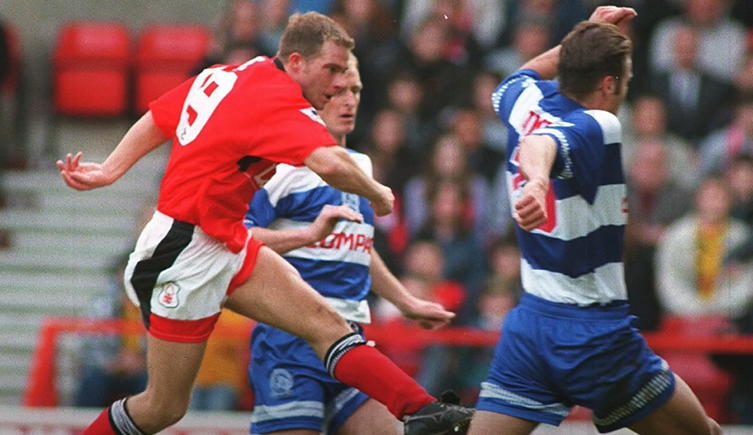
After 38 league games, Nottingham Forest would finish with 15 wins, 13 draws and 10 losses, a model of inconsistency that would result in the Reds netting 58 points from 114, a 50% points ratio. These results would see the team finish 9th in the table. The Reds had failed to repeat the heroics of the previous campaign and achieve UEFA Cup qualification, fading after a bright start. However, this league season could not be seen negatively, considering the team only finished five points off the final UEFA Cup place occupied by Arsenal. Considering his team was not too far away, Frank Clark could hope that some good transfer business and turning more draws into wins could lead to a more fruitful campaign in 1996 and 1997.
| Position | Team | Played | Wins | Draws | Losses | GF | GA | GD | Points |
|---|---|---|---|---|---|---|---|---|---|
| 7th | Blackburn Rovers | 38 | 18 | 7 | 13 | 61 | 47 | +14 | 61 |
| 8th | Tottenham | 38 | 16 | 13 | 9 | 50 | 38 | +12 | 61 |
| 9th | Nottingham Forest | 38 | 15 | 13 | 10 | 50 | 54 | -4 | 58 |
| 10th | West Ham | 38 | 14 | 9 | 15 | 43 | 52 | -9 | 51 |
| 11th | Chelsea | 38 | 12 | 14 | 12 | 46 | 44 | +2 | 50 |
Statistics
During the 1995-96 season, Nottingham Forest played 55 matches across four competitions. Forest would win 20 (36.36%), draw 20 (36.36%), and lose 15 (27.27%). In these matches, Frank Clark’s team would score 70 goals (1.27 per game) and concede 74 (1.34 per game). In the Premiership, Nottingham Forest would have 15 victories (39.47%), 13 draws (34.21%) and 10 losses (26.32%) from 38 matches while scoring 50 goals (1.31 per game) and conceding 54 (1.42 per game).
To understand why Nottingham Forest had such indifferent league form throughout the 1995-96 season, you just have to look at the clash of contrasts that are the club’s home and away records. When Nottingham Forest finished an astonishing 3rd in the Carling Premiership the previous season, this was due to having an excellent home record (the 6th-best in the division) backed up by an incredible set of stats away from home (the 3rd-best in the Premiership). After winning twelve, drawing six and losing only three games during the 1994-95 season, Forest would continue their impressive form at the City Ground into the 1995-96 Premiership season. Out of nineteen home matches, Nottingham Forest would win eleven, draw six and lose twice, giving them the 5th-best record in the top flight. Only the final top three, Manchester United, Newcastle United and Liverpool and 7th-placed Blackburn Rovers, would enjoy better results at their home stadia. Notable home results for Nottingham Forest during this league campaign would include wins over Liverpool (3rd, 1-0), Everton (6th, 3-2), and Tottenham (8th, 2-1) and 1-1 draws against Manchester United (1st) and Aston Villa (4th). Only Arsenal (0-1, 10th February) and Blackburn Rovers (1-5, 13th April) would get the better of Forest in Nottingham during an incredible run of form for Frank Clark’s team. By the end of the 1995-96 season, Nottingham Forest had lost just 5 out of 40 league matches at the City Ground over the past two Carling Premiership campaigns.
In contrast, Nottingham Forest’s away form would leave something to be desired, with four wins, seven draws and eight defeats from nineteen matches. These results would give them the same points as West Ham (19), who would finish one place and seven points below Nottingham Forest in the regular end-of-season league standings. Forest would start the season well away from home, earning two wins and four draws from their first six matches between mid-August and late October. However, defeat to Blackburn in mid-November would set Forest on a run of ten Premiership away games without a victory, with the team not earning another victory outside of the East Midlands until early March, when a win against Sheffield Wednesday would set up two wins in their last five away games.
While Forest managed to keep a tight defensive record at the City Ground, conceding seventeen goals (0.89 per match) in nineteen games (with five of those coming in a 5-1 defeat to Blackburn), the same club would let in 35 goals (1.84 per game) away from home in the same amount of matches. Forest’s formbook away from home would feature high-scoring defeats to Blackburn (0-7, 18th November), Newcastle (1-3, 23rd December), Liverpool (2-4, 1st January), Everton (0-3, 24th February) and Manchester United (0-5, 28th April). Results like these would ultimately keep Forest from achieving UEFA Cup qualification, with the club eventually finishing the season in 9th.
Nottingham Forest 1995-96 Carling Premiership Home Record
| League Rank | Played | Wins | Draws | Losses | GF | GA | GD | Points |
|---|---|---|---|---|---|---|---|---|
| 5th | 19 | 11 | 6 | 2 | 29 | 17 | +12 | 39 |
Nottingham Forest 1995-96 Carling Premiership Away Record
| League Rank | Played | Wins | Draws | Losses | GF | GA | GD | Points |
|---|---|---|---|---|---|---|---|---|
| =10th | 19 | 4 | 7 | 8 | 21 | 37 | -16 | 19 |
Nottingham Forest would be one of the few Premiership teams not to see one player reach double figures for goals during the 1995-96 Premiership campaign. Bryan Roy, Jason Lee, and Ian Woan would all top score for Forest with 8 league goals each. However, the team had failed to replicate the goalscoring menace of Stan Collymore following the forward’s departure to Liverpool the previous summer. During the 1994-95 season, Stan Collymore scored 22 Premiership goals for Nottingham Forest. For the 1995-96 season, Forest strikers Bryan Roy, Jason Lee, Kevin Campbell, Paul McGregor, Andrea Silenzi, Richard Irving and Steve Guinan would score 21 Premiership goals. This season, Stan Collymore would net 14 goals for Liverpool, finishing the campaign as the Reds’ second-highest goalscorer. Meanwhile, Bryan Roy would finish the 1995-96 season as Forest’s joint-top scorer with 8 goals, almost half Collymore’s total.
Every Nottingham Forest goalscorer during the 1995-96 season
| Player | Total Goals (Premiership) |
|---|---|
| Ian Woan | 12 (8) |
| Bryan Roy | 10 (8) |
| Steve Stone | 9 (7) |
| Jason Lee | 8 (8) |
| Stuart Pearce | 6 (3) |
| Kevin Campbell | 6 (3) |
| Colin Cooper | 5 (5) |
| Paul McGregor | 3 (2) |
| Bobby Howe | 2 (2) |
| Lars Bohinen | 2 (0) |
| Andrea Silenzi | 2 (0) |
| Chris Allen | 1 (1) |
| Scot Gemmill | 1 (1) |
| Des Lyttle | 1 (1) |
| Steve Chettle | 1 (0) |
During the 1995-96 season, Nottingham Forest manager Frank Clark used 22 players across four competitions. These 22 players would include one goalkeeper, six defenders, eight midfielders and seven forwards. Twelve of these players would appear in over half (28) of Nottingham Forest’s matches in all competitions. These players were goalkeeper Mark Crossley, defenders Des Lyttle, Stuart Pearce, Colin Cooper and Steve Chettle, utility player Chris Bart-Williams, midfielders Scot Gemmill, Steve Stone and Ian Woan and strikers Jason Lee, Kevin Campbell and Bryan Roy. These twelve players would appear in over half of Forest’s Carling Premiership matches. Nine players (Crossley, Lyttle, Cooper, Chettle, Pearce, Bart-Williams, Gemmill, Stone and Woan) would play 30 or more of Forest’s 38 matches, with eight (everyone excluding Gemmill) starting over 30 games.
The only position not to see a Nottingham Forest player rack up these numbers came in the forward line. The previous season, Stan Collymore and Bryan Roy had barely missed a match, playing 37 out of 42 Premiership matches and 43 of 48 games in all competitions. Jason Lee would be the only other forward that season to make over 20 appearances, with Paul McGregor also hitting double figures for Nottingham Forest. During the 1995-96 season, Frank Clark used seven different strikers. Five of these seven forwards would hit double figures for appearances. Jason Lee and Bryan Roy would be Frank Clark’s most settled strike partnership, appearing in 35 and 34 matches in all competitions and 28 times each in the Premiership.
However, Bryan Roy would only start 26 Premiership games, and Jason Lee would begin 22. The 12 and 16 league games not started by either Roy or Lee would include Kevin Campbell, Andrea Silenzi or Paul McGregor. Signed as Stan Collymore’s replacement, Kevin Campbell would make 28 appearances (21 in the league), starting all his matches and recouping six goals for his efforts. Meanwhile, Paul McGregor would continue his development, with the 21-year-old starting seven games this season and scoring famous goals against Lyon in the UEFA Cup and Manchester United in the Premiership. However, despite becoming the first Italian to play Premiership football, Andrea Silenzi would disappoint. Silenzi would make seventeen appearances in all competitions, with ten coming in the league, but would only register two goals. Both of these goals would come in cup competitions, in a 3-2 League Cup defeat to Bradford in September and in a 3-0 FA Cup 4th-round replay win over Oxford United in February. Silenzi’s lack of goals would see him spend most of the season as a substitute, with the Italian only starting three times in the league and eight times in total.
| Position | No. | Player | Total Appearances (Premiership) |
|---|---|---|---|
| GK | 1 | Mark Crossley | 47 (38) |
| 13 | Malcolm Rigby | 0 | |
| 13 | Alan Fettis | 0 | |
| 23 | Tommy Wright | 0 | |
| 24 | Simon Tracey | 0 | |
| 30 | Richard Clark | 0 | |
| DF | 2 | Des Lyttle | 42 (33) |
| 3 | Stuart Pearce | 36 (31) | |
| 4 | Colin Cooper | 44 (37) | |
| 5 | Steve Chettle | 46 (37) | |
| 6 | Carl Tiler | 0 | |
| 18 | Alf-Inge Håland | 19 (17) | |
| 21 | Chris Bart-Williams | 42 (33) | |
| 25 | Steve Blatherwick | 0 | |
| 26 | Craig Armstrong | 0 | |
| MF | 7 | David Phillips | 25 (18) |
| 8 | Scot Gemmill | 39 (31) | |
| 9 | Lars Bohinen | 8 (7) | |
| 11 | Steve Stone | 42 (34) | |
| 14 | Ian Woan | 42 (33) | |
| 16 | Neil Webb | 0 | |
| 17 | Kingsley Black | 2 (2) | |
| 19 | Bobby Howe | 9 (8) | |
| 27 | Chris Allen | 3 (3) | |
| FW | 10 | Kevin Campbell | 28 (21) |
| 12 | Jason Lee | 34 (28) | |
| 15 | Andrea Silenzi | 15 (10) | |
| 20 | Paul McGregor | 17 (14) | |
| 22 | Bryan Roy | 35 (28) | |
| 24 | Richard Irving | 1 (1) | |
| 28 | Steve Guinan | 2 (2) |
 the-score-board.co.uk