
The whim of an ambitious owner that led to fan protests during a time of domestic success and a visit to the top flight…
Modern British football is filled with foreign ownership, especially with teams in the top two divisions in the Premier League and the EFL Championship. It is fair to say that over the past 30 years of the ‘Premier League era’, the work of these foreign owners and how they have been received by their club’s fanbase has been mixed. There have been the success stories, like the Abu Dhabi Football Group’s time at Manchester City, the Srivaddhanaprabha family at Leicester City and Fenway Sports Group at Liverpool. Conversely, there have been the tales of absentee owners like Stan Kroenke at Arsenal and the Glazer family at Manchester United, under whose stewardship the success has dried up, and stagnation has set in, leading to fan discontent. There are even controversial ones like Roman Abramovich at Chelsea, Carson Yeung at Birmingham City and Massimo Cellino at Leeds United. So, where does Cardiff City owner Vincent Tan fit in among this field?
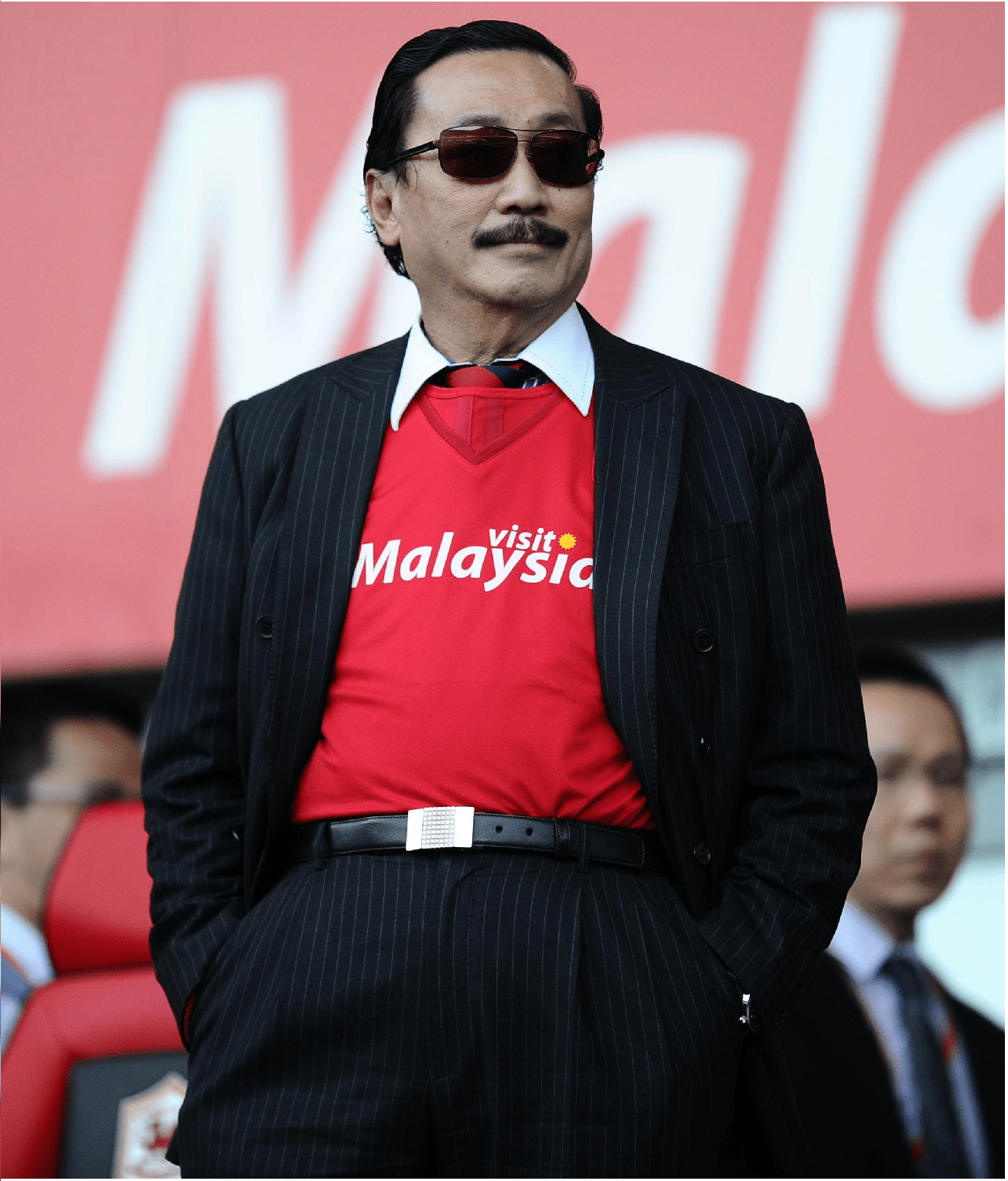
Vincent Tan has been an owner of Cardiff City since May 2010, when he formed part of a consortium of Malaysian investors that bought 30% of the club’s shares from former Leeds owner Peter Ridsdale. Under Tan’s ownership, Cardiff has twice been promoted to the Premier League in 2013 and 2018, with both top-flight campaigns ending in immediate relegation back to the second tier. Before and after these promotions, Tan has also overseen three unsuccessful play-off campaigns in 2011, 2012 and 2020. At the time of writing, Tan is currently working with his ninth full-time Cardiff City manager (excluding caretaker managers), with three of these managers (Ole Gunnar Solskjaer, Paul Trollope and Mick McCarthy) failing to complete one season in charge. Compared to other clubs (*cough* Watford), nine managers in twelve years of ownership is not a bad track record, especially in a league where every team wants to reach the top flight. However, when Vincent Tan eventually sells Cardiff City to a new investor, and when the articles are written looking back at his time at the helm, there will be one thing that Cardiff fans and journalists will primarily remember him for. He was the man who turned the Bluebirds red for two-and-a-half years.

Now, a football club’s owner does not have to answer to anyone except football’s governing and lawmaking bodies. They have the power to sanction player arrivals and departures, agree to sponsorship deals and hire and fire club staff, especially the manager or head coach. You reading this could argue that an owner has to answer to the fans who buy the tickets to watch the team and the club’s shareholders who decide whether to invest their money in said club. However, the fans can boo and protest as much as they want, and the owner can choose to ignore them. A good owner would listen to a club’s fans and take their opinion on board when making decisions in the club’s interest. However, we have seen time and time again what happens when the owner decides to completely ignore their fanbase, to a damaging effect. Plus, if shareholders choose to leave the club, the owner can find more money or potential stakeholders from elsewhere, or even choose to increase their ownership share. At the end of the day, an owner must win over the fans and shareholders when they buy the club. However, once in charge, it is the owner’s choice to decide how to run the club in a (hopefully) lawful manner, and it is the owner’s choice to determine when to sell their stake in the club and move on.
This level of control from particular owners has led to situations like the calamitous failure of the European Super League in 2021. However, it has also led to some more trivial matters. Take the time in 2011 when then-Fulham chairman Mohamed al-Fayed unveiled a plaster statue of Michael Jackson outside the club’s Craven Cottage stadium. Aside from attending one game in 1999, Jackson had no affiliation with the Cottagers besides being friends with al-Fayed. Despite fan complaints, the statue would remain outside Craven Cottage until it was removed by the club’s new owners in 2013. Mohamed al-Fayed would then blame the club’s 2014 Premier League relegation on the statue’s removal. Also in 2013, Hull City owner Assem Allam announced that he was set to change the club’s name to ‘Hull City Tigers’ locally and ‘Hull Tigers’ internationally. He would claim that Hull City’s name was ‘irrelevant’, ‘common’ and ‘lousy’. He would predict that other English clubs like Manchester United would soon follow his example and would respond to heavy fan backlash by saying, “nobody questions my decisions in my business”. However, Allam’s grand plan would eventually be stopped by the F.A. rejecting his name change. Allam had threatened to sell Hull if his name change was refused but would subsequently remain as owner until 2022. Now to the main subject of our article, Mr Vincent Tan.

Tan arrives
As mentioned previously, Vincent Tan took over as owner of Cardiff City as part of a consortium of Malaysian investors in May 2010. In his first season at the helm, Cardiff would finish 4th in the Championship table and qualify for the end-of-season play-offs but would lose a two-legged play-off semi-final to Reading. Despite the club finishing the season two matches away from Premier League promotion, Tan would decide to sack long-time manager Dave Jones (the man who had taken the Bluebirds to the 2008 FA Cup Final), ending the Liverpudlian’s six years in charge.
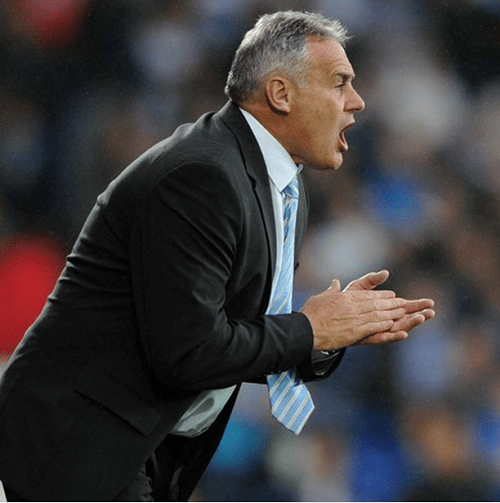
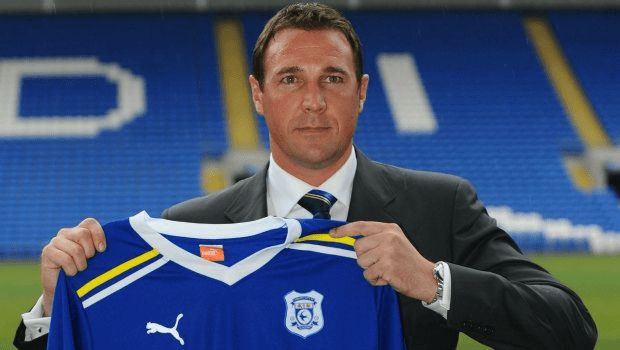
For Jones’s replacement, Tan would choose Watford manager Malcolm ‘Malky’ Mackay. Mackay had under two seasons of managerial experience and had never managed a team challenging for top-flight promotion. However, Mackay would buy smartly in the 2011 summer transfer window, adding players like Andrew Taylor, Aron Gunnarsson, Ben Turner and Joe Mason. He would convince veteran strikers Kenny Miller and Robert Earnshaw to ply their trade in South Wales. In his first season in the Welsh capital, Mackay would guide Cardiff to a 6th-placed league finish and the play-off semi-finals, where they would lose to West Ham. However, more notably, the former Scotland international would take Cardiff to their first-ever League Cup Final, where they would face record seven-time winners Liverpool. Faced with a team containing Pepe Reina, Steven Gerrard and Luis Suárez, Cardiff would take Liverpool to a penalty shoot-out, but the Premier League club would ultimately win the day.
A Change In Colour Is Necessary
After a successful 2011-12 campaign, Vincent Tan would make a huge statement. He and the ownership consortium would invest £100 million into Cardiff City, money that would be used to enhance the capacity of the Cardiff City Stadium and build a new and improved training ground. However, as part of these plans, Tan wanted the fan’s permission to change the club’s colours from blue to red. In addition, the club’s crest would change from featuring a bluebird to a red dragon. This latter part of the statement immediately sent shockwaves throughout the club. Blue was the primary colour of Cardiff City and had been for over 100 years. The club was nicknamed ‘The Bluebirds’, and Cardiff’s crest also featured the avian creature. The club had also worn some form of a blue shirt since 1908 when the club, then known as Riverside A.F.C., changed its chocolate-brown and amber checked kit to a combination of a dark blue shirt with white shorts. This change to blue would coincide with Riverside changing its name to Cardiff City Football Club.

Why did Vincent Tan want to make the change from blue to red? His goal was to make Cardiff more marketable in Asia, especially in his home country of Malaysia. The Malaysian tourist board had begun sponsoring Cardiff’s home and away kits since the beginning of the 2011-12 season, so Tan wanted to bring the Welsh club and the Asian continent closer with this colour change. However, why did Tan desire to change the club’s historic colours just to appeal to a new international market? Around the time these plans were proposed, Tan was quoted as saying: “In Asia, red is the colour of joy; red is the colour of festivities and of celebration. In Chinese culture, blue is the colour of mourning.” With red branding, Cardiff was more likely to appeal to Asian businesses, partners and consumers than with their traditional blue, which bore more negative connotations. Tan also used examples within football to prove his point, pointing out that Manchester United and Liverpool, who wore red, were much more successful and had larger fanbases than Chelsea and Manchester City, who both wore blue. However, Tan’s proposition was not solely based on Asian customs. In a 2014 interview with Sky Sports, Tan explained that red was his lucky colour. He also stated that with red being the national colour of Wales and the red dragon being the Welsh national symbol, he wanted Cardiff to represent Welsh football internationally.
The leaked plans to change Cardiff City’s colours would receive such backlash from the club’s fanbase that the plans were dropped just two days after they were first revealed. The club’s ownership consortium would backtrack on their original plans, expressing that the plans were leaked before they were finalised. However, the owners would stress that a significant rebranding of the club was needed. Then-club chairman Dato Chan Tien Ghee would write in an open letter posted on the club’s website:
“It is clear to all concerned that the club simply cannot continue to function and exist in its current state, effectively losing large amounts of money each month while acquiring more and more debt”.
“As romantic and simplistic a notion as it may seem, maintaining our current course without growth or change is not, and cannot be, an option.” (“Cardiff City ditch colour and badge change proposal”, BBC Sport, 10th May 2012)
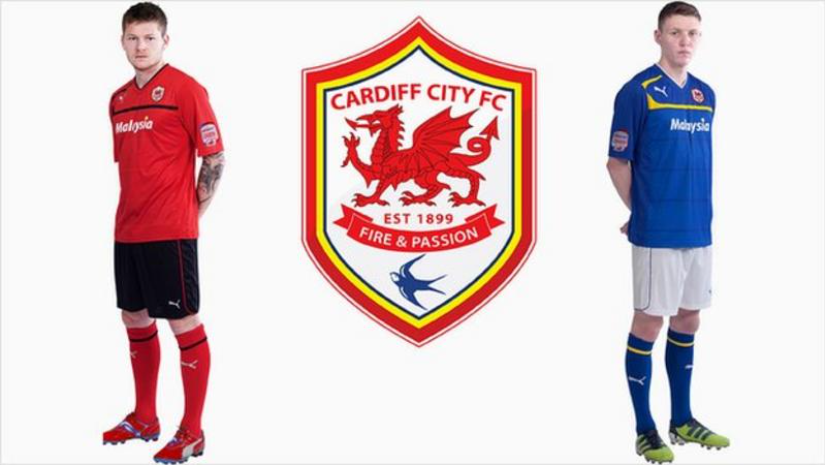
For the time being, it seemed like such radical plans had been pushed down by fan opposition. However, on 6th June 2012, one month after the original plans were leaked and retracted, plans would change again. On this day, Cardiff City would announce that starting the following season, the club’s official colours would change from blue to red, including the team’s home shirts. The club’s crest would also change from solely featuring a bluebird to prominently featuring a red dragon, with a much smaller bluebird sitting underneath. Cardiff City’s home kit for the 2012-13 Championship season would include a red shirt with white and black detailing, black shorts with red and white detailing and red socks with white and black details. In a move that was also sure to anger plenty of fans, the club’s traditional home kit of a blue shirt, white shorts and blue socks would become the new away kit. In addition, the club’s owners pledged to invest in the playing squad, expand the Cardiff City Stadium, upgrade the training ground and pay off the £30m owed to former owner Sam Hammam.
At the time, Cardiff chief executive Alan Whiteley would acknowledge that the colour change was “radical and revolutionary” and was “sure to cause some unease and apprehension among a number of supporters”. However, he would go on to say:
“There is no getting away from the fact that history and traditions are the lifeblood of any club and, as such, should be jealously guarded and preserved.
“Both the board and our investors fully understand and respect this and will do their utmost to uphold, protect and promote the values and virtues which the club stands for.
“The changes to the home kit and badge introduced as a consequence of the investment package are designed to help the club to develop its brand and to allow it to expand its appeal to as wide an audience as possible, with a view to delivering local success via an international and diverse market.” (“Cardiff City to change kit from blue to red amid financial investment”, BBC Sport, 6th June 2012)
Compared to when the plans were initially proposed, portions of the club’s support had cooled in their opposition, knowing that the £100m investment from the Malaysian owners would provide much-needed financial stability to a club reportedly losing £1m every month. These supporters knew that this colour change was a ‘fait accompli’. However, other portions still felt strongly opposed to their beloved Cardiff City radically changing their image, as would be seen further down the line.
Turning Red
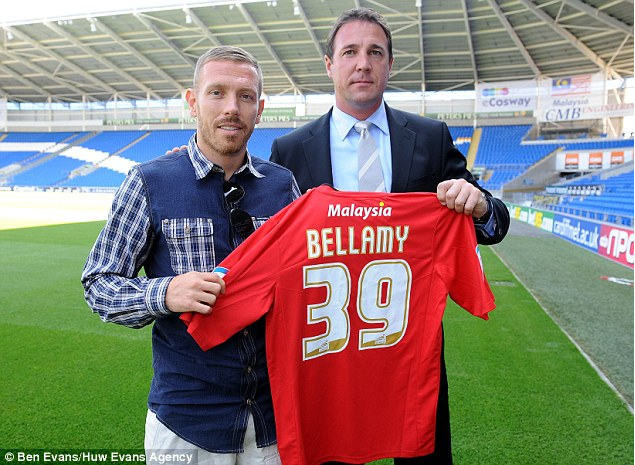
After a summer transfer window that saw Heiðar Helguson, Matthew Connolly, Jordon Mutch, Nicky Maynard and Craig Bellamy join the club, Cardiff City would begin their first-ever season in red. After starting with a 1-0 opening-day home win over Huddersfield, Malky Mackay’s team would not take long to find good form. After winning 7 of their first 10 matches, Cardiff would hit the Championship’s top spot on 2nd October after a 2-1 home win over Birmingham City. Three losses in their next six games would see the team drop to 3rd in early November. However, three consecutive victories would see Cardiff hit the top spot again by the end of the month. From this point on, the former Bluebirds would never relinquish 1st place, losing four of their remaining twenty-eight league matches.
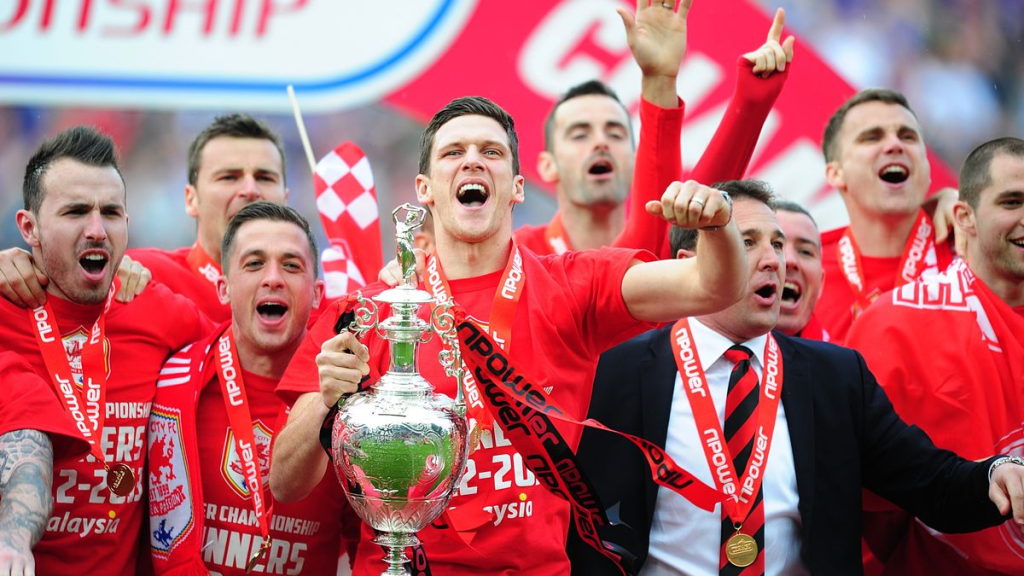
On 16th April 2013, a 0-0 stalemate with Charlton Athletic would confirm Cardiff City’s promotion to the Premier League, returning the Welsh club to the top flight of English football after a 51-year absence. Four days later, a 1-1 draw away to Burnley would see Cardiff clinch the Championship title with two matches to spare. After three successive unsuccessful play-off campaigns, the team had finally achieved Premier League promotion, and they had done it automatically.
Despite much fan opposition to the club’s colour change, home attendances would remain high for Cardiff City during the 2012-13 season. An average of 22,475 people would pack the Cardiff City Stadium throughout the season, making Cardiff the fifth most-supported club in the Championship. However, some fans were so opposed to the club’s new image that they even attempted to form their own rebel club similar to A.F.C. Wimbledon or F.C. United of Manchester. These clubs had also been created by fans discontented with their club’s direction and ownership. In an April 2013 interview with The Guardian, Darren Thomas, one of the founders of this future club, set to be named F.C. Bluebirds of Cardiff, would say: “There’s history in Cardiff City. It’s like a listed building, there are some things we feel you don’t touch, so we decided we’d had enough.
“We wanted to keep the Bluebird and our traditional colours going, so a group of people decided we’d start again with our own club [initially called F.C. Bluebirds of Cardiff]. To be honest, we only had 60 members, but there was a little incident that we call ‘Scarfgate’, which happened at [the Brighton] match in February, where Vincent Tan handed out thousands of red scarves to kind of ram the red down people’s throats. A lot of people turned to us and said: ‘Whoa, it’s too much.’ All of a sudden, we had 1,000 Twitter followers in 24 hours, and the Facebook group went up to 400-500 members in the same time, and we’ve continued our work from there.” (“Cardiff City dare to dream after play-off heartache of recent seasons”, The Guardian, 5th April 2013)
Despite these plans, there is no record of a formation of a club called F.C. Bluebirds of Cardiff ever happening. However, membership numbers to those Twitter and Facebook pages likely increased due to another Vincent Tan idea. In February 2013, Tan gave an interview to BBC Sport Wales in which he proposed changing Cardiff City’s name to a more marketable one that would again appeal to overseas buyers. Considering how well name change plans went down when Assem Allam tried to change Hull City’s name in this same year, it is no surprise that Tan quickly dropped the issue.
Gracing the Top Flight
Cardiff City would prepare for their first top-flight campaign since 1962 by breaking the club’s transfer record three times in one window. Norwegian striker Andreas Cornelius (FC Copenhagen, £7.5m), promising young centre-back Steven Caulker (Tottenham, £8m), and Chilean midfielder Gary Medel (Sevilla, £9.5m) would all arrive for record fees, along with five other signings including West Brom striker Peter Odemwingie.
Cardiff City would begin their first Premier League season with a 2-0 defeat away at West Ham United. However, the club’s first home match the following weekend would see them upset the previous season’s league runners-up Manchester City 3-2. After Edin Džeko had given Manuel Pellegrini’s men a 52nd-minute lead, midfielder Aron Gunnarsson would equalise for Cardiff on the hour. A brace from Fraizer Campbell would soon send the home fans into raptures. Despite Alvaro Negredo pulling a goal back for City in the 92nd minute, Cardiff would claim a famous victory over the recent Premier League champions.

Draws with Everton and Fulham, a narrow 1-0 defeat to Tottenham and a 2-1 win over Fulham saw Cardiff sit 11th in the Premier League table after earning 8 points from their first six league matches, a respectable total for a newly-promoted club. However, reality soon set in with two wins, three draws and six defeats from their next eleven games, with Cardiff spending Christmas 15th in the league standings on 13 points. However, one of the two wins during this period was a 1-0 home win over Swansea City in the Premier League’s first-ever South Wales Derby on 3rd November. The team would also manage a 2-2 draw with reigning champions Manchester United on 24th November, with midfielder Kim Bo-Kyung scoring a 92nd-minute equaliser at the Cardiff City Stadium.
The Fall of Mackay
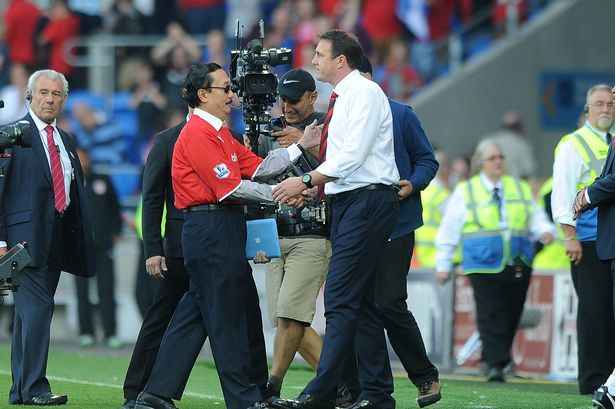
On Boxing Day 2013, Cardiff City would convincingly lose 3-0 at home to Southampton, the team’s ninth defeat in nineteen Premier League matches. The next day, Malky Mackay would be sacked as Cardiff City manager. The decision caused outrage from the club’s fans, furious that the man who got them promoted to the Premier League had been relieved of his duties. However, anyone privy to the inner workings at Cardiff would have known that Vincent Tan and Malky Mackay had not seen eye to eye in recent weeks. Aside from the team’s poor form, Tan had criticised Mackay for overspending in the summer transfer window, claiming that he would be given no more money when the window re-opened in January. He had even removed the club’s head of recruitment Iain Moody in October, a close ally of Mackay. He had also allegedly criticised Mackay’s style of play. On 16th December (eleven days before Mackay was sacked), Tan had sent an email to his manager detailing his grievances and telling the Scotsman to either resign immediately or face the sack. Mackay would refuse to leave, and thus the latter option was chosen.
In a statement released on the day of Mackay’s sacking, Tan announced that Mackay’s dismissal was for the good of the club, stating:
“There has been a good deal of publicity generated by, and about, Mr Malky Mackay for the last few months.
“I have deliberately not responded to this, hoping that the club can be judged on its football rather than personalised arguments about who said what to whom.
“I have, however, regretfully concluded that it is no longer fair to the club, its players, its fans and the public more generally for this uncomfortable state of affairs to continue.
“Cardiff City Football Club means far too much to us all for it to be distracted by this.”
(Vincent Tan, “Malky Mackay: Cardiff City sack manager”, BBC Sport, 27th December 2013)
Malky Mackay would later attempt to sue Vincent Tan for unfair dismissal but would drop his suit in May 2014. In August 2014, when Mackay was close to being appointed the new Crystal Palace manager, Cardiff City would send a dossier to the FA detailing homophobic, sexist and racist text messages sent by Mackay to Iain Moody during his time as manager. When some of these texts were leaked to the press, Crystal Palace immediately dropped Mackay as a candidate. The Scotsman would quickly become vilified as more people became aware of these messages. Following an investigation, the FA ultimately decided not to charge Mackay or Moody in July 2015.
The Arrival of the ‘Baby-Faced Assassin’
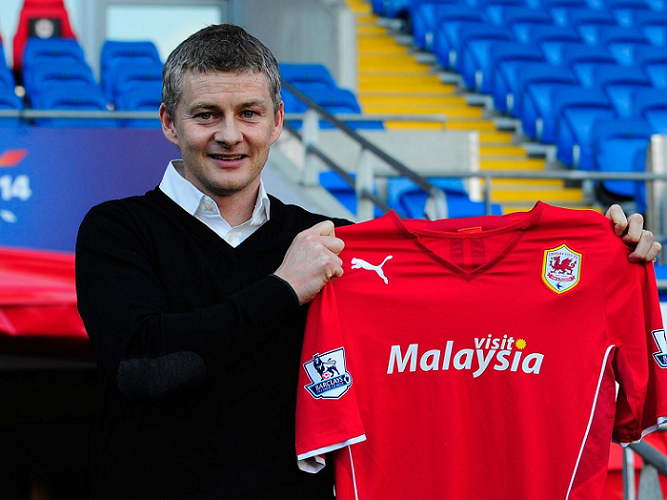
After Malky Mackay’s dismissal in December 2013, his assistant manager David Kerslake would become Cardiff’s caretaker manager, overseeing a 2-2 draw with Sunderland on 28th December and a 2-0 defeat to Arsenal on New Year’s Day 2014, pushing Cardiff down to 17th. One day later, Cardiff City would announce the appointment of Molde manager and former Manchester United striker Ole Gunnar Solskjaer as their new manager. Having never held a senior management job outside his homeland, Solskjaer was now expected to lead Cardiff City out of relegation trouble. He would begin by signing seven new players in the January transfer window. Arriving would be Molde trio Magnus Wolff Eikrem, Mats Møller Dæhli, Jo Inge Berget, Stoke striker Kenwyne Jones, Manchester United pair Fábio and Wilfried Zaha and Sevilla defender Juan Cala. In the same window, Andreas Cornelius, the Norwegian striker who had cost a club transfer record £7m to sign five months earlier, would be sold after failing to score in 11 appearances.
Ole Gunnar Solskjaer would win his first match as Cardiff City manager, leading the team to a 2-1 win over Newcastle United in the FA Cup 3rd round. However, a failure to produce a victory in his first three Premier League games would see Cardiff drop to the bottom of the table at the end of January. He would finally get off the mark with a 2-1 win over Norwich on 1st February. However, another five matches would pass before Solskjaer produced another three points, by which point the damage to Cardiff’s Premier League future had already been done. After three wins in seventeen league matches since the start of 2014, Cardiff City was finally put out of their misery on 3rd May, when a 3-0 defeat away at Newcastle confirmed the team’s relegation back to the Championship after one year in the top flight. Cardiff’s season would finish with a 2-1 defeat at home to Chelsea. The team would finish bottom of the Premier League table on 30 points after 7 wins, 9 draws and 22 defeats from their 38 league matches.

In an interview with the B.B.C. following the club’s relegation, Vincent Tan said he would consider returning Cardiff’s colours to their original blue. However, this situation would only occur if Cardiff immediately earned promotion back to the Premier League the following season. He would say:
“I would like to focus on getting back to the Premier League, and after we are there, I will definitely agree to sit down and find a solution – maybe we can have a compromise.”
“I am not a quitter. I will stay until we get ourselves up, and then we will see whether we can work out this colour change and compromise. If we can, maybe I will stay for a long time.
“Let us get back to the Premier League first, and after we are there, I assure fans, the Supporters’ Trust and all of them, that I will sit down with them, and we will find a solution that I hope will be satisfactory for all – for them and for me also.” (‘Vincent Tan: Cardiff City owner will consider return to blue kit from red’ BBC Sport, 11th May 2014)
The Best Laid Plans
Back in the Championship, the 2014 summer transfer widow would see 12 players arrive and 12 players leave Cardiff City. Craig Bellamy would retire, big-money signings Steven Caulker and Gary Medel would go elsewhere for considerably larger fees, and much of the club’s recent signings would also depart for pastures new. After spending £13.5 million to bring in Adam Le Fondre, Federico Macheda, Anthony Pilkington and Danny Gabbidon (among others), Cardiff would start the 2014-15 Championship season well with a draw and two wins. However, failure to win their next four league matches would see Ole Gunnar Solskjaer receive his marching orders from Vincent Tan, ending a miserable time in charge. Caretaker managers Danny Gabbidon and Scott Young would stabilise the club’s form, producing one win, two draws and one defeat from four matches. However, Solskjaer would eventually be replaced by Leyton Orient manager Russell Slade on 2nd October 2014.
By the end of 2014, Cardiff City had moved up to 12th place in the Championship, albeit with an inconsistent form book of five wins, three draws and five defeats from Russell Slade’s thirteen matches in charge. However, for a club that had been in the Premier League the previous season and possessed one of the best squads in the league, the club’s form had led to fan protests outside the ground against the ownership, adding to the fans who still protested the club’s two-year-old rebrand. The club’s myriad of problems came to a head on 2nd January 2015 when Cardiff hosted League One side Colchester United in the FA Cup 3rd Round. Cardiff would win that match 3-1. However, it was a shame that only 4,194 fans had chosen to attend the game, creating a cavernous atmosphere inside a stadium that could hold over 33,000. Shocked by these statistics, the Cardiff City board would call an emergency meeting.
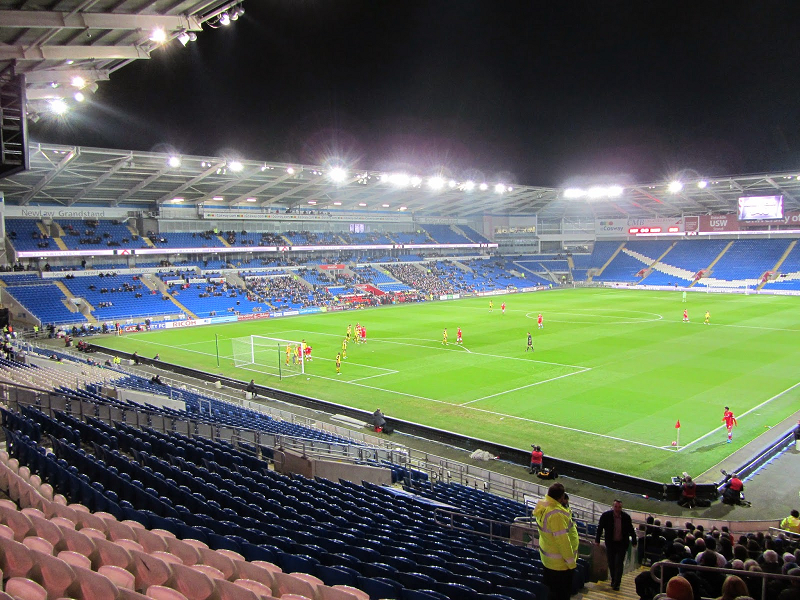
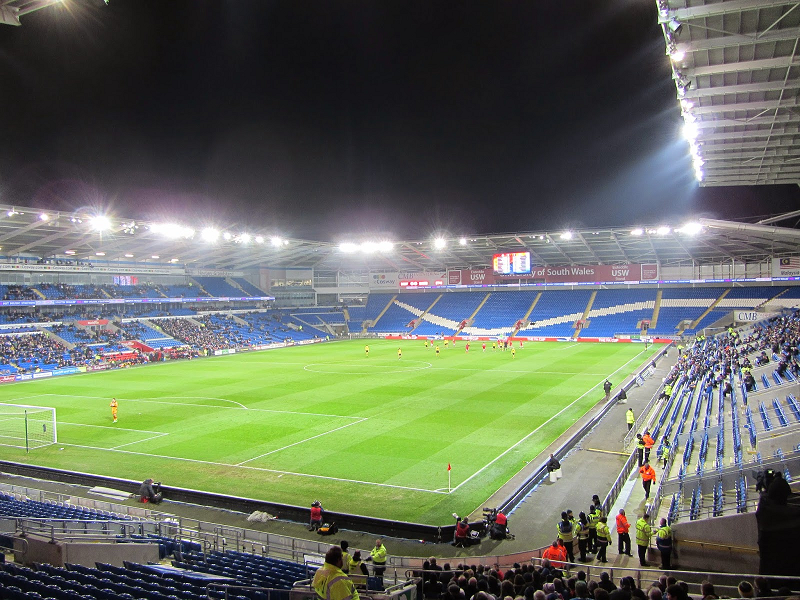
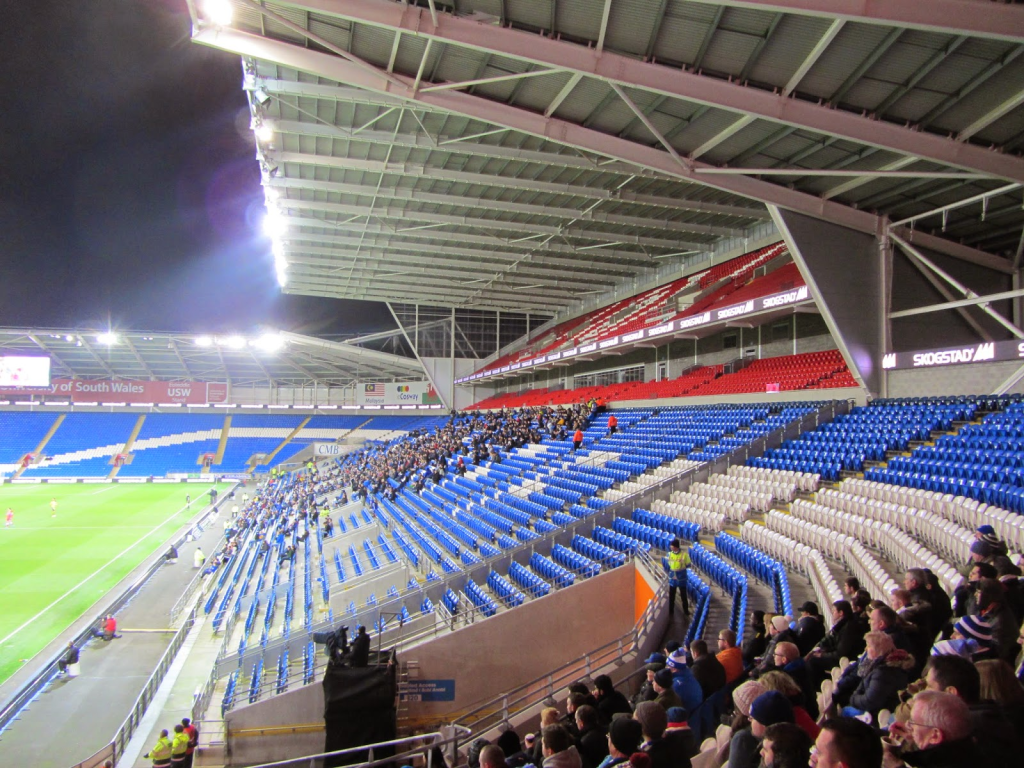
After club officials had met with a cross-section of the club’s support, Cardiff City would announce on 9th January 2015 that starting with their home match against Fulham the next day, Cardiff would return to playing in blue for the first time in two-and-a-half years. The blue away kit would become the home kit, and the red home kit would become the away kit. From reports of the fan forum, supporters had shared warm sentiments about Tan but said they would only return to matches if the blue colours returned. Tan duly obliged. The next day (10th January), 22,515 people in the Welsh capital would watch Cardiff City, back in their traditional blue shirts, white shorts and blue socks, defeat Fulham 1-0, thanks to a Sean Morrison goal.

The Aftermath
Cardiff City’s form would not magically transform after returning to its historic colours. It would take time for things to improve in the Welsh capital. The re-christened Bluebirds (complete with a new avian crest) would finish 11th in the final 2014-15 Championship table, the team’s worst league finish in seven years. The subsequent two campaigns would also bring inconsistency. The 2015-16 season would end with an 8th-placed finish. That summer, Paul Trollope would come in as manager. However, after two wins from twelve matches, Trollope was sacked in October 2016 and replaced by Neil Warnock, who eventually took the club to 12th. Then, following some shrewd transfer business, Neil Warnock would use all his experience to lead Cardiff City back to the Premier League in 2018.
The Bluebirds would finish 2nd in the 2017-18 Championship table, achieving promotion on the last day of the season with a goalless draw against Reading. This day would see Cardiff break the attendance record at the Cardiff City Stadium, with 32,478 expectant spectators turning up to watch their team achieve their shared dream. A near-sellout crowd in May 2018 greatly improved upon the mere 4,194 who watched the red-shirted Cardiff see off Colchester United in January 2015, while fans protested outside the ground.
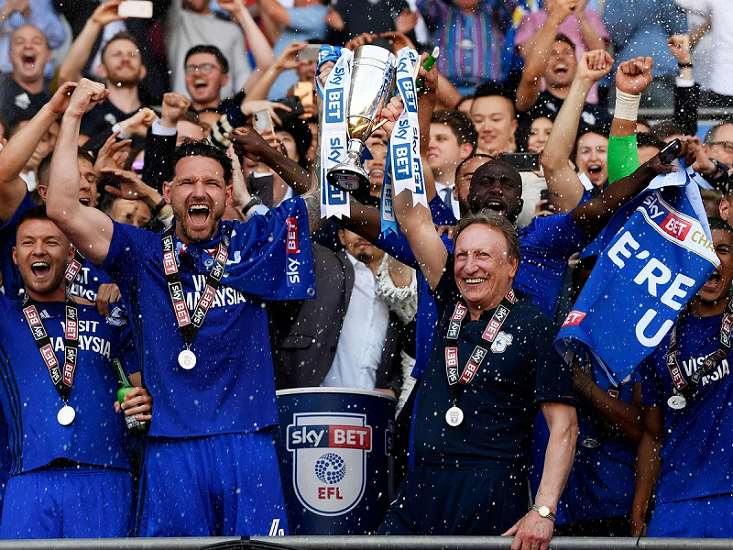
For many Cardiff City fans, this 2018 promotion would taste sweeter than the one achieved five years earlier. Why? The 2018 team had done it without wearing red shirts, and an unfamiliar crest used to commercialise the club to markets outside of Wales. The Bluebirds would now take to the fields of 19 other Premier League grounds for the 2018-19 season wearing their traditional and historic dark blue shirts. In the images of Cardiff’s promotion celebrations, Vincent Tan would be seen wearing a blue home shirt, having finally embraced the colours of the club that he had changed for three years several years before.
Conclusion
The story of Cardiff City’s two-and-half years in red is one of a club owner learning to fully understand and embrace the club he bought. To be fair to Vincent Tan, his original idea was in the best interests of Cardiff, in a way. He wanted to take a money-losing club and make it profitable by building its fanbase in Asia and opening up new sponsorship and partnership deals that would also help to benefit the club long-term. He wanted to give the club a platform to hopefully become a Premier League club for multiple seasons while continuing to grow. However, to achieve these goals, Vincent Tan tried to change two core elements that made Cardiff City unique, its crest and kit. When challenged about his decision to change the club’s colours, Tan was stubborn and refused to alter his position. Only when the fans started to vote with their feet and stopped turning up to games was Tan forced to listen and realise that the things he had changed were important enough to these Cardiff fans that they were willing to stop supporting their team. Eventually, he came to a compromise, reversed his decision, and the fans were happy again, at least regarding the kit and crest.
On the whole, Cardiff fans liked Vincent Tan. They mainly didn’t like that he had decided to change the club’s colours without heeding their wishes. They did appreciate the money he had invested in the club’s infrastructure and playing squad, leading to Premier League promotion. However, seeing their beloved Bluebirds running out wearing a red shirt with a dragon on the chest felt like the team being untrue to itself. Once the egregious shirts were gone, they were happy to oblige Tan again.
For general football fans, Vincent Tan will be retrospectively remembered as the owner who changed the historic football kit of Cardiff City to red just to appeal to investors in another country. However, for Cardiff City fans, while he will be remembered for that, they may also remember him as the man who delivered two seasons of Premier League football and a League Cup Final. However, for many a Bluebird supporter, the decision to change from blue to red may be unforgivable. This episode shows that certain customs and traditions in one culture will not necessarily work in another.

 the-score-board.co.uk