
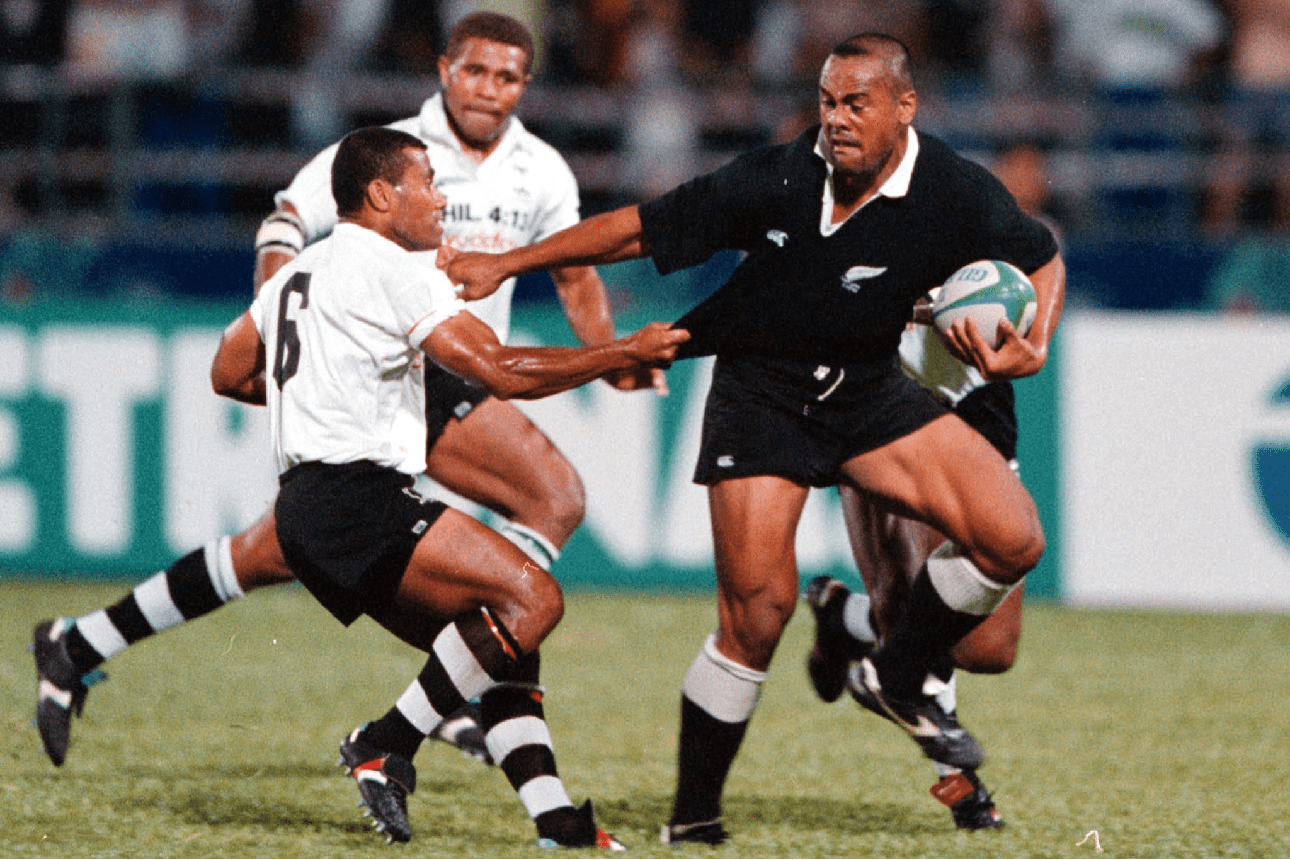
Lomu, Christian Cullen and a squad of future All Blacks storm to the first Commonwealth Games rugby sevens gold medal at Kuala Lumpur 1998…
It is no understatement to say Jonah Lomu was one of the all-time great rugby players. Even though a kidney disorder would end his international career at 27 and his professional rugby career at 32, it would be hard to find someone who doesn’t have Lomu wearing the No.11 shirt in their all-time greatest XVs. Rugby union’s answer to Diego Maradona, a 20-year-old Jonah Lomu took the rugby world by storm at the 1995 World Cup in South Africa, scoring seven tries in five matches as New Zealand finished as runners-up to the host nation. A winger standing 6’5″ (196cm) tall and weighing 120kg (262 lbs), Lomu looked like a back row forward playing in the backline. That is until he got up to top speed, a speed which could see him run 100m in 10.8 seconds. Lomu’s standout moment at the 1995 World Cup came in the All Blacks’ 45-29 semi-final win over England, in which Lomu scored four of New Zealand’s six tries, using his muscle and footwork to blast his way around and through the England defence. Despite not winning the World Cup, Lomu’s performances in South Africa made him an instant box-office draw and the first global superstar of rugby’s professional era. After 1995, Lomu would become an icon of rugby union and New Zealand sport, scoring 37 tries in 63 New Zealand caps in a career that saw him cross the whitewash 104 times in 194 senior matches. These statistics include the 15 tries that Lomu scored at the Rugby World Cup, a tournament record later equalled by Bryan Habana. However, it would take the South African winger three World Cups and 18 games to manage what Lomu had done in 11 games across two World Cups.
While Jonah Lomu is one of the best to ever play rugby’s fifteen-a-side code, the great man first made his mark playing rugby sevens. At 18 years old, a fresh-out-of-school Jonah Lomu was included in the New Zealand squad for the Hong Kong Sevens, the peak of the international sevens calendar, in April 1994. Entering as an unknown schoolboy, Lomu would leave the tournament as a star, rounding David Campese to score in the All Blacks’ 32-20 final victory over Australia. Performances like these would result in Jonah Lomu becoming the youngest-ever player to be capped by New Zealand at 15-a-side, earning the honour aged 19 years and 45 days on 26th June 1994. Then, before and after his show-stealing performance at the 1995 World Cup, Lomu would happily return to the New Zealand sevens squad to help them retain their Hong Kong Sevens title in 1995 and 1996.
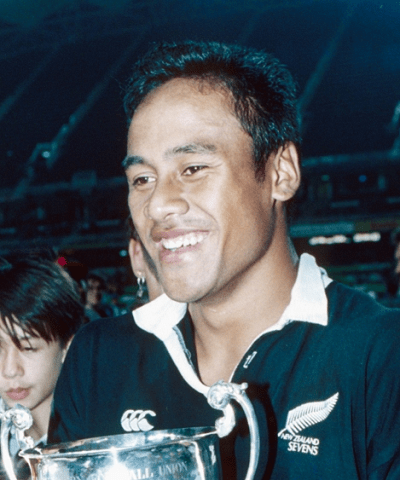
So, when rugby sevens were set to debut at the 1998 Commonwealth Games in Kuala Lumpur, Jonah Lomu agreed to participate, adding some much-needed star power to the debuting event. Lomu would serve as the main star in a young but experienced 10-man New Zealand squad. Coached by Gordon Tietjens and led by veterans Eric Rush and Dallas Seymour, the New Zealand squad would feature future stars including Caleb Ralph, Rico Gear, Bruce Reihana, and most notably, Christian Cullen. The team would also include a 19-year-old Amasio Valence, who would later become one of the greatest sevens players of all time, eventually retiring in 2008.
New Zealand rugby sevens squad for the 1998 Commonwealth Games
| Shirt No. | Player |
|---|---|
| 1 | Dallas Seymour |
| 2 | Eric Rush |
| 3 | Jonah Lomu |
| 4 | Caleb Ralph |
| 5 | Amasio Valence |
| 6 | Rico Gear |
| 7 | Christian Cullen |
| 8 | Roger Randle |
| 9 | Joeli Vidiri |
| 10 | Bruce Reihana |
New Zealand’s sevens team came into this Commonwealth Games tournament while the 15-man side was experiencing the worst form in their history. A New Zealand test team containing Jonah Lomu and Christian Cullen had only won two of their last eight matches and entered September 1998 on a run of five consecutive defeats, including back-to-back home defeats, two losses to South Africa, and three Bledisloe Cup defeats to arch-rivals Australia. These results had seen the team finish a distant third in the 1998 Tri-Nations table and lose at home to their Southern Hemisphere rivals for the first time since 1990 (Australia) and 1981 (South Africa), respectively. Therefore, a victory for the sevens team in Kuala Lumpur would help to lift national spirits even marginally during this challenging time for the national team.
The format of the sevens tournament would see eighteen teams enter the first group stage. Drawn into six groups of three, the three teams would complete a round-robin before advancing to a second group stage where all eighteen teams would be placed into six different groups of three. After completing this second group stage, all eighteen teams would be ranked based on their respective records over the four group stage games. The top 8 would advance to the quarter-finals of the Cup and potentially compete for medals. The teams ranked 9th to 16th would move into the second-tier Plate competition, with the Plate tournament winner finishing 9th in the overall competition standings. The two worst-performing teams (17th and 18th) would play each other in a third-tier Bowl final in a match to avoid finishing last.
In the first group stage, New Zealand would be placed in Group D with Malaysia and Sri Lanka. On the first day of competition, the All Blacks would win both of their first two group stage matches to top Group D. In their first match, New Zealand would put 12 tries and 10 conversions past Sri Lanka in an 80-0 victory. Playing in his first sevens match for two years, Lomu would score twice before being substituted early in the second half. Amasio Valence and Dallas Seymour would also score braces in this heavy victory. Later that day, the All Blacks would defeat Malaysia 53-0 to win Group D after scoring 133 points and conceding zero.
On the second day of the competition, New Zealand would be drawn with Tonga and the Bahamas in Group A. Tonga had finished the first day 2nd behind England in Group E. In contrast, the Bahamas had finished bottom of Group C behind Canada and Samoa. The All Blacks would begin the second group stage with a 93-0 victory over the Bahamas. It would take until their fourth game of the competition for New Zealand to concede points as Tonga scored two tries (one unconverted) past Gordon Tietjens’ men. However, New Zealand would still comfortably win 41-12 to finish 1st in Group A. The All Blacks had easily qualified for the Cup quarter-finals with 4 wins and 0 losses from their four group stage games. Now, New Zealand would face Wales, who had scraped into the top eight on points difference ahead of the Cook Islands after two victories and two defeats across the two group stage phases.
Top 8 teams in the 1998 Commonwealth Games rugby sevens group stage (advance to Cup quarter-finals)
| Country | Matches | Wins | Draws | Losses | Points Difference |
|---|---|---|---|---|---|
| Australia | 4 | 4 | 0 | 0 | +213 |
| Fiji | 4 | 4 | 0 | 0 | +247 |
| New Zealand | 4 | 4 | 0 | 0 | +253 |
| South Africa | 4 | 4 | 0 | 0 | +183 |
| Samoa | 4 | 3 | 1 | 0 | +141 |
| Canada | 4 | 3 | 1 | 0 | +145 |
| England | 4 | 3 | 0 | 1 | +71 |
| Wales | 4 | 2 | 0 | 2 | +49 |
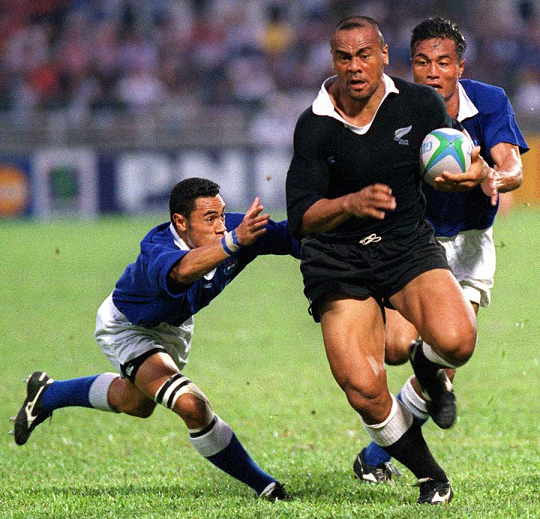
In the quarter-finals, New Zealand would face a Wales side containing Gareth Thomas and Scott Gibbs. The All Blacks would knock out the 8th seed with a 38-14 victory and face Samoa in the semi-finals. Samoa had upset 1997 Sevens World Cup runners-up South Africa by a 26-5 scoreline to reach the final four. However, Samoa was no outsider as the team had reached the semi-finals of the World Cup the year before. New Zealand had also exited the World Cup at the same stage (losing to eventual champions Fiji) and was now looking to avoid a repeat performance at the Commonwealth Games.
After breezing through the tournament, New Zealand would finally be tested by Samoa in their semi-final match. In the end, the All Blacks would edge Manu Samoa three tries to two in a close-fought 19-14 victory to advance to the gold-medal final. In that final, they would face Fiji, as the Pacific flyers had downed an Australia team containing a 36-year-old David Campese 28-14.
Fiji and New Zealand had recent experience in meeting each other in rugby sevens finals. This match-up was the final for the 1995 and 1996 editions of the Hong Kong Sevens, the most important tournament in the code. Both games had been entertaining encounters where the match’s momentum had swung in each team’s favour. In 1995, Fiji had led 17-14, only for New Zealand to score three unanswered converted tries to win the final 35-17. One year later, a finish from Setareki Naivaluwaqa had put Fiji ahead late in the game, only for New Zealand to score twice and successfully retain their title in a tight 19-17 final. Fiji would enter this Commonwealth Games final against New Zealand as the favourites to take gold, having won the World Cup and the Hong Kong Sevens in the previous 12 months. However, with this being the inaugural Commonwealth Games rugby sevens final, there was no history to look back on, only some to be made. It was also notable that the Fiji side included Waisale Serevi, who was already eight years into his legendary sevens career.
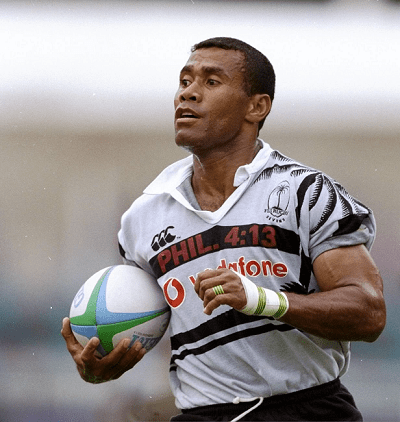
The 1998 Commonwealth Games gold-medal final between New Zealand and Fiji would live up to the two teams’ previous encounters. In a hard-hitting affair in front of 20,000 spectators at the Petaling Jaya Stadium, the All Blacks would hold a slender 14-7 advantage at half-time. Both of New Zealand’s tries were created by Jonah Lomu. First, his 30-metre run would cause chaos in the Fijian defence, with Christian Cullen finishing from close range two passes later. Then, Lomu would set up captain Dallas Seymour to score New Zealand’s second and give them the half-time lead. While Lomu was on form for the All Blacks, Waisale Serevi had also turned up for Fiji. After Christian Cullen had broken through the defensive line, he found himself 35 metres from the try-line with only Serevi to beat. However, Serevi would manage to tackle the hot-stepping fullback, recover the loose ball, run it back and beat three All Blacks defenders before setting up Rokini Saimoni for Fiji’s first try of the final.
Early in the second half, try-scorer Saimoni would turn provider, with Senirusi Rauqe scoring the Flying Fijians’ second try of the match. The Pacific Islanders would miss the chance to draw level with a conversion, but New Zealand would only hold a slender two-point advantage at 14-12. Fiji had the momentum, and a third try would see them take the lead. It seemed that way as Serevi again sent Rokini Saimoni into 70 metres of space. However, as it appeared that Saimoni would score his second of the afternoon, Jonah Lomu would use his 100m pace to successfully chase down his opponent and tackle him to the ground metres short of the line, preserving New Zealand’s advantage. With their star man successfully keeping the team’s nose in front, New Zealand would seize a chance at victory minutes from the end. Taking a tap penalty just inside the Fijian half, Bruce Reihana would run through three tacklers and reach the 22-metre line before passing inside to Caleb Ralph. With Serevi on his shoulder, Ralph would choose to grubber-kick Reihana’s pass into space before falling on the bouncing ball after it crossed the try-line. This would be the decisive try as New Zealand would defeat Fiji 21-12 to become rugby sevens’ first-ever Commonwealth champions.
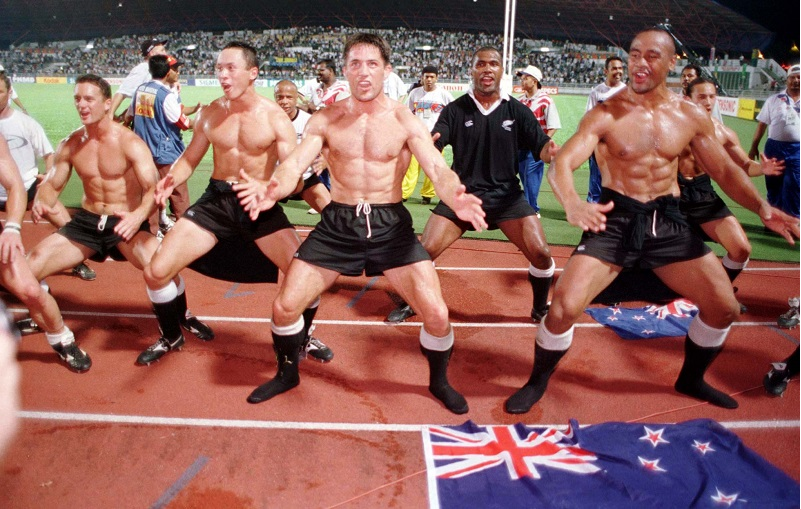
After becoming Commonwealth champions, most of the New Zealand squad would return to the regular 15-a-side game. Christian Cullen and Jonah Lomu would return to the New Zealand side when the All Blacks ended their losing run with a 71-13 win over Samoa in June 1999. Both men would also feature in the 1999 Rugby World Cup, where Lomu would again be the star, scoring eight tries as New Zealand ultimately lost to France in the semi-finals.
However, the 1998 Commonwealth Games would not signal the end of Jonah Lomu’s international rugby sevens career. In total, he would play 24 tournaments for the seven-a-side All Blacks and three years after the Commonwealth Games, he would be part of the New Zealand squad for the 2001 Rugby World Cup Sevens. Despite his overwhelming star power, coach Gordon Tietjens would use Lomu sparingly throughout the majority of the tournament. However, when team captain Eric Rush was injured in a semi-final win over England, Lomu was called in to start the final against Australia. It was a match which would later be described as “Jonah against Australia”, as the winger would score a hat-trick of tries in New Zealand’s 31-12 victory over the Wallabies. Less than a minute into the final, Lomu would receive the ball midway inside his own half. After firing up his engines, Jonah would out-pace and step through the tackle of Richard Graham and knock down Brendan Williams to score the first try of the final. After Williams had scored to draw Australia level, Lomu would muscle his way over from close range to give the All Blacks a 12-7 half-time lead. Then, in New Zealand’s first attack of the second half, Jonah would take an inside pass on the 22-metre line before cantering his way through two defenders to complete his hat-trick. From that point, the All Blacks would not look back, and Amasio Valence and Malili Muliaina would later add further scores to win New Zealand the Rugby Sevens World Cup. However, the final would be remembered primarily for the efforts of Jonah Lomu in his final sevens match for New Zealand. One year later, he would play his last test match for the All Blacks at the age of 27, before the return of his kidney disorder started to seriously affect the rest of his career.
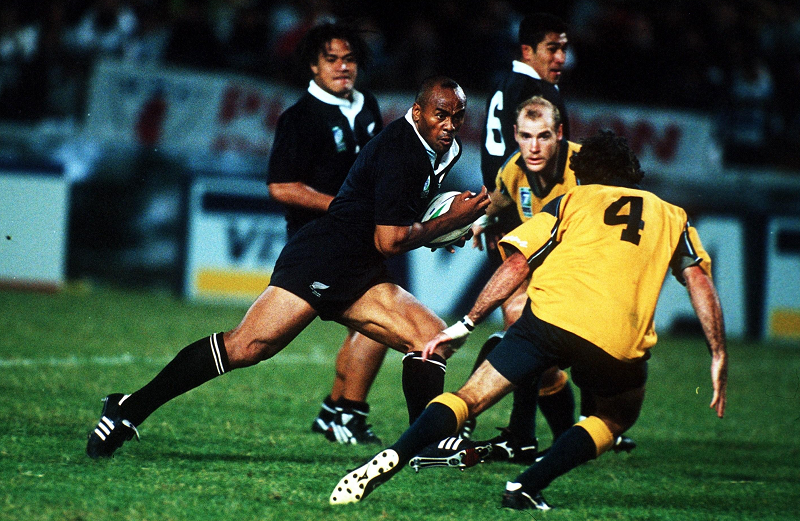
Since the inception of rugby sevens as part of the Commonwealth Games, New Zealand has been the dominant force, winning five of seven tournaments and medalling in the other two. Amasio Valence, a teenager in the 1998 squad, would become the first man to win three Commonwealth gold medals in the event after being part of the teams that won in 2002 and 2006. New Zealand even won the first women’s tournament at the 2018 Games in Australia. However, the New Zealand squad from 1998, featuring Jonah Lomu and co., were the team that ultimately helped rugby sevens become a staple part of the Commonwealth Games.
 the-score-board.co.uk