
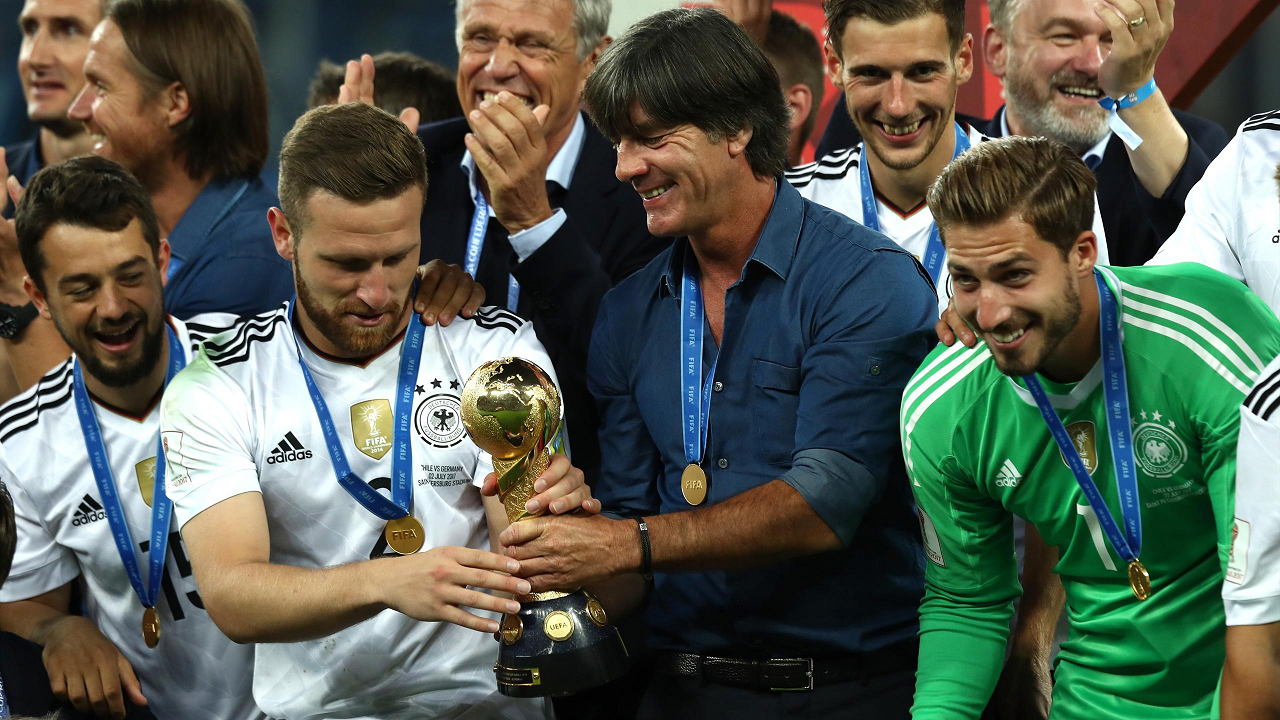
A ‘champion of champions’ competition made for a Saudi king that turned into a World Cup test event…
The FIFA Confederations Cup is a defunct international footballing competition that is not looked back upon particularly fondly or even talked about that much. However, for 20 years, this tournament was seen (by FIFA at least) as a vital part of each four-year FIFA World Cup cycle. The year before each edition of the world’s largest sporting competition, FIFA would invite the champions of each international confederation to compete in an eight-team tournament, often held in the same country that would host the World Cup to decide who was the best of the best. At the same time, and more importantly to the higher-ups, the Confederations Cup would give FIFA officials and the host organising committee the chance to poke around the World Cup stadia and other facilities, seeing if any screws were loose ahead of the following summer.
Ask even the most die-hard football fan to name any of the winners of the FIFA Confederations Cup, and there is a sizeable chance they would not be able to recall one. This is because unless you were part of the less-successful FIFA confederations like the OFC (who often have zero representation at a FIFA World Cup), the FIFA Confederations Cup did not hold much importance as part of a team’s World Cup cycle. This is why countries often rejected or ignored FIFA’s invitation to compete when it flopped through the front door of the office of the national governing body. The top teams often used their more extensive player pools to send young or second-string squads to the Confederations Cup. Whether these ‘B’ teams ultimately performed well or not, critics often used this fact to criticise the competition, showing its lack of relevancy and importance to bodies like UEFA and viewing the Confederations Cup as nothing more than a FIFA World Cup test event.
However, the FIFA Confederations Cup would not strictly become a World Cup test event until nearly halfway into its lifespan. In fact, the competition has gone through three different forms, from a competition organised by a Saudi King to a biennial champion of champions competition full of surprise and excitement to a mere corporate formality. This article will look at it all, looking at the beginning, middle and end of the FIFA Confederations Cup.
The Precursor: The King Fahd Cup (1992-95)
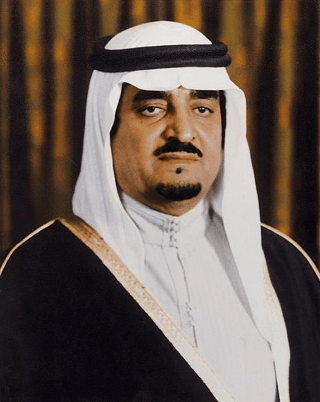
You would be wrong if you thought Saudi Arabia hosting high-profile sporting events or convincing the best players and teams in the most popular sports to compete in their big-budget sporting tournaments was a recent phenomenon. In the early 1990s, Fahd bin Abdulaziz Al Saud, the King of Saudi Arabia, decided to organise a competition. In this tournament, three confederation champions would be invited to compete with Saudi Arabia, the reigning Asian Cup holders, in a four-team, two-round, six-day knockout competition. All the matches would even be staged in the King Fahd II Stadium in Riyadh, the venue named after and in honour of the incumbent Saudi king. With the tournament set to take place two weeks before the 1992 edition of the Asian Cup, three competitive friendlies against three confederation champions would prepare Saudi Arabia well ahead of their upcoming title defence.
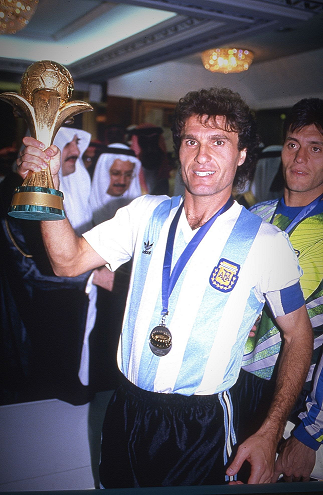
After asking around, Saudi Arabia would manage to attract Copa America winners Argentina, CONCACAF Gold Cup holders the USA and recent African Cup of Nations champions the Ivory Coast to compete in this four-team tournament. On 15th October 1992, the King Fahd Cup would begin with a match between the host country and the United States. This opening match would have the perfect result with Saudi Arabia running out convincing 3-0 victors. In the second match, Argentina would do one better, beating the Ivory Coast 4-0, in a game which saw a young Gabriel Batistuta score twice. With these two opening matches also serving as semi-finals, Saudi Arabia and Argentina would meet each other in the final game of the King Fahd Cup in the same week the competition had begun. After the USA had defeated the Ivory Coast 5-2 to take third place, South America’s champions would beat the Asian champions 3-1 to take home the King Fahd Cup. After goals from Leonardo Rodríguez, Claudio Caniggia and Diego Simeone (with a consolation from future World Cup goal legend Saeed Al-Owairan giving the home fans something to cheer), La Albiceleste captain Oscar Ruggeri would lift the trophy in front of 75,000.
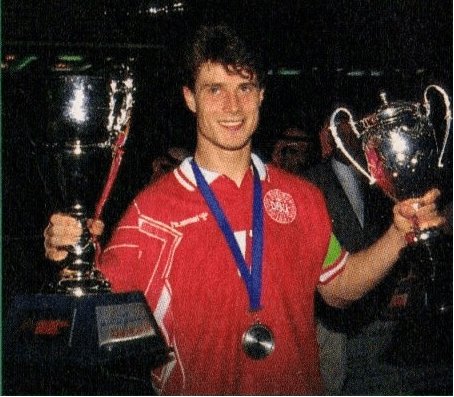
The King Fahd Cup had been a financial success. A total of 196,500 people attended the tournament, with an average of over 49,000 spectators attending each of the four matches. With these numbers, a second King Fahd Cup was inevitable. The second edition of the competition would occur over seven days in January 1995. This time, the number of participants had increased to six. Joining Saudi Arabia were Euro 1992 winners Denmark, Asian Cup holders Japan, returning champions Argentina (who had retained their Copa America title in 1993), CONCACAF Gold Cup champions Mexico and African Cup of Nations winners Nigeria. With the increase in participating teams, the previous format would be ripped up. Instead, the six countries would be divided into two round-robin groups. At the end of the round-robin stage, the top two teams in each group would advance to the final, while the two 2nd-placed nations would move on to the third-place playoff.
In this second King Fahd Cup, Mexico would win a penalty shoot-out over Nigeria to take third place. Then, Denmark would upset Argentina 2-0 in front of 35,000 spectators in the King Fahd II Stadium, a significant decrease from the 75,000 who had watched the Argentina-Saudi Arabia final three years earlier. In fact, despite having more teams (six over four) and more matches (19 compared to the 4 in 1992), fewer people would attend the second edition of the King Fahd Cup in 1995 compared to the first. Compared to the 195,000 who attended the four matches in 1992, 169,000 would turn up three years later. After the 1995 tournament, there would not be another King Fahd Cup. However, the tournament and its concept would stick around in another form.
The Early Years (1997-2003)
After the second King Fahd Cup, FIFA would take over the running of the competition, making it a consistent part of the international calendar every two years. The King Fahd Cup would become the FIFA Confederations Cup. The number of participants would also increase from six to eight, with the champions of every confederation (AFC, CAF, CONCACAF, COMNEBOL, UEFA, OFC) being invited to participate along with the reigning FIFA World Cup holders and one host country. In cases where the host country already held a title, one of the confederation’s champions declined to participate, or one team had both the World Cup and their regional title, the runner-up from that regional championship would take the eighth and final spot in the tournament. Two of these scenarios would come to fruition in the first edition of the FIFA Confederations Cup.
In a smooth transition, Saudi Arabia would host the first FIFA Confederations Cup in 1997. Also meeting the requirements for a FIFA invite were World Cup holders Brazil, European champions Germany, Copa America winners Uruguay, CONCACAF Gold Cup winners Mexico, African champions South Africa and OFC Nations Cup champions Australia. Five of the six confederation champions would accept FIFA’s invitation to compete in the Middle East. As Saudi Arabia qualified for the tournament as hosts, the United Arab Emirates would be added to the tournament as the AFC’s representative, having finished runner-up in the 1995 Asian Cup. However, in a surprising move, European champions Germany declined the offer to participate in this inaugural tournament. Instead, Euro ’96 silver medalists Czech Republic would replace them as the UEFA representative. With all the participants decided, the first FIFA Confederations Cup would kick off on 12th December 1997, with Saudi Arabia losing 3-0 to world champions Brazil.
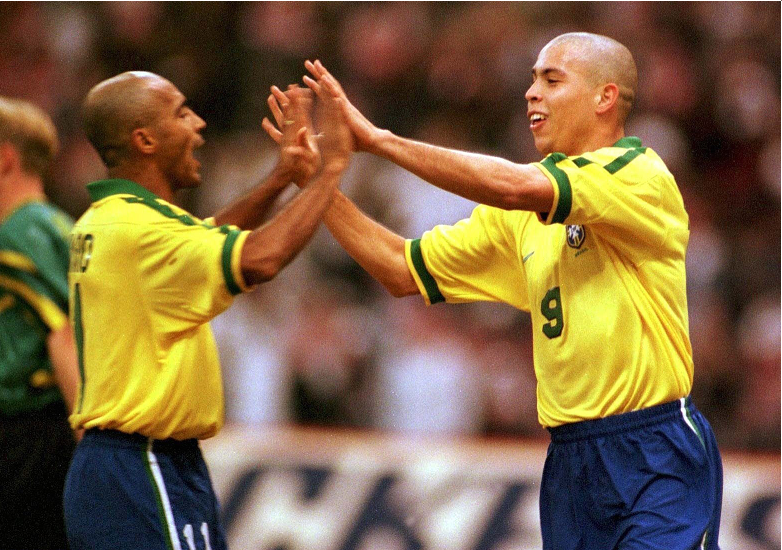
After winning the first match of the first-ever FIFA Confederations Cup, Brazil would end up as its inaugural winners. On 21st December 1997, the world champions would thrash Oceanic champions Australia 6-0, with the dream strike partnership of Romario and Ronaldo both scoring hat-tricks in the final.
After 1997, Germany would not be the only team to decline the chance to participate in the FIFA Confederations Cup. In 1999, France, who had won the FIFA World Cup the year before, refused the opportunity to add another prize to their trophy cabinet. Instead, Brazil would qualify for the tournament as World Cup runners-up. However, if France had decided to participate, Brazil would still have appeared, having qualified as the reigning Copa America champions. With Brazil taking the World Cup berth in France’s place, Bolivia would be given a chance to compete as Copa America runners-up. In 2003, Germany again declined FIFA’s invitation to compete as the 2002 World Cup runners-up. Then, Italy, the runners-up in Euro 2000, would reject the opportunity to compete as Germany’s replacement. FIFA would then ask Spain, the No.2-ranked team in the world. They would refuse. Finally, cap in hand, the governing body would ask Turkey, the team that finished 3rd at the World Cup the previous year, to take this 8th and final spot, and would finally get a positive response.
The Death of Marc-Vivien Foé
If there is one moment people will forever associate with the FIFA Confederations Cup, it is, unfortunately, a moment of footballing tragedy. In the 2003 tournament, Cameroon was among the participants, having won the 2002 African Cup of Nations. Placed in a group with Turkey, the United States and world champions Brazil, Cameroon would surprise everyone by topping the group with two wins and a draw from the three group matches. The Indomitable Lions would begin with a famous 1-0 victory over Brazil, a team that, apart from Ronaldinho and a few others, was lacking in international experience. Then, a stoppage-time penalty from Geremi would clinch three points against Turkey before a goalless draw against the USA would put Cameroon through the semi-finals as Group B winners.
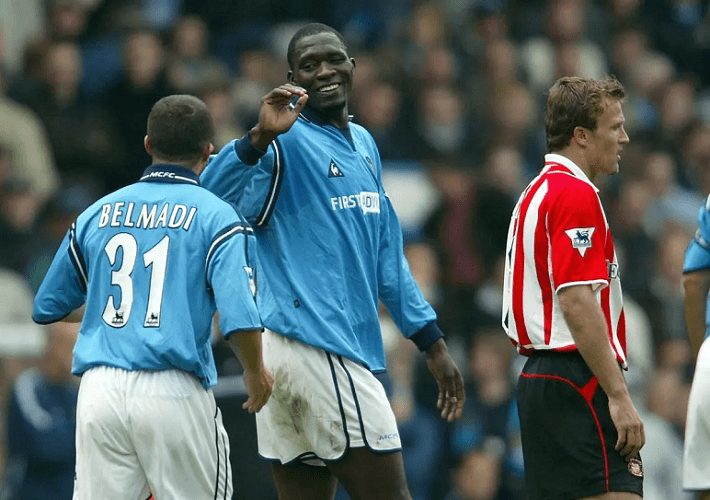
In the semi-finals, Cameroon would face another surprise semi-finalist in Colombia, the 2001 Copa America winners who had finished 2nd in Group B behind European champions France. In the starting XI for Cameroon on this night was a defensive midfielder called Marc-Vivien Foé. Foé had been a regular part of the Cameroon set-up for a decade. Having made his international debut aged 18 in September 1993, he had appeared for his country in two FIFA World Cups (1994 and 2002), four African Cup of Nations tournaments and two FIFA Confederations Cups. The Confederations Cup semi-final against Colombia on 26th June 2003 would mark his 62nd international cap for Cameroon. Foé had also made his mark in European club football. He had joined Lens in 1994 and had spent five years there, winning Ligue 1 in 1998. He then joined West Ham United, making 45 appearances over one-and-a-half seasons, helping the Hammers qualify for UEFA Cup football. Returning to France, he joined Lyon, where he would win his second French title. Then, at the time of the Confederations Cup, Foé had just completed a season-long loan at Manchester City, in which he had scored nine goals in 35 Premier League matches. He had even netted the last goal scored by Manchester City at Maine Road, scoring twice in a 3-0 win over Sunderland on 21st April 2003. After this tournament, he would return to Lyon. Coincidentally, this semi-final match between Cameroon and Colombia occurred at the Stade Gerland, Lyon’s home stadium.
In the semi-final, Cameroon would take an early lead, with Pius Ndefi putting the Indomitable Lions ahead after 9 minutes. Cameroon would hold this lead deep into the second half, when the game’s most infamous moment would take place. With the cameras looking elsewhere, Marc-Vivien Foé was standing in the centre circle, performing his duties as a defensive midfielder. However, with no other players around him, Foé would then collapse in the centre circle. The referee would notice this and stop the match. Players of both teams would immediately call for help. Medical staff would try to resuscitate him on the field without success. In the 75th minute, Cameroon manager Winfried Schäfer would act quickly, substituting the unconscious Foé so that the medical staff could give him the help he needed at pitchside. The stadium’s medical staff would continue their attempts to resuscitate Foé, including performing mouth-to-mouth and administering oxygen. Foé would then be taken to the Stade Gerland’s medical centre, where work would continue. However, while his international teammates would hold on to defeat Colombia and reach the FIFA Confederations Cup Final while clearly distracted and worried about him, they would be alerted to news of Foé 17 minutes after the full-time whistle. It was not good. At the age of 28, Marc-Vivien Foé passed away as a result of what was later revealed to be a heart attack caused by an unknown hereditary condition.
The football world was immediately put into a state of shock and mourning. FIFA would put out a statement: “FIFA is announcing in tragic circumstances that Marc-Vivien Foe has died this afternoon during the match between Cameroon and Columbia.
“FIFA and the world of football want to give his family and the Cameroon team their condolences.”
Lyon, the club Foé was set to return to, would also release a statement which read:
“Marc-Vivien Foe has just died of a cardiac arrest.
“Marc-Vivien Foe will leave us the memory of a charming boy, the incarnation of the joy in life.
“We will keep of him his bursts of laughter, the music which comes out of the changing room, and his kindness away from the ground.
“Marco, we will not forget you.”
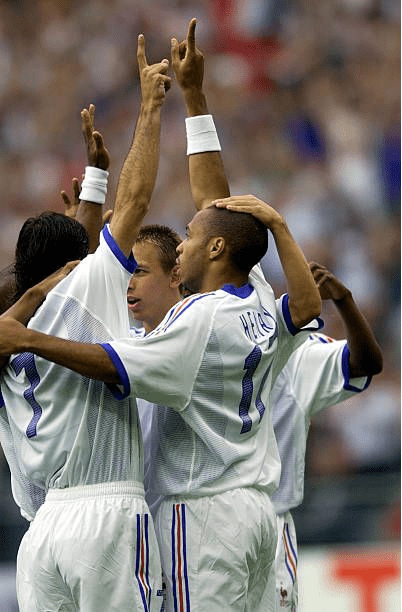
Having been taken aback by the news, France and Turkey would kick off their semi-final less than two hours after Foé’s passing. Before the match, the two teams would hold a tearful minute’s silence. During the national anthems and at kick-off, it was evident that the player’s minds were not entirely focused on the match. When Thierry Henry opened the scoring for France, the Arsenal striker and his French teammates would come together and raise their hands and fingers to the sky in tribute to their recently fallen brother. France would eventually win the match 3-2 and play Cameroon in the final. France captain Marcel Desailly would question whether the game would go ahead, saying that he would understand if Cameroon could not compete. Despite the tragedy of Foé’s passing, FIFA president Sepp Blatter would announce that the final would go ahead three days after Foé’s death.
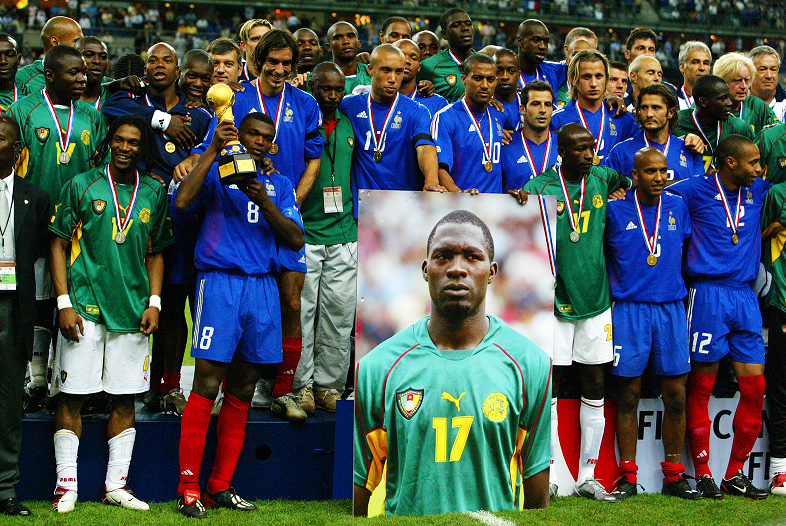
As the teams headed out into the Stade de France for the final, Marcel Desailly and Rigobert Song would carry a large photo of Marc-Vivien Foé onto the pitch while the French and Cameroon players held each other’s hands while walking out. Cameroon would also pose with the picture as part of their pre-match team photo while the rest of the stadium applauded. Then, players from Cameroon and France would link arms and form a circle with the picture of Foé while a minute’s silence was held and an image of Foé was displayed on the big screen. The players would remain arm-in-arm while the national anthems were played, maintaining solidarity. On the Cameroon bench, coach Winfried Schäfer and his substitutes would wear home shirts with Foé’s name and number on the back. The starting Cameroon players would have Foé’s name plus his dates of birth and death embroidered into the white shirts they wore on the night. At the same time, there were many tearful faces inside the stadium, with fans of both countries holding up signs and tributes to the midfielder.
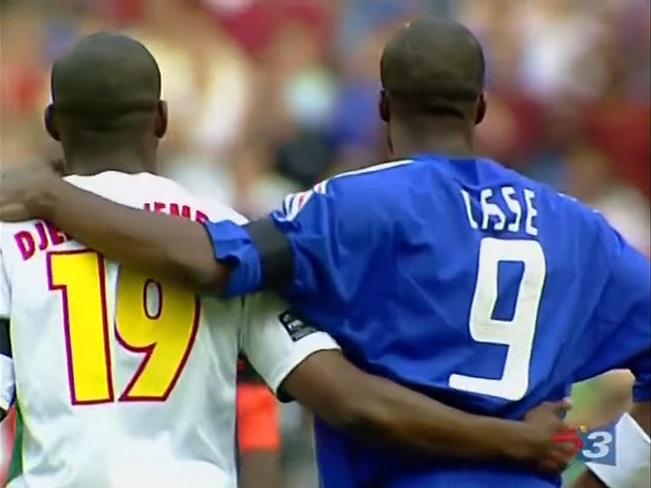
After all this respect, you’d forget there was a trophy to be decided. Cameroon would be hoping to upset the French and win the gold for their fallen comrade. The Indomitable Lions would manage to take the European champions to extra time. However, the dream ending would not come to pass as a scruffy finish by Thierry Henry would win France their second consecutive FIFA Confederations Cup via a 97th-minute ‘golden goal’. After the match, there would be a couple more tributes to Marc-Vivien Foé. The Cameroon squad would change into shirts featuring Foé’s name and number and take his picture onto the pitch when collecting their silver medals. In an emotional moment, Sepp Blatter would award Marc-Vivien Foé a silver medal, draping it over the image. Then in one final moment of solidarity, the two team captains would lift the Confederations Cup trophy together while their teammates joined each other on the presentation stage. It was a night when football was at the back of everyone’s minds, the least significant trophy France has ever won. This was a night when the footballing world came together to honour the life of Marc-Vivien Foé, a much-loved footballer who had tragically passed away in his prime.
The World Cup Test Event (2005-17)
In 2005, the FIFA Confederations Cup would move from a ‘champion of champions’ competition hosted by one of the champions every two years to a full-on FIFA World Cup test event held every four years. The summer before each new FIFA World Cup, the seven confederation champions would travel to the World Cup’s host country to play out a two-week competition. The primary purposes of this version of the Confederations Cup would be to test the experimental infrastructure and to find out which teams had peaked too early before the World Cup. This version of the FIFA Confederations Cup would begin with the 2005 edition held in Germany. The World Cup hosts would invite confederation champions Brazil (FIFA and COMNEBOL), Mexico (CONCACAF), Greece (UEFA), Japan (AFC), Australia (OFC), Tunisia (CAF) and Copa America runners-up Argentina to participate in the competition. Five venues (Frankfurt, Cologne, Hanover, Leipzig and Nuremberg) would be used to host all 16 matches, with Frankfurt’s Waldstadion hosting the final. All five venues would be re-used for the World Cup the following year. This edition of the FIFA Confederations Cup would end with World Cup holders Brazil defeating Argentina 4-1 to win the Confederations Cup for the second time.
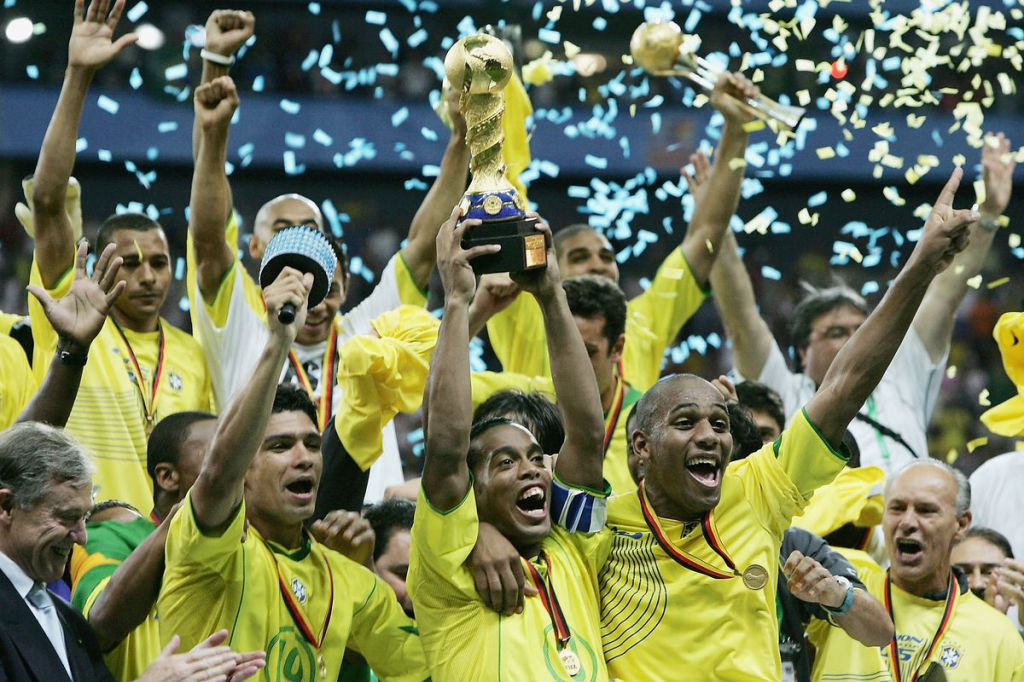
A total of 603,106 spectators would attend the 2005 Confederations Cup, an increase from the previous two tournaments in 2001 and 2003. With these numbers, FIFA would consider this new version of the Confederations Cup to be a success and would use the ‘test event’ model for future tournaments continuing with the 2009 competition in South Africa.
After winning the Confederations Cup in 2005, Brazil would retain their title in both 2009 and 2013, qualifying the first time as Copa America holders and the second time as hosts. However, these victories wouldn’t lead to great World Cup performances. The team would exit at the quarter-finals in 2006 and 2010 before suffering their worst-ever competitive defeat, a 7-1 loss to Germany, in the 2014 semi-finals. These three results would be part of the bad luck that befell teams that won the FIFA Confederations Cup the year before the FIFA World Cup. None of these Confederations Cup winners would become world champions the following year. Brazil would come closest, reaching the final of the 1998 World Cup the year after winning the 1997 Confederations Cup. Four years later, France would shockingly exit the 2002 World Cup in the group stage. Then, after Brazil’s three victories, 2017 winners Germany would also go on to leave the 2018 World Cup at the group stage, joining France as reigning world champions who would then exit the following World Cup at the earliest possible stage.
France would also come unstuck at the 2004 European Championships, the year after retaining the Confederations Cup in 2003. Entering Euro 2004 as the reigning champions and favourites to win again, a star-studded, experienced yet unimpressive France would shockingly lose to surprise winners Greece in the quarter-finals. Even Mexico, who entered the 1999 tournament as CONCACAF Gold Cup winners before winning the whole thing, would then lose in the quarter-finals of the 2000 CONCACAF Gold Cup to surprise winners Canada.
The End
The final FIFA Confederations Cup would take place in Russia twelve months before the 2018 FIFA World Cup. Along with Russia, the competition would also feature Germany, Mexico, Australia, Chile, New Zealand, Portugal and Cameroon. The tournament would finish with World Cup holders Germany beating South American champions Chile 1-0 in the final. The quality and importance of this competition showed as the winning German team featured a squad with an average age of 22, an average of 8 international caps and missing most of their top stars, including Neuer, Hummels, Boateng, Kroos, Khedira, Özil and Muller.
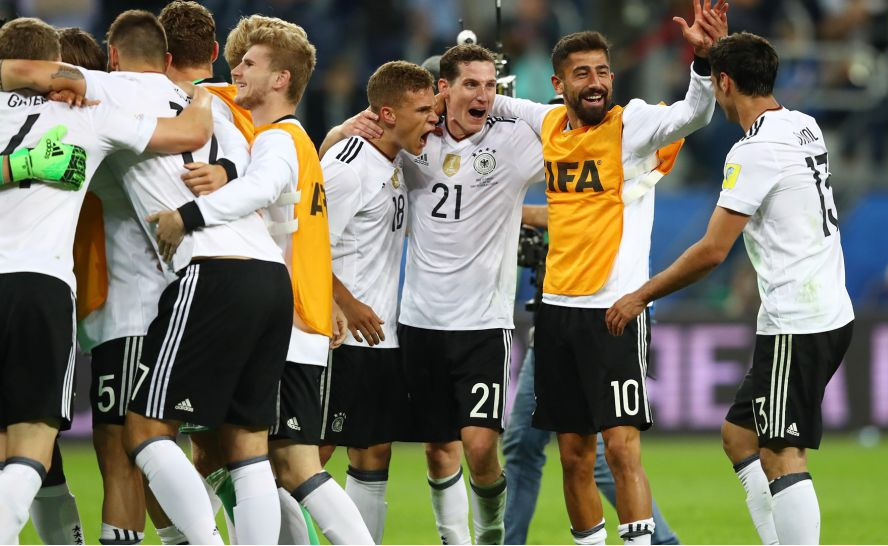
A 2021 Confederations Cup was to be held in Qatar in the summer of 2021. However, concerns over the summer temperatures in Qatar would lead to the 2022 FIFA World Cup being moved to the winter, leaving the fate of the Confederations Cup up in the air. In 2015, FIFA decided to move the Confederations Cup to another Asian country so that the tournament could still be held in the summer of 2021 while avoiding Qatar”s obscene temperatures. However, in 2017, FIFA decided to abolish the FIFA Confederations Cup. The competition would be replaced by an expanded version of the current FIFA Club World Cup, which would shift from an annual winter tournament to a quadrennial summer tournament and become the customary test event held the year before each new FIFA World Cup.
List of FIFA Confederations Cup Champions
| Year | Host Country | Champion | Final Score | Runner-up | Third Place |
|---|---|---|---|---|---|
| 1997 | Saudi Arabia | Brazil | 6-0 | Australia | Czech Republic |
| 1999 | Mexico | Mexico | 4-3 | Brazil | USA |
| 2001 | Japan & South Korea | France | 1-0 | Japan | Australia |
| 2003 | France | France | 1-0 (aet) | Cameroon | Turkey |
| 2005 | Germany | Brazil | 4-1 | Argentina | Germany |
| 2009 | South Africa | Brazil | 3-2 | USA | Spain |
| 2013 | Brazil | Brazil | 3-0 | Spain | Uruguay |
| 2017 | Russia | Germany | 1-0 | Chile | Portugal |
Notable Matches
Despite being disregarded by many as a competition lacking in importance, the FIFA Confederations Cup would produce its fair share of excellent football matches and memorable moments. In fact, many of these moments are not remembered due to the ephemeral nature of the Confederations Cup. Many of these matches could now be considered ‘forgotten classics’. Let’s look at some:
1997: Uruguay 4 South Africa 3
When Uruguay and South Africa met in the final round of fixtures in Group B, one team’s future in the competition was already sealed while the other team’s fate was up in the air. Uruguay had already qualified for the knockout stages as group winners after winning their first two matches. Meanwhile, South Africa had drawn one, lost one, and sat bottom of Group B on one point. However, they still had a chance of qualifying for the next round but would need to hope that everything went their way. To reach the semi-finals, South Africa would need to beat Uruguay while hoping that the other match between the UAE and the Czech Republic, which took place beforehand, ended in a draw. Anything else would result in South Africa’s elimination, with the chance that they could be out of the Confederations Cup before their match with Uruguay even kicked off.
Before this match kicked off, the Czech Republic would thrash the United Arab Emirates 6-1 to move up to 2nd place in Group B, meaning that only a victory and a six-goal swing would see South Africa through now. In front of 8,000 spectators in Riyadh, the SA would take an 11th-minute lead through defender Lucas Radebe’s header from a corner. However, striker Dario Silva would equalise for Uruguay less than a minute later. Then, Álvaro Recoba would give the South Americans the advantage three minutes before half-time, finishing from an angle after his first shot had been saved by goalkeeper Brian Baloyi.
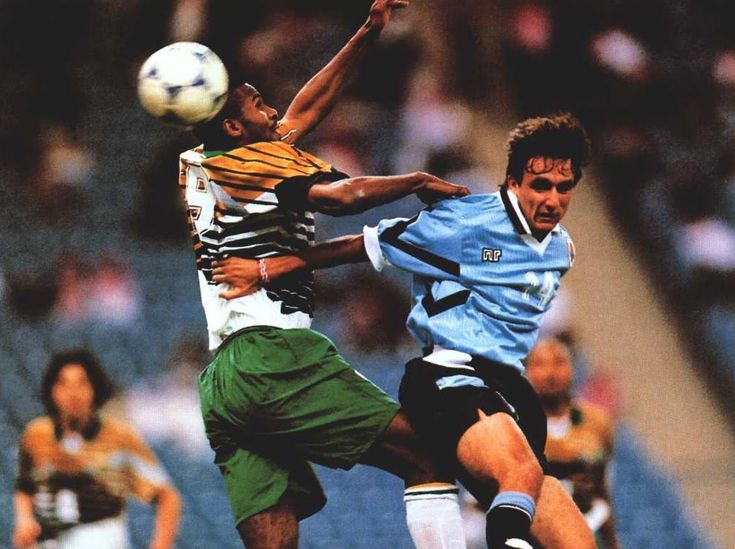
Uruguay looked to have the match well and truly won when Dario Sliva slid the ball under Baloyi to make the score read 3-1 in the 66th minute. However, South Africa would respond with aplomb as midfielder Helman Mkhalele would meet a chipped free-kick with a volley into the top corner three minutes later. Then, replacement Pollen Ndlanya would run onto a disguised through-ball before running around Carlos Nicola to level the scores at 3-3. With little over 10 minutes left, South Africa now had the momentum and looked to complete a remarkable second-half comeback. However, in the last minute, a diagonal ball over to the left would find Christian Callejas, and the midfielder would set himself up before sending a shot into the far corner from 25 yards to give Uruguay the late 4-3 win.
1997: Uruguay 0 Australia 1 (aet)
One of the teams to make their debut at the first FIFA Confederations Cup in 1997, following the governing body taking over control of the King Fahd Cup, would be Australia, the champions of Oceania. The Socceroos would arrive in Saudi Arabia managed by Terry Venables, in his first managerial post since resigning as England boss following Euro ’96. The Australian squad would also feature many members of what would become their golden generation. Alongside Premier League players like Mark Bosnich and Stan Lazaridis were younger players like Josip Skoko (22), Mark Viduka (22), John Aloisi (21) and Harry Kewell (19). All these players would later help Australia qualify for the 2006 FIFA World Cup.
In 1997, Australia would be drawn in Group A with world champions Brazil, North American champions Mexico and Asian champions Saudi Arabia. In their opening match, the Socceroos would defeat Mexico 3-1, with Mark Viduka, John Aloisi and Damian Mori scoring the goals. More impressively, Australia would then draw 0-0 with Brazil. Despite losing 1-0 to Saudi Arabia, Australia would finish 2nd in Group A to qualify for the semi-finals. In the semi-finals, Australia would face South American champions Uruguay. However, after blitzing Group B and edging that match against South Africa, Uruguay would enter this semi-final as favourites to win.
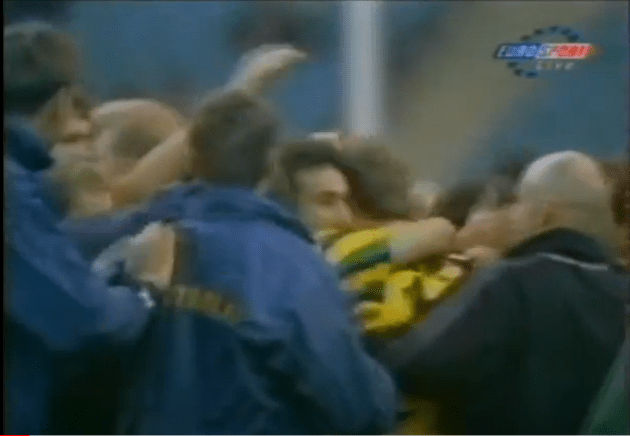
However, at the end of 90 minutes, the Confederations Cup semi-final between Australia and Uruguay would end goalless. Golden goal extra-time would be required to separate these two teams. A penalty shoot-out would decide the game if no golden goal was scored in either period of extra time. However, less than two minutes into extra time, Harry Kewell would receive the ball 30 yards out. With the Uruguay defence retreating following an Australian counter-attack, Kewell would cut into the centre of the field before firing a shot from the edge of the box. Goalkeeper Claudio Flores would manage to get his hands on the ball but could only parry Harry Kewell’s effort into the net, completing the golden goal and ending the match. Kewell would run towards the touchline to celebrate with Terry Venables. The entire team plus substitutes would envelop the Leeds United winger who had just given them the most significant result in their history. The Socceroos were into the final of the first-ever FIFA Confederations Cup, where they would face world champions Brazil.
1999: Mexico 1 USA 0 (aet)
In the 1999 Confederations Cup, a golden goal would decide a match between two of football’s fiercest international rivals. In the first of two semi-finals, Mexico would meet the USA. The two sides had qualified for the tournament after finishing as the the top two teams in the 1998 CONCACAF Gold Cup. Mexico had beaten their neighbour 1-0 to be eligible for the 1999 Confederations Cup. However, when Mexico also agreed to host the competition, another position became available, and the USA took it as Gold Cup runners-up.
To reach the semi-finals, Mexico would top a group that included Saudi Arabia, Egypt and Copa America runners-up Bolivia. A 5-1 thrashing of the Asian champions, a 2-2 draw with the African champions, and a 1-0 win would see Manuel Lapuente’s team reach the semi-finals without much trouble. To join their most hated rivals in the last four, the USA had to get through a group with South American champions and World Cup runners-up Brazil, European champions Germany and Oceanic champions New Zealand. After a 2-1 win over the Antipodeans and a 1-0 defeat to the World Cup winners after a goal from a teenage Ronaldinho, the USA would meet Germany in the final group match to decide who would finish as group runners-up behind Brazil. The Germans had won three of the past four meetings between the two teams. However, the United States had beaten the European champions 3-0 in a friendly five months before this match. In Mexico, Ben Olsen and Joe-Max Moore would give the North Americans their first competitive victory over the footballing giants, knocking out the Germans and sending the United States through to a semi-final match with Mexico.
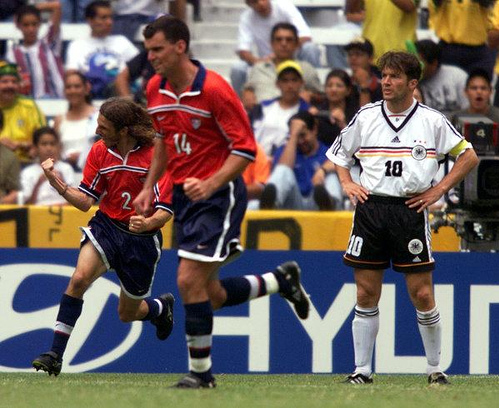
The latest meeting between these regional rivals would bring 82,000 people into the iconic Estadio Azteca in Mexico City. Once the game had kicked off, Mexico would have the first decent goalscoring opportunity. From a free kick, right-back Claudio Suárez would lift the ball over an American defender, and young centre-back Rafael Márquez would hit a first-time effort on goal. However, US goalkeeper Kasey Keller would produce a lightning-quick reaction save to put the ball out for a corner. Later in the first half, midfielder Ramón Ramírez would try his luck from outside the box, only for Keller to get a hand to the shot and divert it over the crossbar. Even left-back Isaac Terrazas would find his shot smothered by the Leicester City goalkeeper.
The story of the match would continue in this manner, with Mexico having the greater chances to break the deadlock only to be repeatedly deterred by the American standing between the sticks. In the second half, Keller would have little time to see Gerardo Torrado’s side-footed effort from close range but would manage to parry the ball out of play. However, after this display, attention would finally turn to the rest of the American team as Earnie Stewart would find his shot charged down by Mexico’s goalkeeper Jorge Campos. However, Mexico would remain the dominant team, and the team’s star striker Cuauhtémoc Blanco would hit a shot that Kasey Keller wouldn’t get a touch on, only for his effort to curl past the far post. Yet, despite many efforts, this semi-final would end goalless after 90 minutes, with Mexico unable to get the ball past Kasey Keller. They would have to try harder in golden goal extra time. If they could get one shot past his gloves, they would be through to the final. However, if the USA managed to score, then the Mexican players’ efforts would have been for nought.
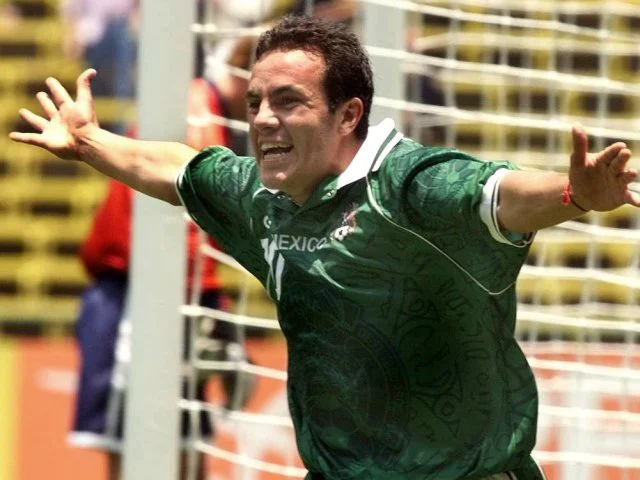
Seven minutes into stoppage-time, Mexico would launch another attack on Kasey Keller’s net. After a ball into the area had caused unrest in the US defence, the ball would fall to Cuauhtémoc Blanco, only for the striker to bobble his left-footed shot. However, this poor effort would cause an American defender to attempt a block and open a gap while Keller fell to his right to save the intended shot. With the ball still under his control, Blanco would quickly stab the ball with his right foot into the gap vacated by Keller to score the ‘golden goal’ and send Mexico to the 1999 FIFA Confederations Cup final. Despite Kasey Keller’s magnificent performance in goal, Cuauhtémoc Blanco had made himself a national hero, taking Mexico through to their first final of an international tournament.
1999: Mexico 4 Brazil 3
After dramatically defeating the USA to reach the Confederations Cup Final, Mexico would now face in the final a young but talented Brazil side lacking its more notable players that had swept through everything in their path thus far. With an average squad age of 23.45 and featuring only three players who didn’t ply their trade in Brazil, the Seleção had dominated Group B. It began with a 4-0 demolition of Germany, in which all the goals had come in the final 25 minutes. Then, after Ronaldinho’s goal had seen off the USA 1-0 on matchday two, the World Cup runners-up had finished with a 2-0 victory over New Zealand. Finally, to reach the final, Brazil completely annihilated Saudi Arabia in an 8-2 semi-final drubbing, with those two consolation goals being the first that Brazil had conceded all tournament. After these results, Brazil would enter the final as heavy favourites to win a second consecutive Confederations Cup trophy. However, they were facing the home nation in a full-packed Estadio Azteca. A reported 110,000 spectators were inside the stadium on this night, marking one of the largest attendances in football history. This match would have to be something special to match up to such a big crowd.
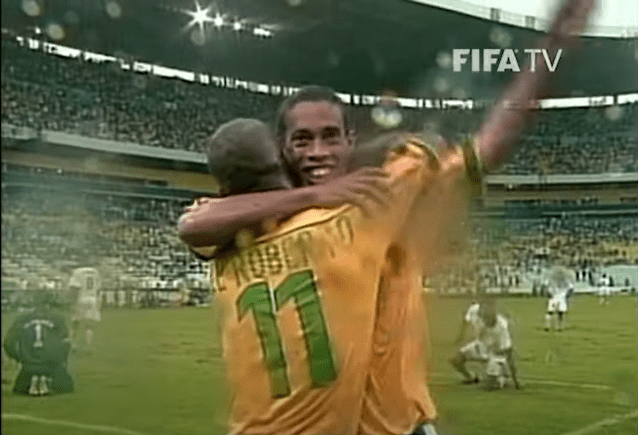
Mexico would dominate the early exchanges, with the Brazilian defence having to remain wise to defend effectively. The first warning came in the 4th minute as a long-range effort from Ramón Ramírez would bounce off of goalkeeper Dida and back into danger, requiring the intervention of a Brazilian defender to clear the ball away. However, this warning was not fully heeded. In the 13th minute, another long-range effort from winger Miguel Zepeda would be saved by Dida, but the 25-year-old would only palm the ball into the air and over his own head into the net, gifting the lead to Mexico. Three minutes later, Mexico had the ball in the goal once more, only for the offside flag to rule it out despite replays showing that Cuauhtémoc Blanco was onside. Mexico would continue to launch wave after wave of attack on the Brazilian 18-yard box, with either Dida or a defender stopping a second goal from being scored. However, in the 28th minute, Mexico would double their lead, as José Manuel Abundis’s shot would beat Dida this near post. After going two goals behind, Brazil would finally start to threaten Mexico’s defence but would not manage a shot on target. However, in the 42nd minute, Germán Villa would upend Ronaldinho in the penalty area, and Brazil would be awarded a penalty. The team’s left-back Serginho would step up to the spot and half Mexico’s lead going into half-time.
After a first half that had gone the way of Mexico in terms of possession, chances and the actual scoreline (2-1), the second half would become a more evenly-matched affair. This was evidenced by the fact that both teams would combine for four goals in the first 18 minutes of the second period. After pulling one back three minutes before half-time, Brazil would equalise two minutes after the break. Rôni, brought on at half-time, would run onto a low, centred cross and stab the ball into the net to equal the score at 2-2. However, the two teams were level for four minutes. A deflected shot would fall to José Manuel Abundis, the striker would nudge the ball towards Miguel Zepeda, and the winger would score his second to re-establish Mexico’s lead. After this goal, both teams would have chances to add to their tallies without much luck. Then, in the 62nd minute, Cuauhtémoc Blanco would receive the ball on the edge of the box. Blanco would cut inside one defender onto his left foot before shooting home Mexico’s 4th goal to extend their winning margin to two at 4-2. However, Brazil would halve this deficit in a heartbeat. Within 30 seconds of the kick-off, Brazil would launch an attack, ending with Zé Roberto scoring his team’s third to bring the difference back down to one with 27 minutes left on the clock.
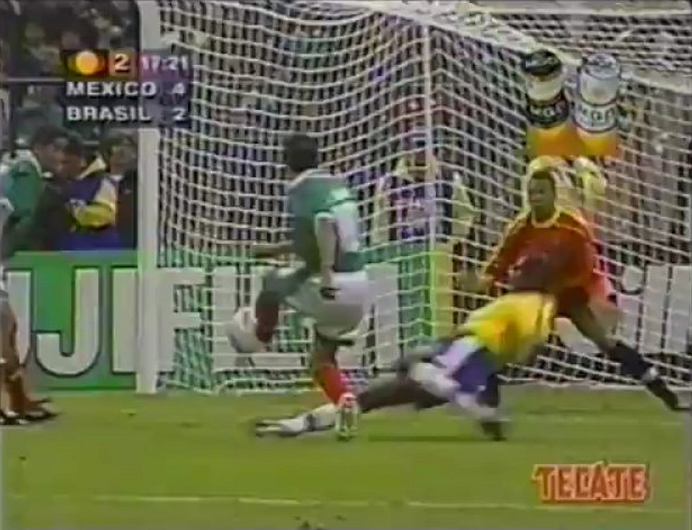
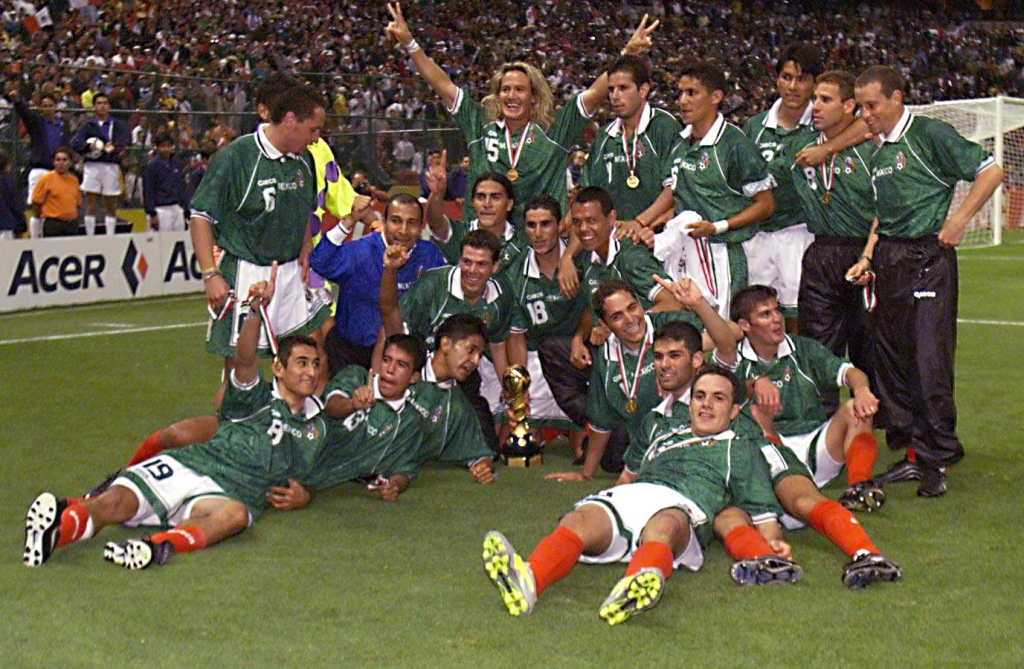
Both teams would try to score more goals in the remaining quarter of the game. Great chances would become fewer and far between as the play became scrappier. Serginho would almost score an equaliser for Brazil, but his free-kick would hit the crossbar. However, Vanderlei Luxemburgo’s team could not bridge the gap to send the game to extra time, and Mexico would hold on to beat Brazil and win the FIFA Confederations Cup on home soil.
2001: Australia 1 France 0
After being absent in 1999, Australia would return to the FIFA Confederations Cup in 2001. The Socceroos had defeated old rivals New Zealand to win the OFC Nations Cup the previous June to qualify for the tournament. While Mark Viduka and Harry Kewell were missing from the Socceroos squad, the 23 contained 1997 veterans Aloisi, Schwarzer, Lazaridis and Skoko, returning players in Tony Popovic and Craig Moore and a raft of young talents. These young talents were Brett Emerton, Mile Sterjovski, Mark Bresciano, Archie Thompson and Clayton Zane, all aged 23 or under. In the Confederations Cup, this Australia squad would be drawn in Group A with reigning World and European champions France, defending Confederations Cup champions Mexico and tournament co-hosts South Korea.
Australia would open their competition with a 2-0 victory over Mexico. Midfielders Shaun Murphy and Josip Skoko would secure the Socceroos their second consecutive victory over Mexico after winning their previous meeting at the 1997 Confederations Cup. In their second game, Australia would face their most formidable opposition in France. France had opened their tournament with an easy 5-0 victory over South Korea and was already looking imperious. Despite missing names like Barthez, Thuram, Zidane and Henry, the French squad was still pretty strong, with Marcel Desailly captaining the side from centre-back.
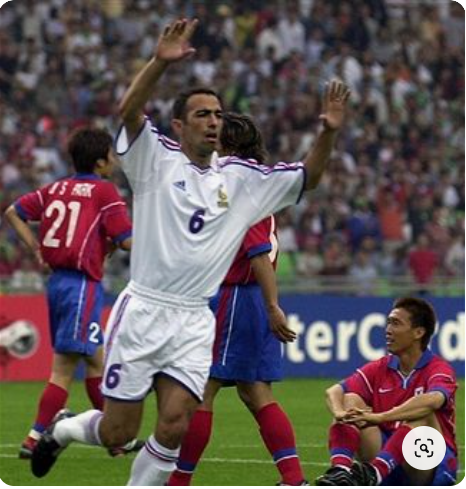
The game would mark only the second international meeting between Australia and France, with the European side winning the first encounter in the Kirin Cup in the summer of 1994. Despite the quality of their squad, France would select an inexperienced team against Australia, expecting an easy win for the world champions. While the starting line-up would include Frank Leboeuf, Christian Karembeu, Youri Djorkaeff and Sylvain Wiltord, these stars would start alongside one-cap wonders Zoumana Camara, Frédéric Née and Nicolas Gillet. Meanwhile, Australia would select their strongest team possible, hoping to get anything from this game against the World’s No.1 side.
After kick-off, France would dominate the early stages, but their early efforts on goal were poor. Also, the Australian defence would handle the French forward line rather well. However, a long-range effort from midfielder Jérémie Bréchet would force Mark Schwarzer to dive to his right to keep the ball out. As the half progressed, Australia would start to threaten the French defence, forcing them to work, but would not manage an effort better than a direct free-kick directly into the body of Grégory Coupet. The first half would end with the best goalscoring chance from either side. Two minutes before the break, a France free-kick would lead to a Frank Leboeuf header which the Chelsea defender would somehow direct wide of the goal despite having half the net to aim for. This chance would sum up their shooting during the first half. After a first half dominated by long shots and good defending, this match would have a half-time score of 0-0.
France would begin the second half with another header going wide of the target, this time from striker Frédéric Née. As had been the case in the first half, France would provide the more significant attacking threat of the two sides, even if they were failing to get too many shots on target. However, in the 59th minute, Australia would receive a free kick right on the edge of the French penalty area after Frank Leboeuf had fouled Steve Corica. Josip Skoko’s free kick would be pushed onto the far post by the fingertips of Gregory Coupet. However, before the French goalkeeper could recover, forward Clayton Zane would fire home the rebound to put the Socceroos ahead against the World and European champions. However, less than two minutes after going behind, France would have the ball in the net. Youri Djorkaeff would cross the ball into the area, and Frédéric Née would head it into Mark Schwarzer, who would save from close range. However, Schwarzer would unintentionally kick the ball over himself before fumbling it into the net. Australia’s goalkeeper had gifted France an equaliser, only for the offside flag to rescue them.
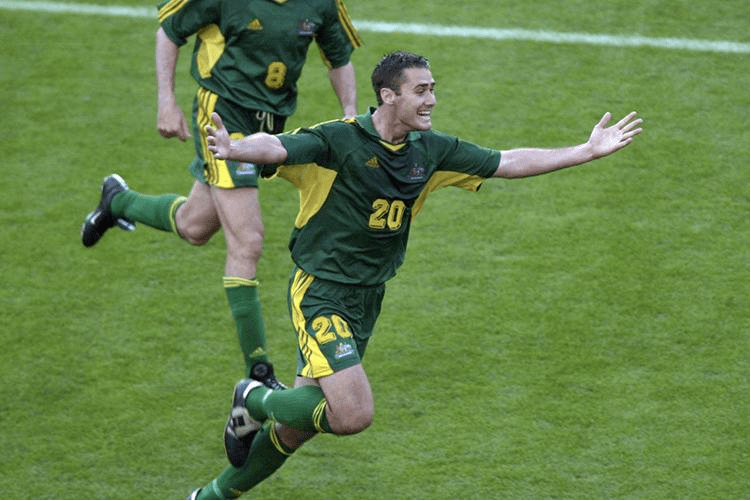
Laurent Robert would then fire the ball past the post at one end, while the goalscorer Zane would hit a shot over the bar at the other. As France failed to find an equaliser, French coach Roger Lemerre would bring on the likes of Nicolas Anelka, Robert Pires and Patrick Vieira. However, Frank Leboeuf would receive his marching orders for a second bookable offence in the 78th minute, reducing France to 10 men. In the 85th minute, France would almost set up a grandstand finish. Laurent Robert would hit a header towards goal, only for Mark Schwarzer to superbly knock the ball away at the last minute. That would be France’s last clear-cut goalscoring opportunity, and Australia would hang on to win 1-0 and defeat the World and European champions for the very first time in a famous victory.
2001: Australia 1 Brazil 0
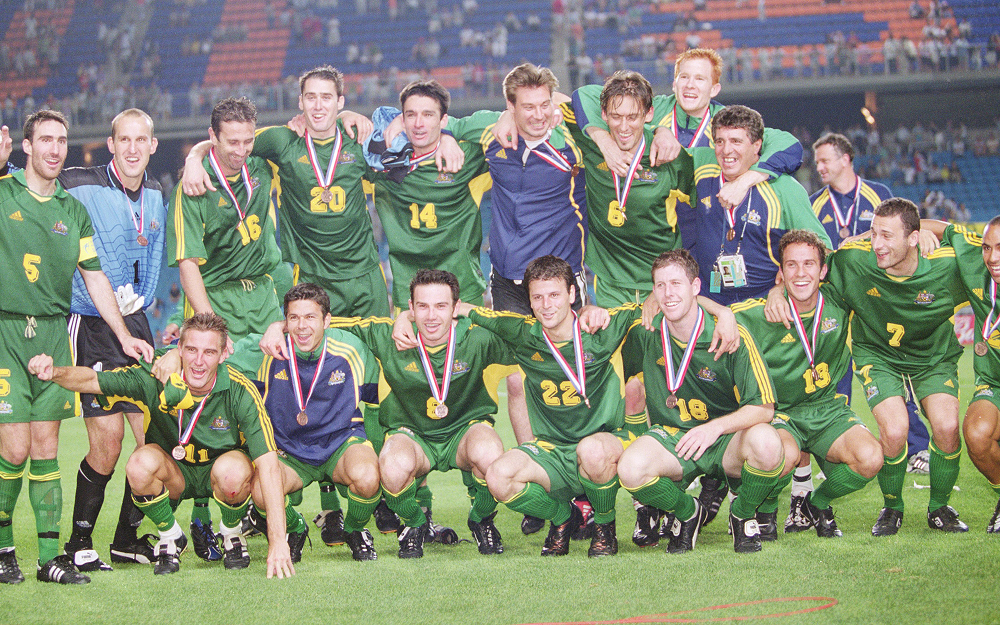
After beating France in Daegu, Australia would later lose to South Korea, reaching the semi-finals on goal difference ahead of the co-hosts. In the semi-finals, the other tournament co-host Japan knocked out the Socceroos with a goal from star man Hidetoshi Nakata. Losing this semi-final would move Australia into the third-place playoff match with Brazil, who had lost 2-1 to France in the other semi-final. Featuring a squad lacking Ronaldo, Rivaldo, Cafu and Roberto Carlos, Brazil had only finished 2nd in Group B, opening with a victory against Cameroon (2-0) before goalless draws with Japan and Canada. In this bronze medal match, would Australia’s plucky Socceroos defeat the four-time World Cup winners, or would the Brazilian team featuring such stars as Washington and Zé Maria play the ‘Joga Bonito’ to get the bronze medal?
Australia would dominate early on, but the first significant shot would come from Brazilian and future Middlesbrough midfielder Fábio Rochemback, who would drag the ball to the left of Mark Schwarzer’s goal after taking aim from 35 yards. The first shot on target would then come when Washington unsuccessfully tried to catch Schwarzer at his near post. Clayton Zane, the hero of Australia’s win over France, would come closer still to scoring, heading a deep cross that Dida would need to tip over the bar. As the first half progressed, Brazil would start to get behind the Australian defence more frequently. However, most of their efforts would end without a shot, as Brazil’s forward line could not finish their attacks. At the other end, Josip Skoko would fire a ball past the post from 25 yards, and then Clayton Zane would intercept a pass from Dida only to send the ball out for a throw-in with a first-time effort. A trademark 40-yard Fábio Rochemback free-kick would sail through the wall, only to end up in the safe hands of Mark Schwarzer. Every significant shot Brazil would then be caught by Schwarzer, from a Carlos Miguel free-kick to a Magno Alves header, as Australia’s goalkeeper stood firm for the rest of the first half. As had been the case in the semi-final, Brazil had been the more dominant side across the first 45 minutes. Still, a mix of a solid Australian defence and Brazil not taking their chances had left the game at a stalemate heading into the second period.
The second half would begin with Magno Alves heading a ball just over the crossbar. At the other end, a scissored effort from Aussie striker Jason Zdrillic missed the far post. Brazil would then start to pick things up, as a teenage Julio Baptista’s back-heeled flick-on would force an excellent point-blank save from Schwarzer, the Aussie goalkeeper killing the ball’s momentum stone dead with his left hand. A deflection on a cross from winger Ramon would send the ball on top of the net. Brazil was looking increasingly likely to score, and it seemed only a matter of time before they did. However, Mark Schwarzer would continue to act as a brick wall. The Middlesbrough keeper would again stop Julio Baptista up close, the youngster’s shot forcing a reflex save, which somehow saw the ball end up wide of the net.
As the minutes ticked down, the game remained tied, and extra time was starting to look like an increasing possibility. However, in the 89th minute, the deadlock would finally be broken. From a free-kick on the wide right, a deep cross would be played into the penalty area, and the unmarked defender Shaun Murphy would send a diving header past Dida to win the match for Australia. Australia had never beaten Brazil in six meetings before this third-place playoff. Now, a late winner from Sheffield United defender Shaun Murphy had given Australia a famous victory on the biggest stage yet to claim the bronze medal at the 2001 FIFA Confederations Cup.
2005: Germany 4 Australia 3
The 2005 FIFA Confederations Cup would become the first to serve as a ‘test event’ for the following year’s FIFA World Cup. With the 2006 World Cup set to be held in Germany, the Confederations Cup would serve as a suitable dress rehearsal. In this tournament, the hosts would produce a trilogy of forgotten classics. The first of these thrillers would come in Germany’s first game against Oceania champions Australia. The two teams had been drawn in Group A along with World and South American champions Brazil and African champions Tunisia. This match marked just the second meeting between Germany and Australia, with the previous game ending in a 3-0 victory for West Germany at the 1974 World Cup. This match, also taking place in Germany (Frankfurt as opposed to Hamburg), would produce a much closer result.
Kevin Kurányi would put Germany ahead in the 17th minute, diverting Thomas Hitzlsperger’s long-distance shot into the net from close range. However, Australia would equalise four minutes later when midfielder Josip Skoko fired a free-kick under the German wall into the net from 20 yards. However, the score would be level for just two minutes, as young centre-back Per Mertesacker would receive Bernd Schneider’s pass before teeing himself up to smash a half-volley past Mark Schwarzer. That would end up being the pick of the goals. However, that would not deter Australia. Skoko would send a through-ball into John Aloisi, and the former Coventry City striker would slide a first-time shot into the far corner of Oliver Kahn’s net. At half-time, Australia was drawing 2-2 with Germany.
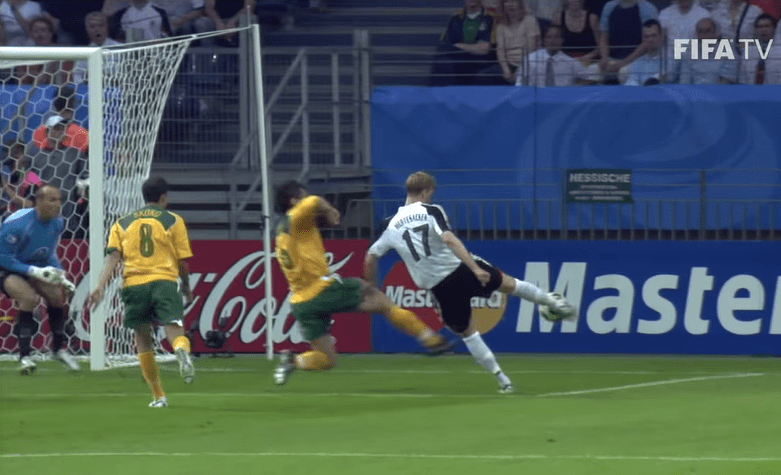
The match would turn on the hour mark. Arne Friedrich would nutmeg Scott Chipperfield and run into the penalty area before being clipped by Ljubo Milicevic, resulting in a German penalty kick. Michael Ballack would send Mark Schwarzer the wrong way to give Germany the lead for the third time. The hosts would then seemingly seal the game in the 88th minute. Substitute Gerald Asamoah would back-heel the ball into Michael Ballack running into the box, and the captain would square the ball for Lukas Podolski to finish. However, Australia would have the last say in this match. In the second minute of stoppage time, two quick passes from Brett Emerton and Skoko would set up John Aloisi to score what would turn out to be a late consolation.
2005: Germany 2 Brazil 3
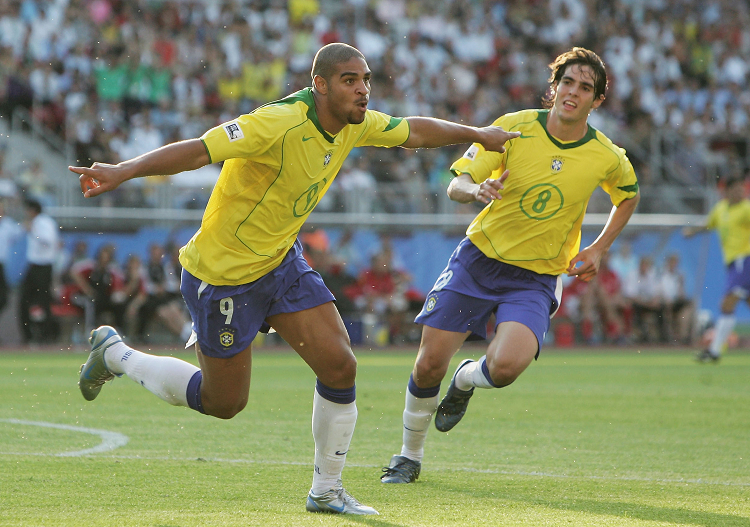
The first semi-final at the 2005 Confederations Cup would see a rematch of the 2002 FIFA World Cup Final as tournament hosts Germany would take on reigning world champions Brazil. After beating Australia, Germany won Group A after a 3-0 win over Tunisia and a 2-2 draw with Argentina. Meanwhile, a reasonably strong Brazil had surprisingly stuttered their way through Group B. Beginning with a 3-0 win over European champions Greece, the Seleção had then proceeded to lose 1-0 to North American champions Mexico before drawing 2-2 with Asian champions Japan. The team led by Carlos Alberto Parreira, the man who had led Brazil to victory in the 1994 World Cup, had only qualified for the semi-finals on goal difference ahead of Japan. Now, having so far flattered to deceive, a Brazilian team featuring Adriano, Kaká, Robinho, and Ronaldinho would need to beat Germany to prove that they were the best team in world football.
The first 20 minutes of this titanic encounter would mostly centre around free-kicks, with the goalscoring chances primarily emerging from these set pieces, aside from a Bernd Schneider half-volley which grazed the top of the net. With so many early opportunities coming from free kicks, it was no surprise that the match’s first goal came from one of them. After Robinho had been fouled 35 yards out, Adriano would step up and hit a shot that would deflect off a German defender, wrong-footing Jens Lehmann to give Brazil the lead after 21 minutes. However, Germany would equalise less than two minutes later. Dida would have to be alert to keep a deep Fabian Ernst cross from heading into the net. However, from the following corner, Lukas Podolski would head his second goal of the competition to level the match at 1-1.
With a free-kick and a corner providing the source for the first two goals, the third one of the game would come from the penalty spot. After Robert Huth was adjudged to have impeded Adriano as the forward went down the by-line, Ronaldinho would pick the correct location from 12 yards to put Brazil in front again. However, in first-half stoppage-time, Roque Júnior would drag down Huth in the box, and Germany would have a penalty of their own. Michael Ballack would side-foot the resulting spot-kick into the bottom-right corner, out of Dida’s reach. So, after a tremendous first half which had certainly lived up to its billing, Germany and Brazil went into half-time drawing 2-2.
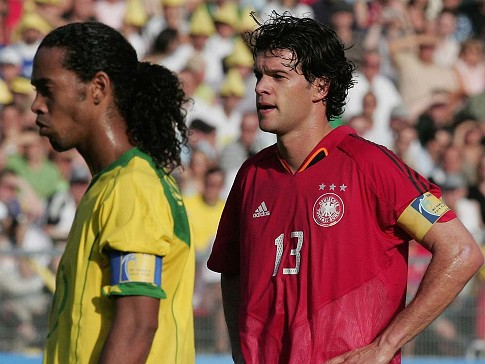
In the second half, Brazil would have the better goalscoring chances, with Robinho, Adriano and even left-back Gilberto trying their luck at re-establishing Brazil’s lead. However, Germany would start to have their own opportunities to go ahead, with Michael Ballack at their heart, as he often was at that time. However, just as Germany was starting to influence proceedings, Brazil would receive a corner which they would take short. The resulting cross would find the head of centre-back Lúcio, whose effort would just clear the crossbar. However, one minute after this, Roque Júnior would send the ball forward to Robinho, and he would touch the ball onto Adriano. In a rich vein of form, the Inter Milan striker would take on Robert Huth before firing a shot into the far corner to give the lead for the third time. Robinho and substitute Cincinho would try to score a fourth for Brazil, but Adriano’s second would prove to be the winner. Brazil would celebrate reaching the Confederations Cup, while Germany would experience the feeling of heading out of a home tournament for the first time.
2005: Germany 4 Mexico 3
The third and final forgotten classic featuring Germany from the 2005 tournament would come in the third-place playoff against Mexico. After topping Group B ahead of Brazil, Japan and Greece, Mexico faced Argentina in the second semi-final. After a match which saw both teams end up with 10 men, the first penalty shoot-out in the tournament’s history would decide the winner. Argentina would ultimately win the shoot-out 6-5, condemning Mexico to face Germany in the bronze medal match. Little did they know that the third-place playoff would be the better game.
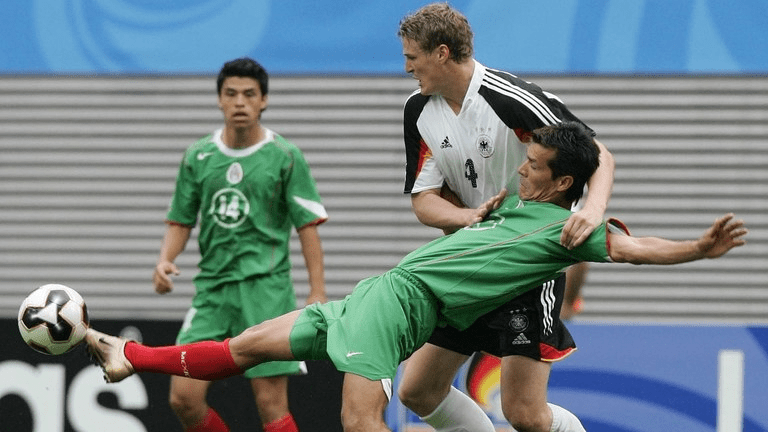
Germany would take the lead in this minor final with a well-worked goal. Sebastian Deisler would find Bastian Schweinsteiger in the centre of the field, and the young winger would back-heel the ball to Lukas Podolski. The 20-year-old striker would look up and hit a powerful shot from the edge of the box into the top corner. Five minutes before half-time, Mexico would equalise. Captain Pavel Pardo would catch Robert Huth dawdling in possession before taking on three German defenders and sending striker Francisco Fonseca into space. Fonseca would hit a first-time effort into the bottom corner, and Mexico was level, briefly. The very next minute, a one-two between Lukas Podolski and right-back Andreas Hinkel would set up Bastian Schweinsteiger to finish from close range to send Germany into half-time with the advantage.
Mexico would respond in the second period. In the 58th minute, future Bolton striker Jared Borgetti would score Mexico’s second equalising goal. However, in this topsy-turvy match, Germany would retake the lead in the 79th minute as Robert Huth showed good finishing ability for a centre-back, toe-poking the ball home from six yards. Yet, Mexico would not quit, and Borgetti would pull back Mexico back level again with another textbook header with five minutes of regulation time remaining.
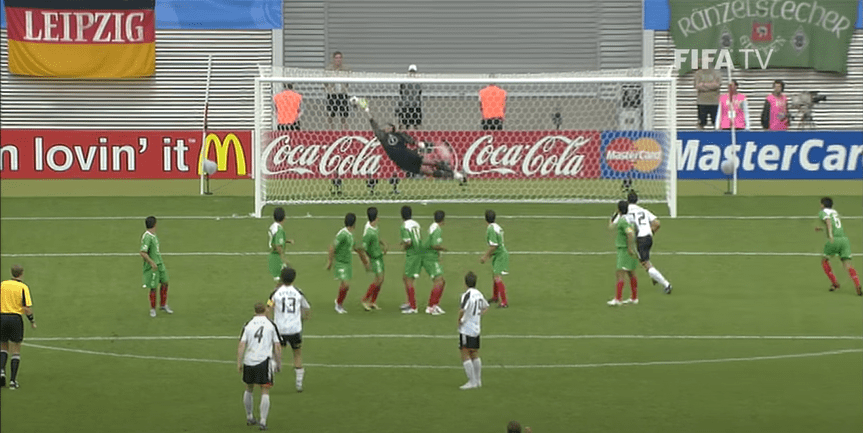
At the end of 90 minutes, the bronze medal final would end tied, leading to extra time. Something special was needed to settle this close match. Up stepped Michael Ballack. Seven minutes into extra time, Germany would receive a free kick in a central position on the edge of the box. Ballack would deliver the perfect strike, clearing the Mexico wall and past the outstretched hand of Oswaldo Sánchez to score the deciding goal for Germany. It needed a moment of magic to decide this encounter. Still, Germany’s captain came to their rescue, as he would through so much of his international career, to spare his team’s blushes and give the home fans something to celebrate ahead of the following year’s FIFA World Cup.
2009: Brazil 4 Egypt 3
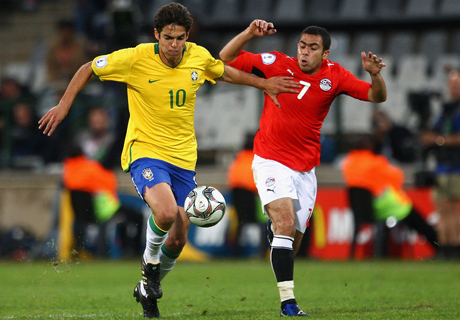
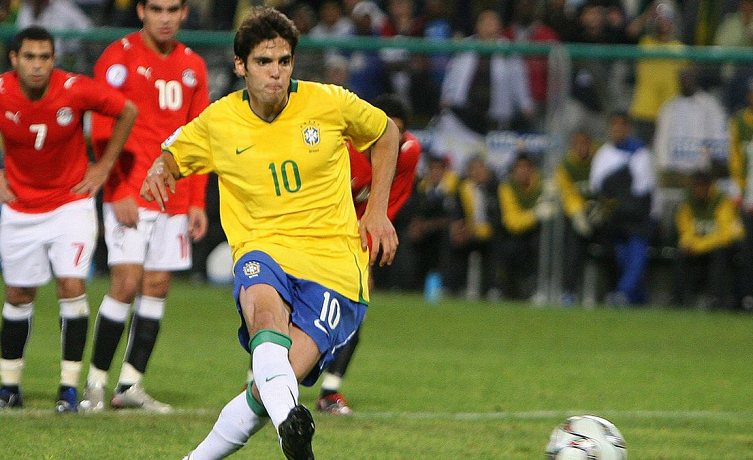
Brazil would enter the 2009 FIFA Confederations Cup as one of the pre-tournament favourites. The Seleção had won the previous edition in 2005 and, in the intervening years, had added another Copa America title to their collection to qualify for this version in South Africa. The reigning Confederations Cup champions would be drawn in a preliminary group with world champions Italy, African champions Egypt, and North American champions the USA. The match between Brazil and Egypt would open Group B and become the game of the tournament. The first goal would come after just five minutes, with a piece of individual brilliance from one of the world’s best players. Receiving a cross on the edge of the box, Kaká would flick the ball over the head of one Egyptian defender before flicking it over the foot of another before calmly side-footing the ball past Essam El Hadary.
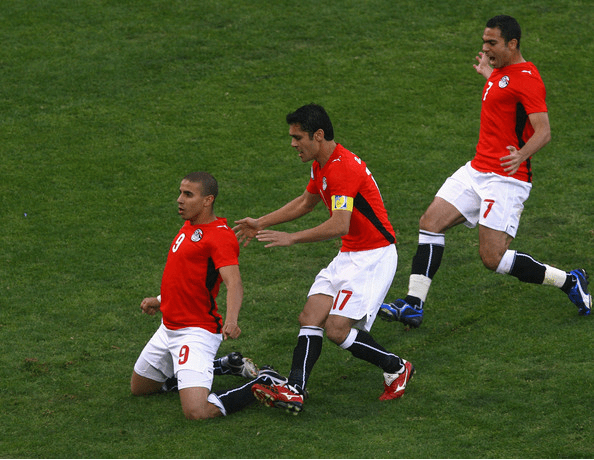
However, instead of Brazil proceeding to run away with the game, Egypt would equalise four minutes later. An Egyptian counter-attack would lead to a cross being played into the Brazilian penalty area. Mohamed Zidan would leap above the retreating defenders to put Egypt in the game. However, Egypt’s pride would be short-lived as Luís Fabiano would put the team in yellow with green back in front by turning home a free-kick two minutes later. This would complete a run of three goals in 11 minutes. Eight minutes before half-time, Brazil would double their winning margin as centre-back Juan headed home Elano’s corner kick. Leading 3-1 at half-time, the result of this match already seemed to be decided in Brazil’s favour. However, that opinion would soon change.
Ten minutes into the second half, Egypt had come back to level the match at 3-3. In the 54th minute, right winger Mohamed Shawky would receive a drag back and finish from the edge of the box. Then, Egypt would intercept the ball and quickly launch an attack directly from the kick-off. The resulting attack would end with a through ball into Mohamed Zidan, and the near-namesake of the French great would lash home his second of the game to score Egypt’s second equalising goal. The rest of the half would then be a series of half-chances, except for Kaká forcing El Hadary to move with a volley that cleared the crossbar. Ahmed Faty would send a long-distance shot a little too high with eight minutes remaining.
With two minutes to go, Brazil received a free kick on the right-hand side of the Egyptian box. A header would be directed towards the goal and cleared off the goal-line by the arm of substitute Ahmed Elmohamady. Brazilian players would appeal for a penalty which referee Howard Webb would award despite the protestations of the Egyptians. Kaká would score the penalty, beating El Hadary at his near post as the clock ticked past 90. While Egypt felt hard done by, Brazil had avoided a scare to beat Egypt 4-3 in a thriller and get the three points.
2009: Spain 0 USA 2
When the USA met Spain in the 2009 FIFA Confederations Cup semi-finals, no one but the most die-hard American fan would go into this match expecting anything other than a Spanish victory. Spain had become European champions the previous summer and eased through a favourable Group A featuring New Zealand, Iraq and South Africa. Vicente del Bosque’s team also came into this semi-final on a 36-match unbeaten streak dating back to February 2007. A victory over the United States would see La Roja take the outright world record away from potential final opponents Brazil. The team that Vicente del Bosque put out against the USA on this night was pretty much the team which had won the Euros except for new additions Gerard Pique and Albert Riera in place of Carlos Marchena and Andrés Iniesta.
Meanwhile, Bob Bradley’s USA team had scraped through the more heavily-loaded Group B featuring Brazil, Italy and Eygpt. After convincing three-goal defeats to world champions Italy (1-3) and South American champions Brazil (0-3), the USMNT would defeat Eypgt 3-0 to finish 2nd in the group behind Brazil, having scored one goal more than Italy. Entering this match with a negative record only lowered expectations regarding the United States’ chances of beating Spain. Anything other than a comfortable Iberian victory would be a shock. However, the team in white would have other ideas.
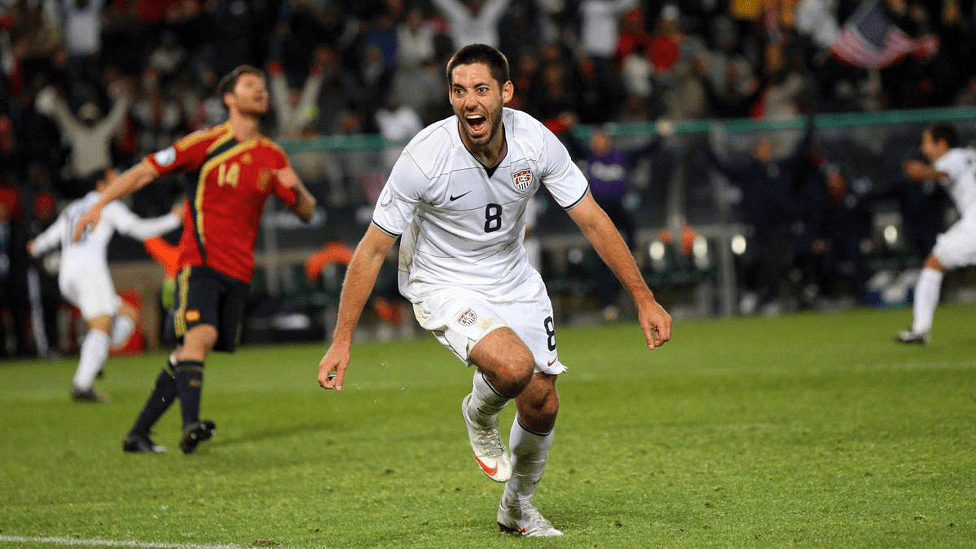
In the 27th minute of play, Charlie Davies would send a deflected pass forward to his strike partner Jozy Altidore. The future Hull and Sunderland flop would outmuscle Joan Capdevila and send a deflected strike past Iker Casillas to give the North American champions a surprise lead. Spain would have the chance to equalise in the second half, but goalkeeper Tim Howard would keep out David Villa’s shot. Then in the 74th minute, substitute Benny Feilhaber would drift into the middle before passing to Landon Donovan in the right inside channel. Gerard Pique would manage to flick away Donovan’s resulting cross. Clint Dempsey would then pick the ball off the studs of Sergio Ramos to fire a second goal past Iker Casillas and reach the final after completing the biggest win in their history. This streak-ending result would shock the football world, showing that Spain was indeed beatable, giving their rivals hope before the following year’s World Cup.
2009: Spain 3 South Africa 2
After losing their two-year, 36-match unbeaten streak to the United States, Spain would have to pick themselves up to face hosts South Africa in the third-place playoff. Spain had beaten South Africa 2-0 when the two sides met in the group stages. However, South Africa would eventually finish 2nd in Group A and advance to the semi-finals. In the last four, only an 88th-minute winner from Dani Alves had stopped the Bafana Bafana from taking Brazil to extra-time. With this tournament serving as a test event for the following year’s World Cup, South Africa was motivated to perform well in front of packed stadiums. A positive result against the recently downed European champions would make headlines in the host country, especially the year before a World Cup. However, even though Spain had lost to the USA, the team were still expected to beat South Africa, who had registered one win from four matches so far in this tournament.
Despite the stakes on offer (the right to be known as the 3rd-best team in the Confederations Cup), the first goal in this bronze medal final would not arrive until the 73rd minute. However, this goal would send the Royal Bafokeng Stadium in Rustenburg into raptures. The ball would be spread out to Siphiwe Tshabalala on the wing, and the subsequent cross would fall to Katlego Mphela, who would smash the ball into the roof of the net from close range. The vuvuzelas rang out in delight (or just made the same droning sound as always) as South Africa was leading the world’s no.1 side.
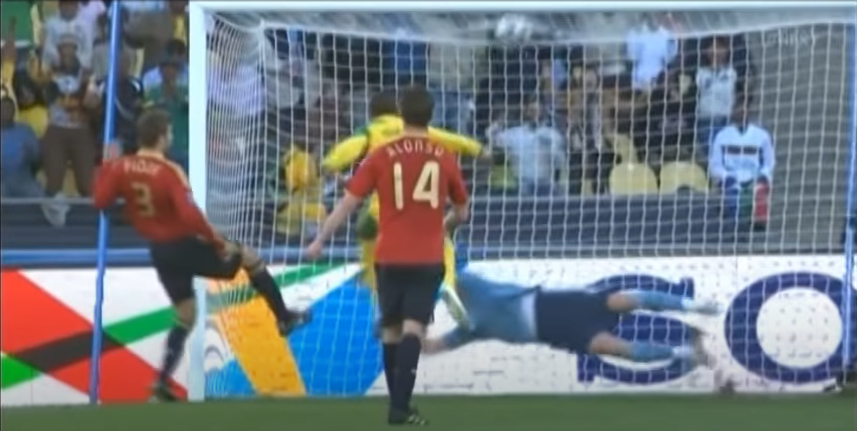
The hosts would hold this unbelievable lead until two minutes from time as substitute striker Daniel Güiza would accept a flick-on before stroking home Spain’s equaliser. One minute later, Spain was now leading. Güiza would receive the ball on the right-hand corner of the box and, seeing goalkeeper Itumeleng Khune standing slightly off his line, would send a lobbed effort into the far corner of the net. An incredible goal that looked like it had got Spain out of trouble and won them the bronze medal. However, in the third minute of stoppage time, there would be a sting in this match’s tail. South Africa would have a free-kick 35 yards from goal, and Katlego Mphela would kick the ball so hard that it would sail from his boot into the top corner out of the reach of Iker Casillas in under two seconds. A goal this special would send this match to extra time, an unlikely pre-match prediction.
However, seven minutes into extra time, Spain would have a free kick. Xabi Alonso would send in a curled effort from the left. Fernando Llorente would try to get a touch on the ball, distracting Itumeleng Khune enough that he would remain frozen to the spot as the ball beat him at his near post. Even though they expected to win the whole tournament, Xabi Alonso and his teammates would celebrate this late winner as if it had just won them the tournament as the coaching staff and substitutes flooded off the bench in delight. It may have only been the bronze medal match, but Spain had somewhat spared their blushes following the loss to the United States.
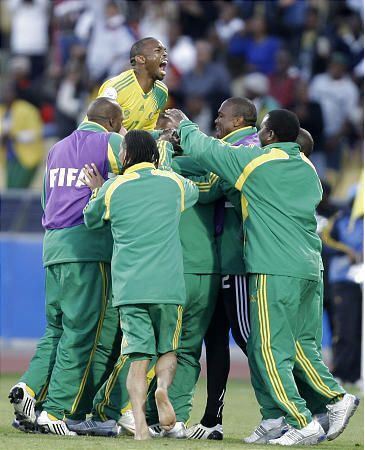

2009: Brazil 3 USA 2
The USA’s reward for reaching the final was a match against defending champions Brazil. The two teams had already met in the group stages, with Brazil comfortably winning 3-0. However, after their shock victory over Spain, Bob Bradley’s men would go into this rematch without fear and full of confidence. This confidence was displayed as the USA took the lead in the 10th minute. After Brazil had enjoyed the early possession and had created a few half-chances, the USA would receive a free kick which Jonathan Spector would take quickly. Spector would cross the ball into Clint Dempsey, and the Fulham winger would send a disguised volley past Julio Cesar. The USMNT would have a couple of chances to double their lead from corners but failed to register a shot from either. Tim Howard would make a trio of saves at the other end to preserve his team’s lead. However, one of these Brazilian forays forward would lead to a USA counter-attack. Ricardo Clark would set free Landon Donovan would turn the retreating Ramires before firing home to give the USA a shock 2-0 lead 27 minutes into this final. Brazil would try to pull a goal back before half-time but again find a brick wall named Tim Howard blocking their way.
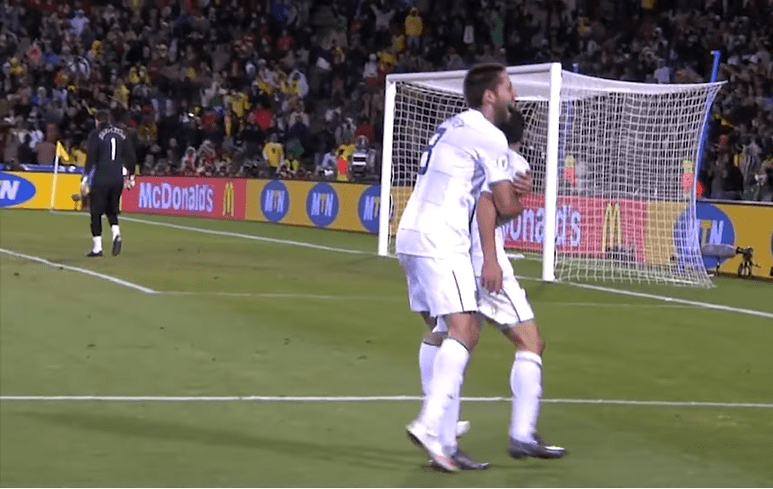
Taken aback by being two goals down at half-time, Brazil would halve their opponent’s lead less than a minute into the second half. Luís Fabiano would receive a pass from Maicon before turning defender Jay DeMerit and skewing the ball into the bottom-right corner of the net. Brazil would then think Kaká had scored an equaliser as Tim Howard would be forced to knock the midfielder’s looping header onto the crossbar from which it would bounce out. Replays would show that the ball had crossed the goal line. However, the linesman’s flag would remain by his side. By this point in the second half, Brazil was enjoying the lion’s share of possession, with the US back five having to stay alert to keep their one-goal lead intact. At the other end, Donovan and Dempsey would try to score their second goals of the night, but Julio Cesar would remain resolute.
In the 74th minute, Kaká would centre a ball which Robinho would side-foot against the crossbar. With the ball bouncing around, Luís Fabiano would head the ball in for Brazil’s equaliser. Then in the 84th minute, captain Lúcio would send a powerful header past Howard to complete the comeback. The USA would have a chance for a late equaliser, but Oguchi Onyewu’s head would clear the crossbar, and Brazil would successfully defend the FIFA Confederations Cup.
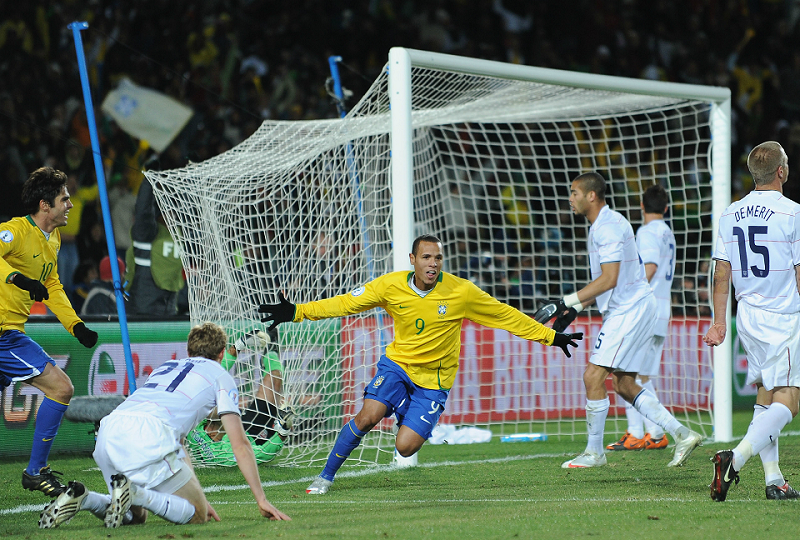
2013: Italy 4 Japan 3
Italy and Japan would enter their second group match at the 2013 FIFA Confederations Cup with two very different mindsets. Italy, who joined the competition as Euro 2012 runners-up, would look to secure their second consecutive victory in the group after beginning with a 2-1 win against Mexico. A win over Japan would secure qualification to the semi-finals for Cesare Prandelli’s team. Meanwhile, Asian Cup champions Japan would look to get their campaign on track after losing 3-0 to hosts Brazil in the tournament’s opening match. With these two attitudes at play, the two teams would meet inside the iconic Maracanã stadium in Rio de Janeiro. This arena was the venue for many significant moments in football’s long history. On this night, this famous stadium would see a slightly lesser-known yet still incredible match play out on its hallowed turf.
After some early shots from both sides, Japan would eventually draw first blood. In the 20th minute, Buffon would tackle Shinji Okazaki in the penalty area, bringing the forward down. Despite replays showing Buffon may have had contact on the ball, referee Diego Abal would point to the spot. Keisuke Honda would step up and score, hitting the ball low to Buffon’s left.
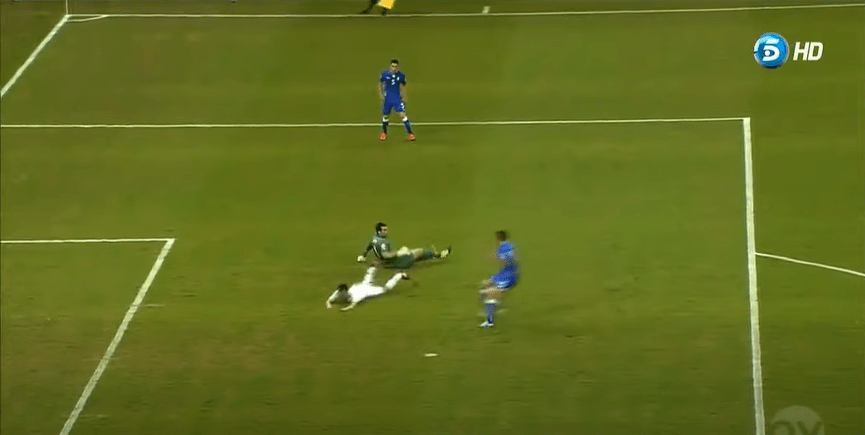
Japan would have the momentum following their goal and double their advantage twelve minutes later. After a bouncing ball in the Italian area, Shinji Kagawa would nail a half-volley past a motionless Buffon. Japan was rolling now, and the Juventus goalkeeper would have to scramble to his right to keep out Yasuhito Endō’s curling direct free-kick. However, the four-time World Cup winners would pull a goal back four minutes before half-time. From Andrea Pirlo’s tight outswinger, Daniele De Rossi would leap highest to score his 15th international goal. Then, after the half-time break, two more goals would turn the match in favour of Italy. A warning sign had come in the form of Emmanuele Giaccherini hitting the post in first-half stoppage time. Yet, in the 50th minute, excellent wing play from the future Sunderland sub would force Atsudo Uchida to turn a low cross into his own net to level the scores. Then, two minutes later, Italy would receive a penalty after an alleged handball by defender Maya Yoshida. Mario Balotelli would send Kawashima the wrong way to give Italy a 3-2 lead.
Now, Italy was looking comfortable, as substitute Sebastian Giovinco almost added a fourth goal directly from the kick-off, his shot being turned round the post by Kawashima. However, after this scare, Japan would start to threaten an equaliser, with Gigi Buffon having to remain alert. In the 69th minute, Shinji Okazaki would run towards the near post to head an Endō free-kick past Buffon for Japan’s third of the match.
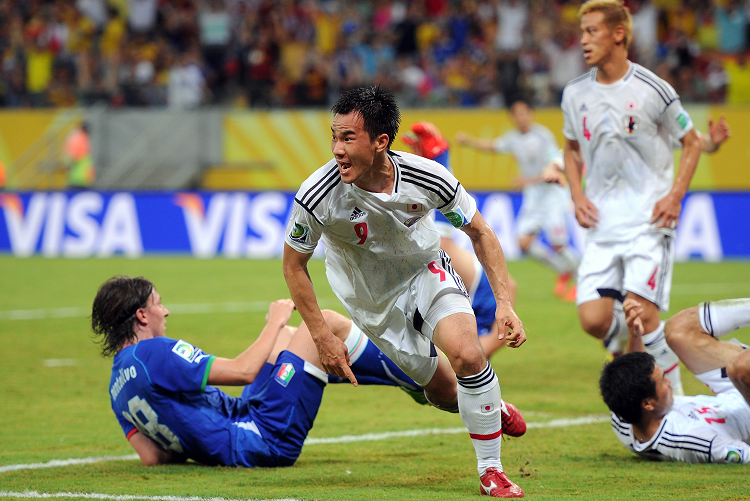
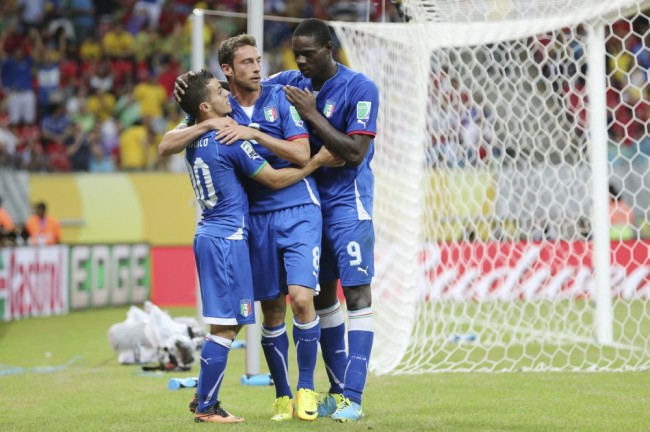
With the game now tied at 3-3, both sides would have chances to score a potential winner without much success. Japan would come closest, as captain Makoto Hasebe’s drive would hit the far post before Okazaki’s header would hit the crossbar with 10 minutes remaining. Five minutes later, two substitutes would combine as Claudio Marchisio squared the ball to Sebastian Giovinco to poke home Italy’s fourth. However, the match would almost turn again as Maya Yoshida seemed to have equalised in the 88th minute. However, his effort would be ruled out by the offside flag. Italy would hold on to win this enthralling match to advance to the Confederations Cup semi-finals, while Japan was now out of the competition.
 the-score-board.co.uk