
1994/95: A Bigger Splash
Manager: Frank Clark
Top Scorer: Stan Collymore (25)
Premier League: 3rd
FA Cup: 4th round
League Cup: 4th round
League record: 22 wins, 11 draws, 9 defeats
Transfers: £-2.35 million
Transfers in: £2.55 million
| Date | Position | Player | From | Transfer Fee |
|---|---|---|---|---|
| 1st August | MF | John Burns | Belvedere | Undisclosed |
| 1st August | GK | Malcolm Rigby | Notts County | £50,000 |
| 4th August | FW | Bryan Roy | Foggia | £2.5 million |
| 23rd January | GK | John Filan | Cambridge United | Four-month loan |
| 20th March | GK | Billy Mercer | Sheffield United | Two-month loan |
Transfers out: £200,000
| Date | Position | Player | To | Transfer Fee |
|---|---|---|---|---|
| 13th July | GK | Mark Statham | Wigan Athletic | Free transfer |
| 13th July | MF | Ian Kilford | Wigan Athletic | Free transfer |
| 2nd August | FW | Lee Glover | Port Vale | £200,000 |
| 12th September | FW | Gary Bull | Birmingham City | Season-long loan |
| 27th September | MF | Gary Crosby | Huddersfield Town | Free transfer |
| 18th November | DF | Carl Tiler | Swindon Town | Season-long loan |
| 1st December | DF | Brian Laws | Grimsby Town | Free transfer |
| 2nd March | MF | Kingsley Black | Sheffield United | Two-month loan |
Pre-season
The 1994-95 season would see Nottingham Forest return to the top flight of English football, the Carling Premiership, after one season in the Football League First Division. After suffering Premiership relegation, losing manager Brian Clough to retirement and their first-choice strikers to other clubs, Nottingham Forest had recovered from a woeful start in the league to eventually earn promotion with champions Crystal Palace and play-off winners Leicester City. Now managed by Frank Clark, a member of Forest’s 1979 European Cup-winning squad, the club had managed to keep together most of the 1992-93 Premiership squad, including goalkeeper Mark Crossley, midfielders Steve Stone and Neil Webb and captain Stuart Pearce. The team had also bought effectively, with centre-back Colin Cooper, experienced midfielder David Phillips and 25-goal striker Stan Collymore quickly becoming ever-presents as the Reds returned to the promised land. Now, the target for the season had changed from top-flight promotion to Premiership survival. Survival was especially imperative during the 1994-95 campaign, considering that four teams were set for the drop this year due to the Premiership moving from having 22 teams to just 20.
Transfers
Nottingham Forest’s first match of the 1994-95 season would arrive at Ipswich Town on 20th August 1994. Before then, manager Frank Clark would use the transfer market to alter his squad ahead of this date. Three players would arrive at Nottingham Forest, and another three would leave during this close-season.
The summer business would begin on 13th July with Clark selling two of the club’s youth players, goalkeeper Mark Statham and midfielder Ian Kilford to Division Three side Wigan Athletic on free transfers. Neither man had managed to step up from the youth academy to the Nottingham Forest first team. Statham, 18, had only been given a professional contract the previous summer but found himself as 4th-choice goalkeeper behind Mark Crossley, Tommy Wright and Andy Marriott. Kilford, 20, had been given his professional contract by Brian Clough in 1991. However, he had made just one first-team appearance since then. Kilford had even spent a brief on loan with Wigan during the 1993-94 season, scoring two goals in three appearances. Clearly impressed by what they saw, the Latics would make a deal to take the young midfielder permanently, with Mark Statham joining him in the North West.
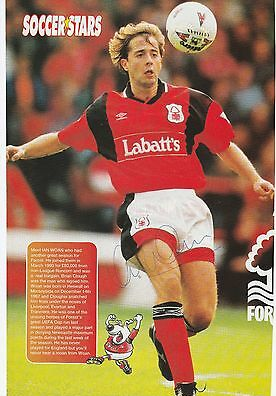
However, after letting a young midfielder and goalkeeper leave the City Ground on 13th July, Frank Clark would sign a young midfielder and goalkeeper to take their places in Nottingham Forest’s youth set-up on 1st August. The first was a young Irish midfielder spotted by Forest scouts playing in the FAI Youth Cup. Sound familiar? After discovering a teenage Roy Keane through this pathway, Forest hoped to repeat the feat with 16-year-old John Burns. Having spent his youth career with Dublin schoolboy team Belvedere, Burns was already compared to the now-Manchester United midfielder. The other player signed on the same day as Burns came from Nottingham Forest’s city rivals Notts County. From County’s youth academy would come 17-year-old Malcolm Rigby for £20,000. Like John Burns, he was one for the future as Nottingham Forest’s summer transfer business would start quietly.
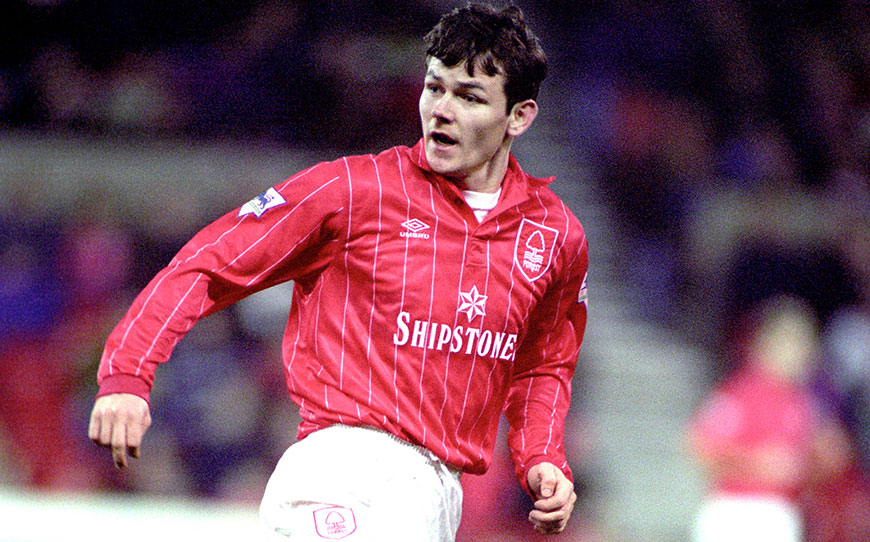
However, in the days after the signings of John Burns and Malcolm Rigby, the biggest transfer deals of Nottingham Forest’s pre-season would take place. On 2nd August, striker Lee Glover would exit the City Ground for recently-promoted First Division side Port Vale. Glover had been a recurring character during Forest’s promotion campaign, making 20 appearances in all competitions and scoring six goals. However, he was always going to be second-choice behind Stan Collymore. He often found himself competing with Robert Rosario, Jason Lee and Gary Bull to feature alongside Collymore or appear from the substitutes’ bench. With Nottingham Forest targeting a new forward during the summer of 1994, Glover knew his playing opportunities would drastically decrease over the coming season and took the move to Port Vale, with John Rudge paying £200,000 for his services. Lee Glover would become the third former Forest youth player to leave the club during the summer of 1994. Glover had made his professional debut for the Reds during the 1987-88 season, aged 17. The now 24-year-old Glover would leave the East Midlands with 102 first-team matches and 13 goals.
Nottingham Forest would sign Lee Glover’s replacement for £2.5 million two days later. On 4th August, Frank Clark would sign Dutch international forward Bryan Roy from Serie A side Foggia. The previous season, Roy had scored 14 goals in 35 appearances for the Dauni. His 12 league goals (the exact amount that Roberto Mancini would net for Sampdoria) would see Foggia finish a creditable 9th in the 1993-94 Serie A table, three points off UEFA Cup qualification. However, before moving to Italy in 1992, Roy had played out his formative years at Ajax. Making his debut in 1987, Roy would play 152 matches for Ajax, scoring 18 goals before losing his place to Marc Overmars. In Amsterdam, Bryan would win one Eredivisie championship (1989-90) under Leo Beenhakker and the 1992 UEFA Cup under Louis van Gaal. Roy would even start both legs of the UEFA Cup final as Ajax beat Torino on away goals after a 2-2 aggregate scoreline.
In addition to his club form, Bryan Roy was also active at an international level. Despite only earning 26 caps for the Netherlands, Roy had been part of the Dutch squads for Euro 1992 and the 1994 FIFA World Cup. He had been an ever-present in the former as the Dutch reached the semi-finals and had made five appearances during the World Cup, starting the first two group games and scoring against Morocco in the final one.
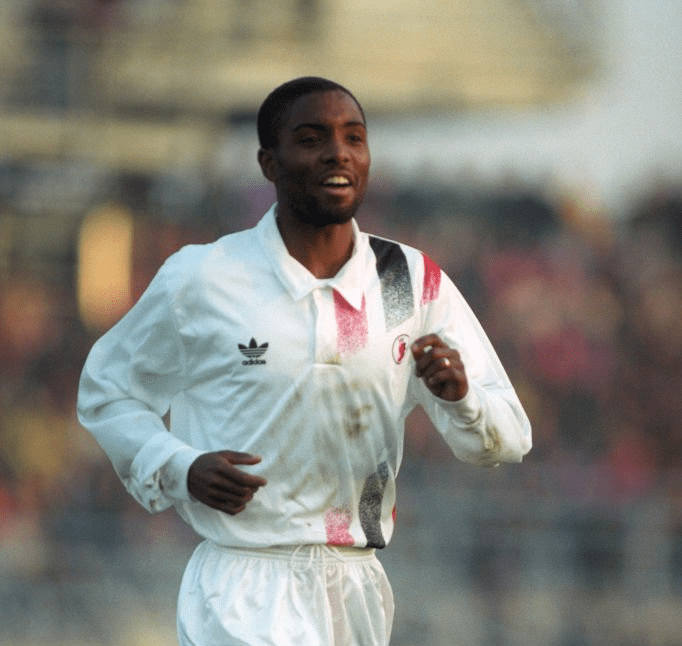
With Bryan Roy, Nottingham Forest was getting a 24-year-old forward who already had a lot of experience competing at the highest levels of club and international football. The signing of Roy from Foggia would serve as Nottingham Forest’s only significant pre-season signing. Apart from the Dutchman and the departure of Lee Glover, Forest’s squad was the same as the one which won promotion the previous season. However, considering that most of that squad had played for the Reds during the 1992-93 Premiership season, the similarity between the club’s two Premiership squads is understandable.
August
Nottingham Forest would enter the 1993-94 Carling Premiership season holding a 10-match unbeaten streak from the end of their Division One promotion campaign. Would this run of games without defeat continue in the top division?
On 20th August, Nottingham Forest’s Premiership return would have the perfect start with a 1-0 victory away at Ipswich Town. Forest would field a starting XI featuring ten players who had finished the previous season in the First Division. However, the club’s only significant summer signing, Bryan Roy, would make his full debut, starting alongside Jason Lee ahead of last season’s absent top scorer Stan Collymore. In the 40th minute, the new forward partnership of Lee and Roy would provide the game’s only goal. A Lee header would flick the ball into Roy’s path, and the Dutchman would turn the Tractor Boys’ defence inside out before side-footing the ball past Craig Forrest from the edge of the penalty area. It was a debut goal for Bryan Roy and an opening-day win for Nottingham Forest on their top-flight comeback. However, the team’s next match, and first home game, would come against reigning Premiership champions Manchester United two days later.
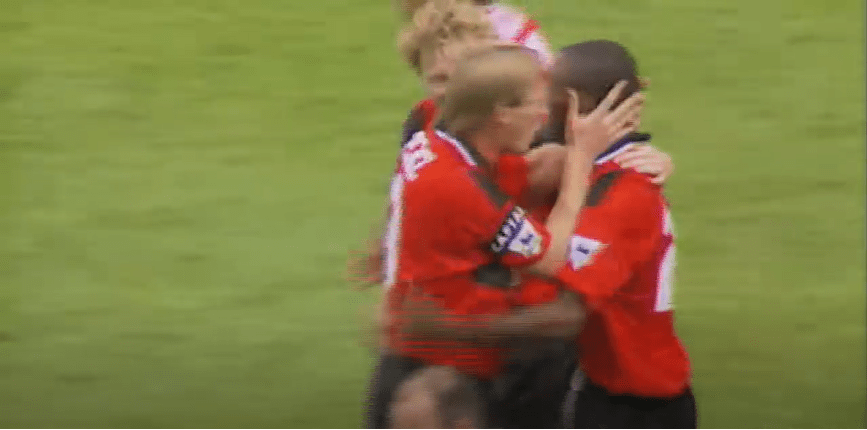
On 22nd August, 22,072 spectators would fill Nottingham Forest’s City Ground for the arrival of champions Manchester United. This day would mark Stan Collymore’s first appearance of the new season, replacing Jason Lee to partner new signing Bryan Roy as Frank Clark’s latest strike pairing. The match against Manchester United was also the 23-year-old Collymore’s first Premier League appearance since 17th October 1992, a 14-minute cameo in Crystal Palace’s 0-0 draw with Manchester City. Now, nearly two years later, Collymore’s role would be more than serving as Eddie McGoldrick’s replacement, now acting as Nottingham Forest’s prolific goalscorer. After Russian midfielder Andrei Kanchelskis had fired Man United ahead with a spectacular 22nd-minute volley, Bryan Roy and Stan Collymore would combine to bring newly-promoted Forest back on level terms four minutes later. After a defensive tackle sent the ball downfield, Roy would battle with United defender Gary Pallister, flicking the ball towards Collymore. Collymore would head the ball before running hard at the black-shirted defence and beating Peter Schmeichel at his near post with the resulting shot. However, despite this sudden back-to-back rush of goals in four minutes, the match would not turn into a high-scoring encounter. Instead, Nottingham Forest would earn an impressive draw against Alex Ferguson’s men in their first home match of the new season.
After getting off the mark with his first-ever Premiership goal in the draw with Manchester United, Stan Collymore would be on the scoresheet again as Nottingham Forest hosted Leicester City in the East Midlands derby. Thirty-eight minutes into a feisty encounter, Collymore would receive David Phillips’ pass 35 yards from goal. He would turn his marker Richard Smith and quickly flick the ball away from another Foxes defender before continuing his run into the box and sliding the ball inside the far post. Stan Collymore’s second goal in as many games would give Forest a 1-0 win over their regional rivals in a match that saw Leicester end up with 10 men following a second yellow card for midfielder Nicky Mohan.
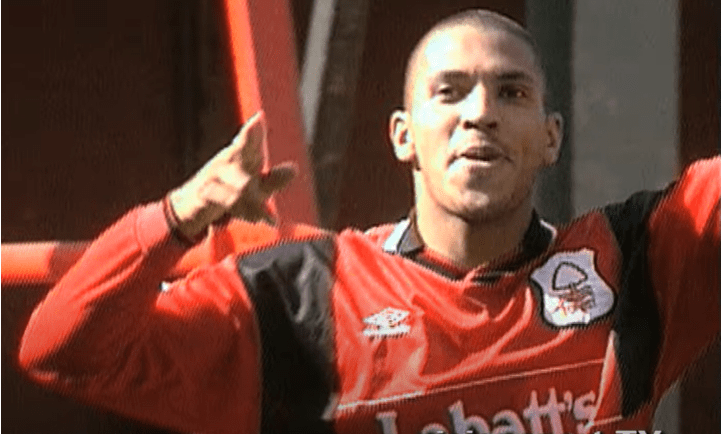
Three days later, Nottingham Forest would end an impressive first month of the season with a 2-1 away win over Everton. Mike Walker’s winless Toffees would gift Forest a 1-0 half-time lead when Andy Hinchcliffe headed a corner into his own net. In the 60th minute, Ian Woan would swing a deep free-kick into the penalty area. Steve Chettle would knock the ball back into danger, and his centre-back partner Colin Cooper would break his scoring duck by flicking the ball over his own head past Neville Southall and put Forest 2-0 up. Striker Paul Rideout would halve the visitors’ advantage eight minutes later to give Everton hope, but Frank Clark’s Reds would pick up their third win in four matches.
At the end of August 1994, Nottingham Forest could not have wished for a better start to their Premiership return. Three wins and a draw against the reigning champions in their first four games had put Forest joint-2nd with Manchester United on 10 points, two behind early pacesetters Newcastle. Stan Collymore was up and running with two goals in three games. Meanwhile, Bryan Roy was already looking like a good piece of transfer business, having started all four of the team’s matches and completing back-to-back 90 minutes in the wins over Leicester and Everton. Frank Clark’s settled squad had taken to Premiership life like a duck to water thus far. However, four matches is not a large enough sample size to judge a team’s start to a league season. September would bring three more tests and the League Cup to Frank Clark’s team.
| Position | Team | Played | Wins | Draws | Losses | GF | GA | GD | Points |
|---|---|---|---|---|---|---|---|---|---|
| 1st | Newcastle United | 4 | 4 | 0 | 0 | 15 | 3 | +12 | 12 |
| 2nd | Manchester United | 4 | 3 | 1 | 0 | 7 | 1 | +6 | 10 |
| 3rd | Nottingham Forest | 4 | 3 | 1 | 0 | 5 | 2 | +3 | 10 |
| 4th | Liverpool | 3 | 3 | 0 | 0 | 11 | 1 | +10 | 9 |
| 5th | Chelsea | 3 | 3 | 0 | 0 | 8 | 2 | +6 | 9 |
September
Following the season’s first international break, Nottingham Forest would host Sheffield Wednesday at the City Ground on 10th September. Wednesday had experienced an inconsistent start, with one win, one draw and two defeats on their record books. They would soon have to register a third loss in those books as Forest beat them 4-1. In the 34th minute, David Phillips’s ball into the box would ricochet off the head of Bryan Roy, and the Dutch forward would re-adjust and dribble the ball away from trouble before squaring it for Steve Stone. However, Steve Stone’s attempt on target would deflect off Kingsley Black in the centre of the area past goalkeeper Kevin Pressman. Black, who was making his first appearance of the season in place of Ian Woan, had scored the luckiest goal of his career to that point to put Forest 1-0 ahead.
Lars Bohinen would double his team’s advantage seven minutes into the second half, hitting a powerful half-volley past Pressman following a failed clearance. Four minutes later, Graham Hyde would pull one back for Sheffield Wednesday, taking one touch to control the ball and a second to hit it past Mark Crossley. However, a handball from defender Simon Coleman would allow Stuart Pearce to re-establish Forest’s two-goal advantage in the 63rd minute. Pearce would send the ball into the bottom-left corner, with Pressman diving the wrong way. Then, with eight minutes to go, Lars Bohinen’s disguised through-ball would send Bryan Roy through the middle of the Wednesday defence. Roy would take the ball wide with his first touch before tucking the ball past the on-rushing Pressman at his near-post to score his second goal of the season and complete Nottingham Forest’s 4-1 win. Another impressive victory from Frank Clark’s team to take their unbeaten run to fifteen games.
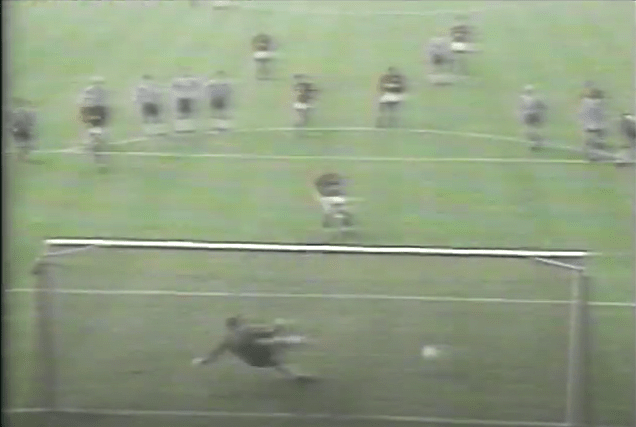
Two days after the Sheffield Wednesday win, Frank Clark would allow striker Gary Bull to join Second Division Birmingham City on a season-long loan for the rest of the season. With Stan Collymore and Bryan Roy already forming an effective strike partnership with Jason Lee serving as a capable understudy, it made sense for Bull to find a temporary solution for his quest for more playing time.
On 17th September, Nottingham Forest would travel down to the South Coast to face Southampton. At The Dell, the points would be shared as the two teams drew 1-1. Forest would break the deadlock two minutes before half-time with an excellent solo goal from Stan Collymore. The English striker would pick up a clearance downfield, read the ball, and bring it into his path while turning his marker inside the centre circle. From there, Collymore would run into the inside-right channel of the Saints penalty area before slowing down to re-adjust his feet. Feet re-adjusted, Collymore would cut inside two defenders with his right foot before finishing with his left, the ball beating Bruce Grobbelaar at his near post. A piece of brilliance worthy of winning any football match. However, Southampton’s talisman Matt Le Tissier would have other ideas. After Iain Dowie was fouled inside the Forest area seven minutes after the break, Le Tissier would send Mark Crossley the wrong way to equalise for Southampton and continue his excellent penalty-taking record in the Premiership.
Four days later, Nottingham Forest would begin their journey in the League Cup. The four-time winners would face Third Division Hereford United in the two-legged first round, with the first leg taking place at the City Ground on 21st September. A season-low attendance of 10,076 would turn up to watch this midweek match. Frank Clark would send out a strong side, but the visitors would take an 8th-minute lead through striker Steve White. The 34-year-old would run through the Forest defence and roll the ball into an empty net after Mark Crossley tried and failed to claim the ball. With Forest still behind 1-0 at half-time, it was again time for ‘Stan The Man’ to save the day. Three minutes into the second half, a long ball over the Hereford defence would find Lars Bohinen, and the Norwegian midfielder would drag the ball across for Collymore to equalise. Then, five minutes later, Bryan Roy would collect a short corner before sending a low cross to the near post, from which Collymore would score again. A brace from their No.10 would give Forest a slender 2-1 aggregate lead heading into the return leg at Edgar Street two weeks later.
Returning to league action on 24th September, Forest would rack up a four-goal scoreline for the second time that month as they defeated Tottenham 4-1. On this day, Stan Collymore’s strike partner Bryan Roy would take the headlines with a brace of goals and an assist. In fact, Stan Collymore would turn provider for the Reds’ 9th-minute opener, pinging a ball into the box from which midfielder Steve Stone would score his first goal of the season, firing across Ian Walker from a tight angle. Spurs would take four minutes to find an equaliser. Romanian winger Ilie Dumitrescu would turn Colin Copper left and right before beating Mark Crossley from an even tighter angle. Ossie Ardiles’ team would even have the chance to take the lead, but Crossley would guess correctly to save Teddy Sheringham’s penalty kick. With that slice of luck on their side, Forest wouldn’t look back.
Seven minutes into the second half, Steve Stone would leave Spurs left-back David Kerslake on the turf before crossing the ball towards Bryan Roy, the Dutchman scoring with a diving header. In the 69th minute, Stone and Roy would combine once more, the winger leaving Spurs’ other full-back Justin Edinburgh on the ground before setting up Roy to finish at the near post. Lars Bohinen would then score Forest’s fourth and final goal ten minutes later, receiving a pass from Roy before evading two defenders and delivering an audacious 25-yard lob that sailed into the top corner. That goal-of-the-season contender would complete Nottingham Forest’s 4-1 win.
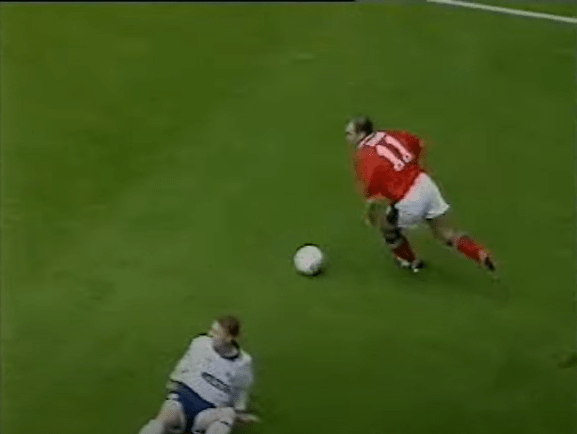
The last significant news to come out of Nottingham Forest in September would be the departure of midfielder Gary Crosby to Huddersfield Town on a free transfer. The 30-year-old had joined Forest from non-league Grantham Town for £20,000 in December 1987. He had since made 216 first-team appearances for the East Midlands club, scoring 25 goals. He had started in many finals for Forest, including the 1990 and 1992 League Cup finals and the 1991 FA Cup final. However, following Brian Clough’s departure, Crosby had lost his place on the right flank to Steve Stone and even played three matches on loan at Grimsby Town in late 1993. Coming to the end of his peak years, Crosby wanted to look for pastures new, and on 27th September, Frank Clark would allow him to move to the Second Division Terriers.
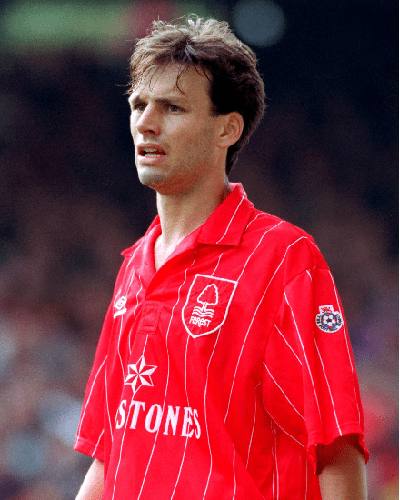
An unbeaten September would earn Nottingham Forest manager Frank Clark the Premiership Manager of the Month award. Those two wins and a draw would continue Forest’s eye-catching early-season progress with the Reds sitting in 3rd place, level on points with Blackburn Rovers, two points behind leaders Newcastle and four ahead of Manchester United. Five wins and two defeats from their first seven Premiership matches had given Nottingham Forest an impressive 17 points from a possible 21. Few Forest fans would have expected their team to still be unbeaten after seven games. However, this team, which was virtually unchanged from the squad that earned promotion from Division One the previous year, exceeded expectations early on. When or where Forest’s unbeaten run ended, nobody cared. The fans and players were enjoying being back in the big time.
| Position | Team | Played | Wins | Draws | Losses | GF | GA | GD | Points |
|---|---|---|---|---|---|---|---|---|---|
| 1st | Newcastle United | 7 | 6 | 1 | 0 | 23 | 8 | +15 | 19 |
| 2nd | Blackburn Rovers | 7 | 5 | 2 | 0 | 16 | 3 | +13 | 17 |
| 3rd | Nottingham Forest | 7 | 5 | 2 | 0 | 14 | 5 | +9 | 17 |
| 4th | Manchester United | 7 | 4 | 1 | 2 | 12 | 6 | +6 | 13 |
| 5th | Chelsea | 6 | 4 | 0 | 2 | 12 | 8 | +4 | 12 |
October
Nottingham Forest would begin October by successfully maintaining their unbeaten streak with a 3-2 win over Queens Park Rangers. All the goals in this five-goal thriller would come in the second period. Kingsley Black would put Forest in front after 51 minutes, returning his own partially-cleared corner with a floated, curling cross-cum-shot over the heads of everyone into the bottom-left corner. However, after goalkeeper Tony Roberts stopped Bryan Roy from quickly doubling Forest’s advantage, Les Ferdinand would draw the visitors level three minutes later with his fifth goal of the campaign. Hoops midfielder Ian Holloway would dispossess a half-asleep Colin Cooper, and Ferdinand would send the ball past Mark Crossley, despite the goalkeeper’s best efforts. After Tony Roberts managed to save attempts on goal by Bryan Roy and Stan Collymore, the QPR goalkeeper would soon find himself culpable for Nottingham Forest retaking the lead. In the 63rd minute, a Forest corner would sail over his head, with Roberts only managing to turn the ball onto the post. In the resulting goalmouth scramble, Bryan Roy would poke the ball home with his right boot to score his 4th goal in 8 Forest matches. Two minutes after this goal, Rangers manager Gerry Francis would bring on substitute Bradley Allen for Alan McDonald.
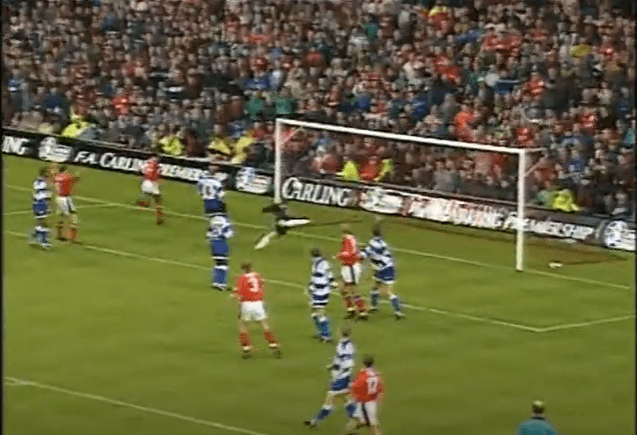
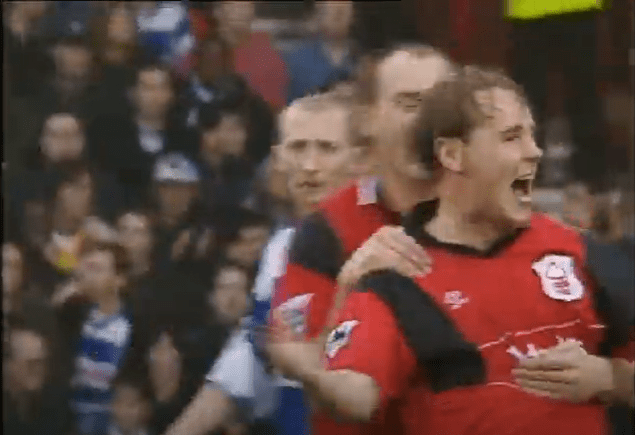
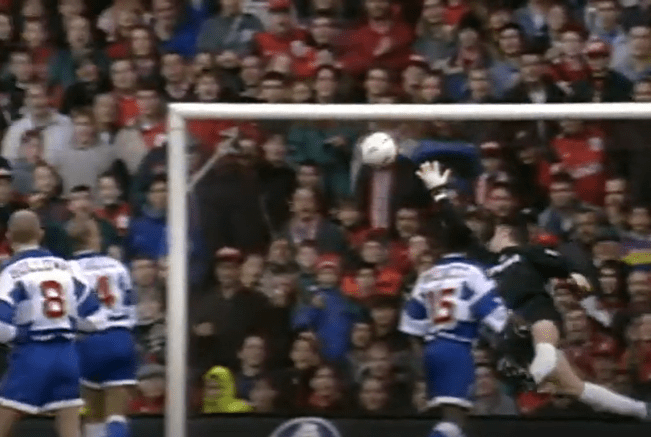
At times, the spectators in the City Ground were treated to multiple phases of end-to-end football as both teams quickly transitioned from defence to attack. However, in the 83rd minute, Queens Park Rangers would find a second equaliser. An exchange of passes between Trevor Sinclair and Simon Barker would lead to substitute Bradley Allen getting inside Nottingham Forest right-back Des Lyttle and scoring from the edge of the box. However, this match was still not over as a contest. In the 88th minute, Nottingham Forest’s go-to man would get his side a winning goal. From a Tony Roberts kick downfield, Des Lyttle would run forward to deliver a cushioned header, immediately setting Stan Collymore through on goal. The striker would out-pace defender Rufus Brevett to lift the ball over the diving Roberts. Bryan Roy would have an opportunity to grab a fourth, but Roberts was alive to two of his efforts, and the offside flag would rule out a third. However, Forest would walk away with the three points and move up to 2nd in the Premiership table, starting off October correctly.
Two days later, Forest would travel southwest for the second leg of their League Cup first-round tie with Hereford United. Forest would carry a 2-1 aggregate lead into the match at Edgar Street. This 2-1 lead would remain unblemished as the second leg would end goalless. Forest would progress to the next round of the Cup with an unimpressive aggregate victory, but a victory nonetheless.
After scoring three goals in their last League match against Queens Park Rangers, Nottingham Forest would do the same in their next game against Manchester City six days later. However, these three goals would only lead to Forest getting one point instead of three. Frank Clark’s team would go 1-0 up in the 22nd minute at Maine Road on 8th October, and Stan Collymore would play a part once again. Steve Stone’s deflected pull-back would find Collymore, and the forward’s shot would hit the leg of the off-balance City goalkeeper Andy Dibble and go in the net. Dibble would be the one credited with putting Nottingham Forest ahead with an unfortunate, unintentional ‘own goal’. However, City would respond through Niall Quinn minutes before half-time. The tall Irishman would control an incoming cross with his head before lashing the ball home with his left foot.
Collymore would re-establish Forest’s one-goal advantage in the 51st minute, capitalising on the City defence’s failure to deal with Mark Crossley’s long goal kick downfield before beating Dibble at his near post. However, Quinn would respond with his second of the game three minutes later, sticking the ball away in a goalmouth scramble. Five minutes later, winger Steve Lomas would give Manchester City the lead, hitting a half-volley from 12 yards following a Quinn knock-down. However, when it looked like Brian Horton’s team had inflicted Nottingham Forest’s first defeat of the season, midfielder Ian Woan would pop up with a 90th-minute equaliser. After a Stuart Pearce free-kick was cleared, Woan would try to knock the ball back into danger, only for his lifted effort to beat everyone and cross the goal-line.
If scoring three goals in their last two league matches wasn’t enough, Nottingham Forest would do it for a third consecutive match facing Wimbledon on 17th October 1994. After the previous two occasions had resulted in a 3-2 win and a 3-3 draw, this one would end in a 3-1 home victory for Frank Clark’s team. Forest would break the deadlock five minutes before half-time with a quick counter-attacking goal. Mark Crossley’s long throw would set Ian Woan away. The winger would carry the ball close to the Wimbledon penalty area before laying it off for fellow midfielder Lars Bohinen to successfully hit into the top corner, despite the attentions of Dons tacklers. A defensive howler would almost give Forest a second as Vinnie Jones’s header back towards his own goal would give Stan Collymore something to run onto. However, the left-hand post would deny Collymore a spectacular finish as the striker’s first-time lob would sail over the goalkeeper only to rebound off the inside of the post.
However, Collymore would soon produce a goal of equally brilliant quality midway through the second half. The striker would collect the ball about ten yards inside his own half and rev up his engines before feinting to get past Dons defender Alan Reeves to enter the Wimbledon half. The Englishman would then dribble past retreating midfielder Peter Fear and reach the centre of the pitch before letting the ball fly from 35 yards into the same bottom-left corner, this time avoiding the post. However, Collymore’s incredible solo dribble would not serve as Forest’s winning goal. In the 75th minute, Lars Bohinen would send a diagonal ball forward to Bryan Roy. The Dutchman would engage the defender before freeing the ball for the on-rushing Ian Woan, and the winger would send a direct effort inside the near post. Striker Marcus Gayle would score a consolation effort for the Wimbledon in the 81st minute, but Forest would extend their unbeaten run in the league to 10 matches.
Nottingham Forest had only obtained two clean sheets despite starting the season with seven wins and three draws from their first ten league matches. So far, the team had scored 23 Premiership goals and had only conceded 11, but had not managed to successfully keep the ball out of the net since beating Leicester City 1-0 on 27th August. After their last three wins had come with 3+ goal scorelines, Nottingham Forest’s next one would be more straightforward. On 22nd October, the team would beat Aston Villa 2-0 away from home, earning their third clean sheet of the campaign. At Villa Park, Frank Clark’s team would start quickly, winning a penalty in the first minute. In Forest’s first foray forward, Bryan Roy would play the ball past full-back Earl Barrett before Barrett then clattered into the striker to bring him down in the penalty area. Forest captain Stuart Pearce would blast the resulting penalty kick into the net to give Frank Clark’s team an early lead. Then in the 70th minute, a Nottingham Forest corner would be headed away, only for Steve Stone to blast a shot into the ground with such force that it eventually bounced its way past a stranded Nigel Spink into the Villa net. The Villans would have numerous opportunities to score throughout the game. Still, Forest keeper Mark Crossley was equal to everything thrown at him as Frank Clark’s men won their 8th win of the season and 20th successive league match without defeat. The East Midlands club were now two points behind league leaders Newcastle United and five points ahead of 3rd-placed Manchester United.
Four days later, Forest would travel across the Midlands to face Wolverhampton Wanderers in the 3rd round of the League Cup. Wolves, managed by recent England manager Graham Taylor, had started the season well and led the First Division table after thirteen games. Stuart Pearce, who earned 25 caps (8 as captain) during Taylor’s tenure as England manager, would haunt his former boss with a 5th-minute opener at Molineux. Pearce would bundle the ball home from Ian Woan’s corner to give the Premiership side the lead. Bryan Roy would double Forest’s advantage in the 21st minute, cutting inside on the edge of the box before shooting past goalkeeper Mike Stowell. Wolves would pull a goal back through Paul Birch four minutes before half-time and draw level at 2-2 at the hour mark with David Kelly’s header from an indirect free-kick. However, with the second-tier team now looking to cause an upset, Stuart Pearce would score his second of the match with a deflected 35-yard free-kick with three minutes left. After registering a rare brace, the experienced Pearce would ensure that Nottingham Forest avoided defeat and reached the 4th round of the League Cup.
Nottingham Forest would host Kenny Dalglish’s 4th-placed Blackburn Rovers side at the end of October. With leaders Newcastle facing 3rd-placed Manchester United on the same day, a home win could take Forest to the top of the Carling Premiership one-third of the way through the 1994-95 league season. Before the Blackburn match, Nottingham Forest held a 21-match unbeaten streak dating back to the previous season. Including cup matches, this run of games without defeat extended to 24. However, on this day, they would face a Blackburn team featuring the ‘SOS’ strike partnership of Alan Shearer (9) and Chris Sutton (9), who had already scored 18 goals this term.
On 29th October, a Chris Sutton double would see Blackburn earn a 2-0 away victory, ending Forest’s unbeaten start to the 1994-95 season and the 21-match undefeated run altogether. The first would come after six minutes, with Sutton collecting Jason Wilcox’s pass before turning and firing from outside of the box into the bottom corner of Mark Crossley’s net. Then, in the 68th minute, Shearer and Sutton would combine, with Shearer’s shot falling into the path of Sutton, who would finish from six yards. With a 2-0 scoreline, Blackburn Rovers became the first team since Jim Smith’s Portsmouth twenty-four matches and 218 days earlier (2-1, 26th March 1994) to inflict defeat upon Nottingham Forest. Forest would miss their chance to top the Premiership, as Manchester United defeated Newcastle 2-0 to cut the gap to the top two down to two points.
For Nottingham Forest, October 1994 was another successful month that was unfortunately tempered by defeat at the end. The team had won three, drawn one and lost one of their five matches, and that defeat came to a team managed by Kenny Dalglish and featuring the two most expensive strikers in British transfer history. The East Midlands club had entertained their fans and neutral fans, with these five games producing a combined nineteen goals. Forest was also still in the League Cup and faced second-tier opposition in the fourth round, with Mick McCarthy’s Millwall set to travel to the City Ground at the end of November. Despite the defeat to Blackburn Rovers, Nottingham Forest was in dreamland. If you’d asked anyone associated with the club that they would be 2nd in the Premiership after twelve matches, they would have called you crazy.
| Position | Team | Played | Wins | Draws | Losses | GF | GA | GD | Points |
|---|---|---|---|---|---|---|---|---|---|
| 1st | Newcastle United | 12 | 9 | 2 | 1 | 29 | 12 | +17 | 29 |
| 2nd | Nottingham Forest | 12 | 8 | 3 | 1 | 25 | 13 | +12 | 27 |
| 3rd | Manchester United | 12 | 8 | 1 | 3 | 21 | 9 | +12 | 25 |
| 4th | Blackburn Rovers | 12 | 7 | 3 | 2 | 25 | 12 | +13 | 24 |
| 5th | Liverpool | 12 | 7 | 2 | 3 | 28 | 13 | +15 | 23 |
November
Six days after suffering their first defeat of the 1994-95 season at the hands of Kenny Dalglish’s Blackburn Rovers, Nottingham Forest would suffer their second defeat of the campaign against Dalglish’s former club Liverpool. This match at Anfield would be one to forget for Forest goalkeeper Mark Crossley, as an unforced error on his part would lead directly to the only goal of the match. Crossley would attempt to boot the ball downfield following a Liverpool attack. However, his attempted clearance would only go as far as Jamie Redknapp, whose shot would travel in the direction of Robbie Fowler. Fowler would jerk his left leg goalwards, causing the ball to travel out of Crossley’s reach and into his net. Liverpool’s teenage superstar had his 12th goal of the campaign, and Liverpool had their home victory. Meanwhile, Nottingham Forest, without star man Stan Collymore for the second game running, had suffered back-to-back losses for the first time since September 1993. Forest’s defeat would allow Blackburn to overtake the Reds into 2nd place and for Liverpool and Manchester United to move within two points of the East Midlands club.
Forest would draw 0-0 with early-season pacesetters Newcastle United two days later. Despite being two of the league’s most entertaining sides to watch this campaign, and the return of Stan Collymore to Forest’s starting XI, the two teams would share a goalless draw at St James’s Park. However, this draw would not favour either team, as results elsewhere would see the Magpies drop to 2nd and Forest drop to 4th.
On the 18th, Frank Clark would allow centre-back Carl Tiler to join First Division Swindon Town on loan. Tiler had played once all season, failing to play a single minute in the Premiership thus far. Ironically, Tiler had been a regular the last season Nottingham Forest had played in the Premiership, playing 37 out of 42 matches. However, Tiler had become another Clough regular who had found his opportunities limited with the arrival of Frank Clark, struggling to break up the settled centre-back partnership of Steve Chettle and Colin Cooper. Now, he would have a chance to help improve Swindon’s fortunes down in the second tier.

After an international break, Nottingham Forest would continue their recent slump in form by losing 1-0 to Glen Hoddle’s Chelsea at the City Ground. Forward John Spencer would get the winner in the 28th minute. Blues winger Dennis Wise would lift a ball over the Forest defence, and Spencer would go around Mark Crossley and squeeze the ball into the net, despite the attempts of two defenders to clear the ball off the line. The three points would move Chelsea up from 8th to 6th and drop Forest down to 5th, four points now separating the two teams.
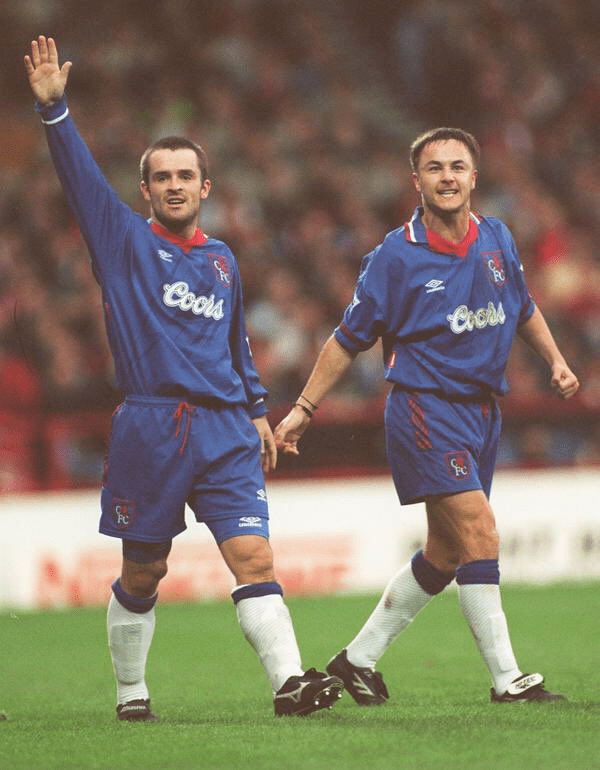
One week later, Nottingham Forest would suffer their third 1-0 defeat in four matches, losing by a single goal to Leeds United on 26th November. In a game that saw five yellow cards handed out to Nottingham Forest players (Cooper, Bohinen, Collymore, Stone, Woan), Noel Whelan would score his seventh goal of the season, heading home Brian Deane’s cross to condemn Forest fans to another pointless journey home.
After a month to forget in the league that had seen their form turn upside down, Nottingham Forest would look to the League Cup to give them something to smile about in November. As he had done in the previous rounds, Frank Clark would send a strong team out to face Milwall, despite the difference in divisions. While Nottingham Forest was riding high in 5th place in the Premiership, Milwall sat 20th in the First Division, above the relegation zone on goal difference after nineteen matches. However, Mick McCarthy’s team would defy the 37 league placings between themselves and Forest by upsetting their opponents and knocking them out of the League Cup in front of their own fans. This night, midfielder Greg Berry would be the Lions’ hero, scoring twice to give the First Division strugglers a 2-0 away win. Berry’s first would come after 18 minutes, the 23-year-old rising to head in a free-kick. Then, four minutes before half-time, a disguised ball would send Berry inside Forest right-back Des Lyttle, and the midfielder would hit the ball between Mark Crossley’s legs to book his team’s ticket to the 5th round.
After an incredible first three months of the season, November had served as a reality check for Nottingham Forest fans dreaming of a Premiership title challenge or another League Cup success. After avoiding defeat in their first fourteen matches in all competitions, Forest had lost their last six, failing to score a single goal in any of them. Four losses and a draw against teams situating around them in the Premiership table had seen Nottingham Forest drop from two points off the top and 2nd in the Premiership to eight points behind in 5th. Even though those defeats were narrow (all 1-0) and the team drew 0-0 with Newcastle, the losses exposed Forest’s ability to compete with the Premiership’s top sides like Blackburn and Liverpool. However, no one was expecting Forest to compete with these teams at the start of the season and earning any points against these teams would have been a huge plus, so swings and roundabouts. However, the stats themselves do not lie. After starting the season amazingly well, Forest found themselves in a bad run of form. Results would need to improve in a packed six-match December if Forest wanted their dream season to continue. That full schedule would include games against Arsenal and Manchester United.
| Position | Team | Played | Wins | Draws | Losses | GF | GA | GD | Points |
|---|---|---|---|---|---|---|---|---|---|
| 1st | Blackburn Rovers | 16 | 11 | 3 | 2 | 35 | 13 | +22 | 36 |
| 2nd | Manchester United | 16 | 11 | 2 | 3 | 31 | 10 | +21 | 35 |
| 3rd | Newcastle United | 16 | 10 | 4 | 2 | 34 | 17 | +17 | 34 |
| 4th | Liverpool | 16 | 9 | 3 | 4 | 33 | 17 | +16 | 30 |
| 5th | Nottingham Forest | 16 | 8 | 4 | 4 | 25 | 16 | +9 | 28 |
December
After having a November to forget, Nottingham Forest would look forward to December and hope for better results. However, the month would begin with another regular from the Brian Clough era leaving Nottingham Forest. On the first day of the month, right-back Brian Laws would join First Division Grimsby Town on a free transfer, becoming the club’s new player-manager at 33 years old. Laws had joined Forest from Middlesbrough for £120,000 in July 1988 and would proceed to play 212 matches on the right side of Forest’s defence, scoring five goals. He would appear in all of the team’s Cup final appearances between 1989 and 1992, starting League Cup triumphs in 1989 and 1990 and coming off the bench during losing efforts in the 1991 FA Cup Final and 1992 League Cup Final. However, following Forest’s relegation, Laws would quickly find himself replaced by Des Lyttle, who would become an ever-present in the starting XI following his 1993 arrival. Laws would find himself out of matchday squads without game-time until Grimsby called for his services.
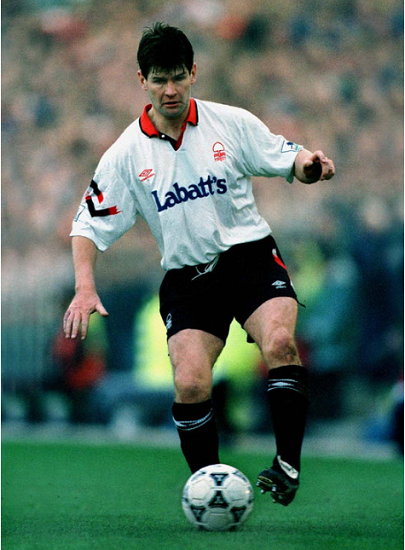
On 3rd December, Forest would register just their second point from the last eighteen with a 2-2 home draw with Arsenal. Arsenal entered the match as the most consistently inconsistent team in the Premiership, earning 20 points from a possible 38 after five wins, five draws and six defeats from sixteen games. This inconsistency had left George Graham’s team in 12th place, a position they would remain in after tying with Frank Clark’s side.
Forest would take the lead from the penalty spot in the 36th minute. After debutant Gunners goalkeeper Vince Bartram had brought down Scot Gemmill, Stuart Pearce would net his third league goal of the season, with all three coming from the penalty spot. Pearce’s finish would also end Forest’s 9 1/2 hour goal drought. The East Midlands club would have 23 minutes to celebrate this significant achievement as Martin Keown’s diving header would bring Arsenal level in the 59th minute. However, less than one minute later, Forest was back in front. Bryan Roy would pick the ball up in the centre circle and send a 25-yard daisy-cutter into the bottom-right corner to score his first goal in eight Premiership matches. However, veteran Arsenal midfielder Paul Davis would have the last word, heading home a 76th-minute equaliser at the back post.
If the draw against Arsenal represented Nottingham Forest dipping their toe back into the waters of good form, then a 4-1 win over Ipswich Town one week later would constitute executing a perfectly-formed cannonball. The Tractor Boys had won three of their seventeen matches and sat at the bottom of the Premiership standings. Having sacked manager John Lyall a few days earlier, Ipswich served as the perfect team for Forest to earn their first win in seven matches. For those in attendance, the game was effectively over by half-time, as the half-time score of 4-1 would end up as the final score. Stan Collymore, without a goal since 17th October, would open proceedings in the 4th minute, capitalising on a poor touch from an Ipswich defender to slot the ball into the net. Seven minutes later, Forest was 2-0 up as Scot Gemmill re-directed Collymore’s miscued shot for his first of the campaign. Another to break their scoring duck was defender Alf-Inge Håland, who would tap home Collymore’s cut-back in the 26th minute to score his first in Nottingham Forest colours. Then, Stuart Pearce would add a fourth goal three minutes before half-time, blasting a free-kick into the bottom corner. Defender Claus Thomsen would pull one back in first-half stoppage time, but his effort was effectively a consolation. The 4-1 win would draw Nottingham Forest level with 4th-placed Liverpool.
After getting back to winning ways against Ipswich, Forest would try to earn back-to-back wins for the first time since 22nd October. However, they would have to accomplish this feat against Manchester United at Old Trafford. United had won all nine of their home games this season and was undefeated in their last 15 league matches at Old Trafford. Alex Ferguson’s team also entered this game on a nine-match unbeaten run. However, those recent stats would come under threat when Stan Collymore became the first player all season to score an away goal at Old Trafford when he netted for Forest in the 35th minute. A long pass forward would find the feet of Bryan Roy, and the Dutchman would spot his strike partner’s angling run to the right. Occupied by two United defenders, Collymore would cut inside upon receiving the ball and shoot from 23 yards into the top corner just as Steve Bruce was about to tackle him. Another shot outside the penalty area would lead to Nottingham Forest’s second goal two minutes past the hour. A partially-cleared corner would fall to Stuart Pearce, and the Forest captain would hit an effort that took such a deflection that it wrongfooted Peter Schmeichel and score for the third game running. Eric Cantona would halve the visitors’ lead in the 68th minute, but Forest would become the first promoted team to beat Manchester United in the league since Ipswich Town on 30th January 1993.
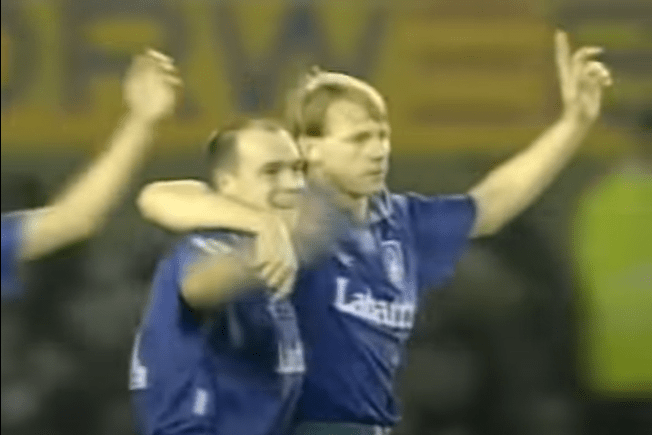
After that famous win, Nottingham Forest would come down from that emotional high with a 0-0 draw with Coventry City on Boxing Day. The footage of this match is hard to uncover. The draw would see Coventry rise to 12th and Forest fall to 5th. Less than two days later, Forest would play again, and this time they would win 1-0 against Norwich. However, there was more than a flukey nature to Nottingham Forest’s winning goal. After Canaries’ goalkeeper Bryan Gunn was forced off with an injury, the first job of his replacement, Andy Marshall, would be to face a Nottingham Forest corner. However, Lars Bohinen’s corner was so pinpoint that it sailed into the far corner of the Norwich net, despite Marshall getting a hand on it. While the 19-year-old Marshall had to pick himself up after conceding such an uncommon goal on his senior debut, Forest would pocket the three points and head on to their next game.
To end the month and the year 1994, Nottingham Forest would travel to Upton Park to face West Ham United. One win in their last seven matches had pushed the Hammers into relegation trouble, with Harry Redknapp’s team sitting two points above the four-team relegation zone. However, three first-half goals would see the struggling Hammers stun the high-flying Forest. In the 25th minute, forward Jeroen Boere’s glancing header would set up Tony Cottee to clatter the ball home ahead of defender Colin Cooper. Two minutes later, Alvin Martin’s header from a corner would lead to midfielder Ian Bishop doubling the Hammers’ advantage with a first-time effort. Then, one minute before half-time, Forest centre-back Steve Chettle would give the ball away 30 yards from goal, and winger Michael Hughes would pounce, carrying the ball into the box before stroking it into the bottom corner. Shellshocked, Forest would manage to pull a goal back through substitute striker Paul McGregor. Mark Crossley’s long clearance downfield would evade West Ham players, and the 20-year-old would take a touch before finishing from a tight angle. However, McGregor’s first of the season would only be scant consolation as Forest ended the year in defeat.
Three wins, two draws and a defeat from six matches in 28 days was a marked improvement from Nottingham Forest in December compared to the winless November. In fact, after entering the month on a five-match winless streak, Frank Clark’s team would switch that to a five-match unbeaten streak before the defeat to West Ham on New Years’ Eve. This set of results meant that halfway through the season, Nottingham Forest sat 5th in the Carling Premiership table, outside of the UEFA Cup places by goal difference. Only optimistic Forest fans would have predicted such a return following promotion. It would be interesting to see how the Reds coped during the season’s second half and whether they could maintain their surprise push for European football.
| Position | Team | Played | Wins | Draws | Losses | GF | GA | GD | Points |
|---|---|---|---|---|---|---|---|---|---|
| 1st | Blackburn Rovers | 21 | 15 | 4 | 2 | 45 | 16 | +29 | 49 |
| 2nd | Manchester United | 22 | 14 | 4 | 4 | 42 | 19 | +23 | 46 |
| 3rd | Liverpool | 22 | 12 | 6 | 4 | 40 | 19 | +21 | 42 |
| 4th | Newcastle United | 21 | 11 | 6 | 4 | 40 | 24 | +16 | 39 |
| 5th | Nottingham Forest | 22 | 11 | 6 | 5 | 35 | 23 | +12 | 39 |
January
After the New Years’ celebrations, Nottingham Forest would prove that they were anything but hungover with a 1-0 win over Crystal Palace on 2nd January. The match would see rare run-outs for Vance Warner in central defence and Gary Bull (recalled from his loan at Birmingham City) in the forward line. The rarely-used Bull would score the game’s only goal, hitting a header past Nigel Martyn from Bryan Roy’s corner kick. The win would move Forest up to 4th before the Premiership took a week off for the FA Cup.
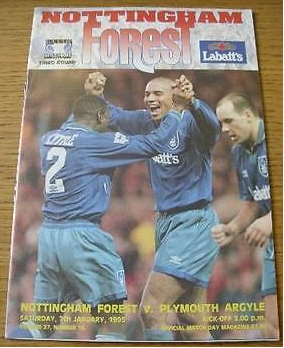
On 7th January, Second Division Plymouth Argyle would travel to the City Ground to face two-time FA Cup winners Nottingham Forest. Sixty-two league placings separated the two teams before this game, with Forest 4th in the Premiership and Argyle 20th in the Second Division. As he had done in the League Cup, Frank Clark would send his strongest team out in a solid bid to avoid a giant-killing. This first-choice XI would seal a solid 2-0 victory over third-tier opponents. The first goal came from a Forest counter-attack with good work from Ian Woan and David Phillips, allowing Steve Stone to carry the ball to the halfway line. Under pressure from a would-be tackler, Stone would scythe a pass through the Argyle defence, and Stan Collymore would hold off a Plymouth defender before rounding keeper Alan Nicholls and finishing with aplomb. The second would come when Ian Woan stopped a pass out of defence, and Scot Gemmill dribbled the ball into the box before shooting into the bottom corner. An easy win for Nottingham Forest that saw them advance to the 4th round, where they would face Crystal Palace in an all-Premiership tie.
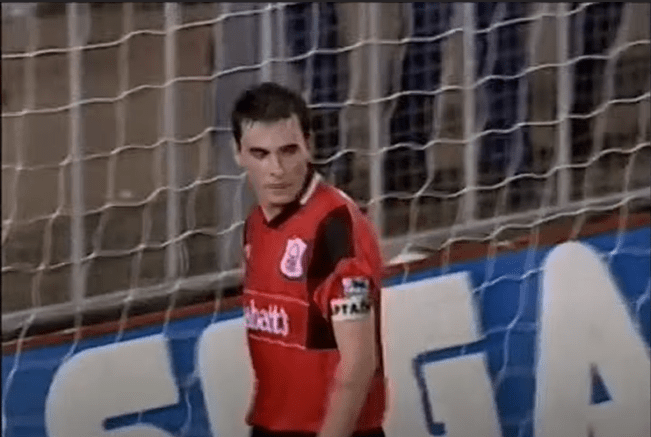
As had been the case earlier in the season, Nottingham Forest would head into their match with Blackburn Rovers in decent form. While not a 21-match unbeaten streak, Forest had only suffered one defeat in their last seven league games. However, league leaders Rovers, who had only lost twice all season and were unbeaten in their previous eleven, would again be the team to wipe the smile off of Frank Clark’s face. While the game at Ewood Park would remain goalless until the 54th minute, Rovers would eventually run out 3-0 victors. After patient build-up play, Jason Wilcox would play an inside ball to midfield partner Paul Warhurst, and Warhurst’s shot from outside the area would deflect off a Forest defender and past Mark Crossley to give Blackburn the lead. After setting up the first, Wilcox would score the second in the 78th minute. Chris Sutton would come in-field from the wing before finding Wilcox with an excellent diagonal ball into the box, and the winger would finish from seven yards. Then, two minutes from time, Chris Sutton would head the ball across goal, and the ball would eventually find its way into the net off Steve Chettle’s right hip, causing an ‘own goal’. With the win, Blackburn would extend their lead at the Premiership’s summit to five points, while Forest would remain in 4th.
The following week, Nottingham Forest would suffer back-to-back league defeats for just the third time during the 1994-95 season. After Blackburn had successfully done the double over Frank Clark’s team, Aston Villa would pick the bones of the Forest carcass, looking for any remaining sustenance. John Fashanu would give Villa a 32nd-minute lead at the City Ground, sliding in at the near post. In the 53rd minute, Dean Saunders’ chip would rebound off the crossbar, and Forest would counter-attack, finishing with Ugo Ehiogu fouling Bryan Roy to give Forest a penalty. With Stuart Pearce absent, Stan Collymore would equalise with his ninth goal of the season with the resulting spot-kick. However, after the woodwork had earlier denied him, Dean Saunders would get his goal in the 68th minute, giving Aston Villa a 2-1 away win.
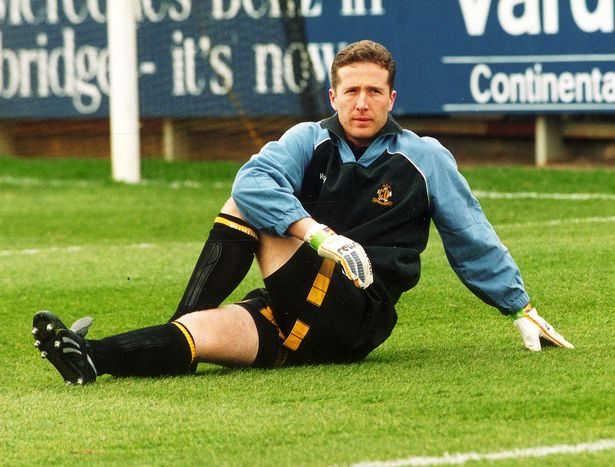
On 23rd January, Frank Clark would make just his second senior signing of the season, bringing goalkeeper John Filan on loan from Second Division Cambridge United. The 24-year-old Australian had played 80 matches for Cambridge over the previous two years but was mainly signed by Clark to back up incumbent keeper Mark Crossley.
Two days later, a Stan Collymore double would see Nottingham Forest return to winning ways with a 2-0 win against Chelsea. Chelsea had fallen away to 12th after a promising start to the season and were easy pickings for the prolific forward. In the 33rd minute, Collymore would control a long ball forward and lay it off to Bryan Roy. Roy’s first-time cross would be headed by a Chelsea defender and awkwardly saved by Dmitri Kharin, only for Collymore to turn and flick it into the net. Roy and Collymore would combine again for the latter’s second nine minutes after half-time, as Roy’s shot would be saved by Kharin, only to deflect off Collymore and in. The 2-0 win would put Forest level on points with Newcastle in 4th and boost them ahead of their upcoming FA Cup match with Crystal Palace.
The FA Cup 4th round match with Crystal Palace would end a run of three games in seven days. Nottingham Forest had only narrowly defeated the Eagles 1-0 at the start of the month. Twelve league places and sixteen points separated the two teams that had finished 1st and 2nd in the First Division the previous year. However, Forest’s season had turned out better than Palace’s, sitting in 5th place compared to Palace, who were 17th and had one win in their last twelve Premiership matches. However, the formbook would go out the window on this day as Crystal Palace would beat Nottingham Forest 2-1 at the City Ground. Eagles striker Chris Armstrong would open the scoring after five minutes. Lars Bohinen would equalise for Forest in the 32nd minute, and the match would remain tied at half-time. However, Palace’s other centre-forward Iain Dowie would score his team’s second in the 53rd minute, sending Alan Smith’s team through to the fifth round and ending Nottingham Forest’s engagements in competitions other than the Premiership.
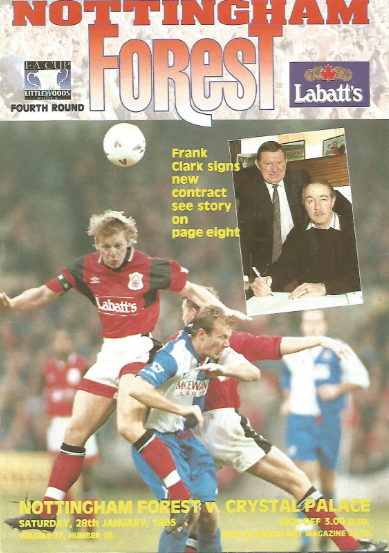
January had been a mixed bag for Frank Clark’s men. Two wins and two defeats in the league meant that Forest ended the month the same way they had finished the previous one, lying 5th in the Premiership table, level on points with Newcastle United but behind the Magpies on goal difference. The FA Cup had also brought positive and negative emotions, with a win over Plymouth on the first Saturday of the New Year, followed by a defeat to Crystal Palace in the last game of the month. Nottingham Forest now had no other tournaments outside of the Premiership. However, the lack of distraction caused by the FA Cup could potentially serve as a blessing in disguise for Nottingham Forest over the next 28 days. February would bring four Premiership matches, two of which were against top-four rivals Liverpool and Newcastle.
| Position | Team | Played | Wins | Draws | Losses | GF | GA | GD | Points |
|---|---|---|---|---|---|---|---|---|---|
| 1st | Blackburn Rovers | 25 | 18 | 4 | 3 | 56 | 20 | +36 | 58 |
| 2nd | Manchester United | 26 | 16 | 6 | 4 | 47 | 21 | +26 | 54 |
| 3rd | Liverpool | 25 | 13 | 7 | 5 | 44 | 20 | +24 | 46 |
| 4th | Newcastle United | 25 | 12 | 9 | 4 | 43 | 26 | +17 | 45 |
| 5th | Nottingham Forest | 26 | 13 | 6 | 7 | 39 | 28 | +11 | 45 |
February
On 4th February, 3rd-placed Liverpool would travel to the City Ground. One point separated the Reds in 3rd and Nottingham Forest in 5th heading into this match, but Roy Evans’ team had played one game fewer. A single Robbie Fowler goal in the reverse fixture had given Liverpool a 1-0 win at Anfield back in November. Fowler would score again at the City Ground in February. However, on this occasion, Forest’s most prolific goalscorer Stan Collymore would match up to the teenage sensation. Collymore would draw first blood for Forest 10 minutes in, popping up at the back post to ensure that Bryan Roy’s glancing shot hit the back of the net and score his 12th of the campaign. However, Fowler would play a quick one-two with Steve McManaman before sliding the ball past Mark Crossley for his 21st of the season and equalise in the 90th minute. The match would end honours even.
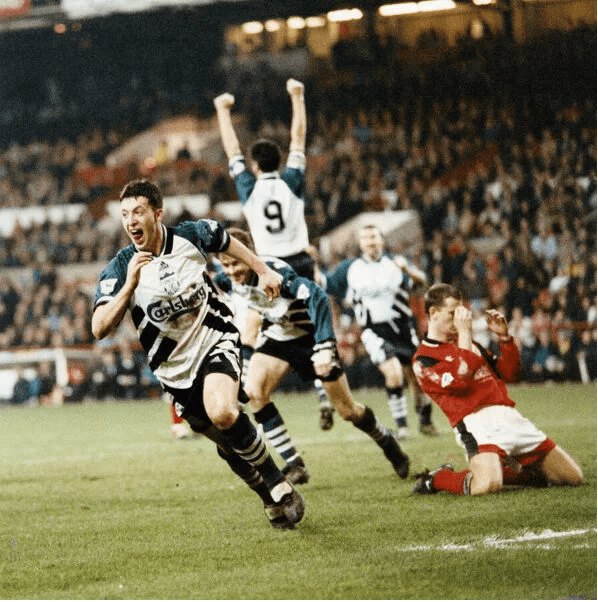
One week later, Forest would travel north to face Newcastle in the second of a double-header against their top-four rivals. After a goalless first half, Ruel Fox would give the Magpies the lead two minutes into the second period. After setting up a good attacking position with a mazy run that took him thirty yards from goal, Fox would get on the end of Marc Hottiger’s cross, finishing with a deft header. Then, after 26 minutes passed without a goal, two would soon arrive in successive minutes. In the 72nd minute, Rob Lee would receive the ball from Keith Gillespie following a short corner and beat Mark Crossley at his near post from 20 yards. However, substitute Jason Lee would bundle home his first of the season from Des Lyttle’s cross less than a minute later. Later on, Stan Collymore would be set free through the Newcastle defence, but Newcastle keeper Pavel Srníček would collect the ball from under his foot while the striker attempted to go around him. Forest would suffer their fifth defeat in eight league matches.
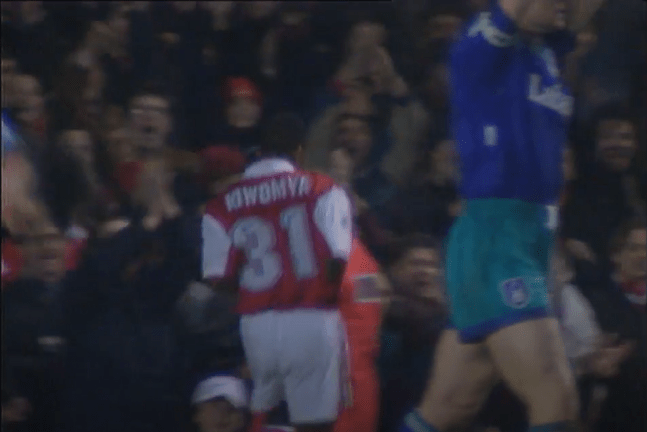
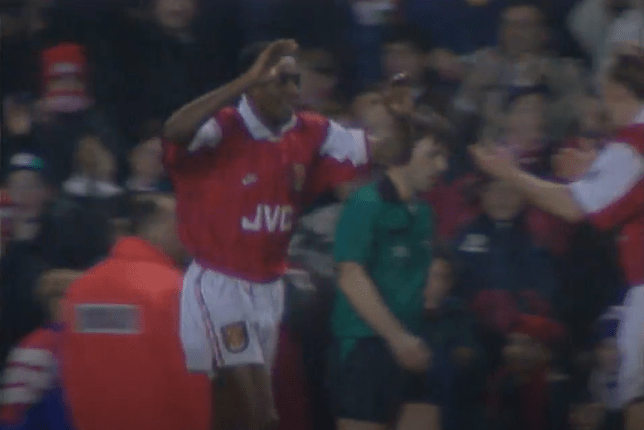
Ten days later, Nottingham Forest would suffer their sixth defeat in nine matches as 12th-placed Arsenal won 1-0 at Highbury. Chris Kiwomya would score the game’s only goal, running onto Paul Merson’s through-ball before lifting the ball into the far corner. Arsenal would move up to 10th, while Forest, despite their recent poor form, would remain 5th.
Nottingham Forest would draw 1-1 with 17th-placed Queens Park Rangers at Loftus Road to end February. The last time the two teams met, Forest prevailed 3-2 in a five-goal thriller that had extended the club’s then-unbeaten run to 18 matches. Now, Frank Clark’s team was trying to avoid a second winless month after the events of November. After a goalless first 45 minutes, Nottingham Forest thought they had done enough to win after Steve Stone’s 57th-minute header. However, with three minutes of standard time left, a high cross towards the back post would be kept alive by Les Ferdinand’s knock-down header, and midfielder Simon Barker would use his head to knock in an equaliser from 2 yards. The result would do little to affect either team’s league position.
Two draws and two losses would spell a winless February for Frank Clark and his Nottingham Forest players. After a mixed January, Forest had only managed to earn 2 points out of 12 this month. Despite their poor form, the Reds somehow retained 5th place in the Premiership. This was due to the inconsistency of the teams behind them in the Premiership table. Nineteen points separated 5th-placed Forest from league leaders Blackburn at the end of February. However, only 13 points came between Leeds United in 6th and Crystal Palace in 19th. However, despite the other teams continually falling over each other attempting to overtake Nottingham Forest, Leeds and Tottenham (7th) were only four points behind the Reds and had played two matches fewer. In a five-match month, Forest would face both of these teams in March, along with Everton (16th), Southampton (18th), and bottom side Leicester City.
| Position | Team | Played | Wins | Draws | Losses | GF | GA | GD | Points |
|---|---|---|---|---|---|---|---|---|---|
| 1st | Blackburn Rovers | 30 | 20 | 6 | 4 | 63 | 26 | +37 | 66 |
| 2nd | Manchester United | 30 | 19 | 6 | 5 | 53 | 22 | +31 | 63 |
| 3rd | Newcastle United | 30 | 16 | 9 | 5 | 52 | 31 | +21 | 57 |
| 4th | Liverpool | 28 | 14 | 9 | 5 | 48 | 23 | +25 | 51 |
| 5th | Nottingham Forest | 30 | 13 | 8 | 9 | 42 | 33 | +9 | 47 |
March
Nottingham Forest would begin March with a home match against Tottenham. In September, Forest had beaten Spurs 4-1 at White Hart Lane. However, Spurs had since improved to sit 7th, four points behind Nottingham Forest with games in hand. A win for Gerry Francis’s team would move them within one point behind Forest in 5th and closer to the top four. Two days before the game, left-sided midfielder Kingsley Black would be loaned out to First Division Sheffield United for the final three months of the season. Black had enjoyed significant playing time during the early months of the 1994-95 campaign, but his minutes had since dried up due to the form of Ian Woan. All in all, Black had made 12 appearances (10 in the league) for Forest this season, scoring twice.
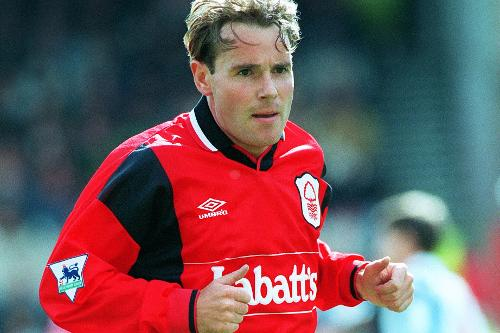
For fans of late drama in their football matches, the match between Nottingham Forest and Tottenham Hotspur on 4th March 1995 was the match you should have watched. The game would end in a 2-2 draw, but all the goals would come in the final 11 minutes of regulation time. After 78 minutes of stalemate, Teddy Sheringham would finally break the deadlock, side-footing home Jürgen Klinsmann’s drag-back to give Spurs the lead. Five minutes later, Nottingham Forest would equalise. After scoring a 20-yard lob in the reverse fixture, Lars Bohinen would again claim ‘goal of the day’ honours with a 25-yard rocket into the top-left corner. One minute later, Forest would move ahead with Jason Lee beating goalkeeper Ian Walker to a high cross before finishing the job from 4 yards. However, Forest would lead for two minutes as Colin Calderwood’s back-post tap-in would bring Spurs level and end a flurry of three goals in four minutes. An entertaining draw that saw Spurs move above Leeds into 6th place, while Forest lost more ground on the top four. With eleven matches left, a six-point gap now separated Frank’s team from the UEFA Cup places.
Four days after this draw, relegation-threatened Everton would travel to the City Ground. Everton sat five points above the four-team relegation zone with eleven games left, but the Toffees had played more matches than the teams below them in the table. A win over Nottingham Forest would help alleviate some of the team’s worries. However, a 2-1 home win would instead see Forest halve the gap to 4th-placed Liverpool. Stan Collymore’s header from Bryan Roy’s cross would put the home side ahead after 19 minutes, but Stuart Barlow would ensure that Everton went into half-time on level terms with his own headed effort one minute before the break. However, another Stuart, Pearce, would score his sixth goal of the season nine minutes into the second half to secure Nottingham Forest’s first win since late January.
Three days after the Everton win (11th March), Nottingham Forest would win successive matches for the first time since mid-December by convincingly beating their East Midlands rivals Leicester City at Filbert Street. Leicester sat bottom of the Carling Premiership table, eleven points from safety, and had won only 4 out of 31 league matches all season. A single Stan Collymore goal had been enough for Forest to get the victory back in August. However, four goals would be required to do the trick this time.
The Foxes would gift Forest an 8th-minute penalty as defender Neil Lewis dived and deliberately used his hand to stop Steve Chettle’s shot from crossing the goal-line. Referee Philip Don would send off Lewis, and Stuart Pearce would blast the ball into the top corner from 12 yards. However, despite being a man down, Leicester City would equalise eight minutes later as midfielder David Lowe headed in Jamie Lawrence’s cross. The match would remain tied at one goal apiece until halfway through the second half as Nottingham Forest struggled to better their 10-man rivals. In the 64th minute, Ian Woan would send in a cross from the left, and Stan Collymore would nod in his fourteenth of the season from close range. Four minutes later, Collymore would turn provider for Woan as the striker’s pass to the winger would finish off a swift Forest counter-attack, with Woan rounding the keeper and finishing with ease. However, the Foxes had not yet quit this match, and Mark Draper would send a 25-yard effort past Mark Crossley to halve Forest’s advantage in the 71st minute. However, Lars Bohinen’s pass down the byline would give Jason Lee the most straightforward tap-in in the 90th minute to condemn Leicester to a nineteenth league defeat. The 4-goal win would move Forest level on points with Liverpool in 4th, but Frank Clark’s Reds had now played three matches more than the teams immediately around them.
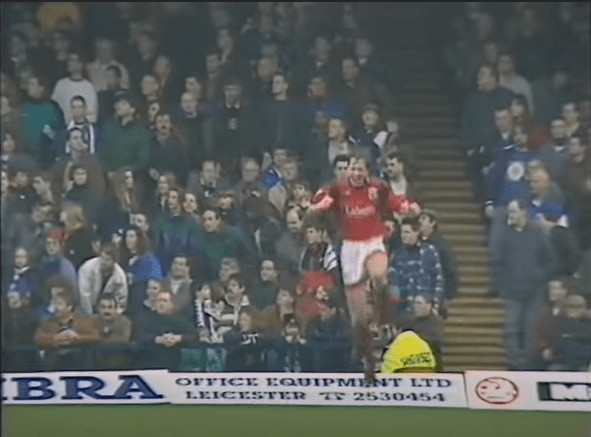
Before Nottingham Forest’s match with Southampton on 18th March, the team’s regular front two of Stan Collymore (14) and Bryan Roy (6) had been responsible for 20 of the team’s 50 Premiership goals. Against the Saints on 18th March, Collymore and Roy would take the credit for all of Forest’s goals in a 3-0 home victory. Roy would provide the first after 38 minutes, working his way inside two Southampton defenders before curling the ball into the bottom corner. Midway through the second half, ‘Stan the Man’ would double Forest’s lead, notching up his 15th goal with a one-yard tap-in from Steve Stone’s cross. Then, Roy would get his second and Forest’s third, eight minutes from time, reacting quickest to finish after Stuart Pearce’s free-kick had been blocked. Three goals and three points would see Forest move up to 4th, although Liverpool now held four games in hand over Frank Clark’s team.
Four days after the Southampton victory, you’d be forgiven if you watched a repeat of Nottingham Forest’s previous performance. Sure, the team was playing Leeds United instead of Southampton, but as had occurred against the Saints, a brace from Bryan Roy and one from Stan Collymore would give Nottingham Forest a 3-0 home victory. However, this time, all three goals would come before half-time. After nine minutes, Roy would open the scoring, running onto Steve Stone’s lifted ball over the Leeds defence before sliding the ball past John Lukic. Roy’s second would come 10 minutes before the break, combining with Stone again to hit double figures during his first season in English football. Finally, a minute before half-time, Lars Bohinen would stop a Leeds attack and send a long through-ball through the Whites’ fractured defence. Stan Collymore would out-run the retreating Carlton Palmer and side-foot the ball under Lukic. Another three-goal win, another three points and back-to-back clean sheets at home. That Leeds victory would also complete an unbeaten March for Frank Clark and his team.
After a winless February, an unbeaten March would serve as the perfect tonic for Frank Clark and Nottingham Forest. Three wins and a draw had seen Forest earn 13 points out of 15, bringing the team back into UEFA Cup contention after starting the month four points adrift of 4th. Fourth is where Forest currently sat with seven matches to go. However, cup commitments meant Liverpool had played fewer games than the East Midlands club. Maximum points from those games in hand would catapult Liverpool up to 3rd and see Forest drop back to 5th. However, changes in form and surprising results in football are often difficult to predict. For now, Nottingham Forest would have to continue their encouraging recent form and hope that other results would turn in their favour.
| Position | Team | Played | Wins | Draws | Losses | GF | GA | GD | Points |
|---|---|---|---|---|---|---|---|---|---|
| 1st | Blackburn Rovers | 34 | 23 | 7 | 4 | 70 | 29 | +41 | 76 |
| 2nd | Manchester United | 35 | 22 | 7 | 6 | 66 | 24 | +42 | 73 |
| 3rd | Newcastle United | 34 | 18 | 9 | 7 | 56 | 36 | +20 | 63 |
| 4th | Nottingham Forest | 35 | 17 | 9 | 9 | 56 | 38 | +18 | 60 |
| 5th | Liverpool | 32 | 16 | 10 | 6 | 54 | 26 | +28 | 58 |
April
One month after Manchester United had made Premiership history by putting nine goals past Ipswich Town in a 9-0 home win, Nottingham Forest would begin April by scoring seven against Sheffield Wednesday. On 1st April, Frank Clark and his players would make 10th-placed Sheffield Wednesday look like a team of fools. A pair of goals inside the first twenty minutes would get Forest off to the races. In the 17th minute, on the right-hand side of the Sheffield Wednesday box, Stuart Pearce would somehow manage to bend a free-kick into the top far corner of Kevin Pressman’s net. Three minutes after that incredible strike, Lars Bohinen would start a counter-attack inside his own half, completing a one-two with Stan Collymore on the halfway line before setting the advancing Ian Woan into space. Once in the clear, Woan would curl a 25-yard shot into the bottom corner. At half-time, Nottingham Forest would lead Wednesday 2-0. However, the floodgates would soon open.
Three minutes after half-time, great work from Bohinen, Steve Stone and Woan would allow Bryan Roy to run in unmarked and score Nottingham Forest’s third. Four minutes later, Sheffield Wednesday would pull a goal back. Des Lyttle would foul Andy Sinton in the penalty area, and striker Mark Bright would easily score from 12 yards. However, that would be the sole highlight of the Sheffield club’s afternoon. In the 64th minute, a couple of flicks from Roy and Stan Collymore would send Steve Stone into the box. However, the selfless Stone would square the ball for Roy to complete his third consecutive brace and put Forest 4-1. Bryan Roy had now scored 6 goals in his last 3 matches. Before his first brace at Southampton, Roy had not scored for fourteen league games. After seeing Roy get his pair, Stan Collymore would soon match him and score for the third game in succession. First, a Lars Bohinen interception would send Bryan Roy running into acres of space before the Dutchman would lay the ball off to Stan Collymore. Collymore would reach the edge of the box before cutting inside and firing home Forest’s fifth. Then, two minutes later, a counter-attack from a Wednesday corner would see Bohinen advance the ball to Roy before he would centre the ball for Collymore in the box. Collymore would make difficult work of Roy’s pass but would score his second to make the score 6-1. Finally, Lars Bohinen, who had a strong case for ‘Man of the Match’, would wrap up proceedings in the 85th minute. He would hit a first-time shot into the top corner to end another Forest counter-attack and make the final score read Sheffield Wednesday 1 Nottingham Forest 7.
At Hillsborough, Nottingham Forest’s 7-1 win over Sheffield Wednesday would serve as the biggest away win of the 1994-95 Carling Premiership season. It would also mark only the third time in the club’s history that Nottingham Forest had scored seven goals in a match, following 7-0 wins over Burnley in 1957 and Chelsea in 1991. Seven goals were scored by five different players. Stan Collymore and Bryan Roy would both score braces, but the Dutch striker would also end the day with a hat-trick of assists, setting up the Reds’ last three goals. These three assists would move Roy into double figures for goal creation, adding to the twelve goals he had scored himself.
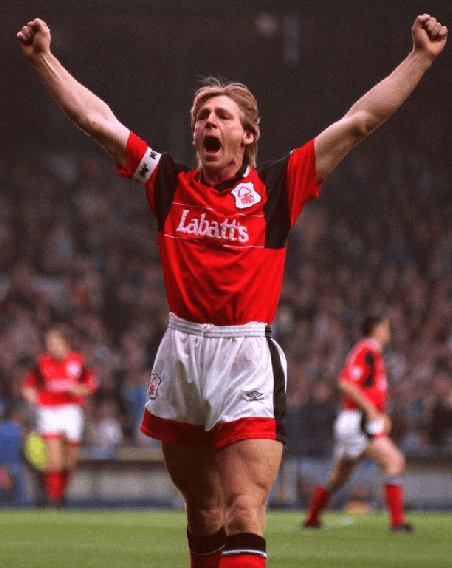
After a result like that, there was always the likelihood of a comedown the following week. That snap back to reality would be delivered in a 1-1 draw with West Ham, a team sitting in the relegation zone on goal difference alone with eight matches still to play. Both goals would arrive in the second half. Julian Dicks would put West Ham in front with a beautiful 25-yard free-kick after 65 minutes, sending the ball soaring through the wall and into the top corner. However, thirteen minutes later, Colin Cooper’s header would bounce off Jason Lee, and Stan Collymore would net the equaliser from five yards to ensure that both teams ended up with a point.
On 12th April, a goal from Steve Stone would give Nottingham Forest a 1-0 win over Norwich City at Carrow Road. After 84 goalless minutes that had seen Stone and Ian Woan narrowly miss the target and Stan Collymore hit the post, the striker would deliver a low cross for Stone to stroke the ball into the goal and give Forest the deserved three points. This win would take Nottingham Forest above Newcastle United into 3rd place in the Premiership table by possessing a better goal difference. The Magpies would attempt to reclaim their place by winning their two games in hand.
Five days later, Nottingham Forest would go 10 matches unbeaten in the Premiership for the second time this season by defeating Coventry City 2-0 at the City Ground. Coventry was on the outskirts of the relegation battle below them, sitting five points above it all in 12th place. However, defeat at Forest could drop them down the table to 15th and closer to it. After just nine minutes, Ian Woan would score Forest’s first goal, hitting a first-time shot that goalkeeper Steve Ogrizovic could only slow down before it crossed the line. Then, three minutes before half-time, Forest’s strike pairing would combine again. Bryan Roy would feign a pass before running down the wing and sending a ball in that Stan Collymore would head home and pass 20 Premiership goals for the season. A straightforward victory for Nottingham Forest sealed before half-time would see them open a three-point gap in 3rd place over Liverpool and Newcastle.
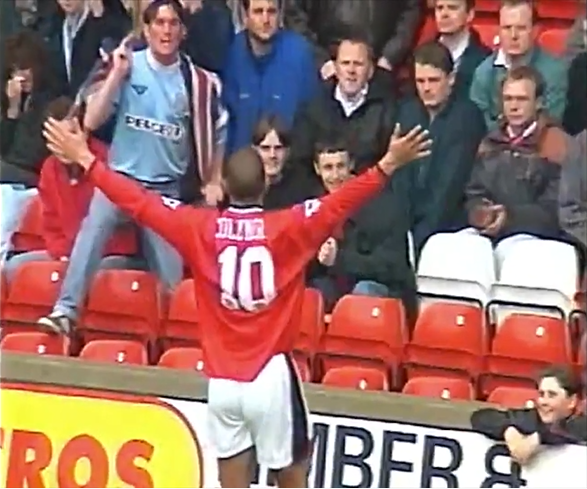
After a twelve-day break, Nottingham Forest would end April by travelling to Selhurst Park to face Crystal Palace. The two teams had met each other twice already this season, with both teams holding one win. Forest had eked out a 1-0 league win at the City Ground on 2nd January, but Crystal Palace had won the FA Cup encounter at the same ground later that month 2-1. Therefore, this match in South London could be interpreted as a rubber match. Bryan Roy would open the scoring after 14 minutes with his seventh goal in seven matches. Eagles centre-back Chris Coleman would attempt to lift Stan Collymore’s flick-on back to his goalkeeper, but his shinned attempt would only allow Roy to run through and lift the ball over a stranded Rhys Wilmot to bring up a baker’s dozen of goals for the season. As has been the case in recent weeks, when it came to scoring, where there was Roy, there was Collymore. Collymore would double Forest’s advantage in the 63rd minute, receiving the ball on the left-hand side of the box before manoeuvring his way into the opposite channel and smashing the ball inside the near post. Iain Dowie would halve Forest’s lead and give Palace hope in the 77th minute, capitalising with a finish after Colin Cooper hit his clearance into Scot Gemmill. However, Forest would hold on to secure yet another victory, while Crystal Palace would remain in the relegation zone on goal difference.
Four wins and a draw from five matches would equal another unbeaten month for Nottingham Forest. After inconsistent and indifferent form while the clocks were set to Greenwich Mean Time, the Forest players were now taking advantage of the extra hour of sunlight by finishing the Premiership season the way they had begun, with an unbeaten run. With two matches left, Nottingham Forest sat 3rd in the Premiership standings, five points behind Manchester United in 2nd, three ahead of Liverpool in 4th and five in front of Newcastle in 5th. However, all three of these teams would have weeknight matches between the 1st-3rd May. These matches would allow Liverpool and Newcastle to catch up and put Nottingham Forest’s UEFA Cup place under threat. If their rivals were triumphant in their games in hand, Forest would have to earn something from their final two matches against Manchester City and Wimbledon in May. It was going to make for an exciting finale.
| Position | Team | Played | Wins | Draws | Losses | GF | GA | GD | Points |
|---|---|---|---|---|---|---|---|---|---|
| 1st | Blackburn Rovers | 40 | 26 | 8 | 6 | 78 | 37 | +41 | 86 |
| 2nd | Manchester United | 38 | 23 | 9 | 6 | 70 | 24 | +46 | 78 |
| 3rd | Nottingham Forest | 40 | 21 | 10 | 9 | 69 | 41 | +28 | 73 |
| 4th | Liverpool | 38 | 20 | 10 | 8 | 63 | 31 | +32 | 70 |
| 5th | Newcastle United | 39 | 19 | 11 | 9 | 61 | 41 | +20 | 68 |
May
With Liverpool and Newcastle drawing their games in hand, Nottingham Forest would enter their final home match against Manchester City on 6th May with a two-point lead over the Reds and a four-point cushion over the Magpies. Maximum points from the last two games would confirm UEFA Cup football. Otherwise, Forest would have to equal or better the results of their nearest rivals, with Liverpool still holding a game in hand due to their appearance in the FA Cup Final.
A single Stan Collymore goal, the striker’s 22nd of the Premiership season, was enough to defeat Manchester City 1-0 and round off Nottingham Forest’s home matches for the 1994-95 season in an exemplary fashion. At the start of this season, few home supporters would have believed that Forest would enter their last home game with dreams of European football still probable instead of a more realistic relegation fight. However, once Stan Collymore (now with bleached hair) headed a long ball downfield into the air, hit it again to get past his marker, avoided the on-rushing John Burridge and swung a flailing boot to get the ball to barely cross the goal-line, Forest fans knew that their dreams were real. Defeats for Newcastle and Liverpool (x2) over the coming days would confirm that Nottingham Forest would finish the Premiership season in 3rd place regardless of what happened in their final game and would be playing UEFA Cup football the following season.
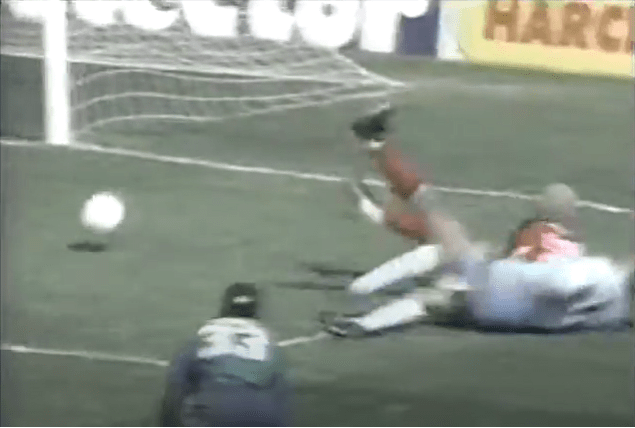
With their future and final table position secured, the pressure was off for Frank Clark’s Nottingham Forest as they travelled to face Wimbledon on the last day of the 1994-95 Carling Premiership season. Wimbledon was only playing for league position themselves, having already secured a top-half finish, and could finish as high as 8th with a win or 10th with a loss. The two teams would play out an entertaining 2-2 draw with very little on the line.
David Phillips would score his first goal of the season to put Nottingham Forest ahead in the 14th minute, blasting a 25-yard shot past Neil Sullivan. The whole team (barring goalkeeper Mark Crossley) would run to celebrate with the experienced Phillips. However, two goals in five minutes from striker Dean Holdsworth would see Wimbledon heading into half-time 2-1 up. First, in the 35th minute, Holdsworth would feign knocking down Vinnie Jones’ long ball forward, getting past Steve Chettle before firing into the far corner. Then, five minutes before half-time, a handball by Stuart Pearce would lead to a Dons penalty, and Holdsworth would send Mark Crossley the wrong way. Just as Nottingham Forest’s awe-inspiring season would seemingly end with a defeat, Steve Stone would play a one-two with Scot Gemmill before chipping the ball towards the far corner. Neil Sullivan would get a hand to it but would not stop it from nestling in the corner. As Forest was in party mode, Stone would find himself lifted onto a teammate’s shoulders as part of his celebration. The match between Nottingham Forest and Wimbledon would end in a draw, but neither team would care too much. Their fates had already been sealed.
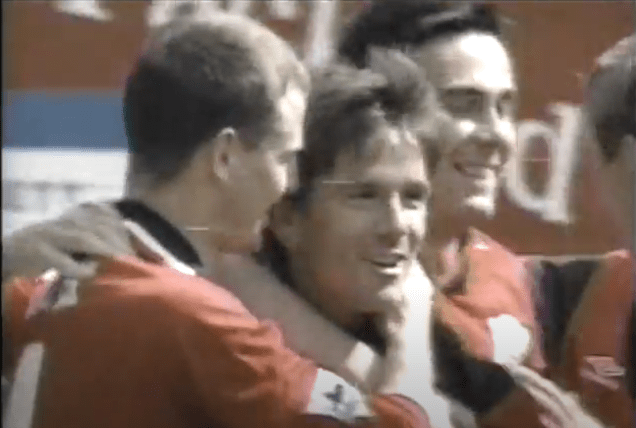
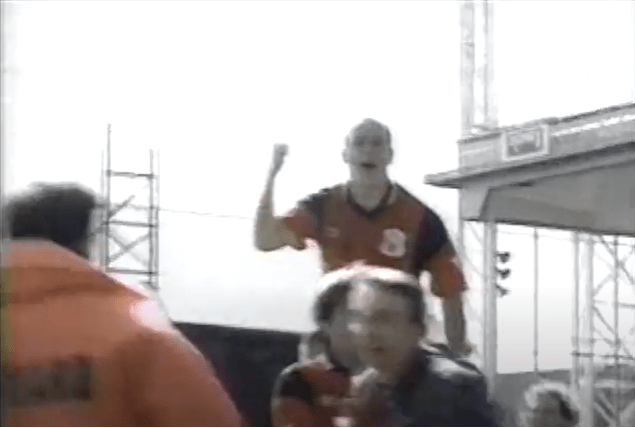
Nottingham Forest would end their first season back in the Premiership with a 3rd-placed finish, equalling Newcastle from the season before for the highest finish managed by a newly-promoted side in Premier League history. Forest’s form book for the 1994-95 Premiership season reads like an upside-down bell curve. After beginning the season with an 11-match unbeaten run, the club would lose 9 of their next 18 before finishing the campaign with a 13-game unbeaten streak.
| Position | Team | Played | Wins | Draws | Losses | GF | GA | GD | Points |
|---|---|---|---|---|---|---|---|---|---|
| 1st | Blackburn Rovers | 42 | 27 | 8 | 7 | 80 | 39 | +41 | 89 |
| 2nd | Manchester United | 42 | 26 | 10 | 6 | 77 | 28 | +49 | 88 |
| 3rd | Nottingham Forest | 42 | 22 | 11 | 9 | 72 | 43 | +29 | 77 |
| 4th | Liverpool | 42 | 21 | 11 | 10 | 65 | 37 | +28 | 74 |
| 5th | Leeds United | 42 | 20 | 13 | 9 | 59 | 38 | +21 | 73 |
Statistics
During the 1994-95 English football season, Nottingham Forest would play 48 matches across three competitions. Out of these 48 games, Forest would win twenty-five (52%), draw twelve (25%) and lose eleven (23%), scoring 79 goals (1.64 per game) and conceding 50 (1.04 per game). In the Carling Premiership, Nottingham Forest would win twenty-two (52.3%), draw eleven and lose nine of their forty-two matches. In league matches, Forest would score 72 goals (1.71 per game) and concede 43 (1.02 per game), ending with a goal difference of +29. This meant that Forest ended the 1994-95 campaign as the Premiership’s third-highest goalscorers and finished with the 5th-best defence, with only the rest of the top five (Blackburn, Manchester United, Liverpool and Leeds) conceding fewer.
There is little difference when comparing Forest’s overall statistics for this season to the previous one. During the 1993-94 season, the Reds played four more matches in the First Division. However, the 93/94 team only won one more game, drew five more games and lost the same amount as the 94/95 squad while scoring one more goal and conceding six more. This would only produce a points difference of six in favour of the First Division squad. Despite the change in division and improvement in the quality of opposition, Nottingham Forest would somehow remain consistent in their performance levels.
Nottingham Forest record: 1993-94 First Division season
| Matches | Wins | Draws | Losses | Goals for | Goals against | GD | Points |
|---|---|---|---|---|---|---|---|
| 46 | 23 | 14 | 9 | 74 | 49 | +25 | 83 |
Nottingham Forest record: 1994-95 Carling Premiership season
| Matches | Wins | Draws | Losses | Goals for | Goals against | GD | Points |
|---|---|---|---|---|---|---|---|
| 42 | 22 | 11 | 9 | 72 | 43 | +29 | 77 |
A significant contribution to Nottingham Forest’s incredible season was the team’s away record. Only the eventual top two of Blackburn Rovers and Manchester (both 36) would earn more than the 35 points accrued by Frank Clark’s team away from the City Ground. Forest would end the season with an excellent home record (W12 D6 L3 P42, the 6th-best in the league). However, no team would earn more away wins than Nottingham Forest’s 10. Only Blackburn and Manchester United would lose fewer away matches than Forest’s six. The 36 goals scored outside of Nottingham would be an outright divisional high. Only the rest of the top five would concede fewer goals, leading to Forest finishing with an away goal difference of +11, something only matched by Alex Ferguson’s side.
Best Premiership home records: 1994-95 season
| Division rank | Team | Matches | Wins | Draws | Losses | GF | GA | GD | Points |
|---|---|---|---|---|---|---|---|---|---|
| 1st | Blackburn Rovers | 21 | 17 | 2 | 2 | 54 | 21 | +33 | 53 |
| 2nd | Manchester United | 21 | 16 | 4 | 1 | 42 | 4 | +38 | 52 |
| 3rd | Newcastle United | 21 | 14 | 6 | 1 | 46 | 20 | +26 | 48 |
| 4th | Liverpool | 21 | 13 | 5 | 3 | 38 | 13 | +25 | 44 |
| 5th | Leeds United | 21 | 13 | 5 | 3 | 35 | 15 | +20 | 44 |
| 6th | Nottingham Forest | 21 | 12 | 6 | 3 | 36 | 18 | +18 | 42 |
Best Premiership away records: 1994-95 season
| Division rank | Team | Matches | Wins | Draws | Losses | GF | GA | GD | Points |
|---|---|---|---|---|---|---|---|---|---|
| 1st | Manchester United | 21 | 10 | 6 | 5 | 35 | 24 | +11 | 36 |
| 2nd | Blackburn Rovers | 21 | 10 | 6 | 5 | 26 | 18 | +8 | 36 |
| 3rd | Nottingham Forest | 21 | 10 | 5 | 6 | 36 | 25 | +11 | 35 |
| 4th | Liverpool | 21 | 8 | 6 | 7 | 27 | 24 | +3 | 30 |
| 5th | Leeds United | 21 | 7 | 8 | 6 | 24 | 23 | +1 | 29 |
| 6th | Tottenham | 21 | 6 | 9 | 6 | 34 | 33 | +1 | 27 |
Once again, the 1994-95 season would be a standout campaign for one Stan ‘The Man’ Collymore. Nottingham Forest’s No.10 would follow up his stunning debut season with another imperious collection of performances. Collymore would finish the 1994-95 season with 43 appearances and 25 goals in all competitions, far and away Nottingham Forest’s top scorer. However, his league record of 22 goals in 37 Premiership matches (0.59 goals per game) would see him rank as the 4th-highest goalscorer in the the league. Only Blackburn’s Alan Shearer (34), Liverpool’s Robbie Fowler (25) and Queens Park Rangers’ Les Ferdinand (24) would hit the inside of the net more times than the boy from Stone. Collymore’s goals were invaluable to Nottingham Forest’s success. However, with stats like these, it surely would not be long before the Premiership’s bigger clubs came calling for his signature.
Top goalscorers during the 1994/95 Carling Premiership season
| Rank | Player | Club | Goals |
|---|---|---|---|
| 1. | Alan Shearer | Blackburn Rovers | 34 |
| 2. | Robbie Fowler | Liverpool | 25 |
| 3. | Les Ferdinand | Queens Park Rangers | 24 |
| 4. | Stan Collymore | Nottingham Forest | 22 |
| 5. | Andy Cole | Newcastle/Manchester United | 21 |
| 6. | Jürgen Klinsmann | Tottenham | 20 |
While Stan Collymore stole most of the headlines during the 1994-95 season, the signing of Bryan Roy would turn out to be a masterstroke piece of business by manager Frank Clark. While his goalscoring form could be patchy at times, Roy would form an excellent rapport with Stan Collymore, with Roy often setting up his more prolific strike partner. Roy would finish his debut campaign in English football with a not-too-shabby 14 goals in 43 matches. In the Premiership, this record would translate to 13 in 37, putting him joint-15th with Coventry City’s Dion Dublin and Leeds United’s Tony Yeboah in the end-of-season scoring charts.
However, Bryan Roy was a goal scorer and a goal creator. Along with the 13 goals that he scored, Roy would assist a further 11. Only six players would be able to match or better Roy’s total during the 1994-95 Premiership campaign. Ryan Giggs (Manchester United), Ruel Fox (Newcastle)and Andy Hinchcliffe (Everton) would equal the Dutchman on 11 assists. Only Matt Le Tissier (Southampton, 15), Darren Anderton (Tottenham, 14) and the unplayable Alan Shearer (Blackburn, 13) set up more goals than Roy.
| Rank | Player | Club | Assists |
|---|---|---|---|
| 1. | Matt Le Tissier | Southampton | 15 |
| 2. | Darren Anderton | Tottenham | 14 |
| 3. | Alan Shearer | Blackburn Rovers | 13 |
| 4. | Ruel Fox | Newcastle United | 11 |
| 4. | Ryan Giggs | Manchester United | 11 |
| 4. | Andy Hinchcliffe | Everton | 11 |
| 4. | Bryan Roy | Nottingham Forest | 11 |
| 8. | Kevin Gallen | Queens Park Rangers | 10 |
| 8. | Jürgen Klinsmann | Tottenham | 10 |
| 8. | Chris Sutton | Blackburn Rovers | 10 |
So impressive was Nottingham Forest’s strike partnership of Stan Collymore and Bryan Roy that both men would end up in the top ten for the most goal involvements for the 1994-95 season. Combining goals and assists, Collymore would be involved in 28 goals (the 6th-most in the league)and Bryan Roy 24 (the 9th-highest, equal with Andy Cole). During this season, Roy and Collymore would also be the 4th most-prolific strike partnership in the Premiership. The pair’s 35 combined goals for Nottingham Forest would only be bettered by Liverpool’s Robbie Fowler and Ian Rush (37), Tottenham’s Jürgen Klinsmann and Teddy Sheringham (38) and Blackburn’s ‘SOS’ Alan Shearer and Chris Sutton (49).
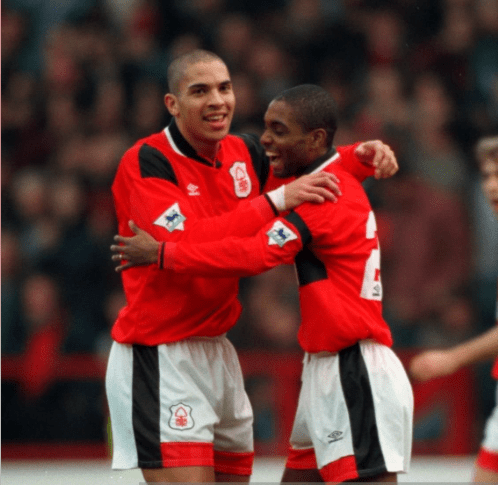
Most goal involvements during the 1994/95 Carling Premiership season
| Rank | Player | Club | Goal involvements (goals+assists) |
|---|---|---|---|
| 1. | Alan Shearer | Blackburn Rovers | 47 (34+13) |
| 2. | Matt Le Tissier | Southampton | 34 (19+15) |
| 3. | Les Ferdinand | Queens Park Rangers | 33 (24+9) |
| 4. | Robbie Fowler | Liverpool | 31 (25+6) |
| 5. | Jürgen Klinsmann | Tottenham | 30 (20+10) |
| 6. | Stan Collymore | Nottingham Forest | 28 (22+6) |
| 7. | Teddy Sheringham | Tottenham | 26 (18+8) |
| 8. | Chris Sutton | Blackburn Rovers | 25 (15+10) |
| 9. | Bryan Roy | Nottingham Forest | 24 (13+11) |
| 9. | Andy Cole | Manchester United | 24 (21+3) |
| 11. | Ruel Fox | Newcastle United | 21 (10+11) |
| 11. | Ian Wright | Arsenal | 21 (18+3) |
Fourteen different players would score a goal for Nottingham Forest during the 1994-95 season, with all of these players scoring in the Premiership. These fourteen players would include five forwards, four midfielders, two defenders and two utility players (David Phillips and Alf-Inge Håland would both play defence and midfield for Forest). Only Stan Collymore and Bryan Roy would cross into double figures for league goals, but captain Stuart Pearce’s pair of League Cup strikes would see him finish with 10 goals in all competitions. However, Lars Bohinen, Steve Stone and Ian Woan would all have good goalscoring returns this term, registering five or more goals in all matches.
Every Nottingham Forest goalscorer during the 1994-95 season
| Player | Total Goals (league) |
|---|---|
| Stan Collymore | 25 (22) |
| Bryan Roy | 14 (13) |
| Stuart Pearce | 10 (8) |
| Lars Bohinen | 7 (6) |
| Steve Stone | 5 (5) |
| Ian Woan | 5 (5) |
| Jason Lee | 3 (3) |
| Kingsley Black | 2 (2) |
| Scot Gemmill | 2 (1) |
| Colin Cooper | 1 (1) |
| Gary Bull | 1 (1) |
| Alf-Inge Håland | 1 (1) |
| Paul McGregor | 1 (1) |
| David Phillips | 1 (1) |
A settled starting line-up and a tight-knit squad are often the keys to footballing success. Across the 48 matches played by Nottingham Forest during the 1994-95 season, manager Frank Clark would use 21 different players. These players would include one goalkeeper, seven defenders, seven midfielders and six forwards. Of these twenty-one players, only five (Carl Tiler, Vance Warner, Gary Crosby, Robert Rosario, Gary Bull) would have appearance totals in the single digits.
Contrastingly, twelve players would appear in 24 or more (50%+) of Nottingham Forest’s matches. Those players were goalkeeper Mark Crossley, defenders Des Lyttle, Colin Cooper, Steve Chettle and Stuart Pearce, midfielders David Phillips, Lars Bohinen, Steve Stone and Ian Woan and strikers Stan Collymore, Bryan Roy and Jason Lee. Eleven of these players would make up Nottingham Forest’s most common starting line-up, while Jason Lee (24 matches) would serve as the team’s most regular substitute. Frank Clark would often keep with the same starting XI after a win, loss or draw and use this team in all three major competitions. If changes were needed, Lee, defender/midfielder Alf-Inge Håland (22 matches) and midfielder Scot Gemmill (22 games) would come into the side.
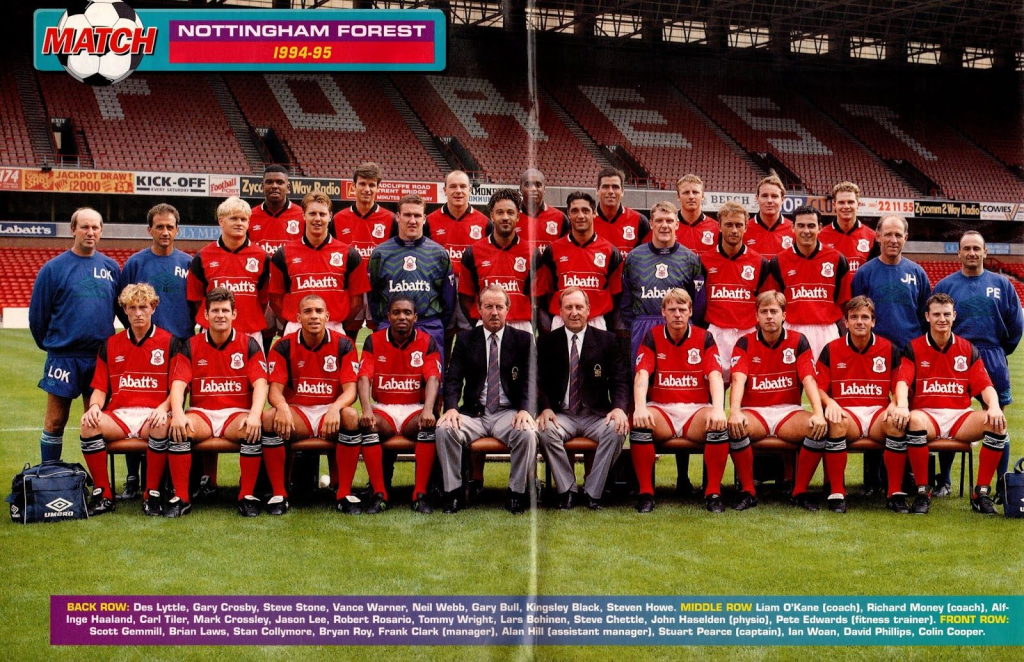
Clark’s refusal to tinker with a mostly-winning formula would see all of his regular starting XI (bar Lars Bohinen and Ian Woan) make 40 appearances in all competitions, and all eleven (including Bohinen and Woan) would start over 30 matches. The result of using a settled starting line-up over an entire season: 3rd place in the Carling Premiership and UEFA Cup qualification. Although due to the potential number of games added by the UEFA Cup, Clark could have to use more players to shoulder the increased workload across four different tournaments. However, with the Premiership now reduced from 42 matches to 38, Clark could utilise the same tactic again. It worked before.
| Position | No. | Player | Total Appearances (league) |
|---|---|---|---|
| GK | 1 | Mark Crossley | 48 (42) |
| GK | 13 | Tommy Wright | 0 |
| GK | 23 | Malcolm Rigby | 0 |
| GK | 30 | John Filan | 0 |
| GK | 30 | Billy Mercer | 0 |
| DF | 2 | Des Lyttle | 44 (38) |
| DF | 3 | Stuart Pearce | 40 (36) |
| DF | 4 | Colin Cooper | 40 (35) |
| DF | 5 | Steve Chettle | 47 (41) |
| DF | 6 | Carl Tiler | 4 (3) |
| DF | 18 | Alf-Inge Håland | 22 (20) |
| DF | 19 | Brian Laws | 0 |
| DF | 24 | Vance Warner | 1 (1) |
| MF | 7 | David Phillips | 44 (38) |
| MF | 8 | Scot Gemmill | 22 (19) |
| MF | 9 | Lars Bohinen | 35 (34) |
| MF | 11 | Steve Stone | 47 (41) |
| MF | 14 | Ian Woan | 38 (37) |
| MF | 16 | Neil Webb | 0 |
| MF | 17 | Kingsley Black | 12 (10) |
| MF | 19 | Bobby Howe | 0 |
| MF | 20 | Gary Crosby | 2 (0) |
| FW | 10 | Stan Collymore | 43 (37) |
| FW | 12 | Jason Lee | 24 (22) |
| FW | 15 | Robert Rosario | 1 (1) |
| FW | 20 | Paul McGregor | 11 (11) |
| FW | 21 | Gary Bull | 2 (1) |
| FW | 22 | Bryan Roy | 43 (37) |
Conclusion
With a squad the same as the one which secured Division One promotion one year earlier, aside from a few departures and the addition of Bryan Roy, Nottingham Forest’s achievements this season were nothing short of remarkable, surpassing all pre-season expectations. Few thought that Frank Clark would take this East Midlands club within 12 points of the eventual Premiership champions. The former left-back who won the European Cup with Nottingham Forest in his last match as an active player would now lead this team into their first European football campaign since 1985. For Forest, the club’s immediate future was bright.
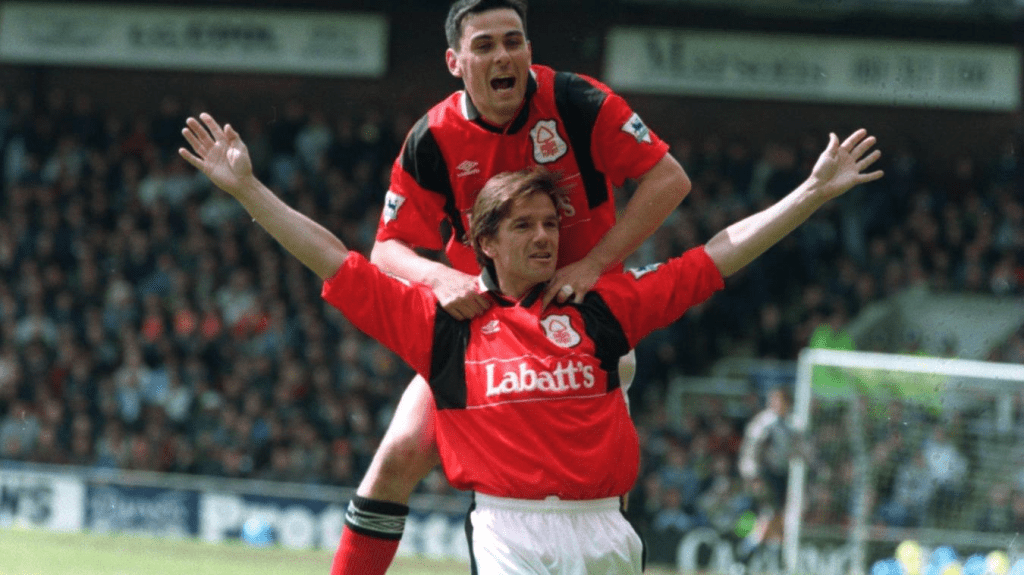
 the-score-board.co.uk