
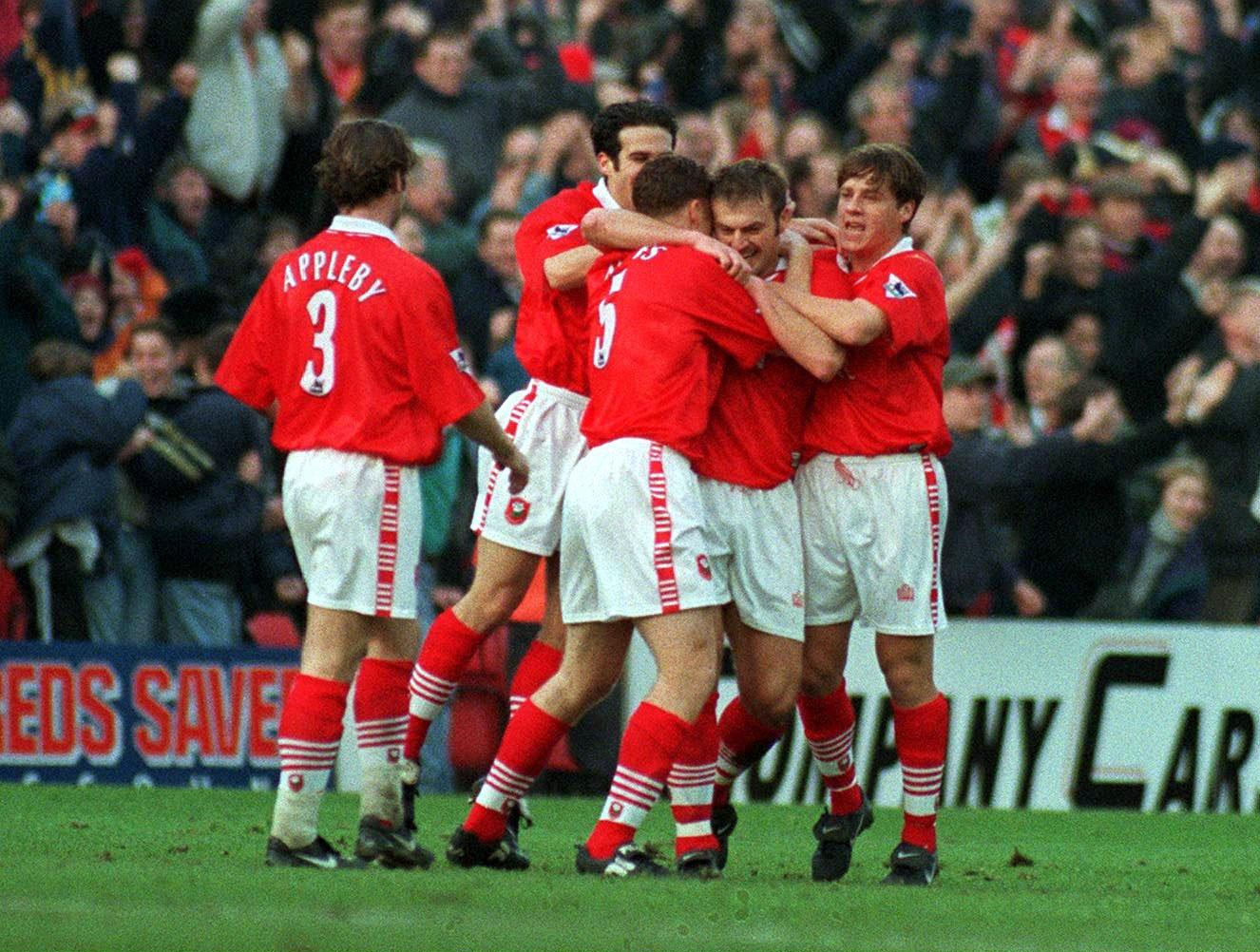
The Tykes’ sole season in the top-flight of English football…
Recently, I wrote about the sole campaign spent by Swindon Town in the Premier League (then known as the Premiership) during the 1993-94 season. The 1993-94 Premiership campaign would mark the only time that Swindon Town played in the top-flight football in 140+ years of existence, before spending the 21st century exclusively in either EFL League One or League Two. Despite an entertaining run, the Robins could not maintain their Premiership existence for more than a single year, finishing rock bottom of the standings. The Robins have not returned to the Premier League since and look unlikely to do so anytime soon. You can read all about Swindon’s single Premiership season by clicking the following link: https://thescoreboardcom.wordpress.com/2021/09/10/the-100-goal-season-swindon-town-in-the-premiership/.
However, Swindon is not alone in being the only team to have spent a single season in the top-flight. They are also not alone in having this season come during the Premier League era. Travel 187 miles north from Swindon’s County Ground and you will find yourself at Oakwell Stadium, home to Barnsley F.C . Formed in 1887, Barnsley has been a fixture in the Football League since successfully winning election into Division Two in 1898. In the 112 seasons played since then (war permitting), the South Yorkshire club has spent most of them in the second tier (78 seasons). Even though the 21st century has seen them infrequently bounce between the Championship and League One, Barnsley throughout their history has mainly finished in the mid-to-lower reaches of the Second Division (now known as the Championship). However, for one season, Barnsley fans would have the chance to see their beloved Tykes play top-flight football. Like Swindon, the arrival of a player-manager would put Barnsley on an upward curve, eventually leading to Premiership promotion in 1997 and a year-long spell in the big time of English football.
Promotion
At the end of the 1992-93 season, Barnsley would finish 13th in the newly-renamed Football League Division One. After this result Mel Machin would resign as the Tykes’ manager, ending four seasons in charge at Oakwell. For his replacement, club chairman John Dennis would decide to go down the player-manager route, as was popular at the time. In June 1993, Dennis would appoint Viv Anderson, two-time European Cup-winning right back and the first black footballer to receive an England cap, as the Tykes’ new player-manager. This managerial appointment would make football history, with Viv Anderson becoming Britain’s first BAME football manager. The 36-year-old had spent the previous season at Premiership side Sheffield Wednesday, captaining the Owls in League Cup and FA Cup final defeats to Arsenal. Anderson would now drop down a division to help Barnsley make club history by reaching the top-flight while making history himself in the process. Joining Anderson in making the trip across South Yorkshire would be 33-year-old Wednesday midfielder Danny Wilson, who become Barnsley’s new player-assistant manager.
With the inexperienced Viv Anderson at the helm, Barnsley would perform even worse in the league compared to the season before. The team would spend much of the season in a relegation battle, and only a late-season upturn in form would stop the Tykes from dropping down into Divison Two. After winning five of their first twenty-two matches, Barnsley sat in 21st place on Christmas Day 1993, one point above the Division One relegation zone. After Christmas, the team’s form would eventually turn around, and a 3-2 win over Bolton on the last day of the season would secure Barnsley’s Division One safety. Despite ending their league campaign with 7 defeats in 10 matches, Barnsley would eventually finish 18th in Division One, four points above the relegation trapdoor.
At the end of the 1993-94 season, Viv Anderson would leave his job as Barnsley player-manager, moving to Middlesbrough to work as a player-assistant manager to Boro player-manager Bryan Robson. Instead of joining Anderson at Boro, his player-assistant manager Danny Wilson would accept chairman John Dennis’s offer to step up the ladder and become Barnsley’s player-manager for the 1994-95 Division One season. This season, Barnsley would finish 6th in the Division One table with virtually the same squad from the previous campaign. Usually, 6th place would guarantee a path to the end-of-season promotion play-offs. However, a planned reduction in the number of Premiership teams from 22 to 20 meant that only two teams would end getting promoted to the top-flight the following year: one automatically, one through the play-offs. This temporary rule change would mean that Barnsley would miss out on the play-offs by four points.
The 1995-96 season would see Danny Wilson hang up his boots and become Barnsley’s full-time manager. However, Wilson’s first season entirely off the field of play would produce mixed results for Barnsley. The Tykes would dip in and out of form at intervals throughout the year, eventually finishing 10th in Division One with a perfectly symmetrical record of 14 wins, 18 draws, and 14 defeats.
The summer of 1996 would see Wilson sign strikers Clint Marcelle (Felgueiras), Paul Wilkinson and John Hendrie (Middlesbrough), Ipswich Town defender Neil Thompson, Darlington midfielder Matty Appleby and Yugoslavian midfielder Jovo Bosančić (Campomaiorense). This same summer would also see experienced heads Brendan O’Connell (240 league appearances), Gary Fleming (239), Owen Archdeacon (233), Andy Rammell (185) and Andy Payton (108) leave the club as Danny Wilson overhauled his playing squad.
Barnsley’s new arrivals would help the team begin the season brightly. Danny Wilson’s men would win six of their first seven matches, putting the team 2nd in the Division One table. A defeat and six draws would drop the team down to 3rd at the end of October, but the Tykes would earn a further seven wins to end 1996 two points off league leaders Bolton. After the New Year, Barnsley would win nine, draw six and lose six of 21 matches, winning 33 of a possible 63 points. Even though Bolton Wanderers would win the Division One title by a remarkable 18 points, Barnsley would end the 1996-97 season as the best of the rest, finishing 2nd in the league standings. A 2-0 win over Bradford City on 26th April would see Barnsley make club history in front of 18,605 fans at Oakwell. Goals from Paul Wilkinson and Clint Marcelle would secure automatic promotion to the Carling Premiership for the Tykes, meaning that for the first time in their 109-year history, Barnsley fans would get to experience their team playing top-flight football.
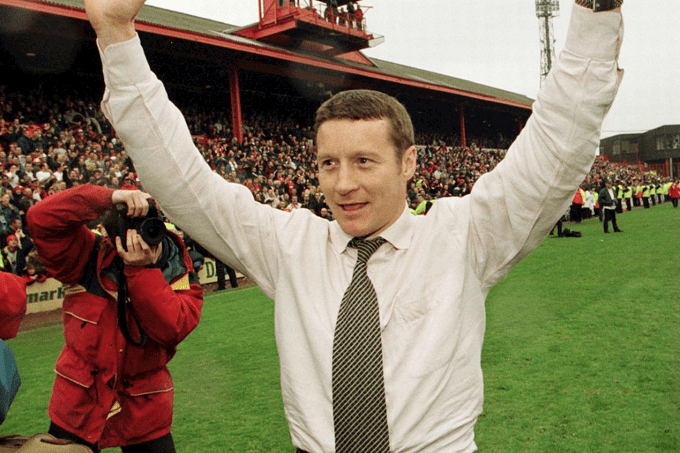
1997-98 season
After Barnsley’s promotion was secured, manager Danny Wilson had 97 days to prepare his squad for their first-ever season of top-flight football. On 1st June 1997, he would take the first step to make his team ready for Premiership football, signing Bayer Leverkusen goalkeeper Lars Leese for £250,000. The 27-year-old German had spent the previous Bundesliga season playing third-fiddle behind Rüdiger Vollborn and Dirk Heinen, ultimately failing to make a single appearance. However, the £250,000 spent on Leese showed that Danny Wilson had faith that the German keeper could make a difference for his Barnsley team during their maiden Premiership campaign. Now, Leese would challenge David Watson and Tony Bullock for the starting position between the Barnsley goalposts.
Less than two weeks after shoring up his goalkeeping ranks, Danny Wilson would turn to the other end of the pitch for his next signing. On 13th June, he would break Barnsley’s club transfer record to bring in Macedonian striker Ǵorǵi Hristov from Serbian side FK Partizan. The £1.5 million paid for the 21-year-old’s services would obliterate the previous record of £300,000 spent bringing in centre-back Arjan de Zeeuw back in 1995. After making his senior debut in 1994, Hristov had scored 21 goals in 61 league appearances for FK Partizan, helping his boyhood club win back-to-back Yugoslavian league titles in 1996 and 1997. He had also earned 12 international caps for FYR Macedonia (now North Macedonia), scoring three times after debuting in 1995.
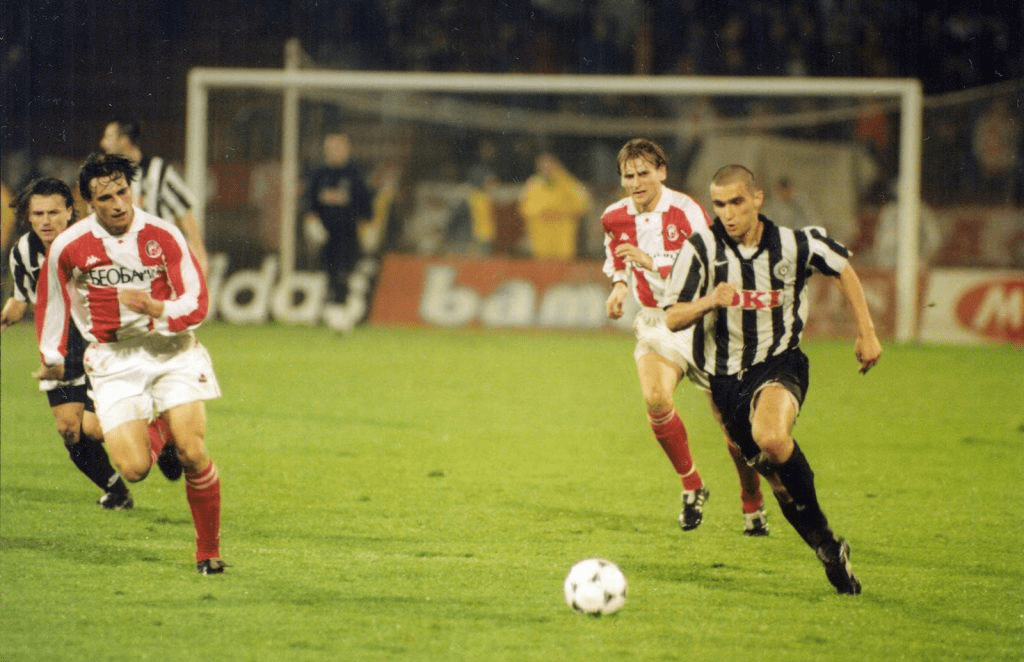
Danny Wilson would continue adding international flavour to his Barnsley squad, signing South African midfielder Eric Tinkler from Serie B side Cagliari on 1st July. The 21-cap international would leave Cagliari following the team’s relegation from Serie A, ending a one-season, 20-match spell with The Islanders. Previously, he had spent four seasons playing for Vitória in the top two divisions of Portuguese football, making 84 appearances. The Barnsley management thought these statistics were enough to sign Tinkler for £650,000, the second-highest fee in the club’s history.
Continuing to scour players from across Europe, NK Maribor defender Aleš Križan would join Barnsley one day after Eric Tinkler for £500,000, bringing the club’s transfer total spend to £2.9 million. Križan had become a fixture on the left side of the Maribor defence over the previous six seasons, making over 200 appearances in all competitions. With Maribor, he would win three Slovenian Cups and one league title and appear for the club in the UEFA Cup, Cup Winners’ Cup, and Intertoto Cup. In his final season, Maribor would achieve the league and cup double, for in their history. Like Hristov and Tinkler, Aleš Križan was an active international, holding 22 Slovenia caps upon arriving in South Yorkshire.
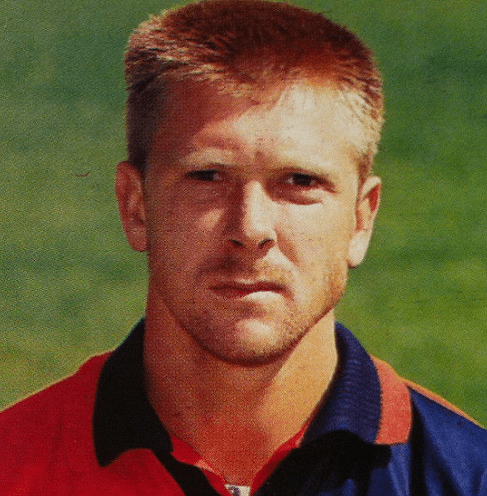
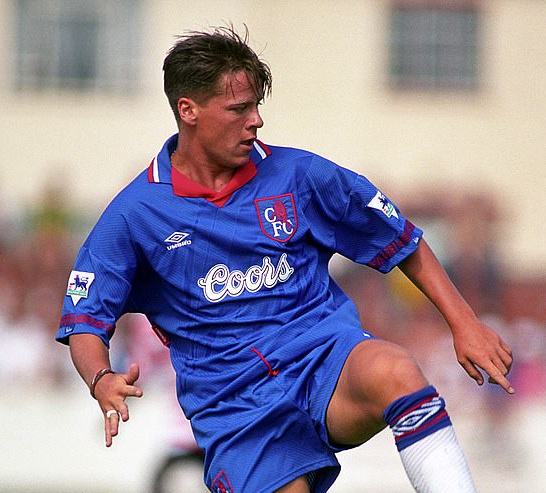
After not signing players for the rest of July, Barnsley’s transfer business would strike back into action just a few days before the beginning of the new Carling Premiership season on 9th August. The beginning of the month would see a trio of unused squad players leave Barnsley for new destinations lower down the English league system. Midfielder Carel van der Velden would move to Third Division Scarborough, goalkeeper Glyn Clyde would move to Football League newcomers Macclesfield Town and striker Darran Clyde would move into non-league football with Gateshead. After these departures, Barnsley would sign their first player with Premiership experience. On 5th August, Bristol City left-back Darren Barnard would take up the opportunity to take a second bite of the Premiership cherry by joining the newly-promoted Tykes. Before joining Bristol City, Barnard had played for Chelsea during the first two Premiership seasons. He would make 25 appearances during these two seasons but could never fully dislodge the veteran Mal Donaghy from the starting XI. After leaving Chelsea for Bristol City in 1995, Barnard would turn out 76 times in two seasons for the Robins, scoring 12 goals during the team’s run to the Division One play-off semi-finals the previous year. After this impressive form, Barnsley would snap him up for £750,000. He would now compete with fellow new signing Aleš Križan and Scott Jones for the left-back starting spot.
Transfers
In
| Date | Position | Player | From | Fee |
|---|---|---|---|---|
| 1st June | GK | Lars Leese | Bayer Leverkusen | £250,000 |
| 13th June | FW | Ǵorǵi Hristov | FK Partizan | £1.5 million |
| 1st July | MF | Eric Tinkler | Cagliari | £650,000 |
| 2nd July | DF | Aleš Križan | NK Maribor | £500,000 |
| 5th August | DF | Darren Barnard | Bristol City | £750,000 |
| 4th September | FW | Ashley Ward | Derby County | £1.3 million |
| 31st October | GK | Paul Heritage | Sheffield United | Undisclosed |
| 15th January | FW | Jan Åge Fjørtoft | Sheffield United | £800,000 |
Out
| Date | Position | Player | To | Fee |
|---|---|---|---|---|
| 1st August | MF | Carel van der Velden | Scarborough | Free |
| 1st August | GK | Glyn Clyde | Macclesfield | Free |
| 1st August | FW | Darran Clyde | Gateshead | Undisclosed |
| 18th September | FW | Paul Wilkinson | Millwall | £150,000 |
| 31st October | FW | Dave Regis | Leyton Orient | Free |
| 18th March | DF | Steve Davis | Oxford United | Undisclosed |
In: £5.75 million
Out: £150,000
Total: £-5.6 million
August
After nearly 100 days (and 110 years) of waiting, Barnsley F.C. finally began their first-ever top-flight campaign on Saturday 9th August 1997. On this day, Oakwell would become the 30th stadium to host Premiership football as West Ham United travelled to South Yorkshire for this opening-day contest. In this opening match, two of Barnsley’s summer signings would make their league debut. Darren Barnard would start on the left of a five-man defence, while Eric Tinkler would play as an attacking midfielder behind the strike pairing of Paul Wilkinson and John Hendrie.
Barnsley F.C. Starting Line-Up For First Premiership Match vs West Ham, 9th August 1997
| Position | No. | Player |
|---|---|---|
| Formation | (5-3-2) | |
| GK | 1 | David Watson |
| RB | 2 | Nicky Eaden |
| CB | 19 | Peter Shirtliff |
| CB | 6 | Arjan de Zeeuw |
| CB | 5 | Adie Moses |
| LB | 24 | Darren Barnard |
| DM | 14 | Martin Bullock |
| DM | 8 | Neil Redfearn (capt.) |
| AM | 21 | Eric Tinkler |
| CF | 7 | John Hendrie |
| CF | 9 | Paul Wilkinson |
After years of waiting, Barnsley’s first top-flight match would get off to a dream start. A Barnsley corner would fail to find a target, only for Martin Bullock to salvage the ball, and full-back Nicky Eaden would deliver another cross into the area. Paul Wilkinson would direct a deep header across the box into the path of captain Neil Redfearn. The Barnsley captain would loop a second header over the body of Luděk Mikloško into the West Ham net and put Barnsley 1-0 ahead nine minutes into their first Premiership match. It was the perfect story that Barnsley’s club captain, born 16 miles away from the home stadium, would score the club’s first-ever top-flight goal and send the home fans inside Oakwell crazy with delight less than ten minutes into their Premiership debut. However, if Tykes fans were happy with the early goal, they would be even more delighted when Barnsley managed to maintain their 1-0 lead until half-time and beyond.
It would take until the 53rd minute for the emotions of Barnsley fans to change even slightly. Eight minutes into the second half, a long ball into the area by Marc Rieper would draw out Tykes goalkeeper David Watson. However, West Ham striker John Hartson would beat him and defender Arjan de Zeeuw to the punch, heading home Rieper’s cross into the empty net to draw the Hammers level 1-1. Despite the equaliser, Barnsley fans would still be happy with a draw and a point from their first top-flight match. However, West Ham would end up spoiling the party 24 minutes from time. In the 76th minute, 19-year-old Frank Lampard would finish off a fast West Ham attack forwards to score his first-ever Premiership goal and give his uncle Harry Redknapp a winning start to the new season. Despite leading for 44 out of 90 minutes, Barnsley’s inaugural top-flight match would end in valiant defeat.
After this opening-day defeat, Barnsley would achieve a historic victory. On 12th August, Barnsley would travel to Selhurst Park to face fellow newly-promoted club Crystal Palace. While Eagles fans were celebrating the home debut of Italian superstar winger Attilio Lombardo, who had scored in a 2-1 win over Everton three days earlier, Barnsley would turn up and spoil the party. After a goalless 55 minutes, Barnsley’s captain would step up to the plate for the second match in succession and produce a goal for Barnsley. In the 56th minute, Neil Redfearn would receive the ball 45 yards from goal, running into space before unleashing a shot from 30 yards that would eventually end up in the top corner. After falling behind, Crystal Palace would come close to an equaliser, with Bruce Dyer hitting the crossbar. However, Redfearn’s goal would prove the difference on this night as Barnsley’s earned their first-ever top-flight victory.
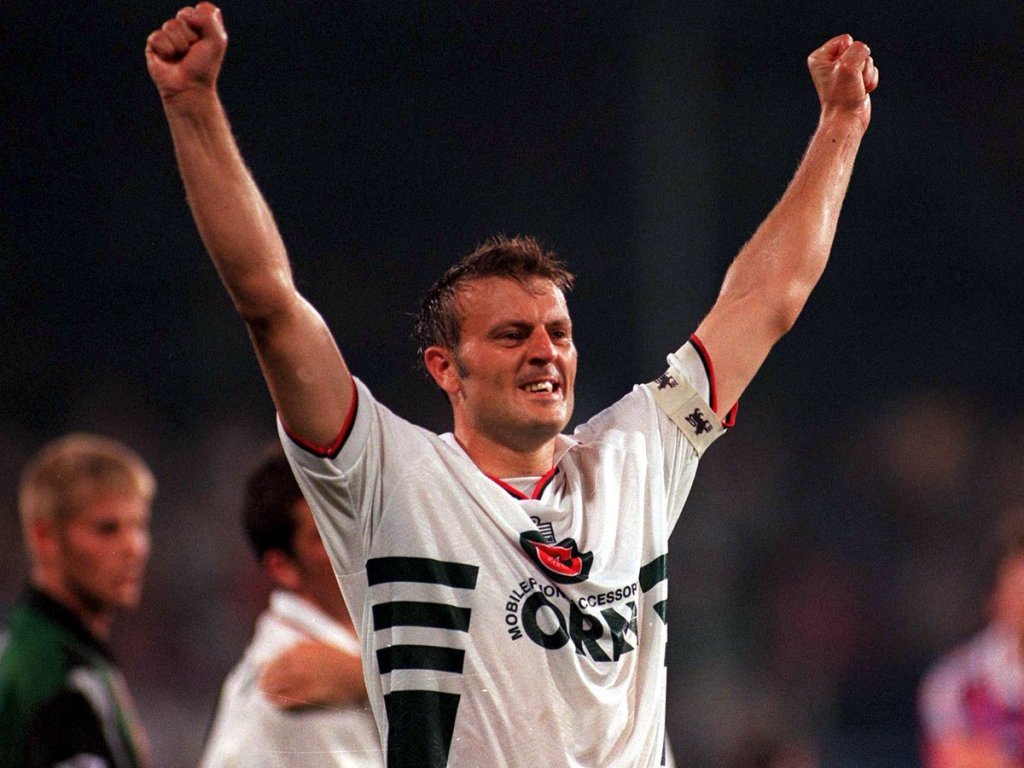
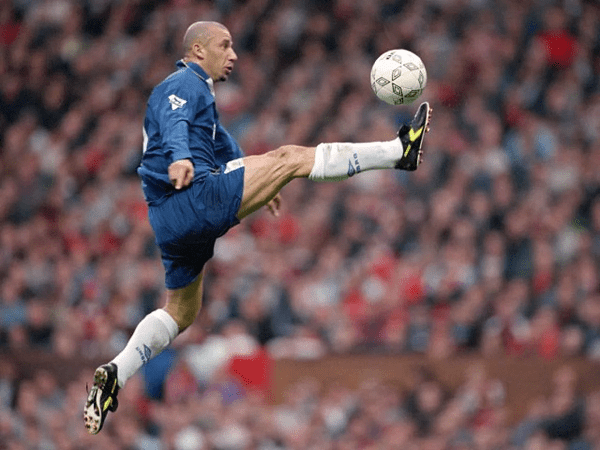
In their first two Premiership matches, Barnsley had been competitive in defeat against West Ham and victory against Crystal Palace. Following the international break, Chelsea would deliver a harsh lesson to Barnsley in front of their own fans on 24th August. Dan Petrescu would open the floodgates in the 25th minute, and Gus Poyet would double Chelsea’s lead seven minutes before half-time. After this, the 18,170 fans inside Oakwell, both home and away, would be treated to the outstanding talents of one Gianluca Vialli. The Italian striker would put the Blues 3-0 ahead on the verge of half-time before scoring his second after 57 minutes. He would complete his hat-trick in the 65th minute before scoring his fourth and Chelsea’s sixth with eight minutes to go. After two encouraging results to start their first top-flight season, a 6-0 home defeat to Chelsea would deal a harsh dose of reality to Barnsley over the true nature of the standards expected to succeed in the Carling Premiership.
After such a heavy defeat at the hands of one of the league’s top sides, Barnsley would have just three days to recover before their next home match against Bolton Wanderers. However, the Tykes would manage to get back to winning ways in front of their own supporters with a 2-1 win over the Division One champions on 27th August. In the 14th minute, new signing Eric Tinkler would score his first Barnsley goal, heading home from Neil Redfearn’s free-kick, but Peter Beardsley would equalise with his first Bolton goal twenty minutes later. Two minutes after Beardsley’s goal, Barnsley would lose starting goalkeeper David Watson to injury, with Lars Leese making his Tykes debut as his replacement. However, to complete the night of debut goals for new signings, Barnsley’s record signing Ǵorǵi Hristov would ultimately score the winning goal for Danny Wilson’s side two minutes after half-time. Having now defeated both of their fellow promoted sides, Barnsley had begun their inaugural Premiership season with two wins from four matches. This would quickly become two wins from five matches as Danny Wilson’s team would end August with a 1-0 defeat against Derby County. Stefano Eranio’s penalty would separate the two sides at Pride Park.
At the end of their first month in the Premiership, Barnsley would find themselves sitting in the top half of the table in 10th place. An early record of two wins and three defeats from five matches would make for an encouraging start for the top-flight new boys. However, the month of September would bring the expectations of any optimistic Barnsley back down to earth with a very violent bump.
| Position | Team | Played | Wins | Draws | Losses | GF | GA | GD | Points |
|---|---|---|---|---|---|---|---|---|---|
| 8th | Newcastle | 2 | 2 | 0 | 0 | 3 | 1 | 2 | 6 |
| 9th | Crystal Palace | 5 | 2 | 0 | 3 | 5 | 5 | 0 | 6 |
| 10th | Barnsley | 5 | 2 | 0 | 3 | 4 | 10 | -6 | 6 |
| 11th | Liverpool | 4 | 1 | 2 | 1 | 5 | 4 | 1 | 5 |
| 12th | Coventry | 5 | 1 | 2 | 2 | 6 | 10 | -4 | 4 |
September
September would begin with another international break, and Barnsley would use the two-week break to add to their attacking ranks. After losing to Derby County on 30th August, Danny Wilson would poach one half of their strike pairing from that day, Ashley Ward, for £1.3 million just five days later. The 26-year-old had spent the past 20 months at Derby, scoring 10 goals in 40 appearances while forming an effective partnership with Dean Sturridge as the Rams finished 12th in the Premiership table the previous season. After playing the full 90 minutes in Derby’s 1-0 win over Barnsley on 30th August 1997, Ashley Ward would line up in the red of Barnsley at Oakwell in the next round of Premiership fixtures two weeks later. Ward would start up front and play the full 90 minutes in the Tykes’ 3-0 defeat to Aston Villa. Goals from Ugo Ehiogu, Mark Draper and Ian Taylor would deliver the three points for Brian Little’s side.
Two weeks after his arrival, Ashley Ward would score his first Barnsley goal. On 16th September, Ward would add to Neil Redfearn’s penalty to give his new team a 2-1 first-leg win over Division Two Chesterfield in the League Cup second round.
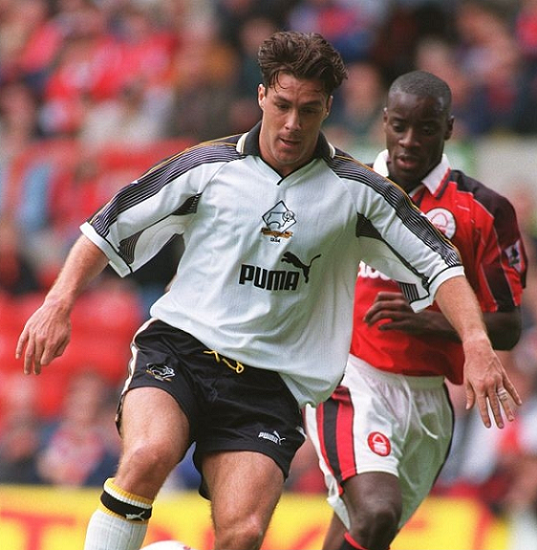
However, while Ashley Ward was entering Barnsley, fellow striker Paul Wilkinson was leaving the South Yorkshire club. On 18th September, Wilkinson would join Division Two Millwall for £150,000. The 32-year-old had only joined Barnsley in the summer of 1996 and had played a vital role in their promotion campaign, scoring 11 goals during the 1996-97 Division One season. He even started the first three matches of this new season before dropping to the substitutes bench. The recent arrival of Ashley Ward would only limit his future chances in the Barnsley team, necessitating his decision to move away.
Two days after this news, Barnsley would suffer their third consecutive Premiership defeat, falling 4-2 to Everton at Goodison Park. Gary Speed would give the Toffees a 12th-minute lead, only for Neil Redfearn to equalise for Barnsley a little after the half-hour mark. However, 17-year-old Danny Cadamarteri’s first goal in senior football would re-establish Everton’s one-goal advantage three minutes before half-time. Most of the second half would pass with neither team adding to the scoreline before three goals in seven minutes would eventually decide the match. Gary Speed’s 77th-minute penalty would put Everton 3-1 up, only for Darren Barnard to pull a goal back for Barnsley (his first goal for the club) less than a minute later. However, another Everton youngster, 18-year-old substitute John Oster would curtail any hopes of a Barnsley comeback with an 84th-minute winner that would ensure a 4-2 win for the Toffees.
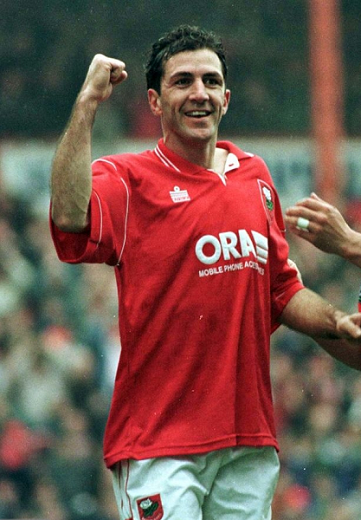
On 23rd September, Barnsley would concede four goals for the second game in succession, losing 4-1 to Wimbledon at Selhurst Park. Eric Tinkler would give the Tykes a 1-0 half-time lead with a header from a Darren Sheridan free-kick. However, Joe Kinnear’s Crazy Gang would soon punish Danny Wilson’s men for possessing any notion of coming away from Selhurst Park with a victory. Robbie Earle would set up Carl Cort to score Wimbledon’s equaliser four minutes into the second half, and the Jamaican international would soon turn scorer to give his team the lead in the 65th minute. Midfielder Ceri Hughes would quickly make it 3-1 before Efan Ekoku would finish the second-half rout with an 84th-minute effort.
Four days after that result, Barnsley’s troubling form would continue with a 2-0 defeat at home to Leicester City. Ian Marshall and Graham Fenton would ensure that Barnsley went the whole month of September without a single league win while bringing the Tykes’ losing streak up to five matches. Managing to escape their league worries for one game, Barnsley would end the month with another victory in the League Cup. Danny Wilson’s team would edge an entertaining encounter with Chesterfield in the second leg of their League Cup second round tie, winning 4-2 to move on to the next round with a 6-3 aggregate victory. Once again, the League Cup would provide some levity in a difficult month for Barnsley FC.
Barnsley’s winless September meant that they ended the month in the Premiership’s bottom three. Starting the month with a record two wins and three defeats, they would end it with two wins and seven losses. In addition, a return of seven goals from nine league matches was not pleasant reading for Danny Wilson, especially with the recent signing of Ashley Ward. Neither would the 23 goals conceded, a statistic emphasising the leakiness of Barnsley’s defence, the heart of which was unchanged from the Division One promotion campaign the previous season. At this point, Danny Wilson could either dip into the transfer market for a new centre-back or hope that Barnsley’s form would turn for the positive when October came around.
| Position | Team | Played | Wins | Draws | Losses | GF | GA | GD | Points |
|---|---|---|---|---|---|---|---|---|---|
| 16th | Everton | 8 | 2 | 2 | 4 | 10 | 13 | -3 | 8 |
| 17th | Bolton | 8 | 1 | 5 | 2 | 8 | 11 | -3 | 8 |
| 18th | Sheffield Wednesday | 9 | 1 | 3 | 5 | 11 | 22 | -11 | 8 |
| 19th | Barnsley | 9 | 2 | 0 | 7 | 7 | 23 | -16 | 6 |
| 20th | Southampton | 9 | 1 | 1 | 7 | 5 | 17 | -12 | 4 |
October
Despite the month changing, Barnsley’s form would not immediately change for the better. On 4th October, the team would find themselves on the end of a 5-0 hammering from league leaders Arsenal away at Highbury. A Dennis Bergkamp double and a third from Ray Parlour would put the Gunners 3-0 up at half-time, and David Platt and Ian Wright would inflict further damage in the second half to complete another impressive victory for Arsene Wenger’s pacesetters.
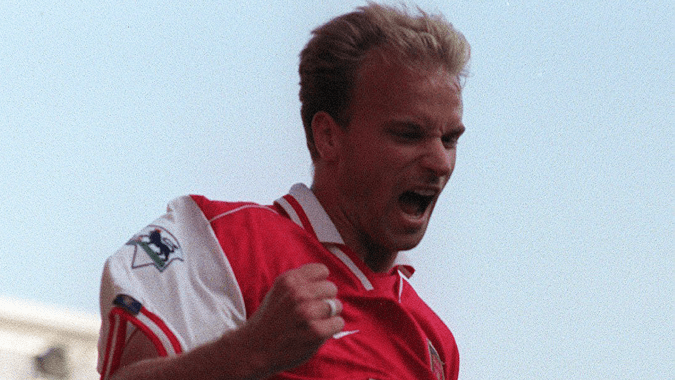
If the Arsenal loss had increased Barnsley’s losing streak to six matches, they would soon be unable to count on the League Cup to deliver any kind of joy around Oakwell Stadium. On 14th October, a 2-1 defeat to Southampton would see the Tykes exit the competition at the third-round stage. However, Barnsley’s troubles would soon be over for a very brief period.
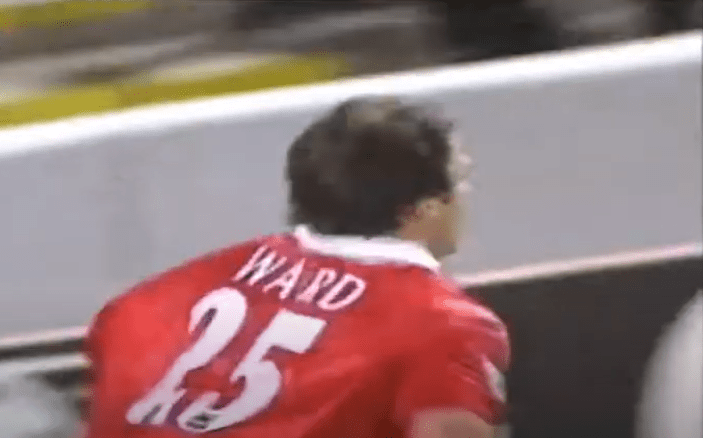
On 20th October, 12th-placed Coventry City would travel up to South Yorkshire after four consecutive draws with Sheffield Wednesday, Crystal Palace, Blackburn and Leeds. On this night, both teams would hope to return to winning ways. For one side, their wish would soon come true. Ten minutes into the match, Adie Moses would dispossess John Salako midway inside the Barnsley half. His interception would knock the ball to Nicky Eaden, who would begin to counter-attack up the field. Reaching the centre-circle, Eaden would thread the ball through to Ashley Ward, who would find Martin Bullock outside of him. Bullock would carry the ball within 25 yards of the Coventry goal before delivering an early cross into the area. The ball would reach Ward, who would stop the ball in its tracks. The ball would rebound to striker partner Andy Liddell before returning to Ward, who would get the ball under control before poking it inside the far post to put Barnsley 1-0 ahead.
Barnsley would retain their one-goal advantage before adding to it halfway through the second half. However, they would require the services of goalkeeper David Watson to stop several decent Coventry chances. However, in the 66th minute, Martin Bullock would run into the penalty area before being brought down by Sky Blues defender David Burrows. Referee Paul Alcock would see no other reason than to award the spot-kick. Captain Neil Redfearn would step up to the spot and successfully send Steve Ogrizovic the wrong way to score Barnsley’s second to secure the team’s first league win since 27th August and just their second home win of the season. The win would snap Barnsley’s six-match losing streak, and the 2-0 scoreline gave the Tykes their first clean sheet since beating Crystal Palace 1-0 on 12th August. The win would also move Barnsley off the bottom of the Premiership table, moving the team level on points with Sheffield Wednesday in 17th place.
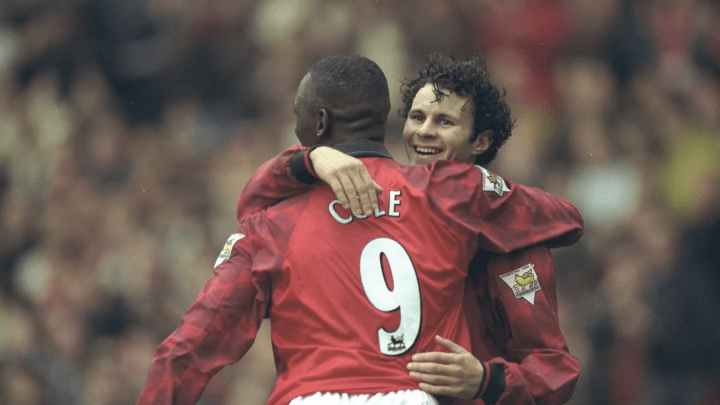
After such a momentous victory, Barnsley would travel to Old Trafford to face reigning Premiership champions Manchester United. Alex Ferguson’s team went into the match just one point behind leaders Arsenal and needed to avoid the potential banana skin that Barnsley would represent if not taken seriously by the champions. With this thought potentially in their minds, Manchester United would inflict Barnsley’s heaviest defeat of the season, putting seven goals past the hapless David Watson in the Barnsley net. Andy Cole would open the scoring in the 17th minute before adding a second two minutes later. Manchester United’s lead would stand at 2-0 until the verge of half-time when a Ryan Giggs would add a third, and Cole would complete a first-half hat-trick to double their lead to 4-0. Giggs would add goal number five (and score his second of the match) in the 56th minute before Paul Scholes would add a sixth three minutes later. Finally, hat-trick hero Cole would set up Karel Poborský to score a magnificent seventh. This loss would cap an October for Barnsley in which a big 2-0 win over Coventry was sandwiched between comprehensive defeats to Arsenal and Manchester United.
October would end with Barnsley signing one player and selling another. On Hallowe’en, Danny Wilson would persuade 18-year-old goalkeeper Paul Heritage to leave South Yorkshire rivals Sheffield United and join the Tykes. Heritage had come through the Blades academy but was yet to make a senior appearance in his footballing career. On the same day, striker Dave Regis would leave Barnsley for Division Three side Leyton Orient. The 33-year-old had joined Barnsley during the 1995-96 season but had failed to establish himself in Danny Wilson’s first team, prompting loans to Peterborough, Notts County and Scunthorpe during his time under contract at Oakwell. All in all, he made just 16 appearances for Barnsley, scoring once.
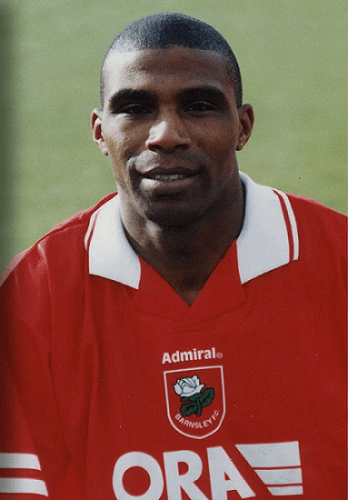
Despite ending their losing streak during October with the win against Coventry, the heavy defeats to Arsenal and Manchester United meant that Barnsley would end the month bottom of the Carling Premiership. At this stage, the Tykes had a record of three wins and nine defeats, earning 9 points out of a possible 36. The team had only scored nine goals during their twelve Premiership matches and conceded 35, giving them a goal difference of -26 at this early stage. However, at this early stage, just six points separated Crystal Palace in 12th and Barnsley in 20th. If the Tykes could improve their form before the end of the year, they might avoid spending Christmas sitting on the Premiership trapdoor.
| Position | Team | Played | Wins | Draws | Losses | GF | GA | GD | Points |
|---|---|---|---|---|---|---|---|---|---|
| 16th | Everton | 11 | 3 | 3 | 5 | 13 | 16 | -3 | 12 |
| 17th | Bolton | 11 | 2 | 5 | 4 | 9 | 15 | -6 | 11 |
| 18th | Southampton | 12 | 3 | 1 | 8 | 11 | 20 | -9 | 10 |
| 19th | Sheffield Wednesday | 12 | 2 | 3 | 7 | 17 | 29 | -12 | 9 |
| 20th | Barnsley | 12 | 3 | 0 | 9 | 9 | 35 | -26 | 9 |
November
In their thirteenth league match of the season, Barnsley would earn their first Premiership draw. On 1st November, the team would draw 1-1 with 3rd-placed Blackburn Rovers. At the half-hour mark, the team placed higher in the table would take the lead. A shot would deflect off a Barnsley defender from a Blackburn corner, and Rovers captain Tim Sherwood would prod home the loose ball to put his team ahead. However, just as it seemed that Roy Hodgson’s men would earn another victory, an unlikely source would pop with Barnsley’s equaliser. In the 79th minute, a Barnsley header from a corner would fall outside the box only for Jovo Bosančić to blast a first-time effort from 25 yards past Tim Flowers into the bottom corner. Bosančić was making his first start of the season, with his only other appearance thus far coming as a substitute in the 7-0 defeat to Manchester United. However, on this day, he would become Barnsley’s saviour, saving a crucial point for the Tykes against the former Premiership champions.
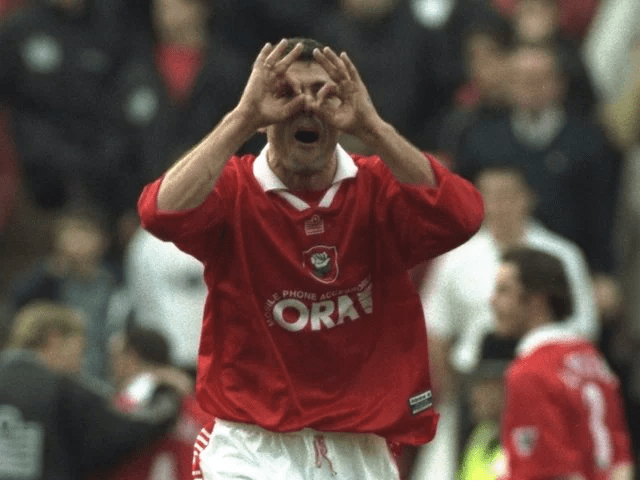
Danny Wilson would reward Jovo Bosančić for his goalscoring efforts by starting him again in Barnsley’s next match against fellow strugglers Southampton (16th) at The Dell. Three points would separate the two teams going into this match. The final score would have you believe otherwise. A foul on Saints striker Kevin Davies would give Matt Le Tissier the chance to give Southampton a 3rd-minute lead, and Carlton Palmer would double this advantage two minutes later. Stung by this early onslaught, Barnsley would find themselves 3-0 behind inside 35 minutes, when Kevin Davies scored his sixth goal of the season. A foul on Andy Liddell would give Barnsley a penalty two minutes later, and Jovo Bosančić would net his second goal in as many games to get Danny Wilson’s team on the scoresheet before half-time. Even if the half-time scoreline did read 3-1 to Southampton. Nine minutes to the second period, Matt Le Tissier would set up Southampton’s other striker David Hirst to add the cherry on top of an impressive victory for Dave Jones’ team by scoring Southampton fourth goal of the match.
The Southampton match on 8th November would mark the final career appearance of Barnsley defender Peter Shirtliff. After featuring in 4 of Barnsley’s first 14 Premiership matches and the team’s League Cup victory over Chesterfield in September, the 36-year-old defender would decide to retire from the game. In an 18-year professional career, Shirtliff would make a total of 615 appearances, scoring 19 goals. He would spend most of his career at Sheffield Wednesday, making 359 appearances for the Owls across two spells (1978-1986, 1989-1993), beginning in Division Three and ending in the Premiership. He would even play alongside future manager Danny Wilson in Wednesday’s 1991 League Cup triumph. Shirtliff would also be a regular in the defences of Charlton Athletic (1986-89, 125 appearances) and Wolves (1993-95, 85 appearances), captaining the latter. In August 1995, he would join Barnsley for £125,000, re-joining with former teammate Danny Wilson. In three seasons at Oakwell, he would appear 51 times for the Tykes. However, he would often find himself behind the established pairing of Adie Moses and Arjan de Zeeuw as Barnsley eventually achieved promotion to the top-flight. The four matches he played for Barnsley during this season meant Peter Shirtliff would end with 24 Premiership appearances to his name.
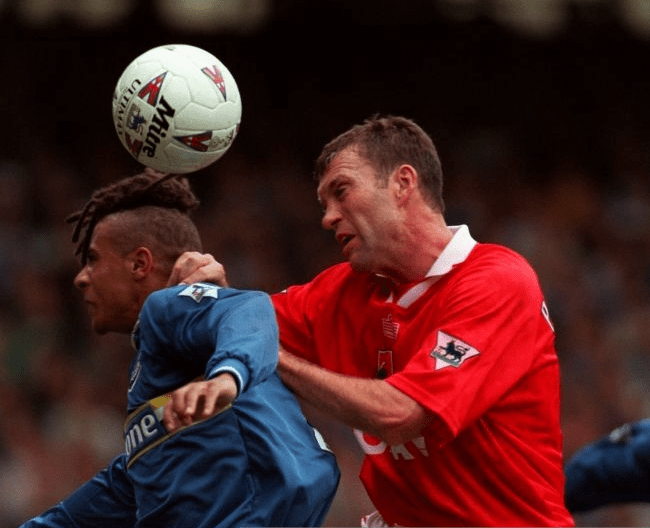
The goals conceded by Barnsley in the Southampton defeat would bring their total to 40 goals conceded in just 14 Premiership matches. With a trip to Anfield their next port of call after the international break, everyone involved with Barnsley would be dreading another heavy defeat looming on the horizon.
However, despite most experts not giving Barnsley any hope of a chance of beating Liverpool at Anfield, Danny Wilson’s Tykes would end up causing more than a few of these experts to eat their words in their match reports the very next day. Early on, a long ball from the right flank would fall to Liverpool striker Karl-Heinz Riedle, but the German would lose his balance and skew his shot over Lars Leese’s crossbar. A few minutes later, another long ball would send Barnsley striker Andy Liddell through the Reds defence, but a tackle from David James in the penalty area would stop his forward momentum. Liddell would get to his feet and reach the by-line before dragging the ball into the centre of the Liverpool box. The ball would only find Reds midfielder Patrik Berger, and the attack seemed to be over. However, Berger’s first touch was heavy enough to send the ball to the feet of Ashley Ward six yards from the Liverpool goal. Ward would turn and tap the ball into an empty net to give Barnsley a 28th-minute lead. After Ward’s goal, Liverpool would have chances to equalise. Jason’s McAteer’s shot from 25 yards would whistle past the top corner of the Barnsley net. Another Karl-Heinz Riedle shot would again end up clearing the crossbar. Substitute Danny Murphy would even send the German forward one-on-one with Lars Leese, but Barnsley’s German goalkeeper would win the duel. Despite having multiple chances to equalise, Roy Evans’ Reds could not hit the target, repeatedly letting Barnsley off the hook.
At the end of 90+ minutes of action, referee Jeff Winter would blow his whistle for full-time, and the Barnsley players would begin to celebrate one of the most remarkable results in the club’s entire history. Ashley Ward’s goal had been enough for Danny Wilson’s Tykes to defeat the 18-time champions of England on their own patch in front of a partisan crowd. Barnsley had earned just their second away win of the season (their first since 12th August), a victory that lifted them off the bottom of the Premiership standings. However, whatever else happened during this Premiership season, Barnsley players and fans could point to this result and remember the club’s first top-flight season for producing this historic moment.
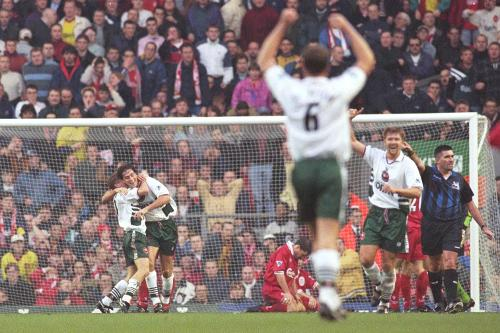
For the fourth time in succession, Barnsley would fail to win back-to-back games in the Carling Premiership. However, for 71 minutes of their match against Leeds on 29th November, the Tykes were on course to defeat another multiple-time English champion. Andy Liddell’s first goal of the season would give Barnsley an early lead after eight minutes at Oakwell, the Scot scoring a rebound after Nigel Martyn had saved his initial effort. For the second match in a row, Ashley Ward would score a goal for Barnsley in the 28th minute, finishing from close range after Martyn had only managed to parry Neil Redfearn’s long-range effort. An Alf-Inge Håland header would halve the Tykes’ advantage seven minutes later, but Barnsley would remain in front until the game’s latter stages. In the 79th minute, a route-one ball downfield from Nigel Martyn would result in Rod Wallace hitting a first-time shot past Lars Leese for Leeds’s equaliser. Then just as the Whites had drawn level, George Graham’s men would quickly take the lead. After a Barnsley attack had broken down, Leeds would launch a counter-attack, and Rod Wallace would cross the ball into substitute Derek Lilley to score his first Leeds goal. Shaken by this sudden turn of events, Barnsley could not find a response and Leeds would run out 3-2 winners in this Yorkshire derby.
Barnsley would end November still entrenched in the relegation zone but would finish the month with their best points return since August, earning four out of a possible twelve. The team had finally reached double figures for goals scored, hitting five during the month. However, the Tykes were still failing to keep the ball out of their own net, with the opposition now having scored 43 times past Barnsley’s goalkeepers. At this stage, only 14th-placed Sheffield Wednesday (36) had conceded more than 30 goals in the Premiership. On the other hand, Barnsley was only three points away from safety, and a couple of favourable results in December could move them away from the top-flight trapdoor.
| Position | Team | Played | Wins | Draws | Losses | GF | GA | GD | Points |
|---|---|---|---|---|---|---|---|---|---|
| 16th | Southampton | 16 | 5 | 1 | 10 | 20 | 26 | -6 | 16 |
| 17th | Tottenham | 16 | 4 | 4 | 8 | 13 | 22 | -9 | 16 |
| 18th | Bolton | 15 | 3 | 7 | 5 | 11 | 21 | -10 | 16 |
| 19th | Barnsley | 16 | 4 | 1 | 11 | 14 | 43 | -29 | 13 |
| 20th | Everton | 16 | 3 | 3 | 10 | 16 | 27 | -11 | 12 |
December
Barnsley would begin December with a 2-1 defeat to Sheffield Wednesday at Hillsborough. Dejan Stefanović would open the scoring for Wednesday after 19 minutes, only for Neil Redfearn to equalise for Barnsley ten minutes later. However, Paolo Di Canio’s late winner would decide the game for the Owls, with Barnsley now having lost to both of their Yorkshire rivals.
On 13th December, Danny Wilson’s men would hold Kenny Dalglish’s Newcastle to a 2-2 draw at Oakwell. Neil Redfearn would put Barnsley ahead inside nine minutes with his 6th goal of the season, but Keith Gillespie would equalise for the Magpies a minute before half-time. Five minutes after the break, Tykes striker John Hendrie would re-take the lead for Barnsley with his first of the campaign. However, Gillespie would not be denied, and the Northern Ireland winger would score his (and Newcastle’s second) with 15 minutes remaining to end the match honours even. However, despite gaining a point, Barnsley would slip back to the bottom of the Premiership, with Everton having drawn with Wimbledon.
One week later, three goals without reply would earn Tottenham the three points at home and send Barnsley away from White Hart Lane goalless and empty-handed. Allan Nielsen and David Ginola (x2) would secure the victory for Christian Gross’s team. The 3-0 defeat was the first time in seven matches that Barnsley had failed to score, with their last shutout coming in the 7-0 rout at Manchester United back in October. In addition, Everton’s win away at Leicester would mean that Barnsley spent Christmas Day three points adrift at the bottom of the Carling Premiership standings.
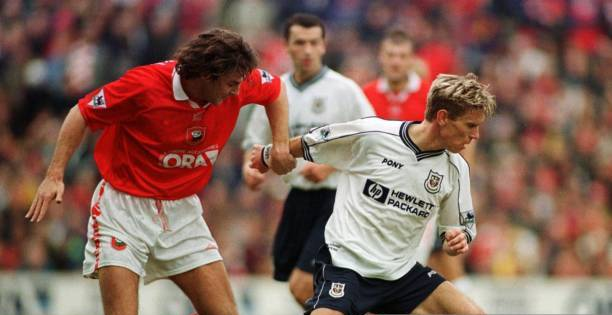
Boxing Day would see Barnsley produce their first away draw of the season as they brought a single point away from Bolton’s Burnden Park. Ǵorǵi Hristov’s first goal since 27th August would give Barnsley the lead after 20 minutes, but Bolton’s Icelandic defender Guðni Bergsson would level the scores seven minutes before half-time. Despite Danny Wilson bringing on attacking substitutes, with John Hendrie and Andy Liddell taking to the field in the second half, Barnsley could not find the goal that would give them just their fifth win of the campaign.
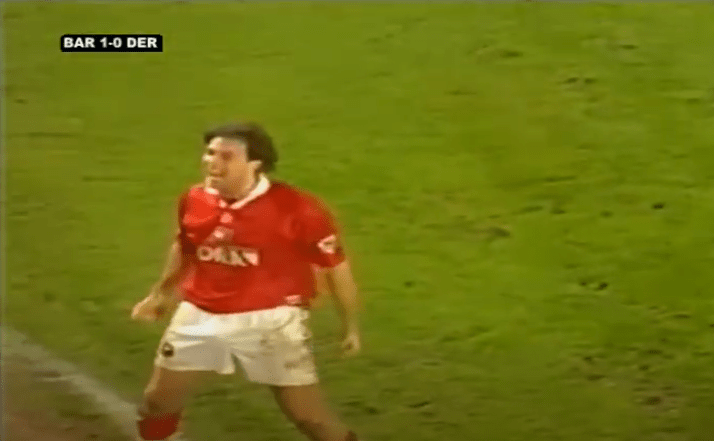
However, when it looked like Barnsley would end another month winless, the Tykes would provide their fans with a late Christmas present in their final match of 1997. On 28th December, 7th-placed Derby County would travel to Oakwell, hoping to continue their impressive season under manager Jim Smith. The Rams had double the amount of victories that Barnsley had (9 to 4) and came into the match on a five-match unbeaten run. All those statistics would go out of the window in the 67th minute at Oakwell. Barnsley would enjoy the best goalscoring opportunities, twice hitting the Derby woodwork before eventually striking the killing blow. A series of neat, one-touch passes would result in the ball finding Cint Marcelle on the left flank. Marcelle would hold the ball before flicking it behind him for left-back Darren Barnard to run onto. Barnard would carry the ball to the edge of the box before crossing and find the stretched leg of Ashley Ward. Ward’s touch would take the ball past Mart Poom for his 4th goal of the season and, ultimately, Barnsley’s fifth Premiership win.
Barnsley would end 1997 with a positive result but would still sit bottom of the Premiership standings as the New Year began. Just past the halfway point of the 1997-98 season, Barnsley had five wins, three draws and thirteen defeats from twenty-one matches. This record had left them two points adrift at the bottom of the table, three points from safety. They were the division’s joint-lowest scorers with 19 goals and had now conceded 51 goals, giving them an unenviable outstanding goal difference of -32. Barnsley would need to improve in both defence and attack to survive in the Premiership beyond this season.
| Position | Team | Played | Wins | Draws | Losses | GF | GA | GD | Points |
|---|---|---|---|---|---|---|---|---|---|
| 16th | Sheffield Wednesday | 21 | 6 | 5 | 10 | 32 | 44 | -12 | 23 |
| 17th | Bolton | 21 | 4 | 9 | 8 | 19 | 33 | -14 | 21 |
| 18th | Everton | 21 | 5 | 5 | 11 | 20 | 31 | -11 | 20 |
| 19th | Tottenham | 21 | 5 | 5 | 11 | 19 | 37 | -18 | 20 |
| 20th | Barnsley | 21 | 5 | 3 | 13 | 19 | 51 | -32 | 18 |
January
As was tradition, Barnsley’s 1998 would begin with the FA Cup 3rd round. On 3rd January, the Tykes would face recent league opponents Bolton Wanderers, with Colin Todd’s team travelling to Oakwell for the second time this season. Barnsley was unbeaten against Bolton in their previous two encounters, with the Boxing Day 1-1 draw between the two teams following up the Tykes 2-1 win at home on 27th August. Despite the change in competition, Barnsley would keep their 100% record against Bolton intact with a 1-0 win in South Yorkshire. A Darren Barnard free-kick in the 26th minute would decide the tie in Barnsley’s favour and see the team progress to the next round, where they would face relegation rivals Tottenham Hotspur on the 24th January.
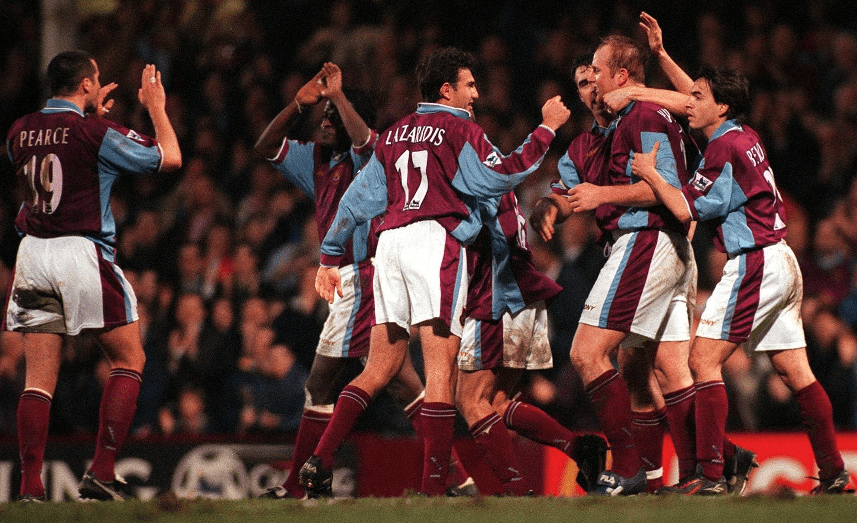
Barnsley would return to league action following the cup victory with a 6-0 defeat to West Ham on 10th January. Frank Lampard would open the scoring in the sixth minute, and Ivorian striker Samassi Abou would double West Ham’s lead before half-time. Substitute John Moncur would set up Abou to score his second in the 52nd minute, and the roles would reverse five minutes later for the Hammers’ fourth. Abou’s striker partner John Hartson would get on the scoresheet with his 12th of the season ten minutes later, and Stan Lazaridis would complete Barnsley’s humiliation with a sixth goal in the 90th minute, with Hartson providing the assist. It was the third time that Barnsley had lost a game by a margin of six goals or more, following defeats to Chelsea (6-0) and Manchester United (7-0) earlier in the season. The win would move West Ham up to 7th while Barnsley would remain rooted to the bottom of the Premiership, now five points from safety.
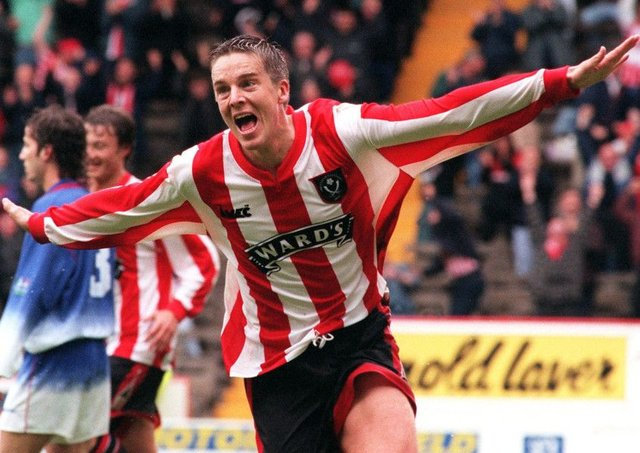
With his side having scored 19 goals in 22 league games, Barnsley manager Danny Wilson would look to drastically improve that stat by signing another centre-forward in the transfer market. Barnsley’s current crop of strikers had produced eight goals between them, with Ashley Ward providing four. On 15th January, Danny Wilson would sign one of Division One’s most prolific strikers, Sheffield United’s Jan Åge Fjørtoft. Since joining the Blades in January 1997, Fjortoft had scored 23 goals in 42 appearances. The Norwegian striker also had previous Premiership experience, having starred for Swindon Town during their single top-flight season back in 1993-94 before returning with Middlesbrough between 1995 and 1997. His two-and-a-half seasons in the top division of English football had left the 31-year-old with a record of 19 goals in 69 matches, a record he would choose to add to by joining Barnsley.
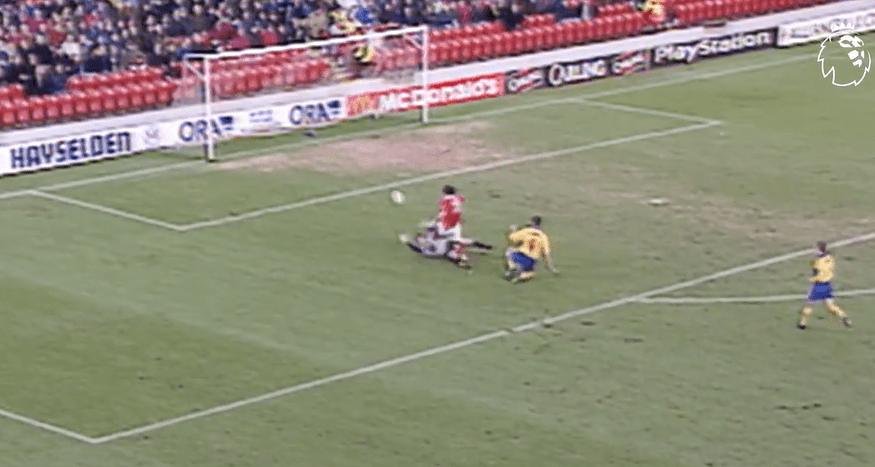
Two days after Jan Åge Fjørtoft’s arrival, Barnsley would recover from the harrowing West Ham defeat by beating Crystal Palace 1-0 at Oakwell. Fjørtoft would make his home debut in this match, starting alongside Ashley Ward at the head of Barnsley’s attack. In the 26th minute, Neil Redfearn’s lifted pass from the centre circle would find Ashley Ward behind the Eagles defence. The English striker would lift the ball over Kevin Miller for his second goal in three matches and Barnsley’s second league win in three games.
Taking a week’s break from the Premiership, Barnsley would travel to White Hart Lane for their FA Cup 4th round tie with Tottenham. The Tykes would perform better than their 3-0 defeat at the same stadium one month earlier, holding Spurs to a 1-1 draw. Sol Campbell’s header would put the home side in front after half an hour, but Barnsley would equalise with a penalty about half an hour later. In the 59th minute, Spurs defender Clive Wilson would bring down Ashley Ward in the penalty area, and Neil Redfearn would step up to take the spot-kick. The Tykes captain would find the bottom corner, drawing Barnsley level and taking the match to a replay back at Oakwell 11 days later.
After Barnsley did the double over Crystal Palace at Oakwell on 17th January, Chelsea would do the same to them at Stamford Bridge two weeks later. On the last day of the month, veteran strikers Gianluca Vialli and Mark Hughes would provide the goals in a 2-0 win in one of Ruud Gullit’s last matches as Chelsea manager.
Barnsley would end January with mixed emotions. Positive results in the FA Cup had been offset by defeats in the league. Barnsley had scored once in three league matches, with the goal coming in their win over Crystal Palace. The team was now the league’s lowest-scorers with 20, while the ‘goals conceded’ column had increased to 59. Despite its leakiness, Danny Wilson was still sticking with a tried and trusted defence, choosing to focus on scoring more goals than the opposition. However, the impact of Jan Åge Fjørtoft’s signing would remain to be seen, considering he had only played two matches since his arrival midway through the month. With fourteen league matches left to play, Barnsley remained bottom of the Carling Premiership standings. However, the gap to 17th place now stood at three points, a not entirely insurmountable sum by any measure.
| Position | Team | Played | Wins | Draws | Losses | GF | GA | GD | Points |
|---|---|---|---|---|---|---|---|---|---|
| 16th | Wimbledon | 23 | 6 | 8 | 9 | 22 | 27 | -5 | 26 |
| 17th | Crystal Palace | 24 | 5 | 8 | 11 | 21 | 34 | -13 | 23 |
| 18th | Tottenham | 24 | 6 | 5 | 13 | 21 | 41 | -20 | 23 |
| 19th | Bolton | 24 | 4 | 10 | 10 | 21 | 40 | -19 | 22 |
| 20th | Barnsley | 24 | 6 | 3 | 15 | 20 | 59 | -39 | 21 |
February
Barnsley would begin February by tying up the loose ends of their FA Cup fourth-round tie with Tottenham. On the 4th, Spurs would travel to South Yorkshire for the replay, following their stalemate eleven days earlier.
The match would remain goalless for much of the 90 minutes, with the most significant moment coming in the 49th minute when young Spurs midfielder Stephen Clemence was sent off for two bookable offences. However, five minutes into the second half, the deadlock would finally be broken. Darren Barnard would send a long ball down the left flank to Neil Redfearn, whose cross would be headed home by Ashley Ward. Eight minutes later, the Barnsley captain would get his goal. After Jovo Bosančić had twice been denied by Spurs keeper Espen Baardsen, the Yugoslavian midfielder would lay the ball back for Redfearn to sidefoot the ball inside the near post. After Barnsley had failed to add to their lead further, Spurs would pull a goal back through an excellent David Ginola free-kick in the 72nd minute. However, Barnsley would have the last word. In the 88th minute, Neil Redfearn would find an unmarked Darren Barnard on the left-hand side of the Tottenham penalty area, and the left-back would fire the ball into the top corner to send Danny Wilson’s team into the FA Cup 5th round. Barnsley’s reward for this impressive performance? A trip to Old Trafford to face Premiership leaders Manchester United on 15th February.
On 7th February, Barnsley would return to Premiership action with a 2-2 draw against Howard Kendall’s Everton. Twenty-four minutes in, home fans would get to see their new striker tandem work to perfection as Ashley Ward would set up Jan Åge Fjørtoft for his first Barnsley goal. Everton would then turn the match around with goals on either side of half-time. Duncan Ferguson would level things up in the 40th minute before midfielder Tony Grant put the Toffees 2-1 up in the 50th. However, Ashley Ward would assist two Barnsley goals on the day, as he would provide Darren Barnard for his second goal in consecutive games and secure a point for the Tykes.
Barnsley’s third match of what would eventually become a packed February would see the team return to the FA Cup with a game against league leaders and nine-time Cup winners Manchester United. With nineteen league placings and 28 points separating the two teams heading into the match, very few would have expected this cup match between the Premiership’s top and bottom sides to go to a replay, but it did. Against a team containing ten internationals, Barnsley would take the lead. Six minutes before half-time, John Hendrie would silence Old Trafford. Collecting a backpass, Peter Schmeichel would completely slice his clearing kick, sending the ball sideways across his own penalty area. John Hendrie would pounce upon the loose ball to put Barnsley in front. However, Barnsley’s lead would be brief as Teddy Sheringham would equalise for the league leaders three minutes later. However, instead of Manchester United dominating Danny Wilson’s Tykes both in possession and on the scoreboard, Barnsley would offer a consistent threat to the home defence. On multiple occasions, Martin Bullock and John Hendrie would use their speed and agility to get behind the top-level defensive line. Barnsley would even have a legitimate appeal for a penalty that ultimately was not given. Andy Liddell. Ronny Johnsen would scythe down Tykes substitute Andy Liddell inside the box, getting nothing of the ball. However, match referee Mike Riley would not point to the spot.
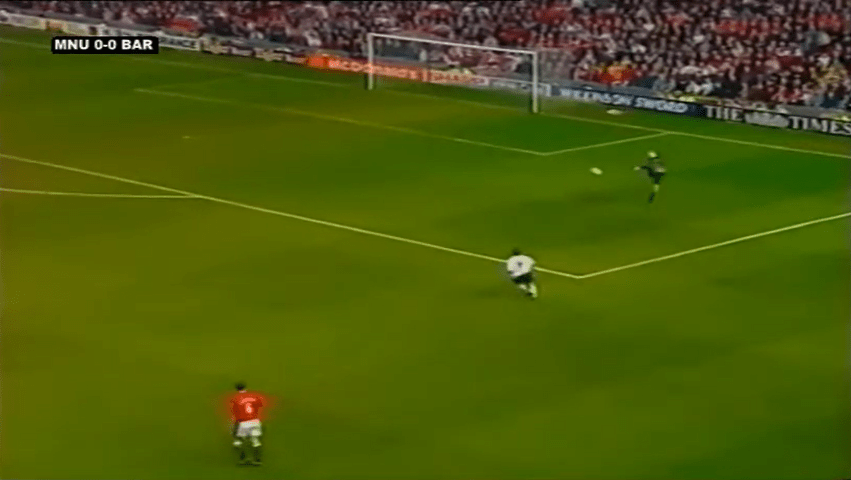
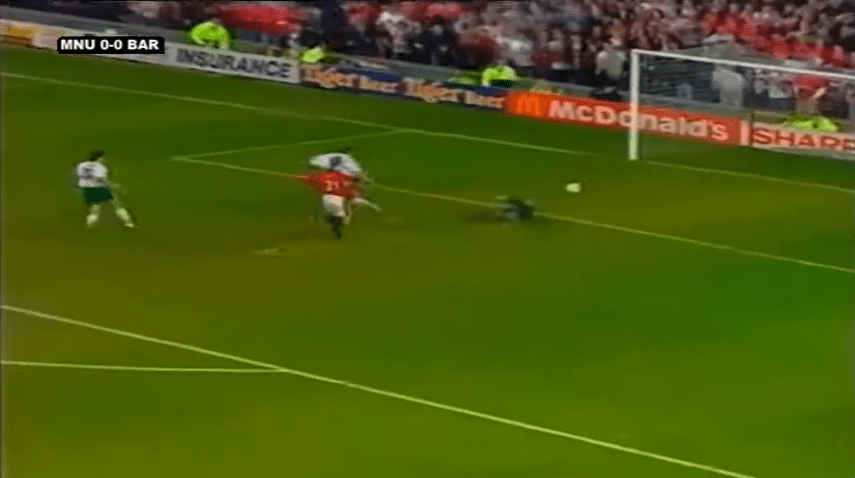
However, after all this impressive Barnsley play, Alex Ferguson’s team would come closer to scoring a second. David Beckham would intercept a Barnsley pass, and Paul Scholes would send Ryan Giggs through on goal. However, a last-ditch tackle from Arjan de Zeeuw would deflect Giggs’ shot just past the near post. As the referee blew for full time at Old Trafford, the Barnsley players could feel proud of their performance. Less than four months after losing 7-0 to the same team on the same ground, Barnsley held Premiership champions Manchester United to a 1-1 draw at Old Trafford. This draw meant that the two teams would meet again at Oakwell in an FA Cup 5th round replay.
In between their two FA Cup matches with Manchester United, Barnsley would lose 1-0 to Coventry City. A Dion Dublin penalty in the 89th minute would allow the Sky Blues to atone for their loss at Oakwell earlier in the season and inflict Barnsley’s 16th defeat of their Premiership campaign.
On 25th February, the rematch was on as Manchester United would visit Oakwell Stadium for the first time since 1964. The two teams’ previous meeting on this ground had also been in the FA Cup 5th round. On 15th February 1964 (the same date as the original match at Old Trafford in 1998), Matt Busby’s Manchester United would beat Johnny Steele’s Barnsley team 4-0, with David Herd, Denis Law (x2) and George Best providing the goals. Thirty-four years later, Oakwell Stadium would play host to a more competitive encounter between these two sides.
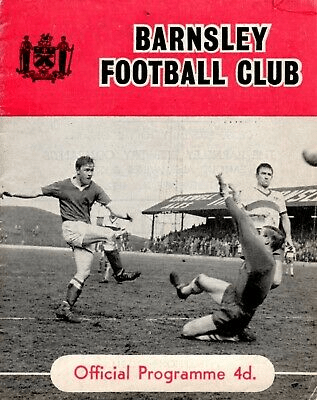
Manchester United would almost take an early lead with an impressive attempt on goal. David Beckham’s long pass would put Erik Nevland in the clear, but the young Norwegian striker’s lob would miss to the left of David Watson’s near post. However, as had been the case in the original match, Barnsley would draw first blood against the nine-time FA Cup winners. Nine minutes in, Darren Barnard would thread a ball through a gap in the Man United defence, and John Hendrie would run onto it. Straightening up, the small Scot would lift the ball over Peter Schmeichel with the ball hitting the bar on its way in. Later in the half, the Premiership leaders would almost equalise through David Beckham. Good work from Ben Thornley and Andy Cole would send the young midfielder into space, and Beckham would release a shot that seemed to be heading in, only for the ball to hit the inside of the post and bounce out for a goal kick. A lucky break for Barnsley. However, in first-half stoppage time, Barnsley would strike again. Neil Redfearn would catch off-guard with a quickly-taken free-kick, and defender Scott Jones would stretch out a leg to knock the ball past Peter Schmeichel for the Tykes’ second goal of the night. At half-time, Barnsley would lead Manchester United 2-0 at Oakwell.
Eleven minutes into the second half, David Beckham’s low cross would cause confusion in the Barnsley defence, and Teddy Sheringham would wrongfoot David Watson with a deflected shot to halve Barnsley’s lead. However, in the 65th minute, Barnsley would score their third goal of the night. Neil Redfearn would swing in a corner, and an unmarked Scott Jones would head home his second of the evening. With 25 minutes left (plus added time), Barnsley was about to pull off the shock of the season. However, with nine minutes to go, Andy Cole would bring the score back to 3-2, showing you can never write off Manchester United in these situations. Another United goal would take the catch to extra time (or even penalties.
In the final few moments, Manchester United would pepper the Barnsley goal. Then, from a long ball into the box, Teddy Sheringham would set up Ben Thornley, but he could only lift his shot over the goal. Mike Riley would blow his whistle, and Oakwell would erupt in celebration. Somehow, the Premiership’s bottom club had knocked the league leaders out of the FA Cup. John Hendrie and Scott Jones would immediately become Barnsley heroes for their parts in this incredible victory, but the whole team had done their bit for the cause. Now, the Tykes could look forward to a first FA Cup quarter-final appearance since 1985, where they would face Newcastle United.
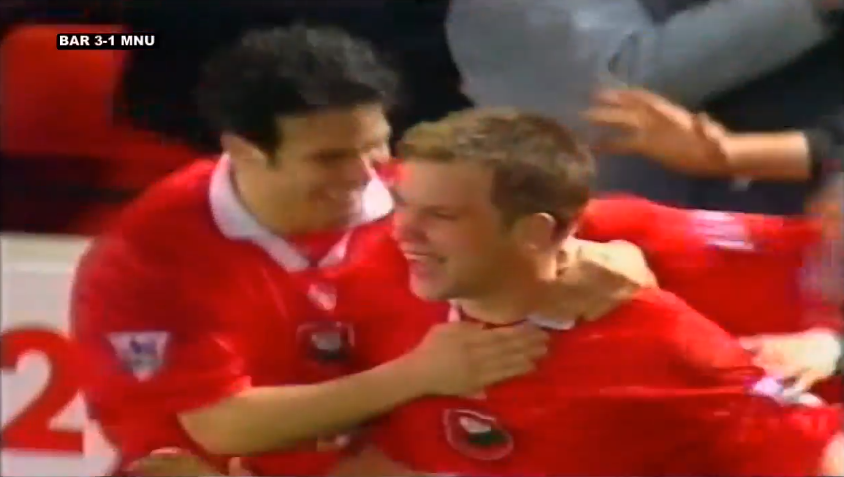
After that impressive showing, Barnsley would carry their Manchester United form into their next Premiership match against Wimbledon three days later. With the Oakwell faithful behind them for the second time in four days, Barnsley would again produce the goods at home. While Scott Jones’ absence from the starting XI meant that they could not reproduce their FA Cup performance, this day would belong to another Barnsley player who scored a brace. In the 25th minute of play, the tireless Clint Marcelle would feed Jan Åge Fjørtoft to score his second Barnsley goal. In the 63rd minute, the same two men would be responsible for Barnsley’s second. Clint Marcelle would collide with Wimbledon goalkeeper Neil Sullivan, knocking the ball from his uncertain grasp, and Jan Åge Fjørtoft would unintentionally touch the ball in with his right foot. Jason Euell would pull a goal back for Wimbledon in the 71st minute, but the damage had already been done. Barnsley would end a run of three matches without a win by beating the Dons 2-1. This victory would have more significant implications, as Barnsley would move off the Premiership’s bottom for the first time since 8th December.
Barnsley may have won one of their three league matches during this month, but February had turned out to be their best month since August. One win, one draw and one defeat had moved Barnsley off the Premiership’s bottom spot and three points from safety, but the Tykes’ most impressive performances had come in the FA Cup. Beginning the month with a 4th-round replay win over fellow strugglers Tottenham Hotspur, Danny Wilson’s men had belied their league position to go toe-to-toe with the best team in the country, Manchester United, on two separate occasions. After claiming a draw at Old Trafford to force an unlikely replay, an excellent performance back at Oakwell would help the team earn a famous victory and the shock result of that season’s FA Cup to that point. Coupled with this success, a league victory to end the month would give Barnsley fans something positive to think about regarding their team as February turned into March.
| Position | Team | Played | Wins | Draws | Losses | GF | GA | GD | Points |
|---|---|---|---|---|---|---|---|---|---|
| 16th | Everton | 28 | 7 | 9 | 12 | 32 | 40 | -8 | 30 |
| 17th | Tottenham | 27 | 7 | 6 | 14 | 25 | 43 | -18 | 27 |
| 18th | Barnsley | 27 | 7 | 4 | 16 | 24 | 63 | -39 | 25 |
| 19th | Bolton | 26 | 4 | 12 | 10 | 23 | 42 | -19 | 24 |
| 20th | Crystal Palace | 27 | 5 | 8 | 14 | 21 | 41 | -20 | 23 |
March
With just two full months of the season remaining, Barnsley had eleven matches remaining to retain their Premiership status for another year. As part of this run-in, the Tykes would have to face five of the Premiership’s current top six, travelling to Elland Road and Ewood Park to face Leeds and Blackburn while playing host to Liverpool, Arsenal and Manchester United. However, before even thinking about all of that, Barnsley’s attention would first turn to an FA Cup quarter-final against Newcastle United.
On 8th March, Barnsley would see their FA Cup dream ended by Newcastle at St James’ Park. Temuri Ketsbaia would put the Magpies ahead in the 16th minute, finishing a counter-attack originating from a Barnsley corner. Eleven minutes later, Gary Speed would double their lead, firing home after David Watson had saved Andreas Andersson’s initial shot. Ten minutes into the second half, Danny Wilson would replace centre-back Arjan de Zeeuw with striker Ǵorǵi Hristov in a bid to get back into the match. Two minutes later, Barnsley had pulled a goal back. Substitute Tony Bullock would play the ball across the Newcastle box, and Andy Liddell would sidefoot the ball past Shay Given. However, just as Barnsley had managed to give themselves a chance in this match, one player’s actions would ultimately contribute to their exit from the FA Cup. In the 76th minute, central defender Adie Moses would earn himself a red card for a second bookable offence, reducing Banrlsey’s numbers to ten. Barnsley would manage to keep the ball out of the net for a further 14 minutes with the man disadvantage but could not hold out for another replay. In the 90th minute, Rob Lee would score his second assist of the night, setting up David Batty for the crucial third goal that would send Newcastle through to a first FA Cup semi-final since 1974, while Barnsley would exit at the quarter-final stage for the fourth time in their history. Now, to think about that Premiership run-in.
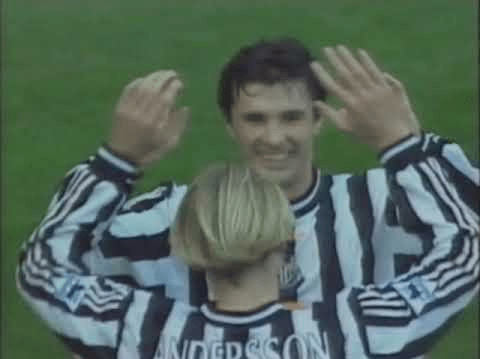
Three days after their FA Cup exit, Barnsley would face Aston Villa in their next Premiership match. Villa entered the game lying 12th in the league standings. However, victories against Liverpool and Chelsea in their last two games would give Brian Little’s team confidence to extend their winning run to three matches by dispatching Danny Wilson’s Tykes in front of nearly 30,000 spectators at Villa Park. However, Barnsley, buoyed by recent triumphs over Manchester United and Wimbledon, would eventually become the victors on this Tuesday evening in north-eastern Birmingham. The sole goal in this match would come after just 17 minutes of action. After receiving a pass from Martin Bullock, Ashley Ward would move the ball outside of Ugo Ehiogu before firing a left-footed shot that Villa goalkeeper Mark Bosnich could not stop from ending up in the back of the net. Darren Barnard would almost score a second goal, but Bosnich would save his near-post effort. Later in the game, Villa would have chances to equalise, but Dwight Yorke would twice fail to hit the target, and a free-kick would hit the far post with David Watson beaten. However, with his sixth league goal of the season, Ashley Ward would help Barnsley achieve back-to-back top-flight wins for the first time in their history and earn successive victories in league competition for the first time since April 1997.
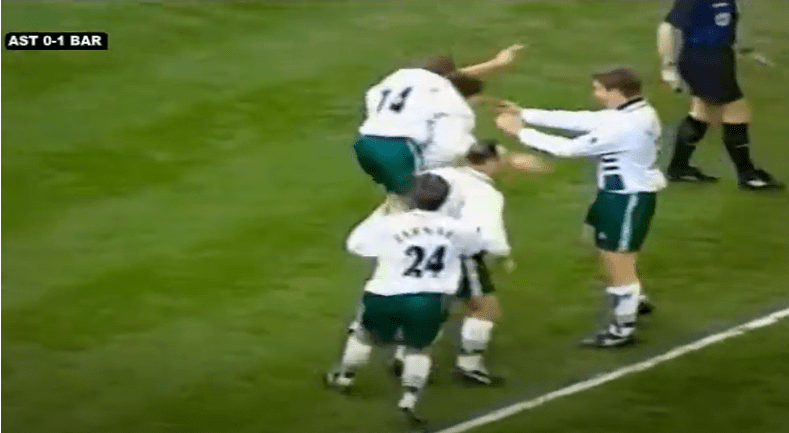
With little time to celebrate the Aston Villa triumph, Barnsley would soon play their 3rd match in 6 days when they hosted Southampton at Oakwell on 14th March. Barnsley and Southampton had combined for five goals in a 4-1 win for the Saints back in November. Now, the two teams would produce a seven-goal thriller in the reverse fixture four months later, with five of these goals coming in the first half alone.
Ashley Ward would score for the second game running to put the home side in front in the 17th minute, but Norwegian striker Egil Østenstad would draw Southampton level eight minutes later. In the 32nd minute, Manchester United’s FA Cup giant-killer Scott Jones would register his first goal since that famous night to re-take the lead for Barnsley, yet Matt Le Tissier would peg back the Tykes with a header just four minutes before half-time. However, Barnsley would be back in front less than a minute later through Jan Åge Fjørtoft’s left-footed finish from close range, giving the Tykes a 3-2 half-time lead. Twelve minutes into the second half, Barnsley would earn a penalty after Fjørtoft had been pulled down in the area. Neil Redfearn would squeeze the ball past Paul Jones to score his first goal in 11 league matches and extend Barnsley winning margin to two goals. In the 71st minute, Matt Le Tissier would coolly curl a free-kick inside the near post to give Southampton hope at 4-3. However, Barnsley would ultimately hang on to score their third consecutive Premiership victory. In addition, the Tykes had now earned three straight league victories for the first time since December 1996.
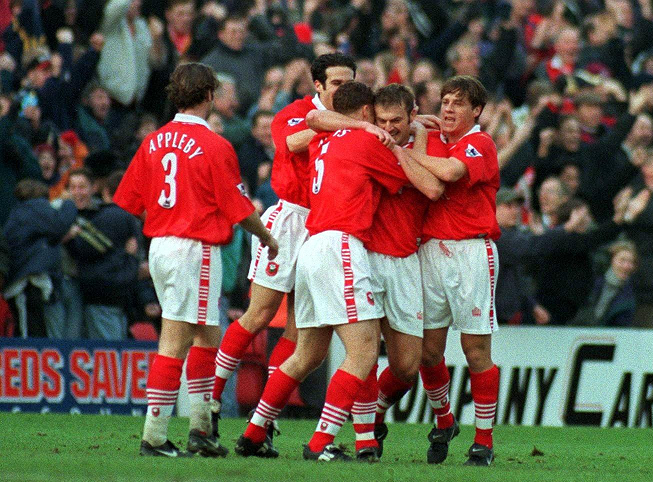
With Tottenham drawing 3-3 with Liverpool on the same day, Barnsley’s win over Southampton would draw them level on 31 points with Christian Gross’s struggling Spurs. However, due to their vastly inferior goal difference (-37 to Spurs’ -18), Barnsley would remain in the Premiership’s relegation zone, one point from safety. The Tykes also still had a difficult run-in ahead of them, with matches against Liverpool, Leeds, Blackburn, Arsenal and Manchester United on the horizon. However, with nine games remaining, a three-match winning streak and a game in hand on Everton and Spurs above them, Barnsley now had upward momentum and belief that they could survive in the Carling Premiership beyond a single season.
On 18th March, a long-serving member of Barnsley’s squad would leave the club for pastures new. On this day, defender Steve Davis would move to First Division Oxford United for an undisclosed fee, ending six-and-a-half seasons with the South Yorkshire club. After signing from Burnley in 1991, Davis would spend the first three years of his stay, including the club’s 1991-92 promotion campaign, as a bit-part player. Once Danny Wilson took over as Barnsley boss, he became a regular in the starting line-up during the Tykes’ rise up through Division One and promotion to the Premiership. However, Davis had slipped down the pecking order during the current season, failing to make a single Premiership appearance. Now aged 34, Davis would choose to move away from Barnsley for more first-team football, ending with 119 appearances and 10 goals to his name.
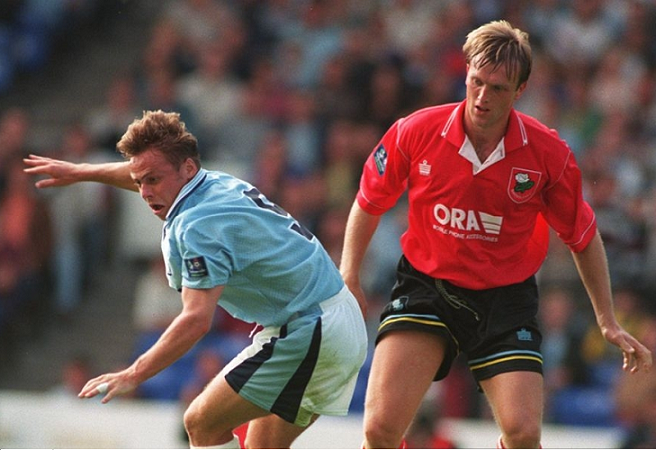
After three thoroughly impressive victories in a row, Barnsley’s winning momentum would be halted at home to Liverpool on 28th March. Since losing to the Tykes at Anfield on 22nd November, Liverpool had lost just three of their next sixteen matches. This electric form had moved them onto the outer fringes of the Premiership title picture, with the Reds sitting nine points behind leaders Manchester United with eight matches left to play. However, the form of Roy Evans’ team had stuttered in recent weeks, drawing with Everton and Tottenham and losing to Aston Villa and Southampton (teams that Barnsley had recently beaten), resulting in a run of one win in seven. Therefore, even though Liverpool were riding high in 3rd place in the Premiership standings, their recent performances suggested that Barnsley could do the double over the Reds in front of a packed Oakwell if they got their performance right.
In the first significant chance of the match at one end, Chris Morgan’s last-ditch clearance would stop Michael Owen from opening the scoring for Liverpool. At the other end, Martin Bulock’s deflected pass into the Liverpool box would fall to Neil Redfearn, who would turn and score his eighth league goal of the season to put Barnsley in front in the 37th minute. However, unlike the Anfield encounter earlier in the season, Liverpool would manage to register a response, equalising a minute before half-time. Full-back Rob Jones would pounce upon Martin Bullock’s slip on the halfway line and start a counter-attack. Steve McManaman would spread the ball out to the on-rushing Øyvind Leonhardsen, who would make his way into the Barnsley box and slide the ball through to Karl-Heinz Riedle to finish. Barnsley’s defence would claim that Riedle was offside when he scored, but their complaints would fall on deaf ears.
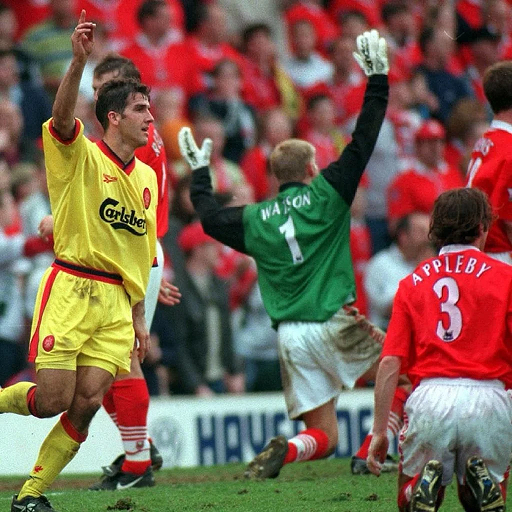
Eight minutes into the second half, Barnsley would find themselves reduced to ten men. Steve McManaman’s pass would send Michael Owen through the middle of the Tykes defence, but Darren Barnard would trip up the teenage prodigy just as he was starting to break clear. As Barnard was the last defender and denying a potential goalscoring opportunity, referee Gary Willard would see no other outcome but to award the left-back a straight red card. Five minutes later, Liverpool would take the lead, with Karl-Heinz Riedle scoring his second goal of the match. Picking up the ball 30 yards from goal, the German forward would send a venomous shot past David Watson, out of the goalkeeper’s reach. If going behind wasn’t bad enough, the situation would get even worse for Barnsley in the 65th minute. As Michael Owen successfully chased down another long ball downfield, Chris Morgan would make contact with the England striker, causing him to go down. Under the same terms as the earlier dismissal, Gary Willard would issue a red card to Morgan, leaving Barnsley with nine men and without two of their starting defenders. Tykes manager Danny Wilson would attempt to re-jig his depleted side into a manageable formation. However, by substituting on fresh strikers Andy Liddell and Ǵorǵi Hristov for Jan Åge Fjørtoft and Clint Marcelle, it showed that he still intended to try and get something out of this game.
In the 85th minute, Wilson’s changes paid dividends. Paul Ince would foul Hristov in the Liverpool box, and the referee would award Barnsley a penalty. Neil Redfearn would step and send Brad Friedel the wrong way to score his second goal of the game and bring Barnsley level at 2-2 with five minutes remaining. Despite playing with nine men, Barnsley was about to earn an excellent point at home against 3rd-placed Liverpool. However, the Reds would have other ideas. In the dying moments, Steve McManaman would find space inside the Barnsley box and lift the ball over David Watson to give Liverpool the win and spark a mini-pitch invasion in the away end. Barnsley would again claim an offside, but the referee would not hear it. Tired with the Barnsley players surrounding him, he would give midfielder Darren Sheridan a second yellow card for unsporting behaviour, leaving Barnsley to end the match with eight men and bring an ugly end to proceedings. Liverpool had ended Barnsley’s three-match winning streak, while Barnsley had become the first side to receive three red cards in a single Premiership match. In addition, Tottenham 3-1 win over bottom side Crystal Palace meant that Barnsley’s gap to Premiership safety was now back to three points.
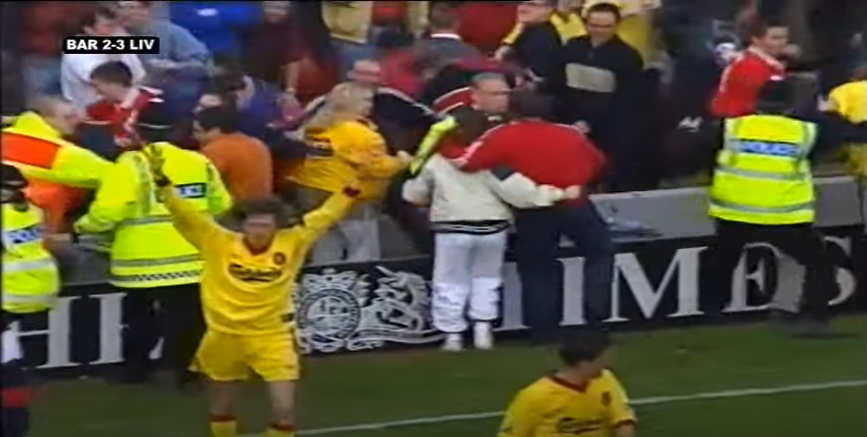
Three days after their controversial defeat to Liverpool, Barnsley would try to get back to winning ways away at 6th-placed Blackburn Rovers. With Everton and Spurs not playing on this night, a win at Ewood Park would lift Barnsley out of the relegation zone for the first time since 20th September. However, on 31st March, they would go behind after just eight minutes to Martin Dahlin’s right-footed effort. After much trying, the Tykes would find their equaliser in the 67th minute. Ǵorǵi Hristov would finish from a long ball over the top of the Rovers defence, the Macedonian striker scoring just his third goal of the season and his first since Boxing Day. However, Kevin Gallacher’s 14th goal of the season would end the match in the 87th minute, with Blackburn claiming the three home points and Barnsley missing the chance to steal a march on their relegation rivals.
The Blackburn defeat would end a March of two halves for Danny Wilson’s men. After beginning with impressive wins over mid-table sides Aston Villa and Southampton, the Tykes had come away empty-handed against Liverpool and Blackburn, despite remaining competitive against higher-level opposition. As March ended, Barnsley had seven matches to achieve Premiership survival. The Tykes had a three-point gap to overcome, an achievable goal that would require performances equivalent to those seen in the wins over Villa and Southampton. The team still had to face Leeds, Arsenal and Manchester United before the season’s end but also had games with Sheffield Wednesday (13th), Newcastle United (15th) and Tottenham (17th), matches that Barnsley had a better chance of winning. The home match against Spurs on 18th April could still prove crucial in Barnsley’s top-flight future. It just depended on how the team performed before that point.
| Position | Team | Played | Wins | Draws | Losses | GF | GA | GD | Points |
|---|---|---|---|---|---|---|---|---|---|
| 16th | Tottenham | 31 | 9 | 7 | 15 | 32 | 48 | -16 | 34 |
| 17th | Everton | 31 | 8 | 9 | 14 | 35 | 46 | -11 | 33 |
| 18th | Barnsley | 31 | 9 | 4 | 18 | 32 | 71 | -39 | 31 |
| 19th | Bolton | 31 | 6 | 12 | 13 | 29 | 48 | -19 | 30 |
| 20th | Crystal Palace | 31 | 6 | 8 | 17 | 27 | 54 | -27 | 26 |
April
After ending March by facing top-six clubs Liverpool and Blackburn, Barnsley would begin April with a visit to sixth-placed Leeds United. At the end of November, Leeds had edged a 3-2 contest at Oakwell, a match which Barnsley had led 2-0 before Leeds’ eventual comeback. On 4th April, one goal would separate the two teams at the end of 90 minutes, and Leeds would again end the game with three points. Jimmy Floyd Hasselbaink’s header would give the home side the lead after 20 minutes, but Ǵorǵi Hristov’s second goal in as many games would bring the Tykes level a minute before half-time. With the match heading towards a draw, an unfortunate error would cost Barnsley. In the 80th minute, centre-back Adie Moses would head a Leeds corner into his own net, giving Leeds a deserved home victory and Barnsley a third consecutive defeat. In worse news, a 1-1 draw between Tottenham and Everton would move both teams a point further away from relegation, leaving Barnsley’s gap to Premiership safety at four points with six matches remaining.
Barnsley would finally get back to winning ways when Sheffield Wednesday came to Oakwell for a South Yorkshire derby on 11th April. However, the 18,692 spectators inside the stadium would have to wait 65 minutes to finally have something to truly celebrate. With 25 minutes left, a long throw-in from Aleš Križan would land on the chest of Ashley Ward. Ward would move the ball down to his left foot and put it to the other side of Wednesday goalkeeper Kevin Pressman, giving Barnsley a 1-0 lead. Seven minutes after going in front, Barnsley would double their winning margin. Somehow, Martin Bullock would get the ball to Jan Åge Fjørtoft, and the Norwegian striker would do the rest, manoeuvring the ball onto his left foot and stroking it into the bottom corner. In the 86th minute, Sheffield Wednesday would make things interesting when Dejan Stefanović scoring his second goal of the season (with both coming against Barnsley). However, Barnsley would maintain their performance levels to win their 10th match of the season.
Tottenham’s 2-1 defeat to Chelsea would see Barnsley close the safety gap down to two points. However, Bolton Wanderers’ 2-1 victory over Blackburn would see Colin Todd’s men leapfrog Barnsley into 18th place, due to having a superior goal difference (-18 to Barnsley’s -39). Therefore, despite beating Sheffield Wednesday, Barnsley still lost somehow, with Bolton now making their Premiership survival task even more difficult with five matches left to play.
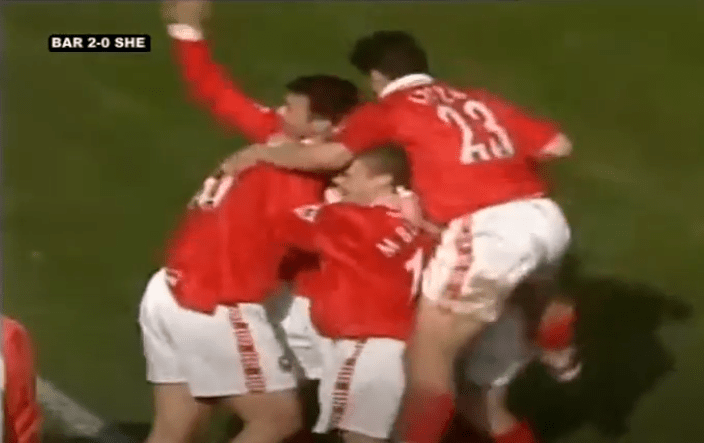
Two days after beating Sheffield Wednesday, Barnsley would be back in action against Newcastle United, who had slipped down to 16th under the management of Kenny Dalglish. However, the 4-time title-winning manager would lead his team to victory at St James’ Park over Danny Wilson’s men. Andreas Andersson would put the Magpies 1-0 up five minutes before half-time, but Jan Åge Fjørtoft would level the scores for Barnsley five minutes after the break. However, Alan Shearer would score just the second goal of an injury-affected season to give Newcastle the victory with four minutes to go. Up next for Barnsley: a crunch clash with Tottenham.
Heading into the match at Oakwell on 18th April, just two points separated Barnsley and Spurs. However, Barnsley still possessed a horrific goal difference, meaning that three points still separated Barnsley from Premiership safety, as had been the case for many months. However, a win over Spurs could lift them out of the bottom three and see Spurs replace them, depending on the result of Bolton’s match against Leeds on the same day. However, regardless of what happened at Burnden Park that day, Barnsley would miss the opportunity to move out of the relegation zone, drawing 1-1 with Tottenham at Oakwell.
In this match, Barnsley would strike first. In the 19th minute, Eric Tinkler would stop a rampaging David Ginola with a well-placed tackle before passing the ball forward to Martin Bullock in space out on the wing. Bullock would come inside, dribbling into the box and evading tackles before laying the ball off for Neil Redfearn to score his 10th goal of the season. Later in the half, great interplay between Ginola and Allan Nielsen down the left flank would lead to a chance for Jurgen Klinsmann, but the veteran would send his shot over the bar. Despite this, Barnsley would lead at half-time. However, two minutes after the break, Spurs would equalise. After Barnsley had failed to clear a corner, Allan Nielsen’s shot from distance would be diverted home by midfielder Colin Calderwood. With most of the second half left to play, the two teams were tied at 1-1.
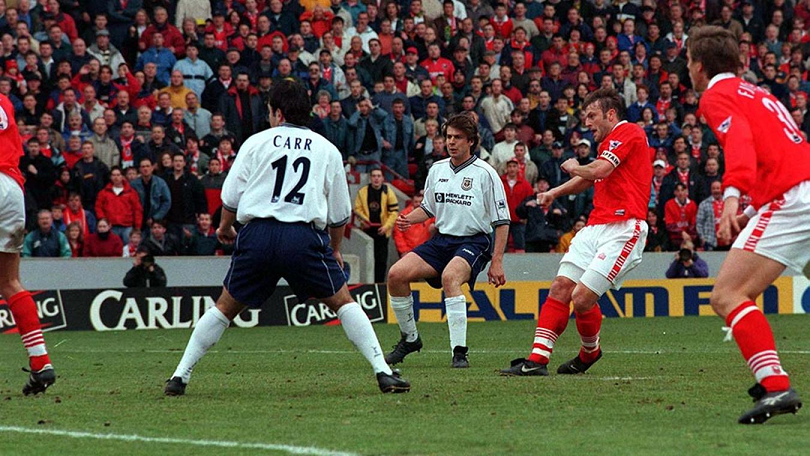
Midway through the second half, Barnsley would find themselves a man up, as Spurs defender Ramon Vega would earn a straight red card for pulling down Ashley Ward despite being the last man. However, nothing would come from the follow-up free-kick. Despite being a man down, Spurs would come closer to a winning goal, but Chris Armstrong, Darren Anderton and David Ginola would all fail to find it. The match would end in a 1-1 draw, with the result taking Barnsley a point above Bolton into 18th place. However, the gap between themselves and survival would remain at three points with three matches left. Now, Barnsley had to better Spurs and Everton’s results in their final three games to give themselves the best chance of staying up. The only problem with this plan was that Barnsley’s last three matches were against 1st-placed Arsenal, 10th-placed Leicester City and 2nd-placed Manchester United. If Barnsley failed to gain anything from these games and other results went against them, they could be relegated with matches left to spare.
If Barnsley were hoping to get anything from their home match against Arsenal on 25th April, they needed only to look at the Gunners’ recent record to see that the chances of that happening were slim from the start. Arsenal had not lost in the Premiership dating back to 13th December (a span of 16 matches) and hadn’t lost an away match since 22nd November (8 games). Arsene Wenger’s team had even won their last seven games in a row before facing Barnsley, meaning that few would expect anything else at Oakwell other than an Arsenal win. This outcome would begin to play out when Dennis Bergkamp put the Gunners in the 23rd minute. The Dutchman would collect the ball from Emmanuel Petit before going round Arjan de Zeeuw and curling the ball into the far corner from the edge of the Barnsley box. Later in the first half, Arsenal would counter-attack from their own penalty area, resulting in Marc Overmars putting the ball wide left of the goal. David Platt would also clear the bar with a long-range effort. After these efforts, Barnsley would finally register their first significant shot on goal when Darren Barnard forced a save out of David Seaman from 25 yards. Despite their best efforts, Arsenal still only led Barnsley 1-0 at half-time. Could the Tykes manage to find an equaliser in the second 45 minutes?
The second half would begin with another David Platt longshot over the crossbar. Then, Nicolas Anelka would hit the bar with a header immediately after forcing a close-range save from David Watson. Patrick Vieira would graze the bar after carrying the ball from his own half. Patrick Vieira, Dennis Bergkamp, Nicolas Anelka and Marc Overmars were running Barnsley ragged, and the latter mentioned Dutch winger would score Arsenal’s second goal in the 76th minute. After an exchange of passes, David Platt would lift a pass into Overmars, who would collect the ball on his chest to take it around a defender before running into the box and sliding the ball past David Watson for his 10th goal of the season. Arsenal was not done even after going 2-0 ahead, as Lee Dixon’s shot would curl past the post from 20 yards. Amid this Arsenal onslaught, the best Barnsley could hope for, goal-wise, was a long-range shot from Neil Redfearn that went too high. However, the referee would eventually end Barnsley’s suffering, as Arsenal would run out 2-0 victors after producing an all-around masterclass at Oakwell.
On the same day as Barnsley’s defeat to Arsenal, Tottenham would beat Newcastle 2-0, and Bolton would beat Aston Villa 3-1. The impact of these results would see Barnsley drop to 19th place, two points behind Bolton, while the gap to achieve survival had now jumped up to five points. Barnsley’s horrendous goal difference would always be a factor against them in this relegation fight. They would now need to win their final two matches against Leicester City and Manchester United and hope that other results went their way. Anything less would spell the end for Barnsley’s Premiership journey. With two games to go, Barnsley needed a miracle.
| Position | Team | Played | Wins | Draws | Losses | GF | GA | GD | Points |
|---|---|---|---|---|---|---|---|---|---|
| 16th | Tottenham | 36 | 10 | 10 | 16 | 37 | 53 | -16 | 40 |
| 17th | Everton | 36 | 9 | 12 | 15 | 40 | 51 | -11 | 39 |
| 18th | Bolton | 36 | 8 | 13 | 15 | 36 | 57 | -21 | 37 |
| 19th | Barnsley | 36 | 10 | 5 | 21 | 37 | 79 | -42 | 35 |
| 20th | Crystal Palace | 35 | 7 | 8 | 20 | 31 | 63 | -32 | 29 |
May
Barnsley entered their match against Leicester City on 2nd May 1998, knowing that anything other than taking the three points at Filbert Street would relegate them with a game to spare. On the same day, Bolton would host bottom side Crystal Palace, with the Wanderers having the chance to relegate the Eagles with a win at Burnden Park while enhancing their own survival hopes. Also, Tottenham would travel to Wimbledon, and Everton would face Arsenal. Barnsley needed all of these results to go their way. If just one of these results went against them, Barnsley would be relegated even with a win at Leicester.
One of the best chances in the first half would see a pair of headers set up Tony Cottee for a bicycle kick that put the ball over the crossbar. Down the other end, the best Barnsley could produce was a Jan Åge Fjørtoft half-volley that ended up in the hands of Foxes keeper Kasey Keller. Twelve minutes into the second half, Leicester would take the lead. Greek defender Theodoros Zagorakis would intercept a Nicky Eaden pass on halfway before dribbling into trouble. Luckily, a Barnsley clearance would immediately fall to Mussy Izzet, who would instantly find Steve Guppy on the wing. Guppy would play the ball across the box, where Barnsley keeper David Watson would parry the ball into the path of Zagorakis to score Leicester’s goal. With his first goal for Leicester City, Zagorakis had put Barnsley on the brink of relegation.
With less than 20 minutes to go, Emile Heskey would dribble past Arjan de Zeeuw before finding Tony Cottee unmarked in the box. Luckily for Barnsley, Cottee would get under the ball and miscue his header towards a Barnsley defender. Later, Ashley Ward would squeeze inside two Foxes defenders before forcing a point-blank save from Kasey Keller for Barnsley’s best chance of the match. However, Barnsley was not coming close to scoring an equaliser and was running out of time to score one. In the 84th minute, Barnsley’s afternoon would get even worse as substitute Jovo Bosančić would receive a second yellow card for bodychecking Zagorakis, leaving Barnsley with 10 men. However, in the dying moments, Barnsley would receive a free kick after a foul by Zagorakis. However, the ball would be cleared for a corner, and referee Mike Riley would blow for the final whistle. With Leicester winning 1-0, Barnsley had been relegated with one match to go and had offered very little going forward at Filbert Street. Leicester came away with a deserved victory, while Barnsley could only rue missed opportunities from earlier matches and wonder what might have been.
However, even if Barnsley had beaten Leicester, they could have delayed their potential fate until the final day. Tottenham’s 6-2 win over Wimbledon confirmed their Premiership safety, while Bolton strengthened their case with a 5-2 victory against Crystal Palace, relegating the Eagles. However, Everton’s 4-0 defeat at the hands of Arsenal would have made things interesting if Barnsley had beaten Leicester. A win for Barnsley would have meant that just two points would separate the Tykes, Bolton and Leicester going into the last day with the three sides playing out a three-way battle for survival in matches with Manchester United, Chelsea and Coventry. However, Barnsley’s loss at Filbert Street put paid to that hypothetical idea, with Everton and Bolton instead duking out between each other.
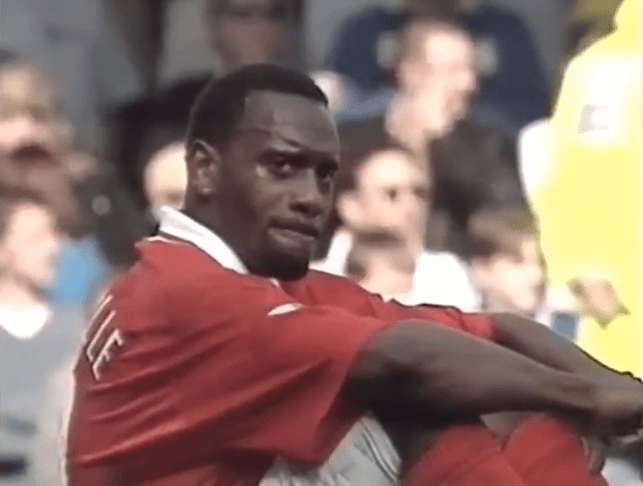
With their fate now decided, Barnsley would invite Manchester United to Oakwell for a match that held no meaning for either team except potential bragging rights. The Tykes had been relegated the week before while Manchester United had seen their Premiership title defence end when Arsenal thrashed Everton at Highbury one day later. Regardless of the result, Barnsley would finish in 19th place, while Man United would finish 2nd. The only thing Barnsley could gain from this match was the opportunity to claim a Premiership victory over Manchester United. They had already beaten them in the FA Cup three months earlier, but a top-flight win would mean even more. To beat the 11-time champions of England in front of a capacity crowd at Oakwell would end Barnsley’s single Premiership season in the best possible fashion.
Barnsley F.C. Starting Line-up vs Manchester United on 10th May 1998
| Position | No. | Player |
|---|---|---|
| GK | 1 | David Watson |
| RB | 3 | Matty Appleby |
| CB | 27 | Chris Morgan |
| CB | 5 | Adie Moses |
| LB | 24 | Darren Barnard |
| RM | 14 | Martin Bullock |
| CM | 4 | Darren Sheridan |
| CM | 8 | Neil Redfearn (capt.) |
| LM | 18 | Scott Jones |
| CF | 22 | Ǵorǵi Hristov |
| CF | 25 | Ashley Ward |
Barnsley manager Danny Wilson would treat the game like any other, making five changes to the side that lost to Leicester the previous week. Arjan de Zeeuw and Nicky Eaden would make way for Chris Morgan and Matty Appleby in defence. Martin Bullock and Darren Sheridan would replace Clint Marcelle and Eric Tinkler in midfield. Finally, Ǵorǵi Hristov would partner Ashley Ward in attack instead of Jan Åge Fjørtoft. Alex Ferguson would also make five changes to the team that beat Leeds 3-0 at Old Trafford. However, he would use this dead rubber to give game-time to young players and reserves. Out would go Gary Neville, Gary Pallister, Denis Irwin, Paul Scholes and David Beckham, and in would come 17-year-old Wes Brown, Henning Berg, Mike Clegg, 19-year-old John Curtis and 20-year-old Phil Mulryne. However, despite the change behind them, Manchester United’s unchanged strike partnership of Andy Cole and Teddy Sheringham would still win the match for Alex Ferguson.
Five minutes in, Andy Cole would receive Teddy Sheringham’s cross, withstanding the aerial challenge of Scott Jones before turning and blasting a shot into the back of the net. After going ahead, Nicky Butt would hit the post with a long-range effort with David Watson beaten. Down the other end, Ashley Ward would exchange possession with Ǵorǵi Hristov before attempting to lob United keeper Raimond van der Gouw from 30 yards. His effort would clip the top off the crossbar. Despite these goalscoring opportunities for both teams, Manchester United would retain their 1-0 advantage at half-time. In the second half, a quick United attack downfield would end with Andy Cole setting up Teddy Sheringham for a shot that David Watson would save to his left. However, in the 67th minute, the England striker would beat the Barnsley goalkeeper. Nicky Butt would exchange passes with Ryan Giggs before feeding Sheringham. The 32-year-old would beat David Watson at his near post to double Manchester United’s lead. Barnsley would have no response, and Alex Ferguson’s men would end the 1997/98 season with a seven-match unbeaten streak. Meanwhile, Barnsley would end with a third consecutive defeat, all of which they had failed to score once. Now that their Premiership dream was over, they could only look forward to competing in Division One the following season.
After one season in the top-flight of English football, Barnsley would fail to avoid immediate relegation back to the second tier. The Tykes would finish 19th in the Carling Premiership table, five points adrift of safety. Danny Wilson’s team would end with an overall record of 10 wins, 5 draws and 23 defeats from their 38 Premiership matches, producing a total of 35 points. They would score 37 goals in these matches and concede 82, ending with a goal difference of -45.
| Position | Team | Played | Wins | Draws | Losses | GF | GA | GD | Points |
|---|---|---|---|---|---|---|---|---|---|
| 16th | Sheffield Wednesday | 38 | 12 | 8 | 18 | 52 | 67 | -15 | 44 |
| 17th | Everton | 38 | 9 | 13 | 16 | 41 | 56 | -15 | 40 |
| 18th | Bolton | 38 | 9 | 13 | 16 | 41 | 61 | -20 | 40 |
| 19th | Barnsley | 38 | 10 | 5 | 23 | 37 | 82 | -45 | 35 |
| 20th | Crystal Palace | 38 | 8 | 9 | 21 | 37 | 71 | -34 | 33 |
Statistics
Despite managing to avoid relegation until the season’s penultimate match, the statistics show that the Tykes’ time in the top-flight was always going to be a brief one. Despite earning more overall wins (10) than fellow relegated sides Crystal Palace (8) and Bolton (9), and an Everton side which avoided the drop on goal difference alone (9), Barnsley would end up losing more matches than any other Premiership side during the 1997-98 season (23). Only 4th-placed Chelsea would end up with fewer draws (3) than Barnsley’s five, and this inability to grind out points from potential defeats would ultimately play a role in the demise of their season. Of Barnsley’s 23 losses, seven were lost by a one-goal margin. If Barnsley had managed to turn these one-goal defeats into draws, they would have stayed up.
Barnsley seemed to always be one win or three points away from moving out of the Premiership’s bottom three for much of their league campaign. However, the team could never take that final step and get that one victory that could push them out of trouble, even momentarily. Against their relegation rivals, Barnsley would do the double over Crystal Palace and beat Bolton 2-1 in August but would draw and lose to both Everton (2-4, 2-2) and Tottenham (0-3, 1-1) when it mattered most. The reason for the gap to safety being three points instead of the two points needed to draw level on points with Spurs, Everton or Bolton was that Barnsley went through the entirety of their Premiership campaign with the worst goal difference in the entire division. The Tykes conceded 82 goals during the 1997-98 season, 11 goals more than their nearest rivals Crystal Palace, who conceded 71. The team even allowed the most shots on target, with the opposition hitting the target 285 times and Barnsley’s goalkeepers making 202 total saves (23 more than the next team). The absurd number of goals shipped by Barnsley led to the team finishing with a goal difference of -45 (11 points worse than Crystal Palace’s -34). This goal difference would serve as an impediment to Danny Wilson’s team throughout the season. It became another handicap that the team had to overcome to attain survival.
Barnsley would finish the 1997-98 Premiership season with a home record of seven wins, four draws and eight defeats from 19 matches. Even though this home record was nothing to write home about (only Wimbledon and Crystal Palace performed worse in front of their own fans during this season), it did contribute to 25 of the 35 total points scored by Danny Wilson’s team during this campaign. This was due to the Tykes’ abysmal record when the team played away from Oakwell. Away from home, no team would perform worse than Barnsley during the 1997-98 Premiership season, with Danny Wilson’s team winning three, drawing one and losing fifteen for a total of 10 points out of a possible 57. Along with these stats, Barnsley would also score the fewest (12) and concede the most goals (47) in away matches. At home, Barnsley would perform much better. Even though they would concede 35 goals at Oakwell (the second-most in the division), the 25 scored by Barnsley in front of their own fans would put them above Crystal Palace (20th), Wimbledon (15th), Tottenham (14th), Newcastle (13th) and Leicester (10th) in the home goals standings. However, despite having a better record at home, half of Barnsley’s six Premiership clean sheets (another divisional low) would come in the team’s three away wins against Crystal Palace (1-0, 12th August), Liverpool (1-0, 22nd November) and Aston Villa (1-0, 11th March).
Despite spending all but the first seven weeks of the season in the Premiership’s bottom three, Barnsley would actually perform better in the second half of the 1997/98 season compared to the first. Reaching the halfway point of the league campaign with a 3-0 defeat to Tottenham on 20th December, Barnsley would spend Christmas possessing a record of 4 wins, 2 draws and 13 losses with a total of 14 points on the board. At this point, the Tykes sat three points adrift at the bottom of the Premiership, six points off Bolton in 17th. The team had scored 17 goals in 19 matches and conceded 50, producing an unenviable goal difference of -33. The first half of the season would see Barnsley ship three or more goals in nine different matches. Two 3-0 losses to Spurs and Aston Villa, three four-goal defeats to Wimbledon, Southampton (both 4-1) and Everton (4-2) plus 5-0, 6-0 and 7-0 thrashings by Arsenal, Chelsea and Manchester United respectively would account for 36 of the 50 goals let in by the Tykes during this period. The 7-0 loss to Manchester United in November would turn out to be the largest home win of the 1997-98 Premiership campaign, while the 6-0 drubbing by Chelsea in August would be the heaviest away win.
In the second half of the season, Barnsley would improve in all areas. In their second set of 19 games, the Tykes would win six, draw three and lose ten for a total of 21 points. Achieving this seven-point improvement wouldn’t come down to Barnsley scoring more goals but conceding fewer. In their second 19 matches, Barnsley would score 20 goals, only three more than they had managed in the first half of the season. However, in these nineteen games, the Tykes’ defence would markedly improve, conceding 32 goals, an 18-goal decrease on the first half of the campaign. Even though Danny Wilson’s men would fail to score in six of the nineteen matches, the only blowout defeat they would suffer would be a 6-0 loss at the hands of West Ham on 10th January. The team would concede three or more goals on just three occasions during this period: in the 6-0 defeat to West Ham, the 4-3 win over Southampton on 14th March and the 3-2 defeat to Liverpool one week later. Even though they also sustained losses to Arsenal, Chelsea and Manchester United during this time, three 2-0 losses would replace the 5-0, 6-0 and 7-0 scorelines of earlier in the season.
Barnsley F.C.-First 19 matches
| Played | Wins | Draws | Losses | GF | GA | GD | Points |
|---|---|---|---|---|---|---|---|
| 19 | 4 | 2 | 13 | 17 | 50 | -33 | 14 |
Barnsley F.C.- Second 19 Matches
| Played | Wins | Draws | Losses | GF | GA | GD | Points |
|---|---|---|---|---|---|---|---|
| 19 | 6 | 3 | 10 | 20 | 32 | -12 | 21 |
Along with being unable to keep the ball out of their own net, Barnsley would similarly struggle to score goals throughout the 1997-98 season. The team’s total of 155 shots on target (4.08 SOT per 90 minutes) was the second-lowest in the league behind bottom side Crystal Palace. In fact, only Wimbledon (34) and Newcastle (35) would score fewer than Barnsley’s 37 goals in 38 Carling Premiership matches during the 1997-98 season. Coupled with the 82 goals they conceded, Barnsley would, in an average Premiership match, score 0.97 goals while conceding 2.12. Therefore, anyone predicting the scores at the time would have a safe bet picking Barnsley to lose a game 2-0 or 2-1. Barnsley would fail to score in 13 of their 38 matches (34%) during the 1997-98 season, a figure that only Tottenham (14th), Crystal Palace (20th) (both 14), Wimbledon (15th) and surprisingly Derby (9th) (both 16) would boast worse numbers.
In total, ten different players would score a goal for Barnsley during their 1997-98 Carling Premiership campaign. Blackburn (6th, 57 goals), Aston Villa (7th, 49 goals) and Southampton (12th, 50 goals) would produce the same amount of unique goalscorers, while Coventry (11th, 46 goals) would have fewer with nine. However, what these other teams had, which Barnsley lacked, was a consistent goalscorer(s) who the team could rely on to shoulder the burden of putting the ball in the net on a regular basis. As had been the case during the team’s promotion season, club captain Neil Redfearn would be Barnsley’s top scorer during the 1997-98 season, scoring 10 goals. After Redfearn would come the Tykes’ starting strike partnership of Ashley Ward and Jan Åge Fjørtoft, who would score eight and six goals. These three men were the only Barnsley players to score more than five times during the club’s Premiership campaign. By comparison, 34 of Blackburn 57 league goals would come from Chris Sutton (18) and Kevin Gallacher (16), and Coventry would have a similar situation with Dion Dublin (18) and Darren Huckerby (14). Six different Aston Villa players would score more than five goals for the 1997-98 season, while 40 out of Southampton’s 50 Premiership goals would come from just four players.
For much of the season, Barnsley lacked a prolific goalscorer that could earn them one or three points from losing positions. When they finally bought one, it was too late. In a combined 7,634 minutes of playing time, the eight strikers used by Danny Wilson during the 1997-98 season would combine for a total of 20 goals. Ashley Ward would score 8 goals in 29 appearances (0.28 goals per 90 minutes) after his September arrival, while fellow summer signing Ǵorǵi Hristov would score 4 in 23 (0.17 per 90) across the whole season. Andy Liddell and John Hendrie would find the net once in 26 and 20 appearances, respectively, while Clint Marcelle would fail to break his duck in 20 matches. Barnsley’s most prolific centre-forward during their league campaign would turn out to be Jan Åge Fjørtoft. After joining the club in mid-January, the Norwegian striker would finish with 6 goals in 15 games, for an average of 0.4 goals per 90 minutes. However, if Fjørtoft had joined in August instead of January, reproduced this kind of form and eventually played the same amount of matches as Ashley Ward (29), he could have finished with 11 goals for the season and been Barnsley’s top goalscorer. If he had played more matches than this, he could have scored as many as 14 goals. The five to nine goals that Fjørtoft could have scored might have saved Barnsley from the drop. However, these statistics are only speculative.
Every Barnsley Premiership Goal Scorer, 1997-98
| Player | Goals |
|---|---|
| Neil Redfearn | 10 |
| Ashley Ward | 8 |
| Jan Åge Fjørtoft | 6 |
| Ǵorǵi Hristov | 4 |
| Darren Barnard | 2 |
| Eric Tinkler | 2 |
| Jovo Bosančić | 2 |
| Andy Liddell | 1 |
| John Hendrie | 1 |
| Scott Jones | 1 |
In total, Barnsley manager Danny Wilson would use 27 players during the club’s 1997-98 Carling Premiership campaign. However, you couldn’t refer to many of these players as first-team regulars. Just six players would make more than 30 league appearances for Barnsley during this season, with a further eight appearing in 20 matches or more. However, just ten players would start more than half of the Tykes’ top-flight games (19+) in 1997-98, with only five managing to make 30 or more starts. These five players were team captain Neil Redfearn (37 starts), left-back Darren Barnard (33), right-back Nicky Eaden (32), centre-back Adie Moses (32) and goalkeeper David Watson (30). Below the 30-appearance mark, you would find striker Ashley Ward (28), centre-back Arjan de Zeeuw (26) and midfielders Martin Bullock (23), Eric Tinkler (21) and Darren Sheridan (20). With so few Barnsley players managing to become nailed-on starters for the team, it suggests that Danny Wilson was never truly happy with the performances of the teams he sent out. Although, if your team ends up winning 10 and losing 23 of their matches, it is not surprising to see changes made to a losing line-up. Barnsley’s defence was the only part of the team where more than one player reached the 30-appearance mark, whereas none of the eight strikers used by Wilson during this season would achieve this feat.
1997-98 Barnsley F.C. Carling Premiership Squad
| Position | No. | Player | Appearances | Goals |
|---|---|---|---|---|
| GK | 1 | David Watson | 30 | 0 |
| GK | 13 | Lars Leese | 9 | 0 |
| GK | 26 | Tony Bullock | 1 | 0 |
| DF | 2 | Nicky Eaden | 35 | 0 |
| DF | 5 | Adie Moses | 35 | 0 |
| DF | 6 | Arjan De Zeeuw | 26 | 0 |
| DF | 11 | Neil Thompson | 3 | 0 |
| DF | 18 | Scott Jones | 12 | 1 |
| DF | 19 | Peter Shirtliff | 4 | 0 |
| DF | 23 | Aleš Križan | 12 | 0 |
| DF | 24 | Darren Barnard | 35 | 2 |
| DF | 27 | Chris Morgan | 11 | 0 |
| DF | 29 | Peter Markstedt | 7 | 0 |
| MF | 3 | Matty Appleby | 15 | 0 |
| MF | 4 | Darren Sheridan | 26 | 0 |
| MF | 8 | Neil Redfearn | 37 | 10 |
| MF | 14 | Martin Bullock | 33 | 0 |
| MF | 15 | Jovo Bosančić | 17 | 2 |
| MF | 21 | Eric Tinkler | 25 | 2 |
| FW | 7 | John Hendrie | 20 | 1 |
| FW | 9 | Paul Wilkinson | 4 | 0 |
| FW | 10 | Clint Marcelle | 20 | 0 |
| FW | 12 | Andy Liddell | 26 | 1 |
| FW | 17 | Laurens ten Heuvel | 2 | 0 |
| FW | 22 | Ǵorǵi Hristov | 23 | 4 |
| FW | 25 | Ashley Ward | 29 | 8 |
| FW | 30 | Jan Åge Fjørtoft | 15 | 6 |
Aftermath
Traditionally, suppose a team promoted to the Premier League sticks with the coach that got them there, even if the experience ends with immediate relegation back to the second division. In that case, it suggests that the board believes that this same manager can achieve promotion again the following season. In these circumstances, the relegated team sticks with the same manager and tries to limit the number of players leaving the club for the Premier League or teams playing abroad. Keeping a settled squad from the one that suffered demotion, the manager adds players with second-tier experience and players not wanted by the top-flight. After this is done, it remains to be seen whether the recently-relegated team can successfully yo-yo themselves back into the top-flight.
Unfortunately for Barnsley, their quest to return to the Premiership at the first of asking following relegation would quickly suffer two sizeable setbacks. First, on 25th June, club captain Neil Redfearn would leave the Tykes after seven seasons to sign for newly-promoted Premiership side Charlton Athletic. Signed by Mel Machin in 1991, Redfearn had been a constant during Barnsley’s rise from the third tier to the top-flight. During his time in South Yorkshire, he would make 338 appearances, scoring 84 goals from central midfield. Redfearn had been Barnsley’s outstanding performer during their Premiership year, scoring 10 goals in 37 matches. However, these performances had impressed Charlton manager Alan Curbishley, who would spend £1 million to bring the 33-year-old down to south-east London.
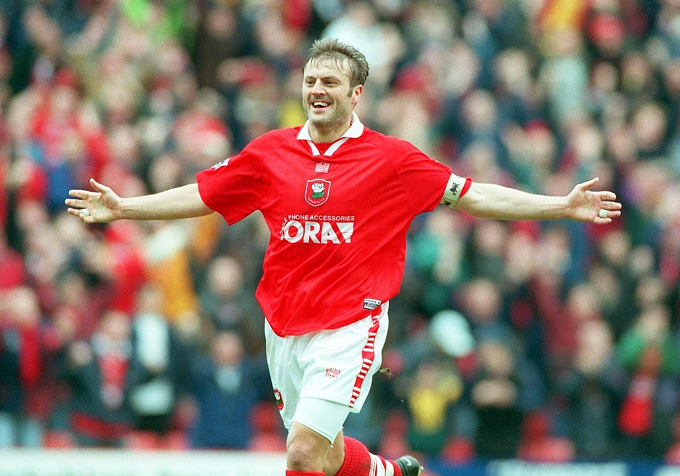
Eleven days after Neil Redfearn’s departure, Sheffield Wednesday would confirm current Barnsley boss Danny Wilson as their new manager. Despite avoiding relegation to Division One (and never even coming close to doing so), Wednesday would controversially sack Ron Atkinson after seven months in charge. Looking for someone younger, they would turn to former player Danny Wilson. Wilson had made over 100 appearances in the blue-and-white stripes in three years at Hillsborough between 1990 and 1993, starting in the team’s shock League Cup final victory over Manchester United in 1991. Seeing Wilson as a man who could revitalise the club’s fortunes, Wednesday would convince Barnsley to let the 38-year-old manager out of his contract. However, while Sheffield now had their man, the departure of Danny Wilson would rock Barnsley’s ambitions for promotion during the 1998-99 Division One season. Now not only had the Tykes lost their talismanic captain, but they had also lost the coach that had led them to the promised land. Instead of hiring an established coach as his replacement, Barnsley chairman John Dennis would return to the route which had initially brought Danny Wilson to Oakwell. The day after Wilson’s departure was confirmed, Dennis would announce Tykes striker John Hendrie as Barnsley’s new player-manager for the upcoming season.
Before Hendrie’s arrival, Danny Wilson had overseen the departures of Luke Beckett, Laurens ten Heuvel, Neil Thompson and Jovo Bosančić. Between them, these four players had made a combined 23 appearances the previous season. Beckett had come through Barnsley’s academy but had yet to make a senior appearance for the club. The young striker would join Third Division Chester City on 15th May. Laurens ten Heuvel had made just eight league appearances for the Tykes after joining from Dutch Second Division team Den Bosch in 1996. He would move to the Austrian 2nd Division side First Vienna. Neil Thompson had arrived at Oakwell from Ipswich Town in August 1996, having made 73 Premiership appearances for the Tractor Boys. He would score five goals in 22 matches during Barnsley’s successful 1996-97 promotion campaign but would appear just four times during his return to the top-flight. The 34-year-old would leave the Tykes for Second Division York City. Finally, Jovo Bosančić would join French Ligue 2 side Guingamp after 42 appearances and 3 goals for Barnsley. Joining from Portuguese second-tier team Campomaiorense in the summer of 1996, he would make 25 appearances during the club’s promotion campaign. He would play a further 17 matches for Barnsley in the Premier League, starting 13.
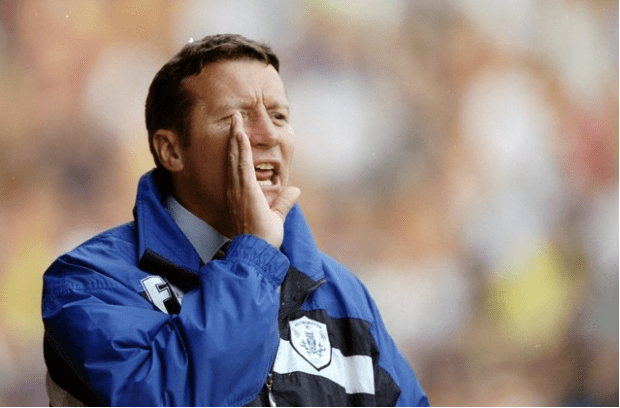
(c) Sheffield Star 
(c) LMA
With his feet now under the table, John Hendrie would sign two players during the summer of 1998. On 15th July, a week after his appointment as manager, he would sign Southampton midfielder Kevin Richardson on a free transfer and Derby County’s Robin van der Laan for £400,000. Both players had top-flight experience, with Richardson having made 335 appearances for Everton, Watford, Arsenal, Aston Villa, Coventry and Southampton. Meanwhile, van der Laan had experienced promotion with Derby in 1996 before making 26 Premiership appearances over the previous two seasons.
Having kept the majority of Barnsley’s Premiership squad intact, it was a surprise that Hendrie would fail to win his first four league matches in charge of Barnsley, drawing three and losing one. After turning things around with three wins in the next six games, Barnsley would end September 1998, sitting a less-than-impressive 15th in the Division One standings. After this inauspicious start, John Hendrie’s Barnsley would struggle to find their winning mentality in October and November before finally finding it in December. The team would win five of their last seven matches of 1998 to end the year in 13th place with a record of nine wins, nine draws and eight defeats from 26 matches. Not exactly promotion form.
Around this time, between mid-October and late December 1998, five players would join Barnsley and three would leave. Most of these signings saw the young Scottish manager reconfiguring the team’s forward options. On 15th October, Andy Liddell would leave his boyhood club to join Premiership side Derby County for £400,000. Liddell was a graduate of Barnsley’s academy. After making his professional debut in 1991, he would make 226 appearances for the Tykes, scoring 38 goals. Eight days later (23rd October), Hendrie would spend £850,000 to replace Liddell with Crystal Palace forward Bruce Dyer. The 23-year-old Dyer had scored 44 goals in 164 matches for Palace across five-and-a-bit seasons, including 32 goals in 95 First Division appearances. Two days after Dyer’s arrival, Jan Åge Fjørtoft would end his nine-month stay at Oakwell to join Eintracht Frankfurt for £675,000. Before his departure, Fjørtoft had found the net just three times in nineteen appearances during the 1998-99 season. On 25th November, Aberdeen forward Craig Hignett would join the Tykes. Hignett had never found his place in Scotland but did have experience playing for Middlesbrough in the Premiership and Division One. On Teesside, he would score 48 goals in 194 matches, including nine goals in the Premiership.
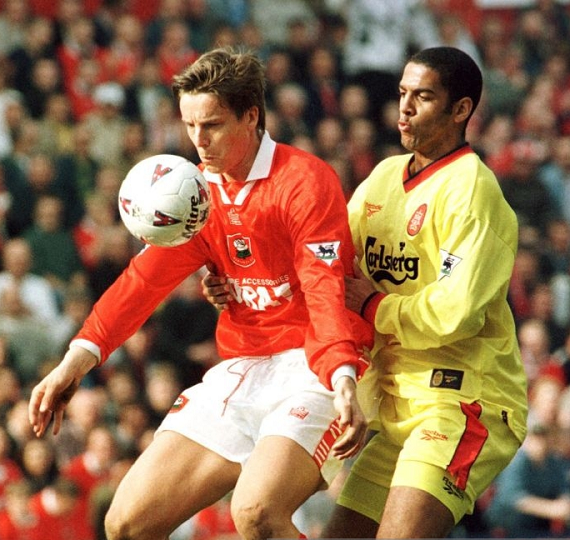
Nine days after the arrival of Craig Hignett, Derby striker Deon Burton would join Barnsley on a one-month loan until the end of the year. The 21-year-old would fail to score in three appearances for the club. On 22nd December, Don Goodman would join on a four-month loan from the Japanese side Sanfrecce Hiroshima. The 32-year-old Goodman possessed extensive second-tier experience, having played thirteen consecutive seasons in the division for Bradford City, West Brom, Sunderland and Wolves between 1985 and 1998. In this run, he had scored 133 goals in 399 matches. Goodman was also a former teammate of manager John Hendrie as the two had played together at Bradford City between 1984 and 1987.
One week after the arrival of Don Goodman, a Premiership club would come calling for Barnsley’s top scorer. On 29th December, Blackburn Rovers, currently struggling in 16th place, would spend £4.5 million to take Barnsley striker Ashley Ward to Ewood Park. At the time, Ward was already firing for Barnsley in the First Division, having already scored 12 goals in just 17 matches. Losing Ashley Ward at the midway point of the season could affect Barnsley’s now narrowing chances of achieving Premiership promotion. However, £4.5 million was the most anyone had ever offered for a Barnsley player, and the Tykes would agree to sell the 28-year-old.
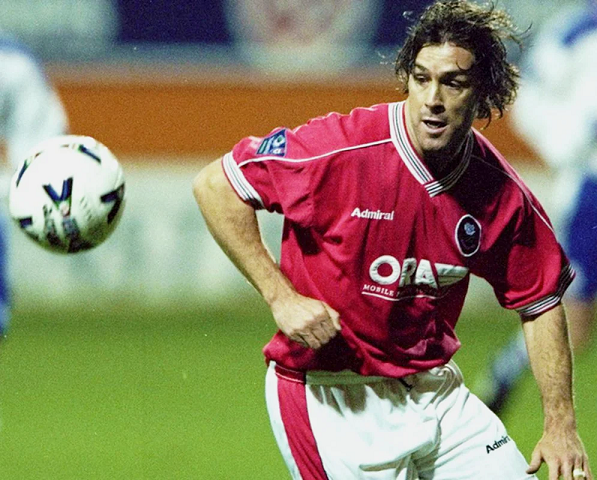
Returning from the Christmas break, Barnsley would begin 1999 with an 11-match winless streak (6 draws, 5 defeats). This run would end their flagging promotion dreams, as the Tykes would drop to 17th in the Division One table. During this run, John Hendrie would add two more players to the Barnsley squad. On 28th January, the Tykes would fork out £1.5 million to sign QPR striker Mike Sheron. Sheron had spent most of his career in the First Division, making his debut for Manchester City in 1990 before scoring 25 goals in 102 appearances. After spells with Division Three Burty and Premiership Norwich, Sheron would truly shine in his one-and-a-half seasons at Stoke City, scoring 34 goals in 69 matches for the Potters. This form would earn him a £2.35 million move to QPR, where he had scored 13 goals in 56 games before agreeing to join Barnsley. On 25th February, John Hendrie would bring in a man with 207 top-flight appearances to his name, Clayton Blackmore. Blackmore was best known for his twelve years at Manchester United between 1982 and 1994, winning the Premiership in 1993. Since then, he had been a bit-part player for former teammate Bryan Robson at Middlesbrough, making 66 appearances in all competitions.
On 23rd March 1999, Barnsley would end their winless start to 1999 by beating Bristol City 2-0 at Oakwell. They would continue this momentum by defeating Portsmouth and Sheffield United to form a three-match winning run and move to 13th in the Division One table. The team now sat 14 points off the play-off positions with six matches remaining, putting promotion out of the question. The team’s winning run would end at the hands of Port Vale on 5th April. The Tykes would end April with a run of one win in four matches, a run which would end John Hendrie’s time as Barnsley player-manager. On 25th April, the Barnsley board would remove Hendrie from his managerial position, installing Eric Winstanley as caretaker manager for the club’s final two league matches. Hendrie would never manage another professional football club. Eric Winstanley would lead the Tykes to a draw and a win in their last two league matches. The team would finish 13th in the Division One table with 14 wins, 17 draws and 15 losses for 59 points. After beginning the season with hopes of an immediate return to the top-flight, Barnsley would eventually finish 17 points off the final play-off place held by Bolton Wanderers. In the end, they had never come close to challenging, spending the whole season in the weeds of Division One’s mid-table.
Final 1998-99 Football League Division One table
| Position | Team | Played | Wins | Draws | Losses | GF | GA | GD | Points |
|---|---|---|---|---|---|---|---|---|---|
| 10th | Huddersfield Town | 46 | 15 | 16 | 15 | 62 | 71 | -9 | 61 |
| 11th | Grimsby Town | 46 | 17 | 10 | 19 | 40 | 52 | -12 | 61 |
| 12th | Barnsley | 46 | 14 | 17 | 15 | 59 | 56 | +3 | 59 |
| 13th | West Brom | 46 | 16 | 11 | 19 | 69 | 76 | -7 | 59 |
| 14th | Crystal Palace | 46 | 14 | 16 | 16 | 58 | 71 | -13 | 58 |
Away from the mediocre league campaign, Barnsley’s best performances during the 1998-99 season would come in the cup competitions. First, they would reach the 4th round of the League Cup, defeating Scarborough (Div 3), Reading and Bournemouth (Div 2) before falling to a 1-0 defeat against another third-tier club in Luton Town. Later, Barnsley would equal their performance from the previous season of reaching the FA Cup quarter-finals. The Tykes would have an easier route through the competition this time around, defeating Division One rivals Swindon Town in round three before beating a pair of Division Two teams in Bournemouth (4th round, 3-1) and Bristol Rovers (5th round, 4-1) to set up a home quarter-final tie with Tottenham on 16th March. In this match, a 68th-minute goal from eventual PFA Player of the Year David Ginola would see Spurs best John Hendrie’s team, who had earlier lost Adie Moses to a red card. With their cup exploits now over, the Tykes would return to their underwhelming league campaign.
Since their Premiership relegation in 1998, the closest Barnsley has come to a top-flight return is a losing appearance in the 2000 Division One play-off final. In 1999-00, manager Dave Bassett, Barnsley would finish 4th in the First Division, qualifying for the promotion play-offs. After defeating Birmingham City in a two-legged semi-final, the Tykes would lose 4-2 to Ipswich Town at Wembley. Two years later, the team would suffer relegation down to Division Two, beginning the cycle the team has spent the past twenty years in, passing between the second and third tiers of English football. Aside from reaching the final in 2000, Barnsley’s only Championship play-off experience came in 2021 when they reached the semi-finals before losing to eventual runners-up Swansea City.
Conclusion
In the end, Barnsley was not cut out for the Premiership in 1997-98. The team conceded too many goals and, at the same time, did not score enough at the other end. Aside from the signing of Darren Barnard, manager Danny Wilson would decide to stick with the defence that had got the Tykes into the top-flight, a back four that would earn just six clean sheets across the whole season. A six-match losing streak between late August and mid-October would push Barnsley into the relegation zone from which they would not recover and give them a points deficit which they would never truly overcome. The team were also dealt a bad hand when it came to their final few fixtures. Coming into their last nine matches on a three-game winning streak, the Tykes knew they would have to face and earn points against six of the Premiership’s top ten clubs. A result of one win, one draw and seven defeats would prove this run-in to be too harsh for the Tykes, leading to their top-flight relegation. Despite this run-in, Barnsley would remain in the hunt for Premiership survival right up until the penultimate match of the season.
This season, despite the ending, would still produce positives for Barnsley FC. The campaign saw the team earn famous away wins and clean sheets against Aston Villa at Villa Park and, more importantly, over Liverpool at Anfield. In contrast, a derby win over South Yorkshire rivals Sheffield Wednesday at Oakwell would bring joy to fans in red for different reasons. Speaking of Oakwell, the stadium’s attendance would barely drop throughout the entirety of Barnsley’s Premiership season, despite the club’s increasingly dire league situation. Looking at the highest and lowest attendances from this season, there is only a drop of 1,592 between the 17,102 who saw Barnsley beat Wimbledon 2-1 on 28th February and the 18,694 who crammed in for the 2-0 final-day loss to Manchester United. Of the 19 league matches that Oakwell hosted during the 1997-98 season, 14 were sold out. Despite Barnsley expanding the stadium’s capacity to 23,287 over the years, the average league attendance at Oakwell has never again hit the heights of its Premiership prime. During the 1997-98 season, around 18,443 spectators filed into Oakwell every week to watch Dennis Bergkamp, David Beckham, and Dion Dublin strut their stuff in front of the old West Stand.
For one season in 130+ years, Barnsley was a Premiership club, a status that only 30 clubs could claim to have achieved by 1998. For nine months, Barnsley could think about upcoming matches against Arsenal, Manchester United, Liverpool and Chelsea and travel to famous grounds like Old Trafford, Anfield, Highbury and Stamford Bridge in a non-cup setting. Even though most of their careers were spent outside of the top-flight, players like Darren Barnard, Adie Moses, David Watson, Clint Marcelle and Martin Bullock can say that for one season, they had first-hand experience of playing Premier League football. Many of these players can also say that they achieved that goal with their boyhood club Barnsley.
 the-score-board.co.uk