
A 17-team qualifying tournament, a four-team finals tournament, three dictatorships and the Black Panther’s crowning achievement…
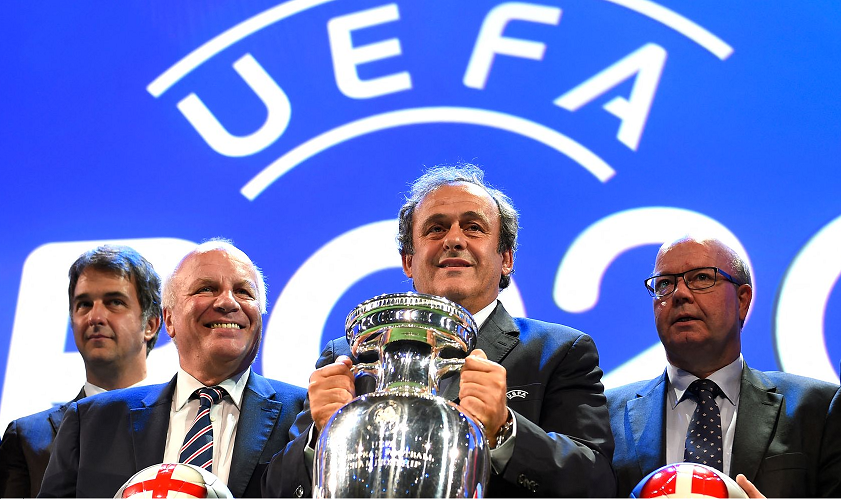
On 30th June 2012, UEFA president Michel Platini would propose a unique idea for the 2020 edition of the UEFA European Championship. His vision was that instead of one or two countries stepping forward to host the entire competition (as was the tradition at the time), UEFA Euro 2020 would see matches played in multiple cities across the European continent. This unique and one-time concept would, Platini thought, serve as an ideal way to commemorate the 60th anniversary of the prestigious continental competition. Six months after Platini had outlined his idea, the rest of UEFA would agree with their president’s decision. The 2020 European Football Championship would take place in 13 different European countries, with one city representing each nation. Instead of a single country bidding to host the entire event, governments across Europe were now vying for their choice of city to play host to a certain number of games throughout the competition.
The 24-team tournament eventually held in 11 different cities from London to Seville, Munich to St Petersburg, Rome to Copenhagen, and even Baku, is a far cry from the inaugural European Championship held in 1960, a two-round, seventeen-team qualifying stage eventually culminating in a four-team finals tournament held in a single host country. This 1960 tournament was dominated by unusual scheduling and contemporary global politics, with three of the four tournament semi-finalists coming from nations ruled as ‘socialist republics’. The initial Euros competition would also serve as the crowning achievement for a man now considered as the greatest goalkeeper in football history. More information on all these topics will be revealed soon. Sit back, relax, and keep reading to find out about the 1960 UEFA European Nations’ Cup, also known as the first Euros.
Conception
Even though the first European Championship would occur in 1960, the initial idea for the competition would first be discussed as early as 1927 in conjunction with the proposal for a potential world championship. One of the leading proponents for both of these ideas was the man for whom UEFA eventually named the European Championship trophy after, Henri Delaunay. In 1927, Delaunay was serving as the chairman of the French Football Federation (FFF). His idea for a pan-European football tournament would earn more support than the ‘World Cup’ proposals, especially from the heads of the individual European football governing bodies, who believed at the time that any World Cup competition would end up in the hands of a European nation. However, despite the opinions of the men in suits in the late 1920s, the ‘World Cup’ idea would eventually bear fruit first in 1930, with the maiden championship ending with South American hosts Uruguay holding the Jules Rimet Trophy aloft.
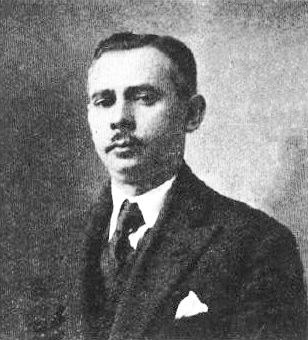
Despite enthusiasm for a potential European international football competition going as far back as the late 1920s, five FIFA World Cups would pass before Henri Delaunay’s idea finally made its debut. Delaunay would never see his vision of a pan-European competition come to fruition, as while serving as UEFA’s first General Secretary, he would die on 9th November 1955, aged 72 years old. After his death, Delaunay’s son Pierre would take up his mantle atop UEFA, and he would finally be the one to pull the trigger on the now 30-year-old idea. Pierre would also become the head of the organizing committee for this new competition, to be named the European Nations’ Cup. Any team that wished to participate in this new footballing venture would have to pay 200 Swiss francs to UEFA before competing in a two-round knockout tournament set to commence in the autumn of 1958. At the end of these two rounds of qualifying, the four teams left standing would progress to the finals tournament, provisionally set for the summer of 1960.
Qualifying
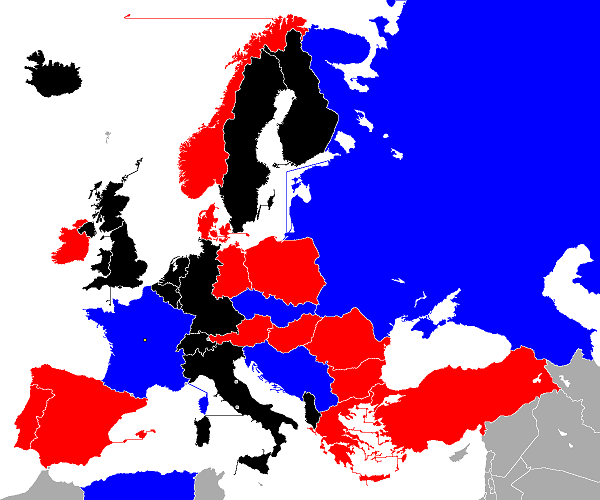
The journey to reach the first-ever European Nations’ Cup would begin in the autumn of 1958. Sixteen teams who had paid their entrance fee and accepted UEFA’s continent-wide invitation to participate would compete in two-legged ties in a bid to reach the quarter-finals of the competition. This first round of qualifying would see the following match-ups: USSR vs Hungary, France vs Greece, Romania vs Turkey, Norway vs Austria, Yugoslavia vs Bulgaria, East Germany vs Portugal, Poland vs Spain and Denmark vs an opponent to be determined.
Three of the eight round of 16 first legs would occur in the latter half of 1958. The Soviet Union would defeat its satellite state Hungary 3-1 on 28th September, France would thrash Greece 7-1 on 1st October, and Romania would beat Turkey 3-0 in Bucharest on 2nd November. Only one of these three ties would be completed by the end of the year. In Athens on 3rd December, a 1-1 draw would see France become the first team to confirm their place in the quarter-finals of the qualifying tournament.
While France had confirmed their spot in the quarter-finals, the rest of the first round was still to get moving. In Spring 1959, the Republic of Ireland and Czechoslovakia would play each other in a two-legged preliminary match to decide the final spot in the initial round of 16. On 5th April, Johnny Carey’s Republic side would defeat the Czechs 2-0 at Dalymount Park in Dublin. However, one month later, Czechoslovakia would turn the tie on its head, comfortably winning 4-0 in Bratislava on 10th May to earn their spot in the qualifying tournament. Czechoslovakia would now face Denmark in the round of 16 later in 1959.
1960 European Nations’ Cup qualifying preliminary round
| Aggregate | First Leg | Second Leg | ||
|---|---|---|---|---|
| Republic of Ireland | 2-4 | Czechoslovakia | 2-0 | 0-4 |
With one team already qualifying for the competition quarter-finals months earlier, the remaining round of 16 games would occur throughout 1959. First, after playing their first legs in late 1958, the Soviet Union and Romania would join France in the next round after completing aggregate wins over Hungary (4-1) and Turkey (3-2). Then, Austria would produce the most impressive performance of the first round in their defeat of Norway. After a 1-0 away victory in Oslo, Das Team would dominate the return leg in Vienna, winning 5-2 to progress as 6-2 aggregate winners. Meanwhile, Marshall Tito’s Yugoslavia would see off Bulgaria 3-1 after two close-fought matches (2-0, 1-1). Finally, Portugal vs East Germany (3-2), Spain vs Poland (4-2), and Denmark vs Czechoslovakia (2-2) would serve up entertaining, tightly-contested encounters before the Czechoslovaks (5-1), Spanish (3-0) and Portuguese (2-0) would complete the quarter-final line-up with convincing home victories in the reverse fixtures.
1960 European Nations’ Cup qualifying – round of 16
| Aggregate | First Leg | Second Leg | ||
|---|---|---|---|---|
| USSR | 4-1 | Hungary | 3-1 | 1-0 |
| France | 8-2 | Greece | 7-1 | 1-1 |
| Romania | 3-2 | Turkey | 3-0 | 0-2 |
| Norway | 2-6 | Austria | 0-1 | 2-5 |
| Yugoslavia | 3-1 | Bulgaria | 2-0 | 1-1 |
| East Germany | 2-5 | Portugal | 0-2 | 2-3 |
| Poland | 2-7 | Spain | 2-4 | 0-3 |
| Denmark | 3-7 | Czechoslovakia | 2-2 | 1-5 |
The quarter-finals of the 1960 European Nations’ Cup qualifying tournament would see France v Austria, Portugal v Yugoslavia, Romania v Czechoslovakia, and the Soviet Union v Spain. If you thought these quarter-finals would introduce a sense of structure to proceedings after the haphazard scheduling witnessed in the first round of qualifying, you would be mistaken. The finals of the European Nations’ Cup would be played in July 1960. However, the quarter-finals would not end until 29th May 1960. As in the round of 16, France would kick off the two-legged quarter-finals when they faced Austria at the end of 1959.
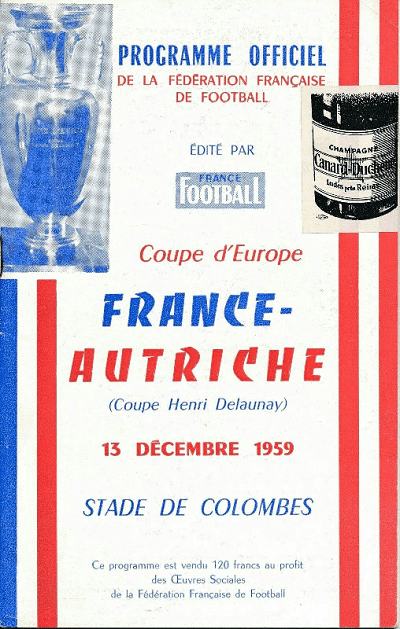
Over the course of two matches played across four months in two different years, the France and their opponents Austria would treat supporters of both countries to two entertaining clashes. On 13th December 1959, France would run out 5-2 winners in Colombes. Les Bleus would take a 3-1 lead into half-time through Just Fontaine’s first-half hat-trick but would need to endure the Austrians bringing the score back to 3-2 after 65 minutes. However, a brace from Jean Vincent would see the French win the first leg. In the return match on 27th March 1960, Austria would threaten a comeback on aggregate in front of their home fans in Vienna, leading the French 1-0 at half-time. However, an incredible second-half performance would see France score four goals and win the second leg 4-2. France would confirm their place at the European Nations’ Cup with a 9-4 aggregate win.
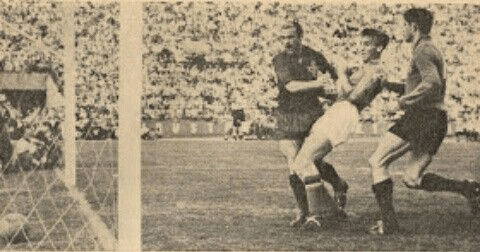
Compared to France vs Austria, the quarter-final between Portugal and Yugoslavia would see two very different football matches played within the same three-week period. On 4th May 1960, goals from Joaquim Santana and Matateu would see the Portuguese defeat the Yugoslavs 2-1 in Lisbon. After this defeat, Yugoslavia would need a 2-0 victory to claim the aggregate win and qualify for the tournament finals. However, Tito’s team would do more than just beat Portugal 2-0. In front of 43,000 spectators in Belgrade’s Stadion JNA on 22nd May, Yugoslavia would rout Portugal 5-1 to win the quarter-final tie with a 6-3 aggregate scoreline and join France in the European Nations’ Cup.
Despite needing an extra preliminary round to qualify for the original tournament, Czechoslovakia would produce the most convincing victory of the quarter-final in their matches against Romania. Across two legs home and away (0-2, 3-0), Czechoslovakia would defeat Romania 5-0, shutting out their opponents while scoring all five of their goals inside the first halves of both games. Little did the Czechoslovaks know that the 3-0 win in Bratislava would be the final competitive game any team would play before the European Nations’ Cup finals got starting in July 1960.
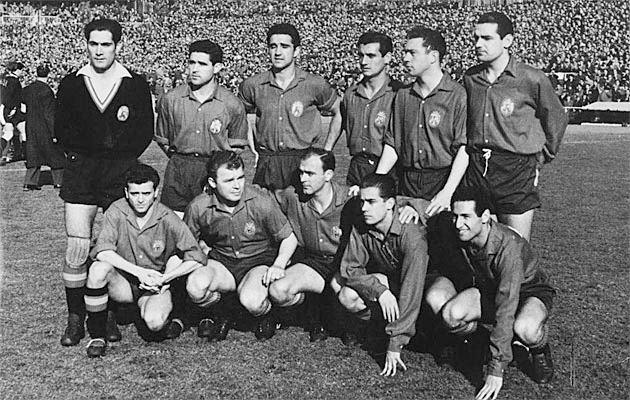
The final quarter-final between Spain and Russia would not take place. The reason? Spain’s ‘dictator for life’ Francisco Franco would refuse to allow his Spanish team to play the away leg in the Communist USSR. UEFA would try to negotiate with Spain to have the match go ahead, including playing both legs of the quarter-final on neutral ground. However, this suggestion would instead invoke the ire of the Soviet Union, who only wanted to play the quarter-final tie in its original format. With neither team refusing to compromise, the European Nations’ Cup organising committee would meet on 28th May 1960 to find a solution to this problem. In an official bulletin released after this emergency meeting, UEFA would announce that due to Spain’s refusal to fulfil the obligations of the quarter-final tie, Russia would earn a walkover victory and take the final spot in the European Nations’ Cup semi-finals. The bulletin would read: “In connection with the withdrawal of Spain (v. USSR), the Committee decided to apply Article 7 of the (UEFA) Regulations, namely, to qualify Russia for the Final Tournament.”
1960 European Nations’ Cup qualifying-quarter-finals
| Aggregate | First Leg | First Leg | ||
|---|---|---|---|---|
| France | 9-4 | Austria | 5-2 | 4-2 |
| Portugal | 3-6 | Yugoslavia | 2-1 | 1-5 |
| Romania | 0-5 | Czechoslovakia | 0-2 | 0-3 |
| Spain | Walkover | USSR | N/A | N/A |
Therefore, the first-ever European Nations’ Cup would see France, Yugoslavia, Czechoslovakia, and the Soviet Union compete in two semi-finals, a third-place playoff, and a final to crown the first-ever European international football champions. After achieving qualification, France would also host the finals tournament, inviting three Communist countries to potentially use the competition to extol the virtues of their political ideologies. The questionable political nature of many of the planned participants had prevented countries like England, Italy and West Germany from taking up UEFA’s original invitations to take part in the competition. However, the finas of the ffirst-ever European Nations’ Cup would go ahead over one week in July 1960.
The Semi-Finals
| France | vs | Yugoslavia |
| Soviet Union | vs | Czechoslovakia |
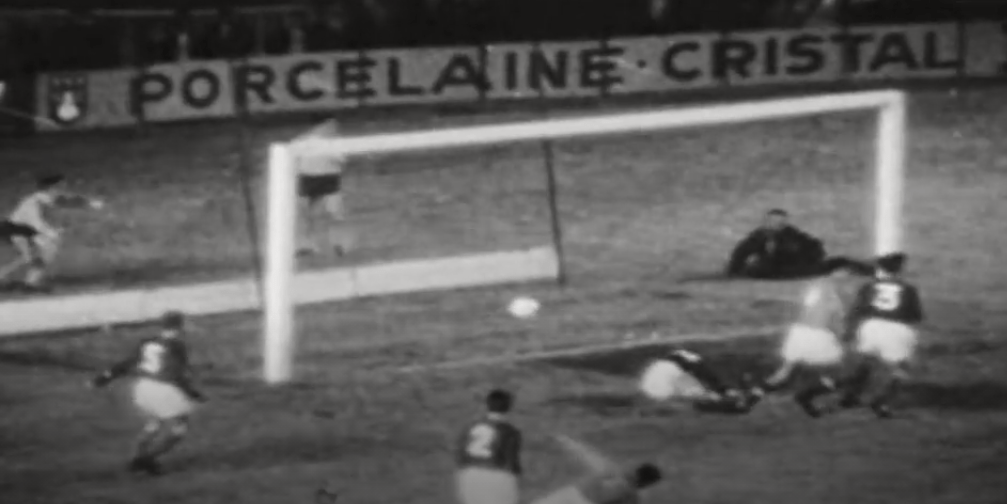
The first European Nations’ Cup would almost hit its peak with its first-ever match. Look into the record books of the UEFA European Championships. You will find that the highest-scoring match in Euros history is a 5-4 barnburner between France and Yugoslavia in the 1960 semi-finals. Inside the Parc Des Princes on 6th July, the two teams would deliver an all-time classic. The away team would take the lead through Milan Galić after 11 minutes, but France would equalise a minute later with Jean Vincent’s effort. The French would then lead going into the half-time break, as François Heutte would double the hosts’ goal tally in the 43rd minute.
In the second period, the two sides would produce a flurry of goals. Maryan Wisniewski would put France 3-1 ahead after 53 minutes, but now Yugoslavia would quickly pull a goal back through Ante Žanetić two minutes later. François Heutte would re-establish France’s two-goal advantage at 4-2 just past the hour mark, but three quick goals would soon change the entire complexion of this semi-final. In the 75th minute, Tomislav Knez would bring the score back to 4-3, before a two-minute brace from Dražan Jerković (78′, 79′) would give Yugoslavia a slender one-goal advantage with ten minutes left. Yugoslavia would ultimately hold on to win 5-4 and progress to the final.
If one semi-final had produced a pulsating, high-scoring affair, the other semi-final would end up with a more one-sided result. In Marseille, the USSR would defeat fellow Communist state Czechoslovakia 3-0. A Valentin Ivanov brace and a third goal from Viktor Ponedelnik would complete a routine victory for the Olympic champions. The Soviet Union would now play Yugoslavia in the final in Paris on 10th July.
1960 European Nations’ Cup 3rd Place Play-off
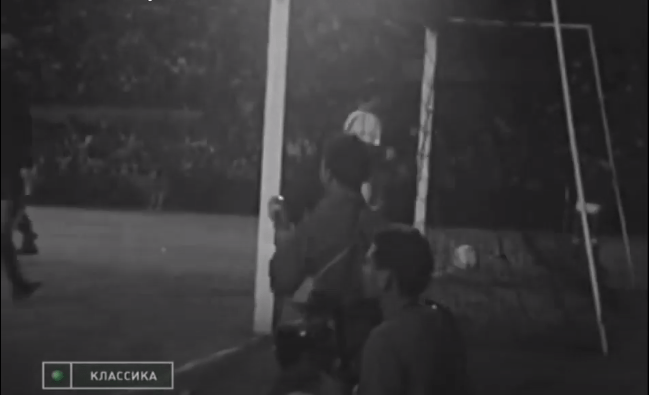
Before the final, France and Czechoslovakia would have a chance to redeem themselves when they faced one another in the third-place play-off. However, in this match, Rudolf Vytlačil’s team would upset the hosts on their own turf. After a goalless first 45 minutes, the Czechoslovaks would take the lead through striker Vlastimil Bubnik after 58 minutes. After France tried and failed to find an equaliser, winger Ladislav Pavlovič would score a late goal to secure a 2-0 win and third place in the tournament for Czechoslovakia.
| Score | ||
|---|---|---|
| France | 0-2 | Czechoslovakia |
The Final
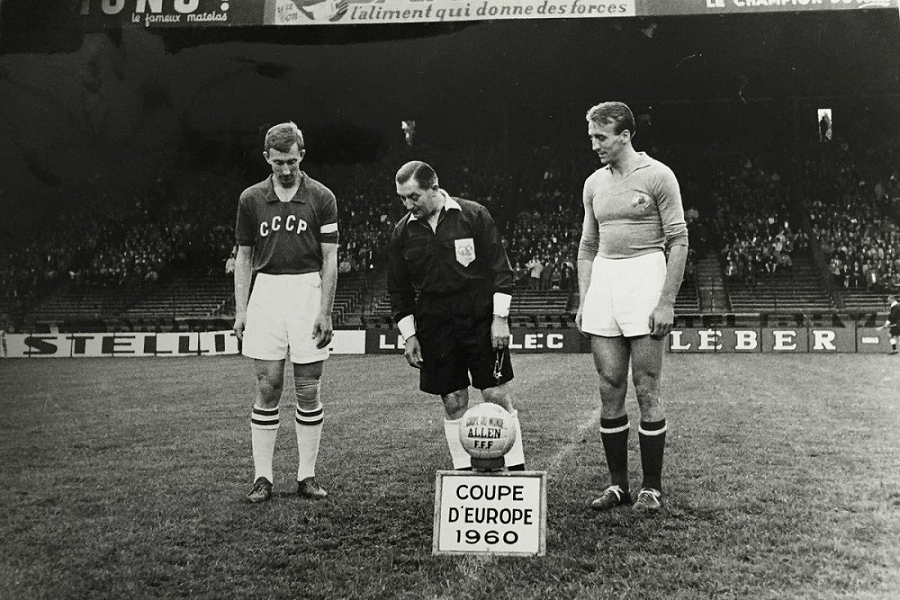
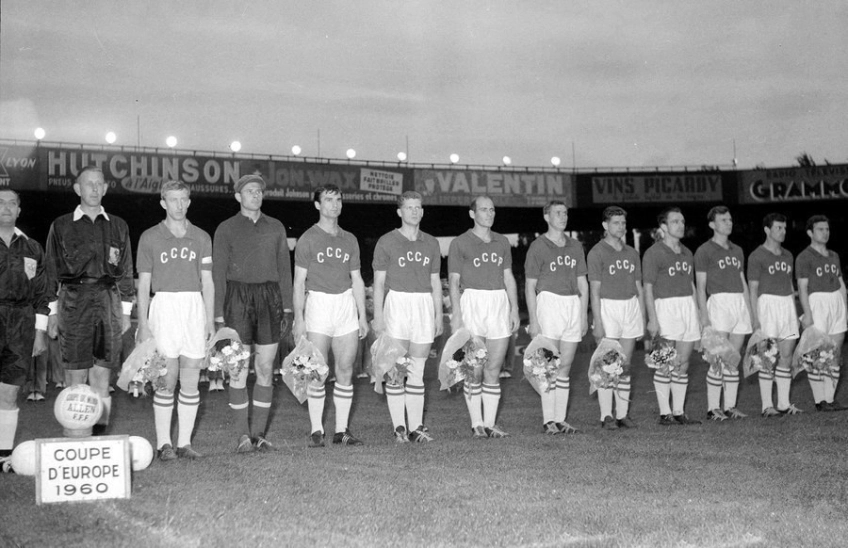
On 10th July 1960, the Soviet Union (USSR), managed by Gavriil Kachalin, would face Yugoslavia, coached by the three-person team of Dragomir Nikolić, Aleksandar Tirnanić and Ljubomir Lovrić, in the final of the European Nations’ Cup.
In rainy conditions, Yugoslavia would enjoy the best of the early goalscoring chances, but the team could not manage to put the ball past Lev Yashin in the Soviet goal. The man nicknamed ‘The Black Panther’ would need to be alert to keep out two direct free-kicks from Yugoslav captain Bora Kostić. With the game still goalless as half-time loomed, the team nicknamed Plavi would finally manage to score the game’s opening goal. Two minutes before the break, semi-final hero Dražan Jerković would deliver a low cross into the area, and a touch from Milan Galić would deflect the ball past Yashin into the net. At half-time, Yugoslavia would hold a 1-0 lead over the more-fancied USSR.
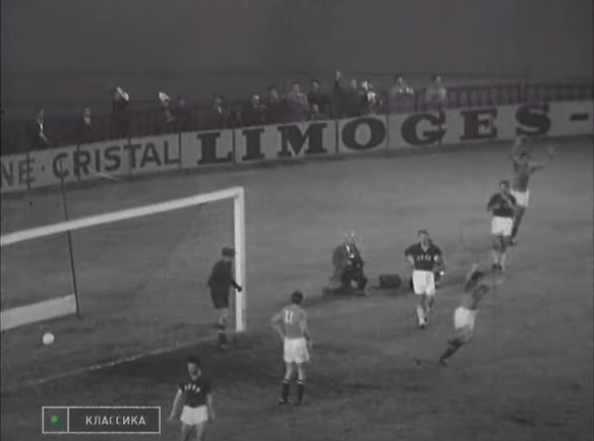
A much-reported story claims that at half-time, former Soviet Union defender Boris Kuznetsov would have the idea of putting spikes into the boots of his team so that they could cope better with the wet pitch inside the Parc Des Princes. A lesser-known story than that of cobbler Adi Dassler changing the studs of the West Germany players midway through the 1954 World Cup Final, a decision which helped the Germans come from behind to defeat Hungary. However, like Dassler six years earlier, Kuznetsov’s decision would successfully aid his Soviet teammates.
Four minutes into the second half, striker Valentin Bubukin would hit a shot from long range. Yugoslav goalkeeper Blagoje Vidinić would struggle with the effort, and winger Slava Metreveli would tap the ball home for the USSR’s equaliser. After the goal, the Soviet Union would start to dominate. Three minutes from time, the Olympic champions would almost score the winner. Metrevili’s shot would cross the face of the goal, and Valentin Ivanov would fail to find the net. Minutes later, English referee Arthur Ellis would blow the whistle for full-time, meaning that extra-time would decide this final.
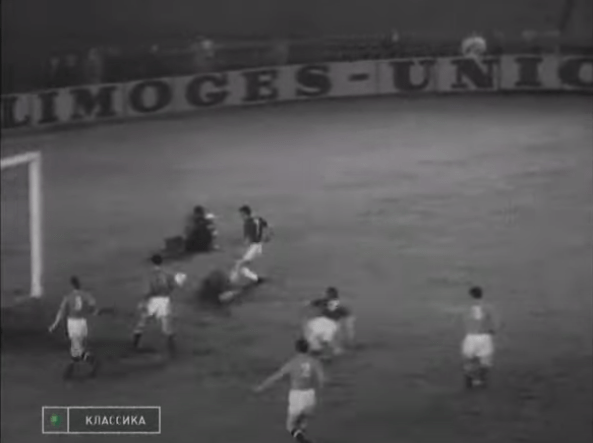
In extra time, Yugoslavia would twice come close to taking a 2-1 lead. First, the usually reliable Lev Yashin would fail to punch clear a corner, and the ball would find the head of Dražan Jerković. However, the Dinamo Zagreb striker could only direct his header wide of Yashin’s net. Later, Milan Galić would almost score his second goal of the night, but would fail to find the target from Ante Žanetić’s cross. However, these missed chances would eventually come back to cost Yugoslavia.
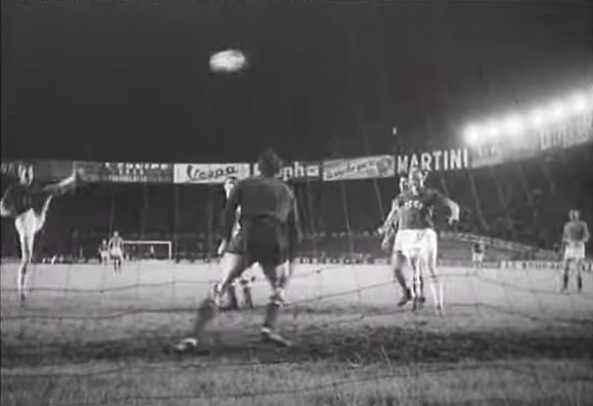
In the 113th minute of play, Valentin Ivanov would deliver a cross into the penalty area, and centre forward Viktor Ponedelnik would head home the winning goal, sending the Soviet fans crazy. At the time of the final, Viktor Ponedelnik was plying his weekly trade at second-division FC SKA Rostov-on-Don. Now, he was his nation’s goalscoring hero in a major tournament final.
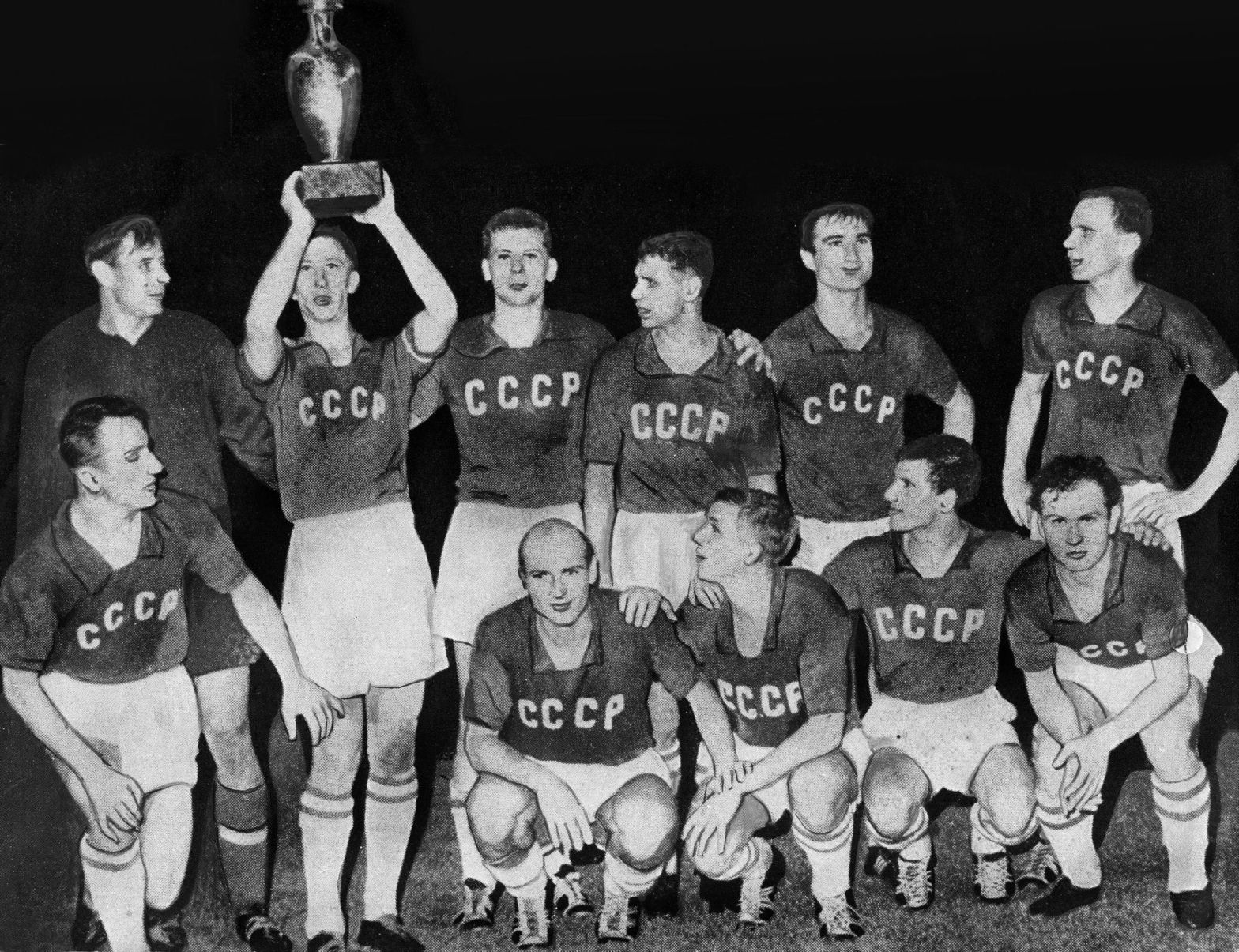
Despite late efforts for Yugoslavia to equalise, Arthur Ellis’s whistle would signal the end of the European Nations’ final. After 120 minutes of football, Soviet Union were European Nations’ Cup winners, adding the title to their Olympic gold medal from 1956. Captain Igor Netto would become the first man ever to lift the Henri Delaunay Trophy and confirm their status as European champions.
In 1964, 29 European nations would enter the preliminary round of qualifying, hoping to reach the second edition of the European Nations’ Cup. Twelve nations that had declined UEFA’s invitation to compete in 1960 would now show interest in this second edition. This list of countries would include Albania, Belgium, Iceland, Italy, Luxembourg, Malta, Netherlands, Sweden, Switzerland, plus UK nations England, Wales and Northern Ireland. This increased level of interest in the still-fledgling competition would help establish a quadrennial tradition that has now lasted for over sixty years. However, the honour of being the winner of the first-ever UEFA European Championship will always belong to Gavriil Kachalin’s Soviet Union team that included both the greatest goalkeeper in footballing history and a second-division match-winner.
 the-score-board.co.uk