
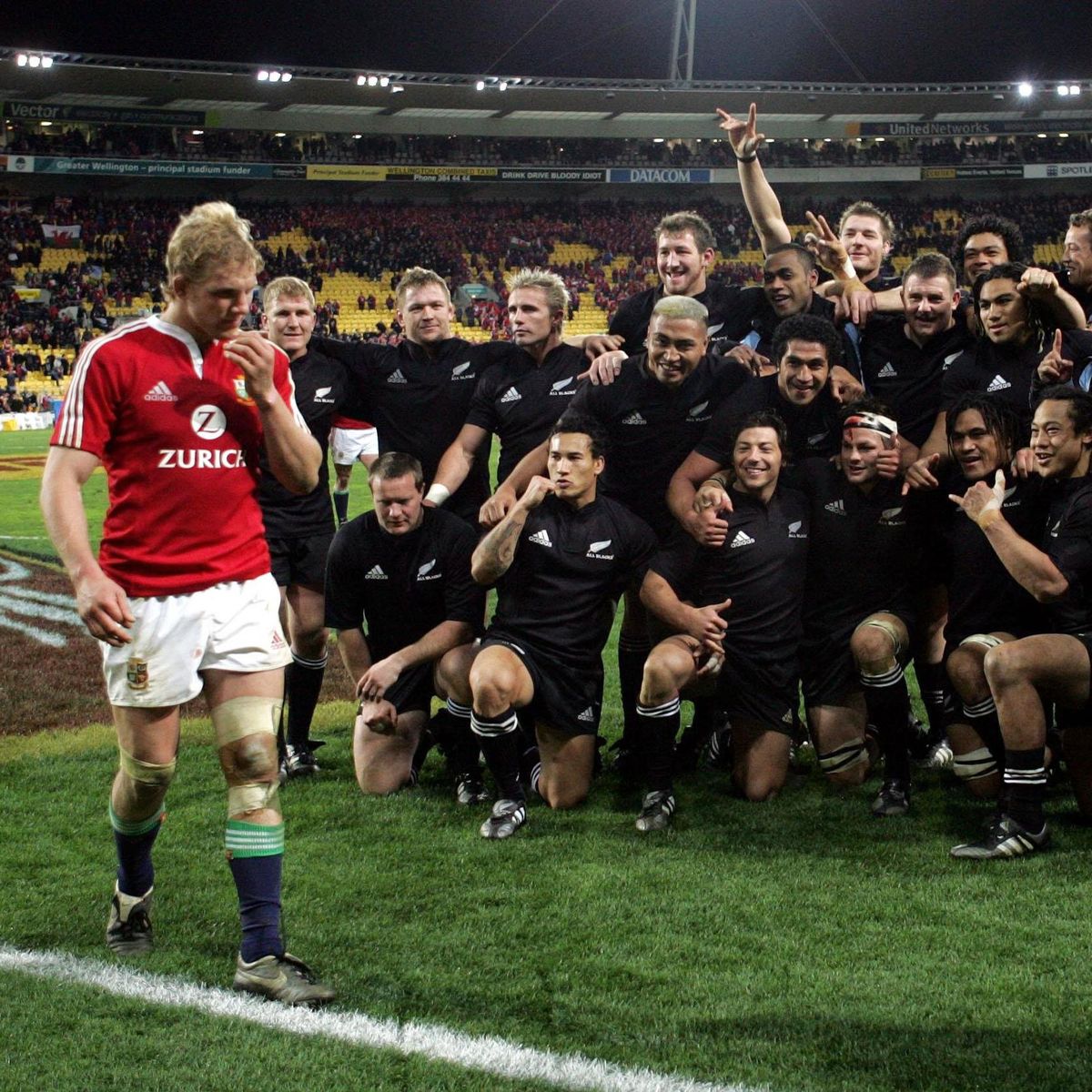
“…quite simply, the tour, the most anticipated for many a year, was a curious mix of anti-climax and bizarre underachievement, not just for the ambitions of the players who boarded the plane for the Antipodes, but for the entire rugby community.“- Clem and Greg Thomas, The British & Irish Lions: The Official History (2013 edition)
In a previous article on this site, I discussed the first-ever British and Irish Lions Tour from 1888: a five-month, 35-match tour across Australia and New Zealand organised by three English cricketers where the touring squad would also engage in 19 games of Australian Rules Football and the team captain would wind up dead after drowning in an Australian river. You can read more about the 1888 tour using this link: https://thescoreboardcom.wordpress.com/2020/08/04/the-first-british-and-irish-lions-tour/ The 1888 tour would prove successful, serving as the first in a rugby union dynasty that has continued for over 130 years. However, after talking about a tour that would mark the beginning of the British and Irish Lions brand, it is time to talk about the tour that almost killed that brand.
The year is 2005. The British and Irish Lions are set to tour New Zealand for the tenth time and for the first time in the professional era. This tour will be the shortest in Lions history, with the team set to play 11 matches in all. The team will play six games against provincial sides to prepare for a three-Test series against the All Blacks, with two more matches played in between these tests. In their nine previous visits, the Lions have only once returned home as victors. Back in 1971, a team featuring legendary figures like Barry John, Gerald Davies, Willie John McBride, JPR Williams and Gareth Edwards defeated the All Blacks 2-1 across a four-match series with a JPR drop-goal giving Carwyn James’s team the series with a 14-14 draw in Auckland’s Eden Park.
Now in 2005, Sir Clive Woodward, the man who had recently led England to Rugby World Cup glory in November 2003, would hope to double the British and Irish Lions’ tour victories in Aotearoa. He would attempt to achieve this while armed with a 44-man playing squad and a 26-person staff including nine coaches, a tour manager, a team manager, two video analysts, two doctors, four physios/masseurs, a chief executive, legal support, a media officer, a PR officer, a chef, a kit technician and a specialist referee advisor.
However, what do you get when you send an experienced Lions squad – managed by the best coach in the world and aided by the largest team of staff in tour history, a government spin doctor and a poorly-received ‘national anthem’ – to face the best team in world rugby on their own turf? A series ‘whitewashing’, international embarrassment and questions about the future of the British and Irish Lions tour itself.
The build-up
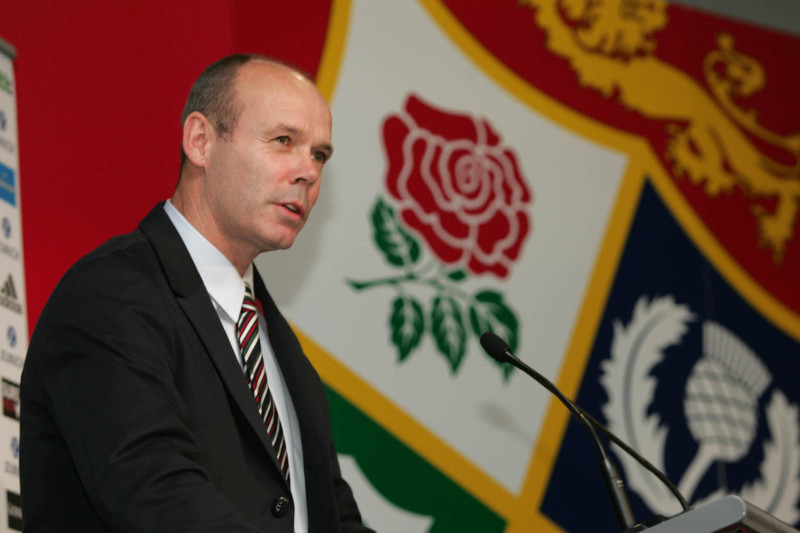
On 5th February 2004, three months after the recent Rugby World Cup, the British and Irish Lions would appoint then-England coach Sir Clive Woodward as the head coach for the 2005 tour of New Zealand. After his confirmation, Woodward would say in his introductory press conference: “I’m delighted to accept the job of Head Coach to the 2005 British Lions. It was a huge honour to play for the Lions, and to be given the opportunity of taking the squad to New Zealand is a huge challenge and one I want everyone connected with the squad to enjoy.”
When news of Woodward’s appointment broke in February 2004, newly-crowned world champions England were about to defend their Six Nations Championship, with a tour to Australia and New Zealand planned for the summer. However, following a third-place finish in the Six Nations and a disastrous tour of the Southern hemisphere later that year, Clive Woodward would surprisingly announce his resignation as England head coach on 1st September 2004. Now, he could fully concentrate on his new position as head coach of the British and Irish Lions for the tour to New Zealand the following year.
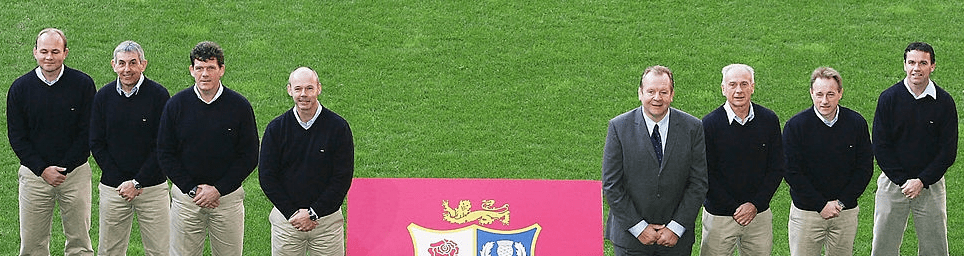
On 21st October 2004, Woodward would announce his backroom staff for the upcoming Lions tour. Surprisingly, he would unveil a 26-strong team and plans for a 44-man playing squad, both record numbers in the history of the British and Irish Lions. Notably, Andy Robinson and Eddie Sullivan, head coaches of England and Ireland, respectively, would travel as assistant coaches to Woodward along with Llanelli Scarlets director of rugby Gareth Jenkins and Ian McGeechan, the man who had led the British and Irish Lions to series victories in 1989 and 1997. Asked for the reason for his decision to have such a large support staff, Woodward would emphasise the desire to have two dedicated coaching teams on tour- one for the weekend games and test matches and another for the midweek matches. He would comment, “With other tours, the midweek team has to a certain extent been overlooked but now, with the dedicated team in place, 100% focus can be given to winning each match. There is going to be tremendous competition between the two coaching set-ups, fostering a natural rivalry that will create winning sides with each player pushing for Test places.”
After Clive Woodward had already caused murmurs in the media with the size of his backroom staff, touring manager Bill Beaumont would cause further headlines on 6th December 2004. He would announce that Alistair Campbell, former director of communications for British Prime Minister Tony Blair, would join the Lions tour as a media and communications consultant. According to a press release, Campbell would help craft the Lions’ media strategy, ensuring that both the British and New Zealand media could effectively cover the tour matches while ensuring that the Lions would help to meet the needs of all rugby fans that were following their journey. In this press release, Campbell would say that: “With rugby attracting more media and public attention than ever, this Tour will be one of the great sporting events of 2005, and I hope I can contribute to the planning and preparation, and to ensuring the media and public get the most out of the Tour itself. “I am looking forward to working with management and team as a strategy is put in place and to going out for the later stages of the Tour.”
It is fair to say that Alistair Campbell would ruffle more than a few feathers among the players, staff and media during the two-month tour of New Zealand.

Finally, after months of speculation, Clive Woodward would announce his squad for the tour to New Zealand on 11th April 2005. Despite a 4th-placed finish in the 2005 Six Nations, England players would make up nearly half (20) of the 44-man contingent. At the same time, Woodward would select just ten members of the Wales squad that had recently won the Six Nations Grand Slam. In addition, Ireland would supply 11 players to the tour, and Scotland would have just three representatives in the 2005 squad. In addition to the original forty-four, England internationals Jonny Wilkinson, Phil Vickery, and Mike Tindall would also join up with the squad if they proved their fitness to their former coach Clive Woodward.
Of the 20 Englishmen selected for the Lions tour, 14 had played a part in England’s successful 2003 Rugby World Cup campaign. Nine of the fourteen (Steve Thompson, Ben Kay, Neil Back, Lawrence Dallaglio, Richard Hill, Matt Dawson, Will Greenwood, Jason Robinson, Josh Lewsey) had started the final against Australia in Sydney 16 months earlier. Back and Dallaglio would even exit self-imposed international retirements to participate in one last Lions tour. At 37 years old, Neil Back would become the oldest player to be selected for the British and Irish Lions, with his Leicester Tigers teammate Ollie Smith, 22, becoming the youngest member in Clive Woodward’s touring squad.
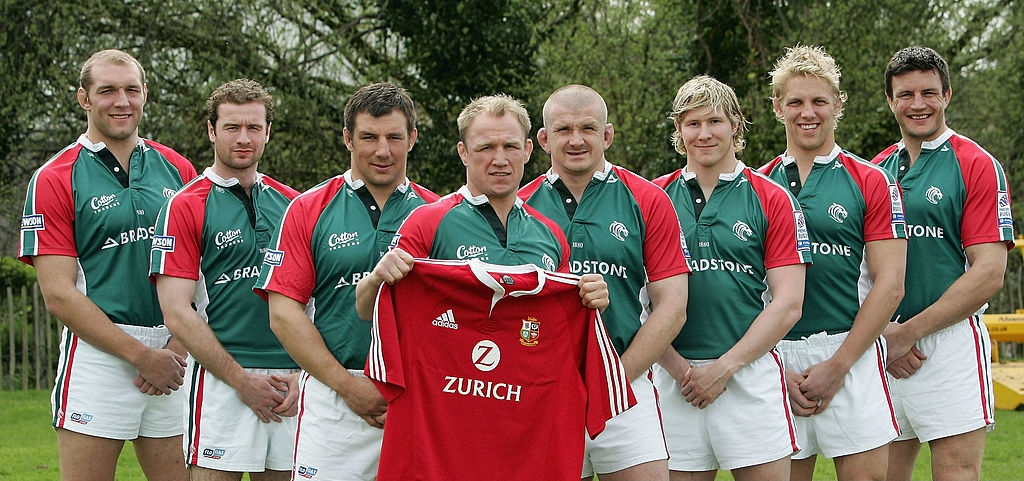
Furthermore, 16 members of Clive Woodward’s 44-man squad had previous experience of being part of a Lions tour. Fifteen players (Neil Back, Iain Balshaw, Gordon Bulloch, Martin Corry, Lawrence Dallaglio, Matt Dawson, Will Greenwood, Danny Grewcock, Brian O’Driscoll, Ronan O’Gara, Malcom O’Kelly, Jason Robinson, Simon Taylor, Jonny Wilkinson, Martyn Williams) were part of Graham Henry’s team that lost 2-1 to world champions Australia in 2001, while five players (Back, Dallaglio, Dawson, Greenwood and prop Graham Rowntree) still retained fond memories of beating South Africa in 1997. With so many players making their Lions bow in 2005, Clive Woodward would need these experienced heads to lead his team to a series victory over Graham Henry’s New Zealand.
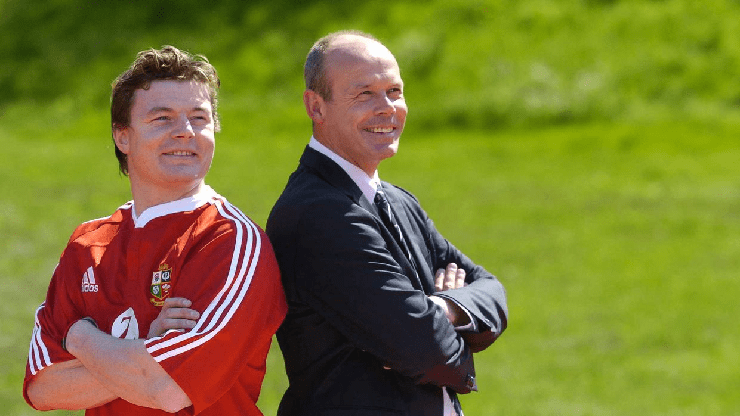
On the same day as the overall squad announcement, Woodward would officially name Ireland’s Brian O’Driscoll as the captain for the upcoming tour. The 26-year-old outside-centre took over the Ireland captaincy following the 2003 Rugby World Cup and had gone on to lead his side to 9 wins in 13 matches and a Six Nations Triple Crown. According to O’Driscoll’s 2015 autobiography The Test, Woodward would tell O’Driscoll the good news two weeks before the squad announcement while the centre was at home in Ireland and the head coach was sitting on a beach in Barbados.
Two of O’Driscoll’s Ireland teammates would find out the news about their Lions tour selections in different scenarios. In a 2017 interview with The Telegraph, lock Donncha O’Callaghan would say, “I watched the team announcement on Sky and didn’t think I was getting in. When my name came up I leapt around the house. When I stopped I was in the back garden…I went off to training that day and by the time I came back my house was hopping.” Meanwhile, hooker Shane Byrne would find out his fate through a more old-fashioned method. “I found out I was in the squad on Ceefax and most people won’t know what the hell that is anymore,” Byrne told the The42 in 2017, “To see your name associated with the Lions is incredible…once you get yourself on the plane, one of the first things they say to you when you gather is that from now on you’re a Lion and nobody can ever take that away from you.”
2005 British and Irish Lions Touring Squad
| Position | Player | Country | Club |
|---|---|---|---|
| Prop | John Hayes | Ireland | Munster |
| Prop | Gethin Jenkins | Wales | Cardiff Blues |
| Prop | Graham Rowntree | England | Leicester Tigers |
| Prop | Andrew Sheridan | England | Sale Sharks |
| Prop | Matt Stevens | England | Bath |
| Prop | Julian White | England | Leicester Tigers |
| Hooker | Gordon Bulloch | Scotland | Glasgow |
| Hooker | Shane Byrne | Ireland | Leinster |
| Hooker | Andy Titterrell | England | Sale Sharks |
| Hooker | Steve Thompson | England | Northampton Saints |
| Lock | Danny Grewcock | England | Bath |
| Lock | Ben Kay | England | Leicester Tigers |
| Lock | Donncha O’Callaghan | Ireland | Munster |
| Lock | Paul O’Connell | Ireland | Munster |
| Lock | Malcolm O’Kelly | Ireland | Leinster |
| Lock (IR) | Brent Cockbain | Wales | Ospreys |
| Lock (IR) | Simon Shaw | England | London Wasps |
| Back row | Neil Back | England | Leicester Tigers |
| Back row | Martin Corry | England | Leicester Tigers |
| Back row | Lawrence Dallaglio | England | London Wasps |
| Back row | Richard Hill | England | Saracens |
| Back row | Lewis Moody | England | Leicester Tigers |
| Back row | Michael Owen | Wales | Newport-Gwent Dragons |
| Back row | Simon Taylor | Scotland | Edinburgh |
| Back row | Martyn Williams | Wales | Cardiff Blues |
| Back row (IR) | Simon Easterby | Ireland | Llanelli Scarlets |
| Back row (IR) | Ryan Jones | Wales | Ospreys |
| Back row (IR) | Jason White | Scotland | Sale Sharks |
| Scrum-half | Gareth Cooper | Wales | Newport-Gwent Dragons |
| Scrum-half | Chris Cusiter | Scotland | Border Reivers |
| Scrum-half | Matt Dawson | England | London Wasps |
| Scrum-half | Dwayne Peel | Wales | Llanelli Scarlets |
| Fly-half | Stephen Jones | Wales | Clermont Auvergne |
| Fly-half | Charlie Hodgson | England | Sale Sharks |
| Fly-half | Ronan O’Gara | Ireland | Munster |
| Fly-half | Jonny Wilkinson | England | Newcastle Falcons |
| Centre | Gordon D’Arcy | Ireland | Leinster |
| Centre | Will Greenwood | England | Harlequins |
| Centre | Gavin Henson | Wales | Ospreys |
| Centre | Brian O’Driscoll (capt.) | Ireland | Leinster |
| Centre | Tom Shanklin | Wales | Cardiff Blues |
| Centre | Ollie Smith | England | Leicester Tigers |
| Wing | Denis Hickie | Ireland | Leinster |
| Wing | Shane Horgan | Ireland | Leinster |
| Wing | Jason Robinson | England | Sale Sharks |
| Wing | Shane Williams | Wales | Ospreys |
| Fullback | Iain Balshaw | England | Leeds Tykes |
| Fullback | Josh Lewsey | England | London Wasps |
| Fullback | Geordan Murphy | Ireland | Leicester Tigers |
| Fullback | Gareth Thomas | Wales | Toulouse |
| Fullback (IR) | Mark Cueto | England | Sale Sharks |
Warm-up Match- Argentina, 23rd May 2005
Before departing for New Zealand, the newly-formed British and Irish Lions squad would come together for a warm-up match against Argentina in Cardiff on 23rd May 2005. Ranked 7th in the world heading into their game against the Lions, Marcelo Loffreda’s side were not easy opponents for a team with a maximum of 4 weeks’ training together. (In fact, 11 Lions squad members had only joined up with their teammates nine days earlier following their involvement in the Zurich English Premiership Final.) In addition, The Pumas had earned victories over Wales (50-44) and France (24-14) in the previous 12 months. Clive Woodward and his first Lions XV would need to avoid becoming complacent in Cardiff and give home fans the perfect send-off before jetting off to The Land of the Long White Cloud (New Zealand).
In the run-up to the Argentina game, two new players would join up with the squad, and one would drop out due to injury. On 8th May, Jonny Wilkinson would successfully prove his fitness to the Lions’ physios and Clive Woodward to become the fourth fly-half available in a now 45-man squad, along with Charlie Hodgson, Ronan O’Gara, and Stephen Jones. On 17th May, fullback Iain Balshaw would pull out of the tour with a thigh strain. England wing Mark Cueto would join up as his replacement, controversially ahead of more experienced players like Scotland’s Chris Paterson and Wales’s Kevin Morgan.
For his first match in charge of the British and Irish Lions, Sir Clive Woodward would pick the following line-up:
Backs: 15 Geordan Murphy, 14 Denis Hickie, 13 Ollie Smith, 12 Gordon D’Arcy, 11 Shane Williams, 10 Jonny Wilkinson, 9 Gareth Cooper Forwards: 1 Graham Rowntree, 2 Shane Byrne, 3 John Hayes, 4 Donncha O’Callaghan, 5 Danny Grewcock, 6 Martin Corry, 7 Lewis Moody, 8 Michael Owen (capt.) Replacements: 16 Steve Thompson, 17 Julian White, 18 Ben Kay, 19 Lawrence Dallaglio, 20 Chris Cusiter 21 Ronan O’Gara, 22 Shane Horgan
In his first XV, Woodward would choose six English and Irish players each and three Welsh players. Chris Cusiter, one of only three Scottish internationals in the squad (with Gordon Bulloch and Simon Taylor), would serve as the only Scot in the 22, starting on the bench as the replacement scrum-half. With the International Rugby Board choosing to award the match official Test status, fly-half Jonny Wilkinson would make his first international rugby appearance since kicking the famous drop goal in the 2003 Rugby World Cup final, with a catalogue of injuries limiting his appearances since then.
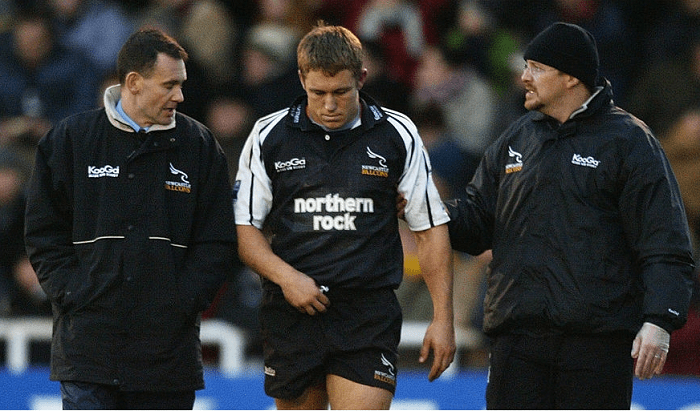
Before the game could start, the fans in attendance at the Millennium Stadium would stand for the national anthems. People reading this article would say that the British and Irish Lions do not have a national anthem, but they would for the 2005 Lions Tour. As part of his preparations to give the Lions the best chance of success, Sir Clive Woodward would ask songwriter and composer Neil Myers to produce a pre-match anthem for the team. Myers would create The Power Of Four, a piece which Clive Woodward would hope would stir the passions of his players and the fans while presenting a united front to New Zealand. The lyrics follow this theme, talking about how these players from four disparate lands have answered the Lions call to stand together as ‘The Power of Four’.
From the four corners of our lands
We’re united, hand in hand
Together
We’re stronger
We join and proud we stand
Now the day has come, we are one
Standing tall for our Lions call
We’re stronger
Together
We are the power of four
Welsh opera singer Katherine Jenkins would perform the song for the very first time. It was fair to say that neither the fans nor the players knew the words to this brand new anthem.
Three minutes into the match, the Lions would concede the game’s first penalty. Referee Stuart Dickinson would penalise the ‘home’ team for coming in at the side at a ruck, and Argentina fly-half Federico Todeschini would successfully kick the ball through the posts to give the away team a 3-0 lead. After quickly conceding the first points of the match, the Lions would soon concede the first try of the match. Following a line break from captain Felipe Contepomi, winger Jose Nunez Piossek would finish in the corner to extend Argentina’s advantage to eight points. Todeschini would add a conversion to increase that advantage to ten. After suffering these early setbacks, the Lions would find it difficult against the motivated Pumas, and Todeschini would send another penalty between the uprights to make the score 13-0 to the visitors after just 16 minutes of play. As Greg Thomas would later write, “Argentina had not read the Woodward script.” However, the Lions would get themselves on the board less than two minutes later. Jonny Wilkinson would send centre Ollie Smith through a gap in Argentina’s defence from an attacking line-out, and the Leicester Tigers player would score the Lions’ first try of the game. Wilkinson would convert to halve Argentina’s lead at 13-7.
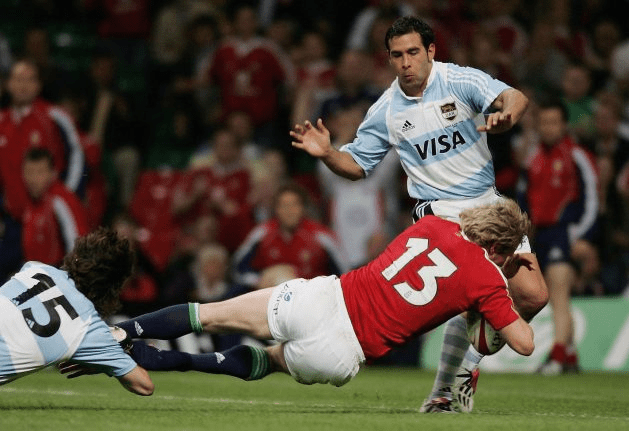
In the 22nd minute, following a successful Pumas scrum, Federico Todeschini would score his second penalty to increase Argentina’s advantage to nine points at 16-7. The Lions struggled to find any attacking rhythm, with Piossek and Contepomi coming close to scoring Argentina’s second try, but the Lions would recover and clear their lines. An offside decision against Marcelo Loffreda’s team would see Jonny Wilkinson slot over another penalty to bring the team in red into double figures just after the half-hour mark. However, further forays forward from Argentina would result in a penalty, and Todeschini would flex his kicking muscles once more to keep the scoreboard ticking over in his team’s favour. However, two more successful kicks from Wilkinson would bring the Lions back within three points at the break. At half-time, Argentina would narrowly lead the British and Irish Lions 19-16.
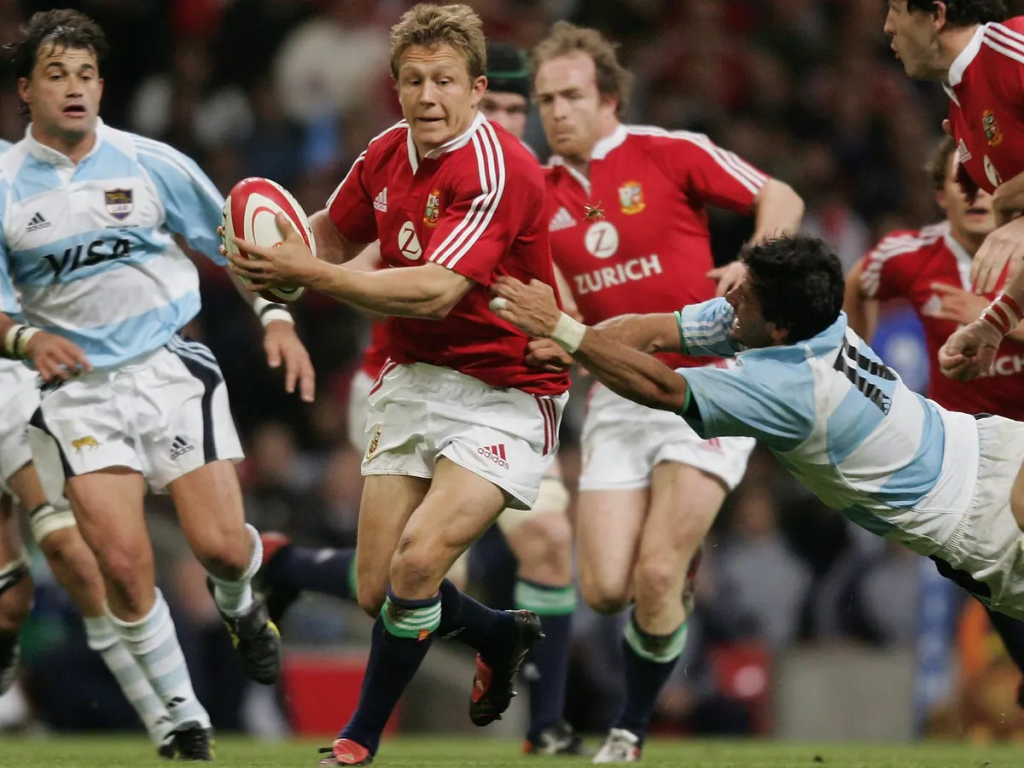
A series of handling errors from both sides would begin the second half before Jonny Wilkinson’s boot would draw the Lions level at 19-19 after 49 minutes. Clive Woodward’s team was starting to improve and beginning to increase their attacking tempo and fluidity compared to their first-half performance. However, a penalty at the scrum would allow Federico Todeschini to put Argentina back into the lead in the 55th minute. Four minutes later, a driving maul from the Pumas forwards would cause another Lions’ infringement, and the Argentina fly-half would double his team’s lead to six points with 20 minutes remaining. Following a failed Todeschini drop goal attempt in the 64th minute, a line break from replacement scrum-half Chris Cusiter would produce the most impressive Lions attack of the day. Further gain-line work from Denis Hickie and Jonny Wilkinson would move the team further upfield, and an early Pumas tackle would give the English fly-half a kick in front of the posts. The metronomic boot of Wilkinson would bring the British Lions back within three. In the final ten minutes, the Lions would start to force the issue inside the Argentina half, with multiple drives into the opponent’s 22. However, the Pumas would manage to hold their ground and protect their slender advantage.
In the 78th minute, the British and Irish Lions would earn a penalty, and Wilkinson would kick to the corner. A catch and driving maul from the resulting line-out would lead to another Lions penalty. With the clock heading into the red, the team in red would continue to push for a try which would guarantee them a victory. However, the Pumas defensive line would hold firm. Finally, in the 85th minute of play, Argentine hands in the ruck would cause another Lions penalty and this time, Jonny Wilkinson would kick for the posts and earn a draw. The Newcastle Falcon would protect his perfect record in front of goal and give the British and Irish Lions a late 25-25 draw with Argentina. Against an Argentina bereft of 25 players due to club commitments, including first-teamers Rodrigo Roncero, Juan Martin Hernandez and Agustin Pichot to the Heineken Cup Final the previous day, the 2005 British and Irish Lions would struggle their way through their first official match together. The Pumas would best the Lions in every department, and only the boot of Jonny Wilkinson would keep the team in touch throughout the game.
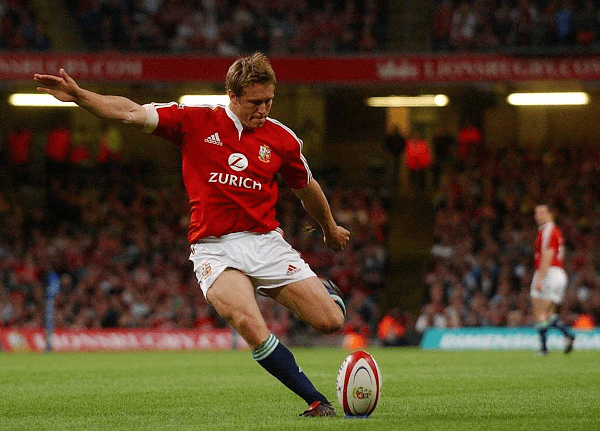
With this underwhelming performance behind them, Clive Woodward, his staff and his squad would now travel to New Zealand for the next two months and look to beat the best team in the world on their own turf.
In his 2011 autobiography Mad Dog, starting flanker Lewis Moody would describe his personal feelings after the Argentina draw, saying: “As I trudged off the pitch with three Tests looming against an All Blacks side that was on fire, I couldn’t help but think ‘F**k, this is going to be difficult’.”
Tour Matches 4th-21st June 2005
Bay of Plenty Steamers, 4th June 2005
The British and Irish Lions would arrive in New Zealand on 27th May 2005. Upon arriving in New Zealand, Sir Clive Woodward would claim that the upcoming tour was ” the most prepared Lions tour in the history of Lions rugby” and believed that his larger-than-normal squad had “the making of a great Lions Test side”.
One week later, the British and Irish Lions would travel to Rotorua to play their first match of the 2005 tour against the Bay of Plenty Steamers. The Bay of Plenty Steamers were a provincial rugby side who would come together after the Super Rugby season to compete in the National Provincial Championship: a three-division competition played in the autumn of each year. The Bay of Plenty Steamers would serve as the first of a series of provincial New Zealand rugby teams that the British and Irish Lions would face before their three-match test series with New Zealand began on 25th June. Through these tour matches, Clive Woodward and his staff could give minutes to all the squad members, weed out potential problems, find solutions and eventually bring together a suitable Test XV that could effectively stand toe-to-toe with the All Blacks at the end of the month.
The British and Irish Lions would face the Bay of Plenty Steamers without Irish lock Malcolm O’Kelly. Two days before the game, O’Kelly would suffer a groin injury in training and would leave the tour. Experienced London Wasps and England lock Simon Shaw would replace O’Kelly in the Lions squad.
In front of a capacity crowd of 33,000 inside the Rotorua International Stadium, the British and Irish Lions would begin with a six-try 34-20 win. However, the Steamers would push the Lions close at times during the 80 minutes. Inside two minutes, fullback Josh Lewsey would score the first try of the tour following great work from captain Brian O’Driscoll and fly-half Ronan O’Gara. Lewsey would soon score a second try after collecting a long pass from centre Gavin Henson, and O’Gara would send a crossfield kick into the arms of wing Mark Cueto to give the Lions a 17-0 lead inside the first quarter of an hour. However, the home side would soon respond in kind. Steamers loose-forward Colin Bourke would cross the line to put his team on the board, and fly-half Murray Williams would convert to put the score at 17-7.
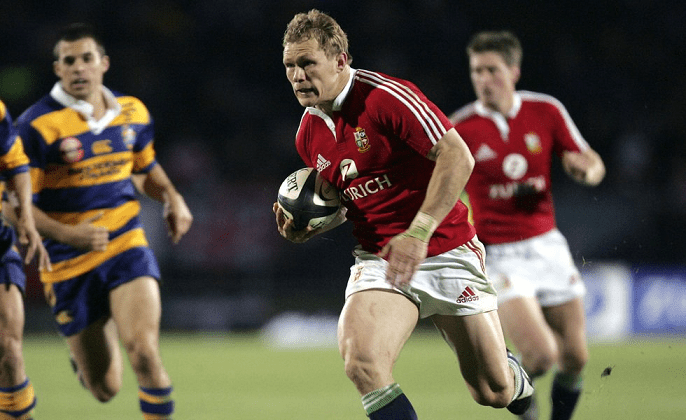
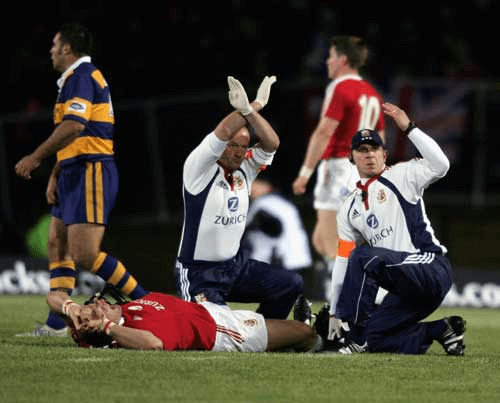
Midway through the first half, the Lions would suffer a considerable injury blow. Experienced No.8 Lawrence Dallaglio, who Clive Woodward had recently named as tour vice-captain just days earlier, would suffer a tour-ending ankle fracture and leave the field on a stretcher. Later that night, Ireland flanker Simon Easterby would fly to New Zealand to replace his fallen comrade. In the meantime, Martin Corry would come on as a replacement for the stricken Dallaglio. Following Dallaglio’s injury, Bay of Plenty would continue to come back at the Lions. Murray Williams would slot a penalty between the posts to put the Steamers back within a converted score before crossing the whitewash for his team’s second try. Williams would convert his own score to send the two sides into half-time level at 17-17.
Following the break, the Lions would up their performance into another gear. In the 52nd minute, Ronan O’Gara’s long pass would put wing Tom Shanklin over for a score, and scrum-half Dwayne Peel would notch up try number five following a line break. Finally, an excellent break from Josh Lewsey through the Bay of Plenty defence would result in replacement centre Gordon D’Arcy putting the Lions out of sight with try number six. With O’Gara converting just two of the six tries, the Lions would run out 34-20 victors over the Steamers in Rotorua.
Backs: Josh Lewsey, Mark Cueto, Brian O’Driscoll (capt.), Gavin Henson, Tom Shanklin, Ronan O’Gara, Dwayne Peel Forwards: Gethin Jenkins, Gordon Bulloch, Matt Stevens, Paul O’Connell, Ben Kay, Richard Hill, Martyn Williams, Lawrence Dallaglio. Replacements: Steve Thompson, Andrew Sheridan, Donncha O’Callaghan, Martin Corry, Matt Dawson, Charlie Hodgson, Gordon D’Arcy
Taranaki, 8th June 2005
The day before the second match of the tour against Taranaki, two experienced campaigners would join up with the Lions: Jason Robinson and Gareth Thomas. Clive Woodward had named both men in the original 44-man Lions squad, but other commitments would delay their arrivals in New Zealand. Jason Robinson would remain at home in Manchester with his pregnant wife before travelling out after the birth. Meanwhile, the culmination of the French Top 16 season would keep Toulouse player Gareth Thomas from committing to the Lions. On 4th June, Stade Francais would defeat Toulouse in the Top 16 play-off semi-finals, and Thomas would fly out to New Zealand three days later. With the 2005 British and Irish Lions operating with both a weekend and a midweek coaching team, midweek coaches Ian McGeechan and Gareth Jenkins would begin their tour by overseeing the Lions’ match against Taranaki in New Plymouth.
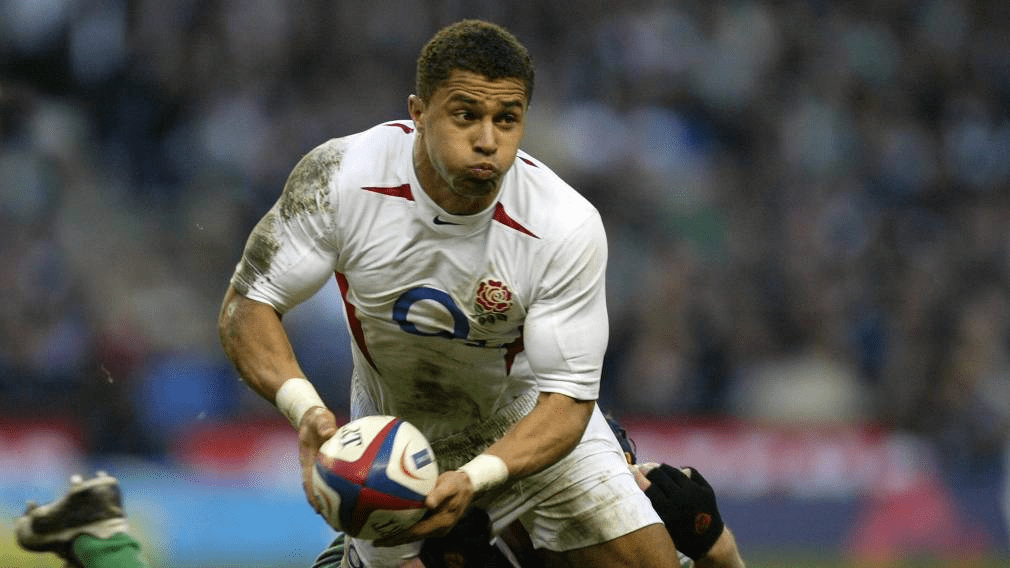
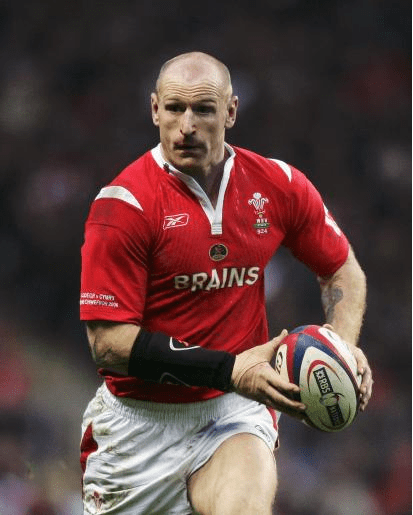
If the Bay of Plenty Steamers had pushed the Lions close in the first 40 minutes in Rotorua, Taranaki would head into half-time with a one-point advantage over the tourists. However, the Lions would almost score the first try of the match after nine minutes, as fly-half Charlie Hodgson would find winger Shane Horgan with an excellent crossfield kick. However, the referee would disallow the subsequent try, ruling Horgan’s pass to fullback Geordan Murphy as a forward pass. Ten minutes later, Hodgson’s penalty would give the tourists a 3-0 lead. However, Taranaki would eventually score the first seven-pointer. From a five-metre scrum, openside flanker Chris Masoe would dive over from close range. Stand-off Sam Young would convert to put the home side into the lead. Hodgson would respond with a second successful penalty for the Lions, but Taranaki would head into half-time with a 7-6 lead.
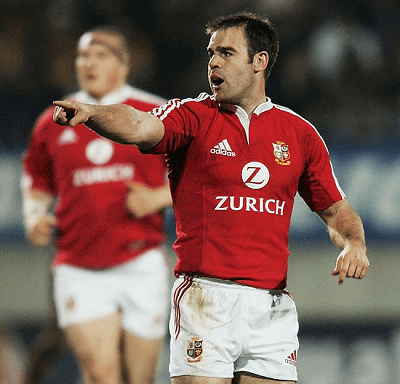
After an error-strewn first half, Charlie Hodgson aside, the British and Irish Lions would vastly improve in the second period to pull away from their club opponents. In the 47th minute, half-backs Hodgson and Chris Cusiter would perfectly combine to send Martin Corry down the right-hand touchline for the tourist’s first try. Despite missing the following conversion from Hodgson, the Sale Sharks fly-half would score two penalties to put the Lions ahead 17-7. After their earlier disallowed try, Ireland teammates Geordan Murphy and Shane Horgan would team up to send the latter through a gap in the defence and stretch the Lions’ advantage. Finally, Murphy would cap off an impressive second-half performance by scoring a brace of tries in the final ten minutes. Even though replacement Taranaki fly-half Brendon Watt would score a consolation try for the home side in injury time, the British and Irish Lions would defeat Taranaki 36-14 in their first midweek match.
After the match, the Taranaki players would invite the Lions squad onto their team bus, and the combined teams would travel to a nearby pub for a few drinks and some revelry. A tradition of the Lions that was becoming lost under Clive Woodward’s attempts to modernise the old institution.
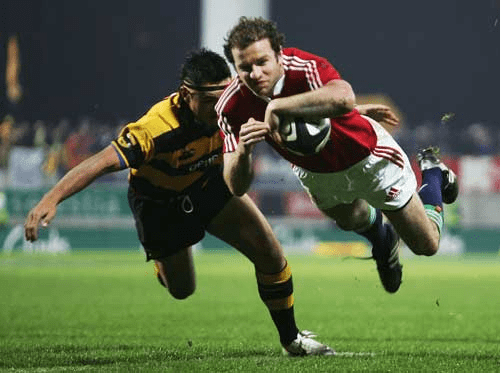
Backs: Geordan Murphy, Shane Horgan, Will Greenwood, Ollie Smith, Denis Hickie, Charlie Hodgson, Chris Cusiter Forwards: Graham Rowntree, Andy Titterrell, John Hayes, Donncha O’Callaghan, Danny Grewcock, Martin Corry (capt.), Lewis Moody, Michael Owen Replacements: Shane Byrne, Gethin Jenkins, Ben Kay, Martyn Williams, Gareth Cooper, Jonny Wilkinson, Gavin Henson
New Zealand Maori, 11th June 2005
On 10th June, an injured hamstring would rule Scotland No.8 Simon Taylor out of the rest of the tour. Four years earlier, a knee injury had ended the Stirling native’s first Lions tour after just one match. Now, Simon Taylor would return home to Scotland without even taking to the field in a Lions jersey. However, Taylor’s pain would be Ryan Jones’s gain. Another notable omission from the original 44-man squad, the Ospreys back-rower would leave Wales’s US tour and travel 8,913 miles to Hamilton, Waikato. On 4th June, Jones would start at No.8 in Wales’s 77-3 victory over the USA Eagles in Hartford, Connecticut. Six days later, he would receive the call from Clive Woodward to achieve what he would later refer to as the “ultimate accolade for a British and Irish rugby player”.
“I thought [Lions recognition] was always beyond my capability but I was very fortunate that circumstances prevailed and I went on a Lions Tour in 2005”, Ryan Jones would tell the official British and Irish Lions website in 2020,”I was touring Canada and North America with Wales at the time on the back of our first Grand Slam for years and life was pretty good, I was enjoying playing rugby that summer. “Then I suddenly had a call asking me to go down and join the Lions in New Zealand so flying out I had little to no expectation and was playing in a midweek game shortly after.”
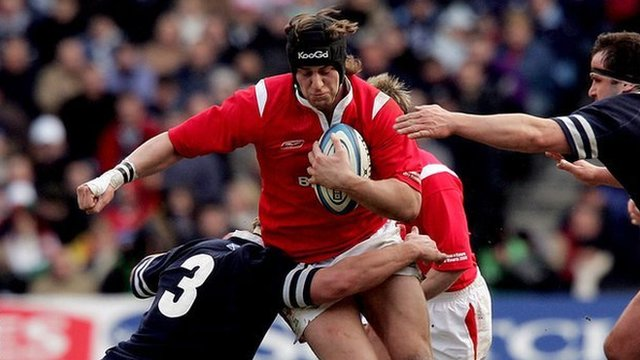
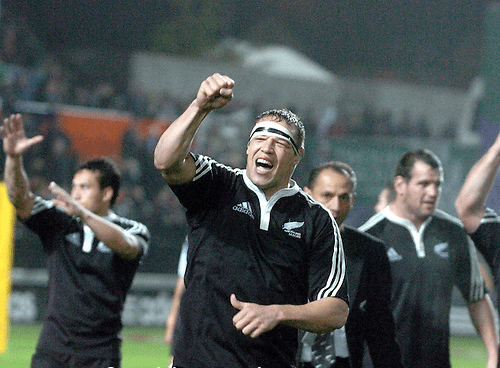
While Ryan Jones was still en route to New Zealand, the British and Irish Lions would face their first severe test of the tour on 11th June when they would play the New Zealand Maori. The New Zealand Maori are an All Blacks representative side comprised of players with Maori heritage. Of the 22 NZ Maori players selected to face the British and Irish Lions in Hamilton, ten had previously appeared for the All Blacks, including starters Leon MacDonald, Rico Gear, Caleb Ralph, Marty Holah, Carl Hayman and Piri Weepu. The Maori All Blacks could even call upon ‘King’ Carlos Spencer, New Zealand’s first-choice fly-half at the 2003 World Cup from the replacements bench if necessary. With this array of players available for the opposition, the British and Irish Lions would need to deliver a performance to continue their unbeaten start to the tour.
After a bad-tempered opening, British Lions fly-half Stephen Jones would open the scoring with a 12th-minute penalty after Matt Dawson’s sniping line break had brought the team into the Maori 22. Opposing fly-half David Hill would quickly draw the Maori level four minutes later after repeated infringements from the Lions at the scrum. After this, the All Blacks would begin to dominate the match, turning the ball over and forcing mistakes from the Lions. As a result of this sustained pressure, Hill would kick the Maori into the lead. However, Jones would bring the Lions back level close to half-time following a successful kick of his own. On the verge of half-time, the Lions would lose Andrew Sheridan to the sin-bin as the England and Sale Sharks prop would punch Maori centre Luke McAlister and receive a yellow card from referee Steve Walsh. David Hill would have the opportunity to punish the Lions for the indiscretion, but the Waikato fly-half would miss his penalty from the left-hand touchline, and the two teams would head into half-time tied 6-6.
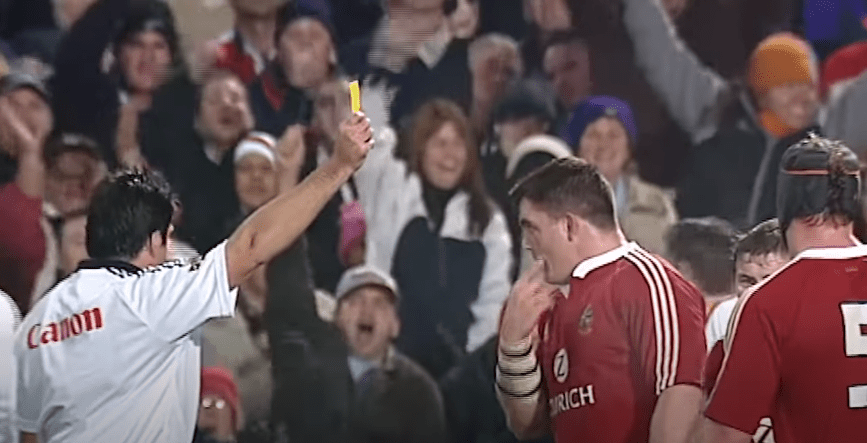
With the British and Irish Lions beginning the first ten minutes of the second half with 14 men, the Maori All Blacks would replace starting fly-half David Hill with the maverick Carlos Spencer. The Auckland stand-off would play a leading part in the continued dominance of the New Zealand side over the Lions, bringing the Maori into the tourist’s 22 on numerous occasions. Soon, Luke McAlister would punish the Lions on the scoreboard, kicking the NZ Maori into the lead at 9-6. Even after Andrew Sheridan completed his spell in the sin-bin, the ‘home’ side would look like the better team. In the 59th minute, they would score the first try of the night. From a five-metre line-out, the Maori would spread the ball to the left, and a switch between centre Rua Tipoki and Carlos Spencer in midfield would set up Leon MacDonald to sidestep his way through the Lions defence and touch the ball down over the try-line. Luke McAlister would add the conversion, and the Maori All Blacks now led 16-6. Later, the centre would add another penalty to extend his team’s advantage to 13 points.
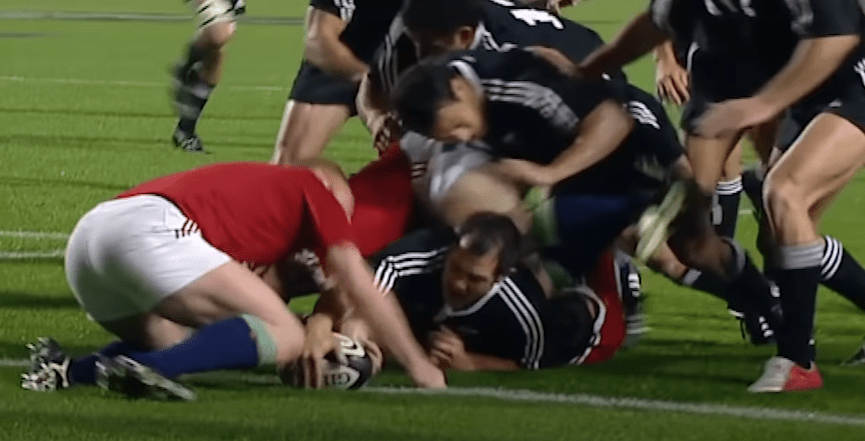
After conceding 13 unanswered points, the British and Irish Lions would finally score their first points of the second half with six minutes of the match remaining. Brian O’Driscoll would collect Stephen Jones’s pass and dodge his way between two would-be tacklers before touching down underneath the posts. Jones would land the conversion to halve the Maori advantage, and the Lions were back within six points with little time left. A quick converted try would see the tourists defeat the Maori All Blacks in Hamilton. However, the men in black would hold on to claim a first-ever win over the British and Irish Lions.
In an inspired performance, a star-studded New Zealand Maori side had beaten the Lions in Waikato three matches into their tour of New Zealand. With two weeks to go until the first test, Sir Clive Woodward and his coaching staff would have to significantly improve their all-round performances in future matches against Wellington, Otago and Southland before meeting the All Blacks in Christchurch on 25th June.
Backs: Josh Lewsey, Tom Shanklin, Brian O’Driscoll, Gordon D’Arcy, Shane Williams, Stephen Jones, Matt Dawson Forwards: Andrew Sheridan, Steve Thompson, Julian White, Simon Shaw, Paul O’Connell, Richard Hill, Martyn Williams, Michael Owen Replacements: Shane Byrne, Gethin Jenkins, Ben Kay, Simon Easterby, Dwayne Peel, Ronan O’Gara, Shane Horgan
Wellington Lions, 15th June 2005
Four days after the defeat to the New Zealand Maori, the midweek British and Irish Lions would travel to the southwestern tip of New Zealand’s North Island to face the Wellington Lions. Against a team featuring several future stars including Ma’a Nonu, Jimmy Gopperth, Thomas Waldrom, Riki Flutey and Corey Jane, plus recent victorious NZ Maori players Piri Weepu and Ross Filipo, the Lions in red would produce an improved performance compared to the previous match. However, the display would still attract criticism. BBC Sport would call the Lions ‘patchy’, and The Guardian would note that ‘What the Lions did with their possession, however, was not always convincing, as the backs frequently failed to find the level of fluidity that will be needed to beat the All Blacks.’ (Paul Doyle, The Guardian, 15th June 2005)
The Wellington game would see Jonny Wilkinson make his first appearance since the Argentina draw three weeks earlier. Wellington centre Tane Tui’pulotu would welcome the fly-half back with a late and hard tackle six minutes into the match. After an encouraging start, Wilkinson and centre Gavin Henson would attempt early drop-goals, with both kicks failing to find the target. However, an off-the-ball hit from Kristian Ormsby on Martin Corry in the 8th minute would allow Wilkinson to open the British Lions account from the kicking tee. The Lions would then start to register some promising attacks in the Wellington half. Wilkinson would double their points with another penalty following great work from prop Julian White at a scrum. However, an infringement from Neil Back would allow Jimmy Gopperth to halve the deficit minutes later.
Despite dominating the first period, the Lions struggled to convert their many forays forward into five and seven points. A lack of communication and execution were letting the tourists down. However, in the 35th minute, they would get their try. Danny Grewcock would win the ball at a line-out and quickly drop the ball down to scrum-half Dwayne Peel. Peel would evade a tackle before running through a gap in the fragmented line-out. Peel would find Martin Corry to continue the attack into the 22, and Corry would offload the ball to Gethin Jenkins to run in from 17 metres. Wilkinson would add the extras to give the Lions a 13-3 lead. In the last act before the break, Gopperth would land a second penalty to end the first half with the British Lions leading Wellington 13-6.
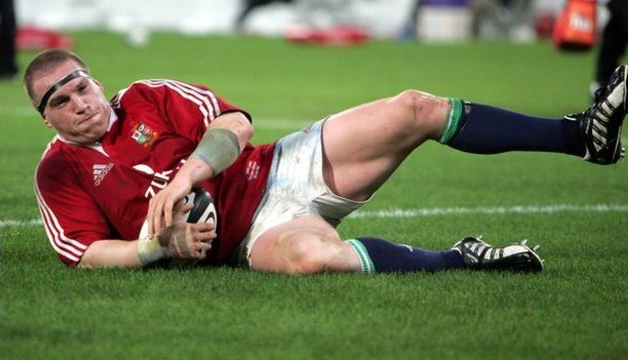
Four minutes into the second half, Jonny Wilkinson would extend the British Lions lead back to ten points with his third successful penalty of the night. Following this score, neither side would score again until the final five minutes of the game, as most of the second half would see scrappy rugby from both sides. Clive Woodward would send on Chris Cusiter, Stephen Jones, Shane Horgan and Matt Stevens in a bid to lift his side’s play to little effect. In fact, Wellington would come closer to scoring a try through Thomas Waldrom’s line break, but the No.8 would be stopped just short of the Lions try-line, with referee Paul Honiss penalising him for holding onto the ball.
However, after scoring their first try towards the end of the first half, the Lions would score their second in the final few minutes of the match. Gareth Thomas would receive the ball metres from the halfway line. The Wales captain would run through a gap in the broken field and kick the ball ahead before outpacing the Wellington defence to touch the ball down over the try-line and help the Lions finish with a flourish. The British and Irish Lions would run out 23-6 winners over Wellington, concluding their business in the North Island before travelling south for the week leading up to the 1st Test with New Zealand.
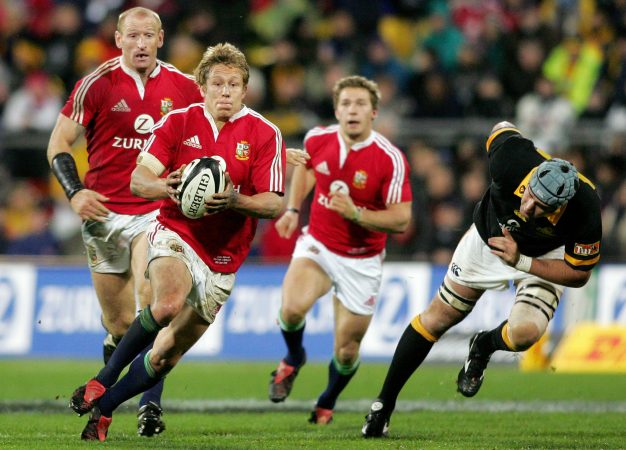
Backs: Josh Lewsey, Jason Robinson, Brian O’Driscoll (capt.), Gavin Henson, Gareth Thomas, Jonny Wilkinson, Dwayne Peel Forwards: Gethin Jenkins, Shane Byrne, Julian White, Danny Grewcock, Ben Kay, Simon Easterby, Neil Back, Martin Corry. Replacements: Gordon Bulloch, Matt Stevens, Paul O’Connell, Richard Hill, Chris Cusiter, Stephen Jones, Shane Horgan
Otago, 18th June 2005
After arriving in New Zealand a week earlier, Ryan Jones would make his first appearance in a Lions shirt against Otago on 18th June. In this match, an improved second-half performance would see the tourists earn a comfortable victory. However, the Lions would find themselves under the cosh in the early minutes of the match at Carisbrook. Nick Evans’ 5th-minute penalty would give Otago the lead, and he would add a second penalty ten minutes later to give the hosts a 6-0 advantage. However, a push on Martyn Williams at a ruck would allow Lions fly-half Charlie Hodgson to register the first points for the tourists and would tie the scores at 6-6 following another infringement at the ruck.
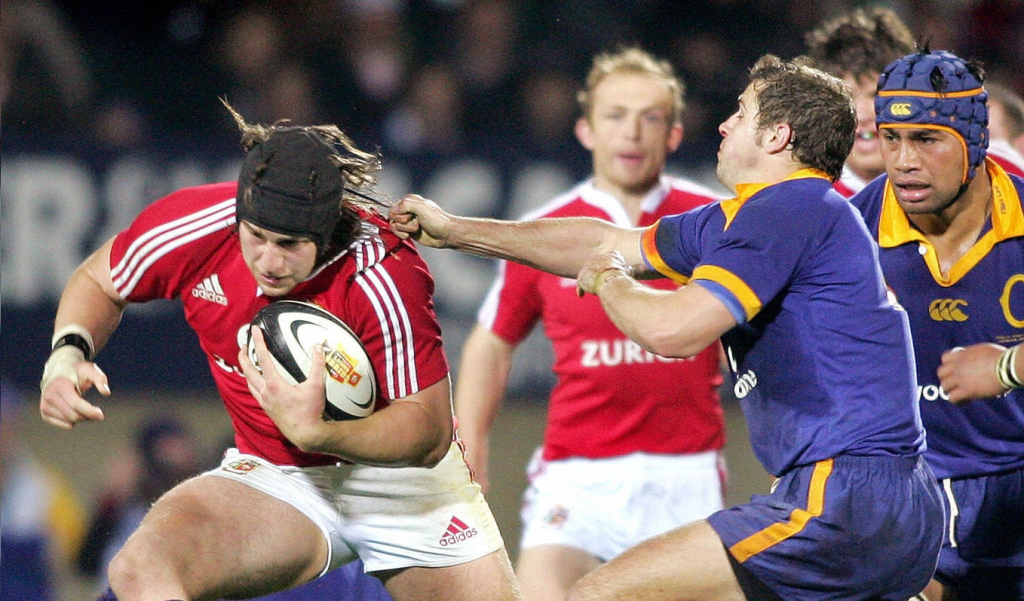
With the Lions starting to grow into the match, Otago would halt their momentum by scoring the first try six minutes before half time. Centre Neil Brew would receive the ball on his 10-metre line before stepping through Denis Hickie’s tackle and sprinting clear of the Lions defenders. Hitting the 22, Brew would bounce out of the tackle of Charlie Hodgson before offloading the ball for scrum-half Danny Lee to score from 13 metres. Nick Evans would add a further two points from the boot. However, in the final minute of the half, Hodgson would quickly redeem himself by setting up a try for Will Greenwood to draw the Lions level heading into the break. After the Lions received a penalty on the left flank, Hodgson would aim a crossfield kick towards Greenwood wide on the opposite wing. The veteran centre would read the bounce of the ball to collect the kick and evade the on-rushing Otago players to cross the try-line. After an inventive piece of skill, Hodgson would land another penalty to even up the score at 13-13.
The second half would begin similarly to the first, with Nick Evans scoring a penalty to put Otago ahead on the scoreboard after a high tackle. However, the Lions would soon lead for the first time following a Ryan Jones try in the 52nd minute. Shane Williams would act as the first receiver at a ruck, drawing in four Otago defenders before offloading the ball to Jones, whose angle would take him through the hole left open before riding the tackle of Danny Lee to score his first Lions try. Charlie Hodgson would add the conversion to give the tourists a 20-16 lead.
Another Nick Evans penalty would bring Otago back within one point, but Hodgson would restore the four-point advantage within three minutes. Then, four minutes later, the Lions would score their third try, one that would give them the victory. From a tap penalty in his half, Ryan Jones would push off three tacklers and take the ball over halfway before offloading to hooker Steve Thompson. In the next phase, excellent hands along the line would open a gap for Geordan Murphy to make yards into before the Irish fullback would pass to Shane Williams to his left. Williams would sidestep Otago fullback Glen Horton to score. Hodgson would convert again to take the Lions past 30 points. Despite further attempts at tries, the Lions would defeat Otago 30-19 in Dunedin to give Ian McGeechan and Gareth Jenkins another win in their column.
Backs: Geordan Murphy, Denis Hickie, Will Greenwood, Gordon D’Arcy, Shane Williams, Charlie Hodgson, Chris Cusiter Forwards: Graham Rowntree, Gordon Bulloch, Matt Stevens, Donncha O’Callaghan, Simon Shaw, Simon Easterby, Martyn Williams, Ryan Jones Replacements: Steve Thompson, Andrew Sheridan, Danny Grewcock, Michael Owen, Matt Dawson, Ronan O’Gara, Ollie Smith
Southland Stags, 21st June 2005
In the final match before the first Test against New Zealand, the British and Irish Lions would face the Southland Stags in Invercargill on 21st June. Before the game, Clive Woodward would announce that none of the 22 players facing Southland would play a part in the first test against New Zealand in Christchurch four days later. Despite not making the test squad, some of the players starting the match against Southland would play their second match in four days without reward. Midweek coach Ian McGeechan would call this decision from Woodward “a big ask”.
Against a Southland team containing All Blacks Jimmy Cowan and Mils Muliaina, the Lions would race into a 10-0 lead. After an early penalty miss from Stags fly-half Richard Apanui, Ronan O’Gara would find success from the boot at the other end of the field. After Denis Hickie, Ollie Smith, and Mark Cueto had brought the Lions within mere metres of the Southland line, Ronan O’Gara would fling a pass out to Gavin Henson and the Welshman would sidestep his way over the try-line from close range. O’Gara would convert to give the Lions a ten-point advantage inside 12 minutes. Five minutes later, Lewis Moody’s side entry at a ruck would result in Apanui putting three points on the board for Southland.
The 10-3 scoreline would remain unchanged for the rest of the first half. The Lions would dominate possession and territory but would fail to add to their points tally. Ronan O’Gara would even attempt a penalty kick from the halfway line only for his effort to sail wide. A Lions driving maul would end in a Southland penalty following Simon Shaw’s accidental offside. O’Gara would even find Denis Hickie out wide with a crossfield kick, only for the winger to lose the ball in contact. Handling errors would prove to be the critical factor in the Lions failing to turn pressure and penalties into points. The last significant act of the first 40 minutes would see Southland earn a kickable penalty 38m from goal. However, Apanui would miss the target, and the half-time score would read 10-3 to the Lions.
Six minutes into the second half, the home side would draw level with the tourists. Tongan flanker Hale T-Pole would separate himself from a driving maul and scurry over the Lions line for a try. Richard Apanui would add the extra two points to bring the Stags level less than 10 minutes into the second half. However, Gavin Henson would soon dispel any worries that the Lions had regarding Southland’s revival by scoring his second try of the night in the 54th minute. As in the first half, Ronan O’Gara’s pass would find Henson, and the Welsh centre would use his footwork to touch the ball down over the Stags try-line. With O’Gara’s conversion, the Lions seven-point lead was re-established at 17-10. Almost ten minutes later, the Munster fly-half would add another three points with an easy penalty to boost his team’s advantage to 10 points.
However, the Stags would not let their heads drop, and two successful kicks from Charles Apanui on either side of one from O’Gara would place Southland within seven points with less than five minutes remaining. Despite the efforts of the Southland Stags late on, O’Gara would have the last word, landing his most straightforward penalty of the day to give the British and Irish Lions a 26-16 win.
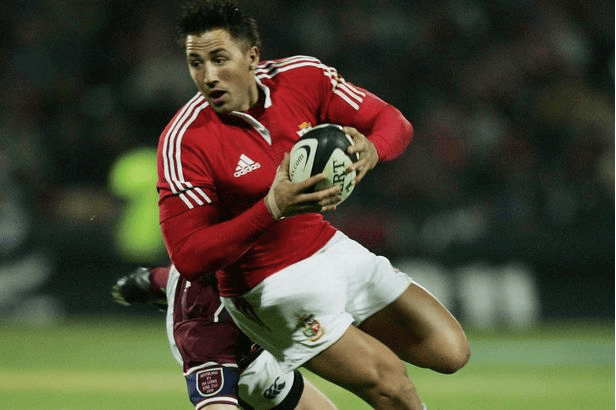
Gavin Henson would earn the man-of-the-match award from his impressive display against the Southland Stags. When asked about Woodward’s call before the match, Henson would say he was “pretty devastated” not to make the squad for the first Test against New Zealand, later adding, “I’ve got to keep on trying to play well and see what happens. It’s a difficult position to be in because it’s out of my hands. I’ll have to see what happens.”
After a series of less-than-convincing performances against New Zealand’s many provincial sides, Sir Clive Woodward’s British and Irish Lions would now take on the real deal in Christchurch for three consecutive weeks for the chance to either become heroes or villains in the eyes of the rugby world. However, having achieved two wins and draw against the All Blacks during his time as England head coach, Sir Clive Woodward would hope that he could produce the right formula to upset the No.1 team in world rugby in their own country.
Backs: Geordan Murphy, Mark Cueto, Ollie Smith, Gavin Henson, Denis Hickie, Ronan O’Gara, Gareth Cooper Forwards: Matt Stevens, Andy Titterrell, John Hayes, Simon Shaw, Donncha O’Callaghan, Lewis Moody, Martyn Williams, Michael Owen (capt.) Replacements: Gordon Bulloch, Andrew Sheridan, Simon Easterby, Chris Cusiter, Charlie Hodgson, Tom Shanklin, Gordon D’Arcy
1st Test: Christchurch, 25th June 2005
| British and Irish Lions | Position | New Zealand | ||
|---|---|---|---|---|
| Jason Robinson | 15 | Fullback | 15 | Leon MacDonald |
| Josh Lewsey | 14 | Right wing | 14 | Doug Howlett |
| Brian O’Driscoll (capt.) | 13 | Outside centre | 13 | Tana Umaga (capt.) |
| Jonny Wilkinson | 12 | Inside centre | 12 | Aaron Mauger |
| Gareth Thomas | 11 | Left wing | 11 | Sitiveni Sivivatu |
| Stephen Jones | 10 | Fly-half | 10 | Dan Carter |
| Dwayne Peel | 9 | Scrum-half | 9 | Justin Marshall |
| Gethin Jenkins | 1 | Loose-head prop | 1 | Tony Woodcock |
| Shane Byrne | 2 | Hooker | 2 | Keven Mealamu |
| Julian White | 3 | Tight-head prop | 3 | Carl Hayman |
| Paul O’Connell | 4 | Second row | 4 | Chris Jack |
| Ben Kay | 5 | Second Row | 5 | Ali Williams |
| Richard Hill | 6 | Blindside flanker | 6 | Jerry Collins |
| Neil Back | 7 | Openside flanker | 7 | Richie McCaw |
| Martin Corry | 8 | Number 8 | 8 | Rodney So’oialo |
| Substitutions | ||||
| Steve Thompson | 16 HK | 16 HK | Derren Witcombe | |
| Graham Rowntree | 17 PR | 17 PR | Greg Somerville | |
| Danny Grewcock | 18 SR | 18 SR | Jono Gibbes | |
| Ryan Jones | 19 N8 | 19 FL | Sione Lauaki | |
| Matt Dawson | 20 SH | 20 SH | Byron Kelleher | |
| Will Greenwood | 21 CE | 21 FB | Mils Muliaina | |
| Shane Horgan | 22 WG | 22 WG | Rico Gear |
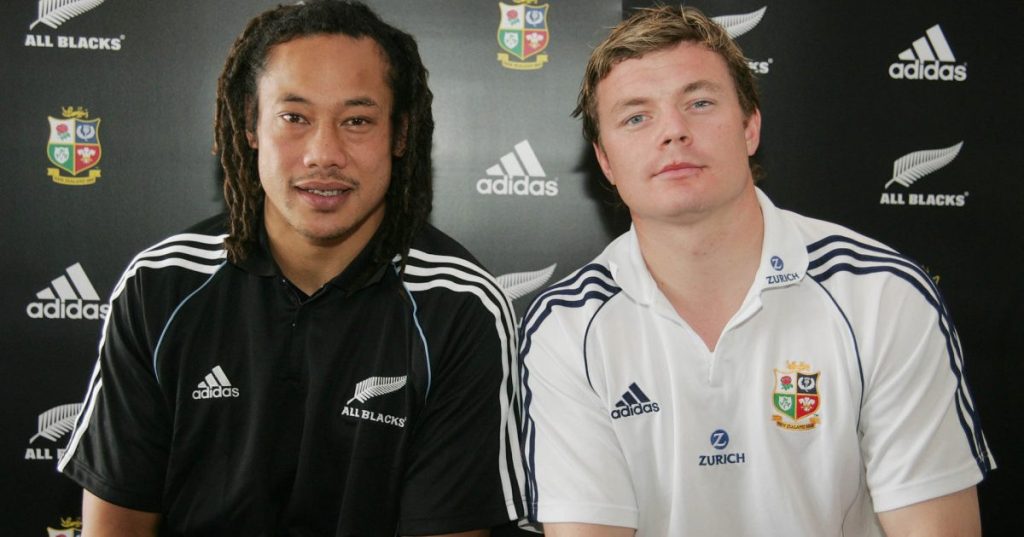
After months of preparation and seven tune-up matches, Sir Clive Woodward’s vastly experienced British and Irish Lions team would take on Graham Henry’s world-leading New Zealand in Christchurch’s Lancaster Park on 25th June 2005. The last time the Lions toured New Zealand in 1993 coached by Ian McGeechan, the All Blacks would edge a controversial first test 20-18, before the tourists improved to win the second test 20-7. Finally, Sean Fitzpatrick’s team would come from behind to defeat Gavin Hastings’ team 30-13 in Auckland to earn a 2-1 series win.
After the Lions 23-6 victory over the Wellington Lions on 15th June, many observers would mark that much of the team had produced performances worthy of starting in the First Test. These journalists, fans and ex-players would somehow read Clive Woodward’s mind, as twelve players that started in the Wellington game would feature in Woodward’s starting XV against the All Blacks. In the three changes to that earlier side, Paul O’Connell, Richard Hill and Stephen Jones would come up from the bench to replace Danny Grewcock, Simon Easterby and Gavin Henson. The British and Irish Lions starting XV would feature eight of England World Cup winners along with four Welshmen (Gethin Jenkins, Dwayne Peel, Stephen Jones, Gareth Thomas) and three Irishmen (Shane Byrne, Paul O’Connell, Brian O’Driscoll).
One notable selection choice would see Clive Woodward choose an all-English back row of Richard Hill, Neil Back and Martin Corry. Another more high-profile one would see Jonny Wilkinson start the match at inside centre partnering Brian O’Driscoll while Wales fly-half Stephen Jones would start at No.10. Clive Woodward had trialled this selection during the Wellington Lions match, with Jones and Wilkinson adopting these positions for the final 30 minutes of that game.
Meanwhile, Graham Henry’s New Zealand matchday squad would feature Leon Macdonald and Carl Hayman as starters and Rico Gear among the replacements. All three of these men had been part of the New Zealand Maori team that had bested the British and Irish Lions just two weeks prior.

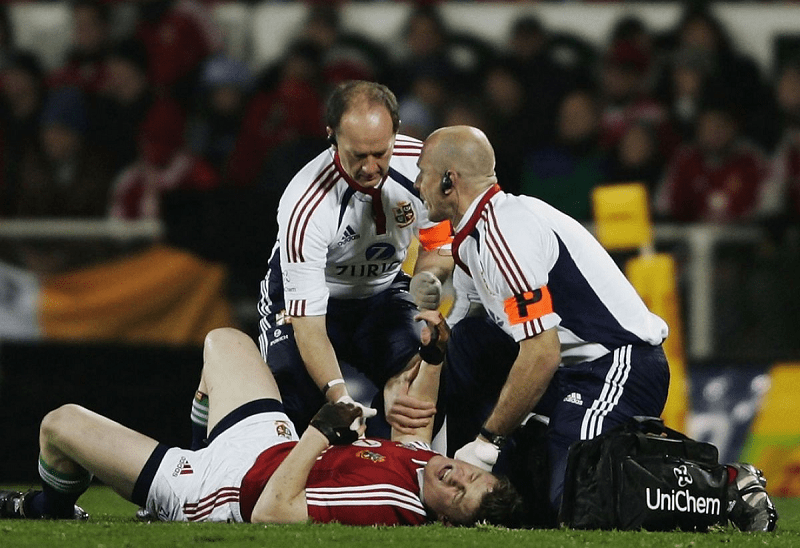
After the national anthems, Jonny Wilkinson would kick off the first test of the series, and New Zealand lock Chris Jack would collect and begin a brief maul. From the next phase, half-backs Justin Marshall and Dan Carter, 32 and 21 respectively, would make the first line break to bring New Zealand up to the halfway line. Carter would eventually end the first attacking phase by accidentally kicking the ball dead, leading to a Lions 22-metre drop-out. However, the attention of all Lions players and supporters would immediately turn towards the right-hand touchline where a distressing scene was quickly unfolding. Lying flat on his back, team doctors James Robson and Gary O’Driscoll were treating Lions captain Brian O’Driscoll, explicitly focusing on the Irishman’s shoulder. Seeing that his captain had potentially sustained a severe injury, Clive Woodward would immediately send replacement centre Will Greenwood to prepare to come on less than two minutes into the match.
If your focus had primarily been on the ball during this time, you would have no idea how O’Driscoll managed to injure his shoulder. However, as physios prepared to take O’Driscoll away on a stretcher, an instant replay would soon show the actual cause of Brian O’Driscoll’s injury, causing anger among all those of a British and Irish Lions persuasion. After tackling ball-carrier Leon MacDonald, O’Driscoll would set up a ruck and attempt to turn the ball over before being cleared out by New Zealand players. However, after the ball had moved on, All Black captain Tana Umaga and hooker Keven Mealamu would pick up O’Driscoll, tip him upside down and drive him head-first into the ground, with O’Driscoll taking the impact on his shoulder. After completing the act, Umaga and Mealamu would move onto the next attacking ruck.
After these replays, referee Joel Jutge would take no further action on the matter, Will Greenwood would come on for the stricken O’Driscoll at outside centre, and the game would continue with a Lions scrum on their 10-metre line with just 96 seconds on the clock. The tourists would now spend the remaining 78 minutes of this 1st test without their captain, with England captain Martin Corry taking the reins for the rest of the match.
In the 5th minute, Dwayne Peel would provide the Lions’ first piece of attacking flair, taking a tap penalty just inside the opposition half before running at the All Blacks backline and evading two tackles before stopping near the 22. A minute later, Martin Corry would charge down Justin Marshall’s clearing kick near to New Zealand’s try-line, showing an early sign of intent from the visitors. Dan Carter would then unintentionally kick the resulting drop-out directly into touch, leading to a Lions scrum on the New Zealand 22-metre line. After turning over the ball in their 22, the All Blacks would break upfield through Tana Umaga and Aaron Mauger’s grubber kick. Dan Carter would collect the kick and break into the Lions half before Dwayne Peel could eventually get a hand on the ball in the 22. In the next phase, New Zealand would reclaim the ball and win a penalty. Carter would kick the easy three points and put New Zealand 3-0 ahead after 9 minutes.
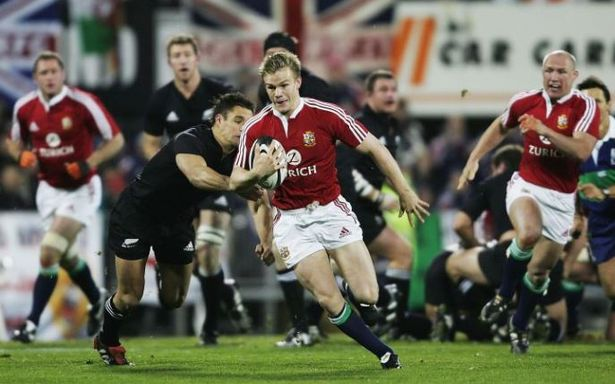
Three minutes later, an Aaron Mauger kick ahead would lead to New Zealand almost scoring their first try. Desperate Lions defending on their own goal-line would result in another New Zealand penalty and a yellow card to lock Paul O’Connell, putting him in the sin bin for the next 10 minutes. Dan Carter would again kick the three points, doubling New Zealand’s lead inside the first quarter of an hour. After putting the All Blacks on the scoreboard, Carter started to influence the game. He would soon break through the Lions defence for the second time before passing to Justin Marshall, who would, unfortunately, knock the ball on to end the move. Soon afterwards, winger Sitiveni Sivivatu would almost score the first try for New Zealand, collecting Leon MacDonald’s pass before Jason Robinson and Jonny Wilkinson could divert him into touch inches from the try-line.
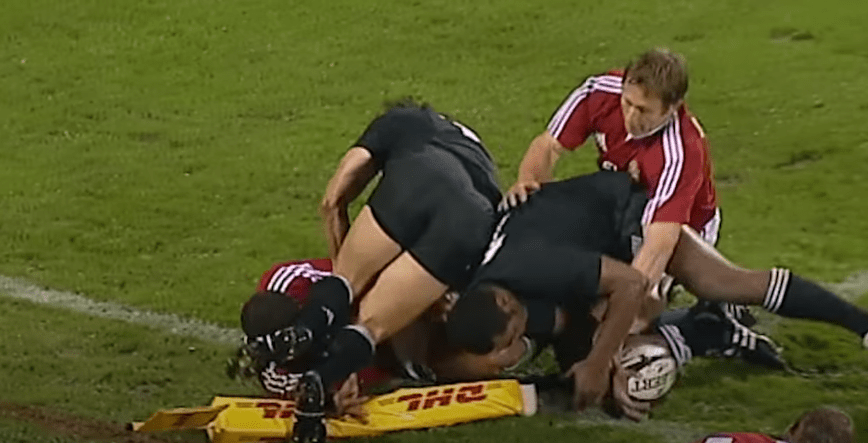
Nineteen minutes into the match and the Lions would make their second substitution, with Ryan Jones replacing the famously injury-prone Richard Hill in the back row. Three minutes later, O’Connell would finish his term in the sin bin, returning the Lions to fifteen players. After a brief Lions reprieve, the All Blacks would threaten again, breaking halfway inside their own half through MacDonald and Tana Umaga. MacDonald would reach the Lions 22 before Ryan Jones tackled him into touch. However, lock Ali Williams would intercept the resulting Lions line-out and crash through two tackles to score the first try. Dan Carter would miss the follow-up conversion, but the All Blacks would lead the Lions 11-0 after 26 minutes. The All Blacks were now firmly on top.

Later, Martin Corry and Shane Byrne would break the line from a fractured New Zealand line-out to give the Lions a rare foray into the All Blacks’ 22. The ball would go loose from the next phase, and New Zealand would clear their lines. During this passage of play, Tana Umaga would produce another dangerous tackle on Josh Lewsey, dropping the Lions wing on the back of his head and neck. Then, five minutes before half-time, Umaga’s line-break and kick ahead would almost set up Sitiveni Sivivatu for a try, only for the ball to elude his clutches. However, interference in the ruck from Richie McCaw and Ali Williams would result in a Lions penalty, but Jonny Wilkinson would miss the posts from 42m. At half-time, after a dominant first-half performance, New Zealand would lead the British and Irish Lions 11-0.
One minute into the second half, Jonny Wilkinson would sum up the Lions’ performance so far. Opting to kick for the corner from a penalty inside the Lions 22, Wilkinson would slice his kick, making only 12 metres. The All Blacks would even win the line-out on their opponent’s ball, their fifth line-out steal of the game. In addition, the All Blacks had racked up 77% of ball possession, proving the first-half dominance which they were already starting to reproduce just minutes into the second half. A line-out infringement from Paul O’Connell would lead to an All Blacks penalty, which Dan Carter would kick successfully to extend New Zealand’s lead to 14 points.
New Zealand was not allowing the Lions any time on the ball, forcing handling errors and loose passes out these experienced international players. In the 47th minute, an inside pass from Carter would allow Aaron Mauger and Tana Umaga to slice through the Lions defence. Just past the Lions 10-metre line, Umaga would throw a long pass out to Sitiveni Sivivatu in space. The Fijian-born winger would evade the tackles of Josh Lewsey and Jonny Wilkinson to finish an outstanding breakaway try from the All Blacks. Dan Carter would add the extra two points, and New Zealand now led the Lions 21-0 less than 10 minutes into the second half. From the next restart, another pass would quickly allow Ali Williams to break towards the halfway line, another sign of the All Blacks’ total dominance of this first test.
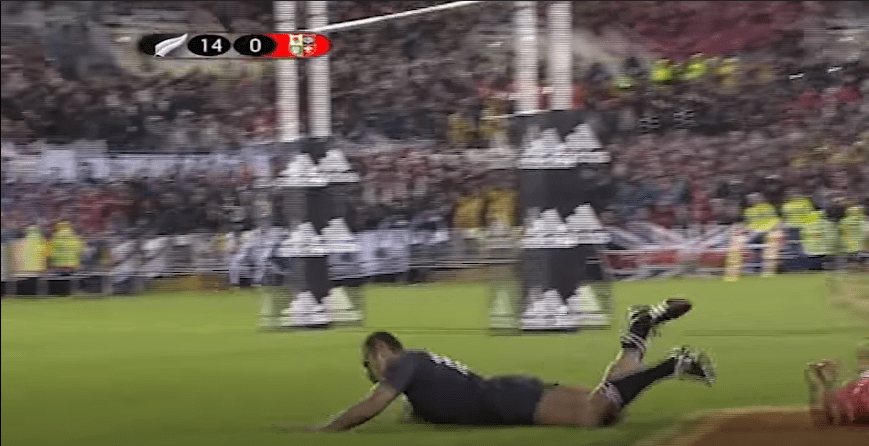
In the 56th minute, Joel Jutge would penalise the All Blacks for not releasing the ball in their 22. Then, Jonny Wilkinson would score from the kicking tee to register the Lions first points of the match at 21-3, ending a streak of All Blacks’ points scoring. Then, Clive Woodward would ring the changes, sending on Steve Thompson, Shane Horgan and Danny Grewcock for Shane Byrne, Jason Robinson and Ben Kay. As the temperature dropped in Christchurch and the driving rain turned into hail, both teams struggled to find fluency, with both teams taking turns mishandling the ball and giving away penalties. However, the All Blacks were still enjoying the better ball possession, finding space in attack and swarming around the Lions when in defence. As the minutes ticked down, the match would become disjointed, especially with the introduction of substitutes for both sides. In the 73rd minute, Dan Carter would have a chance to give the All Blacks a 21-point advantage but would miss the target for just the second time.
With five minutes remaining, the Lions would make another rare line break. Substitute scrum-half Matt Dawson would take a quick tap penalty on the halfway line and probe around the All Blacks’ defensive line. Further carries from Martin Corry and Paul O’Connell would bring the Lions close to the 22. However, a knock-on in midfield two phases later would end the attack in its tracks. A few minutes later, a Lions scrum would end in an All Blacks penalty, and Dan Carter would kick the ball into touch to confirm New Zealand’s 1st Test victory.
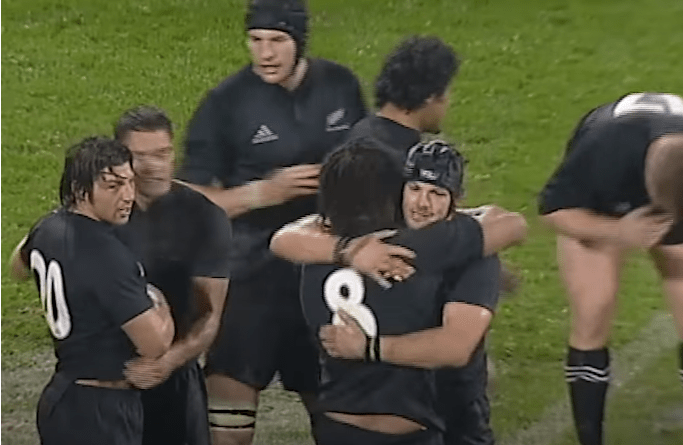
New Zealand would win the 1st Test of the 2005 Lions Tour by a 21-3 score in a dominant performance. The All Blacks would earn their victory just minutes into the second half, and the British and Irish Lions would not respond effectively. In the most damaging statistic, the All Blacks would even win 10 of the Lions’ 22 lineouts during the match, in a simple summation of the entire first Test. Out-thought and out-fought throughout the 80 minutes, the Lions’ evening would start horribly with Brian O’Driscoll’s 1st-minute injury and would never recover. Dan Carter and Tana Umaga would star for the All Blacks, but the whole team would deliver a world-class display of power, speed and skill that Clive Woodward and his extensive coaching staff could not answer. The bad news for the Lions: there were two more Tests to come. The tourists now had on hell of a task on their hands to turn the series around and do it without their tour captain Brian O’Driscoll.
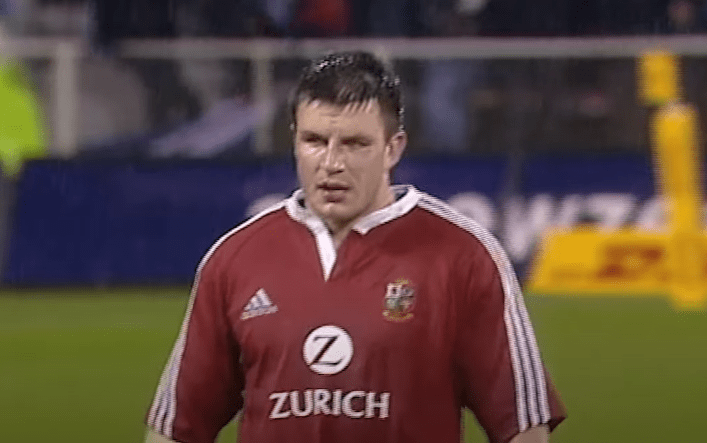
In a post-match interview, Martin Corry would say: ” Let’s put our hands up. We were poor today. We don’t train like that, and we don’t try to play like that, but we’ve got to take this on the chin and hope that it will be better next week.”
Years later, Lewis Moody would describe the match in the following way:” We looked totally out of sorts, it was raining hard, and Dan Carter played like the best player in the world. A 21-3 scoreline almost flattered us”.
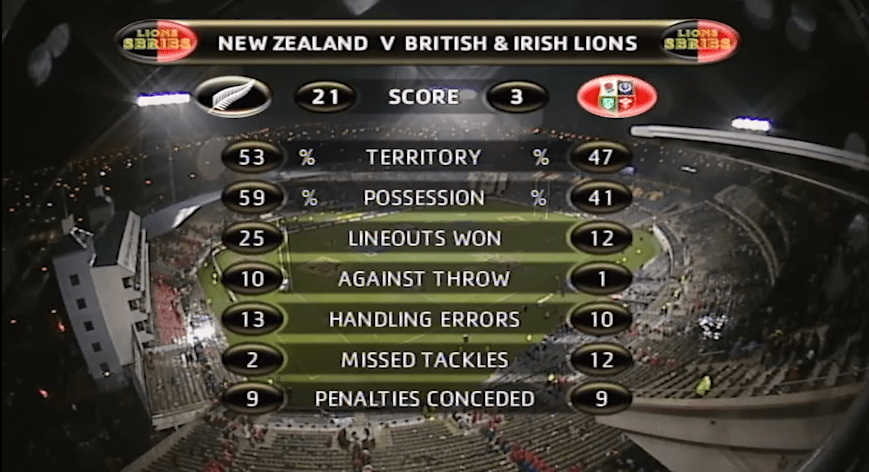
Final Score: British and Irish Lions 3 New Zealand 21
Despite the one-sided 1st Test defeat to New Zealand in Christchurch, the main talking point post-match from a British and Irish Lions point of view would concern the injury to tour captain Brian O’Driscoll and how it occurred. The day after the match, O’Driscoll would tell his parents and Ireland head coach Eddie O’Sullivan that “on the way down, he thought he was going to break his neck and die”. (Eddie O’Sullivan, BBC Radio 5 Live, 2017)
The dislocated shoulder that O’Driscoll suffered during the first minute of the match would end his Lions tour immediately, and many within the Lions camp were furious. Sir Clive Woodward would bring up the incident in a post-match press conference, flashing up a replay on a big screen and talking the assembled journalist through the incident as it happened. The man himself, Brian O’Driscoll, would also have a few choice words about the tackle that caused his injury. He would call Umaga and Mealamu’s tackle “a cheap shot that has put me out…could quite easily have broken my neck”. He would also go on to describe the incident using the following words:
“I tackled one of their players and then a ruck formed. I was pushing against Jerry Collins and two guys came in, they had a leg each, I got turned around in the air and speared into the ground. “I was turned upside down, in the air and speared into the ground. I knew straight away that it was serious. “I had this searing pain that just wouldn’t go away, I have never had a dislocated shoulder before so I did not know that is what it was, but I knew instantly that I was out of the game. “I can hardly believe that I put so much into this and just got over a minute of play in a Test match. “I have worked so hard for so long to get to this and to have it taken away by such a cheap shot leaves a really nasty feeling.”
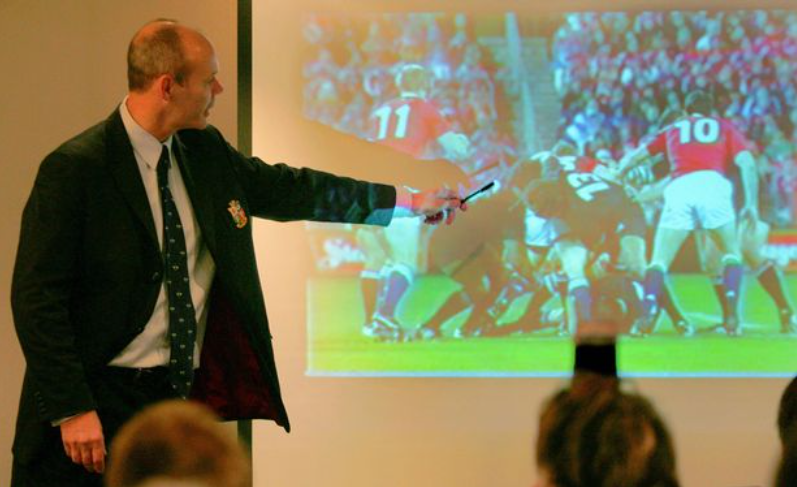
After the Lions reported the ‘spear tackle’ to the citing commissioner, the authorities would decide to pursue no further action against Tana Umaga and Keven Mealamu. Twelve years later, Eddie O’Sullivan would tell the BBC: “It still makes my blood boil, it was a complete injustice. “It’s 12 years on but it’s one of those things that will be talked about for a long, long time because it’s very difficult to move on when there’s no justice.” (BBC Radio 5 Live, 2017)
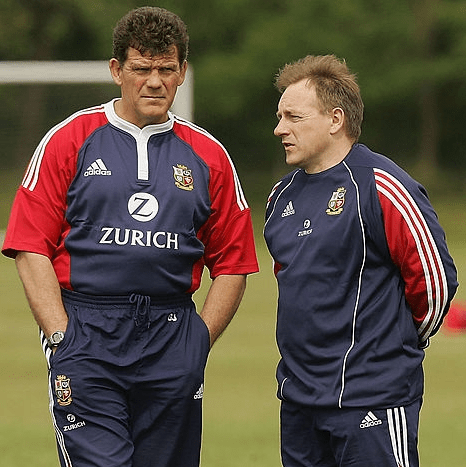
Instead, the citing commissioners would charge Lions lock Danny Grewcock, a replacement in the 1st Test, with foul play for supposedly biting Mealamu. The authorities would issue Grewcock with a 2-month ban, ruling him out of the rest of the tour. To replace him, Woodward would call upon Wales lock Brent Cockbain, who would fly out from Wales’s US tour to join up with the squad. A day later, Scotland flanker Jason White would replace Richard Hill, who had also suffered a tour-ending injury in the 1st Test.
On 29th June, Sir Clive Woodward would announce that Wales skipper Gareth Thomas would serve as the new British and Irish Lions captain for the remainder of the tour.
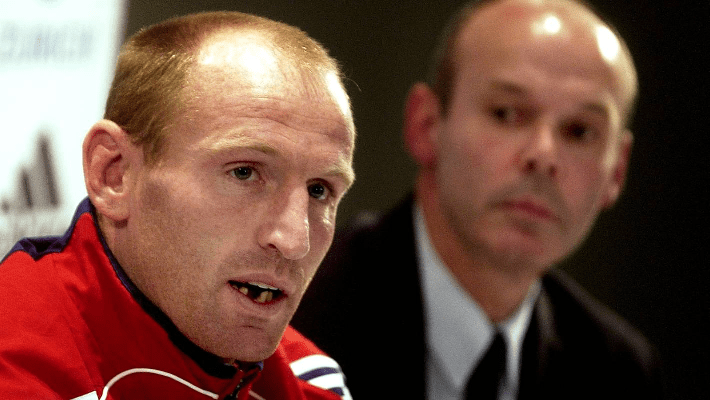
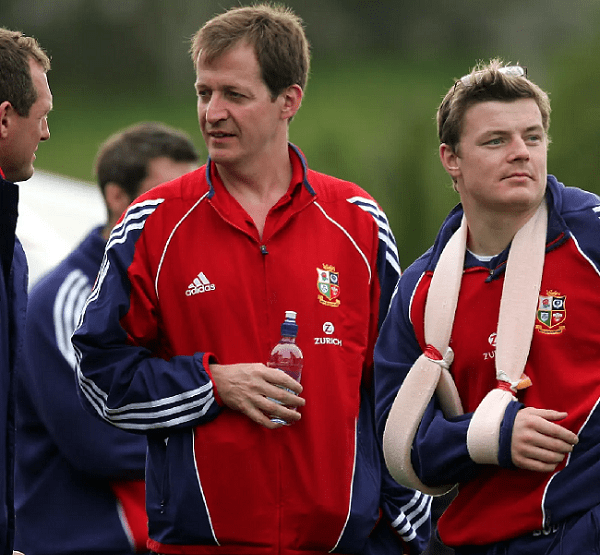
With the squad looking to recover following their first test defeat, Clive Woodward would task PR consultant Alistair Campbell with delivering a speech to inspire the players. However, the former Downing Street communications head would try to motivate these international rugby union players in the way that a person who has zero experience working as part of a sports organisation can provide motivation. According to Paul O’Connell’s 2016 autobiography The Battle, Campbell would begin his speech by admitting he didn’t know much about rugby. However, he did know how the players were feeling. How? From experiencing political crises like Kosovo and Northern Ireland in the 1990s. To put it simply, Campbell’s speech would not go down well with the British and Irish Lions players. In his autobiography, O’Connell would note that:
“On the training pitch the following morning, I was still thinking about Alastair’s few words and getting more and more p****d off. I decided what I was going to do when the session was over: find Alastair and knock him out. There wouldn’t be any need for questions or explanations. Everyone would know what it was for.” (Paul O’Connell, The Battle, 2016)
Manawatu Turbos, 28th June 2005
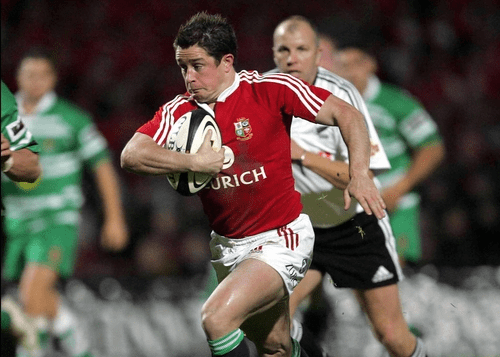
In between the 1st and 2nd Tests against New Zealand, the British and Irish Lions would travel back to the North Island to face the Manawatu Turbos in Palmerston North. Martin Corry and Jason Robinson were the only two survivors of the first test who would also start this midweek match. For anyone watching inside the Arena Manawatu, the difference in class was evident from minute 1 to minute 80. Against a second division side in the National Provincial Championship, the Lions would rack up one of their biggest ever tour victories, scoring seventeen tries to defeat the Turbos by a 109-6 scoreline. Of note, Shane Williams would score five tries while Mark Cueto and Ronan O’Gara would also produce braces.
In the first half, Manawatu would score their only points through two penalties from scrum-half Jonathan Hargreaves. On the other side, Shane Williams would complete his hat-trick while Martin Corry, Geordan Murphy and Jason Robinson would cross the Manawatu try-line before half-time. The Lions would lead 38-6 at half-time but would triple this score in the second half. In total, Williams, O’Gara and Cueto would cross the whitewash twice, while Charlie Hodgson, Ollie Smith, Neil Back, Gordon D’Arcy and Gareth Cooper would only add to the tourist’s points tally. A convincing morale-boosting victory for the Lions full of players pushing for Test selection, but an expected win for the tourists over a team made up of part-timers.
Backs: Geordan Murphy, Jason Robinson, Ollie Smith, Gordon D’Arcy, Shane Williams, Charlie Hodgson, Chris Cusiter Forwards: Andrew Sheridan, Gordon Bulloch, John Hayes, Simon Shaw, Donncha O’Callaghan, Martin Corry, Martyn Williams, Michael Owen Replacements: Andy Titterrell, Matt Stevens, Brent Cockbain, Neil Back, Gareth Cooper, Ronan O’Gara, Mark Cueto
2nd Test: Wellington, 2nd July 2005
| British and Irish Lions | Position | New Zealand | ||
|---|---|---|---|---|
| Josh Lewsey | 15 | Fullback | 15 | Mils Muliaina |
| Jason Robinson | 14 | Right wing | 14 | Rico Gear |
| Gareth Thomas (capt.) | 13 | Outside centre | 13 | Tana Umaga (capt.) |
| Gavin Henson | 12 | Inside centre | 12 | Aaron Mauger |
| Shane Williams | 11 | Left wing | 11 | Sitiveni Sivivatu |
| Jonny Wilkinson | 10 | Fly-half | 10 | Dan Carter |
| Dwayne Peel | 9 | Scrum half | 9 | Byron Kelleher |
| Gethin Jenkins | 1 | Prop | 1 | Tony Woodcock |
| Steve Thompson | 2 | Hooker | 2 | Keven Mealamu |
| Julian White | 3 | Prop | 3 | Carl Hayman |
| Paul O’Connell | 4 | Second row | 4 | Chris Jack |
| Donncha O’Callaghan | 5 | Second row | 5 | Ali Williams |
| Simon Easterby | 6 | Flanker | 6 | Jerry Collins |
| Lewis Moody | 7 | Flanker | 7 | Richie McCaw |
| Ryan Jones | 8 | Number 8 | 8 | Rodney So’oialo |
| Replacements | ||||
| Shane Byrne | 16 HK | 16 HK | Derren Witcombe | |
| Graham Rowntree | 17 PR | 17 PR | Greg Somerville | |
| Martin Corry | 18 FL/N8 | 18 SR | Jono Gibbes | |
| Martyn Williams | 19 FL | 19 FL | Sione Lauaki | |
| Matt Dawson | 20 SH | 20 SH | Justin Marshall | |
| Stephen Jones | 21 FH | 21 CE | Ma’a Nonu | |
| Shane Horgan | 22 WG | 22 FB | Leon MacDonald |
For the second Test against New Zealand in Wellington, Sir Clive Woodward would make eight changes to the team that lost in Christchurch one week earlier. In the forward pack, Steve Thompson would replace Shane Byrne at hooker, and Donncha O’Callaghan would come in for Ben Kay in the second row. Woodward would even change his entire back row, with the in-form Simon Easterby, Lewis Moody and Ryan Jones replacing old favourites Richard Hill, Neil Back and Martin Corry. Woodward would also make numerous personnel and positional changes in the backline. Positionally, Josh Lewsey and Jason Robinson would switch places at fullback and right-wing. New tour captain Gareth Thomas would move off the left wing to outside centre, and Jonny Wilkinson would move from inside centre to fly-half. Wilkinson’s move to No.10 would see Stephen Jones drop to the bench, while Shane Williams (11) and Gavin Henson (12) would move into the spots vacated by Thomas and Wilkinson. Finally, Wales flanker Martyn Williams would come onto the bench.
For the All Blacks, coach Graham Henry would name an unchanged forwards pack while making three changes in the backline. Byron Kelleher, Rico Gear and Mils Muliaina, who had all come on as replacements the previous week, would start ahead of Justin Marshall, Doug Howlett and Leon MacDonald, with Marshall and MacDonald dropping to the bench. Howlett would drop out of the 22, while centre Ma’a Nonu would come in among the replacements.
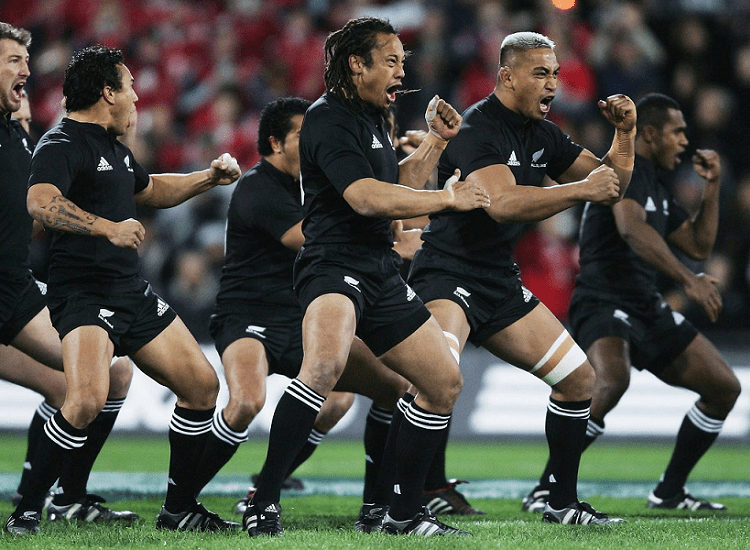
As with the first test, Jonny Wilkinson would kick off the second test in Wellington. The Lions would quickly break from a scrum in the first minute, with Gareth Thomas and Shane Williams teaming up to reach the All Blacks 22. A carry from Paul O’Connell would make further ground. One phase later, Jonny Wilkinson would find Gareth Thomas as a first receiver, and the Lions captain would stand off the New Zealand defence before cutting inside three All Blacks defenders and running in under the posts to score the first try of the night. Ninety-five seconds into the match, the Lions had shocked the All Blacks with an early score. Maybe this test would be different for Clive Woodward’s team. Jonny Wilkinson would add a conversion, and the British and Irish Lions would lead New Zealand 7-0 inside two minutes in Wellington.
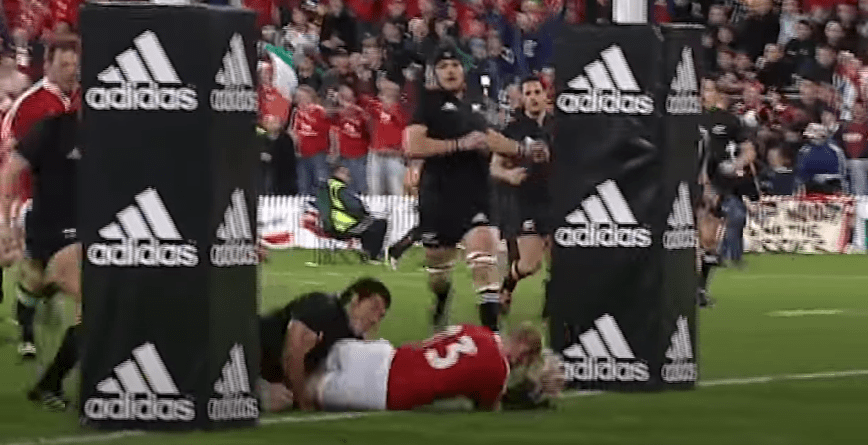
After Ryan Jones would collect the restart for the Lions, scrum-half Dwayne Peel would make another line break from the ruck, dummying a pass before sniping through a gap in the defensive line. Peel would cross the halfway line before passing to no one. Lewis Moody would pick up the loose ball, and the Lions would continue their attack. Peel would again attempt a break from a ruck soon afterwards, showing the tourist’s confidence in these early stages. In the fourth minute, Carl Hayman would lose his balance at a ruck, and referee Andrew Cole would award a penalty to the Lions. However, Wilkinson would hit the post with his kick at goal, and the All Blacks would recover possession, later earning a penalty of their own. Dan Carter would land a 42m effort to put New Zealand on the board in the eighth minute.
From a New Zealand scrum inside the Lions 22, the ball would end up in the hands of winger Rico Gear on the right-hand touchline. However, a tackle from Gavin Henson would put the All Black winger into touch close to the Lions’ try-line. In the 15th minute, Carter would convert his second penalty of the night to cut the Lions’ lead to one point at 7-6. Three minutes later, Tana Umaga would dispossess his opposite number Gareth Thomas in midfield before running into space and feeding Dan Carter. After receiving the ball halfway inside the New Zealand half, the young fly-half would carry the ball deep into the Lions 22 before returning the ball to Umaga to score the try. At the end of a breathless opening 20 minutes, the All Blacks would hold a 13-7 lead over the Lions.
In the 25th minute, the Lions would make inroads into the All Blacks’ 22, earning a penalty which Jonny Wilkinson would convert to bring the Lions back within three points. However, Dan Carter would respond with his own successful kick two minutes later. Wilkinson would immediately attempt a drop goal from a Lions attack seconds after the restart, only for his effort to miss the target. However, he would amend with a penalty success one minute later. In the 32nd minute, All Blacks scrum-half Byron Kelleher would break around the corner of a ruck, with his run ending a metre from the try-line. New Zealand would get quick ball from the subsequent scrum, and the ball would eventually reach Sitiveni Sivivatu on the left wing. For the second test running, Sivivatu would find his way through Lions tacklers to score a try, New Zealand’s second try of the match. Dan Carter would miss the resulting conversion, but New Zealand would now hold a 21-13 lead with five minutes to go until half-time. This score would remain unblemished at half-time.
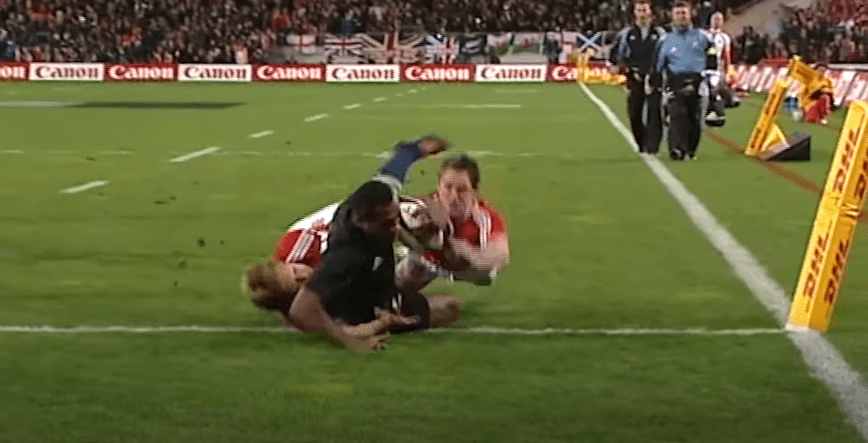
Two minutes into the second half, Dan Carter would extend New Zealand’s lead into double figures after another successful kick at goal. One minute later, New Zealand would break from a tap penalty with Tana Umaga and Dan Carter making progressive carries into the Lions half. A couple of phases of play later, Rodney So’oialo would find Carter out on the right flank, and the 21-year-old would sprint through a hole in the Lions defence. With just Josh Lewsey left to beat, Carter would deliver a grubber kick down the touchline. After Lewsey missed a tackle on the fly-half, Carter would ground the ball unopposed in the Lions in-goal area to complete an excellent individual try. After scoring, Carter would dust himself down and add the touchline conversion to push New Zealand’s advantage out to 18 points just five minutes into the second half. Soon afterwards, two big hits on Shane Williams would bring to an end consecutive Lions attacks in the New Zealand 22.
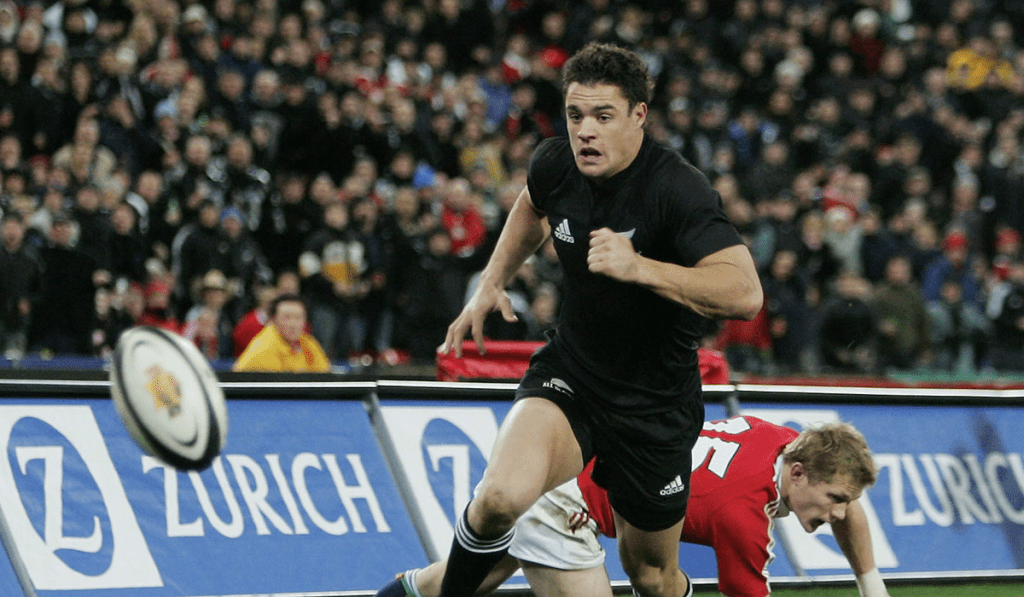
By the 50th minute, the Lions were starting to recover from the early shock of Dan Carter’s try, and a line break would soon come from hooker Steve Thompson, who would make 20m to cross into the New Zealand half. A later ruck would bring opposing props Julian White and Tony Woodcock to blows, with both men receiving a slap on the wrists. However, another big hit on Shane Williams, this time from Tana Umaga, would end another Lions attack. A few minutes later, Carter would add three points to the All Blacks points tally, while his opposite number Jonny Wilkinson would leave the field with an injury. Carter’s kick would give the All Blacks a 34-13 advantage with 20 minutes of match time remaining. Halfway through the second half, the Lions had not scored a single point while the All Blacks had scored 13 points. All these points (two penalties, one try, one conversion) had come from Dan Carter. From the next restart, Carter would launch another line break, enlisting the services of flanker Jerry Collins to make more ground.
In the 66th minute, Dwayne Peel would pick the ball from a maul and deliver a pass to Simon Easterby on the blindside. The Irish flanker would ground the ball on the try-line despite the efforts of Keven Mealamu and Justin Marshall after verification from the television match official (TMO). However, replacement fly-half Stephen Jones would miss a difficult kick from the touchline, reducing the All Blacks’ lead to 16 points with 14 minutes left. However, in the 69th minute, the All Blacks would turn over possession near the Lions 22. Lions try-scorer Simon Easterby would rush out the line to stop Keven Mealamu, but the hooker would manage to pass the ball to Leon MacDonald, who would feed Dan Carter. Receiving the ball just outside the 22, Carter would sidestep his would-be tackler Josh Lewsey and run 25 metres towards the line for his second try of the match. Once again, Carter would successfully convert his own score, giving New Zealand a 25-point advantage and boosting his personal points tally for the night to 31. With less than 10 minutes remaining, the score now read: Lions 18 New Zealand 41.
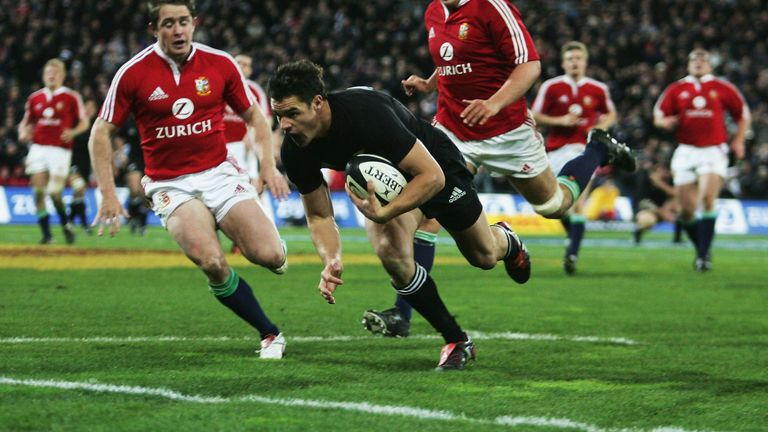
Ten seconds after the restart, New Zealand would break through the Lions defence again. Justin Marshall would find flanker Sione Lauaki on the wing, and he would make it halfway inside the Lions’ half. New Zealand would spread the ball wide, and Mils Muliaina, Tana Umaga and man-of-the-match Dan Carter would bring New Zealand within two metres of the try-line, only for the ball to go loose. At this point, it was now a question of how much the All Blacks would win by. Every All Blacks ball-carrier was making ground, and rarely did a pass go loose or result in a handling error. In the 75th minute, forwards Rodney So’oialo, Richie McCaw and Derren Witcombe would make significant carries deep inside the Lions’ half. Just outside the 22, Umaga would try a grubber kick, and Dan Carter would catch the ball, only for Shane Williams to deny the fly-half a hat-trick of tries. One minute later, flanker McCaw would pick up a drive the ball over the try-line for New Zealand’s fifth try. Carter would nail his ninth kick of the night, bringing his points tally to 33, and the scoreline would now make grim viewing for anyone associated with the Lions.
The Lions would attempt a consolation score, only for All Black defenders to hold up Shane Horgan over the try-line. After a knock-on, referee Andrew Cole would blow the final whistle, and Tana Umaga would raise his arms in the air. The All Blacks had won the series, taking an unassailable 2-0 lead, and they had done it while making their international opponents look amateurish. After watching all of the second Test, you forget that the British and Irish Lions scored the first try and held a 7-0 lead over New Zealand inside two minutes. However, the All Blacks would roar back to win 48-18, a record Test defeat for the British and Irish Lions. After leading 21-13 at half-time, Graham Henry’s men would win the second half 27-5, blowing away Clive Woodward’s men. The All Blacks would score five tries to the Lions’ two, while fly-half Dan Carter would score 33 points compared to Jonny Wilkinson’s 8. Carter’s points tally was also a record for an individual player against the Lions, a sign of a truly world-class performance from the young fly-half.
After two devastating losses, the British and Irish Lions would have to pick themselves up for the 3rd Test in Auckland seven days later to avoid a dreaded 3-0 series whitewash.
Final Score: British and Irish Lions 18 New Zealand 48
In a 2017 interview on New Zealand television show ‘The Crowd Goes Wild’, British and Irish Lions captain Gareth Thomas would describe playing in the 2nd Test. He would say:
“I was thinking in the second Test in 2005, we’ve got this in the bag and then looking at the scoreboard on 80 minutes and seeing nearly 50 points on it…In that second Test, Dan Carter won it on his own.”
In his book, Lewis Moody would say “As the final whistle sounded, I was embarrassed, devastated and humiliated.”
Auckland, 5th July 2005
Before the final test with New Zealand in Auckland, the British and Irish Lions would first play the city’s provincial side in their final midweek match of the tour. An entirely-changed Lions team led by Scotland captain Gordon Bulloch would eke out a 17-13 win after withstanding a spirited comeback from a team containing Isa Nacewa, John Afoa and Joe Rokocoko, with future internationals Jerome Kaino and Isaia Toeava coming off the bench.
The Lions would open the scoring through Charlie Hodgson’s penalty after four minutes. Both sides would have chances to keep the scoreboard ticking over, with Afoa almost scoring the first try for Auckland after 21 minutes but for the attentions of Matt Dawson and Martyn Williams. In the 27th minute, Ronan O’Gara, who would replace an injured Hodgson, would double the Lions’ points tally with another penalty before Auckland fullback Brent Ward would halve this advantage through a successful kick of his own. O’Gara would respond by landing a second penalty, and the Lions would cross the try-line mere minutes before half-time. Winger Mark Cueto would collect a wild pass from Geordan Murphy on the halfway line before sprinting through tackles into the Auckland 22. With Auckland bringing the Sale winger down just before the try-line, Martyn Williams would cross the whitewash in the next phase of play. O’Gara would miss the conversion, but the Lions would head into half-time with a 14-3 advantage.
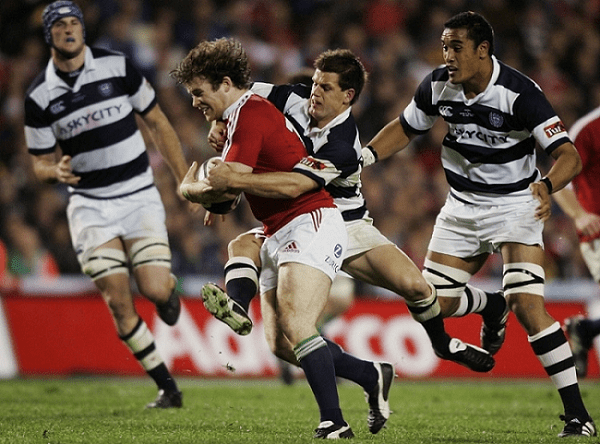
After half-time, Auckland would start to get back into the game. Brent Ward would send a long-range penalty between the posts, and the home side would soon score a try through fullback and future Leinster captain Isa Nacewa. Ward’s subsequent conversion would reduce the deficit to one point, with the Lions now only leading 14-13 and Auckland looking to cause an upset. The provincial side would have a chance to take the lead with 11 minutes remaining, but Ward would miss his penalty, giving the tourists a reprieve. In the 75th minute, O’Gara’s third penalty of the night would push the Lions’ lead out to four, and the midweek side would hold on to remain undefeated under the management of Ian McGeechan and Gareth Jenkins. Now, attention would turn to Clive Woodward and the Test team to get the job done against the All Blacks four days later.
Backs: Geordan Murphy, Mark Cueto, Will Greenwood, Gordon D’Arcy, Denis Hickie, Charlie Hodgson, Matt Dawson, Graham Rowntree, Gordon Bulloch (capt.), John Hayes, Simon Shaw, Ben Kay, Jason White, Martyn Williams, Michael Owen Replacements: Andy Titterrell, Matt Stevens, Brent Cockbain, Martin Corry, Chris Cusiter, Ronan O’Gara, Shane Horgan
3rd Test: Auckland, 9th July 2005
| British and Irish Lions | Position | New Zealand | ||
|---|---|---|---|---|
| Geordan Murphy | 15 | Fullback | 15 | Mils Muliaina |
| Mark Cueto | 14 | Right wing | 14 | Rico Gear |
| Will Greenwood | 13 | Outside centre | 13 | Conrad Smith |
| Gareth Thomas (capt.) | 12 | Inside centre | 12 | Tana Umaga (capt.) |
| Josh Lewsey | 11 | Left wing | 11 | Sitiveni Sivivatu |
| Stephen Jones | 10 | Fly-half | 10 | Luke McAlister |
| Dwayne Peel | 9 | Scrum-half | 9 | Byron Kelleher |
| Gethin Jenkins | 1 | Prop | 1 | Tony Woodcock |
| Shane Byrne | 2 | Hooker | 2 | Keven Mealamu |
| Julian White | 3 | Prop | 3 | Greg Somerville |
| Donncha O’Callaghan | 4 | Second row | 4 | Chris Jack |
| Paul O’Connell | 5 | Second row | 5 | Ali Williams |
| Simon Easterby | 6 | Flanker | 6 | Jerry Collins |
| Lewis Moody | 7 | Flanker | 7 | Rodney So’oialo |
| Ryan Jones | 8 | Number 8 | 8 | Sione Lauaki |
| Replacements | ||||
| Gordon Bulloch | 16 HK | 16 HK | Derren Witcombe | |
| Graham Rowntree | 17 PR | 17 PR | Campbell Johnstone | |
| Martin Corry | 18 FL/N8 | 18 SR | James Ryan | |
| Martyn Williams | 19 FL | 19 FL | Marty Holah | |
| Matt Dawson | 20 SH | 20 SH | Justin Marshall | |
| Ronan O’Gara | 21 FH | 21 FH | Nick Evans | |
| Shane Horgan | 22 WG | 22 WG | Doug Howlett |
In a bid to avoid embarrassment, Sir Clive Woodward would make five alterations to his starting XV for the 3rd Test against New Zealand on 9th July, with all but one change coming in the backs. The biggest change would see Stephen Jones start at fly-half in place of the injured Jonny Wilkinson. Other changes would see Will Greenwood partner captain Gareth Thomas in the centres, with Geordan Murphy and Mark Cueto replacing Jason Robinson and Shane Williams in the Lions’ back three. Shane Byrne would replace Steve Thompson at hooker, and Gordon Bulloch and Ronan O’Gara would join the replacements bench in place of Wilkinson and Thompson.
With a series win already in the bag, New Zealand head coach Graham Henry would make four changes to his team for Auckland. In the backs, Conrad Smith would replace Aaron Mauger at outside-centre, and Luke McAlister would make his international debut in place of Dan Carter at fly-half. Meanwhile, prop Greg Somerville would come in for Carl Hayman in the front row and Sione Lauaki would play instead of Richie McCaw, with Rodney So’oialo moving to openside flanker to accommodate the Waikato No.8. Finally, James Ryan (second row), Marty Holah (flanker), Nick Evans (stand-off) and Doug Howlett (wing) would all join the All Blacks’ replacements bench.
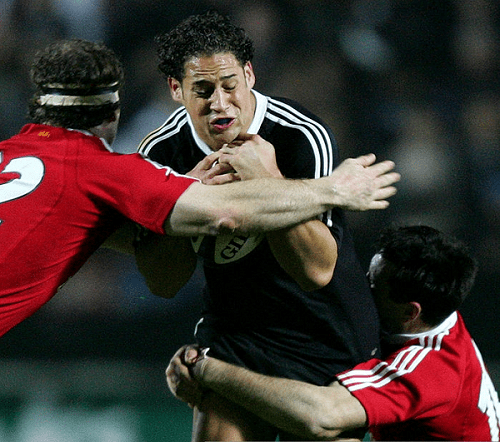
Thirty seconds into the game, the Lions would make serious ground into the New Zealand 22 with a driving maul, only for the move to end in a knock-on. A minute later, another impressive Lions’ driving maul would lead to a Lions penalty. Stephen Jones would kick the ball between the posts, and the Lions would take an early 3-0 lead. The All Blacks’ defensive line speed would force the tourists to pick up the pace, and they would, with Josh Lewsey and Stephen Jones managing to break through opposition tackles. Lewsey would break down the left flank from a later ruck, reaching the 22 before passing to Gethin Jenkins, who the All Blacks would drag down five metres short of the try-line. Two passes later, hooker Shane Byrne would fall just short with his carry. The Lions would not score a try but would earn a penalty. New Zealand would soon suffer further as referee Jonathan Kaplan would send All Blacks captain Tana Umaga to the sin-bin. The Lions now had some early momentum just eight minutes into the match. Stephen Jones would kick the three points, and the Lions would lead 6-0.
Two minutes later, a Sione Lauaki tap penalty from a scrum would begin an all-out All Blacks break, and centre Conrad Smith would throw a dummy, run through a gap and escape Josh Lewsey’s despairing tackle to score the first try of the match. Luke McAlister would convert the score, and 14-man New Zealand would lead the Lions 7-6 after 11 minutes, just like that.
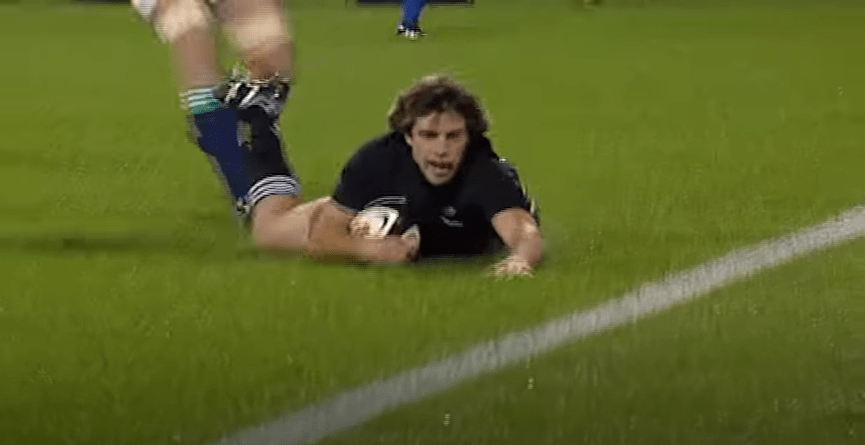
In the 13th minute, excellent work from Luke McAlister would almost send Sitiveni Sivivatu in for a third try in three Tests. However, Lions scrum-half Dwayne Peel would fumble a McAlister kick over his own try-line, and Ali Williams would pounce on the loose ball to score his second try of the Test series. A McAlister conversion would extend the All Blacks’ advantage to eight points inside the first 15 minutes. A Stephen Jones penalty would bring the Lions back within five points at 14-9. In the 19th minute, Tana Umaga would return to the field, knowing his side had scored 14 points and conceded six during his time off the field. Luke McAlister would add to that earlier tally in the 20th minute with a well-taken 37m penalty, but another Stephen Jones penalty two minutes later would peg the All Blacks back at 17-12. After a brief period of Lions pressure, the All Blacks would respond and bear down on the Lions try-line once more. Tana Umaga would almost complete an interception try but would knock the ball on in transit.
With 11 minutes of the first half remaining, the match sat in the balance, with both teams exchanging possession and points while nearly equalling each other in all the notable statistics. In the 34th minute, Stephen Jones would have the chance to draw the Lions within two points but would hit the post with his effort. However, the All Blacks would finish the first half stronger and quick ball from a scrum would see Luke McAlister dart through a gap before offloading to Tana Umaga to score New Zealand’s third try. McAlister’s conversion would mean that New Zealand went into half-time leading the Lions 24-12.
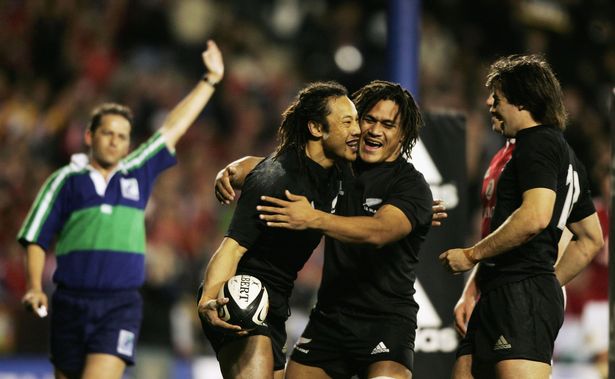
After an even start to the second half, New Zealand would quickly threaten and score the first points in the 48th minute. After a tap penalty, replacement scrum-half Justin Marshall would send Tana Umaga over for his second try of the match. Two more points from McAlister would take New Zealand past the 30-point mark at 31-12. Even at this point, a series whitewash greeted the Lions, barring a remarkable turnaround. At the 50-minute mark, Shane Horgan would come to replace Lions captain Gareth Thomas. The Welsh captain knew now that he could not save the Lions from an unenviable fate despite his best efforts.
The game would become scrappy as the Lions tried to chase the match, and the All Blacks looked to add to their lead. In the 54th minute, All Black lock Chris Jack (of all people) would send a kick downfield, and Sitiveni Sivivatu would outpace the retreating forwards and score a third try in consecutive matches for New Zealand. However, the referee would chalk the try off for a shoulder charge from Jerry Collins in the build-up, with the All Blacks flanker receiving a yellow card for his troubles.
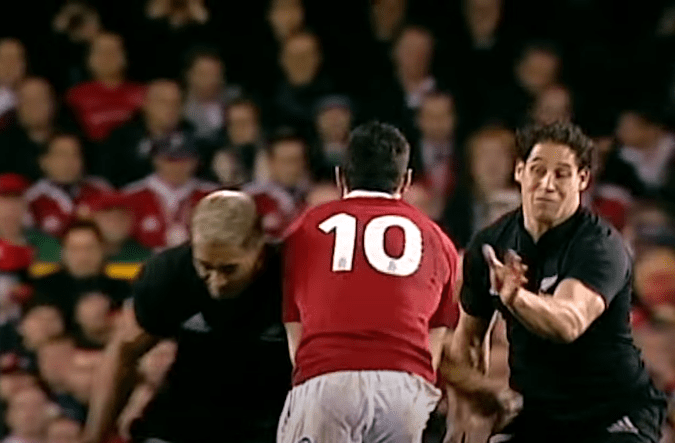
In the 57th minute, the Lions would also see a potential try chalked off, as a TMO check could not find clear grounding of the ball following a driving maul. Two minutes later, another maul would lead to a try, with flanker Lewis Moody taking the ball over the line. Stephen Jones would convert the Lions’ first try of the night to make the score 31-19 to New Zealand with 50% of the second half gone. However, Sitiveni Sivivatu would almost score directly from the next restart after catching Luke McAlister’s kick-off. The Lions were starting to edge the penalty count. However, after Jerry Collins’ return to the field in the 65th minute, the All Blacks would kick into top gear. A rolling maul beginning on the Lions’ 22-metre line would stop just five metres short of the try-line. The Lions would try to pierce holes in the All Blacks defence but fail to make much headway. In the 71st minute, Josh Lewsey would fumble a clearing kick into touch, summing up his team’s performance. One minute later, All Blacks defenders would force Shane Horgan to carry the ball over his own try-line, forcing a 5m New Zealand scrum.
After scoring their try, the Lions would receive numerous penalties, kickable penalties that Stephen Jones could have kicked and slowly chipped away at New Zealand’s 12-point lead. However, the Lions would always kick for the corner, knowing that two converted tries without reply would also secure a win. However, after all these chances came to nought, the All Blacks would severely punish the Lions. In the last minute, Rico Gear would intercept Mark Cueto’s pass near halfway and kick downfield. Despite having three Lions players in front of him, Gear would chase his kick and touch down for the All Blacks fifth try of the match. Man-of-the-match debutant Luke McAlister would keep his immaculate kicking record intact, nailing the conversion to finish with a personal points tally of 13.
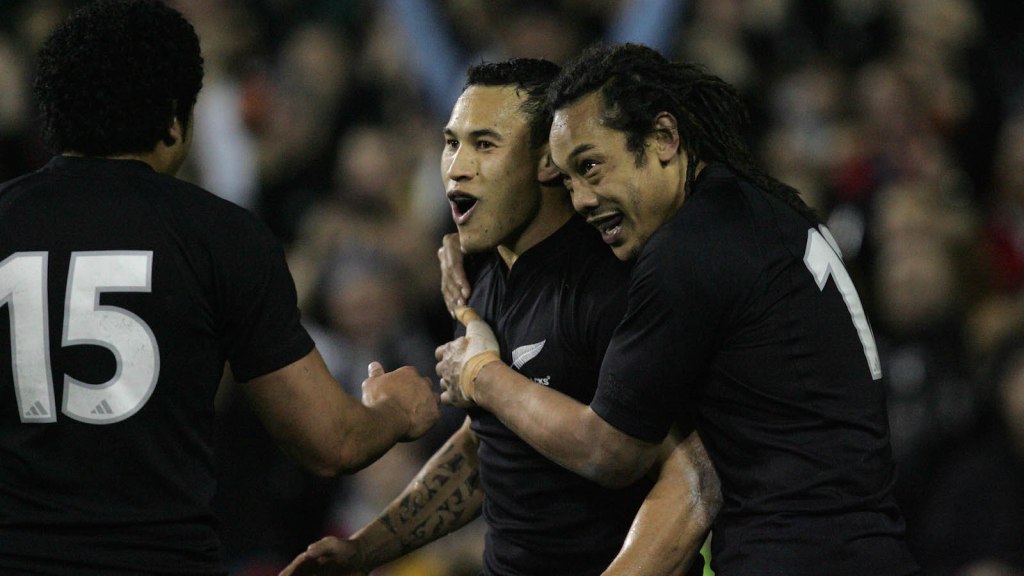
With that, the series was over. New Zealand would defeat the British and Irish Lions 38-19 in Auckland to run out 3-0 series winners. This would complete a series whitewash for the British and Irish Lions, their first since 1983.
Lewis Moody’s emotions at the end of the Third Test: By the time the third test was over…I wanted to kill someone. Anyone.” (Mad Dog, 2011)
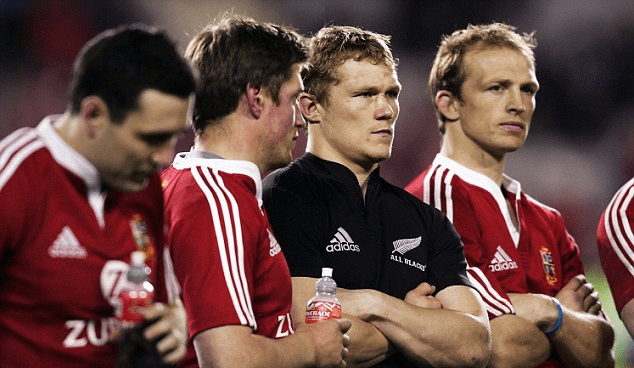
Final Score: British and Irish Lions 19 New Zealand 38
After the match, Lions captain Gareth Thomas would say:
“It’s been a difficult series for the guys. I’ve been proud to play with them and stand by them because we never gave up at any point in the series. “The commitment on this tour has been great but we haven’t had the amount of preparation Clive wanted or enough time together. “We’re not making any excuses because the All Blacks deserved to win.”
Final Result: New Zealand win series 3-0
Aftermath
Despite the series whitewash, Clive Woodward would still claim the tour as a “success” and a “great experience”. He would also refer to his Lions squad as “a fantastic group of players”, but would admit that a much better group of players beat his team. “We gave everything but New Zealand’s skill levels are above ours and I think the better team won in the end”, Woodward would add. Woodward’s view that the Lions were beaten by a much better team was a view shared by many Lions fans. In a poll on the BBC Sport website trying to find out ‘the main reason for the Lions’ whitewash in New Zealand, 58% of respondents would say that ‘The All Blacks were just too good’, while 30% would blame ‘Woodward’s selections’, 6% would pick ‘Injuries to key players’ and 6% would choose ‘Squad was too big’ as their reason. Across three tests, the All Blacks had scored 107 points and conceded 40, scoring twelve tries while conceding three and routinely dominating the Lions in both defence and attack. For the first time in their history, the British and Irish Lions would concede a century of points in a Test series.
What Went Wrong?
Team selection
One of the major criticisms of the 2005 tour was Clive Woodward’s squad and team selection. Many critics would point to his over-reliance on the England players who had won him the Rugby World Cup in 2003.
As part of a scathing piece written on the BBC Sport website on 12th July titled ‘Clive Woodward-legend or loser?’, James Standley would write:
“With a squad drawn from four national teams and together for only a few weeks, it proved impossible for Woodward to impose his vision in the same way as he had with England.
He hoped, by packing the first-Test side with the England players who won the World Cup, to maintain continuity and power.
So he went with a pre-ordained team for the opening Test that relied on a defensive plan since branded by some, including opposite number Graham Henry, as two years out of date.
It also made a mockery of pledges to pick the best 15 on form, not to mention the whole Lions touring ethos of players earning their right to a Test shirt.”
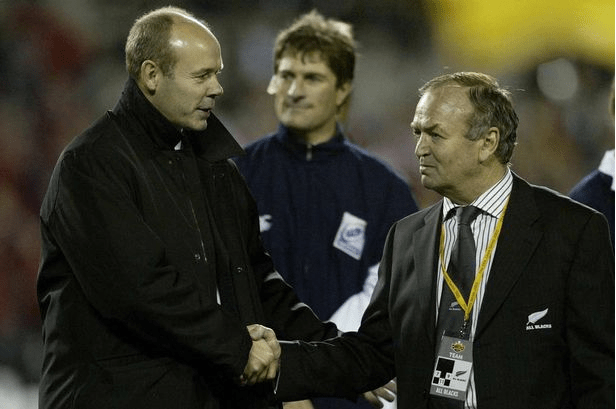
Of the 21 English players picked by Woodward for the Lions tour, 15 had been part of the World Cup-winning squad 18 months earlier. Those players alone would make up nearly a third of the entire group of players used during the tour (50). In the matchday squad for the first Test against New Zealand, 12 of the 22 players were these World Cup winners.
Following the first Test defeat, many of the World Cup heroes would drop out of the starting XV, while others would drop out of the Test squad entirely, never to return. For the second Test, five of the eight changes made by Clive Woodward would see him lose faith in his old favourites. Martin Corry would drop to the bench after serving as acting captain for most of the 1st Test following Brian O’Driscoll’s injury. In contrast, Richard Hill, Neil Back, Ben Kay (starters) and Will Greenwood (substitute) would drop out of the squad entirely. Of this quartet, only Greenwood would return for the final ‘dead rubber’ test in Auckland.
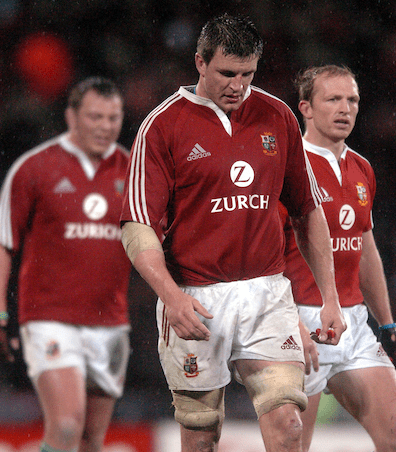
In a 2020 interview, Paul O’Connell would say, “Everyone has to feel they have a crack at the Test team.” Of the 50 players who saw any action in the tour matches, 32 would see some involvement in the three Tests. Ryan Jones, Mark Cueto and Simon Easterby, who originally joined the tour as injury replacements, would end the tour as Test starters. Meanwhile, original squad players like scrum-half Gareth Cooper and No.8 Michael Owen, who had captained the team in multiple tour matches, would become persona non grata as the games wound down. While the traditional British and Irish Lions tour sees vastly different teams sent out to play the early tour matches as the coaching team looks to work out exciting combinations and find the best players to suit a winning Test team, some players in 2005 would end up playing two matches in a row, with some Test players even turning out for the midweek sides just three days after a defeat. Michael Owen, for example, would start consecutive matches against Taranaki and the New Zealand Maori before quickly flying home to Wales to attend the birth of his daughter. After the birth, he would fly back for the rest of the tour.
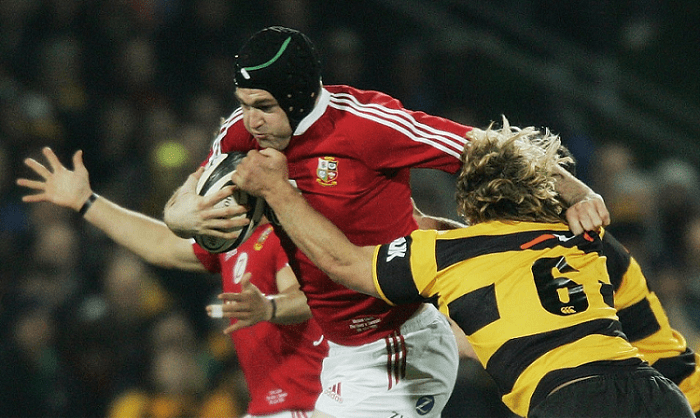
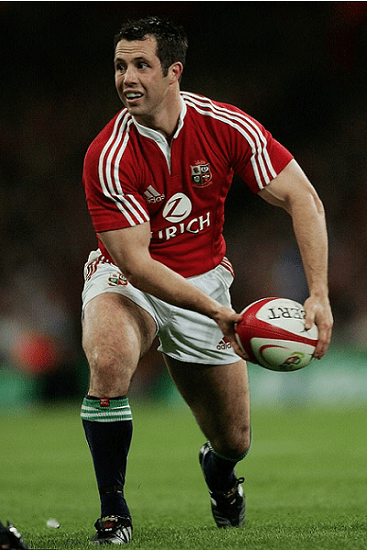
Noted rugby commentator Ian Robertson would comment that “[Woodward] must have picked his first Test team in May before they even left for New Zealand. He went for reputation rather than current form and included four England players, heroes in 2003, who 20 months later were out of form and did not deserve to be selected. “Having spent four weeks preparing the wrong Test team, it was very difficult to recover.”
The weird thing about the Tests is that despite suffering heavier defeats in the Second (18-48) and Third Test (19-48) than in the First Test (21-3), the Lions’ overall performances would improve in the last two matches. After a woeful performance in Christchurch and a scoreline that flattered the Lions, a move away from an England-dominated side would lead to a more exciting attacking display. However, the All Blacks would show why they were the best team in world rugby heading into that tour, blowing away the tourists in both Tests with relentless attacking abandon and clinically turning possession into points at every available opportunity. Even if Woodward had got the ideal performance from his Lions team, New Zealand would still have been the better side in all three games.
Split coaching teams
In The British and Irish Lions: The Official History, Greg Thomas would note that “The management and the motivation of the midweek team have always been the key to a successful tour. Its players will ideally put pressure on the Test incumbents by winning midweek games, and, of course, it is the team from which injuries will be covered. But [in 2005] Woodward chose a cumbersome squad with a rotation policy that quite clearly did not provide the key players with enough field time, and played no part in developing combinations and relationships on the field, so badly needed when combining players from four different national sides.”
When Clive Woodward unveiled his coaching staff in December 2004, he announced that there would be separate coaching teams for the Test matches and the midweek tour matches for the first time in Lions history. Woodward would oversee the Test team, and Ian McGeechan and Gareth Jenkins would coach the midweek sides. At the end of the 2005 tour, the Lions would finish with an overall record of seven wins, one draw and four losses from twelve matches. The four losses and the draw would come from the Test team managed by Woodward. Meanwhile, in the midweek games overseen by Jenkins and McGeechan, the Lions would end with a 100% winning record with victories over Taranaki, Manawatu, Southland and Auckland. The split in management would also breed tension between the two squads. The midweek team would become collectively known as the ‘Midweek Massive’, and Ian McGeechan would end the tour by presenting members of these teams with a t-shirt bearing this nickname. However, while the midweek Lions may have espoused some of the old traditions of past tours, the Test teams would operate more seriously.
Donncha O’Callaghan would describe the difference between the two teams in a 2017 interview: “I got called into the Test squad and I couldn’t believe how little fun there was in any part of the training sessions. I remember we were warming up and I was joking around and Paulie [O’Connell] gave me a rap on the knuckles, saying: “We are preparing for a Test match here, Donners.” I was there going: “It’s Monday, Paulie.” I think it was a pressure cooker for some lads from minute one and that led to them probably not enjoying the tour as much as some of the other guys did.” (Donncha O’Callaghan, The Telegraph, 2017)
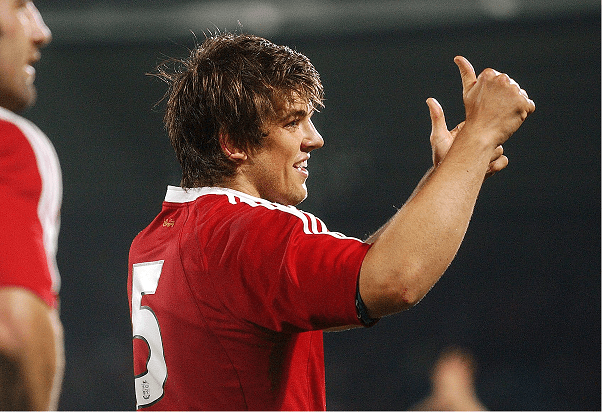
The decision for Clive Woodward to announce that none of the players selected for the Southland Stags match would form part of the 22 for the first Test against New Zealand would end up being heavily criticised. After this call, the midweek Lions would go on to produce an unconvincing 26-16 victory over the Stags. Greg Thomas would later say “Quite why [Woodward] would choose to shatter the confidence of the midweek players before their match and give them nothing to play for was a strange move from a normally astute coach.” After the Southland match, Gavin Henson, who had done enough to warrant Test participation, would reveal post-match that he was “devastated” to miss out on the Christchurch test.
Attempted modernisation
With the Lions, Woodward would attempt to replicate the methods that had worked so well with England. As mentioned earlier, he would commission a national anthem to bind the fans and players together. The name of this anthem, ‘The Power of Four’, would become a motto for the tour. Each member of the squad would receive a wristband featuring the motto and would have ‘The Power of Four’ downloaded onto their iPods so that they could remember the words. However, a tune supposed to bring all four nations together as a united force would receive criticism from both the media and the players themselves. In his autobiography, Lewis Moody would tell a story that shows how much of a failure this supposed ‘national anthem’ would become:
“On another, happier, day, we were treated to a traditional welcoming song and dance at the king and queen’s holy sanctuary. Our response was to sing in unison the ridiculous ‘Four Nations’ song that Clive commissioned for us for the tour. Matt Stevens would lead us in a truly woeful reply. It didn’t help that few of us knew all, or indeed, many of the words.” (Lewis Moody, Mad Dog, 2011)
When local singer Mark Burrows performed the anthem before the 1st Test in Christchurch, it was apparent to see that the Lions starting XV either did not know the words or did not care for the song. As some loyal Lions supporters sang along to the opera singer, the Lions would stand there, mouths slightly open, either searching for the words that they clearly hadn’t memorised or simply thinking about the game ahead. After the disaster of ‘The Power of Four’ song, it was no surprise that Ian McGeechan would decide not to reprise the theme for the next Lions Tour in 2009.
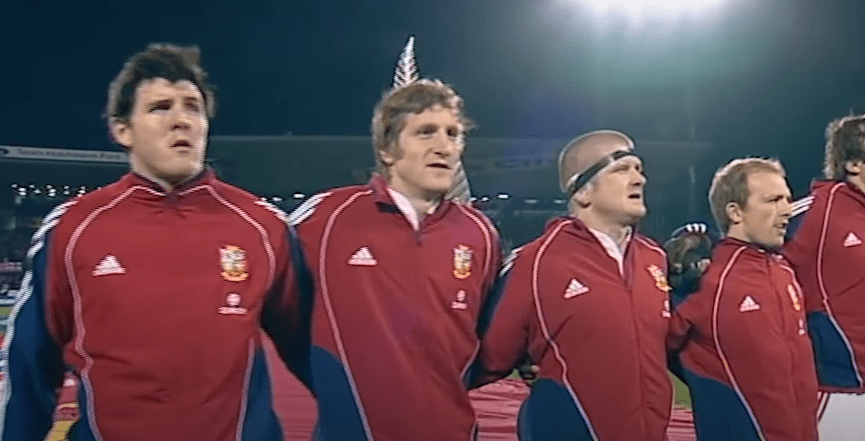

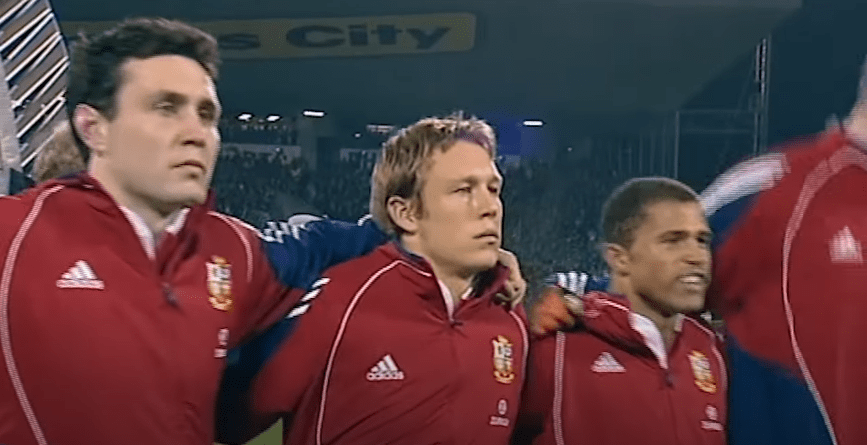
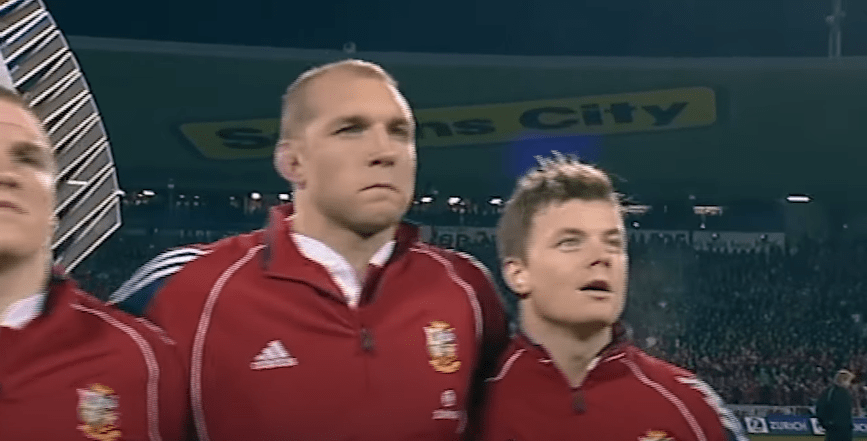
Another piece of Woodwardian psychology to help the Lions succeed was the refusal to ever refer to New Zealand as the All Blacks, believing that the nickname carried an element of fear. Removing the nickname could remove any fear that the Lions had when it eventually came to New Zealand. Over 100 points conceded later, it is clear that this piece of sporting psychology could not stop the All Blacks from running rampant over the British and Irish Lions for three consecutive weekends.
In addition to these calls, Clive Woodward would try to include the revolutionary sports science which had worked wonders over six years with England, including testing oxygen levels, using an optometrist to find out the stronger eyes of each player to decide which way they should pass the ball and removing the drinking culture of old and replacing it with a diet heavily-based on nutrition and performance
On his Sky Sports podcast in 2020, centre Will Greenwood would sum up the problem with Woodward’s attempts to modernise the British and Irish Lions. He would say:
“I think with the Lions, sometimes sports science and four-year plans have to go out the window. Sometimes, you just have to understand that the Lions still has that Corinthianism, and still you need to understand what makes people tick next to you, so you need to share time. Not comparing your body fat analysis or your one rep max. bench press or your VO2 Max on a watt bike, actually what makes you tick and spending that time together allows you to create those bonds that you then fight for on the pitch as opposed to in a petri dish, which I think 2005 was for…I sometimes think Clive became this puppet, where everyone was everyone was having a pop up, because it wasn’t working and actually he was just doing what he always did [which] was if something hadn’t worked before, why on earth would you do the same thing and hope for a different outcome?”
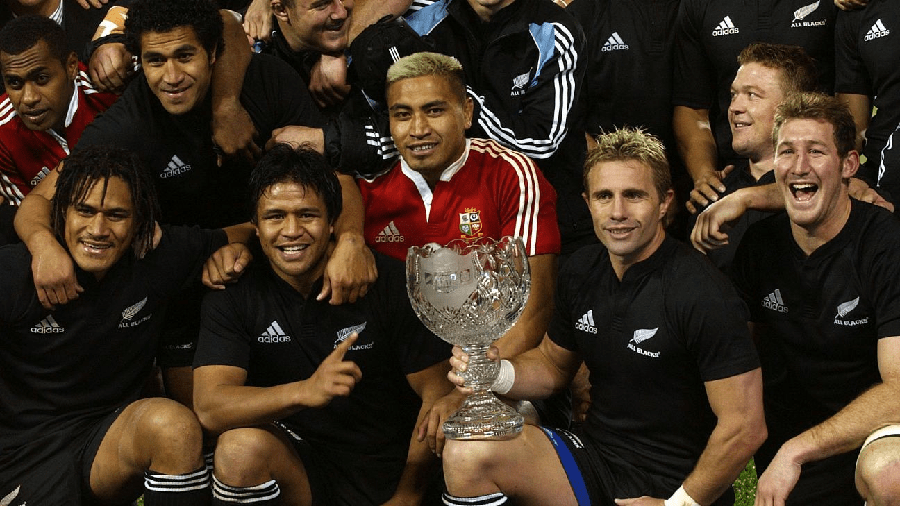
The future of the Lions?
After such an embarrassing result, some critics would leave New Zealand wondering whether the British and Irish Lions concept should continue. Some argued that the idea of the Lions tour could not work in a professional rugby union calendar where northern hemisphere players compete in league rugby for much of the year while also turning out for their national sides at least nine to ten times each year. In an appearance on Will Greenwood’s podcast in 2018, Sir Clive Woodward talked about the Lions almost serving as a distraction to international rugby coaches. He would make the point that:
“I had always had a bit of an issue with the Lions. With England, I was just all about England, and thought the Lions got in our way…So I spent all my time really knocking the Lions because I think they do distract a team that’s trying to win a World Cup.
“I’m just saying, and it’s almost like the club v country, you’re never going to get the right answer out of this, but from the Lions’ point of view, I think the Lions is brilliant…I can fully understand it as a fan, I’ve played for the Lions, I’ve coached for the Lions, I get it…But if you’re the England rugby coach and in your job description where you’re going to get judged is winning a World Cup, are the Lions a good thing or a bad thing? They’re a massive distraction.”
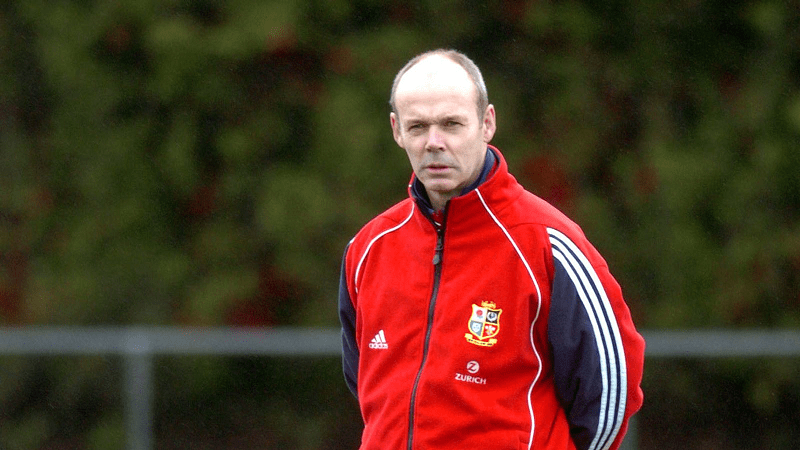
However, even though some were left questioning the British and Irish Lions’ future after the 2005 tour, many of the tour’s harshest critics would still stand up for the concept. In Scottish newspaper The Herald the day after the 3rd Test, Alasdair Reid, who had called the 2005 Tour ‘THE WORST TOUR IN LIONS HISTORY’, would also say that “Of course, the loss of the series provokes the predictable outbreak of anguished hand-wringing over the Lions’ future. Yet for all that they are, unquestionably, an anachronism in modern rugby, they remain one of the sport’s most cherished institutions.”
In his BBC Sport column, Martin Bayfield, a Lions tourist in 1993, would say that “despite their drubbing, the Lions will survive. They have to.
“Despite the outcome, you ask New Zealanders if they are glad the Lions came and, to a man, they will all say ‘absolutely’. Talk to the Lions supporters and they will tell you that they have had the times of their lives – even if they had little to cheer in the Tests.
“But there’s more to the Lions than simply winning Test matches. It’s about friendships, experience and uniting the two hemispheres. In other words, making us realise that rugby is as much about brotherhood as it is about sport.” (Martin Bayfield, BBC Sport website, 11th July 2005)
Finally, 2005 tourist Ryan Jones would sum up the Lions in one sentence: “The Lions carries a romance and a statement like no other rugby brand, and very few other sporting brands or entities.”
Reflections
Despite the whitewash, the players who competed for the British and Irish Lions still have fond memories of the tour. In a BBC Sport column written four days after the final Test, Josh Lewsey would write “The post-mortems on the tour are bound to begin in earnest now but, for me, it was a hell of an experience and I’ll always look back fondly on it. I’ll cherish having met all the guys. They were brilliant and everyone got on really well… whatever anyone else might say.
“On a personal level, I’ve put away my Lions jersey knowing I couldn’t have given any more on the field. It’s a shame the tour will always be remembered for the results. I, for one, will always look back at it with a smile.” (Josh Lewsey, BBC Sport, 13th July 2005)
Shane Byrne, who would start two Tests and come on as a substitute in another, would reveal in a 2017 interview that he still had mixed feelings regarding the 2005 Lions tour:
“There’s still massive disappointment, there’s still huge disappointment in the way things happened but would I change anything I did before I got picked or would I change the circumstances in which I was picked? Hell no. It was the greatest tour I was ever on in my life but there’s still a huge amount of pain or regret involved in it.” (Shane Byrne, The42, 2017)
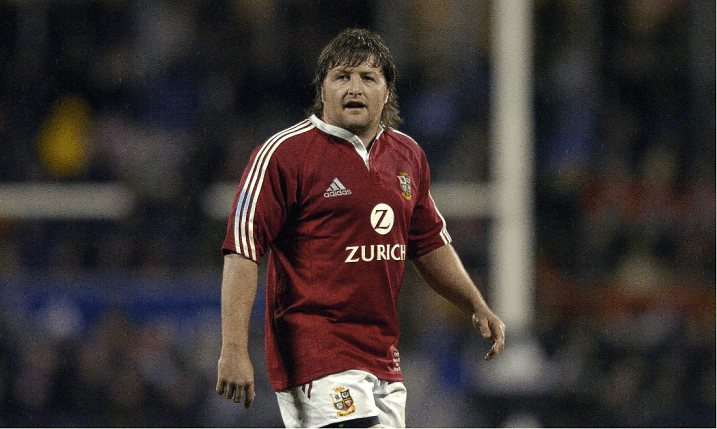
Sir Clive Woodward would talk about his personal experience in 2005 in numerous interviews years after the fact. In a 2017 interview with the Daily Mail, Woodward would admit that “With hindsight, I was probably the wrong choice [as head coach].” However, across these interviews, he would maintain that he had no regrets regarding some of the decisions he made on tour and would ably take them again, including taking separate coaching teams, and picking players that had played well for him on previous occasions. For Woodward, the main reasons for the failure in 2005 would come down to New Zealand being the superior side, and injuries to key players limiting his options to play his best Test side.
In his 2018 appearance on Will Greenwood’s podcast, Woodward would say: “I can look myself in the mirror and say I threw the kitchen sink at this tour. I got offered the job and thought that I should do it because I was the World Cup-winning coach, they wanted me to do it, so I did it and I did it to the best of my ability.”
“If I could have picked my team that I wanted to play when I agreed to do this [job] 18 months out, like Wilkinson at his best, O’Driscoll at his best, O’Connell, Dallaglio at his best, I absolutely thought we could win. But when it came to it, and you just have to look at that first Test match, most of those players weren’t there for whatever reason: injured, didn’t make it, O’Driscoll gone in the first 30 seconds. At the end of the day, to win in New Zealand you’ve got to go down there with your absolute gun team, and you’ve got half a chance. But if you’re not quite there for lots of reasons, you’re going to get beat.”
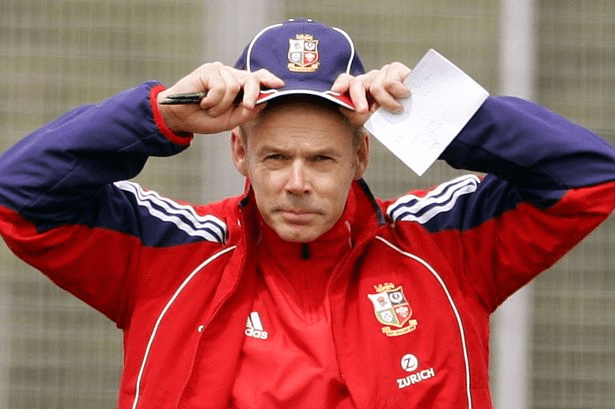
It would take another eight years and two more tours for the British and Irish Lions to finally experience success once again. In 2013, a group led by New Zealander Warren Gatland would travel Down Under and defeat Australia 2-1 to end the 16-year wait for a Test series victory. Four years later, the Lions, again led by Gatland, would return to face the All Blacks, who were now the world champions. In an impressive display from both sides, the series would end in a draw. Therefore, twelve years after an international embarrassment and questions about their future, the British and Irish Lions would prove their worth against New Zealand.
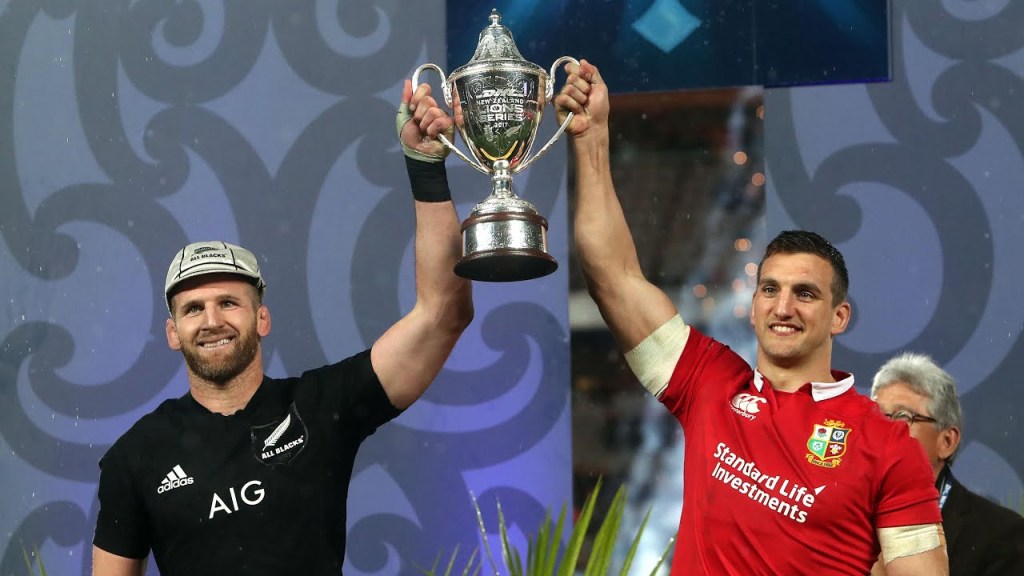
Conclusion
The 2005 British and Irish Lions tour to New Zealand was an anti-climactic failure. Armed with the best coach in world rugby two years previously, the Lions would threaten their entire existence with a wholly disappointing tour. Sir Clive Woodward would try to cram most of the things that had worked for England over six years into a tour lasting six weeks, with many of these tactics failing to reproduce their previous level of success. With a bloated squad and accompanying coaching team, the players of different nationalities did not have enough time to form new combinations that could have potentially thrown the All Blacks out of their rhythm. A few good individual performances aside, the overall ageing team populated by many out-of-form and unfit veterans would look unconvincing in tight victories against provincial rugby sides that should have served as cannon fodder to the best players in the Northern hemisphere.
When the Tests rolled around, Clive Woodward would fall back on what had worked for him in 2003, calling upon his England heroes without accounting for the proper form of these players. In the 240 minutes of rugby that would follow over the next three weeks, New Zealand would show Clive Woodward how the best teams played rugby in 2005. When Clive Woodward led England to Rugby World Cup triumph in 2003, he was the great innovator of rugby union in the professional age. He had his finger on the pulse of what made a successful team. However, less than two years later, he would find himself a man out of time with New Zealand’s young guns, many of whom would go on to lift back-to-back World Cups in 2011 and 2015, proceeding to show up his old tactics by dominating the Lions in the scrum, the lineout and open play.
By the tour’s end, a massacre had occurred in Christchurch, Wellington and Auckland and Clive Woodward, his backroom staff, and his players were the victims. It would take almost a decade for these wounded Lions to find their roar again.
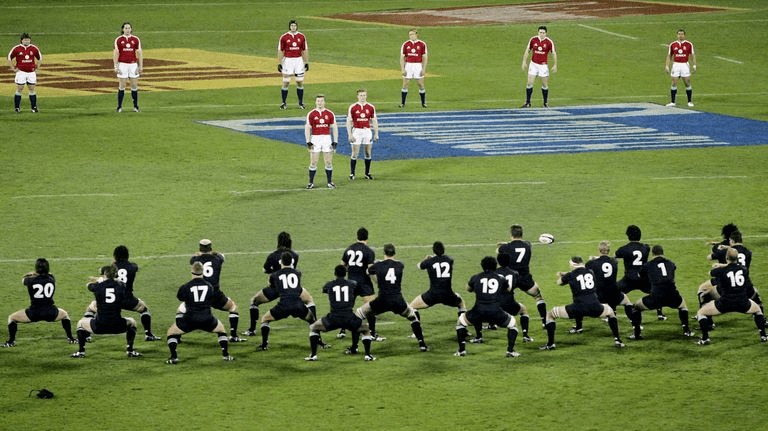
 the-score-board.co.uk