
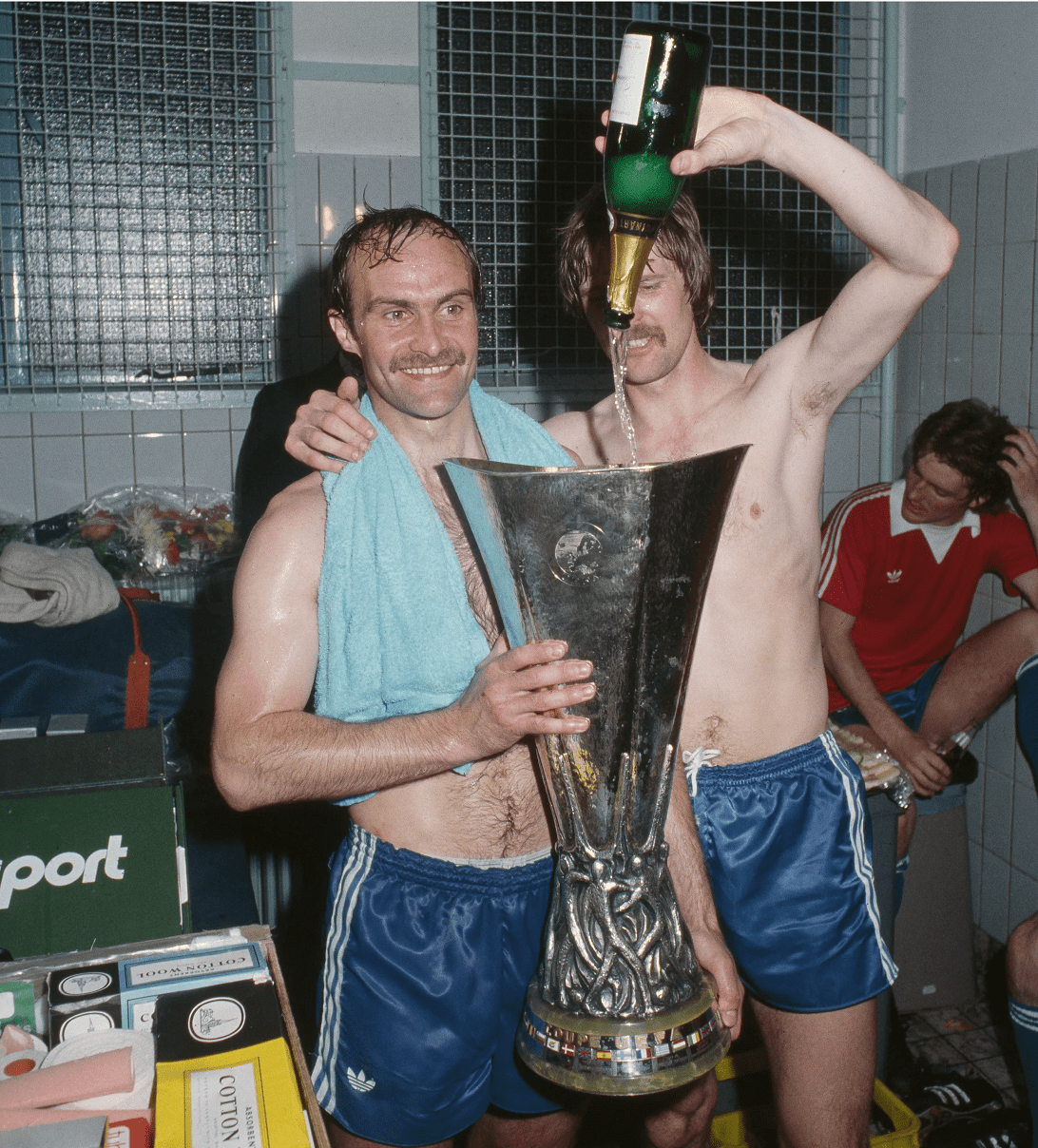
The Tractor Boys mow through Europe…
The year 2021 will mark the 50th anniversary since the UEFA Cup (later UEFA Europa League) would replace the Inter-Cities Fairs Cup as the second-tier competition in European football. In the fifty years since the establishment of the new competition, 28 clubs have ended the season by lifting the iconic vase-shaped trophy, including 15 one-time winners. This list of past one-time winners includes:
- European football’s big-hitters (Ajax, Bayern Munich, Manchester United, PSV Eindhoven).
- Traditionally hard-to-beat outfits from the eastern part of the continent (CSKA Moscow, Galatasaray, Shakhtar Donetsk, Zenit St Petersburg).
- European teams that have performed well historically (Anderlecht, Napoli, Valencia).
However, amongst this list of former UEFA Cup/UEFA Europa League champions, one name stands out.
In 1981, the same year that Bob Paisley’s Liverpool team would defeat Real Madrid in Paris to win their third European Cup, Ipswich Town would triumph in a two-legged final to win the 10th edition of the UEFA Cup. Considering that the past 20 seasons have seen the Tractor Boys plying their trade in English football’s second and third divisions, a UEFA Cup win is now only a memory for the more seasoned members of the club’s fanbase.
However, during the 1980-81 season, future England manager Bobby Robson would attempt to lead his Ipswich Town side through six rounds of two-legged knockout ties and hopefully claim the second-biggest prize in European football. The following article will explore, round-by-round, each step of the Tractor Boys’ journey towards European silverware.
1st Round: vs Aris Thessaloniki, 17th September-1st October 1980
Ipswich Town would begin their UEFA Cup voyage with a first-round tie against Greek side Aris Thessaloniki. The 1980-81 season would mark Aris’s third season in the UEFA Cup, with the team also a regular fixture in the later years of the Fairs Cup. One year earlier, the God of War (Thessaloniki’s real nickname) had upset Benfica and defeated Perugia to reach the third round before losing an entertaining tie to Saint-Etienne.
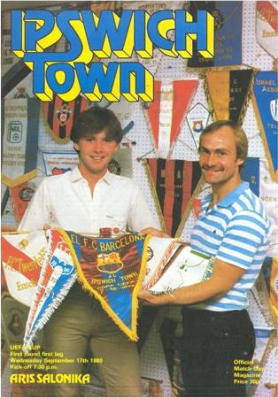
After visiting Portman Road on 17th September 1980, Aris would start considering an early exit from the UEFA Cup. On this Wednesday night, Ipswich would entertain the home crowds with a 5-1 first-leg win over the Greek side, with four goals coming from John Wark. Wark would open the scoring in the 12th minute before doubling his tally four minutes later. The Glaswegian midfielder would soon complete an 18-minute hat-trick in the 30th minute to give his team a comfortable 3-0 half-time lead. Two minutes into the second half, Aris would pull an away goal back through Theodoros Pallas to threaten a comeback. However, Paul Mariner’s finish and Wark’s fourth goal of the match would put Ipswich in a commanding position heading into the return leg in Thessaloniki two weeks later.
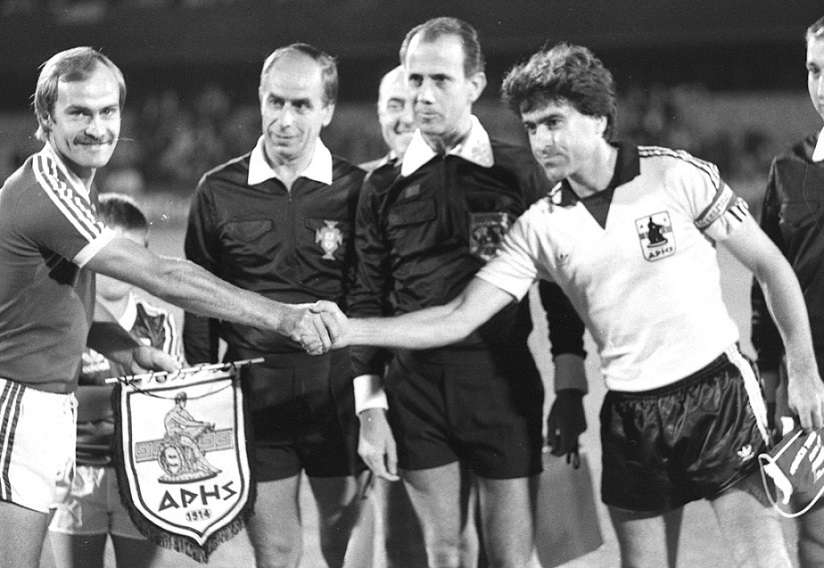
If the first leg had been a one-sided affair favouring Ipswich, then the same would be true for Aris Thessaloniki in the second leg. Aris would need to score four goals on the night to progress, and the Greek side would take an early lead through Thalis Tsoromokos’s 2nd-minute effort. Twenty minutes later, Aris would double their lead through Kostas Drambis. Halfway through the second half, Tasos Zelidis would score the home side’s third goal, bringing them within one goal of Ipswich on the aggregate score-line (4-5). A fourth goal would see Thessaloniki progress to the next round via the away goals rule. However, Town striker Eric Gates would ease the Tractor Boys’ nerves with a 75th-minute away goal that also increased the English side’s lead to two goals. Now with this buffer, Ipswich would hold on to progress to the UEFA Cup second round with a 6-4 aggregate victory.
2nd Round: vs Bohemians Prague, 22nd October-5th November 1980
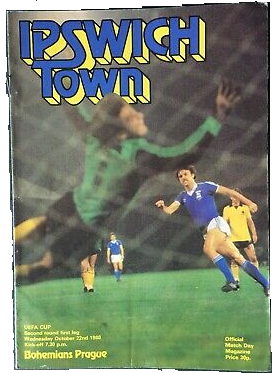
In the second round, Ipswich Town would play Bohemians Prague. Bohemians had knocked out Sporting Gijon at the previous stage, winning the first leg 3-1 before losing the return leg 2-1, progressing with a 4-3 aggregate score. Reaching the second round was new territory for Bohemians. The Prague side’s two previous UEFA Cup campaigns had ended in first-round defeats to Honved in 1975 and Bayern Munich in 1980. Beating Ipswich would allow Bohemians to create more club history. For Ipswich, a win over the Czech side would see Bobby Robson’s team better the result of their previous UEFA Cup campaign, an agonising second-round exit to Swiss side Grasshoppers via the away goals rule.
Like the previous round, Ipswich would earn a comfortable victory at home in the first leg, before defeat in the second leg away in Prague would lead to a nervy finish for the Tractor Boys. In the first leg, Ipswich and Bohemians would head into the half-time break tied, with neither team having managed to break the deadlock in the first 45 minutes of play. However, in the second half, Ipswich would show their class, scoring three goals without reply to pressure their Czechoslovakian opponents heading into the return leg. Three minutes after half-time, John Wark would put Ipswich ahead and add a second in the 54th minute. Then, with five minutes left, centre-back Kevin Beattie would add the third goal to send the fans home happy with a 3-0 win.
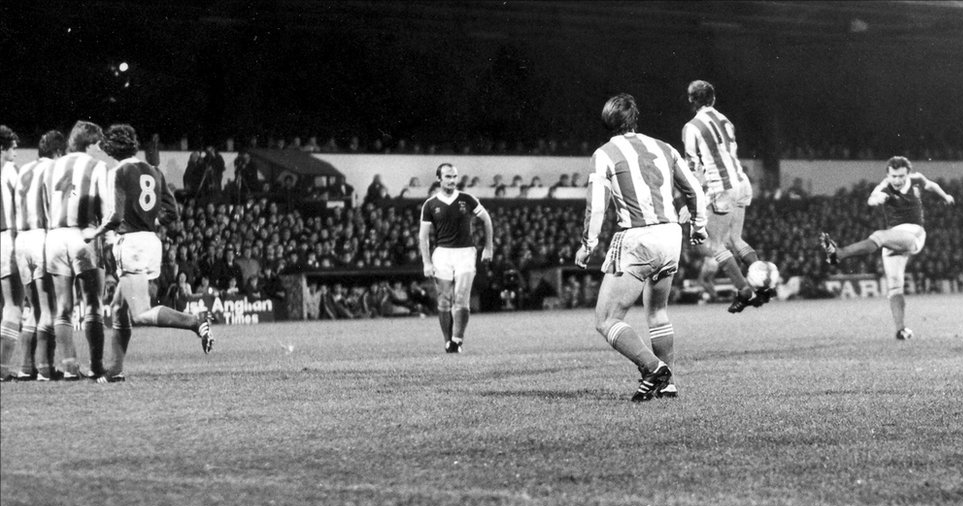
Two weeks after this victory, Ipswich put their supporters through another tense second leg away from home. Needing a minimum of three goals to force extra-time and four to win the tie, Bohemians would take just three minutes to open the scoring in Prague, with striker Tibor Mičinec providing the goal. In the 53rd minute, Bohemians’ main man Antonin Panenka (from whom the chipped penalty got its name) would score the second goal of the night to put his team 3-2 behind on the aggregate score-line. However, despite their attempts to find a third goal that would force extra-time, Ipswich would eventually move onto the third round with a 3-2 aggregate win.
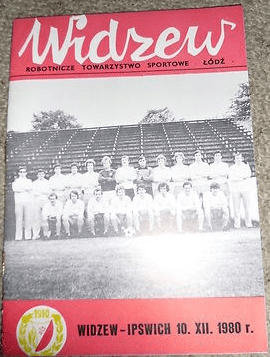
3rd Round: vs Widzew Łódź, 26th November-10th December 1980
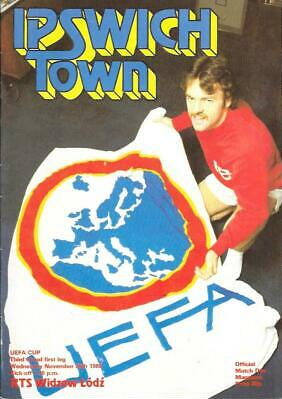
Only on one previous occasion had Ipswich Town progressed beyond the third round of the UEFA Cup. In the 1973-74 tournament, Town would meet and defeat FC Twente 3-1 over two legs to reach the quarter-finals. Seven years later, the Tractor Boys would need to see off Polish side Widzew Łódź to make the last eight once again. Widzew had knocked out Juventus to advance to this stage, triumphing 4-1 in a penalty shoot-out to defeat Giovanni Trapattoni’s men.
The two third-round legs against Widzew Łódź would bring the Ipswich Town players into contact with 24-year-old midfielder Zbigniew Boniek, the rising star of Polish football. However, Boniek and his teammates would find themselves humbled by Bobby Robson’s men and the Portman Road faithful on 26th November 1980. For the second time in the competition, Ipswich would score five goals to win a UEFA Cup first leg. As with the previous two rounds, John Wark would end up with the headlines, scoring a hat-trick on either side of half-time. Wark’s first goal would start proceedings in the 21st minute. Two quick finishes from Alan Brazil (41′) and Wark (44′) minutes before half-time would put the Tractor Boys firmly in control heading into the second half.
Twenty-five minutes of the second half would pass before Ipswich would kill the game, and the tie, off. In the 70th minute, Paul Mariner would score his second goal of the tournament to make the score 4-0, and Wark would complete his treble in minute 77 to complete the 5-0 thrashing.
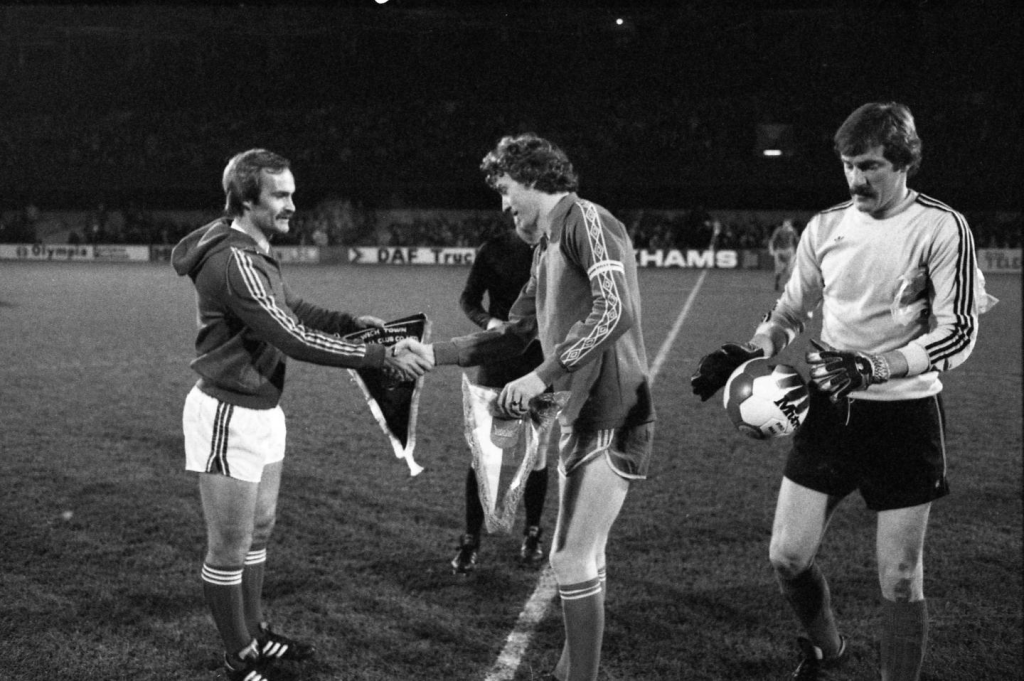
The pre-match handshake between Mick Mills (left) and Zbigniew Boniek (right) before the first leg at Portman Road. 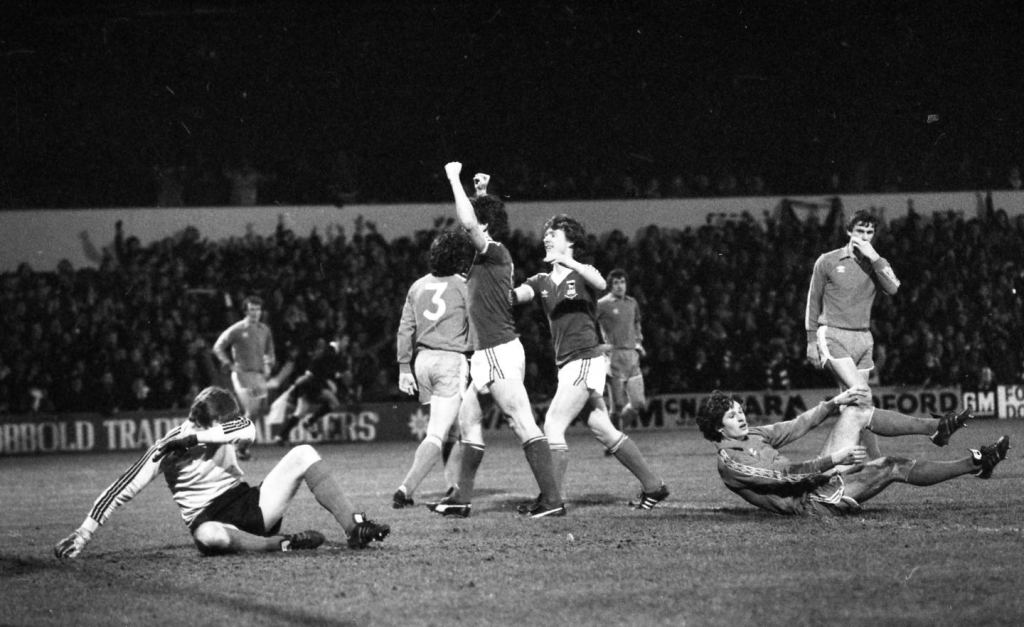
Paul Mariner celebrates scoring Ipswich Town’s fourth goal of the match.
It would take an unlikely second-leg turnaround for Widzew Łódź to even bring the tie back on level terms on 10th December. They would win the second leg, but a single 56th-minute goal from Marek Pięta would not threaten Ipswich Town’s sizeable advantage. In their most impressive victory so far, the Tractor Boys would plough through the Boatmen 5-1 on aggregate to reach the UEFA Cup quarter-finals for the second time in their history.
Quarter-final: vs Saint-Étienne, 4th-18th March 1981
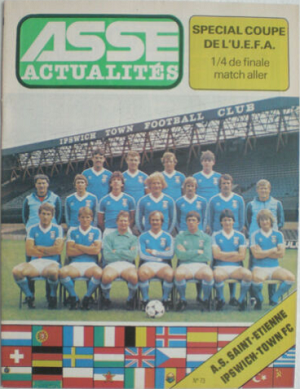
The UEFA Cup quarter-final would provide Ipswich with their strictest test to date, with Ligue 1 leaders Saint-Étienne serving as the roadblock between the Tractor Boys and a historic semi-final. To reach their second successive UEFA Cup quarter-finals, Saint-Étienne had dispatched Hamburg (the previous season’s European Cup finalists) 6-0, including a 5-0 success away at the Volksparkstadion in Northern Germany. Robert Herbin’s team were hoping to go beyond the quarter-finals following a 6-1 defeat to Borussia Monchengladbach at the same stage the previous year.
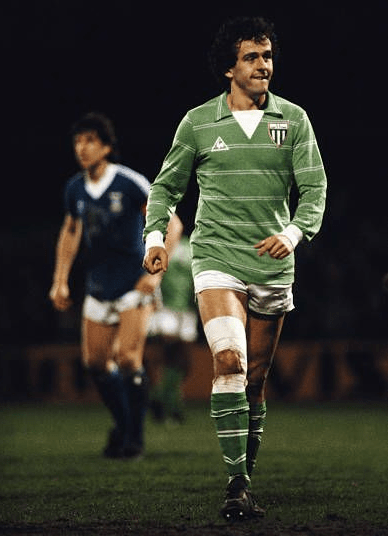
In their last UEFA Cup quarter-final appearance back in 1974, Ipswich Town would draw 1-1 with Lokomotive Leipzig across two legs before losing 4-3 in a penalty shoot-out. Now, Bobby Robson’s team would have to beat a Saint-Étienne team led by top scorer Michel Platini across two legs home and away.
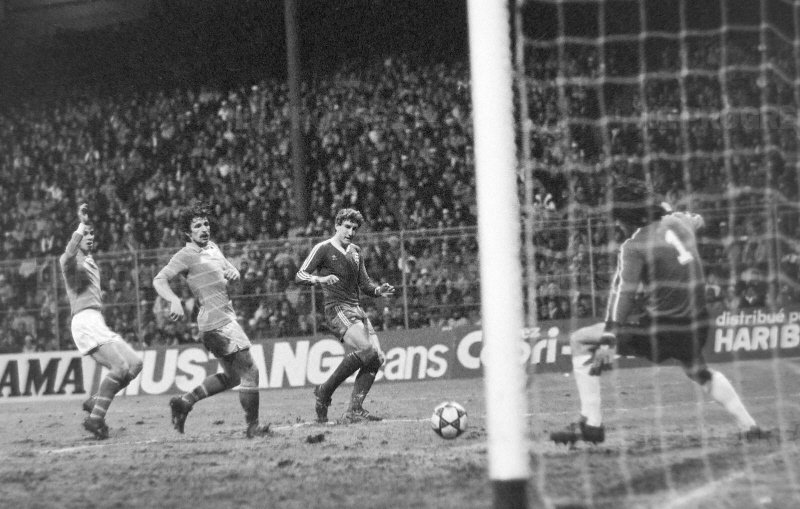
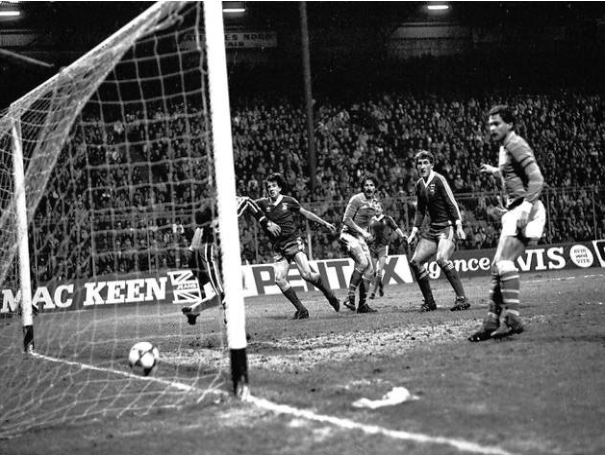
For the first time in the tournament, the first leg of an Ipswich Town tie would not occur at Portman Road. Instead, the Tractor Boys would travel to the Stade Geoffroy-Guichard in France’s Loire department. Despite their unimpressive away form so far, which had seen Town lose all of their away legs in the competition, Ipswich would turn this form around against Platini and Co. In front of 42,000 spectators, Saint-Étienne would take the lead through Dutch winger Johnny Rep after 16 minutes. However, Paul Mariner would equalise for Ipswich in the 28th minute to keep the scores level at half-time. Two minutes after the break, Ipswich’s Dutch midfielder Arnold Mühren would put the visitors ahead. Ten minutes later, Mariner would score his second goal of the night to extend Ipswich’s lead to 3-1. Finally, John Wark would chip in with his 10th goal of the competition to complete the Tractor Boys shocking 4-1 victory across the English Channel.
(c) Poteaux-Carres.com
Coming into the second match with Saint-Étienne on 18th March 1980, Ipswich would look to get the job done at Portman Road. Four away goals and a 4-1 win in France meant that Ipswich could relax slightly heading into this second leg, but wise heads would not want Michel Platini running wild in Suffolk. A win at Portman Road would continue the team’s unbeaten home record in this season’s UEFA Cup but would also mean that Ipswich would earn the first second-leg victory of their UEFA Cup run so far.
After a goalless first half, Terry Butcher would score within one minute of the second period to further strengthen Ipswich’s advantage on aggregate. After this quick restart, no other balls would hit the back of the net until the last ten minutes of the match, when that action would occur three times. First, Jacques Zimako would score Saint-Étienne’s equaliser on the night in the 80th minute. Three minutes later, John Wark would convert a penalty kick to score his customary goal, and Paul Mariner would hit the third goal in the 89th minute, Ipswich’s seventh goal of the tie, to confirm the dominance of the Tractor Boys over the Saints. Despite their position in the Ligue 1 table, Ipswich would humble Saint-Étienne with a 7-2 aggregate score to reach their first UEFA Cup semi-final.
Semi-final: vs FC Köln, 8th-22nd April 1981
While Ipswich Town was making their debut in a major European semi-final, the club’s opponents FC Köln already had developed a pedigree in recent years for reaching this particular stage in all three European competitions. However, the Billy Goats would hold a 0% success rate in these European semi-finals heading into their tie with Ipswich. In 1969, Köln would reach the semi-final of the UEFA Cup Winners’ Cup, losing 6-3 to eventual runners-up Barcelona. In 1975, the team would make the UEFA Cup semi-finals, losing 4-1 to eventual champions Borussia Monchengladbach. Most recently, Köln would suffer a narrow 4-3 defeat at the hands of Nottingham Forest in the 1979 European Cup semi-finals. Now, Rinus Michels’ team was hoping to end their run of bad luck and advance to a first major European final.
To reach the 1981 UEFA Cup semi-finals, Köln would begin by thrashing the Icelandic side ÍA in round one before upsetting FC Barcelona in round two, coming back from a 1-0 first-leg defeat to win the return match 4-0 and the tie 4-1. The Billy Goats would require extra time to knockout Standard Liege in the third round (5-4) before providing another shock in the quarter-finals when they would defeat reigning Italian champions Inter Milan 4-1 to set up a semi-final match with Ipswich. Therefore, Ipswich would need to be at their best to beat Rinus Michels’ team and reach the UEFA Cup final.
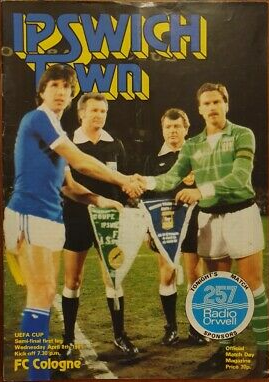
The first leg would occur at Portman Road, and the ground would play host to a tense semi-final clash. Across the 90 minutes, both teams would struggle to score past Paul Cooper and Harald Schumacher in the respective goals. On the whole, Ipswich would enjoy the majority of possession and would frequently get forward, only for their attacking efforts to come to nothing. A shot from quarter-final hero Paul Mariner would hit both the post and Schumacher before bouncing out and wide. Later, Frans Thijssen would see his shot saved by Schumacher. A cross from Eric Gates would find John Wark in the box, but the Scot would fail to direct his header on target. Another attempt from Thijssen, a flicked shot, would miss the goal entirely. At the other end, Köln midfielder Pierre Littbarski would jink his way past Arnold Mühren before forcing a scrambled save out of Paul Cooper.
However, in the 33rd minute, John Wark would open the scoring for Ipswich, with the Scottish midfielder registering his 12th goal of the club’s UEFA Cup campaign. From centre back, Russell Osman would carry the ball into the opposition half before passing the ball short to captain Mick Mills. Mills would deliver a pass deep down the touchline towards Alan Brazil. Backed up against his marker, Brazil would pass back to Frans Thijssen. Thijssen’s ball would find Eric Gates, who would slide the ball across to Brazil. Finally, Brazil would cross the ball from deep into the Köln box, where John Wark would head the ball into the net. Wark’s effort would ultimately prove to be the only goal of the first leg. With both sides spurning chances to score after the half-time break, Ipswich would run out 1-0 winners to preserve their unbeaten home record in European competition and carry a slender lead into the return leg in West Germany.
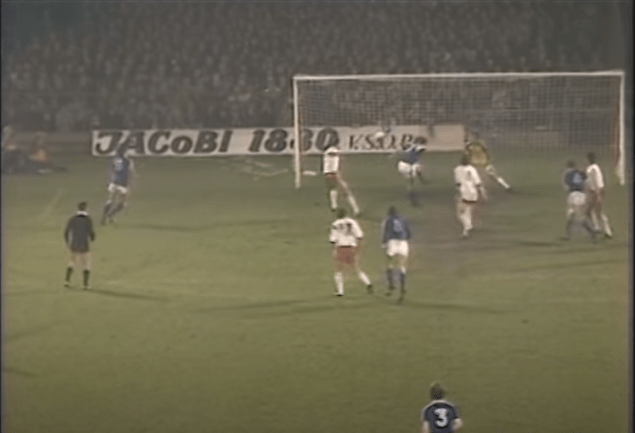
After the first leg saw both teams create chances but struggle to convert said chances into goals, the second leg would, unfortunately, provide more of the same. From a short corner, Köln’s Harald Konopka would miss an attempted header on goal to register the first meaningful chance of the match. At the other end of the field, Eric Gates would skilfully turn his marker before delivering a low cross into Alan Brazil in the penalty area. Brazil would flick the ball on, and John Wark’s shot from a distance would only find the hands of Schumacher. Brazil himself would later have his shot saved by Schumacher.
Later in the first half, Arnold Mühren would find John Wark running forward into space, and the Scottish midfielder would run clean through on goal, only for a great save from Harald Schumacher to kill the momentum of Wark’s shot. Köln would soon get closer to scoring the first goal when Stephan Engels headed over the bar from a Konopka cross. Later, another Köln header, this time from Bernard Cullmann, would also clear the crossbar. At half-time, the match remained tied at 0-0, with Ipswich’s 1-0 aggregate lead firmly intact. However, Köln was looking more likely to score the first goal of the night.
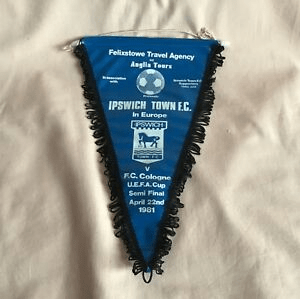
In the second half, the West German side would continue to dominate the ball, and Harald Konopka’s low 20-yard shot would cross the face of the Ipswich goal before slipping past the far post. Midfielder Rainer Bonhof also came close, capitalising on an Ipswich defensive error to stab an effort towards the goal. Ipswich goalkeeper Paul Cooper would stop the shot at point-blank range. Later, a Pierre Littbarski free-kick from the right would find Stephan Engels, whose header would hit the right-hand upright of Cooper’s goal. It now seemed a case of when, not if, Köln would score to bring the tie back on level terms.
However, in the 64th minute, Ipswich would receive a dangerous free-kick of their own. From the set-piece, centre-back Terry Butcher would dart into the middle and fire a header past Harald Schumacher into the Köln net. After spending much of the match manning a defensive rear-guard against their opponents, Ipswich had scored to double their aggregate lead to 2-0. Butcher’s away goal now meant that Köln would need three goals to win the tie. After strengthening their aggregate advantage, the Tractor Boys would try to extend their lead further, and John Wark would volley a shot over the crossbar. At the other end, Stephan Engels would continue to pose a danger, firing a shot across the face of Paul Cooper’s goal from six yards away. However, that shot would prove to be the last chance of the tie. Ipswich would hang on to win the second leg and the semi-final 2-0 on aggregate to progress to play AZ Alkmaar in the 1981 UEFA Cup final.
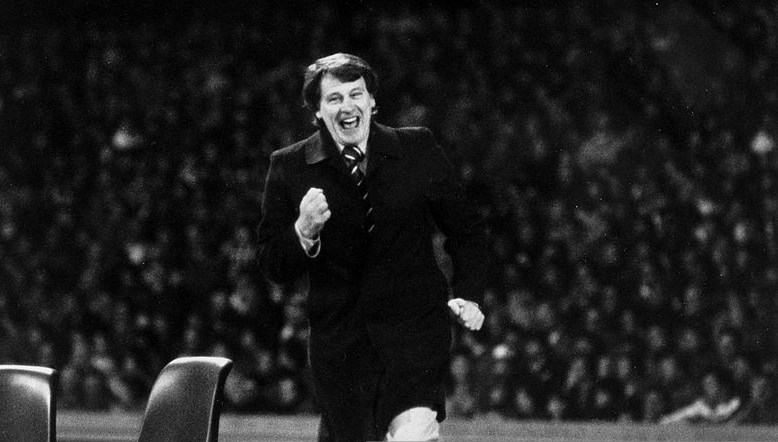
Final: vs AZ Alkmaar, 6th-20th May 1981
You certainly read that right. Back in 1981, the UEFA Cup final was a two-legged affair decided on aggregate, just like all the other rounds of the competition. This tradition would continue until 1997, before being abandoned in favour of the one-off final format used in different tournaments. In 1981, Ipswich Town would face AZ Alkmaar across 180 minutes of football. The first leg would take place at Portman Road on 6th May 1981, with Amsterdam’s Olympic Stadium hosting the second leg two weeks later.
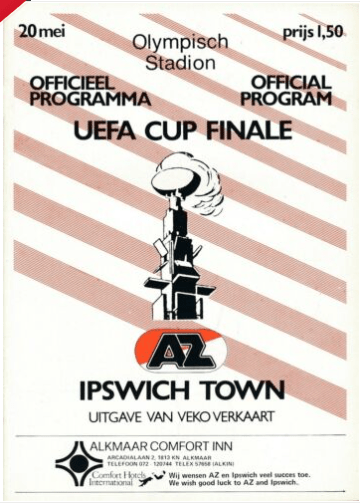
AZ had begun their UEFA Cup run with a comprehensive first-round victory over Luxembourg side Red Boys Differdange, winning 6-0 and 4-0 over two legs. In round two, Georg Kessler’s side would draw their opening match with Levski Sofia before blowing their opponents away with a 5-0 home win in the second leg to comfortably move on in the tournament. The Cheeseheads would replicate the feat with Yugoslavian side Radnički Niš in the third round, drawing the first leg 2-2 before delivering another 5-0 score-line back at the Alkmaarderhout to move on to the last eight. Lokeren would prove the team’s first real test in the quarter-finals, but AZ would still triumph 2-1 on aggregate to make the final four. In the semi-finals, the first leg between AZ and Sochaux would end in a 1-1 draw, the Dutch side needing to win at home to make club history. In front of a packed Alkmaarderhout, AZ would edge an entertaining second leg 3-2 to set up a date with Ipswich Town in May 1981. Now, AZ Alkmaar would hope to add to the UEFA Cup to their newly won Eredivisie and KNVB Cup trophies and claim a continental treble.
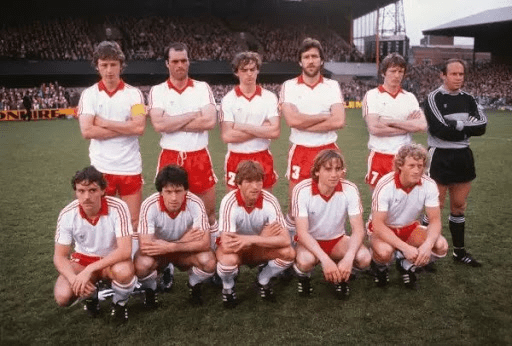
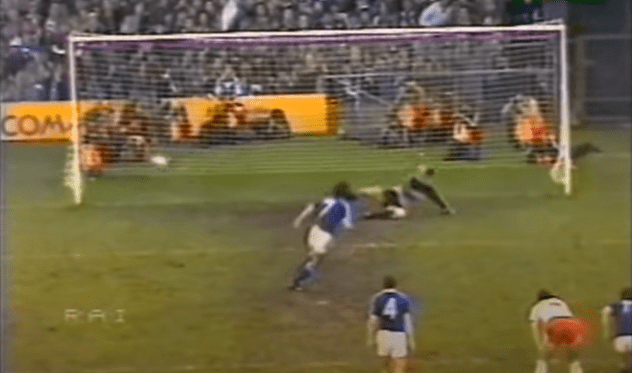
The first leg would see Ipswich play their 65th match of the season, following a 46-game league season, four rounds of the League Cup, and six FA Cup stages (including two replays). However, the team would not show it, as John Wark and Arnold Mühren would attempt three efforts on goal within quick succession of another that required the AZ defence to register three defensive blocks in a matter of seconds. However, the second of these blocks would see AZ captain Hugo Hovenkamp handle the ball near the goal-line. Referee Adolf Prokop would have no choice but award the penalty. John Wark would step up to take the spot-kick and would send goalkeeper Eddy Treijtel the wrong way to give Ipswich Town the lead in the 30th minute.
Ipswich would hold this one-goal lead heading into half-time and add to it two minutes into the second half. Receiving the ball on the edge of the penalty area, striker Alan Brazil would feed the on-rushing Frans Thijssen. Thijssen would have two bites of the cherry, toe-poking a shot that Treijtel could only parry into the air for the Dutch midfielder to head home.
Ipswich would continue to have the best chances of the first leg, as great play from Alan Brazil and Arnold Mühren would set up Eric Gates for a shot that would clear the crossbar. Then, in the 55th minute, they would score their third goal. Receiving the ball on the left flank, Alan Brazil would turn inside Richard van der Meer and deliver a cross into the penalty using the outside of his boot. Brazil’s cross would fall to Paul Mariner, who would flick the ball home.
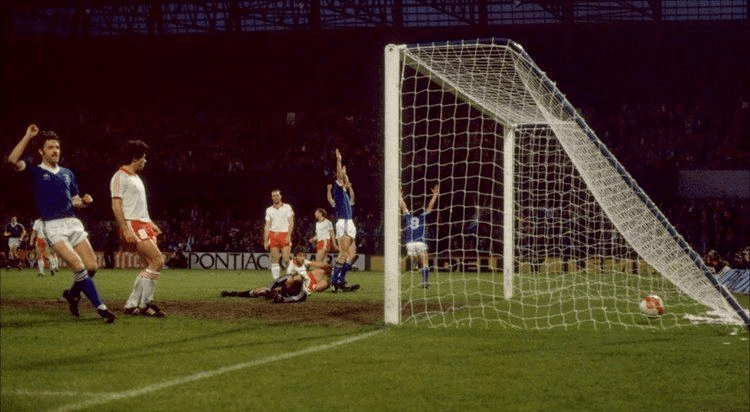
Despite leading by three goals, Ipswich would continue to search for more as Eric Gates’ ball into the area would lead to a header over the top by Arnold Mühren. Later, an AZ counter-attack would almost lead to an away goal, but striker Pier Tol would blaze his shot wide of Paul Cooper’s net. Another attempted effort from midfielder Kristen Nygaard would also end up in the crowd. However, the first leg of the 1981 UEFA Cup final would end in a 3-0 victory for Ipswich. AZ Alkmaar would now need to score four goals in Amsterdam to have a chance of completing their treble.
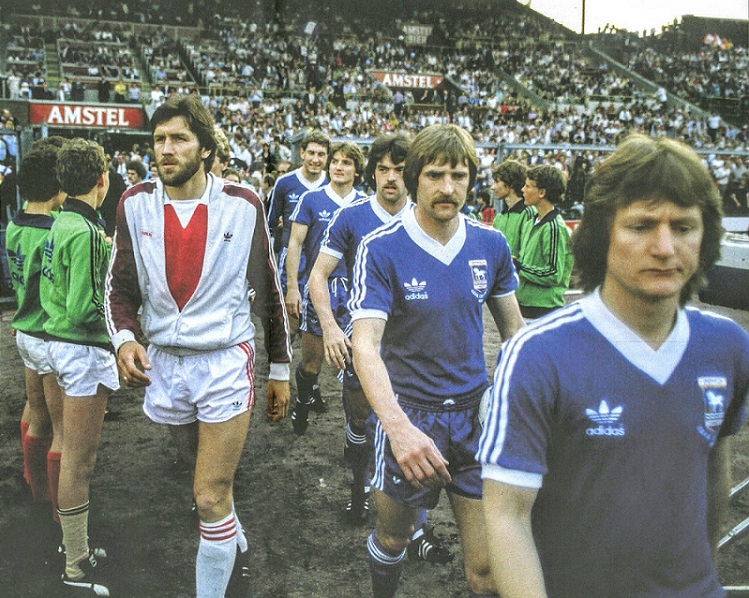
Two weeks later, Ipswich captain Mick Mills would lead his side into Amsterdam’s Olympic Stadium knowing that the Tractor Boys were just 90 minutes away from European glory. However, the second leg of the UEFA Cup final would prove to be an action-packed affair. AZ would need to throw everything at their opponents to have a chance of European success. However, Georg Kessler’s team would find their task a lot harder within 4 minutes. AZ would head away an Ipswich corner, only for the ball to fall to Frans Thijssen, who would smash the ball home from the edge of the box. Quickly, Ipswich had extended their aggregate lead to 4-0, and it seemed unlikely how AZ would manage to work their way back into the final. However, after 97 minutes without a goal, the Dutch side would finally find the back of the net. Captain Hugo Hovenkamp would amend for giving away a penalty in the first leg by sending a ball into the penalty area from which striker Kurt Weltzl would score with a header.
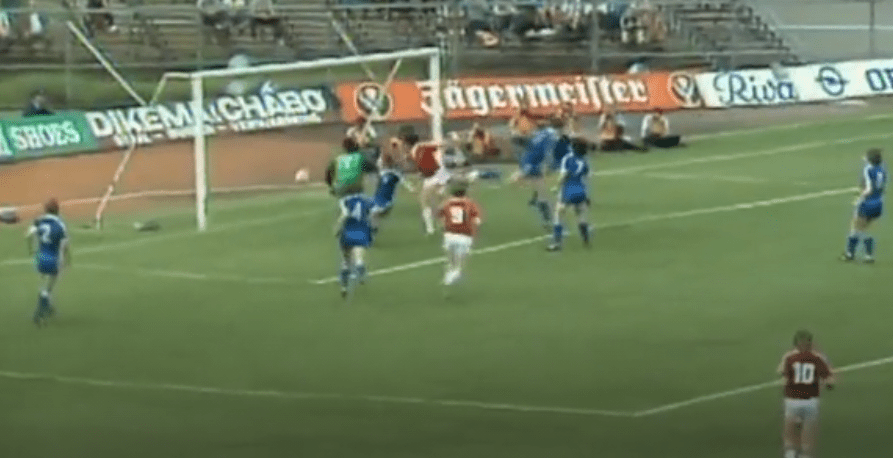
After levelling the score, AZ would eventually take the lead in the 25th minute through centre-back John Metgod’s headed effort. This lead would last all of seven minutes. Paul Mariner would flick on a corner, and John Wark would power the ball home with a volley to score his 14th goal in 12 UEFA Cup matches. Ipswich’s aggregate lead now stood at 5-2, with Thijssen and Wark having provided two away goals to make their opponent’s task more difficult. Once again, AZ would need four goals to win the Cup. However, the Cheeseheads would end the first half leading the match. In the 40th minute, Metgod and Jos Jonker would flick on a chipped ball into the Ipswich box, and Pier Tol would finish from four yards. With no further goals in the first half, AZ would enter half-time, winning the match 3-2 but losing the final 5-3 on aggregate.
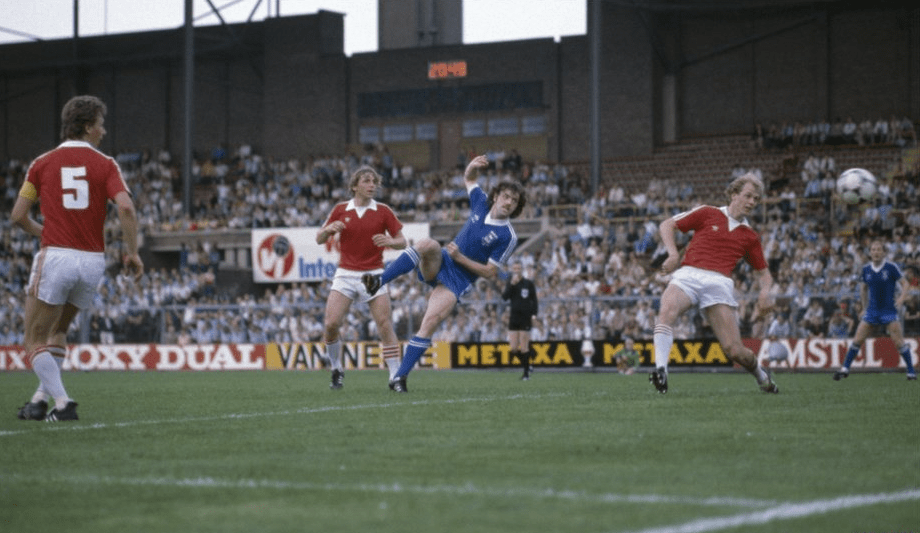
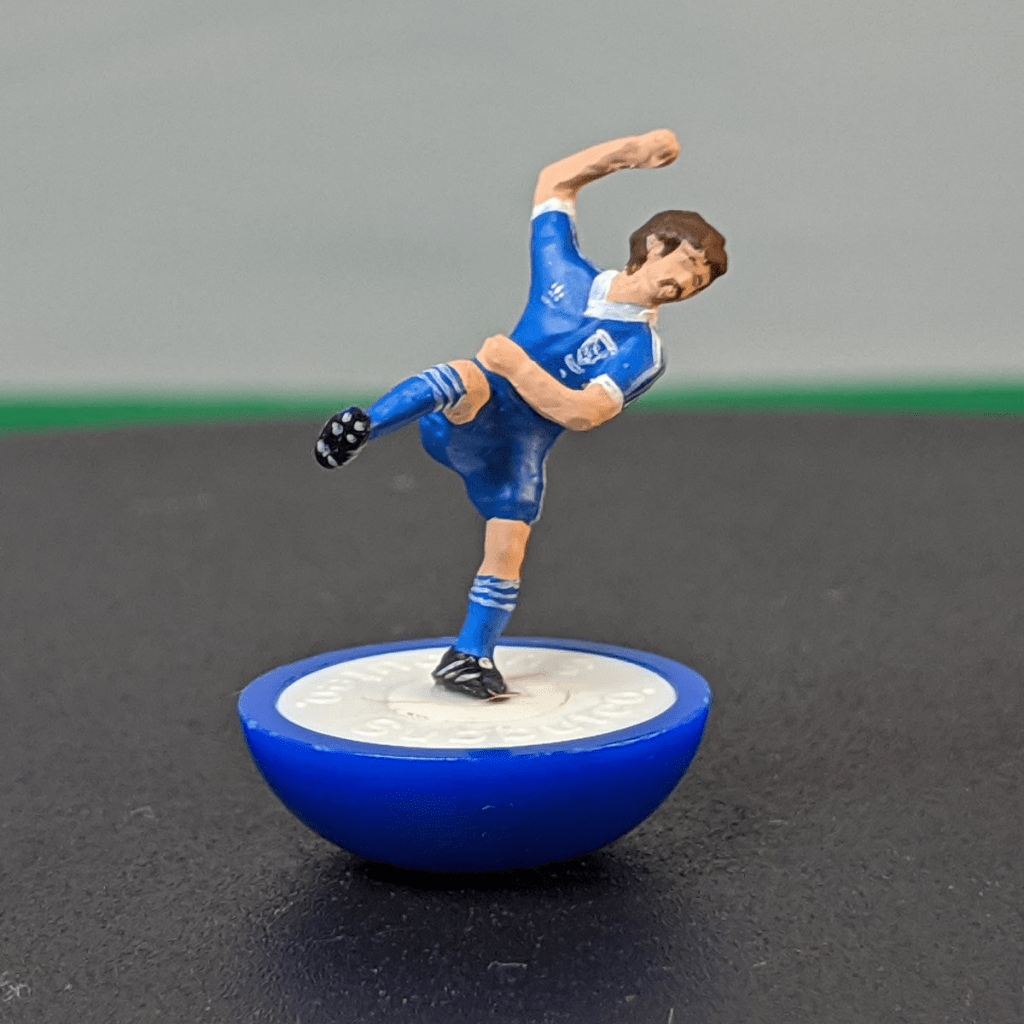
Early in the second half, Kristen Nygaard would test Ipswich keeper Paul Cooper with a powerful 25-yard effort that the Englishman would save. Another long-range effort from Hugo Hovenkamp would leave Cooper flying through the air to his left to touch the ball wide. AZ was now enjoying the better goalscoring chances, and another pointed header from Kurt Weltzl would need the Ipswich keeper to tip the ball over his bar. However, Ipswich was not through with scoring goals, and John Wark would miss a chance to convert his 15th European goal of the season as AZ keeper Eddy Treijtel would turn his long-range effort past the post. However, AZ would score the fourth goal of the night in the 70th minute, as Jos Jonker’s direct free-kick would deflect off Terry Butcher and past Cooper into the Ipswich net. The Cheeseheads now had the aggregate lead down to one goal at 5-4 and would have 20 minutes to score twice more and potentially take the final. However, those two goals would not arrive.
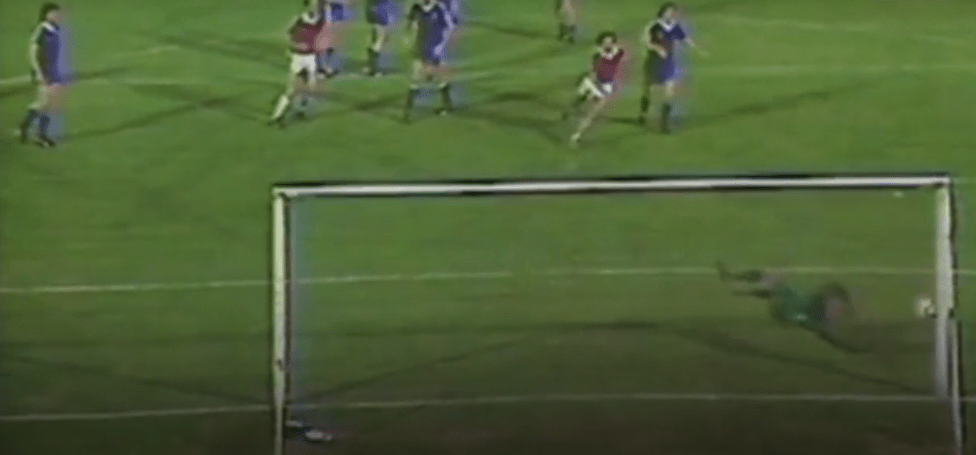
Following a final AZ corner, Paul Cooper would kick a long ball downfield. Referee Walter Eschweiler would blow his whistle for full-time, and a number of the Ipswich fans who had travelled the 200 miles to Amsterdam for the second leg would invade the pitch to celebrate with their triumphant heroes. Under an hour later, Mick Mills would take the giant vase-shaped trophy from UEFA President Artemio Franchi and lift it above his head to verify Ipswich Town as the 1981 UEFA Cup winners. After an emphatic 3-0 first-leg victory at Portman Road, away goals from Frans Thijssen and John Wark pushed Bobby Robson’s team out of sight of AZ Alkmaar, giving the Cheeseheads a near-improbable task. Nevertheless, Ipswich Town would win the 1981 UEFA Cup Final by a 5-4 aggregate score-line. Over six rounds, twelve legs and approximately 1,080 minutes of knockout football, the Tractor Boys would mow through Europe’s second-tier competition to win the UEFA Cup.
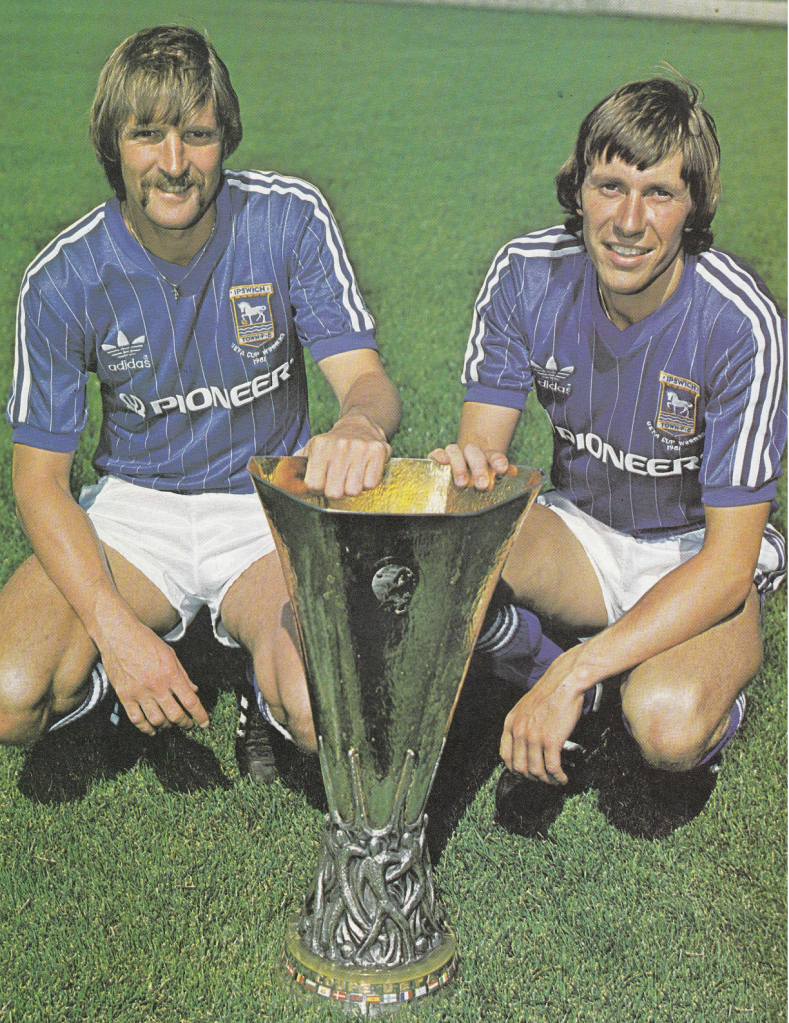
Ipswich Town’s success in the Big Vase would top off the second-best season in the Suffolk side’s then 102-year history. The 1980-81 season would also see Bobby Robson’s team finish 2nd behind Aston Villa in the Football League First Division and reach the FA Cup semi-finals. However, in the next season’s UEFA Cup, Ipswich would exit in the first round losing 4-2 to Alex Ferguson’s Aberdeen, and would leave the competition at the same stage the following year after a 4-3 defeat to AS Roma.
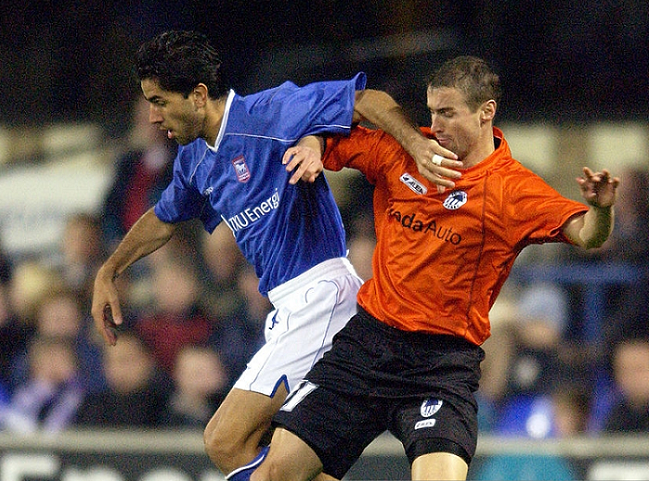
After a period in the wilderness, a shocking 5th placed-finish in the 2000-01 Carling Premier League would see George Burley’s Tractor Boys return to the UEFA Cup after an 18-year absence. Burley’s team would reach the third round before Inter Milan beat the side 5-2 to knock them out. The following year, the recently-relegated Tractor Boys would earn another chance at UEFA Cup qualification through the Fair Play rankings. However, after qualifying for the main competition, a team containing Darren Bent, Matt Holland and Finidi George would lose a penalty shoot-out to Slovan Liberec in the second round. This loss brings to an end Ipswich Town’s recent history in European football.
Ipswich Town’s 1981 UEFA Cup win stands as one of the best moments in the Suffolk club’s 142-year history. The victory came during the first wave of English dominance in European football when an English club would win every European Cup between 1977 and 1982. In addition, Liverpool and Tottenham would win the UEFA Cup on either side of Ipswich’s victory in 1976 and 1984. However, the respective achievements of those other English teams does not diminish the impressiveness of Ipswich Town’s 1981 success.
When put into context, Ipswich Town’s UEFA Cup victory (and other factors) puts the 1980-81 season second only to the English title-winning season of 1961-62 in the club’s history books. In 2021, Ipswich Town would release a calendar commemorating the 40th anniversary of the UEFA Cup victory. It would undoubtedly bring solace to an East Anglian supporter base starved of greatness for two decades, who can look back to when their beloved Tractor Boys ranked among the elite of both English and European football.
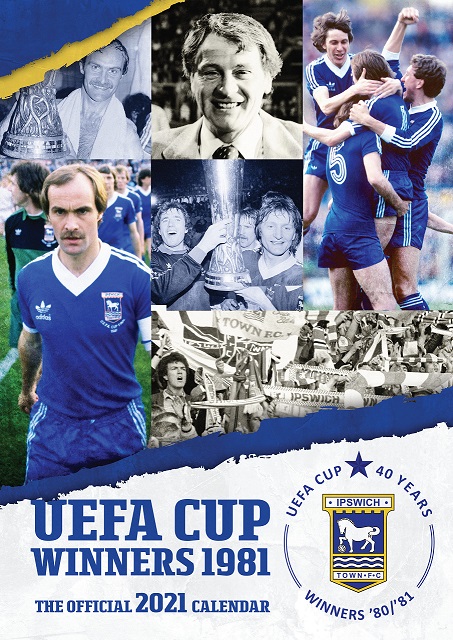
 the-score-board.co.uk