
One going-for-broke piece of skill and one brain fart decides a classic European Cup final in dramatic fashion…
The European Cup in rugby union, whether it be the Heineken Cup that lasted from 1996 to 2014, or the similarly titled and slightly different Heineken Champions Cup that exists today, offers fans of the sport the chance to see the best teams in northern hemisphere club rugby battle it out across the course of a single season, in between league encounters. Aside from the domestic leagues of the English Premiership, the French Top 14 or the Pro14, the European Cup can serve as the pinnacle of a team’s season. It is the battleground where the best teams and the best players from European rugby face off in hard-fought competitive action.
Over the years, the Heineken Cup/Heineken Champions Cup has served as a representation of the dominance of a certain team across one or even multiple seasons. Across 25 seasons of European competition, twelve teams have earned the name ‘European champions. Seven of the twelve have won on more than one occasion, and many of these multiple victories have arrived close to one another. These victories have aided in establishing rugby union dynasties. However, it seems that to truly establish these rugby dynasties, a victory in a close-fought high-scoring highly-entertaining 80 minutes of rugby is required to prove the superiority of the victors.
In 2004, three years after Leicester Tigers would defeat Stade Francais away in Paris to win their first Heineken Cup, adding the European trophy to their English Premiership title, Leicester’s rivals London Wasps would attempt to replicate the feat. Like Leicester, Wasps would head into the 2004 Heineken Cup Final as the reigning champions of England. In addition, the club stationed in High Wycombe would also need to defeat one of the best teams in French rugby to earn a maiden Heineken Cup victory. However, to achieve European glory, London Wasps would need to defeat Toulouse, the reigning Heineken Cup champions and only two-time winners of the competition. Luckily for Wasps, the 2004 edition of the Heineken Cup Final would take place at Twickenham Stadium, 28 miles southeast of the team’s regular Adams Park home, giving the English side some kind of home advantage against their French opponents.
The build-up
Toulouse would enter the 2003-04 Heineken Cup as defending champions. Guy Noves’s side would draw Leeds Tykes, Edinburgh Rugby and the newly-formed Neath-Swansea in the pool stages. Heading into the competition as one of the favourites, Toulouse would lose their opening pool match away to Edinburgh. A converted Yannick Jauzion try and successful penalties from Jean-Baptiste Elissalde and Benoit Baby saw Toulouse hold a 13-6 lead at the half-time break. However, three second-half tries from Nathan Hines, Scott Murray and an 84th-minute try from centre Brendan Laney saw Edinburgh come back to shock the Red and Black 23-16, with Toulouse leaving the Scottish capital with only a losing bonus point to their name.
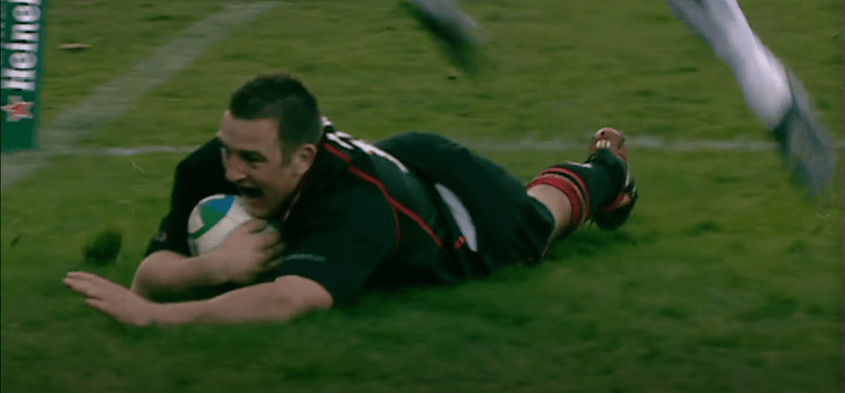
However, despite this first-round setback, the reigning European champions would strike back to win their five remaining pool matches. After beating Leeds (19-3, 22-31) and the Ospreys (29-6, 29-11) home and away, Toulouse would invite the still-unbeaten Edinburgh to Stade Ernest Wallon, with top spot in Pool 2 and a home quarter-final the prize for the victors. In a dominant performance, tries from Christian Labit, Isitolo Maka, Yannick Bru and man-of-the-match Frederic Michalak plus 13 points from the boot of Jean-Baptiste Elissalde saw Toulouse dispatch Edinburgh 33-0 to qualify for the quarter-finals as one of the top seeds.
Pool 2
| Club | Played | Wins | Draws | Losses | Points For | Points Against | Bonus Points | Total Points |
|---|---|---|---|---|---|---|---|---|
| Toulouse | 6 | 5 | 0 | 1 | 157 | 65 | 5 | 25 |
| Edinburgh | 6 | 5 | 0 | 1 | 130 | 89 | 2 | 22 |
| Leeds Tykes | 6 | 1 | 0 | 5 | 66 | 122 | 1 | 5 |
| Neath-Swansea Ospreys | 6 | 1 | 0 | 5 | 78 | 155 | 0 | 4 |
Qualifying for the Heineken Cup as champions of England, London Wasps would draw the previous season’s losing finalists USA Perpignan, Italian side Calvisano and the newly-formed Welsh rugby team Celtic Warriors. Aside from a narrow 14-9 defeat at home to the Warriors in Round 3, Wasps would stroll through Pool 6, winning five out of six pool matches. In the final round, Wasps would travel to the south of France to face Perpignan, comfortably beating the French Top 16 side 34-6 to top the pool. Warren Gatland’s side would end up scoring more points in the preliminary round than any other pool winner with 186. In addition, only Munster and Gloucester could match the 22 tries scored by the Wasps in their six pool matches.
Pool 6
| Club | Played | Wins | Draws | Losses | Points For | Points Against | Bonus Points | Total Points |
|---|---|---|---|---|---|---|---|---|
| London Wasps | 6 | 5 | 0 | 1 | 186 | 85 | 4 | 24 |
| Celtic Warriors | 6 | 4 | 0 | 2 | 123 | 118 | 4 | 20 |
| Perpignan | 6 | 3 | 0 | 3 | 119 | 115 | 3 | 15 |
| Calvisano | 6 | 0 | 0 | 6 | 115 | 225 | 3 | 3 |
After their pool stage exploits, Toulouse and London Wasps would qualify for the Heineken quarter-finals seeded 1st and 2nd, respectively. The five bonus points picked up by Toulouse across their six pool matches had helped Guy Noves’s side end the preliminary round with more points than any other group winner (25). Meanwhile, London Wasps and Pool 5 winners Munster had both won their pools with 24 points. However, Wasps would earn the second seeding ahead of Munster due to a greater points difference (+101 to +97). In the quarter-finals, Toulouse and Wasps would face the bottom two seeds left in the competition. The bottom two seedings were represented by the two best performing pool runners-up. Therefore, Wasps would face Gloucester, who had matched Munster stroke-for-stroke in Pool 5, only to finish 2nd behind the Irish side due to one single points differential (+97 to +96). Meanwhile, Toulouse would have a case of deja vu, facing Edinburgh again at the quarter-final stage. After swapping victories in Pool 2, the quarter-final match between Toulouse and Edinburgh would serve as the defining rubber match.
Seedings for the 2004 Heineken Cup quarter-finals
| Seeding | Team | Points | Tries Scored | Points For | Points Against | Points Difference |
|---|---|---|---|---|---|---|
| 1st | Toulouse | 25 | 18 | 157 | 65 | +92 |
| 2nd | London Wasps | 24 | 22 | 186 | 85 | +101 |
| 3rd | Munster | 24 | 22 | 172 | 76 | +97 |
| 4th | Llanelli Scarlets | 23 | 17 | 160 | 72 | +88 |
| 5th | Biarritz | 20 | 18 | 139 | 97 | +42 |
| 6th | Stade Francais | 18 | 11 | 134 | 80 | +54 |
| 7th | Gloucester (Pool 5 runner-up) | 24 | 22 | 197 | 100 | +96 |
| 8th | Edinburgh (Pool 2 runner-up) | 22 | 14 | 130 | 89 | +41 |
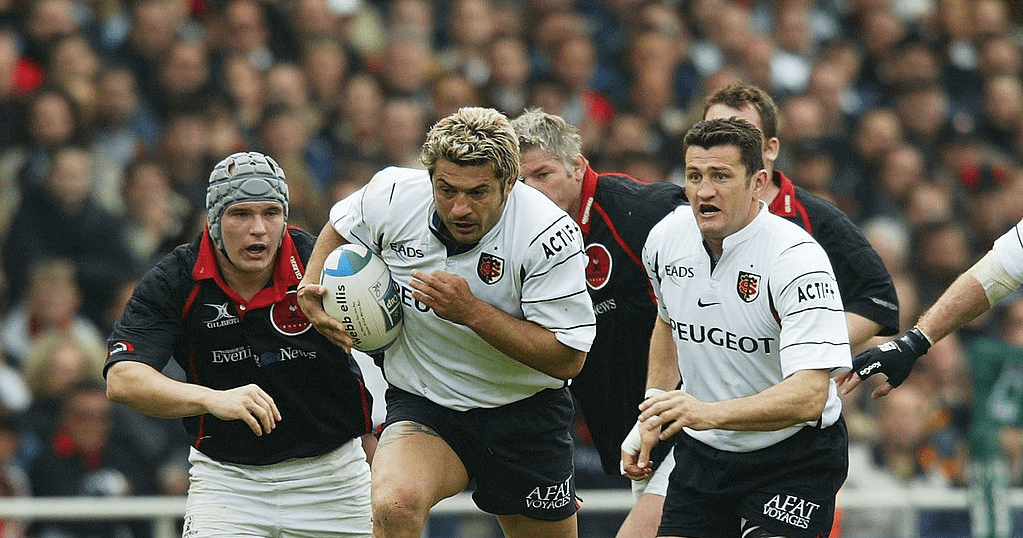
On 10th April 2004, in the second Heineken Cup quarter-final, Toulouse would invite Edinburgh to the Stade Ernest Wallon for the second time in three months. The two teams’ previous meeting at this stadium 70 days earlier had seen Frank Hadden’s away side leave south-western France battered and bruised following a 33-point drubbing. To reach a historic semi-final, Edinburgh would need to upset the reigning champions on their own turf.
In front of a partisan home crowd, Le Stade fly-half Yann Delaigue would score the first points with an easy penalty. In the 11th minute, home Number 8 Christian Labit would cross the whitewash from close range to establish a ten-point lead and continue Toulouse’s excellent start. However, the visitors would respond just before the break, as centre Marcus di Rollo finished off a brilliant Edinburgh team try. Brendan Laney would convert the try, making the score 10-7 to Toulouse at half-time. Following the break, Toulouse would capitalise on multiple Edinburgh infringements, with Delaigue and winger Cedric Heymans adding a further 12 points from the boot to extend their lead to 22-7. Laney would kick a penalty of his own to give Edinburgh hope at 22-10, but Toulouse would soon show their pedigree. In the final seven minutes of the game, backs Clément Poitrenaud and Vincent Clerc would touch down for the home side, sending Toulouse through to the semi-finals with a 36-10 score-line. The reward: an all-French semi-final with Biarritz.
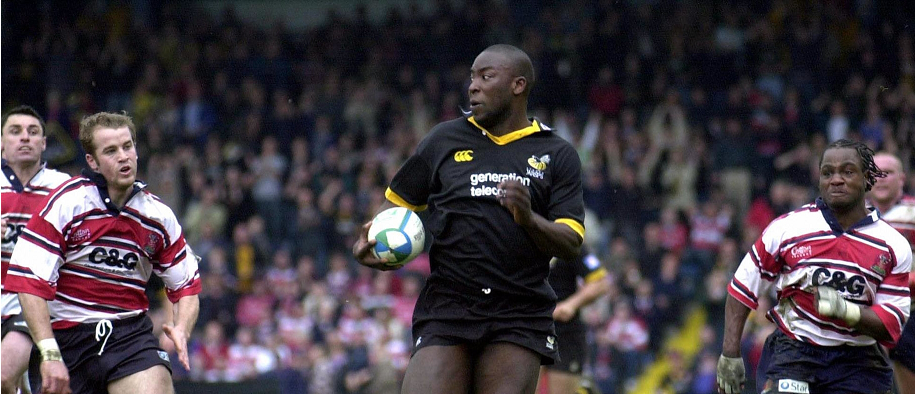
The final quarter-final would pit London Wasps against Zurich Premiership rivals Gloucester. The previous season, Wasps had thrashed the Cherry and Whites 39-3 in the Premiership play-off final to win their third English title. The most recent meeting between these two sides saw London Wasps beat Gloucester 20-12 at Adams Park. Now, Nigel Melville’s team would return to High Wycombe, hoping to return home with bragging rights and a Heineken Cup semi-final place.
If the Premiership encounter had been close in any way, the same could not be true for the Heineken Cup match. After a fairly open first 17 minutes for both sides, experienced scrum-half Rob Howley would combine with centre Stuart Abbott to score the first try of the afternoon for London Wasps. Gloucester would respond through a long-range penalty from Henry Paul, but that successful kick would be the last time the Cherry and Whites returned from the Wasps half with points. After almost losing captain Lawrence Dallaglio to a concussion midway through the half, Wasps would score a second try moments before half-time. After a Gloucester infringement close to their own try-line, referee Joel Jutge would award a penalty try to the Wasps, which Alex King would convert. First half injury time would see the visitors lose hooker Chris Fortey to the sin-bin, and Wasps would take full advantage, with a rolling maul ending with Dallaglio touching down. At the break, London Wasp would lead Gloucester 19-3.
In the second half, the home side would not look back. Wasps’ fourth try would arrive through hooker Trevor Leota two minute into the second half. Later, a penalty from Alex King and a 60-metre interception try from centre Ayoola Erinle would finish off Gloucester, with Wasps ending the game 34-3 winners. A match with Celtic champions Munster awaited them in the last four.
The two quarter-finals featuring Toulouse and Wasps had been one-sided affairs. However, the semi-finals would be different. Instead of the two semi-finals taking place at the home grounds of Toulouse and Munster, Bordeaux’s Stade Chaban Delmas (capacity: 34,000) and Dublin’s Lansdowne Road (capacity: 49,000) would serve as suitable neutral venues.
Before this season’s Heineken Cup, Biarritz’s best result in the competition had been three successive quarter-final defeats to Bristol, Munster and Leinster between 2000 and 2002. They had already improved upon that record by reaching the semi-finals in this particular season and were now one step away from reaching their first final. Only Toulouse now stood in their way. The first half of this all-French semi-final was dominated by the kickers. Three successful penalties from Yann Delaigue to Dimitri Yachvili’s one put Toulouse 9-3 ahead at half-time. Yachvili would halve the points deficit with another penalty before centre Philippe Bidabé scored in the corner to put Biarritz ahead 11-9. However, the champions would respond through sheer power. Flanker Finau Maka would smash through the visitor’s defence to re-establish Toulouse’s lead in the 63rd minute, Delaigue adding a conversion to make the score 16-9. Biarritz would soon pepper their opponent’s line with attack after attack, but the hosts would hold out. With minutes left, Yann Delaigue would attempt a drop goal. To his team’s delight, Delaigue’s effort would sail through the posts to put Toulouse through to a second consecutive Heineken Cup Final with a 19-11 final score.
If the first semi-final between Toulouse and Biarritz had been dominated by the kickers, it only seemed fitting that London Wasps and Munster treated Dublin to a seven-try, 69-point thriller between London one day later. The first marks on the scoreboard would come after two minutes through a Ronan O’Gara penalty. However, Wasps would respond in the fifth minute, with Josh Lewsey breaking through the home defence to score the game’s first try. Alex King would add the conversion. Opposing fly-halves O’Gara and King would trade penalties, with the Irish international bringing the score back to 10-9 before leaving the field with a hamstring injury before the end of the first half. In the last few minutes of the first half, Wasps would lose Joe Worsley to the sin-bin, and Munster’s replacement fly-half Jason Holland would kick the home side ahead at 12-10. However, in the 37th minute, Rob Howley would charge down an attempted Holland clearance before feeding flanker Paul Volley to score the visitors’ second try of the day. To end the half, Holland would kick his second penalty to set the half-time score at 17-15.

After scoring their second try in the last three minutes of the first half, London Wasps would score a third two minutes into the second half when full-back Mark van Gisbergen went over in the corner. Now 22-15 behind, Munster would soon turn the match on its head. In the 50th minute, Jason Holland would kick a successful penalty to reduce the deficit to four. One minute later, Wasps centre Fraser Waters would be sin-binned. Next, Munster No.8 Anthony Foley would dive over the try-line in the 60th minute to give The Red Army the lead, with Holland’s conversion extending it to three. Five minutes later, Munster captain Jim Williams would score his team’s second try, and Holland’s conversion would give Munster a ten-point lead at 33-22. In the 72nd minute, Alex King would bring London Wasps back within seven while Munster would later lose Donncha O’Callaghan and Rob Henderson to spells in the sin-bin.
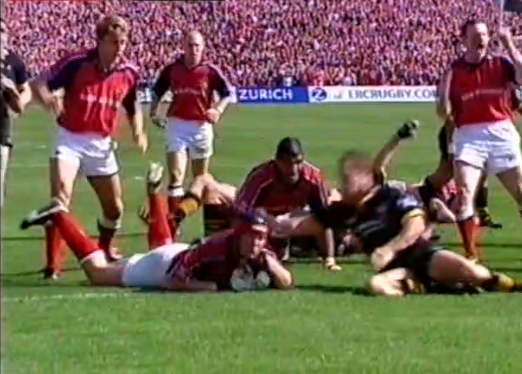
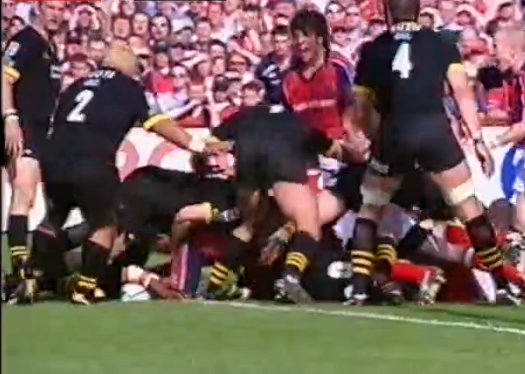
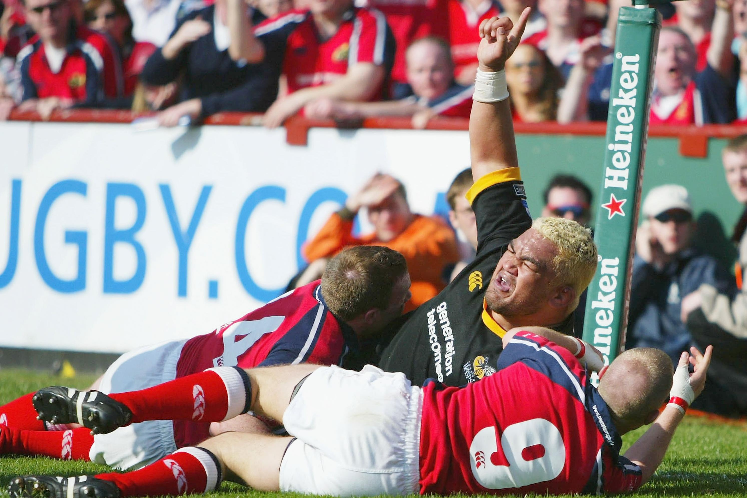
With time running out, Tom Voyce would run through a gap in the Munster defence and score a fourth try for London Wasps. King would hold his nerve to bring the scores level at 32-32. With extra time beckoning, the winning score would come. A line break from Voyce and a carry from Rob Howley would bring Wasps within inches of the Munster line. King would deputise at scrum-half, passing the ball for hooker Trevor Leota to touch down in the corner. Despite King missing the following conversion, Wasps would kick the ball out to confirm their place in their first-ever Heineken Cup Final. To reach the final, they won one of the greatest matches in the competition’s history, beating Munster 37-32.
The Final
Here’s how the teams would line up on the day:
| London Wasps | Toulouse | |
|---|---|---|
| Mark van Gisbergen | 15 | Clément Poitrenaud |
| Josh Lewsey | 14 | Émile Ntamack |
| Fraser Waters | 13 | Yannick Jauzion |
| Stuart Abbott | 12 | Cédric Desbrosse |
| Tom Voyce | 11 | Cédric Heymans |
| Alex King | 10 | Yann Delaigue |
| Rob Howley | 9 | Frédéric Michalak |
| Tim Payne | 1 | Patrice Collazo |
| Trevor Leota | 2 | William Servat |
| Will Green | 3 | Jean-Baptiste Poux |
| Simon Shaw | 4 | Fabien Pelous (capt) |
| Richard Birkett | 5 | Trevor Brennan |
| Joe Worsley | 6 | Jean Bouilhou |
| Paul Volley | 7 | Finau Maka |
| Lawrence Dallaglio (capt) | 8 | Christian Labit |
| Replacements | ||
| Henry Nwume | 16 | Yannick Bru |
| Mark Lock | 17 | Julian Fiorini |
| Ben Gotting | 18 | Romain Millo-Chluski |
| Martin Purdy | 19 | David Gérard |
| Peter Richards | 20 | Isitolo Maka |
| Mark Denney | 21 | Jean-Baptiste Élissalde |
| Ayoola Erinle | 22 | Vincent Clerc |
| Warren Gatland | Coach | Guy Noves |
London Wasps would kick off the 2004 Heineken Cup final. However, the Toulouse players would fail to claim possession of the ball, giving the Wasps an immediate opportunity to test the reigning champions’ defensive line. However, a loose ball at a Wasps ruck would allow Toulouse to gain ball possession. A couple of phases later, with both teams kicking the ball towards the opposition, Toulouse would launch the first line break. Fullback Clement Poitrenaud would catch a kick from behind his ten-metre line and dodge his way through gaps in the defence, reaching the Wasps ten-metre line before offloading the ball to Emile Ntamack. Tom Voyce would tackle the experienced winger six metres from the Wasps 22. In the following phase of play, the ball would go loose, and the Wasps players would dive upon the ball. All of this occurred inside the first 80 seconds of the match. The final was now underway.
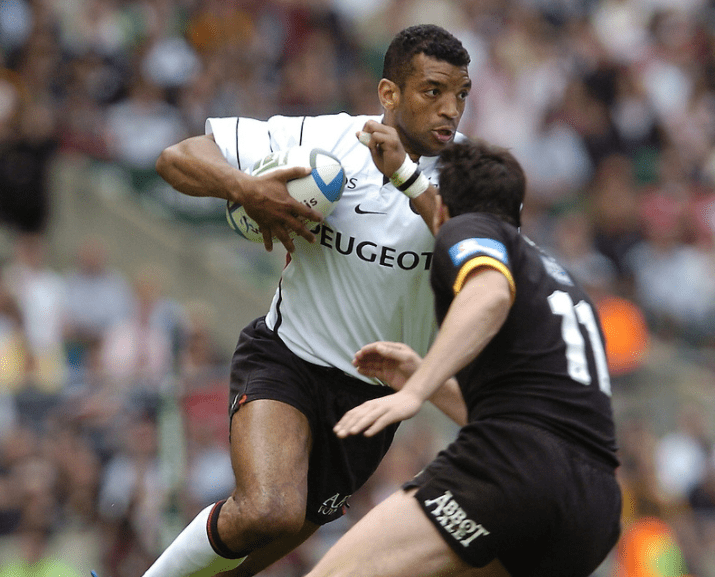
The early stages had begun at a fast and furious pace, with turnovers and handling errors aplenty. In the fifth minute, a Toulouse line-out just outside the London Wasps 22 would lead to another line break, as carries from forwards Jean-Baptise Poux and Fabien Pelous would set up centre Cedric Debrosse to sprint five metres inside the 22. A big hit from Josh Lewsey would quickly stop fly-half Yann Delaigue from continuing the quick momentum of the Toulouse attack. However, Wasps would infringe at the next ruck, giving away the final’s first kickable penalty. Delaigue would step up to score the first three-pointer of the afternoon, putting the champions ahead 3-0 after six minutes.
Two minutes later, a Toulouse kick downfield would send the Wasps scurrying back into the 22. Winger Cedric Heymans would eventually tackle Wasps fullback Mark van Gisbergen into touch ten metres from the Wasps line. Wasps would manage to recover and clear the danger for the moment. However, Toulouse would quickly return to their opponent’s 22, and a series of scrums would result in another Toulouse penalty. Delaigue would kick this penalty to double Toulouse’s early points advantage. Three minutes later, two excellent carries from lock Simon Shaw would bring Wasps into the Toulouse 22 and their first penalty, which Mark van Gisbergen would convert to register the London side’s first points of the final, making the score 6-3.
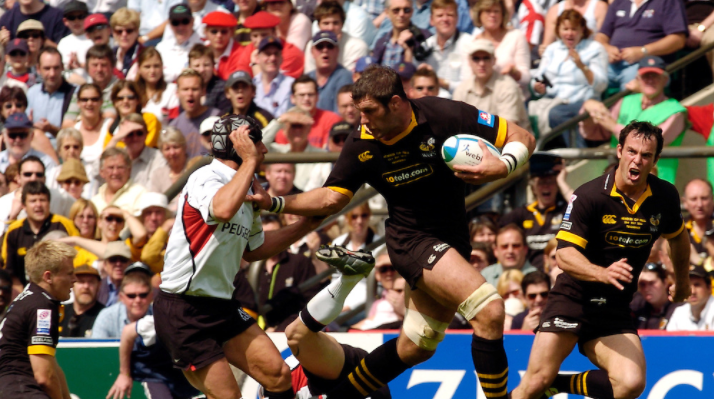
After getting on the scoreboard in the 15th minute, Wasps would score the game’s first try to take the lead in the 19th minute. Starting just inside their own half, a quick pass from scrum-half Rob Howley would send Mark van Gisbergen and Fraser Waters down the left wing. The efforts of van Gisbergen, Waters and Simon Shaw would take Wasps into the Toulouse 22. The Wasps backline would land multiple blows on the champions’ defensive line, with Waters, Voyce and Lewsey all trying their luck. From the next ruck, Howley would find flanker Paul Volley, who would puncture a hole in the Toulouse defence to bring Wasps within five metres of the try-line. In the following phase, Alex King would spread the ball out to centre Stuart Abbott, who would sprint between two defenders and shrug off a low tackle to touch the ball down with one hand. Mark van Gisbergen would successfully convert the try to give Wasps a 10-6 lead after 21 minutes of the final.
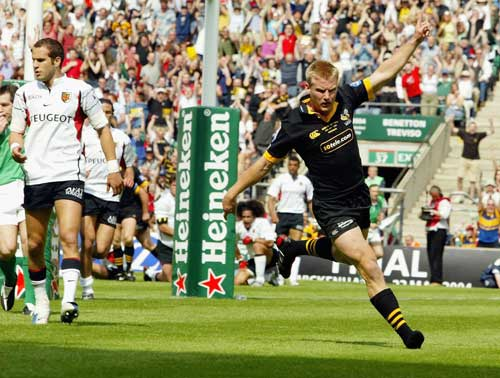
After Abbott’s try, the next points scored in the match would not arrive until the 31st minute. The intervening minutes would see Toulouse twice come close to their first try, only for hesitancy or the bounce of the ball to end their pursuits. During this period, fly-half Yann Delaigue would attempt to kick a drop goal, only for the ball to drift wide of the posts. In the 28th minute, Delaigue would miss a reasonably straightforward penalty in front of the posts, letting Wasps off the hook once again. To compound Toulouse’s bad luck, Mark van Gisbergen would send a 43m penalty through the posts to give London Wasps a seven-point lead.
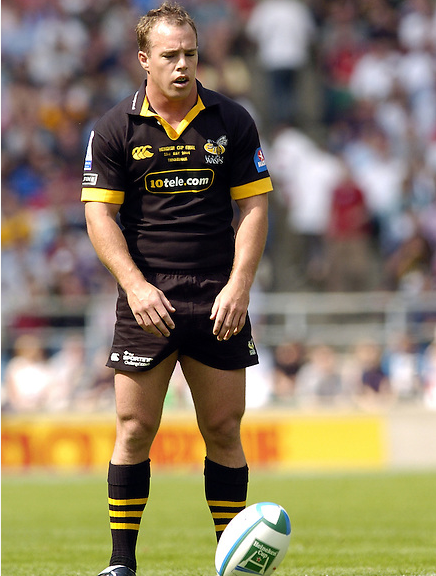
In the 35th minute, London Wasps would spill the ball just outside the Toulouse 22, and Yann Delaigue would seize upon the loose ball. After briefly flinging the ball around, carries from Fabien Pelous and flanker Finau Maka would give Toulouse some attacking momentum. Further quick ball delivered from the ruck would send the Wasps defence into retreat. Soon, the Toulouse players would spread the ball out to Clement Poitrenaud, who would lure in a tackler before passing to winger Cedric Heymans in space out on the touchline. Without a moment’s notice, Heymans would use his quick feet to reach the ten-metre line before cutting infield and riding two tackles to carry on his run over the hallway line. Cutting inside again, Mark van Gisbergen would manage to stop the speedy Frenchman, only for Heymans to slip out of the tackle, re-assess his options and run around the outside of the incoming Wasps defence to continue his run. Stuart Abbott’s tackle would finally halt his charge twelve metres inside the Wasps half. One phase later, Yann Delaigue would end the passage of play by kicking the ball into touch inside the Wasps 22.
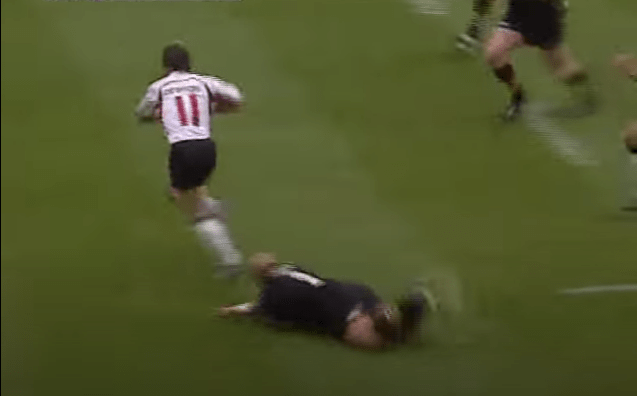
After Rob Howley would clear their lines from the following lineout, Toulouse would start another attack inside the Wasps half. A clever inside pass from scrum-half Frederic Michalak would send centre Yannick Jauzion through two tackles before a third would bring him down. Next, a series of quick carries and passes by the Toulouse forwards, including a mazy run from hooker William Servat, would place the French side 15 metres away from the try-line. Further quick hands from Jean-Baptiste Poux, flanker Jean Bouilhou, No.8 Christian Labit and Yann Delaigue would get Fabien Pelous four metres from the line. However, a hesitation by Delaigue would cause Michalak to kick the ball forwards and end the attack.
Another Wasps clearing kick would fall to Poitrenaud and Heymans, who would take a quick line-out before taking the ball back into contact. In the next phase of play, Finau Maka would burst through the line before offloading the ball out of the tackle to Poux continue the move. Quick hands from Poux and Debrosse would send Delaigue and Yannick Jauzion charging towards the Wasps try-line. After escaping three tackles to reach the five-metre line, Jauzion would throw a hopeful offload to Delaigue on his right. Wasps wing Josh Lewsey would get to the ball before Delaigue, but he could only palm the ball back towards the try-line, where the French fly-half would seize on the loose ball before falling over Lewsey’s prone body to score Toulouse’s first try of the match. After spending much of the first half attacking the Wasps line, the champions finally had their try.
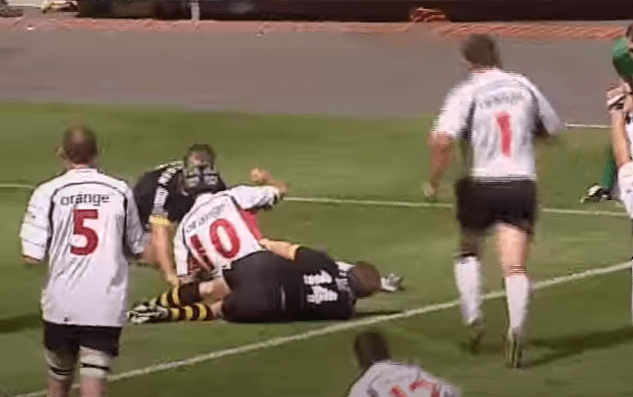
After scoring, Delaigue had the opportunity to convert his try. However, the Frenchman’s kicking compass would continue to be wayward, missing the target to leave London Wasps with a 13-11 lead at half-time. It was a first period where Toulouse had dominated possession and territory only to fail to take numerous opportunities that would, and should, have rightfully put the team ahead on the scoresheet.
If people thought London Wasps were lucky to head into the half-time break with a 13-11 lead, then Warren Gatland’s team would strike early in the second half to extend their current winning margin. After beginning the second half by withstanding 10 phases of Toulouse possession, Wasps would claim possession of the ball following a Toulouse knock-on, winning a scrum. From the scrum, Lawrence Dallaglio would peel off the back and pass to Josh Lewsey to start the Wasps attack on the right-hand side.
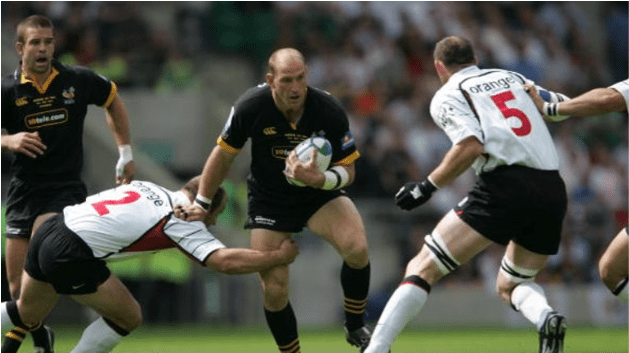
Rob Howley would switch the point of attack from the next ruck, passing to his left towards Mark van Gisbergen, who would spread the ball out to Alex King. Receiving the ball midway inside his half, King would spy a gap between two Toulouse forwards, gliding through the opening and stepping through a tackle to move into the opposition half. Before Cedric Heymans stopped him just past the ten-metre line, King would return the ball to the oncoming van Gisbergen, who would run in from 35 metres, eventually touching the ball down underneath the Toulouse posts despite the tackles of Finau Maka and Christian Labit. Unlike Yann Delaigue, van Gisbergen would manage to convert his try, extending Wasps lead to nine points after six minutes of the second half. With van Gisbergen’s try, Wasps had now scored 14 points from two visits into the Toulouse 22. Meanwhile, Toulouse had only scored 11 points despite entering the Wasps 22 on seven occasions thus far.
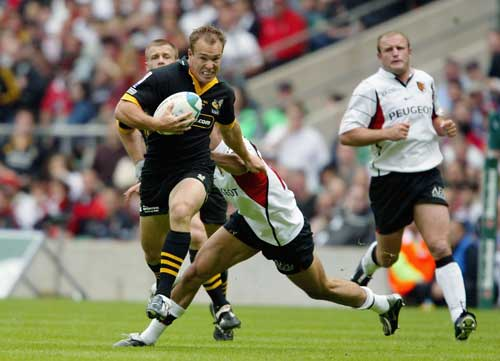
Looking for a response, Toulouse would win a penalty in the 47th minute. However, instead of the team’s regular kickers Yann Delaigue and Frederic Michalak stepping up to take the kick, winger Cedric Heymans would try his luck from 40m. Unfortunately, Heymans would soon prove to the watching audience why he wasn’t a frequent place-kicker, unleashing a woeful effort that never looked like hitting the target. Two minutes later, another foray forwards would end with another failed Delaigue drop goal attempt.
In the 53rd minute, Toulouse coach Guy Noves would be merciful, bringing on replacement scrum-half and decent place-kicker Jean-Baptiste Elissalde for the flagging Yann Delaigue. Toulouse’s starting scrum-half Frederic Michalak would move out to occupy the fly-half position as part of this substitution. In the 56th minute, an inside pass from Michalak would lead Yannick Jauzion to crash through three tackles and make ground before passing to Heymans on his right shoulder. The winger would charge into the 22 and cut inside before Josh Lewsey’s tap tackle would trip up the speedster. From the next phase, outside-centre Cedric Debrosse would reach the Wasps five-metre line, and the referee would blow his whistle for a Toulouse penalty. As a result, Alain Rolland would send Lawrence Dallaglio to the sin-bin for foul play within the Toulouse ruck. A minute later, Jean-Baptiste Ellisalde would immediately justify Guy Noves’ earlier substitution, scoring the penalty kick to move Toulouse back within a converted try on the scoresheet, with Wasps now leading 20-14.

Despite losing their captain, London Wasps would become the more threatening of the two sides with the ball in hand over the next ten minutes. In the 60th minute, fly-half Alex King would try his luck at attempting a drop goal. However, like Yann Delaigue before him, King’s long-range effort would fail to hit the target. Two minutes later, a Toulouse kick into the Wasps 22 would fall into the hands of Mark van Gisbergen. Instead of kicking the ball himself, the English fullback would beat two defenders before offloading the ball to Joe Worsley, who would carry the ball up to the halfway line. Spreading the ball out to the right wing, Stuart Abbott would run through the retreating Toulouse defence, offloading to Josh Lewsey to make a couple more metres. However, the following ruck would end in a Toulouse penalty.
When Lawrence Dallaglio would eventually return to the field in the 67th minute, he would find that aside from Jean-Baptise Elissalde’s 57th-minute penalty, his London Wasps teammates had not conceded a single point during his spell in the sin bin. A minute after his return, six phases of Wasps attacking play would end with another drop goal attempt by Alex King hitting the post before bouncing out.
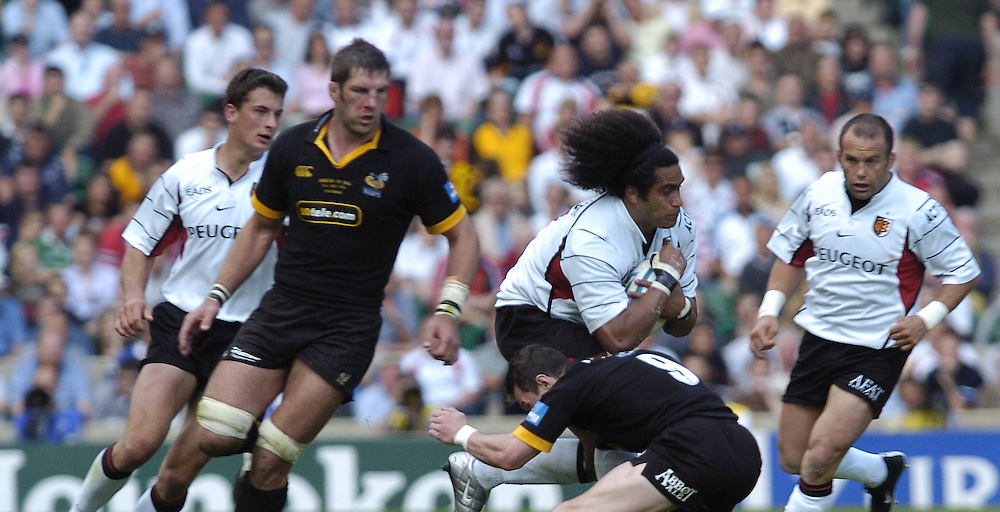
Heading into the final 10 minutes of the 2004 Heineken Cup final, London Wasps would continue to lead Toulouse 20-14. From a scrum, the team in white would spread the ball out to the left flank, with replacement winger Vincent Clerc and Clement Poitrenaud setting Cedric Heymans free to run halfway into the Wasps half before slipping when looking for a teammate in support. However, Heymans’ attempted pass would only find the hands of Wasps centre Fraser Waters, who would kick the ball into touch. Wasps would concede a penalty from the subsequent line-out, and Jean-Baptiste Elissalde would successfully bring Toulouse within three points of Warren Gatland’s side on the scoresheet. A minute later, Wasps would earn themselves a penalty 45 metres from the posts. However, Mark van Gisbergen’s kick from out on the right-hand side would fall short of the posts, ruining the fullback’s perfect kicking record during the final.
From the resulting Toulouse 22m dropout, Vincent Clerc would pick up a loose ball and chip ahead down the right wing. Clerc would successfully chase and collect his kick, bouncing out of a tackle before kicking ahead once more. His second kick would, unfortunately, go straight out of play. Two minutes later, Wasps’ hands in the ruck would lead to another Toulouse penalty. Elissalde would step up again, landing a 44m kick to bring the score back to 20-20. In 25 minutes, the scrum-half had nailed three penalty kicks to drag his Toulouse team back into contention with less than three minutes remaining on the clock.
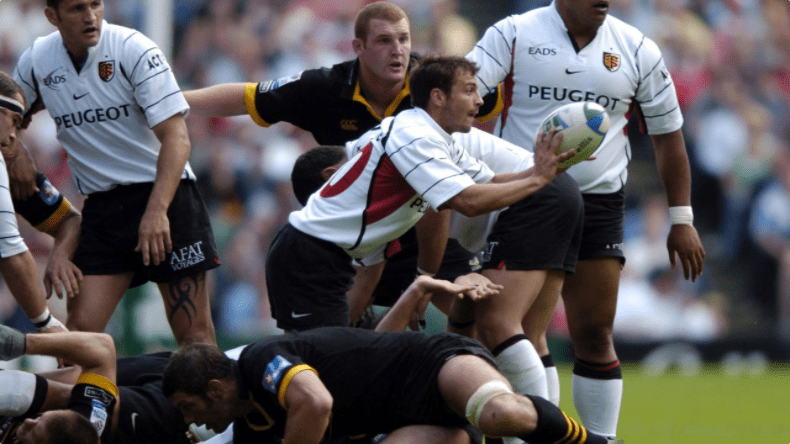
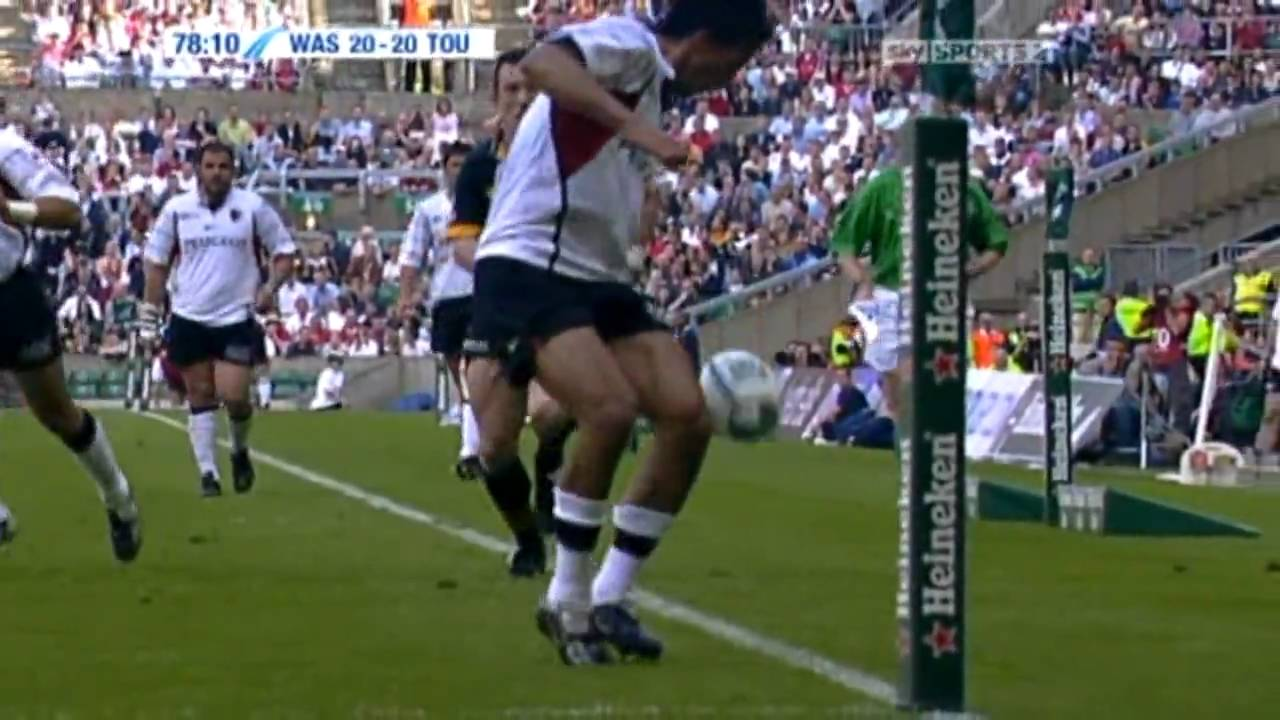
With little time left and with the scores level, the next points scored by either side could decide the Heineken Cup winners. In the 78th minute, Fredric Michalak would angle a 22-metre dropout towards the touchline on the Toulouse 10-metre line, where the ball would fall into the hands of Rob Howley. Quick as a flash, the 34-year-old Welsh scrum-half would deliver a grubber kick down the left-hand touchline and would proceed to chase the kick all by himself. While Vincent Clerc would initially race Howley for the loose ball, he would quickly give up, seeing his fullback Clement Poitrenaud getting ready to collect the kick and think that there was no immediate danger to the Toulouse line. As the ball bounced towards the try-line, Poitrenaud would watch the ball closely, following it along with every bounce it made. Then, seemingly, Poitrenaud would allow the ball to bounce over the Toulouse try-line, where he would touch the ball down and fling the ball over to Frederic Michalak for another 22m dropout. This was the plan.
Instead, Clement Poitrenaud would follow the ball as it slowly bounced towards the Toulouse try-line. However, with each bounce, Rob Howley would continue chasing his kick, sprinting out of sheer desperation with the faint hope of scoring an unlikely try. By the time the ball had reached within a metre of the try-line, Howley had caught up to Poitrenaud. As the ball bounced over the try-line and Poitrenaud made a grab for the ball, Howley would dive forwards, slapping the ball out of the fullback’s hand and grounding the ball within the in-goal area. As commentators and spectators wondered what they had just witnessed and Howley celebrated on the field, referee Alain Rolland would consult the video referee to see if this ‘try’ was genuine. After a series of replays would show Howley clearly grounding the ball over the Toulouse try-line, Rolland would award the try.
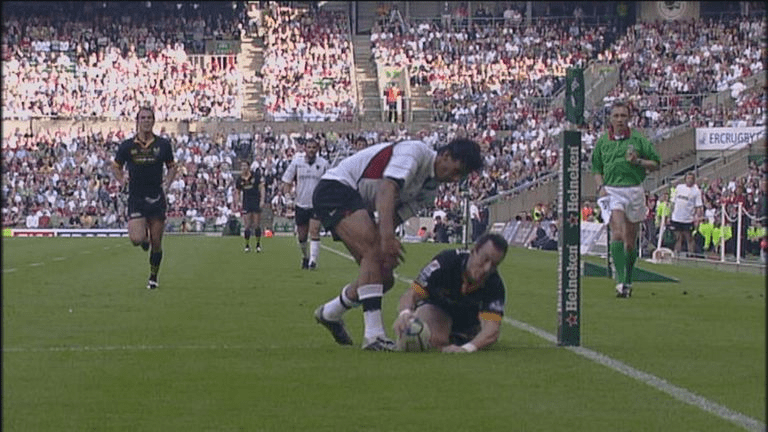
Commentating for Sky Sports, Miles Harrison would refer to Rob Howley’s try as “one of the most incredible moments [the Heineken Cup] has ever seen”. A desperate veteran going for broke combined with a young player having a ‘brain fade’ would result in an extraordinary try probably not seen before or after this match. Instead of picking up Howley’s kick and launching a counter-attack or kicking the ball out of play, Clement Poitrenaud had followed the ball as it bobbled towards the line, allowing Rob Howley to catch up to his kick and ground the ball. After putting in an excellent performance for his club, Poitrenaud would now feel the shame of potentially costing his team their Heineken Cup trophy.
After an unbelievable try, Mark van Gisbergen would nail the difficult conversion to put London Wasps 27-20 ahead. There would now be little time for Toulouse to draw the match, let alone win it. Thanks to Rob Howley (and Clement Poitrenaud), the biggest prize in European club rugby was heading to High Wycombe. Eight seconds past the 80-minute mark, van Gisbergen would kick the ball into touch, and the Twickenham crowd would erupt in celebration.
Final Score: London Wasps 27 Toulouse 20
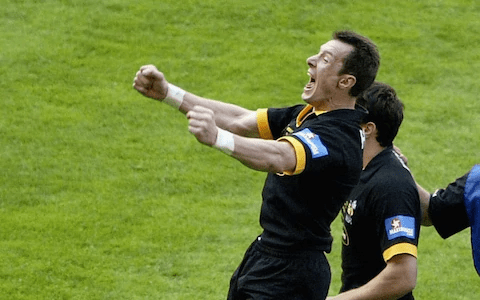
Despite spending most of the final defending phase after phase of Toulouse attacks, the London Wasps defence stood tall, playing an essential part in winning the match for Warren Gatland. Along with their defensive efforts, Wasps had managed to outscore their opponents three tries to one. Toulouse would dominate Wasps in possession and territory and line breaks for much of the game, but time and again, the team playing in white would fail to take their opportunities. Missed kicks from Yann Delaigue and Cedric Heymans had allowed Wasps to maintain their lead, with Toulouse only getting on level terms when the time was running out. However, after failing to take these earlier chances, a lapse in thinking from one player would help London Wasps win the final and become European champions.
However, the day at Twickenham would belong to London Wasps. By beating Toulouse at Twickenham, Warren Gatland’s team would become the seventh team to win the Heineken Cup, and the fourth different English side following in the footsteps of Bath (1998), Northampton Saints (2000) and Leicester Tigers (2001, 2002) before them. Six days later, London Wasps would return to Twickenham, defeating Bath to win a second consecutive English Premiership title, adding that trophy to their newly-won European silverware. A dynasty had been born.

 the-score-board.co.uk