
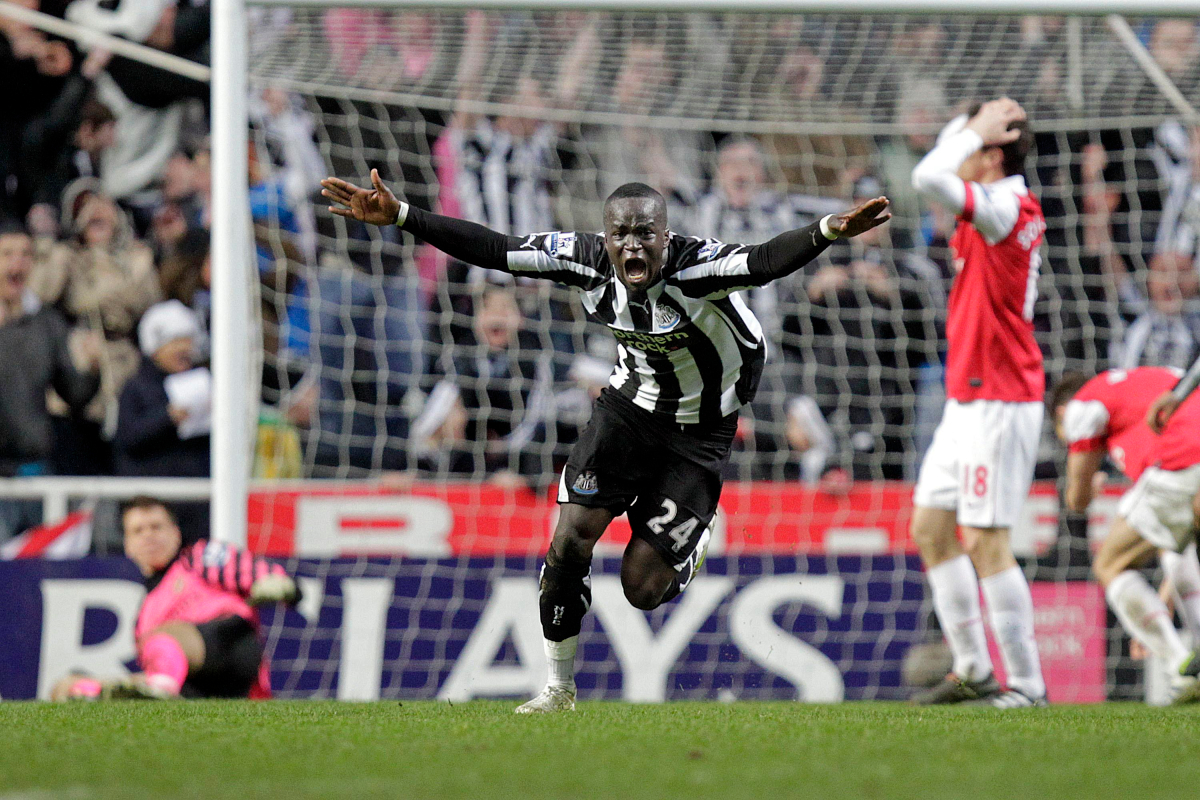
Some Newcastle fans started to leave the stadium after just 26 minutes of play…
On 5th June 2017, the football world was shocked and saddened to hear of the death of Ivory Coast midfielder Cheick Tioté at the age of 30. Tioté had suffered a heart attack while training with his club Beijing Enterprises of the Chinese Jia League. A talented midfielder known for his passing and defensive abilities, Tioté also plied his trade at Belgian giants Anderlecht before moving to Dutch Eredivisie side FC Twente following a successful loan spell at fellow Eredivisie side Roda JC. Tioté would be part of the Twente team that would reach the UEFA Champions League and win their first Dutch title under former England manager Steve McClaren. He would also win 55 caps for his country between 2009 and 2015, appearing in two World Cups (2010, 2014) and four African Cup of Nations, winning the competition in 2015.
However, Cheick Tioté’s most notable spell came with Newcastle United between 2010 and 2017, making 156 appearances in six-and-a-half seasons on Tyneside. In 156 appearances, Tioté would score just one goal for the Magpies, but this singular goal played a part in the Premier League’s most remarkable comeback. Speak to football fans about a Cheick Tioté goal and all minds will be drawn to reminisce about a match between Newcastle United and Arsenal on 5th February 2011. You may have heard of this match, as it is now considered to be one of the greatest games in Premier League history. This match will be subject of today’s article and the latest entry in The Scoreboard’s ‘Great Matches’ series.
The Background
Newcastle
The 25th round of the 2010-11 Barclays Premier League season saw 2nd play 10th as Arsene Wenger’s Arsenal travelled to St. James’s Park to face Alan Pardew’s Newcastle United. Newcastle was coming into the match in mixed form with their last six games producing two wins, two draws and defeats. Meanwhile, Arsenal travelled the 274 miles north on the back of a seven-match unbeaten run, obtaining five wins and two draws since a 1-0 defeat to leaders Manchester United on 13th December. Newcastle had recently returned to the Premier League following a one-season stint in the Championship, where they had won the title with over 100 points. However, fast forward 9 months and Newcastle were now without the manager and striker that had returned them to the big time at the first attempt.
On 24th May 2009, Newcastle United would be relegated after a 1-0 defeat to Aston Villa. The shock departure of Kevin Keegan, two caretaker runs under Chris Hughton, four wins from 19 matches under former Wimbledon manager Joe Kinnear and one win from eight games under club hero Alan Shearer all contributed to a disastrous season. Following relegation to the Championship, the club would appoint Chris Hughton as the new Newcastle United manager. Keeping together most of the relegated side, Hughton would add to the squad a mix of players with second-tier experience (Wayne Routledge, Fitz Hall) and young loanees from Premier League clubs (Danny Simpson, Patrick van Aanholt). With this squad, the Magpies spent 38 out of 46 matchdays atop the Championship summit, eventually winning the title with 102 points, 11 points ahead of 2nd-placed West Brom.
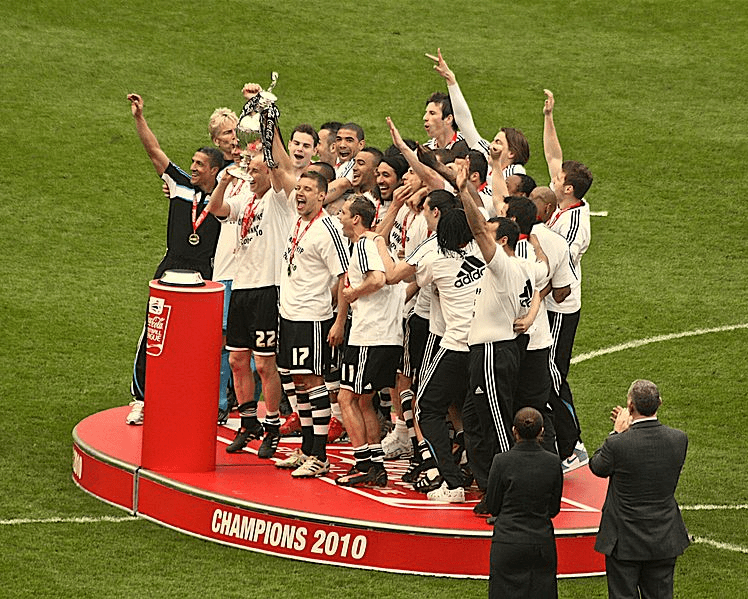
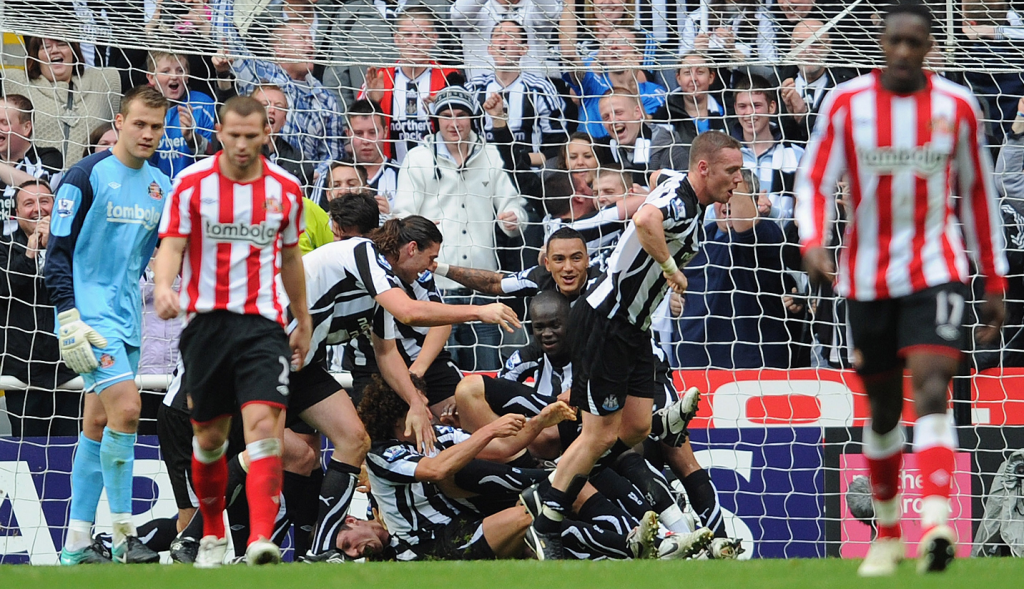
During the summer, Newcastle invested in their defence and midfield, bringing in James Perch from Nottingham Forest (£1.5m), Sol Campbell from Arsenal (Free), Dan Gosling from Everton (Free) and Cheick Tiote from FC Twente (£3.5m). They would also bring in talented French winger Hatem Ben Arfa on a season-long loan deal from Marseille. After beginning the season with a 3-0 defeat to Manchester United, goals from Joey Barton, Kevin Nolan and a hat-trick from Andy Carroll would deliver a 6-0 win over Aston Villa at St James Park the next week. Other early-season highlights included a 4-3 comeback victory over Chelsea in the League Cup on 22nd September, and a three-match winning run at the end of October that included a 5-1 thrashing of Sunderland in the Tyne-Wear derby (31st October) and a 1-0 victory over Arsenal away at the Emirates (7th November).
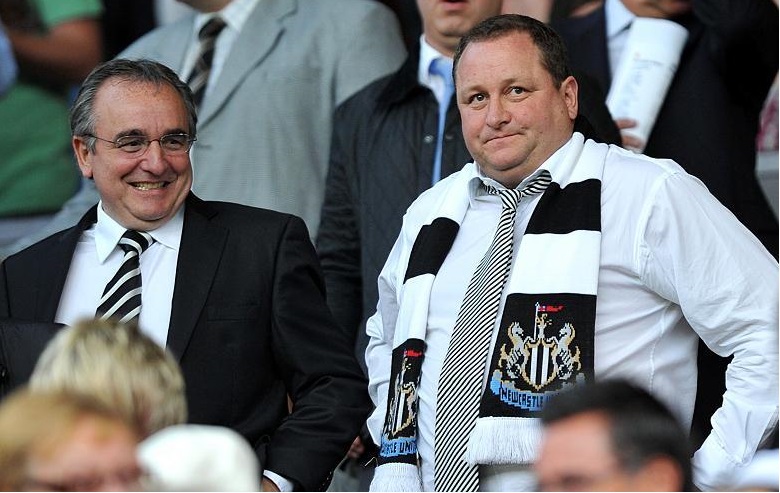
By 6th December, Newcastle sat 11th in the Premier League table, with five wins, four draws and seven defeats from 16 league matches. This perfectly adequate record for a newly-promoted club was deemed insufficient by owner Mike Ashley and managing director Derek Llambias. Newcastle United would sack Chris Hughton as their manager on 6th December 2010. His final game in charge would be a 3-1 defeat to fellow promoted side West Brom the previous day. The club would later release a statement declaring that “the board now feels that an individual with more managerial experience is needed to take the club forward” (NUFC.com, 9th December 2010).
The critical reaction to Hughton’s sacking would be one of shock and disdain. The BBC’s chief football writer Phil McNulty wrote that “Chris Hughton has brought dignity, stability and a respectable Premier League placing to Newcastle United” and that the decision to sack him “sums up the madcap logic of a club that seems only comfortable with chaos…” (‘Hughton’s sacking shames Newcastle”, BBC Sport, 6th December 2010). The Guardian’s Barney Roney would comment that “Newcastle United’s decision to dispense with Chris Hughton is quite possibly the most stupid in recent footballing memory” (‘Newcastle look dim after turning the lights out on Chris Hughton’, The Guardian, 6th December 2010). Active Newcastle players Jonas Gutierrez, Danny Simpson and Sol Campbell would also voice their displeasure with the decision to part with Hughton. Finally, Alan Shearer would simply tell FourFourTwo that “It’s not good news”.
The club would take just three days to find a man with more managerial experience. On 9th December 2010, former West Ham and Charlton Athletic manager Alan Pardew. Four months earlier, Pardew had also been surprisingly sacked by League One club Southampton, despite winning the Johnstone’s Paint Trophy and winning 34 out of 64 matches in charge. Previously, Pardew had been promoted with West Ham in 2005 and had taken the team to a 9th-placed league finish and an FA Cup Final appearance the following season. Unfortunately, a fan protest against the Newcastle board would overshadow Pardew’s first match in charge against Liverpool on 10th December. However, Alan Pardew’s managerial reign would have the perfect start as goals from Kevin Nolan, Joey Barton and Andy Carroll would result in a 3-1 win over Liverpool in front of 50,000 people at St James’s Park.
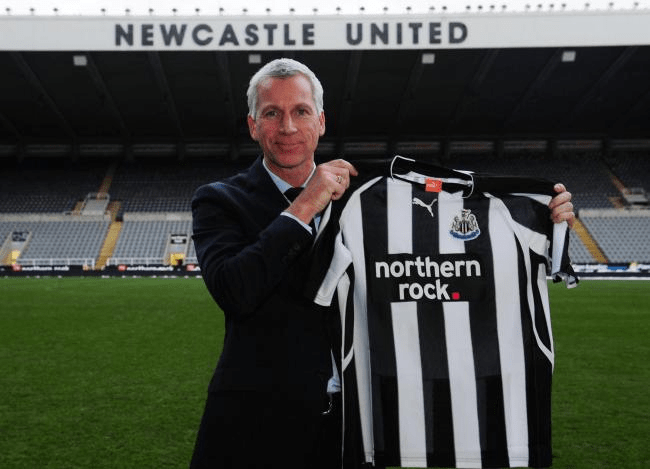
Following the Liverpool win, Newcastle’s form would be inconsistent. The Christmas period would bring two defeats at the hands of Manchester City (1-3) and Tottenham (0-2), before the team began January with a 1-0 win over Wigan and another huge win over West Ham (5-0). This 5-0 win on 5th January would be Newcastle’s most recent win heading into the Arsenal match. Three days after the West Ham win, a strong Newcastle side would be knocked out of the FA Cup at the 3rd round stage by League Two Stevenage. The 3-1 score-line on the day wouldn’t even flatter the lower-league side. This shocking defeat would not spur Newcastle into much better form, as the Magpies drew successive Premier League matches with Sunderland and Spurs (1-1) to end the month. Things would get even worse on the final day of the January transfer window as Newcastle United would sell local boy, starting striker and top scorer Andy Carroll (11 goals) to Liverpool for £35 million. The Magpies would respond to this sale by bringing in Stephen Ireland on loan from Aston Villa for the rest of the season. With the Newcastle fanbase fuming after the sale of Carroll, their mood would not improve when their side would lose 1-0 to Fulham just two days later. Therefore, the Newcastle fans’ general spirit was not exceptionally positive heading into a home match against high-flying Arsenal on Saturday 5th February 2011.
Arsenal
Arsenal would head into their match with Newcastle trying to hang onto the still-unbeaten Manchester United’s coat-tails. The Gunners had won the same amount of games as the Red Devils (15) but had racked up five more defeats than the leader’s zero. Arsenal had not left the Premier League’s top four all season. Arsenal would go unbeaten for their first five Premier League matches, drawing with Liverpool and Sunderland and winning dominantly against Blackpool (6-0) and Bolton (4-1). These would be mixed in with comfortable victories over Braga in the Champions League (6-0) and rivals Tottenham in the League Cup (4-1). Successive losses against West Brom (2-3) and Chelsea (0-2) would momentarily slow their progress, but Arsenal would soon return to winning form.
As previously referenced in this article, Arsenal would head into their match with Newcastle on 5th February with a seven-match unbeaten run. In the 17 Premier League matches that Arsenal would play between the Chelsea loss and the Newcastle match on 5th February, Arsene Wenger’s team would only suffer three losses: to Newcastle (0-1), Tottenham (2-3) and the defeat to Manchester United (0-1) that began the seven-match unbeaten run. Arsenal’s two other losses between early October and early February would occur in the Champions League to Shakhtar Donetsk (1-2, 3rd November) and the return fixture against Braga (23rd November). However, Arsenal would ultimately finish 2nd in their group and now had a last 16 tie against Pep Guardiola’s Barcelona to look forward to on 16th February.
Arsenal’s league form did manage to carry over into the domestic cup competitions, reaching the fifth round of the FA Cup and booking themselves a place in the League Cup final against Birmingham City on 27th February. Their route to the final had included knocking Newcastle out at the 4th round stage. A Tim Krul own goal, a brace from Theo Walcott and a fourth from Nicklas Bendtner saw Arsenal progress with a 4-0 win. In their most recent match before facing Newcastle, Arsene Wenger’s team had beaten Everton 2-1 to maintain their 2nd place in the Premier League table.
The Match-5th February 2011
Here is how the Premier League table looked heading into the match:
Top half of Barclays Premier League-Beginning of 5th February 2011
| Position | Team | Played | Won | Drawn | Lost | Points |
|---|---|---|---|---|---|---|
| 1st | Manchester United | 24 | 15 | 9 | 0 | 54 |
| 2nd | Arsenal | 24 | 15 | 4 | 5 | 49 |
| 3rd | Manchester City | 25 | 13 | 7 | 5 | 46 |
| 4th | Chelsea | 24 | 13 | 5 | 6 | 44 |
| 5th | Tottenham | 24 | 11 | 8 | 5 | 41 |
| 6th | Sunderland | 25 | 9 | 10 | 6 | 37 |
| 7th | Liverpool | 25 | 10 | 5 | 10 | 35 |
| 8th | Bolton | 25 | 8 | 9 | 8 | 33 |
| 9th | Blackburn | 25 | 9 | 4 | 12 | 31 |
| 10th | Newcastle | 24 | 8 | 6 | 10 | 30 |
The teams lined up as follows:
| Newcastle United | Arsenal | |||
|---|---|---|---|---|
| Formation (4-4-1-1) | Formation (4-2-3-1) | |||
| Steve Harper | GK 1 | GK 53 | Wojciech Szczesny | |
| Danny Simpson | RB 12 | RB 3 | Bacary Sagna | |
| Mike Williamson | CB 6 | CB 6 | Laurent Koscielny | |
| Fabrizio Coloccini | CB 2 | CB 20 Off 47′ | Johan Djourou | |
| Jose Enrique | LB 3 | LB 22 | Gael Clichy | |
| Peter Lovenkrands | RM 11 Off 73′ | DM 2 | Abou Diaby | |
| Cheick Tiote | CM 24 | DM 19 | Jack Wilshere | |
| Joey Barton | CM 7 | RW 14 Off 79′ | Theo Walcott | |
| Jonas Gutierrez | LM 18 | AM 4 | Cesc Fabregas (captain) | |
| Kevin Nolan (captain) | AM 4 | LW 23 Off 69′ | Andrey Arshavin | |
| Leon Best | ST 20 Off 89′ | ST 10 | Robin van Persie | |
| Substitutes | ||||
| Nile Ranger | FW 30 On 73′ | DF 18 On 47′ | Sebastien Squillaci | |
| Danny Guthrie | MF 8 On 89′ | MF 7 On 69′ | Tomas Rosicky | |
| DF 27 On 79′ | Emmanuel Eboue |
First Half
In the match itself, the team on the better run of form would score the first goal. Only 44 seconds had passed on the clock before Arsenal had the ball in the back of Steve Harper’s net. Surrounded by two Newcastle players, captain Cesc Fabregas would manage to deliver a through ball towards Theo Walcott. Walcott would beat Fabrizio Coloccini for speed before slotting the ball home for his 7th Premier League goal of the season. Less than two minutes later, Arsenal would be awarded a free-kick high on the left just outside Newcastle’s penalty area. Andrey Arshavin would swing the ball into the box, where Swiss defender Johan Djourou would head home to put Arsenal 2-0 up inside 3 minutes. On his 102nd overall appearance for the Gunners, the academy graduate would score his first Arsenal goal. Things almost went from bad to worse as Theo Walcott’s chip would slip past the post. However, just before the first 10 minutes were up, Arsenal would move 3-0 ahead. Theo Walcott would tease a cross before dragging the ball back for Robin van Persie to stroke home from 8 yards.
Within the first ten minutes, the Premier League high-flyers had decimated Newcastle’s defence, with Newcastle barely registering a chance down the other end of the pitch. As the cameras panned to home supporters, the expressions showed that they would now be facing a long afternoon watching their team be dominated by Arsenal’s attacking forces.
Within the first ten minutes, the Premier League high-flyers had decimated Newcastle’s defence, with Newcastle barely registering a chance down the other end of the pitch. As the cameras panned to home supporters, the expressions showed that they would now be facing a long afternoon watching Arsenal’s attacking forces dominate their team.
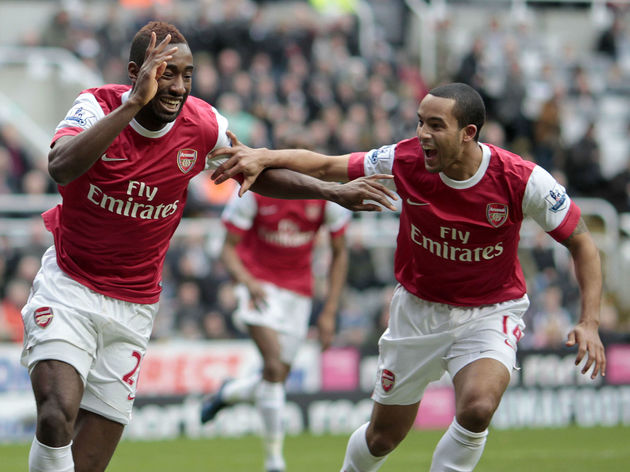
For the rest of the opening period, the best chance that the home side would register would be a close-range header from Leon Best that would go the wrong side of Arsenal’s far post. Other than that, the match’s momentum was all in Arsenal’s favour, and Newcastle’s already shell-shocked back five had to be alert to ensure that the score-line didn’t reach 4-0 before half-time. However, in the 26th minute, a Bacary Sagna cross would be met by a powerful van Persie header for his second goal of the match. Thirty minutes played, and Arsenal now led Newcastle by four goals to nil. Even at that this point in the game, television cameras caught some Newcastle fans either heading to get their half-time orders early or attempting to beat the rush hour traffic by 75 minutes.
After going 4-0 behind, Newcastle’s mostly dormant attack started to spark into life. The Magpies would start to rack up corners and free-kicks but would fail to register anything meaningful. A Fabrizio Coloccini effort would miss the left of the goal. A Jonas Gutierrez ball into the area had to be quickly cleared by Laurent Koscielny, and a Mike Williamson header would also miss the target. At the other end, Steve Harper would make saves from Walcott and van Persie, sparing further embarrassment for his time just before half-time. As the half-time whistle blew, Arsenal went in with a comfortable 4-0 lead, with potentially more on the way. For Newcastle, they needed to put something on the scoreboard while limiting the chances of any further Arsenal goals.
Second Half
When both teams walked out for the second half, I doubt that anybody inside the stadium would have predicted any other final score than a comfortable Arsenal victory. 5-0? 6-0? 7-0, even? Considering how the first half had gone, many wouldn’t have put it past Arsenal to score three more goals during the second 45 minutes. However, Newcastle would be gifted a bit of luck just 5 minutes into the second half. Following not a particularly innocuous challenge by Joey Barton on Abou Diaby, the French midfielder would react, grasping Barton by the back of the neck and throwing him to the ground and before lashing out at Newcastle captain Kevin Nolan. Once their teammates had separated the two midfielders, referee Phil Dowd would have no other choice but to issue Diaby with a straight red card, leaving Arsenal with ten men on the pitch for the final 40 minutes of play.
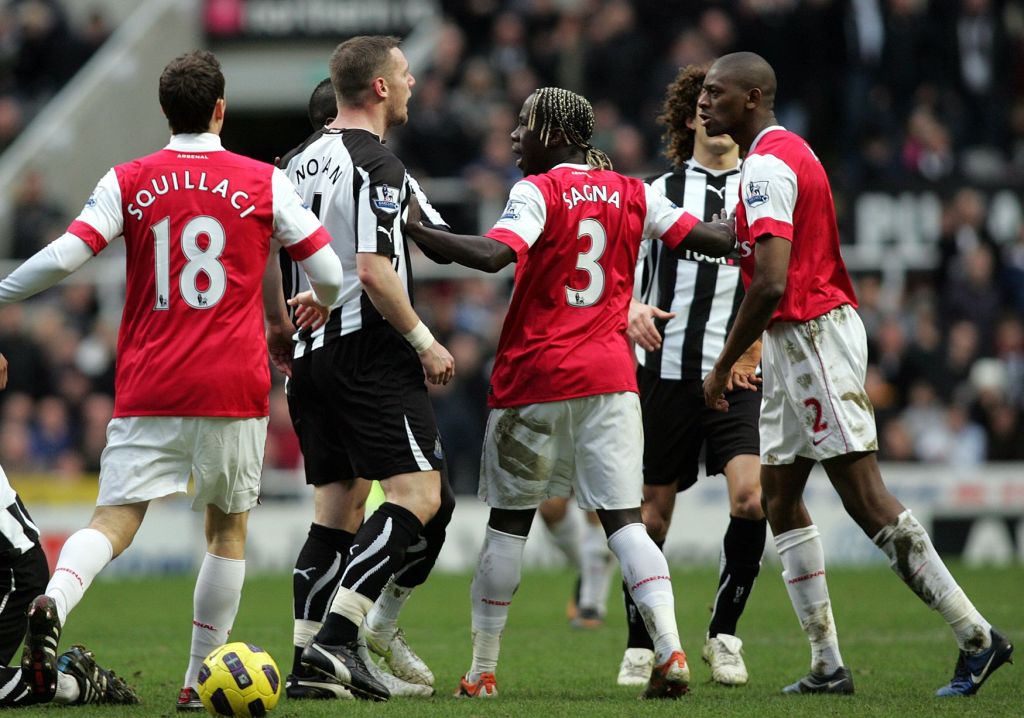
After this, spectators would see an evenly contested second half with both teams enjoying periods with the ball. During this time, Kevin Nolan and Danny Simpson would have their shots kept out by Wojciech Szczesny. In the 64th minute, Leon Best would see a header miss the target, but less than two minutes later, the English striker would give Newcastle a lifeline. In the 67th minute, Best would tangle with Laurent Koscielny in the Arsenal box, and the Frenchman would bring down the Newcastle striker. Joey Barton would take the resulting penalty kick, sending Szczesny the wrong way to give Newcastle a consolation goal. In the 72nd minute, another Mike Williamson head would force the Arsenal goalkeeper into a save to push the ball away from danger. However, just two minutes later, Newcastle would add another consolation goal. A Jose Enrique cross would simultaneously hit Leon Best and Gael Clichy’s heads before the Magpies striker reacted quickest to stab the ball into the net. Having now scored two goals in seven minutes, Newcastle now had a foothold in the game, while Arsenal’s defence was starting to look nervous.
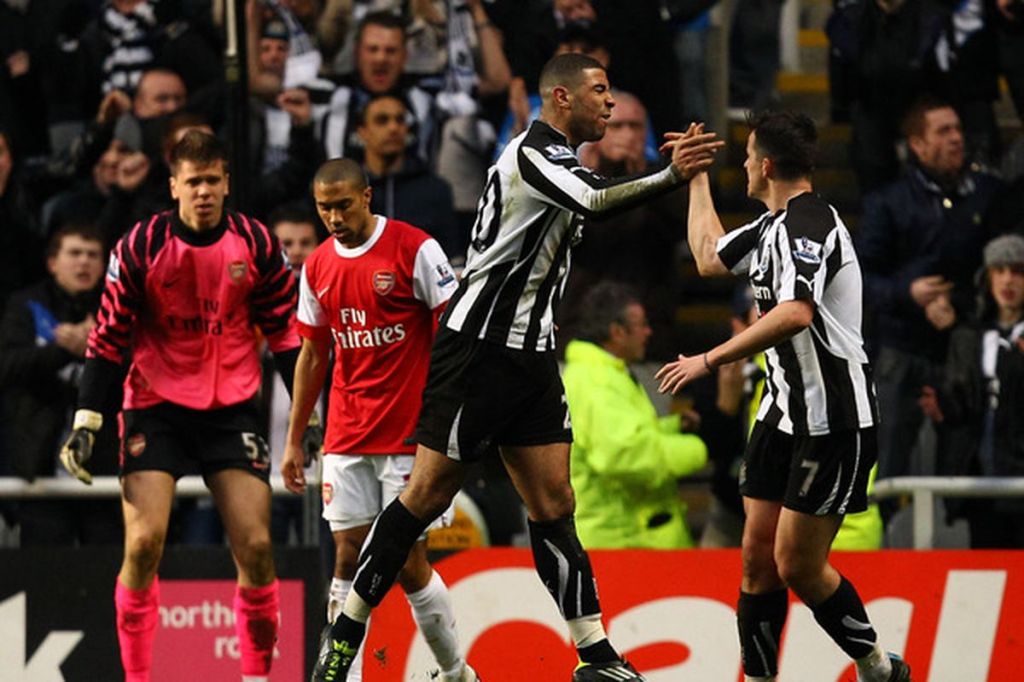
With this second goal, Newcastle started to control the match, both in ball possession and chance creation. Arsenal keeper Wojciech Szczesny would have to make three saves in four minutes to keep the score at 4-2. Newcastle would score a third consolation goal with eight minutes remaining, except this goal was more than a mere consolation. As Joey Barton swung a free-kick into the penalty area, a presumed elbow by Koscielny into the abdomen of Mike Williamson while the two were in mid-air would result in Newcastle receiving a second penalty kick. Looking back at the video ten years later, Newcastle got lucky here. Barton would step up to the spot once again. Szczesny would guess correctly this time but would not stop Barton’s second penalty, making the score-line read: Newcastle 3 Arsenal 4. With seven minutes remaining, the Magpies could now dream of snatching a draw from the jaws of inevitable defeat and completing a remarkable comeback. Four minutes later, the unbelievable would happen.
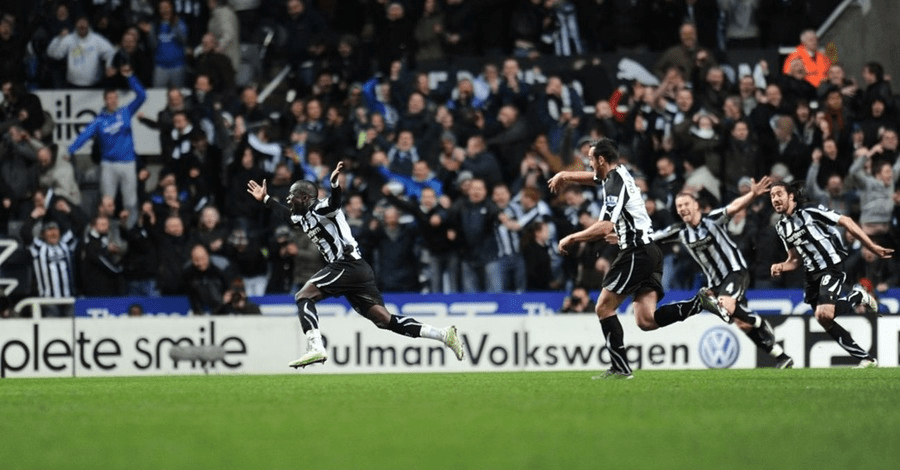
With 86 minutes on the clock, Tomas Rosicky would foul Joey Barton on the right-hand corner of the Arsenal 18-yard box. Barton would dust himself down to deliver an in-swinging free-kick. The ball would be headed away by the Arsenal defence, only to fall to Cheick Tioté outside the box. The on-rushing Tioté would deliver a shot of such power that the live cameras barely had time to capture it. The ball would swerve out of Wojciech Szczesny reach into the bottom corner of the Arsenal net. In the space of 19 minutes, Newcastle had score four unanswered goals to move from being 4-0 down to draw 4-4. A St James Park that had sat in silence as Robin van Persie scored Arsenal’s 4th goal just over an hour earlier, would erupt in joyful celebration. Tioté would wheel away in sheer delight after scoring his first Newcastle goal, finishing in a heap and his teammates and goalkeeper Steve Harper piled on top. As one commentator would say it was “A strike fit to win any match”. As Arsene Wenger looked annoyed at the fact that his side had possibly become the first Premier League side to let a 4-goal lead slip, Alan Pardew punched the air. Many who had called the match unanimously in Arsenal’s favour at half-time would have to back-track their earlier remarks.
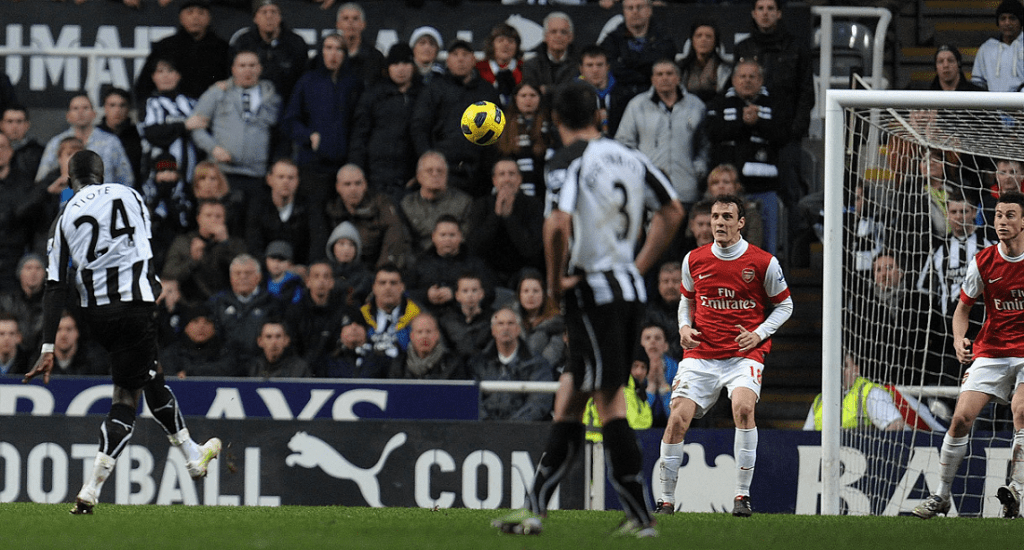
Despite this incredible comeback, Newcastle was still not through. With momentum entirely on their side, Newcastle wanted a fifth, that if scored would surely make this encounter the best match in Premier League history. Leon Best, one of Newcastle’s comeback architects, would be hauled off with cramp in the 89th minute. The fourth official would add 5 minutes of stoppage time to the match. Substitute Nile Ranger would chest down a long ball downfield, and Kevin Nolan’s strike would be just inches wide of the post. Arsenal would need a last-ditch tackle from substitute defender Sebastien Squillaci to stop Ranger breaking through again moments later. When the final whistle blew, St James’s Park would erupt again. Quite unbelievably, Newcastle United had snatched a draw from the jaws of defeat while Arsenal had done the inverse. This result is one of the few examples where you could expect a player to say that a draw ‘felt like a win’. Arsenal had seemingly missed the chance to close the points gap to Manchester United at the Premier League’s summit with their second-half collapse. However, despite drawing this match, Arsenal would close the gap as United would suffer defeat to Wolves later the same day. However, this day would belong to Newcastle, as they savoured completing the most incredible comeback in Premier League history in a game that would live long in the memory of football fans everywhere.
Aftermath
Newcastle
While the 4-4 draw felt great on the day, the result would extend Newcastle’s winless run to four league matches. A 0-0 draw with Blackburn Rovers would prolong this run for one more week until a 2-0 win over Birmingham City would end their drought. However, this Birmingham win would be one of three that Newcastle would obtain in their final 13 Premier League matches. Sitting in 9th on 31 points after the 4-4 draw on 5th February Newcastle would slip down to 12th by the season’s end, gaining 13 points from their final 39 to finish on 43 points. Their last match of the season would be a thrilling 3-3 draw with West Brom, with Newcastle letting a 3-0 lead slip.
Newcastle United-Before and After 5th February 2011
Before
| Position | P | W | D | L | GF | GA | GD | Points |
|---|---|---|---|---|---|---|---|---|
| 10th | 24 | 8 | 6 | 10 | 36 | 34 | +2 | 30 |
After
| Position | P | W | D | L | GF | GA | GD | Points |
|---|---|---|---|---|---|---|---|---|
| 12th | 38 | 11 | 13 | 14 | 56 | 57 | -1 | 46 |
Arsenal
Even though the draw felt like a defeat on the day, the 4-4 draw would extend Arsenal’s unbeaten run to eight matches, and they would further lengthen it with a 2-0 win over Wolves on 12th February. The streak would last as long as 16 matches before finally being ended on 24th April, as Arsenal would lose 2-1 to Bolton. However, Arsenal would only win 4 of their final 13 league matches following the Newcastle draw despite holding this long unbeaten run. This lack of wins, combined with six draws, saw Arsenal slip out of title contention. Arsenal would begin 5th February second in the Premier League table on 49 points, 5 points behind Manchester United. On 22nd May, a final-day 2-2 draw with Fulham saw the Gunners finish in 4th place with 68 points, 12 points behind Manchester United.
Arsenal-Before & After 5th February 2011
Before
| Position | P | W | D | L | GF | GA | GD | Points |
|---|---|---|---|---|---|---|---|---|
| 2nd | 24 | 15 | 4 | 5 | 50 | 22 | +28 | 49 |
After
| Position | P | W | D | L | GF | GA | GD | Points |
|---|---|---|---|---|---|---|---|---|
| 4th | 38 | 19 | 11 | 8 | 72 | 43 | +29 | 68 |
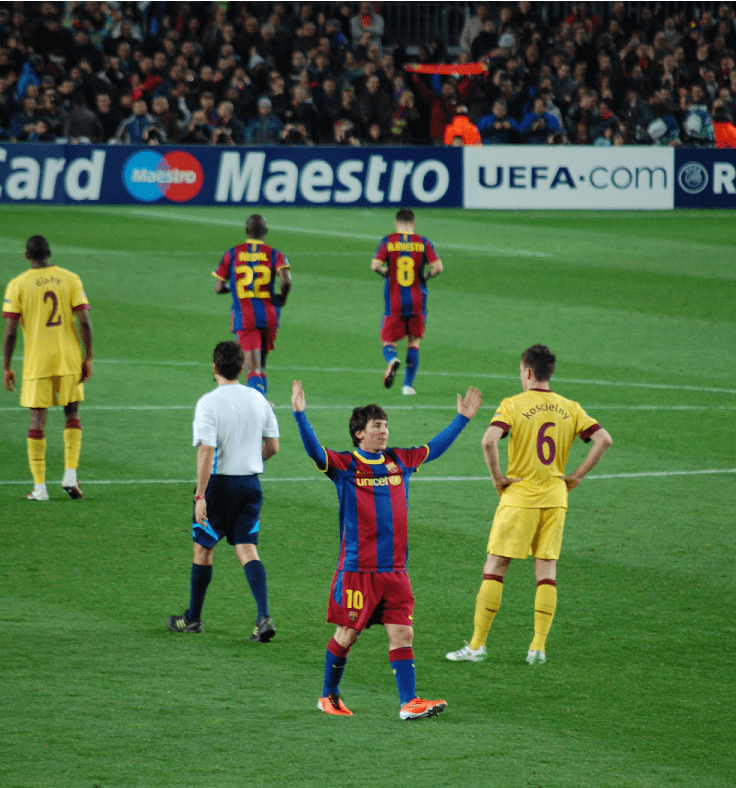
‘Spectacular fashion’ is the phrase that could describe the final three months of Arsenal’s 2010-11 season. Eleven days after the Newcastle draw, Arsenal would host Barcelona in the first leg of the UEFA Champions League’s Round of 16. On a famous night at the Emirates, Robin van Persie and Andrey Arshavin’s goals saw the Gunners defeat Messi and Co 2-1. Three weeks later, the Argentine magician would run the show at the Nou Camp, scoring twice in a 3-1 victory that saw the Catalan giants progress to the quarter-finals with a 4-3 aggregate score-line.
In between the two Barcelona encounters, Arsenal travelled to Wembley Stadium on 27th February for the League Cup Final. Ahead of the game, the Gunners were considered heavy favourites to defeat their opponents Birmingham City and end their six-year trophy drought. However, the team sitting 14th in Premier League would take a 28th-minute lead through giant Serbian striker Nikola Žigić. Arsenal would respond six minutes before half-time through Robin van Persie, and the final would remain tied for another 50 minutes. However, the winning goal would arrive in the 89th minute of play through a calamitous and hilarious defensive mix-up. Birmingham goalkeeper Ben Foster would send a long free-kick downfield. After a knock by Žigić, a piece of miscommunication saw Wojciech Szczesny and Laurent Koscielny both come to collect the oncoming ball. However, Koscielny would miss his clearance before falling backwards over Szczesny’s back, allowing substitute striker Obafemi Martins to score Birmingham City’s winner. In a shocking result, the Blues would win their first League Cup since 1963.
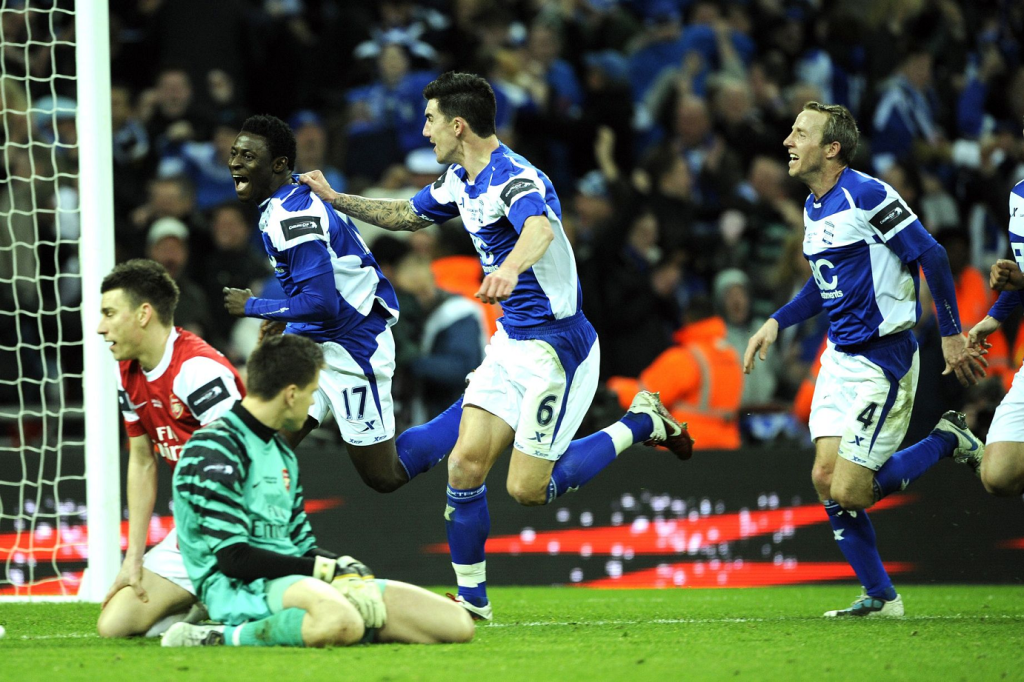
On that day, just as they had done against Newcastle three weeks earlier, Arsenal shot themselves in the foot. The League Cup Final defeat exemplified Arsenal’s slide following the 4-4 draw with Newcastle, as their season began to peter out slowly. For the sixth season in a row, Arsenal and Arsene Wenger would end the season without a trophy bearing their name. They would have to wait three more years for their luck to change.
Conclusion
Many now regard the 4-4 draw between Newcastle United and Arsenal on 5th February 2011 as one of the Premier League’s greatest matches. In an episode of the Match of the Day: Top 10 podcast that aired in 2020, both Alan Shearer and Ian Wright ranked the game in their top 10 Premier League matches. On the BBC Sport website, users rated the match as the 4th-best in league history, beaten only by Liverpool 4 Arsenal 4 from 2009, Manchester City 3 QPR 2 from 2012 and Liverpool 4 Newcastle 3 from 1996. In 2017, Sky Sports picked the match as one of Newcastle’s five best Premier League performances.
The 4-4 draw can serve as a snapshot of both team’s seasons before and after 5th February 2011. Arsenal would begin well, building up a 4-0 lead in the first half before slipping up to concede four goals and fade as the game would progress. For Newcastle, the dichotomy of the two Newcastle performances in each half sums up a season in which Newcastle would register 11 wins, 14 defeats and 13 draws. This draw can also serve to exemplify the whole of Alan Pardew’s four-year reign as Newcastle United manager, where he would win 71 and lose 73 of his matches in charge, leading Newcastle as high as a 5th-placed Premier League finish in 2012 before finishing as low as 16th the following year.
This draw would serve as the peak of either team’s season, despite what Newcastle United fans may tell you. This draw (indirectly) led to the downfall of both team’s respective seasons. Ninety-five minutes of action would encapsulate both team’s seasons, and the aftermath of this match would prove this.
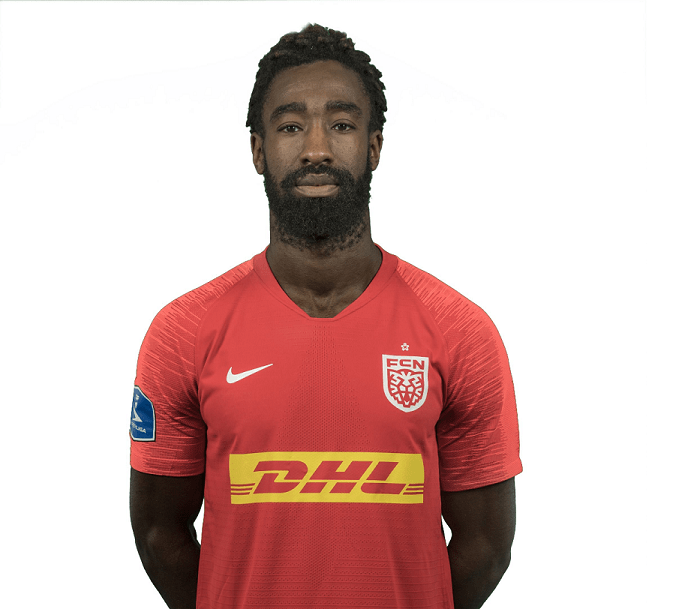
Two men would score their first goals for their respective clubs in this particular match. However, people are more likely to associate with Cheick Tioté than Johan Djourou. It goes to show that this match is remembered more for Newcastle’s comeback than it is for Arsenal’s first-half dominance, as it rightfully should be. Following this match, Djourou would make 42 further appearances for Arsenal before leaving for Hamburg in 2014. After three seasons in the Bundesliga, further spells would follow in Turkey (Antalyaspor), Italy (SPAL) and Switzerland (FC Sion, Neuchatel Xamax). At the time of writing, Johan Djourou, now 34, currently plies his trade for FC Nordsjaelland in the Danish Super League.
Following his equaliser against Arsenal, Cheick Tioté would make another 137 appearances for Newcastle United staying with the team until their Premier League relegation in 2016 before leaving for China the following January. In a different scenario, Tioté would still be plying his trade somewhere at the age of 35. He could even have made a return to Tyneside following their promotion in May 2017. However, if Cheick Tioté had not tragically died on 5th June 2017, his name would still be inextricably linked with one of the greatest matches in Premier League history and one of the greatest matches in Newcastle United’s history. All he did was score a goal ‘fit to win any game’. It didn’t win this particular game on 5th February 2011, but it certainly helped to make a draw feel like a win to 50,000 spectators inside St James’s Park and millions around the world on that particular day and for years afterwards.
The entire match is available on the official Newcastle United YouTube channel. The description reads “If you’re impatient, jump to 1:39:48”. I think I know which bit they mean.
 the-score-board.co.uk