
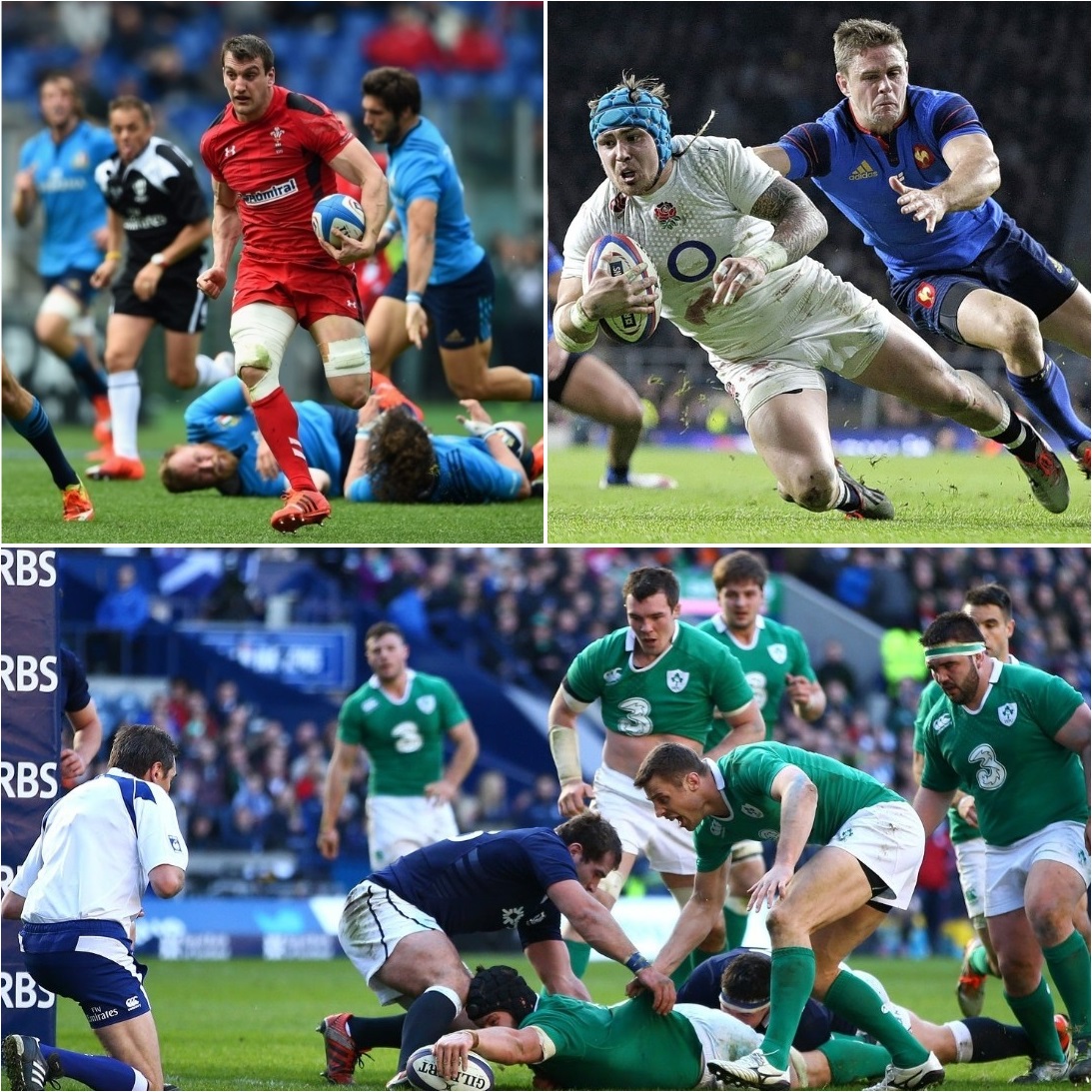
3 matches. 27 tries. 221 total points scored. There’s a reason they call it ‘Super Saturday’…
Since 2004, the Six Nations Championship has ended in a day called ‘Super Saturday’. After four weeks of action, the final three matches of the championship are played on the same day, one after another after another. If the fate of the title is not yet decided come Super Saturday, this arrangement can lead to extra drama as one team may win their match only to wonder if their fate will be decided by the result of a later match. This situation did not ring truer than the final day of the 2015 Championship, the next instalment in The Scoreboard’s ‘Great Matches’ (plural in this case) series. It was day that few rugby fans would ever forget.
Heading into 21st March 2015, half of the Six Nations were still vying for the title. This year, Wales, Ireland and England entered week five with a chance of winning their 27th (Wales & England) and 13th championship title (Ireland). Each match that was played on this particular Saturday featured a title contender. The day would begin with Italy vs Wales in Rome at 12:30pm, followed by Scotland vs Ireland in Edinburgh at 2:30pm and England vs France at Twickenham at 5pm. For the 3rd successive championship, the Six Nations Grand Slam (the prize for a team that win all of their matches during the championship) would not be awarded, with each title contender ending the other’s hopes. Wales had lost to England in Week 1, England had been beaten by Ireland in Week 3, and Ireland had been beaten by Wales in Week 4. All three teams entered their final matches with a record of 3 wins and 1 defeat, needing to win their final matches and hoping that a number of ramifications would fall in their favour to allow them to win the title on points difference. What were these ramifications?
After round 4 of the Six Nations, which had seen Wales beat Ireland 23-16, England beat Scotland 25-13, and less importantly, France beat Italy 29-0, England sat 1st in the Six Nations table with Ireland in 2nd and Wales in 3rd, with England having the better points difference despite their matching points totals. After 4 matches, England had a points difference of +37, Ireland +33 and Wales +12. Wales had the toughest task. If England and Ireland both won, Wales needed to beat Italy by around 30 points and hope that the other two sides either lost or had close victories. Ireland needed to match the results of England and Wales and beat Scotland by a minimum of 5 points and hope that Wales failed to match their points difference and that England attained a narrow victory. Playing last, England would only know what buffer they needed to win by once Ireland and Wales had played. Got all that?
Top of 2015 RBS Six Nations Table-Before 21st March 2015
| Position | Nation | Played | Won | Drawn | Lost | PD | Tries | Table Points |
| 1st | England | 4 | 3 | 0 | 1 | +37 | 11 | 6 |
| 2nd | Ireland | 4 | 3 | 0 | 1 | +33 | 4 | 6 |
| 3rd | Wales | 4 | 3 | 0 | 1 | +12 | 5 | 6 |
Match 1: Italy vs Wales, Stadio Olimpico, Rome (Kick-off: 12:30 GMT)
Wales kicked off knowing they needed to set down a huge marker against an Italy side whose sole victory of the championship had come against Scotland and who hadn’t beaten Wales since 2007. Despite Wales’s pre-match task, it would be Italy who would score the first points of the match, Kelly Haimona converting a penalty inside 1 minute. 4 minutes later, Haimona would find himself being led off the field injured, being replaced by veteran fly-half Luciano Orquera. Wales would take 7 minutes to score what they hoped would be first points of many during the following 73 minutes as Leigh Halfpenny saw his kick sail between the Italian uprights. Orquera and Halfpenny would trade penalties. After 12 minutes, Wales were drawing with the Italians 6-6, not the fast start they would have been hoping for. Six minutes later, Wales would score the first try of ‘Super Saturday’. A kick through from Leigh Halfpenny was caught and touched down by Jamie Roberts. Halfpenny missed the resulting conversion but Wales now led 11-6.
Instead of Wales pushing on, the hosts would respond and 6 minutes later, Italy had a try of their own. After a rolling maul gifted Italy a scrum penalty in Wales’s 22, winger Giovanbattista Venditti sneaked over to score his second try of the championship. Orquera added the conversion and Italy were ahead. After 33 minutes, Halfpenny was forced to leave the field after sustaining a concussion, being replaced by centre Scott Williams leading to a restructure in the Welsh backline. Dan Biggar would take over kicking duties, slotting over a penalty on the stroke of 40 minutes to give Wales a slim 14-13 lead at half-time. Things were not going to plan for Wales. Not only were Italy still in the match but were in with a chance of winning. Unless something changed, Wales’s Six Nations title hopes would be over before either Ireland or England played.
Seven minutes into the second half, Wales would score their second try of the afternoon. A quick tap penalty from scrum-half Rhys Webb set free Liam Williams to break through the Italian defence and score. Biggar added the conversion and Wales extended their lead to 8 points. Two minutes later and Wales had scored again. Liam Williams broke through the Italian defence again, passing to George North to score his first try of the championship. Another conversion from Biggar and Wales had scored 14 points in three second-half minutes, now leading Italy 28-13. In the 52nd minute, Wales’s task would get a little easier as Italian centre Andrea Masi was sin-binned for tackling a player without the ball. Two minutes later, and Wales scored try number 4, as North crossed for his second try of the match. 59 minutes gone and North had completed a 10-minute hat-trick. After plenty of grunt work from the Welsh forwards, North crossed under the posts. Biggar’s 4th conversion put Wales 42-13 ahead after 60 minutes played. As it stood on the Six Nations table, Wales now sat 1st with a points difference of +41.
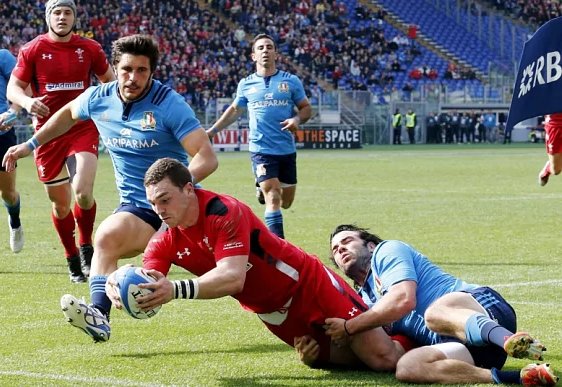
In the 64th minute, Wales were handed another reward as Italian replacement Quintin Geldenhuys was sin-binned for illegally pulling down a Welsh maul. Once again Wales took full advantage of their man advantage as scrum-half Rhys Webb dummied his way through defenders before scoring in the corner. A further two minutes later and Wales had notched up a magnificent seven as flanker Justin Tipuric set free captain Sam Warburton, who galloped through the tired Italian defence to score under the posts and push Wales past 50 points. Wales were still not done. In the 73rd minute, centre Scott Williams scored his second try in two weeks and Wales’s eighth try of the match, running home from inside his own half. Biggar scored his sixth conversion of the day and Wales led 61-13, having scored 42 unanswered points in the past 33 minutes. Wales now had a points difference of +60, 23 points more than England and 27 points more than Ireland.
The match was not over, however. In the 79th minute, Italian wing Leonardo Sarto ran clear down the wing to score in the corner and score Italy’s first points since the 28th minute of the match. Orquera kicked the conversion, and the final score read: Italy 20 Wales 61. Wales had scored 47 points in the second half, including 7 tries. They had beaten Italy by a record margin of 41 points, boosting their points difference from +12 to +53. This was +16 more than England and +19 more than Ireland, with both teams knowing that they needed to adopt Wales’s free-scoring tactics in order to boost their own hopes of winning the Six Nations title. All Wales could do now was wait for around 5 hours.
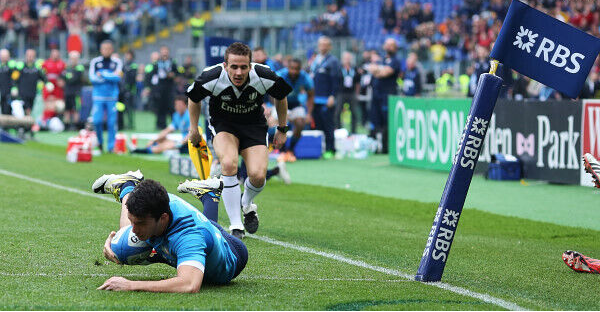
Final Score: Italy 20 (13) Wales 61 (14) Wales PD Before: +12 After: +53
Match 2: Scotland vs Ireland, Murrayfield, Edinburgh (Kick-off: 14:30 GMT)
It was set to be Ireland captain Paul O’Connell’s final Six Nations match, and he was hoping to go out with a third Six Nations championship to his name. He would make his 51st and final Six Nations appearance against a Scotland team that was looking to avoid winning the Wooden Spoon for the 2nd time in 4 years. Ireland needed to beat Scotland by 20 points or more to overhaul Wales and England and put the fate of the Six Nations in their hands.
Compared to Wales, it would take Ireland just 4 minutes to score their first points of the match. After breaking from a scrum just inside the Scotland half, nine phases of play on the Scotland line would end with captain O’Connell picking up and driving over the line. Jonathan Sexton would convert the score and would add a penalty 4 minutes later to extend Ireland’s lead to 10-0. Scrum-half Greig Laidlaw would get Scotland on the board with a 17th-minute penalty, but Ireland would score their second try in the 24th minute as flanker Sean O’Brien would break free from the back of a line-out to score. Soon, Scotland would have a try of their own. After a kick through was caught by Stuart Hogg, fly-half Finn Russell would cross the whitewash to push Scotland back within 7 points of Ireland at 17-10 with 30 minutes played. The last points of the first half would be a penalty from Sexton to give Ireland a 20-10 lead at half-time.
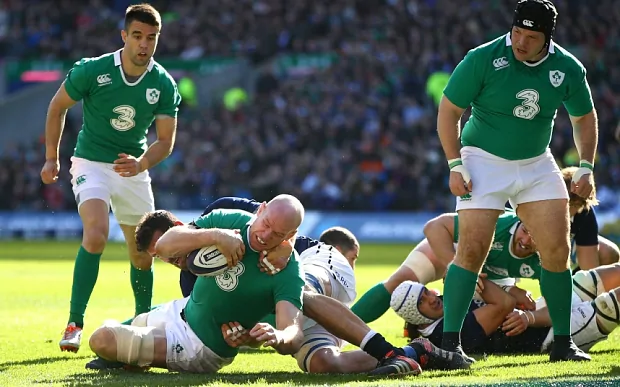
The first points of the second half would also come from the boot of Sexton after 44 minutes to push Ireland’s lead out to 13 points. Five minutes later, a switch pass in midfield from Sexton sent centre Jared Payne over for Ireland’s 3rd try of the match. More importantly, Sexton’s successful conversion put Ireland level with Wales on points difference with 30 minutes left to play, leading Scotland 30-10. Two minutes later, Sexton would miss a chance to further extend Ireland’s lead, with his penalty missing the post. In the 55th minute, the men in green would gain a man advantage as Scotland prop Geoff Cross would be sent to the sin bin. However, Sexton would once again miss his mark from the kicking tee. In the 61st minute, he would finally find his mark again, to put Ireland ahead 33-10 on the scoreboard, but more importantly ahead of Wales in the championship standings, ending Welsh hopes with 19 minutes remaining in Edinburgh. Now the question was: how much of a buffer could Ireland put between themselves and England before the latter kicked off?
With Scotland struggling to find fluency in their own forays forward, it was now not if Ireland would win, but by how many. In the 71st minute, an Irish line-out would lead to Sean O’Brien’s 2nd try of the match, pushing Ireland’s lead out to 30 points at 40-10. However, with 4 minutes remaining, Scotland would cross Ireland’s try-line through Stuart Hogg, putting Irish hearts in mouths. However, a trip to the TMO (television match official) noticed that Hogg had dropped the ball over the Irish try-line due to an amazing tackle from Ireland No.8 Jamie Heaslip. Ireland would have one last chance to extend their winning margin on the stroke of full-time. However, replacement fly-half Ian Madigan would miss his penalty, leaving the final score at Scotland 10 Ireland 40, a record winning margin over the Scots in the Six Nations. All Ireland could do now was wait.
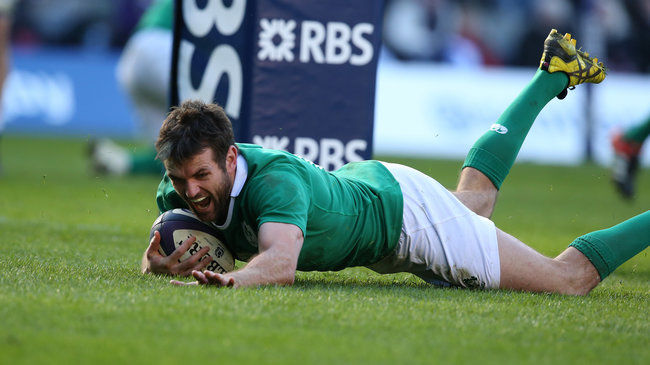
Final Score: Scotland 10 (10) Ireland 40 (20) Ireland PD Before: +33 After: +63
Match 3: England vs France, Twickenham Stadium, London (Kick-off: 17:00 GMT)
With Wales and Ireland now having played, England knew that they needed to beat France by a margin of 26 points to draw with Ireland on points difference and ultimately beat them on tries scored throughout the championship. This was a France side who had beaten Scotland and Italy and only lost to Ireland (18-11) and Wales (13-20) by 7-point margins. England coach Stuart Lancaster was hoping to end a run of three consecutive 2nd-place finishes in the Six Nations since taking charge at the end of 2011. In 2013, England had entered the final round of the tournament on track for a Six Nations Grand Slam only to lose their final match and the championship to Wales by 30-3. With a huge margin of points to rack up, England needed to start scoring points as quickly as possible. They did.
Inside the first 2 minutes of the match, England scored their first try. A loose pass from France fell into the hands of centre Jonathan Joseph, who broke clear. Support came from fullback Mike Brown, fly-half George Ford and scrum-half Ben Youngs, who went. George Ford converted, and England were 7-0 inside 3 minutes. Two minutes later, French wheeling in the scrum led to an England penalty, only for Ford to pull his kick wide of the posts. France would get on the board in the 10th minute with a penalty from their fly-half Jules Plisson. A further three minutes passed, and France was ahead. Picking up a dropped ball in the England midfield, Yoann Huget picked up, passing to scrum-half Sebastien Tillous-Borde to score. Plisson missed the conversion.
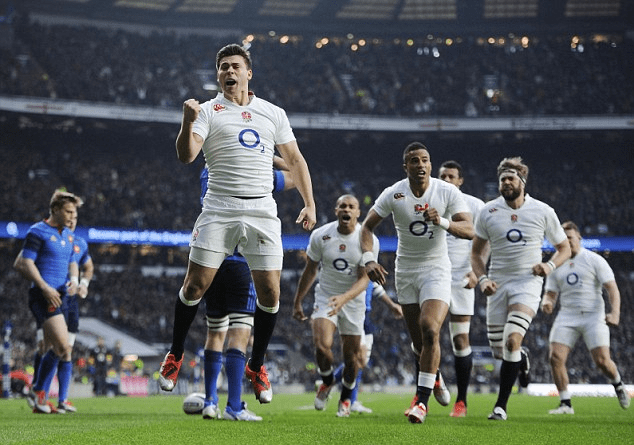
Four minutes later and France had scored again. French fullback Scott Spedding broke through the English defence, feeding winger Noa Nakaitaci, who just managed to ground the ball inside England’s in-goal area. This time, Plisson converted, and France led England 15-7 after 18 minutes at Twickenham. Not the plan England was looking to execute pre-match I can assure you. Straight from the resulting kick-off, France almost scored a 3rd try as Huget and Nakaitaci combined, only to fall short and France to earn a penalty. Plisson would miss his second of the evening to let England off the hook. One minute later and England prop Dan Cole thought he had registered an England response, only for his try to be chalked off due to a forward pass. Courtney Lawes would then just avoid being sin-binned for a late hit on Plisson, which would then break down into a scuffle between the two sides in the midst of this crazy match that was unfolding.
In the 26th minute, George Ford would slot a penalty through the uprights and England were back within 5 points. Two minutes later, England was let off the hook once again as Plisson missed his 3rd kick of the match. Soon, England would have greater reason to celebrate when wing Anthony Watson touched down in the corner and Ford converted to put England back in front on the half-hour mark. Five minutes later, a quick tap penalty from Mike Brown led to Ben Youngs scoring his second try of the match. Ford converted and would land another kick on the stroke of half-time to send England in with a 12-point lead at 27-15. England needed to score 14 unanswered points in the second half to claim the championship, but France wasn’t going to let the hosts have it all their own way in front of a packed Twickenham.
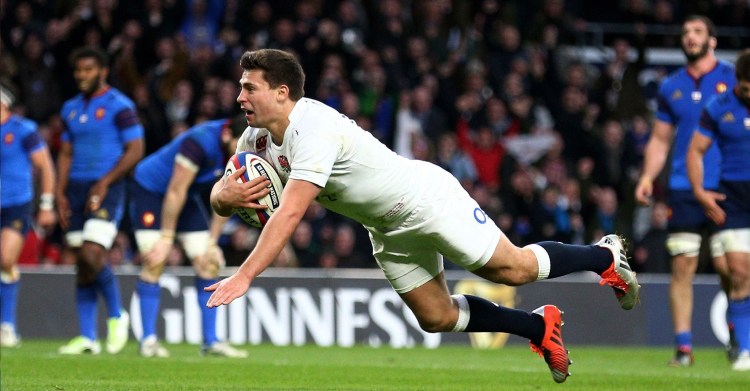
If England had started the first-half with a try, it was France’s turn to do the same in the second half. In the 42nd minute, centre Maxime Mermoz would score, and Plisson would convert to put France back within 5 points. Four minutes later, Ben Youngs would break and pass inside to his half-back partner Ford. Ford would convert to restore England’s 12-point advantage. Due to Plisson’s wayward kicking, replacement scrum-half Rory Kockott would convert a penalty in the 51st minute to pull France back to 34-25. Two minutes later and England had scored their 5th try of the match as wing Jack Nowell would make his way over the French try-line. Ford converted, and England now led 41-25, needing to score 10 more points in 27 minutes to deny Ireland.
England would soon suffer a setback as flanker James Haskell would find himself in the sin-bin for tripping Jules Plisson. France would use its man advantage as Noa Nakaitaci would break down the left, passing to prop Vincent Debaty, who would score the first try of his France career at the age of 33. Kockott would miss the conversion. The score now: 41-30 to England. That score would soon become 48-30 to England after No.8 Billy Vunipola bulldozed his way over the French line in the 63rd minute. Two minutes later, and France had scored their 5th try of the night, as replacement hooker Benjamin Kayser scored from a rolling maul. Kockott would miss again. 48-35. England now needed two tries in the last 15 minutes to win the Six Nations.
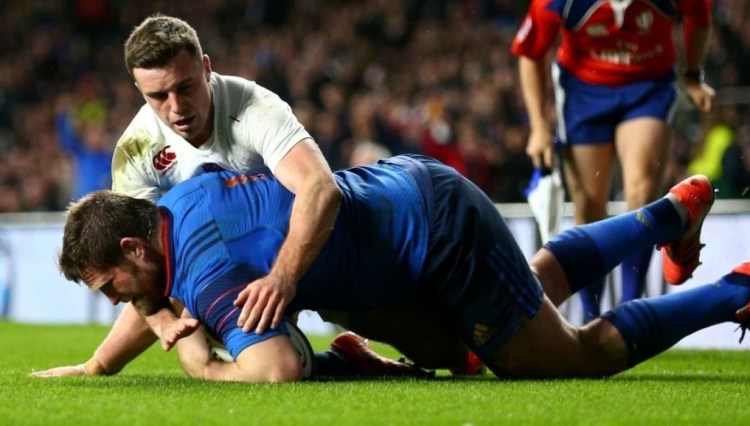
Jack Nowell would score his second try of the night in the 74th minute, which Ford would convert to give England a 20-point cushion while needing to score another try with 5 minutes remaining. With one minute remaining, England won a penalty in the French half, and George Ford booted into touch five metres from the French line. The resulting shove from the resulting line-out and rolling maul featuring both England forwards and backs would collapse and result in a penalty to France. Fullback Scott Spedding would boot the ball into touch, and one of the most extraordinary matches of rugby had come to an end. 12 tries had been scored in 80 minutes, equalling a record set by England’s 80-23 win over Italy in 2001. England had beaten France by 20 points and racked up 55 points against France, the most they had ever managed against Les Bleus. However, they had allowed France to rack up 35 points of their own, the most points ever scored by a losing side in the Six Nations, meaning that England ultimately lost the Six Nations title by 6 points to Ireland.
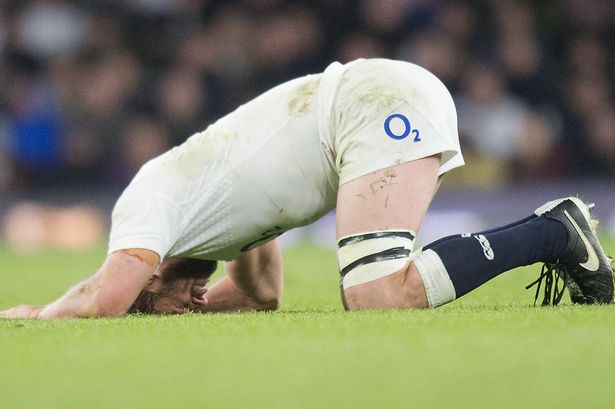
Final Score: England 55 (27) France 35 (15) England PD Before: +37 After: +57
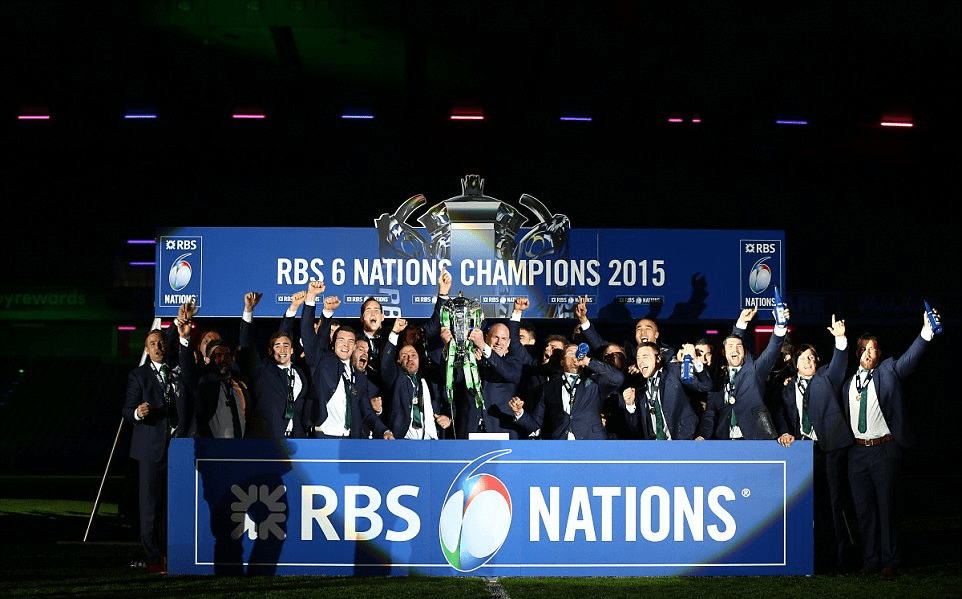
Despite an incredible victory, England’s players were down on their haunches, hands resting on heads, knowing that ill-discipline had cost them a chance at glory. Hearing the news in Edinburgh 413 miles away, the Ireland team paraded back out onto the Murrayfield turf, where the stage had quickly been set up for them to receive the Six Nations trophy in front of Irish fans who had been allowed back in to watch the England match on the stadium’s big screen. Dressed in their team suits, the players received their medals and celebrated as Paul O’Connell lifted the newly-designed Six Nations trophy. Despite everything that had happened on this craziest of Six Nations final days, including 27 tries and 221 points scored, Ireland had managed to successfully defend the Six Nations title. A lot would need to happen over the next 12 months for England to win the Six Nations title once again.
Top of Final 2015 RBS Six Nations Table
| Position | Nation | Played | Won | Drawn | Lost | PD | Tries | Table Points |
| 1st | Ireland | 5 | 4 | 0 | 1 | +63 | 8 | 8 |
| 2nd | England | 5 | 4 | 0 | 1 | +57 | 18 | 8 |
| 3rd | Wales | 5 | 4 | 0 | 1 | +53 | 13 | 8 |
 the-score-board.co.uk