
“What a game! I cannot believe it!”- Jonathan Davies, Wales 1985-1997, commentating for the BBC in 2010
The Six Nations is the best annual rugby competition in the world. When England, Scotland, Ireland, France, Wales and Italy come together every February and March, you are guaranteed (on paper) to watch the best that northern hemisphere rugby union has to offer. In the 20 years of the Six Nations’ existence (and the Five Nations before it), the competition has produced some outstanding matches for the neutral fan to enjoy. Many of these matches will eventually be covered on this website as part of the ‘Great Matches’ series. To start with, the first Six Nations match to be covered in this series features one of the best comebacks in recent sporting history.
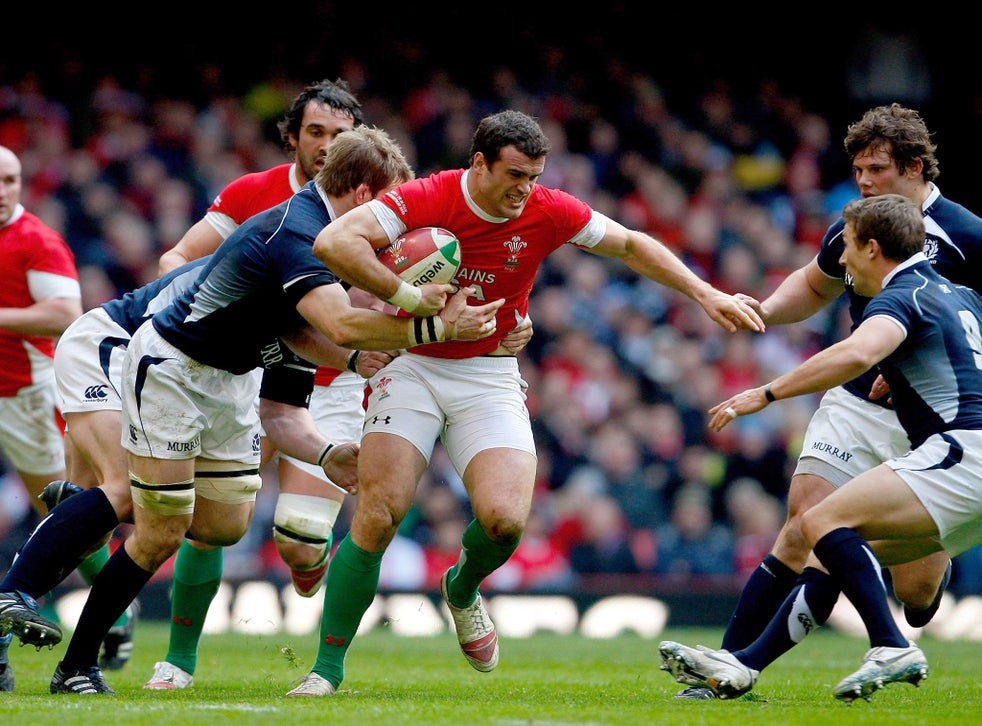
On 13th February 2010, Scotland travelled to Cardiff to face Wales in the second week of the RBS Six Nations. Both teams entered this match having lost their opening fixtures the week before. Tries from James Haskell (x2) and Danny Care plus 15 points from Jonny Wilkinson saw England defeat Wales 30-17 at Twickenham before Scotland lost to France 18-9 in one of the best performances of Mathieu Bastareaud’s career. Now both 0-1 in the championship, Scotland travelled to the Millennium Stadium, with both teams looking to get a notch in the win column. Also, Scotland was hoping to end a run of just 1 win in 6 Six Nations matches against the Welsh. Their last victory had come in 2007 when seven penalties from Chris Paterson saw the home side prevailing 21-9 at Murrayfield.
On the day, the teams lined up as follows:
| Wales | Scotland | |
|---|---|---|
| Lee Byrne | 15 | Chris Paterson |
| Leigh Halfpenny | 14 | Thom Evans |
| James Hook | 13 | Sean Lamont |
| Jamie Roberts | 12 | Graeme Morrison |
| Shane Williams | 11 | Rory Lamont |
| Stephen Jones | 10 | Dan Parks |
| Gareth Cooper | 9 | Chris Cusiter (captain) |
| Paul James | 1 | Alasdair Dickinson |
| Gareth Williams | 2 | Ross Ford |
| Adam Jones | 3 | Euan Murray |
| Jonathan Thomas | 4 | Jim Hamilton |
| Alun Wyn Jones | 5 | Alastair Kellock |
| Andy Powell | 6 | Kelly Brown |
| Martyn Williams | 7 | John Barclay |
| Ryan Jones (captain) | 8 | Johnnie Beattie |
| Huw Bennett | 16 | Scott Lawson |
| Gethin Jenkins | 17 | Allan Jacobsen |
| Bradley Davies | 18 | Richie Gray |
| Sam Warburton | 19 | Alan MacDonald |
| Richie Rees | 20 | Mike Blair |
| Andrew Bishop | 21 | Phil Godman |
| Tom Shanklin | 22 | Max Evans |
Quick notes from the line-ups included Scotland featuring two sets of brothers in their matchday squad. Sean and Rory Lamont both started along with Thom Evans, whose older brother Max started on the substitutes bench. Meanwhile, Wales’s starting XI featured two Lees, a centre partnership with the first name James, three players surnamed Williams (Shane, Gareth and Martyn) and four surnamed Jones (Stephen, Adam, Alun Wyn and Ryan).
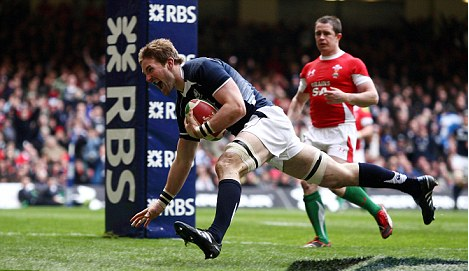
The first points of the afternoon came after 8 minutes of play. Scotland struck first through flanker John Barclay, who broke through two Welsh tackles to score from 20 metres out. Chris Paterson added the extra points from the boot. Six more minutes would pass before Wales registered their first points through a Stephen Jones penalty. Two minutes after this, patient build-up play from the forwards allowed fly-half Dan Parks to score a drop goal and re-establish Scotland’s 7-point lead at 10-3. Scotland was having the best of the early exchanges. Further, they proved their early dominance in the 20th minute when Parks dribbled a ball through the Welsh defence, and Max Evans (on as a blood substitute for his brother Thom) caught the ball and grounded it just inside the in-goal area, managing to just avoid going out of bounds. However, Chris Paterson, who by this point, was visibly nursing an injury, missed the resulting conversion, keeping Scotland’s lead at 15-3. By missing this conversion, Paterson had brought an end an exemplary record of converting every single kick at goal in the Six Nations for Scotland for the past three years.
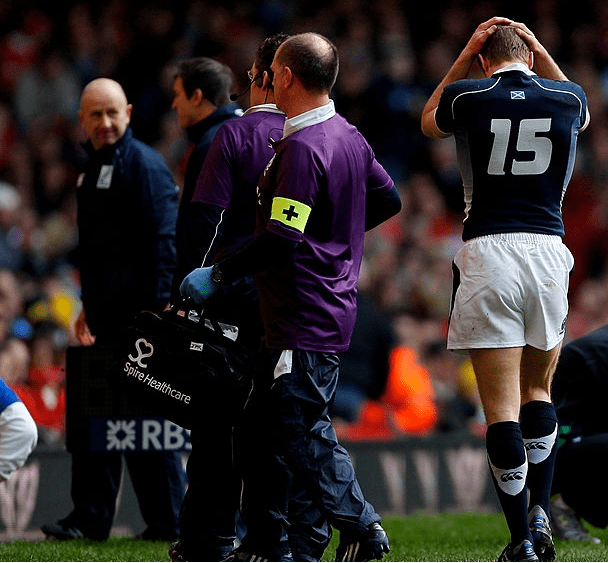
With Paterson’s usual dead-eye accuracy lacking on this day, the duties now fell to the best player on the field, Dan Parks. After Stephen Jones scored a second penalty to Wales, Parks converted his own penalty to put Scotland 18-6 ahead after 25 minutes played. At this point, everything seemed to be going Scotland’s way. However, the next 10 minutes would not be as positive. Although no points from either side were scored during this period, two injuries would rock Scotland’s backline. First, Chris Paterson, still struggling with the injury he had picked up early in the match, was forced to leave the field, with Max Evans returning to the field permanently. This was certainly not the perfect day for Chris Paterson to celebrate his 100th international cap for Scotland.
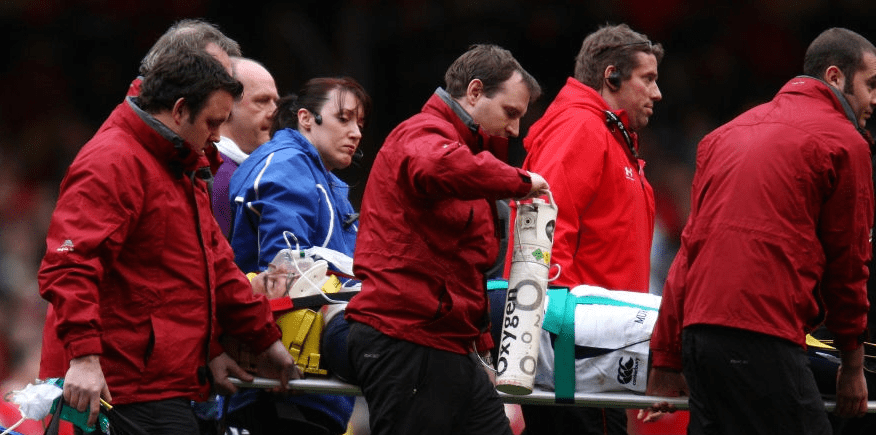
Less than 3 minutes later, a more serious injury would occur. While trying to catch a high ball, Thom Evans landed awkwardly and did not get up. With Scotland’s full medical team on, Evans was carried off on a stretcher with the game being literally brought to a halt as the medics took their time in dealing with his injury. While Chris Paterson would not earn his next Scotland cap until November that year, Thom Evans would not be so lucky. Having suffered a serious neck injury, he was later forced to retire from rugby at the age of 25. Having already used their back-line replacement to replace Paterson, second-choice scrum-half Mike Blair was brought onto Scotland’s wing for the rest of the match. The last points of the half would come on the stroke of half-time as a third Stephen Jones would mean that Scotland led Wales 18-9 at the break.
Less than a minute after the second half kicked off, Dan Parks kicked his second penalty of the day to extend Scotland’s lead to 12 points at 21-9. However, the second half would soon settle into a pattern. Wales would be on the attack and, as the phases built, Scotland was forced to make tackle after tackle just to keep them at bay. In the 55th minute, Wales would break through the Scottish defence for the first time, registering their first major points of the match. Shane Williams, who had been Wales’s outstanding player up to this point, made a long arcing run around the outside of the Scottish defence before straightening up and passing to full-back Lee Byrne to put Wales back within 7 points. Despite Stephen Jones missing the conversion, Wales were well and truly back in the match. After withstanding further waves of attacks, Parks, the clear man of the match no matter who won, would score a drop goal from 40 metres out in the 65th minute to push Scotland out to 24-14 with 15 minutes remaining. As the match headed into its final 10 minutes, Scotland still led by 10 points, but the next 10 minutes would change this match in a way that few could have foreseen.
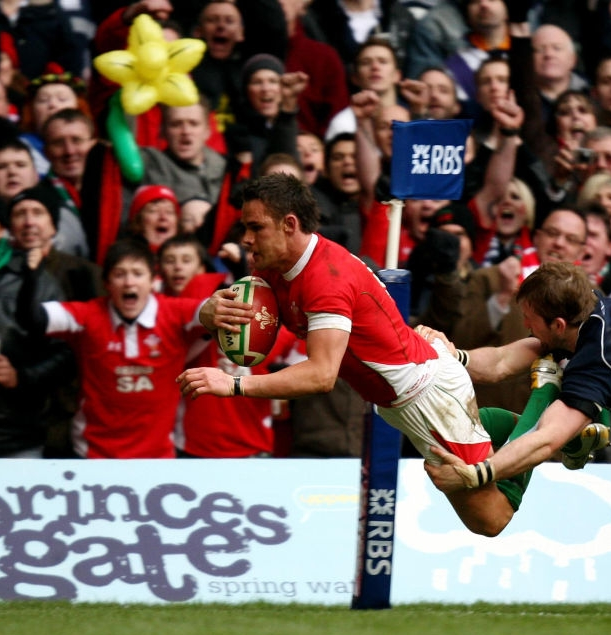

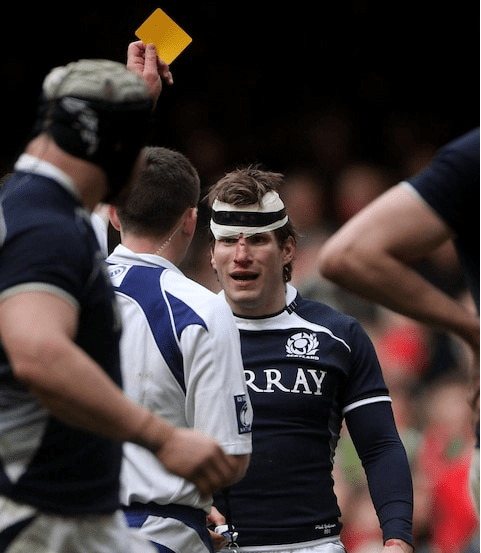
When people think about the Wales vs Scotland match from the 2010 RBS Six Nations, they think about the final 10 minutes of the match. Several YouTube videos have been uploaded over the years just showing these final 10 minutes, and the finish to this match has been described as one of the most dramatic in rugby history. As with most of the second half of this match, Scotland found themselves defending their lead. In the 73rd minute, replacement hooker Scott Lawson was sin-binned, leaving Scotland with 14 men for the rest of the match. From the resulting penalty, Wales would have a try disallowed as a block from replacement Sam Warburton denied teammate Jamie Roberts from scoring. Now with a man disadvantage, Scottish players had to defend valiantly as Wales seemed to creep closer to their try-line with every phase of play. With 4 minutes remaining, an outside angle from James Hook, a fend from Shane Williams and missed Scottish tackle allowed Lee Byrne to take the tackle of Dan Parks, allowing Leigh Halfpenny to run down the wing and score in the corner. Stephen Jones added the extras and Wales were back within 3 at 24-21 with less than 3 minutes remaining.
As the Welsh players were jogging back to the halfway line, Scotland would lose the final member of their starting back three to injury. Winger Rory Lamont limped off as Scotland used their replacement fly-half Phil Godman to fill the gap. Wales were now in constant possession of the ball, advancing with every single carry. With just over a minute to go, Jamie Roberts broke through a tackle and passed to Lee Byrne. Byrne, now in the clear, chipped ahead but was tripped by a flying Phil Godman. For this infringement, Godman joined Scott Lawson in the sin bin, leaving Scotland with 13 players on the pitch and facing further waves of Welsh attacks on their try-line. With 15 seconds remaining on the clock, Stephen Jones kicked the following penalty to put Wales level at 24-24. As Jones had kicked before the clock hit 80 minutes, the match would restart with Wales now having a chance to win the match. However, if the ball went out of play or Wales knocked the ball on, the match would end in a draw. Meanwhile, Dan Parks, who had been named man of the match, also ended his afternoon limping off the field to be replaced by flanker Alan MacDonald. Scotland kicked off with the clock reading 80:15. It was now or never for Wales.
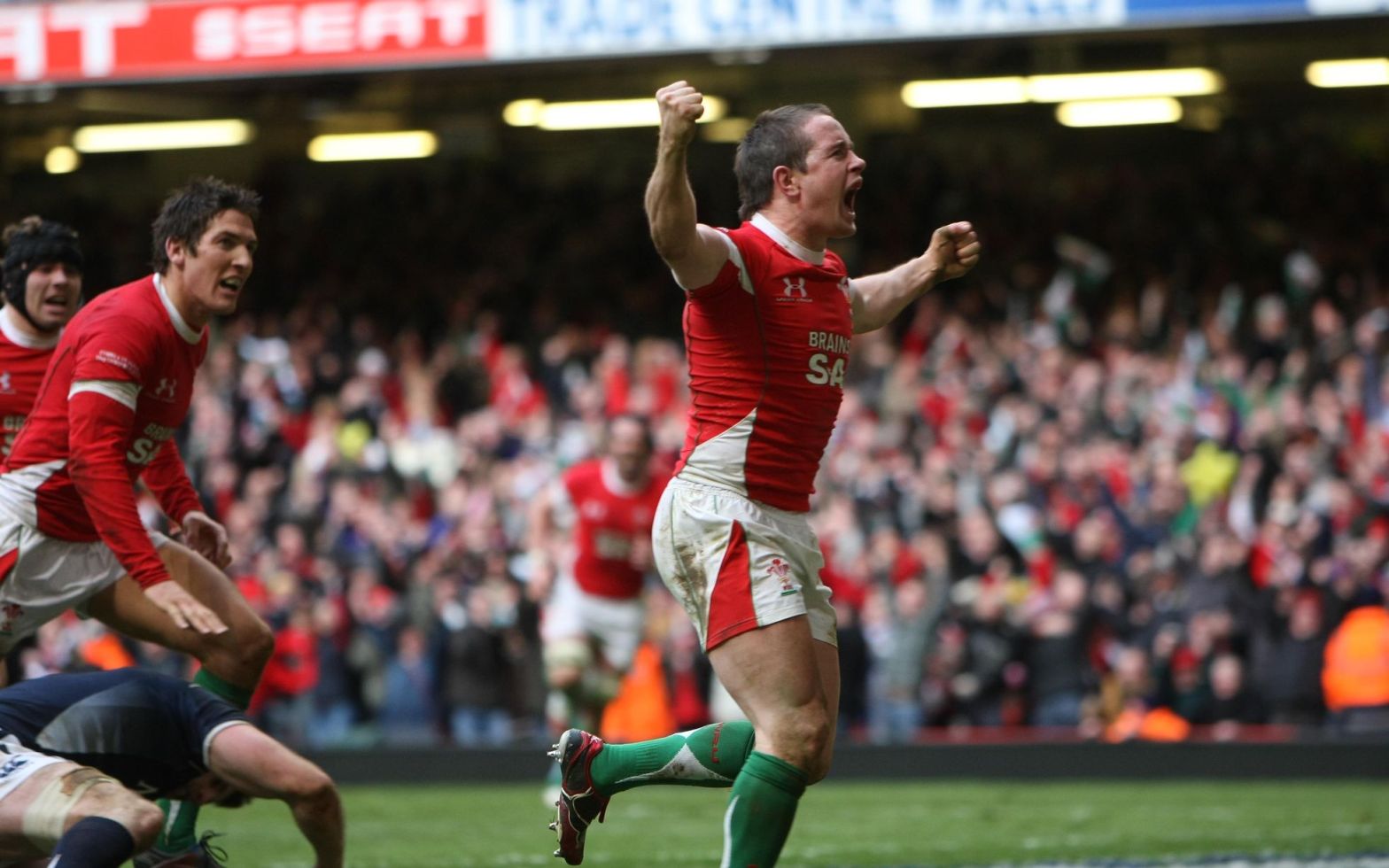
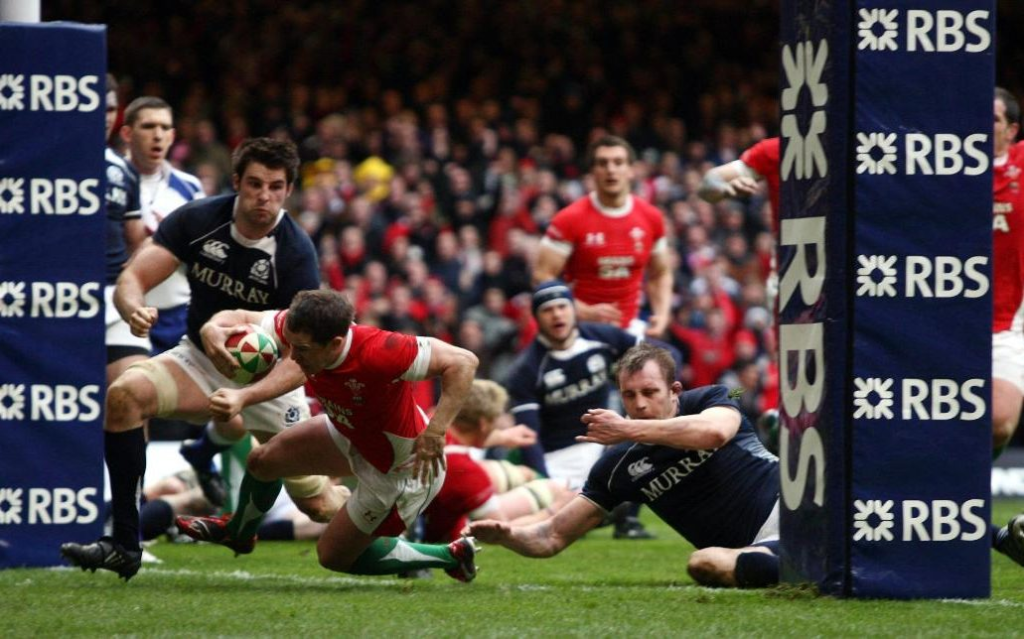
Within two phases of play, Wales had already travelled from their 22m line to the 10m line after carries from Lee Byrne and James Hook. Another phase and the team was over halfway after a drive from the forwards. Next, a crossfield kick from Stephen Jones into the Scottish 22 was met by Byrne and then Leigh Halfpenny, with the 21-year-old winger making a further 15m to fall 5m short of the Scotland line. Shane Williams deputised at scrum-half, swinging a pass out to Alun Wyn Jones, who made another inch. Scotland’s defence was starting to stretch. Another carry to Bradley Davies committed more Scottish defenders to the breakdown. Quickly recycling the ball, the ball was flung out to Wales’s man of the match, the main spark behind this comeback, Shane Williams to touch down under the posts and score the 51st try of his international career, completing a most extraordinary comeback that few would have predicted 10 minutes earlier. The Millennium Stadium suitably erupted in a cacophony of noise that is only reserved for moments like these.
As BBC commentator Andrew Cotter put it “Shane Williams has won the most dramatic game in this Six Nations, perhaps in any Six Nations.” Stephen Jones then made the easiest conversion of his Wales career, and the final whistle soon followed. Wales had won. In those crucial 10 minutes, Wales had managed to score 17 unanswered points, moving from being 14-24 behind after 70 minutes to finish the match leading 31-24. For that final try, it took Wales just 35 seconds to catch the restart and score the winning try. How Phil Godman and Scott Lawson must have been feeling on the touchline watching Shane Williams go over.
What happened next? Two weeks later, Wales found themselves 19-0 behind at half-time to France, once again at the Millennium Stadium. Despite another second-half comeback which included scores from Leigh Halfpenny and Shane Williams, France would hold on to win the match 26-20. One day later, Scotland lost 16-12 to Italy in Rome, with all of their points coming from the boot of Dan Parks. In Week 4, Wales would fall 27-12 to Ireland in Dublin in Brian O’Driscoll’s 100th match while Scotland played out a 15-15 draw with England at Murrayfield with all 15 points coming from Parks.
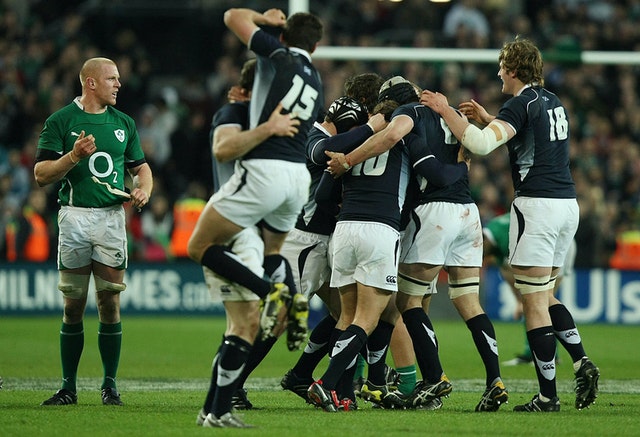
On the final day of action, Wales opened proceedings with a 33-10 win over Italy in Cardiff after two tries from James Hook and Shane Williams’ 3rd try of the championship. The second match of the day would see Scotland travel to Croke Park to face Ireland, knowing that defeat would give them the dreaded Wooden Spoon. Leading 14-7 at half-time after a Johnnie Beattie try and two penalties and drop goal from Dan Parks, Scotland withstood an Irish comeback to win the match 23-20 after three more penalties from man-of-the-match Parks. With 2 wins and 3 defeats, Wales finished the 2010 Six Nations in 4th place, while Scotland finished 5th with 1 win and 5 defeats.
One year later, Wales and Scotland would meet at Murrayfield for the second round of the 2011 RBS Six Nations. Despite first-half sin bins to Lee Byrne and Bradley Davies, Wales would emerge 24-6 away victors after two tries from Shane Williams. However, people are less likely to remember this match compared to the team’s previous encounter. The last 10 minutes of the 2010 Wales-Scotland match has now been etched into the history books, with Shane Williams’ 80+1 minute try being included on numerous YouTube compilations of the greatest comebacks in rugby history. If you are a rugby fan looking for classic matches to revisit, this should be on your shortlist.
 the-score-board.co.uk