
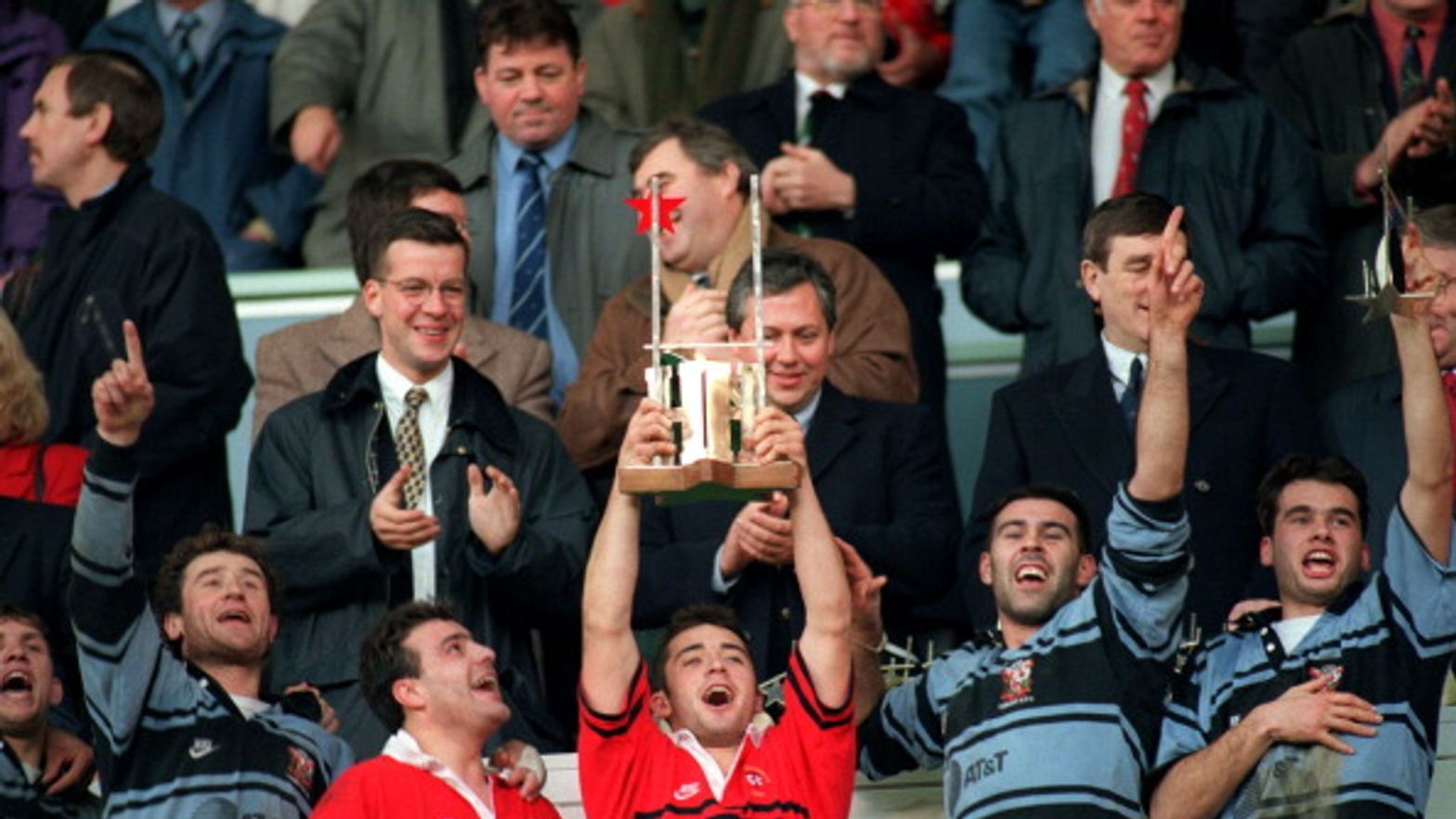
Cardiff and Toulouse do battle at the Cardiff Arms Park in rugby’s first European Cup final…
On 26th August 1995, the International Rugby Board (now known as World Rugby) declared rugby union an “open game”. With this message, rugby union attained professional status, bringing to an end 124 years of amateurism. Just two months after this announcement was made, the first match of rugby union’s European Cup, known for sponsorship reasons as the Heineken Cup, was played in Constanta, Romania in front of 3,000 spectators. The match between home side Farul Constanta and French side Toulouse on 31st October 1995 would end in a 54-10 victory for the visitors. Little did Toulouse know that less than three months later, they would be competing for the chance to be rugby union’s first-ever European champions. Their opponents that day: Cardiff. In front of 21,800 at Cardiff Arms Park, the two sides would play out a close-fought but thrilling encounter that led to an exciting extra-time finale. But how did these two teams get to this point?
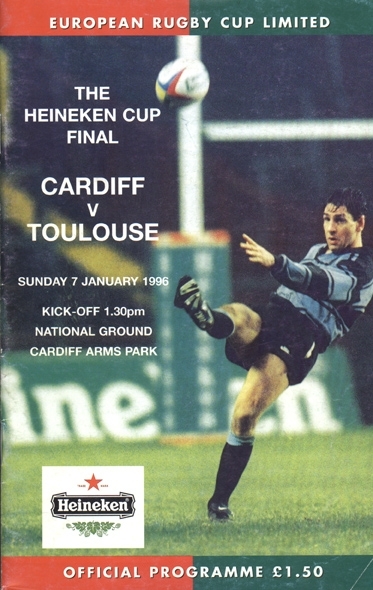
The original Heineken Cup competition comprised 12 teams from 5 different countries. Castres, Toulouse and Bordeaux represented France. Cardiff, Pontypridd and Swansea represented Wales. Leinster, Munster and Ulster represented Ireland. However, there were no entrants to be found from either England nor Scotland. Despite the idea for the Heineken Cup being decided by a committee representing all of the Five Nations in the summer of 1995, the RFU and SRU refused to allow teams from England and Scotland to compete in this first campaign. Teams from these countries would join the following season following a sizeable payout from the organisers. For this particular season, Italy and Romania would provide the final three entrants for this first-time event. Italy provided Benetton Treviso and Rugby Milano and Romania were represented solely by Farul Constanta. The twelve teams were separated into four pools of three. Two points were awarded for a win and one point awarded for a draw. The winners of each pool would qualify for the semi-finals and would be seeded based on their pool stage record. The 1st seed would play the 4th seed, and the 2nd seed play the 3rd seed. The winners of these two semi-finals would meet in the final at Cardiff Arms Park on 6th January 1996. Simple enough.
French champions Toulouse were drawn in Pool 1 alongside Farul Constanta and Benetton Treviso. As stated earlier, Toulouse would easily dispatch the Romanian side 54-10 on 31st October 1995, scoring 8 tries past the hosts. After Treviso laid down a bigger marker by putting 10 tries past Farul in an 84-8 victory one week later, the two victors would face off in a group decider on 15th December in front of 6,085 at Stade des Sept Deniers (now Stade Ernest-Wallon). In a battle of the fly-halves, Toulouse’s Christophe Deylaud would best his opposite number, Australian World Cup winner Michael Lynagh, scoring 5 penalties and a drop goal in an 18-9 win to help Toulouse progress to the semi-finals.
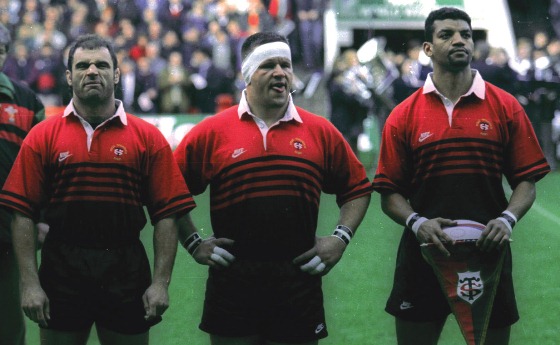
Meanwhile in Pool 2, Welsh champions Cardiff found themselves drawn with Bordeaux-Begles and Ulster. Cardiff began their campaign against Bordeaux with a 14-14 draw on 21st November 1995. Tries from Philippe Bernat-Salles and Mark Bennett and penalties from Vincent Etcheto and Adrian Davies cancelled each other out as both teams started their European campaigns with a stalemate. One week later, the Welsh champions put on a more emphatic showing with a 46-6 victory over Ulster in front of 3,600 at home ground Cardiff Arms Park. Now Cardiff had to hope that Bordeaux would not better their result against the Ulstermen two weeks later. On 15th December 1995, Bordeaux did claim an away victory over Ulster at Ravenhill, but their 29-16 win was not enough for them to overhaul Cardiff in the Pool 2 standings.
Both Heineken Cup semi-finals would be played on 30th December 1995. The first between Leinster Lions and Cardiff would kick-off at Lansdowne Road at 1:30. The second semi-final between Toulouse and Swansea would kick-off at Stade des Sept Deniers 30 minutes later. With their record of 3 points from two matches, Cardiff entered the semi-finals as 3rd seed. They would travel to Dublin to face 2nd seed Leinster, the only other team to win both pool matches. Drawn in a group with Pontypridd and Milan, the Lions had edged two close matches to reach the semi-finals. First on 1st November 1995, the team would edge a 24-21 encounter with a Milan side led by virtuoso fly-half Diego Dominguez after tries from future Italy boss Conor O’Shea and wing Niall Woods. After Pontypridd posted a more convincing victory over Milan three weeks later, a masterclass from fly-half Alan McGowan would be enough to narrowly defeat the Welsh 23-22 at Lansdowne Road on 6th December. However, 24 days later in front of 7,350 at the Irish national stadium, the visiting team from the Welsh capital would reign supreme as Cardiff beat Leinster 23-14. Tries from centre Mike Hall and flanker Hemi Taylor plus 10 points from the boot of Adrian Davies and a drop goal from scrum-half Andy Moore were enough to tame the Lions and reach rugby union’s first-ever European Cup final.
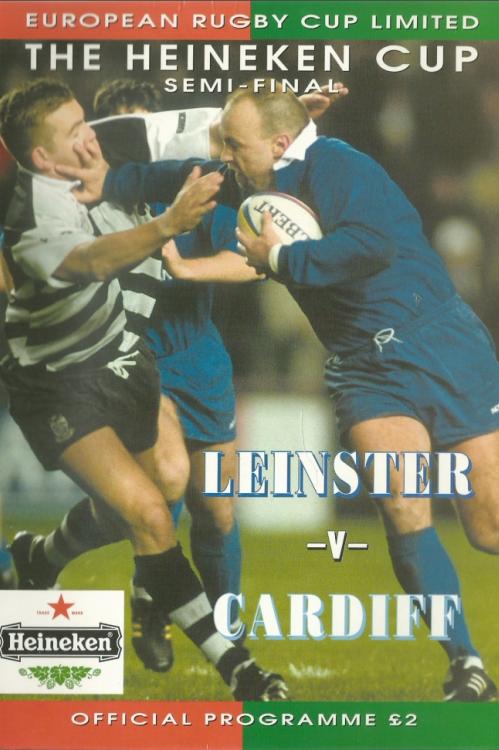
By virtue of tries scored, Toulouse entered the semi-finals as top seed. They would be drawn against 4th seed Swansea. In the closest-fought of all four Heineken Cup pools, Swansea had won by virtue of 10 points difference over Munster. In a pool where all three teams had a matching record of one win-one defeat, Swansea had begun with a 17-13 loss to Munster at Thomond Park on 1st November. Luckily, after Castres had beaten Munster by a 7-point margin in a 19-12 win one week later, the Swans managed to defeat the French side 22-10 to claim a much-needed victory and a 12-point margin that saw them win the pool. Now they would have to face the might of Toulouse in front of a partisan French crowd at Stade des Sept Deniers. While Cardiff were doing a job on Leinster 1,738km away, Toulouse were making easier work of their countrymen. In front of 10,000 home fans, the hosts defeated their opponents 30-3. Tries from centre Eric Artiguste, flanker Herve Manent and a penalty try in addition to 15 points from Christophe Deylaud saw the hosts press home their dominance to join Cardiff in the Heineken Cup Final one week later.
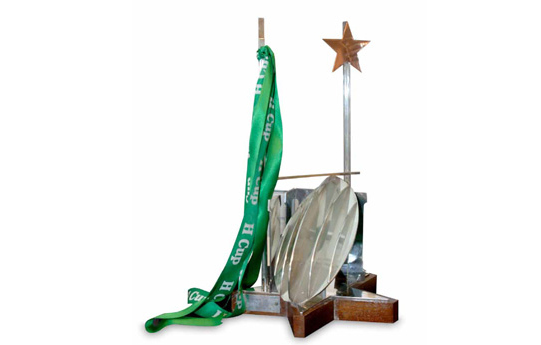
After impressive showings so far, it was now between Toulouse and Cardiff to decide rugby union’s first European champions. Cardiff would have the home advantage, with the final taking place at Cardiff Arms Park, which had served them well in their 46-6 demolition of Ulster in the pool stages. However, Toulouse captain and winger Emile Ntamack had faith that his team would become the first to lift the Heineken Cup despite being the away side. In an interview with The Independent, Ntamack said:
“Cardiff are a fine side with many internationals but I am confident of Toulouse winning. Maybe, as this is the first year of the tournament, the Heineken Cup is even more important to us than winning the French championship.” (The Independent, 1st January 1996)
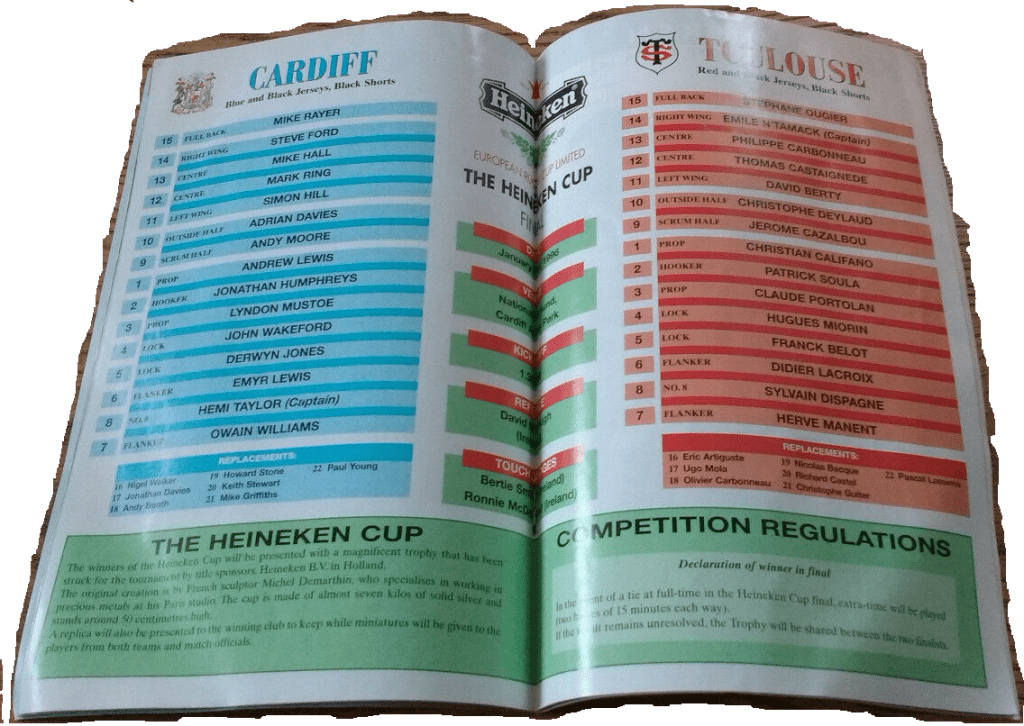
For the final, the teams would line up as follows:
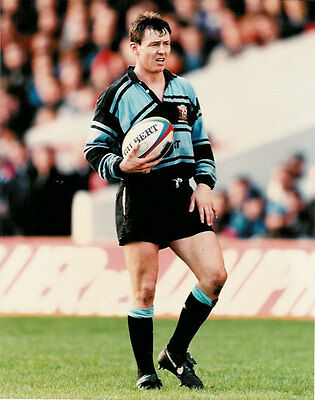
Toulouse got off to a fast start, scoring two tries in the first 10 minutes. First, a series of passes following a lineout drive saw full back Stephane Ougier break through the Cardiff defence before being stopped inches short of the line. The ball was recycled and two quick passes from Didier Lacroix and Christophe Deylaud sent centre Thomas Castaignede over for the try. Deylaud would add the extras. Four minutes later inside their own half, Toulouse moved the ball out wide to winger David Berty, who managed to offload the ball in the tackle to set Castaignede free down the left wing. The speedy centre was stopped by a last-ditch tackle 10 metres short of the Cardiff line only to offload to scrum-half Jerome Cazalbou, who managed to touch the ball down despite the intentions of flanker Emyr Lewis. The French champions’ tails were up, having established a 12-0 lead after just 10 minutes of play. Despite this early setback, the home side managed to claw their way back into the tie as two penalties from fly-half Adrian Davies saw Cardiff enter the half-time break 12-6 behind.
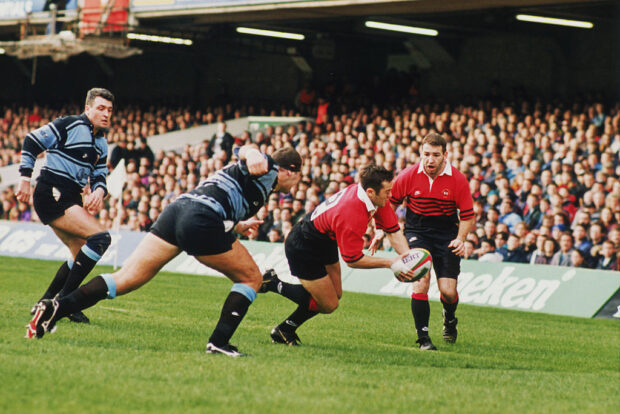
At half-time, Cardiff would bring on another fly-half, 33-year-old Jonathan Davies. Davies had recently switched back to rugby union after having spent the previous 7 years playing rugby league. Prior to his first code switch in 1988, Davies had played for both Neath and Llanelli as well as being capped 25 times by Wales. His namesake Adrian Davies would further narrow Toulouse’s lead to 12-9 with another penalty earlier in the second half after Cardiff turned over possession in the opposition 22. A Thomas Castaignede drop goal would nudge Toulouse further ahead before another Adrian Davies penalty after 72 minutes narrowed the score to 15-12. With precious few seconds remaining, another Toulouse infringement allowed Davies to kick his fifth penalty and draw Cardiff level at 15-15, sending the final to extra time.
Two minutes into extra time, Christophe Deylaud would restore Toulouse’s lead at 18-15, a lead they maintained at the end of the first period. However, following a shoulder block on winger Simon Hill by centre Philippe Carbonneau, Davies drew Cardiff level four minutes into the second period. With players becoming increasingly tired as the half progressed, it looked like the match would ultimately end in a draw and, under official rules of the competition, the trophy would be shared between the two finalists. However, the first Heineken Cup final would finish in dramatic fashion.
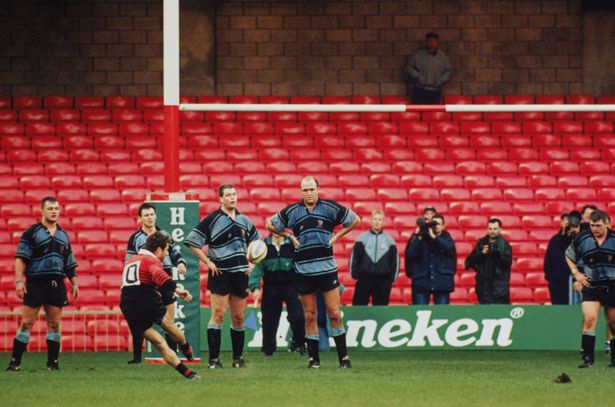
With less than a minute remaining of extra time, Toulouse were awarded a scrum deep into Cardiff’s 22. Despite forward momentum, the ball spurted out the back, causing Jerome Cazalbou to be mobbed as he jumped on the loose ball. Christophe Deylaud deputised at scrum-half, swinging the ball back to replacement Olivier Carbonneau sitting in the pocket. However, Carbonneau’s drop goal attempt was quickly charged down by the Cardiff defence. Picking up the loose ball, Carbonneau was tackled just inside the 22 before Cardiff were penalised for coming in from the side of the ruck, giving Toulouse a last-gasp penalty directly in front of the posts. With all the pressure riding on his shoulders, Deylaud converted the penalty to put Toulouse ahead 21-18, but the match wasn’t over yet. Collecting the restart, Toulouse’s initial attempt to kick the ball dead was charged down by two Cardiff players before making sure the second time around. The first-ever Heineken Cup was heading back to France, with Toulouse becoming rugby union’s first European Champions.
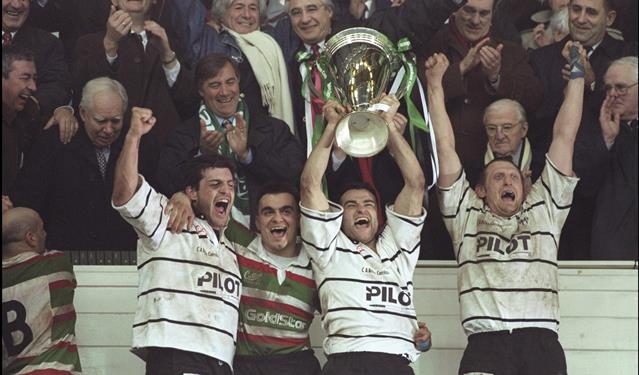
After much celebration, Toulouse captain Emile Ntamack lifted the trophy to confirm the fact. The man himself stated: “This is my most important victory. It makes certain that the European Cup is here to stay and it will be even better next year when England and Scotland are involved.”
One year later, after an expanded tournament saw the addition of English and Scottish clubs boost competition numbers from 12 to 20 and total attendance jump from 97,535 to 317,987 spectators, the 1997 tournament saw the trophy remain in France after Brive defeated Leicester Tigers 28-9 in front of 41,664 at Cardiff Arms Park on 25th January 1997. Rugby’s European Cup was indeed here to stay.
 the-score-board.co.uk