
So Close, 2005/06
Manager: Kevin Blackwell
Top Scorer: Rob Hulse (14)
Championship: 5th (play-off final)
FA Cup: 3rd Round
League Cup: 3rd Round
League Record: 21 wins, 15 draws, 10 defeats, 57 goals scored, 38 goals conceded
Transfers: £-2.65 million
Transfers in: £3.9 million
Rob Hulse, West Brom, 9 May, £1.1 million
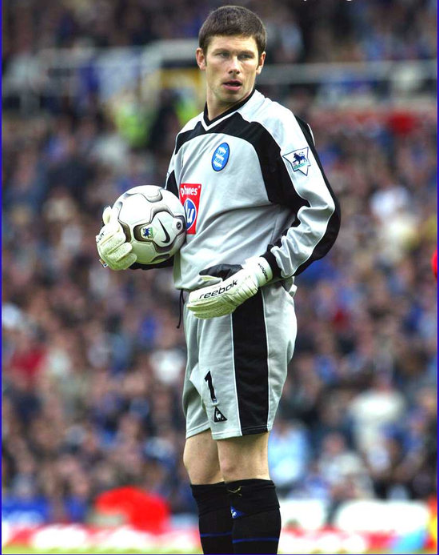
Ian Bennett, Birmingham City, 17 June, Free
Eddie Lewis, Preston North End, 24 June, Free
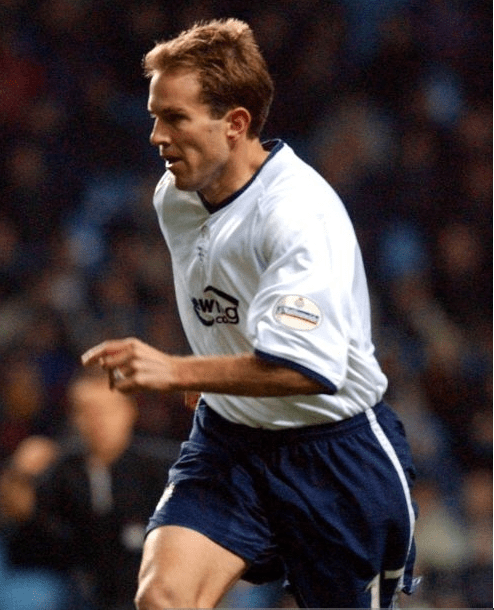
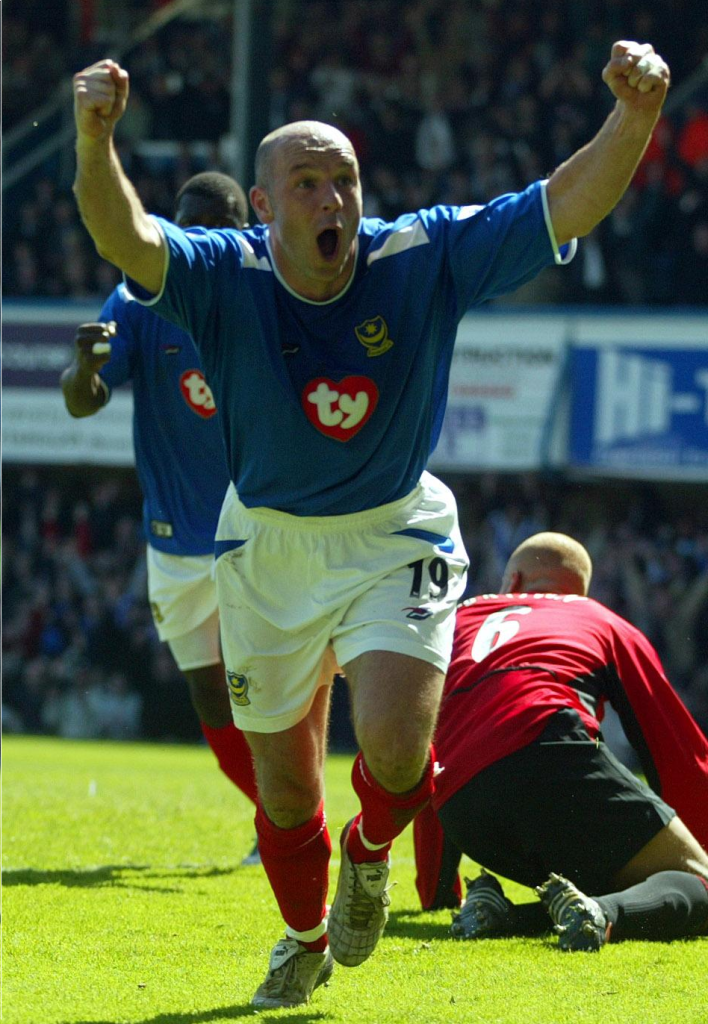
Steve Stone, Portsmouth, 29 June, Free
Dan Harding, Brighton, 7 July, £850,000
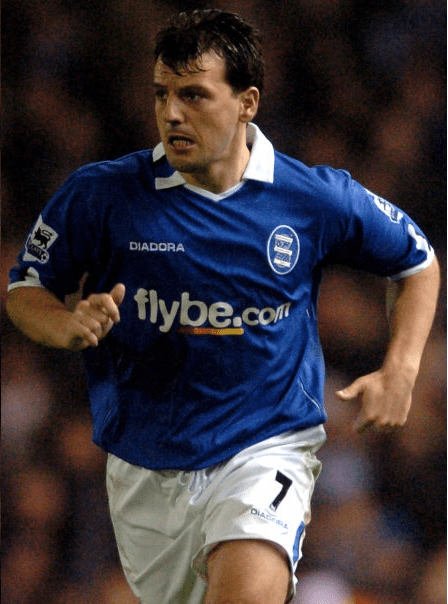
Robbie Blake, Birmingham City, 18 July, £800,000
Rui Marques, Maritimo, 29 July, Free
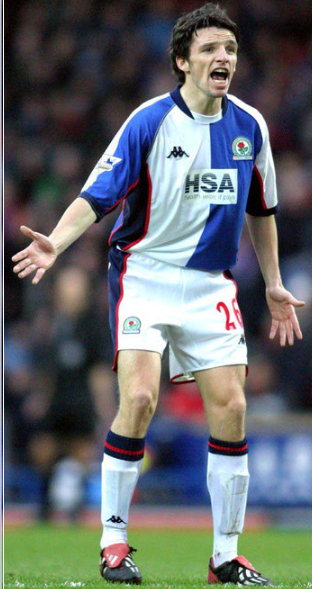
Jonathan Douglas, Blackburn Rovers, 19 August, season-long loan
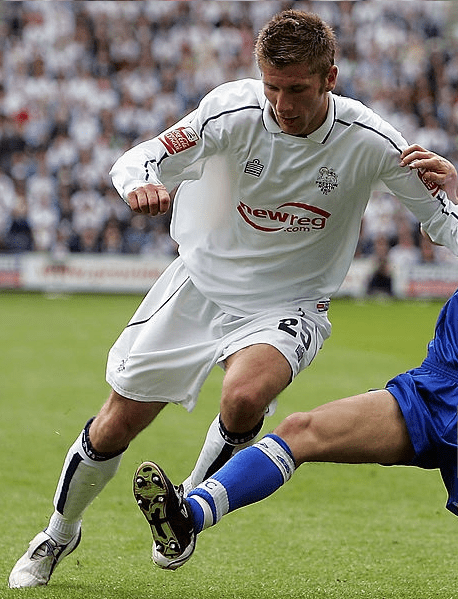
Richard Cresswell, Preston North End, 24 August, £1.15 million
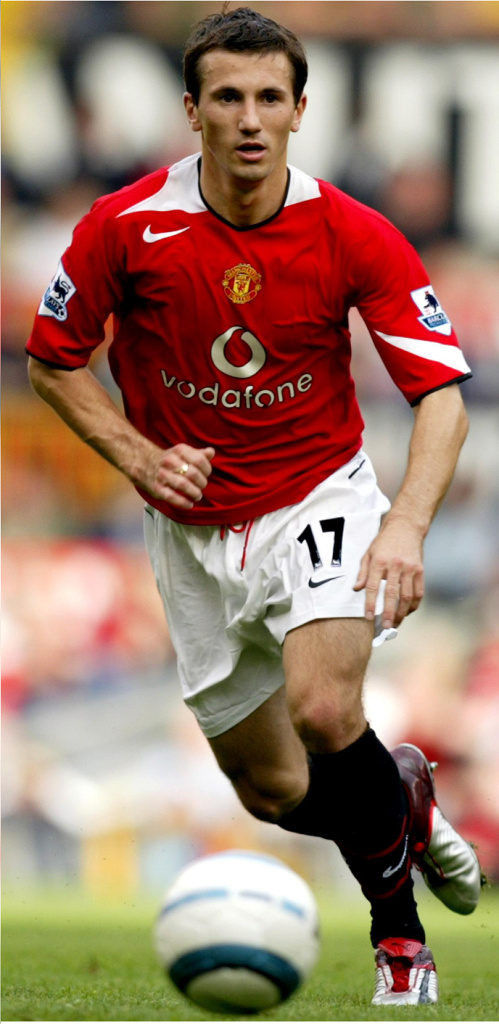
Liam Miller, Manchester United, 4 November, season-long loan
Joel Griffiths, Neuchatel Xamax, 31 January, undisclosed
Jermaine Beckford, Wealdstone, 15 March, undisclosed
Danny Graham, Middlesbrough, 23 March, loan
Transfers Out: £1.25 million
Lucas Radebe, retired
Sasa Ilic, 31 May, released
Simon Johnson, Darlington, 24 June, Free
Aaron Lennon, Tottenham, 1 July, £1 million
Julian Joachim, Boston United, 5 July, Free
Martin Woods, Sunderland, 5 July, Free
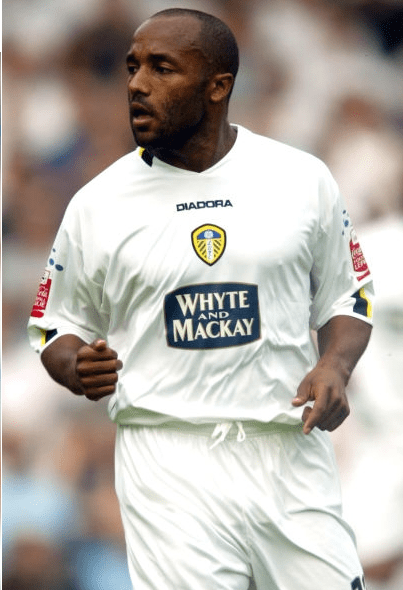
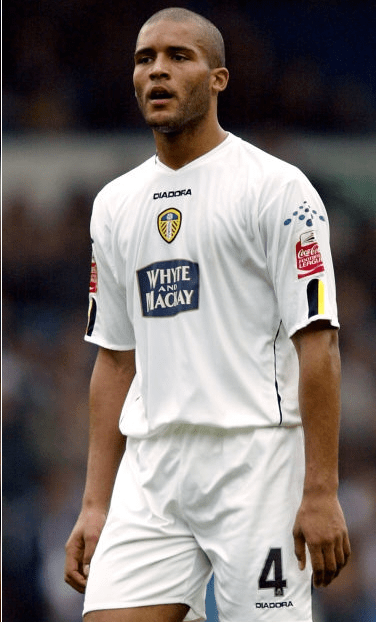
Clarke Carlisle, Watford, 5 August, £100,000
Justin Bowler, Halifax Town, 11 August, Free
Seth Johnson, Derby County, 17 August, Free
Matthew Spring, Watford, 19 August, £150,000
Michael Ricketts, Cardiff, 31 August, six-month loan
Kevin Smith, Sunderland, 26 January, Free
Michael Ricketts, Burnley, 30 January, six-month loan
After a stabilising first season in the Championship which saw all of Leeds’s star players head out the door to be replaced with players with vast lower-league experience and plenty of loan signings, the new ownership of Ken Bates now allowed Leeds to spend money in the transfer window without worrying as much about the financial implications. However, Leeds had learnt from their previous overspending. Over the course of the summer transfer window, 9 players would arrive at Elland Road for a total cost of £3.9 million. After a successful six-month loan spell the previous season, striker Rob Hulse signed from West Brom on a permanent deal worth £1.1 million, becoming Leeds first summer signing on 9th May 2005. Hulse had scored 6 goals in 13 appearances after signing on loan in Ferbuary 2005. Next through the door would be goalkeeper Ian Bennett. Bennett would arrive from Birmingham City on 17th June after making 287 appearances for the West Midlands club between 1993 and 2005, to compete with incumbent first-choice Neil Sullivan. Leeds would next add to their midfield ranks, bringing in experienced wingers Eddie Lewis from Preston North End and ex-England international Steve Stone from Portsmouth on free transfers. The money would be spent on the club’s next two signings, as 22-year-old defender Dan Harding would arrive from Brighton for £850,000 on 7th July followed by centre-forward Robbie Blake from Birmingham City for £800,000 on 18th July. After no Leeds player had hit double figures for goals the previous season, manager Kevin Blackwell was keen to improve his striking options especially with the departure of Brian Deane back in March.
Leeds would further address their defence as Angolan centre-back Rui Marques would join from Portuguese side Maritimo, who have been mentioned before in this series. Leeds would end their summer business in August with two further signings. First, midfielder Jonathan Douglas would join on a season-long loan from Blackburn Rovers. The 24-year-old had only made 16 league appearances for Blackburn since making his debut as a 19-year-old in 2000, being farmed out to Chesterfield, Blackpool and Gillingham in previous seasons, unable to compete with the likes of Tugay and David Dunn in the Ewood Park midfield. Finally, Leeds would add one more striker to their ranks with the signing of Richard Cresswell from Preston for £1.15 million on 24th August. Cresswell had plenty of experience scoring in the Championship, having netted 48 goals in 187 league appearances across his four seasons at Deepdale.


As 9 players would arrive at Elland Road, 11 would depart. The departures would begin with the biggest of all. After 256 appearances across 11 seasons with the club, Lucas Radebe would announce his retirement from football at the age of 36. Signing from South African side Kaiser Chiefs in September 1994 for a fee of £250,000, Radebe had become a talismanic figure for the club during the team’s rise in the late 1990’s. Being made club captain for the 1998-99 Premier League season, Radebe would form an effective partnership with youngster Jonathan Woodgate, peaking at 46 total appearances during the 1999-00 season. During this season, he would score 2 of his 3 total Leeds goals during the team’s UEFA Cup campaign, scoring in a 3-1 away win over Partizan Belgrade in the first round and the only goal in a 1-0 second-leg Leeds victory over Spartak Moscow in the third round, which helped Leeds progress to the next round on away goals. The following seasons would see Radebe’s game time falter due to the signings of Dominic Matteo and Rio Ferdinand in defence and countless injuries, including one which caused him to miss the entirety of the 2001-02 season. His importance to Leeds United was merited with a testimonial match on 2nd May 2005 which saw a Leeds United XI featuring players past and present compete against an International World XI.

Other than Radebe’s retirement, Leeds departures would begin with two Leeds academy graduates exiting the club. On 24th June, striker Simon Johnson was sold to League Two Darlington on a free transfer. After signing his professional papers as a 17 year-old in July 2000, Johnson had to wait to make his first-team debut, finally making his first-team bow as a substitute in a 6-1 win over Charlton in April 2003. Over his five seasons as a Leeds player, Johnson had been restricted to 12 first-team appearances, spending time out on loan at Hull City, Blackpool, Sunderland, Doncaster Rovers and Barnsley. With Rob Hulse being signed a month before, Johnson’s appearances were set to be limited once again, justifying the move away. One week after Johnson’s departure, Aaron Lennon, one of the club’s most exciting players, was sold to Tottenham for £1 million. Lennon had only made his debut during the 2003-04 season but had impressed enough in his limited playing time to earn a move to a major Premier League side. Four days later, another forward player, Julian Joachim would be sold to lower-league Boston United. He would leave Leeds with 2 goals in 27 appearances during his one season at the club, having spent the second half of the season on loan at Walsall. He would be followed out the door on the same day by 19-year-old academy graduate Martin Woods, who would move to newly-promoted Premier League side Sunderland. Clarke Carlisle would be next out the door, leaving Leeds for Watford for £100,000 at the beginning of August, despite having made over 30 appearances for Leeds the previous year. Later in the month, Matthew Spring, signed by Leeds the previous summer, would join Carlisle at Watford for £150,000. The last major departure for Leeds during the summer transfer window would be the exit of Seth Johnson. On 17th August, Johnson would be sold to Derby County, the club he had left for £9 million to join Leeds during the summer of 2001. During his four seasons at Elland Road, Johnson had never become a first-choice in Leeds’s midfield, having to compete with the likes of Lee Bowyer and Eirik Bakke during his time at the club and a series of personal injuries had kept him out of action for frequent periods. According to a 2012 Guardian article, another reason for Seth Johnson making just 59 appearances in four seasons on Elland Road was due to a stipulation of his Leeds contract. According to the terms of Johnson’s contract, Leeds were required to pay Derby £250,000 for every 15 appearances that Johnson made on top of the original £9 million fee. With Leeds entering financial trouble during his time at Elland Road, Johnson found his appearances increasingly limited due to Leeds not wanting to trigger the bonus laid out in the contract. After Johnson sustained a serious ligament injury in April 2004, Leeds were unwilling to trigger the appearance bonus. Once Johnson returned, he found himself out-of-favour until his contract expired. Johnson would head back down south with 4 goals in 59 appearances over 4 seasons at the club.
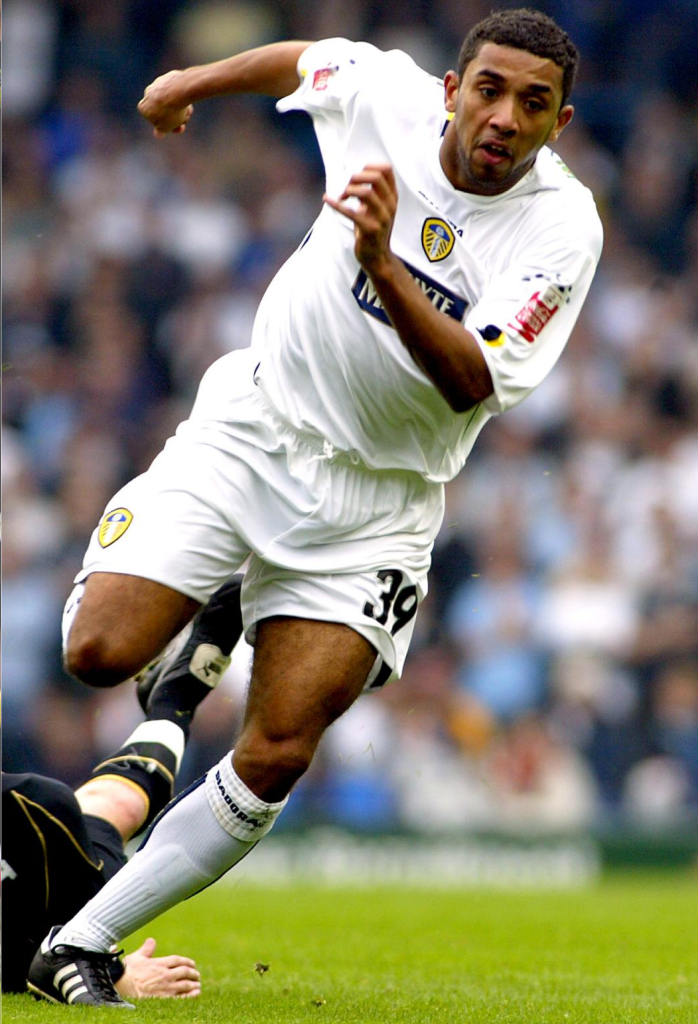

After a busy summer transfer window, Leeds United began their second Championship season with Millwall arriving at Elland Road on 7th August 2005. Leeds would win the match 2-1 with both goals coming from the previous season’s top scorer David Healy. The first was a poacher’s finish after a Leeds corner was inadvertently headed to the back post by a Millwall defender. The second was a successful penalty after Eirik Bakke had been brought down by Marvin Elliott. Two days later, new signing Robbie Blake would score his first Leeds United goal in a 2-1 away defeat to Cardiff City at Ninian Park. A 0-0 draw with promoted side Luton would complete the 6-day period before Leeds would finish August with consecutive clean sheet wins against Wolves (2-0) and Norwich (1-0), ending the month with 3 wins from their first 5 matches. Leeds’s good start would continue as a late equaliser from new signing Jonathan Douglas would salvage a 3-3 draw at Brighton on 10th September in a match where Leeds had to recover from 2-0 and 3-2 deficits. The rest of September would see mixed results as defeats to Sheffield Wednesday (0-1) and Ipswich (0-2) came in between wins against QPR (1-0) and Derby County (3-0). In both victories, all of the goals would be scored by Rob Hulse, including a hat-trick at Derby, bringing his goal tally to 6 by the end of September.
Following a partial slowing in their early season momentum during the month of September, Leeds would soon begin a run of 1 defeat in their next 11 matches. From 1st October to 3rd December, Leeds would win 6, draw 4 and lose 1 (a 0-1 defeat to Crewe on 1st November). The highlight of this run would be four consecutive victories over Southampton (4-3), Burnley (2-0), Millwall (1-0) and Leicester (2-1) from 19th November to 3rd December. The Southampton result would see Leeds edge a seven-goal thriller after an incredible comeback. Leeds would concede first after a Marian Pahars header on 27 minutes put the Saints ahead. A 10-minute brace from Nigel Quashie would put Southampton 3-0 ahead at half-time and place Leeds firmly under the cosh. Looking to salvage something from the game in the second half, Leeds manager Kevin Blackwell would introduce David Healy after 67 minutes to partner Rob Hulse up front. On 71 minutes, Leeds would pull a goal back through a header from captain Paul Butler before halving the deficit with a Robbie Blake finish six minutes later. A Southampton handball in the 84th minute would give Leeds a penalty that was duly converted by the influential Healy to draw the team level before a fourth goal by new loan signing Liam Miller two minutes later would complete a comeback that included Leeds scoring four goals in 25 minutes. Miller was only making his second start for Leeds after joining on a season-long loan from Manchester United on 4th November.

Leeds’s four-match winning streak was snapped with back-to-back 1-0 defeats to Cardiff and Wolves on 10th and 17th December heading into Christmas. At the halfway point of the season, Leeds had a league record of 11 wins, 6 draws and 6 defeats from 23 league matches. From these matches, Leeds had accumulated 39 points from a possible 69, a 12-point improvement from a year earlier. Following the consecutive defeats to Cardiff and Wolves, Leeds would return to good form, ending 2005 with three consecutive wins over Coventry (3-1), Stoke (1-0) and Hull (2-0).
The good form would continue into the New Year as goals from Richard Cresswell, Robbie Blake and a Rob Hulse penalty would guarantee a 3-0 victory over Plymouth Argyle on 2nd January 2006. Five days later, a late Rob Hulse equaliser would secure a 1-1 draw against Premier League Wigan Athletic in the FA Cup 3rd round, a result that guaranteed a replay at Elland Road 10 days later. The replay would also end in a draw, as the two sides would play out a thrilling 3-3 draw that eventually was decided by a penalty shoot-out. As in the first match, Wigan would take the lead through Andreas Johanssen after 24 minutes, but David Healy would respond for Leeds 4 minutes before half-time. Wigan would once again take the lead 5 minutes into the second half with a goal from Jason Roberts, but once again David Healy would equalise, this time from the penalty spot. The score would remain at 2-2 at full time, with the game now needing extra-time to find a winner. In extra-time, Wigan would take the lead for a third time with a second goal from Jason Roberts after 103 minutes. With four minutes remaining in extra-time, Leeds veteran Gary Kelly would equalise with his first Leeds goal since 2003 and the match would go to penalties. In the shoot-out, Wigan would reign victorious with a 4-2 victory, after Healy and Rob Hulse missed their spot-kicks.

After the first match with Wigan, Leeds’s second four-match winning streak in as many months was ended by a 2-1 defeat to Ipswich on 14th January. Leeds’s next league defeat would not come until 21st March, as Leeds would begin a 10-match unbeaten streak following a 3-0 victory over Sheffield Wednesday on 21st January. This 10-match unbeaten streak would be a mix of 5 wins and 5 draws. Wins over Sheffield Wednesday, QPR (2-0) and Watford (2-1) were immediately followed by draws with Ipswich (1-1), Derby (0-0) and Leicester (1-1) before back-to-back 2-1 victories over Luton and Crystal Palace were followed up by back-to-back draws with Norwich (2-2) and Coventry (1-1). On an unrelated note, Leeds would sign a new centre-forward during this run to add to their impressive complement of strikers. On 15 March 2006, Leeds would sign 22-year-old Jermaine Beckford from non-league Wealdstone. A former youth player at Chelsea, Beckford had spent the past three seasons scoring 54 goals in 82 matches for Wealdstone before being snapped up by Leeds. He would make 5 substitute appearances during the rest of Leeds’s Championship campaign.
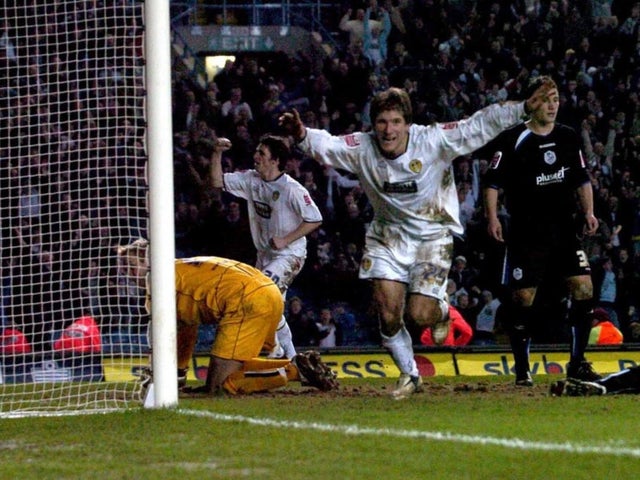
With 8 matches remaining, Leeds United had a strong case for promotion to the Premier League, with 20 wins, 11 draws and 7 defeats from 38 matches, having accumulated 71 points from a potential 114. Leeds needed to win the majority of these matches to keep the pressure on 2nd-place Sheffield United and the automatic promotion places. Instead, Leeds would win 1 of their final 10 matches. 6 of these results would be draws as back-to-back draws against Norwich and Coventry were followed by later draws with Stoke and three consecutive draws with Plymouth, Reading and Sheffield United in April. These results saw Leeds rule themselves out of automatic promotion and slide down the play-off places. Leeds would finally get a victory with a 1-0 win over Crewe on 22nd April in the team’s penultimate match of the season, with David Healy’s goal giving the club their first victory in 9 matches. However, Leeds’s poor end to the season was confirmed with a 2-0 defeat to Preston on the final day. After sitting in 3rd place on 25th February and with a chance of automatic promotion to the Premier League, Leeds would finish the season in 5th place. Their season would not be over however, as Leeds now had the end-of-season play-offs to look forward to. Three matches to play. A two-legged semi-final and a potential play-off final presented the path to the Premier League. All Leeds had to do was win all three.
After the two teams played each other on the last day of the season, Leeds and Preston would be matched up again in one of two play-off semi-finals, with Watford and Crystal Palace making up the other side of the bracket. On 5th May, five days after their previous match at Deepdale, Elland Road would be the venue for the first leg of the Leeds United-Preston North End play-off semi-final. In front of over 35,000 people, the two teams would play out a 1-1 draw. The match would remain goalless through half-time, with the first goal not occurring until the 48th minute. That first goal would be scored by Preston striker David Nugent, after an impressive run through the Leeds defence ended with a finish past Neil Sullivan. With Leeds seemingly running out of ideas in front of goal, they would equalise from a set-piece as an Eddie Lewis free-kick after 74 minutes would level the score. The eventual draw left the tie in the balance heading into the return leg at Deepdale three days later. In the return leg, Leeds put on an impressive defensive display, as Preston were unable to create many chances during a first half of few goalscoring chances for either side. In the second half, Leeds would start the better of the two sides and would deservedly take the lead after 56 minutes. During a Leeds corner, striker Rob Hulse would lose his marker to head home his 13th goal of the season. 5 minutes later, Leeds would double their advantage both on the night and on aggregate. Hulse cut in from the left side and drilled a cross across the face of the Preston goal, where the ball would be collected and finished by Leeds academy graduate Frazer Richardson. Preston would be handed a lifeline when Leeds were reduced to 10 men when Leeds left-back Stephen Crainey was sent off after 68 minutes. Leeds would actually finish the match with 9 men on the field after substitute Richard Cresswell was sent off in injury time, but this wouldn’t matter as Leeds would run out 2-0 winners on the night and 3-1 winners on aggregate. Their reward: a trip to the Millennium Stadium to meet Watford in the Championship play-off final for a place in the Premier League. Watford had beaten Crystal Palace 3-0 on aggregate over two legs in their play-off semi final, winning the first leg 3-0 and drawing the second leg 0-0. An added extra to the final came in the form of the Watford manager Aidy Boothroyd, who had served as Leeds’s first-team coach the previous season before leaving to take the Watford job in March 2005.

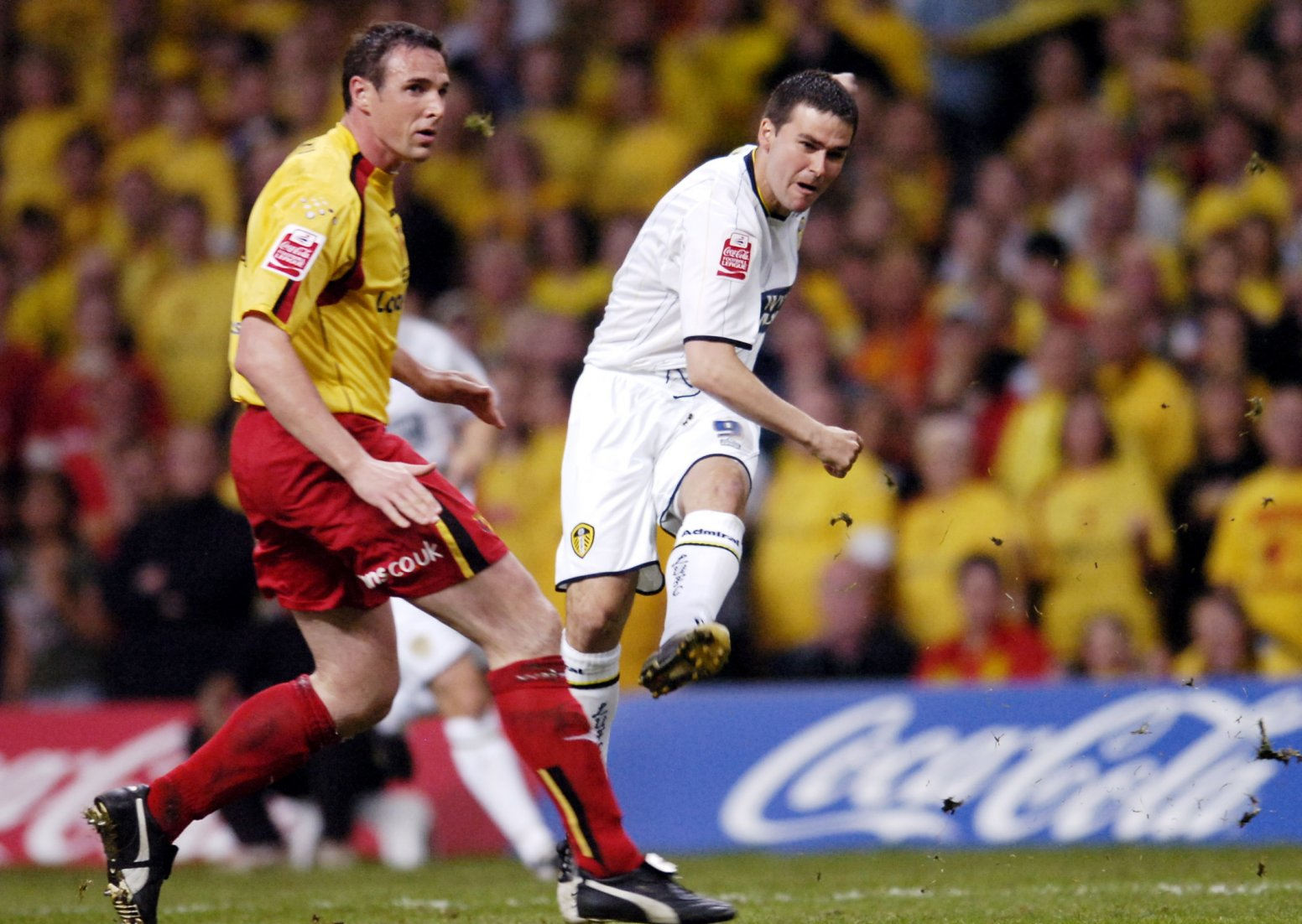
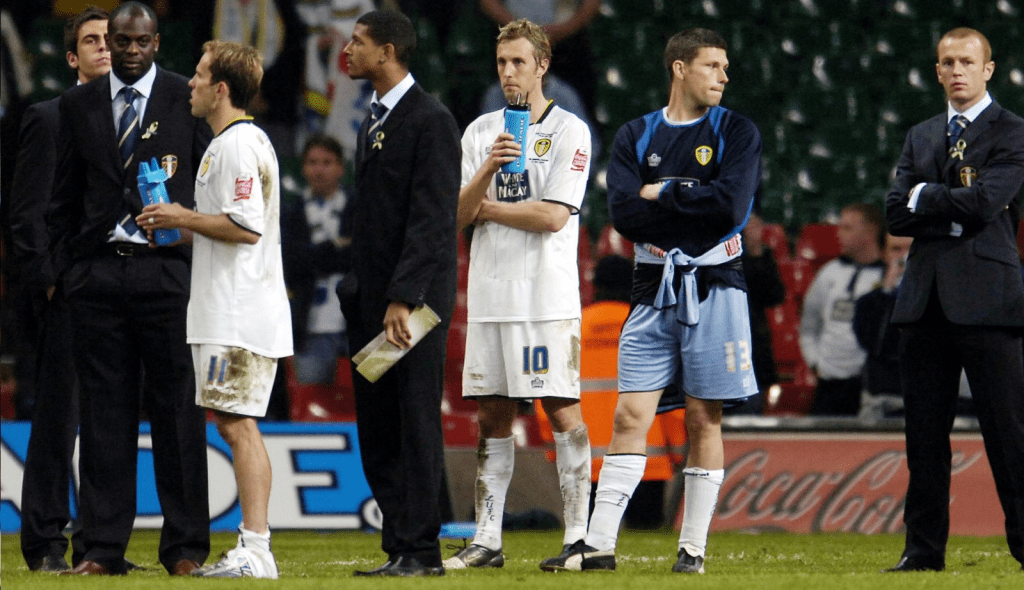
The stage was set. On 21st May 2006, Watford and Leeds, the teams that finished 3rd and 5th in the Championship respectively, took to the Millennium Stadium field for the Championship play-off final with promotion to the Premier League the carrot to be won after 90 minutes of action. Leeds could end their two-year hiatus away from the Premier League while Watford could return to the top flight for the first time since the year 2000. The teams had been separated by 3 points after 46 league matches, and the head-to-head had resulted in a 0-0 draw in October and a 2-1 turnaround win for Leeds on Valentine’s Day.
The match would begin with both sides going close early on. After 8 minutes, a spill from Watford goalkeeper Ben Foster allowed Shaun Derry a shot on goal, before a Watford block diverted the strike wide. Six minutes later, a 20 yard shot from Watford wing Ashley Young just went the wrong side of a Leeds goalpost. Despite an even start, it would be the Hornets who would take the lead on 25 minutes, as centre-back Jay Demerit would head home from a James Chambers corner. Leeds had chance to equalise during the last 20 minutes of the first half, with Sean Gregan’s header drifting wide of the Watford post and an Eddie Lewis free-kick being driven high and over the crossbar. Leeds even had a penalty claim turned down by referee Mike Dean, as Ben Foster had appeared to bring down Rob Hulse. Leeds’s appeals were ignored, leaving Watford with a 1-0 lead at half-time. Leeds, needing to get back on equal terms as soon as possible, made a tactical change at half-time as right winger Frazer Richardson would be replaced by striker Robbie Blake, converting Leeds’s 4-5-1 formation into a 4-4-2. However, it would be Watford who would score next, with help from Leeds. With 57 minutes gone, James Chambers collected a throw-in and shot at Neil Sullivan’s goal. The ball would deflect off Eddie Lewis, hit the post and Sullivan before going in, with the goal being counted as a Sullivan own goal. Now 2-0 down, Leeds manager Kevin Blackwell made another attacking substitution, with David Healy replacing Liam Miller after 67 minutes to give Leeds a third attacking option. Leeds would rally with Healy and Shaun Derry both having shots saved by Watford keeper Ben Foster, while Watford had a chance to further extend their lead as defender Malky Mackay saw his header cleared off the line by Lewis with 10 minutes left. Four minutes later, Shaun Derry brought down Marlon King inside the penalty area, giving Watford a chance to confirm promotion. The resulting penalty would see striker Darius Henderson firing the ball past Neil Sullivan to make the score Watford 3 Leeds 0. No further goals would be scored and full-time would confirm Watford’s return to the Premier League after a seven-year absence while Leeds were left to think of what could have been and rue a seriously missed opportunity.
During the 2005-06 season, Leeds played 54 matches in league and cup competitions, finishing with 24 wins, 17 draws and 13 defeats, with a win percentage of 44%. In the league (inc. play-offs), Leeds would finish with 22 wins, 16 draws and 11 defeats, with a win percentage of 45% from 49 matches. In these 49 matches, Leeds would score 60 goals (1.22 per game) and concede 42 (0.86 per game), both improvements from the previous season. In the regular season, Leeds’s 57 goals would give them the 9th-best record in the league, level with relegated Crewe Alexandra. This may have only been an 8 goal improvement on the previous season’s total, but three Leeds players would hit double figures for goals during the season. David Healy and Rob Hulse would joint top score with 12 goals each (Hulse would add another goal in the play-off matches), closely followed by Robbie Blake on 11. These three contributed for 35 of Leeds’s 57 goals across the 46 matches. A further 15 goals would be provided by Eddie Lewis, Jonathan Douglas and Richard Cresswell, who would all finish with 5 goals apiece. The reason for Leeds’s lack of league goals compared to teams that finished above and below them in the Championship table is partially due to the 15 draws that Leeds managed throughout the season, including the 6 in their final 10 league matches that ultimately derailed their automatic promotion bid. On the other hand, Leeds would have the 3rd-best defence in the Championship with only 4th-placed Preston (30) and champions Reading (32) conceding fewer goals than Leeds’s 38 goals. Leeds were protected by a settled back five of goalkeeper Neil Sullivan, right-back Gary Kelly, centre-back pairing Paul Butler and Sean Gregan and left-back Stephen Crainey, with Sullivan (42), Butler and Kelly (44) barely missing a match throughout the whole season.
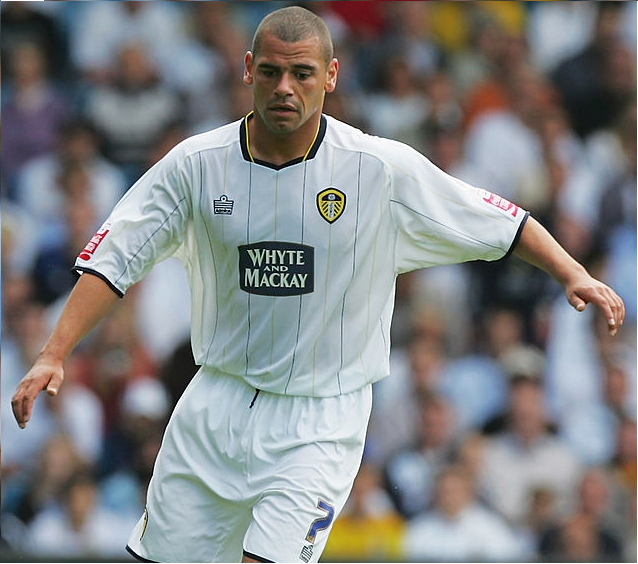
The majority of Leeds’s summer signings had paid dividends. Rob Hulse and Robbie Blake had scored a combined 23 goals in 63 appearances and appeared as Leeds’s starting front two for the majority of the season, just edging out the previous season’s top scorer David Healy. Eddie Lewis would be a near ever-present after his move from Preston, making 42 starts on the left wing, scoring 6 goals, including a crucial equalising goal in the play-off semi-final first leg against his former club. Lewis would be rewarded for his performances with a place in the USA squad for the 2006 World Cup, playing in all three group matches as the Americans made a disappointing group-stage exit. Another midfield signing who certainly made an impact was loan signing Jonathan Douglas. The on-loan Blackburn Rovers player would make 40 appearances for Leeds, scoring 5 league goals, including an impressive brace against Hull City in a 2-0 Leeds victory on New Year’s Eve 2005. Even Liam Miller would make an considerable impression upon the team, making 26 starts despite having only joined on loan from Manchester United in November. The performances of these signings were so impressive that they pushed out the the previous incumbents in their positions. These incumbents were Jermaine Wright, Danny Pugh and Simon Walton. The former two had made over 30 league appearances for Leeds the previous season, but made a combined 4 starts over the course of the 2005-06 season.

Leeds had come so close but remained so far away from the Premier League. For the second season running, poor form had ended a promising season. The previous year, 1 win from the final 10 matches had ruined Leeds’s chances of a top-half finish and an outside chance of a play-off place. This year, 1 win from the final 10 matches had spoilt Leeds’s chances of automatic promotion, leaving them with the runner-up prize of a play-off place that they would not take full advantage of. Would Leeds be able to resolve these late-season slumps as they once again bid for Premier League promotion the following year?
 the-score-board.co.uk