
The Slippery Slope, 2002/03
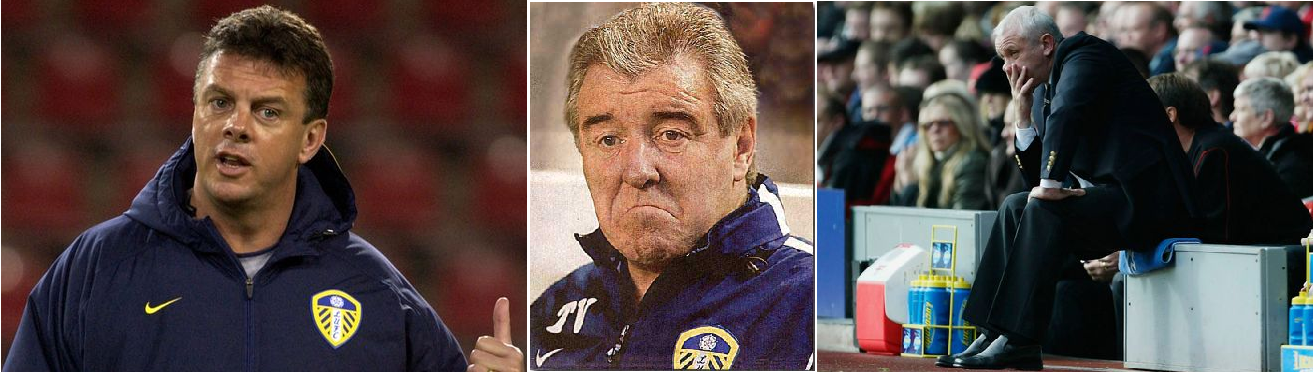
Manager: David O’Leary
Terry Venables
Peter Reid
Top Scorer: Mark Viduka (22) (20 in the Premier League)
Premier League: 15th
FA Cup: Quarter-finals
League Cup: 3rd Round
UEFA Cup: 3rd Round
League Record: 14 wins, 5 draws, 19 defeats
Transfers: £+49,550,000
Transfers in: £2.75 million
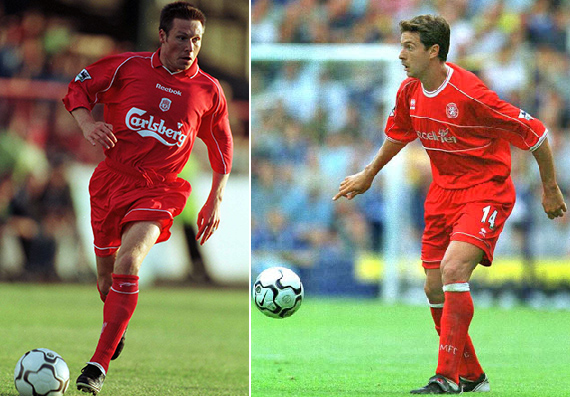
Nick Barmby – Liverpool, 8 August 2002, £2,750,000
Paul Okon – Middlesbrough, 12 August 2002, free
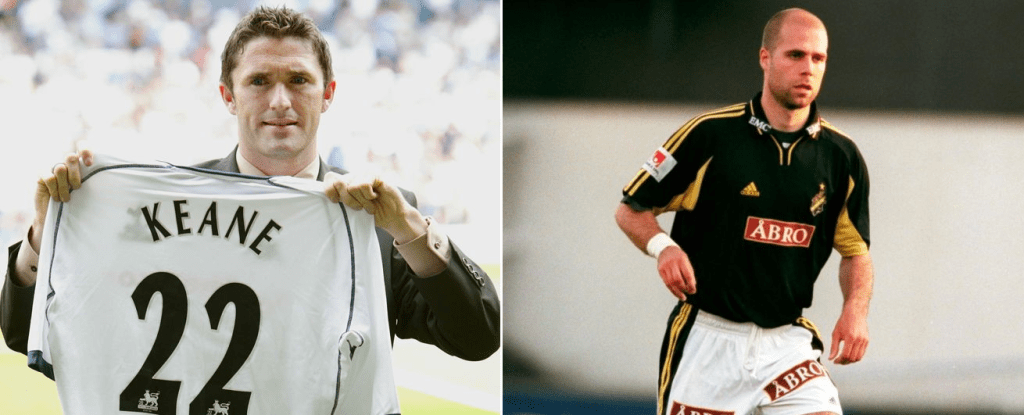
Teddy Lučić – AIK Solna, 31 August 2002, loan
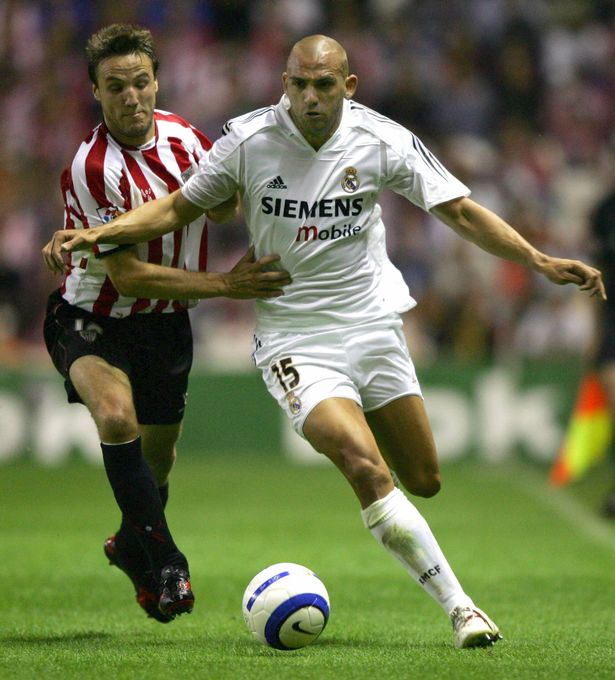
Raúl Bravo – Real Madrid, 31 January 2003, loan
Transfers out: £52,300,000
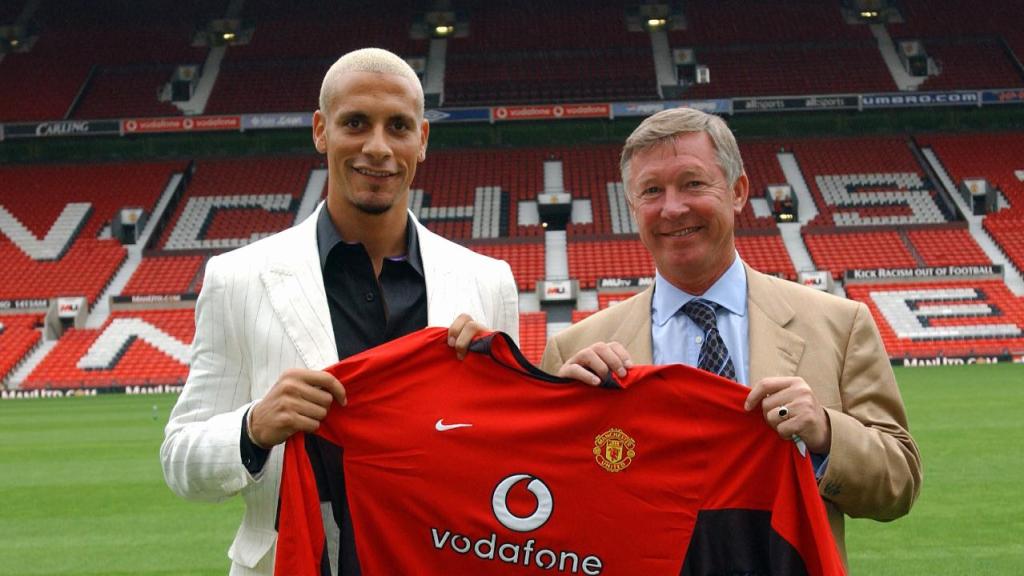
Rio Ferdinand – Manchester United, 22 July 2002, £30,000,000
Simon Johnson – Hull City, 11 August 2002, loan
Shaun Allaway – Grimsby Town, 20 August 2002, loan
Robbie Keane – Tottenham Hotspur, 31 August 2002, £7,000,000
Danny Milosevic – Plymouth Argyle, 5 November 2002, loan
Steven Ferguson – Hyde United, 5 November 2002, loan
Harpal Singh – Bradford City, 7 November 2002, loan
Shane Cansdell-Sherriff – Rochdale, 8 November 2002, loan
Jamie McMaster – Coventry City, 19 November 2002, loan
Craig Stiens – Swansea City, 13 December 2002, loan
Olivier Dacourt – Roma, 8 January 2003, loan
Frazer Richardson – Stoke City, 10 January 2003, loan
Lee Bowyer – West Ham United, 11 January 2003, £300,000
Danny Milosevic – Crewe Alexandra, 20 January 2003, loan
Jonathan Woodgate – Newcastle United, 31 January 2003, £9,000,000
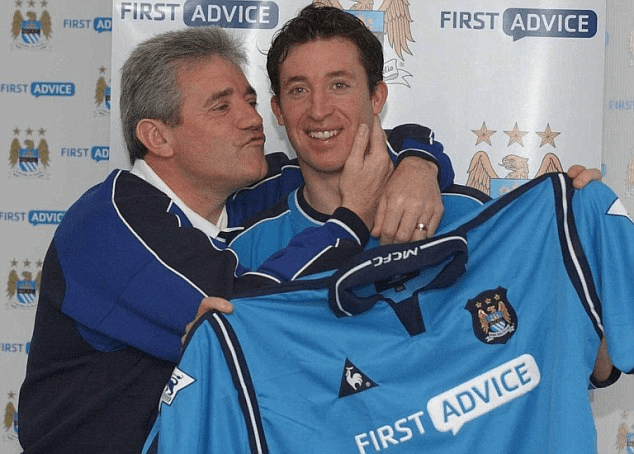
Robbie Fowler – Manchester City, 13 February 2003, £6,000,000
Caleb Folan – Chesterfield, 14 February 2003, free
Tom Newey – Darlington, 29 March 2003, loan
After four consecutive seasons finishing in the Premier League’s top five, qualified for a 4th consecutive season of European football, with a strong squad full of internationals, excellent both up front and at the back and possessing one of the best managers in the country in David O’Leary, Leeds would seemingly regroup for pre-season training, replenish the squad with some great signings and make another tilt for the top four and Champions League football. The problem was that when the Leeds squad returned for pre-season training in July 2002, David O’Leary had been sacked. After a disappointing end to the previous season which saw Leeds fall from 1st on New Years’ Day to requiring a final-day victory and a slip-up from Chelsea in order to assure 5th place and UEFA Cup football, O’Leary had been sacked by chairman Peter Ridsdale, a figure who will discussed later on. He would be replaced by the vast experience of Terry Venables, seen as one of the best English managers around.
It is understandable to see why Venables was hired. Over a 26 year managerial career, ‘El Tel’ had taken Crystal Palace and Queens Park Rangers from the Third and Second Divisions respectively, promoted them to the top-flight and kept them there, delivering an FA Cup Final appearance and UEFA Cup football for the latter. He had managed Barcelona to a Spanish league title in 1985 and a European Cup Final appearance in 1986. He had taken mid-table Tottenham Hotspur and delivered them a 3rd place league finish in 1990 and an FA Cup triumph in 1991. He had managed England to one of the most memorable performances in the national team’s history with a semi-final penalty shoot-out exit at Euro ’96, helping the public fall back in love with the team after poor performances following Italia ’90. In a less-remembered post, Venables had taken Australia to the final of the 1997 Confederations Cup, drawing with Brazil and beating Mexico in the group stages before reaching the final with a golden goal semi-final winner against Uruguay thanks to a 19-year-old called Harry Kewell. Even in his most recent role, he helped Middlesbrough remain the Premier League during the 2000-01 season, helping the team finish 12th while serving as joint-manager alongside Bryan Robson. During all his time as a manager Terry Venables had never had a managerial spell where the positives hadn’t outweighed the negatives. Therefore on paper, Leeds fans incensed at the sacking of David O’Leary may have been soothed by the appointment of Venables two weeks later.
The big changes wouldn’t just stop with a new manager. Rumours had started to circulate that Leeds were in some form of financial trouble and may be required to sell some of their big-name players in order to balance the books. The first hammer blow would on 22nd July as club captain Rio Ferdinand, returning from an impressive World Cup performance with England, would be sold to Manchester United for a new British transfer record fee of £30 million. The fee, also a world record fee for a defender, gave a Leeds a £12 million profit on a player they bought for £18 million 18 months earlier. Ferdinand would become a regular starter for Manchester United as they reclaimed the Premier League title in 2003, and would become a legend at the club, eventually making 455 appearances at the club until his departure in 2014, winning five Premier League titles (2003, 2007-09, 2011, 2013), three League Cups (2006, 2009, 2010), one FA Cup (2004) and one Champions League (2008).
Leeds would use some of the Ferdinand money to sign England international Nick Barmby from Liverpool for £2.75 million. Barmby, a tricky winger, had a wealth of Premier League experience playing for Tottenham, Middlesbrough, Everton and Liverpool and had racked up 277 appearances after making his debut in 1992. Barmby had been regular during his first season at Liverpool, playing 46 matches as the team won the Treble. However, injury problems had blighted his second season at Anfield, restricting him to just 11 appearances across the whole season. Leeds second summer signing was Paul Okon from Middlesbrough, a defender/midfielder who had experience playing for Lazio and Fiorentina in Serie A on his CV.
Leeds would begin their Premier League campaign with a 3-0 home victory against Manchester City on 18th August, with goals from debutant Nick Barmby, Mark Viduka and Robbie Keane. A win the following week against newly-promoted West Brom would actually see Leeds top the Premier League after scoring 6 goals in their first two matches. Leeds would win 4 out of their first 6 matches, placing the team in 3rd. Further wins included a 2-0 victory over Newcastle and a famous 1-0 victory over Manchester United on 14th September, with the deciding goal being scored by Harry Kewell after 67 minutes.
Leeds had started impressively, gaining 12 points out of their first 18. However, the second transfer market hammer blow for Leeds would soon come on the first ever transfer deadline day on 31st August 2002. Robbie Keane, who had been signed by Leeds for £12 million one year earlier, would sold to Tottenham for £7 million, a £5million loss in one year. After his promising loan spell during the 2000-01 season, scoring 9 goals in 18 appearances, Keane would score the same amount the following season, albeit after playing 33 matches. After signing for Spurs, Keane would certainly make an impact, scoring 13 Premier League goals in his first season at White Hart Lane. He would eventually score 122 goals in 306 matches for the club between 2002 and 2011, also becoming a club legend. Leeds would make a signing on deadline day, bringing in Sweden international defender Teddy Lucic on a season-long loan from Allsvenskan side AIK Solna. Lucic had played for Sweden at the 2002 World Cup, starting all four matches as the Swedes progressed to the Round of 16 before being upset by debutants Senegal.
In mid-September, Leeds would progress to the second round of the UEFA Cup after beating Ukrainian side Metalurh Zaporizhya 2-1 on aggregate. However, Leeds’s great form in the first two months of the season would not last. After a 1-0 defeat to Blackburn on 22nd September, Leeds would win just 2 of the next 12 Premier League matches. Leeds would head into Christmas lying in 16th place in the Premier League after a 1-1 draw with Southampton on 21st December. The only solace for Leeds during this difficult period came once again in the UEFA Cup against Israeli side Hapoel Tel Aviv. A 1-0 win at Elland Road on 31st October would be followed up with a 4-1 win in the return leg. This night would be a special night for Alan Smith, as the 22-year-old scored all four of United’s goals, helping the team win the tie 5-1 on aggregate. Smith’s goals would be just the tonic Leeds supporters needed after seeing their side perform poorly for the previous two months.
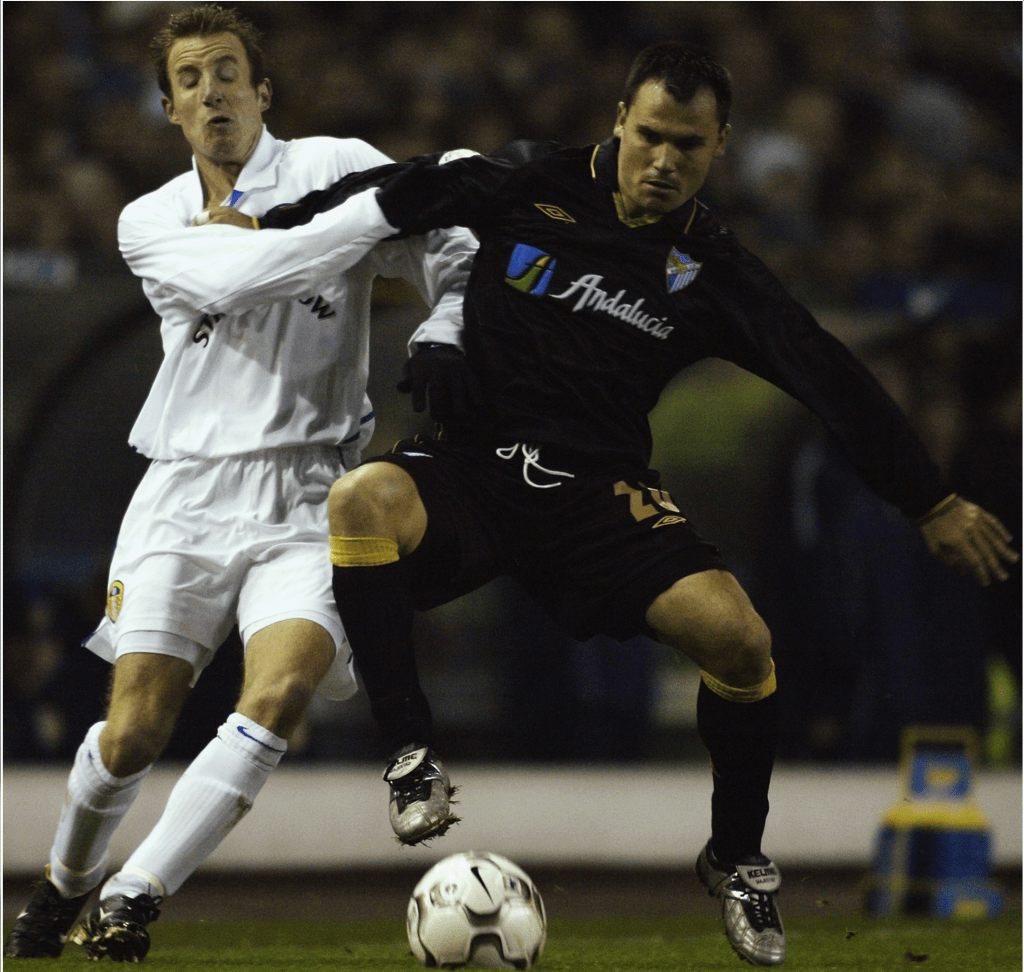
Leeds would progress to the UEFA Cup third round to face Spanish side Malaga. Malaga had entered the competition through winning the UEFA Intertoto Cup along with Fulham and Stuttgart. Malaga had progressed to the UEFA Cup third round by beating Bosnian side Željezničar and Polish side Amica Wronki. The first leg took place on 28th November and ended goalless. Leeds went into the game aiming to win their first match on Spanish soil in 35 years but entered the match without nine first-teamers including Barmby, Viduka and Fowler. Leeds were the better side over the course of 90 minutes but were unable to score the away goal which would increase their chances of progressing going into the return leg at Elland Road two weeks later. The match would end in a 0-0 draw. Two weeks later in West Yorkshire, it would be the Andalusians who would have the last laugh, winning 2-1 on the night and on aggregate to give Leeds their earliest European exit since the 1998-99 season. Leeds were not helped by an early injury to striker Michael Bridges, a peripheral figure since being the club’s top scorer in the 1999-00 season. 13 minutes in, Malaga would draw first blood through Panamanian striker Dely Valdes. Leeds would equalise 10 minutes later with Eirik Bakke’s far post volley making things all square once again. Leeds would start the second half brightly and almost took the lead with Lee Bowyer’s diving header drifting agonisingly wide. This failure to take the advantage would prove fatal as Dely Valdes would score his second of the night in the 80th minute to condemn Leeds to another European exit.
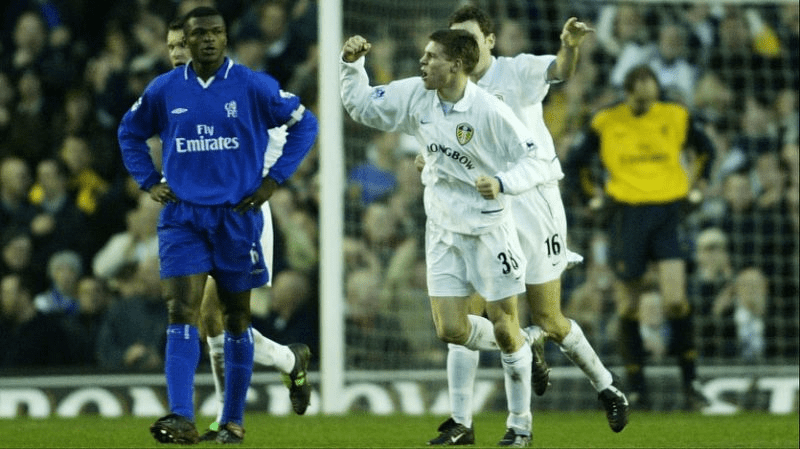
In spite of their recent poor form, Leeds would end 2002 strongly with back-to-back wins, their first since September. The first match, a 2-1 Boxing Day victory over Sunderland, would become part of Premier League history. After 51 minutes of play, James Milner, a kid brought up in Horsforth 7 miles from Elland Road would become the youngest Premier League goalscorer in history, aged just 16 years and 357 days, breaking the record held by Wayne Rooney by 3 days. He would level the match against the Black Cats, firing home after a cross from Jason Wilcox. An 80th-minute penalty by Robbie Fowler would seal the victory. Two days later, Leeds would win again, beating Chelsea 2-0 at Elland Road. Goals from Jonathan Woodgate and a second goal in two matches from James Milner gave Leeds their first home win since mid-September. This capped off a run of 4 wins in 5 matches, being preceded by a 3-0 victory against Bolton and a draw with Southampton. Leeds finished 2002 sitting in 13th place, a significant drop considering they ended 2001 sitting 3rd in the Premier League.
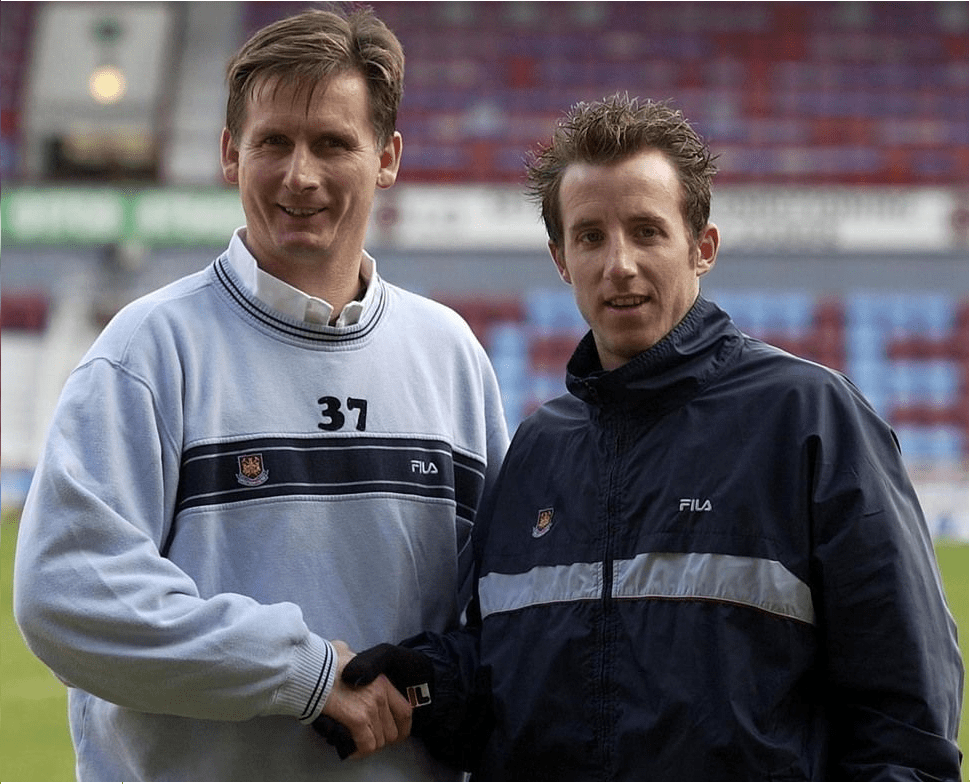
Leeds would open 2003 by continuing their recent good form, obtaining a 5th win in 6 matches by beating Birmingham City 2-0 on New Year’s Day, with Eirik Bakke and Mark Viduka providing the goals. The win lifted the team up to 12th place, sparking hopes of another unbeaten run like that seen in the second half of the 2000-01 season. A 6th win in 7 would be brought courtesy of a 2-0 victory over Scunthorpe in the FA Cup 3rd Round on 4th January. Once again, Leeds’s run of form would not last. It would be one of three things that they would lose on 11th January. The team’s run of 6 wins in 7 matches was ended at the hands of a 2-1 defeat to Manchester City. The same day, another hammer blow was struck upon Leeds’s squad. After 265 appearances and 55 goals after being signed by Howard Wilkinson in 1996, Lee Bowyer would leave Elland Road for £300,000, far less than the £2.8 million that Leeds paid Charlton seven years earlier.
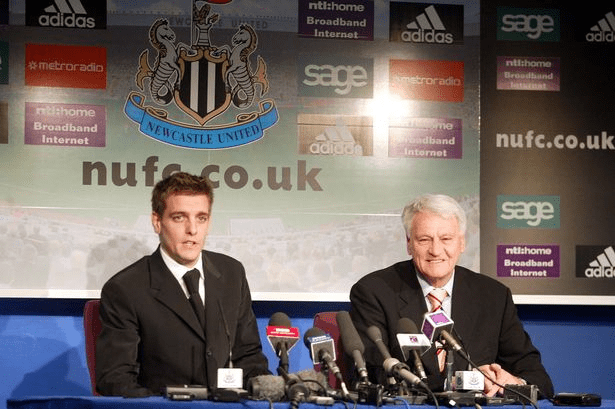
A goalless draw at West Brom and a 3-2 loss to Chelsea later, two more big-name players would leave Leeds for pastures new. Jonathan Woodgate, who had been on the books at Leeds since the age of 16, would be sold to Newcastle for £9 million. Woodgate would leave Elland Road after making 142 appearances for Leeds since his debut in 1998. To replace Woodgate, Leeds would bring in 21-year-old Spanish defender Raul Bravo on loan from Real Madrid. Bravo had recently made his international debut for Spain but was unable to attain a regular starting spot at Los Blancos due to the imperious form of Roberto Carlos. Two weeks later, after successive defeats to Everton (2-0) and West Ham (1-0), Robbie Fowler would be sold to Manchester City for £6 million. The same Robbie Fowler had been bought by Leeds for £11 million 15 months earlier. Serving as a bench player for much of the season, Fowler had only played 8 league matches and had scored twice, one season after having scored 12 goals in 22 matches for the same club.
After losing to Manchester City on 11th January, Leeds would win only 2 of their next 11 league matches, the team dropping from 12th to 16th in the process. The sole highlights during this dismal run were a 1-0 victory over West Ham on 11th February after a rare goal from Seth Johnson, and a 6-1 demolishing of Charlton on 5th April, where a brace from Harry Kewell (12’, 76’), an Ian Harte penalty (34’) and a 14-minute hat-trick from Mark Viduka (42’, 53’, 56’) would see off the Addicks at The Valley. However, the main point of optimism for Leeds fans during this period was the team’s run to the FA Cup quarter-finals. Wins over Scunthorpe, Gillingham and Crystal Palace had taken Leeds two matches away from the final, but their quarter-final opponents would be First Division Sheffield United, who had previously knocked Leeds out of the League Cup earlier in the season. On 9th March, the Blades would prevail once again as a Steve Kabba goal at Bramall Lane would put paid to Leeds’s chance in another cup competition.
On 15th March, Leeds would lose 3-2 to Middlesbrough, suffering their 6th loss in 8 matches. Their next match was a daunting prospect, travelling to Anfield to face Liverpool. Six days later, ‘El Tel’ was done. With Leeds now facing a relegation battle to remain in the Premier League, Terry Venables was sacked after 8 months in charge. In 42 matches at the helm at Elland Road, Venables had won 16, drawn 7 and lost 19 for a win ratio of 38%. This would be Terry Venables final job as a football manager. At short notice, Peter Reid would be hired as Venables’ replacement with 8 league matches remaining. Reid’s arrival would see an upturn in form, as Leeds would win 4, draw 1 and lose 3 of their final 8 matches. This included the team winning 3 of their final 4 matches to assure their Premier League survival. A 2-0 win over Fulham, a 3-2 victory over Arsenal and a final-day 3-1 win over Aston Villa would be enough. The win over Arsenal, where an 88th-minute Mark Viduka finish won Leeds the match, effectively ended Arsenal’s Premier League title hopes in the process. Leeds would finish the Premier League season in 15th place, five points clear of relegation. Despite this, the team had suffered their lowest league finish in 10 years, since finishing in 17th place back in the 1992-93 season. Leeds had managed to survive while incurring major losses, the first of many over the coming years.
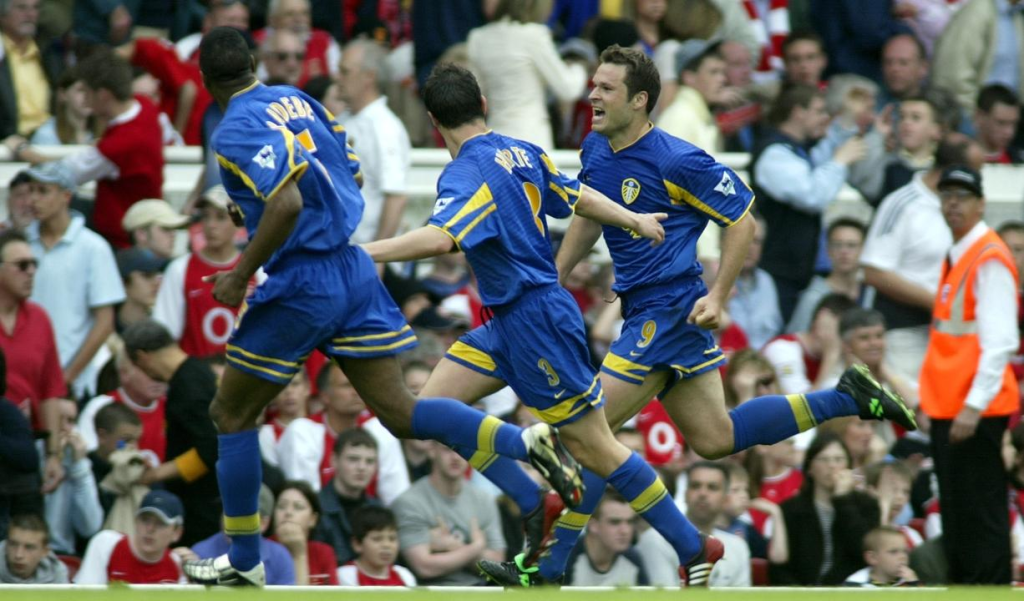
Over the course of the 2002-03 season, Leeds United would play 50 matches across four competitions. Of these 50, Leeds would win 20, draw 8 and lose 22, aa win rate of 40%. In these matches, Leeds would score 69 goals (1.38 per match) and concede 66 (1.32 per game). In the Premier League, Leeds would finish with 14 wins, 5 draws and 19 losses, scoring 58 goals (1.52 per game) and concede 57 (1.5 per game). Leeds ended up with the 6th-best goal-scoring record in the Premier League, despite losing 19 matches. They would unfortunately be let down by having the 4th-worst defence in the division. Due to the amount of goals they scored, Leeds would be one of two sides who finished in the bottom half (along with Middlesbrough) who finished with a positive goal difference (+1).
Despite finishing in a lowly 15th place, Leeds would still finish with two players hitting double figures in the league. Mark Viduka, having only scored 6 goals by the end of 2002, completed a remarkable back end to the season to finish with 20 goals in 33 appearances. Viduka’s goal tally placed him 4th on the Premier League scoring charts ahead of Michael Owen (19) and Alan Shearer (17). He would be joined in the top 10 by countryman Harry Kewell, whose 14 goals would put him alongside Paul Scholes, Robert Pires and Gianfranco Zola in 8th.
Another positive for Leeds would come in four academy graduates making their senior debuts for the club. Along with James Milner, who would make 22 appearances in his first season (21 off the bench), defender Matthew Kilgallon, midfielder Jamie McMaster and striker Simon Johnson would all make their senior debuts. The 2002-03 season would see the return of Lucas Radebe, who had missed the entirety of the previous season due to injury. Radebe, who had lost his club captaincy to Rio Ferdinand and now Gary Kelly, made 26 appearances throughout the season, including 19 in the league. This season would also see the true breakthrough of Paul Robinson as Leeds No.1. Following disagreements with new manager Terry Venables after returning from the 2002 World Cup, regular goalkeeper Nigel Martyn would not play a single minute of action, having been told he could leave the club. 23-year-old Robinson would not miss a single minute of action, playing all 50 of Leeds’s matches this season.

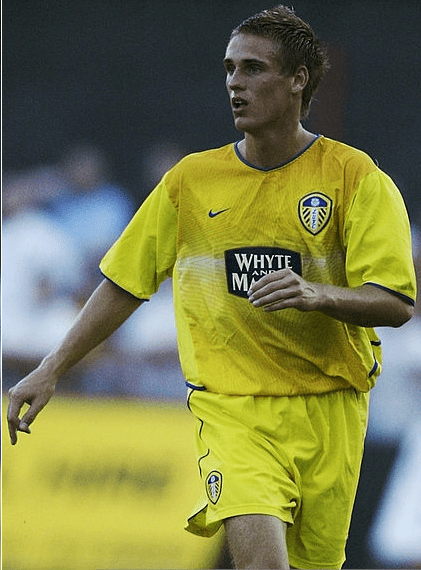
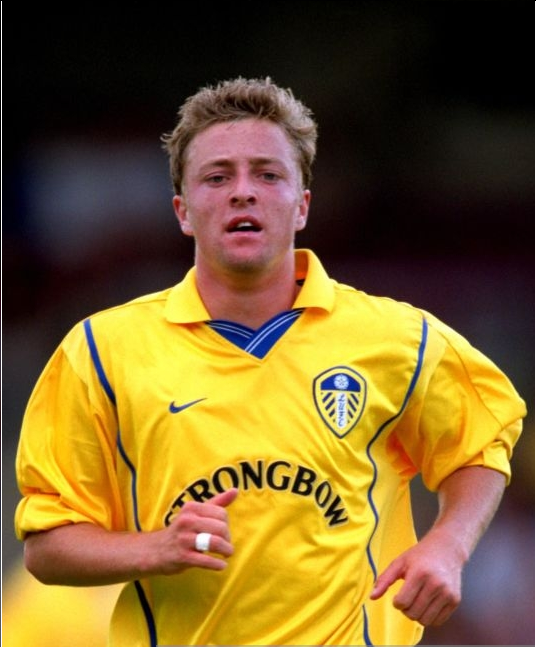
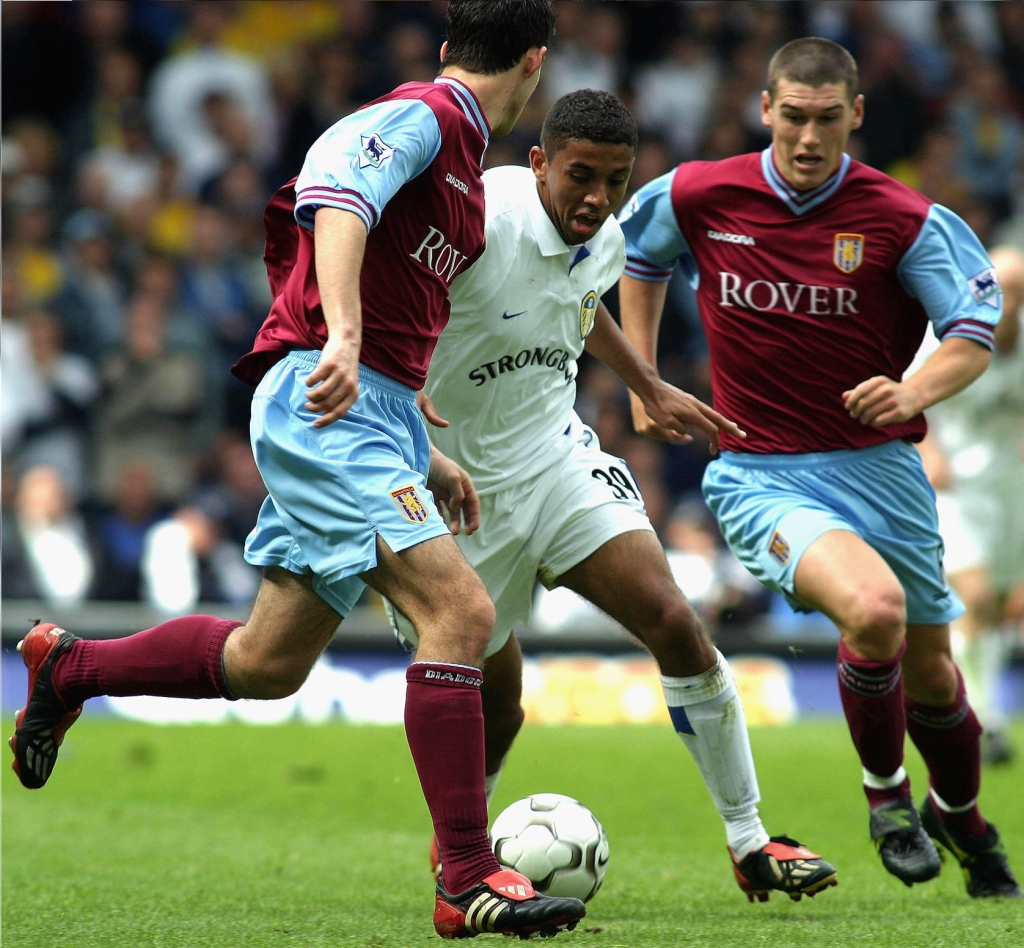
Now to talk about the elephant in the room: Leeds’s financial situation. From looking at the numbers at the start of this arc in 1996/97 to the 2001/02 season, Leeds registered a loss on transfers in every season, spending more than they were receiving every single time. £-4.225 million in 1996/97, £-5.8 million in 1997/98, £-7.55 million in 1998/99, £-11.68 million in 1999/00, £-30.75 million in 2000/01, and finally £-18.65 million in 2001/02. That is a combined £78.655 million that Leeds lost on transfers over six seasons. The club went from spending a combined £6.85 million on the signings of David Hopkin (£3.25 million), Jimmy Floyd Hasselbaink (£2 million) and Alf-Inge Håland (£1.6 million) in 1997/98 to £37.2 million on Rio Ferdinand (£18 million) Robbie Keane (£12 million) and Olivier Dacourt (£7.2 million) in 2000/01. The club even managed to spend a combined £20 million on just Seth Johnson (£9 million) and Robbie Fowler (£11 million) in the summer of 2001.
Worse than that, Leeds, after buying certain players for a certain amount of money, would often lose money on these same players when they were sold on at a later date. This happened, more often than not, with Leeds’s first-team players. In 1997, David Hopkin was bought for £3.25 million from First Division Crystal Palace. After three seasons of Premier League and UEFA Cup football for Leeds under his belt, Hopkin was sold to Bradford, a club lower than Leeds in the Premier league for £2.5 million for a loss of £750,000. Even in this past season, there are clear examples of Leeds losing money on players when they desperately need the money to balance their finances. Robbie Keane signed for Leeds for £12 million in April 2001. He would be sold to Tottenham in late 2002 for £7 million, with Keane somehow getting worse as a player in one year if the values are to be believed. Robbie Fowler, bought for £11 million one year, sold for £7 million less than 18 months later. Either Leeds were overpaying for these players when they originally bought them or were unwittingly selling them for below their market value later on. Lee Bowyer was signed as a mainly unproven 19-year-old for £5 million in 1996. After proving himself in the Premier League, UEFA Cup and Champions League as an excellent goalscoring midfielder and arguably as one of the best midfielders in the Premier League outside of Arsenal and Manchester United, he was sold to West Ham United for £300,000 in 2003.
At one point during the 2002-03 season, Leeds still possessed debt of £78m despite selling off £52m worth of players. Between 1998 and 2002, Leeds spent £99.76 million on players and did not win a single trophy during that time period. Despite leading the Premier League for significant portions of the 1999-00 and 2001-02 seasons, Leeds finished those seasons in 3rd and 5th place, finishes that were compounded by successive semi-final exits in European competition in 2000 and 2001. Despite these both being incredible accomplishments for Leeds United, there is an argument to say that Leeds failed to achieve more despite their lavish spending. The two people blamed for Leeds myopic spending policy: manager David O’Leary and chairman Peter Ridsdale.
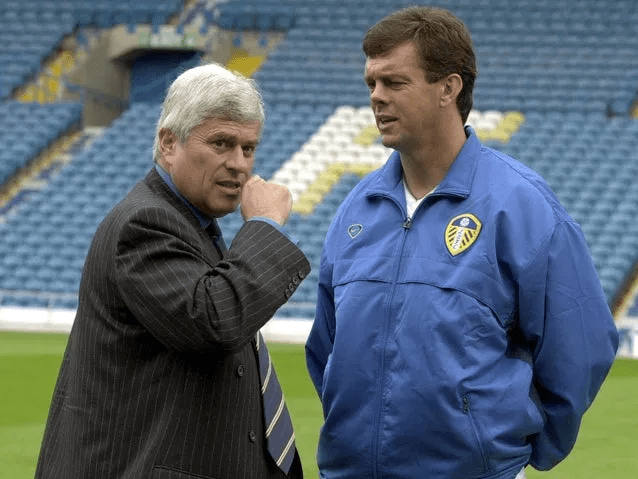
Who was Peter Ridsdale? Peter Ridsdale was a Leeds United fan as a child, going to Wembley to see Leeds compete in the 1965 FA Cup Final. Racking up a fortune as the CEO of clothing chains Sock Shop and Jumpers, he was appointed the new chairman of Leeds United in June 1997, replacing Bill Fotherby. It was he who appointed David O’Leary as manager in late 1998. In a 2000 profile piece on the BBC News website, Ridsdale was labelled the ‘dignified face of football’ and was described as having “earned the respect and admiration of people for whom football is a mystery, and reminded the game’s critics that its decent side is not extinct.” However, he certainly earned the ire of the Leeds fanbase when he sacked David O’Leary in June 2002 despite four straight top-five Premier League finishes. In addition to the £100m spent on players during his time as chairman, the club borrowed £60m against future gate receipts, gambling on Leeds qualifying for the Champions League in successive seasons. According to a 2003 article in The Guardian, £5.7m was given out in compensation to O’Leary and Terry Venables after their respective sackings. £600,000 was spent on company cars. £70,000 spent on private jets for senior management. £300,000 a year given to charity. Ridsdale himself earned a salary of £450,000 a year while other directors earned £300,000 and £250,000 respectively.
From these figures, it is clear to see that something was rotten in the state of Elland Road. In the eyes of the chairman and directors, the good times were never-ending. Even after the Champions League exit, they still lived like they part of it. Ridsdale would resign as Leeds chairman on 31st March 2003, being replaced by professor of economics John McKenzie, whose remit was to sort out Leeds’s financial situation for now and for years to come.
 the-score-board.co.uk