
Beginning of the End, 2001-02
Manager: David O’Leary
Top Scorer: Robbie Fowler and Mark Viduka (12) (League), Mark Viduka (17) (Total)
Premier League: 5th
FA Cup: Third Round
League Cup: Fourth Round
UEFA Cup: Fourth Round
League Record: 18 wins, 12 draws, 8 defeats
Transfers: £-18,650,000
Transfers in: £20 million
Seth Johnson – Derby County, 18 October, £9 million
Robbie Fowler – Liverpool, 29 November, £11 million
Transfers out: £1.35 million
Warren Feeney – Bournemouth, 12 June, free
Damian Lynch – 14 June, released
Kevin Dixon – Barnsley, 2 July, free
Tony Hackworth – Notts County, 12 July, £1.2 million
Gareth Evans – Huddersfield Town, 9 August, free
Harpal Singh – Bury, 11 September, loan
Caleb Folan – Rushden & Diamonds, 5 October, loan
Alan Maybury – Hearts, 12 October, £150,000
Caleb Folan – Hull City, 30 November, loan
Harpal Singh – Bristol City, 7 March, loan
Stephen McPhail – Millwall, 13 March, loan
Wesley Boyle – 20 March, released
Danny Hay – 15 May, released
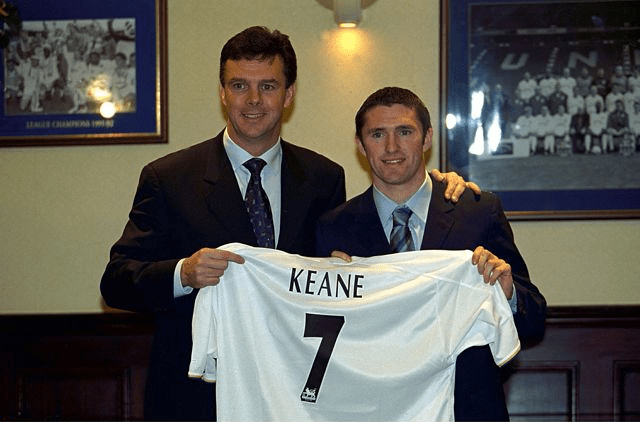
The summer of 2001 saw no major comings or goings at Leeds United. The most recent signing, the permanent signing of Robbie Keane for £12 million from Inter Milan had been sewn up in April. O’Leary did not seek to make changes to the squad that had progressed to the Champions League semi-finals and retained the same first-team squad. The summer instead saw several younger squad players be moved on. Warren Feeney, who had spent the second half of the previous season scoring 4 goals in 10 appearances for Bournemouth, would move to the South Coast club permanently, which ultimately wouldn’t go too badly for him. Damian Lynch and Tony Hackworth would be split between the two Nottingham clubs Forest and County, Kevin Dixon would move to Barnsley and Gareth Evans would move to Huddersfield Town. All were below the age of 23 and had played minimal minutes for Leeds during their time there. With five players off the wage bill, there were openings for new signings to be made in the future.
With their transfer business complete, it was time for Leeds to show that they were justified in not making any signings during the close season. This was the summer which saw the likes of Bolo Zenden, Edwin van der Sar, Laurent Robert, Jerzy Dudek and Steed Malbranque join Premier League clubs. If critics were looking for justification, they certainly got it. Out of their first 11 Premier League matches stretching from 18th August to 4th November, Leeds would win 6, draw 5 and lose 0, obtaining 24 points out of a possible 33. Leeds began the 2001-02 season how they finished the previous one, with a lengthy unbeaten streak. 11 matches to be exact. As a result, Leeds topped the Premier League for 5 out of 6 weeks from 16th September to 4th November. The team had been placed 3rd or higher since an opening day 2-0 home victory against Southampton. Leeds would first reach the summit with a 2-0 win over Charlton, with goals coming from Robbie Keane and Danny Mills, two rarities for Premier League goals during this season. Leeds even held their own against the bigger sides, beating Arsenal 2-1 in matchday 2, and would execute three successive draws against Liverpool (1-1), Chelsea (0-0) and Manchester United (1-1) over consecutive weekends in October. Leeds were sitting pretty at the top of English football with almost a third of the season over.
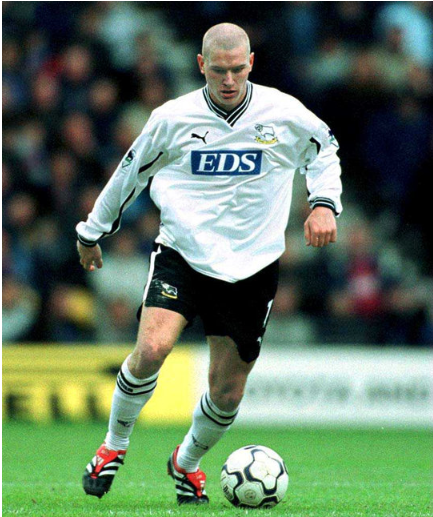
It was during this period of successive draws that Leeds would enact their first transfer business of the season. Leeds would aim to boost their midfield ranks with the £9 million signing of Seth Johnson from Derby County on 18th October 2001. Leeds would pay Derby an initial £7 million fee with a further £2 million to be paid based on number of appearances made. At the time of signing, Leeds chairman Peter Ridsdale was quoted as saying “Seth’s arrival reflects the progress we have made. We hope he can go on to bigger and better things now.” (Irish Times, 18th October 2001). Johnson, an England U-21 international, had spent the previous two seasons playing in the heart of Derby’s midfield after signing from Crewe Alexandra for £3 million in May 1999. Johnson had made 81 total appearances for Derby during his two-year stint, including 73 appearances in the Premier League and was seen as a player with a lot of potential. Johnson had started for England in the 2000 UEFA U-21 European Championships alongside future internationals Frank Lampard, Jamie Carragher and Danny Mills as the team exited at the group stages. He had even been capped by the senior team in a 1-0 friendly defeat to Italy in November 2000. Johnson was a tough-tackling midfielder, which had also led to disciplinary issues, picking up 14 and 11 yellow cards in the previous two seasons. It is easy to say that big things were expected of Johnson, as clearly evidenced by the price tag.
During their unbeaten run in the league, Leeds began their return to the UEFA Cup after a single season in the Champions League. The first round tie saw Leeds face Portuguese side Maritimo. A UEFA Cup tie between the same two sides at a similar time of the season three years earlier had seen the final match of George Graham’s time in charge of Leeds before he moved to Tottenham, where he would be sacked in March 2001, following alleged leaks of insider information to the media. Leeds would lose the first leg to Maritimo in Funchal 1-0, but would make a strong response one week later, winning 3-0 at Elland Road, with Robbie Keane, Harry Kewell and Eirik Bakke providing the goals to send Leeds through to Round 2. Round 2 would provide a match up with Ligue 1 side Troyes. Troyes had finished the previous Ligue 1 season in 7th place but would successfully qualify for the UEFA Intertoto Cup, a summer tournament that would allow the winners to compete in the UEFA Cup the following season. Starting their season on 30th June in a match against WIT Georgia, Troyes would go on to win the competition along with Aston Villa and PSG after a thrilling 4-4 second leg draw against Newcastle guaranteed the team a place in the UEFA Cup via away goals. The first leg between Leeds and Troyes went to the home side, as Leeds would win 4-2 with braces from Mark Viduka and Lee Bowyer, but the French side claimed two away goals to stay in the tie. The second leg would once again go the way of the home side as Troyes would win 3-2 at the Stade de l’Aube. The home side took an 8th– minute lead through Gharib Amzine. Mark Viduka would equalise six minutes later to restore Leeds’s advantage. However, Troyes would enter half-time 2-1 ahead following David Hamed’s deflected free-kick, meaning Leeds’s aggregate deficit was now down to a singular goal. A third Troyes goal on 58 minutes by Jerome Rothen levelled the scoreline on aggregate but put the French side ahead through the away goal rule. It took until the 77th minute for Leeds’s blushes to be spared as Robbie Keane’s header made the scoreline 6-5 on aggregate, sending Leeds through. Leeds would face Swiss side Grasshoppers in the 3rd round.
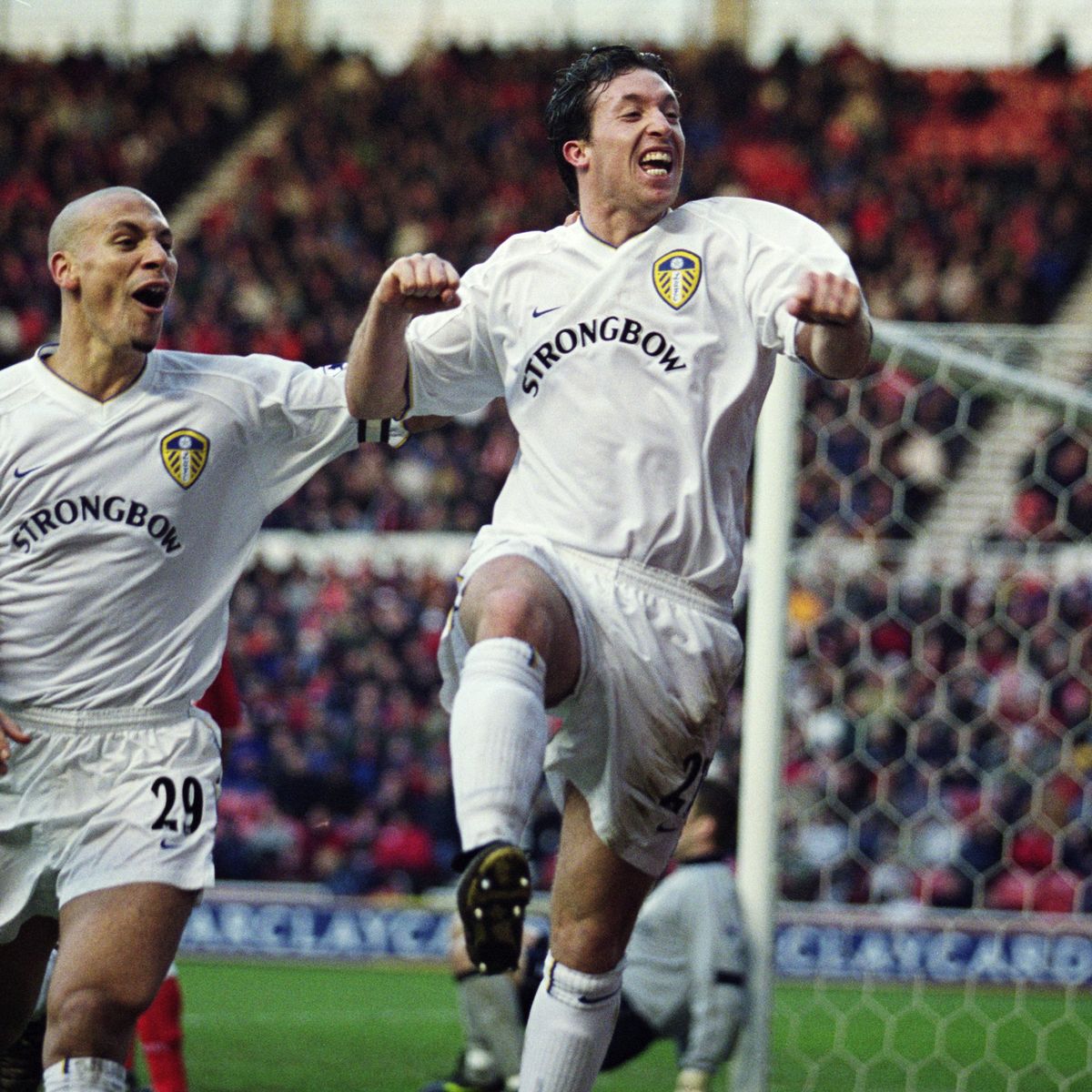
Leeds’s Premier League unbeaten streak would come to an end with a 2-0 loss to Sunderland on 18th November, dropping the team down to 2nd place. After this defeat, the club would complete their second major piece of transfer business, and it was for a player far more notable than Seth Johnson. Robbie Fowler, a bona fide Liverpool legend at the age of 26, chose to leave his boyhood club after eight years of service to move to Elland Road for £11 million. On paper, Leeds were signing one of the best strikers that England and the Premier League had to offer. At this stage in his career, Fowler had already scored 120 Premier League goals in 236 appearances, hitting double figures in five different seasons and scoring over 20 goals in two consecutive seasons (1994-95 and 1995-96). He then held the record for the fastest hat-trick in Premier League history at 4 minutes 33 seconds, achieved against Arsenal in 1994, and had won back-to-back PFA Young Player of the Year awards in 1995 and 1996. He was even a semi-regular England international, having scored 5 goals in 22 caps since debuting in 1996. However, he had recently found himself falling down the Liverpool pecking order due to the emergence of Michael Owen and the signing of Emile Heskey, being restricted to 17 appearances during Liverpool’s treble-winning campaign of 2000-01, prompting the move eastwards to Elland Road. The signing of Fowler would see a shift in position for Alan Smith. Having played as a striker for the entirety of his young career, manager O’Leary would move the homegrown boy to the right-wing in order to include the attacking talents of Smith, Fowler, Mark Viduka and Harry Kewell within the same side.
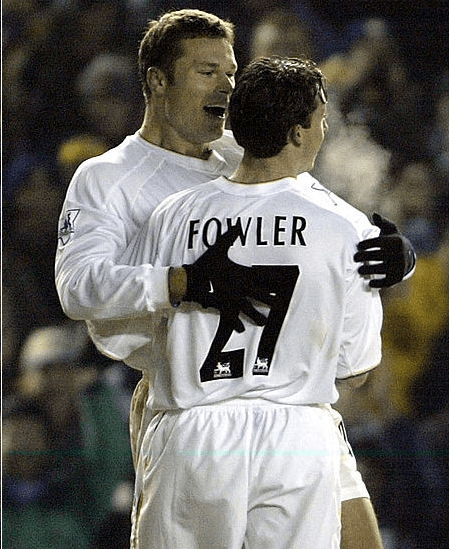
Leeds would respond to the Sunderland loss on 18th November by immediately going unbeaten in their next five matches, drawing 3 and winning 2 before heading into Christmas with a 4-3 defeat to Newcastle on 22nd December. Leeds were denied a point late thanks to a 90th minute winner from Nolberto Solano, despite the team leading 3-1 after 56 minutes. The defeat left Leeds in 3rd place at Christmas, 9 places and 7 points better than they were one year prior. Leeds would end the year 2001 with back-to-back victories over Bolton (3-0) (with Robbie Fowler scoring a hat-trick) and Southampton (1-0) to finish the year in the top three.
Meanwhile in the UEFA Cup, Leeds travelled to Zurich to face Grasshoppers in the UEFA Cup 3rd round on 22nd November. Leeds would win the away leg 2-1, overcoming a first half goal from Stephane Chapuisat with two goals in 10 second half minutes from Ian Harte (73’) and Alan Smith (79’). The second leg would be slightly more difficult, ending in a 2-2 draw. Leeds accelerated into a 2-0 lead with goals from Harry Kewell and Robbie Keane, but a Richard Nunez strike kept the visitors in touch. Nunez would score an equaliser in the 90th minute, but the tie had already been sealed with Leeds progressing 4-3 on aggregate into the 4th round, where they would be drawn against Dutch giants PSV Eindhoven.
Leeds would begin the year 2002 beating West Ham United 3-0 on New Year’s Day with goals from Viduka and Robbie Fowler’s 4th goal in 3 matches. The win meant that Leeds would end the week top of the Premier League for the seventh time that season. This win would be the beginning of the decline for Leeds’s Premier League campaign. Leeds would lose top spot the next week after a second loss to Newcastle. This defeat would begin a seven-match winless streak for Leeds lasting from late January to the beginning of March. A 1-1 draw against Arsenal would be followed by successive defeats to Chelsea (2-0) and Liverpool (4-0) and three draws with Middlesbrough, Charlton and Everton. The 2-0 loss to Chelsea on 30th January would result in Leeds dropping out of the Premier League’s top four for the first time all season after 22 consecutive weeks. In seven weeks, Leeds had fallen from the Premier League’s summit and a shot at the title, to 5th place scrapping for a place in the UEFA Cup and Champions League with Chelsea and Newcastle.
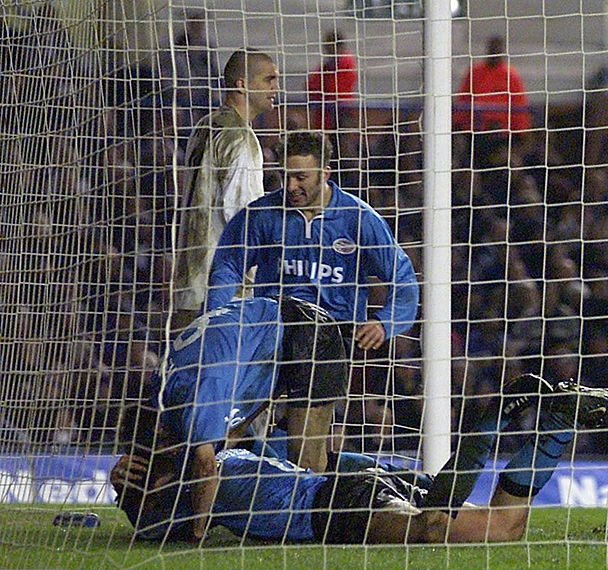
With their Premier League campaign faltering, Leeds returned to action in the UEFA Cup with a two-legged 4th Round tie against Eredivisie champions PSV Eindhoven. PSV had won the previous two editions of the Eredivisie but recently sold key player Ruud Van Nistelrooy to Manchester United in April 2001. Despite that, PSV had found suitable replacements in the unusually named Jan Vennegoor of Hesselink and Mateja Kezman, with the duo were backed up by a imposing midfield of Mark van Bommel, Johann Vogel and Dennis Rommedahl. PSV had dropped down to the UEFA Cup after finishing 3rd in a Champions League group containing Nantes, Galatasaray and Lazio. The first leg between Leeds and PSV took place at the Phillips Stadion on 21st February. Leeds entered the match without a win in six matches in all competitions. Despite many chances from both sides, the game finished goalless. The return leg at Elland Road one week later would lead to another entertaining cup tie full of missed chances from both sides. Leeds had the better of the chances in the first half and should have gone ahead after 23 minutes had Harry Kewell not blazed his shot over the bar after receiving a cut-back from Mark Viduka. The tie remained goalless going into the second half as the the Dutch side started to create the better chances. Nigel Martyn needed to be at his best to keep out a well-taken shot by Mateja Kezman. A last-minute lunge from Rio Ferdinand denied Vennegoor of Hesselink from close range. However, the game would end in heartbreak in the 90th minute as the tall Dutch striker threw his body at a rebound after another PSV shot had hit the crossbar, with the resultant contact from Vennegoor knocking the ball past Nigel Martyn. The match would finish in a 1-0 victory for PSV. For the second season in a row, Leeds’s European dreams would end in tatters after losing the second leg of a European tie.
Now without a win in 10 matches dating back to January, Leeds’s season was seriously petering out. Sitting in 5th place on 6th March 2002, Leeds occupied the sole UEFA Cup place and knew that without a sudden upturn in form, they could potentially end the season with nothing, especially with Chelsea breathing down their neck. Leeds would finally return to winning ways on 6th March as Robbie Fowler and an Ian Harte penalty secured a 2-0 win against struggling Ipswich Town. Two further wins, against Blackburn (3-1) and relegation-threatened Leicester City (2-0) finally gave Leeds momentum and form for the first time in almost 3 months. This momentum would not last however as losing a 4-3 thriller to Manchester United and a further 2-1 defeat to Tottenham would see Leeds drop out of UEFA Cup contention altogether. Leeds could now only hope for a Chelsea slip-up as they aimed to gain maximum points from their final five matches of the season. Leeds almost achieved this, winning 4 out of their final 5 matches. A 1-0 loss to Fulham on 20th April was sandwiched between victories over Sunderland (2-0), Aston Villa (1-0), relegated Derby County and Middlesbrough (both 1-0). At the same time, Chelsea’s form had failed them as they obtained only 2 wins from their final 5 matches. A final day 3-1 defeat to Aston Villa combined with Leeds’s 1-0 victory over Middlesbrough allowed Leeds to move above Chelsea and claim the UEFA Cup place, guaranteeing European football at Elland Road for a 4th successive season.
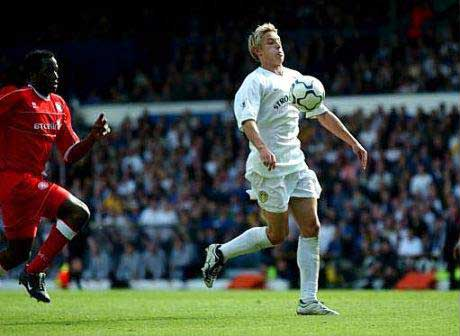
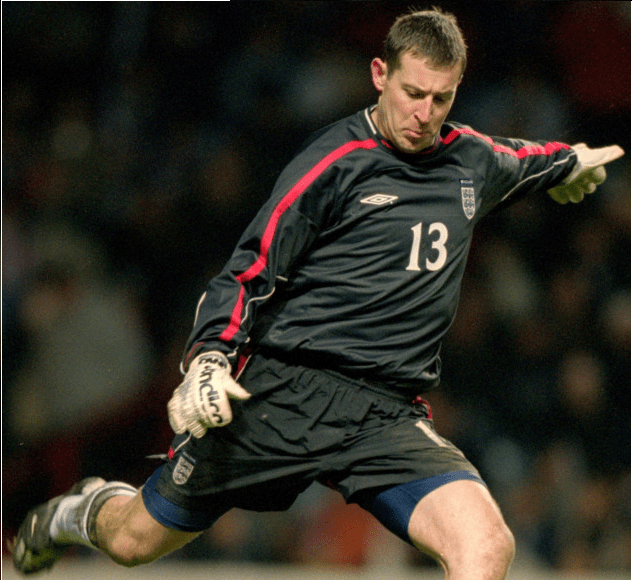
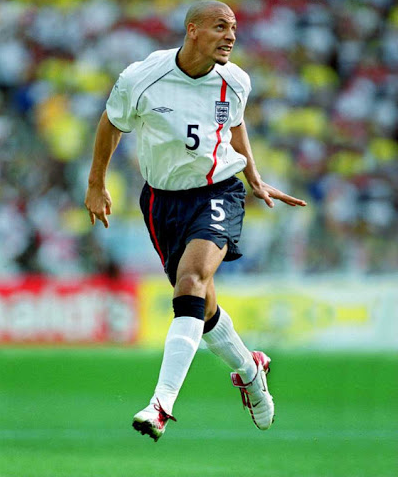
In total, Leeds would play 49 matches across 4 competitions during the 2001-02 season, resulting in 22 wins, 14 draws and 13 losses. During this season, 73 goals were scored (1.49 per game) and 51 were conceded (1.04 per game). In the Premier League, Leeds would finish with 18 wins, 12 draws and 8 losses, an almost-identical record to their 1998-99 season where they had finished 4th (18 wins, 13 draws and 7 losses). During the season, Leeds would score 53 goals (1.39 per game) and concede 37 (0.97 per game). A the halfway point of the season (19 games), Leeds had won 9, drawn 8 and lost 2, with Leeds losing more matches in the second half of the season due to their winless streak between January and March. Leeds had the 7th-best goals record (fewer than 10th placed Blackburn) and had the 3rd– best defence behind champions Arsenal and runners-up Liverpool. This was down to the settled back five of goalkeeper Nigel Martyn, full-backs Danny Mills and Ian Harte and the centre-back pairing of club captain Rio Ferdinand and Dominic Matteo. Ferdinand’s performances would lead to him appearing in the PFA Team of the Year for the 2001-02 season. as injuries once again restricted the playing time of Jonathan Woodgate, to 15 total appearances across the whole season. At the same time, talismanic regular skipper Lucas Radebe would not see a single minute of action during this season due to knee and ankle injuries, which kept him out for the whole season.
The 2001-02 season would see the most game time of any Leeds midfielder go to 33-year-old midfielder David Batty. Since re-signing in 1998, Batty had not managed more than 16 league appearances (or 26 total appearances) in his three full seasons at the club. A rib injury picked up on his re-debut had put him on the shelf immediately. An Achilles injury had kept him out for much of the 1999-00 season, and a heart condition caused by the earlier rib injury had worsened his condition, putting his career at risk. However with all his problems now behind him, Batty would make 44 appearances in all competitions, including playing 36 out of 38 matches in the Premier League, the most football he had played since the 1997-98 season. He would line up in midfield alongside Lee Bowyer (30 total appearances, 7 goals), Eirik Bakke (35 total appearances, 4 goals), Alan Smith (31 appearances, 5 goals) and a resurgent Harry Kewell (35 appearances, 11 goals).
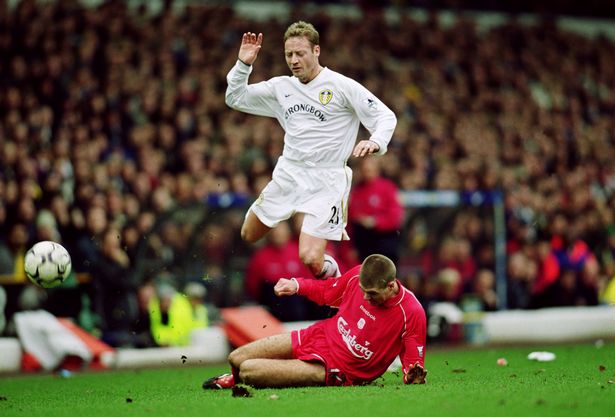
For the second season running, Mark Viduka would be Leeds’s top scorer in all competitions with 17 goals but would share the Premier League honour with Robbie Fowler, with both scoring 12 goals. Fowler’s tally is especially impressive considering he made his Leeds debut at the beginning of December. After scoring 9 goals in 18 matches while on loan the previous year, Robbie Keane would not be able to repeat his Premier League form, scoring 3 goals in 25 matches. He would still manage 9 goals in all competitions, scoring a hat-trick in the League Cup against Leicester City in September and adding a further 3 in the UEFA Cup.
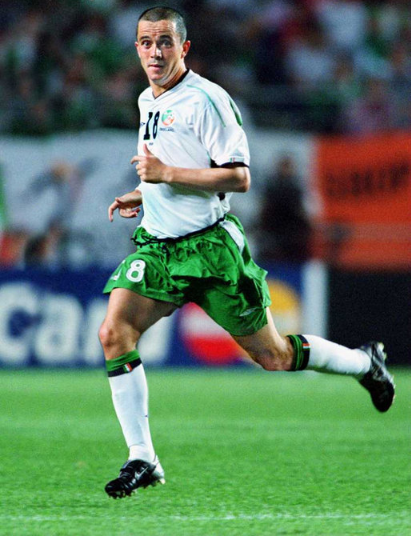
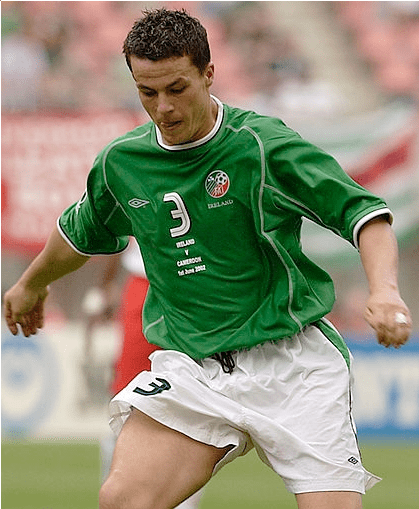
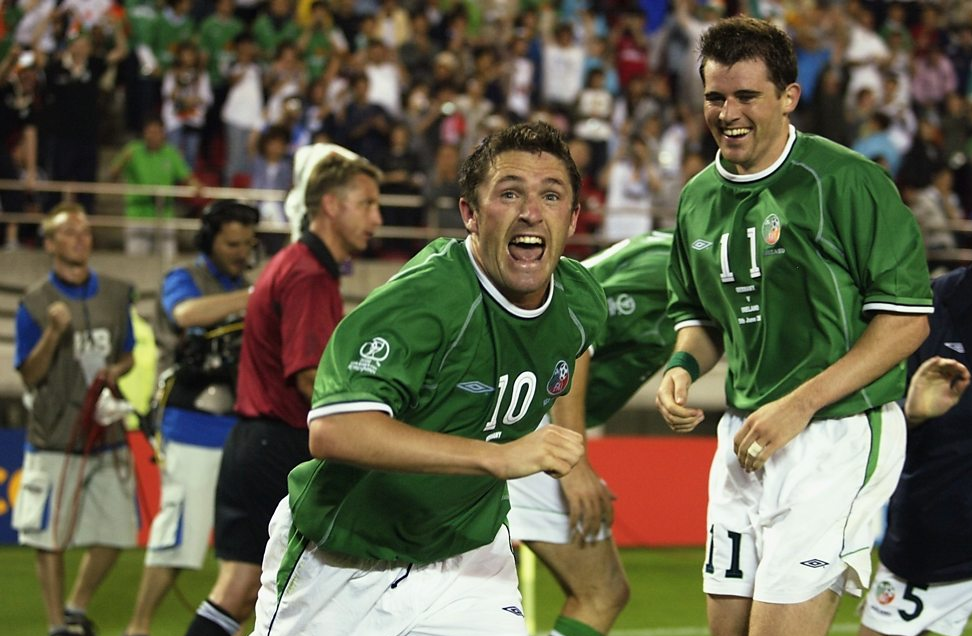
The reward for this Leeds side? Seven Leeds players would represent their countries at the 2002 World Cup in Japan/South Korea. Danny Mills, Nigel Martyn, Robbie Fowler and Rio Ferdinand would be part of the England squad (Ferdinand and Mills would start for England throughout the tournament), Ian Harte, Gary Kelly and Robbie Keane would all start for Republic of Ireland in their unlikely run to the second round of the tournament.

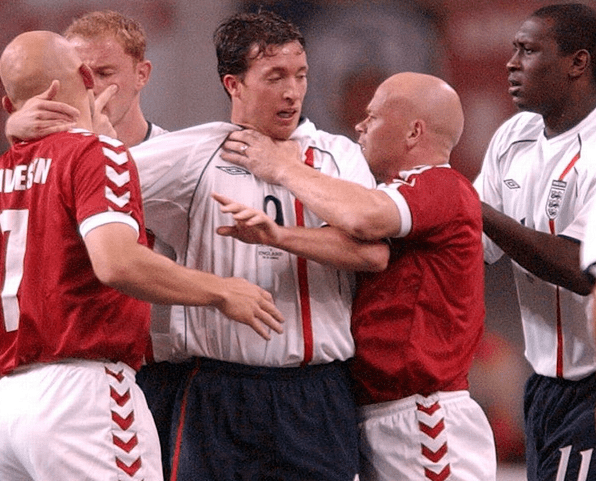
Despite an incredible start before the Christmas period where Leeds had been firing on all cylinders and topped the Premier League for six straight weeks, this season could be seen as a failure. After reaching the Champions League semi-final the previous year and keeping virtually the same squad, there would have been expectations from some within the club that Leeds would be amongst the favourites to capture the UEFA Cup, or least reach the final. With these same factors, three consecutive top-four finishes and an incredible 11-match unbeaten streak to start the season, there would be expectations that Leeds would finish the season strongly and potentially come close to a first Premier League title. The post-Christmas drought and the UEFA Cup exit would not be seen positively by the boardroom, as will be revealed later. For now, Leeds were still one of the best teams in the Premier League, having finished no lower than 5th since 1998. The good times would not forever though, as will be revealed soon.
 the-score-board.co.uk