
Heavy Investment and European Success, 2000-01
Manager: David O’Leary
Top Scorer: Mark Viduka (22)
Premier League: 4th
FA Cup: 4th round
League Cup: 3rd Round
Champions League: Semi-finals
League record: 20 wins, 8 draws, 10 defeats
Transfers £-30,750,000
Transfers in: £43,700,000
Olivier Dacourt – Lens, 15 May, £7,200,000
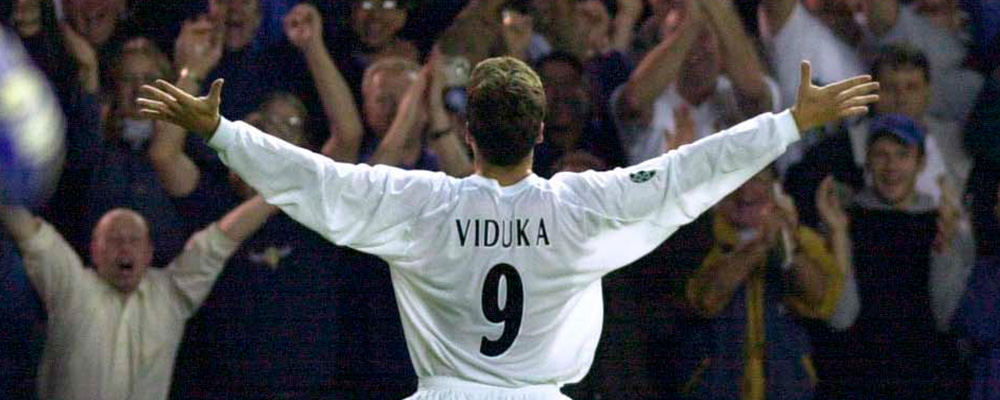
Mark Viduka – Celtic, 2 July, £6,500,000
Dominic Matteo – Liverpool, 17 August, £4,750,000
Jacob Burns – Parramatta Power, 31 August, £250,000
Rio Ferdinand – West Ham United, 26 November, £18,000,000
Robbie Keane – Inter Milan, 25 April, £12,000,000
Transfers out: £12,950,000
Martin Hiden – Salzburg, 25 May, £500,000
Alf-Inge Håland – Manchester City, 13 June, £2,800,000
David Hopkin – Bradford City, 7 July, £2,500,000
Kevin Evans – Cardiff City, 31 August, free
Alan Maybury – Crewe Alexandra, 8 October 2000, loan
Robert Molenaar – Bradford City, 1 December, £400,000
Matt Jones – Leicester City, 14 December, £3,250,000
Darren Huckerby – Manchester City, 29 December, £3,400,000
Lee Matthews – Bristol City, 19 March, £100,000
Warren Feeney – Bournemouth, 22 March, loan
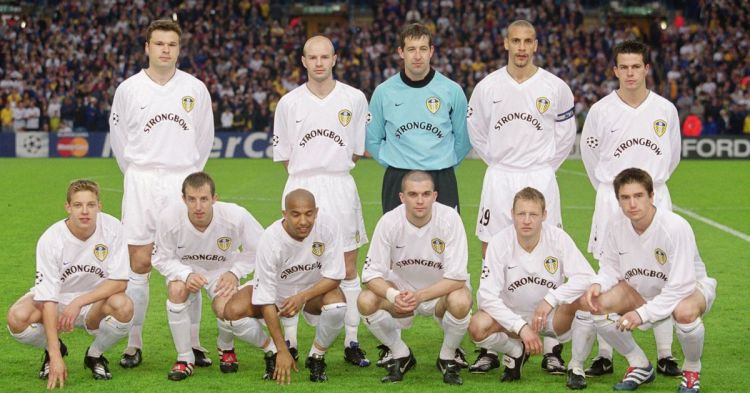
Following the previous season’s success which included the club’s best league finish since 1992 (including 11 weeks as Premier League leaders) which guaranteed the team Champions League football for the first time in eight years, manager David O’Leary was keen to consolidate Leeds’s positions as one of the top clubs in England and a potential Premier League title contender but also as a viable threat in European competition. The marker was laid down one day after the previous season had concluded. Leeds broke their transfer record to bring in 26 year-old French midfielder Olivier Dacourt from Ligue 1 side RC Lens for £7.2 million. Dacourt had been part a Lens side that had made it to the UEFA Cup semi-finals before exiting at the hands of Arsenal. Dacourt had only joined Lens the previous summer, having attained previous Premier League experience spending the 1998-99 at Everton, where he had been a fan favourite. Another big signing would soon follow at the beginning of July as Celtic striker Mark Viduka joined the club for £6.5 million. In the 1 ½ seasons he spent at Celtic after signing from Croatia Zagreb in 1998, Viduka had been a revelation, scoring 30 goals in 37 league matches and 35 goals in 48 appearances in all competitions. Viduka’s performances the previous season had even earnt him the SPFA Players’ Player of the Year award after top scoring in the SPL with 25 goals in only 28 appearances. Leeds were bringing in players who just coming into their prime. Another player who would fit this bill was Dominic Matteo, a £4.25 million defensive signing from Liverpool. Matteo had been at Liverpool since the age of 10 and had successfully transitioned into the Reds first-team squad. Struggling to break through in his first few seasons as a professional, it was in the 1996-97 season where Matteo became Liverpool’s first-choice left-back. 128 of his 155 total appearances would come over the next four seasons, including 34 in his final season, where he formed part of a formidable defence (alongside Stephane Henchoz, Sami Hyypia and Jamie Carragher) that conceded the fewest goals in the Premier League with 30.
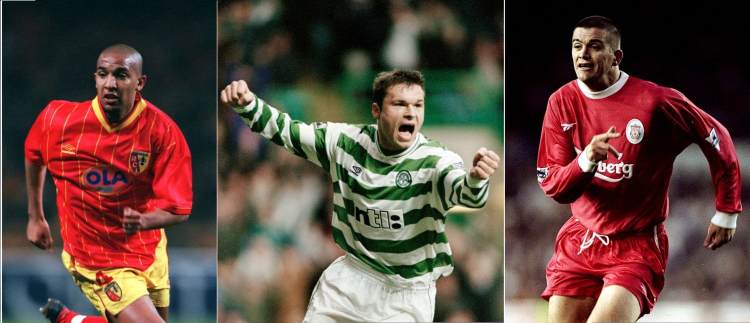
As fresh blood was brought into the club, previous first-team regulars were moved out. Martin Hiden, a first-choice right-back during the 1997-98 season, was sold to SV Salzburg (now Red Bull Salzburg) for £500,000. Hiden had only made 1 appearance the previous season due to the signing of Danny Mills and the resurgence of Gary Kelly. David Hopkin was another former starter who had found his game time limited, sitting behind Lee Bowyer and Stephen McPhail in the midfield pecking order. He would be sold to Bradford City for £2.5 million. The biggest name to be sold would be Alf-Inge Håland to newly-promoted Manchester City for £2.8 million. After being an ever-present since joining in 1997 from Nottingham Forest, Håland had been increasingly used as a utility player in defence and midfield by David O’Leary during the 1999-00 season, being prioritised more during the UEFA Cup campaign. His number 4 shirt would by taken by Olivier Dacourt.
Leeds’s season would begin with Champions League qualification. 3rd place had guaranteed them the opportunity of playing Champions League football. All they had to do was win a two-legged payoff against 1860 Munich. Leeds would despatch the Munich side 3-1 on aggregate, earning themselves a difficult group against 1992 champions Barcelona, 5-time winners AC Milan and Besiktas, runners-up in the Turkish Super Lig. behind Galatasaray.
Leeds would begin their Premier League campaign in customary fashion, slowly and inconsistently. Despite winning their opening two matches against Everton (2-0) and Middlesbrough (2-1), Leeds would follow up these results by not winning any of their league matches during the month of September and finishing the month in 10th place. This contrasted with two wins and one defeat from their opening three Champions League group matches. A 4-0 defeat at the Nou Camp at the hands of Rivaldo, Frank De Boer and Patrick Kluivert was followed up with a famous victory at Elland Road against AC Milan. An injury-hit Leeds team missing Radebe, Woodgate, Kewell and Viduka to a 2000 Olympics call-up managed to match up against a Milan side featuring Costacurta, Maldini, Bierhoff and Andriy Shevchenko, who certainly had his share of chances throughout the night. The deadlock in this hotly-contested game was finally broken thanks to a catastrophic error from Milan goalkeeper Dida. The normally reliable Brazilian shot-stopper inadvertently fumbled a 30-yard strike from Lee Bowyer in the 89th minute to hand Leeds a famous home victory. After a 1-1 draw with Derby County in the league, Leeds would once again not be fazed on the European stage, hitting Besiktas for six, thanks to goals from a returning Viduka, Dominic Matteo, Eirik Bakke, Darren Huckerby and a further two goals from Lee Bowyer. Leeds would carry their European form at Elland Road into their next two league games, edging a 4-3 thriller against Tottenham and beating newly-promoted Charlton 3-1, with all the goals in both games coming from Viduka and strike partner Alan Smith.
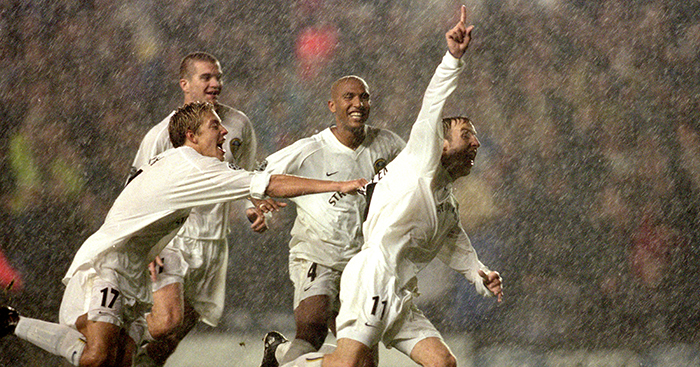
This good form would not last. A goalless draw against Besiktas was followed by a 3-0 defeat to Manchester United and a 1-1 draw against Bradford. After 10 matches, Leeds sat 10th in the Premier League. At the same point one year earlier, Leeds had been 1st. Leeds spotty form would continue through November. Successive memorable 1-1 draws against Barcelona and AC Milan saw Leeds finish their Champions League group in 2nd place, knocking Barcelona down to the UEFA Cup. Considering Leeds’s league form at this time, this result could only be seen as a continent-sized upset. The two draws had come either side of what is now considered one of the greatest Premier League matches of all time, a 4-3 Leeds home victory over Liverpool on 4th November. 2-0 inside 20 minutes after goals from Sami Hyypia and Christian Ziege, Mark Viduka pulled one back to halve Liverpool’s lead and would equalise one minute into the second half. A Vladimir Smicer goal gave Liverpool the lead again in the 61st minute. However, Viduka would prove his excellent finishing abilities, equalising with his hat-trick goal on the 73-minute mark and completing the comeback two minutes later, scoring his and Leeds’s 4th goal on the day. This was the response that O’Leary would have desired, especially following a League Cup exit at the hands of First Division Tranmere Rovers the previous week.
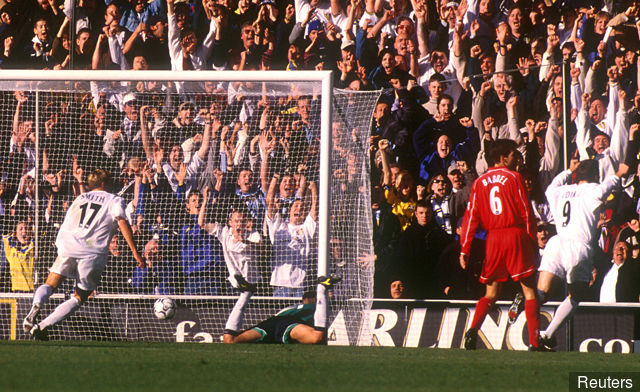
How would Leeds follow up their famous victory against Liverpool? A 1-1 draw against Chelsea, a 1-0 defeat to West Ham and a 1-0 victory over Arsenal. Three further defeats to Leicester, Southampton and Aston Villa (following a victory against Sunderland) meant that the Leeds would spend Christmas in the bottom half of the league table in 12th place. Once again, Leeds were 1st at this same stage one year earlier.
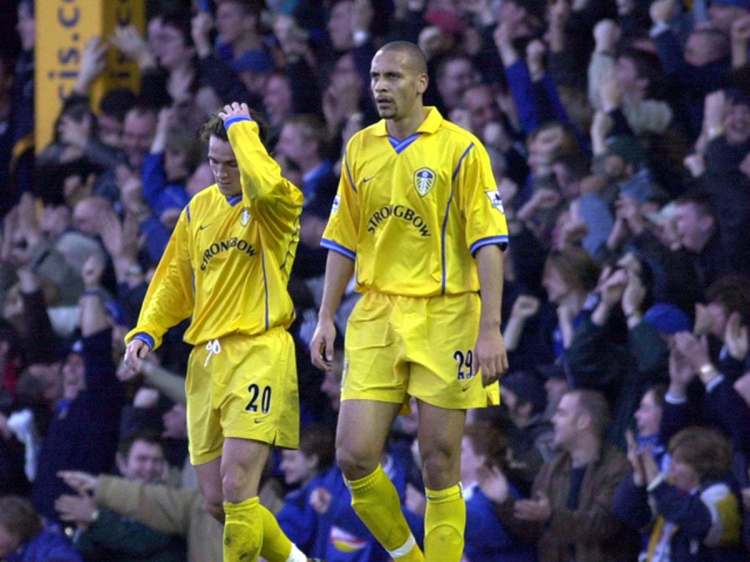
During this poor run of form, Leeds had invested in the transfer market. After three years at the club, Robert Molenaar became the latest Leeds player to be sold to Bradford City. He would be joined on the departure list by Matt Jones, an academy graduate who had been part of the FA Youth Cup- winning side of 1997. However, after making 23 league appearances across three seasons, Jones would be sold to Leicester for £.5 million. Two weeks later, Darren Huckerby, being unable to displace Viduka or Smith in the starting XI moved to Manchester City for £3.4 million. While this trio left United, the two incoming players would prove to be great investment on Leeds’s part. For the second time in one season, Leeds would break their own transfer record when they bought England international Rio Ferdinand from West Ham United. Progressing through the ranks, Ferdinand had been an ever-present in West Ham’s defence since 1997. He had also been capped by England ad had been a member of the squad that travelled to the 1998 World Cup in France. At 22, Ferdinand was one of the best young defenders in English football and this was reflected in the fee that West Ham received for him. The £18 million paid to West Ham was not only a Leeds United transfer record, it was a British transfer record and made Ferdinand the world’s most expensive defender. He would make his debut in the 3-1 loss to Leicester on 2nd December. A slightly lower profile signing came in the loan signing of Robbie Keane from Italian giants Inter Milan. Keane had been signed by Inter for £13 million only five months earlier following a successful season at Coventry City. However, a change in management not long after his arrival had found him deemed surplus to requirements leading to this loan deal.
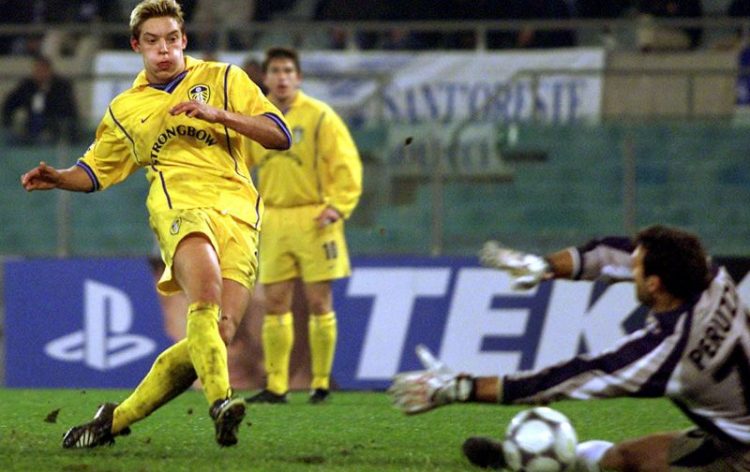
Following their Champions League group stage, Leeds would progress to the second group stage, back when somebody thought that was a good idea. Leeds’s task did not get any easier, with Real Madrid, Lazio and Anderlecht the other teams in Group A. Real Madrid had won a group containing Spartak Moscow, Bayern Leverkusen and Sporting Lisbon, winning 13 out of a possible 15 points. Lazio had just missed out on topping Group B due to their inferior head-to-head record against Arsenal, but had also attained 13 points and lost once. Anderlecht had won a difficult group containing Manchester United PSV Eindhoven and Dynamo Kyiv. Despite losing two group matches, Anderlecht had still managed to win the group by two points. By comparison, Leeds had finished in 2nd place in Group H with 2 wins, 3 draws and 1 defeat. Finishing the group stage with successive draws meant that Leeds sometimes had to rely on other results going their way, including Barcelona’s shock loss to Besiktas in matchday 2 and 3-3 draw with AC Milan in matchday 4. By the end of 2000, Leeds had played 2, winning one and losing the other. A 2-0 loss to Real Madrid at Elland Road. Once again dealing with major injuries to Nigel Martyn, Eirik Bakke and Olivier Dacourt, Leeds had held firm against Messrs Raul and Luis Figo until two quick goals from Fernando Hierro and Raul in the 66th and 68th minutes gave the win to Los Blancos. Two weeks later and a trip to Rome to face Lazio ended in satisfying victory as an Alan Smith strike saw off a team containing Alessandro Nesta, Juan Sebastian Veron, Pavel Nedved, Diego Simeone and Hernan Crespo, leaving the group in the balance heading into 2001.
A 2-1 defeat to Newcastle on Boxing Day 2000 marked Leeds 8th loss of the campaign thus far. The club had lost 11 matches across the whole of the previous league season. The Newcastle defeat left Leeds in the Premier League’s bottom half, ending a year that began with Leeds as league leaders and ending with them in mid-table mediocrity. If Leeds pre-Christmas domestic form was nothing to write home about, the second half of the season could be seen as almost miraculous. Winning seven, drawing four and losing eight of their first 19 league matches and earning 25 points out of a possible 57, the second 19 matches would read as follows: 13 wins, 4 draws, 2 losses, 43 out of 57 points won. Leeds would begin the New Year with a 1-1 draw against Middlesbrough, a 4-0 thrashing of Manchester City and a second defeat to Newcastle (3-1). Leeds still in 12th place. 4 out of 9 points claimed. Still nothing to write home about. Leeds win their next three matches, a 2-1 against Aston Villa, 1-0 against Coventry and 2-1 against Ipswich. With three wins, Leeds’s season started to look a little brighter, jumping from 12th to 7th in three weeks, and they would not stop there. From 24th January to 28th April, Leeds would go on a thirteen-match unbeaten streak in the league, winning ten and drawing three. Among these results were a 1-1 draw against eventual champions Manchester United on 3rd March, a 2-1 victory away at treble-winning Liverpool on 13th April and a 2-0 victory against Chelsea on 28th April. At one point, Leeds won seven matches in a row, scoring 12 and conceding 2 along the way and scoring at least 2 goals in every game. The streak would end with a 2-1 defeat to Arsenal on 5th May, but Leeds would end the campaign strongly thrashing relegated Bradford 6-1 (where Leeds led 5-1 at half-time and all six goals were each scored by a different player (Viduka, Harte, Bakke, Smith, Kewell, Bowyer)) and a comfortable 3-1 victory over Leicester. Leeds’s late season form can only be described as incredible. From New Years’ Day to the season’s end on 19th May, Leeds only lost two games. 40 of the 64 goals that Leeds scored in this season were scored after Christmas, while 15 of the 43 goals they conceded were conceded during this period. At Christmas, Leeds were 12th in the Premier League and European football was a near-impossibility. In May, Leeds had finished the season in 4th and the prospect of European football for the following season came in the form of the UEFA Cup. Leeds end-of-season run was impressive enough that they ultimately missed out on Champions League qualification by one point to Liverpool. Certainly, a league season of two halves.
As their unbeaten streak was starting to get going, Leeds returned their Champions League campaign with the second set of matches in the second group stage. They resumed where they left off, when goals from Ian Harte and Lee Bowyer delivered a 2-1 home victory over Anderlecht on 13th February. The return leg in Brussels would produce a more convincing victory as a Mark Viduka strike either side of a brace from Alan Smith sent Leeds into half-time 3-0 ahead. An Ian Harte penalty 9 minutes from time would seal a 4-1 victory for the away side. Leeds showed no fear against their more experienced group opponents. This attitude was evident in their return match with Real Madrid at the Bernabeu. Leeds even took a 6th-minute lead through Smith before immediately being pegged back by a controversial goal from Raul, where it appeared that the Spaniard had handled the ball. A goal from Luis Figo four minutes before half-time put the hosts ahead but Leeds would level the score through Viduka. However, Los Blancos superior quality would shine through as a Raul header from a Figo cross would win the match for Real by a 3-2 scoreline. The neutral excited by that scoreline would be equally intrigued by the 3-3 draw between Leeds and Lazio on 14th March. Leeds had twice fought back from 1-0 and 2-1 deficits to lead through Viduka with 27 minutes left. However, Leeds’s dreams of doing the double over Lazio were dashed as a 90th minute equaliser from Sinisa Mihajlovic would end the match in a draw. Despite this, Leeds would finish 2nd in Group D behind Real Madrid, finishing with 3 wins, 1 draw and 2 defeats, progressing to the quarter-finals for the first time since 1975 where they would face surprise Spanish champions Deportivo La Coruna.
Deportivo had topped both group stages, defeating the likes of PSG, Galatasaray, Panathinaikos and Hamburg along the way. Under manager Javier Irureta, Deportivo had been a surprise first-time winner of LA Liga in 2000 while breaking the record for lowest final points tally for a champion since three points for a win had been established, winning the title with 69 points. During this season, Deportivo were continuing their good form, as they would eventually finish 2nd behind eventual champions Real Madrid. Before the first leg, comments from the Deportivo camp had alleged that Leeds were the ‘weak link’ of the remaining teams in the Champions League. How Leeds respond to these comments? By beating Super Depor 3-0 in front of the Elland Road faithful with goals from Ian Harte, Alan Smith and captain Rio Ferdinand. The second leg in Coruna was not as easy. Leeds went behind early as a 9th minute penalty from Djalminha gave Deportivo hope and Leeds were lucky to head in at the break only 1-0 down following a dominant display from the Spanish. A second goal from Diego Tristan with 17 minutes left to reduce the aggregate deficit to one goal put Yorkshire hearts in mouths. However, Leeds managed to hold out and progress to the semi-finals with a 3-2 aggregate win.
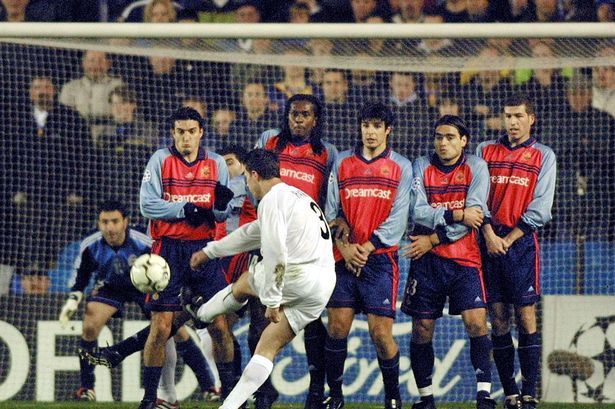
In the last four, Leeds would be faced with Valencia. Valencia were sitting 5th in La Liga but did boast side featuring the goalkeeping of Santiago Canizares, a centre-back pairing of Roberto Ayala and future Southampton manager Mauricio Pellegrino, a midfield containing the talents of Pablo Aimar, Gaizka Mendieta, Didier Deschamps and David Abelda to name a few and the forward partnership of Juan Sanchez and 21 year-old John Carew. Valencia were also the previous season’s runners-up having lost comfortably to Real Madrid in the Stade de France. The first leg a at Elland Road ended goalless. Both sides were denied by the woodwork and the efforts of Canizares and Nigel Martyn. Leeds had chances to win the match in the second-half, but two Lee Bowyer efforts found the post and the crossbar instead of the goal before a final-minute goal-line clearance for Rio Ferdinand kept the honours even heading into the return leg at the Mestalla.
All Leeds had to do to progress to a first Champions League final in 25 years was to win in Valencia, a task easier said than done. Leeds entered the second-leg with a streak-ending loss to Arsenal, meaning that Leeds needed to win the Champions League in order to remain at Europe’s top table for another season. The second leg would not be as close as the first but would begin in controversial circumstances. 15 minutes in, a cross from Mendieta was turned in by Juan Sanchez, or more accurately, Juan Sanchez’s hand. Despite Leeds protests, referee Urs Meier allowed the goal to stand. Despite this injustice, Leeds continued to compete, needing only a draw to progress on the away goal rule. However, 2 minutes into the second half, a more clear-cut goal from Sanchez doubled the lead of the Valencians and similar goal from Mendieta on 53 minutes would seal Leeds’s fate. The 3-0 defeat saw Leeds exit the Champions League at the semi-final stage. Unbeknownst to those Leeds players, it would be the last time they would play in the Champions League for a long, long time. Despite their excellent post-Christmas flurry in the Premier League, Leeds’s season would end in cruel heartbreak at the hand(s) a superior Valencia side, who after another Champions League Final defeat to Bayern Munich, would hire a 41-year old called Rafael Benitez. They would win La Liga the following year.
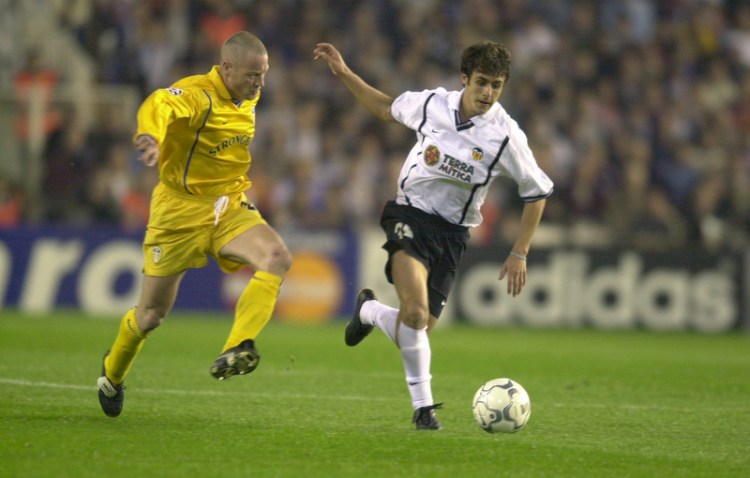
In total across four competitions in the 2000-01 season, Leeds played 58 matches. They would win 29, draw 13 and lose 16. They would score 94 goals (1.62 per game) and concede 70 (1.20 per game). In the Premier League specifically, Leeds would finish with 20 wins, 8 draws and 10 losses, scoring 64 and conceding 43 and would finish with 68 points. Despite finishing one position lower in the table compared to the previous season, Leeds’s statistics almost match those of 1999-00 even in the goal stats, despite one season starting well and petering out and the other beginning poorly and finishing incredibly. This similar form with the addition of United’s surprising run to the Champions League run, marks this season as matching or even bettering the previous season in terms of performance.
Despite spending big the previous summer, Leeds’s investments had paid off. Despite letting several experienced first-teamers leave, Leeds had responded well. The standout signing of the bunch as well as Leeds standout player of the season was Mark Viduka. After opening his United tally in the 6-0 thrashing of Besiktas in September followed by a brace four days later in a 4-3 victory over Tottenham, Viduka successfully carried his Celtic form with him to West Yorkshire. He would make 53 appearances and score 22 goals in all competitions. His 17 league goals would rank him joint-3rd in the Premier League’s Golden Boot standings, equalling the tally of Thierry Henry and finishing behind Ipswich Town striker Marcus Stewart and returning striker Jimmy Floyd Hasselbaink (21), now of Chelsea. The rest of Leeds major signings would play their part during the season. Originally signed as left-back, Dominic Matteo would play 48 matches in total both on the left and in centre of defence, sometimes forming an effective partnership with Rio Ferdinand when the regular duo of Lucas Radebe and Jonathan Woodgate were unavailable. Ferdinand would become an immediate starter, playing 32 matches after arriving from West Ham in November and would be first choice ahead of Woodgate for much of the season. Robbie Keane, in a mix of excellent performances by Leeds forwards, managed an impressive 9 goals in 18 Premier League appearances after arriving on loan at the end of December. For his contributions, he would be rewarded with a permanent move to club from Inter Milan for £12 million on 25th April 2001. Olivier Dacourt would become a constant presence in Leeds’s midfield, with only Lee Bowyer, playing more than Dacourt’s 33 league appearances and 48 total appearances throughout the season. Speaking of Bowyer, the 24-year-old would win the club’s Player of the Year award after his best season to date. A frequent goal scorer from midfield in previous season, Bowyer would score 15 goals in 54 appearances. He would also be the only Leeds player to appear in every Premier League match that season, making him the top appearance-maker in both league and total appearances. This came during a season that saw the Englishman and teammate Jonathan Woodgate go to trial. The trial began in February 2001, where the two Leeds players were tried for causing grievous bodily harm and affray for allegedly beating up student Sarfraz Najeib outside a nightclub the previous year. Woodgate and Leeds Michael Duberry were also tried on conspiracy to pervert the course of justice. The entirety of the case was heard by the jury at Hull Crown Court. In April 2001, the case would be thrown out after the jury was dismissed with the suspicion that the decision of the jury could have been prejudiced by an article in the Sunday Mirror that had alleged guilt on the defendants and their accomplices. Some of the jury had admitted to reading the Sunday Mirror article, which affected their impartiality to make a fair and just decision. The retiral for Bowyer and Woodgate was set for later in the year. Duberry and Woodgate had earlier been cleared of conspiracy to pervert the course of justice.
Throughout the season, previous Leeds standouts found their seasons affected by injuries. Lucas Radebe and Jonathan Woodgate would play 17 and 14 league games during the season, with Rio Ferdinand and Dominic Matteo forming an equally formidable partnership in their stead. Normally reliable goalkeeper Nigel Martyn, who had only missed 6 Premier League matches since arriving in 1996 was restricted to 23 matches this time out. Martyn’s absence would allow second-choice ‘keeper Paul Robinson to play the other 16 matches and 24 matches in all competitions. 22-year-old Robinson would earn himself the Premier League Player of the Month award for his performances during the month of November, one of three Leeds players to win the award this season, along with Alan Smith (September) and Robbie Keane (January).
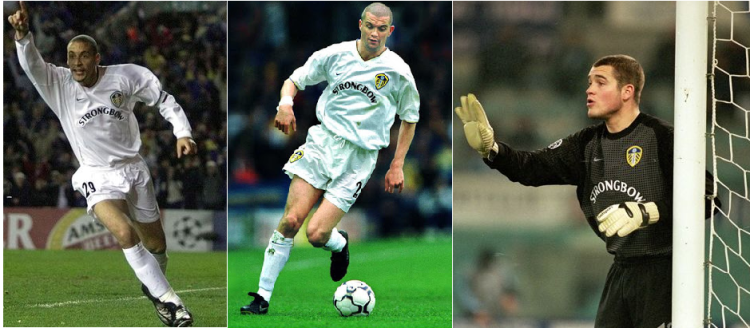
While PFA Young Player of the Year Harry Kewell was not able to fully replicate his displays of the previous year, scoring 2 goals across 26 appearances (17 in the league), he was still a key player in the team’s run to the Champions League final four. While Kewell was struggling with injury, fellow forward Alan Smith was enjoying another breakout season, following his earlier one in 1998-99. Partnered alongside Mark Viduka in attack, Smith would play 52 matches in all competitions, scoring 18 goals (11 goals in 33 in the Premier League), leaving him 2nd in the scoring behind his strike partner. He would be the team’s top scorer during their Champions League campaign, netting an impressive 7 goals in 16 games. This included the winning goal against Lazio in Rome, a brace against Anderlecht in Brussels, and further goals against Real Madrid and Deportivo. He would be sent off in the second match against Valencia, similar to how Harry Kewell was red-carded in the team’s UEFA Cup semi-final exit to Galatasaray one year earlier. His season would have a happy ending as his performances would result in a call-up to the England squad, where he would make his debut in May 2001 in a match against Italy.
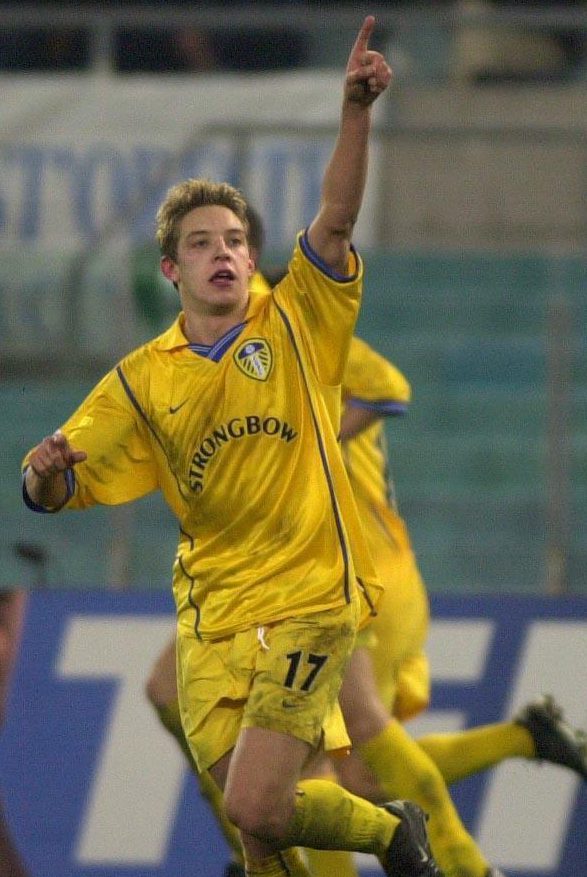
In May 2001, Leeds had proven themselves to not only be one of the best teams in English football, but a force to be reckoned within Europe. The club had overcome multiple setbacks throughout the season and had responded effectively, proving themselves at being able to compete in two competitions at the same time. Leeds’s transfers had paid off and the team had been strengthened effectively, with more still to come from this young and developing Leeds side under David O’Leary. Leeds were on the cusp of something special, it just remained to be seen if the club could finally capitalise on their amazing potential and bring home silverware the following season. Would the good times continue and potentially get even better?
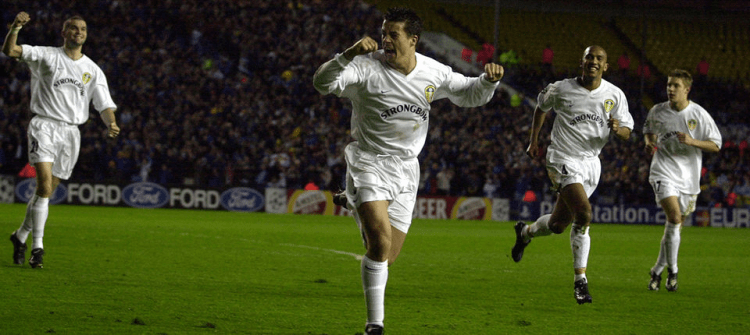
 the-score-board.co.uk