
Three Championship clubs out of four semi-finalists, the first new FA Cup winner since 1995 and the end to the longest streak between FA Cup victories…
The FA Cup is the greatest domestic cup competition in the world. All the major European leagues have their own domestic cups such as the Coupe de France, the Copa del Rey (Spain), the Coppa Italia and the DFB-Pokal (Germany), but nothing compares to the kind of attention that the FA Cup delivers. England’s main domestic cup competition is the oldest of its kind, having been run annually since 1872, when the first edition saw the Wanderers defeat the Royal Engineers in the final to claim the trophy. In the 148 editions that have followed, a further 43 clubs have joined Wanderers F.C. in lifting the famous trophy. The vast majority of these wins have come from top-flight football clubs, but every season clubs from below the Premier League and even the Championship still dream of FA Cup glory with each passing year. Compared to the more restrictive League Cup, teams from far down the footballing pyramid deep into the non-league system are given an opportunity, however small it is, to dream of travelling to Old Trafford, Stamford Bridge and Anfield, the financial rewards earnt by progressing through each round of the cup and hopefully having the opportunity to host the biggest teams in the land. The FA Cup is the chance to see matches that couldn’t be seen elsewhere. How often are you likely to see Carlisle United vs Manchester City or Wrexham vs West Ham in any other context? In every season when these match-ups occur, there is always one result that grabs the headlines and becomes part of footballing history: the fabled giant-killing. The time when David defeats Goliath on a footballing field as money and reputation goes out the window for one day in favour of the ‘beautiful game’. Hereford beating Newcastle in 1973, Wrexham beating Arsenal in 1992 and Bradford defeating Chelsea in 2014 are all examples of famous giant-killings that have gone on to live long in the memory of many a neutral football fan.
All that has mentioned in this article forms part of what is known as the ‘magic’ of the FA Cup, that which continues to make this fabled competition feel special nearly 150 years into its existence. While there has been criticism in the modern day that the competition is no longer taken seriously by Premier League clubs, with entirely second-string sides being sent out to face lower-league clubs as the first-team is used to prioritise the league season, there is still something magical about the FA Cup today. Once in a while, one edition of the FA Cup can cause fans, pundits and commentators to claim that the ‘magic’ of the FA Cup is alive and well. For that one edition, we have to journey back to the great sporting year of 2008.
First Round, 10-11 November 2007
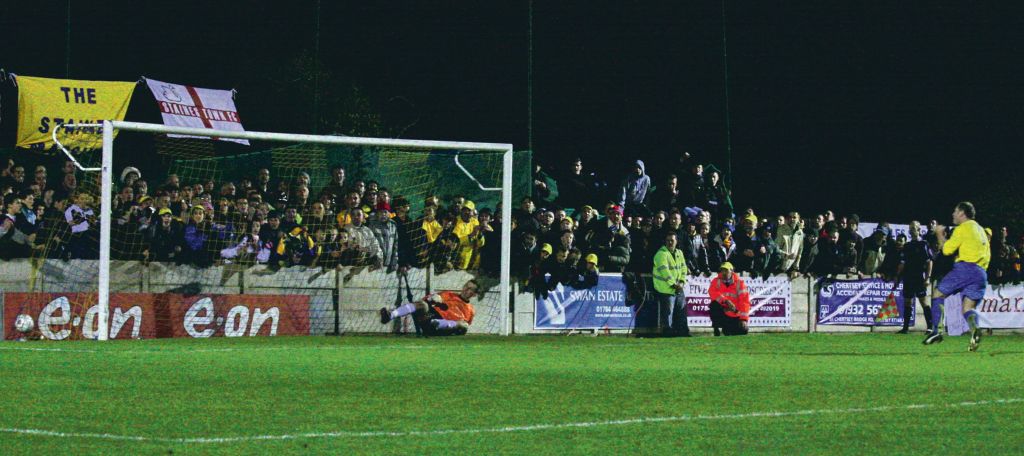
On 18th August 2007, 729 clubs would begin their quest to win the FA Cup at Wembley Stadium on 17th May 2008. By the first round proper on 10th November, these numbers would drop to 124, as clubs from League One and League Two would enter the competition to face the remaining non-league sides. The biggest entry into this round would be Leeds United, a team that had been in the Premier League 3 years earlier and in a Champions League Final 6 years earlier. Now appearing in English football’s third tier for the first time in their history, Leeds would be drawn against League Two Hereford United. The match would end in a goalless draw, leading to a replay at Elland Road. The replay would see the Bulls knock the former champions of England out of the FA Cup at the earliest possible stage, with Hereford claiming a 1-0 upset victory. Other upsets from the first round would see non-league defeat League Two as Forest Green Rovers defeated Rotherham United 3-0 in a replay, Rushden and Diamonds would defeat League Two strugglers Macclesfield Town 3-1, and Staines Town would win a penalty shoot-out against Stockport County following two 1-1 draws.
Second Round, 1st December 2007
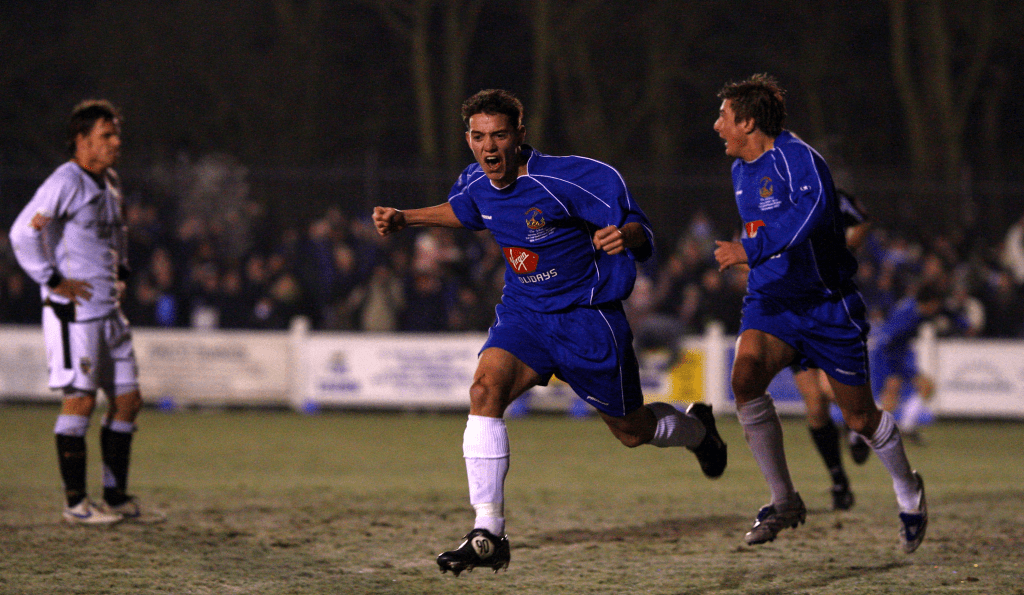
In the second round, the first-round giant-killers would meet their match. In an entertaining match, Forest Green Rovers would go down 3-2 to League One Swindon Town. After getting the luck against Stockport County, Staines would find themselves on the end of a thrashing by League Two high-flyers Peterborough United (5-0) as would Rushden and Diamonds to Bristol Rovers (5-1). However following the Leeds victory, Hereford United would claim another League One scalp, beating Hartlepool United 2-0 at Edgar Street to progress to the third round, equalling their finish from the previous season. However, the biggest shocks from this round would occur in replays. After a 1-1 draw at Vale Park on 1st December, Southern League Division One Midlands side (the fourth division of non-league football) Chasetown would defeat League One Port Vale 1-0 in front of 1,986 at The Scholar’s Ground in Burntwood, Staffordshire. A club representing a village with a population of 3,885 people was now in the 3rd round of the FA Cup, the lowest-ranked team to ever make the third round in the then-136 year history of the competition. The other major shock would see Conference South side Havant and Waterlooville, a team from the sixth tier of English football, would beat League Two Notts County, the oldest professional football club in the world, 1-0 at Meadow Lane to book a place in the third round to face League One leaders Swansea City. To progress to the third round, Swansea had beaten Horsham 6-2 in a replay.
Third Round, 5-6 January 2008
The third round would see the customary entrance of the 44 highest-rankest teams in England, the 20 Premier League sides and the 24 Championship clubs. The draw for the third round would not see many high-profile ties, with the biggest match being Aston Villa vs Manchester United. Other notable ties would see Premier League Everton host League One Oldham Athletic, Arsenal were drawn against Championship Burnley and Liverpool face Luton Town while holders Chelsea would begin their defence against London rival Queens Park Rangers. For the giant-killers, Chasetown would face Championship Cardiff City, Havant and Waterlooville would face Swansea City and Hereford would face further League One opposition in Tranmere Rovers. Of the 20 Premier League teams that would enter the FA Cup at the third round stage, 9 would exit at the third-round stage. Of the 9 that exited, only 4 would be eliminated by other Premier League clubs. Aston Villa would fall 2-0 at the hands of the previous season’s finalists Manchester United. Tottenham and Reading would leave White Hart Lane honours even after a 2-2 draw, but Spurs would win the day 1-0 back at the Madejski Stadium. Wigan would claim a 3-0 away victory over Sunderland, and Sven Goran Eriksson’s Manchester City would defeat West Ham 1-0.
On the other side of the scale, 2006 champions Liverpool sans Steven Gerrard would require a replay to get past League One Luton Town, drawing 1-1 at Kenilworth Road after John Arne Riise’s late own goal took the tie back to Anfield. There, goals from Ryan Babel, Sami Hyypia and a treble from returning captain Gerrard would give the Reds a comfortable 5-0 win and a path into the fourth round. Other top-flight teams would not be so lucky as Bolton, Blackburn, Fulham, Birmingham and Everton would all exit at the hands of lower-league clubs. Recently-relegated Sheffield United would put three past Premier League strugglers Bolton (3-1), while Blackburn would suffer a 4-1 defeat to 1987 winners Coventry City. League One Huddersfield Town would secure a 2-1 win over Birmingham City.
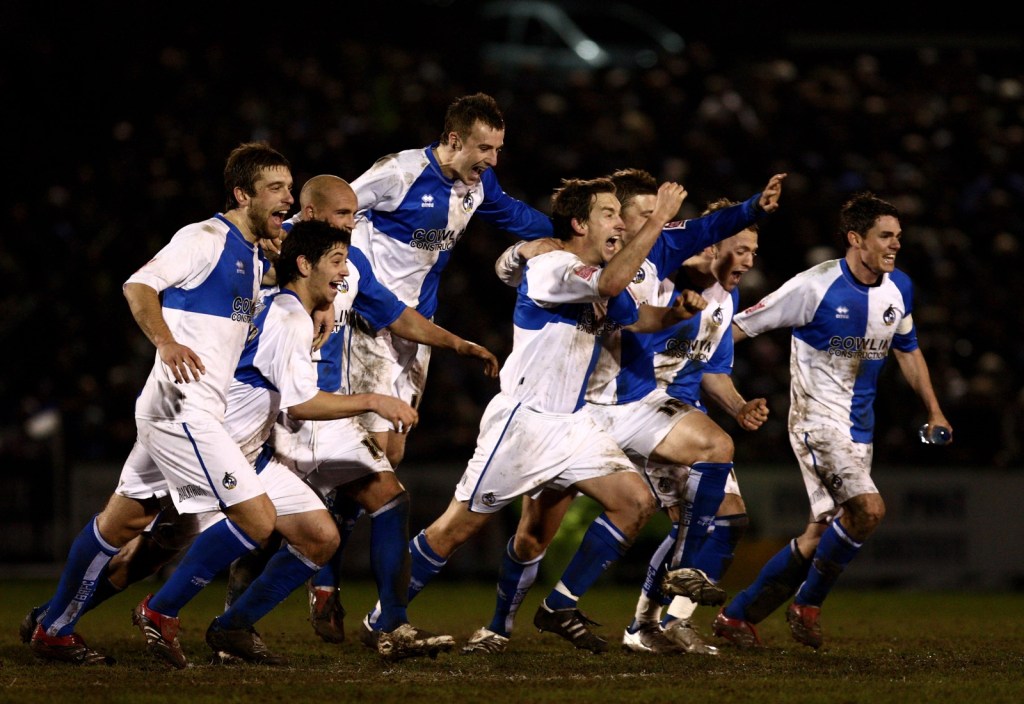
A struggling Fulham had been drawn against League One strugglers Bristol Rovers. The match at Craven Cottage would end in a 2-2 draw, a huge result for Bristol Rovers. The Pirates would take the lead through Danny Coles’ deflected shot after only three minutes and Fulham would find it hard to break down a resilient Rovers defence. The Cottagers would equalise minutes before half-time as an attempted clearance would fall to David Healy, who would finish from six yards. Halfway through the second half, Bristol Rovers re-took the lead as Chris Lines cross was met by Craig Hinton to head home. 10 minutes later, Steven Davis would play the ball forward to David Healy, who would knock the ball down to Danny Murphy, who fired home from 20 yards. The Cottagers had rescued a replay after a scare from the League One side, but Rovers would have the benefit of inviting a Premier League side to the Memorial Stadium. 16 days later, the replay would end in a 0-0 draw after 90 minutes, and 30 minutes of extra time could not separate the two sides. The resultant penalty shoot-out would shockingly go the way of the lower-ranked side. A missed penalty from Fulham’s Jimmy Bullard would be enough as Bristol Rovers would knock Roy Hodgson’s side out of the cup after a 5-3 victory. The biggest of all the third-round shocks would occur at Goodison Park as League One Oldham Athletic would defeat David Moyes’ Everton 1-0 after a 25-yard strike from Gary McDonald as another previous FA Cup winner would fall by the wayside. In other upset victories, Hereford United would continue their fairytale run, knocking out Tranmere Rovers. After a 2-2 draw at Tranmere, the replay would see the Bulls prevail 1-0 in front of 6.471 spectators at Edgar Street. Unfortunately, the third round would prove a step too far for Chasetown as they would be beaten 3-1 by Championship play-off chasers Cardiff City at The Scholar’s Ground. However, the team had gained new respect, new fans and £24,000 in prize money as a result of their surprise success.
Sixth-tier Havant and Waterlooville would have an easier task on their hands, even if it was against League One Leaders Swansea City. Havant would impressively draw 1-1 at the Liberty Stadium to return the tie to the 5,300 seat Westleigh Park. This stadium would bear witness to the most famous victory in the club’s history as Shaun Gale’s Hawks would defeat Swansea 4-2. Havant would take the lead as Swansea captain Garry Monk would head into his own net after only 4 minutes of play. The lead would be doubled after 25 minutes as a partially-cleared corner would be fired back through the crowded bodies by Jamie Collins. The Conference South side would unbelievably score a third before half-time as striker Rocky Baptiste would tap home at the near post after Richard Pacquette’s shot had rebounded. Swansea would pull a goal back through Guillem Bauza two minutes later. Swansea would have opportunities to narrow the lead further, but Leon Britton’s penalty was saved by Havant goalkeeper Kevin Scriven and defender Dennis Lawrence’s downward header bounced over the crossbar. Swansea would finally press their advantage home three minutes after half-time though top scorer Jason Scotland’s tap-in to narrow Havant’s lead to one goal. The momentum was now fully with the League One side and an equaliser seemed inevitable. However, the team from Hampshire re-established their two goal lead on 65 minutes as Tom Jordan flicked the ball off the back of his head into the bottom corner of the Swansea net. Further chances would soon follow as a desperate Swansea would deliver blow after blow to the Havant & Waterlooville goal but could find no way through, thrice hitting the woodwork as the Havant & Waterlooville successfully defeated a side situated 83 places above them in the English football pyramid. Their reward for the greatest victory in the club’s history: a trip to Anfield.

Fourth Round, 26-27 January 2008
The fourth round of the 2008 FA Cup would be a notable one as, for the first time since 1957, the round would produce no replays, with all matches being settled at the first attempt. 11 Premier League clubs, 10 Championship clubs, 5 League One clubs, 5 League Two clubs and 1 non-league side would make up the FA Cup’s final 32 participants. The draw for the fourth round featured three all-Premier League ties. These ties would see 10-time winners Arsenal defeat Newcastle United 3-0 after a brace from Emmanuel Adebayor and holders Chelsea would defeat Wigan Athletic 2-1. The highest-profile tie would see Premier League leaders Manchester United facing a Tottenham side that had been resurgent under new manager Juande Ramos. After going behind to a Robbie Keane goal, the 11-time champions would turn the game around and goals from Carlos Tevez and a brace from Cristiano Ronaldo would seal a 3-1 win at Old Trafford and progression to the fifth round. The other high-profile tie would see a match-up between two teams with 112 league placings between them as Premier League Liverpool would host Conference South Havant and Waterlooville. A team containing Andy Scriven, Tom Jordan and Rocky Baptiste would take on a team containing Sami Hyypia, Javier Mascherano, John Arne Riise and Peter Crouch. The team from Hampshire was so unknown to the football would that the match was preceded by a BBC Sport article titled ‘Who are Havant & Waterlooville?’. After 8 minutes, Liverpool would find out who they were. After an early Yossi Benayoun chance was headed wide, Martin Skrtel was required to block a shot from Alfie Potter as Havant set their stall out early. On 8 minutes, Havant would receive a corner. From Mo Harkin’s delivery, Richard Pacquette’s downward header would bounce into the top corner and the non-leaguers were ahead. Following the goal, the Hawks would hold the 2006 winners at bay as Liverpool would struggle to find their rhythm. They nearly doubled their lead, but a Neil Sharp volley would clear the crossbar. After 19 minutes behind, Liverpool would restore parity through midfielder Lucas Leiva’s curling effort, but this parity would only last for four minutes. After 31 minutes, an Alfie Potter shot would hit Martin Skrtel deflecting past replacement goalkeeper Charles Itandje in the Liverpool goal to put the sixth-tier side in front for the second time against the 18-time English champions. One of the biggest shocks in FA Cup history was now potentially on the cards and Havant’s lead would last for 14 minutes until Liverpool salvaged an equaliser on the verge of half-time through Yossi Benayoun. The second half would see a different story play out as Liverpool would come out firing. 11 minutes after half-time, Jermaine Pennant’s cross would find Benayoun in the box and the Israeli international would turn and unleash a powerful shot to give Liverpool the lead for the first time. Three minutes later, Benayoun would complete his hat-trick and Liverpool were now firmly in control. A fourth Benayoun goal was saved by Havant goalkeeper Kevin Scriven. The non-leaguers would almost score a third but third-round hero Tom Jordan would see his shot saved by Itandje. Finally with Dirk Kuyt, Jamie Carragher and Steven Gerrard on the field, a Peter Crouch tap-in would make it 5-2 in the 90th minute. Liverpool’s blushes had well and truly been spared, but had been seriously threatened by an impressive and Havant & Waterlooville side, who had achieved their record FA Cup result and whose exit ended the non-league participation in the FA Cup at the fourth round.
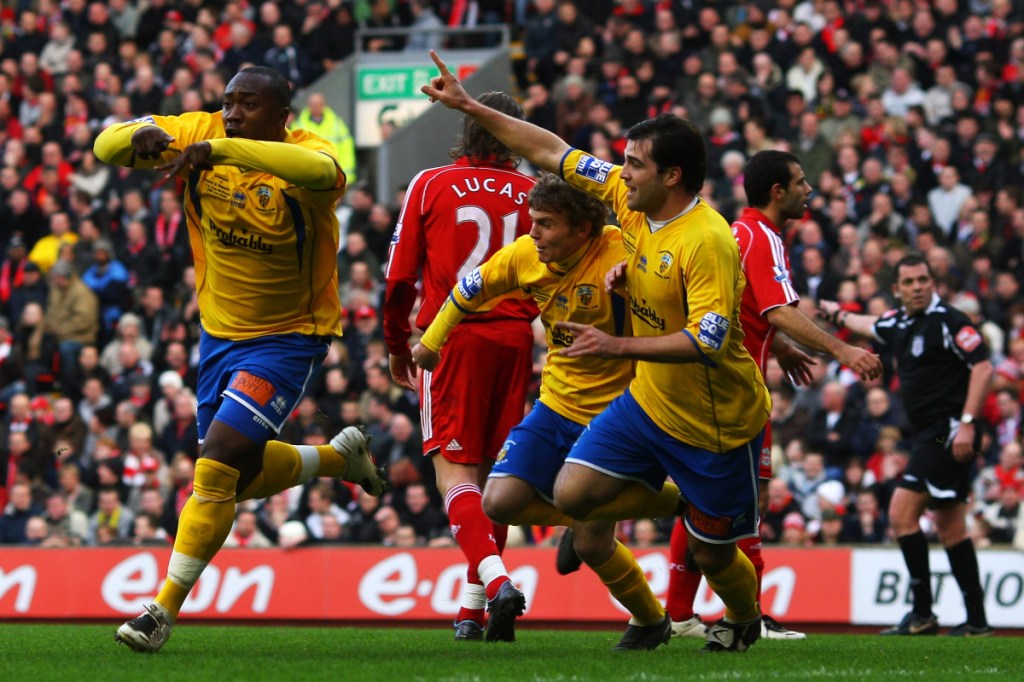
In other news, a brave Hereford United would finally fall in the fourth round, losing 2-1 to Chasetown conquerors Cardiff City at Edgar Street, leaving the FA Cup with their best-ever result. The round would not be without a giant-killing as Sheffield United would claim another Premier League scalp, defeating Manchester City 2-1 at Bramall Lane to follow up on their third round victory over Bolton.
Fifth Round, 16-17 February 2008
16 teams would enter the fifth round over the weekend of the 16th and 17th February. Compared to the previous round where Premier League clubs had been in the majority, only six Premier League teams (Middlesbrough, Liverpool, Manchester United, Arsenal Portsmouth, Chelsea) would enter the fifth round, compared to eight Championship clubs and two League One clubs (Bristol Rovers, Huddersfield Town). Of the 8 matches played in the fifth round, only one would be an all-Premier League tie but it was the largest match that could possibly be drawn as 11-time winners Manchester United and 10-time champions Arsenal would continue their storied FA Cup rivalry which had previously included the famous ‘four-minute final’ in 1979, that Ryan Giggs goal in 1999’s semi-final replay and the first FA Cup final to be decided by a penalty shoot-out in 2005. For their exploits thus far, Bristol Rovers would be rewarded with Championship side Southampton coming to the Memorial Ground while Huddersfield Town would be looking to upset Chelsea at Stamford Bridge.
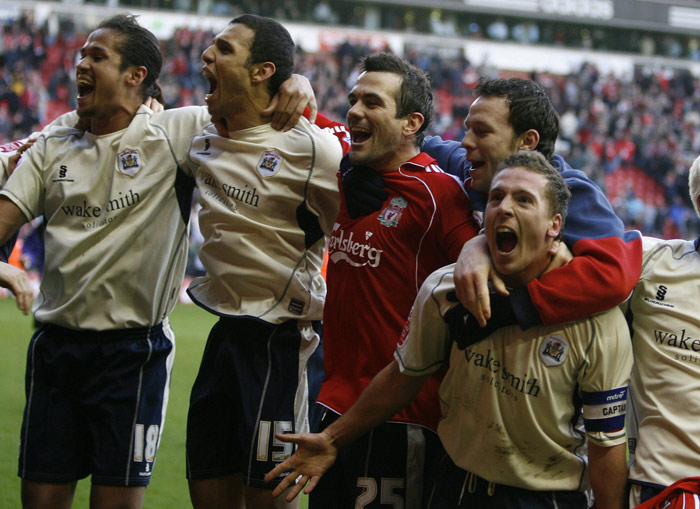
The other notable tie in the round would see Liverpool facing Championship side Barnsley at Anfield. Barnsley had previously beaten Championship Blackpool and League One Southend United but would have taken solace from the fact that Premier League top-four regulars Liverpool had been made to squirm by non-league Havant & Waterlooville. To avoid a similar situation, the Reds had named a near full-strength side, with only Pepe Reina being rested, Steven Gerrard starting on the bench and Xabi Alonso and Dirk Kuyt coming into the starting line-up. It didn’t look like there would be a repeat of the Havant & Waterlooville match with Liverpool having plenty of chances early on. Peter Crouch, Xabi Alonso and Ryan Babel would all see their shots saved by Barnsley goalkeeper Luke Steele, who was making his club debut after joining on an emergency loan from West Brom. Steele would finally be beaten after 32 minutes as Babel would drag the ball back for Dirk Kuyt, who would finish with aplomb. Potential chances at a second goal were saved by Steele, in an impressive showing from the 22-year-old. After half-time, the Tykes would equalise when Martin Devaney’s cross was headed home by Stephen Foster past the flailing Charles Itandje. Despite equalising, Barnsley would find themselves having to defend for long periods of time. Yossi Benayoun’s shot would be cleared off the line by Bobby Hassell and Peter Crouch’s follow-up was blocked by Brian Howard. Steele would be forced into two further saves from Benayoun and Lucas Leiva before Barnsley had a penalty claim. Charles Itandje collided with striker Kayode Odejayi on the edge of the Liverpool box after the Barnsley striker had chased down a long ball forward. Despite the Barnsley protests, the penalthy would not be given by referee Martin Atkinson. Liverpool would come incredibly close to finding an equaliser as Harry Kewell’s shot hit the bar, but it would be Barnsley who had the final opportunity. With the match in its 90th minute, Brian Howard would pick the ball up on the edge of the Liverpool box before firing past Itandje into the bottom corner. Moments later, Barnsley had caused the biggest shock of the FA Cup so far, knocking out the 7-time winners. This set up a quarter-final tie with the holders Chelsea, who had defeated Huddersfield 3-1.
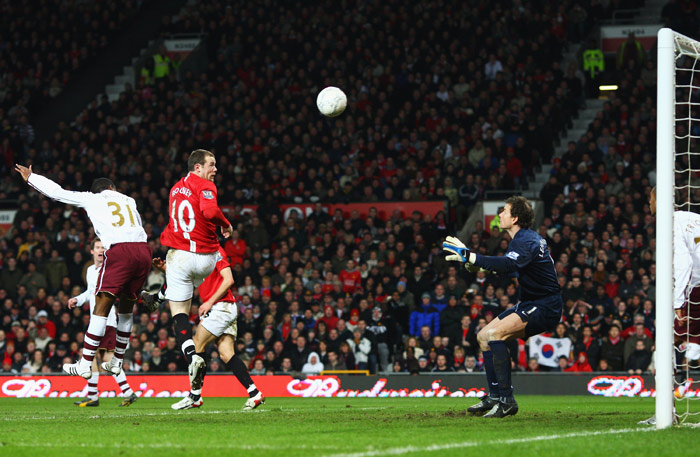
The biggest match of the round between Manchester United and Arsenal at Old Trafford would not see a result as close as that seen at Anfield. Manchester United would run out 4-0 winners. Wayne Rooney would open the scoring after 16 minutes after a Nani corner was only partially cleared by the Arsenal defence. Four minutes later, Nani’s cross from the left flank was headed home by Darren Fletcher. The young Portuguese winger would make it 3-0 after excellent play from Rooney and Michael Carrick to score past Jens Lehmann. Things would go from bad to worse for Arsenal when Emmanuel Eboue was sent off after 48 minutes. Man of the Match Rooney would have further chances to terrorise the Arsenal defence, but could not find his second goal. 3 would become 4 with 16 minutes remaining as another Nani cross would once again by headed home by Darren Fletcher. Manchester United had eased into the quarter-finals, with a match with Portsmouth on the horizon. Portsmouth had defeated Preston 1-0 but had needed North End to provide the goal as a 90th minute own goal from Preston midfielder Darren Carter would be the difference between the two sides.
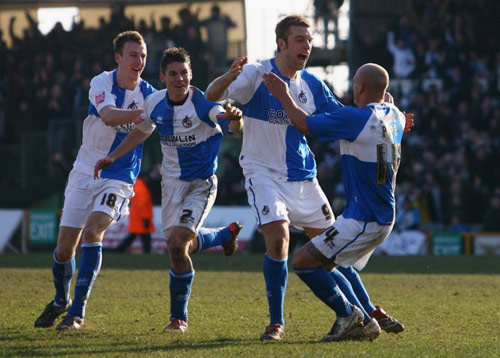
The third major news story would occur at the Memorial Stadium in Bristol, where Bristol Rovers would defy their lowly league standing in League One to defeat Championship Southampton. After a poor first half for the viewing audience, Southampton almost broke the deadlock after 63 minutes, but Jason Euell’s volley would be saved by Rovers keeper Steve Phillips. Rovers thought they had taken the lead after 69 minutes when Rickie Lambert headed home, but the goal was ruled out for a push on Southampton captain Darren Powell. With Lambert seeming the main goal threat on the field, it was fitting that he would be the one to score the match’s first and winning goal. With six minutes, the birthday boy’s free kick would deflect off Saints midfielder Jermaine Wright into the Southampton net, sending manager Paul Trollope and the Memorial Stadium into delirium. The Pirates would hold on for a famous victory and their reward for making the FA Cup quarter-finals would be another home tie against Championship high-fliers West Brom. West Brom had produced the performance of the round, defeating fellow Championship club Coventry City 5-0.
The rest of the fifth round results would see Cardiff City thrashing Wolves 4-1 and Middlesbrough requiring a replay to end Sheffield’s stay in the competition, winning 1-0 at the Riverside after a 0-0 draw at Bramall Lane.
Quarter-finals (Sixth Round), 8-9 March 2008
To truly evidence some of the magic of the 2008 FA Cup, the final eight teams in the FA Cup heading into the quarter-finals would feature 4 Premier League teams, 3 Championship clubs and 1 team from League One. The quarter finals would see Manchester United vs Portsmouth at Old Trafford, Barnsley vs Chelsea at Oakwell, Middlesbrough vs Cardiff City at the Riverside and Bristol Rovers vs West Brom at the Memorial Stadium.
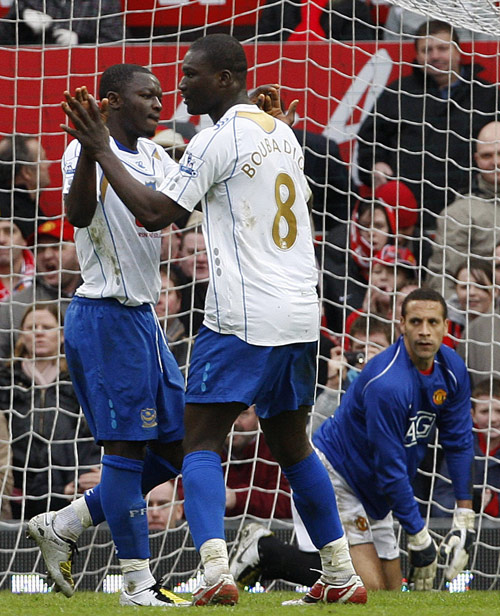
The first match to be played would be Manchester United vs Portsmouth in front of 75,000+ at Old Trafford. Following the Arsenal victory and their recent Premier League form, Manchester United were the heavy favourites not just to win this match but to win the entire competition. The match would start with controversy as Cristiano Ronaldo was seemingly bundled over in the penalty area by Pompey’s Sylvain Distin, but Martin Atkinson would award no penalty. United would have the first clear chance on goal after 18 minutes as Carlos Tevez and Wayne Rooney would combine, but Rooney would find his shot blocked by Portsmouth captain Sol Campbell before Glen Johnson had to be alert to block Tevez’s rebound from the goal-line. Tevez would later test veteran goalkeeper David James, who was able enough to save the Argentine’s low drive. Manchester United would suffer a major injury blow at half time as first-choice goalkeeper Edwin van der Sar would be removed with an apparent injury. van der Sar had been in some discomfort for much of the first half, and he would be replaced by Tomasz Kuszczak. In the second half, the Premier League leaders would continue to apply the pressure. A goalmouth scramble would see a Cristiano Ronaldo strike trickle inches wide of the post and a skilful back-heel from the Portuguese would send Michael Carrick into the penalty area, but Distin would get back to make a crucial goal-line clearance after the English midfielder had rounded David James. With 14 minutes remaining, it seemed inevitable that Manchester United would score in front of their own fans. On 76 minutes, a rare, meaningful attack from Pompey would see Nico Kranjcar break down the wing and play in substitute Milan Baros. Travelling into the penalty area, Baros would be upended by Tomasz Kuszczak. Without hesistation, Martin Atkinson would award Portsmouth the penalty. He would also show Kuszczak a straight card, which coupled with Edwin van der Sar’s earlier injury, left Manchester United without a designated goalkeeper for the resulting penalty and the final 14 minutes of the match. Rio Ferdinand would volunteer for the role, but would have no chance with Sulley Muntari’s penalty, which gave Portsmouth the lead completely against the run of play. No further major chances would result from the final 10 minutes and Portsmouth would hold on for a famous victory, knocking the Premier League leaders out of the FA Cup.
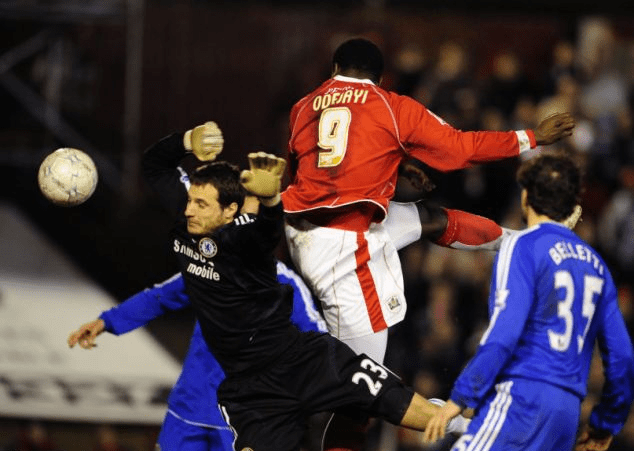
Later that day, Championship Barnsley would invite two-time Premier League champions and 4-time FA Cup winners Chelsea to Oakwell. The South Yorkshire side spent the first-half acquitting themselves well both in defence and attack against the team lying 2nd in the Premier League. Lone Chelsea striker Nicolas Anelka would often find himself isolated against the Barnsley defence, while the rest of the Chelsea were limited to half-chances, with Rob Kozluk doing well to twice block shots from Joe Cole. The first meaningful chances of the night would go the way of Barnsley. First, striker Istvan Ferenczi’s volley would hit the post and his strike partner Kayode Odejayi would soon see his shot saved by Carlo Cudicini in the Chelsea goal. In the second half, Chelsea’s best chance would fall once again to Joe Cole, but he would shoot wide after more pressure from Kozluk. As the match progressed, Chelsea’s frustration grew as they could find no way through the Barnsley defence. Finally, the deadlock would be broken after 66 minutes. Barnsley winger Martin Devaney would find space out wide and his cross would be met by Odejayi, who would head past Cudicini to score his first goal since September. After taking the lead, Barnsley would resume their inpenetrable rearguard action, holding out for another 24 minutes. In successive rounds, Barnsley had knocked out the previous two winners of the FA Cup in Chelsea (2007) and Liverpool (2006) to reach the semi-finals for the first time in 96 years. The last time Barnsley reached the semi-finals in 1912, they won the FA Cup.
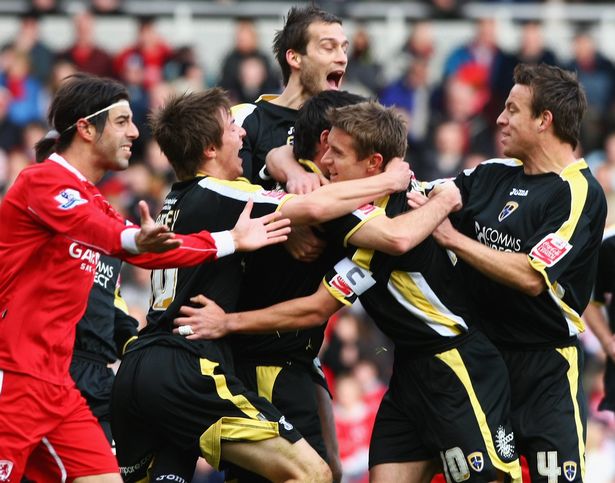
The third quarter-final would see the meeting of Premier League Middlesbrough and Championship Cardiff City. The Bluebirds would take an early lead through Peter Whittingham, whose curling shot inside the box would sail past Mark Schwarzer in the Middlesbrough goal. It wouldn’t be long before Cardiff doubled their lead. 22 minutes in, Whittingham’s free kick would be headed home by defender Roger Johnson. The club from the lower division was controlling the game and Cardiff were unlucky not to get a third before half-time as Johnson and midfielder Paul Parry would both see their efforts go wide of the goal. The main chance for Middlesbrough would come to recent signing Afonso Alves, whose shot would be saved by Cardiff goalkeeper Peter Enckelman. Middlesbrough would improve in the second half, though not by much as talismanic midfielder Stewart Downing would see his free-kick go wide. Apart from that, Boro never really turned up and Cardiff would secure a semi-final place at the expense of another Premier League club.
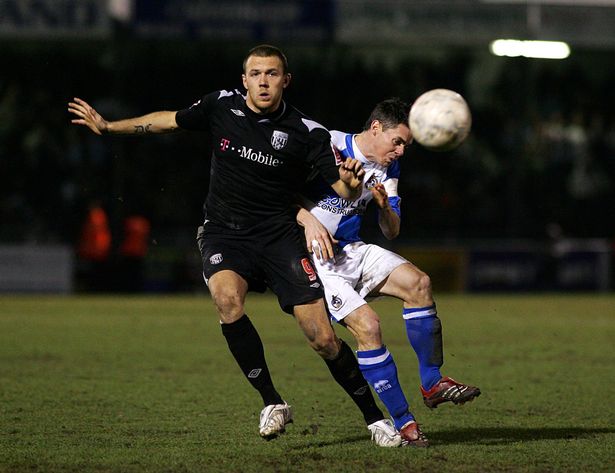
The final quarter-final would see League One Bristol Rovers facing Championship West Brom. Bristol Rovers entered the match having claimed the scalps of Fulham and Southampton in previous rounds. Meanwhile, West Brom had defeated Charlton Athletic on penalties in round three, comfortably beaten Peterborough United in round four and had most recently thrashed fellow Championship side Coventry City 5-0. This result would make Cardiff the pre-match favourites despite Bristol Rovers’ fairytale heroics. The Pirates would have the first big chance on goal as Craig Disley would head over the bar. The first chance for the Baggies would come from striker Ismael Miller, whose header would be saved by Bristol Rovers goalkeeper Steve Phillips who had to be alert to save Robert Koren’s follow-up. After 16 minutes, West Brom would take the lead as Roman Bednar’s shot would be saved by Phillips only to fall to James Morrison to fire home. Rovers would continue to have their own chances as Andrew Williams and Rickie Lambert would find their efforts thwarted by Baggies keeper Dean Kiely. After half an hour played, West Brom would double their lead as Ismael Miller’s powrful shot would take a slight deflection on its way past Phillips. However, the Pirates would immediately respond as Danny Coles would catch Craig Disley’s flick-on to halve the deficit to 2-1. After this goal, the game would become a little more balanced, but West Brom would have the better chances on goal as Miller would continue to test the Rovers back five. His probing would pay off as he would double his tally after 69 minutes, breaking away from the defence to fire into the bottom corner of the net. 4 minutes later, West Brom would put the match to bed as Robert Koren pass would be met by sub Kevin Phillips, who would make the score 4-1. Miller would have time to complete his hat-trick with seven minutes remaining, scoring from 18 yards to end Bristolian hopes and dreams.
Semi-finals, 5-6 April 2008
The FA Cup semi-finals had a rather unusual make-up to them as three out of the four clubs were from the Championship, with Portsmouth being the sole Premier League representative. For the first time in 100 years, there would only be one top-flight club in the draw for the FA Cup semi-finals. This also guaranteed that for the first time since Everton’s victory in 1995, the FA Cup would not be won by Manchester United, Chelsea, Arsenal or Liverpool, who had shared the last 12 FA Cups between them. The semi-finals would see Portsmouth face West Brom and Barnsley face Cardiff City. For the first time, both semi-finals would be played at the new Wembley Stadium in addition to the final.
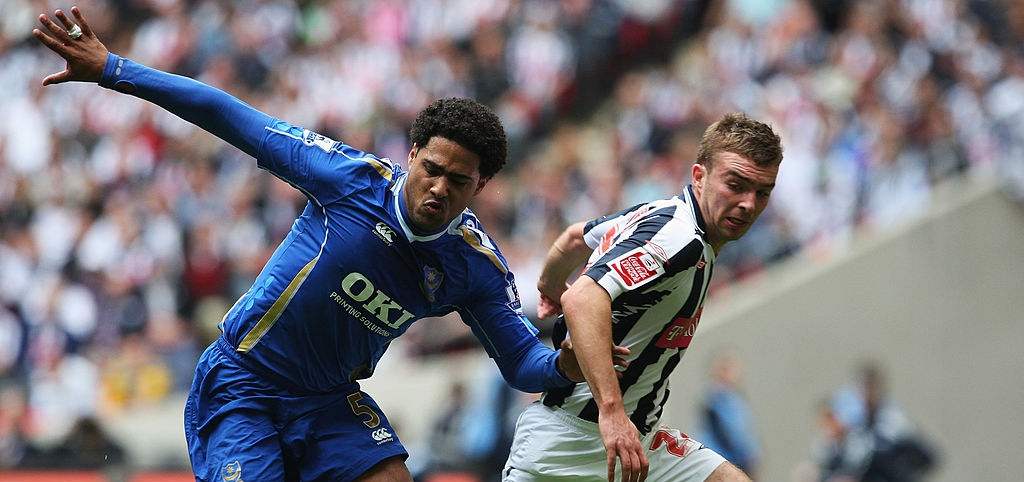
The first semi-final would see 1939 FA Cup winners Portsmouth facing 5-time winners West Brom. At the time of the semi-final, Portsmouth were enjoying their best Premier League season to date, sitting pretty in the Premier League top 10 while West Brom were en-route to becoming Championship winners, guaranteeing a return to the Premier League the following season. Being the sole Premier League representative remaining in the competition, Portsmouth were now the odds-on favourite to win their second FA Cup trophy. However, the Championship leaders would put Pompey on the back foot early on. 35-year-old striker Kevin Phillips provided the first testing shot, shooting over from long-range. Phillips would later lay-off the ball to Zoltan Gera, whose low shot caused more than a little trouble for David James in the Portsmouth goal. Despite being dominated by the Championship club, Portsmouth would take the lead 10 minutes after half-time. Glen Johnson played the ball forward to Milan Baros, who appeared to control the ball with his arm before his shot was saved by Baggies goalkeeper Dean Kiely. Zoltan Gera would attempt to clear the ball only to direct it into the path of former West Brom striker Nwankwo Kanu to fire home from two yards out. Pompey could have doubled their lead soon afterwards as Niko Kranjcar would play in Baros, but the Czech international who had not yet scored this season, would make a hash of his shot and Kiely would recover to make the save. This let-off allowed West Brom to search for an equaliser to take the match to extra-time, and they almost found one when Robert Koren hit the bar. Ismael Miller would be sent through by Carl Hoefkens but the young striker would sidefoot his shot wide. Pompey would survive later West Brom attacks to reach the FA Cup Final despite being dominated for large periods of the match.
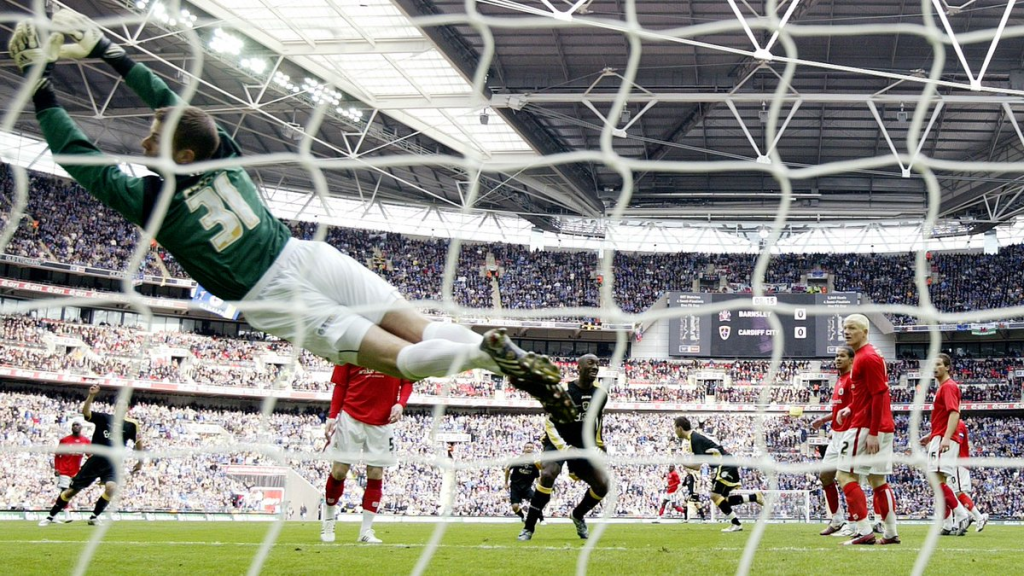
The following day, the second FA Cup semi-final would be an all-Championship tie between Cardiff and Barnsley. For the second time in 5 years, a team from the second division would reach the FA Cup final, after Millwall in 2004. The higher-placed of the two Championship clubs would take an early lead as Joe Ledley’s sensational volley from a Tony Capaldi long throw-in would put Cardiff City ahead after 9 minutes. Despite this, Barnsley would enjoy the majority of first-half possession but Dennis Souza and fifth-round hero Brian Howard would fail to convert their goalscoring chances. Quarter-final hero Kayode Odejayi managed to manoeuvre himself in front of Cardiff defender Glenn Loovens, but his shot fell easily into the grasp of goalkeeper Peter Enckelman. At the other end, veteran striker Jimmy Floyd Hasselbaink almost added to Cardiff’s lead as his shot would be fumbled by Tykes goalkeeper Luke Steele into the path of Trevor Sinclair, but his follow-up would be saved by a diving Steele. In an even match, Barnsley would now have their chances to equalise as Istvan Ferenczi would first see his header go wide before a later shot would be cleared off the line by Sinclair. Barnsley top scorer Brian Howard would have two further chances to score, but his shot from long-range and header from a Martin Devaney cross would both fail to find the target. Cardiff would break on the counter-attack and Joe Ledley would pick out Gavin Rae, but his header was easily saved by Luke Steele. Up the other end, Odejayi would have the Barnsley’s best chance to equalise as he found himself clear of the Cardiff defence with only Peter Enckelman to beat, but the tall striker would shoot past the upright in what prove to be Barnsley’s last big chance to score. Cardiff would have further chances to win , but the one goal was enough to carry Cardiff to their third FA Cup final and their first since 1927, which had seen Cardiff become the only non-English club to lift the FA Cup. Now they would face Portsmouth at Wembley Stadium on 17th May for the chance to win their first cup final victory in 81 years.
FA Cup Final, 17th May 2008
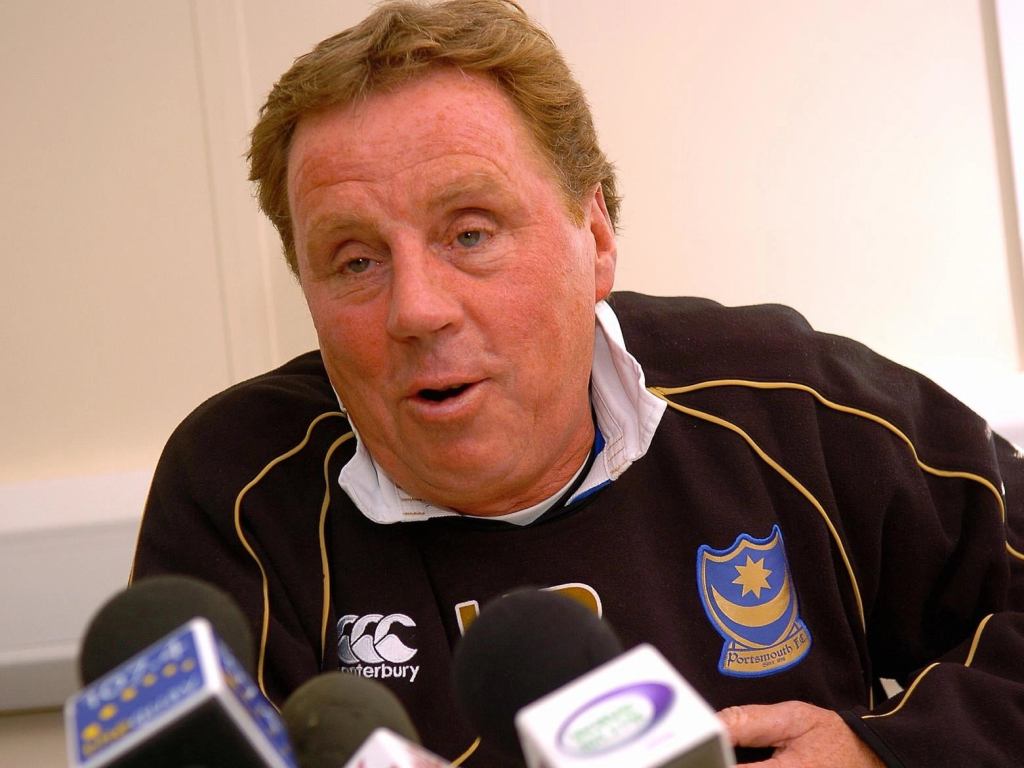
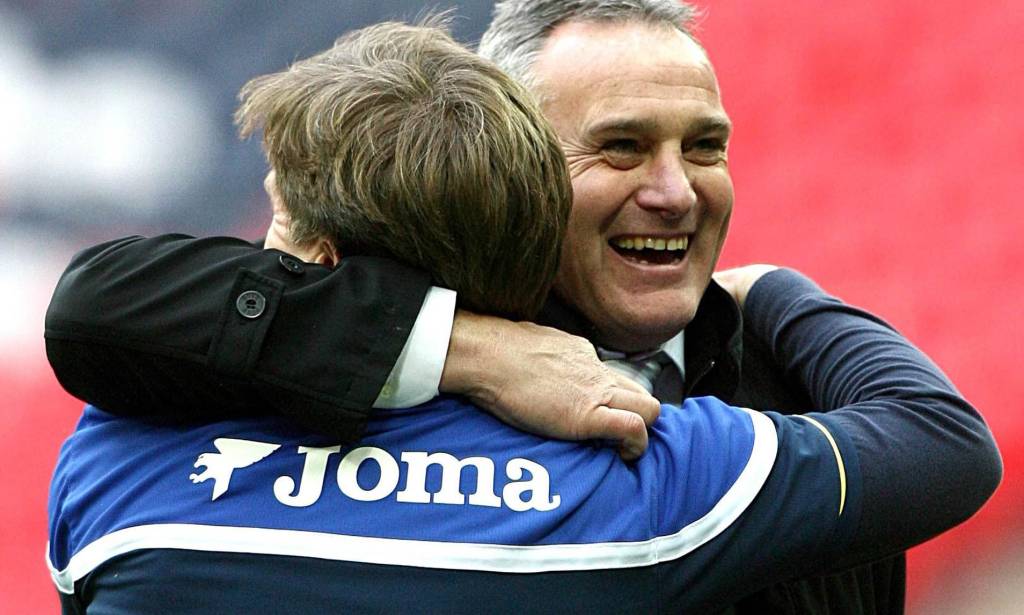
On 17th May 2008, the stage was set for the 127th FA Cup final between Premier League side Portsmouth and Championship side Cardiff City. No matter what happened on this day, history would be made. As mentioned earlier, the FA Cup would be won by a team other than Arsenal, Manchester United, Liverpool or Chelsea for the first time since 1995. Both sides were former FA Cup winners, but both sides were looking to end the longest drought between FA Cup victories when they clinched their second trophy. It had been 81 years since Cardiff beat Arsenal 1-0 to win their sole FA Cup in 1927, while Portsmouth were looking to end 69 years of hurt, winning the last FA Cup Final played before the outbreak of World War 2 in May 1939, beating Wolverhampton Wanderers 4-1 at Wembley Stadium. By reaching the final, Portsmouth had kept up the tradition of a top-flight club participating in every FA Cup Final to date (a record that still holds to this day). With Dave Jones and Harry Redknapp serving as the managers of Cardiff and Portsmouth respectively, both men had a chance of being the first English manager to lift the trophy since Everton manager Joe Royle in 1995. A Cardiff victory would make the Bluebirds only the second team from outside the top-flight of English football to win the FA Cup after Trevor Brooking and West Ham United shocked Arsenal in 1980. The prize for both clubs in addition to winning the FA Cup, was a place in the following season’s UEFA Cup. There was controversy in the build-up to the match as it was suggested that Cardiff may not be allowed to compete in the UEFA Cup if they did win the FA Cup. FA regulations had previously disallowed Welsh clubs from competing in European competitions even if they had won the FA or League Cup. After much legal proceedings, the FA announced three weeks before the final that Cardiff would be allowed to compete as one of the English representatives in the UEFA Cup if they were victorious on 17th May.
Along with the traditional pre-match performances of ‘God Save The Queen’ and ‘Abide With Me’, the presence of Cardiff City would result in performance of the Welsh national anthem ‘Hen Wlad Fy Nhadau’ by Katherine Jenkins. The match would set the record attendance for the new Wembley Stadium as 89,874 people would watch the events of the day unfold. This attendance is still a record for the new Wembley Stadium in its 13 years of existence and was the largest attendance for an FA Cup final since 98’000 people watched Wimbledon shock Liverpool in 1988 at the original Wembley Stadium.
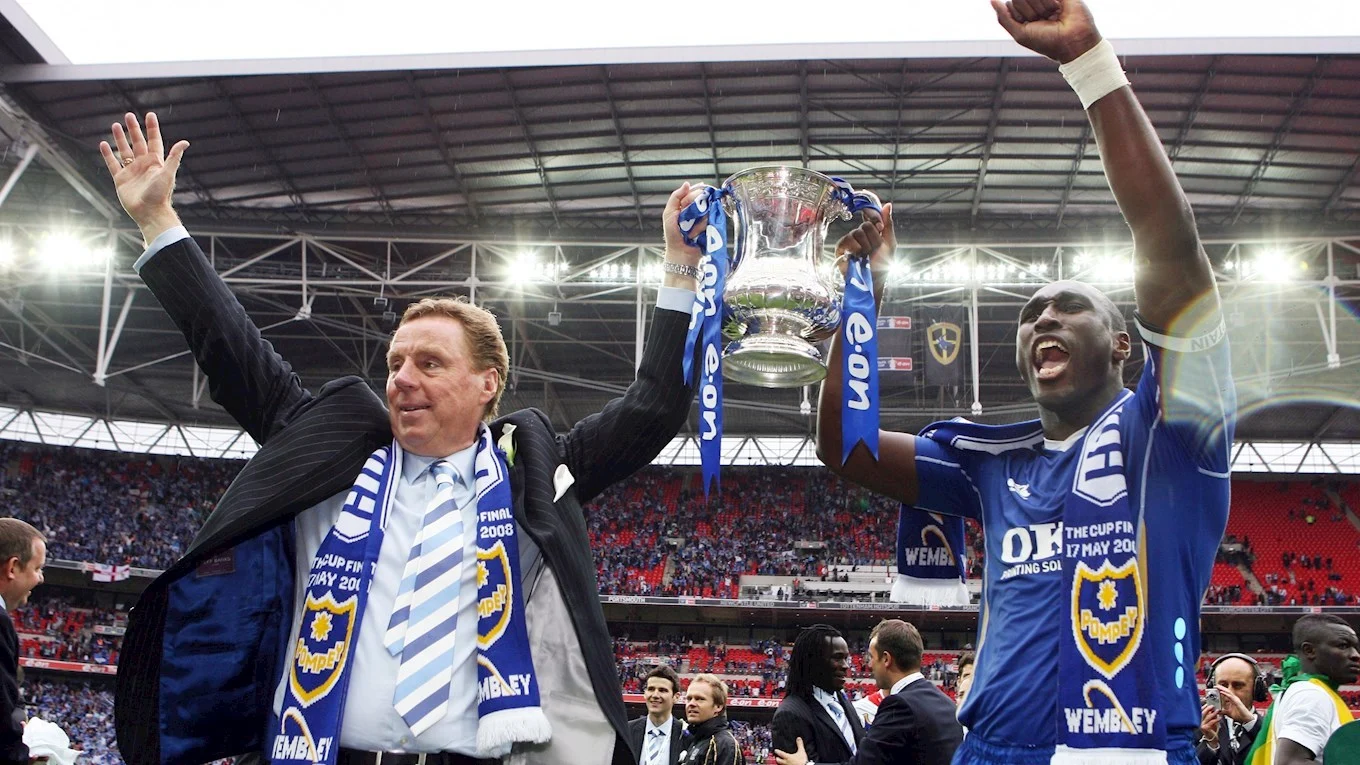
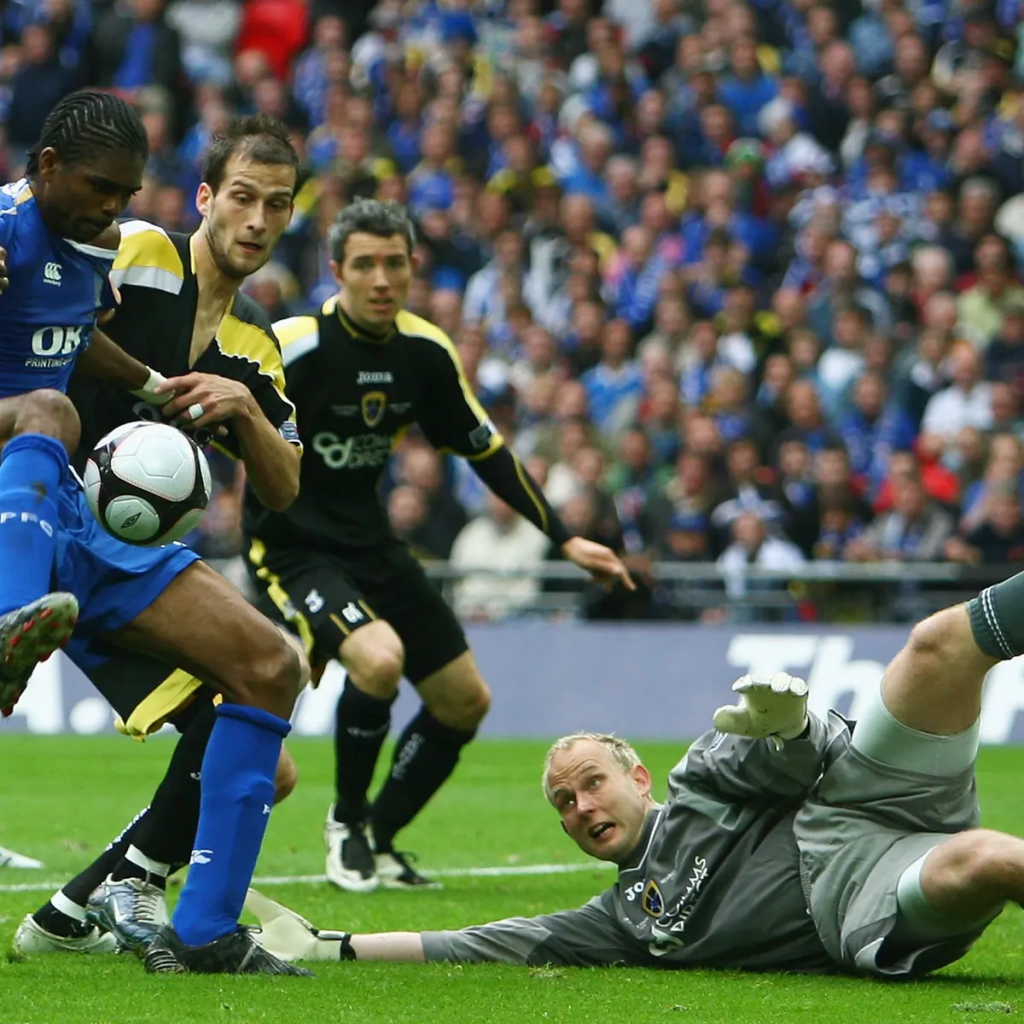
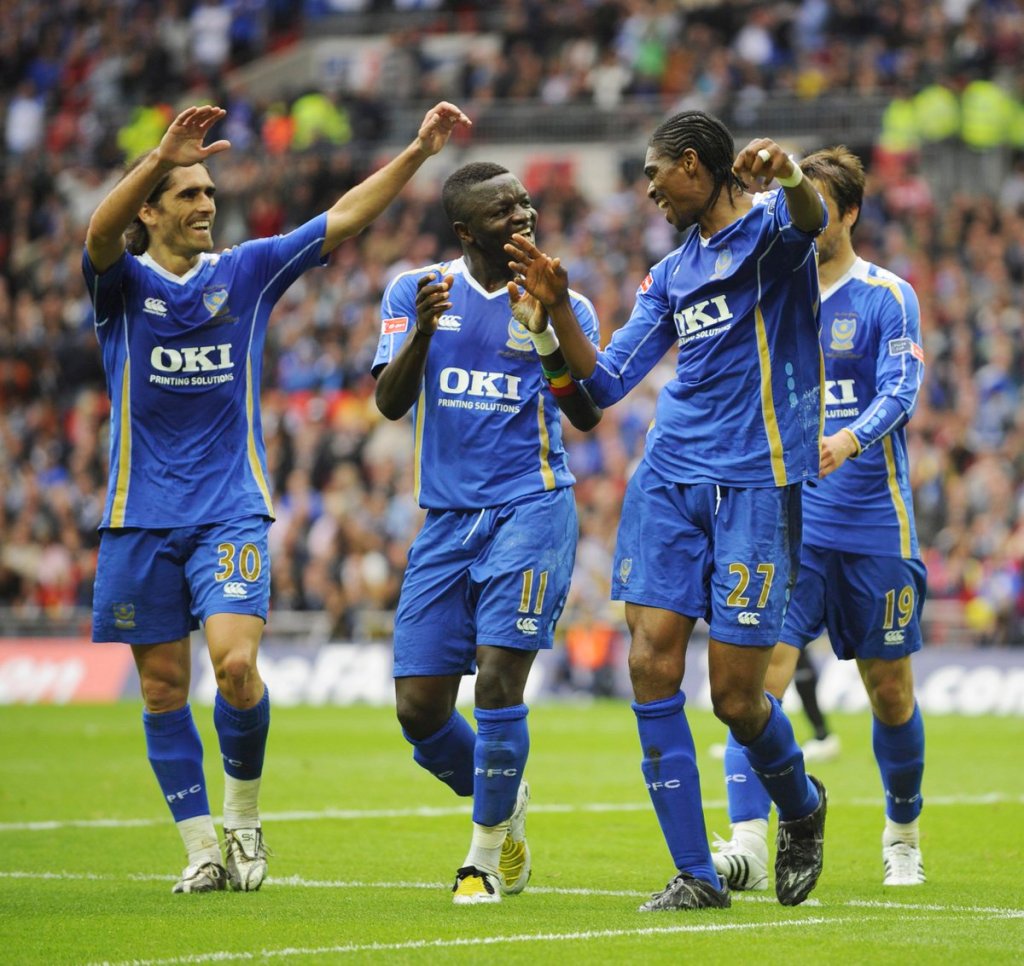
The Welsh side would start lively and would produce the final’s first notable chance after 11 minutes when Joe Ledley played through Paul Parry, but the Welsh striker would see his shot saved by David James (who was making his second FA Cup Final appearance after playing for Liverpool in 1996). The next chance would fall to Pompey striker Nwankwo Kanu who would round Bluebirds keeper Peter Enckelman only to hit the side netting instead of the goal. However, Kanu would not be stopped and he would score the final’s opening goal after 37 minutes. John Utaka’s whipped cross in to the Cardiff penalty area would be cleared by Enckelman only into the path of Kanu, who would finish from close range. The Bluebirds would soon push for an equaliser and Paul Parry would aim to find right-back Kevin McNaughton at the far post only the speed of the cross to beat McNaughton’s desperate lunge. On the verge of half-time, Cardiff though they had equalised. From a Cardiff corner, David James missed the ball when coming out of his goal to collect it and Glenn Loovens would fire the ball into the net. The goal would be ruled out however, as Loovens was found to have handled the ball in the build-up to the goal. Loovens would turn from almost-goalscorer to goal-saver after 52 minutes as his goal-bound clearance prevented Kanu from grabbing his second of the day. Cardiff would introduce 17-year-old prodigy Aaron Ramsey into the mix, making him the second youngest to ever play in an FA Cup final, and it was his corner after 79 minutes that led to another near-miss for Glen Loovens, who would see his downward header loop over the crossbar. Cardiff’s desire to push men forward led to a counter-attack from centre-back Sylvain Distin of all players, and the experienced French defender’s run from the halfway line would only be halted by a last-ditch tackle from Roger Johnson. However, Cardiff could not find an equaliser and when the final whistle blew, Portsmouth ended the longest drought between FA Cup victories stopping their clock at 69 years. It would also be a special day for manager Harry Redknapp, as he would finally claim his first major trophy as a manager in a career that had lasted over 25 years. Portsmouth captain Sol Campbell and goal hero Kanu would claim their third FA Cup winner’s medals, having previous won the trophy with Arsenal in 2002 and 2003.
In the title of this article and the opening paragraph, the 2008 FA Cup has been referred to as a ‘magical’ tournament, the one that showed that the ‘magic’ of the FA Cup was alive and well. and hopefully the following paragraphs have proven why this is the case. Two non-league clubs reached the 3rd round, one from the sixth tier of English football (Havant and Waterlooville and the other from the eight tier (Chasetown). Havant & Waterlooville even managed to make it to the 4th round. Both of these teams, full of part-time, semi-professional footballers took on established League One and Two sides and defeated them. When faced with higher-profile opposition (Cardiff and Liverpool), the teams were not on the end of a drubbing, they fought and at times even worried these larger clubs before inevitably losing to them. Despite losing, these teams could walk away with their heads held high. Havant held a team celebration on the Anfield pitch despite losing 5-2 to Liverpool. Once into the later rounds of the competition, the underdogs would defeat the elite sides time and again. Very few people expected Barnsley to beat Liverpool at Anfield after going behind. Even fewer gave them a chance against a full-strength Chelsea side, yet they belied their league position to progress to the semi-finals. See the Premier League teams frequently come unstuck against lower-league opposition showed that green did not always lead to gold. 20 Premier League teams entered the FA Cup in the third round, 11 progressed to the fourth round, 6 to round five, 4 to the quarter-final and 1 managed to make it to the semi-finals and beyond. Portsmouth would be one of the last teams on people’s lips a potential FA Cup winners outside of the club’s supporter and this rang true ,with the team only being made the tournament favourites after every other Premier League club had been eliminated. Finally, this particular FA Cup tournament is magical considering what happened to the winners in the aftermath of their great victory. Portsmouth would enter the FA Cup Final with a charm upon them that led to their victory. However, black magic would soon take hold off the club in the coming months and years. Harry Redknapp’s departure months later, financial problems caused by overspending, administration, relegation from the Premier League two years later and further relegation in
 the-score-board.co.uk