
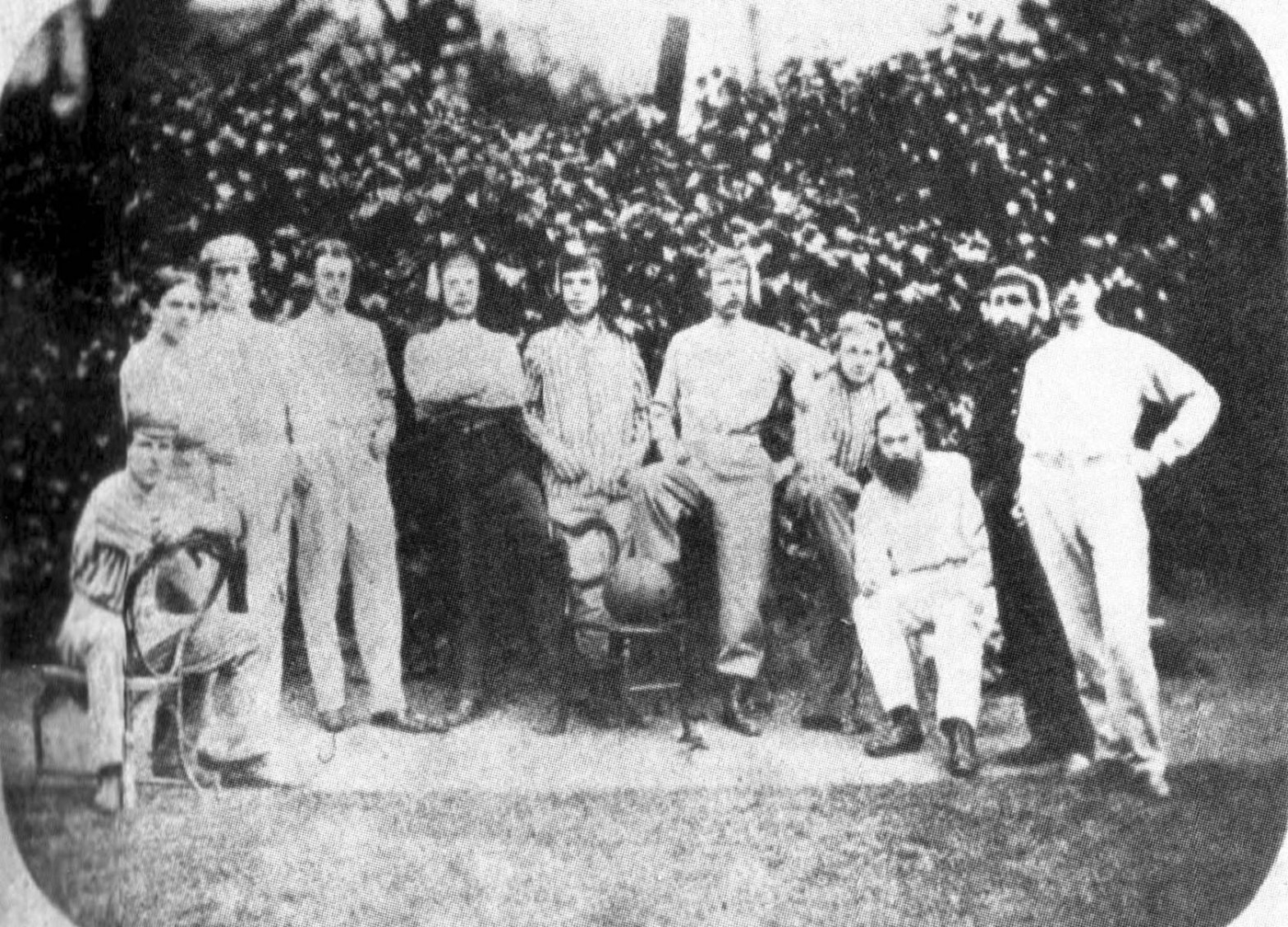
5-time FA Cup winners…
The Football Association Challenge Cup, more commonly known as the FA Cup, is the oldest national football competition, having existed since 1871. It preceded the Football League’s existence by 17 years. If you look through the winners of the near-150 editions of the tournament, you’ll not be surprised by who’s at the top. As of writing, Arsenal has won the most editions with 13 followed by Manchester United on 12 and Chelsea and Tottenham with 8. Looking further down the list, your eye will soon be struck by certain multiple winners. Surprisingly, Aston Villa has won the same amount of FA Cups as Liverpool with 7, despite the fact that Liverpool last win came in 2006 and Villa’s seven victories came between 1887 and 1957. Similarly, Newcastle United have won the FA Cup on six occasions (the same amount as Manchester City) but their last victory came as recently as 1955, while Blackburn Rovers 6th FA Cup triumph occurred in the recent time of 1928. Look at little further down the list to the 5-time winners and you will find that three teams have achieved this feat: Everton, West Bromwich Albion and The Wanderers. None of these three teams are what you would call recent winners of the FA Cup. In 1995, a Steve Rideout goal gave Joe Royle’s Everton a 1-0 win over Manchester United and their fifth FA Cup trophy, and their most recent trophy win to date. 27 years earlier, the 1968 FA Cup Final would see West Brom triumph 1-0 over Everton after a goal from Jeff Astle. The third 5-time winners are more of a mystery. Who were The Wanderers? What led to their considerable FA Cup success and what happened to club after this success? All these questions will be answered in this article.
The Wanderers would first form in 1859 as Forest Football Club by a group of ex-Harrow School pupils who wished to continue playing football after leaving the school. Several former pupils of Forest School would also join the club as the school was situated 1 mile north of the Forest F.C. ground at Leyton Flats in Epping Forest. The team would play their first match against another club on 15th March 1862 against Crystal Palace (not that Crystal Palace) and would come away with a win in their debut match. Both this match and a later rematch between the same two clubs, featuring 15 players on each team, due to the lack of a definite set of rules for football codifying the amount of players that could be on the field of play at one time.
In 1863, Forest F.C. would be founder members of the Football Assocation. The following year, Forest Football Club would change their name to Wanderers Football Club, playing their first match under their new name against the No Names Club. The reason for the name change came from founding member Charles W. Alcock, who decided that the club should become a ‘wandering’ team without any fixed home venue to save on money. The club would play at range of venues including Battersea Park and Middlesex County Criket Club, before finally settling on the Kennington Oval as their permanent home in 1869. The Wanderers would have an impressive 1865-66 league season, losing just 1 of 16 matches, but the team’s fortunes would decline as the decade came to an end. Sometimes Alcock could not even call upon a full starting 1, sometimes needing to borrow players from other teams just to make the full complement.
Following a poor end to the 1860s, the Wanderers would begin the new decade with a change in their fortunes, losing just 5 out of 37 matches they played during the season. The following seasons would the staging of the first FA Cup competition, and the Wanderers would become one half of the first FA Cup Final along with the Royal Engineers. The final would be held at the Kennington Oval on 16th March 1872. The route to the final was unusual one, compared to the familiar structure football fans have gotten used to. The competition was composed of three rounds, followed by the semi-final and final. For this structure you’d think that 32 teams would be required to fill this structure completely and ensure that every team had a match every round. However, only 15 teams would enter the first ever FA Cup in 1871-2. In the first round, the Wanderers were paired with Harrow Chequers. The Wanderers would progress, only because the other team chose to withdraw rather than play the replay. In the second round, the Wanderers would defeat Clapham Rovers 3-1, before facing Crystal Palace in the 3rd round, in a match that saw both teams progress to the semi-finals despite the match finishing in a draw. In the semi-finals, the Wanderers would face Queen’s Park (the Glasgow club). The match would actually be the second match that Queen’s Park had competed in. The Glasgow club had received a bye in the first round, their second round opponents Donington School withdrew from the Cup and the team received another bye in the third round. The semi-final between the Wanderers and Queen’s Park ended in a 0-0 draw but Queen’s Park, not wanting a replay, withdrew from the competition. To get to the final, the Wanderers had only won 1 match out of 4, compared with their final opponents Royal Engineers who had attained victories over Hitchin, Hampstead Heathens and Crystal Palace. In the final itself, playing in front of 2,000 spectators at Kennington Oval, an early goal would settle the tie, as a 15 minute goal from forward Morton Betts would be enough to hand the victory and the first ever FA Cup to the Wanderers. Note: The Wanderers formation on that day consisted of one goalkeepr, two defenders and nine forwards, one more than the Royal Engineers.
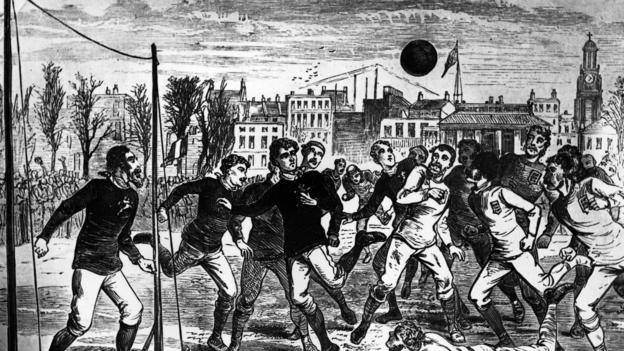
In the following season’s FA Cup, the Wanderers, being the cup holders, would receive a bye all the way to the final where they would meet Oxford University on 29th March 1873. On their route to the final, Oxford had beaten Crystal Palace, Clapham Rovers, the previous year’s finalists Royal Engineers and received a walkover in the semi-final after Queen’s Park withdrew for the second year running. In front of 3,000 at Lillie Bridge in West Brompton, London, the Wanderers would retain their trophy in a 2-0 victory, on a day where Oxford University had also lost the Boat Race to Cambridge for the fourth year running. The Wanderers would take the lead after 27 minutes through Arthur Kinnaird but would be able to extend their lead until late in the game when Charles Wollaston scored after 80 minutes to make sure the FA Cup remained in Upper Norwood.
The Wanderers would not be able to make it three wins from three in the FA Cup in 1874. Despite being the holders, the club would not receive the same kind of special treatment they had received the season prior, starting a the first round like everybody else. The team would breeze through the first two rounds with two walkovers courtesy of the withdrawals of Southall and Trojans. The third round would see a rematch of the previous season’s final as the Wanderers would drawn against Oxford University. The first match at Kennington Oval on 6th December 1873 would end in a 1-1 draw. This time, however, Oxford University were willing to participate in the resulting replay match. On 31st January 1874, the wanderers would lose their first ever FA Cup match losing 1-0 to Oxford. Some solace would come from the fact that Oxford University would go on to claim their first FA Cup on 14th March 1874, defeated the Royal Engineers 2-0 in the final. The Wanderers would also be unsuccessful in the following year’s competition, exiting once again to Oxford at the third round stage after a 2-1 defeat at the Oval. Wanderers would walk away from this season’s competition with some pride, having defeated first-round opponents Farningham by a 16-0 scoreline.
Following disappointments in the previous two seasons, the Wanderers were determined to reclaim what had been theirs on two previous occasions. The club would begin by thrashing the 1st Surrey Rifles 5-0 on 23rd October 1875. Two months later, a 3-0 win put paid to the chances of Crystal Palace in the second round. Sheffield FC would be next up for the Wanderers in the third round. The Wanderers would progress to the semi-finals with a 2-0 win. The team would feel right at home in this stage of the competition, considering that both the semi-final and final were to be played at the Kennington Oval, the Wanderers’ home ground. With this ‘home advantage’, the Wanderers would advance to their third FA Cup final after a 2-0 win over the Swifts in the semi-finals. Two weeks later, the Wanderers would face the Old Etonians for the chance to win their third FA Cup trophy. The Old Etonians were in their second consecutive final, having lost to the Royal Engineers the previous year. The final was notable for having three sets of brothers take to the field. Francis and Hubert Heron would line up for the Wanderers, while the Honourable Edward and Alfred Lyttleton and Albert and Charles Meysey-Thompson would line up for the Etonians. This final would also be notable for being the second consecutive FA Cup final to end in a draw, as the match finished 1-1 after 90 minutes of play. The FA Cup Final would be replayed a week later at the same venue, but with a far different outcome. Wanderers would run out comfortable 3-0 winners after a goal from Charles Wollaston and a brace from Thomas Hughes either side of half-time, giving the team their third FA Cup.
It would take a while for another team to take the FA Cup from the Wanderers as the club would win the 1877 and 1878 finals to win three consecutive FA Cups, a feat that only Blackburn Rovers (1883-86) has matched in the history of the competition. In 1877, the Wanderers would have an easy start, being given a first round walkover by Saffron Walden Town. Th next round would see the team blow away Southall with a 6-0 scoreline to progress to the third round without having to truly get their boots dirty. The third round would see another comfortable Wanderers’ victory, this time a 3-0 victory over the Pilgrims. Due to earlier withdrawals, the club would receive a bye through the fourth round straight to the semi-finals, where they would meet Cambridge University for a chance to face Oxford University (who had received a bye) in the final on 24th March 1877. Compared to the previous rounds, the Wanderers would certainly find life difficult against the Cambridge, managing to eke out a 1-0 win to reach their fourth FA Cup final. The final was played in horrifically bad weather, which included heavy rain and sleet showers. Compared to the two defenders and nine forwards of 1872, the Wanderers had advanced to having two defenders, two midfielders and six forwards as part of their final formation. As part of this formation, the Wanderers goalkeeper on the day would be regular forward Arthur Kinnaird who previously had scored in the 1873 final. Due to lax rules regarding goalkeepers, any player could play in goal if they really wanted to. The inexperience of Kinnaird in goal did show itself pretty quickly as it was his mistake which led to Oxford taking the lead in the final. After 15 minutes played, Oxford were awarded a corner kick, From the resulting kick, Oxford player Evelyn Waddington fired a shot towards goal that was caught by Kinnaird. However, in catching the ball, Kinnaird had stepped over his own goal-line, causing an own goal. After much remonstration from the Oxford players and consultation between the officials, Oxford University had the lead thanks to an error from the Wanderers’ goalkeeper. Not long afterwards, Kinnaird would switch places with an injured Charles Wollaston, due to the concept of substitutions not becoming commonplace until the 1960’s. The rest of the match saw the Wanderers press for an equaliser, having a goal ruled out for an indirect free-kick not being taken correctly. Despite want of trying, the Cup seemed to be heading to Oxford for a second time, that is until the holders showed why they were the holders. In the 86th minute, a superb run from Hubert Heron worked an opportunity for Francis Kenrick, whose shot would fly past Oxford goalkeeper Edward Allington to level the FA Cup Final. Four minutes later and the the FA Cup Final was heading into extra-time for the third consecutive season. However, compared to the previous two finals, where extra time could not determine a winner and the matches went to replays, this final broke that pattern. Having the momentum following their late equaliser, the Wanderers would take the lead in extra time. In the 97th minute, Wanderers fullback William Lindsay would see his shot deflected, but he would make no mistake with the rebound, sending the ball beyond the clutches of Allington to keep the trophy with the Wanderers for the second year running.
One year later, the Wanderers were aiming for their third consecutive trophy, a victory that would see them claim the FA Cup outright, as per the rules of the FA Cup at the time. The holders would begin in impressive style with a 9-1 victory over the Panthers in the first round on 7th November 1877. To show the other teams that scoring 9 goals in one match wasn’t simply a fluke, the Wanderers do it again one round later in a 9-0 win over High Wycombe. The first challenge for the team came in round three when they faced Barnes F.C.. The match on 12th January ended in a 1-1 draw, and this tie would go to a replay. The replay took place two weeks later, and the result of this match would not be close. The Wanderers would win 4-1 to advance to the fourth round. The fourth round would see the team face off with Sheffield F.C. for a place in the semi-finals. The Wanderers had previously beaten Sheffield 2-0 to progress to the semi-finals in 1876. Two years later, the result would be the same but with a different score, as the Wanderers would run out 3-0 winners to progress to their fifth FA Cup semi-final. However, while the Royal Engineers were beating Old Harrovians 2-1 in the other side of the draw to reach their fourth FA Cup Final, the Wanderers were receiving a bye to the final, as earlier withdrawals had resulted in an odd number of teams remaining from the second round onwards.
Fully refreshed following their semi-final bye, the Wanderers would prepare to compete in their fifth FA Cup final trying to win their fifth FA Cup trophy. To do it, they had to beat the team that they had beaten to win the first one back in 1872, the Royal Engineers. Since that day, the Wanderers had won three further FA Cups, while the Royal Engineers had appeared in two further finals, losing to Oxford University in 1874, before defeating the Old Etonians 2-0 the following year in the first FA Cup final to be replayed. On 23rd March 1878, 4,500 people at the Kennington Oval would witness the Wanderers claim their fifth FA Cup trophy in a 3-1 victory over the Royal Engineers. The holders would take an early lead as Jarvis Kenrick would score in his second successive final after 15 minutes of play. Immediately following the goal, the Royal Engineers would try to grab an immediate equaliser. In the passage of possession that followed, Wanderers goalkeeper James Kirkpatrick would suffer a broken arm, an injury that he would carry for the rest of the 90 minutes while remaining on the field. The Royal Engineers were not willing to simply lie down for the Wanderers and equalised after 18 minutes. Through a scuffle of bodies and haphazard defensive clearances, full-back William Morris would equalise for the Royal Engineers. However, the Wanderers would take the lead again before half-time, as Arthur Kinnaird would score after 35 minutes to give the holders a 2-1 lead going into the break. Not long after the restart, the Royal Engineers thought that they had drawn level once again as captain Robert Hedley fired into the net after 55 minutes. However, the goal was quickly disallowed for offside. The Wanderers would soon take advantage and ten later, they did. With 65 minutes gone, Hubert Heron would square the ball for Jarvis Kenrick to score his second goal of the final, giving the Wanderers a two-goal cushion, a cushion that would not be breached. The final whistle was blown by referee Segar Bastard to confirm that the Wanderers had won three consecutive FA Cups and five overall, a record that would not beaten until Blackburn Rovers won their sixth FA Cup in 1891. As per the rules of the FA Cup, the trophy now became the property of Wanderers F.C. for winning the competition three seasons running. However, the outright awarding of the trophy would be refused by C.W. Alcock, who would return the FA Cup to the Football Association on the premise that the above rule be removed and that no team could claim ownership of the FA Cup on a permanent basis.
What happened next?
Following their fifth FA Cup triumph, the Wanderers would play an exhibition match against the Scottish Cup winners Vale of Leven to crown the unofficial ‘champions of Britain’. The Scottish Cup holders would run out 3-1 winners. Following this, the Wanderers went into decline. By 1878, a number of football clubs had been set up ex-pupils of leading public schools in England and a number of the Wanderers soon left the club to play for their old school teams, including team captain Arthur Kinnaird. In the following season’s FA Cup, the Wanderers would shockingly exit in the first round, being on the end of a 7-2 hammering by the Old Etonians, a side which now contained Arthur Kinnaird. The Old Etonians would win that season’s FA Cup, defeating Clapham Rovers 1-0 in the final with the trophy being lifted by captain Kinnaird. The following year, the team would reach improve, beginning with a 6-0 thrashing of Rochester in the first round. The next round would see the club claim a narrow 1-0 victory over Old Carthusians to set up another meeting with the Old Etonians in the third round. The result would be the same for the Wanderers, but the score would not be as heavy. The Old Etonians would once again knock the Wanderers out of the FA Cup, winning 3-1. Following the 1879-80 league season, more key players would leave the Wanderers. The player situation was bad enough that the Wanderers had to withdraw from the 1880-81 FA Cup before they could play their first match against the Rangers. After this embarrassment, things would get worse for the Wanderers. Following 1881, the Wanderers did not have a league season to think of, with their fixture list reduced to a single annual match against Harrow School. It would be long before the team ceased to exist entirely. The last report of a match played by the Wanderers comes from a Times article dated December 1887, where the team would lose the annual fixture to Harrow School, with the Harrovians running out 3-1 winners.
The Wanderers still hold a number of FA Cup records to this day, records that will never be beaten. The Wanderers are the first team to win the FA Cup, as well as become two, three, four and five times winners of the competition. The club would also be the first team to successfully retain the FA Cup, achieving the feat on three occasions. As mentioned earlier, only one other team beside the Wanderers has managed to win the FA Cup in three successive seasons. Charles Wollaston would be the only player to feature in all five of the Wanderers FA Cup triumphs. His record of five FA Cup winners’ medals would later be equalled by Arthur Kinnaird (Wanderers 1873, 1877, 1878 Old Etonians 1879, 1882), James Forrest (Blackburn Rovers 1884, 1885, 1886, 1890, 1891) and Patrick Vieira (Arsenal 1998, 2002, 2003, 2005 Manchester City 2011) before the record was beaten by Ashley Cole in 2010, when he claimed his sixth FA Cup winners’ medal with Chelsea. Cole later extended the record, which currently stands at seven FA Cup wins (Arsenal 2002, 2003, 2005 Chelsea 2007, 2009, 2010, 2012). One final record the team shares is being one of two multiple time FA Cup winners to have won 100% of the final they appeared. In the five finals they competed in between 1872 and 1878, the Wanderers never lost final (as well as never losing an FA Cup semi-final). Only 2-time winners Bury (winners in 1900 and 1903) have won all of their FA Cup Finals, but the stat that the Wanderers won five out of five FA Cup finals is a feat that is unlikely to ever be matched.
The revival
In 2009, over 120 years after the team’s disillusion, a Wanderers team was formed with the approval of the descendants of the original players. In 2011, the reformed team would join local non-league football by joining the Surrey South Eastern Combination, beginning their return to English football at the 19th level of the English football pyramid. Since then , the team has had some minor success. In 2013, the team gained promotion from the Surrey South Eastern Combination Junior Division 4. The following year, the team would achieve promotion again, being crowned champions of Junior Division 3. Another season later, the team would achieve their third successive promotion, advancing from Junior Division 2 to Junior Division 1, where they currently compete to this day.
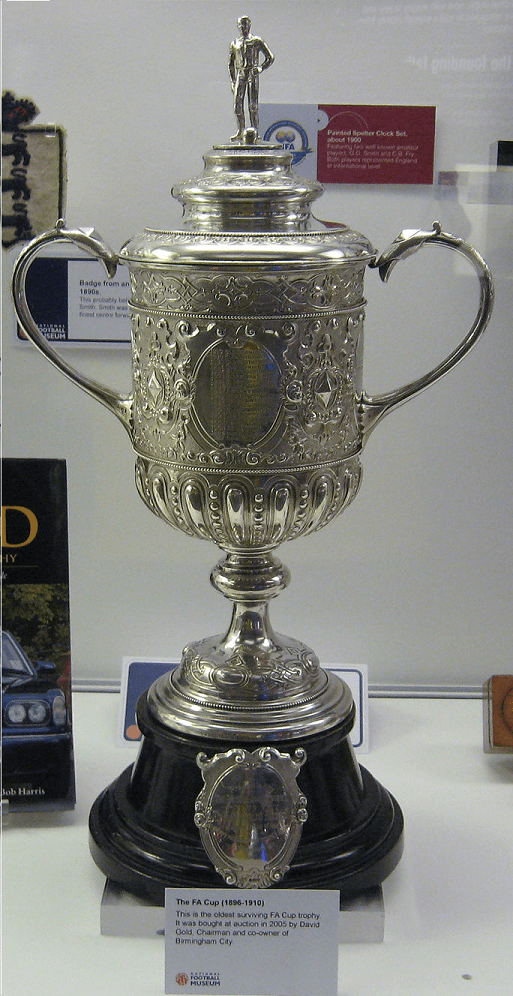
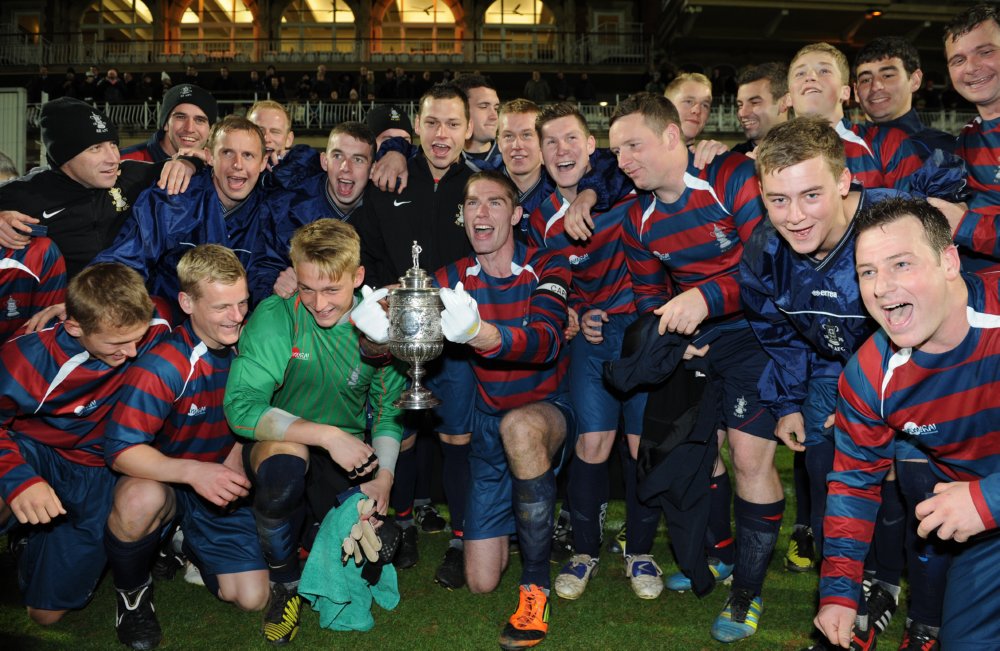
In 2012 to commemorate the 140th anniversary of the FA Cup, the Wanderers would face a Royal Engineers team at the Kennington Oval in a rematch of the original 1872 final. The Royal Engineers would finally defeat the Wanderers in an FA Cup Final, winning comfortably in a 7-1 win. After the match, Royal Engineers captain Lance Corporal James Hubbard was presented with the 1895 replica of the FA Cup, a version that was near-identical to the one that had originally been lifted by the Wanderers in 1872.
Despite the fact that the majority of football fans today would think of Bolton when the name Wanderers is brought up, the original Wanderers should not be forgotten, not just for their FA Cup history but their importance in the formation of modern football as we know it today with the formation of the Football Association in 1863. Even though the Wanderers had ceased to exist by the time the Football League was formed in 1888, the Wanderers still had a part to play in its existence. 1872 FA Cup final captain C.W. Alcock would go on to captain England against Scotland on a number of occasions during the 1870s. He would serve as the FA Secretary between 1870 and 1895, in which he would oversee the unification of the Sheffield rules of football with the FA’s rules, leading to rise of professionalism in football. He also oversaw the first international football matches including the first between England and Scotland in 1872. 1876 winner John Hawley Edwards would help to establish the Welsh Football Association, serving as the organisation’s first treasurer the very same year. The biggest influence on the English game to come from Wanderers F.C. would be Albert Kinnaird. Following his three FA Cup wins with Wanderers between 1873 and 1878, Albert Kinnaird would leave the club for Old Etonians, winning in 1879 and 1882. Kinnaird still holds the record for most FA Cup final appearances with nine, having appeared in four losing efforts with Old Etonians in 1875, 1876, 1881, 1883. While playing, Kinnaird served as an FA committee member between 1868 and 1877, served as treasurer from 1877 and 1890 before serving as the FA president from 1890 until his death in 1923. He would even be awarded one version of the FA Cup when that version was retired in 1911.
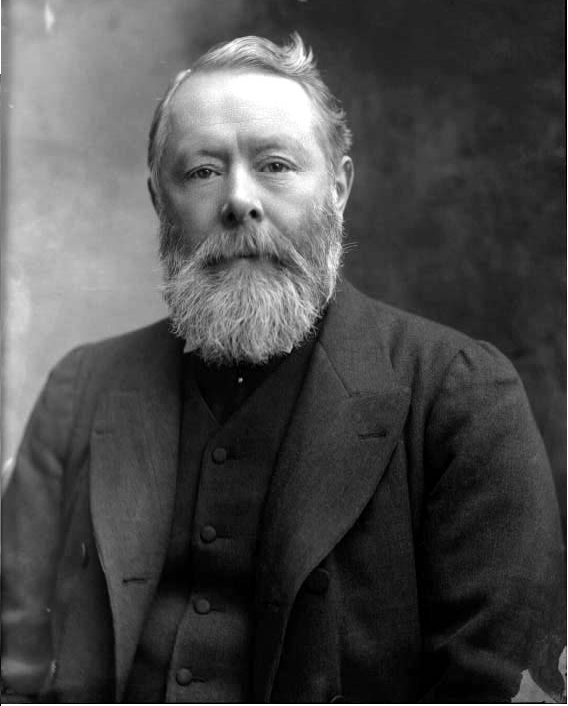
People may not know who Wanderers F.C. are, but they may not understand how important this club from Upper Norwood has been to the history of English football and the FA Cup.
 the-score-board.co.uk