
Rugby’s bloodiest scandal…
On 5th November 2019, the rugby world was shocked when it was announced that Saracens, the reigning English and European champions and winners of four of the previous five Premiership titles and three of the previous four Heineken Champions Cups, had been found guilty of making illegal payments to the club’s players outside of the existing salary cap. As a result, the Sarries would be fined £5.3 million and be deducted 35 points, putting them bottom of the Premiership table. Two months later, another shock would come when Saracens were deducted another 70 points, automatically relegating the team with four months of the season remaining after refusing to open their financial books to investigators, instead choosing the relegation option to seemingly save face. This was the biggest scandal that rugby union had seen in years, around 10 years to be exact.
The last scandal to transcend rugby union to become one of the biggest sports news headlines involved feigning injury in order to deliberately break the laws of the game in order to take a last-minute victory in a Heineken Cup semi-final. Once found out, the main players in this scandal were banned for a combined 6 years from rugby and the club who perpetrated the scandal were fined £260,000. This scandal was so huge that it was later labelled with the ‘-gate’ suffix applied to other major scandals. The scandal being discussed here is now and forever known by the name ‘Bloodgate’.

The date was 12th April 2009. The location: the Twickenham Stoop stadium in London. The match: a Heineken Cup quarter-final between English Premiership club Harlequins and Irish provincial side Leinster, who compete in the Magners Celtic League. The match was the last of four Heineken Cup quarter-finals to be played, with the winner of this travelling to Thomond Park on 2nd May to face Munster, who had trounced Welsh side Ospreys 43-9. In the leagues, Harlequins was on course to definitely guarantee Heineken Cup rugby for another season, sitting in the Guinness Premiership’s end-of-season play-off places. In the Magners League, Leinster had been cut adrift by runaway leaders Munster and was battling with Edinburgh and Ospreys for 2nd position.
Harlequins began their Heineken Cup campaign in Pool 4 alongside Stade Francais, Ulster and Llanelli Scarlets. On 11th October 2008, Quins began their campaign with a trip to Stradey Park the face the Scarlets, where they would require a comeback in order to take the victory. Following two tries for Scarlets with the first 10 minutes scored by Morgan Stoddart and Mark Jones, Quins would find themselves 19-3 down at half-time after 9 points from the boot of Stephen Jones. Two penalties from fly-half Chris Malone would chip the lead down to 10 points, before a try from scrum-half Danny Care, converted by Malone, would bring the visitors back within 6. Another penalty from Malone on 60 minutes would halve the lead before winger Ugo Monye’s try five minutes later would give the visitors the lead for the first time. A further Malone penalty would result in a 29-22 win for the Quins. One week later, Harlequins would put six tries past Ulster in front of 12,000+ at the Twickenham Stoop in a 42-21 victory. The four-try bonus point would be sealed before halftime and tries from Jordan Turner-Hall, Danny Care, Mike Brown, a brace from winger Tom Williams and a penalty try would put the Quins top of the pool. Over consecutive weekends in December, Harlequins would eke out two tight victories against a strong Stade Francais side. Two first-half tries from Williams and Turner-Hall would be enough for a 15-10 win at the Stade de France on the 11th, before a 19-17 win at the Stoop the following week would be won by an 80+4 minute drop goal from fly-half Nick Evans, where one mistake on the Quins side would have resulted in defeat. The team would suffer their first loss in a 21-10 defeat to Ulster at the imposing Ravenhill on 17th January 2009 before another four tries would hold off a valiant second-half Llanelli Scarlets comeback at the Stoop one week later in a 29-24 victory. With their record of 5 wins and 1 defeat from six pool matches and two bonus points, Harlequins’ 23 points would rank them as the 3rd seed heading into the quarter-finals.
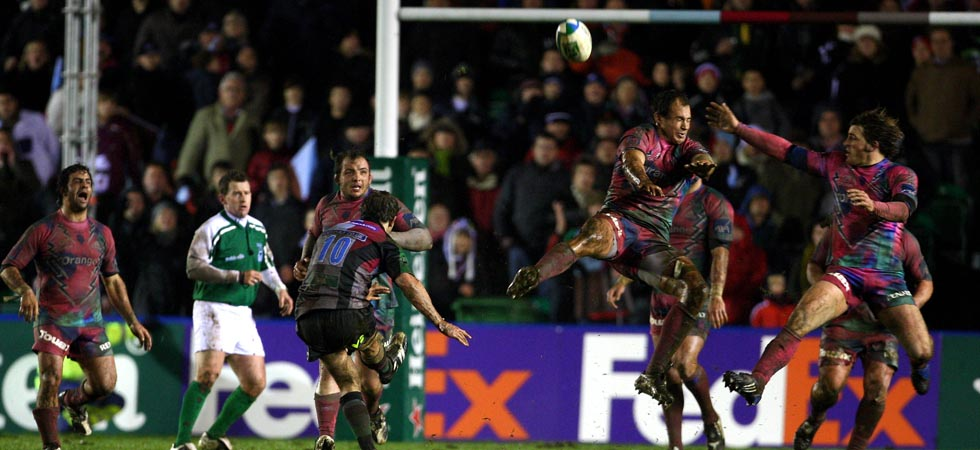
In Pool 2, Leinster would be drawn with London Wasps, Edinburgh and French side Castres. Leinster would begin with a 27-16 bonus-point victory over Edinburgh at Murrayfield on 11th October 2008. Four first-half tries would do it, as Rocky Elsom, Brian O’Driscoll, Felipe Contepomi and Shane Horgan would blow the Scots away with a 24-6 lead at half-time, with Contepomi adding an extra five points from the boot. The following week, the reigning Magners League champions would hammer the reigning Guinness Premiership champions London Wasps 41-11 at the RDS Arena in Dublin. Leinster would make it three impressive wins out of three with a 33-3 home win over Castres in mid-December but would lose the return fixture 18-15 one week later as tries from Gordon D’Arcy and Jonathan Sexton were not enough to overcome the boot of Castres kicker Anthony Legardere. Following this shock defeat, Leinster were unable to truly recover their pre-Christmas form as London Wasps would have their revenge in High Wycombe with a 19-12 win on 17th January before the Irish side would scrape past Edinburgh in the final group match with a 12-3 win in Dublin. Despite the back-to-back losses to Castres and Wasps, Leinster’s record of 4 wins, 2 defeats and 4 bonus points (two try, two losing) would give them a points total of 20, ranking them 6th for the quarter-finals where the would travel to the Twickenham Stoop to face Harlequins on 12th April 2009.
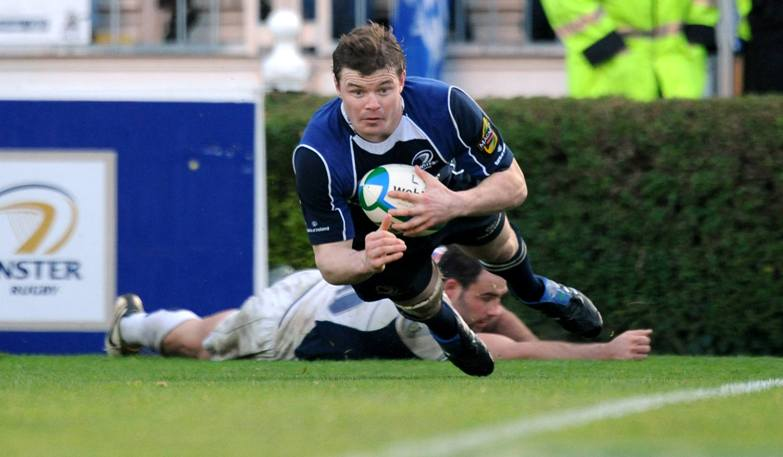
Leinster were making their 4th quarter-final appearance in 5 years, but had only won one of these encounters, a 41-35 classic against Toulouse back in 2006. By comparison, Harlequins were making their first appearance in the competition’s knockouts stages since 1998, where they were on the end of a 51-10 thrashing at the hands of Toulouse. This quarter-final was also the first meeting between the two sides in a competitive match. The match preview on the European Rugby Cup (ERC) website featured the lines: “…(Dean) Richards tactical nous is second to none. He bought Kiwi stand-off Nick Evans to the Stoop and it was that man who stood firm to kick one of the most memorable drop goals in Heineken Cup history (against Stade Francais)”. Remember that for later.
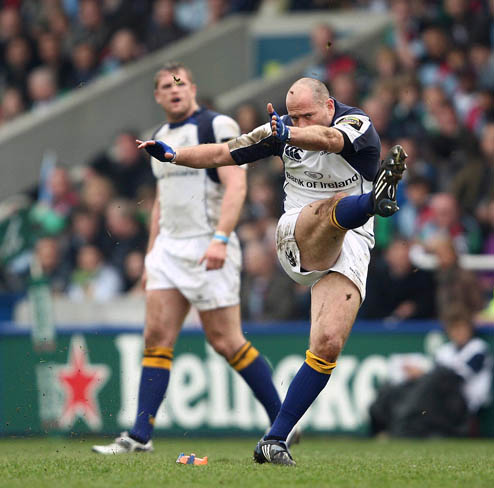
The match would be a low-scoring affair, with only 11 points scored over the entire 80 minutes, but that doesn’t mean that the match wasn’t dramatic. The first-half was a mix of promising attacking moves and handling errors. Harlequins backs Ugo Monye, Jordan Turner-Hall and Gonzalo Tiesi managed to break through the Leinster defence, but the scoreboard remained blank as the visitors defence managed to hold firm. The Irish side would score first as a penalty from fly-half Felipe Contepomi after 15 minutes would put Leinster ahead 3-0. Further line breaks from Quins still failed to result in the game’s first try. At the other end, Quins were also remaining resolute in defence as a double tackle from Ugo Monye and David Strettle would manage to prevent Leinster talisman Brian O’Driscoll from touching down. However, Leinster would get their reward as Harlequins number 8 Nick Easter would be sin-binned after interfering in a Leinster ruck. Contepomi would kick the resulting penalty on 39 minutes to make the score 6-0 to the visitors at half-time after a close first half.
For the first 10 minutes of the second half, the now 14-man Harlequins had to withstand intense pressure from Leinster and seemed to have yielded after 47 minutes after Leinster full-back Rob Kearney had broken through to score. However, the try was chalked off after referee Nigel Owens spotted a forward pass earlier in the passage of play. Two minutes later, Quins were forced to replace influential fly-half Nick Evans, the man who had been talked up prior to kick-off. Evans had been playing with a heavily-strapped knee and seemingly the pain was too much for him to continue, being replaced by Chris Malone on 49 minutes. After a missed drop goal from Rob Kearney, Nick Easter would return from the sin-bin just as Quins almost found the crucial breakthrough. Backrower Chris Robshaw broke through the Leinster defence and kicked ahead into the 22. With the flanker in to score, Contepomi would trip the young Englishman to earn himself 10 minutes in the sin bin. Now with the man advantage, Quins would dominate for the next 15 minutes, unfortunately having their own try chalked off as the television match official (TMO) found that hooker Gary Botha had been held up. On 65 minutes, Quins would finally get what they wanted. After several phases of possession deep in the Leinster half, an attacking overlap was created and full-back Mike Brown went over to make the score 6-5. However, replacement fly-half Chris Malone would miss the conversion, keeping Leinster in the lead by one point. Malone would not be long for the match as he would become the second Harlequins fly-half to come off through injury after 69 minutes, with winger Tom Williams being the only man to replace him. Quins would get another chance to take the lead as the clock ticked past 70 minutes, but third-choice kicker Brown missed his long-range attempt at goal. The next few minutes would mean further injuries to Harlequins player.
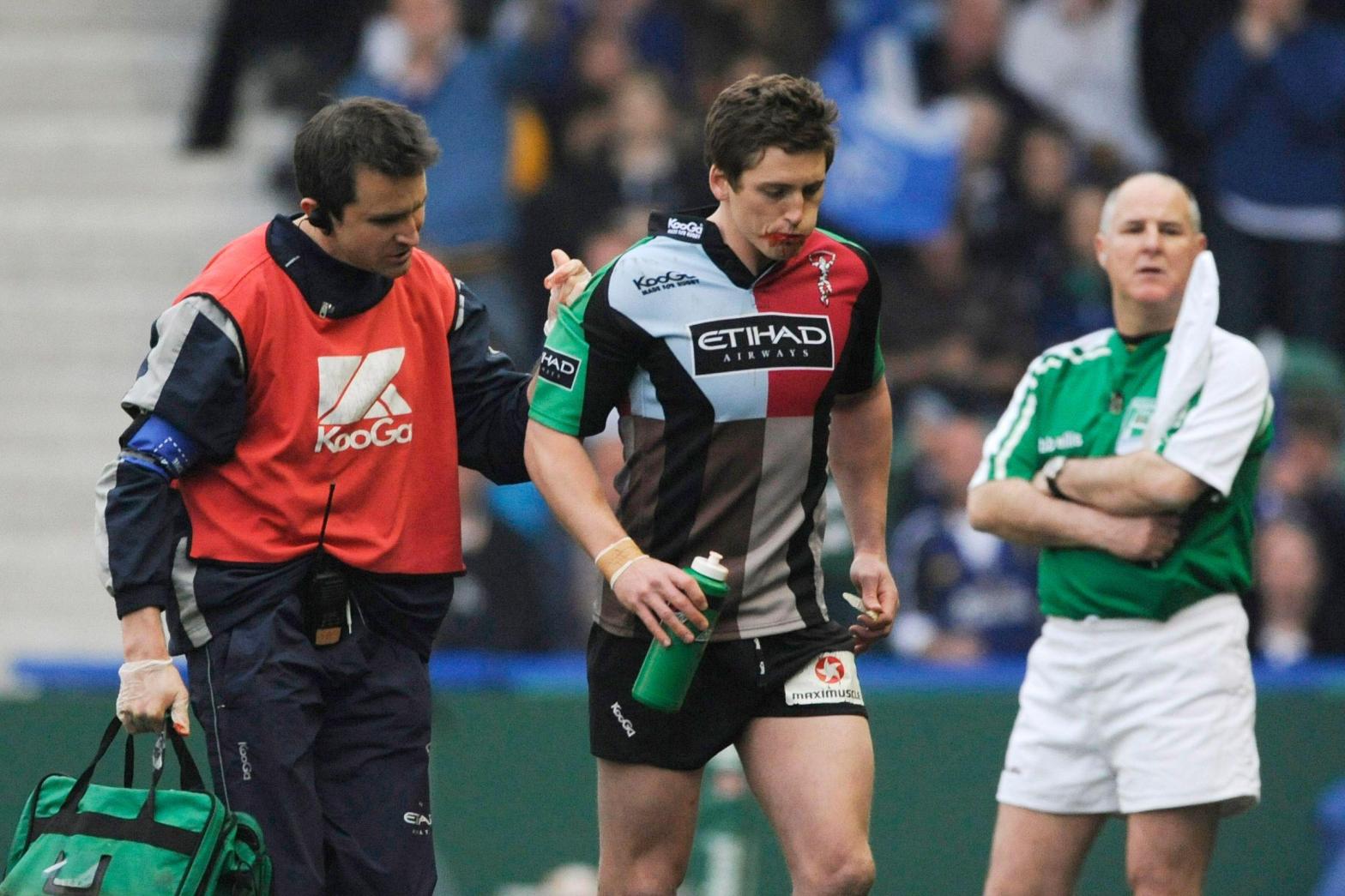
On 74 minutes, winger Tom Williams, who had just come on 5 minutes earlier to replace Chris Malone, now had blood pouring from his mouth and needed to be replaced himself. With no one else to bring on, the television cameras turned to the Quins bench to see Nick Evans, who had come off with a knee injury 25 minutes earlier, preparing to come back on as a blood substitute to replace Tom Williams. After conferring with referee Nigel Owens to confirm that the Evans-Williams sub was an injury sub and not a tactical sub, the even more heavily-strapped Evans astonishingly returned to the field with six minutes remaining. Quins would launch one final attack with Brown turning down a penalty to instead kick for the corner. Quins retained the ball through phase after phase of play and Evans placed himself in the ‘pocket’, ready to try for a match-winning drop goal, similar to Stade Francais. Danny Care would throw the ball back to Evans to kick for glory, and the ball…would sail harmlessly wide. A minute later, Leinster would kick the ball out, celebrating a hard-fought 6-5 victory and a trip to Munster on the horizon.
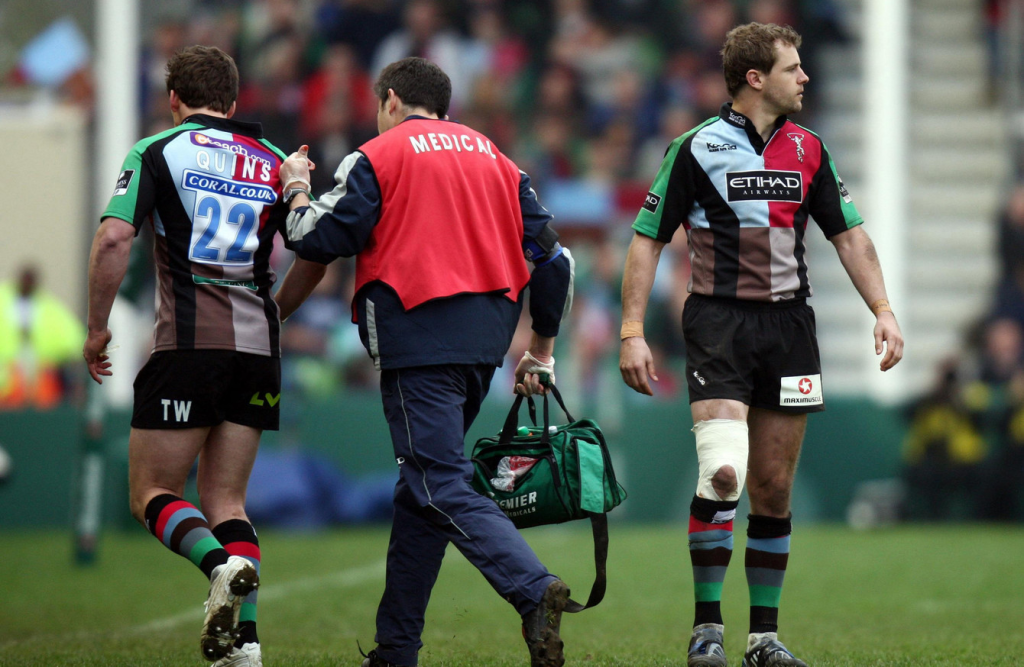
However, it wouldn’t be the Quins try or the missed Evans drop goal that would receive the most attention post-match by the pundits in the Sky Sports studio, it would be the actions that had taken place on 69 and 74 minutes respectively, the substitution on of Tom Williams and the blood replacement to bring Nick Evans back on the field five minutes later. Considering how bad Nick Evans’ resulting drop goal had been, it was clear that Evans had was not fit to play when he had been allowed back on the field. The fact that the decision to bring Evans back on the field had to be confirmed with referee Nigel Owens, who thought that Quins may have been using Williams’ injury to bring on Evans as a tactical substitute in order to potentially win the match also aroused suspicion. Most of all, the question that was on the lips of many people: Who or what caused Tom Williams to start bleeding from the mouth? Williams had only been on the field for five minutes and only few minor passages of play had been completed, yet somehow a knock to the lip or jaw had causing blood to start gushing from the young winger’s mouth. Famously, Sky Sports co-commentator Stuart Barnes, upon seeing Williams bleeding from the mouth, would say “Who punched Tom Williams? Tom Williams?”. Even Harlequins coach Dean Richards was mainly asked about the Tom Williams-Nick Evans incident in his post-match interview, where the interviewer asked him if his conscience was clear to which Richards pleaded innocence and ignorance. Pundits, presenters and commentators smelled a rat, but were unable to move past mere suspicion. They were not the only ones to be suspicious, as the rugby authorities would soon find out the truth of the matter after a resulting investigation.
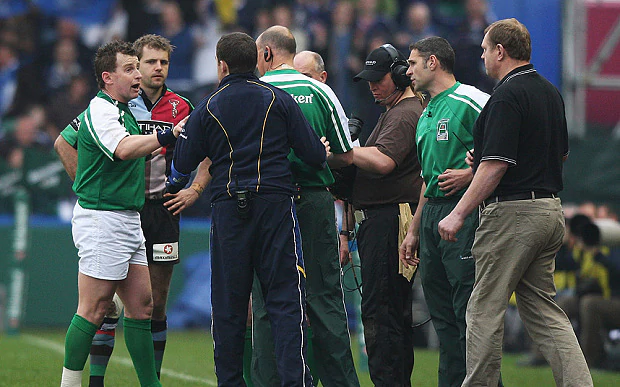
Who or what had caused Tom Williams to bleed from the mouth? The answer: a blood capsule. After taking to the field, Williams was discreetly handed a blood capsule by club physio Steph Brennan during a routine water break shortly after. William slipped the capsule into his sock. After getting involved in the next passage of play, Williams distanced himself from the rest of the field, before sneakily removing the capsule from his sock and biting down upon, creating the illusion of a bleeding mouth. Once the bleeding was noticed, physio Brennan did her job to treat the ‘wound’. She would treat the ‘wound’, by cutting Williams’ lip to complete the illusion. This was not the first time that Harlequins had done something like this. According to investigations done by the European Rugby Cup and Rugby Football Union (RFU), there had been four previous instances where the club had faked blood injuries to enable further tactical substitutions.
This investigation eventually later led to misconduct hearings for Harlequins coach Dean Richards, physio Steph Brennan, club doctor Wendy Chapman and Tom Williams. The punishments handed out included a three-ban from all forms of rugby worldwide for Richards, a two-year ban from Brennan and a one-year ban for Tom Williams. The club were also hit with a £260,000 fine to boot. On 29th August 2009, Harlequins club chairman Charles Jillings would tender his resignation, laying blame for the scandal at the feet of Richards and Williams. Tom Williams would appeal against his one-year ban, stating that the words he had said at his original disciplinary hearing were untrue and that he had been under duress by Dean Richards to act in a certain way. According to Williams’ testimony from his appeal hearing, when he was preparing to replace fly-half Chris Malone, Dean Richards had told him to speak to club physio Steph Brennan to tell her that he would be ‘coming off for blood’. This made Williams understand that he would be coming off before the end of the match after faking a blood injury. When it came to using the blood capsule, Williams felt he had no choice but to use it, fearing that failure to do so would result in Richards dropping him from the team for future matches. Williams would succeed in his appeal, having his ban reduced from one year to four months.

After beating Harlequins, Leinster would eventually win their first Heineken Cup trophy. They would defeat Munster at Croke Park as tries from Gordon D’Arcy, Luke Fitzgerald and Brian O’Driscoll would secure a 25-6 victory. Three weeks later, Leinster would defeat newly-crowned English champions Leicester Tigers 19-16 in a close-fought match. After exiting the Heineken Cup, Harlequins would finish the Guinness Premiership in 2nd place, bagging themselves a home semi-final in the end-of-season playoffs against 3rd-placed London Irish. On 9th May in front of 12,638 fans at the Twickenham Stoop, Harlequins would be upset by London Irish 17-0, failing to make their first Premiership play-off final. After this defeat, the story of ‘Bloodgate’ would loom large over the club for a long time afterwards.
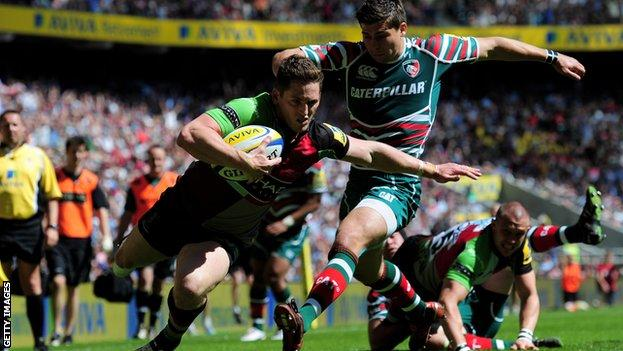
After his three-ban was complete, Dean Richards would be hired as the head coach of recently-relegated Newcastle Falcons in August 2012, leading the team back to the Premiership at the first opportunity. In 2017, he would lead the Falcons to an 8th-place finish in the Premier League, their highest league finish for 11 years. He is still the head coach as of this article’s publication. With Richards’ replacement Conor O’Shea, Harlequins would win their first Premiership title in 2012, with Tom Williams playing the full 80 minutes on the right wing as Quins would beat Leicester Tigers 30-23. Williams would play over 200 matches for the club, before announcing his retirement in 2015, at the age of 31.
With a decade now having passed since the original incident took place, the legacy of ‘Bloodgate’ is still felt today. In a March 2019 retrospective looking back on the event 10 years on, the BBC would refer to ‘Bloodgate’ as ‘rugby’s biggest scandal’. This article was written months before the Saracens scandal was made public. The Saracens scandal is still fresh in the memory and still making news today, and can be regarded as rugby’s biggest scandal since ‘Bloodgate’, a major incident that came out of nowhere that managed to damage a club’s public reputation for years to come.
 the-score-board.co.uk