
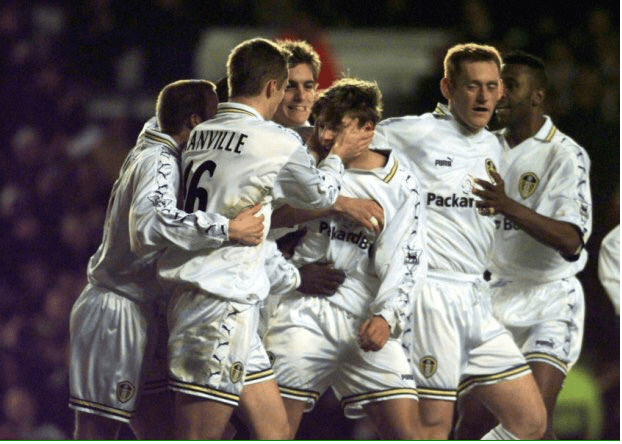
The Kids Are Alright, 1998/99
Manager: George Graham, David O’Leary
Top Scorer: Jimmy Floyd Hasselbaink (18)
Premier League: 4th
FA Cup: 5th Round
League Cup: 4th Round
UEFA Cup: 2nd Round
League Record: 18 wins, 13 draws, 7 defeats, Goals for 62, Goals against 34
Transfers Total Cost: £-7.55 million
Transfers in £7.75 million
Danny Granville Chelsea £1.6 million
Nuno Santos Vitória de Setubal Signed
David Batty Newcastle United £4.4 million
Eirik Bakke Sogndal £1.75 million
William Korsten Vitesse (loan)
Transfers Out: £200,000
Jason Blunt Blackpool Free transfer
Andy Gray Nottingham Forest £200,000
Lee Matthews – Notts County, loan
Mark Jackson – Huddersfield Town, loan
Lee Sharpe – Sampdoria, loan
Andy Wright – Reading, loan
Derek Lilley – Hearts, loan
Paul Shepherd – Tranmere Rovers, loan
Alan Maybury – Reading, loan
Derek Lilley – Bury, loan
Compared to their activity the previous summer, Leeds transfer initial transfer business was quiet ahead of the 1998/99 season. In came Danny Granville from Chelsea for £1.6 million. Granville, a 23-year-old left-back, had spent a single season at Stamford Bridge after transferring from Cambridge United but had started in Chelsea’s UEFA Cup Winner’s Cup Final victory over Stuttgart and was signed to provide competition to Ian Harte. Granville would play 9 league games before being loaned out to First Division Manchester City. He would leave permanently at the end of the season. The other signing, goalkeeper Nuno Santos from Vitoria Setubal would also be gone at the end of the season without playing a single game. Transferred out were academy graduates Jason Blunt to Blackpool and Andy Gray to Nottingham Forest.
Leeds started the season fairly well, picking up 11 points out of a possible 21, even topping the table after a 3-0 victory against Southampton. The team remained unbeaten through the first seven games of the new season even if those seven results consisted of 2 wins and 5 draws. The positive start placed Leeds in fifth place and presented the team with a strong platform to build compared with how they had started the previous two campaigns. Things were looking good for Leeds United and their manager George Graham at the beginning of October 1998, until they were not.
Unfortunately for Leeds fans, Graham’s performance over the previous two seasons had not gone unnoticed by Leeds’s rivals, with Graham attracting the attention of Tottenham Hotspur who had recently parted ways with their manager. After a 3-3 draw with Spurs in the Premier League on 26th September and a victory in a UEFA Cup First Round second-leg tie against Maritimo on 29th September, Graham fled to White Hart Lane. At short notice, the only place to turn in search of an immediate replacement was the backroom staff. Assistant manager David O’Leary, a 40 year-old former centre-back who had appeared a record 722 appearances for Arsenal and attained 68 caps for the Republic of Ireland, including appearances in ROI’s run to the quarter-finals at Italia ’90, was made the team’s temporary manager. For O’Leary, this was certainly a step into the unknown. He had finished his playing career with Leeds, making 26 appearances before retiring in 1995. A year later, he had been installed as the team’s assistant manager upon George Graham’s arrival in 1996. With his boss now heading to north London, it was up to this first-time manager to continue Leeds positive start to season while a search began for a more experienced permanent candidate.
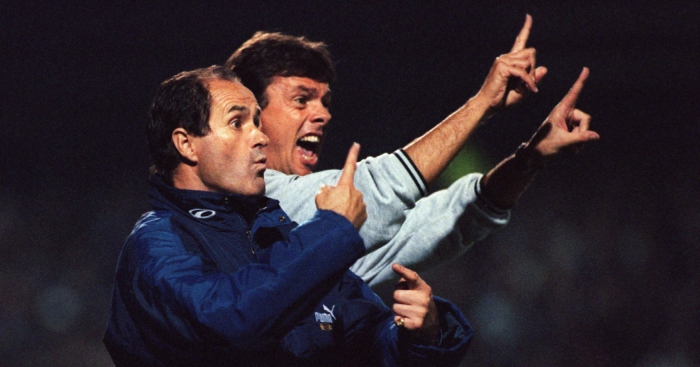
To say that O’Leary’s Leeds team did not make the best first impression would be apt as the team failed to win any of the next four matches under the new stewardship as a loss to Leicester and draws with Nottingham Forest, Chelsea and Derby dropped the team from 5th to 9th in the table on Halloween. These results could be put down growing pains as the inexperienced O’Leary tried to implement his tactics onto this established Premier League titan.
Growing pains, they may have been, as Leeds started to gain momentum that had been lacking in the early months of the season under both O’Leary and Graham. An opening 11 games which had yielded only two wins but draws became a run of 8 matches which yielded 6 wins, 2 defeats and 0 draws. The results? After a difficult start, Leeds sat 4th at Christmas after a 3-0 victory over Newcastle with goals from the improving Harry Kewell, Lee Bowyer scoring his sixth goal from midfield and Jimmy Floyd Hasselbaink scoring his tenth, with 8 coming in the team’s recent 8 game spell.
During this excellent run of form, Leeds would resign former player David Batty from Newcastle for £4.4 million who had previously made 257 appearances for the team between 1987 and 1993. Batty, who turned 30 a week before he put pen to paper, had a wealth of experience playing at the top of English football. Most recently, he had appeared in all of England’s matches at the 1998 World Cup and had missed the crucial penalty which knocked England out of the tournament at the hands of Argentina. He had also been part of two title-winning teams during the decade. In 1992, he was part of the previously talked about Leeds side which won the final First Division title under Howard Wilkinson before it morphed into the Premier League and doubled his tally with underdog Blackburn Rovers, upsetting the established title winners Manchester in 1995. He had also finished Premier League runner-up on three occasions, once with Blackburn (1994) and twice with Newcastle (1996 and 1997). It was hoped that Batty would provide experience to a Leeds side that had recently developed a more youthful look to it. Batty would suffer broken ribs on his re-debut for the team and would be out for at least two months. He would later make a further 9 appearances across the rest of the season.
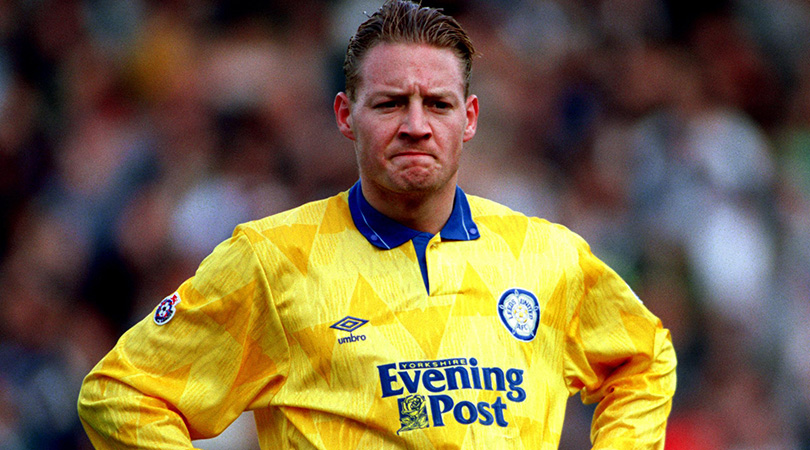
If anyone thought Leeds’s form would let up for the rest of the season, then they would be mostly mistaken. Barring a New Year hangover which led to one win in five games, Leeds would remain in the upper reaches of the table and they would soon turn on the style. A seven-match winning streak lasting from mid-February to the start of April consolidated the team’s places in the top four. Two of these victories featured goals from new signing Willie Korsten, a left winger recently signed on loan from Vitesse Arnhem. Korsten scored the winner in a 1-0 victory against Everton and was amongst the goals in a 4-1 thrashing of Derby County, impressing enough to warrant Leeds asking to make the loan deal permanent.
The seven-game winning streak for the crux of a hugely impressive end to the season, with the team only losing 1 of their final 14 matches. The run may have aided by Leeds’s lack of a participation in any other competitions come February. The team had exited the League Cup and UEFA Cup early in O’Leary’s reign and would lose an FA Cup fifth-round replay to Tottenham on 24th February, which fell in between league victories over Everton and Leicester. Leeds would finish an impressive 4th in the final Premier League standings, finishing below Manchester United, Arsenal and Chelsea, once again qualifying for the UEFA Cup. The team would finish the league season with 18 wins, 13 draws and 7 losses, only losing twice at Elland Road and only conceding a stingy 9 goals from opposition teams. Leeds improved overall in both attack and defence, scoring 62 goals (their best return since 1993-94) and conceding 34, the 3rd lowest in the league. The last time Leeds had conceded fewer goals in the league had been back in 1974 in Don Revie’s final season as manager, a testament to the abilities of a defence comprising Gunnar Halle and Martin Hiden at right-back, Ian Harte at left-back and the central defensive pairing of teenager Jonathan Woodgate and captain Lucas Radebe ahead of goalkeeper Nigel Martyn, who would once again make the PFA Team of the Year.

In addition to a tough defence and 18 goals from Jimmy Floyd Hasselbaink, who shared the Premier League’s Golden Boot with Liverpool’s Michael Owen and Manchester United’s Dwight Yorke, a key factor in Leeds United’s successful league season was the implementation of youth into the starting XI. Along with the already established Harry Kewell came previously mentioned centre-back Jonathan Woodgate, goalkeeper Paul Robinson (who made five appearances in the Premier League in Martyn’s absence), midfielder Stephen McPhail and winger/striker Alan Smith. All five of these players had been part of Leeds 1997 FA Youth Cup-winning side. All suitably impressed during the season bar Robinson, who unable to unseat Nigel Martyn. Woodgate started 33 matches during his debut season as a professional, forming an impressive partnership with Lucas Radebe. McPhail would make 20 appearances (inc. 11 league starts) but would not be regular starter due to the form of David Hopkin and Alf-Inge Håland in central midfield. Harry Kewell backed up his form from the previous season and continue his impressive rise, playing in all 38 league games (36 starts, 2 sub) and scoring 6 goals from the left wing. Finally, Alan Smith, born 6 miles away from Leeds city centre, would become this season’s breakout star. He would make 26 appearances in all competitions, scoring 9 goals. Seven of these goals would come in the league as he formed one-half of David O’Leary first-choice strike pairing alongside Hasselbaink. One notable highlight would be Smith’s Premier League debut in November. Coming off the bench, he would score three minutes into his debut with his first shot of the match. Leeds would win the match 3-1, with two goals from Hasselbaink.
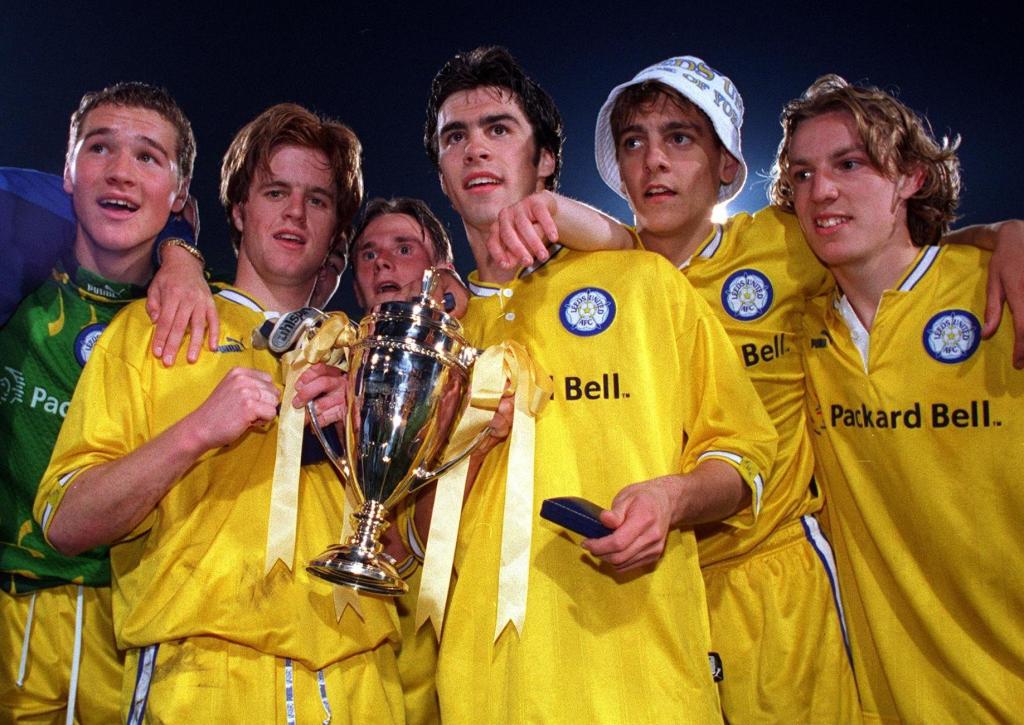
At this stage, things were looking up for this young Leeds side coached by a young manager. Would this rise continue?
 the-score-board.co.uk