
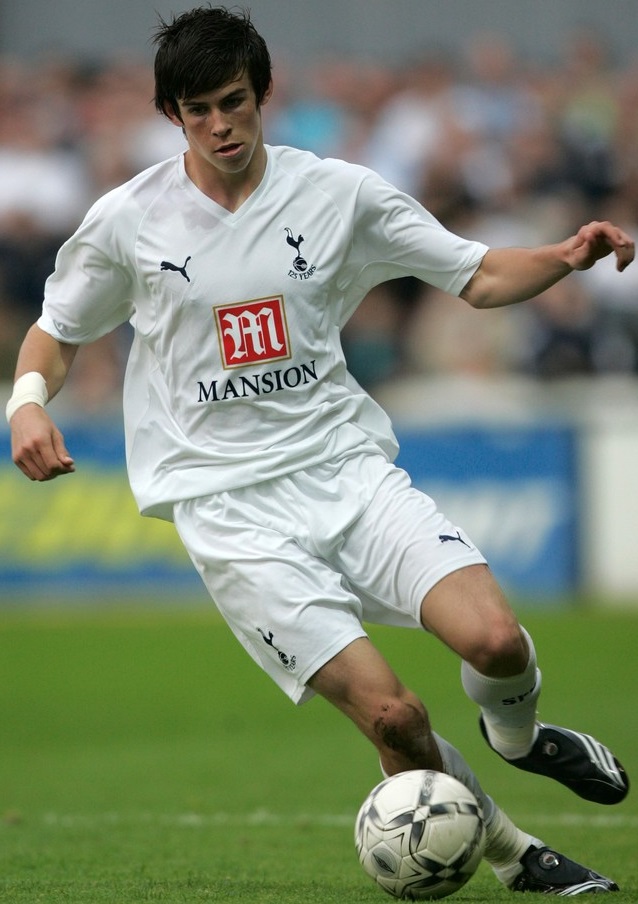
It wasn’t always easy being Gareth Bale…
It is no controversial statement to say that at the time of writing, Gareth Bale is one of the best midfielders in the world. Despite constant rumours about his future that refuse to go away stating that Bale is unhappy at Real Madrid or the current manager wants Bale to leave and is seemingly trying to ‘push’ Bale out of Real Madrid, the Welshman is still a major player on the world stage both at club and international level. During his career thus far, Bale has won four Champions Leagues, three FIFA Club World Cups, two UEFA Super Cups, one Spanish Super Cup, one Copa Del Rey and one La Liga, all with Real Madrid. Personally, Bale has featured twice in UEFA’s Team of the Year (2011, 2013), four times in the PFA Team of the Year (Championship 2007, Premier League 2011, 2012, 2013) and is a six-time Welsh Footballer of the Year (2010, 2011, 2013, 2014, 2015, 2016). In 2013 alone, Gareth Bale (then at Tottenham) was named PFA Player of the Year, PFA Young Player of the Year, Football Writers’ Association Player of the Year, Premier League Player of the Year and appeared in both the UEFA and PFA Teams of the Year.
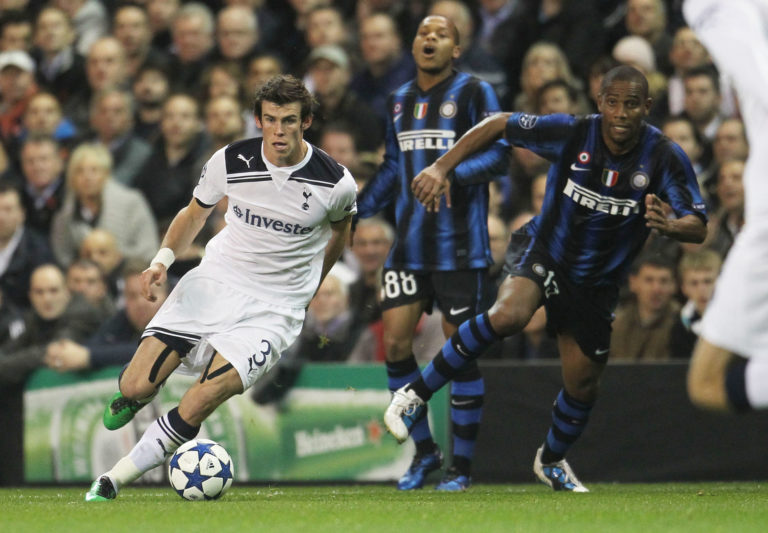
During the 2009-10 season, Bale was converted from a left-back to a left-winger by Spurs manager Harry Redknapp, making his first start in a more attacking position in a Premier League match against Hull City on 16th January 2010. Bale would be an ever-present for the rest of the season, scoring the winning goal in consecutive weekends in London derby victories over Arsenal and Chelsea. These performances would lead to him being named the Premier League Player of the Month for April 2010 and he would eventually help Tottenham qualify for the Champions League for the first time. The following season would see Bale’s breakthrough season, as he would make 41 appearances in all competitions and score 11 goals. He would truly become a star for Tottenham during the team’s Champions League campaign. After scoring his first Champions League goal in a 4-1 victory over FC Twente, Bale would famously score a second-half hat-trick in Spurs’ 4-3 defeat to defending European champions Inter Milan. Bale would run Inter right-back and Brazil international Maicon ragged over the course of 90 minutes, earning plaudits from both Harry Redknapp and Inter manager Rafael Benitez. In the return fixture, Bale would impress once again, providing two assists in a 3-1 victory at White Hart Lane. His form would continue throughout the rest of the campaign as Spurs would win the group ahead of Inter Milan and eventually progress to the quarter-finals.
With the combination of this form and his excellent Premier League form, Bale would be named the PFA Player of the Year for the 2010-11 season. In 18 months, Bale had gone from a bench player to a world-class player in a single season, and the rest is history. However, it wasn’t always plain sailing for young Gareth Bale at Tottenham. At one point, it seemed the guy had a curse hanging over him and that curse would affect Tottenham negatively whenever Gareth Bale would make an appearance in the first-team.
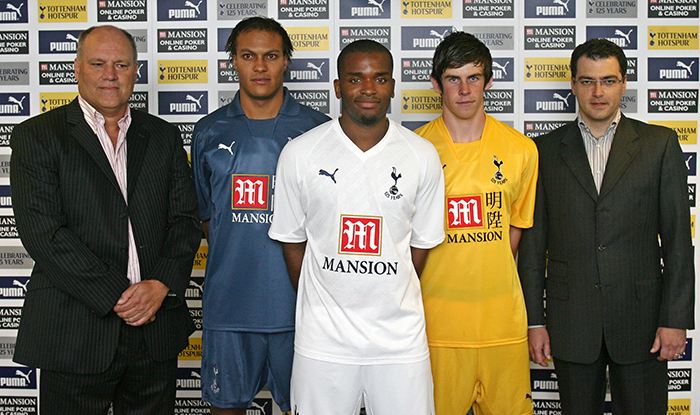
In the summer of 2007, Gareth Bale had just finished his first full season in senior football, after making his debut as a 16 year old for Championship side Southampton in April 2006. Bale made 43 total appearances at left-back for the South Coast club during the 2006/07 season and was named in the Championship edition of the PFA Team of the Year. His performances during this season had made the 18-year-old Bale one of the hottest prospects in English football currently playing outside of the Premier League. His performances had not gone unnoticed. On 25th May 2007, he would be signed by Tottenham Hotspur for £5 million, with an additional £5 miilion being paid based on the amount of appearances that Bale would make for Spurs during his four-year contract.
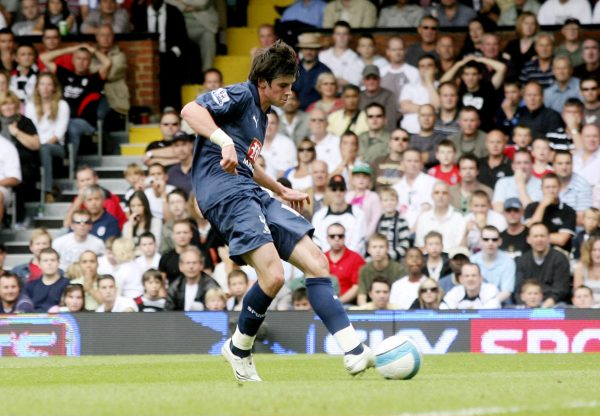
Gareth Bale would make his Premier League debut for Tottenham on 26th August 2007 at Old Trafford against the champions Manchester United. Manchester United would win a hard-fought match 1-0 thanks to Nani’s first goal for the Red Devils. The following week, Bale would score his first Premier League goal in a 3-3 draw against Fulham, putting Spurs 3-1 ahead at Craven Cottage. In his third Premier League match, Bale would score again, this time against Arsenal in the North London derby. Bale would open the scoring with a trademark well-taken free-kick to give Tottenham the lead before Arsenal would come back through two goals from Emmanuel Adebayor and another from Cesc Fabregas to condemn Spurs to their 4th defeat in their first 6 Premier League matches. Bale would continue to appear for Spurs, coming off the bench in a 6-1 UEFA Cup victory over Anorthosis Famagusta, and starting a 2-0 Carling Cup victory over Middlesbrough on 26th September, where he would score his third goal for the club in just his fifth match. Not bad for a left-back.
Despite these two victories, a first Premier League victory with Spurs would continue to elude Gareth Bale. A 4-4 classic with Aston Villa, a 2-2 draw with Liverpool and a 3-1 defeat to Newcastle United on 22nd October meant that Tottenham had only gained one win from their first 10 Premier League matches, leaving the club in the relegation zone and manager Martin Jol without a job. Bale would miss Spurs next three league matches under new boss Juande Ramos, a 2-1 loss to Blackburn Rovers, a 1-1 draw with Middlesbrough and a 3-1 win over Wigan Athletic before returning for the team’s trip to Upton Park to face West Ham United on 25th November. The match would end in a 1-1 draw, Tottenham’s 6th draw of the season.
Gareth Bale would feature in two further matches for Spurs, a 3-2 UEFA Cup win over Danish side Aalborg and a 3-2 defeat to Birmingham City on 2nd December. In said match, Bale would be on the end of a tackle from Fabrice Muamba. As a result of the tackle, Bale had suffered ligament damage in his ankle, an injury that would curtail his debut Premier League season. In his debut season, Gareth Bale had played in 8 Premier League matches for Tottenham, with a record of 4 draws, 4 defeats and 0 wins. Let’s call that coincidence. He would miss the rest of Tottenham’s season, including the team’s Carling Cup success and the team’s recovery in the Premier League. In Bale’s absence, Spurs would win four out of their next five matches. Spurs would ultimately finish the Premier League season in 11th place, winning 11, drawing 13 and losing 14 with 9 of Spurs’ 11 wins occurring after Bale’s injury, with January signing Alan Hutton taking his place at full-back.
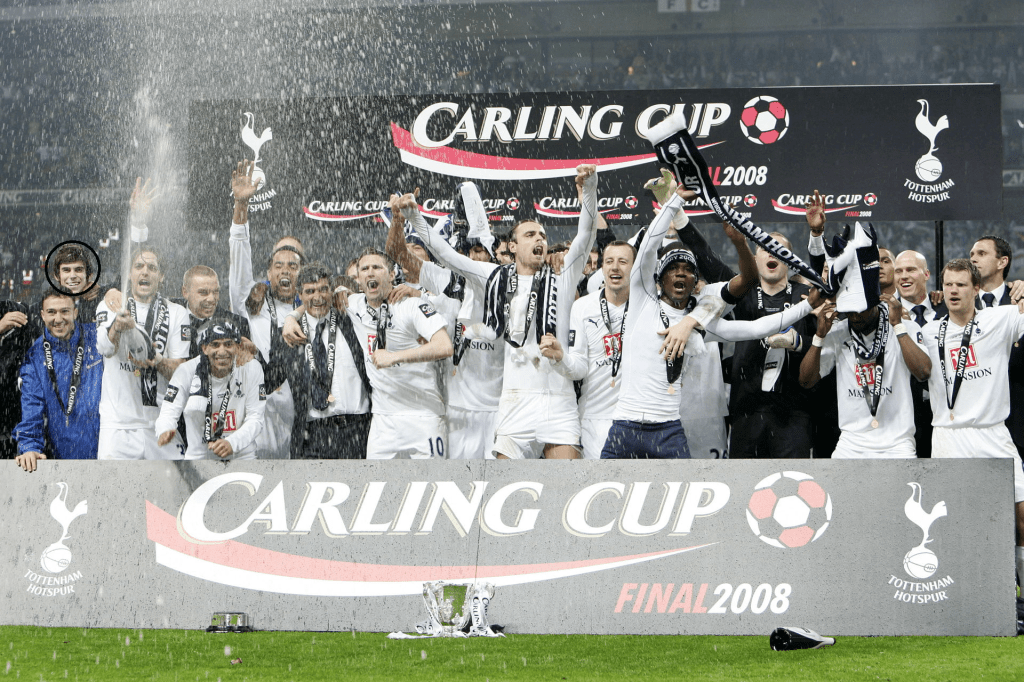
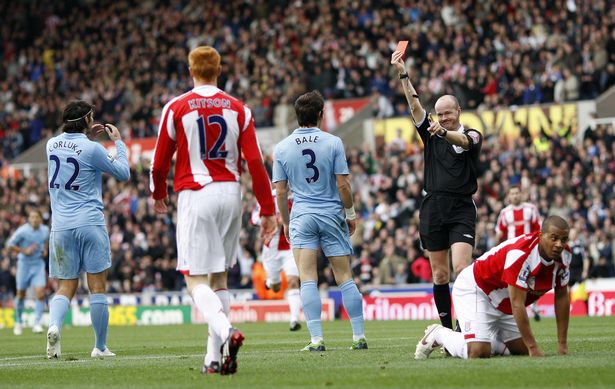
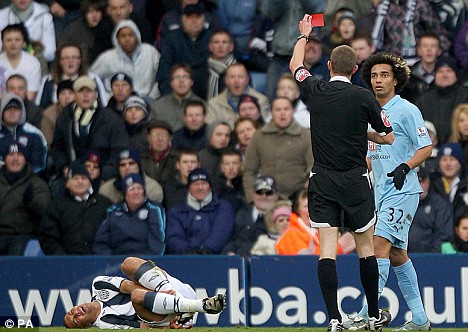
Bale would return to fitness in time for the beginning of the 2008-09 season, making his return in the opening match of the season, a match against Middlesbrough. Bale would come on as a second-half substitute for Benoit Assou-Ekotto with Spurs 1-0 down and needing to turn the match in their favour. Spurs would ultimately lose the match 2-1. Bale would start the following match against Sunderland and play the full 90 minutes. Spurs would once again lose the match 2-1. A repeat of the previous season’s League Cup Final against Chelsea would soon follow, ending in a 1-1draw with Bale once again playing the full 90 minutes. After this, Bale would start four of Tottenham’s next five Premier League matches against Aston Villa, Wigan and newly-promoted Hull and Stoke City. Spurs would fail to win all four of these matches, losing three and drawing one. Bale would receive his first Premier League red card in the last of these matches, a 2-1 defeat to Stoke City on 19th October after a misplaced tackle on Tom Soares. These results, coupled with an earlier loss to Portsmouth on 28th September meant that Spurs were left rock-bottom of the Premier League on 19th October after 2 draws, 6 losses and 0 wins from their first 8 Premier League matches of the season. Bale had played in 7 of these 8 matches. As of 19th October 2008, Gareth Bale had appeared in 15 Premier League matches. The record for these 15 matches: 6 draws, 9 defeats and 0 wins. Call that coincidence or the beginnings of bad luck? Manager Juande Ramos would be sacked 6 days after the Stoke defeat to be replaced with Portsmouth manager Harry Redknapp. Bale’s suspension meant he would miss Redknapp’s first game in charge against Bolton Wanderers. With Bale absent, Spurs would win 2-0 after goals from Darren Bent and Roman Pavlyuchenko.
Bale would make his first appearance under Harry Redknapp in the North London derby on 29th October. Bale would start in the most exciting North London derby in years as Tottenham and Arsenal would play out a 4-4 draw, with Spurs salvaging a draw in the 94th minute after a late goal from Aaron Lennon. He would play a part in the team’s next two matches, a 4-0 UEFA Cup win over Dinamo Zagreb and a 4-2 Carling Cup victory over Liverpool. With Spurs suddenly finding form under new coach Redknapp, Bale would surely be hoping that the upcoming Premier League match against Fulham would finally provide him with his first taste of victory in the Premier League at the 17th attempt. Spurs would lose the match 2-1. For Bale, 17 matches without a win. As a result of his inclusion in the prior UEFA Cup and Carling Cup matches, Bale had missed Spurs’ intervening Premier League matches against Liverpool and Manchester City. Spurs had won both of these matches, with the Manchester City win being the team’s 3rd win in Harry Redknapp’s first 4 matches in charge. Bale would be included in another Spurs’ squad for an upcoming UEFA Cup match against NEC Nijmegen, and wasn’t included in the Premier League match against Blackburn that preceded the tie. Spurs wouldwin the match 1-0. The same scoreline would be inflicted upon NEC, another win for Bale that had occurred outside of the Premier League. Three days later, he would be a second-half substitute in a 1-0 defeat to Everton. 18 matches without a win.
Bale would not play another Premier League match for Tottenham until the team’s last match of 2008, a trip to The Hawthorns to face West Brom on 28th December. Spurs’ form had stuttered of late with 1 win in their last 4 matches, a victory against West Ham on 8th December. Would Bale’s inclusion spur Tottenham onto victory? Upon his first-team return, Bale would once again be a second-half substitute as Spurs would end 2008 with a 2-0 loss to West Brom to extend the team’s run to 1 win in 5 during the month of December. Things would soon improve for Bale: in the domestic cup competitions. In a four-day period, he would start in a 3-1 FA Cup 3rd Round victory over Wigan and a 4-1 win in the first leg of the Carling Cup semi-finals against Burnley. After these dual victories, Spurs would face Wigan in the Premier League in an FA Cup rematch. The Latics would get their revenge, winning 1-0 after a 90th-minute winner from Maynor Figueroa. As if the extension of his winless run being extended to 20 matches wasn’t enough for Gareth Bale, things would somehow get worse.
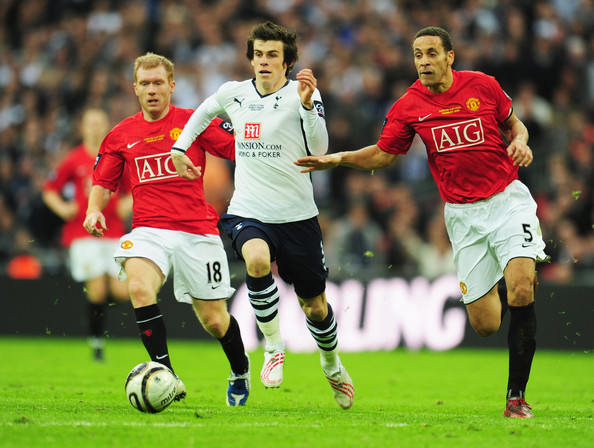
Including the Wigan defeat, Gareth Bale would then appear in 11 matches for club and country between 11th January and 24th May 2009. Unfortunately, none of these matches would end in a victory for the 19-year-old Welsh left-back. Bale would feature in 2 draws and 9 losses during this run. The draws would occur in the league (a 1-1 draw with Portsmouth on 18th January, extending the run to 21 matches) and in Europe (a 1-1 draw with Shakhtar Donetsk on 26th February). In March, Bale would start for Spurs in the 2009 Carling Cup Final, hoping to make up for his absence in Spurs’ success the previous year by helping the team successfully defend their trophy against 2-time winners and Premier League leaders Manchester United. The final would remain goalless for 120 minutes. Gareth Bale would come on in extra-time as a 98th-minute substitute replacing Jermaine Jenas, but would play no part in the resultant 3-1 penalty shoot-out loss. After the Carling Cup Final, Spurs would play four Premier League matches, winning 3 and drawing 1. None of these matches would feature Bale. After not playing for 27 days, Bale would head off to join Wales for two 2010 World Cup qualifiers against Finland and Germany. Bale would start both matches, both of which would end in 2-0 defeats.
Bale would soon return to the Premier League sidelines as Tottenham would follow up a loss to Blackburn with successive wins against West Ham and Newcastle. After three straight defeats in his last three matches, Bale would hope to end his run of bad luck in another match-up with Manchester United on 25th April 2009. The match would mark Bale’s first Premier League appearance in three months, having not played since the 1-1 draw with Portsmouth on 18th January. The Premier League match would not be as close as the Carling Cup Final. Spurs would strike first when Darren Bent scored after 29 minutes. A second from Luka Modric three minutes later stunned the Old Trafford faithful as Spurs went into half-time 2-0 ahead, threatening to put a spanner in the Red Devils’ title challenge. If Spurs could hold on for the victory and if he managed to get on the field himself, Gareth Bale’s winless run for Spurs would finally end at 21 matches. Did the run come to an end? It did not. The floodgates would open with a 57th-minute Cristiano Ronaldo penalty. A second from Ronaldo, a brace from Wayne Rooney and another from Dimitar Berbatov would complete the second-half comeback. Manchester United had produced a performance of champions, recovering from a 2-0 to beat Tottenham 5-2. For Bale, the result only meant one thing. 22 matches without a win. Bale would make two further league appearances for Tottenham that season and the result would not be positive, as a 0-0 draw with Everton would be followed by a final-day 3-1 defeat to Liverpool. The run had continued unendingly, now stretching to 24 matches. Gareth Bale made 30 appearances for Tottenham during the 2008/09 season. 16 of these appearances would come in the Premier League. In these 16 appearances, the record would read: 5 draws, 11 defeats, 0 wins. Gareth Bale had now been a Tottenham Hotspur player for two seasons. In these two seasons, Bale had made 24 Premier League appearances. Of these 24 appearances, Bale had appeared in 9 draws, 15 losses and 0 victories. Not one.
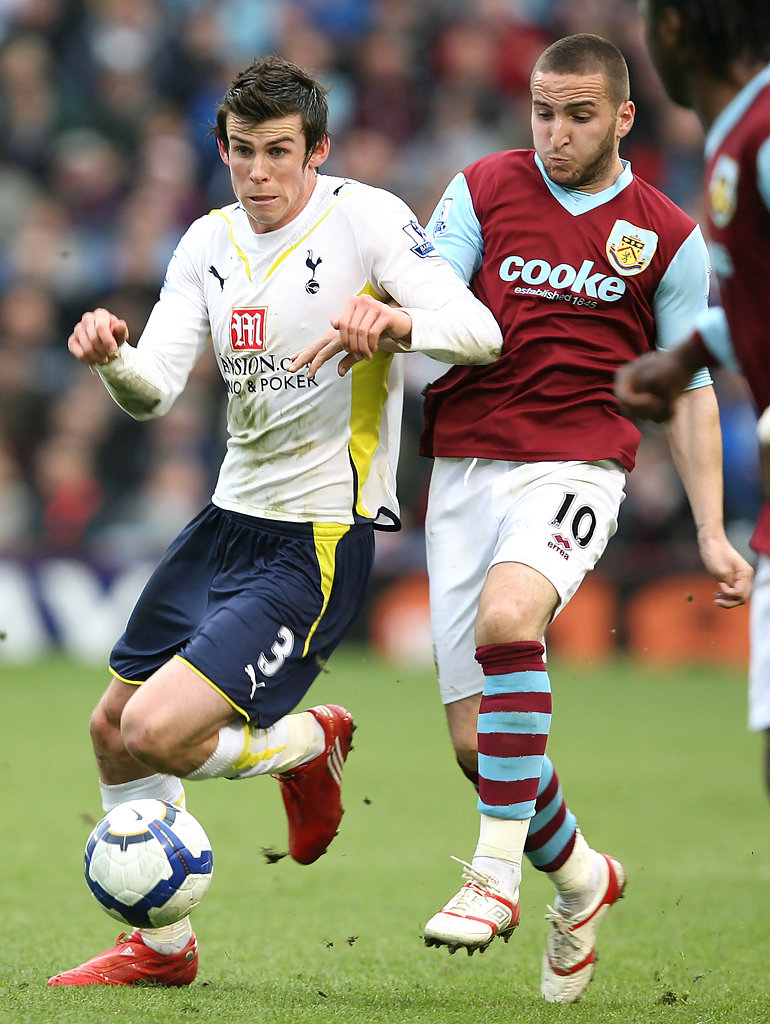
To add to his problems, Gareth Bale spent the post-season and subsequent pre-season in the treatment room, having torn his meniscus in June 2009. The injury would cause him to miss the first five matches of the 2009/10 season. In his absence, Spurs had a very productive pre-season, including signing two young full-backs from Sheffield United, Kyle Naughton and Kyle Walker. This would add to Bale’s competition along with Vedran Corluka and Benoit Assou-Ekotto. Spurs would begin the season brightly, winning 4 of the 5 matches Bale would miss through injury. Spurs would end August lying 2nd in the Premier League table level on points on points with Chelsea, the only other side to gain maximum points from their first four matches. Bale would also play no part in the team’s consecutive losses to Manchester United and leaders Chelsea, which halted their early season momentum. However, now recovered from his meniscus tear, Bale would be ready to make his return to the matchday squad for a meeting with newly-promoted Burnley on 26th September 2009. The match would be one to remember for fans and players alike, as Tottenham would ultimately win the match 5-0, putting the Premier League newcomers to the sword. Four goals from Robbie Keane (in what would be his last major accomplishment for the club) and a first-half goal from Jermaine Jenas would finally see off the Clarets. However, the most important moment of the match wouldn’t involve a goal being scored. In the 85th minute with Spurs 4-0 ahead and game already won, Harry Redknapp called for his No.3. The message was sent to the 4th official in the 85th minute. The board would be lit up, reading two names. Coming off would be No.7 Aaron Lennon, who had delivered an excellent performance thus far. Coming on would be No.3 Gareth Bale. Bale would take to the field for the final five minutes, knowing that history would soon be made. The final whistle blew. Harry Redknapp and Tottenham celebrated another three points and a 5th win from 7 matches to continue an impressive start to the season and ending the month of September in 4th place, with 15 points out of a possible 21. For Gareth Bale, this victory would mean so much more. The curse was over. After 25 Premier League matches, Gareth Bale had finally appeared on the winning side. The curse had lasted for two years, beginning on 26th August 2007 when Bale made his debut for the club and had finally ended on 26th September 2009, lasting 762 days in total.
Following the Burnley win, Bale would not make another Premier League appearance for Tottenham until a substitute appearance in a 3-0 defeat to Arsenal on 31st October. Another month would pass until Bale’s next league appearance in a 2-2 draw against Everton on 6th December, replacing Benoit Assou-Ekotto. Bale would soon get his second and third Premier League wins in quick succession in the shape of a 3-0 win over Manchester City on 16th December and a 2-0 success against West Ham on 28th December 2009, also as a substitute for Assou-Ekotto. Now that Bale’s victory curse had been broken, his task was now to fight for his place as Spurs no.1 left-back. An injury to Assou-Ekotto would give Bale the starting spot he craved and he would remain a starter for the rest of the season, first as a left-back and later as a left-winger. Bale would score goals against Arsenal and Chelsea in the last months of the season and would be named Spurs’ Young Player of the Season.
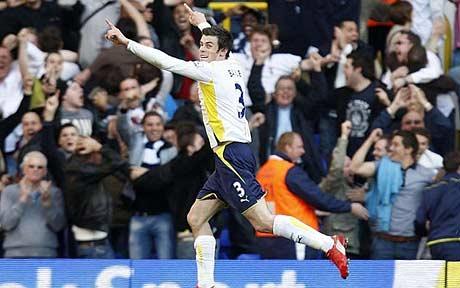
Gareth Bale would have an injury-free pre-season, scoring in friendlies against New York Red Bulls and Benfica. He would start Spurs’ opening Premier League match of the 2010-11 season on the left wing in a 0-0 draw with Manchester City. He would prove a menace, giving City right-back Micah Richards a demonstration of what he would do to Maicon months later. The following week, he would score both goals in a 2-1 victory over Stoke City. He would continue his great form, assisting all 4 goals in a 4-0 victory over Young Boys in the Champions League play-off stage to guarantee Tottenham a place in the Champions League proper. One month later, Bale and Spurs would come face to face with Inter Milan and the rest is history. At the end of this season, Gareth Bale would be named PFA Player of the Year for the first time. The curse that had dogged the young Welshman for two years was now well and truly over, a curse that helped to make Gareth Bale into the world-class player he would become later on.
 the-score-board.co.uk
One thought on “24 Premier League Matches Without Tasting Victory: The Making of Gareth Bale”