
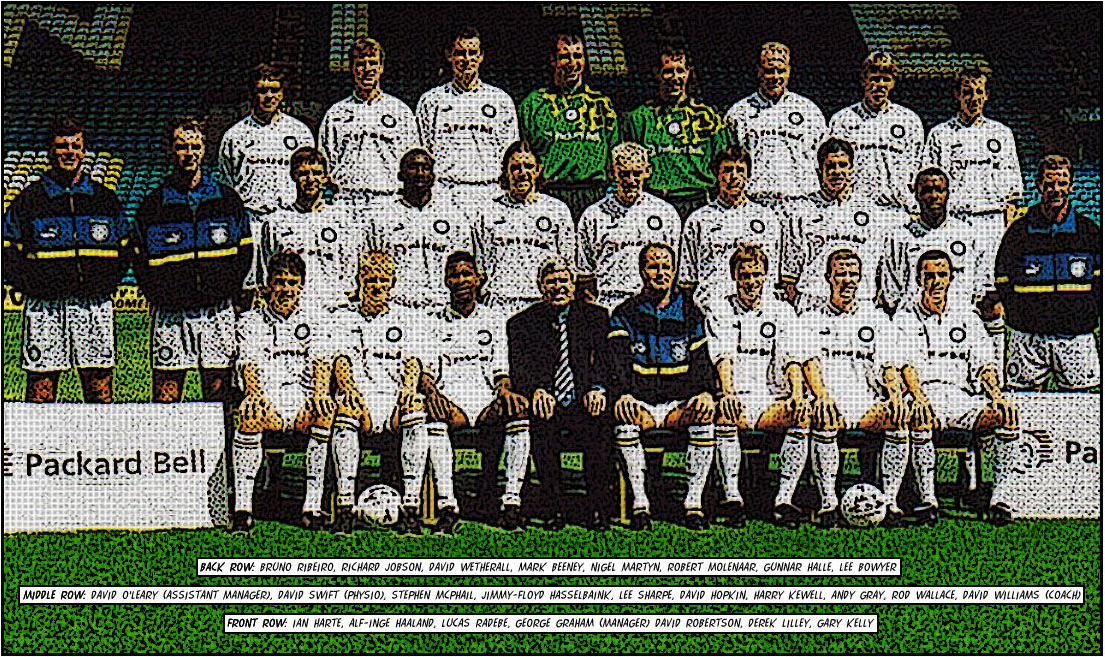
1997/98: The Rise Begins…
Manager: George Graham
Top Scorer: Jimmy Floyd Hasselbaink (16)
Premier League: 5th
FA Cup: Quarterfinals
League Cup: 4th Round
League Record: 17 wins, 8 draws, 13 defeats, 57 goals for, 46 goals against
Transfers in £10.15 million 6 players
Jimmy Floyd Hasselbaink Boavista £2 million
Alf-Inge Håland Nottingham Forest £1.6 million
Bruno Ribeiro Vitória £500,000
David Hopkin Crystal Palace £3.25 million
Martin Hiden Rapid Vienna £1.3 million
Clyde Wijnhard Willem II £1.5 million
Transfers Out: £4.35 million 10 players
Paul Evans Released
Mark Ford Burnley £250,000
Brian Deane Sheffield United £1.5 million
Andy Couzens Carlisle United £100,000
Ian Rush Newcastle United Free
Tony Dorigo Torino Free
Carlton Palmer Southampton £1 million
Tony Yeboah Hamburger SV £1 million
Pierre Laurent Bastia £500,000
Richard Jobson Manchester City Free
Transfers Total Cost: £-5.8 million
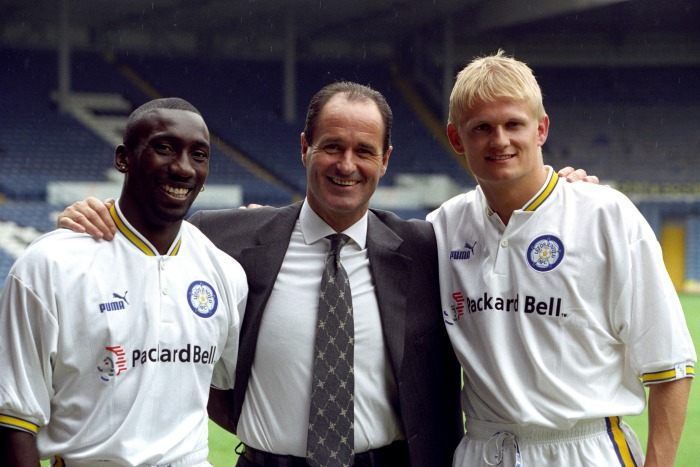
To prepare for the 1997/98 season, George Graham sold some of the team’s more senior players. Ian Rush was sold to Newcastle after returning 3 goals in 36 appearances in his single season at Elland Road. The previous season’s top scorer, Brian Deane, was sold to Sheffield United returning to the club he had left in 1993 for £2.9 million. Finally, 32-year-old left-back Tony Dorigo was sold to Serie A side Torino after six years’ service. Dorigo had made 208 appearances for Leeds since joining from Chelsea in 1991. He had been the Leeds starting left-back when they clinched the First Division title in 1992. In addition, academy graduates Andy Couzens and Mark Ford were sold to lower-league Carlisle and Burnley. Following the team’s record low goal record, the previous season, Graham made sure to buy early in the summer of 1997, immediately refreshing his strike force with the signing Jimmy Floyd Hasselbaink from Boavista for £2 million. Hasselbaink had scored 20 goals for Boavista in Portugal’s Primeira Divisiao the previous season, helping the team to 7th in the table. A further foray into Portugal produced Vitoria Setubal midfielder Bruno Ribeiro, who was bought for £500,000. Ribeiro had actually been discovered while George Graham and his scouting team were primarily scouting for Hasselbaink. Norwegian midfielder Alf-Inge Håaland was signed from Nottingham Forest to add to the defence and goalscoring midfielder David Hopkin was bought from Crystal Palace for £3.25 million. All of these players were bought before the end of July 1997. In less reported moves, nine youth team players were offered professional contracts. Leeds had won the FA Youth Cup the previous summer beating Crystal Palace 3-1 on aggregate after wins both home and away. Among these youth cup winners were future England internationals Jonathan Woodgate, Paul Robinson and Alan Smith and another young midfielder by the name of Harry Kewell.
Leeds once again started the league season slow, losing three out of their first five games. An opening-day 1-1 draw with Arsenal at Elland Road, where Hassselbaink would score a debut goal, would be followed by a 3-1 victory over Sheffield Wednesday, leaving Leeds in 5th place after 2 matches. However, three straight losses to Crystal Palace (0-2), Liverpool (0-2) and Aston Villa (0-1) in which Leeds didn’t score a single goal saw Leeds plummet down to 14th. However, Leeds would soon rocket up the league losing only two out of their next 14 matches. Highlights from this run included a 4-3 thriller against Blackburn Rovers on 14th September, a surprise victory over champions Manchester United, where a David Wetherall goal would seal a 1-0 victory over the Red Devils at Elland Road. Leeds wouldn’t stop at defeating the previous season’s champions, beating the previous season’s runners-up Newcastle United 4-1 on 18th October with goals from Bruno Ribeiro, a first Premier League goal for youngster Harry Kewell, a John Beresford and another notable goal from centre-back David Wetherall. During this notable run of 2 defeats in 14 matches, Leeds would go 7 matches unbeaten between 1st November and 20th December 1997. Four straight victories against Tottenham (1-0), Derby County (4-3), West Ham (3-1) and Barnsley (3-2), in which the latter three saw Leeds score 3 goals or more, showed that the goalscoring struggles of the previous season were now a thing of the past. As a result of the team’s results since 14th September, Leeds had risen from 14th place after five games to 4th place by the halfway point of the season in December. By this point, the team had already scored 27 goals, one less than they managed in the entirety of the previous season. Rod Wallace had already beaten the 1996/97 goal record of Sharpe and Deane, having scored 7 goals by Christmas followed by Jimmy Floyd Hasselbaink with five. At this time, a previous top scorer, Tony Yeboah, was sold to Hamburg for £1 million along with Pierre Laurent’s swift return to Bastia. Leeds would finish 1997 with the end of the seven-match unbeaten run. The run would come to an end with a 3-1 Boxing Day loss to Liverpool at Elland Road and would be followed by a 1-1 draw at VIlla Park, where Hasselbain would score his 6th goal of the season.
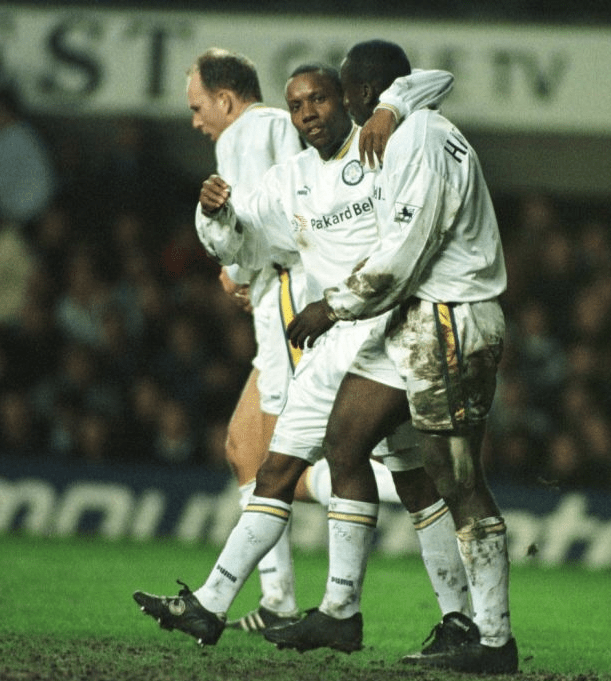
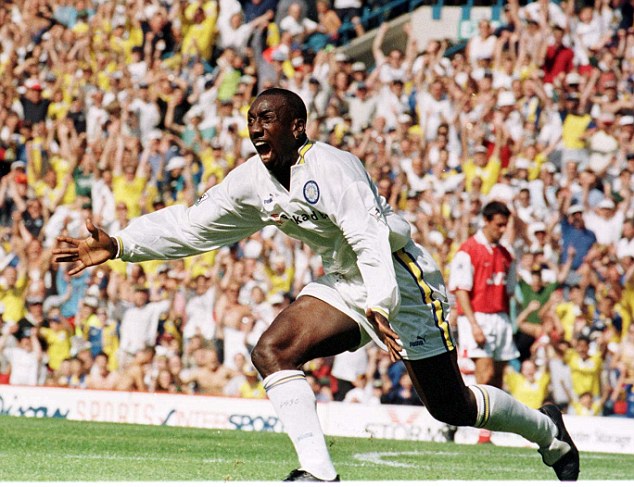
The team’s form for the second half of the season became more inconsistent, winning 7 matches and losing 7. Across January and February 1998, Leeds would only win 1 out of a possible 6 matches, a 2-0 victory over Crystal Palace on 31st January, with the goals once again coming from Wallace and Hasselbaink. This run would see Leeds lose ground in the race for a UEFA Cup place, dropping from 5th to 8th in the Premier League table. Seeing their chances at European football starting to slip through their grasp, Leeds would finish the season strongly, winning 7 of their final 11 matches. In one week-long period in mid-March, Leeds would easily dispatch Blackburn Rovers 4-0 at Elland Road, with goals from Lee Bowyer, Jimmy Floyd Hasselbaink and a rare brace from Alf-Inge Haaland, before thrashing Derby County 5-0 four days later, with Gunnar Halle, Bowyer, Harry Kewell and another goal from Hasselbaink seeing off the Rams after a Jacob Laursen own goal. Leeds would finish the Premier League season as the began it, with a 1-1 draw against Wimbledon. Leeds would finish the season in 5th place, qualifying the team for the UEFA Cup, a prospect that was unthinkable when George Graham had first taken over in September 1996. It was during this period was when Jimmy Floyd Hasselbaink really showed his worth, more than doubling his tally and finishing with 16 league goals just ahead of Wallace with 9 and Alf-Inge Håland with 7. He added a further 4 goals in Leeds’s run to the FA Cup quarterfinals before the team’s exit at the hands of Wolves.
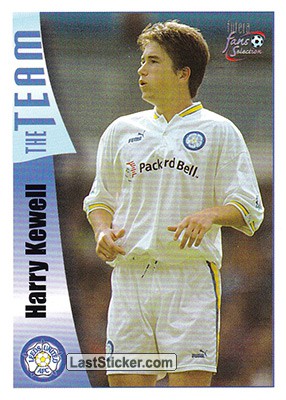
Also, amongst the goals was Harry Kewell, who had his breakout season this. Kewell had been at Leeds since 1995, joining as a youth player and had formed part of Leeds FA Youth Cup winning side the previous year while making three appearances for the senior side. In 1997/98, 19-year-old Kewell made 29 Premier League appearances, scoring 5 goals and producing 4 assists, adding further goals in the cup competitions to increase his final tally to 8.
Leeds would finish the 1997/98 Premier League season in an impressive 5th place, which qualified them for the UEFA Cup. Leeds would finish with a record of 17 wins, 8 draws and 13 losses, finishing with a points total of 59. The biggest positive for the team came in the massive improvement of their strike force. The team doubled the 28-goal tally of 96/97 and finished with 57 league goals, the 4th-best record in the division. This included scoring 3 or more goals in a match on 11 different occasions including the 4-0 and 5-0 wins over Blackburn and Derby, both of whom had been beaten 4-3 earlier in the campaign. However, the defence could not repeat the previous season’s heroics conceding 46 goals (8th best) and keeping 11 clean sheets. Eight matches were won by one-goal margins. Despite this, keeper Nigel Martyn was included in the PFA Team of the Year at the season’s end, the first Leeds player to appear in the team since Gary Kelly and Gary McAllister in 1993-94.
 the-score-board.co.uk