
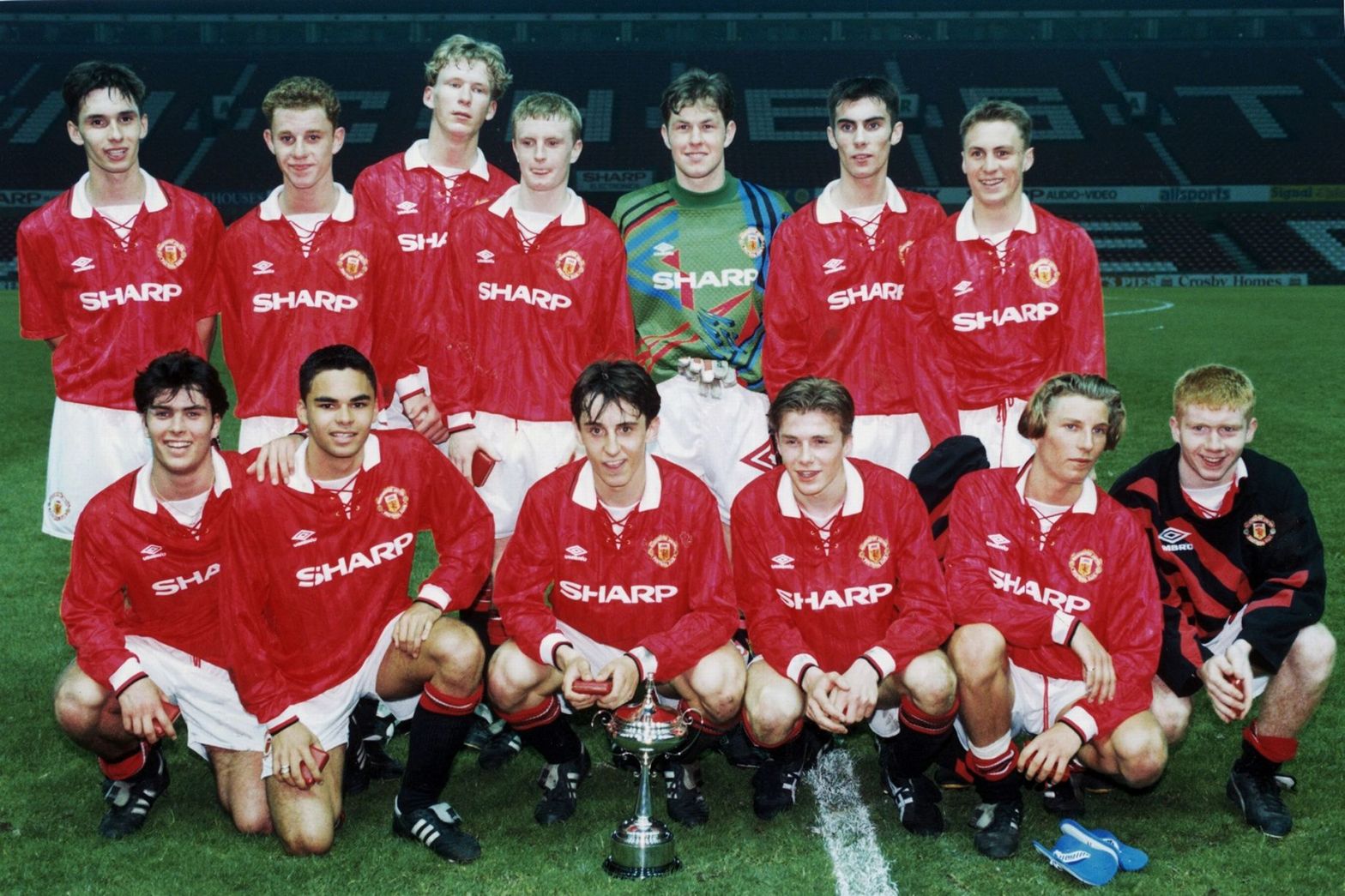
No Beckham, Butt, Scholes, Neville, Neville or Giggs to be discussed here…
The fabled ‘Class of ’92’ is one of the most celebrated teams in football’s recent history. However, unlike Pep Guardiola’s Barcelona from 2009-11, his Manchester City ‘Centurions’ from 2018, Arsenal’s ‘Invincibles’ from 2004 or Manchester United treble-winning side of 1999, the ‘Class of ’92’ is a youth team. ‘Fergie’s Fledglings’ are not celebrated for what they achieved as a side, but more for hat the they members of that team would go on to achieve in their professional careers, especially at Manchester United. Six members of the team would become key players in Manchester United’s success over the following 20 years, including 13 Premier League titles, 4 FA Cups, 3 League Cups and Champions League successes, including the treble-winning season of 1998-99. This path to success all started with a two-legged 6-3 aggregate victory of Crystal Palace, clinching the victory with a 3-2 second-leg victory in front of 14,681 fans at Old Trafford on 15th May 1992.
We all know about the six players that were brought up earlier in this article. Their names were even included in the byline of this article. Enough has been said about David Beckham, Paul Scholes, Gary Neville, Phil Neville, Ryan Giggs and Nicky Butt, their role within this team and what they would do for Manchester United over the coming years. The sextet made a combined 3450 appearances for Manchester United under Sir Alex Ferguson spread over 21 seasons from 1992 to 2013. These players have been the subject of a 2013 documentary and have parlayed the on-field success into off-field success with Butt, Scholes, Giggs and the Neville brothers buying local side Salford City in 2014, a team then residing in the Evo-Stik Northern Premier League Premier Division, the seventh tier of English football. As of writing in 2020, Salford is now playing their football in League Two, the fourth tier of English football after winning promotion out of non-league football in 2019. This article will not be about these six. It will instead be about the other members of the Manchester United side that won the 1992 FA Youth Cup, the other nine players that featuring in both legs of the final and the manager who led them to that success. What to the careers of these men and where are they now?
Kevin Pilkington
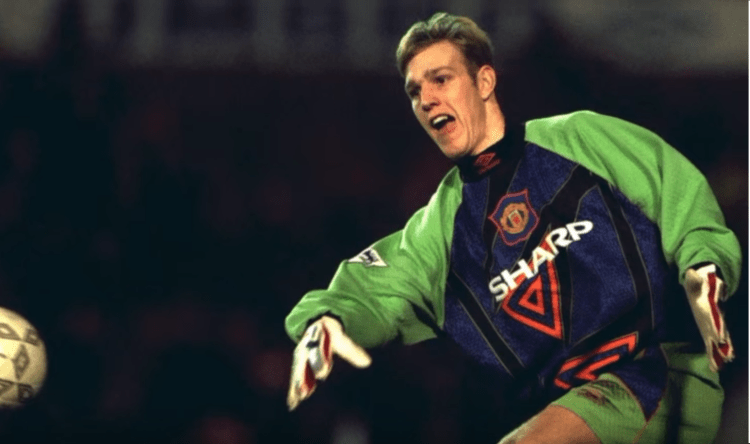
Kevin Pilkington was the starting goalkeeper for both legs of the FA Youth Cup Final in 1992. Across the two legs, he conceded three goals in two highly competitive encounters between Manchester United and Crystal Palace. Let’s just say that he wouldn’t go on to achieve the same sort of notoriety that his opposite number Jimmy Glass would in the years following the final. Pilkington was signed a professional contract in the weeks after the final but would find playing time hard to come by, serving as a regular unused substitute over the next two seasons. He would finally make his first-team debut when he appeared as a substitute replacing an injured Peter Schmeichel in a 3-0 Premier League victory on 16th November, coincidentally against Crystal Palace. However, this debut would not lead to a consistent run in the side and Pilkington would continue to struggle for game time. Loan spells to Rochdale in 1996 and and Rotherham United in 1997 would give him the starting spot he so desired, after finding himself falling further down the pecking order at Old Trafford behind the likes of Tony Coton and Raimond van der Gouw. He would leave Macnhester United for Port Vale in 1998, having made 8 appearances for United across six seasons, 6 of which came in the Premier League. One of these appearances was 3-0 defeat to Second Division York City in the first leg of a League Cup Second Round tie in September 1995.
After a frustrating two seasons at Port Vale, where he once again found himself second-choice for much of his time there, and further unsuccessful short spells at Aberystwyth Town and Wigan Athletic, Pilkington would finally find his home at Third Division Mansfield Town. Across five seasons, he would make 189 appearances for the team in all competitions, helping the team gain promotion to the Second Division (now League One) in 2002. Pilkington would also find regular playing time at Notts County, joining the League Two side in 2005 and playing 149 matches over four seasons. Pilkington would later drop down to the Conference for a spell with Luton Town and a brief return to Mansfield on loan in the 2010-11 season before initially retiring in 2012 to take up the post of goalkeeping coach at Notts County. He would called back into action in 2013, replacing injured County goalkeeper Bartosz Bialkowski in League One match against Brentford. He would make two further appearances for Notts County, ending his career as a back-up goalkeeper back at Notts County and later at Cambridge United. Pilkington would once againretire in 2019 at the age of 45, playing his final match for Notts County in 2014.
Pilkington has worked as a goalkeeping coach for a number of clubs, including Ilkeston Town ,Notts County and Cambridge United, combining his rare playing appearances with his coaching job. He became the goalkeeping coach at Barnsley in 2019, where he has remained ever since.
John O’Kane
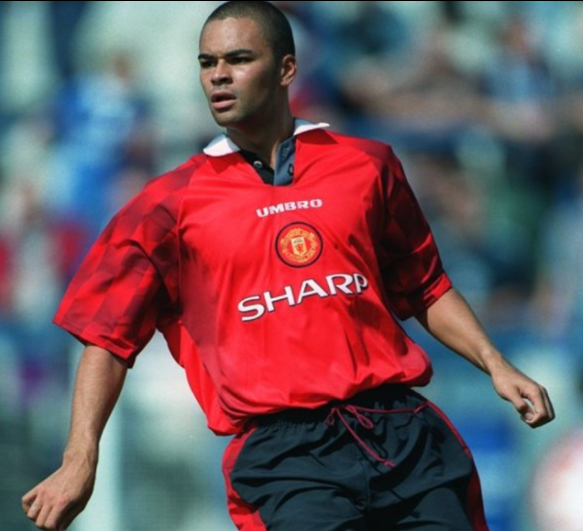
John O’Kane started both matches in Manchester United’s defence alongside Gary Neville that conceded three goals across the two legs. O’Kane, like Pilkington, would find playing time difficult after signing a professional contract in the summer of 1992. It would be difficult, trying to overtake Steve Bruce, Garry Pallister, Clayton Blackmore, Denis Irwin and Paul Parker to just get a spot in the Manchester United team. O’Kane would be sent out on loan multiple times over the next few years, making 13 appearances for Division Two Bury in the 1996-97 season and 6 appearances for Bradford City in Division One at the end of 1997.
O’Kane, like Pilkington, would leave United in 1998 after 7 total first-team appearances and would be sold to Everton for the remainder of the 1997-98 season. O’Kane made 14 appearances for the Toffees between January and May 1998. However, the replacement of Howard Kendall with Walter Smith as Everton manager saw O’Kane’s chances disappear and he would be once again sent out on loan to Burnley for the rest of 1998. He would return to Everton to make 6 further appearances in 1999, but it was clear his future did not lie on Merseyside.
O’Kane’s fortunes would turn around with a move to First Division Bolton Wanderers under the management of Sam Allardyce. A brief loan spell would be made permanent in December 1999 and O’Kane would help the team reach the semi-finals of both domestic up competitions in 2000 and promotion to the Premier League through the play-offs in 2001. He would not play for Bolton in the Premier League and would be sold to Division Two Blackpool Town. O’Kane would make 67 appearances for The Tangerines over the next two seasons before retiring through injury at the age of 29. He would come out of retirement not long afterwards and would sign for non-league Hyde United, playing 116 matches before retiring again in 2006.
George Switzer
George Switzer formed one-half of United’s full-back pairing during the two legs along with a man who will not be discussed on this list. Born in Salford in the shadow of Old Trafford, Switzer served as United left-back during the tie with Crystal Palace. Like the majority of his teammates, Switzer was offered a professional contract with the club. Unlike his teammates, Switzer’s deal only lasted one year and he would be released in 1993 with out playing a senior match for Manchester United. He would sign for non-league Darlington and would make 14 appearances for the club before moving to Hyde United. Switzer would play for six years at Hyde, making 139 appearances and scoring 3 goals between 1994 and 2000. In later years, he would play for hometown club Salford City and semi-professional side Irlam, also based within the Salford area.
In recent years, Switzer has worked as a van driver for a courier firm in Manchester.
Chris Casper
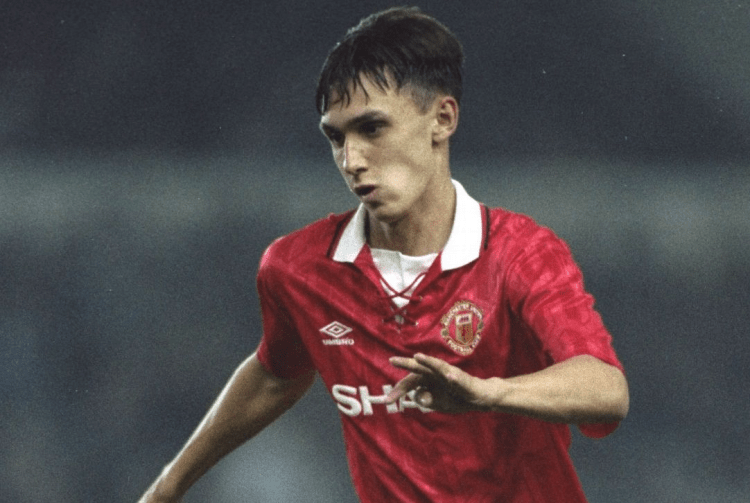
Chris Casper formed the other half of Manchester United’s centre-back partnership alongside John O’Kane in the Youth Cup victory. Chris had football in his blood as his father Frank Casper played 339 league matches for Rotherham United and Burnley between 1962 and 1976 and later managed Burnley from 1989 to 1991. Casper signed professional terms in early 1993 and would make his debut for United in a League Cup victory over Port Vale in October 1994.
At the same time, Casper was a prominent feature of England’s youth set-up. He captained the England U-18 side that won the 1993 UEFA _U18 European Championship in a team that also contained Robbie Fowler and would later appear for England’s U-21 side in the 1995 edition of the Toulon Tournament.
Like many of the ‘Class of ’92’, Casper would be sent out on loan in order to gain first-team experience. He would play 16 league matches for Division Two Bournemouth in early 1996 before returning to United. He would add to his United appearances the following season, appearing all four major competitions for the club including a Champions League victory against Rapid Vienna in November 1996 and later Premier League wins against Tottenham and Coventry in early 1997.
Casper would be sent out on loan on two further occasions, to First Division Swindon Town from September to November 1997, making 9 appearances and secondly to Second Division Reading from September to November 1998. Following 9 appearances, the move was made permanent for £300,000 and Casper would make 35 appearances for Reading across the whole of the 1998-99 season. Casper would make a further 20 appearances for the Royals during the first half of the 1999-00 season before an injury halted his progress. On Boxing Day 1999 in a match against Cardiff City, Casper would suffer a double leg fracture after a tackle from Richard Carpenter. The would be the last match of Casper’s career, as he was forced to retire the following year due to the injury. He would later secure compensation from Carpenter for the career-ending tackle years later.
Since retiring, Casper has been busy. He coached Team Bath, the representative football team of the University of Bath to the 1st Round of the FA Cup in the 2002-03 season the first university football club to do so since 1880. He would later take on a number of roles at Bury, first as a youth team coach, then a reserve team manager before getting the senior job on 19th September 2005. He would manage the team for 114 games before being sacked in January 2008 after a poor run of form. A year later, he would serve as assistant manager at Grimsby Town before stepping down at the end of the 2009-10 season after Grimsby were relegated out of the Football League.
Casper now currently serves as the sporting director at Salford City, connecting him once again with his Youth Cup-winning teammates.
Simon Davies
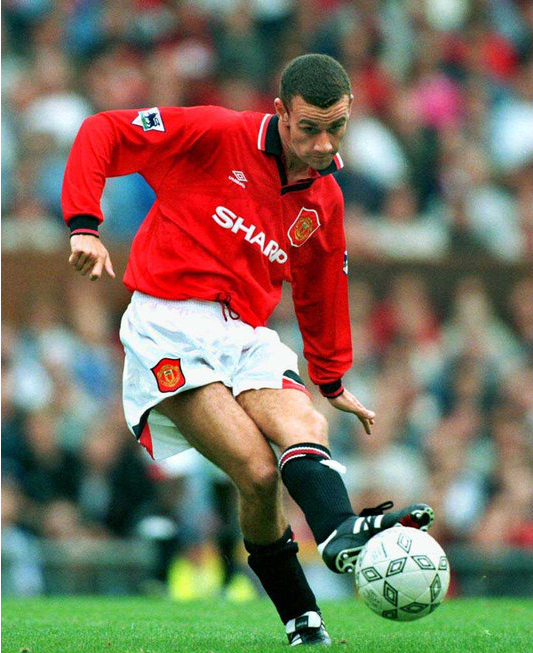
This is not the Simon Davies who would later play in the Premier League for Tottenham, Everton and Fulham during the 2000s and play 58 times for Wales, although this Simon Davies is also Welsh an was also capped by Wales.
Simon Davies would play alongside David Beckham and Nicky Butt in United’s midfield over both legs. He would even score in the second leg, making the score 2-1 after 50 minutes of action in a match that would end 3-2. Davies would sign professional terms in July 1992. He would wait two years to make his Manchester United, firstly spending a season on loan at Exeter City during the 1993-94 season, making 6 appearances and scoring 1 goal. He would eventually make his senior debut for Manchester United debut in a League 2nd round match with Port Vale in September 1994. Davies’ most notable moment would come 3 months later as he would start for United in a Champions League group match against Turkish side Galatasaray. He would make a dream start, opening the scoring after 3 minutes, in a game that would eventually finish in a 4-0 victory for the Red Devils. Davies would make 10 first-team appearances for United during the 1994-95 season, including 5 appearances in the Premier League and a further appearance in the Champions League. He follow this up with a further 8 appearances during the 1995-96 season, including 6 appearances in the Premier League. Unable to find his way into United’s team, he would be sent out on loan to Huddersfield for three weeks in late 1996, making two League Cup appearances for the Red Devils either side of this short spell. These would prove to be his only appearances for Manchester United that season and his final appearances for the club altogether.
In August 1997, Simon Davies would move to Second Division Luton Town for £150,000, leaving Manchester United with 20 first-team appearances to his name. Davies would remain at Luton for just over a year, making 31 appearances for the club before moving to fellow Second Division side Macclesfield Town in December 1998. Davies would score 2 goals in 13 appearances for Macclesfield during the 1998-99 season, including one against former side Luton. In 13 appearances, Davies had scored double the amount of goals at Macclesfield compared to 1 goal managed in 31 appearances for Luton. Davies would continue to be a regular for Macclesfield the following season after the team’s relegation to Division Three, appearing in 41 matches while equalling the previous season’s goal tally.
Davies would sign for another lower league club in the shape of Third Division Rochdale in August 2000. He would score his debut in a 1-1 opening day draw against Darlington. Davies play continuously for Rochdale until the end of September. However, an injury would keep him out until December of that year. Upon returning, Davies would only make 5 more appearances for Rochdale before leaving in June 2001.
Davies would spend the rest of his playing career across the border in the Welsh Premier League with two spells at Bangor City, TNS and Rhyl before retiring in 2007 at the age of 33. Davies would move into management, becoming the manager of Chester City 11th March 2008, after a previous term as caretaker manager in 2007. He would steer the team clear of relegation, assuring safety with one match to spare after a 0-0 draw with Stockport County. After a difficult start to the following season, Davies would be sacked as manager on 10th November 2008, only to be hired as youth team manager a month later. In 2010, he would become part of the coaching staff for Manchester City’s Elite Development Scheme, serving as the assistant to Patrick Vieira before the Frenchman left to manage Ney York City FC in 2015, with Davies becoming an academy coach. The height of Davies’ post-playing career would arrive in 2019 as he would leave City to join Vincent Kompany’s coaching set-up in Anderlecht. After a poor start to the season, Kompany reduced his managerial duties to focus on being a player, leaving Simon Davies as the team’s head coach. In 5 matches, Davies could only manage 1 and 1 draw. He would later be demoted back to his assistant role in October 2019 with Franck Vercauteren taking his place.
Ben Thornley
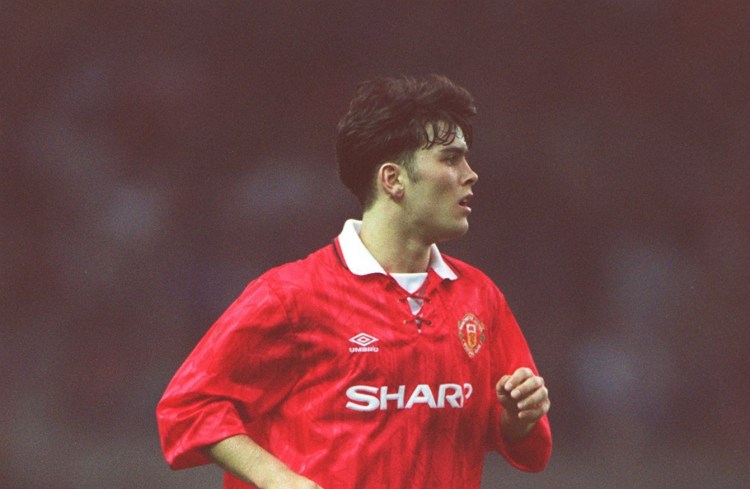
Ben Thornley was the final piece of the midfield jigsaw puzzle for Manchester United in the Youth Cup Final, playing on the left wing in both legs. Thornley would make his senior debut for United in the Premier League in a 2-2 draw against West Ham United on 26th February 1994. Thornley’s development would unfortunately be halted by suffering knee ligament damage in a reserve match against Blackburn in April 1994, an injury that would put him out for over a year. Thornley returned at the start of 1995-96 season appearing in a 2-1 victory for United again West Ham. Unlike his Youth Cup teammates Beckham, Neville and Giggs, Thornley contribution to Manchester United’s double-winning season of 1995-96 was minimal. He would loaned out to Second Division Stockport County for three months in November 1995, where he would make 11 appearances and score one goal before returning to Manchester in February 1996. He would loaned out again immediately, this time to First Division Huddersfield Town. Thornley would score twice in 12 league appearances. During this time, he would receive 3 caps playing for England U-21s.
Thornley would return to Manchester United for the 1996-97 season, making 4 appearances. He would start in three of these matches, in League Cup matches against Swindon and Leicester and a Premier League draw against Middlesbrough in November 1996. He would make a further 8 appearances during the 1997-98 season, starting in League Cup and FA Cup matches against Ipswich, Walsall and Barnsley, with the rest of his appearances serving as a substitute in Premier League matches.
After 14 total first-team appearances, Ben Thornley would leave Manchester United for a permanent move to Huddersfield Town, signing for £175,000 in June 1998. Thornley would become an instant starter in Yorkshire, appearing 42 times during his first season and scoring 5 goals. He would help the team finish 10th in the First Division and progress to the 5th round of the FA Cup. The following season, Huddersfield would finish in 8th place, just 2 points of a playoff place, with Thornley making another 33 appearances. However, another strong season from Thornley could not prevent Huddersfield from slipping into Division Two at the end of the 2000-01 season, despite making 33 appearances.
The rest of Thornley’s career would see him become a journeyman. He would sign for Aberdeen on a free transfer in August 2001. Thornley would have a good season at Pittodrie, scoring 5 goals in 28 appearances. Despite starting Aberdeen’s first two league matches the following season, Thornley would dropped to the substitutes bench until he left in December 2002. He would sign for Second Division Blackpool Town ,making 13 appearances (starting 8), but would be released from his contract at the end of theseason. He would move to Third Division Bury in September 2003, but would only spend six months at the club before being released in March 2004 after 5 appearances. He move to another Third Division club in Halifax Town, but only make 3 appearances before leaving the season’s end.
Thornley would spend the final few years of his career in non-league football, turning out for Bacup Borough, Salford City, Winslow Albion and Witton Albion before retiring at the age of 36 in 2010. Since retiring, Thornley has worked for Manchester United as a sports therapist and as a commentator on matches for MUTV.
Colin McKee
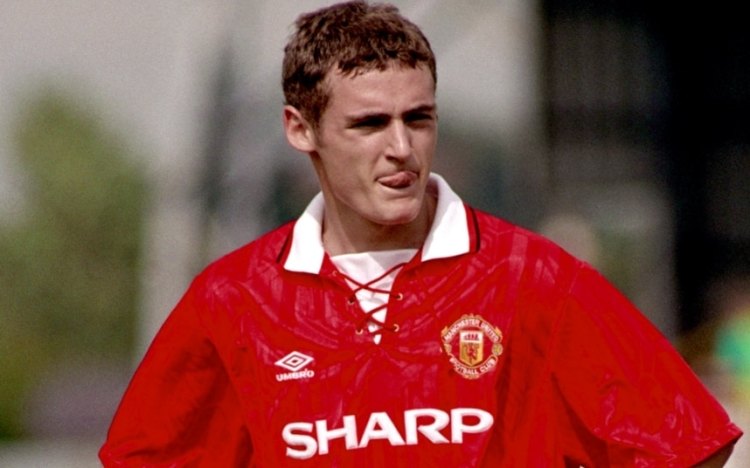
Colin started as one of two Manchester United strikers in both legs of the FA Youth Cup Final. He would get the winning goal in the second leg, scoring to make the scoreline 3-2 on the night and 6-3 on aggregate in United’s favour. McKee was offered a professional contract in August 1992. He was sent on loan to Bury in January 1993. The loan would last two weeks before McKee returned to Old Trafford after making two appearances. McKee, like many of his compatriots found it hard to break into a winning United side. He would make his debut at the end of the 1993-94 season, starting in a final-day 0-0 draw against Coventry City in the Premier League after United had already won the title.
McKee, however, would leave United for Scottish side Kilmarnock in September 1994. Across three seasons playing for Kilmarnock in the Scottish Premier Division, McKee scored 12 in 78 appearances and helped Killy win the 1997 Scottish Cup.
Despite his success McKee would leave Kilmarnock in October 1997 and would become a journeyman for the rest of his career. He was given a one-month trial at Partick Thistle but was not picked up for a full contract. He would be signed by Scottish Division 1 side Falkirk in June 1998. He would appear in all 6 of Falkirk’s matches during August 1998, scoring a brace in a 5-1 thrashing of Berwick Rangers in the Scottish League Cup. He would surprisingly be released at the end of October. Two further spells at Queen of the South and Ross County generated 3 appearances over the rest of the 1998-99 season. McKee would sign for Stirling Albion in the summer of 1999, but would leave after spending most his 5 months at the club on loan at Icelandic club Vikingur.
Colin McKee would join his 7th club in under 3 years when he would sign for Scottish Division Three side Queen’s Park in January 2000. Between January and May 2000, he would make 7 appearances for the Glasgow-based side, making most of his appearances as a substitute. He would leave in may to join Fauldhouse United, a spell that would not last long before McKee chose to retire at the age of 27.
Robbie Savage
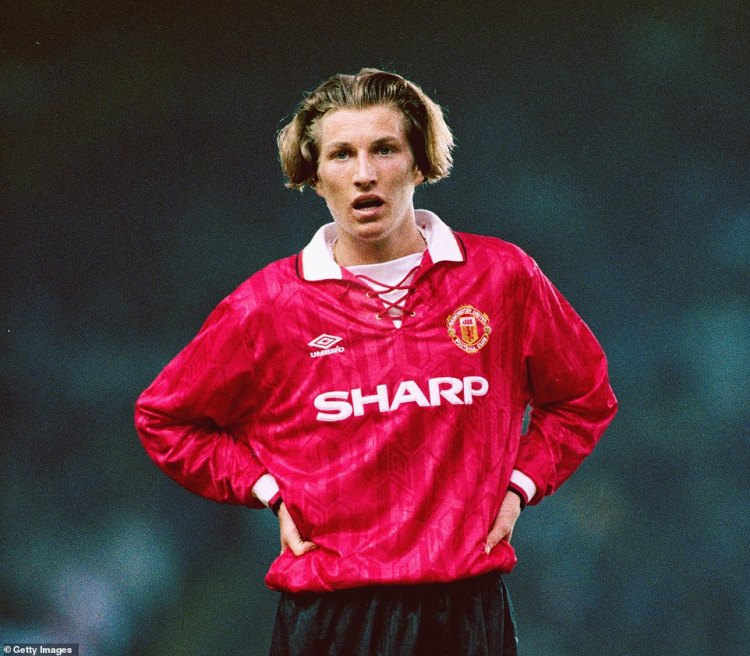
Robbie Savage is the most notable name to come from this cup-winning side outisde of the big 6. Savage would participate in both leg, starting the first leg as striker alongside Colin McKee and coming as a substitute in the second. Savage would have to wait to sign his professional contract, officially becoming a senior player on 5th July 1993. With Eric Cantona, Mark Hughes and Brian McClair, and Dion Dublin in front of him in the pecking order, Savage did not play a single minute of action or even make his senior debut for United before he was signed by Second Division Crewe Alexandra on free transfer in July 1994. During his time at Crewe, Savage would convert from a striker into a central midfielder, the position he would occupy for the rest of his career. Over the next three seasons, Savage would prove himself as a talented midfielder, making 87 appearances and scoring 10 goals, all in the league. It was during his time at Crewe that Savage would receive the first of 39 caps for Wales in a match against Albania in 1995.
His performances for Crewe caught the attention of Martin O’Neill who signed to Premier League side Leicester City for £400,000 in August 1997. Savage would spend five seasons at Filbert Street, forming a midfield partnership with Neil Lennon and Muzzy Izzet as part of a Leicester City side that finished in the Premier League top 10 on five occasions, qualified for the UEFA Cup and got to back-to-back League Cup finals in 1999 and 2000, beating Tranmere Rovers to win the latter final. The side is still fondly remembered by Leicester fans today. Between 1997 and 2002, Savage made 204 appearances for Leicester, scoring 9 goals. He would however become an enemy of the club’s fanbase when he signed for newly-promoted Midland rivals Birmingham City for £1.2 million when Leicester were relegated from the Premier League in 2002. Savage would become a key player for Birmingham as the club remained in the Premier League for four consecutive seasons, having not appeared in the top-flight for 16 years . Savage would named the club’s Player of the Year in 2003.
Robbie Savage would remain in the West Midlands for two-and-a-half seasons, making 88 total appearances, scoring 12 goals from midfield. In January 2005, he would sign for Blackburn Rovers for £3 million and help the side escape relegation and reach the FA Cup semi-finals. He would remain a regular in the side, racking up 100 appearances in all competitions during his three seasons at Ewood Park, despite certain injury problems that restrict his game time including a broken leg in 2006 and knee trouble which led to him falling down the pecking order and seeking work elsewhere.
In January 2008, Savage would jump onto the Titanic known as ‘Derby County 2007-08’, and would be made the club captain immediately after signing for £1.5 million. He did not to halt the slide and Derby were relegated from the Premier League in March 2008. He would briefly fall out-of-favour the following season, being loaned out to Brighton in the autumn of 2008. He however reclaim the captaincy and would remain as a starter for Derby until retiring in 2011 at the age of 36 after 137 appearances for the club.
During the last two seasons of his playing career, Savage started to work in the media, working as a pundit for the BBC at the 2010 World Cup and becoming a regular host of 606, BBC Radio 5 Live’s weekend football phone-in show, in the autumn of 2010. Since retiring, he has continued in these roles, as well working as a pundit for ESPN and BT Sport as well as a commentator and radio presenter for the BBC.
Keith Gillespie
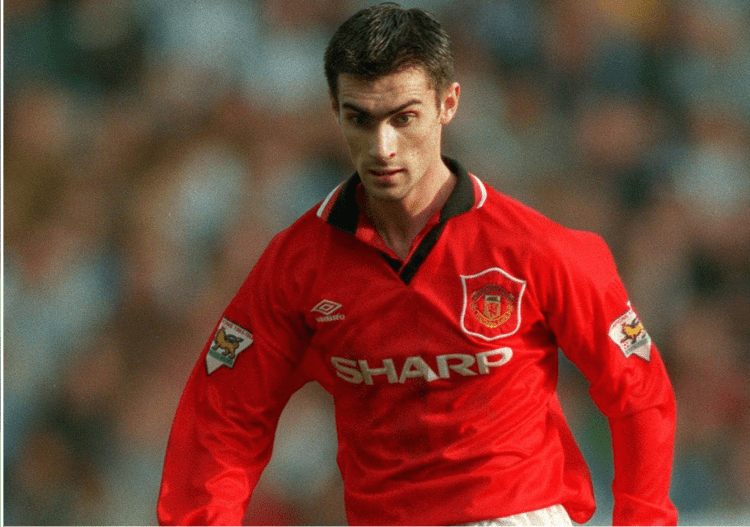
Keith Gillespie is perhaps the other name people would recognise when perusing over the Manchester United FA Youth Cup-winning side who isn’t a member of the ‘Big Six’. 17-year-old Gillespie would serve as a substitute during both legs of the final, being brought on late in the game when the match had been won by United. Gillespie signed his professional contract in January 1993 but wouldn’t have to wait for his senior debut, starting against Bury in the FA Cup 3rd Round the same month. He even scored on his debut, scoring the second in a 2-0 victory over The Shakers. His second appearance would also come in the FA Cup, appearing as a substitute in the 4th round victory against Brighton. The following season, he was loaned to Third Division Wigan Athletic. Gillespie would star during his time with the Latics, scoring 4 goals in 8 games for the club before returning to Old Trafford. He would make 12 more appearances for United during the first half of the 1994-95 season. He would 9 appearances in the Premier League, including starts against Sheffield Wednesday, Arsenal and Coventry. He even scored the second goal in a 2-0 victory over Newcastle on 29th October 1994.
Unable to displace Andrei Kanchelskis from the right-wing, Gillespie served as the makeweight in a deal to bring Newcastle striker Andy Cole to Old Trafford. The deal was worth £7 million and Gillespie was adjudged to be £1 million of that deal. Gillespie therefore moved to the North East on 12th January 1995, leaving Manchester United after 14 appearances and 2 goals. Between 1995 and 1998, Gillespie would become a key player in a strong Newcastle United midfield featuring David Ginola, Phillippe Albert, Rob Lee, Lee Clark, Peter Beardsley and David Batty. Gillespie would be part of Newcastle side nicknamed the ‘The Entertainers’ under manager Kevin Keegan that would finish 2nd in the Premier League behind former club Manchester United in both the 1995/6 and 1996/97 seasons. At one point in the former season, Newcastle led United by 12 points at one stage, but five defeats in their final 8 matches, including losing arguably the greatest match in Premier League history (a 4-3 defeat to Liverpool in April 1996) led the Red Devils to overtake and complete the first part of the 1996 Double. In his final season on Tyneside, Gillespie would play a key role, assisting two Faustino Asprilla goals in a famous 3-2 Champions League victory over Barcelona and helped the team reach the 1998 FA Cup Final, which he would miss through injury. Gillespie would play 147 matches and score 14 goals from the wing during his three-and-a-half seasons at Newcastle before switching to Blackburn Rovers for £2.35 million in December 1998.
Gillespie would once again find plenty of game-time at Ewood Park. After joining in December 1998, he unable to stop the 1995 Premier League champions from relegation to Division One despite making 16 appearances (inc. 13 starts) between December and May 1999, scoring once. Gillespie would make a further 25 and 27 appearances over the next two seasons in Division One before the team completed promotion back the top-flight in 2001. Gillespie would remain a regular once the team returned to the Premier League and even helped the team reach the 2002 League Cup Final, where they would beat Tottenham 2-1 to win their first major trophy in 5 years. Gillespie would make 139 appearances and score 7 goals in four-and-a-half seasons in South Lancashire. He would leave for Leicester City on a free transfer in July 2003.
Heading to newly-promoted Leicester City in the summer of 2003, Gillespie could make 13 appearances as a Leicester side containing veterans Martin Keown and Les Ferdinand would immediately drop back into the Championship after one season in the top-flight. A much fitter Gillespie would stay with Leicester in the Championship but was unable to help the team back into the Premier League as the Foxes finished the league season in 15th place. At the end of the season, Gillespie would once again change clubs, this time heading to Sheffield United. Arriving on a free transfer in August 2005, he would help the Blades into the Premier League, finishing in 2nd place to clinch automatic promotion with 90 points. Gillespie would a regular for the team once back in the Premier League, but unable to stop the Steel City side from suffering relegation back to the Championship after one solitary season.
This particular season for Keith Gillespie would be marked by one incident in particular, the most memorable moment of his career. In a match against Reading in January 2007, Gillespie would appear as a substitute with the team losing 2-0, Gillespie was sent off for elbowing Stephen Hunt in the face. He would sent for violent conduct and earn the unwanted record of becoming the victim of the fastest red card in Premier League history. Gillespie lasted 12 seconds on the field before being sent back to the changing rooms, something that sums up Sheffield United’s season in the Premier League in that particular year. Gillespie would stay at Bramall Lane for another two seasons, as the team were unable to find a way back to the Premier League. Gillespie would leave in March 2009 after 103 appearances in four seasons for what turned out to be a brief spell at Bradford City. He would spend the last years of his career playing in Ireland for Glentoran and later for Longford Town before retiring in 2013 at the age of 38.
In addition to his appearances at club level, Keith Gillespie would earn 86 caps for Northern Ireland between 1994 and 2008, scoring twice. He start in Northern Ireland’s famous 1-0 victory over England in September 2005 In 2016, he would be named as part of Northern Ireland’s Greatest Ever Team, appearing alongside such players as Gerry Armstrong, Pat Jennings, George Best and Danny Blanchflower.
Eric Harrison
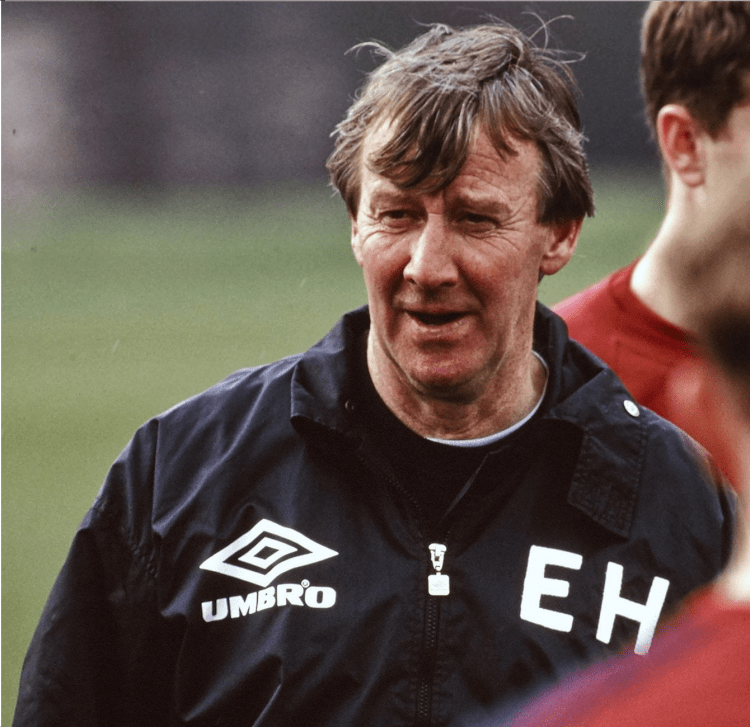
Eric Harrison served as the manager as Manchester United would win their 7th FA Youth Cup, their first since 1964. After a 15-year playing career that saw him mostly reside in the lower leagues of the English game and even non-league football during spells at Halifax, Hartlepool, Barrow (x2), Southport and Scarborough between 1957 and 1972, Harrison became a coach at Everton. In 1981, he would be hired by manager Ron Atkinson to be the youth manager for Manchester United. Through the 1980’s, Harrison would oversee the development of Clayton Blackmore, Norman Whiteside and Mark Hughes, both of whom would become first-team regulars over the coming years. When Alex Ferguson became Manchester United manager in 1986, Harrison was retained as youth team manager. Ferguson wanted improvements in the youth set-up. Harrison was quoted as saying to Ferguson “Right, we’ll do a deal. You get me better-quality players, and I’ll get you more youngsters in the first team.” Ferguson agreed and the club’s scouting network was later expanded. After the ‘Class of ’92’ team, Harrison would lead Manchester United to another FA Youth Cup in 1995 in a side captained by Phil Neville. That team may be discussed at a later date. Harrison would remain at United until 2008. He would be made an MBE for services to football in 2018. He would later die in 2019 at the age of 81 from complications due to dementia. News of his death was littered with tributes from Sir Alex Ferguson, Robbie Savage and David Beckham.
 the-score-board.co.uk